
 Ask ChatGPT


- Podcasts
- ReThinking
- The one skill you need to succeed in your career in a turbulent world - by Adam Grant
ReThinking26 May 2026 · 32m · 16 chapters
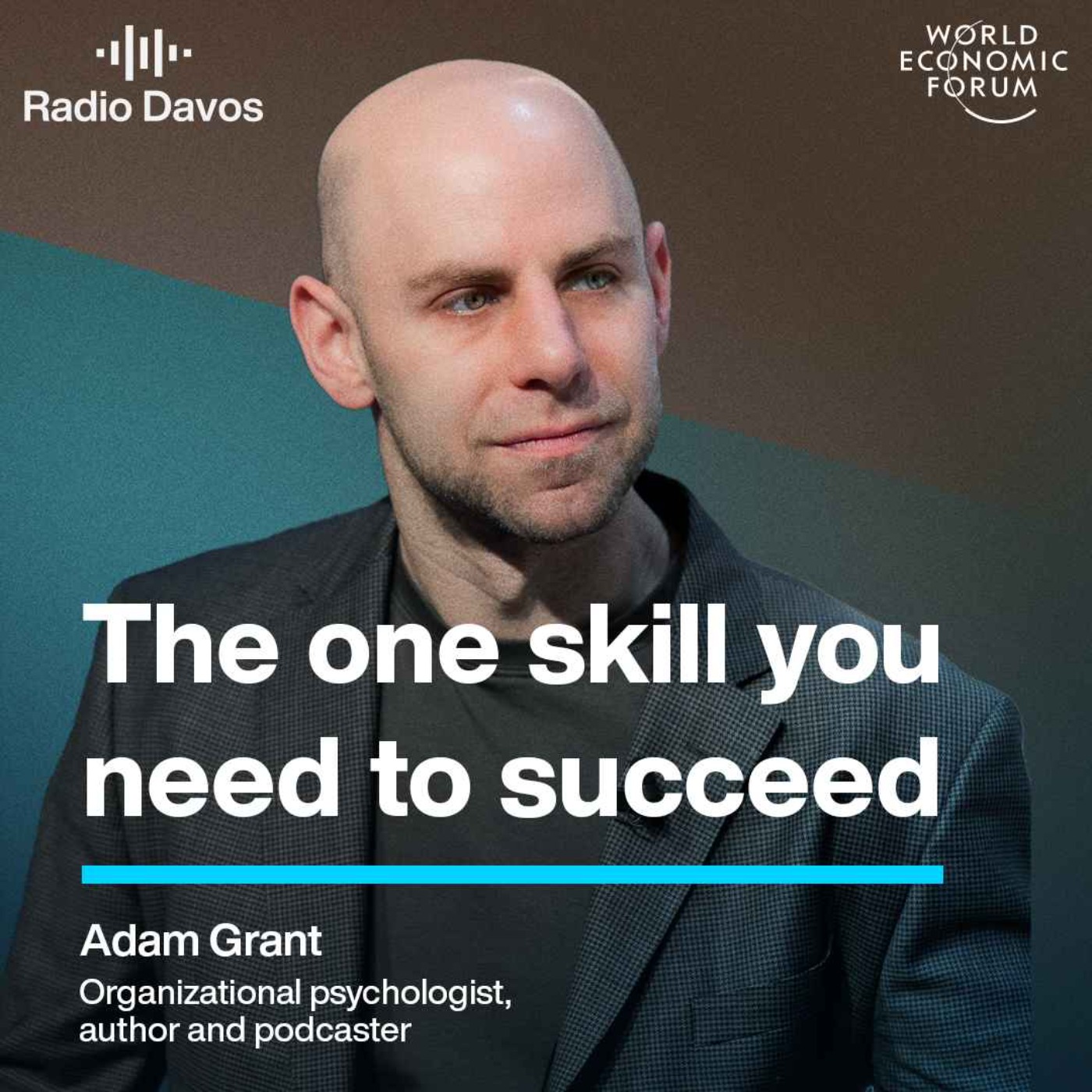
The one skill you need to succeed in your career in a turbulent world - by Adam Grant | from Radio Davos
In short
Adam Grant (organizational psychologist) discusses what career success and leadership require in a turbulent world: rethinking and unlearning, motivating focus, having difficult conversations, and selecting leaders by character. He argues intelligence now means updating assumptions, not just learning.
Key claims
(1) Attention isn’t shrinking; motivation drives sustained focus. (2) Confidence should follow action (“jump into the abyss”). (3) Polarization is often overestimated; use nuance and ask what evidence would change someone’s mind. (4) Leadership should avoid the “dark triad” (narcissism, Machiavellianism, psychopathy); boards/voters should prioritize character. (5) Organizations should promote based on impact on others, not only individual results.
Notable examples
diving coach Eric Best flipping Grant’s confidence/action order; motivational interviewing applied to Daryl Davis questioning KKK members (“How can you hate me when you don’t even know me?”); gun-rights example showing “six camps” and universal background checks.
Guests
Adam Grant; host Robin Pomeroy. Other referenced figures: Daryl Davis; Eric Best; Matt Damon, David Beckham, John Batiste, Suleika Jawad, and Water.org CEO (mentioned as prior WEF conversations).
Written by AI. May contain mistakes.
Chapters
0:00
Understanding Turbulence
Explore the challenges of living in a rapidly changing world.
“And you just got handed a huge opportunity.”
2:00
Understanding Turbulence
Explore the challenges of living in a rapidly changing world.
“We live in a rapidly changing, turbulent world.”
2:14
Rethinking Leadership Values
Adam Grant discusses the importance of character in leadership roles.
“I think of it as the mother of all biases, Robin.”
3:25
The Adam Grant Experience at Davos
Adam Grant shares his experiences and insights from previous Davos meetings.
“Welcome to Radio Davos, the podcast from the World Economic Forum that looks at the biggest challenges and how we might solve them.”
4:30
Attention Spans and Motivation
Debunking myths around attention spans in the age of TikTok.
“My first question to you, what are they asking you?”
6:30
Engagement in Digital Media
Discussing how digital media engagement differs from traditional attention.
“Are we getting, is it getting harder to, you know, we all remember our student days, anything was more interesting than the studying you're meant to be doing.”
7:50
Engagement in Digital Media
Discussing how digital media engagement differs from traditional attention.
“only to have a spinning loading icon bring everything to a halt.”
9:46
The Art of Interviewing
Insights on effective interviewing techniques from Adam Grant.
“I mean, everyone tells you this and I want to delve into your kind of interview technique.”
14:00
The Courage to Take the Leap
Learn how taking risks can build confidence through personal anecdotes.
“And what is it that you advise people to jump off that diving board or figuratively speaking?”
19:21
Motivational Interviewing Techniques
Explore the concept of motivational interviewing and its application in difficult conversations.
“Users who received a boost improved their FICO score 8 from Experian by an average of 14 points.”
Show all 16 chapters
24:44
Rethinking Intelligence in a Turbulent World
Understand the importance of rethinking and unlearning in today's fast-paced environment.
“You mentioned, think again, the power of knowing what you don't know.”
28:01
Understanding the Perception Gap
Explore the perception gap in psychology and how it affects polarization.
“It's called the perception gap, actually, in psychology.”
30:10
Changing Perspectives in Conversations
Learn how to engage in more fruitful discussions by focusing on evidence and commonalities.
“and look for the nuance in them, and that's where we have more thoughtful conversations.”
32:17
The State of the World Today
Discover the contrasting views on societal progress versus perceived polarization.
“polarization has increased over the last decade or two.”
33:37
Rethinking Leadership Qualities
Understand the importance of character in leadership amidst dark triad traits.
“What do you hope might happen in the world?”
37:45
Closing Thoughts on Leadership
Adam Grant shares final insights on the importance of promoting character in leadership.
“Adam Grant, thanks so much for joining us on Radio Davos.”

Ask about this episode
Get the gist, explore an idea or ask about something said.
 Claude
On ReThinking, what are the key points of this episode?
Searching your listeningTranscript
Automatic transcript. May contain errors.
0:00You have the vision for your business. You have the plan. And you just got handed a huge opportunity. But is your business connectivity reliable enough to make a move? Spectrum Business delivers fast, reliable internet, phone, TV, and mobile services. So you're always connected when it matters most. Get connectivity packages built for your business with savings that keep your budget in check. And with fast, reliable internet and 100 % U.S.-based customer support, you'll stay connected and ready to bring your vision to life. Learn more at spectrum.com slash business. Restrictions apply. Services not available in all areas.
0:39This episode is brought to you by National Business Furniture. You can find them at nbf.com. I've been thinking about how the environment of our workspaces can help or hinder the way we work. So many organizations claim values like productivity and collaboration, but their spaces are built for a different era of work and tell an entirely different story. The truth is, our surroundings don't just influence how we work. They can have an impact on how we think, how we feel, and who we become while we're there. That's where National Business Furniture comes in. National Business Furniture is built on a simple idea.
1:11Every business deserves furniture that lasts, service that cares, and a partner who gets it at a budget that works. For more than 50 years, they've helped companies like yours create spaces that work best. If you want to create a space where people can really thrive, visit nbf.com and use the promo code POD10 to save 10%. That's nbf.com, a better way to buy office furniture. When I was at the 2026 World Economic Forum earlier this year, I recorded a few conversations that you've been hearing. One with Matt Damon and the CEO of Water.org. One with footballer David Beckham. Another with musician John Batiste and writer Suleika Jawad.
1:49Today, I'm bringing you something a little different from that event. This is an episode of Radio Davos, where I'm the guest, hosted by journalist Robin Pomeroy. I hope you enjoy it. We don't live in a stable world anymore. We live in a rapidly changing, turbulent world. And in a dynamic environment, intelligence is not just your ability to think and learn. It's your capacity to rethink and unlearn. Welcome to Radio Davos, the podcast from the World Economic Forum. He's a best-selling author. His name is Adam Grant. His books include Think Again. On the I'm not biased bias. I think of it as the mother of all biases, Robin.
2:27It's the belief that you might have flaws in your thinking, but I'm neutral, I'm rational. And the danger of that is the better you are at thinking, often the worse you are at rethinking. What do you hope might happen in the world? What would you like to see? One of my biggest hopes, Robin, is that we change what we value in leadership. There's a cluster of personality traits that are called the dark triad. They are narcissism, Machiavellianism, and psychopathy. And this is the exact opposite of what we should be looking for in leadership. I would love to see that tide turn in 2026. I would love for boards of directors when it comes to choosing CEOs, voters when it comes to electing politicians, to put their foot down and say, character matters as much as competence and charisma.
3:15And if you are not willing to put the best interests of the collective above yourself, you are unfit to lead.
3:25Welcome to Radio Davos, the podcast from the World Economic Forum that looks at the biggest challenges and how we might solve them. I'm Robin Pomeran. On this episode, which we're recording at the annual meeting 2026 in Davos, I'm talking to just a great guest who is an organizational psychologist. He'll tell us what that is. He's a bestselling author. His name is Adam Grant. His books include Think Again, The Power of Knowing What You Don't Know and Hidden Potential, The Science of Achieving Greater Things. You may know him from his podcast, Rethinking Unworked Life and his monthly newsletter that reaches 200 ,000 people.
4:05Adam Grant, it's a joy to meet you. How are you doing? It's great to be here, Robin. Thanks for having me. Now, you've been at Davos several times. I've seen you around before. I remember the first time I saw you was in the Congress Central, just out in that kind of atrium area. And you were mobbed by people, considering this is a place full of chief executives and heads of government. You know, I had to fight my way through to you. Everyone wants to talk to Adam Grant. My first question to you, what are they asking you? I think it's changed over time. I think when I first started coming, people mostly wanted career and leadership advice.
4:42And now I'm hearing many more questions about how do I drive major changes? How do I shift a culture? Can I get a selfie occasionally? Which I never know why anyone wants that. But I think people are really thinking more globally and more macro about how do we fix broken systems? And what's the question they should be asking? What would you ask yourself if you came across you in a conference somewhere? I think the, I don't know, the question I'm always excited to get is what's something you learned lately that surprised you or changed your mind? Adam Grant, what's something you learned lately that surprised you or changed your mind?
5:18You know, one of my big surprises recently was there's this whole debate about attention spans. And, you know, in the TikTok generation, you know, attention spans supposedly are shrinking. Not so fast, says a big meta-analysis, a study of studies, dozens of studies, thousands of people. If you look at tests of concentration over a three-decade period, adults and children have not gotten worse. They're just as good. In some cases, they're even better. So what's going on there? I started digging into the research, and it turns out it's not our ability to pay attention that's suffering. It's our motivation.
5:53We're used to looking for the next shiny object. And the good news is that people are fully capable of focusing for extended periods of time if you sustain their interest. And frankly, that explains something that's mystified me for a long time, which is why are these teenagers who supposedly can't pay attention to anything binging eight hours of a show on Netflix? That requires sustained attention. Why are they sitting playing video games for 14 hours at a time? That requires sustained attention. And I think what's distinctive about video games and great shows is they are motivating. They spark our interest.
6:27They maintain our interest. And I think we need to get better at that. Isn't that passive attention, though? Are we getting, is it getting harder to, you know, we all remember our student days, anything was more interesting than the studying you're meant to be doing. And I think I feel like that now. And I guess the assumption that you're challenging there is young people are even worse than that, than I was or I am. Is there any truth to that, do you think? Well, I think there's a nuance here that often gets missed, which is, yes, watching TV is passive attention. Except if you look at how teenagers are watching TV now, and I see this with my own kids, they're watching with subtitles on very frequently, which means they're not just sitting there lazily consuming, they're reading as they're listening.
7:10That counts as some degree of active engagement, video games even more so. There's a huge body of evidence showing that video games actually boost grit and resilience. They teach self-control and willpower. They force you to grapple with failure and a lot of cases also to try to figure out how to collaborate with other people who are potentially competing against you. I don't think that's passive at all. I see that as active.
7:49Imagine being hunched over a laptop in a quiet corner of the office, finally hitting your stride, only to have a spinning loading icon bring everything to a halt. It's that split second where the momentum just breaks, and you're forced to stop what you're doing to troubleshoot a connection that should have just worked. When you're already navigating uncertainty, complexity, and competing priorities, reliability isn't a luxury. It's a foundation. That's what makes AT &T Business a reliable provider for small business owners. For Small Business Month, we celebrate small businesses by helping them run better.
8:20This means reliable uptime, easy switching, smart communications. Powered by AT &T Business. Built to work. Get today at business.att.com.
8:33You have the vision for your business. You have the plan. And you just got handed a huge opportunity. But is your business connectivity reliable enough to make a move? Spectrum Business delivers fast, reliable internet, phone, TV, and mobile services, so you're always connected when it matters most. Get connectivity packages built for your business, with savings that keep your budget in check. And with fast, reliable internet, and 100 % U.S.-based customer support, you'll stay connected and ready to bring your vision to life. Learn more at spectrum.com slash business. Restrictions apply. Services not available in all areas.
9:09With no fees or minimums on checking accounts, it's no wonder the Capital One bank guy is so passionate about banking with Capital One. If he were here, he wouldn't just tell you about no fees or minimums. He'd also talk about how most Capital One cafes are open seven days a week to assist with your banking needs. Yep, even on weekends, it's pretty much all he talks about. In a good way. What's in your wallet? Terms apply. See CapitalOne.com slash bank. Capital One N.A. member FDIC.
9:45I want to talk to you about talking to people because I think you're a really great interviewer. Oh, thank you. I mean, everyone tells you this and I want to delve into your kind of interview technique. I want to learn some things from you. Before I do, I promise our listeners and viewers, you tell us what your job is. You know, what is this organizational psychologist? I think that's an American expression that doesn't quite translate to British English. Is that right? Perhaps. In Europe, more often we're called occupational psychologists or work psychologists. Basically, I study how to make work not suck.
10:21And I started my career studying how to make jobs more meaningful and motivating. I then transitioned to also looking at team effectiveness, collaboration, and creativity. Now I do a lot of work on organizational cultures as well. So basically anything that has to do with human behavior at work or around trying to achieve a goal, that's endlessly interesting to me. Fun fact about you. I mean, people who follow your work will already know this, but before you were a professor at the Wharton School, which is the business school of the University of Pennsylvania, you had some other interesting career options.
10:55Were you a magician? I was. Yeah, I did perform as a magician for a number of years and I was not good enough to quit my day job. What was your best trick? My favorite trick, My favorite short trick, anyway, is a trick where I have somebody from the audience pick a card. I try to find it in the deck. It's disappeared. And then I throw the deck against the wall, and the card is stuck on the glass, usually on a window. Okay, good. Oh, I should have brought a deck of cards. We've got windows here. But here's the other one. Here's your other career option. You know where I'm going, I'm sure. You sometimes refer to yourself as the second best celebrity springboard diver after Jason Statham.
11:35Is that correct? I'm not a celebrity, but Jason Statham is definitely, he was both, well, he's obviously much more recognizable than I am, but he was also a much better diver than I was. He was on the British national team for something like a decade. I was a springboard diver. I was not good enough to make Olympic trials. I kind of peaked by becoming a junior Olympic national qualifier. And I actually think a big part of my interest in psychology and trying to apply that to our lives came out of diving when I was afraid of heights. And I had to motivate myself to flip and twist in midair. And I was worried that I was going to get lost or belly flop or end up smacking on my back and transitioning then from diving to coaching.
12:21trying to get other divers to do the same thing, it really made me realize there's a lot we don't understand about what makes us tick. Having experiences like that, that's quite formative, isn't it, to people, whether that's sporting or some kind of risk-taking activity, challenging yourself. I wonder if you've ever tried, for example, stand-up comedy. Is that something you've ever tried? Because that's one of those things, standing on a diving board, terrifying, addressing a theater full of people, terrifying. I mean, stand-up comedy, but these are things, having these challenges, pushing yourself, do you think that's something we should all do or is that just too much of a generalization?
13:00I think, so I've never tried stand-up comedy. I think it would be a fun challenge to take on. I did do improv for the first time this past year and it felt actually a lot like teaching or, you know, answering questions after a keynote speech or even a live podcast interview where, okay, the goal is to make people laugh, but at the end of the day, you're trying to take everything that you've learned and make it relevant to the audience. I think for me, being in those positions was profoundly uncomfortable at first. As a shy introvert, I was afraid of public speaking. I didn't want to be on stage.
13:34And I think early on, I learned through diving that seeking out and embracing discomfort was actually a key to growth. And the more I put myself in situations that I really would rather not be in and might even embarrass myself, the more I was forced to stretch my skills. And so I don't know that stand-up comedy is the right option for everyone, but I think if we all made a list of, you know, the situations that make us nervous and then forced ourselves into them, we'd end up accelerating our own growth. And what is it that you advise people to jump off that diving board or figuratively speaking?
14:10I mean is it it could be look everyone else not everyone but some people can do it so why can't you is it that what's so special about that person you give it a go you may work I mean what is is there one key bit of advice to say go on give it a go I mean you literally said that if you're a coach to divers you literally said jump into the abyss what did you say to them well I was really lucky to have an extraordinary coach Eric Best who changed the way that I thought about motivating myself and also other people. I remember one practice where I was supposed to do probably the hardest dive I had ever done to date.
14:45It was a full twisting two and a half. So two flips, 360 turn, and then a dive. And normally as a diver who faced a lot of fear, I would stand at the end of the board shaking for a few minutes before I went when it was time to try a new dive. This is a whole nother level of fear for me. I stood there shaking for 10, 20, 30, 40 minutes. Finally at 45 minutes, I'm just frozen. Eric has run out of patience. And he says, Adam, are you going to do this dive? And I thought, ever? Yes, one day I would love to do this dive. And I told Eric that. He said, great. What are you waiting for? And all of a sudden, Robin, I realized I had the relationship between confidence and action backward.
15:30I was waiting until I felt confident to take the leap, but I needed to take the leap in order to gain confidence. And that's literally true in diving, right? But I think it's a great metaphor for risk-taking in life. I remember when I got tenure at Wharton, I had a group of students tell me I should write a book. And I said, I'm not ready yet. And then I heard Eric's voice in my head. Would you like to write a book one day? Yes. Great. What are you waiting for. When I got asked to give my first TED talk, I thought there's no way I'm ready to get in that red circle. And I heard Eric's voice echoing.
16:05Would you like to do this one day? Yes. Why not today? And it's a question I've found myself asking over and over of myself, but also with other people. I used it frequently as a diving coach. I would ask divers just like Eric asked me, you know, do you want to do this? What are you waiting for? But I've also found myself motivating friends, family, colleagues the same way, even my own kids sometimes. Have you ever had one of those friends, family students ever come back to you and say, Adam, that was the worst piece of advice I've ever had. I've failed on my backside. Has that ever happened? I haven't had that happen yet because normally when people are grappling with the question of whether to wait or take the leap, they've already built enough skill or enough motivation that they are prepared.
16:49But I did have it sort of backfire once when our son was, I think he was eight. He was waffling about whether to go on his first roller coaster. And I said, Henry, do you want to do this? And he said, no, dad, I don't. And that was the end of the conversation. And it took another year to get him on one. This episode is sponsored by the Amazon Kindle Scribe. Up until now, people have had to choose between the focus that comes from writing on paper and the efficiency of laptops and tablets, which might come at the cost of distracting pop-ups and notifications. The Kindle Scribe's exciting new AI features are designed to streamline your workflow for maximum efficiency, but what's not on it is just as important.
17:32Scribe comes with no email, messaging, or social apps, so you can unlock your best focus. Use Scribe's AI Notebook Insights to ask your notebook a question and instantly comb through handwritten notes for fast answers, or pull up and mark PDFs with PDF markup right on your screen. No printer necessary. The Kindle Scribe makes it easy to keep your notes organized with everything you need in one place without having to sort through paper files or type notes on your laptop. I love how the Kindle Scribe brings my notes to life while making them impossible to lose. I know what I'm working on moving forward.
18:05What are you working on? Kindle Scribe.
18:11You have the vision for your business. You have the plan. And you just got handed a huge opportunity. But is your business connectivity reliable enough to make a move? Spectrum Business delivers fast, reliable internet, phone, TV, and mobile services. So you're always connected when it matters most. Get connectivity packages built for your business with savings that keep your budget in check. And with fast, reliable internet and 100 % U.S.-based customer support, you'll stay connected and ready to bring your vision to life. Learn more at spectrum.com slash business. Restrictions apply. Service is not available in all areas.
18:47Hi, it's Paige from Giggly Squad, and this episode is sponsored by Experian Boost. Summer glow up? Check. Credit glow up? Even better. Boost your credit scores instantly by getting credit for bills you're already paying. Your phone, utilities, rent, and insurance. I wish dating kind of worked like that. Connect your bank account, add those on-time payments to your Experian credit file, and your FICO score updates right away. You could instantly raise your FICO score by an average of 14 points with Experian Boost. Download the Experian app for free today. Results will vary. Users who received a boost improved their FICO score 8 from Experian by an average of 14 points.
19:26See App Store or Experian.com for details. Results will vary. Not all payments are Boost eligible. Users who received a boost improved their FICO score 8 from Experian by an average of 14 points. Some may not see improved scores or approval odds. Not all lenders use Experian credit files. And not all lenders use scores impacted by Experian Boost. See Experian.com for details.
19:50Okay, I'm going to get to this bit. I want you to coach me in interview technique. I was listening to one of your many great podcast episodes, and this one was with someone called Daryl Davis, an African-American who spends his time talking to extreme right-wing racists and white supremacists. Not messing about here. people who think white people are just much, much better than his. And it's extraordinary that he seeks that out. It's not just he's bumping into them by chance. And so your conversation with his, with him, absolutely extraordinary to me. But you asked him how he did those conversations and how he was able to persuade the unpersuadable.
20:38And you said, oh, I recognize your technique. after he'd given his answer, he said, what you're doing there is motivational interviewing. Can you tell us something about what is that and how does someone like him use that technique? Yeah, definitely. Motivational interviewing is one of my favorite ways of helping people think about change. It comes out of counseling psychology. Originally, a pair of counseling psychologists, Miller and Rolnick, were working with people who were struggling with addiction. And at the time, basically, it was a lot of blaming and shaming to say, you know, how could you do this?
21:16You're ruining your life. You're letting your family down. And they found that not only was this not effective, it just it made people either feel terrible about themselves or get defensive. And change didn't happen. And they started wondering if there was a better way to help people think about change. And the insight they stumbled onto was when people are having a hard time changing, the worst thing you can do is just try to argue with them or persuade them. The best thing you can do is get curious and interview them. And instead of trying to motivate them to change, your job is to help them find their own motivations to change.
21:54And so in the addiction context, what they would do is they would ask somebody, you know, tell me a little bit about, you know, what are the effects of alcohol in your life? You know, what are the upsides? What are the downsides? They're trying to be very neutral about it, right? They're not steering you in one direction. And, you know, then somebody would say, well, you know, I love how I feel when I drink. But then, you know, I got into a car accident. And, you know, instead of saying, oh, that's terrible, you know, you shouldn't do this again. And Miller and Roelich would say, oh, but, you know, you survived the car accident.
22:26Like, clearly this is not a big deal in your life. Like, tell me more. And very often the client would say, no, you know, actually this is a huge problem. And then Miller and Roelich would say, well, why? Like, what is the issue it poses for you? And then what was happening was the clients were basically talking themselves into change. And I think, you know, there have been over a thousand randomized controlled experiments showing that this is a helpful way to help people surface their own reasons to shift their attitudes or their actions. And when I met Daryl Davis, Daryl was one of the stars of Think Again.
22:59When I first met him, I was just blown away that this jazz musician took it upon himself to confront people who believed that he was unintelligent and that he was a lesser human being because of his race and then talk them out of white supremacy. And so we're doing this podcast and I want to know more about his technique and I asked Daryl to describe it. And he says, basically what he does is he walks up to these white supremacists or sometimes they'll approach him after he's performed a gig in a bar and they'll come up to him and strike up a conversation about music. And then at some point they will disclose, you know, I'm a member of the Ku Klux Klan and Daryl will ask just one question.
23:40He wants to know, how can you hate me when you don't even know me? I think what's so powerful about that question is, it's a hard one for people to answer. And so these white supremacists will say, well, you know, your group has done a lot of bad things. And Daryl will say, absolutely. Lee. And, you know, then he'll ask them some more questions back. And eventually he will help them unpack their own reasons to question their beliefs. And as he was describing this, I just said, this is, this is, I mean, this is motivational interviewing. It's a masterclass in how to do that because he's not telling them you shouldn't believe this.
24:20He's not saying I'm actually as good as you and you are wrong. He's not preaching his beliefs. He's not prosecuting their beliefs. He is curious. He wants to understand how did you arrive at that view and how do you sustain it? And usually at the end of one conversation with him, people are starting to second guess their views. And over time, sometimes it's months, sometimes it's weeks, sometimes it's years. They will end up abandoning their hate. You mentioned, think again, the power of knowing what you don't know. That was the book you wrote. But can you just give us, in a nutshell, why is it important for us to think again?
24:59What was kind of the USP of that book? So I think the basic idea behind Think Again is that we normally see intelligence as the ability to think and learn. And that was true in a stable world. We don't live in a stable world anymore. We live in a rapidly changing, turbulent world. And in a dynamic environment, intelligence is not just your ability to think and learn, it's your capacity to rethink and unlearn. Because the assumptions that you held yesterday may not be true today. The strategies that you invested in if you're a leader, the vision that you articulated, the decisions that you made in the past are not necessarily going to be effective in the future.
25:41And so I got really interested in how do we improve people's skills at rethinking and unlearning? And one of the bodies of research that really blew my mind was on the I'm not biased bias. I think of it as the mother of all biases, Robin. It's the belief that you might have flaws in your thinking, but I'm neutral. I'm rational. I am objective. I am a great thinker. Well, it turns out the higher you score on an intelligence test, the more likely you are to fall victim to the I'm not biased bias. because you've got a long track record of being told that you're smart and you're right. And the danger of that is the better you are at thinking, often the worse you are at rethinking.
26:26What advice do you give? I bet I asked you at the beginning of this interview, what do people rush up and ask you? What help or advice do they ask you? I'm betting a lot of people ask you, they'll say, Adam, when I go home for Thanksgiving, I'm going to say it in an American way because it always seems to be the festival that's talked about. You know, my father-in-law is of a completely different political persuasion in a country, and I think it's so true in many parts of the world, certainly in Europe, that's very polarized. So maybe a generation ago, it wouldn't have been so bad if you were one party or another, but now it's very, very different in a situation where even facts are contested.
27:10very clear facts. So how do you, is that wisdom that you've just talked about, is that something you could use when you're talking to someone face-to-face who just won't accept something that you know is a fact? I mean, you know, I'm not going to rethink the fact because, you know, the earth isn't flat, the earth is round, right? But you need to deal with that person, either in business or in a personal capacity. What's the skill we need to not just, you know, walk away or punch them in the face or whatever happens? Well, I think you have a few options there. The first one is to recognize that we actually overestimate polarization.
27:53There's a pretty big gap between the assumptions we make about people who hold different views from us and the actual views they hold. It's called the perception gap, actually, in psychology. And very frequently what you'll find is nobody is defined by their worst view or their most hateful belief. And so it's pretty likely that even if you have an uncle that you think is just way out there, that you can find some common ground with them. That's one option. I think a second option is to recognize that oftentimes the root of polarization is binary bias, which is the tendency that many of us have to try to come up with a coherent worldview.
28:33to take complexity and oversimplify it into just two categories. We see this all the time in the U.S. when it comes to gun safety and gun rights, for example. You know, people basically will say, well, you know, I'm either pro-gun rights or I'm pro-gun safety. And then they will think we're on opposite sides of debate. If you actually look at the data, though, there are at least six different camps. And over 85 % of Americans believe in universal background checks before you can get access to a gun. And so you could start that conversation by saying, let's talk about universal background checks.
29:07Let's talk about whether somebody with a mental illness, a diagnosed mental illness, should have access to firearms. You start with that, and all of a sudden, that person that you think disagrees with you actually is much more likely to be on the same page with you than you realize. And what I love about this is there's some research by Peter Coleman, which shows you don't even have to start on the issue that you disagree on. In one of Peter's bodies of work, he runs this difficult conversations lab. where he has people deliberately taken because they hold opposing views on a charged issue. And he randomly assigned some of them to read an article about a completely different issue.
29:44And instead of presenting that as one side, the other side, he presents it as here are all the different shades of gray on that issue. And if you, for example, just get an article about the complexity of people's views on climate change, then you are dramatically more likely to find common ground with somebody who disagrees with you about guns. And so I think maybe the broader lesson here is that we need to complexify our thinking. We need to take these issues that are oversimplified and look for the nuance in them, and that's where we have more thoughtful conversations. Do you think there's any evidence that people are doing that?
30:18Have you seen people do that? I think there's... You know, it's funny. I think there is... is, I've seen a lot of people doing this, but I also probably hear about it disproportionately because, you know, they're think again, readers and listeners who, you know, who reach out and say, Hey, I tried this. Here's what happened. I think the, of everything that I've recommended and studied, the one question that I've gotten the most traction with is when I ask people, like, let's say I'm talking even to a flat earther or somebody who thinks that like horoscopes and zodiac signs are predictive of anything, which empirically they're not, I'm sorry to say, for people who are fans of astrology.
31:01When I talk with people who believe in things that have just been empirically falsified, that are not supported by facts, the best conversation that I have is asking what evidence would change your mind. And what I love about that is it grounds the conversation in facts, right? I want to know, okay, what would you have to see? What proof, what data would you find convincing? And then I can reason with you on your terms instead of mine. And I've just found that to be much more fruitful than just arguing with people right off the bat. How do you think the world's going? Um, the... That's not a loaded question.
31:39Well, it's interesting because you said earlier that we all assume that kids today have got less of an attention span. I think in that podcast episode, you were using the phrase that you and your guests were saying, they say, it's a lovely thing, they say, and you never have to say who it is. Oh, yeah, who's your source? So they say that we're getting more polarized. They say we can't talk to each other anymore. I mean, I think it's probably true, but I don't know. I don't have any empirical evidence. You study psychology. You're looking at evidence and data all the time. Are they right this time?
32:16Well, I do think empirically we have good evidence that polarization has increased over the last decade or two. And there are lots of reasons why that is. Well, I think that one does seem to be getting worse, but it's not as bad as we think it is. I think if you look at most other metrics, this is still broadly speaking the best time in human history to be alive. If you look at life expectancy, if you look at disease, if you look at poverty, if you look at hunger, if you look at violence, all trending in positive directions. And I think sometimes the mistake that we make is we zoom in on one little dot, right?
32:54And we kind of over, we over-index on, you know, the particular instances of violence that are in the news. And we don't zoom out and say, actually, the murder rate has fallen year by year in developed countries. Even though we have an ongoing land war in Europe, war is down dramatically. And I think we need to do more of that zooming out. I think anybody who's read Factfulness or The Better Angels of Our Nature or Not the End of the World, I think the data-driven story about the state of the world is a little more uplifting than the news-anchored version. That's a nice kind of outlook. I was going to ask you for your hopes and fears for 2026.
33:40What would you have? Let's just do a hope, shall we? What do you hope might happen in the world? What would you like to see? You know, one of my biggest hopes, Robin, is that we change what we value in leadership. There's a cluster of personality traits that are called the dark triad. They are narcissism, Machiavellianism, and psychopathy. And this is the exact opposite of what we should be looking for in leadership, right? Because narcissists are all about themselves. Machiavellians are manipulative and will basically believe that the ends justify the means and do whatever it takes to get ahead.
34:16And psychopaths tend to not feel a great deal of concern for others. And we know that great leaders are the reverse of that, right? They put their mission above their ego, not their ego ahead of their mission. And, you know, whether we talk about servant leadership or some of the work that I've done on elevating givers over takers or valuing humility as opposed to arrogance, I think I would love to see that tide turn in 2026. I would love for boards of directors when it comes to choosing CEOs, voters when it comes to electing politicians to put their foot down and say, character matters as much as competence and charisma.
34:54And if you are not willing to put the best interests of the collective above yourself, you are unfit to lead. You'd think that would be our natural state, wouldn't you? Why isn't it? Why is it like nice guys don't win and those things actually can be quite affected? Well, I think there are a couple of mechanisms that show up in the research. One challenge we run into is superficial charm. People mistake confidence for competence. And so So narcissists are often captivating when you first meet them or when you see them from a distance. And it's only as you observe them over time or up close that you start to see their more toxic tendencies.
35:29I think the other issue is that people see oftentimes this kind of aggressive, dominant approach as a sign of strength. In times of flux, people actually gravitate toward the narcissist or the authoritarian leader because they look at that person and say, that makes me feel safe and secure. That person's strength is what we need. And ultimately, in the longer term, it's not. Because the moment that leader's personal interests diverge from what's good for the company or the country, you can no longer trust them. And I think people are making a Faustian bargain when they make that choice. How can that change, though?
36:07You know, company boards are often like that. We've all worked with or for people who are just like you've described. I don't know if there's anyone listening to this, who's not thought, how on earth did that person get to where they are? How can you break that cycle? If you've just explained very clearly why we believe in that triad of bad personality traits, how do you break that? You could break it in yourself, but I could change my mind. But that doesn't mean my company or my country or my government is going to change. What needs to happen? Well, I think we have the best data on how to fix this in workplaces.
36:44So in organizations, one of the mistakes we make is we tend to promote people only based on individual results. And that allows the narcissist and the Machiavellian to get ahead. What we ought to be doing is not just indexing your own performance. We should be measuring what is your impact on others. There's great research on this on salespeople, for example. Alan Benson and colleagues have studied over 30 ,000 salespeople. And what they want to know is who's a great sales manager. and the people who often get promoted are the best individual salespeople, the biggest rainmakers who bring in the most revenue.
37:15They are not the most effective managers of teams of salespeople though. What's the leading indicator that you are gonna be a great leader of sales teams? It's how many assists you gave to other salespeople. Did you refer clients to them? Did you help them solve problems? Did you get them access to deals? And that's a great example for me of measuring what is the value added to your team? Let's promote on that basis, It's not just what did you accomplish yourself. There's hope someone's listening in a position who's hiring and firing and takes that to heart. Adam Grant, thanks so much for joining us on Radio Davos.
37:48Always a pleasure, Robin.
37:58Rethinking is hosted by me, Adam Grant. The show is produced by TED with Cosmic Standard. Our producer is Jessica Glazer. Our editor is Alejandra Salazar. Our engineer is Asia Pilar Simpson. Our technical director is Jacob Winnick. And our fact checker is Paul Durbin. Our team includes Eliza Smith, Roxanne Hilash, Benben Chang, Julia Dickerson, Tansika Sung Manivang, and Whitney Pennington Rogers. Original music by Hans Dale Su and Alison Leighton Brown.
38:35is sponsored by Experian Boost. Summer glow up? Check. Credit glow up? Even better. Boost your credit scores instantly by getting credit for bills you're already paying. Your phone, utilities, rent, and insurance. I wish dating kind of worked like that. Connect your bank account, add those on-time payments to your Experian credit file, and your FICO score updates right away. You could instantly raise your FICO score by an average of 14 points with Experian Boost. Download the Experian app for free today. Results will vary. Users who received a boost improved their FICO score 8 from Experian by an average of 14 points.
39:12See App Store or Experian.com for details. Results will vary. Not all payments are boost eligible. Users who received a boost improved their FICO score 8 from Experian by an average of 14 points. Some may not see improved scores or approval odds. Not all lenders use Experian credit files, and not all lenders use scores impacted by Experian boost. See Experian.com for details. Hannah, I just Venmo'd you for dinner. Obsessed. I'm spending it right now on the lip gloss that's been sitting in my cart. What do you mean spending it right now? You can instantly spend your balance with the Venmo debit card or when you pay with Venmo at checkout.
39:44Stop. Say more. More exactly. The more you do with Venmo, the more you get. Like earning up to 5 % cash back with Venmo Stash. Get the Venmo debit card or checkout online. Venmo Stash bundle terms and exclusions apply. Max$100 per month. See terms at venmo.me slash stash terms. Venmo checkout, not available at all merchants. The Venmo MasterCard is issued by the Bancorp Bank N.A. Hi, I'm Molly Graham, host of Work Life, a podcast from TED. The most important lessons about work usually aren't the ones anyone teaches you. They come from experience, from uncertainty, from figuring things out as you go.
40:24On this show, my expert guests and I explore how careers really unfold through change, through doubt, through the decisions that shape who we become over time. Because those moments aren't the exception. They are the work. Listen to Work Life wherever you get your podcasts.
From the publisher
"We don't live in a stable world anymore. We live in a rapidly changing, turbulent world. And in a dynamic environment, intelligence is not just your ability to think and learn, it's your capacity to rethink and unlearn."
Adam Grant, organizational psychologist, podcaster, and author of the bestseller "Think Again", tells us why we are wrong in many of our assumptions about today's world, and why we would all benefit from tackling our own biases - not least the "I'm-not-biased" bias.
And he explains why the wrong sorts of people too often get promoted or elected to positions of power.
Adam spoke to Radio Davos at the World Economic Forum's Annual Meeting 2026 in Davos, Switzerland.
Links:
Think Again: https://adamgrant.net/book/think-again/
Books Adam mentions:
Factfulness: https://www.gapminder.org/factfulness-book/
The Better Angels of Our Nature: https://en.wikipedia.org/wiki/The_Better_Angels_of_Our_Nature
Not the End of the World: https://www.goodreads.com/book/show/145624737-not-the-end-of-the-world
ReThinking is produced by Cosmic Standard. Our Senior Producer is Jessica Glazer, our Engineer is Aja Simpson, our Technical Director is Jacob Winik, and our Executive Producer is Eliza Smith.
For the full text transcript, visit ted.com/podcasts/rethinking-with-adam-grant-transcripts
Hosted on Acast. See acast.com/privacy for more information.
More from ReThinking
All episodesWe use cookies.They keep VO running smoothly and help us improve it. Privacy policy