 Ask ChatGPT


The episode covers: Anthropic’s blockbuster IPO (raising $81B, valuing it around $2T) but broader AI sentiment stays weak amid a tech sell-off; Asia markets take the hit because AI-linked chip supply chains (Samsung, SK Hynix, TSMC) are exposed to AI demand and US-China chip restrictions. It also discusses UK-EU talks on trade/regulation (food rules, carbon/emissions schedules) and a Deutsche Bank leak involving Russian oligarchs, Trump, and Jeffrey Epstein.
Michele Castata, president of Replit, argues AI budgets are being rebalanced, and cheaper models plus model-selection can democratize AI/code. Rocky Swift, Tokyo markets correspondent, says de-risking flows into bonds/defense/pharma as sanctions and AMD-related concerns spread. Thomas DeFazio, ETF strategist at Roundtail Investments, claims GTA 6 could boost the video game ecosystem and highlights Take-Two’s GTA Online as a long-term earnings driver (40–60% of EPS by FY2029).
Anthropic shares swinging ($83 IPO to ~$111 then ~$97), SpaceX trading near IPO after volatility, Apple reportedly building AI agents, Replit choosing models by intent, CD Projekt’s Cyberpunk 2077 drop, and Deutsche Bank allegedly moving more money for Epstein than previously known.
Written by AI. May contain mistakes.
Discussion on Anthropic's IPO and its implications for investor sentiment in AI.
“So Peter, Anthropic hit its$2 trillion valuation then after IPO-ing on Thursday.”
Exploration of potential volatility in AI investments and competition from rivals.
“And it's now only just trading around its IPO price, having had some wild swings in the meantime.”
Insights from Michele Castata on how companies are utilizing AI technologies.
“It's now a slave to more of those headlines coming through.”
Discussion on the future of AI technology and its market dynamics.
“One company at the centre of that shift is Replit, a platform that makes software creation accessible to anyone, not just trained engineers.”
Analysis of the impact of AI sell-off on Asian markets.
“Coming up, Asian shares skid as the AI route deepens.”
Challenges in the AI supply chain and concerns over geopolitical factors.
“Joining us now from Tokyo is markets correspondent Rocky Swift.”
Exploration of Grand Theft Auto 6's potential effects on the gaming market.
“because of their Chinese connections, that could put further a damper on the end result demand from these major hyperscalers.”
Discussion on Nintendo's positioning and strategies amid industry competition.
“offer a broader way to gain exposure to the industry.”
Learn about Nintendo's unique market strategies and merchandising effectiveness.
“They have a portable console with the Nintendo Switch 2, which is a big differentiator than when you think about an Xbox or a PlayStation.”
Explore the implications of the upcoming UK-EU summit on trade and regulations.
“Still to come, with the UK and EU holding a key summit, we'll discuss what's at stake for trade, regulation and investment flows.”
Understand the economic ramifications of Brexit and potential future changes.
“But several senior Labour politicians have called on Burnham to promise a referendum on rejoining at that next election.”
Analyze the fallout from Deutsche Bank's document leak and its effects on reputation.
“Staying with Europe Now, where leaked internal documents this week detail Deutsche Bank's dealings with Russian oligarchs and convicted sex offender Jeffrey Epstein.”

Get the gist, explore an idea or ask about something said.
 Claude
On Reuters Morning Bid, what are the key points of this episode?
Searching your listeningAutomatic transcript. May contain errors.
0:03Today, Anthropik raises$81 billion in the biggest stock market debut in history. But even that can't restore faith in the broader AI sector as a tech sell-off sends Asian shares heading for their worst week since 2020. And Britain and the EU agree to a reset. But how much difference can it make? This is Reuters Morning Bid, bringing you unfiltered market news and analysis straight from the Reuters London newsroom. I'm Peter Devlin. And I'm Elena Casas. It's Friday, November 20th. So Peter, Anthropic hit its$2 trillion valuation then after IPO-ing on Thursday. At one point, those shares whose IPO price was$83 got to$111.
0:43But they did finish the day somewhat lower, the enthusiasm slightly petered out, and they got down to$97. That's 17 % up on the IPO price. So is that a sign of further volatility ahead? Well, I think we can say that the Anthropic IPO was a success. I mean, we look at Wall Street, They're willing to write a check for the world's leading Frontier Lab model, a company with explosive revenue growth and clients really leaning up to get more. But I mean, it shows that one massive blockbuster debut isn't really just all clear for the rest of the market. I mean, the backdrop is quite worrying. They're not willing to write those checks for the riskiest corners of the AI trade.
1:20And that means that the market is just unhappy and AI is just in the middle of that sell off. Well, a blockbuster IPO does not mean a good few months ahead. Look at SpaceX, of course, which became what's now the second biggest IPO ever back in June. And it's now only just trading around its IPO price, having had some wild swings in the meantime. And of course, Anthropic is still a loss-making company. And it's one whose own CEO keeps repeatedly warning that its product could lead to the end of humanity. So Anthropic's pitch to investors essentially is trust us, both with your money and with the future of the world.
1:52But that only works if they continue to have a lead in the AI market. The argument is that they're going to keep having the world's leading frontier model. But there's so much competition in the market that relies on them not being taken over either by rivals like OpenAI or by open weight models, by Chinese models that might start to attract more business because they're simply so much cheaper. Companies are saying they can cut their spend on AI by as much as 90 percent by switching to a Chinese model. Even yesterday, we saw reports that Apple is developing reportedly its own AI agents. I mean, fund manager, they need some sort of exposure to AI.
2:29And you look at Anthropic and it's the first publicly traded pure AI play. And generally, if you think that all that revenue growth and profits is still untested, we haven't had an earnings report yet. So if you start seeing those gains coming through on another AI agent or maybe a more proven company with that sort of backup in its earnings results, do investors jump ship? So I think that does use the right bit of volatility ahead for Anthropic. It's now a slave to more of those headlines coming through. Absolutely. And it's promised to spend$900 billion on building out data centres between now and 2045.
3:01A lot depends on whether those data centres actually can be built after the recent midterms, where we saw this upswelling of public opposition to data centres in the US. We've got numerous democratic lawmakers coming into office who have promised to cut back on them, to block some of that development and to put in moratoriums. So there's also a big question mark over whether they can deliver on this physical infrastructure that they're promising to build. And much of it, of course, also won't belong to Anthropic itself in their current plans in order to guarantee their whole supply chain. What they need to do that they've only just started to do is build data centers where they own the chips themselves.
3:38Well, we spent a lot of time talking about what the Anthropic IPO says about investor appetite for AI. But beyond the market excitement, the question is how corporate customers are actually using AI and how much they're willing to spend on it. One company at the centre of that shift is Replit, a platform that makes software creation accessible to anyone, not just trained engineers. I caught up with the firm's president, Michele Castata, at the recent Lisbon Web Summit, and started by asking him just how much was riding on the Anthropic IPO. I think in the early stage, it will definitely be the most important case.
4:13That's the reason why all the eyes are pointing in that direction. but over time there will be much more variety on the market. And I think these wild fluctuations that we heard about devaluations are also due to that. It is given the meteoric growth that Anthropic and OpenAI experience, it starts to project what's going to happen in the next few years. We have seen a lot of companies blowing to their yearly AI budget in just a quarter. So now that we have more alternatives, on one hand, pushing further the frontier models still matter because there will be more unlocks in terms of scientific discoveries, for example, that I'd be very thrilled to see as soon as possible.
4:52But at the same time, you're absolutely right. There are certain simpler knowledge work tasks that do not require the most expensive models. So a platform like Replit is capable of understanding the user intent and then picking the right model for the job. And the more this technology will become affordable, the more we're going to be hitting our goal of really democratizing the access to AI for everyone. Learning how to code is not even obsolete. It's something that for many, many people we should not even be talking about anymore. In a sense, AI allows you to have access to a lot of the capabilities that before were all in the hands of software developers.
5:29But many of the new knowledge workers today, they don't even know that their agent is actually creating and executing code. They just know that the agent is capable of doing certain tasks. I think the first half of the year was fundamentally unsustainable. I'm glad that we've seen so much excitement because it helped a lot of companies grow fast, including us, and it helped a lot of the early adopters to really push the boundaries of what could be done with AI. I think this period that we're going through, and I expect 2027 to be much more focused on that, will bring more common sense to the narrative.
6:03We'll make the technology overall more sustainable and affordable. The panic is understandable in the sense that it's a brand new field in tech. It's probably going to be a chapter that's going to last at least a decade. So the first steps are always those that bring more uncertainty. That being said, it's hard not to be very much optimistic. It's technology that has been proven to work. Maybe the ROI is not as high as we initially expected, but it doesn't mean that we're not going to get there. Well, that market panic is far from over. Coming up, Asian shares skid as the AI route deepens.
7:06Setup required, compatibility and availability varies 18+.
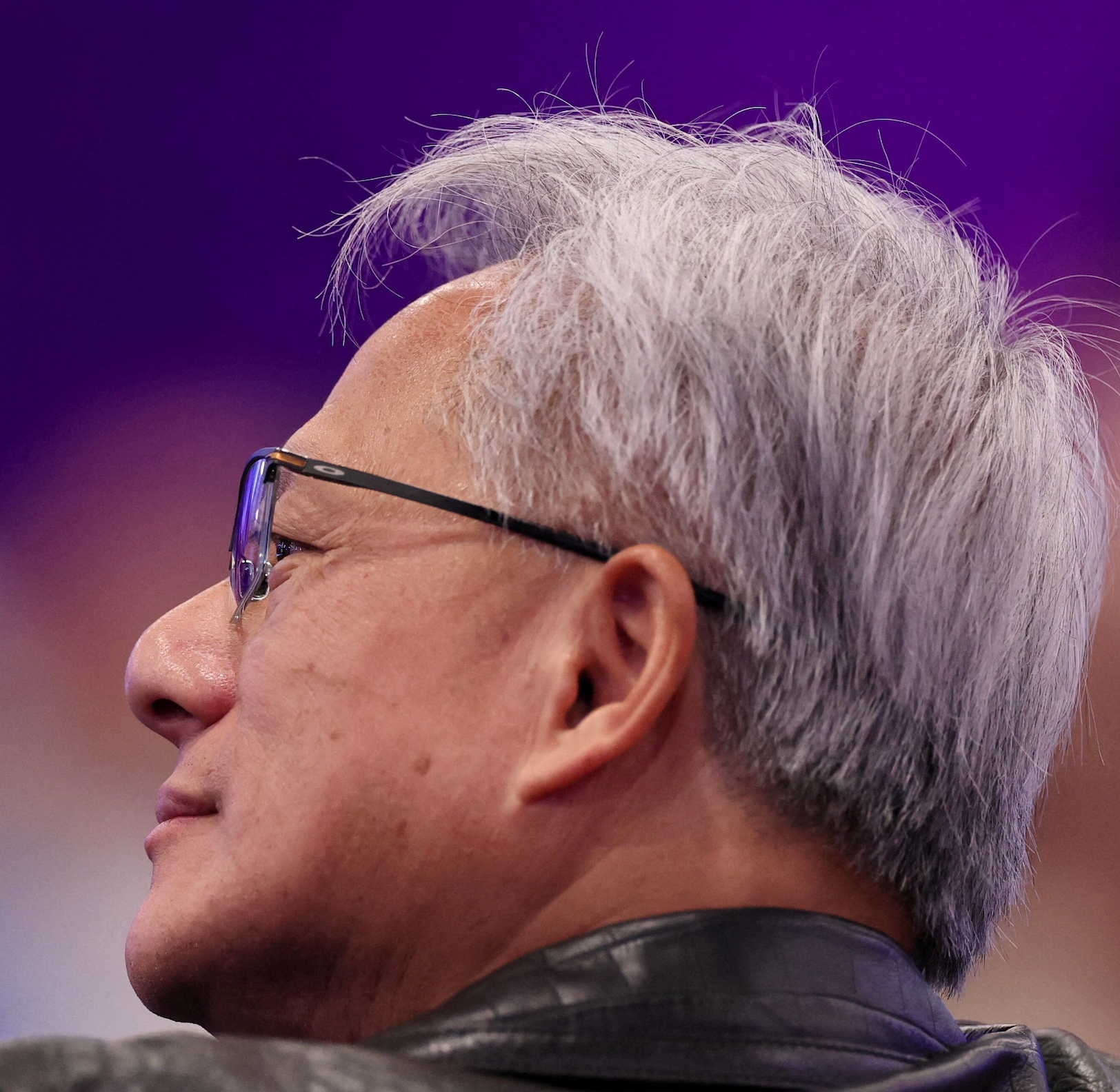
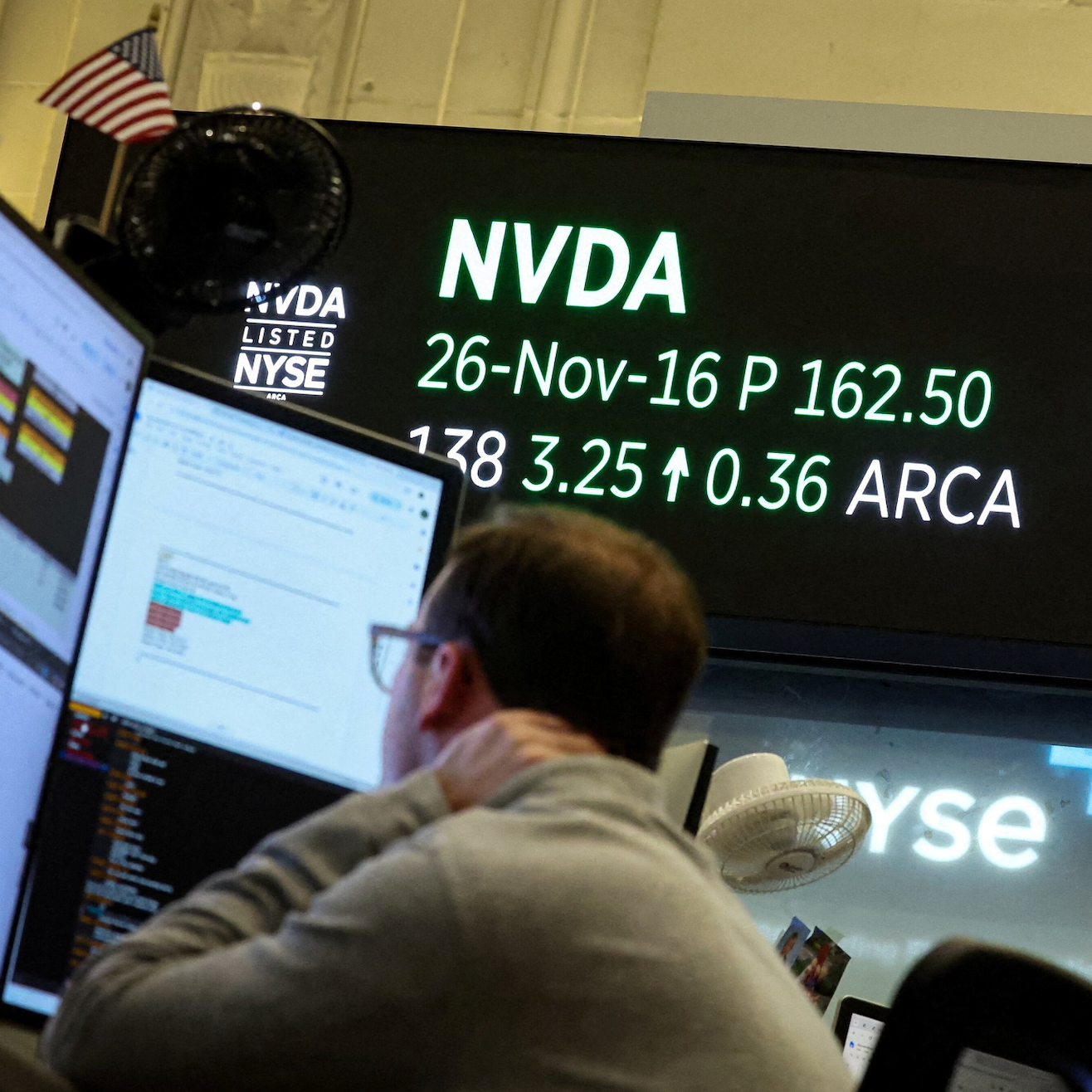
7:12Well, Anthropik's debut failed to restore investors' faith in the broader AI sector as Asian shares were heading for their worst week since 2020. Joining us now from Tokyo is markets correspondent Rocky Swift. Rocky, why is Asia getting hit particularly hard today? Good morning. Well, I think the major indexes in Asia are even more exposed to AI than, for example, in the United States. So in Korea, for example, you've got two giant chip companies, SK Hynix and Samsung, which really dominate the market there. Taiwan is largely dominated by TSMC and similar situation in Japan, too. So when this, you know, we had kind of a sell-off in AI starting last month, and that's been, you know, picked up steam with some concerns about Jensen Huang's exit from NVIDIA.
8:09Overnight, there was this short-selling report on AMD that has kind of hurt sentiment, and also just lingering concerns about the midterms of what it might mean for the build-out in the AI sector. Rocky, how much is this being further propelled by concerns that the US administration could clamp down further on Chinese entities' access to US-made chips? As you said, we had that short report on AMD overnight, which said that the companies exposed to Chinese entities that are connected to companies on the sanctions list and to the Chinese military. How much has that affected sentiment? Well, I think, again, a lot of these companies in Asia, they're chip makers, they're making wire, they're making the inputs into the AI sector.
8:54They're not really the giant companies themselves like Alphabet, Meta, Microsoft. So it's all connected, as you said, you know, in a sense to China, anything that's going to raise concerns about selling in China, Chinese demand and potentially these companies, if they get sanctioned by the U.S. because of their Chinese connections, that could put further a damper on the end result demand from these major hyperscalers. So that's kind of we're seeing that roll down the value chain in Asia. So Rocky, investors are clearly de-risking. And let's not forget, it's about a month left until the end of the year.
9:30So do investors just take their money, take their profits and just leave for the end of the year? Well, it's interesting. You know, usually you see a rotation into other markets. You know, we did, for example, see some of the defensive sectors in Japan benefit today. The insurance companies were up, some of the pharma companies. But, you know, again, we're kind of seeing this typical rotation into defense and that we see that in equities. But we also see bonds are gaining now. Treasuries are getting our benefit from this Japanese government bonds in the dollar. The dollar is still trading at about a 19 month high because when, you know, fear grips the market and investors sort of cluster around safer assets.
10:16Rocky Swift in Tokyo, thank you so much for joining us. Another headline grabber this week has been the hotly anticipated release of Grand Theft Auto 6. It's already cemented its place as one of the biggest entertainment launches on record, helping to reignite investor interest in the video game sector and the companies tied to it. Earlier, I spoke with Roundtail Investments' Thomas DeFazio about whether gaming ETFs offer a broader way to gain exposure to the industry. 3, 2, 1 The wait is over Take-Two's Grand Theft Auto 6 has arrived and all signs point to a video game launch that could rewrite the record books But while the hype is enormous so is the financial gamble The gaming industry is facing rising costs fierce competition and some very expensive flops So, will GTA 6 level up your portfolio or deliver game over?
11:10Well, it's as Thomas DeFazio ETF strategist at Roundtail Investments. So Thomas, for anyone who doesn't spend their evenings gaming, what makes this release so extraordinary? Why should investors outside the gaming industry be paying attention? We think GTA 6 could be a shot in the arm for the broader video game industry and more specifically I think about the console developers like Sony and Microsoft who have been struggling with hardware sales as of late. When we had last spoken we talked about how rising costs and the inputs that go into console construction, like rising memory, are now really starting to weigh on the overall price of these, which then also hurts sales.
11:53We do think, though, that with GTA 6's release, this could actually catalyze an uptick in sales and give some life to what's been a struggling corner of the video game market. Well, the The temptation is to assume that a record-breaking game launch means a record-breaking stock. But let's look at CD Projekt. It lost around a third of its market value in the weeks following the launch of Cyberpunk 2077. So is buying Take-Two really a no-brainer? Take-Two also has a really strong track record of monetizing the game over a much longer life cycle than its competitors. We think nowadays a lot about these Battle Royale games like Fortnite and Ark Raiders and how a lot of the revenue comes from the in-game transactions.
12:40Now, Take-Two has been doing this with GTA Online for 13 years now with the GTA V version. And what was really interesting is over the coming years, we think that GTA VI is online, and this is substantiated by various sell-side research like Bank of America, that GTA Online could make up 40 to 60 % of Take-Two's earnings per share by its fiscal year 2029. And when it becomes a significant earnings driver and has that type of staying power, that can make a meaningful difference in the stock over the long term. Let's look at Nintendo. It's been facing pressure and it's looking to its blockbuster franchises, including Zelda, to keep gamers engaged.
13:28But with GTA 6 threatening to dominate the cultural conversation, could Nintendo struggle to hold on to players and investors? Is Nintendo still a must have in your fund? Nintendo has been doing Nintendo things for multiple decades now. And more interestingly, along with Nintendo, a lot of Japanese developers and video game companies have been showing really strong performance coming out since the summer, June, 2026. I think about Nintendo. I think about they have really strong brand recognition, and that creates staying power and brand loyalty. They have a portable console with the Nintendo Switch 2, which is a big differentiator than when you think about an Xbox or a PlayStation.
14:12And that just opens up the potential for consumers to engage with their products a whole lot more. The last thing I would mention is Nintendo is really good at merchandising. They're able to take a lot of the various IP and put that into cards, putting it into action figures and dolls and other types of revenue drivers. And that is a real that's a really powerful combination for the stock over what has been a powerful combination since up to this point. And we think it will continue to be a factor going forward. Still to come, with the UK and EU holding a key summit, we'll discuss what's at stake for trade, regulation and investment flows.
15:27Well, in a bit of sense of deja vu, we're seeing a UK leader heading over to Brussels with talks and Brexit, leading the conversations. And I mean, let's look at what is on the agenda here. It seems to be food and agricultural trade as well as carbon trading emissions and schedules. I mean, that's not really earth shattering stuff. So is this all just could be sorted in an email or am I underestimating this? Well, they have agreed to line up on a lot of food regulations that will reduce export controls between the UK and the EU. And the UK estimates that could be worth more than£5 billion a year to the economy.
15:57Bear in mind, that's pretty small fry when economists estimate that Brexit has cost the UK something between 6 % and 8 % of GDP. So in terms of investor sentiment, it's probably more important that Prime Minister Andy Burnham is willing to come out and say, as he did on Monday, that it's obvious that Brexit is not working out very well for the UK. It's the tone, perhaps, that's more important than the concrete measures that are in this. In terms of market reaction, it's car makers that are going to be looking perhaps most closely at these talks, because one key sticking point has been that the UK wants its exports, especially cars, to be included in made in Europe, in the UK, in the EU's tariff free zone there.
16:35Now, the sticking point for the EU there has been that it wants the UK to line up on tariffs being imposed on Chinese cars. That's something that the UK has not agreed to. And in the draft statement ahead of this meeting, we've still got different language from the UK and the EU on this, on how exactly they're planning to align on supply chains. So that for European automakers, they're still going to potentially object to the UK being a backdoor, allowing Chinese cars to enter the block. So that problem is still there for them. Well, one study found as well that any terms of economic boost, It would be more than double if for Britain to rejoin the EU rather than some sort of halfway house deal.
17:16Is that what it's going to really take for the markets to pay attention? Because Burnham said as well that we're not really going to see that until any terms of general election. Quite possibly. I mean, in terms of economic impact, we are just fiddling around at the margins with these kind of measures. Ultimately, perhaps, yes, it would need a rejoin. And it's interesting, though, that this was completely off the table politically in the UK until very recently. Now Andy Burnham has made it part of the conversation. It looks like it will be in the conversation at the UK's next general election.
17:44Who knows, right? But several senior Labour politicians have called on Burnham to promise a referendum on rejoining at that next election. And that's certainly something that would force markets to sit up and take notice. In terms of equities as well, we look to the FTSE. It seems maybe a bit of a haven from the AI-driven sentiment. And over in Europe, I mean, it's never looked rosier. I mean, Outlook's really looking for a good, solid growth coming forward. Is that really what's going to make London competitive again? Because we've seen such a lack of listings there as some sort of rejoining with the EU.
18:13Brexit certainly discouraged investors, I think, from investing in the FTSE. It made Britain look like it was less open to the world. And that did, to some degree, drive investment away, as economists would agree. Are we getting to a stage where that's being reversed? Potentially. But as you say, so much of this is up in the air politically that it's hard to know at the moment. Staying with Europe Now, where leaked internal documents this week detail Deutsche Bank's dealings with Russian oligarchs and convicted sex offender Jeffrey Epstein. It deals a major setback to CEO Christian Suing's efforts to restore the lender's reputation.
18:46Senior banking correspondent Tom Sims has more. A major leak at Germany's largest bank is sending shockwaves with revelations about Trump, Russia and Epstein. This all came to light when Europe was waking up to a barrage of reports based on a major leak of Deutsche Bank documents, about 15 million documents in all, details on relationships with Russian clients, oligarchs, Trump, the U.S. president, and Epstein. The bank does say that these are mostly historical issues, and that's partly true, but partly not true. It is true that we've known broadly that Russia and Donald Trump and Epstein have figured into Deutsche Bank and its dealings over the years.
19:39But the sheer volume of detail and some scintillating facts did come to life. For example, the amount of money that Deutsche Bank moved for Epstein is a much larger figure than we previously knew about. On Donald Trump, Deutsche Bank accidentally sent some of his tax documents to the accountant of another client. This is damaging for the Deutsche Bank CEO, Christian, saving, without a doubt. He was brought on during a time of crisis at Deutsche Bank to take over the helm as CEO with basically two missions. One was to return the bank to profit after years of losses. And the second was to improve the reputation of Deutsche Bank.
20:29By almost every measure, he's succeeded on that first point. It's always been a bit of an open question on to what extent he's improved the reputation of Deutsche Bank. There's been a steady drumbeat of negative news over the years and during his tenure. Well, we've had the finance minister of Germany yesterday calling for investigations. We've had a member of European Parliament calling on Christian saving to go to Brussels and answer questions. Based on the conversations that we've had, the key question out there is how did this leak happen? Of course, it's not a good look when a bank that's been trying to improve its risk controls and when clients suddenly see a lot of details about their financial dealings out there.
21:22That's all for today. For today's recommended read, check out Andy Holm's column, How Investors Are Dumping Copper Even as Shanghai Runs Short of Metal. The link is in the show notes. And for more on any of today's stories, head to Reuters.com or the Reuters app. Follow us on your favourite podcast player. And if you're on a smart speaker, just ask for the latest market news from Reuters. We'll be back on Monday.
Anthropic raises $81 billion in the biggest stock market debut in history, but the blockbuster IPO does little to lift sentiment across the wider AI sector. Asian shares head for their worst week since 2020 as the tech selloff deepens. And Britain and the EU agree to a reset as leaders look to strengthen ties on trade, regulation and investment.
📲 Podcasts, breaking news, and video analysis from the source. Download the Reuters app here.
Today's recommended read: Funds dump copper but Shanghai has run out of metal by Andy Home
Subscribe to Mike Dolan's Morning Bid newsletter and check out his columns on Reuters Open Interest.
Produced by Ciara Lee and Abisoye Osundairo
Sound engineering and music by Sebastian and Josh Sommer.
Visit the Thomson Reuters Privacy Statement for information on our privacy and data protection practices.
You may also visit megaphone.fm/adchoices to opt out of targeted advertising.
Learn more about your ad choices. Visit megaphone.fm/adchoices