Ask ChatGPT



Reuters Morning Bid episode “Tech or treat” covers markets after a bruising October, upcoming tech earnings (Apple later; also AMD and other chipmakers), U.S. midterm election impacts, Fed rate-hike expectations, and this week’s labor data (jobs and JOLTS). It also flags geopolitical risk: Trump may resume attacks on Iran after the polls, with oil down 3–4% suggesting immediate worst-case fears may have eased.
No guests mentioned; hosts are Anna Schemansky (London) and Mike Dolan.
October’s tech sell-off was severe (worst Nasdaq day since June; Intel down ~30% after Amazon/Intel updates). Equal-weighted S&P 500 rose ~5% in October, implying healthcare/energy offset tech losses. Fed officials signal another quarter-point hike by December; payrolls would need to be extremely weak to change tightening.
Intel’s ~30% drop; Amazon/Intel updates; oil down 3–4%; markets watching Bank of England and other central banks; junk bond stress through October.
Written by AI. May contain mistakes.
Discussion on tech stocks, market performance, and economic factors.
“Well, Mike, last week was a doozy, and this week looks like yet another one.”
Analysis of upcoming elections and their potential effects on markets.
“But I think there's also a sense that this is the beginning of a clock that goes all the way to 28.”

Get the gist, explore an idea or ask about something said.
 Claude
On Reuters Morning Bid, what are the key points of this episode?
Searching your listeningAutomatic transcript. May contain errors.
0:01Today, tech stocks try to find their feet after a bruising October, with Apple reporting later. Plus, Americans go to the polls tomorrow, with energy markets wary about what happens after the midterms. And as Fed officials signal more rate rises to come, an update on the U.S. labor market is due this week. This is Reuters Morning Bid, bringing you unfiltered market news and analysis straight from the Reuters newsroom. I'm Anna Schemansky in London. And I'm Mike Dolan. It's Monday, November 2nd. Well, Mike, last week was a doozy, and this week looks like yet another one. We have so much on the docket.
0:38We have another spate of tech earnings. Again, we have Apple reporting today after, as we set up top, really, really bruising October, especially the end of the month. And obviously, we have midterm elections. I think that's going to really be dominating everything. Yet at the same time, we also have more economic data coming in that the Fed's going to be needing to chew on. So where do you want to start? Well, it has to be said for a start that we have found some level first thing this morning. At least now, in fact, futures are up a little bit. But look at what happened on Friday. It was extraordinary.
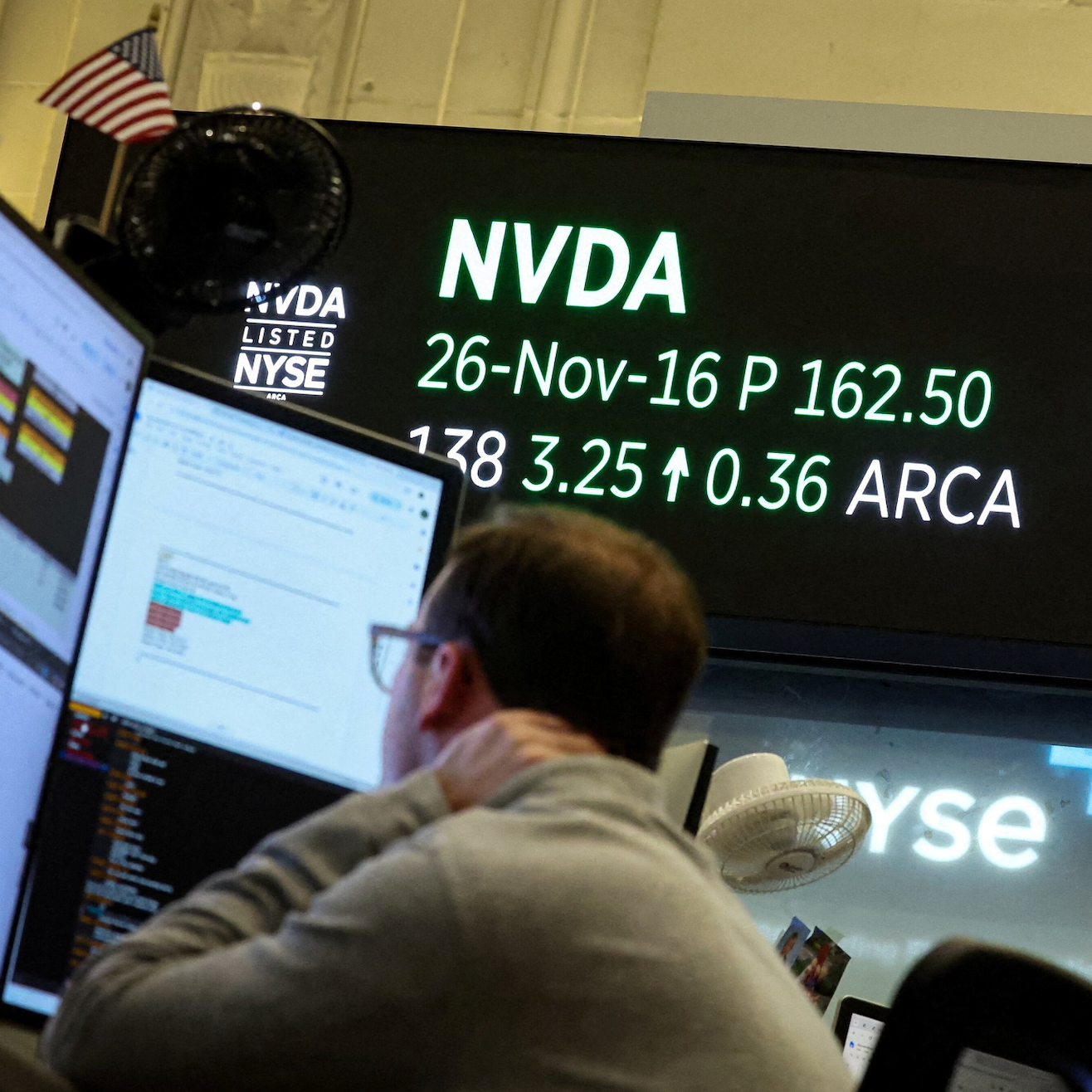
1:08That was the worst day for the NASDAQ since June. And within that, it came from the reports or the updates from Amazon and Intel on Thursday night. Intel fell almost 30%. Now, remember, Intel is partly owned by the government and is one of the key chipmaker stocks on the street. And that's a huge drop. And now we have to look through this week, not just to Apple, but to AMD and other chipmakers to see whether that sort of chimes with what's going on. But let's just finish out October. October was an extraordinary month, not just for what happened on Friday, but for the whole series of rolling sell-offs we got in the AI space.
1:53And the Nasdaq, its entire loss for the month was the worst since March 2025. So it tells you just the scale of what was going on. But at the same time, and this is really interesting because it's very concentrated, that sell-off in the tech space, that the equal-weighted S &P 500, which is where you adjust for the huge weights and market cap of those big tech firms, that actually was up 5 % in October. So you could see that sectors like healthcare, sectors certainly like energy, which we know for obvious reasons did very well, in the last quarter, have really offset that big sell-off in tech.
2:33Now, to what degree can an ongoing sell-off in tech, if that's what we do see, stay isolated within that sector? Or to what extent does it affect the rest of the market and, of course, the rest of the economy? Now, they are the big questions for everybody, all investors, going into the final quarter of the year, the final two months of the year. And other questions, obviously, this week are going to be the outcome of the midterms. We've been talking about this for, it seems, practically two years at this point. And it really will be quite impactful for markets moving forward, because if the Democrats do take over the House and the Senate, we should say at this point, the House looks much more likely than the Senate, it will have a significant impact on what President Trump can do moving forward.
3:19There are a whole series of issues, not least regional and local issues, that inevitably will now get decided over the next, well, tomorrow. But clearly, the results of those elections probably will take two or three days to get final. And if the Senate, as you say, goes right to the wire, we could be waiting for a few days at least until we see whether there is a clean sweep of Congress as the betting markets and the polls are leaning towards right now. But as you say, that Senate race could go to the wire. Now, will it make a difference for the bigger macro markets? Most people say for things like fiscal policy or overall, certainly not foreign policy or indeed military policy, then it's not going to shift the dial that very much.
4:03But I think there's also a sense that this is the beginning of a clock that goes all the way to 28. And while that is a long way out at this stage, what you have to consider is there are shifting political sands. And whether that is in terms of the debt ceiling issue that's coming up, for example, that's going to be interesting. To what extent does this push back against data centers is another issue. There are a whole heap of issues related to health care that will come back top of mind. But the one most immediate issue for world markets, I think, is what President Trump has been saying for the last several weeks, that he will resume attacking Iran once the polls are over.
4:46Now, there have been reports overnight that said that he wants to wait a little bit longer. I think Axios is reporting this. He wants to wait a little bit longer to see if there is some mediation efforts that gain traction. He's communicated that to the Israelis, which by all accounts, according to that report, don't seem very happy with that idea. But oil is down about 3 % or 4%. Now, there's a rolling month from the futures that we have to be careful about reading from Friday to Monday on this score. But it is at least a sign that that real worry that there was an immediate attack after the polls tomorrow maybe is slightly less worrisome this morning.
5:31But we'll have to wait and see. That's a wild card. And then finally, we're going to be getting jobs numbers this week. We're also going to be getting jolts data. So this will be more for the Fed to chew on as we look to a potential rate hike next month. Well, as we said, one of the interesting things about the very big run up in oil prices last week or so is that the bond market has shifted its attention. The bond market is now more concerned about whether a rollover in the AI story and the big tech sector will be damaging for the economy. And therefore, yields have come down, even though oil prices have been very high.
6:05So that's an interesting dynamic. And so that's where the payrolls number will come in very clearly as an input. But at the end of last week, we got several Fed officials on the speech circuit, making it very clear the Fed is set to hike again by the end of the year. By December, we are almost certain going to get another quarter point. And of course, this week alone, we will get more interest rate rises around the world. Certainly, the markets expect the Bank of England to raise interest rates on Thursday. And there are several other central banks meetings as well, the Nordics, the Reserve Bank of Australia.
6:43So that tightening idea, the idea of the cost of capital is going up, one of the things that's worrying the tech sector very much, not least the very high risk part of the bond market, the junk bond market in particular, is under considerable stress through October. So interest rate rises still are impactful and they are still coming. And I think the payrolls number would have to be extremely weak to change that picture.
7:28Gemini and Chrome is here for it. Ready to make anything online make sense? There's no place like Chrome. Check responses set up required compatibility and availability varies 18+.
7:42For today's recommended read, check out Ron Busso's column on how big oil's spending caution speaks louder than its profits. The link is in the show notes. For more of any of today's stories, head to Reuters.com or the Reuters app. Follow us on your favorite podcast player. And if you're on a smart speaker, just ask for the latest market news from Reuters. We'll be back tomorrow.
A brutal October for big tech, with Intel down nearly 30% and the Nasdaq logging its worst monthly loss since March 2025. Apple reports today, Americans head to the polls tomorrow, and Fed officials say another rate hike is coming.
📲 Podcasts, breaking news, and video analysis from the source. Download the Reuters app here.
Today's recommended read: Big Oil's spending caution speaks louder than its profits, Ron Bousso
Subscribe to Mike Dolan's Morning Bid newsletter and check out his columns on Reuters Open Interest.
Produced by Eliza Davis Beard.
Sound engineering and music by Sebastian and Josh Sommer.
Visit the Thomson Reuters Privacy Statement for information on our privacy and data protection practices.
You may also visit megaphone.fm/adchoices to opt out of targeted advertising.
Learn more about your ad choices. Visit megaphone.fm/adchoices