 Ask ChatGPT


Reuters Morning Bid episode “The AI confidence test” (Nov 23). Topic: whether Wall Street’s late-October/November sell-off is a valuation reset or a deeper break in AI economics, plus Fed/PCE, Black Friday, crypto, and COP31.
Mikhail Zverev (Amarty Global Investors), Peter Devlin (markets rundown), Ross Gerber (Gerber Kawasaki; early Bitcoin investor), Dan Weiskopf (Tidal Financial Group; runs crypto ETFs), and EU delegation representative Darrell O’Brien (COP31 remarks).
AI model “frontier” capabilities and long-term ROI remain unproven; AI capex boom may be unsustainable due to revenue doubts, circular financing/debt, and energy constraints; chip-heavy Asia (KOSPI) is falling more than Taiwan, signaling investor nervousness about the “chip story.” Fed rate expectations (PCE) are the main market trigger; a 50 bps hike is unlikely. Crypto: Binance hack blamed on North Korea; Ross says no longer buy Bitcoin after repeated exchange failures, while Dan argues Bitcoin can still be held via ETFs. Black Friday: wealth-effect volatility could hit luxury sales and average consumers. COP31: EU/UK walked away over fossil-fuel language; energy-transition economics may matter more than summit outcomes.
Written by AI. May contain mistakes.
Discussion on Wall Street futures and the recent market sell-off, highlighting AI's impact.
Analysis of the impact of AI profitability concerns on markets and specific examples from Korea and Taiwan.
“whether you're talking about what's happening with NVIDIA, whether you're talking about overall AI profitability concerns, whether you're talking about what happened with Anthropic, the Fed rate expectations.”
Exploration of investor nerves related to chip makers and potential regulatory impacts from Congress.
“And that was when you started to see that really just enormous spike in Korean equities start to turn.”
Discussion on the sustainability of AI investments and the implications of recent market changes.
“If I had to pick one thing, I actually would say it would be FedRateHex, just to be perfectly honest, because there's this idea in markets that it's always the Fed that spoils the party, and that very well could be.”
Overview of upcoming economic indicators and central banks' positions affecting global markets.
“I spoke to Mikhail Zverev of Amarty Global Investors, and he told me worries remain over the sector's revenues, circular financing and its debt.”
Discussion on expectations for the upcoming PCE data and its implications for the Fed.
“Check responses set up required, compatibility and availability varies 18+.”
Exploration of how the AI boom impacts inflation and future rate hikes.
“Yes, as you say, a lot of economists say that the AI boom is clearly pushing up inflation.”
Analysis of the recent volatility in the crypto market and investor sentiments towards Bitcoin.
“a volatile stretch for digital assets as investors weigh the outlook for the sector and the role of institutional money in the market.”
Discussion on how crypto hacks are affecting the market and perceptions of Bitcoin.
“These hacks, or whatever you want to call them, are just financing the North Korean government, for example.”
Exploring the need for regulations and the potential benefits of ETFs for Bitcoin ownership.
“Are crypto assets uniquely vulnerable to hacking, given that hackers can identify the wallets that hold huge sums of transferable assets, and often even the employees with access to them to target.”
Analysis of how market volatility may affect consumer spending during the holiday season.
“So we had the financial crisis in 2008 that I lived through where all of our banks failed us and acted in horrifically high risk manners that came back to bite them.”
Discussion on the changing landscape of holiday shopping and the significance of Black Friday.
“That's certainly possible because the wealthiest Americans obviously do hold the majority of equities, but they're also extremely wealthy.”
Overview of the outcomes from climate talks and their potential impact on energy markets.
“Finally, global climate talks have ended without a deal for the first time in more than a decade after countries failed to bridge deep divisions over fossil fuels and climate finance.”

Get the gist, explore an idea or ask about something said.
 Claude
On Reuters Morning Bid, what are the key points of this episode?
Searching your listeningAutomatic transcript. May contain errors.
0:04Today, Wall Street futures bounce back after a brutal sell-off, but more hurdles lie ahead. Plus, traders will be closely watching Wednesday's PCE data for more signals on possible Fed rate hikes. And Black Friday looms, but will the tech sell-offs spoil shopping plans? This is Reuters Morning Bid, bringing you unfiltered market and news and analysis straight from the Reuters newsroom. I'm Anna Schemansky. And I'm Elena Casas. It's Monday, November 23rd. so Anna welcome to Monday morning after the week before the worst week for Wall Street since 2020 now it does look like futures will open slightly higher today even though we've seen a further sell-off in Asia but looking at this how do we know if what we saw last week was just a necessary correction because some valuations had got a bit out of hand or if we're looking at much more fundamental questions being asked about the eventual revenue generating possibilities of AI I think the real difference, if we look at the sell-off we saw last week and really that we've seen since the beginning of October and what we've seen in recent years, whether you're looking back at the from the Iran attack or whether you're looking at the Liberation Day, was those were discrete events.
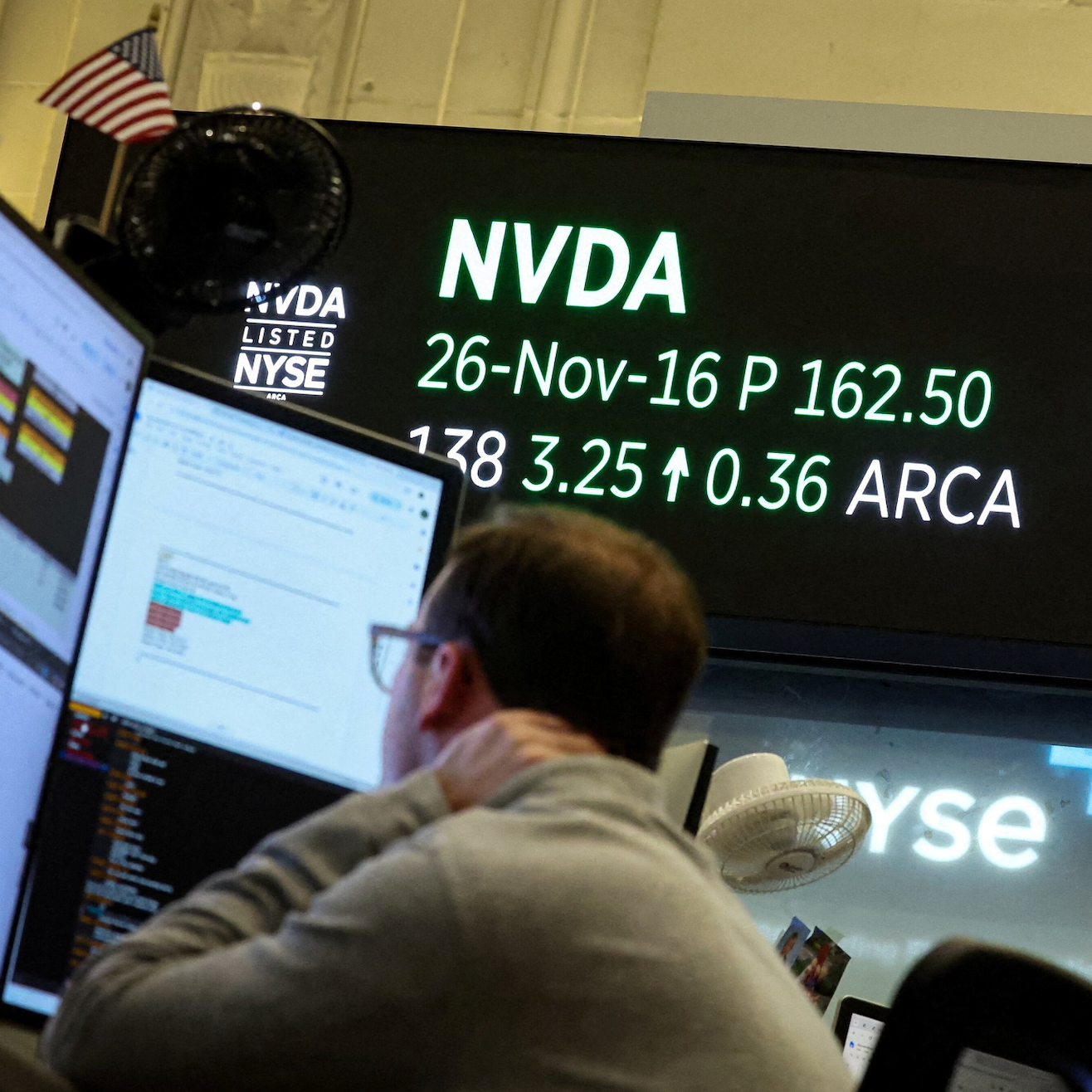
1:17Right now, we're looking at many, many events, many, many trends that are leading to this, whether you're talking about what's happening with NVIDIA, whether you're talking about overall AI profitability concerns, whether you're talking about what happened with Anthropic, the Fed rate expectations. There's so much going into this, and that suggests that we may not yet have hit a bottom. We're continuing to see quite a dramatic sell-off in some Asian markets. The Kospi in Korea is now down more than half since its peak, and the government there is saying that it may need to step in in some way.
1:47What does that mean for broader global markets if we're seeing these very chip-heavy markets suffer so badly? I mean, it's really unsurprising. If you look at the first half of the year, Korea, the Gatsby, was one of the markets that performed by far the best. And that was because you had so much AI enthusiasm. There was other kind of technical reasons why that was the case. And so it's somewhat unsurprising that since really, frankly, you could say the summer was when you started to see more concerns about the AI trade. And that was when you started to see that really just enormous spike in Korean equities start to turn.
2:23And I think the other interesting thing is to look at Korea versus the Taiwanese market, because, again, both have been very, very volatile. If you look at what happened today, though, Korea continued to fall where Taiwan did get a little bit of a bounce. Again, you also had the authorities in both stating that they were going to try to help potentially support markets. I think that speaks to the fact that in Korea, this is really a chip story. Now, the Taiwanese market is also chip heavy, but they have a little bit more overall in terms of the AI infrastructure. So this just suggests that investors are very, very nervous about the chip story.
3:00And I think that speaks to what we've seen with NVIDIA, also the news last week about AMD, that investors are very jittery. Is this going to move across then to U.S.-traded chip makers? I mean, after we saw those stories about NVIDIA and AMD potentially being connected to companies that are supplying chips to companies that are sanctioned in China or the Chinese military, are investors now more and more nervous about a further crackdown by U.S. authorities that could affect these chip companies? I think certainly. I think whether there's the risk that an investigation could actually find something, whether at NVIDIA or one of the other companies, But it's also just that overhanging risk and the idea of increased regulation.
3:40And with the new Congress coming in in January, that just increases that risk. Is that the key trigger? Do you think that investors believe that the new Congress is going to crack down on the build out of data centers? I mean, I know you said that there's about 15 different triggers here. There's not one key thing. But is that the underlying momentum? I mean, I'll be honest. If I had to pick one thing, I actually would say it would be FedRateHex, just to be perfectly honest, because there's this idea in markets that it's always the Fed that spoils the party, and that very well could be. But it's connected, because what happens is that when money is very cheap, people don't look at things too closely.
4:14People tend to push worries away. All of a sudden, when money starts to become a bit more expensive, people really start to zoom in on those worries. And I think one of those, as you said, is the Democratic Congress coming in, and is that risk that you could see a slowdown in the data center buildup? No, obviously, some of these data centers, They're going to be built regardless. There are contracts here. But the question is, does that build out, accelerate the way people would have expected earlier this year? Well, we'll get to the Fed later, but it has been a bruising November for the AI faithful, with markets from South Korea to the US staring at steep monthly losses.
4:47I spoke to Mikhail Zverev of Amarty Global Investors, and he told me worries remain over the sector's revenues, circular financing and its debt. I think the biggest questions on investors' mind are still not answered. What are the genuine modes in Frontier Lab AI models? Do we have a compelling long-term AI return on investment investment case? Amazing business, remarkable revenue growth, but those questions are not answered and therefore the doubts persist. What else is driving the Asia sell-off? I think it's just the sustainability of the AI capex boom. And the points you outlined are absolutely relevant.
5:27And, you know, can we continue building at the pace we have been out of this political position? And frankly, you know, a bit of an open secret in the industry, lack of energy to power those data centers. And with CEO of NVIDIA leaving, him being so instrumental as a promoter of AI, but also kind of at the center of this web of circular financing, committing NVIDIA cash flows to, for example, supporting new clouds. You know, that is a genuine, it's not a sentiment, it's a genuine financial concern. Is that detrimental to funding available to AI build out? Well, yes. How much has Jensen Huang's departure and nerves that any successor might not be as keen in investing NVIDIA's money in other tech companies that are its clients affected broader sentiment?
6:10Definitely contributed to the nervousness. And it's interesting, we've seen a continuing increase in funding costs for, you know, new clouds are the sharp end of it. they're probably less robust business models, more kind of marginal players. And we're seeing pretty eye-watering costs of borrowing. I think Elon Musk referred to that as yikes in a famous tweet or post on X the other day. And it's definitely a concern. You know, there were a couple of well-publicized IPO delays or even cancellations in that space. So, you know, for the music to continue to play, investors need to continue to provide funding.
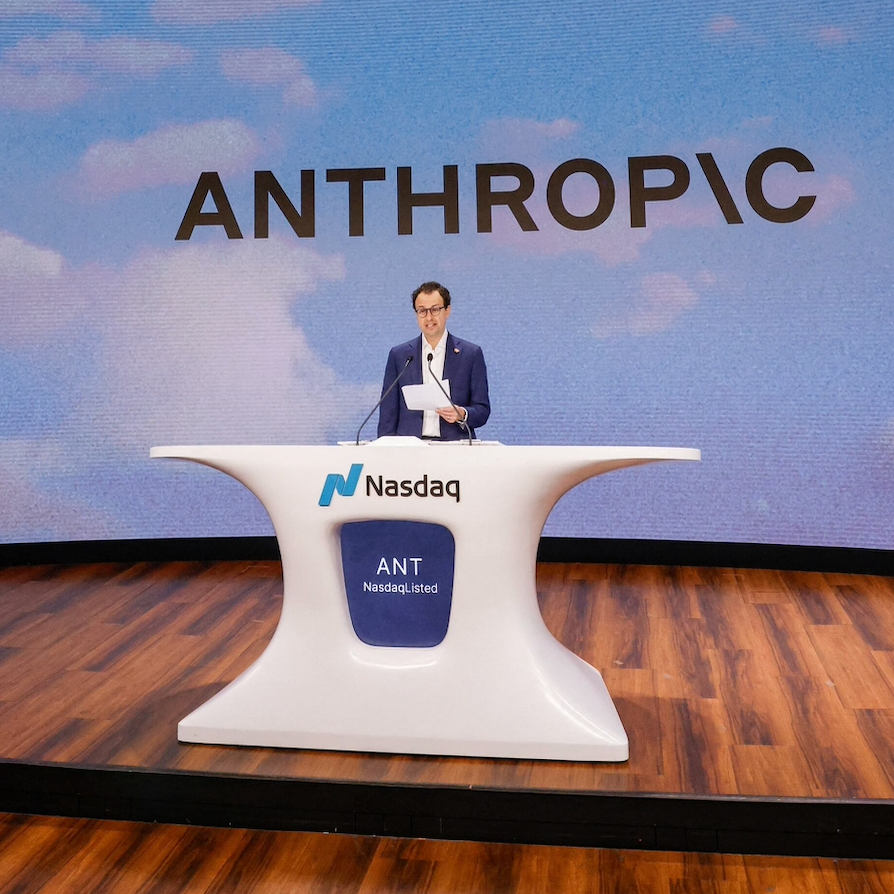
6:52Great to see them ponying up for the Antropic IPO, but it's not certainty that they will fund more marginal cases. Away from AI, there's still plenty for investors to keep an eye on this week, and the coming days could offer fresh clues on the help of the global economy. Peter Devlin gives us the rundown of the week ahead in markets. Black Friday bargains, central bank curveballs, and an inflation problem that just won't go away. Markets have plenty on their shopping list this week. Black Friday kicks off the all-important holiday shopping season, and investors will be watching Americans' wallets very closely.
7:30The National Retail Federation expects holiday sales to top$1 trillion. But with prices, energy bills, and borrowing costs still high, will shoppers splash the cash or tighten their belts? It's musical chairs at the European Central Bank, and France and Germany are keen to grab the best seats. Pablo Hernandez de Cos looks set to take the top job from Christine Lagarde, but the battle for two other key positions is still playing out. Germany wants Princeton professor Marcus Brunemeyer as chief economist, while France is eyeing the other vacancy. South Korea has been riding the AI wave, but not everyone's enjoying the party.
8:06Exports are booming, but households are feeling the squeeze. Now the central bank faces a tricky call on Thursday, with markets leaning towards a quarter-point rate hike. Australia and Japan are both stepping into the inflation spotlight. Australia's October Consumer Price Index follows a hot Q3 inflation report that earlier this month convinced the RBA to hike rates to an 18-year high. The more live decision lives in Japan. Tokyo's inflation report could cement the case for another rate hike in December from the Bank of Japan, the third this year. Monday brings a global economic pulse check, with business activity data from US, Europe and beyond.
8:43The US economy continues to outperform expectations, but the focus will be on inflation, a stubborn headache that could give the Fed another hawkish push. Still to come, how Wednesday's PCE inflation report could reshape expectations for the Fed's next move.
9:06is brought to you by Google Chrome. You think you know a browser, but Gemini and Chrome, that's new. It can help you with practically anything on the web, like restoring a vintage motorcycle from a 50-page restoration block, or finally break down that long article you've had open for weeks. Gemini and Chrome is here for it. Ready to make anything online make sense? There's no place like Chrome. Check responses set up required, compatibility and availability varies 18+.
9:32So Anna, you said it, it's the Fed that could be the key determinant in where the market goes from here and if the sell-off continues. Of course, policymakers' key measure of inflation, PCE, is out on Wednesday. The market is expecting them to hike in December, but what will investors be looking out for in that release? I think it's really to see if the elevated energy prices have continued to seep into core goods and services, as we saw with the CPI print. I think at this point, that's pretty much what everyone is expecting, that you're going to be getting a print around 0.3%, maybe month over month, which would put the annual somewhere between 3.8%, 3.9%, which is obviously well above the Fed's 2 % target.
10:13I think at this stage, it's unlikely we would get anything that would change the probability for a Fed rate hike. It might slightly increase it. You'd have to get a very, very soft print for there to be any idea that the Fed was not going to hike next month. At this point, it's not 100 % baked in, but it's pretty close. There was some chatter last week that the Fed could even go 50 basis points if the number comes in high. Does that seem realistic to you? While it's certainly possible, and obviously you've had Chris Waller out there saying that multiple times, I think at this point it would be unlikely.
10:45A 50 basis point hike is quite rare. You've seen it more in recent years because you've had some more extreme instances which have caused for that. But in general, it is not something you see very often. And if anything, that would suggest that the Fed had perhaps made a mistake by not hiking last month. And the Fed does not usually like to say it made a mistake. So that makes me think it's unlikely, but it's still a possibility. Looking forward into next year then, Anna, markets seem to expect on the back of recent commentary from Fed policymakers that they're going to continue to move quite aggressively.
11:17But do you think we'll really see the scale of hikes that are priced in at the moment? Well, it's certainly hard to say the Fed is going to be data dependent. And at this point, we simply don't know what the data is going to be in a number of months. Obviously, one of the biggest open questions is what's going to happen in the Middle East. Right now, the U.S. and Iran are in this no peace, no war status quo that is clearly unsustainable. We don't know how that conflict is going to play out. Right now, we have seen a significant decline in crude prices, and that has filtered through to fuel prices as well.
11:44But the question is, how much does that continue? And also, how much lower do oil prices go? At this point, obviously, we don't know that. Also, we have the AI boom. The AI boom has been another thing that's really been pushing on inflation. And if that starts to turn, what does that mean? Also, when it comes to the labor market, right now, very, very strong. The consumer continues to be quite strong. That would all suggest we're going to see aggressive rate hikes. But a lot is changing right now. Yes, as you say, a lot of economists say that the AI boom is clearly pushing up inflation. Kevin Walsh has said repeatedly that he expects it to bring it down as it improves productivity over the course of time.
12:21I think it's one of those where it's a short-term, long-term thing, that in the immediate term, that if you have a lot of people going after chips and there's a limited supply of chips, it's going to push the price up. Also, you have to build all these data centers. You have to build all this infrastructure. And that is made with real materials. And there can be potentially shortages on those. So in the short term, definitely you can see the inflationary impulse and also just all of the money that's being pumped in. The idea is that in theory, if AI plays out the way that people anticipate, you could see this massive productivity boom.
12:47And that could be good for reducing inflation over the long term. but that's really a much longer term game. Well, meanwhile, crypto is back in focus after a volatile stretch for digital assets as investors weigh the outlook for the sector and the role of institutional money in the market. Earlier, I was joined by two fund managers to discuss what's driving sentiment there. Cryptocurrency prices slid after the world's biggest crypto exchange. Binance fell victim to a$6.3 billion heist in October that the FBI has blamed on North Korea. Bitcoin has slumped to its lowest price since August and is down 27 % this year.
13:24So will it make a comeback? I'm joined now by Ross Gerber of Gerber Kawasaki and Dan Weiskopf of Tidal Financial Group. Ross, I asked you to join this discussion because you were an early Bitcoin investor and I've always thought of you as a big Bitcoin fan, but you posted online that there was no longer a case for buying it after the hack. What made you say that? Well, there was a few things, but I actually sold some of my Bitcoin for the first time over the last month. Every cycle that we've gone through as these exchanges have gone out of business and people have lost billions of dollars, every cycle we've gone through, I kept saying, hopefully, they'll institutionalize.
13:59Hopefully, they'll have the types of checks and balances that protect investors. These hacks, or whatever you want to call them, are just financing the North Korean government, for example. And then now there's the ETFs and all this stuff is out. So the question is, what would I still, after all these years, buy with my Bitcoin? Because there's still nothing I can buy. Okay, Dan, you offer crypto ETFs. Do you still think there's a case to buy Bitcoin? Yes, I believe there is still a case to own Bitcoin. But just remember, Bitcoin is just one blockchain. And while Bitcoin is down 27%, Block, which is the ETF that I manage, or one of them, is only down 17.
14:44Now, I'm not proud to be down only 17. But I think what we're facing right now is a situation where blockchain in general, the adoption is accelerating and Bitcoin is just one blockchain. Dan, what do you think about these concerns about the high risk? Are crypto assets uniquely vulnerable to hacking, given that hackers can identify the wallets that hold huge sums of transferable assets, and often even the employees with access to them to target. So does that central argument for crypto, it's transparency, make it a dangerous place to put your money? Well, I think Bitcoin has of late proven to be a risk on risk off asset.
15:23I don't think there's a question about it. And there's reasons to be disappointed. But, you know, proudly, I would say that the good news is everybody got their money back. And nothing is, of course, perfect. We are experiencing hacks everywhere right now, every moment right now, whether it's a bank in the US or it's a retailer, somebody out there is trying to hack them. Now, this is the world we live in, unfortunately. And again, I just pre-emphasize Bitcoin's use is one use. It's one blockchain. But the adoption just continues to get more pronounced across the spectrum. Ross, you mentioned regulation.
16:07Could crypto be saved with better regulation, with rules similar to a bank? Yes and no. I mean, I think the advice of if you're going to own Bitcoin, own it in an ETF is actually really good advice because it It provides you SIPC protection against the possibility of a broker-dealer or whatever takes the money. You have actually government protection owning Bitcoin through an ETF. I've been managing money for 32 years. I've been in the financial industry. And I have to say, we've never dealt with anything that these Bitcoin exchanges have been doing over the last 10 years in any other industry but Bitcoin.
16:43So we had the financial crisis in 2008 that I lived through where all of our banks failed us and acted in horrifically high risk manners that came back to bite them. And then we created very, very strict regulations that have worked very, very well. So I would challenge the Bitcoin companies to go under Dodd-Frank and try to make money because they would never do it because they'd have to actually follow the laws. It is, of course, also Thanksgiving week. And for retailers, that means Black Friday. several of them, including Walmart, gave pretty positive forecasts when they reported over the last couple of weeks about just how much they expect Americans to be splashing the cash this holiday season.
17:22But as stock markets sell off or after they have, how much do you think that might affect consumer sentiment? It's an interesting question because the wealth effect, the idea that if you're looking at your portfolio and it's going up in value, that makes you feel wealthier, you're more likely to spend. That has been a big force in recent years. So especially when you have all of these other headwinds. So now the question is, if that starts to turn, will that make people spend less this holiday season? It certainly might, especially if you get a lot of volatility. Now, if you got last week being kind of a rough week and then things kind of plateau, that's probably not likely to have a massive, massive impact.
17:58But if we see a real, real shakeout, it certainly could. Where would we see that impact the most? Is it perhaps at the higher end of the market? So maybe not in Walmart's numbers, but in those of higher end retailers that are relying on those wealthier Americans? That's certainly possible because the wealthiest Americans obviously do hold the majority of equities, but they're also extremely wealthy. So in that sense, are they going to be pulling back significantly when it comes to Christmas shopping? I don't know. Maybe, maybe you would see a little bit more weakness in terms of luxury sales. But I think the bigger concern would be the average consumer because I think over 60 % or around 50 to 60 % of Americans do hold some equities, a lot of those obviously in retirement accounts.
18:38But those people may very well look at seeing the value of that decline significantly and start to think a little bit more about what they're going to be spending this year. Black Friday offers seem to be spreading out over months anyways. We can all see looking in our inboxes. For investors with shares in retail, how meaningful are these numbers? Is it still a significant thing to be looking at? I think holiday numbers are, not necessarily Black Friday itself. Exactly. I think the whole idea of Black Friday and Cyber Monday seems a little silly at this point, I think we've all been spending for, as you said, for weeks now.
19:08So the holiday season, though, still matters significantly. Finally, global climate talks have ended without a deal for the first time in more than a decade after countries failed to bridge deep divisions over fossil fuels and climate finance. The collapse of COP31 in Turkey underscores the growing challenge of balancing climate ambitions with energy security, while leaving businesses and investors with fresh uncertainty over the pace of the energy transition. Let's hear what EU delegation representative Darrell O 'Brien had to say. We will not accept a COP that greenwashes fossil fuel.
19:48At a point where the world urgently needs action to avert disastrous levels of global warming, the draft cover decision falls well short. We will not endorse a decision that does not respond to the science, that disregards the implementation gap, and that actually risks deepening the chasm between global commitments and the action required to correct the overshoot and bring 1.5 degrees back to within reach. we will not endorse a cover decision or an Italia Pact that does not even mention fossil fuels, which is the key driver of climate change. It's interesting, isn't it, that instead of signing up to a consensus text that has fairly weak language in it, the EU and UK and other countries instead decided essentially to walk out at the weekend and not sign up to any common conclusions from this climate summit.
20:45For energy markets looking at this, what does that mean? I mean, on the one hand, if you're looking from a climate change perspective, it may actually be better that the party said we're not going to sign on to something that is completely watered down, won't even use the term fossil fuels, and maybe a point of saying we actually need to reform COP itself. In terms of energy markets, I don't know if it necessarily is going to make an enormous difference at this point. When it comes to the energy transition, the bigger issue is what's been happening with the economics. As China has been just putting so much money into developing all of this green tech has made the price come down significantly.
21:24That will probably have a much bigger impact than anything that happened at COP. This episode is brought to you by Google Chrome. You think you know a browser, but Gemini and Chrome? That's new. It can help you with practically anything on the web, like restoring a vintage motorcycle from a 50-page restoration block, or finally break down that long article you've had open for weeks. Gemini and Chrome is here for it. Ready to make anything online make sense? There's no place like Chrome. Check responses set up required, compatibility and availability varies 18+. Well, that's all for today. For today's recommended read, check out Ron Busso's piece on how oil's Iran war recovery is masking a stubborn diesel shortage.
22:03That link is in the show notes. And for more on any of today's stories, head to Reuters.com or the Reuters app. Follow us on your favorite podcast player. And if you're on a smart speaker, just ask for the latest market news from Reuters. And we'll be back tomorrow.
Wall Street futures rebound after a brutal selloff, but questions remain over AI revenues, financing and debt. Investors await Wednesday's PCE inflation report for fresh clues on the Fed's next move. And from Black Friday to crypto and climate talks, investors face a week full of signals about the health of the global economy.
Today's recommended read: Oil's Iran war recovery masks a stubborn diesel shortage By Ron Bousso
Subscribe to Mike Dolan's Morning Bid newsletter and check out his columns on Reuters Open Interest.
Produced by Ciara Lee and Abisoye Osundairo
Sound engineering and music by Sebastian and Josh Sommer.
Visit the Thomson Reuters Privacy Statement for information on our privacy and data protection practices.
You may also visit megaphone.fm/adchoices to opt out of targeted advertising.
Learn more about your ad choices. Visit megaphone.fm/adchoices