 Ask ChatGPT



The episode covers three market drivers: a hot U.S. inflation report that spooked bond markets and shifted expectations toward a possible 50-basis-point Fed hike; Anthropic’s IPO roadshow, where the targeted valuation is reported as $1.4 trillion on a fully diluted basis (about $70/share), down from earlier summer estimates near $2 trillion; and continued pressure on NVIDIA, with new spying allegations involving shipments of restricted chips to Chinese companies after export restrictions. Key claims/examples: Fed Governor Chris Waller said he’d support a 50 bp hike if core CPI rose 0.3%+; CoreWeave’s stronger outlook (profitability in H1 2028) offers a partial AI-market lift.
none mentioned; hosts are Anna Shemansky (London) and Mike Dolan.
Written by AI. May contain mistakes.
Discussion on the valuation of Anthropic's IPO and the confusion surrounding it.
“Well, Mike, we have a lot to get into today, not least a hot inflation print and shifting Fed expectations.”
Exploration of NVIDIA's CEO pressures amidst spying allegations and market impact.
“But these are huge swings and it tells us something, as we said yesterday, something about the uncertainty about where this company is valued.”
Analysis of CoreWeave's financial performance and market strategy amidst challenges.
“Clearly, the Democrats already in Congress are beginning to make political capital of this and demanding that Trump explain what he knew and why he didn't do anything about it.”
Insights into how recent inflation reports influence Federal Reserve decisions.
“And the stock is up about 8 % before today's bell.”

Get the gist, explore an idea or ask about something said.
 Claude
On Reuters Morning Bid, what are the key points of this episode?
Searching your listeningAutomatic transcript. May contain errors.
0:02Today, another hot U.S. inflation report spook bond markets on fears of a jumbo Fed rate rise next month. Plus, AI darling Anthropic gets its IPO roadshow underway, homing in on a slightly underwhelming $1.4 trillion valuation. And NVIDIA's share price continues to tumble as pressure on boss Jensen Wang mounts and details of spying allegations emerge. This is Reuters Morning Bid, bringing you unfiltered market news and analysis straight from the Reuters newsroom. I'm Anna Shemansky in London. And I'm Mike Dolan. It's Wednesday, November 11th. Well, Mike, we have a lot to get into today, not least a hot inflation print and shifting Fed expectations.
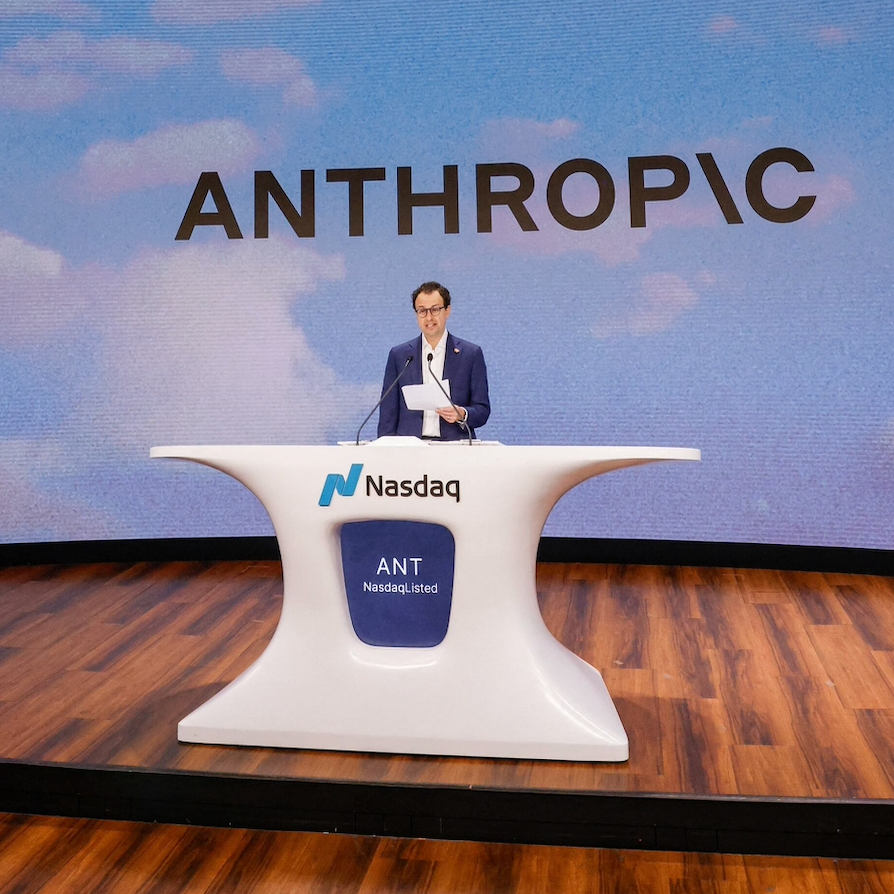
0:41But let's start with the biggest number of yesterday, which was$1.4 trillion. That is the targeted valuation for Anthropics IPO, or at least we think it is. There has been a lot of confusion surrounding this number. So given all the chaos involved in simply getting this IPO filing out, what do we know? What don't we know? Well, as we said earlier yesterday, there was some confusion just even in the hours before that roadshow started. But eventually, what the numbers that we got came in on a fully diluted basis. So if you're into the details and the wonkery of IPOs and stock valuations, a fully diluted basis, it comes in at 1.4 trillion.
1:23That's over$70 a share. There will be total amount of shares that will be issued will be somewhere just shy of 90 billion worth, which make it big more shares than than SpaceX listed. The open float will be about 64 billions worth. So loads of numbers. We could go on probably the whole show and talk about all the details as a full prospectus. They're outroading and trying to drum up interest and with that sort of valuation. So there was confusion right up to the last few hours yesterday, as we talked about yesterday, exactly what the numbers would say. In the end, we got that 1.4 trillion valuation on a fully diluted basis, which anyone who reads the runes of stock valuations and IPOs will understand that.
2:15But that's kind of a comparable valuation to the other big IPOs that we've been watching. So that's slightly below the last estimates that we were getting guidance only a few weeks ago, and certainly significantly below the two trillion hoopla that was doing the rounds during the summer. So it has been downgraded significantly. On an undiluted basis, when you exclude the stock options and restricted stock, its valuation is down at about 1.1 trillion or so. So these are moving all the time and even getting reports this morning that they may push up the fully diluted valuation to 1.5 trillion. But it's moving.
2:58It's like a moving beast. And maybe you can say in the process of a roadshow, then this is sort of inevitable. But these are huge swings and it tells us something, as we said yesterday, something about the uncertainty about where this company is valued. but not just this company, the whole AI complex and what it's worth. Of course, this comes at such a difficult moment in the AI trade. We obviously had an incredibly difficult month last month. We also have a Democratic Congress coming in, and perhaps even more importantly, a number of Democratic governors who look like they're going to be pushing back on the AI build-out.
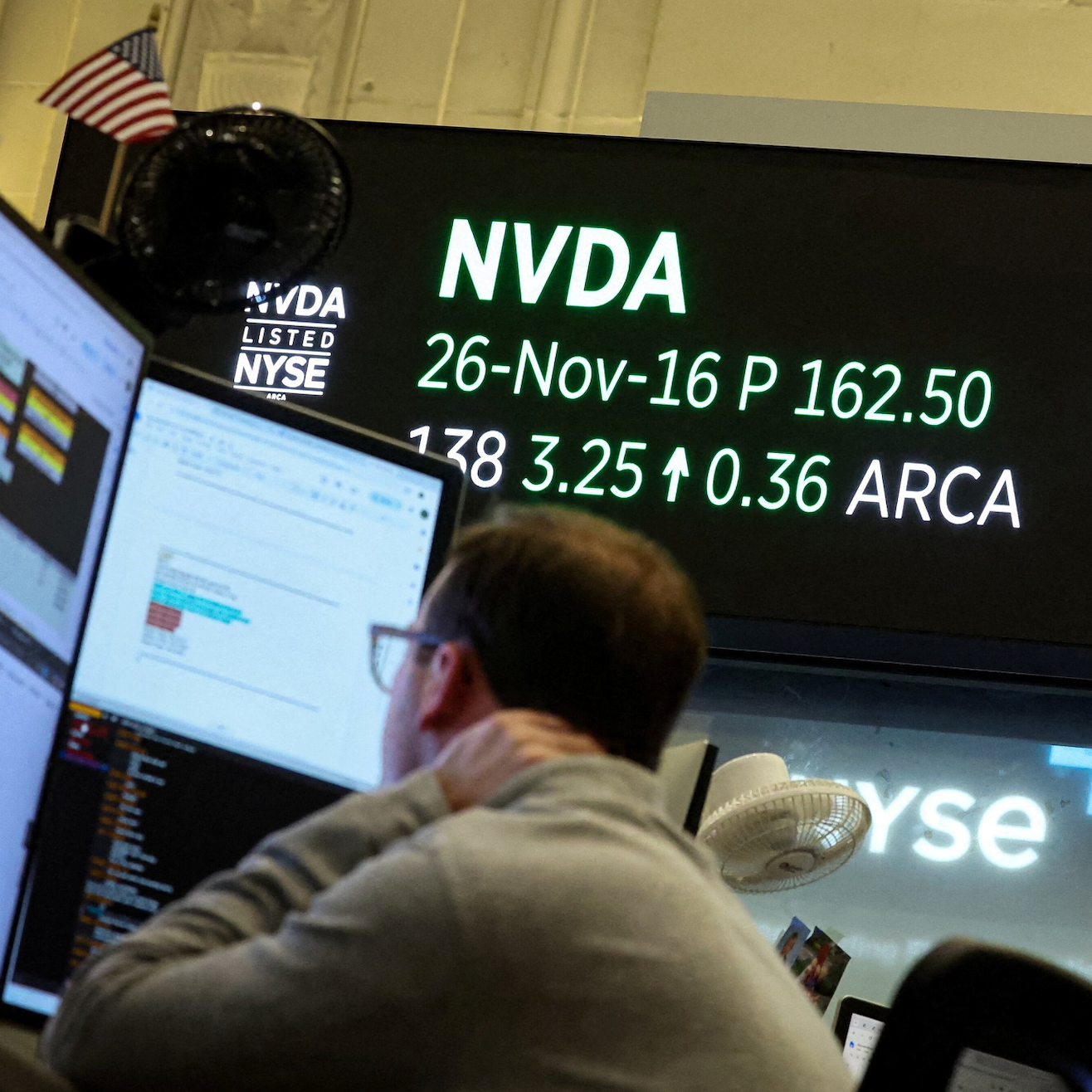
3:34And then, of course, we have this story involving NVIDIA CEO Jensen Wang that seems like essentially a Bond film at this point. And we're getting more details out about that. And it's just getting more and more worrying about this company that is really at the center of the AI story. NVIDIA clearly is a story on a different trajectory altogether and in the realms of geopolitics as much as anything to do with the tech space. But the details that are coming out on this really do mount the pressure on Jensen Huang and his position as CEO. because the spying allegations related to his affair have now detailed, at least reports are saying, that it was about the shipment of restricted chips, NVIDIA chips, to Chinese companies long after those restrictions were in place.
4:25So there is not just bits of information that were swapped, but very material channeling of restricted exports to America's biggest rival. And these are reports and allegations. The investigations are going on. It's the FBI. It's the company itself. But it is becoming a wider political issue too, clearly. What did Commerce Department know is one question. What did Secretary of State know? What did Donald Trump know? Clearly, the Democrats already in Congress are beginning to make political capital of this and demanding that Trump explain what he knew and why he didn't do anything about it. And of course, it also comes ahead of Trump's meeting with Xi Jinping later this month.
5:11So the relationship between the United States and China, not least on export trade and tech goods in particular, is very much in the mix here. And the NVIDIA story is very much part of it. But for numbers' sakes, it's worth remembering yesterday that NVIDIA's continued drop on the market was now or is now getting close to 10%. And that's 430 billion of market cap wiped off one of the biggest companies in the world. And the AI story, though, did get a bit of a shot in the arm yesterday from perhaps a somewhat unexpected source. Corweave reported this is a company that saw massive declines in its share price last month.
5:51And the third quarter results were relatively strong. Perhaps most importantly, it said that it expects to be profitable in the first half of 2028. It also noted that it shouldn't have to tap the unsecured debt markets in the short term and should be able to continue to service its debt just using cash flow. So that all sounds good. But if you also look at what Corwee said, the CEO also again noted that part of the reason they're going to be able to continue with their build out, continue to service their debt is because they're going to continue to get loans from their customers. The biggest of which, of course, is NVIDIA.
6:23These are all tied up. And I think that's a really important point. the intertwined nature of this AI complex, the cross-financing, the cross-ownership that's going on. So damage to one part of it ripples very quickly amongst that kind of very concentrated group of companies that are doing all of the build-out and the chip sales and the data center building, etc. CoreWeave, though, as you say, given that it has been battered, certainly by virtue, certainly both these stocks and bonds, but by virtue of its very high leverage, it's been heavily borrowing to do its building. The numbers came in better.
7:04Certainly, its projections slightly better. Its financing details, as you point out, were soothing to some degree. It's going to be getting into chip financing, chip-backed financing, a whole area of asset-backed financing rather than non-secured debt. And the stock is up about 8 % before today's bell. But remember, CoreWeave is down about 40, 50 % over this really ropey two-month period where everyone was targeting data center building and CoreWeave was one of the companies in the crosshairs. And of course, for CoreWeave, one of the biggest concerns remains borrowing costs. And it looks like those could be rising higher because we got a pretty hot inflation report yesterday.
7:46Yeah, well, everybody, particularly the stock markets, were following these fascinating tech stories. Actually, the biggest story on the markets yesterday was, by some distance, that inflation report. But not just on its own, because Fed Governor Chris Waller was speaking in London before the release of the inflation number. And what he said there was that the Fed was essentially behind the curve. And if the core consumer price inflation monthly rise in October came in at 0.3 % or above, then he would be minded to vote for a 50 basis point interest rate hike next month. And that's twice what the Fed would normally do.
8:24These quarter point moves are typical. But a 50 basis point is a big signal. Now, he's just one voter, but that's what we got in the inflation report later in the day. The core rate was up 0.3%. And we don't get a year-on-year rate because we didn't have a CPI report in October 25. But if you annualize these numbers as people do, we're looking at really hot inflation. The annualized core rate is now running somewhere just under 4%, about 3.8 % or so. And the annualized headline rate of inflation is running at way over 5%. So you can see why the Fed's alarmed. And not just Chris Waller, but his colleague, Laurie Logan, who's the Dallas Fed chief.
9:09She's also a voting member of the FOMC next month. And she said that things should accelerate, that tightening should accelerate too. So the market has moved to price more than a quarter point in December, which indicates that it's seeing a possibility that there will be 50. But even if there isn't 50, there's another one priced in January again. So you're seeing that the Fed is not satisfied about where it is. It's looking at these numbers, whatever's happening in the oil market, it is looking at these numbers as being baked in, not just to energy and transportation, which you might expect, but also very sticky price rises in things like shelter and in services.
9:46And the Fed thinks that the oil price shock of this year is filtering out elsewhere, along with the AI pressure as well.
10:02on how the great sovereign bond storm of 2026 may be clearing. The link is in the show notes. And for more of any of today's stories, head to Reuters.com or the Reuters app. Follow us on your favorite podcast player. And if you're on a smart speaker, just ask for the latest market news from Reuters. We'll be back tomorrow.
AI darling Anthropic kicks off its IPO roadshow targeting a $1.4 trillion fully diluted valuation - well below the $2 trillion figure that was doing the rounds over the summer. Meanwhile, a hot inflation report rattles bond markets and NVIDIA shares slide nearly 10% as spying allegations against CEO Jensen Huang grow more serious.
📲 Podcasts, breaking news, and video analysis from the source. Download the Reuters app here.
Today's recommended read: Bond storm of 2026 may be passing, but Fed gusts linger, Mike Dolan
Subscribe to Mike Dolan's Morning Bid newsletter and check out his columns on Reuters Open Interest.
Produced by Eliza Davis Beard.
Sound engineering and music by Sebastian and Josh Sommer.
Visit the Thomson Reuters Privacy Statement for information on our privacy and data protection practices.
You may also visit megaphone.fm/adchoices to opt out of targeted advertising.
Learn more about your ad choices. Visit megaphone.fm/adchoices