Ask ChatGPT

 Revisionist History
2 Oct 2026 · 35m · 16 chapters
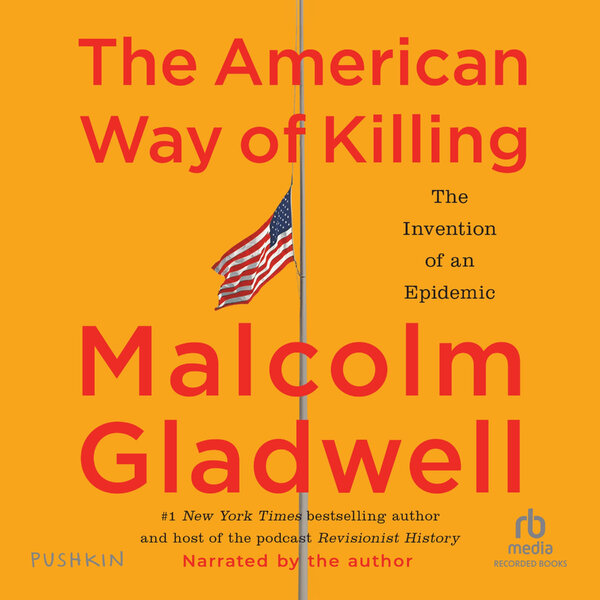
Malcolm Gladwell’s argument that U.S. gun violence is an “invented epidemic” driven by everyday, emotionally triggered violence in under-policed communities, not by mass-shooting-focused gun control. He claims gun-control politics are “dishonest” and that the U.S. needs more cops and more intervention programs.
Malcolm Gladwell (bestselling nonfiction author; staff writer for The New Yorker; host of Revisionist History; new book The American Way of Killing). Brian Lehrer (host of The Brian Lehrer Show on WNYC; interviewer).
U.S. homicide/gun violence rates are unusually high versus peer countries like Canada/Western Europe; Americans are “under-policed” (e.g., Los Angeles 8,500 officers vs Berlin 18,000). Police violence is framed as a response to being overwhelmed. Second Amendment origins tied to slave patrols and plantation owners. Expressive violence (impulsive retaliation) dominates homicide; long prison sentences won’t stop it.
George Floyd protests; Supreme Court Bruen and Heller limiting gun laws; Baltimore homicide drops (about 350/year to under 100 in three years); New York clearance rates (often 85–90% in Europe vs below 50% in big U.S. cities); revolver-era gun ordinances in mid-1800s towns.
Written by AI. May contain mistakes.
Brian Lehrer discusses gun violence and the misconceptions surrounding it.
“This is Jacob Goldstein from Business History.”
Brian Lehrer discusses gun violence and the misconceptions surrounding it.
“Not a new conversation or topic by any stretch, right?”
Malcolm Gladwell explains his views on policing and the need for more officers.
“that disenfranchised communities see every day.”
Gladwell argues that gun violence is a result of systemic issues rather than policing numbers.
“Well, let's start with the title, The American Way of Killing, The Invention of an Epidemic.”
Discussion on police staffing needs and community engagement.
“Instead, we have a kind of a conversation that's burdened with all kinds of fantasies about what we're doing.”
Discussion on police staffing needs and community engagement.
“It is absolutely the case that American police as a group use more force and are more violent and kill more civilians than most other Western police forces around the world.”
Gladwell discusses rebuilding trust between police and communities.
“But there's such a long history of people not only being let down by cops when, you know, maybe they are under-enforcing in some ways in high crime areas, but actually being brutalized by cops.”
Explore the challenges police face due to insufficient resources and community ties.
“Because that's where juvenile delinquency leads in many cases to more serious crimes down the road.”
Discuss the historical roots of gun rights and gun violence in America.
“Because a militia is so central to a safe and secure country, we need the right to bear arms.”
Analyze the historical shift in public attitudes towards gun control and violence.
“It flipped because our conversation about gun violence became dishonest.”
Understand the difficulties in implementing effective gun control measures today.
“The court has been going, has been leading, both Congress and the courts have been leading the country in the opposite direction for a generation.”
Engage with listener Carolyn's insights on the philosophy of police in the U.S.
“Malcolm Gladwell is my guest with his new book about gun violence in the United States called The American Way of Killing, The Invention of an Epidemic.”
Explore the foundational principles of policing and their relevance today.
“it's just that we, our police, think that they are the law.”
Learn about the critical distinction between two types of violence.
“And he has a famous set of 10 principles of policing, which are as relevant today as they were back then.”
Discover successful strategies for reducing gun violence in communities.
“And this is another area where the conversation we have about gun violence is misguided.”
Discuss the impact of police presence and behavior on community trust.
“Would you say that kind of training needs to be, what, just multiplied in terms of the amount of it or changed in terms of the approach of it in those particular neighborhoods?”

Get the gist, explore an idea or ask about something said.
 Claude
On Revisionist History, what are the key points of this episode?
Searching your listeningAutomatic transcript. May contain errors.
0:00This is Jacob Goldstein from Business History. When the internet arrived, most people used it to look things up. Others saw what it could really do. The same is true with ChatGPT. ChatGPT work goes beyond answering questions. Give it a goal, plus things like notes, files, feedback, data, or project plans, and it can help create a brief, analysis, deck outline, tracker, or workflow. You stay in control, reviewing the work and choosing the final result. Put ChatGPT to work on your most ambitious ideas and projects. Get started at ChatGPT.com by selecting Work Mode, available on Plus and Pro plans.
0:38We spend hours deciding what to buy, but there's a split-second decision that can make or break a sale. Do you have the trust to hit Buy Now? Agentic Commerce is testing that moment more than ever. And that's where PayPal comes in. With 25 years of checkouts, 400 million consumer accounts globally, and the benefit of purchase and seller protection, all of which make sure wherever a purchase starts, it ends with trust. Built for payments, growth, and agentic. PayPal Open, built for all business. Visit paypalopen.com. Purchase and seller protections on eligible transactions only. Terms apply. See paypal.com slash risk-management for details.
1:51used to see clearly. Get the American Way of Killing at pushkin.fm slash audiobooks or at Audible, Spotify, or wherever audiobooks are sold.
2:08Pushkin.
2:17Hello, hello, everyone. Malcolm Gladwell here. Greetings from Los Angeles. I'm out on tour for my new book, The American Way of Killing, The Invention of an Epidemic, which is my examination of America's ongoing problem with criminal violence, specifically gun violence. I'm actually recording this from the closet in my hotel room. Last week, we ran a chapter from the book, one of my favorite chapters, The Slave Owner's Lament, which you should listen to if you haven't yet, because I'm guessing it's the story you haven't heard about the Second Amendment, and which left me more than a little surprised and angry.
2:55Next week and the week after, we're going to run a two-part series on the fascinating story about what's been happening in Baltimore over the last couple of years, along with, because this is what we do at Revision's History, a little excursion into the world of cardiac bypass surgery. But right now, I want to share with you a really fun and interesting interview I did with Brian Lehrer, who has one of the most popular shows on WNYC, New York City's public radio station. So have a listen. By all means, buy the book if you are interested. And if you want to catch me on the road, all of my book tour dates are up on my website, Glabal.com.
3:33Thanks for listening, everyone.
3:44It's the Brian Lehrer Show on WNYC. Good morning again, everyone. Gun violence in America. Not a new conversation or topic by any stretch, right? But there's actually a bit of a pattern. Every time there's a mass shooting, it comes back into the spotlight. into the headlines. Democrats express mounting frustration and not being able to institute much meaningful gun control reform, and then it kind of peters out, right? The news cycle moves on. Well, we're going to talk to Malcolm Gladwell about this because he's got a new book coming out tomorrow officially called The American Way of Killing, The Invention of an Epidemic, in which he argues that the conversation around gun violence in the U.S.
4:27is misguided, that people focus too much on mass shootings and not enough on the kind of violence, gun violence, that disenfranchised communities see every day. To address that kind of violence, which makes up the vast majority of gun violence in the United States, he says the country needs more cops and more intervention programs, both of those. By focusing so narrowly on gun control as a prevention strategy, He argues gun violence activists are losing sight of the big picture. You might know Malcolm Gladwell because, well, he's one of the most popular nonfiction writers of our time. He's written a whole range of bestselling books on social phenomena, including Blink, The Tipping Point, and Outliers.
5:11That's the one where he coined the idea that anybody can be an expert at something if they dedicate 10 ,000 hours of practice to it. You've heard that. That comes from Malcolm Gladwell. He was a New Yorker staff writer for so many years, and he also hosts the podcast Revisionist History. Again, his new book, which comes out tomorrow, is called The American Way of Killing, The Invention of an Epidemic. Malcolm, thanks so much for coming on today. Always interesting to talk to you. Welcome back to WNYC. Thank you, Brian. Well, let's start with the title, The American Way of Killing, The Invention of an Epidemic.
5:48Why do you call the gun violence epidemic an invention? Well, I feel like it's not something that's inherent to America. I mean, if you look at our peer countries around the world in Western Europe or our neighbor to the North, Canada, which are in almost every other way very similar to the United States, they have homicide rates that are a fraction of the United States. And so we're clearly doing something peculiar and different that sets us apart from the normal way that developed 21st century Western democracies behave. So it seems like we're inventing something, right? It's not – America wasn't born with this problem.
6:32In the book, you say the conversation that the country tends to have around gun violence is dishonest. that's a strong accusation as opposed to kind of well-intentioned but misguided or something like that why dishonest well i use a dishonest very broadly and what i mean by that is that we we sort of dick we we have we focus on things that we pretend certain things are serious problems when they're not and other things we focus on we pretend certain ideas are solutions when they're actually not really a solution. We avoid conclusions when they're too difficult. I mean, each chapter of the book takes a different aspect of the problem and shows how we've been fooling ourselves.
7:18You know, I have two chapters on the Supreme Court and the kind of absurd way that the Supreme Court passes down gun rights rulings. Or you mentioned in your intro, one of the arguments of the book is that we have too few police in America. And the reason I say that. It's very simple. If you could just compare North American cities with European counterparts, I'll use LA as an example. LA and Berlin are exactly the same size. Los Angeles has 8 ,500 police officers. Berlin has 18 ,000. And that's typical of the difference between American cities and European cities. If you talk to any American police chief, they will tell you they are radically understaffed compared to their peers across the ocean.
8:03Americans think the opposite. We think we're over-policed. Nothing could be further from the truth. To my mind, there's a level of dishonesty involved in that, an unwillingness to kind of just look at the facts and draw reasonable conclusions. Instead, we have a kind of a conversation that's burdened with all kinds of fantasies about what we're doing. Well, that's probably the most controversial part of your book, I'll read an excerpt of your words. In 2020, an African-American man in Minneapolis named George Floyd was killed by a rogue police officer setting off an extraordinary wave of protests around the country over police brutality.
8:44The motto of the protesters was, defund the police. If police were badly behaved, the thinking went, it was because there were too many of them, unquote, from your book. So there's a lot to unpack there. For one thing, many people would argue, no, this was not a rogue police officer. Police officers are not maybe doing things every day like that officer did or those officers did to George Floyd, but they're a function of something systemic, the way policing is done. Do you disagree with that? I don't. In fact, I think that's spot on. However, the conclusion from that observation is wrong. It is absolutely the case that American police as a group use more force and are more violent and kill more civilians than most other Western police forces around the world.
9:42We conclude from that that we have too many police. The exact opposite is true. Police, when you do an international comparison, you find that the most violent and repressive police forces in the world are in countries where the police are the least numerous. Police violence is a response to being overwhelmed. if you feel like you're trying to police a large area with a limited number of people you're only at one, not your only option but one option is to project force, is to behave in an overly aggressive manner is to try and demonstrate that you're bigger and tougher than you actually are if you have police in sufficient numbers, you don't have to behave that way, and that's what we see when you do, there's two really really, really wonderful sociologists at Harvard did this international comparison where they showed this, that the most violent police forces in the country, in the world, are in countries where they have the fewest police and the best behaved are in the countries that have the most police.
10:43And this is their argument, that police violence is a response to being overwhelmed.
11:02This is Jacob Goldstein from Business History. Imagine Henry Ford trying to create the assembly line. He had factory plans, production schedules, supply information, research, and ideas coming from all directions. His team spent years studying how to make the process work. Now, imagine having ChatGPT work. ChatGPT work can help with big projects that have lots of steps. You give it the goal along with real information like notes, files, reports, feedback, and project plans. It can use approved apps, connected tools, and files to help turn all of that into something useful. A plan, an analysis, a tracker, a presentation outline, or a workflow you can keep improving.
11:43And you stay in control. You give direction, review the work, approve actions, and choose the final result. Would Henry Ford have built the assembly line faster with ChatGPT? We'll never know. Ford didn't have ChatGPT. You do. Put ChatGPT to work on your most ambitious ideas and projects. Get started at ChatGPT.com by selecting Work Mode, available on Plus and Pro plans. Malcolm Gladwell here. My new book, The American Way of Killing, investigates America's gun violence crisis. Why is the richest country in the world plagued by such lethal violence? Through a series of stories, interviews, and archival tape, I confront one of today's most urgent moral dilemmas and examine why the U.S.
12:28has never quite understood its own problem and why you can't fix what you refuse to see clearly. Get The American Way of Killing at pushkin.fm slash audiobooks or at Audible, Spotify, or wherever audiobooks are sold.
12:46So you argue we need more cops, but also that people need to trust them more and work with them more in order to be safer. But there's such a long history of people not only being let down by cops when, you know, maybe they are under-enforcing in some ways in high crime areas, but actually being brutalized by cops. Yeah. So how do you think that trust can be rebuilt? I think I had a really fascinating discussion when I was doing my book with a guy named Daniel Oates, who is one of the most progressive, thoughtful police chiefs, big city police chiefs in this country. And we were talking about this.
13:23He used to be the police chief in Aurora, Colorado, among other places. And he was, you know, when I said to him, do you have too few police officers? He was like so wholeheartedly in agreement. He was like, unbelievable. You don't understand how undermanned we are. And he talked about what would happen if he had European levels of police officers. In other words, what would happen if we doubled the size of his police department in Aurora? And he was saying that would permit me to get my officers out of the car, to work closely with community leaders, to find out about troubles before they bubble to the surface, to have a much closer feel for what's going on in schools.
14:10Because that's where juvenile delinquency leads in many cases to more serious crimes down the road. You really want to be intervening and getting to know kids before they get in serious trouble. He went down the list. For 40 minutes, he talked without stopping about all the things he could do if he had more police officers. And he said, when you have too few, as almost every big city police officer, police chief, police department in this country does, you can't get your officers out of the car. What they're doing is they are racing from one emergency to the next and never have the time to build those kinds of ties with the community that are so important.
14:47We have so got this backwards in this country. And I could line up every police chief in this country and they would say, oh, you're absolutely right. I can't do what I need to do. They don't want to be. They don't want to have a mistrustful relationship with the general public. They don't want to have people on their force who use excessive violence. They're trapped in this situation because they have half the resources of other countries around the world. but do you also not think that there need to be big reforms in how the police approach policing uh you know you compare you did a stat which is you know part of what you do right you look at data and you you try to draw conclusions about issues in the world from from big data sets And so you were comparing the high rates of gun violence in the United States with relatively fewer police to lower rates of gun violence in cities around the world with more police.
15:53But I think a lot of people would argue there are other reasons, at least in addition, for the violence in the United States, including the police violence in the United States, the history of slavery and the role of the police early, early on in enforcing that being among them. Oh, yeah. I mean, this is, Brian, I was just talking about one chapter in a book with many chapters. You're absolutely right. I understand. This is not a—I don't mean to suggest, and I don't argue, that this is a problem solely about the police. The police, the under-resourced nature of police departments in the U.S. is one factor of many that account for this ongoing American crisis.
16:34And I kind of walk through, you mentioned, for example, the legacy of slavery. And I have a whole chapter called The Slave Owner's Lament, which talks about how our notion of gun rights in America arises out of our experience with slavery. The reason the Second Amendment exists is that plantation owners in the 18th century, in places like Virginia and South Carolina, were very anxious when the Constitution was first proposed that they would lose the right to have militias, which slave patrols, that armed groups of men who went around making sure that the slaves were under direct control. weren't rising up and protesting or trying to overthrow their overseers.
17:27And the Second Amendment was an attempt by James Madison to mollify the plantation owners of Virginia and South Carolina, whose votes were essential for the ratification of the Constitution. So when the Second Amendment says, Because a militia is so central to a safe and secure country, we need the right to bear arms. What he's doing is he's saying to the slave owners, we're giving you this so you can continue to keep your slaves under control. Right. And yet, and maybe ironically, you also have in the book this bit about the Wild West, but a lot of it is in the South, which, of course, was the slaveholding part of the country.
18:12That when pistols came onto the market in the first half of the 19th century, gun violence became a huge issue. And then a lot of places that were dealing with this violence, like Texas, which we might not guess, and Arkansas, which we might not guess. actually instituted pretty strict gun laws, much stricter than they have today. Give us a little of that history. Yeah, it is a fascinating kind of deja vu moment in American history. The exact same argument that we have today about gun violence was happening in America in the mid-19th century because the arrival of the revolver dramatically changed the scale of violence that people were seeing, particularly in the frontier West, that all of a sudden pistols were cheap, they were efficient, they could fire, you know, you didn't have to reload, you could fire six shots at one time.
19:12And this created a huge spike in the level and the concern over gun violence in the United States. In response to that, one town after another, and the list of cities and towns that enacted very, very strict gun control ordinances in response to the rise of the revolver. I mean, it's as long as my arm. It's like all around the country, particularly in the South and the West. City after city passed laws that said things like, if you enter our town, you have to give up your gun. Or you have to pay a massive tax if you want to buy a gun. Or you have to register your gun with the local authorities.
19:50I mean, the kinds of things that we think of as unthinkable today were a matter, were commonplace, particularly in the so-called Wild West. I have a whole chapter about the myth of the Wild West. The Wild West is a incredibly, the notion of this kind of violent period on the American frontier was incredibly brief because one town after another on the frontier enacted these incredibly strict gun control ordinances to make sure that when young men came into town with their armed young men came into town and started drinking in the local bars. They had to give up the guns first. It's a funny kind of version of American history.
20:39So how did it flip? How did it flip? It flipped because our conversation about gun violence became dishonest. If you talk to people, If you look at the way the public discussion about gun violence happened in the mid-19th century, what you see is a very kind of honest understanding about what the problem was. The problem was young men were getting drunk and were settling arguments with pistols, with pistols that were very deadly, and that that was causing a spike in homicides. and that the quickest way to get control over this problem was to take away the pistols. So they settled their arguments with fists and knives instead of a more lethal weapon, right?
21:26People weren't pretending the problem was something other than it was. And they weren't erecting some kind of ideological barrier to taking that kind of action. It was felt that if you were in some roaring frontier town where things were varying out of control, there was some common sense steps you could take to bring them back under control, right? And it wasn't progressives and bleeding heart liberals making this argument. It was the town fathers who were tired of seeing young men being killed, you know, on Friday and Saturday nights in their city. So like there's a, what has happened, I think, is that we've allowed politics and ideology to kind of permeate every aspect of this discussion.
22:09And, you know, in my book, I try and stay completely out of politics entirely. This is not—there is no ideology in the American way of killing. I'm not making a Democratic argument or a Republican argument. In fact, I place the blame equally on both sides. This should not—there is no reason that this argument, this discussion should be partisan. The minute you make it partisan, you lose track, lose contact with reality. what's the part that you blame on democrats i think that democrats have uh people that there's a certain kind of gun control fetishism that has taken over a lot of the progressive response to gun violence and i have no problem in theory with that like i've just said i think that this is a important piece of the puzzle but uh it can't be the only thing you're doing realistically how even if, realistically, how quickly could we get meaningful gun control in this country?
23:08The court has been going, has been leading, both Congress and the courts have been leading the country in the opposite direction for a generation. This is, even if it works, this is a battle that's going to be 25 or 30 years in the making, right? So what do you do in the interim? If you put all your eggs in that basket, you've got nothing to help people right now. And when I went in for this book and talked to people who are doing homicide prevention on the front lines, they don't even mention gun control. Not because they aren't in favor of it. They are. But just because it doesn't help them right now, right?
23:40With the last two major Supreme Court rulings on gun violence, the Bruin case and the Heller case, the court is making it harder and harder and harder to pass meaningful gun control in this country. The Bruin case took away New York State's handgun law, which had been in place for 100 years in which there was clear evidence that it reduced suicides by gun in New York State, dramatically reduced suicides by gun in the United States. The court took that away. That's where we're going with gun control. We're not winning right now. So the question is, we should continue to fight the good fight, but that can't be the only thing you talk about, right?
24:21You have to broaden your response. And I feel like even in doing interviews for this book, I find that my interviewers, they just want to talk about guns all the time. You can't just talk about guns all the time.
24:43This is Jacob Goldstein from Business History. Imagine Henry Ford trying to create the assembly line. He had factory plans, production schedules, supply information, research, and ideas coming from all directions. His team spent years studying how to make the process work. Now, imagine having ChatGPT work. ChatGPT work can help with big projects that have lots of steps. You give it the goal along with real information like notes, files, reports, feedback, and project plans. It can use approved apps, connected tools, and files to help turn all of that into something useful. A plan, an analysis, a tracker, a presentation outline, or a workflow you can keep improving.
25:24And you stay in control. You give direction, review the work, approve actions, and choose the final result. Would Henry Ford have built the assembly line faster with ChatGPT? We'll never know. Ford didn't have ChatGPT. You do. Put ChatGPT to work on your most ambitious ideas and projects. Get started at ChatGPT.com by selecting Work Mode. Available on Plus and Pro plans. Malcolm Gladwell here. My new book, The American Way of Killing, investigates America's gun violence crisis. Why is the richest country in the world plagued by such lethal violence? Through a series of stories, interviews, and archival tape, I confront one of today's most urgent moral dilemmas and examine why the U.S.
26:08has never quite understood its own problem and why you can't fix what you refuse to see clearly. Get The American Way of Killing at pushkin.fm slash audiobooks or at Audible, Spotify, or wherever audiobooks are sold.
26:27Malcolm Gladwell is my guest with his new book about gun violence in the United States called The American Way of Killing, The Invention of an Epidemic. And Carolyn in St. Louis, you're on WNYC with Malcolm Gladwell. Hi, Carolyn. Thank you for calling in. Hi, Brian. Thank you so much. I really appreciate this discussion. And my husband and I believe that part of the problem is what your guest is talking about, the police in other countries, their philosophy is that they're to remind the people of the law. But in the U.S., our police have the philosophy that they are the law. And I think if we could just define those two differences and take a look at how we might start to change people's minds here in the United States, there might be an approach.
27:27I don't know. What do you mean by are the law? Do you want to expand on that a little bit and get a little specific, Carolyn? Well, you know, as we see it, there are so many situations where there are definitely not enough people to help with those that have mental illness and things that the police are just not trained to deal with. but like George Floyd, I mean, if you look at situations around the country, it's just that we, our police, think that they are the law. And I think that that's coming down from the top, not just the top of the police department, but I think from the very top of the administration.
28:24And we've got to remind people that the police, I think, and I'd like to know what your guest thinks, that the police are here to remind people of what the law is. Carolyn, thank you very much. Malcolm? Yeah, so I think Carolyn is raising an important point, which is, if you go back to the father of modern policing was Sir Robert Peel, who was the Englishman who founded the Metropolitan Police in London in the late 18th century. And he has a famous set of 10 principles of policing, which are as relevant today as they were back then. And one of his principles, the one I love the most, is the police are the people and the people are the police, which I think is what Carolyn was talking about, that his idea from the very beginning was that the police are one of us.
29:21And there ought not to be a clear line between the ordinary citizens and the people who are charged with reminding us about what the law is. And that principle is not lost in America. There are many, many, many wonderful police officers and police chiefs in this country. But we have these really troubling edge cases like George Floyd, which cause an enormous amount of mistrust between the general public and the police. And we need, I think, to recapture, you know, if you just look at something as simple as what they call clearance rates, what percentage of crimes are solved by the police? In Europe, clearance rates are often for a homicide.
30:02These sort of 85 to 90 % of homicides are solved by the police. In many American big cities, that number is well below 50%. And why is that? Because people don't trust the police, right? The only way you can solve a homicide is if people come forward, people from the community. So we need, I think, that part of the thing that needs to be restored is that notion that the people are the police and the police are the people. And I think one of the ways you get there is by thinking much more seriously about how you spend your resources on public safety. In the book, you spend some time drawing a distinction between what you call instrumental violence and expressive violence.
30:47Instrumental violence and expressive violence. What is that distinction and why do you think it's important? Oh, it's a crucially important one. And this is another area where the conversation we have about gun violence is misguided. Instrumental violence is a crime committed in the pursuit, in the course of some larger rational end. I'm robbing a bank. The guard gets in the way. I shoot the guard, right, in order to rob the bank. That's instrumental violence. It's planned. It's executed. There's a rational goal. If you look at the way we discuss homicide in popular culture, it's almost all instrumental.
31:25I do an analysis of a season of Law and Order, which is probably watched by—more people know about homicide from Law and Order than probably anything else. It's all instrumental crimes. People have a clear motive. They got some goal. They commit the murder in order to get something else. Expressive violence is violence committed in the heat of emotion, where the violence is the point. You killed my brother, so I'm coming after you, and I see you in a bar, and I pull a gun, and I shoot you. That's expressive violence, right? It's emotional. It's spontaneous. It's unplanned. It's often regretted after the fact.
32:01And the violence is I'm trying to settle some, to enact some kind of rough justice. Most of the homicide that we see in the United States is expressive. And once you understand, it's young men settling arguments with guns. That's what homicide is. And any solution which fails to have that notion at its core is not a solution. So if I say I want to curb gun violence by doubling the length of sentences for shootings, that's not going to solve our problem. Because the young man who was really, really upset and maybe drunk or high and sees his enemy in a bar and pulls a gun, he's not thinking about the long-term consequences of his actions.
32:43He's not thinking, oh, I shouldn't do this because I'm looking at 40 years instead of 20, right? That's not – that whole idea that you can affect the behavior of someone just by tinkering with the length of a sentence when the behavior itself is impulsive and emotional and being done by an 18-year-old who has very, very poor conflict management skills or – I mean it's just absurd. And so you're right a lot about social programs designed to help curb gun violence through training school-age students to maintain their emotions and avoid resorting to violence like the kind you were just describing.
33:24Some form of this already exists in a lot of places where we see the most gun violence, New York and elsewhere. So are they doing it wrong or what would you say about that effort? That effort is, when it has been tried properly, has been extraordinarily successful. I've just done two episodes of my podcast on Baltimore and what's going on in Baltimore, where they've seen unbelievable drops in homicides in the last couple of years under the Brandon Scott administration. They've gone from 350 homicides a year and they make it under 100 this year, and that's in three years. I mean, it's a kind of unprecedented decline.
34:01And what they're doing there is exactly a form of what I'm talking about. They are essentially intervening on a personal, individualized basis in any social situation that they think might lead to a homicide. So you shoot my brother, right? And so the police come to me and they say, Malcolm, I know you just lost your brother and you're angry and you're upset. And I know that you just posted on social media that you're going after Brian. Don't do it. Let us help you. Let's talk you through this. And then you bring in my father or my pastor or somebody to talk to me and talk me down off the ledge.
34:42You offer me support services to make sure I don't retaliate. That has proven to be extraordinarily effective. It has nothing to do with arresting people, nothing to do with threatening them with prison, nothing to do with carrying a gun and going in and like waving it around. It has to do with meeting people where they are and understanding that the roots of criminal violence are in emotions and in broken relationships and in fractured social circumstances and in unforgiving environments. That's the approach that we need if we want to take this problem seriously. So if we look, for example, at the New York City stat, that a disproportionate amount of gun violence is perpetrated in very few neighborhoods.
35:28Exactly. That is exactly. Would you say that kind of training needs to be, what, just multiplied in terms of the amount of it or changed in terms of the approach of it in those particular neighborhoods? Like if Mayor Mamdani were to be listening in. Yeah. Well, New York has been exceedingly successful in recent years. I mean, New York is probably the most kind of advanced crime homicide fighting force in the country. That's why our violent crime rights are so incredibly low in this city. And a lot of what I've been talking about is something that has been part of New York City practice for some time now, ever since the city switched from the disaster, in retrospect, disastrous policy of mass incarceration during the mass arrests during the Giuliani years to this much more focused policy that we have now.
36:20You know, one of the key findings that drives this more enlightened approach to gun violence is at any given time, even in a very large community, the number of people who are engaged or at risk for gun violence is very, very small. In Baltimore's Western District, where they've been doing the bulk of this work, it's an area of 40 ,000 people. The belief is that we're talking about a couple of hundred young men at any given time who are at risk for shooting someone or being shot. There was a great analysis done in the west side of Chicago. 50 ,000 people on the west side. Gunmanjou Papachristos did work where he showed that we're probably talking about 400 people who are at risk for gun violence.
37:04It's very small. That's why you can do individualized attention. We have two minutes left, one more caller, and it won't surprise you that your call earlier in the segment for more police rather than fewer as a way to control gun violence and police violence is drawing most of the response. lynn in portland oregon you're on wnyc with malcolm gladwell we have 30 seconds for you lynn go for it go lynn oh boy okay thanks a lot um yeah i agree with everything that mr gladwell is saying i have seen what happened in portland oregon post george floyd and the population went from really you know, not making the cops a big deal to there's just a real rift between the police and the public.
38:01And I was helping a woman try to come down from a bridge where she was attempting to commit suicide. And unbeknownst to me, the police were called. And when they came in, she totally freaked out. She didn't jump, but it became a highly escalated scene. I try to have the cops understand that this woman is afraid of you. She doesn't want to have you help her. And they... You told her a screener they were dressed in war gear, and that's part of what scared her. Going into World War III. Lynn, I'm going to leave it there because we have 30 seconds for Malcolm to have the last word. I know you've got to go.
38:43Malcolm, go for it, then we're done. No, that's exactly what I'm talking about. That's what you do when there is a rift between you and the community. You dress up like an invading force, and you lose your ability to have a real conversation with the people that you're supposed to be helping. And I think that's one of the things we need to address in this country. Malcolm Gladwell, author of many bestselling books, Blink, The Tipping Point, Outliers. His new one is called The American Way of Killing the Invention of an Epidemic. Malcolm, thank you very much. Thank you, Brian.
39:46Original music by Luis Guerra. Mixing and mastering by Jake Gorski. Special thanks to WNYC, Brian Lehrer, and Lisa Allison.
40:02Malcolm Gladwell here. My new book, The American Way of Killing, investigates America's gun violence crisis. Why is the richest country in the world plagued by such lethal violence? Through a series of stories, interviews, and archival tape, I confront one of today's most urgent moral dilemmas and examine why the U.S. has never quite understood its own problem and why you can't fix what you refuse to see clearly. Get The American Way of Killing at pushkin.fm slash audiobooks or at Audible, Spotify, or wherever audiobooks are sold.
A dispatch from the book tour – Malcolm recently joined WNYC’s The Brian Lehrer Show for a conversation about his new book, The American Way of Killing. We’re sharing it here today, including listener phone calls about their own experiences and questions about the epidemic of gun violence in America.
You can pre-order The American Way of Killing at pushkin.fm/audiobooks or buy the book wherever books are sold.
See omnystudio.com/listener for privacy information.