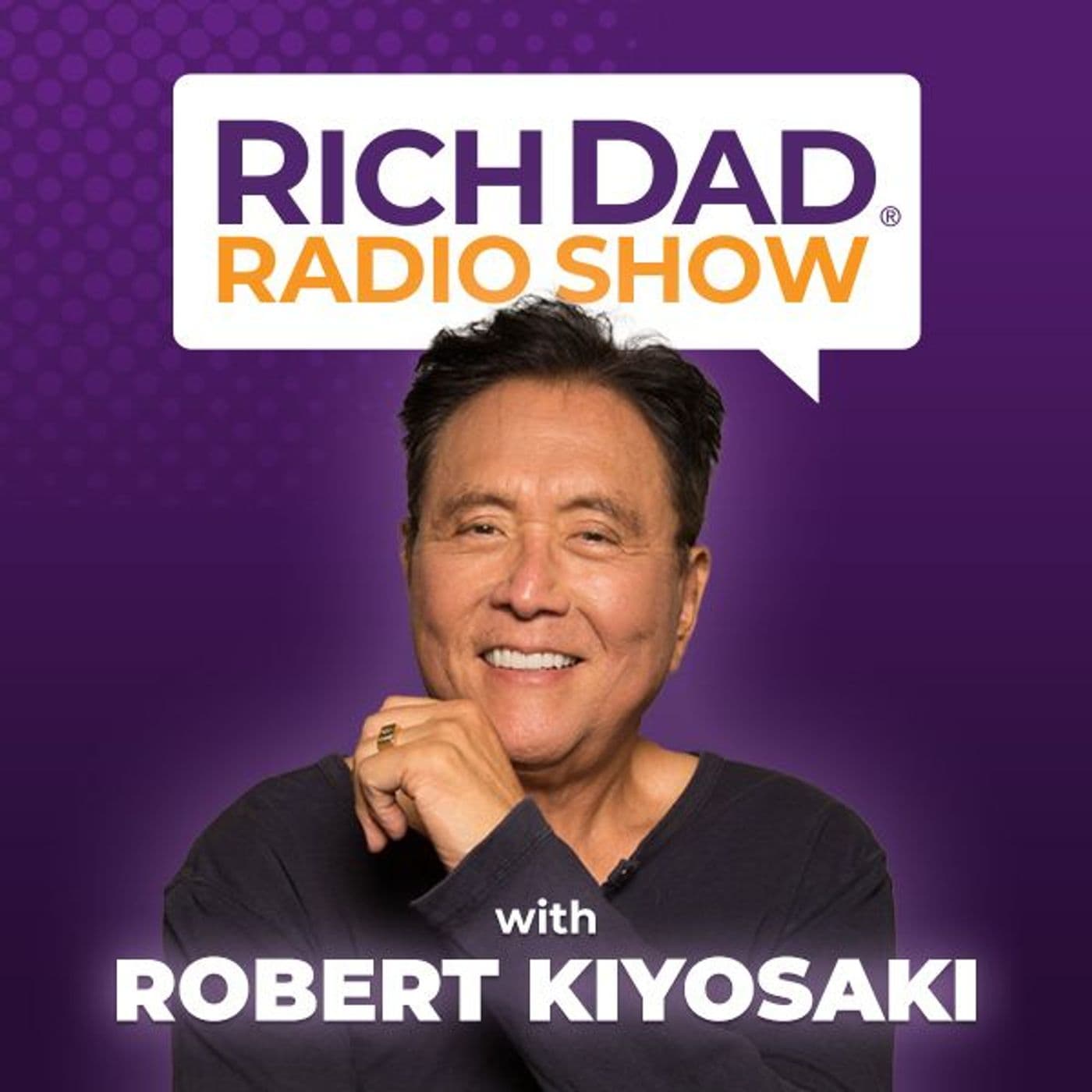
In short
How real estate investors use leverage (debt) to build wealth, especially during downturns when prices fall and opportunities emerge. The episode argues the U.S. dollar is debt-based, so “debt-free” is often impractical for investors who understand how to structure borrowing and refinancing.
Guests
Ken McElroy, real estate expert (described as a former property manager; his partner is a former banker, Ross). Robert Kiyosaki hosts (Rich Dad Radio Show).
Key claims
Debt can reduce taxes and enable “infinite return” via refinancing—borrow against increased equity rather than selling. Higher interest rates raise the “debt price,” even if properties remain occupied. Office buildings are deteriorating; cities/countries fund conversions to apartments.
Notable examples
A San Antonio deal with a bank-owned, stripped 680-unit property; investors fix value, then refinance. Office-to-apartment conversions and “amateurs” surfacing as deals fail.
Written by AI. May contain mistakes. Listen to the episode to check what was said.
Chapters
Tap a time to open that second in VOUnderstanding Debt in Real Estate
0:00 to 0:47
Exploring the role of debt in real estate and contrasting opinions on financial strategies.
“Imagine buying your kid a toy only to find that batteries are not included.”
Understanding Debt in Real Estate
1:01 to 1:18
Exploring the role of debt in real estate and contrasting opinions on financial strategies.
“Well, with the Name Your Price tool from Progressive, you can find options that fit your budget and potentially lower your bills.”
Understanding Debt in Real Estate
1:44 to 4:40
Exploring the role of debt in real estate and contrasting opinions on financial strategies.
“So my guest today is dear friend Ken McElroy, real estate expert.”
Current Real Estate Market Dynamics
4:40 to 8:04
Analyzing the current state of the real estate market and potential opportunities amidst challenges.
“or might have been four now, you were way ahead of this curve.”
Navigating Investment Risks
8:04 to 12:43
Discussing the risks of real estate investments and the importance of strategy and timing.
“But the biggest opportunities float when the bodies start floating.”
Navigating Investment Risks
12:47 to 14:21
Discussing the risks of real estate investments and the importance of strategy and timing.
“Fill in the quick form and request your free risk assessment.”
Navigating Investment Risks
14:30 to 14:42
Discussing the risks of real estate investments and the importance of strategy and timing.
Navigating a Shaky Economy
14:42 to 17:01
Discussion on the current economic situation and its impact on real estate investing.
“Robert Kiyosaki, the rich dad radio show, the good news and bad news about money.”
Using Other People's Money (OPM)
17:01 to 19:10
Exploring the concept of using OPM in real estate investments.
“So let me attempt to explain what Kenny does for Kim and myself.”
Understanding Infinite Returns
19:10 to 20:29
Explaining infinite returns in real estate and how to leverage debt.
“I'm going to miss out, and next year's going to be better than last year.”
Show all 12 chapters
The Value Creation Process
21:23 to 24:15
Discussing the process of increasing property value through management and investment.
“So that's why real estate is one of the most sophisticated investment strategies.”
Lessons from Real Estate Experiences
24:15 to 27:28
Sharing personal stories from real estate ventures and their lessons.
“But the reason I almost ran from the project is it burned in my brain.”
Transcript
Automatic transcript. May contain errors.0:00Imagine buying your kid a toy only to find that batteries are not included. Or buying furniture but it's missing the tools to build it. Frustrating, right? Now imagine the exact same feeling but you're paying way more. That's what buying business software usually feels like. Fragmented, disconnected, and incredibly expensive. Odoo completely changes that. Odoo is a complete, fully integrated business suite where all your apps actually talk to each other. We're talking automated lead routing for your sales teams, seamless AI integration, and an intuitive point-and-click website builder. It's everything your business needs to scale, saving you time, headaches, and money.
0:45Stop piecing your software together. Go to odoo.com slash richdad. That's O-D-O-O dot com slash richdad to learn more. This episode is brought to you by Progressive Insurance. Do you ever find yourself playing the budgeting game? Well, with the Name Your Price tool from Progressive, you can find options that fit your budget and potentially lower your bills. Try it at Progressive.com. Progressive Casualty Insurance Company and Affiliates. Price and coverage match limited by state law. Not available in all states.
1:20Ken McElroy:Hello, Robert Kiyosaki, The Rich Dad Radio Show, the good news and bad news of our money. and today a special friend, special guest, but it's also a very important subject. And the subject is real estate, basically. And it's important simply because it's real estate. Real estate, parts of it are in serious, serious trouble right now. But when things are bad, also there's good opportunities for things. So my guest today is dear friend Ken McElroy, real estate expert. How many places in the world have we gone to? It's been all over the place. Yeah, we traveled the world. We're talking about real estate because, number one, real estate uses debt.
2:03Ken McElroy:And you may or may not know this, but the U.S. dollar is debt. In other words, money cannot exist unless somebody borrows it. And so all these guys, our friend Dave Ramsey, this is live debt-free. I go, you've got to be crazy. But I want to back Dave up. If you don't know how to handle debt, definitely live debt-free. Right, Kenny? Yes, that's right. I agree. If you don't know what money is and how to use it, then he's right on. Right. So, like I said, I met Dave, a restaurant up the street here, and he's a great guy. And his advice for most people is cut up your credit cards, get out of debt, and all this.
2:46Ken McElroy:I call it, we're in the first inning, Robert, still. And I'm afraid it's going to get worse. Well, you don't have to be afraid about that. It's happening already. It's definitely happening. You know, the issue is this year and next year is going to be what we call maturing debt. Right. Debt that's maturing. Another thing to understand, there's different types of real estate. Yep. Some of the worst properties are the darlings called office buildings. Everybody thought, oh, I'm going to own an office building in Manhattan and all this. And today, they're going to crash. It's going to take people down.
3:18Cities and counties are actually throwing money at developers to convert office buildings into apartments. They already know that those buildings, those office buildings, are going to be eyesores at some point.
3:29Ken McElroy:Yeah. I was a student at Dr. R. Buckminster Fuller. They call him the friendly genius, you know. John Denver called him the grandfather of the future because he's a futurist. And years and years ago, in the 80s, I heard him say office buildings will someday be homes for homeless people. I went, what? You know, that was sacrilegious for me back then. And now it's here. That's quite a prediction too. That was what, how long ago was that, 50 years? 50 years ago. I'm listening to this guy. He says, office buildings will soon be homeless shelters. And you look at the number of homeless is exploding.
4:03Ken McElroy:I don't want to be an owner of a homeless shelter, as you know. So let's get back into real estate. I said it earlier. The reason why living debt-free makes no sense simply because the fiat currency, called the U.S. dollar, the yen, the peso, the euro, they're debt. They're instruments of debt, like a bond is an instrument of debt. And that's why Dave Ravis said living debt-free kind of goes contraindicative. How can that be if it's debt? But the good thing about debt is it's debt. And on top of that, the more debt you use, the less tax you pay, right? Right. Well, three years ago, Robert, or might have been four now, you were way ahead of this curve.
4:43And I don't know if you remember. Well, you probably do remember. You actually did a closed event for us. And it was instead of fight the Fed, be the Fed. Right, right. Yeah. And that's so obvious to you, just like Buckminster Fuller. But, you know, it's not obvious to a lot of people.
4:58Ken McElroy:Just do what the Fed's doing. Yeah. It's the strangest markets. We're in serious, serious world economies and serious trouble. But it's also a great opportunity time. So what's going on in real estate, Kenny? because, you know, as some of you may know, we use debt all the time, 100 % debt. Yep. So we just locked a deal yesterday, Robert. So, you know, there's still deals. There's still, you know, there's a big disconnect between the seller and the buyer for sure. And the difference, of course, is the debt price. So the cost of the mortgage, the interest rates have gone up, as we all know. So the interesting thing, the irony is, is that real estate itself is actually doing pretty well.
5:40So highly occupied, you know, slow, steady rent growth. We're seeing some big increases on expenses. But the one big difference is the cost of the debt. So you can't pay as much when your debt costs are higher. You can't pay as much for the same property that, you know, existed one year ago. Right.
5:58Ken McElroy:And the reason Kim and I invest with Kenny, because your partner is a former banker. Yep, Ross, yeah, the best. And I tell you, it is a game of debt. It is, yeah. Well, you think about it. If you can fix your debt right now, I mean, you know, the rate that we locked yesterday, Robert, is less than inflation. Yeah, yeah. I mean, think about that. We're borrowing at less than inflation. So that's when we talk about money, that's how you do it. Yeah, and a good thing, too, is the amateurs are now floating to the surface, as they say. Yeah. Do you know what I mean? I mean, I feel terrible for people because people come up to me and they go, oh, I took your advice.
6:41Ken McElroy:I bought real estate. I'm going, holy moly. You know, real estate is not like a stock. Like you don't just buy real estate like you buy Apple. And the difference is if you buy Apple stock and let's say it's 10 bucks and it goes down to six, you can get out of it really quickly. But with real estate, it's not that liquid. And that's why you've got to be smarter. And why I cringe when people say, oh, I just jumped into real estate. I'm going, oh, my God. It's like jumping off a moving train or something. So much is going on in real estate. There is a lot. And I think what happens is guys like you, or I would say anybody over 50.
7:19Has seen it. Has seen it. They've seen the cycles. They've felt the pain if they made it. Right. Because we've been. But if you're, you know, a lot of people are pretty delusional about, oh, next year is going to be, you know, and it has been for years. Next year's you made better than last year. It's just not the case.
7:36Ken McElroy:No. What happened since 2008, they kept lowering interest rates, and the whole world economy went into a bubble. Correct. It was a real estate bubble, a bond bubble, and a stock bubble. And so everything got inflated, but as they started to lower interest rates in 2020 or raise interest rates in 2020, a lot of those bubbles are bursting. So it's good news and bad news because there's going to be a lot of opportunities floating. So I meet some of the young women and men. They go, oh, yeah, yeah, yeah. All they know is a good market. But the biggest opportunities float when the bodies start floating.
8:12Ken McElroy:When the bodies start floating to the surface, they go, oh, my God. I can't believe that came up. Oh, my God. Look at that. And there were so many deals coming up when the fish start to float. And we're seeing them right now, Robert. I see. Yeah. Every single Tuesday, we have an investment committee call with our analysts and everybody. And they bring these deals. And, you know, continually we say, well, that deal's not really worth even the loan. So we pass. And the irony is that a lot of the limited partners don't even know. You know, so somebody brings us a deal. They're trying to recapitalize it somehow because they're in trouble.
8:51But the deal's not even worth what the debt is.
8:55Ken McElroy:Right. So it's a very exciting time. I can't believe Kim and I just listed some properties. Yep. And they went. Boom. And everybody else is crying the blues. It's true. Yeah. And it goes to the saying, your profit is made when you buy. Yes, it is. Not when you sell. And also the cash flow versus capital gains strategy that you laid out in Bridget Portet. People, this is the time where you're going to start to realize that philosophy. That's been our philosophy all along. Everything I have, cash flows. And that's just not the case for a lot of people. A lot of people bought big, big assets on a capital gain strategy.
9:33And guess what? That gain is not there.
9:36Ken McElroy:So capital gain strategies, we call it flipping. When I first met Kenny 20-something years ago, everybody was into flipping. Now, she'll flip this house and all this. So you buy a property for, let's say,$10 ,000. It goes up to$15 ,000. You flip it, you net five. Yep. But you pay capital gains. Yep. And we don't do that. Correct. And if you take that even further, if you buy a 200-unit property at$20 million and you think it's going to be$25 million, it's the same thing. The problem is it's not worth$25 million. It's probably worth$18. So you buy it for$20, it's not worth$18. That's where the problem is.
10:11Ken McElroy:Yeah, I'm chuckling because there's another – in the world, it's full of real estate gurus. Yeah. You know, if you're a housewife or a househusband and you bought two real estate properties, you're now Donald Trump as far as you're concerned. Right. But there's some of these charlatans on YouTube. I've got into arguments with some of them. This guy says, the way you get rich, just go out and buy a 200-unit apartment house. And I said, you don't start with a 200-unit apartment house, idiot. No. That's suicide. Yeah. But that's what he was selling. And I know the trick is called a bait and switch.
10:48Ken McElroy:So you go there. He shows you how you too can buy a 200-unit apartment house for nothing down and all this other stuff. but you're on the hook for millions, and then you go roaring off and try to do it, his real gimmick is to sell you what he is selling. Of course, yeah. Oh, you can't do it? I can do it for you. Yes, exactly. Yeah. So we come back, we'll continue on talking to Kenny Macle and get a bigger picture of it. It's frightening times, but it's also exciting times. It's actually very exciting. Yeah, always remember your profit is made when you buy. And one of the things I really get kind of sad about people, you know, when real estate started going up, everybody started jumping in.
11:26Ken McElroy:Yeah, remember that? Yeah. And that's not when you jump in, not when it's going up. You want to ride that roller coaster down and then buy. Right. When there's a line out the door of people trying to buy the asset, that means it's over. Yeah, it's so exciting right now. So we come back from talking more about what you can do. Even though the market is horrible for real or getting worse, I'm selling like I needed the cash. We had to move some other properties. but I cannot believe the opportunities are floating to the surface. We'll be right back. Violent threats against executives are growing at an alarming rate.
12:04Ken McElroy:When a company experiences backlash, executives are the first people blamed. When their address and other personal details are sitting online, this backlash can lead right to their front door. The team at Ironwall knows this better than anyone. They've protected some of the most targeted executives and individuals on the planet for almost two decades. As a white glove enterprise security service, they protect your people with continuous personal data removal, proactive prevention tools, and human-led emergency support. So when someone goes looking for your executives, Ironwall ensures they hit a dead end.
12:42Ken McElroy:So here's what to do. Go to ironwall.com slash richdead. Fill in the quick form and request your free risk assessment. Their team will show you just how exposed your executives are and how to lock it down before a threat reaches their front door. That's ironwall.com slash richdead. Stop online threats before they become real world attacks. The links in the show notes. Do you remember the last time something broke in your house? Not just a leaky faucet, a real breakdown. A pipe bursts on a Saturday night while you're in the middle of binge watching your favorite show. You're scrambling and you're stressed and you don't know who to call.
13:22And you also know you have to be prepared to pay whatever it costs. Here's some good news. HomeServe has got your back. HomeServe is like a subscription for your home. For as little as$4.99 a month, when something goes awry, you know exactly who to call. It's super simple. Choose a plan for your needs and budget. And when something on your plan goes wrong, you just call their 24-7 hotline to start the repair process. Summer is almost here, and your cooling system isn't going to warn you before it quits. HVAC breakdowns and motors that burn out, we all know that these repairs always seem to hit in the middle of summer when it's 100 degrees.
14:02I use HomeServe and you should too. I remember the peace of mind I felt when my water heater just stopped working out of nowhere and needed repair. These kinds of household emergencies can cost a fortune. Your next costly home repair is already coming. So act now and get protected with a plan through HomeServe. For 50 % less on your first year, go to homeserve.com slash richdad to find the plan that's right for you. That's homeserve.com slash rich dad for 50 % less savings compared to renewal price void in Florida.
14:41Ken McElroy:Welcome back. Robert Kiyosaki, the rich dad radio show, the good news and bad news about money. And as many of you know, the economy is on shaky grounds. You know, banks are failing all over the place. And the question is, what do you do about it? and I get really, really excited because your profits are made when you buy and as prices of real estate crash, it's actually the best time to be a buyer. But as I say it again, I meet people who are amateurs at this business. They wait, you know, the price, oh, the price went on 100 ,000, went up 200 ,000. Oh, we've got buyers lined up for the property and that's when people jump in.
15:18Ken McElroy:You should be getting out at that moment. You want to get out. Another thing too is that people say, well, I don't have money and all this. When the real estate market crashed, it's crashed several times. Yep. And I had no money. And I saw we were trying to put a deal together with interest rates were 12%. And today's what? What percent are they today? Yeah, it's more like six, five to six. And people come, oh, you know, I would have killed back then for a five to six percent interest rate. So, you know, it's always a good time, but you have to know what you're doing with real estate. Yeah, well, almost every single real estate person that you're going to listen to didn't start with money.
15:54No. I mean, we rarely do. You don't actually need money to start. You need a deal. And that's what you'll learn.
16:01Ken McElroy:Well, even worse than that, my rich dad always said to me, my rich dad always said, only lazy people use their own money. I know. Gosh, that was such a great statement. It's true. Yeah. Yeah. I mean, people don't realize, like when you put your money with an insurance or a pension or even in a bank, it's a liability for those institutions, period. They owe you expense. you know, in a form of interest, that's a problem for them. So they have to lend it to guys like us. Right. And that's called OPM or other people's money. And you're going to learn things like that at the event. Yeah. And always remember this, the U.S.
16:36Ken McElroy:dollar or the euro and all these other currencies, they come into existence only by people borrowing it. Yes. And that's why our friend Dave Ramsey says live debt free. And that's good advice if you don't know what you're doing. But if you say, oh, I don't have any money. Well, you silly person. You're not supposed to use your own money anyway. You're supposed to always use OPM, right? That's 100 % right. And also, you know, in the form of debt and equity, you know, money's money. Nobody cares what it's called. It just is a different price. So let me attempt to explain what Kenny does for Kim and myself.
17:13Ken McElroy:Because what Kenny does is very sophisticated. You can do it too, but you have to have Kenny's background to do what he does. Because he started from property management. And the key is always the management of the – 100 percent. And so the way we did it was – I forget the numbers, but let's say it was$300 ,000 deals in an apartment house. So where are the people that put up the equity? So Kim Ellis, it's$300 ,000. We put up$30 ,000. Right. You borrow the money. I mean the rest of them to pay from the bank to pay for the property. Correct. And then what Kenny does, he fixes the property. And this is Kenny's niche.
17:49Ken McElroy:He makes the property more valuable. The equity of the property goes up, and then we borrow out the equity. That's correct. Yeah. If you can spot a deal where there's value in it and then know how to create it, you can raise lots of money. You know, imagine. You can't do that with a stock. Like, I love it. I always tell people, like, sometimes I bought a vacant building, had it in escrow, got a tenant before I closed. That's how you create value. Right. So it's going to be an exciting, exciting time. Like I said, I still remember putting deals together. Interest rates were 12%. And yet you have to get smarter.
18:31Ken McElroy:That's all it means. That's the thing. I tell everybody, I actually was on a podcast yesterday. I said my entire career was five, six, and 7 % interest rates. So right now seems very, very normal to me. The only problem is that the prices are high. And the sellers now are starting to realize that because there's almost no transactions going on. So, you know, that's all. It's the bubble went up. Now it's coming down. Right. The people that are in trouble, the people who jumped in late, do you know what I mean? They were at the top of the market. Yeah. It's going to keep going up. That's a big lie is that real estate always goes up.
19:06Ken McElroy:That's not true at all. No, my gosh. It's delusion. You know, it's that herd mentality, right? Everybody's jumping on. I'm going to miss out, and next year's going to be better than last year. That's not how real estate works. Quick note for everyone listening right now. We're giving away a free wealth defense kit to every listener who claims one today. Three guides everything we know about defending your wealth and retirement savings in 2026. Yours free. Here's why we're doing this right now. U.S. debt just crossed$40 trillion. The dollar just hit a two-decade low. And Jim Rickards, former CIA and Fed advisor, a man President Trump amplified on Truth Social, is predicting gold could hit$10 ,000 an ounce.
19:52Rich Dad's Robert Kiyosaki has been buying gold and silver since 1965 through every crash, every crisis, every correction. Not ETFs, not paper, the real thing. Right now, both are sitting well below their 2026 highs. Robert calls this an opportunity, not a reason to wait. Our partner, Priority Gold, put this kit together so you can take the same first steps thousands of our listeners already have. How gold and silver work as real assets. How to move your IRA and 401k into physical precious metals, tax and penalty free. And how to get started today. Visit PriorityGold.com slash Rich Dad. Again, that's PriorityGold.com slash Rich Dad.
20:35Or text GUIDE to 24999. This is free. It's waiting for you right now. And the only thing standing between you and it is one visit to prioritygold.com slash rich dad. Hey, Chicagoland, the Wayfair store is in your neighborhood at Edens Plaza and Wilmette. Finally, you can feel the fabric, sit on the sectionals and even open the refrigerators. Plus, our in-store designers will help you bring it all together with free one-on-one design support for any project on any budget. Yep, we said free. Oh, and did we mention the cafe? So what are you waiting for? Come see all that's in store. Visit the Wayfair store today at Edens Plaza and Wilmette.
21:23Ken McElroy:So that's why real estate is one of the most sophisticated investment strategies. Kenny, what's an infinite return on your investment? So infinite return is quite simple. Let's say Robert and Kim give me a million bucks. I pair it up with another nine. We buy a$10 million property. I grow the value to 15. I go to the bank and I put another$10 million loan on it. I give the nine back to the original debt holder or the bank, give you your million. We're into the deal for zero. That's an infinite return. Right. And Kenny, so let's say Kim and I put a million in, which is pretty much normal for us.
21:58Ken McElroy:We get that money back via debt. Yes. And that's tax free money. Yeah, because you don't pay tax on debt. So we're taking new debt, replacing old debt and equity, and that's a return of capital. It's not capital gain, and it's not a sale. So the genius of Kenny is he's not like one of these fund managers that, you know, this is for me and the rest is for me too. I mean, when Kenny talks about the infinite return, his investors get an infinite return also because they borrow out the gains. That's right. When you borrow out the gains, there's no tax on debt. You got it. Interesting world, isn't it?
Read the full transcript
22:35There's no sale. So the IRS wants their tax when you sell something. We're not selling. We're refinancing. It's just no different than a cash-out refinancing your own home.
22:44Ken McElroy:Right. And I've walked properties with Kenny and all this. My favorite ones, I went in San Antonio next to Geico, an insurance company, and next to hospitals. Somebody had 400-something units, I think. It was actually 680 units. There were 400 vacant. If you can remember, I was like, all right, this is going to be it. And Robert's like, what are you doing? Why are you buying this? And I'm like, listen, this is what you want. It was owned by the bank. The old owner is out, and it's just a mess. And again, solve someone's problem. And I was like, I can solve your problem. It was the bank's problem.
23:22It was the bank's problem.
23:23Ken McElroy:So I remember walking into this unit in San Antonio. I was afraid I was going to get attacked by the killer rats. It was so bad. And what the original owner did was he screwed the bank. He stripped the property. He took all the wire out. He took everything out. It was basically the deserted buildings that were 200 more units. It happens at the end, believe it or not, at the end of a real estate cycle where people are struggling to try to just fill units. They actually cannibalize other units with appliances and thermostats and things like that just to try to get cash flow from something else. It's unfortunately the very end of the cycle.
23:58Ken McElroy:Yeah. I still remember walking the deal with Kenny. I said, man, there's going to be a rat attack on me, and I have to get fumigated. And this place is so, you could tell it was one time a great project. And now it is again. Yeah, and the guy had torn it apart. Yep. But the reason I almost ran from the project is it burned in my brain. some tenant had tore the toilet out and put the toilet in front of the fireplace. So this guy, I could see him sitting there, not paying rent, sitting on the toilet, burning paper and stuff to stay warm. You never know. You never know in these places sometimes. And Kenny says, this is a great deal.
24:40Ken McElroy:I'm going, oh my God. So ladies and gentlemen, it's called the Limitless Expo. It's actually infinite. It's infinite. that you can make money with no money. And when you can do that, that's called alchemy. You know, that's magic. And what Kenny does is magic. I can vouch for him. The reason I stopped buying real estate was I'd just rather give my money to Kenny. Let's say I gave him a million dollars, a couple of years later, I get the million dollars back tax-free. If you can understand those thoughts, you'll understand why I'm very excited about a real estate crash. Yeah, and as I said, my dealing with Ken about 25 years now changes my life because it changes your thought.
25:19Ken McElroy:Yeah. Well, you look at everything differently. Right. So Kenny and I, we also practice what we preach. We study also. We were just in Dallas, outside of Dallas, and we called the place called The Ranch. And the instructor said that the reason people are poor is because they're farther from the truth. Yeah, that really hit me. Yeah. So there's what they said. We were studying mastery. what they said was the truth is what the truth is period and so now i know i know it sounds pretty simple but and then you got people's realities which is typically further from the truth not always the but the further from the truth you get the poorer they are yeah so ever since the last couple of weeks i see a poor person i said what wonder what truth they're away from Yes.
26:10Ken McElroy:There's something they're not seeing. Correct. And that's what I wrote, Rich Dad Poorly said, your house is not an asset. I nearly got crucified on the cross for that one. Yeah, now everybody says it. I know, it's the truth. You're way ahead of the game. So I'll just finish this up with the poor people are furthest from the truth. I've been thinking about that, thinking about that. Have you been thinking about that? Of course. When they said it, you know, it's very interesting. you have to wrap your head around it, but it's actually true. And what they did is they put a dot in the middle and said, this is the truth, in all cases, the truth.
26:48And then what happens is as you get further and further away from the truth, it actually affects your health, your wealth, all kinds of things. And what happens is you're the one that has a reality or a perception or an opinion of where you are.
27:04Ken McElroy:And the reason that's the perfect ending is because rich dad and poor dad, My poor dad said, oh, I can't afford it. We can't do that. You think I'm made of money on that? My poor dad was so far away from the truth. And so when I hear somebody say, well, I can't do it because I don't have any money, my rich dad said, my poor dad said, I can't afford it. My rich dad slapped me in the head. He goes, no, he didn't even slap me. He said, you stupid kid. You're not supposed to use your money anyway.
27:34This podcast is a presentation of Rich Dad Media Network.
27:59who have already streamlined their finances with Found. Open a Found account for free at found.com. That's F-O-U-N-D dot com. Found is a financial technology company, not a bank. Banking services provided by lead bank member FDIC.
From the publisher
Real estate investing with debt can give investors leverage to acquire larger assets, generate cash flow, and build equity—but Robert Kiyosaki argues that debt only becomes a useful financial tool when you understand how to manage it.
In this episode of The Rich Dad Radio Show, Robert Kiyosaki sits down with longtime friend and real estate investor Ken McElroy to challenge conventional thinking about debt and explain how experienced investors use leverage, other people's money (OPM), cash flow, and refinancing to build wealth through real estate.
Robert starts with one of Rich Dad's most contrarian ideas: not all debt is bad debt. While getting out of debt can make sense for someone who doesn't understand how to use leverage, Robert and Ken explain why sophisticated investors may deliberately use debt to acquire income-producing assets.
That distinction becomes especially important as higher interest rates, maturing loans, and falling property values put pressure on parts of the real estate market.
Ken explains how higher borrowing costs change what investors can afford to pay for properties. At the same time, distressed owners and deals that can no longer support their existing debt can create opportunities for educated investors who understand how to analyze a property.
But lower prices alone don't make a good deal.
Robert and Ken emphasize the Rich Dad principle that your profit is made when you buy, not when you sell. Instead of buying property and hoping prices rise, they focus on acquiring assets that can produce cash flow.
The conversation also breaks down how investors use OPM, or other people's money, to acquire real estate. By combining investor equity with bank financing, experienced operators can control larger assets without supplying all the capital themselves.
Ken explains how the strategy can go a step further. An investor can acquire an underperforming property, improve its operations, increase occupancy or income, and potentially increase its value. That increased value may then allow the investor to refinance the property and return some or all of the original invested capital without selling the asset.
Ken calls one potential outcome an "infinite return"—when investors recover their original capital while retaining ownership of the cash-flowing property.
You'll learn why Robert and Ken focus on cash flow instead of speculation, how higher interest rates affect real estate deals, why distressed markets can create opportunities, how debt and equity work together, how refinancing can return investor capital, and why financial education and experience become even more important when using leverage.
The central lesson is simple: debt itself doesn't create wealth.
The strategy is knowing how to find the right property, buy it at the right price, create value, generate cash flow, manage the financing, and adapt when market conditions change.
For investors with the education and experience to use debt intelligently, Robert and Ken argue that a difficult real estate market may create more than risk—it may create opportunity.
00:00 Introduction
00:36 Debt Money and Real Estate
01:44 Office Crash and Conversions
03:48 Deals in a High Rate Market
05:09 Avoid Amateurs and Flippers
12:13 Buy During the Crash
13:21 OPM and Value Add Basics
17:35 Infinite Return Explained
18:57 San Antonio Distressed Deal
21:34 Truth Mindset and Wrap Up
-----
We're giving away a free wealth defense kit to every listener who claims one today. 3 guides covering everything you need to know about defending your wealth and retirement savings in 2026. Created by our partner Priority Gold.
Completely free to US Residents Only.
🌐 https://prioritygold.com/richdad
📱 Text GUIDE to 24999
-----
Disclaimer: The information provided in this video is for educational and informational purposes only. It should not be considered as financial advice or a recommendation to buy or sell any financial instrument or engage in any financial activity.
The content presented here is based on the speaker's personal opinions and research, which may not always be accurate or up-to-date. Financial markets and investments carry inherent risks, and individuals should conduct their own research and seek professional advice before making any financial decisions.