In short
Public.com launches AI agents that can trade prediction markets automatically using real-time event probabilities; Meta unveils Muse AI agent hardware integrations and Shopify commerce access; U.S. apartment landlords face a looming $2T debt refinancing problem.
Guests
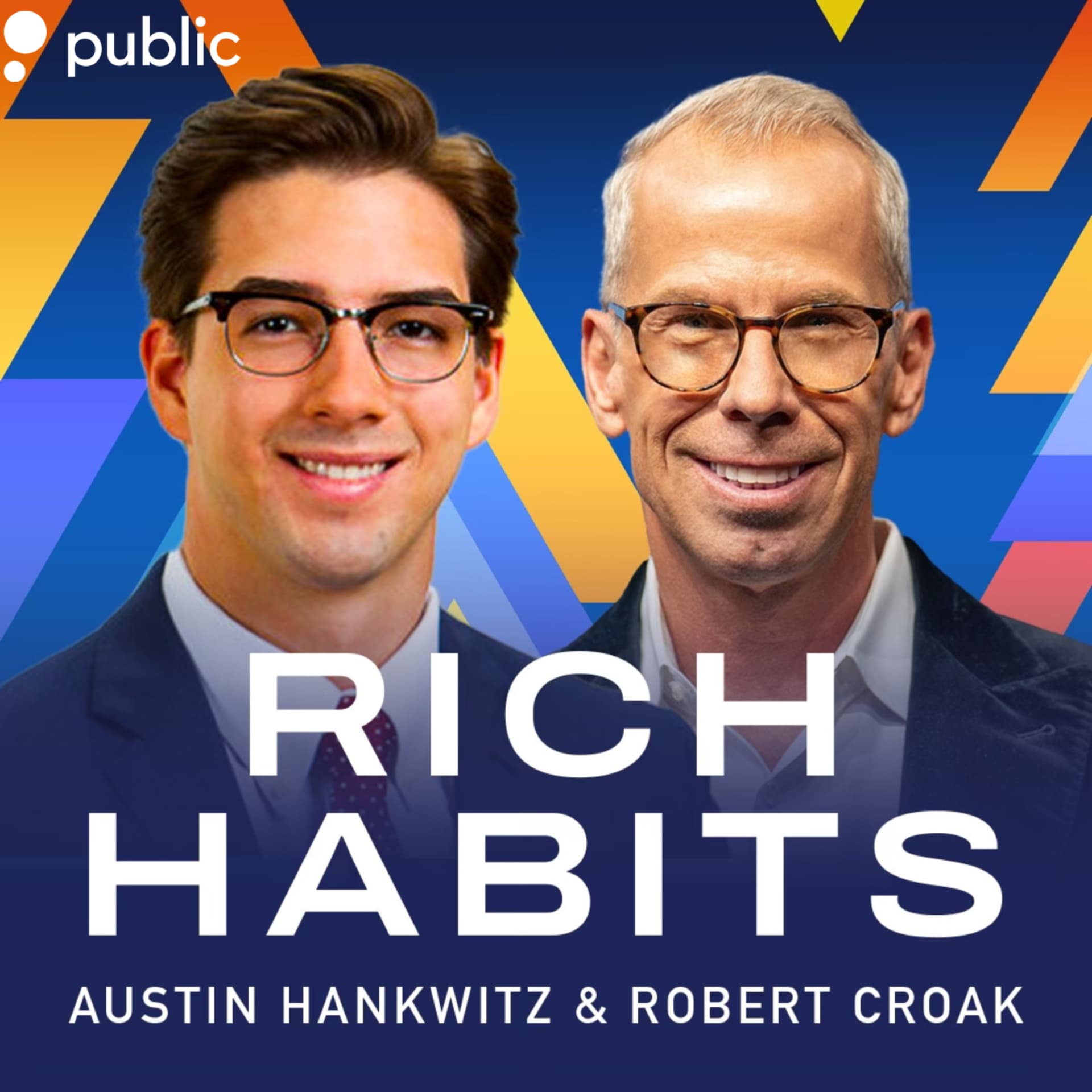
Leif Abraham, co-founder and co-CEO of Public (background: builds Public’s “agentic brokerage” and prediction-market strategy). Hosts: Austin Hankwitz and Robert Croak.
Key claims
Prediction markets should be “market infrastructure” for portfolio risk signals (not sports/entertainment gambling). AI agents can monitor probabilities and trigger trades or alerts across a brokerage portfolio. Automation risk: thin/manipulated markets can cause fast, compounding errors. Meta’s Muse is becoming an “operating layer” for devices and shopping via Shopify; Amazon reportedly blocked Muse purchases. Apartment debt maturities create a refinancing shock as 2020–21 low-rate loans roll to 6–7%+.
Notable examples
FDA approval probability >75% triggers a $5,000 buy; rate-cuts probability rising triggers bank-stock exposure alerts; Q3 earnings miss probability >60% buys puts (max $2,500). Muse: hands-free glasses booking a calendar; Muse charm keychain; Muse shopping on Walmart/Sephora/Best Buy/Gap via Shopify rails. Debt: $757B due 2026–2028; ~$300B due in 2026; ~$310B due in 2025.
Written by AI. May contain mistakes. Listen to the episode to check what was said.
Chapters
Tap a time to open that second in VOPublic's Prediction Markets: A Game Changer
1:36 to 5:00
Explore how Public's new AI agents are revolutionizing prediction markets.
“I'm super excited about this because Public just announced AI agents for prediction markets, and it's really, really cool.”
Implications of Automated Trading
5:00 to 8:52
Discuss the risks and implications of AI agents executing trades based on prediction markets.
“What does this mean for you and your money?”
Expert Insights from Leif Abraham
8:52 to 9:51
Interview with Leif Abraham on the role and impact of prediction markets.
“And, you know, we've seen this trend, Robert, from a lot of finance companies.”
Understanding Prediction Market Data
9:51 to 14:03
Learn how investors can utilize prediction market data for better decision-making.
“Let's start with the prediction markets themselves.”
Understanding Prediction Markets
14:03 to 17:35
Learn the significance of prediction markets and how they provide real-time insights into public sentiment.
“markets are primarily another form of gambling or whether they're a legitimate source of this information we all want those edges from.”
Mechanics Behind Prediction Markets
17:35 to 24:13
Explore the mechanics of prediction markets and how liquidity impacts the validity of probability data.
“Because I remember back, you know, we were having midterms are coming up now, but I remember the most recent presidential election.”
Guardrails in Prediction Markets
24:20 to 26:15
Understand the importance of treating prediction market data as a signal rather than a crystal ball.
“because I feel to your point earlier, you know, heading into 2026, you can go on any of the prediction market websites back in January and February.”
The Future of Brokerage Accounts
26:15 to 28:00
Envision what brokerage accounts will look like in the future with the integration of AI agents.
“And this feels like another bigger piece, a bigger idea that you've been building towards with public to become an agentic brokerage.”
Understanding AI in Portfolio Management
28:00 to 29:00
Learn how AI can enhance investment strategies by analyzing personal portfolio data.
“And currently we're still in the spot where it's really powerful if you know what the strategy is in the first place.”
The Future of Prediction Markets
29:00 to 30:30
Explore the potential growth of prediction markets and their integration into finance.
“You have this in-between state of it understanding a bunch of different things about you and then serving you proactively things to consider in your portfolio, things to change in your portfolio, et cetera, right?”
Show all 21 chapters
Securities-Based Prediction Markets Growth
30:30 to 32:50
Discuss the expected rise in securities-based prediction markets and institutional involvement.
“And do you think maybe there's use cases in three, four, five years from now that is popular that perhaps investors aren't even thinking about today?”
Public's Multi-Asset Portfolio Vision
32:50 to 34:30
Examine Public's plans for expanding their asset offerings beyond current markets.
“And I guess my final question, and more of just a statement I want to get your reaction to is, you know, public is one of these platforms that allows you to build a multi-asset portfolio.”
Takeaways from the Conversation
34:30 to 35:30
Reflect on the role of prediction markets as tools for retail investors.
“Well, when y 'all launch those two, come back on the show and talk about it, my friend.”
Appreciation for the Public Team
35:30 to 36:00
Acknowledge the contributions of the Public team and their innovative tools.
“Man, I love it when Life, Yannick, the whole public team, Stephen Sykes, right?”
Meta's AI Innovations and Market Impact
37:16 to 42:01
Analyze Meta's recent hardware announcements and their implications for AI in commerce.
“I think, is pretty interesting because Meta just came out this week with some really interesting hardware and Shopify is giving them the thumbs up, the green flag, the let's keep going.”
Meta's Strategic Moves and Market Response
42:01 to 43:54
Discussion on Meta's recent advancements, stock performance, and implications for the market.
“Listen, I'm buying Meta at$500,$550,$600 a share because it's going to be$1 ,000 a share stock by the end of the decade.”
The Impact of Amazon on Meta's Muse
43:55 to 46:15
Exploration of the competitive landscape for Meta's Muse and its relationship with Amazon.
“Walmart, Best Buy, Shopify, like they're all saying, yeah, like I want Muse on our website because you're going to help us make more sales and, you know, all that cool goodwill and everything.”
The Future of AI and Token Usage
46:16 to 47:31
Analyzing the growth of AI token usage and its implications for future developments in AI.
“Yeah, you're 100 % right because we look at it, remove friction, increase efficiency, more profits.”
The Debt Crisis in Commercial Real Estate
47:32 to 53:14
A deep dive into the ongoing debt crisis faced by the apartment sector in commercial real estate.
“For years now, apartment buildings, they've been the safest bet in commercial real estate.”
Shifts in Real Estate Investment Strategies
53:15 to 56:01
Discussion on emerging trends in real estate investment amidst high debt costs and market changes.
“We heard from Burton and he says his firm is calling it some of the best buying opportunities I've seen in my entire career.”
Closing Remarks and Encouragement
57:10 to 57:34
Encouragement to share the podcast and a reminder of their mission.
“We are here to help and provide as much value as possible.”
Transcript
Automatic transcript. May contain errors.0:00Push your limits, train with precision, see the results. At Equinox, that's high-performance loving. Everything you need to lock in and unlock your potential at Equinox. Start today at equinox.com. Your vehicle doesn't just get you from here to there. It's a bridge to the people and places that matter most. It's how you show up for your family, your community, and everyone else that depends on you. That's why for 125 years, Firestone has been building tires with one thing in mind, to deliver products that are as reliable as you are. Firestone, always dependable since 1900. You're tuning in to the Rich Habits Radar, our Friday episode of the Rich Habits podcast, where every Friday morning, we're coming at you with the biggest headlines impacting you and your money.
0:54This episode is brought to you by VCX, the public ticker for private tech. My name is Austin Hankwitz. I'm joined by my co-host Robert Croak. And the three things sitting at the top of our rich habits radar this week include public.com announcing prediction markets on their platform, specifically the ability for their AI agents to use the information derived from these prediction markets to make informed decisions with your money. Yes, very interesting and more on that later. We'll also be talking about Meta's new Muse AI agent that has gone incredibly viral and the new little charm keychain that was just announced, as well as the$2 trillion ticking time bomb that is debt on U.S.
1:35apartments. Robert, let's dig into our first story. Definitely. I'm super excited about this because Public just announced AI agents for prediction markets, and it's really, really cool. So Public, the investing platform we've partnered with for years now, just announced something that's a genuine first for retail brokerage. AI agents that can trade prediction markets on your behalf and use those markets as a live signal to trigger trades anywhere in your portfolio. Public already calls itself the world's first agentic brokerage, and this launch is them leaning all the way into that narrative.
2:12Members now, as of today, have access to prediction markets across nine different categories on the platform. Cryptocurrency, commodities, climate, economics, corporate events, markets, indices, tech and science, and politics and elections. But the real story isn't that public added prediction markets because plenty of platforms have already done that. The real story about this is what they are doing with these AI agents on top of the prediction markets. Yeah, this is so cool because we've been talking about public for years. And today, as of today, members can trade these events directly the way you'd expect.
2:50But they can also hand the reins to an AI agent and say in plain English what they want to happen when the probability crosses a certain threshold. Lythe Abraham, Publix co-CEO and co-founder, put it this way. Quote, prediction markets give those agents a new input, real world events. So members can trade a position on the event directly or use the market's data as the signal that triggers a trade anywhere else in their portfolio. And the examples that Public put out in their press release, which we'll have linked in the show notes below, are worth sitting with for a second because they show exactly how far this can actually go.
3:27So here's three examples they gave out in the press release. The first example is, if the probability of FDA approval for a healthcare stock in my portfolio crosses 75%, automatically execute a$5 ,000 market buy for that ticker symbol. The second example they gave is, if the probability of at least three rate cuts this year rises by 10 percentage points in a single day, alert me and summarize my exposure to bank stocks. And the third example they gave was if the probability of a Q3 earnings miss rises above 60 % for any stock I own, buy in the money put options spending no more than$2 ,500 per position.
4:09And the cool thing is it's not a chatbot answering questions about the market. It's an autonomous agent sitting on top of a live prediction market feed, watching probabilities in real time and executing actual trades, dollar amounts and all the second a condition is met. No open app, no manually checking the odds, no logging in at 2 a.m. because you're worried about a Fed decision, all automated. And notice what public deliberately left out. They specifically built this around events that move markets, rate decisions, earnings, FDA approvals, elections, and explicitly excluded sports and entertainment betting.
4:47So this is not a gambling product wearing a fintech costume. It's positioned as a genuine portfolio risk tool dressed up as a prediction market. So, Austin, this is really, really cool stuff. I hope everyone is taking notes. Break this down for us. What does this mean for you and your money? Yeah, I think it's awesome. I mean, we all know public as this platform where you can have different asset classes. They've got equities, they've got crypto, they've got bonds, they've got treasuries, they've got, you know, option contracts, generated assets, AI agents, and now we've got prediction markets and AI agents can use the prediction markets like public.com is the best broker out there full stop.
5:30Now, what I think is interesting here is that prediction markets now stop being a side courtesy and start becoming the actual input on how your portfolio behaves automatically and continuously without you having to be the one watching the screen every single moment. For years, prediction markets have been around. We know Polymarket and Kalshi, and they've been treated as a novelty for political traders or people who want to bet on election outcomes. But public just repositioned the category entirely and sort of is reframing it now as market infrastructure, which means you have this live probability feed that can trigger real trades inside of a real brokerage account.
6:07So the winners here are less about the single tickers and more about the trend. The trend is that public is strengthening its position in the increasingly crowded agentic brokerage race. And if this resonates with its members, I would expect to see Robinhood, Charles Schwab, and several others begin to start sniffing around the prediction market integrations of their own within the next, I don't know, 3, 6, 9, 12 months. Kalshi and Polymarket, which are two of the largest prediction market operators, also benefit from a major brokerage effectively validating the category as a serious financial infrastructure rather than being this like, you know, gray area of y 'all make some bets on, you know, whatever the election outcome is going to be.
6:46So I think public is absolutely trailblazing what it means to have a holistic portfolio, not just in different asset classes, not just with prediction markets, which have been around for a while, but to be able to take the information, the probability insight of that event contract saying, wait a second, the Fed might raise interest rates. That now is a higher odd happening than it was last week. What does this actually mean for my portfolio? What does AI tell me this could mean? And what trade should I be thinking about if this type of outcome actually occurs without, and again, we've kind of been, we had an episode about this, Robert.
7:23We talked about how to use prediction markets in your own portfolio. We got some flack on it because y 'all thought we were talking about gambling. We're not. And public just validated our episode back from March, essentially, which was us saying, hey, prediction markets tell you what is the chance of something happening. And yeah, the chance of that thing could be a sports game or some sort of like bet on a TV show, but it could also mean an election outcome. It could also mean the Federal Reserve. It can mean, you know, Tesla deliveries. It can mean so many different things for you and your money.
7:52And that episode now just got super validated by public that said, yeah, those probabilities are important, let's now also put an AI agent on top of it to make sure that they've got their eyes. And it's really cool, Robert. I'm pumped. Yeah, we've talked about this for a few years now, that these prediction market data points are really, really important. But let's talk about the risks that go along with it, because automation can cut both ways. Let's say an agent executing a $5 ,000 buy, the instant a probability crosses 75 % is powerful when you're right about the setup, And it's just as fast at compounding a mistake if the market data driving that probability is thin, manipulated, or just wrong.
8:34So prediction markets, especially in a less liquid category, can move on small volume. Handing a trading agent explicit dollar amount authority based on that data is a new kind of risk most retailers have never had to think about before. We love the tools, but we also want to make sure you understand the risk. A hundred percent. And, you know, we've seen this trend, Robert, from a lot of finance companies. First, it was the robo-advisor automating your allocation to different index funds. And then it was the AI chat assistant answering your questions about, you know, how is my portfolio structured?
9:08What should I think about these investments? Now it's AI agents executing real trades off of real-time event probabilities. So whether or not you personally use this specific feature, it's a preview of where every major brokerage is headed, in my humble opinion. And it's worth understanding and doing some research on before it becomes the default, not just a cool thing that public.com does. Like, this is going to be the future. And you have to understand where all this is going or you're going to get left behind, which is why you listen to the Rich Habits Radar and what we have on these weekly episodes.
9:40So to break all of this down, we are joined by Leif Abraham, co-founder and co-CEO of Public. Leif, welcome back to the show. Hey guys, good to see you. Really glad you're here, man. Thanks so much for taking time today. Let's start with the prediction markets themselves. We've watched this category of prediction markets explode over the last couple of years, but Public is taking a pretty deliberate approach on the prediction markets themselves. You're not offering sports or entertainment. you're focusing specifically on events that could impact the financial markets. One, why did you decide to draw that line?
10:17And two, what role do you think prediction markets should play for investors? Yeah, the instrument of an event contract and like the use case of that, I would argue has been stretched over the last few years, right? And that's why you see it being used for sports and entertainment things and all these kinds of things because, you know, in theory, it's just an instrument and you can in theory use it for a lot of different things um now obviously we're like public is a platform where people put the life savings into they grow their wealth in it etc and even though there might be a category of like entertainment finance you know let's call it um we think that should be arm's length from your portfolio and your life savings you know but nevertheless there are to your point like there are some really good use cases for certain event contracts, aka prediction markets, that can actually help you kind of maneuver the markets a little bit, you know?
11:13And that's exactly what we're kind of focused on, right? So like the high-level principle for us is, you know, basically events that move the markets, so things that could have an impact on your portfolio. And then you can either just trade those, or you can also just use the data and like the, you know, kind of live event probabilities and those signals to, you know, do other things your portfolio that might not be related to actually trading those markets. It might be related to something completely different, you know, that you're doing in your portfolio. Yeah, like just taking the insights from the probabilities of an event contract resolving to a yes, right?
11:49Just taking that insight and saying, wait a second, that's interesting. How might this impact the rest of my portfolio if it actually did happen? Exactly. and like an example is we're we're we're also showing the events on stock pages now right and if there's one use case that we very much believe in it's this use case of dissecting a company and its performance and its kpis and you know a lot of companies are these like big behemoths now they have multiple businesses and so on you know um or also i'm sure most people who are sort of active in their portfolio had this moment happen once where you have a trade in mind on an earnings call or something.
12:31You had your thesis. You've done your research. You've done the work. You were right on what your thesis and your work was. And the stocks tanked anyway because of something weird the CEO said on the call or because the outlook was different than the analysts expected or whatever. and so now you know what collection markets can do is you can dissect company performance into specific KPIs and if you basically want to be like oh I have a very big understanding of you know the model Y delivery numbers because I am in the business I'm forecasting this myself whatever it might be you can place a trade just on that as well and those are the aspects that are quite interesting because then if you go to you know things like the Apple stock page you're gonna have to trade those those events contracts but you can at least even in the context of a stock for example, see, hey, what does the prediction market, what do the event contracts say around the probability of a European antitrust case to be won or lost, for example?
13:32And it might give you some understanding of why the stock is priced a certain way and things like that. Yeah, we've taken and talked about this for so long that we look at prediction markets because we're not gamblers and we look at this information as just another way to gain an edge on a thesis. And you guys have blown that out of the water by making it so specific to what moves the markets because we don't care about entertainment and gambling. And I think that's very, very important because there's been this debate over whether prediction markets are primarily another form of gambling or whether they're a legitimate source of this information we all want those edges from.
14:11And if a market says there's a 70 % probability of three Fed rate cuts this year, for example, that becomes a real-time signal of what tens of thousands of people collectively believe is going to happen. And so from your purview, how should investors interpret those probabilities and what makes prediction market data useful alongside more traditional things like analyst estimates, economic forecasts, or these market implied expectations? Break that down for our listeners. Yeah, I mean, the general theses behind the data that prediction markets generate is the sense of that the minute someone puts their real money, their own money behind it, we become more objective.
14:57Suddenly, your political opinion or whatever it might be does not matter because it only matters to you what do I believe is going to happen. And so I can put my own kind of opinion a little bit out of the window and it becomes much more, much more rational kind of, you know, activity than from those people who participate. And because of that rational, you know, kind of analysis that everyone applies because it's literally just about putting my own money to work and see if I win or lose, so to say, that that basically creates like a cleaner, you know, outcome than, for example, running a general poll, you know, where you just call a bunch of people and they will just express their opinion because they have nothing to, you know to to lose as a study on the other end right that is the like general uh theory there now i would always say caveat that doesn't mean that you know if you see a market with an 80 % probability that you know that will definitely turn out to be that way right like there's many examples of prediction markets completely flipping you know um um around at some point but it is again it is one data point that you can take into take into account and i think specifically you've you made the example of just like general public market analysts you know i would always argue that a lot of public market analysts are actually quite biased right like if you're the bank who is ipoing a certain company you know there's a reason that banker or like that that bank will likely be at you know called out first on the first six earnings calls at that company to be able to ask a question to set the tone and have a very nice global question be like oh congrats such a great quarter you know because there's other financial centers that the bank had and whatnot to like you know make sure that this is all fine and good and you're getting like a nice little you know kind of off landing into the public markets and things like that right so like there are biases in these things you know uh in the like old systems and um Even just by like having more of a wisdom of the crowd and blending it down versus a room of three analysts at Citibank or whatever it might be, you know, already also, I think, makes the data potentially a little bit more useful because it is this more crowd wisdom, you know, blended pool than just, you know, a few guys in a conference room somewhere.
17:11Well, definitely. And I think what this does is it levels the playing field for the retail investor, giving them more tools to work with. But it also, I'm going to trust data more if people are putting their money where their mouths are. And I think that's one of the key factors here is that people are actually betting on the data themselves. So that's why I think prediction market data is so important when you're making these decisions. So I really, really like that answer. Yeah, I completely agree. Right. Because I remember back, you know, we were having midterms are coming up now, but I remember the most recent presidential election.
17:44I feel like a lot of headlines were saying one thing, but then you log into some of these prediction markets and you see a completely different side of the story. And that side of the story is what actually came true. And so I agree with you, Life, that, you know, when people put their money where their mouth is, that to me is a real signal versus the noise of headlines and, you know, talking heads on the Internet. Now, speaking of some of the signal here, walk me through the actual mechanics because in your press release, you gave this example of like an FDA approval, right? If probability crosses 75 % of this FDA approval for this specific stock, auto execute a buy of$2 ,000,$5 ,000, whatever it might be.
18:21where is that probability data actually coming from how thick is the liquidity behind that probability and then even like what happens if maybe the market itself gets too thin or maybe manipulated right before triggers you know are created there with the trade like really walk walk our listeners through what's happening behind the scenes here yeah and it obviously very much depends contract by contract because think of the prediction markets as similar like i have a float on a stock where it's like the amount of people trading a certain amount of money the exact same thing happens with an event contract of course and so the more popular a contract the more people participate you know in theory the better and more you know substantial the data behind it should be right and if you have less people participate then the data becomes thin up and you know in theory i would argue you should likely trust it less you know or believe the data less and that is obviously very true to these markets as well right then hence also why the more they mature i think the better they will become you know because the more people have participate um the better the data actually should end up being um but hence also why you know often when you look at these charts on any kind of prediction markets um you always see that volume number in the lower left of like of the chart and i think that's actually quite important number because it gives you a little bit of like a specific you know value that you can kind of learn from a little bit of like okay you know at which volume numbers you know do i feel like i will you know i believe the data becomes like starts to become substantial and so on that's still subjective of course you know um but you but i think those those things can can help a lot uh in terms of like how you know serious you should take uh the like current kind of standing of that chart another example you gave that I want to talk about here too was around interest rates.
20:15And I want to make sure I understand this so I can properly, you know, educate everyone within the Rich Habits Network. And that is, I can tell an agent that if the probability of at least three rate cuts this year rises by 10 percentage points in one day, alert me and summarize my exposure to bank stocks. I love that example because the agent isn't necessarily trading the prediction market at all. It's using the information from the prediction market to help me manage the rest of my portfolio. So walk us through how far can you take this idea? And could we eventually have hundreds or thousands of these real-time signals being monitored across all of our portfolios using these tools?
20:58Yeah. And the answer is that can happen today. Wow. And the general thing is that think about it as you have, it is one more data source that you can plug into potentially making an order or any other action. It doesn't even mean you have to make a trade. You can use these data points and connect them to your agents, not even connect them and just like and have an agent kind of use them to add things to your watch list, to send you an alert. you know so it doesn't have to lead to a trade at all times right and so there's even just a sense of if you want to get a better feeling around a certain topic in the markets you can have agents kind of serve you alerts you know on these signals all the time just you develop a little bit of a better kind of understanding and feeling on these things you know and then you can layer it as you know narrowly and deeply as you want right so you could be that hey uh i want to at the dot plot but i also want to look at the probability of the events contract you know and you know if both of those together equal x you know only then i want to do this and that with my treasuries you know and so you can you can really nerd out about the stuff and and go really deep and build very complex things obviously the more complex you build something the less likely something will come out of it you know because you're kind of going very deep in your if this and that stack a little bit in your little equation there.
22:25But you can go as deep and wide as you can and you can set up as many as you like. Robert, before we ask life our next question, I need to talk about a tool that we started using to help run our business. And we love this tool. It's called Granola, like the snack bar. Yes, Granola. Granola is an AI-powered notepad that makes your meeting notes actually useful. It captures what happens in your meetings and turns it into clean, structured notes with decisions and action items pulled out and made easy to find. Let's get one thing straight. It transforms messy meeting calls into something you can actually reference weeks later, which has always been a problem.
23:08So your notes become searchable, organized, and the key term here is actionable. So, for example, Austin, Christian, and myself have a weekly call about the podcast, the network, our social media, everything. And we started using Granola for these calls a few weeks ago, and it has been a game changer for us. 100%. Robert, you know, because we find ourselves searching for specific action items, and then we connect Granola to Claude's MCP. And it takes those action items that we talk about during the weekly stand-up call we have here, and it actually does the action items for us. Our productivity as a small business here with the podcast has genuinely improved so much since we started using Granola.
23:51It's really hard to put into words just how capable this product is, especially for someone who isn't an AI power user, but instead an everyday W-2 employee trying to be a better note taker or an entrepreneur looking to be more efficient in their business. Once you try it on a first meeting, it's hard to go without. You can try it totally free. Go to granola.ai front slash habits and try it on your next call. Austin, let's get back to the episode. I'm curious from your perspective, Life, how do you think about like the guardrails here to make sure that investors understand the difference between using this like, you know, prediction market signal with the probabilities versus treating it as like a crystal ball?
24:36because I feel to your point earlier, you know, heading into 2026, you can go on any of the prediction market websites back in January and February. And the number one most popular outcome for interest rates in 2026 were three rate cuts. That is obviously not happening. So it's like depending on the time and the day and the quarter and the month, right? It's like just using about this stuff as a way of information and better, you know, I just want to get your perspective on like holistically thinking about a portfolio versus crystal ball, predict the markets, let me get fancy here and really start making some aggressive predictions.
25:13A hundred percent. And that's exactly what I mean when we started this conversation earlier of people should look at this as a data point, not the data point. And there's enough examples out there where market completely flips. And I think what you're bringing up with the interest rate cuts is a great example, right? Like that has changed. Maybe that's something that changed more gradually than just from one day to the next, but it has definitely changed, right? And so, you know, no one can predict the future as much as the word predict and prediction might be in this name of this, you know, of this instrument now, but no one can.
25:52And everyone's got to be cautious on, you know, not taking it as, you know, a truth-telling machine. You know, they should take it as a signal. And it's a signal, you know, which means you should likely have multiple signals that you're looking at before making your own decisions and stuff, as you always should in any other investment, in any other asset class as well. 100%, man. So zooming out, you guys, you know, we love working with public and you guys build incredible tools. And this feels like another bigger piece, a bigger idea that you've been building towards with public to become an agentic brokerage.
26:30And for everyone watching and listening, historically, a brokerage basically gives you the access to the markets and then waits for you to tell it what to do. But now we're talking about software that can monitor markets, understand your portfolio, watch outside signals and potentially take action for you. So where does this ultimately go? Let's think in the future a little bit here. What does a brokerage account look like in three to five years from now with these AI agents becoming as powerful as you expect? If you look at what it does right now, and then that will bring me to what it does in the future.
27:06Right now, what agents are fantastic at is taking a kernel of an idea or an idea and turning it into action. I would not say that it is fantastic yet at giving you ideas. And we're getting there, you know, but I would say right now, it's really good at you have a fairly specific understanding of what you want to do, or you're picking something from the marketplace, even if you have like an agent marketplace, right? And then you put that into action and it executes as like a deterministic workflow where you have a very clear understanding of what it does. You know exactly what it's going to do and that's it, right?
27:45So when, because when you say agents, people's minds goes to, oh, let me prompt it. Make me a lot of money. Don't make mistakes. And that's obviously not how it works. You know, it is much more about automating strategies, but also automated strategy. you've got to know what the strategy is in the first place. And currently we're still in the spot where it's really powerful if you know what the strategy is in the first place. And, you know, and so that's where it's really good. Now where it's obviously going to go is that it has all the context in your portfolio. You might not feed it the whole strategy, but you might feed it, you know, behavior.
28:19You might feed it interests, you know, around your portfolio, you know, themes that you're interested in, you know, industry that you're interested in, you know specific things you might understand well events that you care about earnings calls you know macro events etc and then it will take all that input and it will essentially serve you things you know it doesn't mean it will automatically trade for you all the time because then you're going into like full-on you know you have your you know ai advisor who like takes over your account i think it's going to take some time to really get there but in this in-between state between you having already your defined strategy and the AI just running with it.
29:00You have this in-between state of it understanding a bunch of different things about you and then serving you proactively things to consider in your portfolio, things to change in your portfolio, et cetera, right? One thing that is running right now that's quite popular, one thing that people use Agents Republic for right now is just tax-cost harvesting, which a little bit is like a not as intelligent version of what I'm just describing you know because to do tax loss harvesting you've got to know okay here's a position in my portfolio that I'm currently down on I want to harvest those losses and so I'm going to take that cash and put it into you know something similar that doesn't count as a as um as like a wash sale and um you know and then three months later I might revert that trade back you know and so on And that is always something that an agent is great at just automating.
29:55And so, you know, tax loss, like a portfolio-wide tax loss harvesting agent is something a lot of people are doing. And I would say there's a good example for like a kernel of how this is going to look like. I want to like linger on this a little bit longer because it's cool. I mean, not every day do we get the opportunity to kind of dig into the brains of people who are building a brokerage platform that's used by millions and millions and millions and millions of people, right? So, like, talk to us more from your perspective, too, about, like, the prediction markets. Five years, three years, two years from now, how big do you think prediction markets are going to become within the broader financial ecosystem?
Read the full transcript
30:33And do you think maybe there's use cases in three, four, five years from now that is popular that perhaps investors aren't even thinking about today? Do you think those use cases are going to come from these objective AI agents that are figuring out new ways to use these prediction markets? I think you're going to see the most growth in like securities-based prediction markets. So things around publicly traded assets. So in that instance, is that like the Model Y delivery example you gave? I totally agree. The model wide delivery is a contract that happens today, but I think you're going to get deeper into more KPIs around companies and so on.
31:08And you can basically think about like any custom company KPI that exists around the company, you will have a market around. And number one, I'm saying this because it's, you know, kind of public knowledge that between the SEC and the CFTC, again, CFTC regulates the actual futures contracts over rent contracts and the SEC regulates the securities. so there has to be collaboration in order to expand these types of markets, these types of contracts more. It's public knowledge that that collaboration is happening. And so you are going to see a growth in more of these contracts to go live. That by itself, I think, will start to do two things.
31:48Number one, as you have more ways to trade, you're going to have more trades happen, more people participate. But number two, I think you're going to see institutions to get into it. or more into it. And because, again, there are some really interesting trades you can make there. And one use case people always talk about about tuition amounts is hedging. And I would always argue, if you want to truly hedge for real, it's a quite sophisticated thing to do because you also have to think about the pricing of the contract and your time decay and when does it expire and all that kind of stuff. and I would say that like the most normal retail investors like they don't necessarily have the capacity or the you know sophistication to truly do that maybe together with the eye agents it gets a little easier you know but it's still a quite sophisticated thing if you like truly want to hedge well for institutions they do that all day long it's their business right they're literally called hedge funds in most cases and so yeah and so you know and so I think there's going to be a whole kind of you know market popping up as a volume even just you know of of more institutions you know using these instruments in their day-to-day as well and so that combination i think is going to start to you know likely going to lead to something where um the non-sports entertainment markets which is the stuff that we have in public um i would assume we'll have more volumes in the you know medium-term future than the sports uh kind of sports trading sports betting markets have right now.
33:24That makes a lot of sense. And I guess my final question, and more of just a statement I want to get your reaction to is, you know, public is one of these platforms that allows you to build a multi-asset portfolio. Now we have this, you know, another asset class here of prediction markets. What's next? I can't even think of another asset class out there that you guys don't already have some sort of exposure to. I mean, the corporate bonds, we have the treasuries, we've got cryptocurrency, we've got, you know, option contracts, equities, and now prediction markets. I mean, you guys have absolutely everything.
33:56Is there something else around there that you guys are excited about? A few things we could always ask about. One is real estate. And the second is pre-IPO company exposure. Something is going to happen on each of these for sure. And then on the more active trading side, you have actual futures, which we don't have yet, for example. You have like a whole game of like perpetuals coming up now, you know, as well, which is a whole other category in some regard. This is all on the much more active trading side, much more risky things. But I think the main thing we hear the most about of people wanting to get more exposure to is real estate and pre-IPO companies.
34:34Well, when y 'all launch those two, come back on the show and talk about it, my friend. Yeah, I definitely think that is a great direction. You know, you think about the Rich Habits Network and all the pre-IPO investing we do, and there's a huge appetite for it. And because public is so incredibly trusted, I think it's a great direction for the future, for everything you guys are doing. But Life, thank you so much for joining us. For me, I think the biggest takeaway is that prediction markets don't necessarily have to be a standalone bet. You said it's a data point, not the data point. I really like that because it's just another tool people can use to really be better retail investors.
35:15And I really like that. And when you combine that information with AI agents that can actually continually monitor everything you're doing, you start to get a glimpse of what investing could look like in this agentic world. So, Life, congrats on the launch. We always love having you on. And thanks for coming back. Thanks. Good to see you guys. You too, man. Thanks so much. Man, I love it when Life, Yannick, the whole public team, Stephen Sykes, right? We've done live streams with him inside the Rich Habits Network. The whole public team, we're just so grateful to have him in our corner and be able to get some behind the scenes action here and bring that to our audience inside the Rich Habits podcast and the Rich Habits Network.
35:52Yeah, they definitely have the coolest tools. And he is just they're just always bringing the heat for our audience. And I love it. But, Austin, before we jump into our next story, support from this show comes from VCX, the public ticker for private tech. For generations, American companies have moved the world forward through their ingenuity and determination. nation. And for generations, everyday Americans could be a part of that journey through perhaps the greatest innovation of all, the U.S. stock market. It didn't matter whether you were a factory worker in Detroit or a farmer in Omaha, anyone could own a piece of the great American companies.
36:27But now that has changed. Today, our most innovative companies are staying private rather than going public. And the result is that everyday Americans are excluded from investing and they're getting left further and further behind, while a select few investors reap all of the benefits. Until now. Introducing VCX, the public ticker for private tech. VCX by Fundrise gives everyone the opportunity to invest in the next generation of innovation, including the companies leading the AI revolution, space exploration, defense tech, and more. So visit getvcx.com for more information. That is getvcx.com.
37:03Carefully consider the investment material before investing, including objectives, risk charges, and expenses. This and other information can be found in the fund's prospectus at getvcx.com. This is a paid sponsorship. So our next story, I think, is pretty interesting because Meta just came out this week with some really interesting hardware and Shopify is giving them the thumbs up, the green flag, the let's keep going. So Robert, let's jump into that story. Yeah, definitely. This is an exciting one that I've been following closely and Mark Zuckerberg spent Wednesday night at Meta Connect proving that Muse, which is Meta's two-week-old AI agent, isn't just a chat bot buried in an app anymore.
37:47It's becoming the operating layer for every piece of hardware Meta makes. And just days later, Shopify agreed to let it start spending your money. So let's start with what Mark Zuckerberg actually showed us on stage. He was actually wearing a shirt that said, building is my love language, which, hey, listen, I'm here for it as a shareholder. I hope you feel that way, Mark. He announced that Muse is coming to Meta's smart glasses with full hands-free activation, which means a wake word, and then the agent completely takes over. He live demoed it on stage, asking Muse through his glasses to book time on his calendar with their chief technology officer, Andrew Bosworth, and it worked.
38:29Alongside that, Meta unveiled the Muse charm, a keychain sized device built specifically to talk to your Muse agent, shipping just in time for the holidays. Meta also announced audio only smart glasses with no camera at all, which is a direct response to the privacy backlash they've got with their camera equipped glasses, plus a new Ray-Ban Meta collaboration with Blackpink's Lisa, which is a hologram video calling type thing that goes on with the Ray-Ban display glasses. It's like a photorealistic version of your face on a call. Kind of cool. Maybe don't want Austin hologram, but who knows. And they also talked about a new VR headset glass vibe coming out spring of 2027.
39:12Get this, Robert, for only$1 ,300. If you've not yet seen Mark's post about this on Instagram, you should definitely go check it out. These VR glasses are sick. Metaverse talk, that's gone. Zuckerberg said, we made the decision to folk a little bit less on the metaverse, and we're going in on those AI agents. Well, I feel like he's back on track and so is Meta. And Muse is already the number one app in the App Store two weeks after launch. And Meta's not stopping at Glasses. New partnerships announced on stage including Walmart, Sephora, Best Buy, and Gap. Letting Muse act as a shopping agent across their catalogs.
39:51So wow, this is going to be incredible to see how this unfolds. And in a detail that tells you how nervous the retail world already is about this, Amazon reportedly blocked Muse from completing purchases on its site over the weekend, saying it wasn't authorized to do so. Now, here's the pivot that makes this bigger than just a product keynote. Two days before Connect, Shopify's CEO called it an easy and delightful way to shop and check out with Muse. Meta's chief AI officer, Alexander Wang, framed it from the other side. quote, I want to give our musers access to a wide range of stores to find the absolute perfect products, which tells me Muse won't just recommend a product anymore.
40:34It'll complete the purchase on Shopify rails without you even touching a checkout page, which is kind of crazy, Robert. That is so crazy. And I'm excited about it though. And Wall Street already reacted. Shopify shares closed up 7.3 % the day the partnership was announced, and Deutsche Bank analysts called it another proof point that leading AI platforms are integrating with Shopify's commerce infrastructure, arguing it actually reinforces Shopify's moat, its structured product catalog, merchant relationships, and ShopPay checkout infrastructure, rather than getting disintermediated by AI agents, which was the bear case going into this year.
41:16Meanwhile, Meta's own stock is up 30 % in September alone, on pace for its best month since July of 2013. All of you listening right now, remember, we talked about the lawsuit with Meta, I think it was early August. Meta was trading. Let's look it up, Robert, because we got the receipts, and I think it's fun to do stuff like this. We do have the receipts. So Meta stock back in August, Everyone was crying about it being at$550,$560,$570 a share because of this big lawsuit hanging over it. Now it's at$776 a share, 40 % return here in real time, up 40 % in the last four weeks from those August lows.
42:00And I don't know if you guys remember this, but Robert and I, we sat on screen, we said, Listen, I'm buying Meta at$500,$550,$600 a share because it's going to be$1 ,000 a share stock by the end of the decade. Mark Zuckerberg never bet against the Zuck. And guess what? It's up 40 % in the last four weeks. This is why you listen to the Rich Habits Radar and the Rich Habits Podcast. You're a part of the Rich Habits Network. You take notes. You take action. You're a part of it, baby. You're in the game. So, Robert, what does all of this mean for our listeners and their money? For me, this is Meta stitching together three years of scattered expensive bets that went awry.
42:37You know, you've got the Ray-Ban glasses, the Quest headsets, an in-house AI model into a single distribution funnel with Muse as the front door. And it's not staying inside Meta's walls by plugging into ShopPay. Muse gets instant access to Shopify's entire merchant network without Meta having to build its own commerce infrastructure from scratch, which I think is brilliant and good for them and good for us for being ahead of this. So winners, Meta, obviously. The stock's already telling you the market likes this. Shopify benefits twice over, both from the direct integration and from Deutsche Bank's read, that this actually validates rather than threatens its core business.
43:20So bulls should watch, shop here. The named retail partners, Walmart, Best Buy, Sephora, Gap, get a new AI-driven sales channel essentially for free. And NVIDIA and the broader AI infrastructure chain keeps benefiting as more compute gets thrown at agent products racing to ship before the holidays. So for me, it's all rainbows and unicorns here. So much good stuff is happening around this launch and this new product. Yeah, the rainbows and unicorns, though, come to an end with Amazon. Yeah, especially as Amazon's like, hey, I'm the largest e-commerce platform on the earth. And they were like, you're not going to use my site, which means Muse shopping ambitions are currently capped by whoever's willing to let them in.
44:02Walmart, Best Buy, Shopify, like they're all saying, yeah, like I want Muse on our website because you're going to help us make more sales and, you know, all that cool goodwill and everything. That's great. But Amazon, I mean, they've got Alexa, right? Like Amazon's like, we're just going to build our own agent and then we're going to do our own thing. So it makes sense why Amazon's kind of pushing back a little bit here on the Muse AI agent that Meta has built. But listen, Robert, it comes down to, we talked about this on our live stream a couple of weeks ago, a couple of months ago, even inside the Rich Habits Network, which is at the moment tokens for AI agents.
44:37Let's say it's at 100, right? Like that's, let's just say that's like the unit for how many tokens are being used right now by AI agents. by 2030, that 100 is going to turn into like 2000. Like the amount of tokens these AI agents are going to use in the next two, three, four, five years will 20X. And you have to be on the right side of that trade. And we've talked about this for so long now. And it's not just, you know, because Robert, I want to like really talk about this. For the last three years, it's all been who's got the best model, who's can build the best large language model. And that's been open AI.
45:10It's been anthropic. It's been some of these, you know, open source things. That was the race. The race was finished. When OpenAI came out with ChatGPT6, Astra, it's smarter than like 99.999 % of humans. Like we've got the smart brain, right? We've got the super intelligence. Now the race is the inference. How quickly can we take that smart information and disseminate that information to an AI agent, to a chatbot, to the application layer of the AI trading? get that smart AI information over to people who need to use it to do tasks like these Muse agents, like the Grokbots, like the, you know, Alexa, I'm sure in the future is going to use the inference of how quickly those tokens can move and how quickly that information and intelligence can move from the actual large LLM into the application layer.
46:01That, in my opinion, is where all this is going, which is why I'm excited about Cerebris. They've got the fastest tokens per second with their gpus i'm excited for the neo clouds like fluid stack and nebius and maybe even the bloom energies of the world as more data centers get built out it's not all about who's got the best model it's how quickly can these tokens get the model information disseminated to the application layer and who's going to benefit when it's 20 times more tokens getting spent on an annualized basis because everyone now has a cute little meta muse keychain on their backpack and says hey muse or to meet Chipotle.
46:37Yeah, you're 100 % right because we look at it, remove friction, increase efficiency, more profits. That's the move. And that's what we're seeing here where everyone is going. And another big takeaway too, is we've moved away from AI agents, just answering questions to AI agents, holding your credit card, making transactions and doing the things you want it to do. And Meta didn't just launch a chat bot upgrade this week. It launched the checkout button of the future and got one of the largest commerce platforms in the world to hand it the keys within two weeks of release. We're talking about Shopify here.
47:15So whoever controls that checkout moment controls a generally new layer of retail. And right now that's Meta and Shopify moving super fast. Robert, we've talked a ton about AI agents and AI agents and AI agents in this episode. Let's flip it to the other side. Let's talk about real estate. Let's talk a little bit about tangible. For years now, apartment buildings, they've been the safest bet in commercial real estate. And now they're the sector with the biggest debt problem in the country. And the bill on that debt is coming due whether landlords are ready for it or not. So let's talk about with this$2 trillion ticking time bomb we alluded to in the intro.
47:58Apartment landlords owe more than$1.8 trillion in debt over the next decade, according to the Mortgage Bankers Association, the most of any commercial real estate sector. $757 billion of that comes due between now and 2028. Right? That's a two-year shot clock. Nearly$300 billion of that matures in 2026 alone. On top of that is a record$310 billion that were due in 2025, the highest single year total the Mortgage Bankers Association has ever tracked. Another$223 billion is due in 2027. And the loans that these landlords took out back in 2020 and 2021, when rates were around 2%, 3%, 4%, now have to get refinanced at 6%, 7%, maybe even higher depending on what the 10 -year yield does.
48:53Austin, let's rewind of how this happened, because we have to think back that during the pandemic, office towers emptied out, hotels went quiet, and senior housing shut down, but apartment rents were surging double digits nationwide. So multifamily became one safe harbor in real estate and investors just piled in. Newark's Mike Wolfson called it, quote, a sense of relative euphoria. And new construction flooded Sunbelt cities like Phoenix, Denver, Atlanta, Austin, faster than people showed up to fill those units. In City View CEO Sean Burton put it bluntly, quote, the chickens are coming home to roost and they're coming after their money.
49:38and all of that debt that likely won't be able to be paid for. And here's where it turns from a landlord problem to a, wow, that might impact my portfolio problem. The delinquency rate on these multifamily loans are packaged into commercial mortgage-backed securities. That delinquency rate has jumped from 1 % back in October of 2023 to 7.1 % right now, the sharpest increase of any property type, according to Morgan Stanley. Trump says about 3 % of this year's maturing loans that can't be extended are already in distress, which is the highest level in five years. Apartment values are down 3.5 % in the past month alone and set more than 20 % off their peak in 2022.
50:23This is why, Austin, we talk about diversification. And if you look right now, the casualties are already public. Blackstone defaulted in June on a$90 million Aries real estate loan tied to a Dallas apartment building it bought at the top of the market in 2021. And Dallas-based syndicator S2 Capital has racked up$400 million in defaults across its Sunbelt portfolio. and CEO Scott Everett dissolved the fund, told investors they won't get their money back, is now being personally sued by lenders and just listed his own house for$45 million. Bob Hart of True America summed it up as, quote, no one is spared here.
51:09We're seeing a lot of time's up situations. Even the merger activity tells the story. Avalon Bay and Equity Residential agreed in May to a$69 billion combination, partly to lean less on the expensive debt that is bringing them all down as we speak. So Austin, a lot of numbers there, a lot of scary things happening. What does this mean for you and your money? Well, you know, before we get into that, I think what could be really interesting to talk about for you, Robert, is does this feel like 2008, but for commercial real estate, for apartments? I mean, I've seen some interviews, you know, Carlton Dennis did an interview with a really interesting individual.
51:50His name is slipping me, but he was saying, listen, it's 2008 right now when it comes to commercial real estate, apartments, office buildings, everything, and he's buying them up, pennies on the dollar. I wasn't old enough in 2008 to take advantage of any real estate investing. You certainly were. I know you did a lot of real estate investing in 2008. Does this feel the same, but just like a different part of real estate to you? It does. It definitely feels the same. It's not single family homes. It's commercial. And I think, and I see it right here in downtown St. Pete every day, they are building buildings, apartment buildings faster than they can put them together.
52:25And I just don't see, especially at the rate of rents here in downtown St. Pete, how they're going to fill them. And I think the bigger red flag here, and I see it all the time in the deals I look at, is how many of these deals run out of money or get their financing yanked and they're sitting still. There's two within a two block radius of me right now that are either framed or the land is ready and they had to stop the project because all of this funding is drying up or it's so expensive that a project that penciled two years ago or three years ago no longer pencils because the debt is so expensive.
53:04Yeah, I think the debt being expensive is what is important to call out because I see here in our notes, CityView is buying foreclosed properties directly from lenders at a 40 % discount. We heard from Burton and he says his firm is calling it some of the best buying opportunities I've seen in my entire career. So, but that is buying those opportunities with cash on hand and spending real cash because you can't borrow it right now because it's seven, eight, 9 % depending on what you're actually looking for. So, you know, big takeaway for me here is that this is what happens when an entire asset class gets built on the assumption that ZERP, right, zero interest rate policy, rates are going to be permanent.
53:48Everyone went out in 2020 and 2021 and they were like, oh, cool. Yeah, we got 2 % rates or whatever it might be. You know, now that was on a floating note and those rates floated in the wrong direction. And it's very, very interesting to see this take place. But the part that kind of makes me mad, though, Robert, is like, it's hard to invest in commercial real estate if you're just a normal person. I mean, we're hearing from like CoStar, and we're hearing from, you know, CityView, and like some of these big banks and big people saying, yeah, we're buying this stuff. But raise your hand if you don't have 400 million to go buy some commercial thing.
54:22Like, so it's kind of, that part is the frustrating part for me, and I think a lot of our audience members. So maybe I'll do some homework this weekend, and we'll figure out what publicly traded REITs might be taking the best advantage of this? Or, you know, is this something that Fundrise is doing behind the scenes that maybe we don't know we can get Ben Miller back on the podcast to talk about? But it's like, if this really is 2008 all over again, but for commercial real estate and people are buying stuff 40 % off of what it was in 2022, it could be a really cool opportunity depending on where you have your money parked.
54:53Yeah, it's interesting because I feel like where everyone, these large companies are missing the mark because they've stayed true to their thesis of building these buildings is not enough people are looking at the real sectors of real estate that will thrive in the next five to 10 years. And that is affordable apartments and affordable housing. I think everyone is still off the mark building all these fancy buildings with bigger units with stainless steel appliances. When in fact, I think they'd be way smarter if they brought the square footages down to eight, 900 a square foot, had something that's just pretty basic, but in a good location.
55:33So people could actually afford to live because it's a trickle effect. These people are so strapped and their debt to income ratios are so maxed out because if they want to live near their job, it's just really expensive in most cities. So I think people are missing the boat there and also retirement home facilities as well, elder care facilities. There's a lot of ways these companies could pivot instead of building these giant apartment buildings that people can't afford. And so now they're all backed into a corner because how do they get out of what they've already done with this high interest debt?
56:10Everybody, thanks so much for joining us on this week's episode of the Rich Habits Radar. Congratulations again to Public on launching prediction markets and of course their AI agents' ability to use the information from those prediction markets to make informed decisions with your money. If you like this type of coverage by myself and Robert, please consider joining us inside the Rich Habits Network and join us for those Tuesday night live streams, two hour long live streams, talking about the markets, talking, I mean, you like this coverage about everything we're talking about. This is only a taste of what's inside of those live streams.
56:42It's two hours of coverage and answering questions and market talk. It's portfolio analysis. It's so much fun. So again, just Google Rich Habits Network, click the link in the show notes below, do what you got to do to find the Rich Habits Network and start your seven day free trial. And also, if you really enjoy these episodes, over 100 ,000 of you come back every week and watch these, share them with a friend, share them with a family member. Everyone has blind spots or issues in their finances, their mindset, maybe their business. We are here to help and provide as much value as possible. Thanks everyone.
57:16And we'll see you on Monday.
57:33We'll see you next time.
From the publisher
Leif Abraham sits down with Robert and Austin to talk about Public's newest asset class, prediction markets.
Read more here: https://www.prnewswire.com/news-releases/public-launches-ai-agents-for-prediction-markets-302888505.html
✅ Ready to start investing?
Open a brokerage account on Public.com/richhabits!
---
📝 Use Granola during your next meeting, completely free, click here: http://granola.ai/HABITS
---
🤖 VCX: the public ticker for private tech -- click here or visit https://getvcx.com/ to learn more!
---
🚀 Invest alongside Robert and Austin and 1,100+ other members inside the Rich Habits Network, click here!
---
🏆 Wall Street Favorites is LIVE! Click here to see what Wall Street is buying before everyone else.
---
🧿 Protect your family with term life insurance from Suriance! Get a $1M+ policy for $50 or less per month. Click here!
---
‼️ Have feedback to share? Please let us a comment on Spotify! We're excited to mold these new weekly episodes to be exactly what our listeners want.
---
⚡️ Sign up for the Rich Habits Newsletter and never miss a market-moving headline again, click here!
---
⭐ Download our FREE Financial Planner – click here
⭐ Download our FREE Budgeting Template – click here
⭐ Earn 3.8% on your savings with a High-Yield Cash Account – click here
⭐ Automatically buy stock where you shop with Grifin – click here
⭐ Protect your family with term life insurance from Suriance – click here
⭐ Use code “Spotify” for 15% off our 4-module video course – click here
---
📬 Inquire about working together – christian@witz.vc
---
This content is sponsored by NEOS Investments. The creator is compensated by NEOS to discuss NEOS ETFs. This content is for informational purposes only, and is not personalized investment, tax, or legal advice, and does not constitute an offer to buy or sell any security. Investing involves risk, including possible loss of principal. Before investing, carefully review the NEOS ETFs prospectus at neosfunds.com.