In short
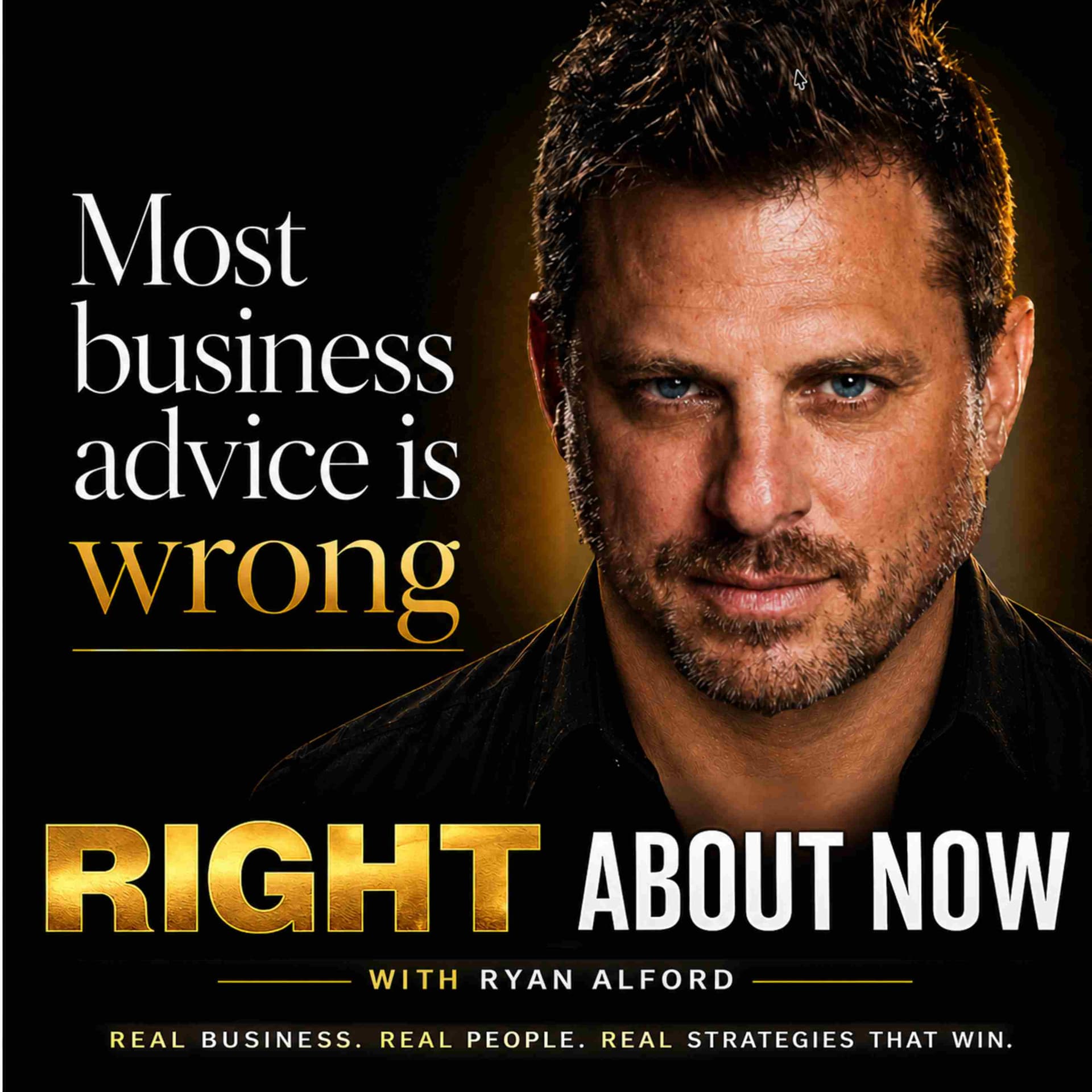
Podcast Summary: Right About Now - Legendary Business Advice
Episode Title
Death & Taxes: Maximize your Business’ Money with Ryan Moriarty
Episode Overview In this episode of Right About Now, host Ryan Alford engages with Ryan Moriarty, president of Done For You Tax, discussing essential tax strategies tailored for small businesses. Moriarty shares his unique journey from computer science to accounting, the importance of accurate bookkeeping, and how technology, especially AI, has transformed the accounting landscape.
---
Key Takeaways
- Importance of Tax Management
- Tax management is crucial for small businesses to maximize savings legally.
- Role of Bookkeeping
- Accurate bookkeeping is essential for successful tax filing and compliance.
- Common Tax Fears
- Many small business owners feel trepidation about taxes due to a lack of knowledge.
- Technological Advancements
- Technology and AI have significantly improved accounting efficiency and accessibility.
- Client Involvement
- Active client involvement is necessary to ensure correct bookkeeping and tax preparation.
- Understanding Tax Audits
- Awareness of audit probabilities and preparation can alleviate fears surrounding tax audits.
- Practical Tax Tips
- Advice on home office deductions, vehicle expenses, and meticulous documentation to prevent audits.
---
Detailed Breakdown
Introduction
- Podcast Theme
- The show aims to provide real business insights without the fluff, targeting entrepreneurs and small business owners.
Guest Introduction
- Ryan Moriarty's Background
- Transitioned from computer science to accounting, founding Done For You Tax after helping his girlfriend with her tax issues.
Tax Management Insights
- Understanding Taxes
- Taxes are complex but manageable; understanding them is key to maximizing benefits.
- Common Misconceptions
- Many small business owners fear taxes; gaining knowledge can empower them.
Bookkeeping Importance
- Key Advice
- New business owners should prioritize bookkeeping to simplify tax processes.
- Challenges in Bookkeeping
- Many individuals struggle to maintain consistent and accurate records.
Technology Impact
- Advancements in Accounting
- Technology has reduced manual labor significantly, making accounting cheaper and more efficient.
- Utilization of AI
- AI can automate classification of transactions, reducing workload for bookkeepers.
Client Engagement
- Owner Involvement
- Business owners must connect their bank accounts and provide necessary documentation.
- Meetings & Communication
- Regular communication with accountants is crucial for clarifying ambiguous transactions.
Audit Preparedness
- Audit Likelihood
- Small businesses face a low audit probability (1 in 20), but preparation is essential.
- Responding to Audits
- Having organized and accurate books is critical when facing audits.
Practical Tax Tips
- Home Office Deductions
- Business owners can deduct a portion of home office expenses based on square footage.
- Vehicle Expenses
- Owners can choose between mileage deductions or actual vehicle expenses, with the latter often yielding more significant savings.
- Writing Off Meals
- Meals can be deducted if there is a business purpose discussed during the meal.
Common Misconceptions
- Vehicle Deductions
- Misunderstandings around luxury vehicle write-offs are prevalent; depreciation can lead to financial loss.
- Real Estate Investments
- Strategic real estate investments can significantly reduce taxable income.
Future of Accounting
- AI's Role in Accounting
- AI advancements may disrupt traditional accounting practices, simplifying processes further.
---
Conclusion Ryan Moriarty emphasizes the empowerment that comes from understanding tax obligations and the innovations within accounting that can aid small businesses. His insights and practical tips aim to demystify the tax process, making it less daunting for entrepreneurs.
---
Additional Resources
- Done For You Tax: [Website](https://doneforyutax.com)
- Ryan Moriarty on Instagram: [@RyanJMo](https://www.instagram.com/RyanJMo)
- Ryan Alford's Website: [RyanIsRight.com](https://ryanisright.com)
---
This episode is packed with valuable insights aimed at empowering small business owners with the tools and knowledge they need for smarter financial management.
Written by AI. May contain mistakes. Listen to the episode to check what was said.
Transcript
Automatic transcript. May contain errors.0:00The taxes, there's laws, there's rules. You know, as long as you're following the rules, you should do what you can to maximize your tax savings within the rules. That's your right as an American. This is Right About Now with Ryan Alford, a Radcast Network production. We are the number one business show on the planet with over one million downloads a month. Taking the BS out of business for over six years and over 400 episodes. You ready to start snapping next and cashing checks? Well, it starts right about now. What's up, guys? Welcome to Right About Now. We're always bringing you what's right, and it's always topically right now.
0:41Hey, we got a topic today. You know, we all wish we didn't have to think about it, but look, this is what we do on the show. It may be a topic that you don't always want to think about, but we're going to bring you the best, the brightest, and the info that you need to do it the best way possible. That's why we've got Ryan Moriarty. He's the president of done for you. Tax.com. What's up, Ryan? Yes, sir. How are you doing, Ryan? I'm good, man. I got to be honest. You know, we're recording this on a Monday and I'm like taxes. Oh, man. But then I'm like, wait, no. Ryan is telling people we're bringing we're bringing the good to people like how to get it done the right way.
1:20The most inexpensive way possible. So, hey, we got to bring the message to the people one way or another. Well, they say death and taxes. You got to count on both of them.
1:31I'm definitely in a good business in terms of that. Yeah, no, it should be a good, what do they say, longevity. And you know, you always have somebody needing your services. Yeah, exactly. Ryan, I know, I guess we're in Puerto Rico today. Congratulations on having the better weather for probably 98 % of anyone listening. Yeah, it's good down here. Yeah, man. How's life treating you? Oh, it's great, man. I'm super blessed down here. I got my daughter and my girlfriend and my family down here. I'm very happy. You know, we got our little swimming pool outside and we got a bunch of tennis courts right near the house.
2:12So I'm happy, man. I'm happy. Hey, living a dream. I love it. I love it. How long have we been doing the tax thing? Has it been a lifelong, you know, accounting thing? No, no. So my background is actually computer science. So I have a doctorate in computer science. I've been a tech business owner for 15 years. So that feels like that's been a lifelong thing. I started this accounting company four years ago. You know, it was actually my girlfriend. She needed some help with her taxes. And she's a travel nurse, right? So she had a W-2 and she also did some part time 1099 work. And so she didn't know she could write stuff out for her 1099 business.
2:53I helped her with that. she posted about it on Facebook and like 30 people wrote to her looking for help. And I was like, oh man, we got to sell these people accounting services. So I hit up my CPA and I was like, hey, you know, if I do sales and customer management, will you do fulfillment? He said yes. And then, you know, from there, second year we brought it in-house. Third year we started building software, my background software. And we've really been able to I mean, just kind of just make it super efficient, and make it super affordable for something that generally wasn't that affordable before.
3:27So, yeah. You know, taxes are an interesting thing. Like, it's in more ways than one. You know, presidencies are sometimes won and lost over it. People, lots of divorces, lots of, you know, all kinds of things. You've got fraud. You've got a million different layers to taxation and what it's for. I don't know that we all want sort of the benefits that come from, you know, an organized society, maybe for what taxes are supposed to pay for. But nobody really wants to pay ultimately because you work hard for your money, right? And then it goes out the other end. No, exactly. Exactly. Yeah. I mean, listen, we should all be the taxes.
4:18There's laws. There's rules. You know, as long as you're following the rules, you should do what you can to maximize your tax savings within the rules. That's your right as an American. I wonder what, you know, if you think about like the scale of both lack of knowledge and sort of trepidation and fear, like where taxes fall. It's got to be pretty high, right? Yeah, there's a lot of people who are very nervous. You know, a lot of people who come to me, they haven't done it in a long time. They're just like, man, I just didn't want to touch it. You know what I mean? So, yeah. But you have to, and I think that's why I was excited, you know, like, okay.
4:57Yeah, empowering people is what ultimately we're trying with knowledge. And the more people know and they understand, and the more outlets they have for services that they can benefit from, Yeah, that's where I think, you know, we're doing our job and trying to sort of take the message to the people. Yeah, absolutely. Absolutely. Well, you know, the people that should hear this message, you know, are generally like who we like to work with. It's small. I call it very small business. So business is making around six hundred thousand a year and under. Right. So it's it's the you know, it's the guy behind the computer.
5:35It's the insurance salesperson. You know, the person with 1099 work. I get a lot of, you know, people doing yard work or construction companies. Right. So I'm working. I'm looking out for the, you know, the very small business person is who I'm looking out for. And, you know, it's a it's a it's a range, you know, that zero six hundred thousand where, you know, you don't have three thousand dollars a year to spend on your bookkeeping. You know what I mean? And that's generally the price that you'll find if you call up your local accountant. It's$300 a month. It's kind of like the standard for bookkeeping.
6:08We're doing it for$97 to$147 a month to any company up to$600 ,000 in revenue. And so to be able to bring that service to this kind of – most CPAs don't even want to work with the clients that we want, which is the$600 ,000 and under. Yep. So what do you think is the most, like, I want to get into your service some here in a bit, but what's like one of maybe the biggest for that demo of small business? When you work with them and what you've learned, maybe like what's like the biggest things that they're either missing or don't know or misconception in that sort of sweet spot? Yeah, I mean, I would say like if whenever I get someone who's new to business on the phone, you know, or I talk to someone, you know, my number one piece of advice is really to get your bookkeeping together.
7:05Right. And my joke about this is people call me all the time with back taxes, but no one ever calls me with finished bookkeeping and back taxes. Right. Yeah. Yeah. The tax filing part, that's easy. You know, that'll, that'll get done, you know? And so the, I think like, um, people are like, oh, this, you know, it's going to be really hard. You know, there's a lot of stuff going on. It's not, you just, the one piece you got to take care of is the bookkeeping. If you take care of your bookkeeping, the rest will fall into place. No problem. yeah i could speak to that you know i've been an entrepreneur for seven plus years not my entire career i've worked for others for like 15 yeah and my dad was in small business and so he counseled me but what i could tell you though because i've had friends and watched it it's really easy to get behind if you don't prioritize and get it like you said it's it's just a book you're only get behind the bookkeeping, you know?
8:01Yeah, exactly. And even if you're not trying to, again, do anything wrong, it's one of those things that should be like core learning. So like any one of our listeners, if you're starting a new business or thinking about it, or, you know, you're in software, like, again, like you said, behind the computer, doing coaching. Yeah, coaching. Absolutely. Yeah, that sort of thing. You start, income starts coming in, but you need to be sort of managing the trail of all of that in the right way. Correct. That's the thing, but like, that's not, not only is that what you should be doing, that's all you have to do, right?
8:42It's not, there's people think that there's all these things, you know, even if you don't set up an LLC, you know, you'll have a sole proprietorship, nothing will happen. If you're making money, the only thing you need to do to not get behind on your taxes, to not feel like you're overwhelmed is just to get your bookkeeping done. And if you To get your bookkeeping done, all the other administrative stuff will fall into place. What's been what's some of the biggest changes? I mean, there have been changes in, you know, like, I don't know, from either the technology, the laws themselves or other things that have sort of guided the whole industry.
9:13Yeah, no, I mean, I think I think one thing that's really cool right now about the industry is the the what technology can do to it and what it is doing to it. You know, I don't see that many other firms like us who are really, like, developing software and then passing. A lot of people are developing software, but then they're still charging the same amount. So we're developing software. We're passing those savings on to the client, right? And so if you look at, remember, the first year we were just doing, like I said, my CPA was just fulfilling, right? And if you look at the amount of work that we had to do for one client from that first year to where we are now, it's about 95 % less work, right?
9:49Originally, we were collecting all the information through emails. We were collecting all the bank statements through emails so that we could do the bookkeeping and the tax filing. Now we have an online portal. You go there. You connect your bank accounts using Plaid. It allows us to automatically download the transactions and literally download the transactions daily so we can just do the bookkeeping for you. And then all the other information we need to collect for taxes, again, we have an online portal. So you just enter it in there. We'll tell you if it's, you know, the computer will let you know if it's off or what we need or extra things we need.
10:22And so to go from where we were, even us as a company, where we started just like a normal accounting firm to what now is a software powered accounting firm. Like not yet. I would say 95 percent of the work. There's about 95 percent less work per client. That's true. How does AI, you know, get involved as far as taxes go? That was fascinating to me. You know, I see that on almost everything now. You've got AI involved and helping in some way. What about your taxes? Yeah. So, I mean, so for the bookkeeping, it helps lower the cost, right? So, you know, if we were just to get, have someone go connect their bank accounts, we got their transactions.
11:05Say we're doing 2023. So we have all the 2023 transactions. You know, without AI, without the computer, our bookkeeper is going to have to go through and manually click on all 1 ,000 of those transactions and classify them, right? But what we have now with the software and with the AI is before the bookkeeper even touches it, the computer does a run at it. And the computer will get it like 80%, 85 % of the way correct. And so now the bookkeeper is only working on the final 15 % just to kind of clean up the final 15%. The rest we know is right because, you know, the computer did it. Right. So we're looking at like, you know, an hour or two or three of time from the bookkeeper versus before we're talking like eight hours to do to do a set of bookkeeping.
11:49So it's just really like it's really minimizes the time, you know, allows us, like I said, like other people, they may not pass on the savings to you, but our company passes on that savings to you so that, you know, you can you can actually get it done for a reasonable price, which is really important for these small businesses. yep how much of it's you know you're done for you tax.com so yeah is it uh how involved is the business owner have to be yeah no that's a great question i mean they i would say the answer to that is as little as they can be but that's not necessarily no work you know what i mean we do as much as we can for you but that doesn't mean you're not gonna have any work right so in terms of the bookkeeping, you got to connect to your accounts.
12:34You know, we don't know your bank logins, right? So you got to connect your accounts yourself through Plaid. Once we download it, we do the first draft. We turn that around in 24 hours. And then you meet with us on the phone. Now, the reason you meet with us on the phone is because there's stuff you know that we could never know just from looking at the books. We need to know, you know, was this meal at a, you know, Cheesecake Factory? Was that a business expense or was that a personal expense? You know that we don't. So there's a, there's a, you know, there's for things like that that could go either way, we want to talk to you on the phone and figure out exactly what we need to do.
13:06So now you're just having a half an hour, you know, maybe, maybe two or three of those phone calls, an hour and a half total. And so it's not that much work, you know, you're working with somebody, you're talking with somebody, we've allotted time for the meeting. So it's kind of structured for you, but that's, that's what we need to get the bookkeeping done. And then, you know, going forward, it's really automated in terms of like keeping it up. Now, in terms of tax preparation, The biggest thing for tax preparation is we just need the information, right? You have all your 1099 forms. You have your 1098s.
13:34Maybe you have a 1095, which is health insurance, right? We need to get all those forms. We need to know what your address is. We need to know your name. We need to know your dependents. That's all information that we need. So you have to enter in all that information. So maybe that's an hour or two. But once we have that information, we'll go through and we'll produce the return for you, right? And then once the return is produced, you know, it goes to our head CPA. He looks at it. You look at it and then when everyone's in agreement, you know, we file. So, yeah. When you think about, so if I'm, I'm in the shoes of playing this consumer, but it's, you know, the small business guy or girl.
14:11Yeah. I think about taxes and I'm, you know, my trepidation, my fear or like what I'm hoping I get from a service. So you want speed, you want accuracy, you want to make sure that you're doing it right. Um, what kind of protections and or service to provide? Because inevitably, even a unsoph, you know, not a highly, I don't know, sophisticated business, but it might be simple, can occasionally run into gray areas of not knowing what to do. So getting that kind of counsel insights, how does your company work with that when your model's sort of set up for, you know, automation quick, a lot of stuff like that.
14:57How does that one-to-one come into play? Yeah. And so that's the reason, like I was talking to a, you know, I was doing a sales call today and I was talking to somebody and I was saying that, you know, any kind of question you may have about, oh, what about this off case or what about this off case? That's why you get on the phone with the bookkeeper one-on-one for those meetings, right? That way you're able to ask the question, And the bookkeeper is able to dig down to get all the information they need so that we can classify that transaction correctly. And so that's available with the service.
15:28Is that one to work? Yeah, that's the way it works. Once we output the draft, you actually meet with the bookkeeper one-on-one on the phone until you're bookkeeping, until you're 100 % confident in the books and we're 100 % confident in the books, you'll meet with the bookkeeper. Yeah. What about the dreaded word that no one likes to hear? Audit. Yeah. How or does this service help if or when that happens? And, you know, how likely or unlikely is a business in sort of this stage, you know, that small business range of getting audited? Two parts, I guess. Yeah, no, I'll answer the second part first.
16:08You know, generally audits for businesses this range, about 1 in 20. So, you know, it's pretty low. You know, 1 in 20 is not very high. And then, you know, how does the service help? How do you know, how are we there? So the biggest thing that, you know, when you get audited is that you have your books together. You know, a lot of the government's looking for is people who just wrote down numbers. You know, I mean, like, oh, my my, you know, my meals were about three thousand dollars. You know, if you write down all the even numbers on your return, you're going to get audited. And so the point is to have the data to back it up.
16:43And the first thing they'll ask for is they'll ask to see your books. So, you know, let me see the transactions that, you know, like what is all this for? Here's, you know,$2 ,000 in, I don't want to say, continuing education. You know, what were the transactions that these were for, right? And so by building it off of, you know, what's true and factual, when the government asks for it, that's what you're going to show them, what's true and factual, you know? And then also, when it goes to the CPA review, when we're filing, if anything jumps out at him like, oh, man, this person spent a$30 ,000 a year business and they have$10 ,000 in meals and entertainment.
17:24That's no go. We're going to sit down with that client and we're going to tell them, hey, man, that's a red flag. Whenever we see something that we believe will be a red flag, we bring it back to the client. We let them know the CPA has concerns. if either the CPA is not going to be okay with it in any case, which happens sometimes, and he'll just refuse to sign it unless the client decides to make the changes, or we just let the client know that this is going to increase the probability of an audit. Do they still want to go ahead and the CPA is okay with it, but they don't recommend it necessarily, right?
17:54So that's a dialogue that we have as we're processing the taxes, yeah. So it's ongoing guidance to help avoid it. Yeah. But you do, I'm sure, occasionally have clients that do get audited. Yeah, we do have clients that are audited. You know, we do the best to support them. Usually, so it's what they call like a desk audit, right? And so they're right, and you're not, your whole return isn't going to get audited. They're going to audit one particular, generally this is the way it works. They're going to audit one particular category, you know, whether that's meals or whether that's continuing education, you know, whatever it is.
18:30And they want to see the, you know, the supporting evidence for that, you know, for that category. And if you're able to provide that quickly and you're able to provide that well and you're able to give them what they need, then it's going to end there because they see every shit together. Right now, if you make stuff up, you know, then you don't really have anything to show them. You know, you're scrambling or it takes you a few months to do it. Then that might lead to a full audit where they're going to ask about everything. Yeah. So you so does this payment and, you know, plan cover your clients and if they do get audited?
19:06Yes. We're able to help them respond to messages. You know what I mean? To inquiries. I mean, it's basically they're asking for information, you know what I mean? And so we're going to help our clients provide the information that they want. Right. Right. You know, if it goes beyond that to a full audit, no. Then, you know, they can hire the CPA who signs off on their return. You know, they are allowed to represent them in like a full audit. Right. So they can hire the CPA if it comes to something more serious. Yep. And is that that's pretty unlikely. Yeah, it doesn't go there that often. It doesn't go there that often.
19:42Yeah, maybe. Again, that's like one in 20. but um you know to when something you have to do something you know kind of a little bit bad for the government to you know get uh come after you like that yeah you might have a red a bigger red flag somewhere uh trigger yeah yeah that's that we try to avoid red flags as much as possible yes yeah i'm sure how about so maybe let's add some value ryan like what are some tips like other than, hey, we're bringing them a low cost service here. We brought them the tip of the day for taxes with done for you tax dot com. But maybe some practical advice for these guys as it relates to, you know, taxes and management, obviously starting early and keeping up with your books.
20:33But any kind of tips and things that we could give to the audience? Yeah, I mean, absolutely. So, you know, here's a big one is, you know, definitely you want to have a home office. Most of my clients have a home office. Like I said, like I have a lot of like, you know, people behind the computer. They're just sitting at home behind the computer, right? So they have a home office. You know, with home office, you're able to take whatever square footage that is divided by the square footage of your house. That can be a pretty significant deduction, right? And so that's a big one. And then, you know, you look at cars, depending on how much you drive.
21:03So, you know, obviously, like my my my clients doing landscaping, you know, they have much higher car deductions. Right. And so I give some advice about the car. There's two ways to do it. Some people think, you know, you only just do miles. But if you want to do it and make it save more money, you can actually do what's called the percentage use, the actual expense, it's called. And so in the actual expense model, you add up all the costs that went into the car for the year. and then you take whatever percentage you drove that car estimated for business. So if you estimate that you drove that car 85 % for business or you track it and you actually know you drove it 85 % for business, you're able to take 85 % of all the expenses any time you put gas in your car, whether it was for personal or business, because you're going to take a percentage.
21:48So that's – Yep, exactly. And if you do it the actual way, nine times out of ten is going to be more, and you also get depreciation on your car. So you don't want to just do the miles. ever, pretty much. You always want to actually but that involves the bookkeeping. You've got to do the work to count all the vehicle expenses. And then tax strategy. Here's some tax strategy advice for, let's say your more well-off clients who have I don't know, maybe they have$200 ,000,$300 ,000, $400 ,000,$500 ,000 in profit coming their way. And so the way you can kind of wipe away your profit you know, 100 % of the time is investing in real estate, right?
22:32So like, basically, the way it works is if you do a short term rental, or you become a real estate professional, that's another conversation. But let's just say you do a short term rental, you know, you have, say$100 ,000 to put down, okay, so you're able to buy a$500 ,000 house, you run it out for a short term rental, you'll be able to take 40 % of that value of that house, right, and depreciate in the very first year by doing accelerated depreciation is what it's called. So for a five, you put a hundred thousand dollars down, you get a$500 ,000 house, you're offering it right off 40%. That's$200 ,000.
23:06So you're able to wipe it for only cash out of your pocket, a hundred thousand dollars. You're able to wipe away$200 ,000 in taxable income, right? And if you're in a higher tax bracket and say, let's say you're in a 30 % tax bracket on that, that's a$60 ,000 tax savings. And you made an investment, which hopefully is a good investment. but I can't promise that. Now, could that real estate be related to your business? Could it be, you know, like let's say you're leasing currently for your business. Could you buy for your business and get kind of like a, I mean, sort of a double benefit a little bit?
23:43Yeah. Yeah. So you could, you could buy for your business. You can pay, you know, do that through an LLC. You can pay that, you can pay rent there. Again, you have to be careful because, again, it's that short-term rental thing. So, you know, I'm not going to say I'm 100 % confident in this, but essentially the way, you know, the way in theory you could do it would be to, you know, rent, buy a building, rent it from your business, and then depreciate the building as much as you could, right? And so then you'd have some losses on the building. And as long as either, at that point, you'd need to be a real estate professional.
24:15That's the thing. Because you can do the short-term rental, right? but for real estate if it's long term unless you're designated a real estate professional which means that you're doing real estate more than any other activity which is hard for a lot of business owners you know if you do fall into that class then what happens is you're able to depreciate the same amount on the house or on the you know say the thing you're renting if it's a long term but it won't count against your ordinary income it'll just go away like you'll depreciate it but it'll just sit there for the future for that one house unless it's a short-term rental or unless you're a real estate professional so got it what's uh it's like you know a lot of misconceptions i think in taxing and i think you brought up you know a couple tips with you know like your home office things like that but maybe like if you have one on each side like one that like maybe people think always think they're going to be able to write off this, but you can't.
25:15And maybe the other direction too, like they may not, you know, they forget about it. Yeah. Yeah. Okay. So the number one worst deduction that I see, you know, people talking about online are these effing vehicle things, you know, people, right. Okay. Let me, let me explain why. Okay. So say you buy a G wagon or whatever, you know what I mean? It's over 6 ,000 pounds and you can write that off. And so you write that off in the year,$150 ,000, you write it off, you know, 100 % the very first year. Okay, that's great, right? However, what people don't understand is that if you, first of all, you're going to lose, it's going to depreciate, right?
Read the full transcript
25:53Vehicles are not, it's not a very good investment, right? So like, you know, it's going to depreciate for sure. And then whenever you sell that car back, say you sell it for$80 ,000 in the future, that$150 ,000 you were able to get rid of now, if you sell that$80 ,000 is going to be looked at as income. There's no free money by depreciating a car. And then if you go out and you spend that money on a car, you're going to, I mean, that car is going to depreciate. You're going to, you're not becoming any wealthier. You're becoming less wealthy. You'll have a nice car. Like, don't get me wrong. You'll have a nice car, but you'll become less wealthy if you're trying to do the trick where you're buying an expensive vehicle to depreciate it.
26:29You're going to lose money. And so if that's your goal to become more wealthy, then don't buy a nice car. Again, the real estate investment is the best investment in terms of tax benefits. And it's also a really good investment. But I'm not a financial planner. But, you know, generally. We are debunking viral tax myths here. Absolutely. I've seen that one a lot. I have seen that one a lot. Over 6 ,000 pounds. You can write it off. And it has become the sexy thing, right? Write it off, man. Just write it off, man. Yeah. But now you have this vehicle. Well, like it's, it worked a hundred$50 ,000 car works the same as a$6 ,000 car.
27:10Obviously there's differences like, you know, so your preference or whatever, but that's going to depreciate, man. Like you're only, the only money you're, the only money you're able to write off in that car is what depreciates us. Cause when you sell that car back, when you sell that car back, if you depreciate a hundred percent in the first year, you're paying, you're paying whatever didn't depreciate, you're paying your income. So it's not like you're making any money at all. You're literally just, you're not paying taxes on the money you lose by buying a car. That's all you're doing. Yeah.
27:38I mean, if you were going to buy that anyway, like if your lifestyle is a level. Do it. That's what I say. When I talk to my clients about it, I'm like, listen, if you need a new car, buy a new car. But don't go out and buy a new car to save money on taxes because, like I said, you're just making yourself less wealthy. And that's not the goal. Yeah. There you go. Yeah. Debunking tax myths. any others that are as obvious as that one that are sort of like always get flaunted around is like the guru uh stuff that isn't necessarily as true as it seems no there's the other way what are things that people aren't writing off that they should be a lot of times yeah no i mean i mean home office right if you're if you're not you know you want to make sure you add up again home office is the same thing as vehicles i was explaining before add up all the costs of your home office, take a percentage, right?
28:33Vehicle, if you're just doing miles, that's a big mistake right there, right? What are some other things? You know, I mean, meals, so, you know, what meals can you write off, right? Like, so, even if you're going to dinner with your wife, if you talk about business, if she's like an advisor, and it's something you actually discuss, if you discuss business, you can write off that meal. So, meals, as long as there's a business purpose for the meal, as long as you're talking some business and there is a business purpose for it, those are deductible. So sometimes people feel a little weird about writing off meals with their spouse.
29:07But if you're talking business, you're talking business, and that becomes deductible. I don't know a single meal. My wife and I don't talk about something to do with business. And I'm not just saying that because I write every one of them off. I write a lot of them off. I'm just saying I'm creating a paper trail here of acknowledging what I use it for. If nothing else, Ryan, that's what this is for.
29:33That and a$150 ,000 write-off will be good for me. And then the other thing, the real estate thing with the short-term rental, that's real. So really, for anyone with an extra$100 ,000 in income, especially for W-2, like W-2 people can use that as well. Most tax benefits, it's only for business owners. But if you're a doctor or something,$300 ,000, W-2, real estate, you really can save hundreds of thousands. I mean,$50 ,000,$100 ,000 on taxes. That's a real one. That's a real one. So I think, yeah. I can't help but think about, he's still thinking about that. how many social media posts I saw on that car write-off.
30:25It really made me think of that. It's, yeah. I mean, I said it twice. I'll say it for the third time. If you buy an expensive car like that to write it off, you're going to become less wealthy. That is not the goal. That is not the goal, for sure.
30:46What's your thoughts? You know, you're in the software business. and with AI and everything like that, I mean, you know, as we're finishing up here, like, I'm just curious, like how you see software being impacted with AI and like all this stuff. It just seems like we're at this forefront of a lot of innovation. Yeah. So, you know, it's, I mean, I can, I like maybe five, six years in the future, someone can, you know, just go to chat GPT and be like, build me an accounting company.
31:22you know i don't know man but the future is really i mean i don't think we're ready for what's going to happen you know as with my background in computers and with my phd and stuff it's like when when it gets to the point where ai can actually create ais that are even better than itself and then that thing just goes in and i mean it's not it's already very very smart it's going to be even smarter um i i don't think there's really a way to predict what's going to happen you know i don't think anyone knows you know um but like if you don't think that something huge is going to happen in the next five or six years um you know your mistake like you know there could be something like a 300 increase in gdp or 100 times increase in gross domestic product right which would be like you know we're just all that much more productive um because computers are running everything so it could be the apocalypse you know we have no idea but to try to predict what's going on when you know to a point obviously things are going to get easier you know um it's going to be easier to create businesses it's going to be easier to create like software that's similar to mine right you'll be able to do that through AI um you know to a point that's going to happen but then at some point it's just going to the switch is going to be flipped and then we're going to be in a whole other reality in my opinion.
32:43Yeah. I mean, it's the quantum computing stuff. Like if you read enough about it, it's, it can be scary or, you know, enlightening. I try not to get too much of the doomsday stuff, you know. It's just, if you don't think there's going to be a huge change, you're crazy because hopefully that change is good. You know, we hope our best that change is good, but something, something in the next five or six years or, you know, even maybe even shorter. The whole world is going to be a lot different than we see. We see it today. Ryan, how can everybody keep up with what you're doing, find out about your services and all that stuff?
33:19Absolutely. So probably the easiest way, you know, if you're interested in the service, you can just head to done4utax.com. It's all spelled out. So D-O-N-E-F-O-R-Y-O-U-T-A-X.com. So if you just head there, there's a place you can sign up for an appointment, right? right underneath the sign up or login button. There's a contact form. You can just fill it out. We'll get on the phone and we'll figure out what's going on with you and see if we can help you out. Instagram is the other place that's a good place to connect with me, which is at Ryan J Mo. So at R-Y-A-N, J as in John, M-O is in the first two letters of my last name, Moriarty.
33:57So at Ryan J Mo is my Instagram and that's where you can find me. Ryan, really appreciate your wisdom and insight and for coming on the show. Yeah, Ryan, I appreciate your show, and I appreciate what you're doing for people, man. You're awesome. Yeah, man. Hey, guys, look, like we said, there's only two things you can count on, death and taxes. Everybody's coming. Hey, we live in America. It's a great place to be. We've got to pay for some of this stuff. But look, here's how you do it. You've got to get ahead. Knowledge is power. And ultimately, if you can save time, save money, and get a higher level of service, you need to go check out Done For Tax.
34:34DoneForyUtax.com with Ryan Moriarty. We'll see you later, Ryan. Appreciate you. Very much. Appreciate it, brother. You know where to find us, RyanIsRight.com. Get all the Ryans today. R-Y-A-N is right.com. You'll find the highlight clips, the full episode of today, audio and video. Go watch that YouTube. Our numbers are going up while your taxes are going down. We'll see you next time. All right about now. This has been right about now with Ryan Alford, a Radcast Network production. Visit RyanIsRight.com for full audio and video versions of the show or to inquire about sponsorship opportunities.
35:08Thanks for listening.
35:13We'll see you next time.
From the publisher
In this episode of "Right About Now," host Ryan Alford sits down with Ryan Moriarty, president of Done For You Tax, to explore essential tax strategies for small businesses. Moriarty reflects on his journey from computer science to accounting, sharing how his technical background shapes his approach to tax management. He dives into the importance of accurate bookkeeping and addresses common fears surrounding taxes. Throughout the conversation, Moriarty highlights how advancements in technology and AI have revolutionized accounting, making it more accessible and cost-effective for small business owners. He also offers practical tax advice, including tips on home office deductions, vehicle expenses, and the importance of meticulous documentation to prevent audit risks. This episode is packed with valuable insights aimed at empowering small business owners with the tools and knowledge they need for smarter financial management.
TAKEAWAYS- Importance of tax management for small businesses
- Role of bookkeeping in successful tax filing
- Common fears and misconceptions about taxes
- Target audience for affordable accounting services
- Impact of technology on accounting efficiency
- Integration of artificial intelligence in bookkeeping
- Client involvement in the accounting process
- Understanding tax audits and preparation
- Practical tax tips for small business owners
- Overlooked deductions and common pitfalls in tax filing
Introduction to Taxes (00:00:00)
Discussion on the importance of understanding taxes and maximizing savings within legal boundaries.
Podcast Introduction (00:00:09)
Ryan Alford introduces the podcast, highlighting its popularity and engaging tone.
Welcome to the Episode (00:00:32)
Ryan Alford sets the stage for the episode's focus on taxes, emphasizing its relevance.
Guest Introduction (00:00:56)
Ryan Alford introduces Ryan Moriarty, president of Done For You Taxcom.
Personal Life Update (00:01:54)
Ryan Moriarty shares his personal happiness living in Puerto Rico with family.
Moriarty's Background (00:02:25)
Ryan Moriarty discusses his journey from computer science to founding an accounting firm.
The Nature of Taxes (00:03:27)
Ryan Alford and Moriarty explore the complexities and societal implications of taxes.
Maximizing Tax Savings (00:04:13)
Moriarty emphasizes the importance of following tax laws to maximize savings.
Fear and Trepidation Around Taxes (00:04:42)
Discussion on the common fears and lack of knowledge people have regarding taxes.
Target Audience for Services (00:05:20)
Moriarty identifies small business owners as the primary audience for his services.
Bookkeeping Advice (00:06:53)
Moriarty advises new business owners to prioritize bookkeeping to simplify tax filing.
Challenges of Bookkeeping (00:07:58)
Ryan Alford shares insights on the difficulties of maintaining proper bookkeeping.
Importance of Bookkeeping (00:08:35)
Moriarty stresses that proper bookkeeping is essential for tax compliance.
Technological Advancements in Accounting (00:09:13)
Moriarty discusses how technology has improved efficiency in accounting practices.
Role of AI in Bookkeeping (00:10:57)
Moriarty explains how AI assists in bookkeeping, reducing manual labor.
Business Owner Involvement (00:12:17)
Moriarty clarifies the level of involvement required from business owners in bookkeeping.
Tax Preparation Process (00:13:15)
Moriarty outlines the steps involved in preparing taxes for clients.
Client Expectations from Tax Services (00:14:13)
Discussion on what small business owners seek in tax services: speed and accuracy.
Audit Concerns (00:15:00)
Moriarty addresses client fears regarding audits and how his service can help.
Audit Likelihood (00:16:06)
Moriarty shares statistics on audit chances for small businesses.
Importance of Accurate Record-Keeping (00:16:58)
Moriarty emphasizes the need for accurate bookkeeping to support tax filings during audits.
Ongoing Client Guidance (00:18:00)
Moriarty explains the continuous support provided to clients to avoid audits.
Understanding Audits (00:18:09)
Discussion on desk audits, specific categories audited, and the importance of being prepared.
Audit Support Services (00:19:06)
Explanation of how Done For You Taxcom assists clients during audits and inquiries.
Avoiding Full Audits (00:19:44)
Insight on how to prevent full audits by maintaining organized records and avoiding red flags.
Tax Tips for Small Businesses (00:20:04)
Advice on practical tax management strategies for small business owners to stay organized.
Home Office Deductions (00:20:36)
Importance of having a home office and how to calculate deductions based on square footage.
Vehicle Expense Deductions (00:21:22)
Explanation of vehicle expense deductions, including mileage tracking versus actual expenses.
Real Estate Investment Strategies (00:22:11)
Tax strategies for high-income clients involving real estate and the benefits of accelerated depreciation.
Misconceptions About Vehicle Deductions (00:25:22)
Discussion on the pitfalls of writing off luxury vehicles and their depreciation.
Debunking Tax Myths (00:26:39)
Clarification on common tax myths surrounding vehicle deductions and financial planning.
Maximizing Home Office Deductions (00:28:12)
Encouragement to accurately calculate home office expenses and potential deductions for small businesses.
Writing Off Business Meals (00:29:11)
Guidance on writing off meals when there is a business purpose, even during personal dinners.
If you enjoyed this episode and want to learn more, join Ryan’s newsletter https://ryanalford.com/newsletter/ to get Ferrari level advice daily for FREE.
Learn how to build a 7 figure business from your personal brand by signing up for a FREE introduction to personal branding https://ryanalford.com/personalbranding.
Learn more by visiting our website at www.ryanisright.com
Subscribe to our YouTube channel www.youtube.com/@RightAboutNowwithRyanAlford.
See Privacy Policy at https://art19.com/privacy and California Privacy Notice at https://art19.com/privacy#do-not-sell-my-info.