In short
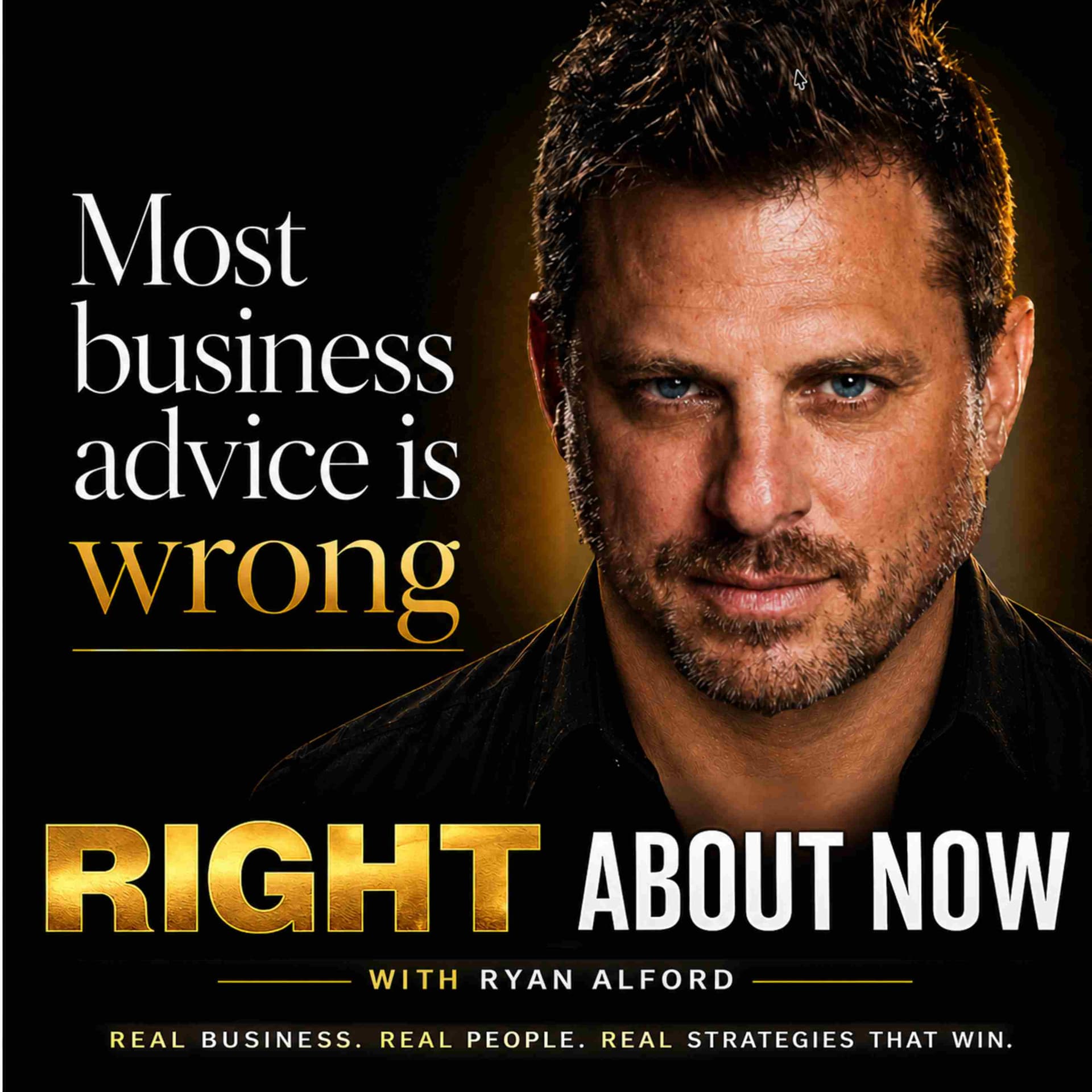
Right About Now - Legendary Business Advice
Episode Summary
Destination Citizenship: Navigating Global Mobility and Tax Benefits with Jeremy Savory
Podcast Description: *Right About Now* is a leading marketing and business podcast hosted by Ryan Alford, focused on delivering practical insights and experiences from successful entrepreneurs and industry experts. This episode features Jeremy Savory, a global mobility specialist, discussing the concept of "destination citizenship" and how it relates to global mobility, tax benefits, and personal experiences with migration.
---
Key Takeaways
Guest Introduction
- Jeremy Savory's Background:
- Grew up in London with deaf parents, which shaped his worldview and understanding of societal norms.
- Developed a keen interest in travel, obtaining multiple residencies and citizenships.
- Overcame personal challenges, leading to a unique perspective on migration and nationality.
Main Concepts Discussed
- Global Citizenship and Migration:
- The evolving nature of global citizenship and its relevance to affluent individuals and businesses.
- The concept of "destination citizenship" as a strategic choice for those seeking financial and personal freedom.
- Tax-Friendly Jurisdictions:
- Discussion on high-tax jurisdictions vs. low or no-tax countries (e.g., Paraguay, Panama).
- The benefits of relocating to tax-friendly regions for entrepreneurs and digital nomads.
- Technological Impact:
- How technology is changing business operations and enabling remote work across borders.
- The influence of online businesses on global mobility and the ability to live and work from anywhere.
- Cultural and Economic Insights:
- The importance of understanding cultural differences in lifestyle and cost of living.
- Insights into the economic implications of high taxation on innovation and wealth creation.
Opportunities and Challenges
- Personal Experiences:
- Jeremy shares his journey of obtaining citizenships and residencies, emphasizing the value of having multiple nationalities.
- Challenges faced in navigating bureaucracy when trying to obtain residency or citizenship in various countries.
- Investing in Global Opportunities:
- The potential for investment opportunities through global mobility.
- Real estate investments and lifestyle advantages of living in countries with lower costs of living.
Future Implications
- Government Trends:
- Discussion on how governments may react to capital flight and the potential introduction of exit taxes.
- The need for diversification of citizenship and assets in a rapidly changing global landscape.
---
Practical Advice for Affluent Individuals
- How to Obtain a Second Nationality:
- Steps include investment in specific countries, obtaining citizenship by descent, or residency requirements.
- Importance of having a primary nationality before considering renunciation of citizenship.
- Consultation Resources:
- Jeremy’s company, Savory & Partners, assists clients in navigating the complexities of obtaining second passports.
- Opportunities to consult with Jeremy directly through his platform, Millionaire Migrant.
---
Conclusion This episode emphasizes the necessity for individuals, particularly entrepreneurs and affluent people, to consider global mobility and destination citizenship as viable strategies for financial and personal growth. As technology continues to reshape the world, understanding diverse opportunities in taxation and residency becomes increasingly essential.
For more insights, you can visit
- [Savory & Partners](https://savoryandpartners.com)
- [Millionaire Migrant](https://youtube.com/@MillionaireMigrant)
---
Note: The episode reinforces the idea that diversifying one’s nationality and assets is increasingly important to navigate the challenges posed by high taxation and bureaucratic hurdles in one's home country.
Written by AI. May contain mistakes. Listen to the episode to check what was said.
Transcript
Automatic transcript. May contain errors.0:28This is the story of the one. If you've got talent and you've got capital, you can't be wasting it sitting in a high-tax jurisdiction. There's countries all around the world saying, come here, and you won't pay any taxes for 10 years. Who wouldn't take up that offer? This is Right About Now with Ryan Alford, a Radcast Network production. We are the number one business show on the planet, with over 1 million downloads a month. Taking the BS out of business for over six years and over 400 episodes. You ready to start snapping necks and cashing checks? Well, it starts right about now. What's up, guys?
1:05Welcome to Right About Now. We're always talking about what is now and what's today. We could talk about yesterday, but that doesn't get you anywhere. We could think about tomorrow, and that's what our guest is going to talk a little bit about, because the future is here. You need to be thinking about how you get ahead, where you store your money, Where do you go in this world and in business and in life? That's why we've got Jeremy Savory. He is the president and CEO of Savory and Partners, and he's here to talk a little bit about destination, citizenship, and getting ahead. What's up, Jeremy?
1:44Hey, how's it going, Ryan? Hey, man. Good. Good to get rolling officially. I appreciate your patience. A little production stuff there. And we're in Dubai. right we were this international show we've developed here i i had a london last week dubai this week we're getting all over the map how's dubai it's starting to get it's starting to get warm it's starting to get a little bit hot is it summertime there they have similar seasons creeping up i think it's gonna be a barbecue the last barbecue of the year this weekend and then after that it's indoors uh yes what so dubai how hot are we talking like i'm in south carolina in the states yeah you know we get some pretty damn hot summers uh well i mean you can have 50 degrees july and august so i mean you guys use fahrenheit yeah is that 100 it's really hot it's desert hot it's uh it's even the the sea the sea itself is even warm you don't even go in the sea because the sea is warm oh that's how hot it is so it's pure pool time and to be honest with you most people kind of get out of town for that.
2:52You don't want to be cooking. Jeremy, I know you've got an interesting story. I mean, today we're going to be talking to our audience because I really want you to dig in. What you do is becoming more and more interesting, I think, for our audience in particular, being an affluent sort of business audience in considering citizenship. But I do know you have a pretty unique background and story. So I do want going to set the table and give you at least a minute to kind of share that with the audience and kind of what got you in into I mean it's a unique uh vertical I mean I uh I tell you I mean I've had a lot we get a lot of people coming going and that is the first one in that specific thing but it makes a lot of sense but but yeah do our audience you know give us the uh the the condensed story but I because I do know you have some pretty unique upbringing Yeah, so I grew up in London.
3:45I'm London born and bred. But I grew up, my parents were deaf. So life growing up was a little bit different to normal people, I would say, the average family household. But what it meant is that it also helped me to kind of see the world a little bit differently. I had to grow up a lot faster. I had to look after my parents in terms of be their interpreter when I go to the bank or when we're dealing with insurance. So I had to grow up pretty fast. but it also meant that I didn't have other people telling me societal norms. Like, this is how we do things around here. Then I never really traveled until for the first time, really around 18 when I lived overseas.
4:24After that, I got the bug. And since then, I've traveled to close to 100 countries. I also obtained residencies in multiple countries. I actually picked up my Paraguayan residency this morning through FedEx. I was in Paraguay last year. I have multiple citizenship. I've fought. I've got two on the way. And I've just been really curious about the world and all the opportunities the world has given me. And none of this would have happened if I just stayed in the UK. There's so much out there that people don't realize because, you know, they want to have the, they say that their state has the best pancakes or the other state has the best burgers or, you know, we go out to the local bar.
5:02And sometimes there's an amazing life full of crazy stories you could have if you just travel the world and see that there's ways also to make money as well. It's really interesting, Jeremy. I didn't until, you know, I've read all about you coming into this, you know, read your story. But not until you kind of said it out loud did I sort of frame thinking about the way you grew up and not experiencing the norms that most people do and having to frame your own. So in a way, it made you a free thinker because you didn't have those voices. You know, your parents' voices are always in your head, right?
5:44if you grow up. But having two deaf parents probably clearly did not speak or, you know, the way you and I. There weren't really that many voices. Yeah, no voices. I'm thinking, do you have any brothers or sisters? Yeah, I got one brother, yeah. Okay. But, I mean, the TV had subtitles on all the time, right? So, you know, we, my parents couldn't hear anything. So we could just play any music we wanted, even like rap music. They couldn't hear, you know, don't listen to that type of stuff. the only time that but there were a few times like if you were really mad at your parents you would just cover your mouth and be like yeah you know f you and all that type of stuff uh i also remember that was that tough though i mean yeah yeah there had to there had to be some i'm just i know how poor you know things were but i didn't want to do justice to that that would not be easy yeah it wasn't tough i mean kids are brutal as you can imagine like kids just want to blend in no one wants to be the tall guy because then you get teased nobody wants to be the fat guy nobody wants to be looking like this so you just want to kind of blend in and hope that no one spots you so uh i just didn't want anyone knowing that i was different or my parents were different uh but what was really weird is when i got to university it was actually the opposite in the university you would tell people because no one knows you you're just all strangers in a different part of town and no one knows where you're back from home and then when you tell people you're really cool you're like this like interesting fascinating person but i think that tells us a lot about society is that one of you you need to conform and you need to blend in and then just like a year later you can be purple haired and calling yourself whatever you want and everyone loves that type of variety but i think that's a that's more about society than ourselves but yeah it was it was different and looking back now now that i'm starting to raise my my public profile because i work in an industry that is quite um low profile should we say because we help people to obtain second nationalities.
7:42But now I see that like I started this YouTube channel, it's getting a lot of traction. The feedback I'm getting is that people understand me in any part of the world. And the reason being is that I don't really have an accent, and I'll come to that later. But also the way I talk is with my hands. But that's because I've always had to talk with my hands. And so a lot of people, you know, this type of thing, when you're in this part of the world where I am, which is Dubai, but I do business in Africa, South America, Asia, you're dealing with people that English is not their first language. But the fact that you can use your hands is actually a bit of a superpower.
8:13Do you still know sign language? I know the alphabet, but I think a misconception that a lot of people have is that we all know sign language. Like I'm Coda. You know, there's that movie that came out. I mean, it glamorizes a little bit life in the deaf household, but we don't actually, I don't know sign language and you don't actually need to know sign language. You just need to be able to express yourself clearly and you'll be fine i did make one mistake when i lived in france it was my first time living overseas and i saw a french deaf family so i thought i got this i hey i got this so i started doing sign language to them in english it was like the english way and the guy just looked at me was like are you making fun of me right now and i was like no no wait wait wait like this and he's like i think you're insulting me you're insulting me aren't you right i was like no, no, wait, I didn't mean to do this.
9:03So I realized that not all sign languages work in different countries. For example, in the United States, the American sign language uses one hand, whereas British uses two. So, you know, these are some of the things that I have learned. Are your parents still alive? My father passed away some years ago. My mother is still having a great time in the UK. And she's a great personality. Like I brought her to my office annual party and they all love my mom. Like she's, she's a wonderful woman. Yeah. Yeah. I was going to say, I mean, were you close with your family? Yeah. Well, we, we had to stick together.
9:42I mean, it's, life is very different when you're like that. So you have to stick together. But I think the one thing that I really took away from my parents is that of resilience and stoicism. We, life, you know, when you can't use the phone and you can't, your English is not great in terms of the way that you write or read, this means that you get to miss out on a lot of jobs. So we were not getting the best paid salaries for my parents, which made us more resilient and more careful with money, I would say. And this has really also helped in my business life. A lot of entrepreneurs, as you know, being an entrepreneur yourself, we've got to take risks.
10:24Every day we have to take a risk. The money that we make is not a salary. It's income, which we have to spend as best we can. Being raised by a low-income household with parents that I had to really grow up fast to help them made me understand the value of money, which I think is a big mistake with the current young generation you're facing right now. I'm sure you'd probably agree. The young generation, it's easy come, easy go. Our generation, I would say we didn't really spend it that quickly. We knew how to grow it. Yes. Jeremy, I mean, I I think you've turned, you know, probably something that might and was a challenge into probably one of your superpowers, though.
11:13I think the nonconformity and like you said, the resiliency in business has, you know, probably enabled you to become a lot of what you are today. and I think you should be commended for that because I just think about not being able to communicate what you learn from that but then I'm like, you know what? Jeremy didn't learn all the bad habits that we conform to too. You become an outsider. You become someone looking and saying, but why do we do this? I don't understand why I should do that. Just because these people do it doesn't mean I should do it. Kind of the blue ocean strategy in business.
11:51Sometimes before you know it, you're entering a red ocean and then you're thinking, but why should we do this? What is the point in doing this? So you question a lot, but I think you also would agree with me that a lot of success from business comes from rejection and failure. And it's how you react to that. So many of the best things that have happened to your life came from being rejected or failing in something, but learning why you failed. Because if you just fail and don't learn from it, you'll continue to fail or you'll just go back and say, you know what, I'm never going to take the risk again.
12:26But you've got to take the risk again. Hey, there's a quote. Exactly. You got to get back in that boat and row, baby. You know, I guess the only way to do it. Man, I've fallen on my face more than I can count. But damn, I'm resilient. That's why if you look at Millionaire Migrant, you look at our logo, Millionaire Migrant is about people who want to be millionaires or people want to migrate or people who already are millionaires and are migrating, which we'll come to in a minute. But the logo that we came up with, the M, it's like it's ups and downs. You know, every millionaire, every migrant has to face ups and downs.
13:05But it's just it's part of what it is. Right. It's the journey. So, yeah, man. But what got you into the mimicry? I mean, what got you into the migration thing? And I mean, something obviously you like to travel, which you have to if you're going to do that uh last time i checked uh but but what got what drew you into this industry specific um it was actually a confluence of factors so the first was i obtained my french nationality by descent so i traced my ancestry and i thought okay i can get a french passport so i traced my ancestry it was very painful exercise um it was very difficult but i managed to get the french nationality which is a grade a passport it's a european passport so even when the UK, we did Brexit, like it was the knowing, I mean, I would like to take credit that I knew 10 years in advance that we would leave the European cooperation.
13:59But at the same time, it became one of the reasons why all my clients do second passports, like they realize the value in having another nationality. Americans are the last ones to the party. But if even Americans are considering seriously, and the numbers are really big, like the numbers in Portugal, the numbers in the UK, the numbers in other jurisdictions, Americans are now in the top two brackets. And America is a bastion of safety. If Americans are doing it, what does that tell us about where the world is going? And I think you can see from the last two weeks, we're in a bumpy ride right now.
14:36So I got my French nationality. And then I also met my wife in South America, in Colombia. So I visited Colombia, and I met this lady, and I said, right, come back to Dubai with me. It was really tough for her to get a residency status in the UAE, which, by the way, is probably one of the easiest countries to get a residency status now. And then afterwards, I wanted her to meet my mother and tell my mom, like, I want you to meet this lady, I'm going to marry her. And her visa to the UK got rejected. So these three things taught me about the power, that not all nationalities are the same. Not all of us are equal.
15:09The power of passports, the power of residency, the challenges of applying for visas, which some of us take for granted being American and British passport holders. And then I was like, you know what? I think people, I think there's a business here. I think there's, you know, that's where the business is. And it started off with a tiny little desk and a secondhand Jeep Wrangler, which I paid 2000 bucks for. It was a 1998 Jeep Wrangler with a big speaker that took up the whole of the trunk. And the speaker didn't work. So it just took up a lot of space and didn't really give anything else. Take it out.
15:44Yeah. But you know, this is how these business stories start. And that's how it started. I got one client and then I got three clients and then I got five. And we process now in excess of 200 families a year. We got about 60, sorry, almost 70 people across eight offices. and we look after a lot of the ultra high net worth and high net worth people everywhere from the US to Asia. We just got some passports today from Spanish and Chinese families. So these people are super happy. If you look at our Google reviews, we've got hundreds of Google reviews of very happy customers. But I think coming back to what we said earlier, the future is changing faster than governments can react.
16:29Governments want taxpayers. People in government are politicians who probably maybe had good intentions at the beginning. But once that power gets to their head, they start to think more about the ego and the person rather than the collective. And the great thing about this is that technology is liberating us. We can be anywhere in the world in the same way that technology has helped us to have crypto and Bitcoin and blockchain. Crypto is also helping us to have online payment systems. Sorry, technology is allowing us to do this. Technology is also allowing us to travel better and cheaper and faster than ever before.
17:10It's allowing us to be able to do online businesses where we don't need to be physically in one country. So you can run a business from another country, live in another country. and what we can do is we can leverage the fact that 190 countries in the world are competing for talent and capital and that's what i do i just if you've got talent and you've got capital you can't be wasting it sitting in a high tax jurisdiction like the u.s united kingdom there's countries all around the world saying come here and you won't pay any taxes for 10 years I mean, who wouldn't take up that offer? Yeah. It's a fascinating, I think about it, you know, the world has become, and the news now is quite ironic to this conversation.
17:59I mean, we can be honest about that, which we'll maybe hit that specifically in a bit, but more this observation that we've got a world market now. And so you have a world market. You have people that think globally. But you have these lines drawn up by countries from wars and situations hundreds of years ago. And I don't want to say they're arbitrary, but as long as you're a free country and we're not at war over something stupid, there should be like free passage and all that, but it's not that way. So you have to explore these routes. I don't know. It's a fascinating thought process. And how hard is it?
18:47I mean, you know, I'm sure you that's why you have a corporation with eight offices or whatever you said, like, because it must be, you know, it's not the easiest thing to do. But talk to me about the process of it. Yeah. So I think there's a there's a book that is a really important book that anyone who's interested to know how the world is going to be because of technology and how governments are really going to struggle to be able to contain us. And that's called The Sovereign Individual. It's written by William Rees-Mogg. And this book talks about how as societies have changed over the years, how governments or the state or the church or whatever it may be has tried to be able to confine people.
19:31And now obviously there'll be people who can and can't do this. So if you're doing manual labor or physical labor, this is going to be tough for you. But technology is coming to every part of our business. It's everywhere. It's invading the whole of society. But knowing that you can go and be in one country, you can obtain a nationality from one country, you can obtain a residency from another, you can be a tax resident in a third, or incorporate a company in a third country. And you can do business. It's like all these companies like Amazon and Google are doing. Starbucks, for example, makes tons of money from the UK, but pays almost no tax because they are able to charge the franchise fees and loyalties to a third party country, which allows them to mitigate their taxes.
20:13But people are doing the same. So a lot of people are moving to tax friendly jurisdictions and running their business there. So like, let's say in South America, you've got Paraguay, you've got Panama. These are two very well known countries where you have a lot of North Americans. I've been there and I visited them last year. And they're down there saying, I don't pay any taxes here. My rent is a third to two thirds sometimes less than what I'd be paying back home. I get to live very comfortably. The cost of living is much less than it is in the United States. I mean, when you see that a carton of eggs, it's like a dollar an egg, right?
20:48It's like 13 bucks for 12 eggs. You go to South America. One thing I've noticed living and being married to a Latina is like the first time she met me and we and i started cooking and i used cooking inverted commas uh she was like i don't understand why you guys use cook food from tints like it's it's a british thing we like cook food it's like we're not known for our food for by any stretch and she's like we get everything from the soil everything's fresh avocados mangoes um root vegetables and so imagine you can be from united states which by the way if you're saying the uk is pretty bad with food no offense, but in America, you guys, the food corporations, they've taken advantage.
21:29But it's good to see that. Oh, come on, come to South Carolina. You can get some, you know, fresh produce. Oh, okay. So South Carolina, you're okay. All right. You're fine. I don't know. Yeah, it's a fried chicken. So in the end, it's just but the good thing is that there is a day of reckoning in big food in the United States, which is really good to see. Yeah. But so when you get to eat fresh food, affordable cost of living, pay zero taxes, affordable rent, and run a business, which up until about a week ago, you could get paid in dollars, which was a very strong purchasing power. Obviously, that's changed slightly in the last week or so.
22:06But why wouldn't you want to leave? Like I meet young guys crushing it in the crypto space or trading space and living in Vancouver or living in Toronto and, you know, what is it, minus 20 degrees, paying 50 % taxes, 51 % taxes. What are you doing? You can run that business anywhere in the world, and you don't have to be freezing your balls off either. So that's the way the world is going, and it's only going to accelerate. Yeah, and it's interesting to think about how government, you said government and religion, you know, these institutions, Let's just call them the institutions that sort of conformity.
22:47And, you know, I don't like to throw the baby out with the bathwater. That's my saying. Like, you know, we need some amount of laws and governing and like institutions. But, you know, sometimes those institutions serve themselves better than they serve us. And I think that's the day of reckoning that you're talking about because it feels closer than it ever has. Yeah, I agree with you. And I think Europe is one of those places that I can talk about very intimately. For example, recently, I was looking to buy a property in France. So I thought, I have a good portfolio. I'm French. And the price of the property wasn't much.
23:28It was like 400 ,000 euros. It was an apartment near Monaco. The amount of documentation they asked me, why do I need to do all this? Like, come on, man. Like, it's very straightforward. it was almost like they were trying to find a way for me not to buy i spoke to someone afterwards and they said oh yeah that's just the way france is they just see the you being in the uae it doesn't matter but they're just not really interested in that business oh great so you don't want anyone in uh sovereign uh oil producing nations to invest in real estate i mean you've been since out of france isn't it mainly people from all producing nations that buy most of the really stay down there.
24:06So it's going against their best interests. I looked at UK. I was with my family in London last summer. Every summer, we kind of travel around Europe and the UK. I bring my entourage, my tribe with me. So I usually bring a couple of relatives, my family. And we were staying in this Airbnb house. And my cousin came to pick me up. He's British. He lives in the UK. We left. And apart from the fact that in the UK, this is what you have to pay. You have obviously your income tax. You have to pay taxes on your houses as well. So the value of property taxes. You have to pay road tax. You need to pay for your drivers and vehicle license registration.
24:51You also have to pay to take your car into London. It's called the ULEZ. So you have to pay to take your car into London. There is a daily charge for this. And then he got a fine for coming to use that road, which should only be for residents of that road. It's like, guys, like what's left? You're already paying for the parking as well. Like what is, is anything free? And I think that's when he was like, you know what? I had a really nice holiday. I'm going back to Dubai. See you later. Yeah, no kidding. I do think, I mean, it's like everything Everything you named, like 80 % of that's in the States as well.
25:30I mean, property taxes on everything. You know, I've got a boat, boat taxes. I have, you know, like everything has a tax on it. And I understand that you have to, you know, keep things up, you know, like, but it's just when does it end? And how do you know what your money is being used on? Yeah. And you look at Doge. I really hope that Doge really does a good job. I don't know how it's going to turn out. But I think that everyone doesn't mind paying something. I think they would just like it to be a bit more transparent, as in like, listen, just send me a bill for everything you need to do rather than I just pay.
26:08And then it's just like, oh, you just have to trust that it's been spent wisely because, you know, it won't be. And I think my biggest concern is that the more that we tax the upper class or the wealthiest class, the biggest problem we have is that those people are the ones who have the most mobility, the wealth mobility. they're able to just leave so when they go you can try and exit tax them and you can try and tax them on their citizenship but once they've gone who's left the middle class so now you need to talk to tax the middle class so they can either leave or they can stay but what's happening is that if they're also being taxed what kind of message are you sending to them and everybody below them because now you take away meritocracy like if you just know that the harder you work the more taxes you're going to pay we already have that it's progressive tax rate but if it's really that, oh, but when I build a business, I want to sell it, you're going to tax me on my unrealized gain as well, or my realized gain, then we just become probably the worst thing we can be, which is demotivated and unambitious.
27:09And just in a form of stasis where, like, who's going to build anything? Who's going to create anything? Who's going to grow a business? Who's going to But with AI and everything else and the ability, like you said, I mean, blue collar, you know, being the exception and, you know, needing, you know, skilled trade people and things like that. But like the rest of the world, AI is and where the job gets done doesn't really matter anymore. I mean, you know, like COVID sort of forced a lot of people into this realization, sending people home. And a lot of companies are struggling with putting that genie back in the bottle.
27:59And, you know, I embrace it. I mean, it's like our company. We run hybrid. And I'm leaner than we've ever been while also, you know, working from wherever. However, I think a lot of people are coming to this realization that place and company aren't necessarily tied together. Exactly. Exactly. Exactly. As you said. Now, obviously, we're going to miss home. You miss you might miss the United States, but you can move to another state. You've got Puerto Rico, you've got Florida, for example. I miss home sometimes. I'm not all about the money, but I just had things that most had pulled me away to be in the Middle East.
28:38For example, I lived in Portugal for some time as well, and I've lived in other parts of the world. I lived in Africa and Asia. But the pull to leave the UK was stronger than the reason to stay in the UK. It wasn't purely financially driven. I mean, I would never have met my wife in South America. My wife would be English if I stayed in the UK. My life would be like my friends back home. But I happen to have now a life that is a little bit more exotic, a little bit colorful because I have a Latin wife. I have a circle of business contacts, which is really the envy of private banks. I mean, actually, I've had private bankers come to me and just say, like, you're sitting on something quite special here.
29:22None of this would have happened if I was in the UK. So my real estate investments, I would never, it would have been almost impossible to get the returns I've had staying in the UK. Even if I would have been really good in the UK and focused on the UK, I've invested in multiple countries. I invested in 11 different countries now. I'm just closing on a penthouse in central Medellin in Colombia, which will be done sometime this month. I've had properties in… Oh, when are we going? Is that for pleasure? I need to get a bigger apartment. You know, a number of people are like, yeah, I'm coming. I'm coming.
Read the full transcript
29:58I'm in, Jeremy. Don't worry. We're having a lot of fun. And I need to run it by my boss first. She's not too hot with that idea. But yeah, so I mean, all of this, there's just so much out there in the world. There's investment plays, there's opportunities, there's businesses, there's tax plays. There's so much out there. And I think that this is just going to happen. I mean, I don't even need to advertise it. People are young people growing up in the US or Canada or high tax jurisdictions, just seeing no opportunities for them, no scope for growth. the only thing they do is if they do take a risk and they do work seven days a week 365 years days a year is a great big tax bill and future tax bills to come and i i think i've because i've been working this the second passport business for so long i think that there is a genuine concern that once the government starts to they've run out all the taxes then come up with income tax and capital gains tax and property taxes uh annual property taxes that keep going like in they have in California.
31:02Once they start to look at this, and then afterwards, they will do, they'll wipe out the tax exemptions. And then afterwards, when they will introduce taxes on those people who are leaving and try to implement exit taxes, which they did in Norway, for example, not too long ago. And now they're talking about it in France. Once they've done all the exit taxes, which by the way, also stops people coming to your country, because it's going to scare people away. What's the only tax that you have left? As of today, there's only two countries that tax their citizens, and that's the United States that everybody knows about, and you have Eritrea.
31:37But Eritrea doesn't have the ability to enforce it. The United States does, which is why every American has to sign a FACA form when they open an overseas bank account. But what happens when the rest of Europe starts to say, well, you know, we don't really have any more money, so let's tax for you guys, because use our embassies, use our consulates. You've got a pretty strong passport. That's going to be worth some money. then you need to pay every year for that. I mean, we're not far away from that day coming, right? I mean, it's coming. That's why people need to have a second nationality. That's why they need to take advantage of it.
32:09So, all right, let's get practical, Jeremy, as we kind of finish out the episode. I am an affluent person that's running a business in the United States.
32:24How do I get nationality? and am I just going to open up my second office in Paraguay and get nationality there? Talk to me through like a use case for someone to do it and how to do it. Okay. So my citizenship and residency company is Saber & Partners. It's been doing this for 15 years. We've been helping hundreds of families. We've actually helped 2 ,100 families obtain a second nationality, sometimes a third nationality. and so what happens is that business takes care of it millionaire migrant is my personal channel where people can get a consultation call with me they can speak to me directly which you don't really nobody really gets that but it also allows us to provide a guidance on tax and residency as well as citizenship by descent so maybe we see that ryan your surname looks a bit british i think You could have a good shot at trying to get some – becoming a fellow Brit like myself.
33:22Could be Irish, actually. You could do that, Alford. So you've got those options. But if you wanted to obtain a second nationality, there's no restrictions being an American national. You can have any other passport you have. You can get it through investments. You can do it by descent, as I mentioned, by tracing ancestry. You can do it by residency. You just live in a country for a certain period of time, and afterwards, there'll probably be a language test, and you could get that passport. There's countries like, well, pretty most countries in Europe after five years, you'll be able to apply for the nationality, provided you speak the language.
33:54But let's say you wanted to do buy investment. You've got the five Caribbean jurisdictions, which are St. Kitts and Nevis, Antigua and Barbuda, St. Lucia, Commonwealth of Dominica and Grenada. All those countries there within a period of about six to, unfortunately, some are taking a bit longer, but let's say six months, you'll be able to stay in a second nationality. Now that won't relieve you of your fiscal contribution to the United States unless you were to renounce. Renunciation can be done. It's lengthy. It's lots of paperwork around your financials, but it can be done and people do do it.
34:29And if you look at the data, renunciations have been going up year on year considerably for American nationals. But in order to commence the annunciation, you need to have a primary nationality. You can't just give up your one and only passport. You need to have a passport already. So you can do that if you want to do that, but you don't have to. But if you can keep both passports and just keep one in your back pocket for emergencies, that's also an option. In terms of moving to Paraguay or any other country that has a zero tax or close to zero tax territorial tax, you just have to move there.
35:05My team will take care of everything. you move there and you just have to be able to make sure that you can show enough ties to that country and less ties to the country where you're actually coming from so you know you want to do the 180 day 183 days you don't want to be spending more time in the US that clearly will show that you have ties United States but if you can show more ties to that second country and less ties to the United States you will be able to show that you're a fiscal resident in Paraguay for the purpose of this conversation. Invest in a company there, invest in a property there, have a very merry life down in Paraguay.
35:45I think Paraguay is also interesting because what I've noticed is that a lot of people now are getting very concerned about where to be when things get really rocky. Right now, we're talking about economic war with China. If things deteriorate, we know what type of war comes after the economic war. and I've had many conversations with many of my ultra high net worth clients and they're asking me, Jeremy, I've got this passport. I'm very happy with this passport. I have multiple investments around the world. I have bank accounts. I have gold. I have crypto. But where do I go when things get really bad?
36:16The simple answer is South America. If you really want to be watching from the sidelines and say, I've got no dog in this fight. It was never even my idea because let's be honest, none of us really have any agency over what our governments decide. And that's why people obtain second nationalities because no one really feels that they have any power on their primary nationality. You want to go to South America. Of all the countries in South America, there are two that have been historically and politically the most stable. Where you want to be when things go south is Panama and Paraguay. Panama, we know that the US has got its back, but it's also the only country that's never had any civil unrest.
36:51Paraguay, on the other hand, is a tiny nation which is surrounded by other countries just having major problems problems with their currency and their politics, such as Brazil, Argentina, and so on. Paraguay is essentially run by an oligopoly of six main families who are pro-business. They don't want to rock the boat. They don't go left. They don't go right. They don't go socialist. They don't go extreme. They're just like, hey, we just want to run everything cool. We want business to come in. We don't want to rock the boat. It's a small country. And if you look as well, the countries that are really outperforming the most generally are the smaller countries, the micronations.
37:28They are agile, dynamic, make quick decisions, much like a business, you know, like running a smaller business. Let's be honest, it's pretty, it's much easier than running a bigger business. But they're also entirely self-sufficient. They have amazing hydroelectric systems and dams down there. So you can live off the land longer than most countries on the planet. You've got arable farming, so you can live off the land. You go down there, you have the stakes. The stakes are cheaper than Brazil, cheaper than Argentina and taste just as good. And in my case, actually better. Flight access is the only thing holding it back.
38:05But I see that as the best thing to do because you don't want to be in a place that's got amazing flight access. That means you already missed the boat. That means every other investor has already been down there. So it's a place that I see as enormous potential. And you can buy a piece of land for like$30 ,000 and prices have been going up 10 % every year. And I don't know many other places that will continue on that kind of track without using leverage, of course. It's a fascinating discussion, Jeremy. I mean, I go back to, you know, sort of the word from the book you mentioned, the sovereignty of yourself, you know, like it's both a slippery slope, but also one that I think resonates with a lot of people.
38:47and thinking about where your true freedom lies in place, time, business, and having options. That's really what I'm hearing. Diversification. Diversification. Diversification is key. Jeremy, you mentioned the website, but let's give everybody the links where everybody can learn more, keep up with everything you're doing. Sure. So Savory and Partners, S-A-V-O-R-Y and Partners.com is a government registered agent for Second Passports. We're accredited by six governments for multiple years. But Millionaire Migrant is my own personal channel where people can reach out and learn about other things other than citizenship and residency.
39:29We'll talk about tax, we'll talk about citizenship by descent. We'll talk about investing in real estate and making outsized returns. UAE, Paraguay, Georgia, I was there recently. That place has got amazing real estate potential down there as well. We also talk about basically gold. I have access through my clients. You know, I have a lot of high net worth clients. I've got traders that double my money every four months. I've got private banks that can, you know, give you access to get you in at a lower rate than the average private bank, for example, because we bring them volume of clients. So I have a bird's eye view of a lot of things that a small party of people would have access to.
40:10And so what I do is I share about the intel I'm getting from my top crypto guys or my top traders or from the governments in terms of citizenship programs, passport programs, tax residency. But I also travel to a lot of these countries myself. So people can see me on the ground, having a look, seeing what's out there. What are the opportunities? People need to be diversified. You can't be all in on stocks because you saw what happened in the route a few months ago. You can't be all in gold because, yes, you've done really well if you bought a year ago. But the thing is, it wasn't making any yield for you either.
40:40You've got to have a bit of everything. You've got to have a bit of crypto, stocks, gold, bonds, real estate. And you also need a second passport because all of these things, if you're only got one passport, they're tied to one nationality. That's not diversification. I love it, Jeremy. me and maybe you can send me some um crypto tips that's been a little bit of wave too you know like i think this is the main thing that people forget about crypto when you ask anyone why do you do crypto what do they say like so ryan why why do you like crypto i like diversification and uh i don't know it feels like you have more i believe in the currents in the future of digital currency So I made a couple of things for me.
41:26Those are the right answers. A lot of other people, when you ask them those questions, the answers they give is that it's cooler than gold. But things that are cool attract more people, which means there's more opportunities where things aren't buying things because they're cool. The second thing is people like crypto because it outperforms. But things that outperform can also significantly go down. And again, that's what people don't understand. But yeah, exactly. I take the risk. I'm OK with the risk. You know, like I'm a risk taker, so I get it. Well, I have a trader. He's a day trader and he is somebody that most, you'll never find, it's a blessing I even meet a guy like this and he's become a friend of mine.
42:08And he can generate returns for me that make people just stare at my screen and say, how is he doing this? But he is also taking massive leverage. He believes strongly in something. He takes big leverage. It's not for everyone. But you make it 5 % of your portfolio and you don't mind about everything else being 5%, 10 % a year, as long as he's doing that funky stuff with the 5%, you say, okay, don't touch anything flattable. I love it, man. I love it. I really appreciate you coming on, Jeremy. We'll have links to all of the information. Thank you for coming on. Thanks very much. It's been a pleasure, Ryan.
42:43Hey, guys, you want to find us, ryanisright.com. We're always right, baby. You know that. That's kind of got friends like Jeremy coming on, telling you all the knowledge, all the tips, how to diversify and get ahead. Go check out Jeremy's stuff. Learn. I mean, look, he's given away a lot of free education. He just did. He gave a master class in diversification, other countries. And look, the guy came up with adversity and made, hey, some hay, as we say in the U.S. He's doing well, and we hope you're doing well. We thank you for making us number one. We'll see you next time or Right About Now. This has been Right About Now with Ryan Alford, a Radcast Network production.
43:24Visit RyanIsRight.com for full audio and video versions of the show, or to inquire about sponsorship opportunities. Thanks for listening.
43:40Dreaming of blissful summer days and creamy popsicles? Capture sun-drenched memories with the Orange Vanilla Dream Hydration Multiplier from Liquid IV. Just one stick and 16 ounces of water can help hydrate you better than water alone. Live your summer dream with Liquid IV. Tear. Pour. Live more. Go to liquidiv.com and get 20 % off your first order with code INDULGE20 at checkout. Some things are hard to commit to, like learning how to surf. or saving for a family vacation. But one commitment that's easy? Switching to Fios Home Internet with a five-year price lock guarantee. That means five great summers of fast, reliable internet at the same low price.
44:25All with a Fios one gig internet plan. Plus no hidden fees or equipment charges. Call 1-833-VERIZON to switch today. Price guarantee applies to base monthly rate only for new and existing My Home customers.
From the publisher
Right About Now with Ryan Alford
Join media personality and marketing expert Ryan Alford as he dives into dynamic conversations with top entrepreneurs, marketers, and influencers. "Right About Now" brings you actionable insights on business, marketing, and personal branding, helping you stay ahead in today's fast-paced digital world. Whether it's exploring how character and charisma can make millions or unveiling the strategies behind viral success, Ryan delivers a fresh perspective with every episode. Perfect for anyone looking to elevate their business game and unlock their full potential.
Resources:
Free Podcast Monetization Course
Subscribe To Our Youtube Channel
SUMMARY
Host Ryan Alford chats with Jeremy Savory from Millionaire Migrant, about the future of global citizenship, remote work, and living without borders. From his upbringing with deaf parents to building a global business, Jeremy shares insights on multiple residencies, tax-friendly jurisdictions, and how technology is reshaping how—and where—we live and work.
TAKEAWAYS
- The concept of global citizenship and its evolving nature.
- The impact of technology on business operations and travel.
- The importance of being proactive in seeking opportunities in a changing world.
- Personal experiences influencing views on migration and nationality.
- The idea of destination citizenship and its benefits for individuals and businesses.
- The challenges and complexities of taxation in different countries.
- The role of technology and remote work in redefining employment.
- Cultural differences in lifestyle and cost of living across countries.
- The implications of high taxation on wealth and innovation.
- The potential for investment opportunities through global mobility.
You can check & subscribe to Millionaire Migrant's YouTube channel: @MillionaireMigrant
See Privacy Policy at https://art19.com/privacy and California Privacy Notice at https://art19.com/privacy#do-not-sell-my-info.