
In short
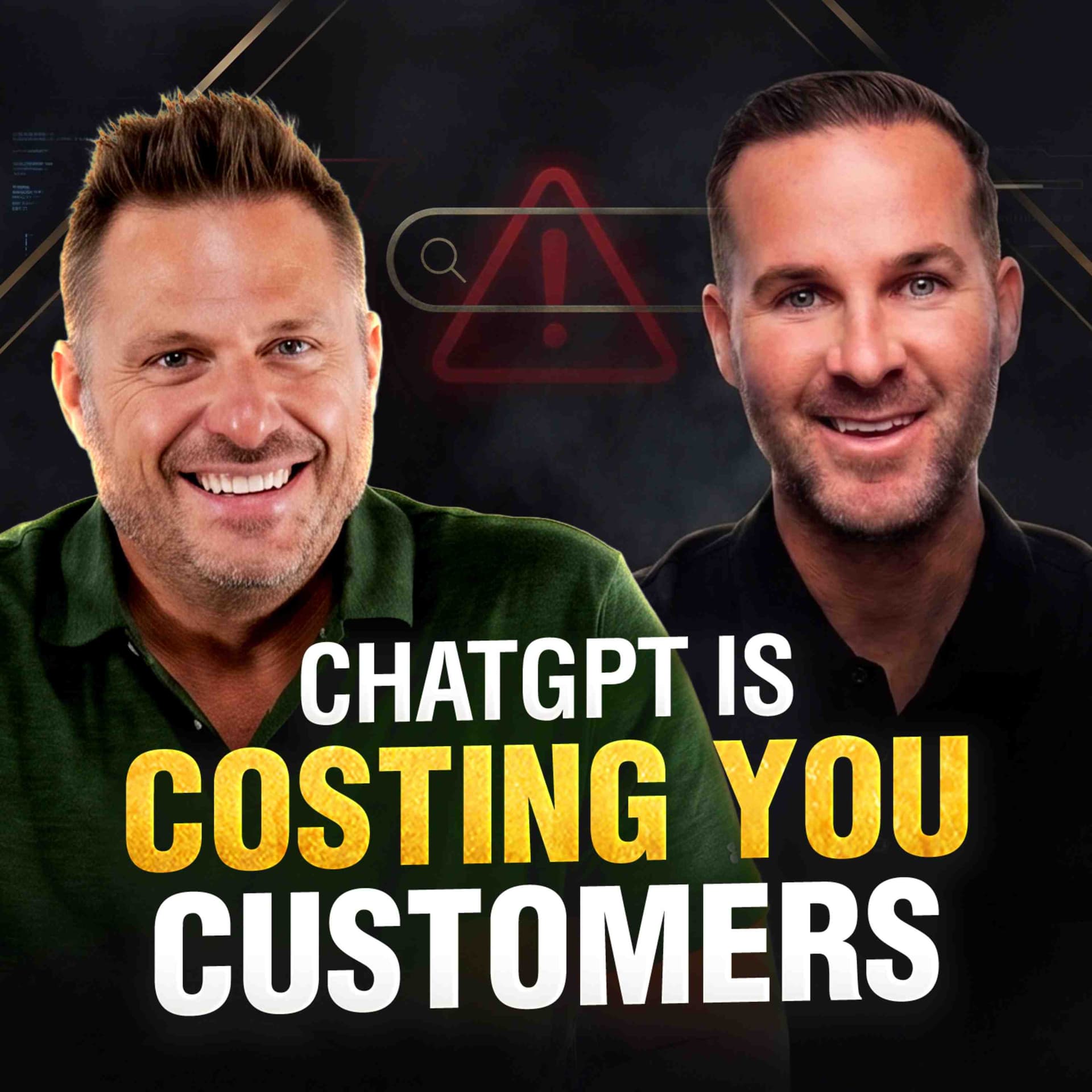
Earned media (PR) for business visibility in an AI/LLM world—how media mentions and expert sourcing influence AI recommendations, and why results require experimentation and consistency rather than one-off placements.
Guests
Brett Farmiloe, CEO of Featured.com (and recently acquired Help Reporter Out/HARO). Background: ran a marketing agency for 10 years with ~500 small business clients; built a platform to place clients’ expert insights into articles; sold the agency end of 2021; focused on “featured” for 3.5 years.
Key claims
“Featured in Fast Company” may not dramatically move sales; PR is hit/miss due to timing/outlet; AI makes sourcing harder for journalists and increases the chance LLMs cite/recommend featured experts; you must run controlled experiments on prompts/queries; human-in-the-loop remains essential for grading AI outputs.
Notable examples
Hugh Jackman’s 2012 coffee launch—TV appearances (Rachel Ray/The Chew) tracked via analytics/sales; HARO described as a 2008-style daily query email that still works.
Written by AI. May contain mistakes. Listen to the episode to check what was said.
Chapters
Tap a time to open that second in VOUnderstanding Earned Media
0:54 to 1:56
Discussion on the difference between paid media and earned media.
“This is Right About Now with Ryan Alford.”
Brett's Journey into Earned Media
1:56 to 2:27
Brett Farmiloe shares his experience in the marketing agency and the need for earned media.
“What got you into earned media, brother?”
The Evolving Role of Media
2:27 to 3:21
Exploration of the challenges in securing media features and the impact of AI on visibility.
“I thought maybe earned media and was dead three or four years ago.”
AI and the Future of PR
3:21 to 4:04
Discussing how AI is changing the landscape of public relations and sourcing expert opinions.
“Because with the SEO thing slash AI thing, it's so fascinating to me because I've watched all the performance marketers now go and suddenly they're going, yeah, you need to work on brand.”
The Research Phase of AI Visibility
4:04 to 5:04
Insight into the exploratory research phase businesses are undergoing with AI visibility.
“And when you get featured in media to your point, when people ask questions about a topic, then your answers or what you said get cited.”
The Research Phase of AI Visibility
5:07 to 6:03
Insight into the exploratory research phase businesses are undergoing with AI visibility.
“I'm not somebody who spends a lot of time thinking about my closet.”
Measuring PR Success
6:03 to 8:10
Discussion on the misconceptions surrounding the effectiveness of public relations and measuring its success.
“With no seller fees, you keep every dollar you earn.”
Understanding the Sales Funnel
8:10 to 9:06
Exploration of the purchase funnel and how PR fits into the overall marketing strategy.
“You know, on the B2B side of things, it's always you're looking at leads and you're asking them, how did you hear about us and things of that nature.”
AI's Impact on Consumer Behavior
9:06 to 10:05
How large language models are changing how consumers find and trust information.
“And now I've gotten from top of funnel all the way to bottom of funnel without doing any external research.”
Reviving HARO
10:05 to 11:15
Brett discusses the acquisition of HARO and its relevance in today's PR landscape.
“And we're talking about this really advanced technology.”
Show all 15 chapters
Simplifying PR in the Age of AI
11:15 to 12:20
The importance of simplicity and trust in PR amidst increasing technological complexity.
“that transparent for journalists to see if they care about whether or not something's 100 % AI generated.”
Navigating AI Content Concerns
12:20 to 14:00
Discussion on the concerns surrounding AI-generated content in journalism and PR.
“If it's your ideas and you've distilled them through 10 prompts with AI, not just going, hey, write an article for me about X.”
Navigating AI and Social Media Policies
14:00 to 16:15
Discussion on the evolution of social media policies and AI's role in content generation.
“And I would travel around the country giving speeches about social media policies.”
Utilizing Featured and HARO for Business Growth
16:15 to 19:12
Exploring the processes of using Featured and HARO to enhance media visibility.
“So talk to me about what's the process for working with Featured and or HARO and the best way for people to utilize it.”
Connecting with Brett Farmiloe
19:12 to 20:01
Insights from Brett on being a successful entrepreneur and the importance of idea collection.
“This is 2025 marketing mix using earned media, using sources, being featured.”
Transcript
Automatic transcript. May contain errors.0:00PR is just so hit and miss. Sometimes it's about the timing of the placement. Sometimes it's about the outlet itself. And PRs do a great job of helping clients understand that ROI and help them quantify the impact of that. But that's probably the biggest misconception is that, hey, I got featured in Fast Company. This is going to move my business dramatically forward. It might, it might not. And the key with going back to the AI visibility piece of where we're at today is you've got to experiment. It's sometimes a quantity and quality game where it's something that's a persistent thing. You go to the gym and you're not going to see results just like in one workout.
0:34It's a consistent effort that ultimately moves things forward. You don't win by following the playbook. You win by rewriting it. 700 episodes deep with the people who actually built something real. No theory, no fluff, no shortcuts. This is Right About Now with Ryan Alford.
1:24Ryan, what's happening? Just ready to talk some good old-fashioned public relations. Am I allowed to call it that? Is that not sexy enough now? Sounds good to me. Earned media is what I would call it. Brett, I think we'll do a little lesson for the audience first. You got paid media. You got earned media. And most people probably that listen to this show probably know the difference, but I'm going to lighten them a bit. Paid media, expensive and paid. Earned media means you did the work. You earned the right to get the coverage. Is that a simple enough summary, you think, Brett? I think so. I think that's pretty clear.
1:57What got you into earned media, brother? I ran a marketing agency for 10 years, and we had about 500 small business clients that we were servicing. And the hardest thing to do was get them featured in the media. And the thing that they had an abundance of was knowledge to share about their business, but nowhere to share it. Created a platform that allowed them to answer questions that pertain to their expertise. We would take those insights, get them placed in articles. And essentially, that platform, which is now featured, took off faster than the agency, sold the agency at the end of 21 and been focused on featured for the last three and a half years.
2:26I love it. What is that balance? I'll even put myself in this camp. I thought maybe earned media and was dead three or four years ago. Here's why. Not because it was physically, but I just thought, can you really get featured again without running an ad? Is everything pay to play? And where's the line there? And was I just wrong? Yeah. I mean, the problem to be solved on both sides is on the business side of things, you want to be featured in the media because it It creates visibility for yourself and your business in front of customers. The problem on the journalism side of things is that sourcing experts for stories is an infinite problem.
3:00There's always some story that's being created where an expert is needed to provide insight for a story to inform the journalist on what to write about and or to back up the claims that's being made in that article. So that's a problem to be solved on that side of things. I think it's just amplified in terms of the rise of AI, making sourcing even a harder problem for journalists. And now it's also a more pressing problem on the business side of things, because now the more that you're featured in the media, the more that AIs and LLMs are starting to cite different references and recommend your products and services when your customers are querying these AI bots.
3:35It's an interesting time in 2025. Very interesting. I'm glad you went there, Brett. Smart guy. Because with the SEO thing slash AI thing, it's so fascinating to me because I've watched all the performance marketers now go and suddenly they're going, yeah, you need to work on brand. You need to work on PR. And I've been like, I've been telling you that for 20 years. The race to the bottom with performance marketing with everything's a deal and an offer eventually doesn't work because not everyone's buying today. But you've got to establish yourself and be in front of people when they're looking for things, searching AI or whatever.
4:09And when you get featured in media to your point, when people ask questions about a topic, then your answers or what you said get cited. That's the key. Am I hearing you right? Yeah. I mean, look, we're pretty new. We don't even know what to call it yet. Is it AEO? Is it GEO? What the heck is AI? What AI visibility? We haven't even defined the category, let alone what works yet. A lot of people are in an exploratory phase where they're setting up controlled experiments. They're saying, hey, we're going to give it six months on featured and we're going to get featured in as many publications as possible.
4:41We're going to measure the AI visibility for certain prompts and queries based off of which questions we're responding to. And we're going to measure it and see if it does anything for our business. So I think that we're in that research exploratory phase where it's a pretty exciting time. If you could just imagine way back in the day when SEO was just emerging and setting up all these different experiments, it's a more informed version of that. Today's episode is sponsored by Vented. I'm not somebody who spends a lot of time thinking about my closet. Honestly, I rotate through the same five shirts, a couple pairs of jeans, and maybe two jackets.
5:15But somehow my closet was still packed. So I finally went through everything and found a bunch of clothes I hadn't worn in forever. Instead of putting them back and telling myself I'd wear them someday, I listed a few on Vented, the secondhand marketplace app. Vented was actually really simple to use. Getting the items listed didn't take much time. and when something sold, Vinted created the prepaid shipping label for me. I just packed it up and sent it out, and Vinted has no seller fees, so I kept everything I earned. Once that first item sold, I went back through another drawer and found even more stuff to list.
5:44It changes how you look at the clothes sitting around your house. What used to feel like clutter was suddenly extra money I could put towards something I actually wanted. Now I have more closet space, a little extra money, and I'm not hanging on to clothes I know I'm never going to wear again. Ready to clean out your closet and make some extra money? Download the Vented app for free and start listing. With no seller fees, you keep every dollar you earn.
6:10What's the biggest misconception amongst people with PR? And what's the biggest misconception? It's really hard to measure in terms of the success of it. I learned this really way back. I helped the actor Hugh Jackman launch a coffee company back in like 2012. And when we first launched, he was on Rachel Ray, he was on The Chew, and he was on some other TV show. And what's the value of each one of those appearances? And so I was over here behind the scenes looking at TweetDeck on Twitter. I remember that. I remember that. And I'm looking at Google Analytics. I'm looking at the Shopify sales and everything like that.
6:48And we're on Rachel Ray passing out 200 bags of coffee and seeing what impact that would have. PR is just so hit and miss. Sometimes it's about the timing of the placement. Sometimes it's about the outlet itself. And PRs do a great job of helping clients understand that ROI and help them quantify the impact of that. But that's probably the biggest misconception is that, hey, I got featured in Fast Company. This is going to move my business dramatically forward. It might, it might not. And the key with going back to the AI visibility piece of where we're at today is you've got to experiment. It's sometimes a quantity and quality game where it's something that's a persistent thing.
7:24You go to the gym and you're not going to see results just like in one workout. It's a consistent effort that ultimately moves things forward. Nailed it. Brett Farmalo, he is the CEO of Featured.com. Brett, kind of like brand marketing. It's the same thing, like brand marketing. You need to keep your brand top of mind. No matter what people want to say, there's still a purchase funnel. You can call it a purchase cycle. You can call it whatever you want. You got to get people at the top of the funnel. That means they're aware of you so that when they are ready to buy, they have you in the consideration set.
7:54And I think PR, much like brand marketing, is getting you in that awareness cycle with those people. And that's a hard thing to measure sometimes because you don't know when 20, 30, 5%, whatever it is of those people are going to convert. That's the problem. That's always been the challenge with brand or PR is because just because you go on Rachel Ray and a million people watch the show and you hand out 300 bags, it doesn't mean you're going to sell$3 million worth of coffee that day. Yeah. You know, on the B2B side of things, it's always you're looking at leads and you're asking them, how did you hear about us and things of that nature.
8:28And the unique aspect in terms of the funnel is that, yes, traditionally search was top of funnel. And then you had more competitive keywords for more middle, bottom of the funnel type of stuff. But what we're seeing today with LLMs, it's a dramatic transformation in terms of now people might start top of funnel in an LLM and gradually work themselves all the way to the bottom of the funnel and be ready to purchase when they convert from an LLM over to a website. That's a really interesting space because basically someone's saying, hey, give me the best PR platforms that are out there. And there might be 10 recommendations.
9:00OK, these three sound interesting. What's the differences between these three? OK, here's my business and my problem, my challenge, my budget. Which one would you recommend? And now I've gotten from top of funnel all the way to bottom of funnel without doing any external research. And that's the most interesting thing that's emerged from these LLMs is the trust factor that people are willing and able to trust an AI recommendation and take action on it. An LLM. Is it learned language or language learned model? Large language model. There it is. Everyone listening. Most people probably know that at this point, our audience.
9:32But when you're plugging in those prompts, that's what Brett went through is kind of the prompt of this question, then that question. If you aren't prompt, we'll have to have a prompt engineer on to talk some more about that. We're in like the 2.3.0 phase of that, as smart as these things get. Brett, you've been around, you had your agency, and now you're doing feature.com. I want to get to Harrow here shortly. Is it not just blow your mind where we've gotten with freaking LLM and AI in general? Yeah, it's interesting because you bring up Pepper Reporter out, which we just acquired just a few months ago.
10:01And HARO is just a three times a day email newsletter that summarizes journalist queries, puts that into a single newsletter and sends it out to sources and they can respond directly to the journalist and get in touch to help each other out. And we're talking about this really advanced technology. And HARO is a blast from the past. This is 2008 at its finest where almost nothing has changed in terms of that initial email to where we're at in 2025. And it's because it works. And at the end of the day, there's really complex technologies, but it's about connection. It's about the value proposition of helping each other out and solving each other's problems.
10:35And that hasn't changed no matter how far technology has advanced. Let me just a bit acknowledging what you just said. We make things too complex. Bring back the simple concept. Email and prompt of like, hey, here's an expert at XYZ. And that was around you. I was like, I remember it. I literally remember being in the industry. I remember when I first got your team reach out. I remember that hero name. And then I think I ran into it a few months ago. This was always a great concept. I don't know why it went away. Sometimes we bury things that are effective or I don't know. Why did it go away? There's a variety of reasons.
11:05And what we've really been focused on since bringing it back is restoring quality and trust at the core of the platform. So the things that we've done is we run every single pitch through an AI detection and make that transparent for journalists to see if they care about whether or not something's 100 % AI generated. They're able to one click filter out those pitches so that their inbox is spared from just stuff. We've done profile verification and source verification so that people are who they say they are. A lot of different things that we've had to invest in over the last few months, simplicity can sustain.
11:37That makes a lot of sense. Betting out bad players as people that aren't maybe being transparent about their credentials, things like that. Is that what I'm hearing? Yeah, the more simple a solution is, the more exposure it becomes as it becomes more popular. You've got to have some safeguards behind the technologies so that the value proposition and the mission can continue to be effective. That's what ultimately led to Ended Up In Our Hands is that this simplicity just wasn't worth investing in. And for us, it's 100 % worth investing in because we think that this is a space that's going to continue to grow.
12:07We have AI now. It's making things easier. It's simplifying certain things. It's allowing more tasks to get done faster from research to other things. But there's this fine line with journalism and all these other things. If it's your ideas and you've distilled them through 10 prompts with AI, not just going, hey, write an article for me about X. OK, that's lazy. But if you've used it properly and you just still it and it generates something because of your intellect and strategy of prompting or whatever, what that outputs versus all the AI content. Where do we fall on this? OK, I don't want any AI content.
12:44OK, what's the point of these tools then? I don't know. We're going to hit this point. I know where people are. Oh, I don't want any AI content. But okay, where do you fall on this? The expert side of things, the biggest barrier to sharing knowledge is time. And most of our knowledge is not on the internet because time has prevented us from sharing that knowledge. And yet people want an outlet to share knowledge in meaningful ways. AI represents this opportunity to help match and identify certain opportunities and get that initial draft out so that you're able to take across the finish line. But the human in the loop is what's most important on that side.
13:18Publishers and journalists are still figuring it out. I've talked with hundreds of journalists, hundreds of publishers about their AI policies, what their approach to AI is, things of that nature. And there's two different camps. There's a camp that's like, I don't care. Look, I'm going to get an AI pitch. What matters most to me is that the credentials check out, that the source is verifiable, that it could support my story. And most journalists will take 100 % AI generated response. And they'll just get in touch with that person directly and get what they actually need to take it across the finish line.
13:47And then there's a camp that's like, look, no matter how much AI prompting that you've done, it's still AI generated. We think that our end product is going to get penalized for featuring AI generated content. We're cool. We don't want it. It's just the earliest stages of this where it reminds me of when social media just opened up for businesses in 2007, 2008. Twitter's just coming about. And I would travel around the country giving speeches about social media policies. And I remember how terrified people were about commenting as a brand. What if someone says something negative about me? How do we respond to that?
14:22Do we respond to that? And those are questions that just eventually will get sorted out as people become a little bit more comfortable with this new era that we're living in. But it definitely reminds me of when social media emerged and there's different policies and different overreactions and underreactions to certain things. And it'll just figure itself out. Along those lines, I agree with you. And it is like the Wild Wild West a little bit. Some people we've run into it. They won't even tell you the size of the companies that are, oh, no AI. Give me a break. I get they don't want 100 % fake.
14:49Doesn't sound right. bot writing. But when these things are getting smart and learning how to take your writing samples and do things back to time, that will figure itself out. We live in a world where if this does adapt, people get more comfortable and we figure out these norms, are we still going to need experts to comment on it? Or are the AI is just going to be so smart that we take it all for gospel? Yeah, there's always going to be a need for human feedback. Where I think we're at today in 2025 is that there's two camps in terms of AI outputs. There's pre-training and then there's post-training.
15:23The pre-training data is amazing. Essentially, the whole internet has been ingested to go into these different models. And now we're in a phase of post-training. We need to look at these outputs from these different models to keep advancing them. And the only way that's possible is through insights from true experts. You're seeing a lot of that in academia right now to better train these models, you're going to see more of an opportunity in the professional domains. If you go to human resources or technology or finance or marketing, how do you grade these outputs and how do you keep improving them?
15:55And for that, humans are always going to be in need of evaluating those outputs and improving them. We reached ASI, artificial superintelligence. Probably, I have no idea when that is, but it's a ways off and we don't have anything to worry about up until then.
16:14Brett, I was going to say what you'd recommend to people, but your product kind of is the solution in a lot of ways. So talk to me about what's the process for working with Featured and or HARO and the best way for people to utilize it. Featured.com is a freemium model. Anyone can answer up to three questions a month at no cost. And then we have paid subscriptions after that starting at$11 a month. How Featured works is publishers are able to ask questions, bedded experts are able to answer those questions, and then those answers get passed along to a publisher for consideration. The best thing to do is to sign up for Featured, answer a couple questions, create your profile, and see what happens.
16:49See if you get featured. And if it works, continue to share that knowledge. I always encourage people to set up alerts that they get notified when there's new questions that pertain to their expertise. That way they're not spending an infinite amount of time evaluating these opportunities and it comes to you. Featured is pretty easy to use in that regard. Also a great way to receive high-quality content written by human experts for your website. If you don't want to try to get featured in the media, you could also just receive featured content that's written by human experts. And then Harrow, Help Reporter Out, you can go to helpreporter.com, input your email address, and then you'll start to receive three times a day emails, morning, afternoon, and evening editions with different queries from journalists that are looking to get connected with sources.
17:30And you could just reply directly. And is there a cost for Harrow? Harrow is totally free on both sides. How do we make money, Britt? It is free for sources. It's free for journalists, fully supported by newsletter ads. So in every Harrow edition, there's a little text ad up top that advertisers pay for to get distributed out to all of our source lists. And that's how we make money. We're building a list. That's what we're doing. Is that what I'm hearing? The more people that are on the list is monetization. Harrow is the largest expert source place on the Internet. That's the value proposition for journalists is the diversity of who they're able to get connected with and how fast.
18:10That's the truism that's been around with Harrow forever. You could literally get connected with anyone in the world. We've heard journalists that gotten connected with like Jane Goodall. Jane's not looking at Harrow. She's not reading these emails. But the magic of it is that someone sees this Harrow query, thinks of someone in their life, forwards it on, and we make it really easy to get connected with that journalist without having to sign up. I love it. I'm going to go sign up. I need to get on this. Get back, man. Harrow 2.0 or 3.0 or whatever you want to call it. Get back in there. I'm getting featured in Harrow.
18:40I'm getting in. On featured, you actually get early access to Harrow queries. If you're not wanting to sign up for two platforms, you can just go to featured.com. We have early access to Harrow queries on featured because the limitation of Harrow is journalists are often looking for a source fast and they might request something. And then the next Harrow newsletter goes out three, four hours from now. We'll post that immediately on featured so they can start to get responses. and then use a second wave of Harrow to get connected. Brett, very insightful. I love the products. If you're listening, you need to take advantage.
19:12This is all part of the marketing mix these days. This is 2025 marketing mix using earned media, using sources, being featured. People buy from people and they need to know your expertise. And this is the way to share it without sounding a sales guy at all times. I love it, Brett. We've nailed the dot coms forever, but social, anything else, hit anything you want there with how people stay up to date with what you're up to. Yeah, feature.com, helpreporter.com. And then I could be connected with on LinkedIn and happy to connect with anyone. The biggest thing that I've learned as an entrepreneur is that great ideas come from anywhere.
19:44And it's the founder's job to listen to every idea, especially from the people who are using the product on both sides. Be a great filter, prioritize. And that's how you can keep iterating and innovating on what you're building. Brett, it was a pleasure meeting you and having you on the show. Ryan, thank you. Hey guys, do you want to find us? RyanIsRight.com. We'll have links to featured. We'll have links to Harrow. And of course, we'll drop LinkedIn for Brett so you can tell him more. All the features you want added to the feature. Features on features. It's met as it gets. We appreciate you for making us number one.
20:17We'll see you next time on Right About Now. Here's the truth. Information doesn't change your life. Execution does. So don't just listen to this episode and move on. Take the idea. Make the call. Launch the thing. Fix the problem. Build what you keep talking about building. For more, follow Ryan Alford on Instagram, at Ryan Alford. And watch or listen to every episode at RyanIsRight.com. This is right about now. Now quit waiting. Go win.
20:57Update your home's exterior with Novig Siding. Get the look of real cedar shakes or stone with Novik siding. These siding panels are lightweight, easy to handle, and offer quick installation. Shop our full selection of siding panels in-store or on Menards.com. Novik rough saw and shake panels are on sale now through September 7th. Plus, check out our weekly flyer on Menards.com for all the great deals happening now. Save big money at Menards.
From the publisher
Brett Farmiloe built Featured after seeing small-business owners with deep expertise but no reliable way to get quoted by the media. He joins Ryan Alford to discuss earned media, digital PR, AI search visibility, and the revival of Help a Reporter Out.
They explain how media citations may influence LLM recommendations, why AI is compressing the marketing funnel, and why a single high-profile feature rarely produces instant revenue. Brett also shares how Featured and HARO connect journalists with verified experts while giving publishers greater control over AI-generated responses.
The conversation offers a realistic strategy for building authority, earning backlinks, reaching customers, and becoming more visible across traditional search and AI platforms.
TOPICS COVERED
Brett Farmiloe’s journey from agency owner to Featured founder
The difference between paid media and earned media
How businesses can earn credible media coverage
AI search optimization, AEO, and GEO
Getting cited and recommended by large language models
How ChatGPT is changing the customer journey
Why PR results are difficult to measure
Consistency, quality, and quantity in media outreach
The acquisition and relaunch of Help a Reporter Out
Connecting journalists with verified expert sources
Using AI without removing human expertise
Free and paid ways to begin using Featured and HARO
CONNECT WITH BRETT FARMILOE
Featured: https://featured.com/
Help a Reporter Out: https://www.helpareporter.com/
Brett on LinkedIn: https://www.linkedin.com/in/brettfarmiloe
Brett on X: https://x.com/BrettFarmiloe
CONNECT WITH RYAN ALFORD AND RIGHT ABOUT NOW
Right About Now: https://www.ryanisright.com/
Ryan Alford: https://www.ryanalford.com/
Ryan on Instagram: https://www.instagram.com/ryanalford/
Ryan on LinkedIn: https://www.linkedin.com/in/ryan-alford/
Apple Podcasts: https://podcasts.apple.com/us/podcast/right-about-now-legendary-business-advice/id1346054199
Spotify: https://open.spotify.com/show/0gy9HkTiwpAAgu1DFyIW9h
YouTube: https://www.youtube.com/@RightAboutNowwithRyanAlford