In short
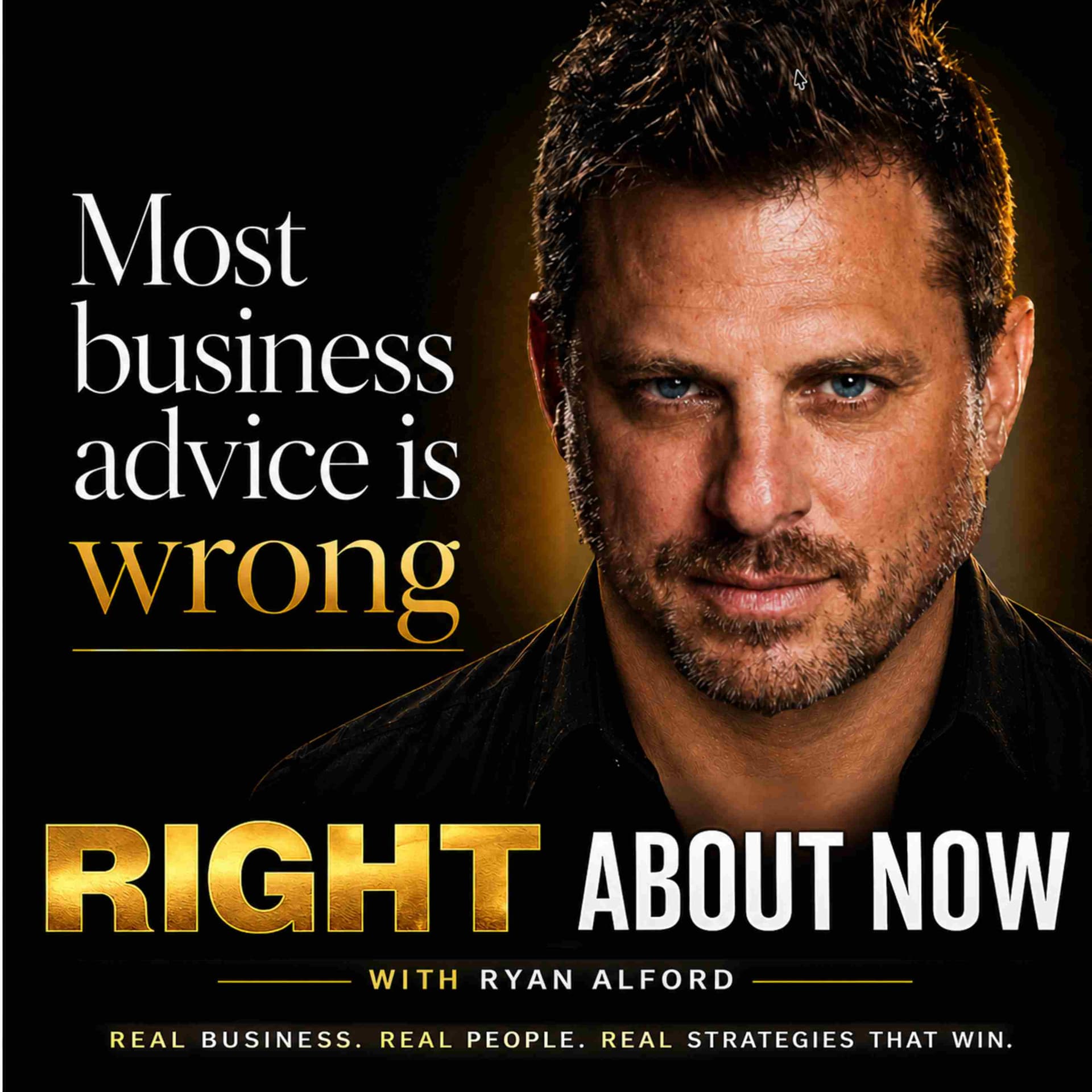
Right About Now - Podcast Episode Summary
Episode Title
Make Millions with the Art of Charisma with Brett McDermott
Episode Description In this episode of *Right About Now*, hosted by Ryan Alford, the focus is on the concept of charisma with guest Brett McDermott, known as the "charisma hacker." Brett breaks down charisma into three core components: power, warmth, and presence, emphasizing that it is a skill that can be developed rather than an innate trait. The discussion delves into various aspects of charisma, including its importance in politics, the significance of active listening, and the relationship between motivation, financial stability, and personal success.
---
Key Takeaways
- Definition of Charisma: Charisma consists of three main components:
- Power: The ability to influence and lead.
- Warmth: The genuine desire to help others.
- Presence: The ability to be fully engaged and attentive in conversations.
- Charisma as a Skill: Charisma is not an inherent trait but rather a collection of skills that can be cultivated through practice.
- Confidence vs. Arrogance: Effective charismatic communication balances confidence and humility; excessive confidence can lead to perceived arrogance.
- Active Listening: Listening is fundamental to charisma and can significantly enhance interpersonal interactions.
- Strategies for Developing Charisma:
- Letting People Finish: Allow others to complete their thoughts before responding to show attentiveness.
- Mindset Challenges: Overcoming self-doubt and the belief that one cannot be charismatic is crucial.
- Wealth and Motivation: Financial stability is often linked to personal freedom and motivation; the pursuit of wealth can drive individuals to improve their charisma.
- Planning for Success: Effective planning and execution are essential for achieving personal and professional goals.
- Personal Interests vs. Responsibilities: Finding a balance between personal hobbies and responsibilities is important for overall satisfaction.
---
Detailed Discussion Highlights
Introduction and Guest Background (00:00:00)
- Ryan expresses excitement about the episode and introduces Brett McDermott, the charisma hacker.
Components of Charisma (00:01:43)
- Brett elaborates on the three pillars of charisma: power, warmth, and presence.
Charisma in Politics (00:05:44)
- The conversation shifts to charismatic political figures, comparing Barack Obama and Donald Trump in terms of their charismatic qualities.
The Role of Listening (00:09:17)
- Brett emphasizes listening as a key component of charisma and shares practical tips for improving listening skills.
Charisma as a Learnable Skill (00:12:47)
- Both Ryan and Brett agree that charisma can be developed through consistent effort and practice.
Wealth and Personal Freedom (00:20:45)
- Discussion on how financial stability can enhance motivation and contribute to personal freedom.
Effective Planning (00:22:06)
- The importance of having a clear plan and executing it daily toward achieving personal goals is highlighted.
Simplifying Goals (00:24:03)
- Brett suggests simplifying plans to avoid overwhelm, emphasizing the value of small wins.
Reflection and Gratitude (00:25:24)
- Ryan shares his nightly routine of reflecting on wins and expressing gratitude to set a positive tone for the next day.
Nonverbal Communication (00:32:00)
- Brett provides insights on avoiding fidgety behavior and maintaining confident posture during conversations.
Final Thoughts on Communication (00:35:30)
- Emphasis on the significance of keeping hands out of pockets and being mindful of nonverbal cues.
Where to Find More Insights (00:35:38)
- Brett shares links to his podcast and social media for listeners who want to learn more.
---
Conclusion This episode of *Right About Now* presents an engaging exploration of charisma, demonstrating how it can be developed through intentional practice and mindfulness. Listeners are encouraged to reflect on their communication styles and consider how cultivating warmth and presence can enhance their personal and professional interactions.
Written by AI. May contain mistakes. Listen to the episode to check what was said.
Transcript
Automatic transcript. May contain errors.0:00Finding great candidates to hire can be like, well, trying to find a needle in a haystack. Sure, you can post your job to some job board, but then all you can do is hope the right person comes along. Which is why you should try ZipRecruiter for free at ZipRecruiter.com slash zip. ZipRecruiter doesn't depend on candidates finding you. It finds them for you. Its powerful technology identifies people with the right experience and actively invites them to apply to your job. You get qualified candidates fast. So while other companies might deliver a lot of hay, ZipRecruiter finds you what you're looking for.
0:36The needle in the haystack. See why four out of five employers who post a job on ZipRecruiter get a quality candidate within the first day. ZipRecruiter, the smartest way to hire. And right now, you can try ZipRecruiter for free. That's right, free at ZipRecruiter.com slash zip. That's ZipRecruiter.com slash zip. ZipRecruiter.com slash zip. Charisma is a learnable skill. I think we all have a baseline level that we're born with, we've been conditioned with. But it doesn't mean you can't get to where you want to go, because the truth is charisma is not just one skill. It's like 20 different skills.
1:11This is Right About Now with Ryan Alford, a Radcast Network production. We are the number one business show on the planet with over one million downloads a month. Taking the BS out of business for over six years and over 400 episodes. You ready to start snapping necks and cashing checks? Well, it starts right about now. What's up, guys? Welcome to Write About Now. I'm Ryan Offord, your host. Hey, it's all about being right sometimes, but it's definitely about being now. And in today's world, we've got a lot of disconnect sometimes between personality, effectiveness, and just really knowing how to communicate.
1:54And that's why we've got the charisma hacker, Brett McDermott. What's up, Brett? Hey, Ryan, happy to be here. Happy to connect with your audience. Been excited about this for a while. And I got to say, man, you got a great podcast, like radio voice, man. I'm pumped up after that intro. You know, some of us have a few blessings in life. That's the one thing I was, I guess, God given. I had to work for everything else. It's great, great stuff. Yeah, that I'll either make it in this or I always have a second career opportunity at the strip club. Oh, true. Dude, you'd be a great. Coming to the main stage, it's Brett McDermott.
2:38Oh, man, you would. You would be the most sought after strip club DJ in the nation. Yeah, I'm going to, you know, I'm happily married with four kids and generally an upstanding dude. I'm going to hopefully not have to go down that route. But, you know, you got to make a dollar somehow, right? Man, we just took a sharp, sharp left turn right at the beginning. You know, I've been on a lot of podcasts. I don't think I've ever quite gone there yet, so I'm excited for the rest of it. Look, we used to be called the Radcast, you know, so we still have, you know, points of that. So still gets rad, still gets rad up in here once in a while.
3:17Of course. So, Brett, I mean, anybody's going to get called the charisma hacker. I mean, I got to start right there. You know, like how do we get known as the charisma hacker? Well, I think you probably get known as the charisma hacker when you come up with the name and you start calling yourself the charisma hacker. Right. So, but, you know, I've honestly, you know, I've always just been, you know, completely obsessed with communication fundamentals and just the ability to present yourself to the world in a powerful way. But I think charisma, you know, not only encompasses power, I think that's just kind of part of the equation, right?
3:50I think when we look at someone that's charismatic, sure, they're absolutely someone that can display power. And when you look at them, you're like, okay, like this person could move mountains for me if they wanted to, but it's not only power, it's warmth, right? You've got to feel a bit of warmth from them. You've got to feel like they want to help you in some sort of way if they can. And then I think the third pillar is presence. I think you've got to be able to be present in that moment with someone as you're toe to toe face to face with them in an interaction. So I just think those three pillars, the power, the warmth, the presence, I think they're so pivotal in our abilities to start a business, to start a movement, whatever you are trying to do.
4:28I think that the ability to develop and project charisma to the world around you is going to be pivotal in your journey, whatever it is. Yeah. Well, I, I like that. And I think it's always this fine line with me. I'm going to give you a couple of thoughts and love to hear your perspective, you know, with charisma and there's a confidence, right? It comes with that. It's like, that's the first, when someone says charisma, I think confidence on some level, but then you do kind of go deeper and then there's the confidence and then there's the arrogance. and it's like how you know when I first was thinking about this episode with you I wanted to go on this path because like even myself in my younger career and I probably had a touch of it you know not intentionally I'm a big guy I am confident but like I sort of know my own faults too like once you get to know me I think you know I know I'm pretty self-aware and like self-degradating about some of those things sure at the same time it is a fine loan right with that confidence, charisma, arrogance, like how do you find the balance?
5:32Yeah. So I think that's kind of why I like to talk about that warmth pillar, right? Cause I think confidence is a huge part of the equation. You do need to project power. People do need to see you as a person that could move things in the direction that they want to move. But if you're powerful, but you're arrogant or you're cold, then you're not necessarily going to be charismatic and people are not necessarily going to want to be led by you. So I think that the balance there is, you know, not only to focus on the power, not only to focus on, you know, the downward inflection with your voice and the good posture and the things that we do from a nonverbal sense to project power, but also to make sure that you are projecting that warmth.
6:13And that warmth can be projected with a genuine smile. It can be projected with good listening skills. But for the most part, warmth is kind of an internal feature, I think of charisma. And if you're going at a situation, if you're going into a meeting, if you're going into a podcast, whatever it is, and you're coming at it from the right place, and you really want the people in that room to improve, and you really want to serve others, and you just want the best for other people in your life, then that's warmth. And it's an internal quality that is just going to kind of innately get projected through your pores in your conversation.
6:46So I do think that there are confident people out there that are a little bit cold or maybe a little bit arrogant, but I wouldn't necessarily call them charismatic because I think you've got to have that warmth quality as well. You know, think about The Rock, you know, think about Barack Obama or Jimmy Fallon or Oprah or any of these people that we would definitely think of as charismatic. And yes, they're confident. Yes, they're powerful, but they've also got a warmth to them. Like you feel like if you met them, they'd be a nice person and they would want to help you in any way they could. So I think that it's important to really hit on all three layers of the charisma trifecta, power, warmth, and presence, and not just get too obsessed with the power portion of it, which is the portion that most guys are more obsessed with, right?
7:33Like we want to be powerful. Like that is just innately what we want to do. Important though to also show warmth and also show presence if we really want to bring our innate charisma to the surface. It's interesting. I got a lot to unpack there That was really insightful, Brett But because you brought it up It made me think of something You know, like Politics is all the rage You know, unfortunately And we're going to stay out of like One side or the other But using it within this context I think it's really interesting Sure Because you bring up Barack Obama And keeping any of the policies Just about We're talking about charisma and presence right now That's it Very charismatic Unbelievable charismatic A good speaker.
8:17I've started to sense a little bit, I don't know, after his presidency, a little bit of arrogance more than charismatic. But that's just something I've picked up on. But with that said, without a doubt, one of the more charismatic leaders ever. And what's interesting is like Donald Trump, I think he's softened a bit. But I think part of Trump's problem is that he overplays the power side. And if he and I do think he actually has some of the warmth in him, but he doesn't display it enough. So using those counterbalances, I think, you know, not that we're going to help anyone get elected or not elected, but I do think it's an interesting interplay of what you're describing.
9:01Right. It's a good point. Yeah, I would totally agree with that. And I think that, you know, part of the reason that, you know, Obama did so well in his elections was because, yeah, he projected that power, but he also projected a lot of warmth. I mean, he had a very genuine he had a great smile that would kind of slowly cascade across his face. I agree. Trump, I think, excellent at the the power portion of the equation. I mean, debatably, there's no one out there that sounds more sure of what they're saying than Donald Trump. I mean, you know, like no question. No, he's never said something that he wasn't 100 percent behind and believed in his own heart.
9:38And, you know, the downward inflection that goes into that, right, the downward inflection at the end of the statement that really shows that you're sure about what you're saying. Donald Trump is the master of that. I mean, he is the master of downward inflection, the master of displaying power. But on the warm side of charisma, he could certainly work on that a little bit. I mean, there's very few cases where you can really even think of Donald Trump giving you a full smile. He doesn't smile a ton and he doesn't display a lot of warmth. And I think if he would kind of put a little bit more effort into displaying warmth, then I really think he'd be overall a more popular candidate.
10:10And we might even not be talking about much of a 50-50 battle. I think we might be talking more about Trump really being in control here. But I think you're totally right. Great at displaying power. Almost no one's been better at it in the past 10 years. But the warmth side of the equation, he could work on that a little bit for sure. And it's a good interplay for like our audience listening, you know, like, again, cue the politics. And look, if you watch enough of my show, you probably know where I stand. But it doesn't really matter in this context. It's more about, you know, helping you, the listener, try to understand how to use these principles in business and entrepreneurism and elsewhere to sort of, you know, I want to say achieve your goals, but really more.
10:52I don't know. I think there's, it's more to that too. I think, I think having charisma and doing these things and having that warmth isn't just about achieving your goals. It's also having some empathy and like, like, like recognition of, of, and I love, and this is back to sort of unpacking what you said, like the listening part, you know, we, we do a lot of talking and we always want to make our own points, but listening is a, is a big part of charisma, I think. For sure. I mean, it really, to me, I think it's kind of the bedrock of what the entire Charisma Mansion is built on. You know, you've got to be a great listener if people are really going to feel that warmth coming off of you.
11:36And I, you know, I think there's some things within the listening realm that people can kind of tweak, you know, within their arsenal there. And I'd say it's funny, right? Because if you put on a seminar about speaking with power, you'll have people lined up at the door. But if you put on a seminar about actively listening and becoming a great listener, good luck selling tickets to that, you know, but the truth, but the truth is really becoming a great listener should be step one for, for everybody. And I think, you know, there's a few things that we can all do to work on our listening skills.
12:07You know, I'd say number one, and this is the simplest communication hack that I think any of us can put into play. We can put it into play today and it can completely transform the way that we present ourselves to society. And it's just three simple words. Let people finish. When you're in a conversation with someone and they're expressing their message to you and they're talking at you, or maybe they're talking to you and a few other people, let them finish their entire statement. Let them land the plane. Let them get their entire message out. Pause for just a millisecond. Let your face kind of absorb the message.
12:41If it's something that makes you happy, smile. If it's something that makes you inquisitive, kind of furrow your brow, let your face react for a millisecond and then respond. And I think just that little millisecond, letting people land the plane, get their message completely out, and they know that you're not going to step on them midway through the sentence, right there is going to completely transform the way that people interact with you. And I think that little tweak right there could make everyone out there a much better listener and ultimately much more charismatic. See how I gave a little pause there, Brett?
13:16I appreciate that. You're listening. I'm listening, dude. You're listening, dude. And I will say it's a little tougher in Zoom meetings and in podcast situations that are virtual. It can be a little bit tougher to do this because it's tougher to pick on people's social cues. You don't know exactly when they're going to stop speaking. It's certainly something that's a little easier to put into play in a face-to-face scenario. Yeah. You know, Brett, like I'm I'm sitting here listening to you talking like something just like dawned on me. There's certain things in life that we instinctively know, like some people know more than others.
13:53Like there's just behaviors, attitudes, social norms, things. And, you know, when I was first thinking about some of this topic, I'm like, Brett, doesn't like people know this instinctively? instinctively. And then as you were just talking, it dawned on me that people don't and they need training and, and structure and things just some things, you know, like, I don't know, have some people have skills that I go, wow, and that just, how do you do that? And then it's just innate. And even these types of human interactions that have such great impact on our success and opportunities, take really listening and understanding what it means to converse and communicate the right way.
14:48Yeah, 100 percent. 100 percent. I think that when people think of charisma, they either think they have it or they don't. And that's it. They're like, oh, I was born charismatic. I've got it. Oh, I'm not, you know, I am charismatic. Great. And it's just it's not like that. I mean, you can look at people over the years that have transformed their charisma. If you look back at the early keynote speeches of Steve Jobs, he is awkward. I mean, you couldn't pick a less charismatic guy to go on stage and talk about your products. And then fast forward, you know, towards the end of his life. And when he was really given some really powerful speeches, I mean, there was no one better at it and he really exuded charisma on stage.
15:28So to me, that's probably the greatest transformation I can think of. And it just proves the point that charisma is a learnable skill. I think we all have a baseline level that we're born with, we've been conditioned with, but it doesn't mean you can't get to where you want to go. Because the truth is charisma is not just one skill. It's like 20 different skills. And you've just kind of got to learn these skills and layer them as time goes on and improve your eye contact, improve your tonality, your voice inflection, your listening skills, adding some pauses to your speech. All these things are little skills that we've kind of got to add to our tool belt as far as charisma goes.
16:03And if you just add them one by one, a year from now, you can be a totally different person in the way that you present to the world. Talking with Brett McDermott, he is the charisma hacker. Brett, what's the biggest obstacle for people, you know, when you've given some really good tips already, we've shared why it's important, some ways you can do it, what are some obstacles that you've faced like when working with people or what are the biggest challenges that people have with sort of flipping this switch? Sure. Well, I think the first challenge that we always deal with is a mindset challenge, you know, especially for someone who's not very naturally verbose and they're more of a wallflower and they certainly don't consider themselves to be charismatic.
16:53You know, you've really just kind of got to break through that wall and express to them that sure, maybe, you know, you'll never be the rock, but you can certainly bring your own natural and unique charisma to the surface. And we're not going to quite know what that even looks like until we work on these skills, skill by skill by skill. And I think once you just break it down for them and you're like, oh, you know, charisma is not just this, you know, all encompassing mystical thing that either you have or you don't, but it's just 20 skills and we just got to learn them one by one. And once you're a good listener, We'll move on to tonality.
17:27And once you've got good tonality, we'll move on to adding pauses to your speech. Then we'll move on to becoming a better storyteller. And we'll just go right on down the list. And it might take a month. It might take a year. It might take a few years. But I think just breaking it down skill by skill and just showing people the roadmap to their most charismatic self can usually help them kind of get over that hump and start taking the action that they need to. Brett, I know you're a podcast host yourself. Hell yeah. Persistence Playbook. Talk to me about the show, how long you've been doing it, and what the episode's about.
18:01Yeah, I appreciate the question there. So Persistence Playbook, we're about to finish up our second year of the show. And so Persistence Playbook, we actually talk just a lot about the art of perseverance, the art of persistence. And we have on high performers. And of course, you know, we talk about their specific tactics that help them to be successful within their niche, within their business. But we also talk a lot about their work ethic. Have they always been a hard worker? Did they develop that later in life? What habits, what mantras, what systems do they lean on to kind of keep taking action when that resistance pops up?
18:36And as an entrepreneur, we've all felt it. We get up, we look at our calendar. It's full of stuff. And maybe that day we don't feel like doing any of it. We just want to go play golf or we want to go watch Netflix or we want to go to the movies. like what do these super high performers, what do they say to themselves in that moment? What questions they ask themselves? How do they fight and push through this resistance to keep taking daily action towards their goals? Cause my belief is a lot of people know what they should be doing, right? There's never been more information out there on what you should be doing.
19:07Anything you want to do in this life, there's 10 books on how to get there. Like we all know how to get to the goal we want to get to. We don't know how to maintain the motivation necessary to get there. So that's the focus of the show. How do we maintain that motivation to get to where we want to go? That's a really interesting, I love that. So check that out. It's the persistence playbook. And I got to, I breezed through a couple before this, but I'm going to listen because I get asked this question a lot. and you know I go back and I look at my answer and it's back to sort of like I try to be like self-aware on certain things and it's like my answer is usually like you know you gotta have the drive man like you gotta want it you know like and I'm like that's the answer but I don't know if that's the answer I don't I don't know why I'm wired that way and I don't know that everyone is like you said people usually know what they should be doing but I always sort of have a hard time answering, you know, what makes me tick or what, you know, like I'm trying to be reflective about it, but then I'm just like, man, that's just how I am.
20:15Like, I'm just like, don't want average. Like, I just am not going to settle. And like, it's like, you don't want to be cliche, but then I'm like, what exactly is it that makes some people more persistent than others? if we're sort of all like we're all human and we're all, you know, not to get into beliefs or anything, we're all sort of wired the same. There's difficult chemicals and different attributes. I acknowledge, but it's like, I don't know what makes one more persistent than the other. You know, and I think it is, it's a tough question to answer. And I don't think there is one absolute answer.
20:53And I think for a lot of people, and I do ask that question to every one of my guests, And some of them react and respond the same way that you did. And they're just like, you know, since birth, I've just always been getting after it. This is just kind of who I am, you know, like I am wired to execute. And I think, you know, that's an honest answer. And I always appreciate that answer. And I think that answer can sometimes be somewhat frustrating to a listener that maybe isn't wired that way. But I think it's the truth of the matter. I think some people are just wired to produce and they get up with that fire in their belly and they're just going to get shit done all day long.
21:31And I think that is just the case with some people. And I think there's others that maybe weren't necessarily born with that fire in their belly. They weren't born with that ironclad world class work ethic and they had to work on it a little bit. And I think, you know, sometimes the answers that we get from those people, you know, are they're very in touch with their why. And if they look at their calendar and they've got a full day and they don't want to go film those modules for that course that they're going to launch next month, you know, they really lean into that. Why? What is that? Maybe it's your kids.
22:02Maybe it's your wife. Maybe it's your faith. Maybe it's your impact. Maybe it's the Bugatti that you want to buy next year. And that's okay, too. I think sometimes people, you know, really just get, they get too, like, into, like, these whimsical whys and it's got to be, like, you know, faith in my family. some people are driven by wealth and they're driven by the flashy cars. And if that's what gets you going, then hell yeah, lean into that. So I think you just got to find exactly what gets you going. And if for everyone, it's a little bit different. And once you really have that why, and you've got clarity on exactly where you want to go and why the hell you want to get there, that's going to help you push through that resistance that creeps up once in a while for some of us, not for you, but for some of us.
22:45Yeah, but I, you know, it is true. I have wasn't always like, I don't know if I was born that way. Cause like, I wasn't like type A my whole life. It was just like at a certain point, you know, I might, and it was probably 22, 23. I mean, I wasn't like, I mean, I was driven. I played team sports. I was athletic. So like some of that got, you know, drilled into me, but then at some point you just got to decide. And it's funny, you bring up that last point, you know, like money doesn't solve everything, but it sure helps. and you know my friend brad lee talks about this a lot and i've been on his show he's been on mine and like he's he does a podcast called dropping bombs and but he talks about this you know and he's he's done very well and he just he's just honest about it he's like no it doesn't solve everything i'm not happy every day just because i have money he's like but damn i'd rather have it than not and he's like he kind of used the same analogy he's used and he's like sometimes i just want something nice you know i want to get my wife it's like for sure it uh it's sometimes is really uh you know pretty simple but it's not just because he's trying to show off either he's way past the oh i gotta show my rolex or something you know like it's not that it's just hey he wants to take a nice trip and he doesn't have to think about it for you know 14 months and put it on layaway for sure 100 i think for anyone to say that you know wealth is not part of the equation the motivation equation i think you're kind of lying to yourself because of course it is because with wealth comes freedom.
24:16And that's what we're all after at the end of the day. So to say that money doesn't matter to you is probably just you lying to others and you lying to yourself. Cause at the end of the day, the finances equal the freedom and the freedom is really what's most important. Bingo. There you have it right there. That's what I tell people. I mean, you know, if time were money and money were time, we'd all have the same amount. Hell yeah. I mean, but you know, and it's important to lean into those wise and, And, you know, but I think for the most part, you know, when it comes to, you know, success in any endeavor, you know, success kind of comes down to two things.
24:49It comes down to having a plan and it comes down to sticking to that plan. Right. And I'd say most people don't even make a plan. They just kind of let life push them around and then they die and that's it. So I think for, you know, most people never even make that plan that really inspires them. But then for a lot of people that make that plan, they don't stick to it. So I think if you can do both of those things on a daily basis, put a calendar together that really inspires you, that's taking steps towards your goals, the goals that really mean something to you, and then doing your best to actually execute on everything in that calendar day by day, you can strengthen that muscle and become the type of person that makes a commitment and keeps it to themselves.
25:28But it's a day by day progress. You know, it's a day by day process for a lot of us. I know it is for myself. You know, I know sometimes I love making plans. I love getting at my little pencil, writing down all the cool shit I'm going to do tomorrow. And then sometimes I struggle to execute, but I just remind myself it's a muscle. You know, it's almost like you're at the gym, you know, and you're going for some hypertrophy on your chest. You're just trying to bench a little bit more every week. And I just try and ask a little bit more for myself every week as far as work ethic goes. And if I don't have a great day, I have some grace with myself.
25:59But get out there tomorrow, make an ambitious plan, and then do your best to execute on that plan. Yeah. And I think sometimes it's like simplify the plan too, right? It's like, I think what happens is, and I think it's back to, I firmly believe we sort of, it's always us versus us, you know, like it's, it's, we always think it's external. It's always internal. so we we over complicate the plan so that it's you know i'm going to document the next 24 months of how i'm going to get to this place to that place here's the four things i'm going to do on saturdays here's the eight things i'm going to do on monday here's three things it's like you make it so complex you could never live up to it and then you get frustrated you throw it out or you're just or you never get it written because you know you've got it in your notes app and it's never complete because the plans to, you know, and it's like, nah, just, just have like some, some micro and some macro goals.
26:56And at the end of any given day, ask yourself, okay, did I advance towards these things? What got in the way and what, what advanced it and do more of what's advancing it and like, give yourself some sort of short-term achievements and then long-term so that you're kind of getting at least some of that dopamine of like accomplishment. And I just think we tend to overcomplicate things. For sure. And I think that, like you said, there's nothing more motivating than kind of reflecting on and keeping track of your small wins along the way. I said it's a process that I go through every night. You know, I call it gratitude, wins, and plan.
Read the full transcript
27:39And I just kind of sit down for five minutes every night. What was I grateful for today? Just one thing. I don't go crazy with it. Just one thing I was grateful for that happened that day. And then what were two or three wins that happened today and kind of sit there internally and celebrate the steps I took forward towards my important goals. And then we plan out the next day. And just that five minute process for me has been huge, sets up my entire day. And I agree. If you're making a super complicated plan, if you got 25 things on your to do list, you're probably not going to get any of them done.
28:08If you can simplify that list to five to seven key objectives for the day, your brain is just much more likely to be able to handle that. you're not going to freak out and throw the entire list away. So I agree. If you can kind of simplify that to-do list, five to seven key items a day to me is all I can take on. If I, if that list gets too long, I usually just wind up checking out and then I'm at the driving range, getting nothing done. Yeah. Banging balls. I used to do that in the driving range. I'd hit balls for like 30 minutes and I'd be like into a trance or something. I'd be like, I don't know if I learned anything or anything you know i just hit a bunch of balls you know like swing it away that's golf golf's like the one that you can do and do and do and seemingly you're just hitting your head against the wall with no progress at all sometimes i get off the course and i'm like was that like was that the best use of my time i think god created golf to uh you know teach us uh like humbleness and failure like it's like for sure uh you could go hit 100 balls and hit them all perfect straight and then you go out in the middle of the golf course you got that exact same shot and you will top it or hard left hook hard right slice like it's like wait i couldn't even duplicate that on the range for sure it is it was a humbling game i gotta say though golf has some addictive qualities to it too like you know i you know i know golf very few things i having i I was down to a five handicap probably.
29:37Oh, so you were good. You were a good player. Eight years, 10 years ago. You were a good player. And it's addictive. Like there's very few, I mean, thinking like the dopamine, like what feels as good is like, you know, a good shot or two to three good holes in a row. Very few things I've done in my life feel quite as good as that. I don't know why. Very few. You know, a drive 270 right down the fairway is a hell of a drug. It is. Bottle it. I agree. But, you know, I got a lot of buddies that get so obsessed with the game and they're playing two, three times a week. And when they're not playing, they're practicing when they're not practicing.
30:13They're watching YouTube videos. And I kind of think to myself, like, you could probably be having a much bigger impact on this world if you weren't playing so much golf. So I do think golf can add to our lives. But if we're not careful, golf can take away a little bit, too, if we get a little. I've turned I haven't played in two years. I haven't picked up a club for kids. It's we've got a boat houseboat like we're I turned in the clubs for a boating with the kids and family. It feels more, you know, there'll be another day in time for the golf. I can go still pick them up if I needed to on a business trip or something.
30:46But it's been almost two years because I kind of had that epiphany of this isn't it's fun. It's good. But six hours on a Saturday or Sunday or, you know, occasionally day just didn't feel like the best use of time. Sure. That's a couple hours you could be working on your business. That's a few hours you could be spending with your family. So I agree. I try and limit myself to nine holes every other week is my cadence right now. That's what I allow myself. I like this quote that I saw from you. Minimize restlessness. Confidence is conveyed through stillness. so I wanted as we sort of get to the end here Brett like that was interesting to me when you like explain a little bit what you mean like the restlessness behavior sure sure so I think when you're talking about non-verbal confidence when you're talking about displaying poise and you know I always think of you know Sean Connery James Bond right the the ultimate display of just poise and confidence and cool and charisma.
31:50And when you think of Connery, you don't think of him like touching his face or fidgeting and grabbing at his clothes or kind of moving his head back and forth. Like he's mostly still. Sure, he'll use his hands for nonverbal communication. You know, he'll move his face as well while he speaks. But most of it is pretty contained. Most of it is pretty still. If he does move, it's more in a slower type fashion. and I think that is just one little hack that we can apply to our communication if we're trying to show more confidence, more poise. Avoid the fidgety behavior. Stop touching your face. If you find yourself moving your arms a lot and fidgeting, kind of just keep your hands at your side.
32:31Remove them from your pockets because that's not a very powerful thing to do. Just let your hands hang and sure, bring them up in front of your chest for some non-ribble communication if you're expecting a point, but avoid the fidgeting. You know, avoid the touching of the face in an excessive manner. One other thing, when we're listening, a lot of people tend to overdo the nodding. And then you just look like a bobblehead doll. And then it looks like you're seeking approval. And if you're over nodding to someone while they're speaking to you, you're going to come off as that approval seeker. Just throw in the occasional nod.
33:02You know, show the person you're with that you have a pulse and that you're listening. But don't just sit there nodding the entire time. Be still. Absorb their message. There's more confidence and poise in that strategy. Yeah, I can probably learn from that. I tend to, I think I'm kind of a slight ADD. I tend to, I'm sitting here thinking while you're talking, not just in this moment, but like in general, I'm like, I can learn from that. And I find myself doing it. I tend to like stop myself, but I think there's a lot to learn from that. And the hands in pocket thing. Oh, my God. My, my, I have four boys and that, that was like the first, no, no, we don't do that.
33:43Like get your hands out of your pockets. Like that's just, yeah, I don't know. And I don't know that I was ever taught that like that conveyed weakness or whatever you want to call it. But I just, I, the first time I saw him, I'm like, no, no, no, no. Like it just looks, you know, it's, it's, it's interesting. It's sort of like, you have to like go back and watch yourself. So if you do videos, go, I can watch yourself the way you can learn. But like, that's a definite no, no. And I still decide I'm a nodder. Like it's not, it's almost less about wanting their affirmation, but more for me, like, I don't know.
34:16It's almost like a listening technique back to the ADD thing. Like I know I'm tuned in because I'm hearing every word, especially when I'm agreeing with something. And, you know, I need sorry to make me a amen button. That way I don't have to nod. Believe me, Ryan, I've seen way worse Biblehood dolls. To me, you're nodding. It's right on point. It's just enough that I know you're actually listening to me. But the amen button, actually, I think that's got some wheels. Hallelujah. I tell people that a lot, so sorry you're here to this from me. Whenever someone really says, like, I jive with, like, I give them the Southern Baptist, amen, hallelujah, praise the Lord.
34:55You know, like, the deacons in the church used to always say when the pastor would say something really motivational. I love it, brother. I love it, man. But yeah, I think get your hands out of your pockets, everyone. If there's one thing you learned from this episode, get those hands out of the pockets. Let them hang, brother. Brett, where can everybody keep up with what you're doing? If you're offering courses, techniques, whatever that might be, where can they learn and get more from Brett McDermott? Hell yeah. Persistence Playbook podcast. Definitely the first place to go if you want more brett mcdermott we've got weekly episodes coming out right now so definitely check out the persistence playbook podcast besides that my instagram at the brett mcdermott we're posting social media hacks every day and that is where you can find me sweet appreciate you coming on brother appreciate all the insights and again some things that seem innate aren't always that way you need guides you need coaches and brett's out there giving away a lot of great Great advice.
35:55Thanks, brother. Hey, great conversation. We talked a little strip cub DJ. We talked a little golf. We talked some communication skills. I think we covered it all, man. We covered it all. That's what it is here. All right about now. Hey, guys, you're the five-nose Ryan is right.com. You'll find all the highlight clips, the full episode of audio and video. Go check out the YouTube video. We're blowing up over there. Got a lot of growth happening. Go see the full video. And we've always got behind-the-scenes shorts going on. we appreciate you see you next time or right about now this has been right about now with ryan alford a radcast network production visit ryanisright.com for full audio and video versions of the show or to inquire about sponsorship opportunities thanks for listening
36:53Thank you.
37:23Thank you.
38:09We got the charisma hacker, Brett McDermott.
38:18You do need to project power. People do need to see you as a person that could move things in the direction that they want to move. But if you're powerful, but you're arrogant or you're cold, then you're not necessarily going to be charismatic. And people are not necessarily going to want to be led by you.
38:44I think just that little millisecond, letting people land the plane, get their message completely out, and they know that you're not going to step on them midway through the sentence, right there is going to completely transform the way that people interact with you. And I think that little tweak right there could make everyone out there a much better listener and ultimately much more charismatic.
From the publisher
In this latest podcast episode, Ryan Alford explores the intriguing world of charisma with Brett McDermott, known as the "charisma hacker". Brett breaks down charisma into its three core components: power, warmth, and presence, while highlighting that it's a skill that can be cultivated. The conversation explores the delicate balance between confidence and humility, examines the impact of charisma in politics, and underscores the critical role of active listening. Additionally, the episode covers topics such as motivation, effective planning, and the importance of financial stability for achieving personal freedom. Listeners will gain valuable insights through personal anecdotes and practical tips on developing charisma and attaining success.
TAKEAWAYS- The concept of charisma and its components: power, warmth, and presence.
- The idea that charisma is a skill that can be developed rather than an innate trait.
- The balance between confidence and humility in charismatic interactions.
- The role of charisma in politics, with examples of public figures.
- The importance of effective listening as a foundational skill for charisma.
- Strategies for developing charisma through manageable skills and practice.
- The impact of mindset on an individual's perception of their own charisma.
- The relationship between wealth, motivation, and personal freedom.
- The significance of planning and execution in achieving personal goals.
- The balance between personal interests (like hobbies) and responsibilities.
Introduction and Excitement (00:00:00)
The host expresses excitement about connecting with the audience and compliments the guest's voice.
Charisma Hacker Concept (00:01:16)
Brett explains how he became known as the "charisma hacker" and his obsession with communication fundamentals.
Components of Charisma (00:01:43)
Brett discusses the three pillars of charisma: power, warmth, and presence, essential for effective interaction.
Confidence vs. Arrogance (00:03:29)
The speakers explore the balance between confidence, charisma, and the danger of crossing into arrogance.
Importance of Warmth (00:04:45)
Brett emphasizes that warmth is crucial for charisma, alongside power and presence, influencing leadership.
Charisma in Politics (00:05:44)
The discussion shifts to charismatic political figures, comparing Barack Obama’s warmth with Donald Trump's power.
Listening as Key to Charisma (00:09:17)
Brett highlights listening as a foundational skill for charisma, often overlooked in favor of speaking.
Practical Listening Tips (00:10:12)
Brett shares simple strategies for improving listening skills to enhance charisma in conversations.
Charisma as a Learnable Skill (00:12:47)
The speakers affirm that charisma can be developed over time through practice and skill acquisition.
Challenges in Developing Charisma (00:14:39)
Brett identifies mindset challenges as significant obstacles for individuals looking to enhance their charisma.
Persistence Playbook Podcast (00:16:00)
Brett discusses his podcast focused on perseverance, featuring high performers and their success strategies.
Understanding Persistence (00:18:14)
The conversation delves into what drives persistence in individuals, acknowledging different motivational factors.
The Importance of Wealth (00:20:45)
Brett discusses how wealth contributes to freedom and happiness, emphasizing its role in motivation.
The Plan for Success (00:22:06)
Speaker 1 highlights the necessity of having a plan and sticking to it for achieving success.
Daily Progress and Execution (00:23:21)
The conversation shifts to the importance of daily planning and execution for personal growth.
Simplifying Goals (00:24:03)
Brett advises on simplifying plans to avoid overwhelm and achieve short-term wins.
Reflecting on Wins (00:25:24)
Speaker 1 shares his nightly routine of reflecting on gratitude and wins to set up for success.
Managing To-Do Lists (00:26:14)
Discussion on keeping daily to-do lists manageable to increase productivity and avoid frustration.
Golf as a Humbling Experience (00:27:04)
Brett reflects on golf's challenges and its lessons in humility and failure.
The Addictive Nature of Golf (00:29:30)
The speakers discuss golf's addictive qualities and its impact on life balance and priorities.
Minimizing Restlessness (00:31:40)
Brett discusses the importance of stillness in conveying confidence and poise.
Nonverbal Communication Insights (00:32:00)
Brett uses Sean Connery's portrayal of James Bond to illustrate effective nonverbal cues.
Avoiding Fidgety Behavior (00:32:20)
Tips on minimizing fidgeting and maintaining a confident posture during communication.
Listening Techniques (00:32:47)
Brett advises on the importance of stillness while listening to enhance confidence.
Personal Reflections on Fidgeting (00:33:15)
Ryan shares his experiences with fidgeting and the impact on communication.
The Amen Button Concept (00:34:47)
Ryan humorously suggests creating an "amen button" for affirming agreement without excessive nodding.
Final Thoughts on Communication (00:35:30)
Brett emphasizes the importance of keeping hands out of pockets for better communication.
Where to Find More Insights (00:35:38)
Brett shares where to access more of his content and advice.
Episode Recap (00:36:10)
Ryan summarizes the diverse topics covered in the episode, including communication skills.
Closing Remarks (00:36:22)
The announcer provides information on how to access the full episode and sponsorship details.
If you enjoyed this episode and want to learn more, join Ryan’s newsletter https://ryanalford.com/newsletter/ to get Ferrari level advice daily for FREE.
Learn how to build a 7 figure business from your personal brand by signing up for a FREE introduction to personal branding https://ryanalford.com/personalbranding.
Learn more by visiting our website at www.ryanisright.com
Subscribe to our YouTube channel www.youtube.com/@RightAboutNowwithRyanAlford.
See Privacy Policy at https://art19.com/privacy and California Privacy Notice at https://art19.com/privacy#do-not-sell-my-info.