In short
Podcast Summary: Right About Now - Mastering Podcasting
Episode Overview In this episode, host Ryan Alford engages in a conversation with Tom Webster, co-founder of Sounds Profitable and author of "The Audience is Listening." The discussion focuses on the evolution of the podcasting industry and the strategies necessary for success in this space. Webster shares insights on understanding your audience, debunking myths about podcasting's decline, and the importance of high-quality content.
Key Themes
Understanding Your Audience
- Target Audience Insight: Recognizing the ideal listener is crucial for creating engaging content.
- Defining the Ideal Listener:
- Use specific demographics and psychographics to create a clear profile.
- Treat this persona as an individual with unique characteristics and preferences.
Podcasting Industry Status
- Current Growth: The podcasting industry is seeing growth; 37% of Americans aged 18 and older listen to podcasts weekly.
- Debunking Myths: Despite rumors of a decline, podcasting is mainstream and continues to grow.
- Monetization Potential: There's significant opportunity in monetizing the "long tail" of podcasting, which consists of lesser-known shows.
Content Quality and Authenticity
- Authentic Engagement vs. Metrics: Focus on real engagement rather than just chasing metrics.
- Editing Importance: Effective editing is critical for enhancing the listening experience and ensuring clarity and flow in episodes.
- Three levels of editing are discussed:
- Zero Editing: Claiming authenticity while lacking quality.
- Hygiene Editing: Removing coughs and awkward pauses.
- Editing for Flow: Rearranging content to improve narrative flow and listener engagement.
Marketing Strategies
- Local Engagement: Promote podcasts locally to build word-of-mouth before scaling to a broader audience.
- Offline Marketing: Utilizing traditional marketing methods, such as flyers in local venues, can effectively target potential listeners.
Roles in Podcasting
- Roles and Goals: Clearly define the purpose of each host or participant in a podcast to enhance engagement and audience connection.
- Character Dynamics: Analogies to successful talk shows highlight the need for varied voices and perspectives to represent different audience segments.
Actionable Takeaways
- Engage with Your Audience: Regularly talk to listeners to gain insights that can inform your podcast strategy.
- Focus on Quality: Prioritize creating high-quality content that resonates with your target audience rather than simply producing more episodes.
- Utilize Effective Marketing: Explore local and offline marketing opportunities to grow your listener base organically.
Conclusion Tom Webster emphasizes that the essence of podcasting lies not in just creating content but in understanding and serving the audience. By knowing who you are speaking to and crafting content that resonates, podcasters can grow their audience and create lasting engagement.
Resources Mentioned
- [Sounds Profitable](https://soundsprofitable.com)
- [The Audience is Listening](https://audienceslisteningbook.com)
- Insights and newsletters available through Sounds Profitable's website.
This episode serves as a comprehensive guide for both new and seasoned podcasters aiming to refine their craft and grow their audience effectively.
Written by AI. May contain mistakes. Listen to the episode to check what was said.
Transcript
Automatic transcript. May contain errors.0:00Life is unpredictable, but how you prepare for the unexpected shouldn't be. Take ownership of your life planning with PolicyGenius to help your loved ones have a financial safety net in case something happens to you. Whether to cover debts and routine expenses or even invest the money and earn interest over time. With PolicyGenius, finding and buying life insurance is simple. You can compare quotes from top insurers and could find coverage that fits your needs and your budget. Plus, they offer life insurance policies starting at just$276 a year for$1 million in coverage. It's an easy way to feel good about and plan for the future.
0:40No wonder PolicyGenius is the country's leading online insurance marketplace. Don't wait for life to make other plans. Protect your family today. Head to PolicyGenius.com to compare top-rated life insurance policies, get your lowest quote, and make a smart move in under 10 minutes. That's PolicyGenius.com.
1:27month. Taking the BS out of business for over six years and over 400 episodes. You ready to start snapping necks and cashing checks? Well, it starts right about now. What's up guys? Welcome to Right About Now. You know, we're getting meta today. We're on a podcast and you know, I promote the category. I love it. Hey, it makes a living for me. So it was with pleasure that, you know, someone that I look up to someone, you know, that it's funny, I'm sure, because, you know, I'm going to talk about Tom for a second before I introduce him. But like, I'm reading his stuff constantly. And so it's always fascinating when you're when you feel like you kind of know someone, at least you know their profession and what they're good at and all those things.
2:11And then you actually get them on the show. So we're talking podcasting about podcasting. But I will say this, there's a lot of great principles in a book that we're going to talk about that he wrote that transcends podcasting, but let's get straight to it. We've got Tom Webster. He's the author of The Audiences Listening, A Little Guide to Building a Big Podcast, and he's a co-founder of Sounds Profitable, one of our partners and someone I can't recommend enough. What's up, Tom? Ryan, it's good to be here. You're in South Carolina. Is that right? Is that where you are today? South Carolina. Yeah, I'm in downtown Boston.
2:50I'm just steps from the old statehouse, And it's gorgeous here today. Yes, it is gorgeous here today as well. It's like we've lost the, it's warm. It's like 78, 80 degrees, but all the humidity is gone. So us South Carolinians, to have the warmth without the stickiness is a wonderful thing. So yes, I'm glad I love Boston as well. I've been to Fenway, done the whole thing, and it's a wonderful town. And actually, Greenville, where we're at, our minor league team is a farm team of the Boston Red Sox. And we have the mini green monster in Greenville. Yep. I just went to a minor league game for the Portland Sea Dogs, which are another Boston affiliate.
3:42And they have another sort of mini green monster. And it was otherwise that's single A ball. It's a motley collection of mascots Including one I like to call Thread Bear I love Yes I love minor league ball There's something eclectic about it, right? Oh yeah, 100 % They have no shame No shame You never know what you'll see at a minor league baseball game The pranks, the jokes Everything goes You can go south in a hurry You just don't know what's going to happen 100 % But everyone's into it, so it's a good time. I don't know this to be true, but if I had to guess, the sausage racing had to have been somewhat started in a minor league, I would think.
4:27I don't know. And then it made it up to the big leagues, but I'm just guessing. Yeah, I would think so. And I think it was either seal or lobster racing at the Sea Dogs that I was at. And they're not particularly aerodynamic creatures. Neither are sausages. So good fun. Exactly. It's all like, you know, like what does it say about train wrecks? You know, like it's sort of built in like that, you know, they're going to fall. You're just waiting for which one gets their, I don't know, their bun ahead of their feet. Yeah, the alternative is to actually watch the game. And frankly, sometimes that's not very good.
5:06So no. Yeah, that's sort of my qualm with baseball in general. It's like they haven't quite sped up the game and they're trying. But I digress. Tom, you know, I'm going to say something. And I don't think you joked before we got started saying, you know, the old guy or whatever. I don't know. But I almost can I call you like the godfather of audio? No. There's sinister overtones to that. More like podcasting's uncle or something. There you go. No. Yeah. Friendly uncle. Friendly uncle. Yeah. How long have you been in audio? I have been in audio for 30 years and I started my career. I've always been a media researcher, so I started my career in radio and TV and more sort of traditional broadcast media.
5:55And then about 19 years ago, I started doing a little bit of work in podcasting. Not that there were any clients for that kind of work, but we just added it into our annual surveys and things like that. And I've been plugging away at it ever since. I love it. I love the storytelling aspects. I love spoken word audio, period. So, you know, it's it's really been a wonderful career over the last, you know, certainly 19th of those 30 years trying to make podcasting as big as I think it can be. Yeah, it's it's, you know, being in media like my whole career, I remember 2008. Like you started hearing like I heard hear about it.
6:34it was out there as a concept, which does seem like a long time ago now that I think about what I was doing in 2008. I was in Manhattan. And then even in like 11, 12, 13, there's still, there's been this undertone of the industry. So it's not new, but it's seemingly taken a long time to sort of hit the mainstream radar. Yeah. And I think a lot of people, especially in the first 10 years or so, they may have heard the term, but they weren't really sure what it was, or they didn't think it was something they wanted or whatever. And I think things really changed in a couple of ways when Serial came out.
7:11And to me, Serial had two different kinds of water cooler moments, right? I mean, I used to do research on the Howard Stern Show, and we always talked about water cooler moments, like if you're in the office with somebody. And for your younger listeners, offices were a place that people used to go to to work for a company. you would you'd bump into a co-worker at the water cooler and you would talk about what Howard said that day or something like that and then I think you know serial gave us two such moments right one people would talk about it and maybe introduce somebody to the concept of podcasting period and that was a that was a lot of people's entry to it but the other kind of water cooler moment was when someone in the office you know would be talking to somebody about hey hey, have you checked out this podcast, Serial?
8:01And then the other person said, yes. Right. And that is not something that we had really had in podcasting. So, you know, I think, you know, Serial was not fully responsible for the sort of renaissance and recent growth of podcasting, but it certainly was a catalyst in the marketing and advertising world. Yeah. And another thing that came to mind, I was thinking about us having this conversation today and knowing some of the topics we get into the smartphone, you know, like the proliferation of the smartphone and everything that it can do and the functionality and all the apps and right at your fingertips had is had to have.
8:41And that's not new either, but I do think it's certainly helped. Right. Yeah. And we've had this sort of interesting lab doing research into other countries, right? For years, you know, I used to work on an audio survey called the Infinite Dial, which has actually been in production since 1998. I worked on it for about 18 years. And besides the sort of main Infinite Dial, we also did one in Canada, right? And Canada for years lagged behind the U.S. by a fair amount. And the reason for it was very related to what you're talking about. It was how draconian the broadband and cellular, you know, cellular broadband charges were in Canada.
9:26They were usurious. That's a good one for you. And when when the telecom companies were sort of forced to change and adapt to, you know, having more all you can eat plans or at least reasonably priced podcast consumption went just skyrocketed in one year because people no longer had to worry about where is this, you know, who's paying for all this data. Yeah, exactly. The that's where a lot of my teeth were cut in the marketing careers, working on everything from can you hear me now on Verizon to the Apple's first iPhone launch and was right in the middle of all that. And, you know, the biggest angst, you know, at the time that's 2007, 8, 9, 10 was even in the U.S.
10:10like, OK, you got these phones, but the data cost and all that and you didn't have the proliferation of wi-fi everywhere like ubiquitously like it is now almost so it was always like you got all this horsepower but the data became this and then the u.s caught up with the unlimited plans and all that stuff and the bandwidth expanded you know not to even talk about uh what's videos done the amount of oh god yeah gigabytes that are past now. I remember this, this might've been 2000 and I spent about 10 years working in, uh, in Dubai. Actually I had a client in Dubai for about 10 years and, uh, I went there one year.
10:48This might've been, this might've been around 2008, 2009. And, uh, I had, uh, it was before the iPhone came out. So I think that's probably right. And I had this Nokia and, uh, you know, poor one out for Nokia, man. Those are great phones. And it was sort of a smart-ish phone. I could get email on it and stuff like that. And I had not, I went to Dubai and I had not turned off roaming and all of that stuff. And I got, I got back to a$1 ,200 phone bill. And I think all I had done was send a few emails. And so I learned my lesson about the joys of, of how we have it year now. Yes. I knew where that, that story was going, but we didn't turn that off.
11:31Yeah, exactly. A big cell phone bill. What's, what's your view? You know, as we're building, talking about Tom Webster, author of the audience is listening. Tom, as we're sort of building to talk specifically about the book, what's your, what's the state of the state here of podcasting? You know, maybe that question, maybe even through the lens of, you know, you've been tracking these things with the studies you guys are doing. It sounds profitable and all that, but maybe give the audience kind of a lay of the land of the industry. Yeah. So, you know, this year, the majority of Americans have listened to a podcast at least monthly.
12:09And it's the first time we've really been able to say that, although we've been flirting with it for a couple of years. So it's a it's a fully mainstream activity. Right. It's about 37 percent of Americans 18 plus listen weekly. so you know it's as much a part of of uh american media and mainstream media consumption as as as anything else so the audience has always grown the audience every year has grown you know it's never uh shot up like a rocket ship it hasn't done that kind of hockey stick growth that that online video did and youtube uh initially did but it it plugs along and uh the industry itself uh had a A bit of a down year last year, but any ad supported media did last year.
12:49It was a rough year for ad supported media. And there was a lot of right sizing is, I believe, the term that is unfortunate. Yeah. And but but that's really turned around. Sales are good right now. You know, certainly the top shows continue to sell out. And, you know, there's enormous opportunity, even without growing a single audience member, to continue to monetize the incredibly long, long, long tail of podcasting, which is 99 % of it. There's still some friction, I think, in monetizing that. But the industry right now, healthy, growing. We continue to grow partners. That sounds profitable.
13:25We really function as the trade organization for the industry. And there's increased interest in multiple layers, I think. Yeah. and just for the audience i'm gonna ask like some pointed not self-serving tom it's not meant to be self-serving it's okay if they are i know i mean i run a podcast it's your show right it's my show and you run a network damn it just bear with me um we uh podcasting is not on the way down true or false podcasting is not on the way podcasting is not on the way down is that true or false that is true yes podcasting is not on the way down that is yes because this is these are the things that i i don't know that i hear them people don't like but it's sort of the whispers maybe a little bit podcasting is plateaued a little you know or it's it's it's got nowhere to go but down you know like that's that's the whispers i think i hear occasionally that really bugs me and i acknowledge that because i i hear it all the time and you know where i often see it is in articles, online articles from different public online publications that seem to delight in any bad news related to podcasting.
14:42And so that they can write about them in their own increasingly failing digital media. Right. And that's the thing. Like, you know, anytime I read one of these articles and I won't even name the, I'm like, well, how are you doing? Because, you know, because I know we're growing. And I don't know, there's always been a weird sort of skepticism about podcasting just because of how it started, I think, in a lot of ways. I mean, it started as another version of pirate radio. So, you know, a group of malcontents doing little shows about all kinds of stuff, I guess. And maybe it developed that kind of a reputation, but that's not the case now.
15:24It's, you know, it's a fully mainstream activity. It is growing. It is one of the, you know, one of the two fastest growing advertising supported industries. That's for sure. So and there's so much more potential. I know, you know, branded podcasts is something that you're involved with. You know, those are huge and getting bigger and we're being able to count them better. We have a project to do that. So, yeah, I mean, you know, is there a cap on podcasting? Sure, there's a cap on everything, but we're not there yet. Yep. And, you know, I think what it is, Tom, the barrier to entry is so low for the most part for podcasting that I think, and like you said, there wasn't this hockey stick.
16:12There was this slow burn in of podcasting. So people have heard about it, sort of been underneath. So it's not new. it's not this innovative term of because it's been building for so long combined with the low barrier of entry i think it makes people go oh yeah oh you are you starting a podcast like you know like because they just i think they it's somewhat of that no one that's doing better than you will ever you know put you down for anything but like you see someone starting a podcast it's like the the lowest hanging fruit of judging them or something i i don't know it's a few other human human variables there would be they would probably not uh research focus but these are just punches tom punches but it is easy we'll accept them yeah we'll accept them yeah i don't know and it's the podcast industry has always been the i think uh victim of that uh in some ways and there's always skeptics, you know, anytime you work with an, uh, an agency or brand team, there's always a skeptic and, and, you know, and they'll complain about, well, how do you measure, you know, how do you measure the success of the ad?
17:20You know, we're used to getting, uh, you know, a census of what got clicked on in Facebook and things like that. And I'm like, yeah, but you're, you're buying radio and TV also. Like, have you looked into how those are measured? Not real good. Um, I think our Our metrics are pretty awesome. Yeah. Yeah, exactly. Outdoor, like not great. So how you measure word of mouth? Do you believe word of mouth works? How are you measuring it? You know? Yeah. Yeah. A hundred percent. Sort of an affiliate code, but like we all know. And there's a big, I don't know, push. I think there's a swell finally starting to come back of realization that marketing and what I'm here is called like zero click marketing, which is not chasing the click, just getting back to doing great work that moves the needle and creates top of mind awareness.
18:07And that's where I think there's this beautiful correlation, you know, diving into the book. You know, ultimately the audience is listening, you know, so you got to make a great product because you have someone listening. Talk to me in the audience, Tom, you know, inspiration for the book, key principles, et cetera. about a lot the audience is listening. Yeah. So this will, I think, warm the cockles of your marketing heart. Um, hopefully I don't get a shadow band for that on Apple. I don't know. Um, but, uh, uh, I'm often asked when I go to conferences and events and, and I'm talking to individual podcasters and individual creators, they all ask me the same question, some version of the same question.
18:50How do I grow my audience? And the advice that they're getting from people in the space is not great. It's very focused on sort of, you know, advertising and promotion of a, of an already good show. Uh, you know, and how can you, you know, get it on social media, get it advertised, get cross promotion, all that stuff. That's fine. Yeah. Those are tactics. Yeah. But ultimately I listened to the show and it's not good, you know? And the question to me isn't, uh, how do I grow my podcast? It's why did it stop growing? Cause that's when people come to you and they're like, how do I grow my podcast?
19:31I'm like, let me, let me guess it stopped growing, uh, or it's plateaued or it's declined. Right. So those are the questions, the hard questions, and those don't have anything to do with, you know, feed drops and things like that. They have to do with the fact that you're not making a show that people who listen to it are recommending to other people. And ultimately it's about the quality of the show and the quality of the show really depends on how much you know and embrace who you're for, right? Whenever you start thinking about a podcast as a project, you have to get really clear on who you're for.
20:07And the best advice I think I can give is make that a single person, flesh that person out absolutely as much as you can, give them a name, a suit of clothes, a job, pick a car for them, whatever. Um, and always be talking to that one person and that's how you make a great show. Um, but you have to get really clear on who that person is. It's really easy, not easy, but the back to the kind of like where you started the tactic stuff, you know, it's, I talked to someone the other day that was, we were making this analogy of marketing and, and saying like, if, if I can sing really good, you want to amplify it.
20:47You want to hear, you want other people want to hear it louder more people but man if you sing like shit uh are you turning the amplifier on hell no and so we don't need to amplify something that's not working but it's i think it's hard to look in the mirror for some podcast people and to sort of those those are the hard questions the heart everything we're talking about is the hard exercise and hard might not even be the right word It's just the right thing to do, but requires a different level of thinking and planning. And I think that's where people probably get off the rails is don't you can't just create the show for you.
21:35You know, that's the thing. Like you, you, you are entitled to make the show you want. Make your art. I would never crush your dreams. But you're not entitled to an audience. You don't deserve an audience. You have no right to an audience. And if you are focused on making the show you want to make, then that's an entirely different thing than making the show that the audience wants to hear. And I can I hear people sometimes be disrespectful of an of an audience. So they don't you know, they don't even know what they like until you show it to them and all this other stuff. And that's not true. I think you can ask better questions.
22:11I think people ask really terrible questions. anytime I'm talking to somebody and, you know, they've attempted to talk to their listeners, right? If you ask people a question like, what do you think of my podcast? You're going to get an answer back like, I don't know, that's interesting. It's funny. I like it. That's useless. That's not going to help you do anything. That's not going to help you improve it, right? So you just, you need to ask better questions and you need to be ready to hear those answers. How does, dig into a couple other points, but this is so juicy and important, I think, for people thinking about podcasting or wanting to improve their podcast.
22:46How does one go about doing, okay, if we've determined what we really need to do versus not do, we don't need to amplify a bad thing. We've got to make a great show to a singular kind of target and get in their shoes and know what they want to hear as best you can. How does someone go about doing that the best way? Yeah. You know, you don't have to do a giant survey. You don't have to spend some money. Just talk to six listeners. And I list some questions in the book that I think are better questions that are absolutely going to get, I think, actionable things. And your goal in that is not to find out about your show.
23:32Your goal in that is to find out more about that human, why that human is listening to your show while they're listening to any shows, how your show fits into their life, right? You're trying to find out who they are when they're at home. Um, and I, an example I give in the books, one of my favorite examples is, uh, there's a, uh, a podcaster used to be an ESPN personalities with the ringer now named Ryan Russillo. And I'm a big fan of the Ryan Russillo podcasts on the ringer network. Uh, Spotify, uh, purchased them a while back and it could be just another sports show. Right. But there's a dynamic on the show that Ryan stumbled into, uh, that, you know, he's, he's older than his producer and his intern.
24:18Uh, and he's a little wiser. I think there, he's certainly wiser, uh, in terms of what he's gone through in his life. Right. And a lot of the audience for the show, they're young, they're like just out of college or maybe they're young professionals or whatever. And it became very clear that they also looked at Ryan a little bit as like an older brother or like the cool uncle or something like that. And so they added, they added a component to the show where people would write in questions and not about sports and they, and they just call it life advice. And it is a, you know, a segment where people will write in and say, you know, how do I get my roommate's stinky boyfriend out of our house?
25:00Stuff like that. Right. And, and, you know, Ryan will talk about it from the perspective of someone his age, who's been through it all. And then of course, there's a couple of producers on the show that are much closer in age to the people writing in and they'll have different perspectives and so on. But to me, like that is the part of the show that I wait for. It is at the end of the show on every show, life advice. And, you know, if you ask somebody, uh, how to build a sports podcast, that might not have been their first choice. Right. But what it is, is it shows an awareness of his audience and where they are in their lives and who they are when they're at home.
25:34and it produces a podcast that they care about. It's not just a sports utility service, you know. So that's part of the work, I think, is really understanding who they are, why they have come to you, what exactly drew them to you, and, you know, trying to focus on that a little. I love that. And we do a similar thing. you know, when I started my show, I wanted to be a mainstream. I thought I could make a mainstream marketing show. Well, that proved very difficult. The first 18 months, you know, I tell the joke, we had 50 listeners and 49 were my mom. And so it was difficult, but then, but it was because I wasn't really focused on sort of that person or that target.
26:28And sort of, we've become kind of the irreverent let your hair down, you know, business and marketing show. And I still think we probably are almost two shows in one between our news episodes and our guest episodes. But we're self-aware, like, of where we need to go. But it's so true. You have to get honest with yourself and ask the right questions of your audience and get that. It's just people don't want the feedback, you know. It's like it's kind of, you know, what. and my, you know, I'm going to pick on women, but I guess men can be the same way. But like, you know, my wife, uh, you know, asking, they all asked her, you know, do you like this dress or like whatever, you know?
27:06Yeah. Don't ask your best friends. You got to go like to a neutral party or like the drill, right? Cause you know, I go ask my mom what she thinks, but I did ask like, you know, Fred, who's my ideal, you know, avatar or whatever you got, but people don't want the honest advice sometimes. I think that's why, you know, they don't do it. But I do think that's why this is so critical of a discussion, why this book is so great. Like, look, we don't always like the medicine, but you need to know what it is to make true impact. We need some outcomes. Yeah. And that's what Tom Webster's book, The Audience is Listening, will do.
27:46Tom, other tenants of the book and how we can make sure the audience continues to listen. Yeah. So, uh, I'm, I'm a big, I'm, I'm kind of big on this, uh, roles and goals. Like what are the jobs of people on the show? And I've heard a lot of people's podcasts and there may be three or four people on it and I don't know why they're on it. They're right. I don't really know why they're on it. They're friends in real life. And Hey, let's, let's all go do a show. Um, but But that's not how you that's not how you construct an entertainment. And this to me is like the biggest aha moment, I think, when I talk to people about podcasting.
28:26A podcast is not a white paper, right? A pot like there are much better ways to transmit information. You know, I could skim the transcript of a podcast and get what I need in 30 seconds. So why would I listen to 30 minutes? Well, hopefully it's an entertainment. And that's what we you know, that's that's the thing that really we need to focus on crafting. and you know like what yeah these people may be your friends on the show whatever but if they were characters on a tv show uh and i'm not saying you have to be you know inauthentic here but you need to have a job or you or if i can't tell apart the voices and i can't tell what they're doing um then i'm not sure why they're on it and i you know the the greatest in the world at this is Elvis Duran.
Read the full transcript
29:11And, you know, I've had the fortune and pleasure of working on various projects for Elvis starting back in the 90s. And, you know, today he's certainly one of the most widely syndicated radio hosts. It's a big morning show. I started working with him in New York at Z100. And, you know, on that, you know, it's a typical, you know, sort of morning zoo, but it's not. It's the best morning zoo and there are you know there's seven people in the studio and elvis is the greatest traffic director in radio because he is at he's at the board and he's making hand gestures i need more from you i need less from you uh he's he's managing the whole process uh because you know your audience is not monolithic they're not there's not just like one kind of listener And I think what shows like Elvis' show, we just had, I'm in Boston, as I said, and just last night we had the whole TNT NBA crew here broadcasting live from the inside the NBA kind of halftime show that they do with Shaquille O 'Neal and Charles Barkley, you know, Ernie Johnson.
30:16I love those guys. And that show works because there's somebody up there representing every aspect of the audience and they are speaking for somebody. Right. And what I love about it, and I'll just jump to that because it's one of the greatest shows, I think, in television. Certainly one of the greatest sports shows in television, often imitated, never duplicated, is, you know, Charles will say something like incredibly controversial or risky. Right. And I love Charles. I love Charles, too. And some people will go, oh, my God, that's so funny. Some people will go, I can't believe he said that.
30:56and you know some people may be offended or whatever but there's Ernie always and Ernie does two things number one he is the voice of the person who thinks oh you can't say that and so he will come in and he will give that voice right Charles you can't say that but you know what he let Charles say that yeah the Charles did say it saying that is a part of the show and they wanted Charles you can't say that yeah so there's a there's somebody up there to represent every personality, every aspect of their audience to speak for the people who think Charles is a jerk and to speak for the people who love Charles.
31:31So that, that to me is, is how you have to think through what are these people doing on your show? Like what part of your audience are they representing? That is insight, friend. That's value. Look, we're going to circle that whole segment right there, guys. Like if you, how many shows are you going to listen to? And I mean, look, we've gone through this exercise on our show. I don't even know that we get it perfect on some of our new stuff, like with our three people that are on it. And we have this discussion, but I listen to shows and it's not clear. You know, you've got the two guys or two girls or whatever, and there's no differentiation between the clarity of, I don't know, Abbott and Costello or whatever, right?
32:16Yeah, yeah. There's an old radio trope for this for morning shows called the Dick, the Dork, and the Deer. yes uh and you know and a great morning show typically has at least those three personas on the show the person who says the awful thing the person who really represents the actual audience who uh you know makes that other person look bad or whatever and then and then the sort of uh you know deer in the headlights kind of guy that uh or you know male or female that uh that says sort of the innocent thing or the naive thing and all of that kind of works in a stew too. I'm not suggesting that your podcast needs a jerk, but but it does, I think, require some thought about who's listening, why they're listening.
32:59And is the voice of that person represented well on the show? Yes, I think there's a local show here. I think it's syndicated now. Hawk and Tom in the morning and they have a female and it is the exact what you just said, the dick the dork and the deer it is exactly that it's i've talked radio i mean it's been around and that's that's an interesting point too tom i mean obviously that is i think it might be because i i grew up listening to talk radio at a young age my dad listened to it in the radio and i guess it just skewed me like listen to rush limbaugh or whoever else the you know like being there's a lot of different it wasn't just him he had like all sides and sports and everything else but just a lot of talk, you know, and it was like at home is weird, had tons of music.
33:48I was like the biggest four tops fan is a like seven year old, which is unheard of. We had a very eclectic, you feel Collins, four tops and ACDC. But my dad, my dad played in a band his whole life. The, but I'll say this, but a lot of talk radio. And I think my ear gravitates to shows that kind of have that. I think our, I've been told our shows, especially our news, it tends to have kind of a flavor of that talk radio. I mean, is that, there's a lot of legacy there and a lot of crossover. Like, I mean, obviously the original forms in some way of all this medium is talk radio, correct? Oh yeah, absolutely.
34:30And I think, you know, think about talk radio. I think there's still enormous upside in podcasting for more talk radio kinds of things, because a lot of what, you know, used to be great talk radio, uh, it kind of doesn't exist as much anymore, right? There's, you know, unfortunately with, uh, the financial condition of a lot of, uh, the big radio companies, you know, talent is increasingly syndicated, you know, and it's centered around a fairly narrow band of topics, politics, financials, you know, things like that. And there's such a, you know, a much wider, uh, array of topics that could be discussed.
35:11But the thing about talk radio, which I think podcasting lacks a little bit, is talk radio can also be consumed passively. You can lean back. A lot of podcasts are very lean forward, right? If you snooze through 10 minutes of this American life, you have lost the plot. But you can snooze through 10 minutes or you can pay attention to traffic or whatever. you know, you can dip in and out of a lot of talk radio and that opens up a whole different audience of, you know, of more passive consumers of spoken word audio. People are looking more for a utility or a companion than they are, you know, to lean forward and focus on every word of something.
35:53So, and all of that is part of an audience, you know, an audience is a complex beast. so having you know those kind of passive consumption vehicles i think is is very important and and i grew up a huge talk radio fan yeah roles and what was the it rhymed roles and goals roles and goals of every speaker on the show talking with tom westor author of the audience of listener the audience is listening and co-founder of sounds profitable uh tom once you know you've got roles you've got goals for all the hosts you've done the look in the mirror while also talking to your audience where do we go next to get the audience continuing to listen to me it's it is the most neglected thing in in podcasting and that is editing and I don't, there's sort of three levels of editing, right?
36:51Level zero is I don't do any editing and I support that with the crutch of I'm authentic. Well, I'll tell you something. I'm authentic and I edit and I'm authentic and I rehearse and I'm authentic because what is authentic to me is doing a good job when I'm on stage. It's not authentic to me to struggle. Right. So I do the work of rehearsal. I do the work. I may not script everything, but I certainly script transitions and things like that. Like I want to do a really good job. That's authentic to me. So, you know, not not doing any editing on, you know, under the guise of authenticity. Don't love that.
37:34The next level of editing is sort of hygiene level editing where you take out coughs and awkward pauses and things like that. And, you know, at a minimum, you should be doing that. But the next level of the game is editing for flow. And if you're in an interview and something comes up late in the interview that actually would have been better to have come up earlier, you can do that. Right. You can do that. You're not broadcasting a live show unless you are. So, you know, editing for flow, I think is, uh, is super important. And, you know, Alex Bloomberg is really, really good at this, uh, in the shows that he has produced, uh, and he worked for years, uh, on planet money, uh, then, you know, was a co-founder of Gimlet and with a startup and startup was a great podcast.
38:23And the way that those shows were edited and constructed were whatever was coming up on the show next answered the question that was in the audience. the next question that was in the audience's head. Like even if the interview wasn't structured that way, the way it was produced was structured that way. And so there was an arc to it. It wasn't just sort of a random, you know, whatever. And that's not appropriate for everything, but it could make a lot of things better. And one of the, one of the things that I always advise people to do is get the best human created transcript of a recent show that you can.
39:00There's a number of services that do that. Get, you know, leave nothing out, be unsparing, get every um and ah, and there are services that will do that. And get the whole thing printed out and sit down with it with a red pen and tell me you wouldn't change some things, right? And that's really, I think, an outstanding step you can do to access the next level of this, I think. I think this is a big one, and I don't think we do this enough, but we've talked. we're talking about it Tom is that yeah well me too I don't do it either like you know but the cobbler's the cobbler's children have have no shoes whatever but we're gonna do it we have it on the list because you know we're gonna move you know probably to like a three day a week like business news and more topical thing and then the interviews kind of being separate or blended into those and they're almost going to be kind of like you know like a daytime tv show you know daytime tv has a very specific or even like i meant more like daytime news like our uh local news local news you got local news national news weather sports you're out right you got the segment everybody knows what to expect and so you're having that and kind of editing to that to a flow which is the more the point and i think we let's toss the oh i'm being authentic and i can't edit we're going to throw that over the camp of you're just being stubborn and need to get over But putting that to the side and then just going, okay, oh, that was a really good, you know, because sometimes we have a good interview.
40:30That was a really good interview. Really, you know, it flowed well. You did feel like you had a lot of weird stuff. But it doesn't necessarily mean to your point that every single part of that convo, especially if it's a significant, you know, hour-long conversation, that it flew. You still have the ability to edit. You know, you can always change it. You're not live. and you can flip things around if it makes sense. And just being, you know, like taking advantage of what podcasting offers when it's not live. That's one of the benefits, right? Yeah, exactly. And, you know, I, I love it when people will talk about, well, if I'm interviewing a guest and I want to keep their voice authentic and, you know, if, if they have long pauses that shows that they're thinking and stuff like that, you know, you want to make your guests look good.
41:19and there's a difference between your question has affected me profoundly and I'm taken aback and someone who's just, who can't quite find the right word, right? Like if, if, if a guest can't quite find the right word and they stumble through it, you're doing them a favor to edit that out. You know, if you actually did ask a question that, that stopped them in their tracks like that, you know, great job Spielberg. Uh, but it's, it's probably not the case. So. No, I think most people in this saying that are just either too lazy or didn't take the time to do it. And it was something easy to respond to doing it.
41:57But if you're trying to, I always come back, and this is why I love it. I mean, podcasting is a unique word, but I always come back to show. You're creating a show, like a TV show, a radio show. It's a show, though. It's entertainment. entertainment and it might be educational entertainment, but it's a show and shows are like you said, rehearsed, practiced, edited, and made to be optimal for the listener or viewer or whoever the audience is. And editing is a huge part of that. Exactly. Yeah. And I think, you know, there's a difference between something sounding, you know, stilted and too polished or whatever, or something just sounding a little bit better than it did, you know, unmolested.
42:51And I just think that there's so much that could be left on the cutting room floor in a lot of podcasts that would improve them. Ultimately, a great piece of art is based on what you leave out and not what you throw in. Wiser words have never been spoken. Tom Webster, co-founder of Sounds Profitable. Other tenants, other juicy things that people can expect in the book, which we will have linked and we'll call that out at the end of the show, Tom. Yeah, I mean, I guess the last thing I would talk about here is I don't think I do talk about some kind of marketing and promotions advice in the book towards the end.
43:33And I don't think podcasters think about local and the offline world enough. and I, you know, to me, you can, you could start to promote your podcast a lot more effectively if you promote it locally, promote it in your community. And, you know, someone you might say, why would I want to limit my podcast is for everybody. It's for anybody who speaks the English language or whatever. Okay. But if you can't make it work in your hometown, maybe you can't make it work anywhere. And it's just a lot easier to start building word of mouth and then people can tell friends and people can tell friends in other cities and stuff like that.
44:07You know, uh, if, if I have a sports podcast and my choices are, you know, to run ads on X or, you know, do, do posts on threads or something like that. Uh, I might actually just put up flyers above the urinals in a sports bar. That's a captive audience, right? I love offline marketing. And, uh, especially when you have a captive audience like that, like that just makes a lot of sense, you know. When I was with my former company, Edison Research, I did a lot of marketing and advertising effectiveness studies. You know, yes, outdoor billboards, but a lot of out-of-home marketing. And out-of-home marketing is enormously effective.
44:50It's a companion to audio. They don't conflict. And you have the chance to capture people that might be the ideal audience for your show, you know, in a situation that makes sense. So never forget local, never forget the offline world. Tom, you know, I love you anyway, but I really love you when you prove like ideas that I've had, like, I don't know if my producer Saulier will remember this or not, but he may not. But I literally, and I have them and I didn't do it. I create like an outdoor board campaign for my show to do locally, like all around. Wow. I never ran it. But I thought this was two years ago.
45:34And this show's doing well. I've almost probably by, you know, like all national, but need to go. But I literally was like, exactly what you just said sort of just crystallized to me. But I don't, I just never was like, all right, do I spend that money? Like we could have spent it. We had the money, but like, it was just like, I'll just kind of pause. I usually don't second guess myself. I usually definitely just to go do it. But I literally still have like the billboards like, you know, playing off like number one in XYZ born in Greenville, but born and produced here in Greenville, kind of playing off that, you know, national show now, but born and raised right here.
46:13And, you know, whatever. But I don't know. I love that. And, you know, we've talked about some, you know, syndicated personalities today. And we've talked about, you know, Elvis Duran and you mentioned Rush Limbaugh. right rush limbaugh didn't start out as rush limbaugh rush limbaugh was you know a night jock at a station in pittsburgh or whatever and then moved to sacramento and like he was a local jock and it was uh you know people you know a friend told a friend or whatever and that's how he that's how he started to spread that's how it always starts to spread and if you just try to eat the whole elephant at once um you're likely to do marketing that is not particularly precise or articulate.
46:52There you go. And that's what I love about the book. I think there's a lot of carryover into content creation and marketing that our audience will love. Tom, tell me anything you want to mention that you're doing with Sounds Profitable as we close out here. You know, we've talked a little bit about that, but definitely want to give you a chance to mention any of your latest stuff or things coming up with that platform? Yeah. So as I mentioned, Sounds Profitable is a partner driven organization. Thank you. And, you know, we function really as the trade organization for the podcast industry. And as a part of that, we produce a lot of resources, a lot of free research that we make available on our site.
47:38We put out a weekly insights newsletter and a daily podcast industry news newsletter. so we're constantly putting out resources all of that is at soundsprofitable.com uh i've been lately doing a lot of writing about the role of video which uh you know video was part of podcasting from the very very beginning but you know maybe never more so than now and you know what what video really does um and that's just been really a fascinating inquiry i think so um that's what i've been writing about lately tom will you be a regular like a couple times a year on this show. You're so knowledgeable. I want to bring you back to talk about, you know, maybe in January or something like what the first of the year looks like, whatever research you're in.
48:23Tom and Sounds Profitable, Brian, these guys are great. They're partners of ours. I can't recommend them enough, not just because the insights are great and what they're doing for the industry is great, but they're just good people. And Tom, how do we find The Audience is Listening? Audienceslisteningbook.com. You can also find it at Amazon, Barnes & Noble. And there's an audio book, of course, on Audible. So you can find it there. Yes. I've got it here right in front of me. I'm sitting here going, I'm going to have to listen to it over and over again. I got to pound these ideas and get them off the paper and us doing them ourselves.
48:58Look, this saying, got to eat your own dog food. We got to do it ourselves. And look, if you're out there and you're listening, you're thinking about podcasting, it's still on the way up at big time. It's changed my life. It's impactful in so many ways. And we have people like Tom and Sounds Profitable to thank for propping up the industry and taking it to the places that are going. Tom, thank you so much for coming on today. Thank you, Ryan. You've been a great host and I really enjoyed this. Hey, guys, RyanIsRight.com. You'll find all the highlight clips as well as links to Tom's book, sounds profitable and everything going on in the industry.
49:38We'll put some links to some of their great, the greatest hits of their decks. Tom's are always writing some thorough research. This is what you got to do. If you want to know about the, but look, if you're a brand out there, it's time to get off the bus and get on to the podcast train, because that's where the most trusted advertisers are. And the medium is growing. We appreciate you for making us number one. We'll see you next time. All right about now. This has been right about now. with Ryan Alford, a Radcast Network production. Visit ryanisright.com for full audio and video versions of the show or to inquire about sponsorship opportunities.
50:16Thanks for listening.
50:23Warning, the following ZipRecruiter radio spot you are about to hear is going to be filled with F-words. When you're hiring, we at ZipRecruiter know you can feel frustrated, forlorn even, like your efforts are futile and you can spend a fortune trying to find fabulous people only to get flooded with candidates who are just fine fortunately zip recruiter figured out how to fix all that and right now you can try zip recruiter for free at ziprecruiter.com zip with zip recruiter you can forget your frustrations because we find the right people for your roles fast which is our absolute favorite f-word in fact four out of five employers who post on ZipRecruiter, get a quality candidate within the first day.
51:06Fantastic. So whether you need to hire four, 40 or 400 people, get ready to meet first rate talent. Just go to ZipRecruiter.com slash zip to try ZipRecruiter for free. Don't forget that ZipRecruiter.com slash zip. Finally, that's ZipRecruiter.com slash zip. Life is unpredictable, but how you prepare for the unexpected shouldn't be. Take ownership of your life planning with PolicyGenius to help your loved ones have a financial safety net in case something happens to you, whether to cover debts and routine expenses or even invest the money and earn interest over time. With PolicyGenius, finding and buying life insurance is simple.
51:46You can compare quotes from top insurers and could find coverage that fits your needs and your budget. Plus, they offer life insurance policies starting at just$276 a year for$1 million in coverage. It's an easy way to feel good about and plan for the future. No wonder PolicyGenius is the country's leading online insurance marketplace. Don't wait for life to make other plans. Protect your family today. Head to PolicyGenius.com to compare top-rated life insurance policies, get your lowest quote, and make a smart move in under 10 minutes. That's PolicyGenius.com.
From the publisher
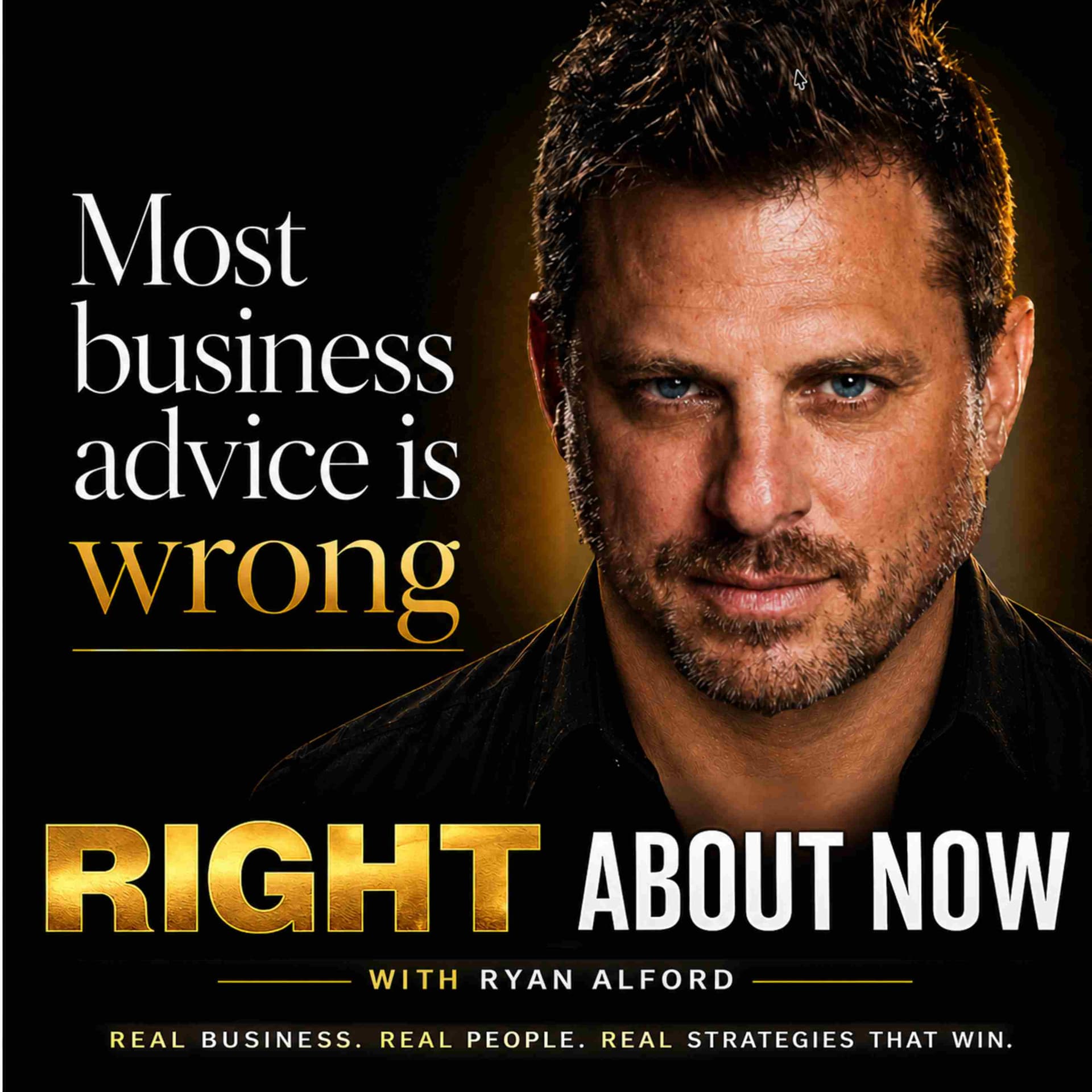
Join media personality and marketing expert Ryan Alford as he dives into dynamic conversations with top entrepreneurs, marketers, and influencers. "Right About Now" brings you actionable insights on business, marketing, and personal branding, helping you stay ahead in today's fast-paced digital world. Whether it's exploring how character and charisma can make millions or unveiling the strategies behind viral success, Ryan delivers a fresh perspective with every episode. Perfect for anyone looking to elevate their business game and unlock their full potential.
Resources:
Right About Now Newsletter
Free Podcast Monetization Course
Subscribe To Our Youtube Channel
Vibe Science Media
In this episode of Right About Now, host Ryan Alford sits down with Tom Webster, co-founder of Sounds Profitable and author of The Audience is Listening, for an in-depth exploration of the podcasting industry's evolution and strategies for success. Together, they unpack how to understand and connect deeply with your target audience, emphasizing that knowing your "ideal listener" can be just as crucial as producing high-quality content.
Tom shares his expertise on common missteps in podcasting, advising creators to focus on authentic engagement rather than simply chasing metrics. He also sheds light on the current state of the podcasting world, dispelling myths about its supposed decline and stressing the value of honest feedback, consistent roles among show hosts, and a content-first approach. Whether you're a new podcaster or a seasoned pro, this episode is packed with actionable advice to help you grow your podcast with purpose and impact.
TAKEAWAYS- Importance of understanding the target audience in podcasting.
- Strategies for defining and conceptualizing the ideal listener.
- The current state and growth of the podcasting industry.
- Debunking myths about the decline of podcasting.
- The significance of content quality in attracting and retaining listeners.
- The role of marketing in podcasting and its relationship to content quality.
- The value of direct conversations with listeners for gathering insights.
- The concept of "roles and goals" for participants in a podcast.
- The need for honest feedback and constructive criticism from the audience.
- Creating an engaging and entertaining experience for listeners beyond mere information dissemination.
If you enjoyed this episode and want to learn more, join Ryan’s newsletter https://ryanalford.com/newsletter/ to get Ferrari level advice daily for FREE.
Learn how to build a 7 figure business from your personal brand by signing up for a FREE introduction to personal branding https://ryanalford.com/personalbranding.
Learn more by visiting our website at www.ryanisright.com
Subscribe to our YouTube channel www.youtube.com/@RightAboutNowwithRyanAlford.
See Privacy Policy at https://art19.com/privacy and California Privacy Notice at https://art19.com/privacy#do-not-sell-my-info.