In short
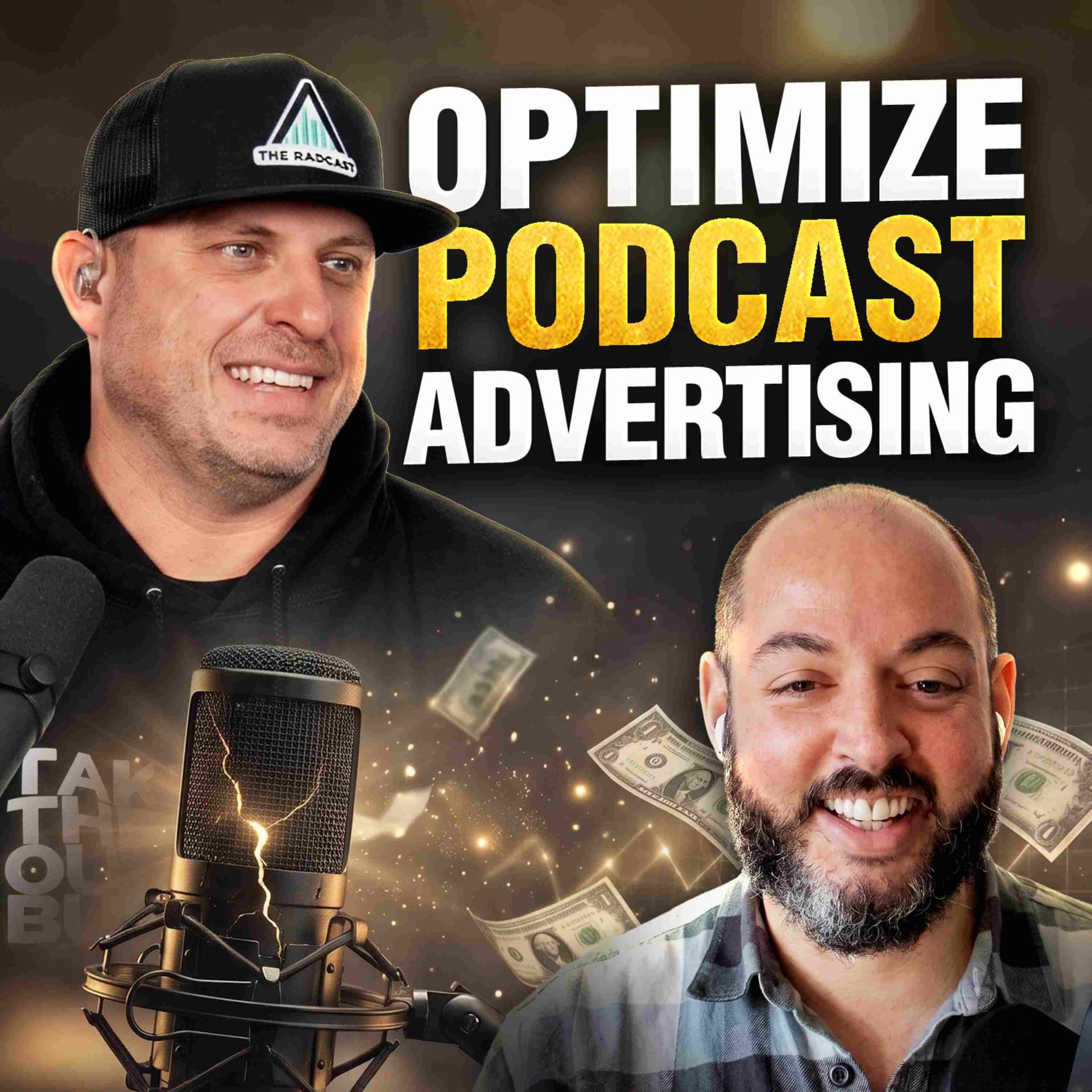
How podcast advertising and monetization are changing, and what creators should do about audience growth, production decisions, and ad tech shifts (direct sales to programmatic).
Guest
Jeff Umbro, founder and CEO of Podglomerate. Background: started in book publicity; launched a podcast as a creative outlet; later built Podglomerate (2017) first as an ad agency packaging shows, then added podcast production and audience development. Podglomerate runs a “three-legged stool” (marketing, monetization, production) for sustainability.
Key claims
Attracting new listeners vs retaining existing ones require different data and expectations. Use A/B testing and audience feedback; don’t follow the playbook—rewrite it. Podcast ad markets are moving toward true programmatic buying, which may squeeze smaller shows relying on direct deals. Narrative serialized podcasts are declining commercially; chat shows and episodic formats are easier to sell.
Notable examples
Serial/Bone Valley/Town cited as narrative benchmarks; platform shifts like Simplecast→AdSwiz, Spotify ad network/Span, iHeart Omni/Triton Digital, YouTube dynamic audio insertion.
Written by AI. May contain mistakes. Listen to the episode to check what was said.
Chapters
Tap a time to open that second in VOAudience Development Insights
0:00 to 0:48
Learn about the critical differences between attracting and retaining podcast audiences.
“A lot of people, when it comes to the audience development side, forget about the difference between attracting a new audience versus retaining the existing audience.”
The Challenges of Podcast Production
1:20 to 3:22
Explore the complexities and challenges involved in podcast production.
“It's great to be here and you know plenty.”
Navigating Quality in Podcasting
3:22 to 6:11
Discuss the balance between perfectionism and audience engagement in podcast quality.
“You have a lot of scope creep that feeds into every part of the business.”
Defining Show Goals
6:49 to 8:10
Understand the importance of defining goals for podcast production and audience.
“That's Apollo Neuro at Apollo, A-P-O-L-L-O, Neuro, N-E-U-R-O, dot com.”
The Evolution of Podcasting
8:10 to 8:56
Examine the transformation of the podcasting industry over the years.
“And there's different data that you're going to read in order to try and manage the expectations on both of those things.”
The Future of Podcasting
8:56 to 11:47
Discuss current trends and future projections for podcasting, including monetization strategies.
“And you might still have to do all those things anyway.”
Shifts in Podcast Content Types
11:47 to 14:00
Analyze the shift from narrative podcasts to chat shows and its implications for creators.
“because it means that we're going to get some good projects along the way.”
The Changing Landscape of Podcasting
14:00 to 15:02
Explore how the podcast industry has evolved and the factors driving these changes.
“Bone Valley or Serial or Town or you name it.”
Identity Crisis in Podcasting
15:02 to 17:27
Discuss the varied approaches in podcasting and the challenges creators face.
“And it's kind of transitioning the entire landscape into something new.”
Understanding Audience Engagement
17:27 to 19:24
Learn about the significance of audience goals and how to effectively engage listeners.
“There is actually a lot of data that says that sharing clips across all these platforms is not actually the way to grow an audience for the right kind of show.”
Show all 15 chapters
Niche Podcasting and Community Building
19:24 to 20:49
Discover how niche podcasts can succeed and the importance of community involvement.
“Beyond the obvious monetization route and everything, it kind of doesn't matter because it's already achieving what I hope it achieves.”
The Rise of Programmatic Advertising
20:49 to 22:46
Understand the shift towards programmatic advertising in the podcasting industry.
“I just painted my wall, so it's empty right now, but hopefully I'll get to your level soon.”
Future Trends in Podcasting
22:46 to 28:01
Explore potential future trends in podcasting and the impact of evolving technologies.
“And then they get the rug pulled out from under them.”
The Future of Podcasting Business Models
28:01 to 28:51
Explore the evolving landscape of podcasting and its new models for monetization.
“premium content, donations through Patreon or something like that.”
Connecting with Jeff Umbro
28:51 to 29:34
Learn how to connect with Jeff Umbro and his work in the podcasting space.
“You can shoot us a note at glomerate.com slash connect.”
Transcript
Automatic transcript. May contain errors.0:00A lot of people, when it comes to the audience development side, forget about the difference between attracting a new audience versus retaining the existing audience. They're two different arts and two different sciences. And there's different data that you're going to read in order to try and manage the expectations on both of those things. If you're trying to bring in a net new person, you should only be paying attention to that to the extent of I don't want them to turn this off right when they hit play. And there is a way to address that in the finished product. And it's all about A-B testing and talking to your audience and also trusting your own intuition and your gut.
0:32You don't win by following the playbook. You win by rewriting it. 700 episodes deep with the people who actually built something real. No theory, no fluff, no shortcuts. This is Right About Now with Ryan Alford. Hello and welcome to Right About Now. We're always getting right. We're always talking about what's now. What's more now than podcasts, baby? Hey, I told you eight years ago, you better pay attention. I don't pretend into the future. I just create it. You know who created it before me? I like to bring people that know way more than I know. I just pretend I know everything in podcasting.
1:12I feel like I know more than most, but this guy has been doing it all. He is the founder and CEO of Podglomerate. He is Jeff Umbro. What's up, buddy? How you doing? It's great to be here and you know plenty. Don't count yourself out. Jeff and I have taken different paths and I've been fortunate enough to benefit probably from his leadership and passion for the industry indirectly. He's done a lot for the space. He's well-respected by a lot of people that I respect. Him and I are a lot alike and a lot different. This is a weird statement, Jeff, but I'm going to say, you know, real recognizes real.
1:41I don't do everything perfect. I'm a trailblazer. I kind of look behind me to see whatever it is, but I'm trying hard to do it the right way and to just do it my way. You've obviously done the same and respect a lot of what you've done. Thank you very much. It's great to hear that from you. And I've also been a fan from afar for a long time. I always love seeing how other people are doing similar things to what we're working on because it gives me a lot of perspective and sometimes good, sometimes bad. But it always shows me something that I can be doing differently to take advantage of what's out there.
2:10And you're very much one of those muses in that regard. I appreciate that. And I love what Podglomerate's done. They just seem to be sort of like one of the beacons, like doing it right. You do production, audience growth, marketing. There's some crossover, but it's different. I've gotten as far away from production as possible, except for my own shows. Jeff's willing to stay there. I give him credit because people need the good work their team does. It's just tough work. Production's funny because anybody who is listening who has a production background is probably having PTSD right now. It's a funny thing because it's fun and creatively fulfilling or it can be.
2:41But at the same time, it's everyone has the same problems over and over again. And it's scope creep to the max. You might have a recording that you're doing that gets pushed to a different date, which then crunches your deadlines for everything else that you're doing. It's very much one of those things that you are at the whim of the people that you work with, whether that be a client, a guest or even folks on your team. I can't tell you how many times somebody is like, oh, we'll just record on a Saturday or can we do this at 10 o 'clock at night or whatever. No big deal. They don't care. This is fun for most people, whereas for us, it's a job and hopefully also fun, but not always.
3:13Production is such a funny business because when it goes right, it's an amazing business. But when it doesn't, which is most of the time, you just have crunched margins. You have a lot of scope creep that feeds into every part of the business. Just because you produce something great doesn't mean that you're going to find an audience for it. The person who's paying you to do it might not be happy with the result. And they may decide that in six months, once all the hard work is actually done, they don't want to do it anymore. Then you lose that recurring paycheck. I'm going to tell my own story, which answers that, my own experience.
3:43I came in the ad agency and production value and all that means a lot to me. Brand and all of it. At a certain point with my own stuff, I mean, it's had to go, is it good enough? And the answer in my mind, what I want when I had Verizon and Apple money and unlimited seemingly time and resource to do 30 second commercial or a brand campaign, the good enough or standard was different. But when you're working with$5 million budget, you can just go hire somebody that can do the work at night or on the weekend. Exactly. No big deal. or moving the deck chairs around and getting every detail. And look, it matters to me.
4:16This was a hard thing for me to learn. When to put it down, when is it good enough? Is it good enough to, again, keep and attract an audience versus your own ego, versus a perceived magical place of perfection in your own mind? And we can polish a turd all day long. And then you got to nail this. I've done that. Look, I've done 700 episodes. There's some turds in my first hundred. I was boring. I didn't know how to have energy on the mic. I'm a very energetic in-person guy. I'm the guy you know now. I was that same guy eight years ago. And I was like, hey, Chris, you know, we're here today hanging out.
4:49Number one, why did I invite my friend Chris down the road when I could have invited Steve Jobs second in command? I could have gotten Test Man on. I could have had the CEO at Audi. I played small ball and I sounded like small ball and really worried about the intro outro. And oh, God, it sucked. When you're building a business, the idea is only the starting point. The real work is turning that idea into something customers can actually find, trust, and buy from. We use Shopify for our card shop, and from a business standpoint, that matters. It gives us one place to manage the storefront, products, inventory, payments, checkout, analytics, and customer orders.
5:28When you're trying to grow, you do not want your system slowing you down. For us, Shopify helps make the buying experience feel professional. Whether someone is purchasing cards, sealed product, or merch, and when a customer is ready to check out, that process needs to be smooth. Less friction means fewer missed opportunities. And when that order comes through and you hear the Shopify, it's a reminder that the business is moving. Shopify powers millions of businesses around the world, from major brands to entrepreneurs just getting started. It gives you the tools to launch, sell, market, and grow in one place.
6:04With Shopify, nothing stands between your idea and a real business. So get out there and make it one. Go to shopify.com slash Ryan, R-Y-A-N. That's shopify.com slash R-Y-A-N. What if the secret to better sleep is already on your wrist? Apollo Neuro uses gentle, silent vibrations to help calm your body for sleep, so you can fall asleep faster, sleep deeper, and wake up actually feeling rested. This isn't just tracking sleep. Apollo Neuro helps your body regulate naturally. Try Apollo Neuro risk-free for 30 days at Apollo, A-P-O-L-L-O, Neuro, N-E-U-R-O, dot com. That's Apollo Neuro at Apollo, A-P-O-L-L-O, Neuro, N-E-U-R-O, dot com.
7:01The first question I always ask, what are your goals for producing this show? And the second question I ask is, what are the listeners going to get from this show? I stole that from Dan Meisner from Bumper. He's incredible. You guys should all read his stuff. It's always a really interesting conversation to have because maybe you are making a show because you just love talking to people and you want to learn more. And this is the vehicle to do it. Maybe you're the big Fortune 500 organization that's trying to sell a product. Maybe you want to get 10 ,000 people watching or listening each month.
7:29you can make some money on it. But whatever your answer to those questions are, it should determine what kind of show you make and how you make it. And to your point about an MVP or a minimum viable product versus like a really polished thing, what you make should be informed by what you're hoping to gain from the thing. And that could be using this thing as a vehicle for lead generation. You only want it to be good enough that you can get those people in a room that may buy your product or something. Or if you want to just have something that's entertaining, that a million people are going to watch it, then that's a different show.
7:59And then on that note, a lot of people, when it comes to the audience development side, forget about the difference between attracting a new audience versus retaining the existing audience. They're two different arts and two different sciences. And there's different data that you're going to read in order to try and manage the expectations on both of those things. You just mentioned spending all your time on the intro and outro. That might be really important for your show, depending on your existing listener base and how much they're actually consuming of the show. But if you're trying to bring in a net new person, you should only be paying attention to that to the extent of, I don't want them to turn this off right when they hit play.
8:34And there is a way to address that in the finished product. And it's all about A-B testing and talking to your audience and also trusting your own intuition, your gut. But to your point, all of the reasons, all the things that we're talking about right now, just feed back into the original idea to do production work really well is not the same thing is production work being a really good business. You might be able to charge a fortune for this stuff, but you might not. And you might still have to do all those things anyway. If I was hiring someone to do mine, I'd hire Jeff. They do great work.
9:03That wasn't pre-planned, or this isn't a sales show. We have a really good team that does this stuff. We have an Emmy award winner who runs our studio, and he does incredible work. And the team underneath him is just as good. Podcasting's weird, Jeff. You've been in it a long time, how you got into it, where we are today and exactly what the hell podcasting is, isn't trying to be. You've got these intersections of opportunity and growth and sustainability. And it's what I'm looking at. All of those are here. There's positives and negatives, but I'd love that lens through your journey. Take all this with a grain of salt.
9:37I started listening to podcasts in high school. This is about 20 years ago. A friend of mine burned a CD with five episodes of This American and Life and gave it to me. I don't even think they were called podcasts back then. That is the story that got me into the medium. And then it was another 10 years before I actually turned to this professionally. I was working in New York as a book publicist. I decided for the creative outlet, I wanted to start a podcast where I would talk to authors. And I did it for fun. Byproduct of making this show, which still is out there, nobody should listen to it.
10:07I won't tell you the name of it, is that a lot of the authors that came on said some version of, hey, my book comes out next month. I'd like to hire you guys to help me to grow this thing. And I bring this to my boss and she'd write me a check for commission on the referral. I'm like, oh, wow, this is cool. There is a whole business model here that has nothing to do with advertising that is entirely engaged because of the vehicle that I'm doing. After a few years of this, left that job and started the Puglomber. In 2017, we started as an ad agency where we're trying to bring together a group of shows and then sell ads as a package to advertisers across that group of shows, very quickly, I realized I have to pay my rent.
10:46We started producing podcasts. And then because everybody kept asking us for it, we started doing audience development work for podcasts. It quickly became this three-legged stool that has been a godsend in hindsight. It was all unintentional when we built the business. Now, if we have an okay year in marketing and a great year in monetization and a bad year in production. Everything can kind of help sustain one another. And the goal is always to have an amazing year for all three of these business units, but that doesn't always happen. We have been able to kind of weather the storm and become like this fairly sustainable organization over the years, in part because we have those three different business orgs and operations.
11:22It's really what every show needs. It's true. And some people will come to us for one of those things and some people will come to us for two or three of those things. It truly is. We will do all the same things for you that like a SiriusXM or an iHeart would do. But you don't have to be of a certain scale to work with them. And you get to own your property and you can just hire us to help you with it. Or you can use this as a testing ground to try and expand your show in order to go and work with one of those guys. I'm happy with any of those solutions because it means that we're going to get some good projects along the way.
11:50Over the years, what I've realized is that the podcast industry started as thing. Little magical bubble of people who are just making shows that they wanted to make because they were really interesting to them and they wanted to listen to them. You had a few thousand producers all over the country who were putting out stuff, the Memory Palettes from Radiotopia or This American Life, or on the other side of that scale, you had like the Joe Rogans of the world who were doing chat shows. There was this whole ecosystem that developed over time where they created these things that suddenly somehow were getting hundreds of thousands, and even in some cases, millions of listeners or viewers.
12:25This entire ecosystem sprouted around those shows in order to try and monetize them and bring some revenue to those creators. I do feel like it's frequently the other way around where somebody sees a business and then builds all the content around the business. And from my vantage point, the opposite happened here. That was really cool to see. Podcasting today looks really different from where it was 10, 20 years ago. There's a ton of consolidation in the space. Whenever an organization does get to a certain scale where there's real money there, they get snapped up by Amazon or SiriusXM or iHeart or Spotify.
12:59Video has become this massive part of podcasting, which is great. It's like a really cool way to bring in new audiences. But what it also inevitably means is that you have a tech stack that was designed for one thing and then being used for another thing. And it breaks all the time. you have this big move and shift towards like true programmatic advertising on audio and in the future video properties, which inevitably means that podcasting becomes a scale play where these programmatic marketplaces are looking to pump as much advertising into this impressions available as possible, often at a lower CPM in order to get people in the door.
13:37That's a big shift from what we've seen over the last few years, where a lot of people have been paying a premium for this ad space because of the quality of what they were buying. And then one of the other things, I'm sure I'm not going to touch on all of them, that I'm really paying attention to right now is just the death of the narrative podcast. And I'm making that sound much worse than it actually is. In essence, a lot of people came into podcasting because of these narrative serialized shows, Bone Valley or Serial or Town or you name it. And because of all the things that we just mentioned, consolidation in the space, the changing from direct to programmatic advertising, and the rise of video and many other things.
14:15The business model is just not the same as it was five or 10 years ago. A lot of people who were previously investing in these big, crazy narrative stories that the listener loves are not able to do that anymore because they don't have the same amount of money to put into these projects. And instead, they're investing in a lot of chat shows. And I love a good chat show. There's nothing wrong with that. That's a lot of what I listen to, but it's not the same thing. And or people are coming up with clever ways to do a close to narrative series, maybe a monologue or something if they're like subject matter experts.
14:46It's a lot easier to sell ads on shows that are less serialized because a lot of advertisers don't want that for any number of reasons. All of that to say the podcast industry just looks really different than it did historically because of a lot of those changes I mentioned and more. And it's kind of transitioning the entire landscape into something new. And the question becomes then, do all of these millions of people who have really loved listening to these shows, do they want video? Do they want chat shows? Do they want all of their favorite creators being managed by the same three or four companies?
15:18I have my opinion on what that answer is, but that's the landscape that we're in right now. You crystallized all of it. When you're trying to create something for audio, there's a reason there's radio and television. It's a different medium. What's audibly interesting is not always visibly interesting and vice versa. It's not easy to create and win the day in both of those mediums at the same time. I'm not sure the audio audience was really asking for video, but the advertising dollars and the demand for this style of content on YouTube and others is getting attention. So it's like, hey, we'd love the audience.
15:52We'd love more people. We'd love more money to be made and the content that we're wait a second, we're not really creating the right thing for that. We're at a really interesting intersection of all those things, Jeff.
16:07I think that we're at this funny point where podcasting is having a little bit of an identity crisis. And my answer to that is that a lot of different things can exist simultaneously. You can have the YouTube bros moving into the podcast space. You can have the serialized NPR are folks that are making these big, vast investigative series. And you can have everything in between. It's just the thing that is missing from a lot of these considerations is what's the business model there? And it exists. And there are a lot of people who are paying close attention to this. There's still quite a few people who are just high in the sky.
16:41I want to do this, but they haven't really put in the legwork to figure out how. And it's funny, just going to podcast conferences, you see both sides of that. Ultimately, we're in a pretty good place there, but I'd like to see some people meet in the middle. Where do you fall with the podcast? Are you, watched video was never a part of it. If it was up to me and we could keep everything the same and we could still make money and my talent could be taken care of. I would do audio only. Where do you fall? I am totally fine with video. I have no issue whatsoever with that. I'm not like the most camera friendly person myself.
17:14That has been a little bit of an adjustment for me because I host my own show. We're doing video as an experiment. It's an amazing opportunity for us to reach an entire new audience that we would never reach otherwise. It's fine if you don't want to do video. There is actually a lot of data that says that sharing clips across all these platforms is not actually the way to grow an audience for the right kind of show. Where I fall is basically do what makes sense for you and don't feel obligated or forced to do something that you don't think fits for you. But at the same time, you can't just ignore it.
17:45You have to really ask yourself the question, should I be trying this? And then very selfishly, I love video because we have a really amazing video production team and we can charge more money to produce video. I don't want to be too greedy in that regard, but it is a fact. It could be all of these things. It's just hard to know who you're trying to please. That's the thing that goes back to the original point. For every show that we make, we ask the question, what are your goals and what are you doing for the listener or the viewer? If you don't have a very clear answer there, then you probably will become one of those people who six months down the line is like, why did I do this?
18:17I always tell people, and this is a marketing thing and it's definitely a podcasting thing. Everybody's favorite radio station is W-I-F-M. What's in it for me? I like that. So if you aren't answering that question, because if it's just what's in it for you, i.e. yourself, you teed it at the very beginning. It's a different thing and that's okay. It's totally okay. But don't be mad if you got, like I did, the first hundred episodes, 99 listeners and 98 of them by my mom hitting replay. That's the thing. My show podcast perspectives, which you'll be a guest on soon is, is a funny one. We're getting 500 to 1500 views or listens an episode.
18:51And I'm proud to say every single one of those is a hundred percent organic. Didn't pay for it, which is fine. That's a great way to find an audience. But I mentioned it just to say, these are all people who sought out the show. And I hear people all the time. And I hope I hear it from you that like when they appear on the show, they're going to get 10 emails after that episode drops from random listeners within the industry who either want to learn more, want to work with you, or want to figure out some way to collaborate. And to me, that's a success story of what we've been trying to do. Do I want that show to have 100 ,000 listeners an episode?
19:21Yeah, that would be amazing. There's a lot of upside that comes from that. Beyond the obvious monetization route and everything, it kind of doesn't matter because it's already achieving what I hope it achieves. Exactly. So if it's achieving your goals and that's all that matters. If you're serving the audience that you have and they're getting what they want, need out of it. And then you're ultimately getting the goals that you have and probably relationships, connections, business development, knowledge, all of the things. A big part of it is this is a small way in which I can help give back to the community that I love.
19:51And I was watching this stuff and listening to this stuff and reading this stuff my whole way up and I still do it. I still consume everything that's out there. So a lot of what I'm hoping to do here is equip the next generation with what they need. I sound like I'm ancient. I'm not going anywhere anytime soon. But that is a big part of this. And do I benefit from that? 100%. But that's a big part of why I'm doing it. We'll talk more on your show and probably on calls that we'll have when I'm looking for mentorship that Jeff will provide. You're too kind. But I will say just to butt in for one second, maybe you're not happy because of the resource management side of things.
20:24But I don't think you'll ever be creatively unsatisfied by putting a little extra time into making something better. That's the thing I always go back to. And I mentioned that just because you said niching down. If you can be amazing at one small thing, go do it. That's great. I'm surrounded by my niche with my collectibles and hobby stuff. And my studio is now in my trading card store that's being open that I'm building. I'll have to ask you all about that. I don't know anything about it, but my entire Instagram algorithm is just people trading sports cards and Pokemon and whatever. I just painted my wall, so it's empty right now, but hopefully I'll get to your level soon.
20:57I'm in 3 ,000 square feet here, which is not that big, but it's wide open, no walls. The vision would be like pawn stars, but it's trading cards. I love that. Do you do cards on Instagram? My trading cards and collectibles show, we hit top 10 in sports. Oh, incredible. All the sports. That's how popular the category is. Pat Flynn has one of the largest TikTok and Instagram accounts for Pokemon card collecting in the world. And it's worth a ton of money. I love it because my nephews are super into Pokemon right now. What do you think about Netflix coming in the space. It's all good. I love the attention for the category.
21:32I'm all about, hey, back to my brand days. I'm a marketing guy. BDI and CDI. CDI, category development. When the category rises, everybody rises. It's great for the industry as a whole. We're seeing a lot of weird stuff across the board where you have SiriusXM is bringing on a lot of folks. The Call Her Daddy collection, Conan O 'Brien. You have Netflix taking some shows from Spotify, from iHeart, from SiriusXM. The requirement to get your podcast on Netflix is to remove it from YouTube. It's clearly a shot across the bow where they're trying to expand their own inventory in the space while decreasing the inventory from elsewhere.
Read the full transcript
22:08Tubi is bringing on some big creators. They just signed Ashley Flowers from Crime Junkie. They own Red Seat Ventures. I'm sure you'll see a lot of stuff in there from like Megyn Kelly. Even X, formerly Twitter, is doing a lot of stuff with Tucker Carlson and Khloe Kardashian. And at the end of the day, all we're seeing here is just an evolution of the attention economy. People are calling them podcasts because that's convenient, but they don't really give a shit. Big names that can attract listeners and viewers on my platform. It does scare me a little bit because we all remember the days where everybody was pivoting to video and everybody is getting these giant paychecks from Facebook or wherever in order to build this content out.
22:47And then they get the rug pulled out from under them. Do what's right for you. Whatever you're doing, just make sure you're at least paying attention to how sustainable it can be over time. Don't put all of your eggs into any one basket because you don't know if that's going to be there in the future. If I can have my grandmother open up Netflix and see one of my podcasts, that's a win. Yeah, exactly. I don't think they care what medium it is.
23:13The television was the attention device because that's where everybody's attention was. I mean, you can call it a TV and call it whatever you want. It's a screen. The screen with which our eyeballs are watching more than most. And now it's the smartphone. But when we put the phone down, and I'd argue we don't, the TV's become the radio. The phone is the TV. I actually just deleted all the social media. And I'm terrified of that. If you're an entrepreneur in this space, your job is to pay attention and innovate, make sure you see what other people are doing. And my vision on this is if I'm not on these platforms, then am I going to get left behind.
23:49And I can tell you that that reality of that has weirdly been that I can actually pay more attention to what's happening because I'm not wasting all my time scrolling through Instagram or TikTok or whatever. Maybe I'm a little behind on some of the trends, but I still go on all these platforms every day for a couple of minutes just on my browser. And then it's really easy for me not to waste a ton of time there. I can see that. I'm not falling behind. I've gotten more time to do these projects and actually get shit done. What's on the horizon for Podglomerate and maybe the industry as a whole for next year?
24:19I mean, what do you see? And I know why people do them like these trends. Number one, things just move so fast now that I don't know the point of it because it's 10 years ago. You do these things, get it right. But now things happen in 30 days. So it's like, I don't know the point, but what's on the horizon for both you, Poglomerate, and maybe for the industry? I run this show, Podcast Perspectives, where I interview industry leaders such as yourself. And we just chat about their very particular niche and what they're working on. And then at the end of each year, we invite everybody who had been on the show that prior year to contribute like a two minute video that we like do a big montage on.
24:52Anybody can go listen to that now. They'll give you their opinions. And it's all about video on the big streaming platforms, where the ad industry is going, what AI is going to do to the space, narrative versus episodic stuff. It's all the stuff that you would read about in pod news every day. And it's very fascinating and interesting because of the viewpoints of the people who are saying these things. But something that I have been really paying attention to, and I personally am pretty excited about it. I don't know if this is going to be an appealing thing for just the everyday podcaster. I am seeing that a lot of the bigger players in the industry are moving way closer to true programmatic advertising from what we historically have known as direct sales.
25:32In most of the enterprise level hosting platforms, they're still going to allow you to go out and do your own direct sales and do a great job of that. every big player out there is refocusing its ability. It's almost they all had like some big meeting where they decided to do it. Simplecast is pushing all of their podcasters straight to AdSwiz. Span is the Spotify ad network. And that's what most people think of when they're thinking about programmatic marketplaces on Megaphone. But in fact, it's not actually programmatic. It's just a very large private marketplace where Spotify somewhere has hidden 500 salespeople that are just putting these things out all day, every day.
26:07So this will be true programmatic. And what I mean by that, for anybody who doesn't know, is that the sales folks, the supply side advertisers are going to be able to purchase advertising across a wide swath of shows based on demographic data from the IP address of the listener or the viewer. Spotify is building this in part because they want to be able to serve across audio via RSS and the video platforms that they're putting out. AdSwiz is kind of going through their own version of this. iHeart is doing something similar with Omni and Triton Digital. And I'm sure I'm leaving out a bunch of folks.
26:37And then to put the cherry on top, YouTube, they're going to allow dynamic audio insertion. And along with that, there's going to be a bunch of tools that will integrate podcasts and all videos on YouTube, much closer with AdSense. Anyway, all of this to me signals a shift in the industry where they are really looking to automate as much of the advertising stuff as possible, which in a lot AutoAz is amazing because it gives folks the ability to truly monetize the scale that they can bring to the marketplace. And some people are going to make a lot of money from that. But what's really scary to me is a lot of the brands that are currently doing the direct sales no longer really have a great reason to do that because they can get 90 % of the impact with 10 % of the effort just by buying programmatically.
27:21So then the smaller players that are doing 10 ,000 downloads in a really niche industry, they're going to suffer and they're not going to make as much money. And thus, they will be often less incentivized to continue doing it. I don't know, maybe that's like the glum outlook on what I'm seeing. And it's something I've been paying attention to. Along with everything else that we've talked about, there's a lot of people in the space that are going to be totally fine. And a lot of people who are going to have to reconsider what they're doing. Well spoken, Jeff. I see both sides of those coins with the programmatic versus direct being in it and doing deals on both sides.
27:51You like to have both, but I understand why both this. I just hope it doesn't hurt the quality. There are a million other business models that people have spent a lot of time trying to develop in podcasting. Subscriptions, live events, premium content, donations through Patreon or something like that. And I think that we're going to basically see the substackification of podcasting where anybody who wants to do this because of the quality of what they're making or their love affair with that particular subject matter, they're going to lean way more into the supporting cast, the Patreon stuff out in the world.
28:23In a lot of ways, that's a good thing for free market and the exchange of ideas. It breaks a lot of stuff too, because you no longer have the review process from a bigger institution, a newspaper or magazine who gets everything that they're publishing. And that's scary too. Let the best man or woman win and we'll see where everything falls. And if it truly is the better idea, then it will probably come out on top. That applies to these different business models. If this needs to exist in the world, it will find a way. Where can our audience find a way to you, Jeff, and what you're doing? Glomerate.com.
28:55You can shoot us a note at glomerate.com slash connect. I'm on LinkedIn at Jeff Umbro and really appreciate the time. Thanks for having me. Jeff, really enjoyed it, brother, and look forward to continuing to collaborate. Go check out Podcast Perspectives. Jeff's got a great show and I look forward to being on and to continuing our relationship. And thank you both for coming on. Yeah, thank you. This was great. I really appreciate it. Hey, guys, you're going to find us. Ryan is right.com. Find all the highlight clips, the full download, all the details where to keep up with Jeff and other things happening in this ever evolving podcast industry.
29:31It's going to be right here right now. We'll see you next time on Right About Now. Here's the truth. Information doesn't change your life. Execution does. So don't just listen to this episode and move on. Take the idea. Make the call. Launch the thing. Fix the problem. Build what you keep talking about building. For more, follow Ryan Alford on Instagram, at Ryan Alford. And watch or listen to every episode at RyanIsRight.com. This is Right About Now. Now quit waiting. Go win.
30:14The most effective people at work aren't working harder than everyone else. They're working smarter inside better systems. Superhuman Go, from the makers of Grammarly, is the AI chat that works inside every tool you already use. Always ready and already aware of what you're working on. It's a teammate whose only job is to help you be better at yours. With Go working with you, you can show off what you do best. See what Superhuman Go can do at superhuman.com. That's superhuman.com.
From the publisher
The podcast industry no longer looks like the creative, audio-first business it was a decade ago.
Jeff Umbro, founder and CEO of The Podglomerate and host of Podcast Perspectives, joins Ryan Alford to examine the rise of video podcasting, media consolidation, programmatic advertising and the decline of high-cost narrative shows. Jeff explains how creators can separate audience acquisition from retention, establish clearer goals and determine how much production quality actually serves the business.
Drawing on his experience producing more than 700 episodes, Ryan opens up about overproduction, niche audiences and creating a show that generates relationships instead of chasing vanity metrics. Together, Ryan and Jeff offer a practical strategy for sustainable podcast growth: understand what the listener receives, diversify distribution and revenue, and avoid depending on one platform.
TOPICS COVERED
The evolution of the podcast industry
Podcasting’s growing identity crisis
Audio podcasts versus video podcasts
Audience acquisition and listener retention
Podcast production costs and scope creep
Direct sponsorships and programmatic advertising
Media consolidation and platform dependence
The decline of narrative podcasting
Subscription, membership and live-event revenue
Building a podcast that supports business objectives
CONNECT WITH JEFF UMBRO
The Podglomerate: https://podglomerate.com/
Work With The Podglomerate: https://podglomerate.com/connect/
Jeff Umbro on LinkedIn: https://www.linkedin.com/in/jeffumbro/
Podcast Perspectives: https://listen.podglomerate.com/show/podcast-perspectives
Podcast Perspectives on Apple Podcasts: https://podcasts.apple.com/us/podcast/podcast-perspectives/id1699652108
CONNECT WITH RYAN ALFORD
Right About Now: https://www.ryanisright.com/
Ryan on Instagram: https://www.instagram.com/ryanalford/
Ryan on LinkedIn: https://www.linkedin.com/in/ryan-alford/