In short
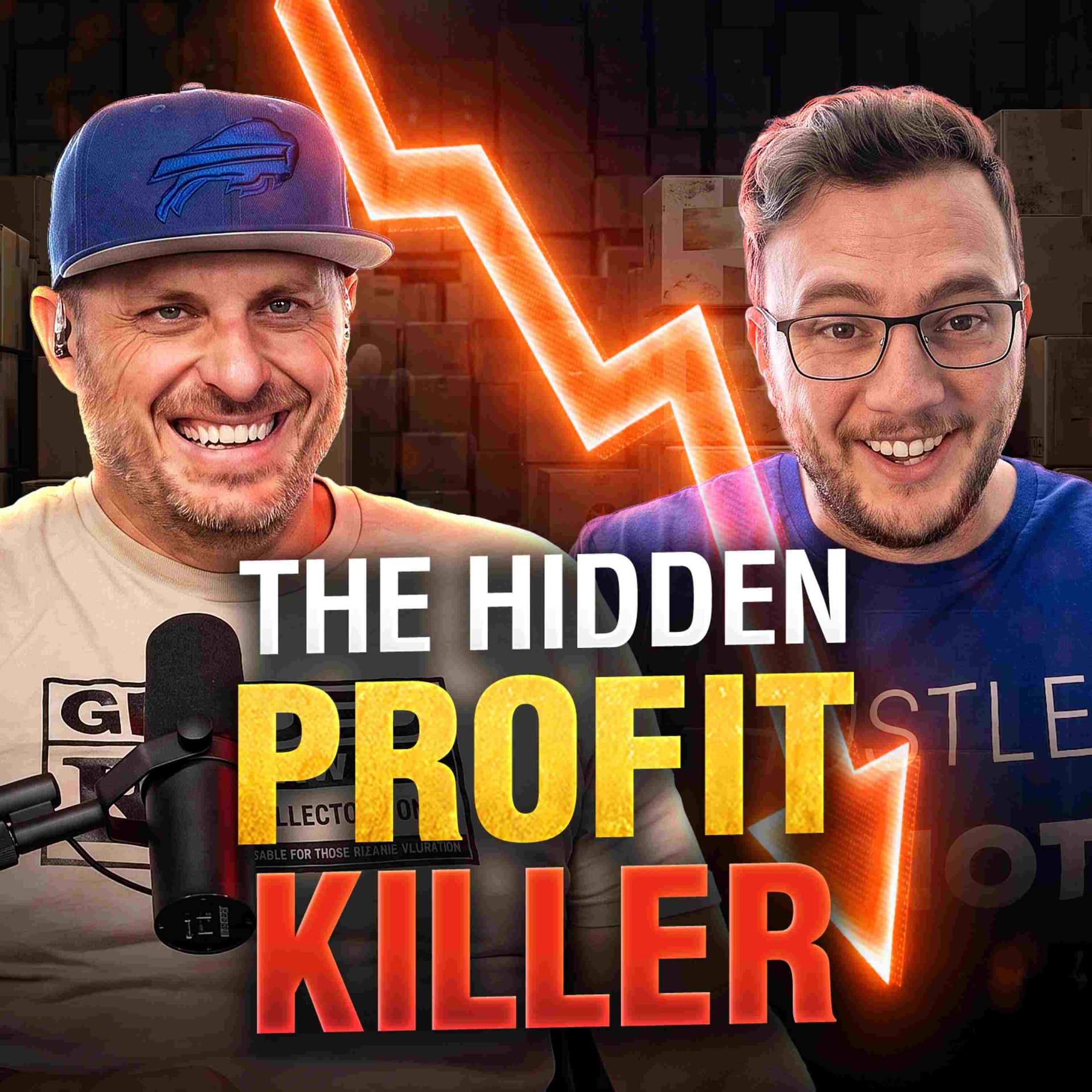
Growth by subtraction—why adding more revenue can reduce profit, and how to refocus a business on the narrow “version 2” that drives EBITDA.
Key claims
Early-stage growth works via “addition” (saying yes to many customers/products/channels), but after ~$3–5M (post product-market fit), continuing addition makes the business wide/shallow: complexity rises, margins fall, leadership misaligns. Instead, “growth by subtraction” means deprioritizing most initiatives, laser-focusing on one customer/product/revenue stream, then scaling the repeatable profit engine to ~$25–35M before expanding again.
Notable examples
An Israel military-goods e-commerce founder built a custom tech stack, but it became “debt” at sale because the buyer had to migrate to Magento/other platforms. A plumbing-company example: water heaters were a “second best seller” that lost hundreds of thousands, dragging overall profitability.
Guest backgrounds
Yarin Gaon—started SaaS at 14; built and sold Israel’s largest military-goods e-commerce (started ~22, sold at 29); later MBA at Kellogg; entrepreneur-in-residence at a VC; now fractional partner focused on scaling decisions and profit.
Guests
Yarin Gaon (solo guest) with host Ryan Alford. Notable tool: Growth Decisions Canvas (GDC) at canvas.fractional.partners; includes a snapshot/assessment to identify which decisions block growth.
Written by AI. May contain mistakes. Listen to the episode to check what was said.
Chapters
Tap a time to open that second in VOThe Early Entrepreneurial Journey
2:49 to 3:40
Yarin Gaon shares his journey into entrepreneurship starting at age 14.
“I mean, I have four boys I consider to be good kids, further along than the average bear, but they weren't 14 and doing what you were doing.”
Building an E-commerce Empire
3:40 to 5:59
Yarin discusses his experience creating a successful e-commerce platform in Israel.
“That's a balance of though of not wanting to take away their child.”
Tech Stack and Business Valuation
5:59 to 7:02
Understanding how a unique tech stack can impact business valuation during a sale.
“I didn't have to, but I didn't want to keep it while I was here.”
The Importance of Growth Strategies
7:02 to 7:40
Exploring effective growth strategies and the shift from addition to subtraction.
“It cost me quite a little bit of dollars when I exited.”
Navigating Complexity in Business Growth
7:40 to 13:21
Discussion on the challenges of scaling businesses and resource allocation.
“The real work is turning that idea into something customers can actually find, trust, and buy from.”
The Importance of Resource Allocation in Business
14:00 to 17:35
Learn why effective resource allocation is crucial for business success and how to prioritize efforts.
“You spread yourself, if you spread your team too thin.”
Identifying and Cutting Ineffective Business Areas
17:35 to 18:45
Discover the process of identifying unprofitable business areas and the importance of focusing on the right initiatives.
“It's just focusing them around clearer version of what exactly they're scaling.”
Focusing on Profit Over Revenue Growth
20:00 to 23:08
Understand why focusing on profit rather than just revenue growth is essential for sustainable business.
“And now here's their official jingle in four-part harmony.”
Defining the Ideal Client for Effective Marketing
23:08 to 28:00
Learn the importance of knowing your perfect client and how it influences marketing strategy.
“this for guys, girls, specialists, professionals, fractional geniuses like yourself.”
Understanding the Growth Decisions Canvas
28:00 to 29:01
Learn about a free tool called the Growth Decisions Canvas that helps clarify growth decisions in businesses.
“We are here today to answer the question, who is our perfect customer?”
Show all 13 chapters
Identifying Growth Obstacles
29:01 to 30:17
Discover how to identify obstacles that prevent business growth using a questionnaire and heat map.
“If you want more money, you got to get down with the GDC.”
The Risks of Venture Capital
30:17 to 32:10
Explore the implications of venture capital on business decisions and profitability.
“If you want to really build something of value that is profitable, yes.”
De-risking Your Business Growth
32:10 to 33:32
Learn strategies for reducing risk in business growth before seeking external funding.
“If you have certainty that I'm going to put$1 in, I'm going to get$1.15 out, why would I sell a part of my company?”
Transcript
Automatic transcript. May contain errors.0:00Summer heat turning you into a human sprinkler? Meet Sweatblock. Doctor created antiperspirants for excessive sweating and odor, made for the spot summer sweat hits hardest. Sweatblock helps you stay dry, comfortable, and confident with dermatologist-recommended solutions backed by over 20 ,000 five-star reviews. Go to Sweatblock. That's S-W-E-A-T-B-L-O-C-K dot com. and take the quiz to find your best fit. Take the quick quiz at sweatblock.com and find the right fix for your worst summer sweat spots today. This summer, don't dress around sweat. Stop it with Sweatblock. Hey, it's Mike Rowe, and it just occurred to me that Zip Recruiter has been sponsoring my podcast the way I heard it for the last 10 years.
0:52Consequently, I've agreed to sing their jingle at the end of this commercial in four-part harmony all by myself. Why would I do that? Because years ago, when the Microworks Foundation was expanding and I was desperate to hire a few uniquely qualified individuals, I posted a job for free on ZipRecruiter and I found the people I was looking for in less than 24 hours. It's that simple. Ever since, I've been telling my audience that ZipRecruiter got me the most qualified, most interested people. And now, I'm telling you. Post a job for free at ZipRecruiter.com slash zip. And watch what happens. That's ZipRecruiter.com slash zip.
1:31And now, here's their official jingle in four-part harmony. Build your team. Build it sooner. Meet your match at ZipRecruiter. Try it free. I am a firm believer of bootstrapping and having self-funding. Build a machine that is so profitable that funds its own growth. You don't need to be a behemoth. I will take a$50 million business or a$25 million business at a 20 % EBITDA, then a$100 million business at 5 % EBITDA any day. That's just a completely different mindset. I favor, if you can postpone getting external equity, do it. You don't win by following the playbook. You win by rewriting it. 700 episodes deep with the people who actually built something real.
2:24No theory, no fluff, no shortcuts. This is Right About Now with Ryan Alford. What's up, y 'all, and welcome to Right About Now. What's happening, brother? I'm happy to be here. Thank you for having me, Ryan. Hey, man. I was looking at the child prodigy because I read your story before I watched your story. 14, you're doing stuff that a lot of people weren't doing. You've come a long way, my friend. I appreciate it. Thank you. Learned a lot along the way, too. Where does that come from? I mean, I have four boys I consider to be good kids, further along than the average bear, but they weren't 14 and doing what you were doing.
3:0214, I started my first SaaS company. How does it happen? It's a mixture of enabling parents. My father was an accountant. My father was also an entrepreneur himself. So he enabled me because at 14, I couldn't even open a bank account. I had to transact from my father's bank account. Enabling parents, an interesting problem, and a lot of spare time. And a love for money, really. Those mixtures, that mix led me on in my path. I know how many things I have going on that aren't business. And I do a lot with business. I go, man, I don't know what clicks for 14s, 13s. I mean, if you're into sports and we keep ours into it, so they stay active and not on their computers the whole time.
3:34But you have more free time at that age. So if you can put it together, you do have a lot of opportunity. That's a balance of though of not wanting to take away their child. You got plenty of time to work. But at the same time, you can do both or get ahead. It's all about balance, I guess. I loved it. It wasn't really work. It was building cool shit. I was able to monetize it, build cool shit, get money. Sounds like a no brainer. I remember I was in high school. I remember I had clients, users that were my classmates. It was a really interesting experience. What made you get largest e-commerce platform for military goods in Israel?
4:08On the surface, that could sound really big, really small. I think I know enough to know that's probably bigger than I think it would be. But why military goods? And what was the secret to success? That was a little later in my journey, not at 14. In Israel, there's a military military service for guys about three years. I served for three years in the military. I was a soldier. I found a really interesting problem. Two problems. One is you go, we have a mandatory draft, but the army doesn't provide you with enough equipment. There's a whole secondary market of parents really shopping for their kids as they're going into the military for socks and shirts and flashlights and watches and all that peripheral equipment.
4:45The second problem was Israel observes the Shabbos, the Shabbat, meaning that on Saturday, everything is closed. So if you are combat soldiers, you get to go home every about two to three weeks for 48 hours. You go home Friday, Saturday, everything is closed. Sunday, you're back at the base. This is a really very short time window to purchase equipment. When I was ending my mandatory service, I thought to myself, okay, something here is not clicking. One, why can't I just buy stuff online and get it shipped to the base? It seems so simple these days, but there wasn't anything like this before.
5:15Why can't I just, while I'm in the base, shop on my mobile app, on my phone, just have it shipped? problem number one problem number two is that there wasn't any specialty stores military equipment were sold by hiking stores like rei type no niche nobody owned the niche as i finished my service i was like okay i had a little bit of coding background from my previous businesses i had a little bit of passion let's see let's see what happened i started by selling strings actually any cot i just grew it and grew it and grew it and we opened a brick and mortar store or two i sold it for seven years that's my story how old were you then are you still a teenager i started it at 22.
5:49I finished my service at 21, played around with a little bit. 22, I really put my effort into this. And 22 to 29, I grew it. At 29, I sold it. I moved to the States, finished my MBA. I had to sell it. I didn't have to, but I didn't want to keep it while I was here. Is selling e-commerce in Israel that much different than selling e-commerce anywhere else in the world? My biggest challenge was that Shopify didn't exist in Israel back then. I had to build my website. I built the e-com website. I built the e-com. When we opened the brick and I built the POS system and I built the ERP. And a really interesting point came out of it as I was about to sell it.
6:24I thought to myself, yeah, I'm so differentiated. I have my own tech stack. I have my own systems. I'm so much better than anybody else because they were all using shitty Magento. Yeah, WordPress with WooCommerce. And they're all shit. And Hebrew is a right to left language. So there's a whole component to this. And I learned when I sold my business that my tech stack actually became debt. That's great that I developed it, but I'm the only one that can actually maintain it. When I sold it, the person who bought it or the company that bought it basically had to migrate my website into one of the magenta bullshits.
6:54I actually took a major price cut or a discount because what I thought is a differentiator is actually not. It cost me. It cost me quite a little bit of dollars when I exited. That's an interesting learning lesson. I've seen this both in practice and in real world where we think certain things create value, especially in acquisition and sales and things that actually don't. And that would be one. And then Shopify would have neutralized most of it because it's just the universal platform now for e-commerce. Love it or hate it, it is actually more lover than anything else. It sort of gets a lot of things out of the way.
7:27It creates a baseline that a major operation is already streamlined. And now you can differentiate on the branding, on the product, on the offer, on the micro-optimization. Everybody's playing in the same sandbox. When you're building a business, the idea is only the starting point. The real work is turning that idea into something customers can actually find, trust, and buy from. We use Shopify for our card shop. And from a business standpoint, that matters. It gives us one place to manage the storefront, products, inventory, payments, checkout, analytics, and customer orders. When you're trying to grow, you do not want your system slowing you down.
8:05For us, Shopify helps make the buying experience feel professional. Whether someone is purchasing cards, sealed product, or merch, and when a customer is ready to check out, that process needs to be smooth. Less friction means fewer missed opportunities. And when that order comes through and you hear the Shopify, it's a reminder that the business is moving. Shopify powers millions of businesses around the world, from major brands to entrepreneurs just getting started. It gives you the tools to launch, sell, market, and grow in one place. With Shopify, nothing stands between your idea and a real business.
8:42So get out there and make it one. Go to shopify.com slash Ryan, R-Y-A-N. That's shopify.com slash R-Y-A-N. This episode sponsored by Sweatblock. Big meeting, first date, summer wedding. and your sweat wants to make it memorable for the wrong reason? Try Sweatblock. Sweatblock is doctor-created, dermatologist-recommended, and made for excessive sweating and odor on underarms, hands, feet, face, and body. Their Max Clinical Antiperspirant Wipes can stop sweat for up to 7 days per application, and Sweatblock has more than 20 ,000 5-star reviews. Go to sweatblock.com. That's sweatblock, S-W-E-A-T-B-L-O-C-K dot com.
9:29Sweatblock.com. Shop Sweatblock today and get free U.S. shipping on orders of$30, plus a 100-day money-back guarantee.
9:41What made you get into investments and fractional ownership, and what guided you into this area? I did my first business at 14, opened my second one at 16. Then I drafted, then I did my military website, the Army Goods website for seven years. Then I sold it. When I sold it, I moved to the States and I finished my MBA, did my last semester at Kellogg as an exchange student. Then I joined a VC and I saw something really interesting. I joined a VC as an entrepreneur in residence. Basically, I was the in-house entrepreneur and my job was to take all the startups that the fund invested in and kind of usually run out of money and to turn them around.
10:16That's what I did. But as I was doing this, I was also volunteering as a business mentor at SCORE and at the University of Chicago and I saw something really interesting. I saw hundreds of companies and I saw difference between bootstrap companies and venture backed companies. When I work with startups, they basically got me for free. The fund used to send me there. I used to come with resources. I'm expensive and they used to get me for free. But at the same time, I was volunteering and I work with smaller businesses, bootstrap businesses. I couldn't really afford me, but needed my help really badly.
10:47I can only meet them once every six months, every quarter maybe. But these were fantastic businesses, cashflow businesses, businesses that make profit decision, not just scaling decisions, people that were all in. I saw a lot of VC founders play with money that it's really not theirs. They make different decisions. And I found something really, really interesting in that journey. I found why I think a lot of companies stall and get stuck. When companies grow, they apply different growth model for different stage. As you start, it's all about growth by addition. And growth by addition basically means I'm going to say yes to every opportunity that comes in the door.
11:23I'm going to say yes to a different type of customer, different type of product, different type of revenues, different type of channels. I really want to see what works. And that works really, really well in the early days, up until you get to anywhere between one and$5 million, really up until you find product market fit, what we call traction. It works perfectly. But what happens is once you find that most founders, VC and bootstrap, all make the same mistake. They keep applying the same growth model of growth by addition. They got the 5 million. They asked, okay, what else can we develop? What else can we build?
11:52Where else can we sell our product? What other type of customer can we acquire? What happens is the business becomes very wide and very shallow. So it's multiple different departments, multiple different types of customers. Complexity goes up, margin goes down, and then the leadership team gets misaligned and they're going to try to figure out, okay, so we got here, but I'm not really sure what happens. What I preach or what I've saw is there's a better way to grow, not forever, but for a specific stage. As you get to anywhere between three to$5 million and you find something that works, you need to shift or founders need to shift from growth by addition mindset into a growth by subtraction mindset.
12:28And a growth by subtraction basically say, okay, I built something, something is working. What is actually worth doubling down on and what is actually worth scaling from everything that I've built and almost deprioritizing everything else. So that looks like one type of customer that I want to focus on, one type of product that we want to lead with, one type of revenue stream or channel we want to focus on. And when you do this, you basically take all of your resources, which are very small at that stage. You probably have a small team, not a lot of cash in the bank, but you direct them to a laser, very, very narrow offer that actually moves the needle.
12:59And then you rinse and repeat, you scale that version until you get anywhere between 25 to$35 million. When you have a business that is stable enough and enough resources, so you can now say, okay, let's get another type of client. What happens is founders build businesses. They build multiple businesses under one umbrella and that creates so much complexity. Have you seen that before? Oh yeah, I've lived it. It's why I'm in the lane I'm in now. Choosing a lane. Go deep instead of wide. That's what we're saying. I worked for other people and other brands for 16 years before I ventured out on my own.
13:30That's the thing I try to preach to people. The grass isn't always greener. Everybody thinks it's cool to be an entrepreneur. No, you're wrong. It is cool because you control your life, your time, you eat what you kill, all those things. But it's also not so bad being under an umbrella if it serves your needs. And everyone thinks that their needs only get served if they're calling the shots or they do it for just even worse reasons, which is I'm cool and I'm an entrepreneur. I've been in it now 10 years and the first six, I can get guilty of this even under the lane that we're in now. It's part of what makes me great and terrible at the same time as far as ideas and everything.
14:04That's part of it. But I've seen it. You spread yourself, if you spread your team too thin. And it stuck with me. I read some of your footnotes, some of the things you push, which is creating value versus creating work. And I say all the time, activity doesn't mean it's success. Correct. That's always not a plan. It's not. I like mine. Mine is my favorite. Hope is not a strategy. All the H's. I've seen it. I've watched it. And I do think that's what happens. And I think it's boring growing in the same lane, but it is profitable if you do it right. Basically as business owners or as operators, really.
14:35Once we get the business off the ground, then we're going to make or break. Success is basically based on what I call resource allocation. Your job is not to do stuff. Your job is to decide what is worth pursuing and how much effort does the organization give to initiative A or initiative B. Most times what people do is they don't make a decision at all. They're just resources are being spread on all these things that really don't move the needle at all. But another thing that I've observed that happens is once people or founders grow to that stage where they start feeling the friction of my business is too wide, their first inclination is let's put more processes and systems in place.
15:10Let's control the chaos. Let's put more processes. Let's install EOS or entrepreneurial operating system or scaling up. We just have to have more better meetings. And my whole thing is like, okay, that's great. But before you systemize, or this is not really the root problem. The root problem is usually you just haven't made some decisions explicit. You haven't explicitly chosen where you're taking this business so the people under you are making their own decisions basically step number one is let's design a narrower version of what you have currently you have your business it's called version two and then go and put eos in place and systems and systemize this but don't systemize everything you have because it's like 80 of it is not going to produce anything you want to find the 20 that is actually worth saving then double down on that one did you see that before yeah oh 100 i'm all about sayings putting a system around chaos equals chaos.
16:01Anything times zero is zero. And don't get me wrong. Sometimes there's triage and there's all hands on deck. Don't get me wrong. There's a lot of gray in business is the bottom line, but you can't have so much gray that there's not clarity in the thing. And if you put these, we need a system around chaos, then it means you don't have a system around a business. You have a system around chaos. Good luck. Chaos has never been controlled. Yeah. Chaos really means that a lot of times you just haven't made decisions. I've gotten a lot better at that, but I've seen it for myself and I see it in a lot of other leaders for sure.
16:30So you asked me earlier, why did I get this fractional ownership and fractional partner? My role is to be a fractional partner. Here's what I believe. I believe after seeing hundreds of companies, if I have a company with a strong team that can execute, so people that can actually get shit done and they have a product market fit, meaning they have a product that people want to buy, their number one challenge usually is around decision-making and strategy. My whole belief, if I can come in and I can just help you make some decisions as if I was your co-founder, but I'm not your co-founder. I don't have equity in your business, but if I was, here's where I would focus in your business and take the team and help them kind of narrow down version two.
17:07They don't really need me anymore for execution. They know how to do their job better than me in their profession. What they need is usually sometimes someone external saying, okay, you've built this really cool wide business. What is actually worth scaling from everything you've built here? And what can we let go of? It's really hard to do it when you're inside it. It's a little easier to do it when someone external comes in and air quotes forces a process on you. But I've seen it happens once they kind of narrow it down, they skyrocket. And it's really cool to see because I haven't touched a product.
17:37I haven't touched a team. It's just focusing them around clearer version of what exactly they're scaling. Yeah. And is this a B2B, B2C, more B2B or B2C type companies that you're counseling? I work with companies from every different vertical or industry because I don't really care. It doesn't really matter because my expertise is not in the specific industry. My expertise is in scaling and growing firms and organizations. Regardless of your product, that doesn't really matter. I work with B2C companies. I work with plumbing companies. I love the blue collar companies because they are highly executionable and they focus on profit and not just growth for the sake of growth, which is a different conversation that I can have a lot to say about.
18:17But we don't want to grow top line. Top line is not, is a vanity metric that doesn't, you don't feed your kids with sales, feed your kids with profits. And what happens is profit is the average of all of your activities. So some activity is going to produce a lot of profit. Some activities take away from your profit, but people hyperfixiate on the top line as the metric for success. But what we do and when we do it, when we peel the onion and see, okay, what is actually producing profit? What is taking away? There's a lot of aha moments that happens in that process. Thinking about upgrading your sleep?
18:46Now is the time to shop Sleep Number. Trusted by millions for nearly 40 years, Sleep Number offers superior comfort, personalized adjustability, temperature benefits, and value that is unmatched in the industry. And right now, during the Sleep Number Labor Day sale, all mattresses are on sale. Invest in your sleep and experience firsthand Sleep Number's personalized comfort. Stop by a Sleep Number store or sleepnumber.com to learn more. Hey, it's Mike Rowe, and it just occurred to me that Zip Recruiter has been sponsoring my podcast. the way I heard it for the last 10 years. Consequently, I've agreed to sing their jingle at the end of this commercial in four-part harmony, all by myself.
19:27Why would I do that? Because years ago, when the Microworks Foundation was expanding and I was desperate to hire a few uniquely qualified individuals, I posted a job for free on ZipRecruiter and I found the people I was looking for in less than 24 hours. It's that simple. Ever since, I've been telling my audience that ZipRecruiter got me the most qualified, most interested people. And now I'm telling you, post a job for free at ziprecruiter.com slash zip and watch what happens. That's ziprecruiter.com slash zip. And now here's their official jingle in four-part harmony. Build your team, build it sooner.
20:07Meet your match at Zip Recruiter. Try it free.
20:20I think there's some obvious things, not obvious to me, that you probably see, I can imagine. We've talked about some of them, a lot of the founders. Too wide, too many things going on. But where do you see the opportunities to cut or be more efficient most often? What's some of the common denominators? I'll tell you where I don't see opportunity. Efficiency is great once your business model is tight. Efficiency is secondary to what I do with companies. We don't want to make current business efficient because the current business is probably very wide. We want to first figure out what is the 20 % that moves 80 % of profit.
20:57So where's the profit center? Cut everything else and then talk about efficiencies. Practical terms, okay? I'm a founder doing$5 million business. What am I doing? First, I would start with what we call the profit map. Let's take all of your revenue and sales. That's great. Let's really try to figure out what revenue or revenue stream or a channel or product or a type of customer really brings in the profit. And you will be surprised. Almost with every company that I work with, you'll find that some side of the business is actually negative and it's eating away other sides of the business. The moment you have that realization, already are ready to cut part of that business.
21:31Again, before you systemize and make efficiency, let's figure out what part of our business model is just not conducive. Shrink it. And then we'll talk about, okay, let me give you an example. I'm working with a plumbing company and they do a home repipe. They do water heaters. They do basic plumbing services. They do filtering, all these stuff. And as we went through, they are multi-million dollar companies. They're making very little profit. And as we dug into the numbers, we saw, we learned that their second best seller, which is water heater, actually losing the money. You see, they lose as much money as the profit makes.
22:02They lose hundreds of thousands of dollars on this side of the business. The moment you understand this, you can start asking yourself, okay, why? What's not? And that's a much more interesting question than let's systemize our CRM or let's put a processes on acquisition. Because you might find that the customer that come for the water heater are not good customer like long term. I really want to focus on customer that are basic plumbing customers that I can build a relationship. And then I want to systemize my acquisition and retention and all that. Especially if it's a company get bigger. It's surprising for a lot of people.
22:32I mean, not necessarily for me, but it's surprising that they don't know that. But you don't. It's hard. You run a$10 million business, you have 50 people inside it, 40 people. It's hard to know where profit is coming from. It's much easier to look at sales because sales are very simple to look at. It requires work and it requires alignment and there's work involved. That's why people most of the time just skip it and they just kind of chase, okay, profit is down. What else can we invent? What else can we do? It's just easier conceptually. We're talking very little actually about efficiency and more about strategies for growth.
Read the full transcript
23:03However, at a certain point, I imagine it becomes about efficiency. I always like to frame this for guys, girls, specialists, professionals, fractional geniuses like yourself. Brand marketing is not performance marketing. And you got to have awareness before you can have demand. Creating awareness doesn't always create a sale. Where do you fall on the marketing side of growing businesses when you're evaluating? I start one step earlier. What you're talking about is the funnel. Is the top of funnel, middle funnel, bottom of funnel? My whole thing is, do you even know who your client is? Do you know who your perfect client is?
23:41Because when I go, what we do usually with companies, we start with what we call the team alignment challenge, where basically I take leadership team and I ask them the same 40 questions about the business, specifically around where you think your client is. What do you think they really want to buy from you? And I compare the responses across the team members. And a lot of times you see that there is no shared definition of who the client is. And the reason why I'm saying this is because if you don't have a shared definition of who the client is, how would you build an acquisition channel that converts?
24:09How would you nail the messaging? How would you nail the conversion? How would you even know where to find them with what hook? When people come to me and they say, I have a funnel problem, nine times out of 10, it's really okay. Who is your perfect client and how deep do you actually know them? And you'll find that they don't or they have multiple of them. If you have multiple of them, it's super hard to actually nail a campaign. I go back, who's the perfect client? What are they actually trying to buy from you? And what is preventing them from buying? Once you have answered these simple, but core questions, then let's go back and look at performance marketing.
24:40And let's look at the funnel with fresh eyes and ask, okay, is the current messaging, creative campaign channels are actually conducive in converting that kind of client? And you will be surprised. Yeah. I mean, cause you can't build the plan until you know who you're targeting. That's another one where I'm shocked when I was walking in there. I've asked, so who's your customer? and everybody stares at one another. This is not a trick question. How did we get here? How did we get to where we don't really know who our ideal customer is? I'll tell you how, Ryan, because we did it by going with the flow.
25:08And that's how you grow at the beginning, right? You say yes. You basically try a bunch of things and you cast a wide net and whoever comes in the net, I'll take. And that's how you start. But what happens is, as you grow, that net, casting that net becomes more and more expensive and complex. At some point, you need to say, okay, I cast a wide net. I got a ton of different fish, which is the fish that I actually want to catch with a hook, not with a net. It's going back to the resources. I only have X amount of dollars to spend on acquisition. Where am I putting it? And you have to be a little bit more, not a little bit, you have to be much more specific because the budget gets higher and higher and the complexity gets higher and higher as you grow as an organization.
25:47This going with the flow, being reactive approach kind of starts to break where you have a hundred thousand dollar monthly marketing budget. The tactics or the strategies that you deploy, I think, are pretty clear to me where we've gotten to. As we use our last segment here, you work with companies where you know and you've seen it be successful and you've seen it fail. What does it take? Obviously, hey, do what you say to do and it will work. There is makeup and there is a proxy. What companies are ready to deploy and what are the variables of the people that really shouldn't call you because they're wasting their time, their money and their energy?
26:21I've been this quite a while and I've learned a ton of different companies coming in and this being successful, not being successful. Here's what I've learned. One, you have to be profit focused. If you are hyper-focused on scale at any cost, this is not going to work for you because I'm going to basically focus you on what produces EBDA. For context, I built this as a private equity playbook for my own companies that I want to accelerate as my own micro private PE. I'm not doing that now, but the idea is how can I take a company and make it more profitable? You have to be profit focused. That's one.
26:47Second, you have to experience the pain. So if you're growing and you're happy with what's happening in your company, this is not going to work because I'm going to shrink the bit. There's going to be a lot of friction. It needs to be friction for us to fix something because otherwise team, they're just not going to buy into this. Third, I have to have a team that can execute. So if it's just you as a founder, it's not going to be as efficient because we can build an amazing strategy. But unless you have a team that can actually take this and run with this, it's a very expensive piece of document.
27:18It's not producing a lot of value. I work with companies that were just too small, where we built, this is the perfect growth strategy for you. And they were not able to execute on it internally, or it took them too long to actually deploy it. And the last piece is you have to have the team buy-in. And so I started this with kind of working with the CEO alone. And very quickly, I've learned that it doesn't work because decision that we were making together, the CEO and I, they needed to be disseminated or communicated downstream. And people were like, why? What the hell? How did you get to that decision?
27:49So the process then became, okay, let's do it with a team, right? Let's take the whole team and walk you guys on a process together with a CEO, kind of in a passenger seat for once. Here's the question. We are here today to answer the question, who is our perfect customer? Here's the process. What do you think? What do you think? Going them to the process and coming out with an answer at the end of it, great. Once we have this, we can start answering sequential questions. The whole idea behind what I've built, which is basically, I want to just share it because it's called the Growth Decisions Canvas.
28:20And it's a free tool. So all my methodology that I'm sharing with you today is publicly open because I don't believe knowledge should be gated. I don't even need an email. So if you go to canvas.fractional.partners, you'll get access to this. And what this really is, it's a one page that I built. It's called Growth Decisions Canvas. All of your growth decisions on one page. And then the process is how do I answer each question and how does each question guides the next question until we have one page in simple English, everybody in the company can follow and have one version of what we're building.
28:50Again, you go back to resources, laser. If everybody in the team have a single narrow version of what we're building and have a strong team and a product market fit, magic happens. That's the GDC. If you want more money, you got to get down with the GDC. It's just a tool. It's like a business model canvas, but hyper-focused on growth companies. I've seen what happens when people actually use it, that it doesn't cost anything to use it. If you are interested in something like this, the first stage would be go create a snapshot. Basically, I have a questionnaire, 18 questions. You answer those and that would tell you two things.
29:23It will tell you, it would create really cool heat map of what decisions in your business are preventing you from growing. Are you not clear on your ICP or is it your acquisition problem? Or is that you're not clear on where profit is coming from? Or do you have a vision problem? It's kind of map up where. And the second thing it would do, it will tell you what is the first module that you should be doing with me or without me. So give you a starting point. See what happens.
29:52Yaren, I want you to drop that link you mentioned for the GDC and all of your links. You've been really great. I appreciate it. Thank you for having me, Ryan. By only finishing remarks, if you are experiencing friction in your growth, don't default to processes. It's just before we systemize and we stole EOS and we spent all this effort in systemizing, let's really figure out what version of your business is worth scaling, then go systemize it. Get out the eraser before we bring out the multiplication. If you want to really build something of value that is profitable, yes. If you want to build a very big, unprofitable business, then keep going as you do.
30:27It sounds like you're a firm believer that if you're going to become a behemoth in your category, equity, venture capital is necessary. Venture capital is not the appropriate growth mechanism for a lot of companies. Venture, here's been two sentences I know because we're almost at time. Venture capital, or if you get venture, optimizes for a binary result. Either you're going to make it behemoth or we don't care, you fail. We're really writing down the investment. And when they make investments, they make investments from a position where I'm going to invest in 20 different companies. I know 16 are going to fail the model.
30:59I know two are going to be okay. And two, one, two are going to make it basically make for the whole portfolio. They're going to make it big. When you optimize for this hyperscale as a founder, you make decisions that are not always profitable and not always make sense. If any, I am a firm believer of bootstrapping and having self-funding. Build a machine that is so profitable that funds its own growth. You don't need to be a behemoth. I will take a$50 million business or a$25 million business at a 20 % EBITDA, then$100 million business at 5 % EBITDA any day. That's just a completely different mindset.
31:35I favor, if you can postpone getting external equity, do it. Basically, when you sell equity, you're selling risk. The earlier in your journey you bring in investors, the lower your valuation would be because they're buying risk. If I can first figure out the business model, truly create this version two, and I have a super model or a model that I know that predictably prints cash or that I put$1 in and spits out$1.15, then go get investors to accelerate. People just get it too early. De-riskify it. And that's really what this is. Make it less risky. Make it predictable. And then go and search capital.
32:10It doesn't have to be equity. It can also be debt. And you can take a loan. If you have certainty that I'm going to put$1 in, I'm going to get$1.15 out, why would I sell a part of my company? I'm just going to go to a bank or a lender and get debt and keep my equity. Equity is participation in risk. If I can de-risk my company as much as I can, I can have options. Capital is much more abundant. That clarity mattered. And I 100 % agree. I'm following that path myself. I haven't ever had that partner. It's nice. You get optionality. you get to run faster, keep more of your company. Why would I get investors if I don't really have to?
32:44There's a time for it. You nailed it. It depends on a lot of variables. Think of it like this. Capital is gas. If your machine or your car is not fully built and you pour gas on it, it would light on fire. That's true. There's expectation because capital comes with expectation. But once the machine is built enough or the car is built enough and you put gas in the tank, then it flies. Make sure you get the gas when the machine is actually built. Then you'll fly. Otherwise, you're just going to light yourself on fire. Drop those links and ways to reach you. First step, just take the snapshot. The snapshot.fractionalpartners will drop the link.
33:17Take the assessment. See. You can invite your team to do it, too. Just see what's not clear around your business model and your decisions. What decision needs to be made. Yarn, it's been a pleasure, man. Appreciate all your insights and for coming on the show. Thanks for having me, Ryan. Hey, guys, you're going to find us. RyanIsRight.com. You'll find highlight clips of this episode, the full episode in audio and video. And of course, links to Yarn's GDC. Growth Decisions Canvas. Yes. Growth Decisions Canvas. Get the blueprint to what he's doing. And we appreciate his graciousness in offering that to everyone.
33:49So take advantage of it. Those tools are out there. He's done the experience. He's done the hard work. And he's a smart guy. So learn from him. We're here always to help you in your entrepreneurial journey. See you next time. Right about now. Here's the truth. Information doesn't change your life. Execution does. So don't just listen to this episode and move on. Take the idea. Make the call. Launch the thing. Fix the problem. Build what you keep talking about building. For more, follow Ryan Alford on Instagram, at Ryan Alford. And watch or listen to every episode at RyanIsRight.com. This is right about now.
34:31Now quit waiting. Go win.
35:05We'll see you next time. L O C K.com and take the quiz to find your best fit. Take the quick quiz at sweat block.com and find the right fix for your worst summer sweat spots today. This summer don't dress around sweat. Stop it with sweat block. Thinking about upgrading your sleep. Now is the time to shop sleep number trusted by millions for nearly 40 years. Sleep number offers superior comfort, personalized adjustability, temperature benefits, and value that is unmatched in the industry. And right now during the Sleep Number Labor Day sale, all mattresses are on sale. Invest in your sleep and experience firsthand Sleep Number's personalized comfort.
35:50Stop by a Sleep Number store or sleepnumber.com to learn more. Ready, set, summer with the Honda Summer Event. With impressive efficiency and sport-tuned suspension, The Honda Civic and HR-V have all you need to get summer ready with the most fuel-efficient full-line automaker in America. For a limited time, well-qualified buyers can get a 3.99 % APR on a 2027 HR-V. For more details, visit your Chicagoland Northwest Indiana Honda dealer today. See dealer for financing details. Based on EPA estimate of 2024 large full-line automaker fleet-wide fuel economy. EPA Automotive Trends Report 2025.
From the publisher
Yarin Gaon started his first company at 14, built and sold Israel’s largest military-goods e-commerce platform, and now helps founder-led businesses make smarter decisions about growth. On Right About Now, he joins Ryan Alford to explain why so many companies stall after reaching $1 million to $5 million in revenue and how “growth by subtraction” can improve profitability.
Their conversation covers profit mapping, unprofitable bestsellers, ideal customer profiles, leadership alignment, and the hidden risks of building custom technology. Yarin also explains why entrepreneurs should establish predictable cash flow before raising outside capital and why keeping equity can matter more than chasing a bigger revenue number.
This episode offers a practical framework for business owners who want stronger margins, fewer distractions, and a company that actually pays them more.
TOPICS COVERED
Starting a software business at 14
Building and selling an Israeli e-commerce company
Why custom-built technology can hurt a business exit
The difference between revenue, profit, and EBITDA
Why founder-led companies stall between $1 million and $5 million
Growth by addition versus growth by subtraction
Finding negative-margin products through profit mapping
The plumbing company whose popular service lost hundreds of thousands
Identifying the right customers, offers, and marketing channels
Why hustle and operational systems are not substitutes for strategy
Bootstrapping versus raising venture capital
Preserving founder equity while building a profitable business
CONNECT WITH YARIN GAON
Fractional Partners: https://www.fractional.partners/
Growth Decisions Canvas: https://canvas.fractional.partners/
Growth Bottleneck Snapshot: https://snapshot.fractional.partners/
Free Profit Map: https://www.fractional.partners/free-tools/profit-map
LinkedIn: https://www.linkedin.com/in/yaringaon/
CONNECT WITH RYAN ALFORD AND RIGHT ABOUT NOW
Right About Now: https://www.ryanisright.com/
Ryan Alford: https://www.ryanalford.com/
Instagram: https://www.instagram.com/ryanalford/
LinkedIn: https://www.linkedin.com/in/ryan-alford/
YouTube: https://www.youtube.com/@RightAboutNowwithRyanAlford