Ask ChatGPT
 Rio Ferdinand Presents
15 Jan 2026 · 36m · 14 chapters
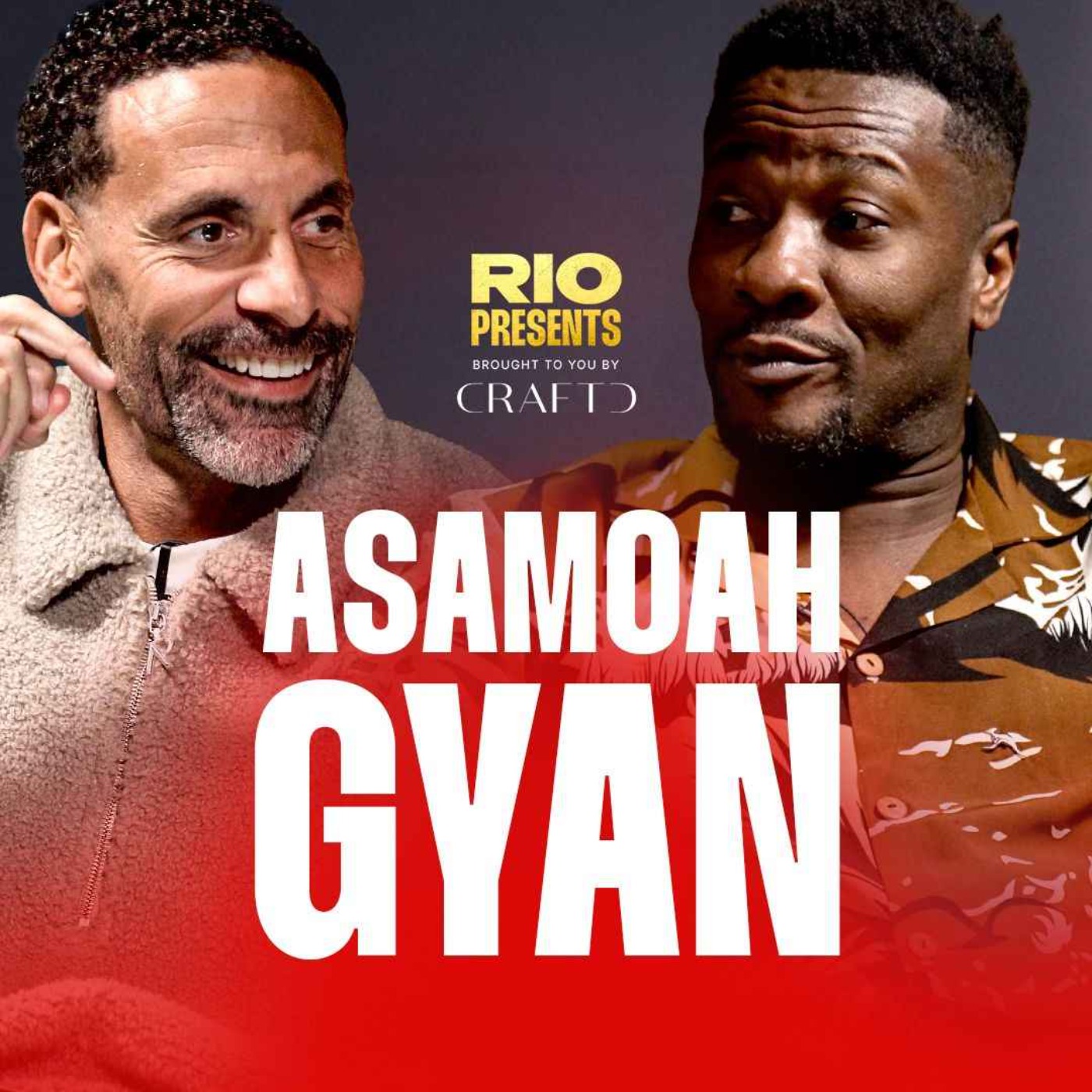
Asamoah Gyan discusses his life and career from a small Ghana village to becoming one of the world’s highest-paid players, the pressure of playing for Ghana, his 2010 World Cup moment vs Uruguay, and why AFCON should be moved to the European off-season.
Asamoah Gyan, Ghanaian striker/legend; played in Europe including Sunderland; now lives full-time in Ghana. Host interviews him in Ghana.
Ghana fans expect him to score every match; missing makes him feel “the worst player.” He says Nelson Mandela sent a letter referencing Ghana’s World Cup representation of Africa. He argues AFCON timing harms European clubs and should be scheduled during off-season. He believes African players are under-recognized at awards like the Ballon d’Or.
2010 Uruguay quarter-final: Suarez handball after Gyan’s header; Gyan describes superstition from a penalty shootout where he scored 20/20, then missing a penalty that he later says would have ended his career—until he scored in the subsequent shootout. He cites Sunderland debut vs Wigan and a goal/assist run, plus his “Baby Jet” nickname in Ghana.
Written by AI. May contain mistakes.
Asamoah Gyan discusses his life in Ghana and the love he receives from fans.
“But I got to know Asamoah more and I hope you enjoy understanding him as a person too.”
Gyan shares the immense pressure he felt while representing Ghana in international football.
“People love me over there for what I've done.”
Gyan reflects on the significance of a letter from Nelson Mandela during the World Cup.
“I mean, Mane said that he felt no pressure like what he felt when he played for his country.”
Gyan recounts the dramatic moments of the match against Uruguay and missing a crucial penalty.
“You were going to be the first African team to get to the semi-finals.”
Gyan discusses his early football journey and how he made it to Europe.
“Let's go back to where it started for you, obviously in Ghana.”
Gyan describes the challenges faced while playing youth football in Ghana.
“The kids normally play around that place, so let's go play.”
Learn about Asamoah Gyan's early experiences in football and his development.
“And then one club called Main to Victory saw me and then they came to buy me.”
Promotional segment for Whole Foods Market, highlighting summer food options.
“Get the good times going with made-in-house chicken or pork sausages and ready-to-cook kebabs for hassle-free flavor.”
Gyan discusses his transition from African football to playing in Europe.
“That was the first time my brother gave me his shirt.”
Gyan shares crucial advice for young African players moving to Europe.
“What would be the advice that you'd give to any young aspiring, especially African player that's making that journey to Europe or the Premier League?”
Exploration of the pressures faced by successful African players returning home.
“And like off the pitch, what are some of the big differences when you come to Europe?”
Gyan reflects on his confidence and key skills as a footballer.
“Take me back to the pitch, man, because I think...”
Discussion on Gyan's nickname 'Baby Jet' and his celebrity status in Ghana.
“I feel like when you have the ball, you are in control over the ball.”
Explore Asamoah Gyan's insights on football rivalries, the significance of AFCON, and his favorite strikers.
“No, I mean, it's a name, it's a common name in Ghana.”

Get the gist, explore an idea or ask about something said.
 Claude
On Rio Ferdinand Presents, what are the key points of this episode?
Searching your listeningAutomatic transcript. May contain errors.
0:00Host unforgettable backyard barbecues with savings from Whole Foods Market. Get the good times going with made-in-house chicken or pork sausages and ready-to-cook kebabs for hassle-free flavor. Grab tasty flatbreads and their new balsamic chicken salad in the prepared foods department. Keep things fresh with organic red cherries, strawberries, and peaches at their peak. And stock up on bug sprays and sun care must-haves. Make your summer sizzle at Whole Foods Market. Welcome to this special episode of Rio Presents. Today, we're going to do something different, guys. We're just going to take it somewhere else and present the view from one of Africa's most recognizable players.
0:41Anytime Ghana is going to play, they know I'm going to score. So anytime I don't score, then there is a problem. Asomar Ojean is a Ghanaian legend. And after spending time in Africa and sitting down with other players from the continent, I wanted to really understand how football changes people's lives from someone who's made a remarkable journey. The culture, when we get there, seeing different different culture, African culture coming together. Gian tells us about the challenges you face when you become one of the highest paid players in the world. Yes, the highest paid player in the world after coming from a small village in Ghana.
1:18And you'll hear about an important letter from Nelson Mandela. What it means to play for your nation and why African players and tournaments aren't respected enough on the world stage. When it's time for AFCON, we make sure we do everything possible to go to AFCON. When we go into the field, the way we sing. AFCON is something no African football player should joke about. Billions of people watch footballers on the TV without really understanding them as people. But I got to know Asamoah more and I hope you enjoy understanding him as a person too.
1:59Yes, my man. How are you doing? Good. You look good, man. Big man. You look good. You're fit, man. You too. Yeah? Yeah. How's things? Great. Where are you living now? I'm in Ghana. Oh, you're living in Ghana. Okay, good. I'm in Ghana. I love Ghana. You love it? Yeah. Of course you love it, man. It's your home. Even when I was playing, like, holidays, people travel different places. Straight back to Ghana. Ghana. So you live there full time now? Yeah, full time. Oh, nice. Because obviously you were traveling, you were going to China, you played in Abu Dhabi, the UAE as well. It was nice though, you had a good time?
2:37Surprisingly, my best time was in UAE. Was it? Your best time? So Sunderland? I did great, but unfortunately I had to leave. Why? You know, there were a lot of stories coming up of those times. But it was Sunderland who told me to leave. Oh, was it? Yeah. You have a great season in there, so you should leave. That's mad. Because of the, I think the deal that came, it was a loan deal. And they feel like we can capitalise on that deal, thinking that I'll go for that deal and then I'll come back. Initially, that was my mind, you know, go for a deal and then come back. But when I came, I went there, I fell in love with the place.
3:17so I had to just focus on the the option option to buy and I said okay I'll go with the option to buy because I fell in love with the place yeah no well I'm living there now so I understand yeah I mean I'm living in Dubai now bro so you see how it is yeah it's nice man it's like for the family I'm having a great time so far yeah but not in July though July woof it's like walking around in an oven you go back to the UK come home I'm gonna have to come home yeah you have to go back to England or wherever Nobody lives there. Yeah, and you can't, man. You didn't stay there in them times, did you? You know, just talking about, you just mentioned the first thing, I love it.
3:54You mentioned Ghana straight away. You know when you're living there, what's it like for you there? Are you like a superstar? Is it hard for you to walk around? Tell me what it's like. People love me over there for what I've done. But sometimes, you know, personally, you might pop into people, you need the privacy, and they don't care. They just bump into you. Sometimes it's a nice feeling. They don't think about what you'll be thinking at that time. But sometimes you have to be nice to them because they do appreciate what I've done. It's crazy love there. When I've visited different parts of Africa, I've not been to Ghana yet.
4:32I need to come to Accra. I need to come. I have a lot of Ghanaian friends that say, why you not come? You've gone to Nigeria, you've gone here, you've gone there. But when I go to Africa, the love is crazy feeling. Yeah, you have a lot of fans over there. You need to go to see. When you go to Africa, you see a lot of fans. You go there. You have a lot of fans in Africa. No, no, it is great. It's mad because I had Sadio Armani on the show last month. I watched it. He was talking, thank you, and he was talking about Africa. And I could see again the pride. But also he spoke about the pressure. Tell me what it's like when you're playing for Ghana and the pressure compared to when you play for your clubs.
5:12When I was playing for Ghana, obviously, when you talk about Asamoah Jan, people expect you to be scoring goals. That's what they want. So they know I created that thing for myself, being consistent in my goal scoring. So it just looks like any time Ghana is going to play, they know I'm going to score. So any time I don't score, then there is a problem.
5:42So anytime I'm going to a game, I just pray, I say, oh, God, give them what they want and that's it. Because if you don't score, the people have developed that confidence in you. They have that confidence in me that they feel like I can score at any time. So when I don't score, I'm the worst player. When I score, I'm the best player. But did you feel that pressure? I mean, Mane said that he felt no pressure like what he felt when he played for his country. Like if he didn't perform, he felt people were going to go crazy in his country. He felt like he couldn't sleep, he was saying. Is that the type of pressure you felt as well?
6:21Yes. Is it? Back home, you know, talking about Mane, Mane is money. You know, people, he created that environment for himself, you know. So when Senegal is playing, they'll go for it. That was my time. That was what I was saying. It was the same, you know. so but where i felt the pressure most was when we are playing to no disrespect to to those small teams no disrespect to them you know those who have um statistically we are ahead of them you know so when we are going for that games we feel like they have nothing to lose we have something to lose you know so that is the game that i feel more pressure but playing against the top teams over there i don't feel pressure at all yeah yeah it's crazy when we talk about pressure i think I was researching when you guys were at the World Cup and if you talk about pressure, when you have Nelson Mandela writing a letter to you guys, he wrote the letter and he was referencing you guys representing the continent of Africa in the game against Uruguay.
7:25Tell me how that feels when you get that letter. We felt great because at that time Ghana was the only African team left in the competition and we were doing so well. You were flying as well. Yes, I was on top of my game. I think I always say that was my best day in my career in 2010. So having that letter, we were like, yeah, we have Africa now, all the pressure will be there. But going to that game, we felt like we were going to beat Euroboy because we were flying. Everybody was on top of this game. And the whole of Africa was behind us. We were playing in Africa. The World Cup was hosted in Africa.
8:08So going there, we felt like, yeah. You were going to be the first African team to get to the semi-finals. Yes, to the semi-final. So our confidence level was high. So we went there and then what happened, happened. So I'll take you back there. If you don't know, guys. Quarter-finals, Uruguay. You head the ball towards goal. Suarez handballs the ball and gets sent off. what went through your mind in these moments? I was like this is it and on the back of my mind I'll take you back a day before the game we after training we had a penalty shootout I called a goalkeeper and I had to take 20 penalties 20?
8:57I took 20 penalties I scored 20 no yes so you know this superstition thing I was like, so what if we have a penalty tomorrow? I'm going to kick it. So when the penalty came, I was like, this is it. So in the back of my mind, I was hearing voices like, don't shoot. And I was the first penalty taker. I had to shoot the penalty. So I was like, yeah, this is me. I have to just take it. So I went there and I shot it and it hit the post. And that moment was crazy. Tell me how you feel because we've seen some big superstars, Baggio, among many others over the years, miss big penalties in tournaments.
9:49Take me back to that moment and the feeling. What are you thinking about immediately? I let Africa down. That was one of my worst moments in my career. Worst moment. I would have ended my career at that time. Ended it? Yeah, I would have. You remember after the game, we went to a penalty shootout and I took it first. I was the first person to take it. So that was what revived my career. Going to that penalty shootout and then scoring. That was what revived my career. I would have ended my career at that. You must have been scared walking. I was scared. Your legs must have been gone. I was gone.
10:28I was gone. My head, everything was gone. I was gone. I was emotional. It's crazy. But I went there. During the penalty shootout, I said to myself, it was just a mistake. Just go and prove to people you can score. I went there, took it, and I scored. And that was what revived my career. Wow. Do you think about you heading the ball into the goal, and that moment could have changed everything, but then Suarez handballed the ball? That would have changed everything for Africa because we were flying. Every African was behind Ghana. We were hosting in Africa. It was in our zone. Everybody was behind us and we felt so much confident that we could do something.
11:20So at that moment, I even thought the referee should have allowed it. Is it? Just let it go in? The referee should have wished to just leave it. If you could tell Suarez one time, now what do you think of him like? You got the moment that the camera looked down the camera and told Suarez this a man. You ruined it for us. Yeah, I always say I would have done the same if I was Suarez because he did it to save his country. Although the ball was going in, which was a cheat code, but at the end of the day, we had opportunity and we didn't convert it. So it doesn't happen most of the time. Sometimes it happens once in a blue moon.
12:09So I always say if I was Suarez, seeing a ball going to the net at that crucial moment, So he did it to save his country, you know, so I forgive him. I forgive him for that. Let's go back to where it started for you, obviously in Ghana. When did you first realise that he was going to be a footballer? At nine. Nine? Yeah. How at nine? Yeah, because those times my other brother used to take me everywhere he goes to play. and then whenever he's playing he leaves me with the babies, the kids over there. So I bullied them with my skills there. So it's like everywhere we go people see the talents of me so I was like yeah I'll play.
13:00So that was when I saw it. I saw it very very early. Wow. So what was it like? I mean everyone would have seen you the finished article playing at the World Cup, scoring goals, playing in the Premier League and other different leagues. But talk me through the journey to get to the place when you start coming to Europe. I remember one guy saw me and he was like, oh, you are new in this area? The kids normally play around that place, so let's go play. So we went there. So I was playing, and there was this man called Godwin Weku. He was there. He used to come sit down, watch the kids playing, and then he saw the talent.
13:41so he decided to build it create a team and every build a team around me you know so that was how I was eight Wow yes I was eight games tonight that was around 1993 yeah wow so then how do you get them to get on a plane to come to the to Europe yeah so he he registered all the players It's like a juvenile tournament. Like, you know, he does it. And then one club called Main to Victory saw me and then they came to buy me. So I started playing for the under 12. Oh, they bought you at 12? Yeah. So around that time, they bought me around that time. So I was playing around. and I was playing against the 15s and the 17s because although I was 12 my body was a bit so I could play so at the age of 14 when I went to school I joined the Liberty Academy that was when I had opportunity to come back to Europe was it was it tough to standard there when was it hard to play in the streets there and and the standard of the pitches and stuff was it difficult yeah it was it was difficult to play you know that is why i said um the only days there are a lot of talents you know we we developed our talent we developed our talent on the street you know there was no academies you know to to go and learn your skills how to pass the board and and we develop everything by ourselves.
15:25So that was how it happened. So when I had a chance to come to Europe, I emphasised on my technique, how to pass, how to strike the ball. So I learned all this when I came to Europe. Okay, cool. So before you left, which part of the... This was my school team. School team, yeah? Is that your school team? That's my school team. Is it? Wow. Look at the kit, man. It's not bad? Yes, I was 15. 15, yeah? And you were playing up front, you were scoring goals then? I was scoring goals. I was scoring goals. My first year in my school, we won the Inter-Zonal Cup. OK. Yeah, Super-Zones. So, also when I was looking into research, I heard you was a big Man United fan.
16:10Very. So at this age you were supporting Man United? I was supporting Man United. So you were watching them on TV? Yeah. Oh, wow. I used to sit on the floor, sit in front of the television, watch them.
16:25Host unforgettable backyard barbecues with savings from Whole Foods Market. Get the good times going with made-in-house chicken or pork sausages and ready-to-cook kebabs for hassle-free flavor. Grab tasty flatbreads and their new balsamic chicken salad in the prepared foods department. Keep things fresh with organic red cherries, strawberries, and peaches at their peak. And stock up on bug sprays and sun care must-haves. Make your summer sizzle at Whole Foods Market. A BetterHelp ad. Hold on. One second. I just need to...
17:04What if you had a room where no one interrupts? No notifications. No expectations. Just space to talk. With BetterHelp, therapy happens in a space that's yours. Visit betterhelp.com slash randompodcast for 10 % off your first month of online therapy.
17:28Who was your players then? Those times, I used to work cantona. Because my brother gave me his shirt. That was the first time my brother gave me his shirt. Cantona shirt, yeah? Yes, cantona shirt. Oh, wow. So that was when I became my United fan. So whenever there is a tidbit around the world, there was a programme called Sports Highlights. So they used to show their goals in the English Premiership and stuff. So we had Tony Eboa at that time. So we used to follow Tony Eboa. So anytime we watched the English Premiership. So why you didn't support Leeds? I had to. I was supporting Tony Eboa. My team was my team.
18:12Well, let me take you back to coming to Europe. What was your immediate feeling when you landed in England? Because Mane mentioned the cold weather and he said his hands are freezing and are falling off. For you coming from a continent like Africa to Europe. For me, it has always been my dream to play in the Premiership. Talking about watching Tony Ebo at those times, I said to myself I want to play in Premiership. So coming, my mind was already made you know i had to i had an option to stay in rent my club but i told them listen this is my time to go to the premiership i just want to play so so come in there my mind was made up i was ready to to deliver you know i was ready to to do everything and then um oh lo and behold when i came everything started working since day one i scored my debut and then everything started from there so you know when you make that move do you reach out to any players that have made that move maybe from the same from Africa or do any of the guys call you like we'd have seen like Eto 'o before you would have gone there, Abidi Pele etc, Tony Yaboa, these guys would have all gone.
19:22Does anyone reach out to you and say listen you need any help call me I'm here? Yes I remember of course we had my national teammate which was Michael Haysian at that time when he came he called me he was like oh so you're coming and I said yeah I'm coming and And I remember jokingly, I remember I said, I'm going to score against Chelsea. And then we all laughed about it. And it was just a brief conversation. And then he wished me luck. And that was it. And Louis Buford scored against Chelsea. Did you?
19:54That's mad. What would be the advice that you'd give to any young aspiring, especially African player that's making that journey to Europe or the Premier League? What's the things to look out for advice? My advice to this young generation is when they are coming to Europe, they should stay focused on their craft because the difference between African football and European football is based on consistency. So when you're lacking some aspect in the area of your game, you need to make sure you you practice it well and then make sure you you master it because when you when you come to europe when people see so that weakness on your side they're gonna capitalize it every time so i always tell them when you come to europe check your weakness where you are you are weak your weaker side make sure you practice it every time today you can you can master your your craft Don't practice where you are good at, practice where you are weak so that you can be at that top level.
21:05Taking it away from the football pitch is a big change in life, isn't it? And like off the pitch, what are some of the big differences when you come to Europe? I'm assuming with yourself and like many kids from the continent of Africa, the difference in money is very big. What's it like to deal with that? How did you deal with that? It was crazy. When you play in Europe and you go back to Africa, in everybody's mind, you have to take care of everybody. Is it? Yes. When you're on holidays, you have to take care of everybody. You go somewhere, you buy stuff and everybody will be looking at you to pay.
21:46You know, it's funny because John Evi Mikhail said the same thing. Yes, it's crazy. Maybe we're walking on the street, maybe your phone fell on the floor, somebody takes the phone for you, the person will be expecting something. So this is what we go through in Africa. We are cultured like that, so we have to just deal with it. How do you deal with that? Big responsibility, man. Very, very big responsibility. And pressure. Yeah. Pressure, big pressure, but we see, I just see, we're in Africa, so we have to just deal with it. Sometimes we get frustrated, alright, that is when we try to hide ourselves from people and stuff like that.
22:31At the end of the day, you go in the mix of people, and when you go in the mix of people, you still see the same thing, so we have to just deal with it. But it must have been really hard for you because at one point, I saw you was like eighth highest paid player in the world at one time or even higher yeah you were getting paid ridiculous crazy amount of money so for you to hide when you go back to your country is difficult what was it like then when you were going back to Ghana it was it was crazy like everybody was expecting something from you family friends wherever you go even people you go you don't even know you as soon as you pop up everybody wants you to give money so what do you say you're giving the money are you saying no what are you saying we give yeah we give i give i give most of the times but sometimes people try to take advantage of it and then i say you're trying to take advantage of it maybe the person takes it and then he goes to the next line come back again no way no way So when I see that, I get a bit upset.
23:36Yeah. Wow. Bro, that's mad. That pressure's hard, man. That is crazy. Take me back to the pitch, man, because I think... I love talking... I'm a defender, but I love talking about strikers. And what would you say now, looking back on your career, was like the strength, the super strength that you had? What was the thing in your game that you go, this was the top in my game, in your game? For me, my time, I saw myself as a complete player. I saw myself as a complete player. My ability to dribble, my ability to score goals, my intelligence, how to strike the ball, my head, jumping ability. I had everything.
24:25I had everything. But where I was very, very good at this one-on-one against goalkeeper. Yeah, I hardly miss. So when you're running 1v1 with a goalkeeper, what are you thinking? I think I have 90 % and he has got just 10%. I have to decide where to do it. It's like you're going to play a penalty. A penalty you have 95%, the goalkeeper has got just 5%. So that is what I put in my mind. I'm in control, so I don't have to panic. Was you only wanting to take the keeper on or you just hit a place? Sometimes I try to, when I see, I have to take him one on and I'll just do it. When I see, okay, it's not advice, I will just put it in and go and celebrate.
25:21This confidence, was you always confident? Even as a baby, like a kid, nine-year-old, Back in Ghana, were you confident like this? Yes, I was very, very confident. Very, very, very confident. Where did that come from? I don't know, it came naturally. I feel like when you have the ball, you are in control over the ball. There are people who try to take it. So why should you panic when you have the ball? So that is where I developed my confidence from. I think when I look back when you came to the Premier League, I think that's why you look at the Sunderland fans, why they connected with you. There was a confidence when you were on the pitch that you were like, it was almost like, I know I'm going to score.
25:57Is that why you think you really connected with the Sunderland fans as well? In Sunderland, I fit in just like that. Because when I went and I scored in my debut against Wigan, we were with 10 men and then there were 11 men. And then I came on the second half and I scored. nine scored and they equalised. The second game against Arsenal, I came on, I made an assist against Arsenal during Ben's court. So everything started from there. So, by the way, I text Anton because I know you played with Anton at Sunderland for a year. So I said to him, yes, quick one, just going to interview Gian for my programme.
26:47have you got anything on him he said okay one minute he said he always was singing and dancing always done crazy dances after goals we always spoke about dancing after goals like he just said before he came he says great finisher and always took responsibility as he wanted to be known as the best of all time and the last one he said by the way this will make you laugh he's a singer and his name is not asamara jian he's staging his baby is that for real you singer when you come to ghana and they say straight from the airport and they say you ask who is baby jet and that's you yeah everybody is here everybody knows that the president knows everybody knows my name so what music you're Oh, that was those times.
27:48That's my nickname, Baby Jet. Oh. That's my nickname. So in Ghana, everybody knows me as Baby Jet. Bruh. How have you just said it so casually, even you asked the president? You know the president like that, yeah? No, I mean, it's a name, it's a common name in Ghana. Oh, okay, cool. When you mention that name, that Baby Jet name. And everyone will just say you. Yeah, yeah, yeah. Everybody knows it. Wow. Anton loves you and the way he speaks about you. Yeah, I love him. Sometimes we had to even pray with Kieran. We had a group, a prayer group. Is it? That we pray. Yeah, we pray before the game.
28:25So Anton, you and Kieran. Kieran and I think Inua. We had a group, that group. How important was God and prayer to you? Yes. Yeah. We were brought up like that, you know, so we have... that culture. So I was very happy. They had to even call me sometimes to pray. Nice, I like that. Darren Bent, you guys had a combination, 20 goals that season. Yes. What was it like playing with him? Darren was a goal procher. Darren, his eye for goals was on another level. You know, sometimes keeping the ball was a bit of a problem for him, but he's somebody who tried to attack the spaces and, you know, just put a ball.
29:16Always running behind. Running behind. When he sees the ball, when he sees the goal, he will score. Yeah, yeah. He's somebody who's just, when you give him that little chance, he will score. So me and him, we were clicking and he left to Aston Villa. Where would he fit in in terms of the best strikers you played with for you? That would be in my top five. Was it? Yeah. Yeah. Who else is in your top five?
29:44We had Tuto Di Natale. Oh, Di Natale. Yeah, the little Italian guy. Yeah, he's a good player. Yeah, yeah. Myself. Yeah. Can I flip that? Yeah, always put this on. Who else, other strikers you played with? Jaquinta. Jaquinta. What did you play with him? Udine. Oh, wow. Yes. He was a good player. Yeah, Jaquinta was a good player. Strong, fast. Who else? But I played with you, you were tough. Yeah? Yes, you were very, very tough. I remember playing against Manchester United, coming back from injury at the Old Trafford played against you I was like who is that? I don't know you were like bigger that was the little stages of your career yeah yeah yeah I was getting old yes but you were tough you were tough cheers man for me you were one of the best defenders I've ever seen oh thank you very much playing football I appreciate that man I'll give you the five pound in a minute outside here That's a nice comment bro.
30:53Thank you. Thanks man, I appreciate it. Who would be a favourite striker for you in today's game for you to watch? My favourite striker now? To watch you now, yeah. Who excites you? Victor Ossie, man. Yeah? Yeah, yeah. He loves scoring goals. Yeah, he loves it. And then he plays with the heart, you know, he gives everything. I like those kind of strikers. I'm surprised the big clubs didn't come for him, this transfer window. But hopefully I'm going to Manchester United too. If only he wants to come because of their history and everything. If only he wants to come. Ossiman will come to Man United.
31:41If Man United offer to take Ossiman, he will go. 100%. Yes, that is the kind of strikers we need right now. Because we have Buma on the side doing what they are to do on the side. I like Buma. Yes. I like him. I love his style. Yeah? I love his style. I like that. So you know what I was going to do? I wanted to do this quick thing with you. Mane, Salah, Drogba, Eto. Give me an order. One to four. Okay. Okay, Eto comes first, Drogba second, Mane and Salah. Okay, cool. So Eto's your guy, yeah? Yeah, I love his style of play. Wow, what was it about Eto that you loved? Was he an inspiration for you maybe?
32:29He wasn't good with the head, you know, feet strong, he knows how to keep the ball. And he doesn't even play one position. He can even play on the left, you know, sacrifice coming in. He was very, very smart with his kind of body and where he was playing and what he was doing at the time. For me, I was even surprised he didn't win the Ballon d 'Or. He and Drogba as well. I'm surprised he still didn't win the Ballon d 'Or. I asked Sadio this question about the Ballon d 'Or because you just mentioned it. Do you feel that the African players maybe get treated different when you come to the big awards like the Ballon d 'Or?
33:13Because only one player from the continent has won it, and that's George Weyer. Yes, I always ask questions. You know, why do you so? Because as I said, I mentioned a couple of players that they could have won. Salah could have even won the Ballon d 'Or. Mane could have even won the Ballon d 'Or. I always ask questions why these things happen. But maybe they have their way of nominating the players and what they see. But for me, that is the questions I always ask myself. Because these kind of players that I've mentioned, one of them for sure could have been won it, hands down. I agree. What does the AFCON represent for you?
33:57For anyone who doesn't understand, what does it truly mean to you African players? When it's time for AFCON, we make sure we do everything possible to go to AFCON. Because the culture, when we get there, you know, even seeing different different culture, African culture, when we go into the field, the way we sing. I think the AFCON is something no African football player should joke about. Yeah. Nobody. I look at the AFCON and think, why is the AFCON at the time of the season when the African players in Europe have to now leave their clubs? Because the Euros, the Copa America, they're all in off-season.
34:42And the AFCON is the only one that isn't in the same time. it makes it difficult for the european players because this should go against african players when they're going to be purchased by a club because they're arm and lose them at christmas always this isn't good yes yes um that is something that i've thought about all these all these years you know it affects most of the of the club that they have the african players the important players in it you know and uh i think it should get to a time that fifa or CAF to have a place during off-season for this Afcon. That is my opinion. You can see a club maybe leading the league table, all the players go to Afcon in January and then they start dropping points.
35:29Yeah, because some fans get frustrated because they're like, oh, we've got a player here. For me, I'm an African. I will always go to Afcon, whatever happens or not, I'll definitely go back. I think the calendar is somewhere that they should check where the calendar, maybe after the season or something. Yeah, because listen, if you didn't go, the fans in Ghana would go crazy. Of course. Of course, I would definitely go for AFCON. I always tell them.
36:03Nobody should come and tell me, hey, you're not going to AFCON. No, I will go to AFCON. AFCON is like world cup to me yeah and this is that is what every african footballer thinks you know so we have nigeria we have nigeria we have every coast is there a big talk about nigeria is there a big rivalry between ghana and nigeria what tell me what that rivalry is like ghana nigeria is it's a good rivalry it's not like a hatred something you know we always want to challenge ourselves they always want to beat us in everything. Yeah, yeah. Even with Jalof. With Jalof, you know, with Jalof. But at the end of the day, we love each other.
36:44Like, we are very good rivals. Very, very good rivals. Anybody who say we hate each other, that's not it. We love each other, but we don't want the other side to win in anything. Maybe me and my brother, we're doing something. I don't want him to win. He doesn't want me to win. It doesn't mean we don't love each other. Ghana and Nigeria loves each other but it's just like it's a good rivalry and I'm loving it Good So is there any young players to look out for? I mean we've got all these superstars from Africa but is there any young ones that we should look out for that you go you know what I can see he's going to be a star Kudus is doing well Mohamed Kudus Yeah yeah I suppose Mohamed Kudus is doing well and I wish him well he's somebody who is coming up to the ranks right now.
37:35And people should watch out. And I'm always praying for him to take good care of himself to make sure he gets to that top level. Well, bro, listen, really appreciate it. Thank you for your time, man. Thank you for having me.
38:09We'll be right back.
38:16you're already behind. Count on Grainger for quality products, easy reordering, and 24-7 support. Call 1-800-GRAINGER, click grainger.com, or just stop by. Grainger, for the ones who get it done.
Asamoah Gyan sits down for a special episode of Rio Presents exploring how he became one of the highest paid players in the world and the pitfalls that come with money and fame in such quantities.
Both Gyan and Rio are strident in their belief that AFCON should be treated in the same way as other major continental tournaments (Euros and Copa America) rather than being played during the European domestic football season.
Gyan reveals how confidence helped build him into the most recognised face in Ghana along with the struggles he faces when dealing with that level of fame.
He also reveals the pressure a letter from Nelson Mandela added to his Ghanaian team during the first World Cup to be held in Africa and discusses why players from the continent aren’t respected in the same way as their European or South American counterparts.
Hosted on Acast. See acast.com/privacy for more information.