Ask ChatGPT
 Ruthie's Table 4
17 Nov 2026 · 36m · 13 chapters
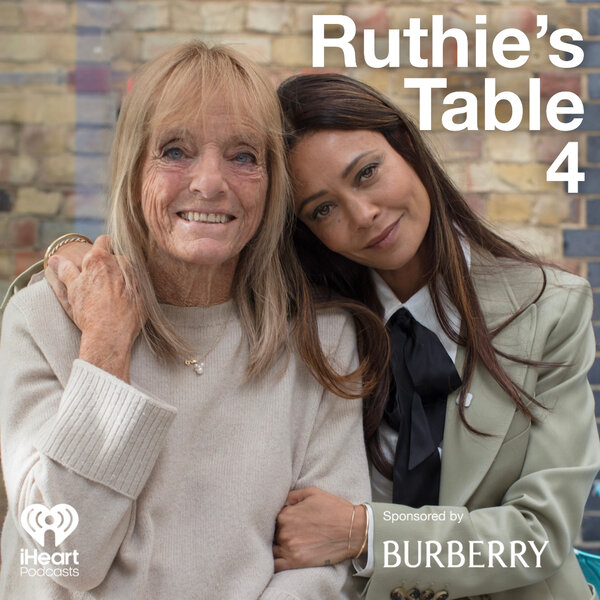
Tandiwe Newton discusses reclaiming her Zimbabwean name and heritage after being pressured to “be British,” and connects identity to food traditions from Zimbabwe and her childhood in Cornwall. She also talks about language, family history, and her acting career projects, plus what it’s like eating on set.
Main guest is Tandiwe Newton, British actor known for Crash, Mission: Impossible, Interview with the Vampire, and God’s Country. Host is Ruthie (Kelly Rowland appears only in ads/intro). She mentions Nicole Kidman and Naomi Watts as co-stars from Flirting, and Michaela Cole and Hugh Laurie/Gina McKee as collaborators on current projects.
She says her name was shortened to “Tandy” in England and she “lost” pride in her identity until she corrected her passport spelling to “Tandiwe” and pushed for people to use it. She frames name/language as defined by those being abused.
Vogue cover where her name was announced and the cover theme centered Africa; Zimbabwean staple sadza with communal dipping stew and bitter greens with peanut butter; Cornwall seafood from Newlyn (fish/crab). Comfort food: fresh papaya with lime, which she fed her children.
Written by AI. May contain mistakes.
Explore Tandiwe's family history and the challenges they faced.
“Today, in the private dining room in the River Cafe, we're going to hear about her extraordinary journey, listen to her stories, and share her memories.”
Tandiwe discusses her journey to reclaim her Zimbabwean identity.
“what was going on in Zambia it was Mugabe he was fighting for leadership of Zimbabwe and And he was in the run for the presidency alongside Herbert Chatepe, who was a dear friend of my parents.”
Tandiwe reflects on her cultural roots and the importance of her name.
“that I want to share with my British brethren?”
Discover the significance of traditional dishes like sadza in Tandiwe's life.
“which I learned a lot about when I was at Cambridge, I must say, that's where I learned about my history, more than from mum in some ways.”
Tandiwe shares nostalgic memories of markets and food culture in Zimbabwe.
“I'll make it for you because I can make it now.”
Thandiwe recalls her childhood memories of culture and family in Zambia.
“So when we think about the culture, were there markets?”
Thandiwe discusses her family's food traditions and experiences.
“Do you remember the kitchen in your mother's house?”
Exploration of Thandiwe's journey in dance and acting from a young age.
“I remember the snacks that we used to break out and go and buy in the town.”
Thandiwe shares details about her latest projects and collaborations.
Thandiwe Newton shares insights about her recent and upcoming projects.
“We just finished a fantastic project helmed by Michaela Cole, the wonderful Michaela Cole of Chewing Gum and I May Destroy You.”
Thandiwe discusses the challenges of eating on set while filming.
“So it's not communal, you don't all stop and then sit down.”
Thandiwe shares the joy of dining with her children and the importance of food in their lives.
“Well, what about eating with your children, which I was saying that, you know, I see you.”
Thandiwe reveals her comfort food and its sentimental value tied to her family.
“stew or a lovely sort of French country.”

Get the gist, explore an idea or ask about something said.
 Claude
On Ruthie's Table 4, what are the key points of this episode?
Searching your listeningAutomatic transcript. May contain errors.
0:00This is an iHeart Podcast. Guaranteed Human. Hey, it's Kelly Rowland. You may not know this, but I have eczema. So I get how it can steal your time. Why let eczema take over? Flare less with EbGliss. About 4 in 10 people taking EbGliss achieved clear or almost clear skin at 16 weeks. And most of these people maintained clearer skin at one year. EbGliss, Lubricizumab, LBKZ, a 250 milligram per 2 milliliter injection, is a prescription RX medicine for people age 12 and up who weigh at least 88 pounds with moderate to severe eczema, atopic dermatitis, that is not well controlled with RX topical therapies or who cannot use those therapies.
0:39Don't use if you are allergic to Epglyss. Allergic reactions can occur that can be severe. Eye problems can occur. Tell your doctor if you have new or worsening eye problems. You should not receive a live vaccine when treated with Epglyss. Before starting Epglyss, tell your doctor if you have a parasitic infection. Paid partnership with Lilly. Respect your time. Ask your doctor about EPCLIS and visit EPCLIS.com or call 1-800-LILLY-RX or 1-800-545-5979. I wasn't allowed to have pride in my identity because it was more important that I became British. And I'm proud of being British and I am British.
1:14But what about my Zimbabwean heritage? It was Nicole really that encouraged Tom to cast me in Mission Impossible. It was very much Nicole who was gunning for me. We'd just finished a fantastic project helmed by Michaela Cole. We had the enormous privilege of shooting a huge section of it in Ghana proper. And the food was delicious. The plantain and the pepper stew and the use of chilli, a lot of chilli. Oh my lord. Tandiwe Newton is luminous, she's compelling, and she's fearless. As an actor, Tandiwe is a force. She's watched her in Crash, Mission Impossible, God's Country, Interview with a Vampire.
2:08As a friend, Tandiwe is close to my heart. In recent years, I've witnessed her on her own profound journey, looking back to her roots in Zimbabwe, restoring her rightful name to Andy Way, which means beloved. Today, in the private dining room in the River Cafe, we're going to hear about her extraordinary journey, listen to her stories, and share her memories. She is brilliant, she is brave, and she is beautiful. She's my friend, she is my beloved. So, you grew up in Cornwall, yeah? How did they meet then? How did your parents... So your mother was from Zambia. My mom's from Zimbabwe originally.
2:54And then she had a placement at the hospital in Lusaka in Zambia. And my dad had gone to Lusaka on a whim. And my mom and he met at the hospital. They were both working. He was a laboratory technician. And she was a midwife. And they met. And then he was then transported to Cornwall? Yeah. That's a big deal. It was a big deal and it wasn't easy because there was a lot of opposition from my father's family about her. And so they advised him not to get married. They advised him not to come back to Cornwall with her. But they did anyway. And when they did come back, they came back with two children.
3:34Two children. My brother was also born and that's when they decided to return to England. and as soon as my grandmother met my brother and I that was it that was it yeah their minds were changed and my grandfather who until the day he died called me his little ray of sunshine um they left Zambia because of the political struggles that were going on at the time what was going on in Zambia it was Mugabe he was fighting for leadership of Zimbabwe and And he was in the run for the presidency alongside Herbert Chatepe, who was a dear friend of my parents. Oh, is he? Really? And he was assassinated.
4:18And that really broke my parents' hearts. And that and just the instability of the country, they decided they needed to move to England for a while, but not forever. And it ended up being forever. I wanted to talk to you about your culture, you know, and I think the reclaiming of your history. and I think it's just so powerful and it's so it would have been so easy not to because especially that you came so early to Cornwall as a child and that your mother adapted and can can we just talk about that would you tell me how that journey began or when yeah I think because I had to bury my identity when we came to England to a degree just to sort of be embraced in you know to to fold into the new environment I was in.
5:11I did, I lost a lot of what I came from, you know. We lived in Zambia to begin with and I didn't have very strong memories because I was so little. And it was a real struggle to maintain them because I was focused on doing well in this new country, this new environment. And then my name was shortened almost immediately to Tandy because it was just easier. And it was already so exotic. I remember crying to my parents saying, please don't call me Tandy anymore. Call me Melanie because Melanie is my other name. And they did for a week. And they were distraught because they loved Tandy. And they already had to let go of Tandy away.
5:52So it was just Tandy. And my dad said to me, people are going to call you Smelly Melly, which any Melanie out there, that doesn't happen. But, and that just, I thought that was outrageous. I couldn't have that. So I agreed to stick with Tandy, but that was as exotic as I would go. That's it. So as an adult, especially in my career, and I'm playing people from all over the world, which I've loved doing, I realized I'd lost something in myself and that I never fought for it or had enough pride in it. I wasn't allowed to have pride in my identity because it it was more important that I became British.
6:36And I'm proud of being British, and I am British, absolutely, it's what I know. But what about my Zimbabwean heritage? And what about the beautiful culture that I want to share with my British brethren? It's not about not being British anymore, it's about making Britishness more complex, more exciting, and why can't Britain innovate this wonderful cross-section of cultures that populates this marvellous country, this country that has drafted in people from all over the world and how lucky we are, the different cuisines, the different languages. It makes the city better. It really does. And London is the absolute, you know, the epicenter of all of this.
7:31And how fortunate we are. And I just wanted to, I wanted to force that more in my life. And it was scary. What did you do? It was scary. I decided to do it just very quietly. Yeah. To change my passport. That was it. And my passport was misspelled. it was t-a-n-d-i-w-e not t-h-a-n-d-i-w-e so it wasn't the tandyway was gone but i just thought this is wrong i've got to get the spelling correct and then when i was going to do that i thought you know what i want people to call me tandyway yeah because if i don't i'm never going to have had my name used in my presence in my life no one has ever called me by my name and i just wanted to ensure that they did and that was when Vogue had asked me to be on the cover of of the magazine and Edward Ennful was generous and lovely and totally understood and it also led to us making the cover about Africa because originally he wanted me to be Diana Ross on the cover which would have been glorious I would have loved it um but I said you know could we make this about Tandiwe about Africa and we did so the the clothes that I wore were all derived in some way from the diaspora and African diaspora and my name was announced as Tandiwe and it meant the world to me and it has since meant the world to me it's been three or four years now and my name's been used it's just heaven it's heaven and your mother is she was she yeah she loves it She loves it.
9:14She calls me TH. That's my name. My mom's name for me. I find language, you know, people complain about woke or they say I have to say it this way or I have to say it that way or I can't say that word. I feel it's language and it's defined by the people who are being abused with them. And why not? Why don't we get upset about bombing countries we shouldn't bomb or people being hungry? Why are we upset about having to think before you use a word? What have you lost in that process? And what have you gained by thinking, defining your name to you, what you want to be, call me by my name. And as that spilled over into other parts of the, there's a name, but other parts of your culture, your mother, what about, did she look back to her culture, do you think, or did you know about your mother?
10:12We've talked a lot more about it since, as a result, as she gets older too. And because I've insisted on this, and it's actually happened, and I've claimed it, now the whole Zimbabwean history and culture, which I learned a lot about when I was at Cambridge, I must say, that's where I learned about my history, more than from mum in some ways. Because mum was so busy. and so then the combination of that and reclaiming my name I've opened up conversation around Zimbabwe and now my mum is just a wonderful geezer of stories and songs and information and language, she speaks to me in Shona every now and again can you say something to me in Shona?
11:04Manguanani what does that mean good morning it's not good morning now obviously is there a song there's a song about a boy but it just uses his name Mwapengosa's gone to Wangi with his boots tied in a hanky Mwapengosa's legs are lean and lanky poor old Mwapengosa and you do it in a round that's so beautiful that's so beautiful Yeah. Do you remember any of the food culture there? Do you remember? Tell me about, was it? Was it market-based? Well, tell me about that dish. What's it called? Communal cooking. What's the dish called? The main staple of the Zimbabwean diet is sadza, which is ground meal, corn meal, ground corn.
11:58And it's cooked for quite a long time, slowly overheat with water. Like polenta in a way. Like polenta. And it has this lovely consistency, to begin with, quite glutinous consistency. And then it becomes really quite firm. And you have a portion of sadza with your stew. Either a fish stew or goat stew, beef stew, lamb stew, whatever is going. And you sit in a circle. And everybody has their portion on the floor. No matter what your culture is, whether you have money or you don't have money. Whoever's around. No, not at all. Whoever comes to visit, you have a seat with the family. And you have your own portion of sadza, which you take small portions of in your fingertips and you dip in the communal, in the middle is the stew.
12:49And everybody dips into the same stew. And then you pick up a little bit of the bitter greens in peanut butter, which is my favorite. Peanut butter? My favorite. Where does a peanut butter come into this? Does it go into the sadza? No, it goes into the bitter greens. oh into the greens yeah so bitter greens with peanut butter so it's got that lovely sounds so creamy yeah it's a little bit well it's a little bit like the japanese tahini spinach yeah yeah so it's the equivalent of that except it's not ground or or uh pureed it's um it's greens that have been finely chopped so you pick up your stew meat stew you pick up your bitter greens and you pop it into your mouth and it is heaven my mom still makes it i had it just the other day.
13:32Oh my gosh, would she make it for me? Oh yeah, definitely. I'll make it for you because I can make it now. So the peanut butter is... A staple. They call it ground nuts. Is it like American peanut butter or British peanuts? Yeah, it's either smooth or crunchy I guess. But it just depends on how much you've grounded up. What years did you live there in this period of time? Up till I was two and a half. But you still remember the... I remember when I went on a trip back when I was seven years old, which was the last time I was there, I was 17. But when I was there when I was seven, I remember so vividly being with my aunt and my mom, who adored her sister that we were living with, Mavis, adored Mavis, who was the most beautiful angel on the planet, just the loveliest lady.
14:25So when we think about the culture, were there markets? Did you, what was the other, tell me about the culture of food. Markets, but also side of the road. As you walk to market along the side of the road, people would be selling fresh ground nuts or, you know, lovely tomatoes, vegetables. But my mother's father was a farmer as well as being a preacher. Okay. And he grew cucumbers and peaches and I think, I want to say oranges. And they would swap. It was sort of a bartering. I was going to ask, was that for himself? For himself, but it would be something that he could use to finance himself by swapping them out for other food items.
15:09So maybe leaving this culture and going to England, do you think your mother saw it as an adventure? Oh, for sure. She was, really. She loves to travel. Yeah. The spirit of adventure is ripe in my mom. She really does love to travel. And that's one of the things I'm most grateful for in my career is that I've been able to take my mum around the world. Do you take her with you? She hadn't been to America before I started working, and I've taken her everywhere.
15:42My Italian father-in-law loved everything British, most of all his Burberry raincoat. He bought it in 1920 and was still wearing it when I first met him in 1968. So it meant a lot to me to be included in Burberry's 170th anniversary campaign, wearing a cashmere trench coat, fabulous red socks, and a bright blue shirt. This campaign is all about celebrating style in your own way. I was one of 170 people photographed on the streets of London, New York, Seoul, and Shanghai. Quality lasts forever. Hey, it's Kelly Rowland. You may not know this, but I have eczema, so I get how it can steal your time.
16:27Why let eczema take over? Flare less with EbGliss. About 4 in 10 people taking EbGliss achieved clear or almost clear skin at 16 weeks, and most of these people maintained clearer skin at one year. EbGliss, Lubrikizumab, LBKZ, a 250 milligram per two milliliter injection, is a prescription RX medicine for people age 12 and up who weigh at least 88 pounds with moderate to severe eczema, atopic dermatitis, that is not well controlled with RX topical therapies or who cannot use those therapies. Don't use if you are allergic to EpGliss. Allergic reactions can occur that can be severe. Eye problems can occur.
17:00Tell your doctor if you have new or worsening eye problems. You should not receive a live vaccine when treated with EpGliss. Before starting EpGliss, tell your doctor if you have a parasitic infection. Paid partnership with Lilly. Respect your time. Ask your doctor about EpGliss and visit epgliss.com or call 1-800-LILLY-RX or 1-800-545-5979. Do you remember the kitchen in your mother's house? Oh, well, yeah. It was actually my grandmother's house to begin with. Because we lived with my grandmother when we first arrived. Was she the mother of your father? Mother of my father. Because we came over from Zambia, didn't have a home to begin with.
17:39And so we lived in the basement of her house, which was a hotel. It was her hotel? Yeah, it was her hotel. She had rooms and she... She had rooms. Not very many rooms. I'd say six rooms altogether. But it was a very beautiful building, townhouse, stone. So this is a small town. What is a town called? Penzance. Yeah, in Penzance. Right down. Pirates of Penzance. Right down. Right down there. The last stop on British Rail. What was the food that you grew up with? Was it your mother's food from her country? Yeah, it's interesting, isn't it? I didn't have Satsa for a long time. You didn't? No. Because she was adapting to the culture that she was now in.
18:23A lot of seafood. In Cornwall. Yeah, because we lived right next to Newland. Wow. And Newland is, I mean, I'm sure you would get some of your fish from Newland. And it's caught there. And because mum was a very loved member of the community as a district nurse to begin with. She came back and started working. She started as a district nurse. She was a midwife before, and then she became a district nurse. And she would go on her bike around the community. So she would go down to New Lynn and come back with her basket filled with fish and crab. And that was a favorite. And a delicacy, because crabs always been expensive.
19:03We would always have dinner together. Which is interesting, because with my kids, we've been very sloppy about that. Very sloppy. be. Whenever they want to eat, they can eat. If they want to prepare something themselves, they can prepare something themselves. There's food always cooked, but it's just when you want to eat it, you eat it. I mean, I think there's a certain, you know, I love sitting around a table, but I also think there's a certain kind of romanticization of the family. There's a lot of people you talk to and they say, actually, they were horrible. It was so stressful. It was so stressful.
19:33It was quite stressful for us. We had to report on what we were doing. Everybody would have to be there on time and they were doing their homework. On time, yes. Yes, and you couldn't, the trouble with our family meals is that I would always make my brother laugh across the table, and then he would get in trouble and be sent outside to sit at the bottom of the stairs until he controlled himself. And it was really mean of me, because I was always responsible for making him laugh, but then when he started laughing, and my father or mother was like, what's going on? Tandy's making me laugh. I'd say, no, I wasn't.
20:04Yeah, of course you did. And that's where the actress was born, I've got to say. Okay, I want to talk about that. I think so. So the actress, you mean you could look at them right in the eye and convince them that you hadn't even thought of it? Yeah, hadn't done a thing. Not my fault. All his fault. But what was that like? So did you know that you, is that when you knew that you could lie and make everybody believe you, did you think, ah, there's a career for me? I could pretend to be a princess or a mermaid? No, of course you didn't. But when did the, did you kind of know or did you know later?
20:34Back in those days, I was a fanatic for dance. I loved dancing more than anything. I would rush off at ballet. Tuesdays and Saturdays, I would go down to the town hall. And sadly, there was some racism down in Penzance. And I know that's controversial. Well, should we stop there and tell me about that? Yeah, it wasn't easy. It really, really wasn't easy at all. But it became clear very early on that I was really going to do something with dancing. Oh, it was ballet. It was ballet, yeah. There were other kind of dance lessons. I mean, my mum was really good at finding piano, violin. She had us doing all kinds of lessons, bless her.
21:21But ballet was the only dance lesson that I was able to do and that I knew about. And I loved it. I loved it. And maybe it's a good idea to have that rigor, you know, that you can get away from. You know, you start with that and then you break out rather than, yeah. And then fly. Which is what I did do. Yeah. Because I didn't have the feet for ballet. I didn't have the high instep. So point work was very difficult for me. Not that I discovered that at that age because we hadn't done that. Was it painful? Yeah, point work was awful. So I did, I actually did get into a school up in Hertfordshire, the arts educational school.
21:52From Penzance. From Penzance. Was that a boarding school? Yes, it was a boarding school. Did you want to go? I did. I didn't want to leave home. But I desperately wanted. I liked the idea of St. Trinian's. I'd seen those black and white movies. I just wanted that life. But I was so young. I was only 11. I didn't really know what I was agreeing to. And my parents were sort of nonplussed. Like, what's happening? All of us were a bit confused. But my ability just sort of took me away. and then I got two scholarships to go to this school. So I remember my dad saying, are you sure you want to go? And I said yes, but I didn't know what I was really saying.
22:33So I went and I was desperate for the first few months. Desperately homesick. Well, imagine leaving a family, leaving Cornwall, leaving your... Everything that I knew. Everything that you knew. But very quickly, I just fell in love with the girls I was with. It was all girls. With the life, all girls, with the lifestyle. of boarding school, being able to go into a dance studio and dance whenever I wanted to after hours, you know, after school. Do you remember the food there? No. It was pretty grim. I remember the snacks that we used to break out and go and buy in the town. Oh, you had a... It was so naughty.
23:16I interviewed Stephen Fry. and he just talked so much about food being so horrible and the snacks. It was all about the snacks. All about the snacks. So you had the same thing. Yeah, that's what he said about taking snacks and, you know, gaining a lot of weight. Oh, yeah. Because it was all sugar. Yeah, I think we would too if we weren't dancing all hours. Yeah, yeah. But, yeah, we would get the sixth formers to get us food from the village. Yeah. And then we'd break out and go and get our own food from the village. And the food they served was just school food. School food. the salads were quite good but also we were kind of encouraged to eat small portions and not eat that much because we were dancers and dancers don't they don't feed themselves very much that's the culture and it's still I don't know I remember watching a documentary about Sylvie Guillem and being really encouraged by the fact that she just used to eat whatever she wanted Yeah, yeah, yeah.
24:19It still began. But I've also been around dancers that do nothing. I knew her. And she used to, they used to call her Madame Noe. Madame Noe. So you and I were talking about saying yes. And she just, you know, she came to London. I think she was at the Royal Ballet. That's when we first met her. And she said to me once, Ruthie, I've heard that my nickname is Madame Noe because they're just things I won't do. Right. Good for her. Good for her. Good for her. Yeah, good for her. Especially in that kind of world where you're really a cog in a big wheel. But she was a superstar. She's a great woman.
24:54An extraordinary dancer. My very, very favorite ballerina. If it was performing arts, it wasn't just dance, so it was acting. Dance drama. Yeah, but I wasn't a drama student at that point. I was just a dance student. And then I started dancing in contemporary. Oh, you did do contemporary. Yeah, I started and loved that. Did you love it? Yeah. Was it less painful? You didn't have to wear that? It was, because point work obviously wasn't a necessity in that type of dance. But then I suffered a back injury when I was 16, which laid me out for a while. And in that time, I was also doing my GCSEs. And that's when an audition for a film came along, when I was 16.
25:34And I went to London with the head of drama, who wasn't really my teacher, because it was an acting role. And he just said, don't tell them that you've never acted. Okay. Because I'd done a little bit of acting, but it was sort of things like trust games and things. It was just for the dance students to have an idea of drama. But I hadn't actually had drama lessons, really. And it really showed. When I went for this audition, I was terrible. And it was the director who told me how to act. At the audition? Did they take you on? Did they give you the part? I did. So it might have been that terrible.
26:10My very first film. Well, no, because he told me that I had to convince him that what I was saying was true and make him believe me. And so I said, oh, you mean you want me to lie? It's actually your brother. Exactly. I didn't make my brother cry. And he said, yeah, maybe if you like, yeah. And so he went off for a couple of minutes to give me time to prepare. Minutes? Yeah. to give me time to prepare the page of script. And when he came back, we read the scene again, and I guess I was convincing. Then I had a screen test, and that was that. Off to Australia I went with my dad. So let's just stop there.
26:47So you went to Australia when you were 16. Yeah. What happened to this movie? Can we see it? It's called Flirting. Flirting. Oh, Flirting. It was my first film with Nicole Kidman and Naomi Watts. Yes. It was a very, very good film. Are they still your friends? Were they still their friends? Yes. I mean, it's not like we talk every day or anything like that, but if I see them, it's very... Something happened on that film. We were all very close. And sometimes you find them on other films, yeah. And you help each other get jobs and, you know, recommend each other to directors and casting directors and so on.
27:20I mean, it was Nicole, really, that didn't convince Tom, but that encouraged Tom to cast me in Mission Impossible. It was very much Nicole who was gunning for me.
27:58milligram per two milliliter injection is a prescription rx medicine for people age 12 and up who weigh at least 88 pounds with moderate to severe eczema atopic dermatitis that is not well controlled with rx topical therapies or who cannot use those therapies don't use if you are allergic to ebglyss allergic reactions can occur that can be severe eye problems can occur tell your doctor if you have new or worsening eye problems you should not receive a live vaccine when treated with ebglyss before starting ebglyss tell your doctor if you have a parasitic infection paid partnership with Lily. Respect your time.
28:28Ask your doctor about Epclus and visit epclus.com or call 1-800-LILY-RX or 1-800-545-5979.
28:42What are you working on now? What is your project? We just finished a fantastic project helmed by Michaela Cole, the wonderful Michaela Cole of Chewing Gum and I May Destroy You. And it's called First Day on Earth, set in Ghana and London. And we had the enormous privilege of shooting a huge section of it in Ghana proper. And so to be immersed in that culture and with those people, such generous, warm people, Ghanaians. And the food was delicious. The plantain and the pepper stew and the use of chili, a lot of chili. Oh my lord, too much chili for me Actually I find chili quite Challenging, but I think I Improved my My chili Endurance when I was in Ghana Tell me more about the film When is it coming out, when can we see it?
29:38It's a TV show I think it'll start, it'll come out Next summer, summer autumn And then with the wonderful Well we remind you all, everybody who's listening We're talking about it now in the autumn But we're going to do a bonus feature on it Oh, nice. Should we do that one before it comes out? That would be lovely. Yeah, I'd love to know more. Maybe we could get the group together. Yes, it would be great with Michaela Cole, who's an incredible woman. And then the other show that I just had the enormous pleasure of working with Hugh Laurie, who is a national treasure, and Gina McKee. And that comes out, I think, in February.
30:14What's that one called? And it's called The Wanted Man. And that's set in London. set against the organized crime it's very gritty and wonderful project and so that starts and that comes out I think in spring of next year so it'll be a fun year of new projects and it's been a busy time and I'm very proud of them which is why I wanted to share that with you oh really we're going to remind everybody we're going to watch them and I'm so glad that you're working on these you know to go thank you where was the so one was filmed in London and one in Ghana now you're finished with both of them finished with both although we have just been picked up for a second season of The Wanted Man with you Laurie which is very exciting because the first season hasn't even come out yet so already we've been picked up for a second season is that going to be on Apple okay that's Apple and first day on earth is HBO and BBC great okay we will be watching tell me about eating on set can you work and stop and eat and then go back to work for a team how do you well it's it's tricky actually because to to stop and have a meal does tend to take the energy out of a crew because you come back after lunchtime and there's a real there's a kind of lethargy obviously because you've just all the blood's rushing to your belly and not anymore so i i this is probably not what people would want to hear but I prefer working through lunch yeah now so what we do like the last the last job that I did um we had continuous called continuous days so you just eat when you can there's lunch served from a certain point in the day and everyone just has there's a big hot box with all the meals in the hot box with your specified meal that you've asked for um based on the menu of the day and then you just grab it and eat it on the fly.
32:12So it's not communal, you don't all stop and then sit down. And it's not great, it just means everyone works incredibly hard but you don't have that lull in the day. Whereas when I was in Paris working, which I've worked a few times in Paris and loved, you stop for lunch and you have wine. How everybody works after it, I just do not know, but we managed. I remember when Richard was doing the Pompidou with Renzo Piano, who was Italian, you know, the idea of having a working lunch, he just didn't get it. He didn't understand the idea, the concept of a business lunch, you know. It's like when you work, you work.
32:51When you eat, you eat. Yeah, I've got to say, I don't like having a meeting over lunch. I really don't. You don't? I can't taste the food. Yeah. Because I'm just, I'm concentrating on the person and what we're saying. I really don't like it. I tend to avoid working lunches. I think that Michael Caine said that he'd never made a movie without doing the deal in the restaurant. Right. And that people, you know, everybody's different. Literally buttering people up. Probably. And just, you know, communicating. And then, of course, there's the other view, which is that when you want to hire a nanny or, you know, an executive producer or an editor, that you take them to a restaurant because you learn a lot about a person.
33:32Or you want to date. if you're dating a man and you know a woman and then you find out how food do they are they nice to the waiter yes they share their food so much don't you they offer you the thing for you know and and there are some deal breakers if you know that you were someone who was really rude to a waiter you might say i wouldn't that's it good yeah but i get you you know the idea that when you go to eat it's an it's a meal not a not a it's just more pleasurable much more pleasurable Well, what about eating with your children, which I was saying that, you know, I see you. Really, I think 90 % of the time that I see you in the restaurant, you're with one of your children.
34:08Yes, yes. Nowadays. And is that like a time when you can be together without having to jump up and put something on? Well, it's such a treat, number one. Yeah, yeah. And really, we go here. This is where we come because it's always a special occasion or, you know, a birthday or an anniversary or some kind of special celebration. And, yeah, it's such a pleasure. And also it's lovely to teach your child about food and the company that you're keeping and how to be convivial and share. So, yeah, it's some of my happiest times, very, very much happiest times have been sharing food with my children.
34:58And going on holidays and like you were saying, traveling and being in a new foreign environment and learning about the food and the people and going to a restaurant like that. It's always such a pleasure, such a gift. Do you cook? I do. I like to cook. I'm a one-pot person. That's fine. We like the one-pot. Chuck everything in a pot. Put it in the oven. Tell me something you've made. Three hours later, like a slow-cooked lamb. stew or a lovely sort of French country. I love rabbits. Oh, I don't love rabbit. I saw that you had rabbit on the menu last night. I can't believe I didn't have it. We did it in the pasta, yeah.
35:36Yes, it looked so good. A stew with lots of garlic. I love it when the potato breaks down to almost nothing and just becomes like a thickener for the stew. I think that might come from Zimbabwe because our stews are so important in Zimbabwe. It's a stew. So you need to have a nice juicy stew. But I just love when the flavors break down. I'm just salivating now. Yeah, I'm getting hungry. Do you ever do desserts? I do love desserts, Ruthie. That's okay. The almond and fruit tart. My favorite is the pear and almond. Me too. I just love it so much. What kind of pears do you use? We use the commas pears.
36:18The commas pears, yeah. I thought so. They hold their shape really well. Yeah, they do. And also I think that, you know, I learned to make that tart when we were living in France. It was a tart au poire with the almond. Very simple. Delicious. But we made it seasonal. Yes. To strawberries right now. So I still like the pear because it cuts the sugar, I think, the pear. It really works well. But otherwise we put it sometimes with apricots and we put it right now with strawberries. But I think that for me it's always the pear. We'll go to Paris one day. I'd love that. And I'll take you to the place where I have a...
36:54Let's go with Wes. Yeah, let's go. We could do that. Yeah. We'd love to. When we do this talk, we always end with a question. We ask if food is about getting rid of hunger for yourself, if food is about sharing. Is there something that you might go to for comfort? So is there a food, my darling, that you would go to? I think there is. And what would that be? And it would be fresh cut papaya with lime squeezed on it because it's something that I've enjoyed for most of my adult life. Every morning, it's how I start my day. Do you? Yeah. But it's also what I would feed my children when they started eating food.
37:34Yeah. And I remember particularly my eldest daughter Ripley, every morning my husband would bring the papaya and I would feed it to her. Nice. and just the feeding my little girl this lovely orange fruit that's so delicate, such an interesting flavor and not a typical fruit really that you would go to. And it's how she sort of learned to develop her taste buds. And I have such a fond memory of the two of us eating papaya in bed together and then subsequently my second daughter and my son. So, yeah, I think papaya with lime and feeding it to my kids, that's where my comfort lies. I'll be thinking of you tomorrow morning at breakfast.
38:25Aw. Having your papaya. I love you, Dad. Thank you, Ruthie. Thank you.
38:46Less with EbbGliss. About 4 in 10 people taking EbbGliss achieved clear or almost clear skin at 16 weeks, and most of these people maintained clearer skin at one year. EbbGliss, Lubrikizumab LBKZ, a 250 milligram per 2 milliliter injection, is a prescription RX medicine for people aged 12 and up who weigh at least 88 pounds with moderate to severe eczema, atopic dermatitis, that is not well controlled with RX topical therapies or who cannot use those therapies. Don't use if you are allergic to EpGliss. Allergic reactions can occur that can be severe. Eye problems can occur. Tell your doctor if you have new or worsening eye problems.
39:19You should not receive a live vaccine when treated with EpGliss. Before starting EpGliss, tell your doctor if you have a parasitic infection. Paid partnership with Lilly. Respect your time. Ask your doctor about EpGliss and visit EpGliss.com or call 1-800-LILLY-RX or 1-800-545 - 5979. Chevy is called the heartbeat of America for a reason, and Silverado keeps its rhythm. You feel it in the Turbo Max engine with best-in-class standard torque, an available Z71 off-road package that keeps you rolling when the road turns rough, and the most functional truck bed with best-in-class cargo space. They're trucks that work as hard as you do, so you can do more of what you love without missing a beat.
40:02Chevrolet. Together let's drive. Based on latest competitive information that excludes other GM vehicles. This is an iHeart Podcast. Guaranteed human. Thank you.
How can food help us reconnect with who we are?
On this episode of Ruthie’s Table 4, I sit down with Thandiwe Newton to talk about identity, family and reclaiming her rightful Zimbabwean name. She reflects on growing up in Cornwall, her mother’s journey from Zimbabwe and the flavours of home. We discuss her early love of ballet, her unexpected path into acting and the career that followed, as well as her friendship with Nicole Kidman.
Thandiwe also shares what food means to her as a mother, from slow-cooked stews to the simple pleasure of fresh papaya with lime – a breakfast ritual she treasures sharing with her children.
This episode of Ruthie’s Table 4 is sponsored by Burberry.
If you enjoy this podcast, leave us a REVIEW, hit FOLLOW, and turn your notifications ON to make sure you never miss an episode.
Join the Ruthie’s Table 4 community on social.
Instagram: instagram.com/ruthiestable4
TikTok: tiktok.com/@ruthiestable4
YouTube: youtube.com/@RuthiesTable4Pod
Shop River Café Books and more… www.shoptherivercafe.co.uk
Contact us: [email protected]
Credits
Presented by Ruthie Rogers: instagram.com/ruthierogers
Producer: Robbie Hamilton
Editor: Julia Johnson
YouTube Editor: Andrew Tsang
Production Manager: Bella Salini
Executive Producers: Ruthie Rogers, Zad Rogers
Recorded at: River Café: https://www.rivercafe.co.uk/
Ruthie’s Table 4 is an Atomized Studios production: https://www.atomizedstudios.tv/
See omnystudio.com/listener for privacy information.