
 Ask ChatGPT


- Podcasts
- Science Vs
- How Hard Is It to Get Off Antidepressants?
In short
Antidepressant withdrawal—how hard it is to stop SSRIs/SNRIs, how common severe symptoms are, whether symptoms are withdrawal vs relapse, and how to taper safely.
Guests and backgrounds
- Noam Hassenfeld (Vox’s Unexplainable host; long-term depression medication user; interested in brain/mind unanswered questions).
- Dr. Mark Horowitz (associate professor of psychiatry, Adelaide University; clinician and researcher; reports severe withdrawal in his own case and in patients).
- Professor Philip Mitchell (University of New South Wales; psychiatrist; discusses evidence from trials/meta-analyses).
- David Taylor (King’s College London; psychopharmacology professor; describes “brain zaps”).
- Professor Glyn Lewis (UCL; epidemiological psychiatrist; relapse-prevention trial).
- Professor Catherine Wallace (University of Queensland; study on tapering plans).
Key claims
- Clinical trials suggest mostly mild, short-lived symptoms, but some reviews estimate severe symptoms around ~3%.
- Long-term users may face much higher risk; one survey study reported ~25% moderate and ~25% severe among those on meds >2 years.
- Stopping doubles relapse risk, but some “relapse” may actually be withdrawal.
Notable examples
Mark Horowitz’s months-long severe panic/dizziness and suicidal thoughts after stopping; “brain zaps” likened to a 9-volt battery shock; tapering over years helped him become antidepressant-free.
Written by AI. May contain mistakes.
Chapters
0:45
Understanding Antidepressant Withdrawal
Discussion on the challenges and experiences of getting off antidepressants.
“you got really excited and you really lent in.”
2:20
Mark's Story: A Personal Experience
Exploration of Mark Horowitz's struggle with antidepressant withdrawal.
“And I want to start by, let's get to know Mark when he was in his early 20s.”
6:20
The Confusion Around Withdrawal
Debate on the validity of antidepressant withdrawal experiences among patients and doctors.
“where either their doctors didn't tell them what it would be like or even worse, they go back to their doctors and they say, no, no, no, this isn't antidepressant withdrawal.”
9:05
The Science of Antidepressants
Discussion on how antidepressants work and the implications of stopping them.
“Wendy here with science journalist Noam Hassenfeld from Unexplainable.”
14:02
Understanding Antidepressant Withdrawal
Learn about the common symptoms and experiences of withdrawing from antidepressants.
“And so the big question for us now is, if you decide to get off your antidepressants, how bad is that going to be?”
18:20
The Impact of Duration on Withdrawal
Explore how the length of time on antidepressants affects withdrawal severity.
“it actually concluded that for most patients, coming off antidepressants would not be a big deal and that they actually might not even notice these symptoms.”
25:06
Debating the Data on Withdrawal Symptoms
Investigate the criticisms and discussions surrounding withdrawal symptom data.
“has told doctors that mostly people have mild and brief symptoms.”
28:04
Understanding Withdrawal Symptoms
Exploring the experiences and challenges of getting off antidepressants.
“So some people really can just get off them.”
29:42
What to Expect After Stopping Meds
Discussing strategies for safely coming off antidepressants and potential risks.
“So after the break, we're going to talk about how you can safely come off your meds, reducing your chance of withdrawal.”
31:37
Relapse Rates and Study Findings
Analyzing the results of a key study on antidepressant discontinuation and depression relapse.
“Carhartt's holiday gift guides were built in collaboration with the greatest gift giver of all time, Santa Claus himself.”
Show all 16 chapters
32:02
Relapse Rates and Study Findings
Analyzing the results of a key study on antidepressant discontinuation and depression relapse.
“Welcome back today on the show, How Hard Is It To Get Off Antidepressants.”
36:20
Distinguishing Relapse from Withdrawal
Examining the complexities of differentiating between relapse and withdrawal symptoms.
“a review paper from about a decade ago, found something similar so that antidepressants halve your risk of depression returning.”
39:24
Understanding Symptoms Over Time
Discussing the manifestation of symptoms and the timeline of withdrawal and depression.
“so we're not totally living in the land of science doesn't know.”
42:02
Understanding Antidepressant Withdrawal
Learn about the symptoms and challenges of coming off antidepressants.
“excessive radio head listening were nothing like the symptoms that I had when I came off these drugs.”
45:00
Be Curious Before Being Certain
Emphasizes the importance of inquiry and open-mindedness in understanding withdrawal.
“And it also feels like there are people that are trying to rectify that.”
45:34
Mark's Journey Off Antidepressants
Follow Mark's personal experience and gradual process of tapering off medication.
“When I hear someone on either side, when I hear someone say, the doctors lied to me, withdrawal is the absolute worst problem imaginable.”

Ask about this episode
Get the gist, explore an idea or ask about something said.
 Claude
On Science Vs, what are the key points of this episode?
Searching your listeningTranscript
Automatic transcript. May contain errors.
0:00Today on the show, we are talking about the science of antidepressant withdrawal. How hard is it to get off antidepressants? Hi, I'm Wendy Zukerman and this is Science Versus.
0:18In this episode, we are going to be talking about depression and we're going to be talking a little bit about suicide. So if this is a sensitive topic for you, please take care while you're listening to the show and we're going to have some resources in our show notes. All right, let's jump in. Joining me today is Noam Hassenfeld. He is the host of Vox's podcast, Unexplainable. Hey. Thanks for having me, Wendy. So when I told you that I was working on this episode about antidepressant withdrawal, you got really excited and you really lent in. why did you want to know more about this topic? On Unexplainable, we talk all the time about unanswered questions.
1:00I am especially interested in unanswered questions around the brain and the mind. And I've also been on medication for depression for many years. And I've had these thoughts about what is this actually doing for me after years of being on it? And, yeah, and I've wondered a lot about what it would mean if I went, what I would feel and what it would mean for me if I went off the medication. Have you been hearing more and more about this in the news? Has it been coming up for you more recently? Oh, certainly. I mean, with RFK Jr., I've been hearing him talk about this stuff. Listen, I know people, including members of my family, who've had a much worse time getting off of SSRIs than people have getting off of heroin.
1:55I mean, my initial reaction is just like, that seems like a crazy... Like, I have never done heroin. I don't know what going off heroin is like. Well, let's get into it then. So I want to start with one man who's kind of been driving this antidepressant withdrawal train. And his name is Dr. Mark Horowitz. So he's an associate professor of psychiatry at Adelaide University. And I want to start by, let's get to know Mark when he was in his early 20s. It's the early 2000s. I listened to a lot of Radiohead. I read, you know, I don't know, Milan Kundera and, you know, Proust and Nietzsche. You know, I was a guy with a secondhand brown tweed jacket under the trees, you know, reading 19th century German philosophy.
2:51And I was a miserable young man. So Mark's in medical school at this time while he's in his tweed jacket reading German philosophy. He's stressed. And like he said, he was feeling miserable. And so he went to the doctor, told her how he was feeling, and she prescribed an antidepressant, an SSRI. And Mark would end up gobbling up antidepressants, taking them for years. And in this time, no one ever told him what it might be like if he got off them. And he himself, he never worried about it. I sort of thought I will probably take these drugs for the rest of my life, like a vitamin. So I just had never even, never crossed my mind.
3:33And so after a decade with Mark, eventually he did start thinking, maybe I do want to get off these. I'm curious, did Mark want to get off the medication because of the side effects? Did he have another reason for wanting to get off? It was mainly side effects and also he wasn't sure they were working anymore. Oh. If they ever did, actually, for him. Interesting. He never had any sort of profound change from them, but he just sort of kept taking them. So it's like, why am I taking these things if they're not working? I want to see what it's like without them. Exactly. And in the guidelines at the time or the official guidelines, it all said that getting off your antidepressants would be pretty easy.
4:17You might have some mild symptoms, last a week or two, not a big deal. But that is not how it was for Mark. So he told me that as he tried to get off his antidepressants, his life exploded. He had this awful dizziness. He would get these really nasty panic attacks. I would wake up in the mornings in full-blown panic terror, like I was being chased by a wild animal, you know, like I was on the edge of a cliff. I would wake up, you know, palms sweating, heart beating, being absolutely the most terrified I've been in my entire life. And that state would last for hours and hours and hours of the day.
5:00He was actually working at a psychosis ward at the time and working with patients. And in between seeing patients, he said he would have to run to the bathroom to try to breathe slowly, hug himself. He described it just trying to get this moment of calm because he said, I just couldn't get a moment of calm. and, you know, when he wasn't working, he picked up running to just try and get this energy out of him and he would run until his feet bled. He told me it was just awful and it just wouldn't end. It felt like it was just going on and on and eventually he started having suicidal thoughts and thinking.
5:41I just cannot handle this. I just, you know, I felt like I was being tortured. I just, you know, being panicked for a day, I could handle. I did it for a week. After more than a month, I thought, I just can't keep going like this. So it was the first time in my life that that thought had ever crossed my mind. So Mark actually went back on his antidepressants because it was just so awful. And at that point, he said he felt trapped because he couldn't get off them and he didn't want to be on them. And he is really part of this growing chorus of patients that are having these sort of similar stories to Mark where either their doctors didn't tell them what it would be like or even worse, they go back to their doctors and they say, no, no, no, this isn't antidepressant withdrawal.
6:30This is something else. I'm trapped. I'm still stuck on this stuff. My brain felt like it was on fire. Waves of visceral terror and violent inner agitation ripped through me. I went back to my doctor and told him I was in withdrawal. I was told antidepressant withdrawal doesn't exist and my symptoms were proof I needed the medication. What's confusing in this space more broadly, though, is that there are a lot of people, a lot of doctors and psychiatrists who not only say that, okay, it's definitely not like coming off heroin, but they'll say that for the majority of people, coming off antidepressants actually isn't a big deal at all.
7:08Here's the good news. It's a darn annoying phenomenon, but it's not a medically hazardous one. and it's self-limited. That is what makes this so confusing and so polarized. You have patients, you have people like Mark sounding the alarm and saying, this is an awful experience. A lot of people need to be aware of this. If you're coming off your antidepressants, this could happen to you. And then you have doctors and psychiatrists saying, look at the data and you'll see this isn't a big deal for most people. And that is what I want to jump into today. Interesting. We're going to dive into the science and work out what the hell is going on here.
7:50Great. After the break.
8:00Born from the intensity of a night in the Eternal City. Introducing Born in Roma Fragrances by Valentino. Feminine perfume Donna Born in Roma features juicy black currant, central jasmine, soft cashmere and warm vanilla Masculine-leaning but unisex Womo has notes of fresh violet leaf, aromatic sage, green vetiver and mineral salt Shop holiday gifts at Macy's.com Carhartt's Holiday Gift Guides were built in collaboration with the greatest gift giver of all time Santa Claus himself Old St. Nick counts on Carhartt's durable gear to have his back through rain, sleep and snow on the biggest night of the year because when everyone's counting on you to do your job, what else would you wear to work?
8:47Tap the banner to grab a gift for every hard-working person on your holiday shopping list or head to Carhartt.com
9:05Wendy here with science journalist Noam Hassenfeld from Unexplainable. Hello. Hi. We're going to try and work out how worried we need to be about antidepressant withdrawal. And the stakes are super high because according to the latest stats from the CDC, one in nine Americans are on antidepressants. So that is around 30 million people. And research finds that lots of people want to stop taking these antidepressants. So how is this going to be for them? Shall we dive in? Let's do it. All right. So people might think of SSRIs as something that you're going to need to be on for your whole life. Because the story that we've been told about how they work is that they correct a chemical imbalance of serotonin in your brain.
9:53Right? The implication sort of being that if they're correcting this balance, then maybe you just need to be on them for years and years and years, forever. But that story is not true. That is not how antidepressants work. Doctors told me this is bunk. So it is true that antidepressants boost the amount of serotonin available between nerve cells in your brain. But people with depression do not have a chemical imbalance of serotonin. So as best as we can tell, scientists have looked in the blood of people with depression, in the cerebrospinal fluid, which is the fluid that goes around the brain, and they cannot find consistently an imbalance of serotonin there.
10:39And so I asked Professor Philip Mitchell, who's a psychiatrist at the University of New South Wales in Sydney, how do antidepressants work? Look, I think we have very little idea. Really? Despite a lot of good research over many years, we really understand surprisingly little. Great. Amazing. You look worried. You do look worried. I love to find out that the stuff that I've been taking for so long is, this is like another Tylenol situation. Well, that's the thing. That's the thing. So we know that Tylenol or paracetamol does help people with their pain. We don't know exactly how. So it doesn't mean that antidepressants don't work.
11:27There are lots of theories about how they might be working. Maybe by tweaking serotonin, you're boosting neuroplasticity, allowing neurons to grow. We don't know how they work, but that doesn't mean that they don't work. So studies find that antidepressants help roughly 50 % of those who take them. That's pretty good. Yeah. Yeah. And in some cases, they can be life-changing, right? In other cases, maybe it's more mild. But there's lots of reasons still why you might want to not be on them. So maybe they did work. Right. But now you're feeling good. So there's a question of do I still need them?
12:04You might also be one of the 50 % of people who they never really worked for, but you kept taking them anyway. And a review paper concluded that based on the data we have, if antidepressants haven't worked for the first three months, there's little chance that they will. I mean, that's the thing that gets me in some of these conversations sometimes. It's like there's this idea that because there's withdrawal, the medication wasn't working or the medication doesn't work. And I would say for me, it like definitely worked. And then the question is whether you still need that or whether it's like a cast that you put on a broken arm that gets healed and then you can take the cast off.
12:50And I think it's really difficult. We know how casts work. You know, they go around your bones and your bones can heal. It's difficult to deal with medication when we don't know how it works. We're going to get into exactly what's the chance that your cast has, your bone has healed and then you can get off them. We're going to get into that debate a little bit later. I think another big reason that people want to get off their antidepressants is that there are side effects, right? Yeah. So we know that antidepressants are doing something to your serotonin, but 95 % of the serotonin in our body, roughly, is not in our brain.
13:30Do you know where it is? Ooh. I'm going to guess stomach? That's right. It's in our gut. Oh. It's in our gut. All right. And this is possibly why people on antidepressants can experience all kinds of gut symptoms. Nausea, diarrhea, lots of gastro issues. We also know other side effects include weight gain, lower libido. They can numb genitals. So much so that antidepressants were even looked at as a treatment for premature ejaculation. Okay. And so the big question for us now is, if you decide to get off your antidepressants, how bad is that going to be? Right. And let's start by looking at the evidence from the randomized control trials.
14:15Because this is the shit that you and I love, right? This is where we go to to get our answers. Comfort reading. Late night comfort reading. That's right. That's right. We don't look at the anecdotes. We look at the randomized control trials. And it's these studies that psychiatrist Philip Mitchell is a big fan of. So he told me about this review paper that was published in JAMA Psychiatry in 2025. The best one I found, there was a big meta-analysis published of thousands of patients. So for the part of this review that we're going to focus on, what it basically did is it looked at 11 clinical trials where people with depression were either given a placebo or an antidepressant for two to three months.
15:05And then everyone would stop taking their pills. And then one or two weeks later, doctors would ask them, what kind of symptoms did you get? And so I asked Philip, what were the most common symptoms that people would get soon after stopping antidepressants? And here's what he said. Firstly, dizziness or lightheadedness is the most common. then nausea, then headache, then anxiety. Other studies have found those tend to be the common symptoms. Insomnia, irritability, also fairly common. And generally speaking, this stuff is happening because your brain is adapting to this new world where you don't have this kind of party of serotonin in there anymore.
15:50And that manifests in all kinds of weird and not so wonderful ways. So we know, for example, that serotonin plays an important role in the part of our brain linked to balance, the vestibular system. And so that might explain some of the dizziness and vertigo that people experience. I've tried to go off in the past and then I've had pretty bad withdrawal. And I then went back on. Oh, what kind of things? I, you know, had headaches, dizziness, felt some of the mental health stuff coming back, the depression feeling like it comes back. And then you get these kind of, at least it happened to me, these brain zaps, which very hard to describe.
16:40So brain zaps is another very common symptom of antidepressant withdrawal. It's very mysterious. We don't know what causes it. It is the weirdest feeling. What does it feel like? It's weird. You're just like walking around or you're just sitting on the couch and it feels like someone is giving you like a light electric shock, maybe in your fingers, on your arm. So David Taylor, who's a professor of psychopharmacology at King's College London, and he sometimes collaborates with Mark, He also, when coming off antidepressants, experienced brain zapped. Here's how he described them. I suppose the closest I can get to it is when you put your tongue on one of those 9-volt batteries.
17:28When, you know, children often do this. Maybe it was just me. Those kind of square 9-volt batteries, if you put your tongue across both terminals, you get this little electric shock. Side question, did you ever do this as a kid? Every Monday. It was electric shock yourself Monday. Yeah, I mean, no, I must have. But I will say, like, these shocks, they're not, like, big shocks. But it's like, is my phone? Am I getting a text on my finger? Yeah. And so these are some of the common symptoms that people get from antidepressant withdrawal. But I really wanted to know how awful the general experience was, right?
18:16We know the symptoms, but how awful is this? And that review paper, the one that Philip liked, it actually concluded that for most patients, coming off antidepressants would not be a big deal and that they actually might not even notice these symptoms. That's crazy to me. Wow. So when Philip read this paper, here was his takeaway. Well, it was common to have symptoms coming off antidepressants. That study showed that for the average person, that's very mild. But some people, they can get debilitating withdrawal. And that's true. And I've had some patients, they just need to come into hospital because they just don't function.
19:03Really? Oh, yeah. Yeah. And it can be very distressing. but I think it's the overall picture. This is a really small proportion of people. What is the general proportion of people that has serious withdrawal effects? Great question. So that, just as a little bit of background, that JAMA psychiatry review paper, it did have industry funding and it's been criticized for that. But another large review paper came out of Germany, didn't have that problem. And they summarized a bunch of clinical trials in this space and concluded that around 3 % of people coming off their antidepressants would have what they called severe symptoms.
19:46Now, just to sort of put a cap on this, broadly speaking, the people in the medical establishment really trust these two systematic reviews, right? The JAMA one, the German one. And after they came out, a US psychiatrist wrote in his substack. Basically, if you still think that terrible antidepressant withdrawal symptoms are common, he wrote, quote, take the L and move on. The data from clinical trials just doesn't back it up. I mean, 3 % feels surprising to me, though I have not gone out and done a randomized control trial of people that have gotten off. How come? How come surprising? It's surprising because I've felt this, and I'm a data point of one, but also like the way my doctors talked to me about this when I was going off medication was not there was a 3 % chance likelihood, right?
20:43The way they were saying to prepare for this was that there's a very reasonable chance this could happen. And if we do it slowly, it'll probably mitigate it, but there's probably no way around it. That's kind of the messages I was getting. But there are a group of doctors that think that 3 % is complete garbage. Oh. And Dr. Mark Horowitz is one of them. Just on the face of it, that's a fairly far-fetched argument to make. And now we're going to jump into some science, some deep, deep science here that I think is really important to unravel why we need to be careful about trusting randomized control trials, even when they brought together thousands and thousands of patients.
21:24Because these clinical trials often only last two to three months. The patients were only taking antidepressants for eight to 12 weeks. That changes the whole picture. So many people around the world have been taking antidepressants for longer than eight to 12 weeks. Right. In the US, half of all Americans taking antidepressants have been on them for at least five years. And yeah, deep sigh. How are you feeling? Tell me. Yeah, I mean, that's a very interesting argument from Mark. Yes, it is. And so basically he is saying what's far-fetched is that a person who's been on antidepressants for five years would have the same withdrawal as someone who's only been on these drugs for eight to 12 weeks.
22:15because when we think of other drugs out on the market, that's not what you say. For benzodiazepines, for opioids, the longer you use it, the more your body adapts to it, the more withdrawal you get when you stop it. So recently, he and his colleagues reached out to some people who were getting free therapy thanks to the National Health Service in the UK. That's right, free therapy, welcome to communism. That's how they get you. That's how they get you, that free therapy. So the people in Mark's study. Just a bunch of people with depression and anxiety that I was able to do some research on. And so we asked those people, have you ever used an antidepressant?
22:58Have you ever tried to stop an antidepressant? And if so, what happened? And Mark also asked them how severe each symptom was and critically, how long have you been on your antidepressants for, right? And so more than 300 people who'd used an antidepressant and tried to get off them, filled out the survey. And when Mark crunched the numbers, one thing clearly stood out. So in every analysis we did, doesn't matter how we sliced it, how long you'd been on the drug had a massive effect. People who'd been on the drugs for more than two years generally had a lot of problems coming off their drugs. I mean, that makes sense.
23:35So most people who'd been on antidepressants for half a year or less reported no or mild symptoms. But for those on antidepressants two years or more, it was a completely different story. So roughly 40 % described their symptoms as moderate and another 25%, so we're at one in four, described their symptoms as severe. Okay, that's a far way away from, you know, 3%. That's right. And for one in three long-term users, symptoms lasted more than three months. a ton of long-term users, four out of five, said they tried to get off their meds, similar to you, but they couldn't. I will say that anecdotally, in conversations I've had with friends that have been on medication for years, most of the conversations I've had, friends have said that they experienced these symptoms and it was either a long journey off or they decided to go back on.
24:34Yeah. And Mark is a doctor. and he works with patients. That's what he sees all the time. But he told me, this is kind of what he told me when he looked at his study. So, you know, what emerged from this was that there's two groups of people that short-term users generally don't have major problems and people that use the drugs for years generally do have major problems. And I think that's what's misled clinicians and the public for so long is that guidelines and medical education has told doctors that mostly people have mild and brief symptoms. They miss out the extra phrase, which is after eight weeks of use.
25:14I got to ask now that I'm kind of like, I like Mark's argument. It's interesting. Yes. Do any of the Take the L guys have a response? Yes. To Mark's response? Oh, they got a response. Yes, they do. Yes, they do. Now, most of the Take the L guys, including the psychiatrist that wrote that in some sec, are open to this idea that the longer you're on the drug for, the longer you're on antidepressants for, the worse your symptoms are. Not all studies show that, I should say, but it makes sense. Yeah. Where they get disgruntled, and I think it's a fair criticism to make, is that they argue that the numbers in Mark's study, the one in four severe symptoms, are probably exaggerated.
26:03and that's because when you look at Mark's survey, he reached out to quite a lot of people to say, do you want to fill out my survey about antidepressants? And not that many actually filled out the survey percentage-wise and so you think about who might have filled out that survey. If you were getting that survey, probably if you had a bad experience with antidepressant withdrawal, you'd be more likely to fill it out because you care about the topic, right? And so that's one of the criticisms. Another criticism is that it just asked, have you had these symptoms? And it doesn't have a control group.
26:41We don't have a placebo control, right? And a lot of these symptoms, you're talking fatigue, dizziness. I kind of went through the list of symptoms. Difficulty concentrating. I was ticking a bunch of them. Who knows? Yeah. And even more interestingly, is that that German review paper also found that even people who were on the placebo in these clinical trials, so never took an antidepressant, they were on a placebo, then they stopped taking a placebo, they also experience withdrawal symptoms. Not necessarily severe, but they also experience some of these symptoms we're talking about. So we're not sure anytime someone gets these symptoms, it's hard to say what's causing it.
27:30Those are the big criticisms that Mark gets. Okay, so this is, honestly, like, placebos are kind of an obsession of mine, especially with antidepressants. Right. Because I know how strong the placebo effect is, and I certainly imagine that I could be susceptible to it. Of course. I will also tell you that doctors told me that they've had people who have been on these medications for a really long time, and they'll just stop. and the doctors will say, any symptoms? And how has it been for you? And they're like, what do you mean? What do you mean withdrawal symptoms? So some people really can just get off them.
28:12Others can't. Yeah, that still seems like we're in a world of the research isn't good enough. I guess where I landed with all of this is I don't, I think when you look at it, it's probably not true that the majority of people are going to have mind-crushingly bad symptoms. Because even in Mark's study, that's not what he found, if you think about that on one side. But it's probably not 3 % having the most severe. But to your point, even if it is 3%, right, that's still an awful lot of people. It's also what stands out to me, if the, I'm just using this, the take the L side, Yeah. I feel bad. It's really stuck with you.
28:59Yeah, but it's a lot of it. If they're accepting the idea that it's plausible that the time spent on medication is contributing to withdrawal, it feels like that idea should probably in some form be communicated to patients, either before they're going on medication or in the early months of going on medication. Yeah, and I think that's a big problem is a lot of people put on antidepressants with no off-ramp and they're not told how might this be because the thing is even if the antidepressants don't work for you and you stay on them, you could still get withdrawal symptoms, right? Right. So after the break, we're going to talk about how you can safely come off your meds, reducing your chance of withdrawal.
29:50And also your big question, if you stop taking your antidepressants, what's the chance your depression will come back? Amazing. Excited to find out.
30:20compliance, risk, and trust at enterprise scale. Vanta delivers a 526 % return on investment over three years and pays for itself in just three months. Learn why over 16 ,000 of the fastest growing companies use Vanta at vanta.com. Give the gift of the coziest bed with bowl and branch luxury organic cotton sheets. Only 1 % of the world's cotton meets their standards of softness. Treat the people you love to the comfort of Bowlin Branch signature sheets, pillows, and more. Feel the magic in every moment. Save 25 % site-wide at bowlinbranch.com with code CHEERS. Exclusions apply. See site for details.
31:07Does checking your bank statements feel like digging through a dusty attic full of forgotten subscriptions and old free trials? Experian can help take the pain out of canceling by handling it for you. Think of it as Operation Get Your Sanity Back. Over 200 subscriptions are cancelable. So get started in the Experian app and see how much you could save. Results will vary. Not all subscriptions eligible. Savings not guaranteed. Paid membership with connected payment account required. See Experian.com for details. Experian. Carhartt's holiday gift guides were built in collaboration with the greatest gift giver of all time, Santa Claus himself.
31:43Old Saint Nick counts on Carhartt's durable gear to have his back through rain, sleep, and snow on the biggest night of the year. Because when everyone's counting on you to do your job, what else would you wear to work? Tap the banner to grab a gift for every hardworking person on your holiday shopping list. Or head to carhartt.com.
32:12Welcome back today on the show, How Hard Is It To Get Off Antidepressants. All right, now we're going to look at if you do get off your antidepressants, what's the chance your depression is going to return? And one trial from several years ago really tried to get to the bottom of this. It was run by Professor Glyn Lewis, an epidemiological psychiatrist at University College London. And he told me that before this study came out, If somebody came along to a doctor and said, look, I've been taking my antidepressant for three years, I feel well now, should I carry on taking it? There really was no evidence at all about whether you should or shouldn't stop your antidepressant at that point.
32:56So to remedy that, that huge gap in the research, here's what he did. Him and his team got 400 patients who'd been taking antidepressants for two years or more, but they were feeling good. And each person in the study either stayed on their medication or they were tapered off their meds and then given a placebo. But no one knew which arm of the trial they were on, whether they were still on their meds or whether they were now taking a placebo. And even Glyn himself and the researchers involved didn't know. At the end of the trial, which lasted a year, Glynn wanted to know how many people who were then taken off their antidepressants now had depression again, right?
33:47And during the trial, Glynn could actually see that some of these patients who had been doing well were now going downhill. I had those conversations with lots of people in the trial who said, you know, I'm getting worse, what should I do? So at the end of the year, he tallies the results and here's what he found. Do you want to have a guess how many people who had stopped taking their antidepressants now were considered to have depression again? I'm going to go with 60%. Pretty much bang on. Within the year, 56 % were considered to have relapsed is what the word is. Yeah, yeah. Okay, but that's like 40 plus percent didn't relapse after a year.
34:33That's like kind of amazing. And there's another thing we have to think about. The number of people who had kept taking their antidepressants and relapsed and had depression during the study. Yeah, I would probably go with like at least 40. You are bang on. 39%. Okay, that's a little crazy. Why did you think it was 40 %? I mean, I guess I was thinking like one of them's a little over half and one's a little under half. But I guess I'm thinking, like, it seems to me that these things are just, like, so mysterious. Yeah. Right? That sometimes it seems like they're working and sometimes it seems like they're not.
35:15But sometimes our brains just change and life changes and we get better and we get worse. And we're not robots. So, of course, we're going to change a lot. But we also have no idea how they work. So the thing that's so hard about this is depression is kind of like a susceptibility to something sometimes. Like you're more susceptible to fall into this deep hole. That's my guess, at least. I was so surprised by that, that just under 40 % relapse, even though they were still taking their antidepressants. I don't know how many people on antidepressants would just say, yeah, I feel great all the time, you know?
35:56Yeah. And so given all that, I asked Glenn, what are we to make of this study? Well, I think the correct interpretation is, you know, first of all, that if you do stop your antidepressants, you've got about double the risk of a relapse. But many people can give up their antidepressant without having a relapse. I think it's worth, you know, emphasizing really. That's a really helpful way to think about it. Right. And it's not just Glenn's study. a review paper from about a decade ago, found something similar so that antidepressants halve your risk of depression returning. And basically, Glyn says what you do with that information is super personal.
36:37Here's how he put it. So, you know, maybe relapse for you would be a really, really serious thing. And you know what happened last time, you don't want to take that risk. For other people to think, well, I'll give it a go. Yeah. I mean, when I hear him saying going off your medication doubles your risk of relapse, it makes me think, okay, well, if I stay on the medication, I could relapse. If I go off the medication, I could relapse. Why wouldn't I just go off, right? And I think it's very hard to make a choice like that. Yeah. I'm going to make it even harder to make that choice right now because Because Glynn's study runs smack bang into another very controversial part of this whole debate.
37:22Because it's possible that some of the people in his trial who quote unquote relapsed did not relapse, but they were actually in withdrawal. So this is the big question, right? Of like, if you're feeling depression after stopping antidepressants, is it depression or is it just a chemical dependence leaving your body? Exactly right. Some argue, no, no, no, no, no. Some of those patients actually, that wasn't their depression coming back. They're in withdrawal. And I think for anyone out there who's maybe not on antidepressants and wondering, well, maybe it doesn't matter that much. Just go back on your antidepressants and you'll feel better.
38:07If you think about that with other drugs, just to use an extreme example, you wouldn't ask someone who is dependent on opioids or just keep taking your opioids to avoid withdrawal, right? We would try and treat the withdrawal. Whereas if it is really your depression coming back, that's a very different picture. That means we do want to keep treating your depression. And so I ask Lynn, do you think some of the people who went back on their antidepressants were in withdrawal, not relapse? Well, it is possible, obviously, and it's difficult to get a precise estimate of that. The only way you could figure this out is if you essentially forced people to wait out the withdrawal, right, to see if it was relapse.
38:55And that would be horrible. And this is a real debate because Glyn said, you know, people would be calling him up and saying, I'm feeling worse. And basically, it feels like my depression's come back, which is what you said as well, right? This has been my big question. Is it depression coming back or is it withdrawal? And is it worth the self-experimentation to push through to see which one it is? I think there are a few little rules that we can stress test so we're not totally living in the land of science doesn't know. Science doesn't know some things. So timing seems to be important. So if your symptoms come on really quickly, hours, days after stopping an antidepressant, that is a sign that it is withdrawal and not your depression coming back.
39:50So here's how Professor Catherine Wallace, who's at the University of Queensland, here's what she told me. For example, if somebody goes away for the weekend and forgets their medication and starts to experience sort of anxiety and panic and irritability and sort of, you know, a bit discombobulated or whatever, that'll be withdrawal symptoms. But people, and then they'll take their medication and then they'll all be relieved again. So they sort of think because the antidepressants are marketed as an antidepressant, you know, you take an antidepressant, that must be antidepression. And so you feel better.
40:28So it must have been depression without realising that by far and away, you know, the most likely thing is that it was withdrawal symptoms, not relapse. The other thing is that while some symptoms of withdrawal do cross over with depression. So some of the things we've been talking about, low mood, difficulty concentrating, fatigue. But then other symptoms seem to be more specific. So things like if you're experiencing brain zaps, dizziness, nausea, that is probably more likely to be withdrawal. And can it be both? Couldn't you be having brain zaps? You could be having withdrawal and your depression returning, right?
41:11That is a debate that researchers have. David Taylor, the psychopharmacologist who put batteries in his mouth as a kid, he told me he thinks you can get both at the same time. Good old battery mouth.
41:29Now, the final clue, maybe if you want a stress test for yourself, whether this is withdrawal or your depression coming back, is how the symptoms are manifesting. So if they're manifesting in a way that's very different to how your depression manifested, that could be a sign that it's withdrawal. So if we go back to Dr Mark Horowitz's experience, this is basically what happened to him. The symptoms I had when I was 21, misery, pessimism, you know, excessive radio head listening were nothing like the symptoms that I had when I came off these drugs. You know, I'd never had this sort of panic attacks going for hours.
42:10I never had the trouble sleeping. It was a completely alien experience to me. So, you know, it wasn't for a second that I thought, is this me coming back? It was obviously completely distinct. I run a clinic seeing these people, so I'm not just doing sort of surveys. They tell you, like I say, they say, this is not what I felt before. I think the real muddy area is if your symptoms are coming on months later, you're starting to feel crappy a lot of doctors would say that is your depression coming back not withdrawal but i think based on the data we don't know for sure based on the science we don't have enough enough research here and i think one psychologist in this space wrote as advice for doctors be curious before being certain and i think that's i really like that i think that's a really important space to be in.
43:06But the last question that we're going to ask is, if you do decide to get off your medication, what's the best way to do it to reduce the chance that you're going to have withdrawal symptoms? And Catherine at the University of Queensland has just completed a study with Mark that helped hundreds of patients get off their antidepressants. and she told me that to reduce the chance of withdrawal symptoms, try dropping down slowly, critically, particularly as you get to lower and lower doses. In fact, Catherine has seen people go down to what looks like a really, really low dose. They think, oh, this is nothing I can stop from here.
43:48And that's when they can run into trouble. That last step that gets you. It's the last step that can get you. That can get you. And when you look at what's happening in the brain with SSRIs, it makes sense because we know that they can still have quite a significant effect, even if it just looks like crumbs in your hand. Now, studies have found that slow tapering, not necessarily super, super slow, there's a bit of a debate exactly how slow you go, but it can help reduce your symptoms. It's kind of like giving your body time to acclimate to a new dosage. Exactly. And then on that question of who's most likely to get withdrawal symptoms, like we've talked about if you've been on the drugs for longer, that seems to be a factor.
44:33Also, SNRIs, which is another kind of antidepressant that tweaks serotonin and this other neurotransmitter called noradrenaline, or in the US you call it norepinephrine. So SNRIs in that JAMA psychiatry review paper, they found that people on them tended to have worse side effects. interesting so to wrap us up when you think about science versus antidepressant withdrawal how bad do you think this is how are you more or less worried than when you started uh i don't know i think the the main thing i take away from this is like how much we don't know about it and also the type of progress that's being made on it that that gets me really excited Because it feels like there's a real gap of research here.
45:25And it also feels like there are people that are trying to rectify that. What was the line you had? Be curious. Be curious before being certain. That to me is like, that's it. Yeah. When I hear someone on either side, when I hear someone say, the doctors lied to me, withdrawal is the absolute worst problem imaginable. And then when I hear someone say, this isn't something you should worry about, it's 3%. Yeah, I just want to now say that line back to them. Be curious before being certain. I love that. Yeah. Yeah. And so we're going to end on Mark's story here. So he did end up tapering really, really slowly to get off his antidepressants.
46:13It took him several years. He's now antidepressant free. Wow. And for him, it was the right move. and he is feeling better, just personally. You know, I wish I'd done it earlier, coming off these medications, but I'm very, you know, very grateful to have the ability to think straight, you know, back in my life. And, you know, Radiohead's touring. And Radiohead's touring. They're very expensive these days, but yes, I could reconnect to my younger self if I have got 400 pounds. So you looked at the prize tickets. I keep tabs on them still, yeah. Once a millennial, always a millennial. Who knows if they're going to release another album.
46:49point. He's like, Tom, I'm ready. Give me new music. Thanks. Thanks for coming on the show. Yeah. Thanks for having me. That's science versus. Do you want to ask how many citations are in this week's episode? Oh yeah. How many citations are in this week's episode? There are 79 citations. If people want to find those citations, where should they go? Well, they should look in the show notes. There's a transcript there, fully cited, if you want to find out more. Amazing. Find out how much we know about how much we don't. And for anyone who is curious about the tapering plans in Catherine's study, we're going to put a link of those in the show notes as well because she's put them online to help people if they do, if they're curious about what it might look like to come off their meds.
47:35Cool. Thanks. That was Noam Hasenfeld from the wonderful Vox podcast Unexplainable, which you should absolutely check out. This episode was produced by me, Wendy Zuckerman, with help from Rose Rimler, Akedi Foster-Keys, Meryl Horne and Michelle Dang. We're edited by Blythe Terrell, fact-checking by Diane Kelly, video editing and sound mix by Bobby Lord, music written by Boomi Hidaka, Peter Leonard, Emma Munger and Bobby Lord. Thanks to Humdinger Studios in Melbourne. And thank you to all of the researchers that I spoke to for this episode, including Giselle Barr, Dr. Cara Margolis, and a big thanks to Joseph Lavelle Wilson and the Zuckerman family.
48:12Science Versus is a Spotify Studios original. Listen to us for free on Spotify or wherever you get your podcasts. You can also find us on YouTube, TikTok, and Instagram. Come and say hello. I'm Wendy Zuckerman. Back to you next time.
48:48Our agents request emergency response. Plans starting around a dollar a day. Right now, get 70 % off your new system with professional monitoring at simplisafe.com slash Spotify. Outdoor deterrence plans start at$49.99 a month. Visit simplisafe.com slash licenses for alarm license information. This holiday, all plans, even unlimited, are just$15 a month. A holiday deal this good obviously deserves an enormously expensive holiday song, like All I Want. Right. Okay, we can't afford that. You know what? Forget the music budget. We're going to stick with whatever's in the public domain. Give it a try at mintmobile.com slash switch.
49:20Upfront payment of$45 for three months,$90 for six months, or$180 for a 12-month plan required. $15 per month equivalent. Taxes and fees extra. New customer offer for initial plan term only. Greater than 50 gigabytes may slow when network is busy. See terms.
From the publisher
How hard is it to get off antidepressants? Online, patients tell stories of going through hell when they stopped taking antidepressants: dizziness, brain zaps, panic attacks, anxiety and terror. And Health and Human Services Secretary Robert F. Kennedy Jr. has talked about this, saying members of his family have had a worse time getting off of SSRIs than heroin. But there’s another side to this story: Lots of doctors and psychiatrists say they've been prescribing antidepressants for years and have seen many patients come off the meds with no worries. Plus, they say they have the data on their side. To find out what the science can tell us, we’re joined by Noam Hassenfeld, host of Vox’s Unexplainable, and we hear from psychiatrist Professor Philip Mitchell, Psychopharmacologist Professor David Taylor, training psychiatrist Dr Mark Horowitz, epidemiological psychiatrist Professor Glyn Lewis, and physician Professor Katharine Wallis.
This episode does mention depression. Here are some crisis hotlines:
United States: US National Suicide Prevention Lifeline Dial 988 (Online chat available); US Crisis Text Line Text “HOME” to 741741
Australia: Lifeline 13 11 14 (Online chat available)
Canada: Call or text 988
United Kingdom: Samaritans 116 123 (UK and ROI)
Full list of international hotlines here
Find our transcript here: https://tinyurl.com/ScienceVsAntidepressantWD
In this episode, we cover:
(00:00) The most terrified I've been in my entire life
(08:06) Why would you get off antidepressants?
(13:06) The clinical trials on antidepressant withdrawal
(20:10) Are the clinical trials garbage?
(21:30) Do long-term users have worse withdrawal?
(29:30) What's the chance your depression will return?
(34:16) Is it depression or antidepressant withdrawal??
(40:10) How can people safely get off antidepressants?
Here's the tapering plans that Katharine used in her study
Have a listen to Vox's Unexplainable!
This episode was produced by Wendy Zukerman, with help from Michelle Dang, Ekedi Fausther-Keeys and Rose Rimler. We’re edited by Blythe Terrell. Wendy Zukerman is the executive producer. Fact-checking by Diane Kelly, video editing and sound by Bobby Lord, music written by Bumi Hidaka, Peter Leonard, Emma Munger and Bobby Lord. Thanks to Humdinger Studios in Melbourne, and the researchers that I spoke to for this episode, including Giselle Bahr, Dr Kara Margolis and a big thanks to Joseph Lavelle Wilson and the Zukerman family.
Science Vs is a Spotify Studios original. Listen to us for free on Spotify or wherever you get your podcasts. You can also find us on YouTube, TikTok and Instagram.
Learn more about your ad choices. Visit podcastchoices.com/adchoices
More from Science Vs
All episodes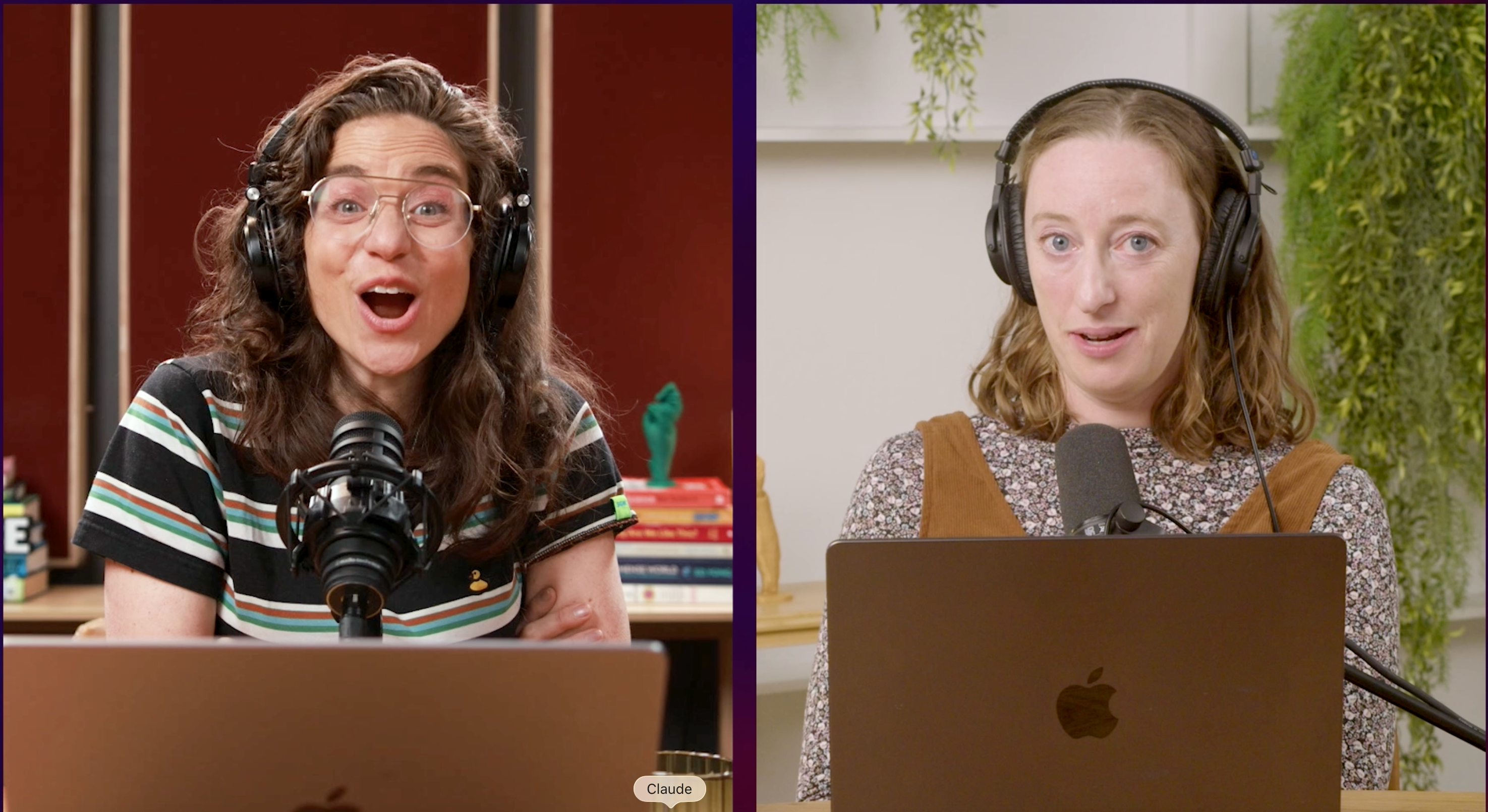
We use cookies.They keep VO running smoothly and help us improve it. Privacy policy