
 Ask ChatGPT


- Podcasts
- Science Vs
- How Music Can Be Medicine, with Dr. Dan Levitin
In short
How listening to music affects the brain and can improve mental health, pain, memory, Alzheimer’s care, and walking in movement disorders; also debunks “music makes you smarter” claims.
Guest backgrounds
Dr. Dan Levitin is a musician turned neuroscientist and Emeritus Professor. He worked with artists including Santana, Sting, Roseanne Cash, and Steely Dan before focusing on neuroscience. He wrote Music as Medicine (I Heard There Was a Secret Chord).
Key claims
Music activates more brain regions than other stimuli, entrains neurons to rhythm, and can shift the brain into a restorative default-mode/daydreaming state. Listening to liked music releases endogenous opioids; disliked music can increase cortisol and adrenaline. Music can raise pain thresholds in lab ice-water tasks. Music memories can be more accurate and persist in Alzheimer’s; early-life songs can reorient and reduce agitation. For Parkinson’s/MS, tempo-matched music can help gait by acting as an external clock; metronomes may fail because they’re less engaging. Mozart “IQ” effects are balderdash.
Notable examples
J.K. Simmons mispronouncing “amygdala”; Sting’s visual cortex activity while composing; Tony Bennett retaining singing repertoire in Alzheimer’s; Parkinson’s walking synchrony after ~4 seconds; Manuel Noriega reportedly breaking under Van Halen.
Written by AI. May contain mistakes.
Chapters
3:12
Chat with Dan Levitin Begins
Dr. Dan Levitin discusses his background and the intersection of music and neuroscience.
“After writing this book, Music is Medicine, what bugs you about pop culture that perhaps didn't before?”
4:41
Music's Impact on the Brain
Explore how music activates different regions of the brain and its effects on mood.
“That is, everything else is sort of me doing stuff, but that feels like the me and the stuff have fused.”
6:08
Music and the Default Mode Network
Learn how music engages the default mode network and its restorative properties.
“takes you on kind of a guided visual journey.”
8:43
Music's Role in Mental Health
Discuss the effects of music on mental health, including its impact on anxiety and depression.
“it puts you into this default mode, this daydreaming mode, which is an important restorative mode for the brain.”
11:02
Music and Pain Management
Investigate how music can serve as an analgesic and its relationship with pain perception.
“to do things that are healthy and healthful.”
14:00
The Pain-Relieving Power of Music
Explore how music can aid in pain management and its effects in surgical settings.
“They blast him with Van Halen and he caves.”
21:10
Music and Memory: A Deep Connection
Learn about the unique relationship between music and memory retention.
“After the break, how music can help those with movement disorders to walk better.”
22:54
Music and Memory: A Deep Connection
Learn about the unique relationship between music and memory retention.
“Twas many nights before Christmas, and one woman knew she needed a Christmas tree, so to Wayfair she flew.”
24:59
Music's Role in Movement Disorders
Discover how music assists individuals with movement disorders like Parkinson's.
“music and go for several weeks without it because you've retrained some new supplementary circuits in your brain.”
28:01
Music's Impact on Fetal Development
Learn about studies exploring how music affects fetuses and their development.
“which isn't really a measure of how smart you are, but in some studies it was shown to correlate with general intelligence.”
Show all 12 chapters
29:36
Infant Recognition of Music
Discover research on infants recognizing music they heard in the womb.
“When it was being played just on the belly, did not move more.”
30:38
Lightning Round with Dr. Levitin
Enjoy oddball questions revealing personal anecdotes from Dr. Levitin.
“All right, time for our lightning round of oddball questions.”

Ask about this episode
Get the gist, explore an idea or ask about something said.
 Claude
On Science Vs, what are the key points of this episode?
Searching your listeningTranscript
Automatic transcript. May contain errors.
0:00Dr. Dan Levitin: My lab was the first to show that when you listen to music, it releases opioids in your brain, what we call endogenous, interior opioids, same as you would get in morphine or an OxyContin or a coding tablet, but they're in your brain. Do-do-do, science chats with our favorite nerds. Yeah! Hi, I'm Wendy Zuckerman and you're listening to Science Versus. Today on the show, how music can help us live happier and healthier lives. A lot of us have had that moment where we felt really crappy and then we turned on a song and it just made us feel better. We started dancing, singing, maybe crying. It felt almost like magic.
0:51But of course, it's not magic. It's science. Music is doing all of this stuff in our brain. It's worming its way in there somehow. And to find out more about this, I talked to musician turned neuroscientist, Emeritus Professor Dan Levitin. Dan has worked with the likes of Santana, Sting, Roseanne Cash, Steely Dead, the list goes on. And then he became a neuroscientist. And he's been looking into how we can harness music to help us with all kinds of things from depression to pain to even potentially helping those with movement disorders walk better. Dan wrote a book about it. It's called I Heard There Was a Secret Chord, Music as Medicine.
1:41And so today on the show, it's my chat with Dan Leviton. It was really lovely and insightful. And I hope you enjoy it. So after the break, my chat with Dan Levitin.
1:59This episode is brought to you by Chase Sapphire Reserve. On this podcast, we sort fact from fiction. So here's a quick truth for you. With Sapphire Reserve, you can spend all around the world. Not only that, but you can earn four times the points on flights and hotels, booked direct, and three times the points on dining. Plus, enjoy access to award-winning airport lounges and exclusive restaurant tables. Learn more at chase.com slash sapphire reserve. Cards issued by JPMorgan Chase Bank and a member FDIC subject to credit approval. Terms apply. This episode is brought to you by Google Chrome.
2:40You think you know a browser, but Gemini and Chrome, that's new. It can help you with practically anything on the web, like restoring a vintage motorcycle from a 50-page restoration block, or finally break down that long article you've had open for weeks. Gemini and Chrome is here for it. Ready to make anything online make sense? There's no place like Chrome. Check responses set up required, compatibility and availability varies 18+.
3:10Welcome back. Today on the show, I'm chatting to musician turned neuroscientist, Emeritus Professor Daniel Levitin. Hey, Dan, welcome to the show.
3:19Dr. Dan Levitin: Thanks for having me, Wendy. After writing this book, Music is Medicine, what bugs you about pop culture that perhaps didn't before? Yeah, I know what you mean because like in the brain sciences, what bugs me is like when an actor will mispronounce a word that he or she just could have looked up. Yes. So I remember watching a TV show that had J.K. Simmons. It was one of the Law and Order series. And he comes on and he says, well, I'm looking at the brain here and there's a problem with the amygdala. But we pronounce it amygdala. And I'm thinking, you know, come on, J.K., you're a great actor. Take five seconds to go to a dictionary.
4:03Yeah, yeah. And rightfully so, I say. Yeah. Let's talk about your kind of origin story. You grew up in Northern California among orchards, I've heard you say. And it was at school where you were first given an instrument to play and you chose the clarinet. And you said that that was the beginning of everything for me. Do you remember why? What was it about playing?
4:31Dr. Dan Levitin: I loved it. I enjoyed it. I felt, I'll tell you what I can say. I felt most myself while playing music. That is, everything else is sort of me doing stuff, but that feels like the me and the stuff have fused. Then you ultimately became a musician, you worked in bands, but then turned to neuroscience. So what is happening in the brain as we listen to music? What areas are activated? Music activates more regions of the brain than anything else we've looked at. It interacts with every region of the brain that we've mapped so far. Music activates the rhythmic centers, and whether you know it or not, you've got clusters of neurons that fire in synchrony with the tempo of music.
5:29Dr. Dan Levitin: So you've got millions of neurons that are entraining to it, you know, locking in, and then others that are causing you to move parts of your body or wiggle your pudendum or dance or anything like that. How dare you call my dancing wiggling my pudendum?
5:49That is amazing, though. It is amazing. It is. That they're locking on. There's some neurons locking on to that. And the visual center, the visual center's lighting up.
5:58Dr. Dan Levitin: Yeah, we have, in listening to, playing, composing music, the visual centers of the brain are active. Some music, when you surrender to it, takes you on kind of a guided visual journey. People often report, tens of thousands of people we've surveyed, say, well, I'll be lying on the couch and I'll close my eyes and suddenly I'm transported. I'm in some other place and it has trees and a river or it's a cityscape or whatever it is. And they're seeing images in their mind that's kind of like a visual accompaniment to the music. And you put Sting into a brain scanner. You can talk about it in your book.
6:39Tell me what was going on in his brain when he was hearing music.
6:43Dr. Dan Levitin: Well, this was really so much fun for him and for me. When he was composing in the scanner, there was all this visual cortex activity. And I said, I've never seen so much visual activity during music composing. And he had an instant explanation. He says, oh, well, when I'm composing, I see music as architecture and different levels of a house or a building and buttresses and arches and a number of stories and rooms and filigrees. And that's how I'm thinking of it. And you personally, you have a fantasia. So if, is this right? So if I were to say the classic one, imagine an apple, what do you say?
7:37You say nothing.
7:38Dr. Dan Levitin: Well, you've really done your research because I haven't told very many people that I have aphantasia. But aphantasia was just discovered a few years ago, and it's the inability to form mental images. And I do have vivid mental images when I dream, but when you say imagine an apple, I can't do it. But, I mean, people always used to say, like teachers would say, you know, close your eyes and imagine a flower and then draw it. And I was never any good at that because I would – what do you mean close your eyes and imagine? What? Yeah. And so when you listen to music, do you get that visual imagery?
8:18Dr. Dan Levitin: No. No. Interesting. Continuing with how music affects the brain, you've done research into the default mode network and how music interacts with this network, which is, oh, I hope I don't mess it up. It's sort of the network your brain locks into when you're not really thinking about anything, daydreaming, it's default. How is music interacting with this network? When you listen to music, it puts you into this default mode, this daydreaming mode, which is an important restorative mode for the brain. And it's in opposition to what we call the central executive brain. The central executive is when you're paying attention to something, you're focused, and your brain is able to keep you on track, you're not distracted.
9:06Dr. Dan Levitin: Paying attention is an apt metaphor because you have a limited amount of neural resources, biological resources, and you spend them by focusing. And after an hour or two of really hard work, your mind begins to wander, sometimes shorter. Your mind might be wandering right now. I'm on focus, executive function engaged. When we drift into that mode, if we allow ourselves to go there, it can effectively hit a reset button in the brain and restore neural function and restore the oxygenated glucose that was spent by paying attention, working and taking a restorative break. And a restorative break isn't where you check Facebook.
9:52Dr. Dan Levitin: It's where you go for a walk in nature or you take a nap or you daydream or you listen to music. And music is one of the most reliable ways to get into that mode. Has that changed how you use music in your day-to-day life? Yeah. What I do is, you know, I'll work and when I feel my attention flagging, rather than then grabbing another cup of coffee, I'll just close my eyes and meditate or I'll put on some music. And then five or 10 minutes later, I'm refreshed. Lots of people use music to help them out when they're not doing well mentally. Sometimes, you know, a Gallup poll of Gen Z folks found that when kids are upset, listening to music was the most common thing they did to feel better.
10:34More common than looking at social media or even hanging out with their friends. and we are getting, there's more and more research on the effects of depression, anxiety symptoms that particularly in the short term, listening to music, it can help.
10:47Dr. Dan Levitin: Listening to music can release dopamine and that serves different functions in different parts of the brain but one thing it does is it makes you feel that warm pleasure when it's in the limbic system of the brain and when it's in the frontal lobes, it helps you feel motivated to do things that are healthy and healthful. So dopamine is what helps you get through an exercise workout when the music's going and your muscles hurt, but you keep going because you've got a steady supply of dopamine. Music listening modulates serotonin, which helps to stabilize mood. And then let's look at pain, because you've done some very interesting research into how music might help us deal with pain.
11:31Dr. Dan Levitin: Well, so the first question is, how do you study pain? Well, you have to have people who are in pain. So the typical way we induce pain in the laboratory is we ask somebody to put their hand in a bucket of ice water up to the elbow. Have you done this? Oh, yeah, yeah. How painful is it? Well, it's not painful at first. You know, you put your hand in the ice water, 10 seconds go by, 15 seconds, it's not, it's fine. Particularly if it's a hot day. But at some point, it becomes quite uncomfortable. And at some point beyond that, it becomes painful. Really painful. And, you know, we can manipulate things like, you know, if you stay in another 15 seconds, I'll give you an extra 10 bucks.
12:11Dr. Dan Levitin: And some people just say, no, no, it's not worth it. Get me out of here. And so in this ice bucket task, most people can last between a minute and two minutes. No matter how much the reward is, they just can't take it anymore. And so that's how we induce pain. And what we find is that when we play music to people in this setting, music raises their pain threshold. That is, it acts as an analgesic, lowering their experience of pain because the threshold is higher. And they can last longer in the ice bucket. Interesting. Yeah. And the mechanism for this, my lab was the first to show that when you listen to music, it releases opioids in your brain, what we call endogenous, interior opioids, same as you would get in morphine or an Oxycontin or a codeine tablet, but they're in your brain.
13:14Dr. Dan Levitin: So listening to music that you like, that's the caveat. That you like, that you like, right. Yeah, it releases these natural painkillers. Uh-huh. And if you're listening to music you don't like? That not only doesn't release the painkillers, it releases cortisol, which is the stress hormone that makes you more sensitive to distraction and it slows down critical thinking. It releases adrenaline. It upsets you. Yeah. I mean, yeah, listening to music, it is a painful experience. Yes. Well, it's what drove Manuel Noriega out of his compound in Panama. Music he didn't like. Was that really it? The U.S.
13:52Dr. Dan Levitin: Army blasted him with Van Halen music and he couldn't take it. They had already turned off all the water and the air conditioning and, you know, there's no food in the compound. He's not giving up. He's not giving up. They blast him with Van Halen and he caves. He's like, I'm done. I'm done. Is that, is the opioid mechanism the main mechanism you think that music can help us sort of deal with pain? Because it's other, is it a distraction? You know, there's other ideas. Main mechanism is the right question to ask. It is a mechanism. Music is also distracting. And it's also engaging. We haven't been able to sort out which is the most important component.
14:38Dr. Dan Levitin: There's more work to be done there. How big is the effect? Do you think we could, you know, for people going into surgery, that hospitals could, you know, give you two doses of, you know, here comes the sun by the Beatles and instead of giving you opioids, how far do you think we could push this? Oh, here comes the sun would work if they were operating on your solar plexus, wouldn't it?
15:02Dr. Dan Levitin: No, I think that the level of analgesic effect of music is significant and measurable, but probably not so large. It's not pharmaceutical level doses. So dentists have figured out that people respond to music in a way that either minimizes the need for Novocaine or nitrous oxide slash laughing gas, or many people just if they've got music going, they don't need anything at all. So certainly in the dental field, that's true. Let's talk about memory, music and memory, because a lot of us will sort of intuitively know that music and memory have this deep connection. We weirdly remember songs from our childhood, from a few beats of a song.
15:55You're just like, oh my God, I know this, I know this. And you have talked about how music, our memory of music holds this almost privileged position in our brain. So our music memories can be more accurate than other kinds of memories. Why is that the case? Why do music and memory have such a strong relationship?
16:18Dr. Dan Levitin: Well, I think the caveat is that not everybody remembers music well. Some people don't like music. We estimate about 10 % of the population don't like music. They don't understand it. But what music has that other things don't have, I mean, what are you going to compare it to? I guess literature, comedy sets, plays, dialogue from movies, visual art, sculpture, dance. Why do we seem to remember music better than those things? One thing is that music has multiple elements that work in tandem that are mutually reinforcing. So you've got melody, and there's this rhyme scheme at the end of the line.
17:03Dr. Dan Levitin: the pieces can only fit together in certain ways. Right. The other element of it is that in the last 70 years or so we've had pop music culture where a song would get played a whole lot for a few weeks or a few months and after a year you're not hearing that old Britney Spears song as much as he used to. and so it becomes associated with a certain time of your life, a certain place of your life. It's a unique memory and so it can unlock all the other experiences of that time of your life. A principle of memory is that when something goes into memory storage, it's bound together with all the other things which is why a smell or a taste that's unusual can unlock a flood of memories associated with a particular time of your life.
18:01And with Alzheimer's, I feel like this is particularly potent where sometimes people won't even remember their loved ones fully but can remember songs from their childhood. I mean, tell us about Tony Bennett.
18:18Dr. Dan Levitin: Well, so a principle of music is that the first memories that go in are the last ones that come out. And that's a general principle of memory. You tend to remember things that were put in earlier. And most of us start paying attention to music around the age of 10 or 12, and that's when we develop our musical tastes. And because they're the last things to go, in a case of Alzheimer's, people may not recognize their spouses or their loved ones, but they'll still remember photographs of their fourth-grade classroom or their seventh-grade bedroom or music from that period. And Tony Bennett famously had Alzheimer's disease and was able to keep singing pretty much his full repertoire of hundreds or thousands of songs because he knew them from the time he was a kid.
19:11Dr. Dan Levitin: He didn't know what day it was, and he might sing the same song three times in a row because he didn't realize he had just sung it. So how can music help people with Alzheimer's? Because you've said it can't cure or slow the progression of it. But what can it do? What we see in care facilities, so-called old age homes and assisted living, is that somebody who doesn't recognize their loved ones or even themselves in a mirror can become quite agitated because nothing makes sense or quite withdrawn because nothing makes sense. if you put on recent music that means nothing but if you put on music from their teen years it allows them to reconnect with the self they thought they had lost and it can be profound playing music for just 20 minutes to somebody in that state can get them talking again and orient them and pull them outside themselves for a week or so wow so should we all be making Alzheimer's playlists for our future.
20:17Dr. Dan Levitin: Yeah. Yeah. What would be on yours, number one? The music I heard from 12 to 18. Right. Which was, you know, it was Tchaikovsky and Prokofiev and then Blood, Sweat and Tears and Chicago and Stevie Wonder and Gladys Knight and... I can already see, I can see your face lighting up just picturing these songs. Johnny Cash. Yeah. And these funny little one-hit wonders. The Cascades. Listen to the rhythm of the falling rain, telling me just what a fool I've been. Beautiful song written by a guy named John Gummo. Yeah. One hit. It'll be funny when the millennials, once we start going to old folks' homes, because it'll all be like, who let the dogs out?
21:06You know, airing, blasting.
21:09Dr. Dan Levitin: Exactly. Well, it will. Yeah. After the break, how music can help those with movement disorders to walk better. Plus, can listening to certain kinds of music make you smarter? Coming up.
21:40the web, like restoring a vintage motorcycle from a 50-page restoration block, or finally break down that long article you've had open for weeks. Gemini and Chrome is here for it. Ready to make anything online make sense? There's no place like Chrome. Check responses set up required, compatibility and availability varies 18+. Carhartt's holiday gift guides were built in collaboration with the greatest gift giver of all time, Santa Claus himself. Old St. Nick counts on Carhartt's durable gear to have his back through rain, sleep, and snow on the biggest night of the year. Because when everyone's counting on you to do your job, what else would you wear to work?
22:16Tap the banner to grab a gift for every hardworking person on your holiday shopping list, or head to carhartt.com.
22:26Starting a business can seem like a daunting task, unless you have a partner like Shopify. They have the tools you need to start and grow your business. From designing a website, to marketing, to selling, and beyond, Shopify can help with everything you need. There's a reason millions of companies like Mattel, Heinz, and Allbirds continue to trust and use them. With Shopify on your side, turn your big business idea into... Sign up for your$1 per month trial at shopify.com slash special offer. Twas many nights before Christmas, and one woman knew she needed a Christmas tree, so to Wayfair she flew.
23:00Finding just the right one, and for years it will last. Wayfair shipping was free and remarkably fast. What's this? Garland? A wreath? Essentials to host? Good thing she celebrates way longer than most. As her cart filled with magic and decor from the heart, Merry Christmas to all. Get your Wayfair head start. For holiday decor you can count on year after year, Wayfair delivers.
23:31Welcome back. I'm here with Emeritus Professor Dan Levitin. So another really interesting use of music in medicine is helping folks with various movement disorders like MS or Parkinson's and that music actually can help them to walk. Research has shown that certain music can help people walk faster with better strides. How is it doing that?
23:54Dr. Dan Levitin: Well, so when you listen to music, your brain synchronizes with the beat. Entire populations of neurons synchronize. If you've got Parkinson's, at some point, it can cause circuits in the part of the brain called the basal ganglia to degrade. and they're responsible for helping to maintain smooth, continuous movements as well as to put one foot in front of the other and to do things in a sequence at a particular time and in a particular order. And when the basal ganglia go, Parkinson's patients often freeze and have difficulty walking because that internal clock has been degraded or damaged. But when the music comes on, if it comes on with the tempo of your natural walking speed, your gait, after about four seconds of synchrony, the Parkinson's patient can walk in synchrony to the music.
24:51Dr. Dan Levitin: This has been a game changer. And the idea is you listen to music, say 15 minutes a day, you walk with the music. And after some days or weeks of this training, you can dispense with the music and go for several weeks without it because you've retrained some new supplementary circuits in your brain. Wow. And so it's that circuit that is firing with the beat that is somehow going into the basal ganglia and saying, come on, come on, we can do this? No, it's not so much that it's fixing broken circuits in the basal ganglia. It's acting as another clock that the motor system can use to time itself.
25:33Ah, it's creating new connections
25:36Dr. Dan Levitin: that then is helping you to walk. That's amazing. It is. And does a metronome work? If it's all about that beat, can you just sort of play the boom, boom, boom? You're really thinking like a scientist. That was the big question. That was the big experiment. Well, if it's just the beat, then a metronome should do it. But no, it doesn't. It doesn't. And it probably doesn't because metronomes are not engaging. They don't grab your attention the way music does So you need both You need to have the beat Because your whole brain needs to be co-opted into this exercise Or a big chunk of your brain needs to be co-opted Yeah There are some myths around music as well One idea you talk about is Can it make us smarter?
26:26Perhaps by listening to Mozart Or something like that
26:30Dr. Dan Levitin: Yeah, this is balderdash This is just – this was bad science. There was one very poorly conducted study done that purported to show that if you just listen to Mozart 20 minutes a day, you don't need to read books or do math or do anything else because that makes you smarter. No, that's not – it's another word that starts with B and I'll just call it balderdash. Right. A two-syllable word that rhymes with full hit. and no. It feels right though, particularly if you didn't grow up with sort of fancy music and I didn't. It feels like if you like listen to sophisticated classical music, it'll make you smarter.
27:10But no, no, this is not the case. No.
27:13Dr. Dan Levitin: In fact, when we talk about any of music's effects, you can't say that classical music is better. I mean, it's not better for Parkinson's or for depression or for motivating an exercise workout, unless you like classical music better. It all comes down to individual taste. As my grandpa used to say, if we all liked the same thing, everybody would want to get with your grandma.
27:45What did that study get wrong?
27:48Dr. Dan Levitin: In this particular case, not to get too far down in the weeds, but it wasn't a well-controlled experiment. For one thing, the smarter came from a paper-folding task, sort of like a simple origami task, which isn't really a measure of how smart you are, but in some studies it was shown to correlate with general intelligence. If you're better at folding paper, you're smarter. Even that assumption is not valid. And then, moreover, they had people either listen to Mozart or do nothing at all before the paper folding task. So it's not that Mozart made you smarter. Sitting in a dimly lit room doing nothing, you know, made you stupider temporarily.
28:33You're right, or tired, or completely unmotivated to fold some paper. On this idea that sort of music can make you smarter, the idea that if you play music to fetuses, it can make you smarter. There is a bit of a market for this, of speakers, for pregnant folks to play various kinds of music for their fetuses. And I did want to tell you about this study that we found because it makes me smile at the efforts that scientists go to work out these sorts of things. But they got more than 100 pregnant folks and picked out this song, the flute, and either put headphones on their belly or intravaginally played the music.
29:14Yes, exactly. Exactly. While they were in an ultrasound and they were looking to see these very particular movements in the fetus, did the fetus move its mouth in this very particular way or its tongue in this very particular way? And they found that when the music was being played in the vagina, the fetus did move more. When it was being played just on the belly, did not move more.
29:40Dr. Dan Levitin: Well, so what we do know is that by the age of 20 weeks, the auditory system of the developing fetus is fully functional. And through the amniotic fluid, the developing ears of the infant can hear music. The amniotic fluid filters it out, and it would be like if you were listening to music in the bathtub. You hear mostly the low notes and the beat and the rhythm. Alexandra Lamont, a colleague of mine, did a study that I just love where she played music to women who were pregnant around the 20 to 24 weeks, and then came back a year later and played to the one-year-old child now, well, a year and three months later, whatever, played to the one-year-old child either those same songs the child had heard in the womb or songs by the same artist on the same album but that the child hadn't heard.
30:33Dr. Dan Levitin: And the infant showed a preference for the ones that had heard in the womb. but recognize them, as it were. Interesting. All right, time for our lightning round of oddball questions. Oddball questions. Okay, so what is the most dangerous thing that you have done for either research or a book that you've written? Well, I don't know that I've done anything dangerous for research or a book, but I do recall a dangerous experience. I was performing in 1984 in San Francisco on a very big stage with a band, and apparently the electricians had not grounded things properly. And so I went and got up on the microphone, and as soon as my lip tucks the microphone, I got an electric shock that knocked me back a foot.
31:27Dr. Dan Levitin: And I almost fell on the back of my head and got a concussion. And that was pretty dangerous because I could have been electrocuted. Oh, wow. And then have you put your mouth to a microphone ever again? Now I'm at a place in my career where I can actually ask the sound guy, would you put your finger on the microphone for me? It's nice to hit that place in your life where you don't need it. It's sort of like the taster for the king eating the food. Exactly, exactly. What was your favorite title to a paper you've read? My favorite title is to a book, and it was by my colleague Carl Zimmer, and it's called She Has Her Mother's Laugh.
32:07I love that book, yes.
32:10Dr. Dan Levitin: It's a book about genetics and just what a wonderful title. Funnest object sitting in your house. I have a bird wheel. A friend of mine who's a wonderful producer, he's produced the Pet Shop Boys and Pentatonix and he produced my first record. He's a wonderful arranger and singer. His name's Christopher Harrison. As a gift to me, he got his dad to give me this thing that his dad, given Harrison, makes, which is he takes the wheel from an old bicycle with all the spokes but the inner tube off, and he mounts it on a spindle, on a pole, and then attaches to the spokes, actually to the outside of the wheel, little wooden baskets that hold bird seed.
33:03Dr. Dan Levitin: And so there's about eight of these baskets going around the wheel and the wheel spins. So I fill it with bird food and the birds land on it and they have sort of this Ferris wheel ride as they eat. And I could look at that for hours. And the birds, are they into it? Is it fun for them? Oh, they love it. They just love it. And I know this because I did the experiment. I have a conventional bird feeder just two feet away. And if there's food in the wheel, they prefer the wheel. But see, because I have aphantasia, I can't describe what it looks like to you very well. Thank you so much, Dan. This was so, so wonderful.
33:43Thank you so much for joining us. Thank you, Wendy. That was Emiratus Professor Daniel Levitin. His book is called I Heard There Was a Secret Called Music as Medicine. Or if you are in Australia or the UK, it's just called Music as Medicine. I'm Wendy Zuckerman. Back to you next time.
34:20One, smart AI cameras and live U.S.-based agents help stop intruders before they break in. Two, we sound the alarm at points of entry. Three, our agents request emergency response. Plans starting around a dollar a day. Right now, get 70 % off your new system with professional monitoring at simplisafe.com slash Spotify. Outdoor deterrence plans start at$49.99 a month. Visit simplisafe.com slash licenses for alarm license information. Carhartt's Holiday Gift Guides were built in collaboration with the greatest gift giver of all time, Santa Claus himself Old Saint Nick counts on Carhartt's durable gear to have his back through rain, sleep and snow on the biggest night of the year because when everyone's counting on you to do your job, what else would you wear to work?
35:00Tap the banner to grab a gift for every hardworking person on your holiday shopping list or head to carhartt.com
From the publisher
A lot of us reach for music when we’re struggling. Whether we’re going through a breakup or just a rough day, our favorite jams seem to have an almost magical ability to give us relief. But WHY?! What exactly is music doing in the brain that affects how we feel? And how powerful is it? Like, could music actually treat diseases? We dig into these questions with musician, neuroscientist, and professor Dr. Dan Levitin. He wrote a book called “I Heard There Was a Secret Chord: Music as Medicine” all about the incredible neuroscience science behind music and how it can help with things like depression, pain and even Alzheimer’s disease.
This episode does mention depression. Here are some crisis hotlines:
United States: US National Suicide Prevention Lifeline Dial 988 (Online chat available); US Crisis Text Line Text “HOME” to 741741
Australia: Lifeline 13 11 14 (Online chat available)
Canada: Call or text 988
United Kingdom: Samaritans 116 123 (UK and ROI)
Full list of international hotlines here
Find our transcript here: https://tinyurl.com/ScienceVsMusicAsMedicine
In this episode, we cover:
(00:00) Intro
(03:04) How music activates the brain
(09:17) The effects of music on mental health and pain
(14:37) The relationship between music and memory
(20:35) Music as medicine for movement disorders
(23:23) Does music really make you smarter?
(27:45) Oddball questions
Credits:
This episode was produced by Wendy Zukerman and Ekedi Fausther-Keeys with help from Meryl Horn, Michelle Dang, and Rose Rimler. We’re edited by Blythe Terrell. Wendy Zukerman is the executive producer. Fact-checking by the Science Vs team. Video editing and sound by Bobby Lord. Music written by Bumi Hidaka, Peter Leonard, Emma Munger and Bobby Lord. Thanks to Michelle Kitchen and Spotify Studios in Los Angeles, as well as Humdinger Studios in Melbourne.
Science Vs is a Spotify Studios Original. Listen for free on Spotify or wherever you get your podcasts. You can also find us on YouTube, TikTok and Instagram.
Learn more about your ad choices. Visit podcastchoices.com/adchoices
More from Science Vs
All episodes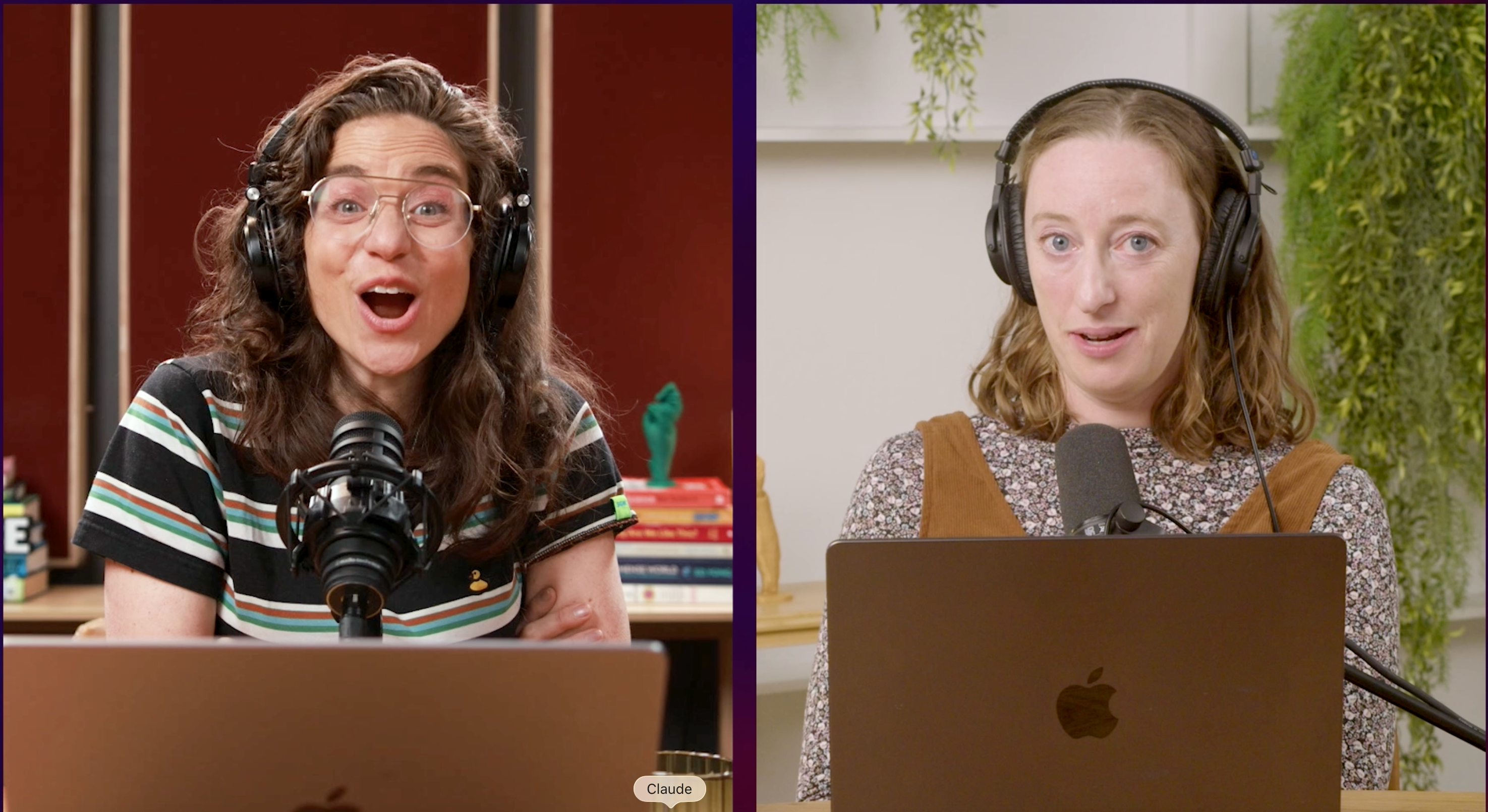
We use cookies.They keep VO running smoothly and help us improve it. Privacy policy