
 Ask ChatGPT

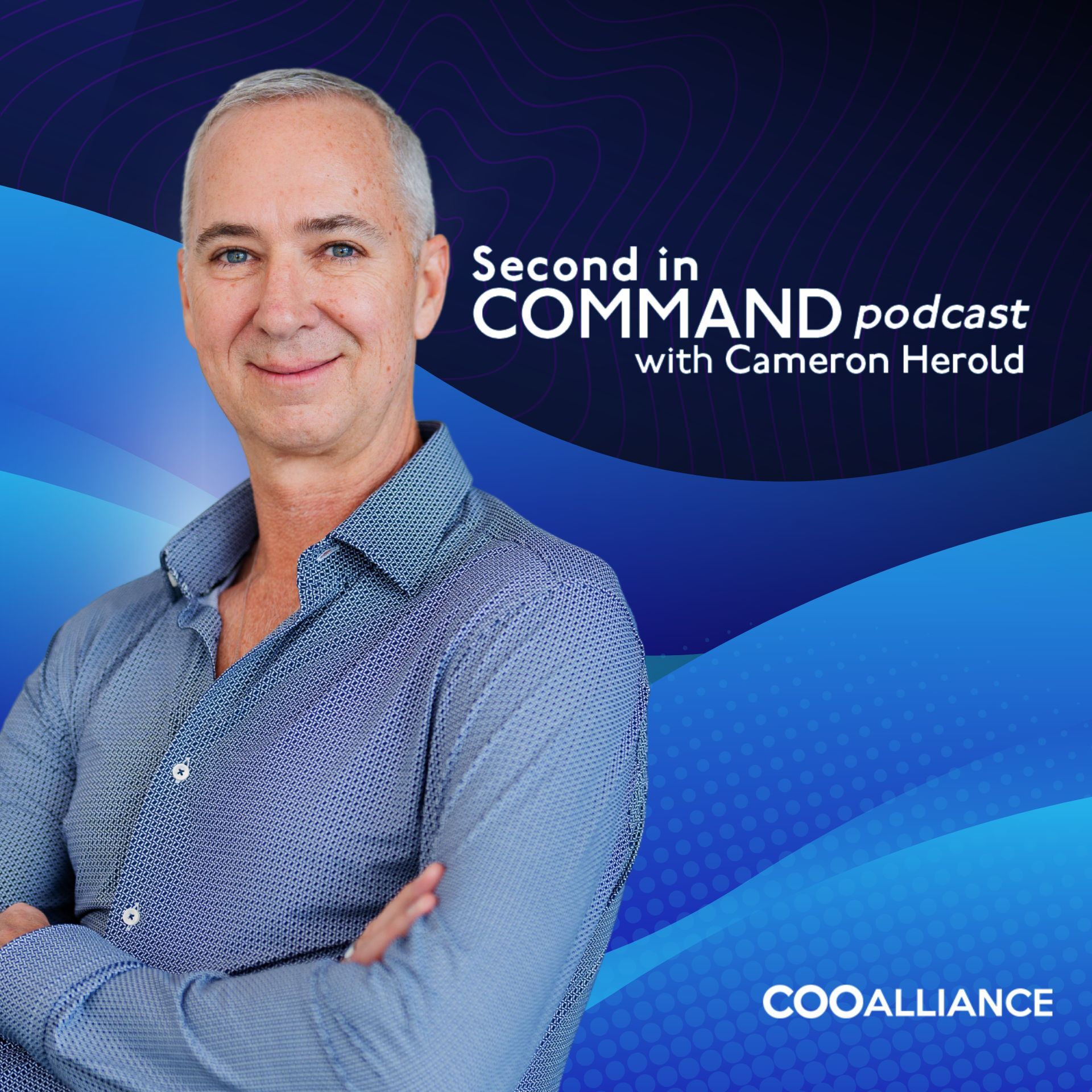
 Second in Command: The Chief Behind the Chief with Cameron Herold
18 Aug 2026 · 39m · 18 chapters

Connor Hackett, GM of Stemple Creek Ranch and Meat Company, explains how a regenerative ranching business turns one core product (beef/lamb) into multiple revenue streams while scaling operations, distribution, and customer relationships without “shortcuts.”
Connor Hackett. Fifth-generation rancher from Humboldt County (Ferndale area), grew up on his family’s Howe Creek Ranch (timber and sheep; ~1,500 ewes). Former finance intern (Merrill Lynch) and later meat-industry operator; founded Integrate Consulting (operations, financial modeling, ERP, strategy for ag producers/processors). Executive director of the Six Rivers Initiative (conservation/working lands/regional food systems).
regenerative values must be matched with business/supply-chain organization; cost tracking across ranch-to-processing is a major challenge; story is built “one by one” via service and experiences; direct-to-consumer growth preserves margins and strengthens relationships.
Bay Area-focused distribution (B2B plus ~30% DTC via farmers markets, website shipping nationwide, and a new Petaluma storefront); ranch stays/VRBOs; tours/tastings/weddings/chef groups; moving the meat team facility from Richmond to Petaluma to consolidate operations.
Written by AI. May contain mistakes.
Connor shares his experiences growing up in agriculture and his career path.
“His work centers on a simple belief, the future of regenerative agriculture depends not only on how we steward the land, but on how effectively we organize businesses, supply chains, capital, and markets.”
Discover the challenges and excitement Connor faced when joining Stemple Creek Ranch.
“And I went off and I worked for a couple of meat companies in the Bay Area.”
Connor discusses how the existing culture at Stemple Creek was integrated into systems.
“And then you're able to become a part of that culture and just have it permeate throughout everything that you do and into the organization.”
Explore the complexities of cost tracking and operational challenges at Stemple Creek.
“A lot of times it's challenging to You marry the financial and kind of accounting management with what's happening operationally.”
Connor explains the importance of creating a resilient local food system.
“So you really do find the perfect opportunity for you to jump into to be able to use both sides of your brain, so to speak.”
Learn how Stemple Creek communicates its values and builds customer relationships.
“You talked earlier about how there's no shortcuts and there's no easy ways of doing it, at least that you take at Stemple Creek.”
Connor shares insights on experiential marketing and the distribution model of Stemple Creek.
“you know, through actions, not just words.”
Learn about Stemple Creek Ranch's operations, employee structure, and distribution methods.
“And it's not something that we latch on to to take advantage of some market trend.”
Explore the benefits of joining the Genius Network for ambitious entrepreneurs.
“The Genius Network is for ambitious, giving entrepreneurs who want to be part of the highest level connection group.”
Understand the importance of community engagement and legacy in ranching.
“And it starts with the foundation of this legacy and the multi-generational family aspect.”
Discover the challenges and solutions in relocating the distribution center.
“really kind of bursting at the seams and it was very difficult.”
Dive into the multifaceted role of a general manager in a small team.
“And so do you have the ranch team and the meat team all together in that location?”
Learn how training and cultural alignment are prioritized in the team.
“A lot of them, you know, again, we try to use the ranch as a training center too.”
Learn the importance of technical, cultural, and soft skills in leadership training.
“that those components and those values always exist, then the technical stuff becomes very simple and straightforward.”
Hear about the pressures of family legacy and discovering personal passion.
“through that program and found it really, really helpful.”
Understand the motivations driving a shift toward local food systems and economic resilience.
“And so that's when my wife and I ultimately decided to move back up here was the kids conversation.”
Explore the strategic plans for growing direct-to-consumer efforts and partnerships.
“if we can't figure out how to make things more resilient from an economic perspective.”
Learn how storytelling and understanding consumer needs are key to growth.
“Are you solving a time problem where they don't have to think about it, but they're a member and they get their meat products delivered so they don't have to shop for them?”

Get the gist, explore an idea or ask about something said.
 Claude
On Second in Command: The Chief Behind the Chief with Cameron Herold, what are the key points of this episode?
Searching your listeningAutomatic transcript. May contain errors.
0:02Lindsay Smith: All right, if you're an entrepreneur, you've got to go check out the Genius Network. The Genius Network is for ambitious, giving entrepreneurs who want to be part of the highest level connection group. And it's not just another mastermind. In fact, I have been a Genius Network member for eight years. Genius Network helps build a better entrepreneur by focusing on health, wealth, and making your business and life more ELF, which stands for easy, lucrative, and fun. Don't apply if you're just a taker, but do apply if you're a giving entrepreneur and you earn at least a million dollars or more in revenue.
0:36Lindsay Smith: And to see if you qualify, go check out GeniusNetwork.com forward slash apply. Again, that's GeniusNetwork.com forward slash apply.
0:49Lindsay Smith: If you can build that real connection with people, that's how you do it. But you do it one by one and you do it in a grassroots way. Like all those not taking the shortcuts and raising the best animals, treating the animals the best way we can, treating the land the best way we can.
1:10Conner Hackett: Welcome to the Second in Command podcast, produced by the COO Alliance and brought to you by its founder, Cameron Herold. In the Second in Command podcast, we talk to top COOs who share the insights, strategies, and tactics that made them the chiefs behind the chief. And now, here's your co-host, experience-driven growth strategist, former chief strategy officer, and author of No One Needs Another Company Mug, Lindsay Smith.
1:42Conner Hackett: Hello and welcome to another edition of the Second in Command podcast. My name is Lindsay Smith and I'll be your co-host today. Connor Hackett is our special guest, and he is the GM of Stemple Creek Ranch and Meat Company, where he leads one of California's premier regenerative ranching and meat businesses, overseeing operations, supply chain, wholesale, direct-to-consumer, and strategic growth initiatives. A fifth-generation rancher on his family's Howe Creek Ranch in Humboldt County, California, Connor combines a lifelong connection to agriculture with experience spending the entire meat supply chain.
2:12Conner Hackett: Before joining Stemple Creek, he founded Integrate Consulting, advising agricultural producers, processors, distributors, and retailers on operations, financial modeling, ERP implementation, and business strategy. He also serves as executive director of the Six Rivers Initiative, a nonprofit advancing conservation, working lands, and regional food systems across Northern California. Connor holds a BS in business administration and an MS in agricultural and natural resource economics from UC Davis. His work centers on a simple belief, the future of regenerative agriculture depends not only on how we steward the land, but on how effectively we organize businesses, supply chains, capital, and markets.
2:55Conner Hackett: He is passionate about helping mission-driven agricultural enterprises scale without compromising the values that make them worth building in the first place. Welcome, Connor.
3:08Conner Hackett: Connor, thank you so much for joining us today.
3:11Lindsay Smith: Thanks for having me, Lindsay.
3:12Conner Hackett: Oh, it's our pleasure. I really am interested. You're a fifth generation in agriculture and ranching. Tell me what that's like and how you ended up where you are today.
3:23Lindsay Smith: Yeah, I'm very privileged to say that. I'm very lucky to have grown up where I grew up. I grew up in Humboldt County, which is on kind of the far north coast of California, very small town called Ferndale. And my family's ranch is about 20 minutes outside of Ferndale. And historically, we've had a timber operation, timber harvesting operation, and we've raised sheep. Right now, we have a couple thousand head, about 1 ,500 ewes. And right now, there's about 3 ,000 sheep on the ranch right now because all the lambs were born. Yeah. And so I had this kind of agriculture and business kind of in my bones and my soul as I grew up in this environment.
4:04Lindsay Smith: And I went off to college. I got a business degree and I started on a little path on the finance industry. I had an internship with Merrill Lynch and I quickly realized that wasn't the right life for me. So I started thinking about how I can kind of come back and make opportunities for myself and my family in the future with agriculture. That's fantastic. Yeah. And I went off and I worked for a couple of meat companies in the Bay Area. I worked in a restaurant and really found this food connection in all of this, in this space of agriculture and land conservation and food was a big part of it.
4:42Lindsay Smith: and kind of bridging the gap between the ranch and consumers and built my own consulting business called Integrate Consulting. And I worked with ranches and specifically ranches that were trying to vertically integrate and become marketers themselves and, you know, bring product to market through either restaurant or farmer's market or, you know, through the processing stages. And And it was a very Mitch business. And that's what led me to Stumble Creek. I started out as a consultant with them. And I had admired them for a long time, what Lauren and Lisa Poncha, the founders, had built. And they had something very special with their connectivity and relationships with the customers they had in the Bay Area.
5:27Lindsay Smith: So I was really attracted to that. And I joined a couple years ago. And it's been an amazing journey so far.
5:34Conner Hackett: That's incredible. So you were connected to Stemple Creek and then had the opportunity to jump in. What was it like when you joined the organization?
5:44Lindsay Smith: It was hard. It was difficult. In my consulting work, a lot of times I would join companies at stages where they needed a lot of system building, organizational building, working with the team, making sure roles are defined within the team. And how do we get everybody on the same page and try to move in one direction together? Right. And this was a lot of that. It was hard, but it was fun because they had such an amazing team already. Like the people, the culture they had built, it made it fun for me to do the hard work, which is all you can ever ask for in situations like that.
6:17Conner Hackett: It's really amazing when you join an organization that has a culture that makes you excited. And then you're able to become a part of that culture and just have it permeate throughout everything that you do and into the organization. So how did you feel the culture integrating into the systems and the hard work that you were putting in?
6:35Lindsay Smith: It was already there. The culture was already in the systems. The systems just needed a little refining. And, you know, Stemple Creek Ranch, you know, raises the cattle. The Poncha family, Lauren Poncha is the fourth generation down at that ranch in Tomales, California. And they've done it. They built an incredible Stemple Creek Ranch, the brand, him and his wife, Lisa, over the last 20 years. and the culture is there. And, but translating that, you know, the production system on the ranch to meat distribution, taking whole animals and selling to restaurants and grocery stores and direct to consumers online and at farmer's markets is very complicated and complex business.
7:18Lindsay Smith: And you have to take the whole animal and break it out into the right parts and pieces at the right cadence. And that was the majority of kind of the work that I did is making sure that basically our supply and demand could meet up in the middle. But there's a lot of moving parts in that situation.
7:38Conner Hackett: I can imagine. And food is something that is so important. It nourishes all of us. And there has to be the proper care taken care of the food as it goes through all the different processes. And I know that's something that you pride yourselves on at Semple Creek.
7:53Lindsay Smith: Yeah, you know, we don't do things, we don't take shortcuts on the ranching side. We do things, there's a very specific decision making framework that exists innately with us and how we take care of the land and the soil and how we grow grass and use the animals to help us do that. how we treat that as a productive asset on the ranch is really important and nothing comes cheaply and nothing comes easy and but how we're able to convey that and to be able to make our price and take it forward to the marketplace we have to do it with care and service too and so not only is the product quality there but the service quality is there too and that's another again it's just a reason for us to exist is to create relationships with our customers and build the bridge so that they can have a direct relationship with where their food comes from.
8:47Conner Hackett: When you joined and started really putting and fine-tuning some of these systems to help with the production and the distribution of the meat, what were some of the hurdles that you had to overcome and some of the things that you had to put in place to make that successful?
9:01Lindsay Smith: A lot of times it's challenging to You marry the financial and kind of accounting management with what's happening operationally. Cost tracking is very difficult. You know, real time, actual cost tracking on, we own the raw materials for the most part. And then we send them to a third party to get processed and to track yields and production issues that's happening every week. We're bringing the product back in and we're inventorying it. We're, you know, staging it for delivery ourselves and we're invoicing that product. So tracking the costs throughout the supply chain and the manufacturing chain is one of the most difficult things to figure out how to do because you have to do it simply.
9:42Lindsay Smith: You have to make it simple and easy and manageable, but you have to make it accurate and meaningful at the same time. So it's this balance of not getting too complex and in the weeds, but having enough of the right information to be able to make decisions. And that's that was one of the biggest challenges to figure that out. And we're not there. We're still working on it, but we've made a lot of progress.
10:03Conner Hackett: My opinion is if anybody says we're there, it's perfect. They should shut their business down because everybody still needs refinement and still needs to continue to grow. And just there's so many opportunities. But the challenges that you described, they really align well with your financial background and your ranching background. So you really do find the perfect opportunity for you to jump into to be able to use both sides of your brain, so to speak.
10:27Lindsay Smith: There's not this small ranch becoming meat company. It's not common. There's not a lot of examples. There's a lot of folks doing it at kind of the really small scale where maybe they're taking a couple animals a year and they're going to the farmer's market with that. And then there's all the big guys. We're this difficult, strange scale where we're in the middle of that trying to build some kind of a resilient local food system. That's the difficult part. But yeah, having the financial background and knowing some of the ranch dynamics myself has really helped manage the meat company. Because at the end of the day, the meat company has to be in service of the producer, has to be in service of the ranch.
11:11Lindsay Smith: There's a lot of things in kind of the larger corporate system of agriculture that to where the downstream meat companies and supply chains aren't always in service of the producer and the ranches. And so we're just trying to flip that and to make sure that the dollars and the incentives are all pointing upstream at the people on the ground on the ranch.
11:38Conner Hackett: And I think that in today's food climate, that's becoming more and more important for people to have that relationship and to just really understand and to be in service and to care for the whole human being. You talked earlier about how there's no shortcuts and there's no easy ways of doing it, at least that you take at Stemple Creek. But that's important to people. So how do you get that story out to the consumers that you're distributing to?
12:04Lindsay Smith: It's a real grassroots effort. Like you can't, the type of dedication, loyalty, and the strength of the relationships with the customers doesn't come, that also doesn't come cheaply. You have to do it one by one, face to face. You know, Lauren and Lisa have done a lot of this and built this, you know, over the last 20 years, it's been built person by person. You know, we bring people to the ranch. We do events and weddings and tour and tastings and private tours and chef groups. You know, we're about an hour north of San Francisco Bay Area. So it's a very good place to bring the experiential piece to the people as well.
12:44Lindsay Smith: And so if you can build that real connection with people, that's how you do it. But you do it one by one and you do it in a grassroots way. Like all those not taking the shortcuts and raising the best animals, treating the animals the best way we can, treating the land the best way we can comes out at the end of the day and the quality of the product. And we would be here if the beef wasn't as good as it is consistently. So if you do that and if you double down on prioritizing the service that you provide people, then that's how you tell the story through those things. you know, through actions, not just words.
13:25Conner Hackett: I've always believed that the relationship and the experience are the differentiator in any business. You can find a product equal to, or as good as, you know, another product in the marketplace, but it's really difficult to replicate those relationships and that experience and that service. So I love that that's something so critical and such a core piece of Stemple Creek.
13:47Lindsay Smith: Absolutely. And like, you know, we went through the COVID shook us all up in certain ways. And, you know, we're all kind of, we all are a little bit different from it. But there is this groundswell yearning for that, those experiential things. And it's not something that we latch on to to take advantage of some market trend. You know, it's just we're able to do more of what we love, which is ranching and making the best food and nutritious food for people as possible.
14:15Conner Hackett: How many people are working actively on the ranch?
14:19Lindsay Smith: So the ranch has about, I would say it probably has about five employees specifically. And then we've kind of split the enterprises. So the meat company has about 15 right now. Okay.
14:32Conner Hackett: And what is the distribution footprint look like?
14:35Lindsay Smith: We primarily serve the Bay Area. We have a couple really great restaurant partnerships in LA. We work with a couple of great shops in Sacramento. 95 % of our business is Bay Area though. And it's split. We have a B2B distribution. So we sell and we do a lot of self-distribution to grocery stores and restaurants in the Bay Area. And then about 30 % of our business is direct to consumer. And that's really the growing piece of the business. And we do that a couple of ways. We have farmer's markets and we have our own new marketplace in Petaluma at our headquarters that we've opened up a storefront there last week actually, which is exciting.
15:18Lindsay Smith: And then we have, you know, people can come to our website and buy direct. We will ship all over the country for that.
15:25Conner Hackett: That's impressive that, you know, your primary area is in the Bay Area, but yet you're able to distribute products throughout the entire country with the systems that you've put in place. So that's a small feat. Kudos to you and congratulations on being able to accomplish that.
15:41Lindsay Smith: Thank you.
15:42Conner Hackett: You're very welcome. When you're working at the farmer's market, Tell me what that looks like.
15:46Lindsay Smith: The farmer's markets are, I think they're such an important part of how you do this and how you asked earlier about, you know, how do you get the story out there? The farmer's markets are absolutely essential to build that groundswell grassroots following. And it takes time and it takes dedication. And, you know, we're still at the same San Rafael market that we've been for 20 years. We're at the San Francisco Ferry Building Market on Saturdays, which is a big kind of famous world class market and Oakland on Saturdays. There's just they're dedicated people. And it's a place for us to show up, you know, every week and tell the story and get people.
16:28Lindsay Smith: It's more families, too. And it's family shopping at the markets and they count on us to be there. It's a really great place for us to get the word out. And chefs are coming to those markets, too. The San Francisco one and the San Rafael markets are, those are big San Francisco chef markets. So they'll come into the market and that's how some of them get to know us too. They come by the booth, they talk to us, we get to tell them a little bit about the ranch and how things are done. And they get to try some of our products too. So it's just a great exchange of values at the farmer's markets.
17:02Conner Hackett: It sounds like it's a really great way to build legacy. If you have families, multi-generations coming in and shopping and chefs from all over that are then going to share your product with their people inside of their establishment, a great legacy builder. So I love that.
17:16Lindsay Smith: It is. Yeah. And there are extensions of our brand into these other communities, into the Bay Area. They're like nodes for us. And they're conduit points for us to have that interaction with people in these other neighborhoods.
17:30Conner Hackett: And so you're working on the operational systems, the finances and things behind the scenes. Do you get to be at the ranch ever?
17:37Lindsay Smith: Yeah, I do. I'm there. I get to stay. We have a couple of ranch stays, Airbnbs and VRBOs on the ranch. And so I get to wherever there's some vacancy, I get to plug in and stay at one of those whenever possible. It's a little bit of a commute. I still live up in Humboldt County, so it's about a four hour drive. So I'm there every other week or so. But I love being in person. I love visiting customers. last Saturday I came down for a tour and tasting event with about 70 people on the ranch and we got to barbecue and my two-year-old son was there with us and it was just fantastic and get to just talk to people about anything really I just love that interaction with people you know
18:24Conner Hackett: you mentioned that the ranch has VRBOs are they things that people just in the public can rent and stay at?
18:32Lindsay Smith: Yep. Yeah, everything is on the website, stemplecreek.com. But ordering meat, signing up for one of our tour and tastings, vacation rentals, you know, inquiring about weddings, doing a corporate event, corporate retreat. There's a lot of ways that people can interact with Stemple Creek Ranch on the website.
18:50Conner Hackett: Well, what's really interesting to me is, so the core business is the ranching business. And yet you named probably four or five other verticals where there's opportunities, not only for the Simple Creek Ranch family to grow personally and professionally, but for people to interact and for there to be additional revenue streams, which you'll be able to put back into the product. So that's really a smart business model where they took one.
19:20All right.
19:20Lindsay Smith: If you're an entrepreneur, you've got to go check out the Genius Network. The Genius Network is for ambitious, giving entrepreneurs who want to be part of the highest level connection group. And it's not just another mastermind. In fact, I have been a Genius Network member for eight years. Genius Network helps build a better entrepreneur by focusing on health, wealth, and making your business and life more ELF, which stands for easy, lucrative, and fun. Don't apply if you're just a taker, but do apply if you're a giving entrepreneur and you earn at least a million dollars or more in revenue. And to see if you qualify, go check out geniusnetwork.com forward slash apply.
19:59Lindsay Smith: Again, that's geniusnetwork.com forward slash apply.
20:05Conner Hackett: A single product and we're able to really amplify that.
20:11Lindsay Smith: Yes. And it starts with the foundation of this legacy and the multi-generational family aspect. You know, there's a lot of opportunity for folks like us, but it's difficult too, because you have to take care of this asset. You have to manage it the right way. And the more you can do to create interaction and experience with it and not extract from it, that's how you can build something that lasts into future generations too. And so yeah, the additional revenue streams is essential. And like, I think about things, you know, doing some of this stuff with my family too, and my ranch, these are lessons and opportunities for all of us.
20:50Lindsay Smith: And we can, My ranch, for example, is a key supplier of lamb into the Stemple Creek program. And we can strategically partner with that. I can bring some of the recreational aspects to my ranch. And it's also ways for my kids and the Poncha kids as the fifth generation on that ranch to have opportunities in the future too. Maybe ranching isn't for them, but maybe running an events business is or something else. I kind of look at it like, and it's not just the kids too. One of the problems is that the younger generation just in general, it's hard to get into agriculture. There's other much more alluring, tempting things and fields to be in.
21:34Lindsay Smith: So we can create some of these things that are attractive to young people that kind of come work and take over it from a legacy perspective. It's totally worthwhile doing.
21:43Conner Hackett: Well, and you saw it firsthand. You saw something perhaps shinier, perhaps different, and then realized that this is where you wanted to be. You wanted to take what you learned, but bring it back to where your roots were. So I think it's a great ecosystem to be brought up in, and it's a great ecosystem to bring people into. Is there anything that either you were doing or that the ranch, Stemple Creek Ranch, is doing to bring people into the fold?
22:06Lindsay Smith: We are, I think, you know, there's a lot of stuff that happens as an extension of us being very active in the community and having such a reputable brand that people trust and having public events and being in, you know, some of the flagship grocery stores in the Bay Area. There's just this, people know who we are. And Lauren and Lisa have been incredible at, you know, being involved in local community events and nonprofits and on the board of, you know, local land trusts and hosting events on the ranch. They just won the Leopold Conservation Award for the state of California last year, which is a really big deal.
22:48Lindsay Smith: All of that, that mix of effort and community connectivity pays off. and people want to work with us, which is kind of an amazing thing. We have a nice steady pipeline of whether it's school-age kids that are wanting internship or weekend work at the farmer's market. We get a lot of requests about wanting to work with us, wanting to work with Stemple Creek.
23:13Conner Hackett: Since you've been there, what would you say has been the most defining moment for you?
23:18Lindsay Smith: One of the most challenging things that conditions of what we did as a distribution and aggregation was we were in a really small facility and we were really kind of bursting at the seams and it was very difficult. And it was about a year that I was searching for kind of our next home base. And I think we found a really great spot in Petaluma, which is much closer to the ranch. So we moved from Richmond, which is kind of Northeast Bay area and it was about, I guess it was about an hour, a little over an hour to the ranch. Petaluma is about 20 minutes away. That's kind of our hometown. And we found a great spot there.
23:59Lindsay Smith: And we have this new market that's opened, a storefront. And so we're introducing even the customer experience will part at our warehouse and our distribution space and our office. So I think finding the place, making the move, bringing everybody under one roof was the biggest moment so far. It's been a great change for the team.
24:20Conner Hackett: That's incredible. And so do you have the ranch team and the meat team all together in that location?
24:28Lindsay Smith: Just the meat team there. The ranch team is largely stays out in the ranch. And then we didn't really have an office prior to the Richmond place. We did have a place in Novato too, where we had a small office and we ran the farmer's market out of there, which is kind of halfway in between Richmond and Petaluma. It was more scattered. And so we're making the attempt to bring everybody under one roof and kind of curate that in-person teamwork, which I think is so important.
24:54Conner Hackett: As a second in command, you often wear a lot of different hats and you're finding yourself doing things that, you know, might not be in the proverbial job description. What has been the most interesting thing that you've had to roll up your sleeves and really work through?
25:10Lindsay Smith: That's a good question. I think it's all on the table for me. You know, the general manager, I have my hands in the marketing side and the finance side and the operation side. I think the hunt for a new facility and kind of going through the process of locking that in was a big change, something different for me and a challenge. I think also I've been doing more on the marketing side than I normally have, too, which is also fun. You know, I've started to write blogs and I think getting voice out there is something that I wasn't expecting. but I'm finding myself wanting to do that more and more in representing.
25:47Conner Hackett: And what departments are you overseeing as general manager?
25:51Lindsay Smith: All of them.
25:52Conner Hackett: So you're working with finance, you're working with marketing, you're working with operations, you're overseeing it all.
25:57Lindsay Smith: Yeah. And we have a very small team. It's still 15 people. So yeah.
26:03Conner Hackett: You're all 15 report directly to you? Yeah. Okay. So you're busy just managing people too. Yep.
26:10Lindsay Smith: Yep. And your last question too, too, but that's a rewarding part for me as well. I love working with people. I love coaching. I love to see that if there's a sparkle in their eye or our team has it, it's an incredible culture. And if that's there and I can help, I can keep curating that, keep, you know, building that sense of purpose in with people. We can do a lot and we can do a lot of hard things together. And that gives me a lot of satisfaction and purpose in my role, you know, leading the team through difficult times and coming out the other side with some success.
26:43Conner Hackett: What does your training look like with your team members?
26:46Lindsay Smith: It's a lot of learning by doing. A lot of them, you know, again, we try to use the ranch as a training center too. Like we had a new operations manager hire last year and they've been helping barbecue queue at the ranch tour and tasting events because we want, we just, we want them to be integrated in, in that and see what the customers see, you know? So that's just an example, but it's a lot, it's a lot of learning by doing and everybody on the team, it's a very flat structure. So like a lot of folks aren't, it's because it's so small, there's not a lot of middle management. I get to work with everybody, which is, I think it's a blessing.
27:34Lindsay Smith: And so every chance I get, I like to spend time with folks. And so much of it is about the why and the purpose and how we do things and the technical skillset required and meet knowledge. That stuff is important, but it's not as important as the cultural fit and the why. And, you know, like, do we bring the right attitude to addressing this problem. As long as I can kind of make sure that those components and those values always exist, then the technical stuff becomes very simple and straightforward.
28:09Conner Hackett: You know, when I look at training, I think of three different things. I think of the technical, I think of the cultural, and then I think of the more, we'll call them soft skills that, you know, you just need to learn. And if you haven't checked it out, there is a program called Invest in Your Leaders that might be helpful for you to do some of those soft skills since you have such a large team. It's an online class. It's really, it's quite amazing. And I ran in my previous role as second in command, I ran probably 45 people through that program and found it really, really helpful. So if that's helpful, take it and look into it.
28:45Lindsay Smith: Okay, great. I will.
28:46Conner Hackett: When you think back to growing up on the ranch, did you ever see yourself, you know, running this meat division for another ranch?
28:56Lindsay Smith: Growing up, no.
28:57Conner Hackett: Yeah.
28:58Lindsay Smith: You know, if I can be honest for a second, I felt a lot of pressure growing up to, and it was nothing that my parents did intentionally. They did everything to, you know, give, present opportunities, but nothing was forced. There was a feeling that there was pressure for me to, you know, take over the family legacy and not, you know, not fail and not lose everything. And so when I was younger, I had trouble with that. And I wrestled with that. And I, in some ways I didn't want to be a part of it. So it didn't really come on to me until after college. And I actually worked for that company down in the Bay area, that meat company and the restaurant, they had a restaurant, which was really cool.
29:35Lindsay Smith: It was completely vertically integrated. And so I, once I got in there, things just started, it was like sparks going off, you know, I was like the food and the meat and the ranch and this arc of how those things are connected. And I started thinking about my family ranch and how I can provide value there and how I can, is there a possibility for me to try to do something that can help not just that business, but my family ranch in some way, maybe other family ranches too, and try to integrate into a network of supply partners. And that's, As we grow Stemple Creek Ranch, we need help. We need supply help, you know, and so my family being part of it and there's others too.
30:18Lindsay Smith: And that's kind of the larger vision that I started to feel in those early days of being working in the meat industry, that there's opportunities to connect these dots. It's this local food system and it's this region that needs to work together if it's going to be successful and be resilient. And so that's, I started to make those connections, not until, you know, college and right after college and, you know, getting married and then having kids and me thinking I would love to give my kids the same opportunities that I had growing up. And so that's when my wife and I ultimately decided to move back up here was the kids conversation.
30:53Conner Hackett: Were you the oldest in your family? Yep.
30:56Lindsay Smith: Younger brother. He's two years younger than me.
30:58Conner Hackett: I think that that pressure and that, you know, you feel like you're obligated to do something comes so strongly with birth order. And it's nothing that the parents do or that the parents say. It just is like innately in us. I also am a firstborn. And I think sometimes we need somebody other than mom and dad to tell us what it is that we want to do or be exposed to then come back and say, you know what, this might have been the right fit all along.
31:23Lindsay Smith: Exactly. Yeah. And it had to come from me. It had to be that spark. And it flipped from kind of me hiding or running away or turning my, you know, moving away from that versus leaning into it and saying, you know, this is actually something I want. And it turned pretty dramatically. Kind of had to happen that way. Kind of had to be organic like that. It's really interesting.
31:44Conner Hackett: It sounds like every plot to every Hallmark movie, which I just absolutely adore, right? Small town rancher goes to a city, learns all these things and comes back with these great ideas. It's true, though. It's important. And I think you have to have those opportunities to see and do and feel other things to make sure that you have that passion and have that spark. Because those are the things that are going to set your family ranch and are going to send Stemple Creek apart. If you did it out of obligation, you weren't going to really be able to do what you're able to do now.
32:14Lindsay Smith: Yes. And a lot of that is such a credit to my parents. And I was so lucky to have them to, you know, provide that foundation for me and not put that pressure. You know, let me go and do thing and learn on my own and take risks and fail and struggle, but find it within myself through those trials and tribulations. It's a lot of credit to them. And yeah, it's like there is a very logical alternative for me to have just chosen a different path and to stay in the city and maybe gone into finance and probably made a lot more money.
32:51Conner Hackett: But there was a calling.
32:55Lindsay Smith: There was a calling that kept bubbling up. And that alternative path is such a common thing that it made me realize like, you know, we're going to lose those opportunities for these rural communities. if we can't figure out how to make things more resilient from an economic perspective. And that is what really drives my purpose with the meat company is to make an economic reality and an opportunity for ranches. Yeah.
33:26Conner Hackett: So looking on the horizon, you talked a little bit about how your family is a partner and there might be other partners with Stemple Creek. What does the future look like?
33:35Lindsay Smith: Well, there's a lot of people out there still, even in the Bay Area, that are yearning for this and maybe they just haven't found us yet. I mean, our footprint is so small when you look at the size of our customer base or our revenue versus how many people are actually in the Bay Area in California. So there's a lot of more we can do right in our backyard. And I think it needs to be done with growing our direct-to-consumer efforts. our connectivity points, our farmer's market, our new store in Petaluma, our e-commerce. We're developing a membership program where we can, it's how can we create more meaningful relationships with people that are more than just buying a piece of meat?
34:21Lindsay Smith: Like what is the deeper connectivity point and what can they get? What can we give and what can we offer by somebody being a Stemple Creek member in our ecosystem. It's what experiences can they get, you know, consistency, feeling, communication from us about what's happening, about education, about the industry and what we're doing that's really hard and what we see are problems in the bigger industrial system. There's a lot of ground to cover by leaning into our direct-to-consumer relationships and building that business. And we have the facility and the kind of baseline structure to do that.
34:59Lindsay Smith: So now it's just about spreading the word. And yeah, as we do that, my hope is to bring in more long-term supply relationships with folks like my family's ranch with the same values, the same dedication. I want to be able to replicate that and spread that.
35:17Conner Hackett: And I think you have to think about the problem you're solving for the consumer. Are you solving a time problem where they don't have to think about it, but they're a member and they get their meat products delivered so they don't have to shop for them? Are you solving peace of mind because they know exactly where the meat is coming from and they're able to protect their children and their family and all of those things? But when you really dig down to it, every single business is in business to solve a problem. And I believe that when you really put emphasis on that problem and being the solution for that problem, the possibilities will be limitless for you.
35:52Lindsay Smith: That's right. And it's part of why we feel like the direct consumer focus and strategic emphasis is the right path moving forward, because we can have that direct communication more efficiently than through a distributor or our B2B relationships are very strong and powerful and invaluable. They've helped us build the, you know, being in some of the best, highest well-known restaurants in the Bay Area and grocery stores has absolutely been essential for what, how we build this. Cause, and I see them as key partners and they will remain key partners, but to go out and grow, you know, through a distributor, for example, it's like paying extra margin to somebody else in the chain.
36:35Lindsay Smith: We have to grow twice as many animals to do that. So we really, from an economic perspective and like, and to retain our ability to not do those shortcuts on the ranching side, we need to be dedicated to profit as well and to the highest margin activities and everything alliance. Like we can tell the story the best. We can retain the most profit in the value chain to be able to pay what's needed to be paid to the rancher at the end of the day. That's all that matters to be able to keep doing this.
37:06Conner Hackett: And you just need a catalyst. You're in the Bay Area. You need someone in, you know, somewhere else. I'm in Philadelphia. I know when I'm done, I'm going to go online and check out the e-commerce and order some to be shipped here. But as the story gets out in different areas and different states, it's going to take on a life of its own. So hopefully you're ready for the ride that's about to come your way.
37:26Lindsay Smith: Definitely. We're ready. We're ready and welcoming. Yep. Excellent.
37:30Conner Hackett: Well, Connor, I can't thank you enough for taking time to be with me today on the Second in Command and for sharing both your family's story and Stemple Creek Ranch's story. I think that culture really is at the heart as well as agriculture and sustainability and preservation of land.
37:48Lindsay Smith: 100 % agree. And I appreciate the opportunity to talk with you. And this was great. Thank you so much.
37:55Conner Hackett: Oh, it was my pleasure. You've been listening to Second in Command, brought to you by COO Alliance founder, Cameron Herold. If you enjoyed this episode, please be sure to like, share, and subscribe to us on Apple Podcasts, Spotify, and our other podcast streaming platforms. For more best practices from industry-leading COOs, visit COOalliance.com.
38:32Thank you.
What does it really take to turn a single-family ranch into a thriving, multi-stream meat company that families and top chefs trust?
In this episode, Lindsay Smith sits down with Conner Hackett, General Manager of Stemple Creek Ranch, to unpack how a small California ranch grew into a multichannel meat company without ever cutting corners.
Conner shares why culture and purpose matter more than technical skill, how one ranch became farmers markets, direct-to-consumer, events, and ranch stays, and what it actually takes to build a resilient local food system that keeps the dollars pointed back at the people on the ground.
If you lead operations and want a real playbook for scaling with legacy and integrity intact, this conversation delivers. Listen now.
Sponsored by:
Genius Network - An exclusive community for highly successful entrepreneurs, connecting you with top-tier leaders, strategic insights, and powerful relationships to help you grow your business faster and smarter.
Learn more: https://www.geniusnetwork.com/
Timestamped Highlights00:17 - How a fifth-generation rancher ended up leading a meat company
01:14 - Why he walked away from a finance internship at Merrill Lynch
03:14 - What it is really like to join a company whose culture is already built
04:28 - The complex work of turning whole animals into a real business
07:11 - The hidden hurdle most small producers underestimate
09:49 - Why the meat company only works if it serves the rancher first
10:52 - How Stemple Creek builds fierce loyalty one customer at a time
15:27 - What actually happens behind the booth at a world-class farmers market
24:04 - The most defining moment: getting the whole team under one roof
26:16 - Wearing every hat as GM, and the surprise he did not expect
30:01 - Why the why matters more than the technical skill set
31:52 - The weight of legacy, and the moment it flipped for him
37:50 - The direct-to-consumer bet that could define the next chapter
About the GuestConner Hackett is the General Manager of Stemple Creek Ranch, a fourth-generation family ranch near Tomales, California that raises grass-fed beef and lamb and has grown into a multichannel meat company. A fifth-generation rancher himself, Conner came up in agriculture, worked in the Bay Area meat and restaurant world, and founded his own consulting business before joining Stemple Creek, where he now leads finance, marketing, and operations for the meat enterprise.
Mentioned ResourcesLindsay Smith is an experience-driven growth strategist and former Chief Strategy Officer. She previously scaled a new region without a traditional sales team or bloated marketing budget by turning relationships, culture, and execution into revenue. She is the author of No One Needs Another Company Mug, Stop Branding, Start Experiencing, and helps leadership teams use experience as a competitive growth lever.
🔗 Connect with Lindsay on LinkedIn
Important LinksThe Second in Command Podcast is an original production hosted by Cameron Herold and co-hosted by Lindsay Smith. Brought to you by COO Alliance. Production and editing by Podcast Your Brand.
Sponsored by:
Genius Network - An exclusive community for highly successful entrepreneurs, connecting you with top-tier leaders, strategic insights, and powerful relationships to help you grow your business faster and smarter.
Learn more: https://www.geniusnetwork.com/


