
In short
Shopify guest checkout is common (about 70% of orders) but is claimed to produce 2–3x lower lifetime value than logged-in customers. The episode argues that “Commerce 3.0” can remove guest checkout downsides by making checkout instant, private, and frictionless without forcing accounts, while improving engagement and loyalty for guest buyers.
Guest background
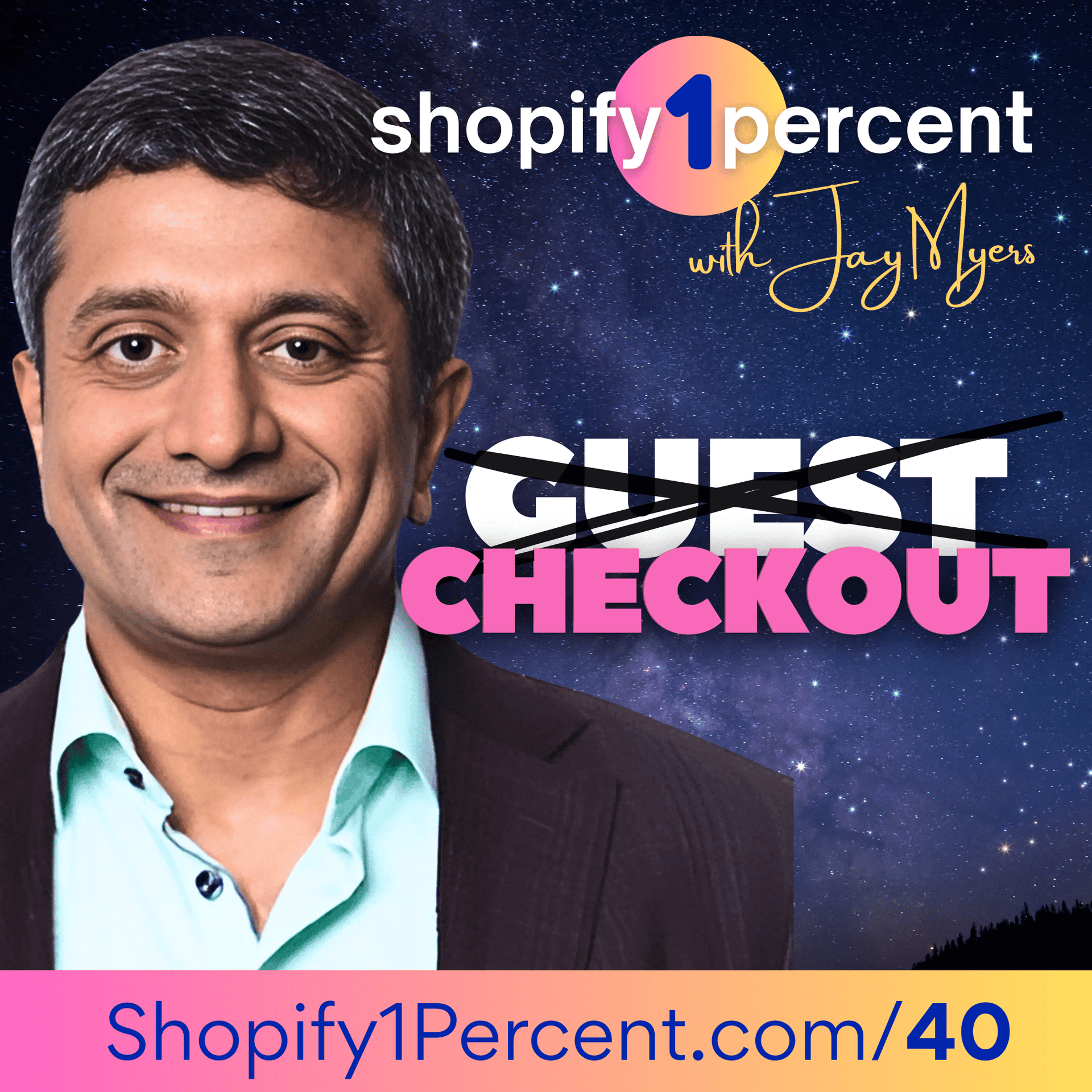
Rohan Mahadevan, PhD in astrophysics from Harvard; postdoc; founded a 1999 online warranties startup; joined PayPal in 2004 and spent 15 years there (ran risk analytics; opened Brazil/Mexico markets; led Asia-Pacific/international from Singapore). He scaled PayPal payment volume from about $17B to nearly $1T; left in 2019. He founded Node (Node Connects) to build Commerce 3.0.
Key claims
Guest checkout “cons” (low engagement, limited loyalty) can be eliminated. Node stores a copy of purchase/order/loyalty info on the customer’s device (not on Node servers), enabling one-click reorders and organized access to merchant emails/offers. Node doesn’t own merchant/customer data; merchants keep ownership.
Notable examples
Coffee shop “tap to pay” analogy; customer finds prior purchases (e.g., aftershave variant) in seconds; Node converts merchant emails into a DM-like commerce feed; Node integrates with existing email/loyalty flows by passing customer tokens.
Written by AI. May contain mistakes. Listen to the episode to check what was said.
Chapters
Tap a time to open that second in VOIntroducing Commerce 3.0
1:36 to 2:32
Explore Node's approach to facilitating frictionless transactions for consumers.
“Or you can just use the code J30, J-A-Y-3-0 when you sign up.”
Introducing Commerce 3.0
2:38 to 3:40
Explore Node's approach to facilitating frictionless transactions for consumers.
“Customers want speed, they want safety, and they want convenient.”
Rohan's Journey and Node's Vision
3:40 to 5:07
Hear Rohan Mahadevan's background and the evolution of Node's technology.
“From astrophysics to PayPal to now your reimagining guest checkout.”
The Transformation of Customer Interaction
5:07 to 6:39
Learn how Node transforms customer interactions by eliminating traditional logins.
“running all our international business out of Singapore.”
Node's Unique Checkout Process
6:39 to 8:19
Understand the seamless checkout process facilitated by Node's technology.
“Well, what a backbone to have or a foundation for the rest of your life.”
A Deeper Look at Security and Privacy
8:19 to 9:58
Discuss the security advantages of Node's approach to storing consumer information.
“So is it inherently secure because it's on your device, it's not going through, it's not being stored, your data is not being stored on a server somewhere?”
The Evolution of User Accounts
9:58 to 11:22
Examine the history of user accounts and how Node addresses their shortcomings.
“I can store their card information, all of that stuff.”
Creating an Instant Purchase Experience
11:22 to 14:00
Discover how Node enables users to quickly purchase items without barriers.
“And every time Jay comes to that merchant that he's made a purchase from before, he has all the information.”
Understanding the Shop App vs. Engagement Tools
14:00 to 22:23
Learn how the Shop app functions differently from merchant engagement tools.
“Like what did I, was it the nine ounce one or was it the three ounce one?”
Guest Checkouts and Merchant Engagement
22:23 to 25:57
Discover the challenges of guest checkouts and how to better engage customers.
“What we also have in our app, and since we last talked, is you now have the ability to actually pull in your last two years worth of transactions from your Gmail.”
Show all 25 chapters
Functionality of Node in Checkout Processes
27:21 to 28:00
Understand how the Node app enhances the checkout experience for customers.
“like if I have it installed on my phone, it doesn't matter if a merchant has it, if a store supports it, I could still use it to shop there.”
Understanding Guest Checkout Impact
28:00 to 29:04
Learn about how guest checkouts affect customer loyalty and purchase behavior.
“unless the brand actually has deployed us is we can't get the SKU information relative to that brand is what's needed, right?”
Comparing Logged-In and Guest Users
29:04 to 30:06
Discover the differences in purchasing habits between logged-in users and guests.
“Do you know the impact of a customer who shops as a logged in customer?”
The Role of Checkout Speed and Convenience
30:06 to 32:11
Explore how speed and convenience influence customer checkout preferences.
“And so the delta, I would say, is, I mean, it's also reflected in any merchant.”
Pros and Cons of Guest Checkout
32:11 to 34:14
Examine the advantages and challenges associated with guest checkouts in e-commerce.
“So we like, you're solving a large problem here.”
The Technology Shift in E-Commerce
34:14 to 35:39
Learn about the new technologies transforming guest checkouts and customer data management.
“Is there like, okay, we can do almost all of this, but not this one thing?”
Customer Data Ownership and Security
35:39 to 37:53
Understand the importance of customer data ownership and the security measures in place.
“And we can talk about agentic commerce and the impact of that on Guest as well second.”
Integrating Email and Loyalty Programs
37:53 to 41:25
Discover how guest checkouts can integrate with email marketing and loyalty programs.
“Is there any, I imagine it's as secure as your wallet pay, right?”
Early Success Stories with Node
41:25 to 42:00
Hear about the potential success stories and merchant experiences with Node Connects.
“want to say what we are, what we're not.”
Introduction to Node Connects and Its Benefits
42:00 to 45:12
Learn about Node Connects and how it benefits merchants and consumers.
“log them in and you go through their existing flows.”
Future of Commerce and Consumer Engagement
45:12 to 47:14
Explore the impact of AI on commerce and the need for better consumer engagement.
“like thousands of others, they will do everything for you.”
Implementing Node Connects in Shopify Stores
47:14 to 48:58
Understand how merchants can easily implement Node Connects in their Shopify stores.
“Otherwise, everything is going to go to higher customer acquisition costs as a first-time user.”
Philosophy Behind Node Connects and Technology Tension
48:58 to 54:08
Discuss the philosophy of Node Connects and the tension in technology usage.
“And as long as that gets transferred, they're done and they're ready to roll.”
Final Thoughts and Advice for Merchants
54:08 to 55:44
Hear final insights and advice for merchants in the evolving e-commerce landscape.
“And for people who are innovative and have thought leadership.”
Engaging Your Email List for Better Deliverability
56:00 to 58:43
Learn how to send effective one-question surveys to boost email engagement.
“Email your list with a one question survey.”
Transcript
Automatic transcript. May contain errors.0:00Here's a stat that's going to blow your mind. On Shopify, roughly 70 % of orders are through guest checkouts. But here's why that matters. Guest checkouts typically have two to three times lower lifetime value than logged in customers. So that means most of us are literally leaving money on the table every single day. In this episode, I sat down with a former PayPal exec who scaled it from 17 billion to over a trillion dollars in payment volume. Now he's building something he calls Commerce 3.0 with his new company, Node. In this episode, we got into a future where guest checkout doesn't matter.
0:38It doesn't mean lost engagement. It doesn't mean missed loyalty or reacquiring customers you've already won. Instead, it's instant, private, and completely frictionless. Kind of like tapping your phone at a coffee shop to pay. So if you've ever wondered how to turn one-time buyers into repeat customers without forcing them into another login and password that they'll probably forget. This is a very eye-opening episode. Let's get into it. OmniSend just shipped something that I've always wanted. You can now connect OmniSend to ChatGPT or Claude and just say, where can my email and SMS campaigns be making more money?
1:14And it actually figures it out. It reads your store data, all your campaign details, your store history, and it tells you. And the insights are legit good. And even better, you can then say, okay, let's fix that or build that campaign. and it actually does it right from your chat. It's wild. Now, if you're one of our listeners, you can get 30 % off for three months on OmniSend. Just go to the show notes. There's a link there. Or you can just use the code J30, J-A-Y-3-0 when you sign up. Now, if you're using another email and SMS platform and you want to switch to OmniSend, which is a great idea, they will do the migration for you.
1:47Just give them five days and then you show up with everything set, ready to go. Now, they've migrated thousands of stores from Klaviyo And on average, they're saving 35 % on their email and SMS bills. If you're listening to this show, you clearly care about your Shopify business. If your store isn't backed up and protected, it could all be for nothing. That's why I tell every store owner I know who cares about their business, you 100 % need Rewind installed. It's a non-negotiable for me. One bad CSV import, one app that edits your store the wrong way, which has happened to basically everyone I know.
2:20One bulk edit gone wrong. And now, AI making changes for you. Listen, Shopify does not have an undo button. Rewind is the undo button. Go to shopify1percent.com slash rewind for 30 days free on us. Links in the show notes too. Customers want speed, they want safety, and they want convenient. With Commerce 3.0, those cons don't exist. You only get benefit. From astrophysics to PayPal to now you're reimagining guest checkout, what is Node? And describe it. So Node is Commerce 3.0. You know, if you think about going to a coffee shop and buying something, you go and you tap your phone. Don't worry about logging into anything.
3:03Don't worry about signing up to anything. Everything that you've done on your device, everything can be instant.
3:09Rohan Mahadevan:After completing his PhD in astrophysics from Harvard, Rohan Mahadevan spent 15 years with PayPal And grew it from$17 billion in payment volume to nearly$1 trillion. He is now the successful founder of Node, a transformative AI-based e-commerce platform that allows merchant and consumers to instantly engage without the hassles of signups. We're telling the merchant, if 80 % of your users check out as guests, this is a way in which you can actually treat your guest users like members. If the customer is the king, the customer is the king. That says it all right there.
3:45From astrophysics to PayPal to now your reimagining guest checkout. Incredible journey you've had. I had a chance to chat with you about a month ago. But can you give our listeners a quick background on who you are, a little bit of your story, and then we'll get into some other stuff. But quick background. Absolutely. Well, first of all, thank you for having me. It's a real pleasure to be here and to be talking to you, especially with someone who's I had such an amazing experience and kind of seen the whole e-commerce evolution happened, especially from back in the early 2010s. Yeah, just a brief background on me.
4:21Yes, I did my PhD in astrophysics. I did a postdoc. And through various crazy decision-making processes, I went and did a startup back in 1999, selling warranties online, actually. Of course, at that time, there was no Shopify. And that was a time when people questioned whether Amazon would be successful. Or not, right? And then I joined PayPal in 2004 and spent 15 years there and had about 10 different jobs at the company. Fantastic experience. I ran risk analytics. I then opened up the markets of Brazil, Mexico, and a few other places in Israel, including Israel. And then moved to Singapore, where I ran our Asia-Pacific business and then ultimately running all our international business out of Singapore.
5:10I spent about seven years there. That was our headquarters. And through that time, I learned a lot about merchants and experiences, online experiences, regulations, compliance, data. and so you know all of that when i left paypal in 2019 moved back to the bay area and was kind of thinking about a lot of the experiences i had and that's why i kind of came up with node and what we're building what we've built and the commerce 3.0 solution that we would love to share with you guys but 2004 paypal i just want to touch on that that's that was a crazy time was when did paypal go public i was going to google it really quick it went public before So it went public way before that.
5:55And then it got acquired by eBay in about 2003. Around 2003. And then I joined in 2004 in October. Was like Elon Musk wasn't involved at that. No, he wasn't there. That's what everybody asked me. The PayPal mafia had kind of. Some of them were still there. Some of them were tearing away. And yeah. Wow. I've heard a lot of the stories, of course. Right. Yeah. When I joined PayPal, that first year that I joined, I remember we processed, PayPal processed about$17 billion in payment volume. Wow. And then when I left, PayPal was processing about nearly a trillion. So about$750 billion or a trillion.
6:37So quite an amazing ride and a fantastic company, of course. Amazing. Well, what a backbone to have or a foundation for the rest of your life. Yeah. I mean, we could probably do a whole show on that, but that was what set you up. And that is what gave you some of your passion for what you later started. So what is Node? And I want to definitely, this is what I want to talk about today, but describe it. Yeah. So Node is Commerce 3.0. And what I mean by Commerce 3.0 is it's a way where it doesn't have any servers involved. And it allows consumers and merchants to directly interact, engage, communicate, and make purchases from each other without requiring any servers on the backend.
7:24So it's a true direct connection between a consumer and a merchant. And if I were to give you an analogy, the ultimate goal is if you think about going to a coffee shop and buying something, right? You go and you tap your phone, right? And you're not logging into the terminal. There's information that exists on your phone securely, and that information is transferred to that terminal to make a transaction happen. And so the idea was, hey, suppose you could have a copy of everything that you've done online in commerce on your phone. All the emails, all the offers, all the communications, the SKUs, everything, a copy of it is on your device.
8:07then any interaction between a consumer and a merchant should just be like doing that terminal where it's just a tap you get connected to the merchant directly and the transaction ends up happening on the merchant side right and so the philosophy is don't worry about logging into anything don't worry about signing up to anything just have everything that you've done on your device and everything can be instant literally instant and because it's on your device it's also you have the ultimate in privacy as well. Right. So is it inherently secure because it's on your device, it's not going through, it's not being stored, your data is not being stored on a server somewhere?
8:49Literally like... If you take an example, a merchant today will typically... Actually, let me go back and kind of share why we even have username and passwords in the first place. So why we have account creates, right? And if you rewind back to when the internet started, everybody accessed the web through a library, computer, or internet cafe. They would go to a library. A lot of people go into libraries. A lot of people go into internet cafes, logging into, whether it's Amazon or at that time, Hotmail or Yahoo Mail or whatever. And the reality is that the service provider had to identify who the customer was.
9:32And in order to identify which one of the 500 people at that library computer was accessing it, it created a username and password that enabled them to identify who that was. And then the second thing that ended up happening also was the only place to store information at the time was on a server that was sitting with the service provider or the business. And the business realized, hey, if I can store all the information from that customer, then maybe the next time the customer comes, I can give them very delightful, simple and easy experiences. Right. Didn't have to type their stuff again. I can store their card information, all of that stuff.
10:11Right. And of course, they said, look, I need to store it. This was even before the days of Salesforce. Right. They said, I need to store it because only if I store it can I trust it. I'm going to store it. I'm going to secure it. and I'm going to trust the information. But you fast forward, and that was when internet started, when there was dial-ups, right? And this is kind of the context of the infrastructure. But you fast forward 25 years, and today, nobody shares devices anymore, whether it's your laptop, your iPad, your phone, nobody shares. The second is the computing power, the storage power, the security power on this device is all commercial purposes infinite, right?
10:51I mean, When you actually go and buy a phone, they're pricing 256 gigs or 512. You're making a storage decision. You're making it have fingerprint. Does it have retina scans? You're making those decisions. And the third thing that happened was or is you have cryptography today. That's very mainstream, right? And you can trust information that's not sitting on your server. So if you think about Bitcoin, you're trusting the fact that there's a value, but it's not stored on anybody's single server. So if you put those three things together and you can ask the question, well, okay, is there a Commerce 3.0 solution out there where you can actually store a copy of all the information of that consumer, say Jay's information, on Jay's device?
11:40And every time Jay comes to that merchant that he's made a purchase from before, he has all the information. He has their SKU. He has their order history. He has his loyalty points. He has everything in his phone. All he needs to securely transfer it to that merchant and everything becomes an instant one click. Right. And so that's kind of what we've ended up building. Okay. So just so people can visually understand this. So there's a mobile app you have installed and your information is stored there. Now you're, you are shopping on a website on your device and you come to checkout and rather than creating an account or worrying about guest login, not guest login, you walk me through it from that point.
12:29Yeah, absolutely. So first of all, I think you're bang on. So you download an app that's called Node. It's a Node Commerce app. And the beautiful thing about the app is there is no signup process. Okay. I made sure that there was no point downloading an app and trying to then ask me asking the customer for a username and password. So there's no sign up process because it's downloaded on your device and it's yours. OK. OK. So then you go, let's assume you go to a merchant and you make a purchase as if you just made a purchase. You didn't have to worry about anything. Once you, we have a patent where once you make a transaction on that merchant site and you come to the confirmation page, so you've finished the process, you put five things in the cart, you've made the purchase happen.
13:16It'll ask you, the app will ask you, do you want to save what you've did on your device? So it'll save, if you made a purchase of five things in the cart, it'll save all those five SKU numbers from that merchant on your device. You go to your app and you'll see a copy of, hey, this is the purchase I made. Here's the shipment I made it to. Here's the card I used. Everything that you want, or if I use ShopPay, you can use anything you want. And that just sits on your device so that immediately whenever you want to access it, you can just go to the Node Commerce app and you can see everything. Now, if you say the next, I'll take my example, right?
13:57I buy some aftershave. And sometimes I go and say, okay, where did I buy it? Like what did I, was it the nine ounce one or was it the three ounce one? The 1.5, was it the blue or was it the, I'm like, okay, I just go in there. I find out what I bought. I literally click a button because all that information is there. And when I click that button, it transfers me back to the website, to the checkout page on the website. It puts in all the information, puts in my shipping, my billing. and if I used a card, puts in my card as well. And all I need to do is just click pay on the website and the payment is complete.
14:37So you're kind of getting an Amazon one-click-like experience for all your customers without requiring any sign-up in the process. And as a customer, so right away my head goes to the Shop app, which only would work for Shopify stores. Well, I guess they pull in some stuff because they sync with email and they do pull in orders as long as there's an order confirmation email. I don't think it has the ability to click and then go back to the site, but I can see and track orders in there. But like what would be a merchant's probably or a listener thinking right now, what's the difference between shop app?
15:17Yeah, absolutely. So when I think customers for merchants, there are two buckets. There's new acquisition and then there's engagement. Right. And the shop app, just like Amazon app or eBay app or Etsy or any of those apps are really apps about discovery. They help consumers find a product independent of the merchant that they want to go and buy from. Whereas this is really this. When you look at the app and you download it, you'll see that every merchant has their own specific storefront. All communication comes into that storefront of that merchant. So it's an engagement tool for merchants where it helps merchants directly engage with their customers.
16:03And we're not about doing discovery. We're not about cross-selling. We don't do any of that at all. So it's a complete engagement tool for merchants. And that's how we differentiate ourselves from the shop app or eBay or Amazon. And by engagement tool, do you mean you can push communication, offers, or what does engagement mean? So engagement, that's a great question, first of all. Engagement for me is when the customer starts thinking about the merchant or thinking about what they want. And that really starts from whether you've sent the customer an email on an offer or an email on some loyalty conversations or a newsletter or anything.
16:49Today, if you think about what happens, every merchant will send you. I mean, I get some merchants send me 10 emails a day when they come into my Gmail. And pretty much within the first 15 minutes, they're below the fold. Right. And that's one of the frustrations a lot of people have of not even wanting to sign up for anything or everybody will say, don't send me offers or don't send me stuff because you just know that it's just going to create issues. Right. And so if I wanted to go and buy, say, that cologne that I was talking about, I'm never going to go to Gmail and search for cologne because I'll get a thousand things coming up and I don't even know what, you know, how to sift through it.
17:34But with this, when the intent is, hey, where's that thing that I bought? Or coffee is a great example as well. Where's that coffee that I bought? I can immediately go to the Node app and I will exactly see the brand I bought it from. Literally within five seconds, you can find what you had done. And then from intent to then finding out exactly what it is and then to completion of purchase, that entire engagement is taken care of in less than five seconds. And that's the beauty of having everything instantly available. It can only be instant if it's on your device. Otherwise, you always have to log in somewhere.
18:16What are the advantages to merchants? I can kind of see it a bit to the customer because it's seeing my, having kind of all my orders in one place, whether they're on Shopify, not on Shopify, promotions from emails go into there's a promotions kind of section in it right you can see there's a promotion section there's a order section there's a account section there so that's great if a store sends out an email with a promotional offer i can go to that story and like i can see that there versus sifting through my emails to find it right and it's always absolutely and it's always present. So if you go into your, if I will show you my node, you can go into a merchant and you can literally see, we convert all the emails that come in, which are typically texts, right?
19:07When you go to your Gmail, we convert them into basically what looks like a DM. And so you can actually, you know, swipe right, swipe and left and kind of see what the last five that was sent, because you really don't need to see the last hundred. And then you can actually act on it. So yes, we actually do provide. So it gives you persistency. Right. And one of the things I like also saying and what I've done is when I buy my airline tickets or when I buy, when I got an Uber ride scheduled, for example, and I'm on a plane, I have instant access to it because there's no, so everything is on my device.
19:45Right. So I have 24 seven access to it even without wifi. Right. Right. So just coming back to what you said about engagement, for me, engagement really starts when intent, when you're thinking about the merchant or thinking about the product and making sure that you can deliver the content that the customer wants when they think about it. And then there's no distraction and no drop off during that period of time. Okay. Now, why would a merchant want to have this on there? I mean, okay, we can engage a bit better, but what are the other benefits for a merchant? So what we're telling, so we're focusing on merchants.
20:25So what happens today is let's, I mean, I'll take my example of buying coffee. All right. Yeah. I will go and buy coffee online. I buy the buy from Lifeboost or I get from Illy Coffee and, you know, I'll buy three or four different bold and this grind, that grind, you know, whatever that portfolio of things that you have. and I won't create an account. I just don't want to create, like checking out as a guest. I'm loyal to the merchant. I do like the merchant. I'm loyal to them. I don't create accounts, but I will buy from the same store over and over, but I'm the same way. Yeah, and that's what I tell merchants, right?
20:59I tell merchants, I say, hey, customers actually, I mean, they've paid you, right? I mean, so they want your product. They've paid you. They've tried you. They want to engage. They just don't want the hassle associated with signing up, remembering stuff and going through a password recovery, all that kind of other stuff they just don't want, right? So what we're telling merchants is, look, if more than 50 to 60 % of your users are guest users, okay, where they check out, but they don't create an account, right? They don't sign up for anything. And most of them also will opt out like I do, even with the ones that I like a lot, I will opt out for marketing.
21:39I say, don't market to me, right? Because I just know it's going to deluge my personal inbox. Yeah. And so you've got a customer that's checked out, they've opted out of marketing, and so your opt-out file is bigger. And now if you're going to start doing your, if you're going to start marketing again, that customer is going to come back looking like a new customer. So you're kind of re-acquiring a customer that you've already bought, has already bought from you. So what we're saying is, look, instead of reacquiring that customer, why don't you just, and by the way, the deployment of Node on a merchant takes less than a minute, 30 seconds.
22:22And if you just deploy this on your site, whenever the customer checks out as a guest, a copy of all that information will just be sitting on their Node commerce app. and now you immediately when you when it's there the customer actually doesn't mind getting offers because it's all organized yeah right and everything is just one click so you're actually giving a customer a better than an account like experience without ever signing up for anything okay and i know that so this is because there's a node specific email right so this is that all email marketing and offers will go directly to Node and not to your personal email, correct?
23:10If the customer chooses to. So there we have to. If you turn that on, yeah. If you turn that on. What we also have in our app, and since we last talked, is you now have the ability to actually pull in your last two years worth of transactions from your Gmail. We actually see it all in one place. or if you don't want your Gmail to be cluttered or any emails that you have to be cluttered, when you download Node, we actually give you what we call a commerce token that looks like an email that you can use anywhere and everything will come in directly into your Node app. What we're saying is, look, email was built for personal communication, right?
23:49That's what was built for back in the day. And right now, 90 % of it is commercial, right? Basically. And because you've got the WhatsApps of the world, you've got Twitter, you've got different forms of communication for different things. And so email is really used on a personal basis for documentation more than anything else when you need to remember things or maybe something documented. And so we're saying, look, just separate, create. we've created a new commerce space on Node, which is your own personal private space, which is what we're calling your personal commerce assistant, where everything you do in commerce is just in one place.
24:27Because it's commerce related, we can use AI and certain other rules that eliminate all spam phishing attempts, that you can feel trusted, direct communication with the brand. So that's the idea behind the personal commerce assistant. So you're coming back to what benefits the merchant, right? So we're telling the merchant, hey, if 80 % of your users or 70 % or 60 % of your users check out as guests, right? This is a way in which you can actually treat your guest users like members, right? And I'll just give you a concrete example. Today, when any merchant asks somebody to create an account, they really have four value props, right?
25:10They say, and you can actually, you can Google this and say, what's the benefit of guest checkout versus account, creating account? And this is all standard stuff. And there's pros and cons. And we're saying there are no more cons of guests. Because you give consumers, merchants give consumers a reason to create an account. They say instant access to your order history, right? Yeah. Faster checkout the next time. We can give you loyalty points and we can give you personalization. And what we're saying is, look, if you actually keep a copy of that information with the customer, you can provide all those services without requiring signup.
25:48A hundred percent. Yeah. So that's the benefit to the merchant is you can treat all your users like accountable. At the beginning of the show, I told you why everyone serious about their Shopify business should have their store backed up and protected with Rewind. There is no excuse not to. There literally is no undo button for Shopify. Shopify's own terms actually say that your data is 100 % your responsibility. Your products, your theme, your customizations, your settings, everything. They don't back up any of it. And no, a CSV export does not cover it. With CSV exports, there's no images, no meta fields, no themes, settings, etc.
26:31Nothing. I was talking to the people at Rewind about a brand where one team member actually ran a bulk update and accidentally overwrote 11 ,000 products. Orders, customers, contacts, all of it gone in a single action. Luckily though, with Rewind, it was a simple one-click rollback. It could be anything, a bad CSV import, a random app you just installed that messes everything up, or all of these AI tools that everyone's using to manage their store now. I have heard so many horror stories. Rewind just gives you peace of mind no matter what. If you don't have Rewind installed, you absolutely should have it.
Read the full transcript
27:07Go now and get it. Shopify 1 % dot com slash Rewind. you'll get an exclusive 30 days free on me. The link is also in the show notes.
27:20So you can use as a customer node, like if I have it installed on my phone, it doesn't matter if a merchant has it, if a store supports it, I could still use it to shop there. And does it populate my checkout as I go through? or does the brand need to have it installed on their end as well too so it can communicate? So the first part, you can actually use Node anywhere and it will populate all the information that it has on, that you have on yourself, right, into the merchant site. The advantage for what it doesn't do unless the brand actually has deployed us is we can't get the SKU information relative to that brand is what's needed, right?
28:11In order to make sure you have a, I can pre-populate the product categories that they've purchased from the brand because that information is only available at the brand. So our deployment is really telling the brand, look, our technology does everything else, but the data that the customer needs is really the SKU information. And that's what this deployment really does is just gets the SKU information of the purchase that they made and transfers it to the customer's device. Right. And that's what I need. Yeah, it makes sense. So do you have any data on what the potential losses of guest checkout in terms of it not like customers not reordering, customers like not taking advantage of loyalty or customers?
29:04Do you know the impact of a customer who shops as a logged in customer? Because you're basically giving a logged in experience to a not logged in customer. So what is the delta there? Does the average logged in customer buy X more times, have higher AOV, have X higher LTV? What is the difference? It varies. Yeah, I can give you directionally where it's at. But of course, it varies by industry and by brand and et cetera. But typically, if on certain industries, you'll see that account holders, especially for repeat transactions, right? And you'll see account holders maybe doing four to five transactions or six transactions, say, a year on certain kinds of products.
29:47And the corresponding guest user may do one or two, right? Because their switching costs are very easy. They can go and buy anywhere else. Or it's become too difficult to go back, put in five things in the cart. and I'm just going to go to my target nearby and I'll just go buy it from there, for example, right, if it's available. And so the delta, I would say, is, I mean, it's also reflected in any merchant. They just need to calculate, hey, what's my LTV on my account holder and what's my LTV on my guest users, right? And I think that discrimpancy is about two to three, at least two to three X, right?
30:22Over difference. Right. And of course, it varies by industry, right? Yeah. I was just looking it up as we speak. Logged in users on average have a 30 to 40 % higher AOV, average order value, than guest shoppers. Reason, this is from a Salesforce study. Store preferences make personalized upsells, personalized offers. they logged in users convert two to three times higher than guest shoppers i was from a baymard study all the data lower higher cart about lower abandoned carts so higher abandoned cart recoveries yeah yeah so i mean so the benefit here is do you know what the industry what percentage of checkouts are guests versus logged in yeah so if you well again it varies by industry and by merchant And some merchants force, some merchants will say, hey, I've got 100 % account holders.
31:22But the question is, okay, what's the conversion? What's the overall website conversion, right? And that's really a question over there. In a lot of the merchants we've been talking to, it's about, you know, some people say it's a 90 % our guests. They just want to, because they're coming in either through a social, through their social media advertising. Nobody wants to, everybody wants speed. Everybody wants speed. And customers want speed, they want safety, and they want convenience, right? That's kind of it. And especially in this day and age where everything is instant. So the ability to go and create something new and sign up for something is, and even, you know, one of the things I get, I see a lot of is the minute you go to any website, they say 20 % off, give me your email.
32:05and customers have created multiple junk emails to kind of make sure that they value that and it doesn't really go anywhere with it so it is pretty significant and you know i i yeah it's pretty shopify i just would there's 70 of all orders are from guest checkouts on shopify yes globally the average is closer to 80 but so i mean it's a huge that's a huge portion of customers that get out, check out as guests and they have, well, I just went over all the data on how that affects their buying behavior. So we like, you're solving a large problem here. This is not inconsequential. I think so. And I guess that's why you're doing it.
32:53I definitely think so. And no, one of the things, you know, you're looking online and if you even do a Google search and say, Hey, what are the benefits and the pitfalls of guest checkout, you'll see, they'll see pros, faster checkout, no speed, higher conversion, et cetera, et cetera, et cetera. Challenges, engagement low, can't give off our loyalty, et cetera, et cetera. And what we're saying is those cons don't exist anymore. With Commerce 3.0, those cons don't exist. You only get benefits. And I remember the time when, you know, when this was when PayPal was part of eBay, eBay had a philosophy at the time was everybody requires logged in transactions for various reasons.
33:37And then, of course, they opened up Guest as a way to allow customers. And they immediately saw a huge increase in new sales, right? Because Guest is great. It's fast. But then they saw a challenge with engagement on that group of users. And so What we're saying is there doesn't need to be a challenge in engagement anymore. Because the tech is different. So you say Node claims to deliver all the benefits of a logged in experience, such as loyalty, reorders, personalized offers, without signing up. Is there anything it doesn't do? Is there like, okay, we can do almost all of this, but not this one thing?
34:23I'll answer that question. Well, the short answer is I think anything that a merchant wants to do with the customer, they can do directly with the customer using this technology, right? And the reason is because the fundamental infrastructure that we're building in this Commerce 3.0, which is serverless AI commerce, is serverless, right? So we don't own any customer data, okay? I think that's a really important point. We don't own any customer data. The merchant still owns whatever data they have. I'm not taking anything away from the merchant. They still own their data, their transaction, the customer.
35:03All of that is, all the merchant's doing is, hey, I'm just going to keep a copy of it on the customer's device so it becomes easier for them to interact with me. Right. Right. And so there is really no downside on how they email on the backend, what the backend processes are. We actually increased their opt-in file. And so, you know, it may sound too good to be true, but that's because the infrastructure has changed. And if you don't mind me going down a little bit of a parable based on my astrophysics background. I was hoping you would. I can give you the analogy I like to use when I talk to investors and other people as well.
35:39Look, I view this change, this technology shift that we're going through and we're seeing it right now. And we can talk about agentic commerce and the impact of that on Guest as well second. But if you think about all risk management, I mean, all the things that e-commerce providers, the e-commerce industry has today, right? You have risk management that makes sure people don't hack into your servers. You put CAPTCHAs in front to make sure it's not a bot. You go through passive recovery flows. You do OTPs. There's a lot of stuff that's going on. And every merchant needs to think about this, right?
36:19And that's all because they're storing data on everybody's individual server. So there's a lot of different solutions to try to solve a common problem, right? And the analogy I like to use based on my astrophysics background is, is these were the same kinds of different solutions that we tried to explain planetary orbits when we all believed that everything revolved around the Earth. When we did that, we could explain the orbits of Jupiter and Saturn or one of them. And then we'd come to another planet and we're like, hey, it doesn't work. Need to have another solution to try to explain those perturbations, blah, blah, blah.
37:02And then when Galileo came in and said, hey, maybe our baseline is wrong. Maybe actually the sun is the center, right? And if the sun is the center and everything is elliptical and it simplifies everything. Because what we're coming in and saying is, hey, look, it's actually, if you actually let the customer store their data, and they have access to all their data, then when they come to any merchant site, they can actually share whatever they want to, and you don't have to, and it's uniquely determined because it's their device. And so you don't have to worry about, you know, all these other complications about two FAs, about logins, about, you know, going through what my order history was.
37:44All of that is just there. Right. So when you ask the question, is it anything it doesn't do? I just think that when you change on what everything is built, then because at the end of the day, if the customer is the king, the customer is the king. Right. Right. Or the queen. Is there any, I imagine it's as secure as your wallet pay, right? Is it, there's a, even if someone took my phone, it's still going to use my facial identification or something else to, yeah. Okay. So it's as secure as having my credit card in my wallet pay in my phone. In your wallet. And that's the beautiful thing about, and one thing to think about also to mention, Jay, is it's like the security is on the phones.
38:28if you look at any device, right? Even the laptop fingerprinting on every single laptop today, which didn't exist 10 years ago, five years ago. I mean, the speed, the security, and everything on devices are only going to get bigger because of Murphy's laws, right? They're only going to get better. So this is, yeah, this is completely, you know, protected by, you know, face ID, this, that, et cetera. If you want to turn it on, if you don't want to turn it on, you don't have to it's not like i'm storing your bank information right in it but yeah it's as safe as anything else that's on your device right now so what about other email flows that merchants will sometimes have like automations you buy something there's welcome series there's educational content it could be klaviyo flows shopify flows different things that normally happen when someone purchases something.
39:23So if they buy with Node, how does Node integrate with those other tools or loyalty programs, all of that? So let's do the email first and I can talk about loyalty programs. And I want to be very clear what we are and what we are not. Okay. And it's super important to do that. But on the email flows, look, what we end up doing is our system, think of it as whether you're using AI or using a really nice piece of code where we're telling merchants, hey, when a customer buys from you and they want to use their Node Connects token, if they want to, or they can use Gmail, we can automatically add that just like an admin, right?
40:01You can automatically add that into your file as a line item. Next to your customer, they'll have two emails now. One will be rohan at nodeconnects.com and one will be my Gmail. And you just now do whatever you usually do. And every time any new message or new onboard flow takes place that you usually do with your customers, it just comes into my Node app. And you as a customer can say, hey, notify me every time I get an offer, every time I get an account update, or every time I get a newsletter. So we have notification preferences as well. But the beautiful thing is, what we're telling merchants and consumers is, when you send me something today and if I'm not ready to consume it, it's going down below the fold.
40:51Whereas with this, I'm like, what did I get from Ilia Beauty? Or what did I get from Lime Lush? And okay, I'm going to go and check it out on my time and I can have access to everything that they sent me when I'm ready. I just brought something from Brightland and got some great olive oil from them and I want to do a repeat purchase, right? It's really helping the customer engage with you on their terms, on their timeline, when they're ready, when they have the intent. So that doesn't change. So coming to your loyalty, I want to, so this is kind of where I want to say what we are, what we're not.
41:27We are basically an information company. Okay. I don't provide loyalty programs at all. So what we do is we would go to companies who have a loyalty program and say, look, if you want to, you can offer that loyalty program, whether you have, to your guest users. Because all we're doing is just like we store card information on the customer's phone, we're storing your loyalty points or your loyalty program. And every time the customer comes back to your site, we'll just pass that information so that you can automatically log them in and you go through their existing flows. So we're an information company that stores everything to do with commerce on the customer's devices.
42:12Gotcha. I know it's early and you just like launched this recently, but any case studies of big wins or examples of success that some merchants have seen with it? So we, you're right. We are early. We are talking. We still haven't gone live with some of the merchants that we're having discussions with right now. Okay. But you know, this is one of the reasons I'm excited to be on this because I'd like for sure merchants to also come in. There is really no downside. It takes less than two minutes to deploy. And you know, we'd love to kind of work with merchants that are, you know, watching this show and with yourself.
42:49And it doesn't interfere with shop app actually. Now I think like orders will still flow into, if someone's using shop app, they're still in there. It's just, if someone prefers a more secure way, faster way, guest checkout, like two don't conflict, right? Absolutely, they don't. They absolutely do not conflict. And it doesn't conflict with ShopApp. It doesn't conflict with ShopPay, with PayPal. It doesn't conflict with anything. And I'll just give you an example. So I use ShopApp as well, right? Because it gives me my tracking instantly and it tells me a bunch of things on that. But I've gone into ShopApp, into ShopPay, or even into PayPal, and I've updated my contact information to my Node Connects token.
43:30So now everything comes into Shop app because that's how Shop identifies me or PayPal. But I also get a copy of everything in my Node. So I can actually, all of these things can really coexist with each other. I'm not trying to pull anybody away from anything. I think it's just a much easier way to engage directly between a consumer and a entrepreneur. At the top of the show, I mentioned OmniSend can now talk to ChatGPT and Claude. And I want to tell you why that's even bigger than it sounds. So if you missed it, quick catch up. OmniSend is what I use for email and SMS on every Shopify store I work with, plus for this show as well.
44:10And you can now connect your AI, Claude, ChatGPT straight to your OmniSend account. Your data, your campaigns, your flows, everything. You open a chat and you ask, what should I focus on this week to make more money? And it will come back with real answers about your store, which flow is underperforming, which automation needs improvement, which customers are going quiet, what's missing, everything. My favorite part though is AI segments. I used to build these by hand, clicking through filters forever. Now I just type something like customers who bought twice, but ignored my last campaign and it just builds it.
44:46and anything it writes already sounds exactly like your brand because it pulls from all your previous emails, from your website, your logo, your color, your voice, everything. I've been doing this for 15 years and this is the closest I've ever felt to having a full-time marketer sitting right beside me. I have a link for you in the show notes that will give you 30 % off for your first three months or you can just use code J30 when you sign up, J-A-Y-3-0. If you're ready to migrate from Klaviyo to OmniSend like thousands of others, they will do everything for you. You just show up and all your campaigns and automations from Klaviyo will be set up and running in OmniSend, ready to go.
45:21And usually at 35 % less what you were paying Klaviyo. What do you think, where's this all heading? Like, what do you think the commerce looks like in three to five years? It was interesting. I was speaking to somebody and they asked the question, hey, where do you think AI is heading in 18 months? And the guy's like, I can't tell you anything over six months. I think it's moving so far, right? So look, I think the one thing that we're starting to see right now is a lot of agentic commerce coming in and people, you know, the whole perplexity PayPal deal, you know, you mentioned Amazon doing some stuff and Google and where Shopify and just have a partnership now.
46:06And yeah. Yeah. So everybody is doing this and I think it's great, right? Because it simplifies consumer cognitive load, right? They can just do things that, hey, I want to buy that thing again, just go find it for me and buy it. And they go, right? It's a great, as I mentioned before, it's a great discovery for the consumer so that they can go and execute on their purchases. But I find it's going to have a lot of harm on the engagement between a consumer and a merchant. Because if you thought that you mentioned guest checkout on some of these, Shopify is 70, 80 % and sometimes even more, and the LTVs are much lower, this is only going to exacerbate that.
46:50Because the switching costs are going to become so low. So unless you can actually figure out a way to engage with your customer on their terms, I don't think anybody is going to be creating accounts or signing up for anything anymore. You have to figure out a way in which you can engage your customer directly when they want to. Otherwise, everything is going to go to higher customer acquisition costs as a first-time user. And so I think Commerce 3.0 is going to be even more important. right and we're going to be you know in the near future we can what i'm telling merchants as well is not only is this a storefront for you to engage your customers on their terms but it's also you can have personalized ai that's running on the customer's device that just engages with you like tells you hey when you're next we talked a little bit about this with respect to bold on subscriptions a lot of people i mean i don't always buy from my merchant again and again, but I don't subscribe because I never finish my stuff before the next usually comes.
48:03So I want to just put on my terms, right? And so setting that up locally and making sure, you know, you can do it on your terms, I think is going to be really important to have this capability as the additive solution for engagement, right? The key word here is additive. Yeah. So if a merchant wants to, if it doesn't conflict with shop app, there's no real downside. It's only potential upside. What does the merchant have to do to turn this on their Shopify store? So, so we have a plugin, for example, on Shopify store, we have a plugin and they literally, you know, download that plugin. And, you know, it's, I have a video that we're just prettying up a little bit, but it takes about a minute, 30 seconds.
48:52And they're just enabling the access of SKU information from their confirmation page to the customer's node directly. And as long as that gets transferred, they're done and they're ready to roll. The system automatically will take the brand images that the merchants use on Shopify and we'll put it onto their device so that we make it look as much as the merchant's brand as we can, because it's an engagement tool, right? It's you want to make sure that there's continuous trust and the merchant doesn't have to worry about being below, above the fold. They're always above. I like to say they're always above the fold because when a customer thinks of you, you're there.
49:37And there's no actual change to the website. It's just a backend process that connects it, right? That doesn't change the checkout or the cart page or like essentially if you weren't using Node, you wouldn't even know it's running. Yeah, I think that's a great point. And we say three things to merchants. We say it doesn't change anything of your buying flow. Yeah, okay. So we're not trying to distract you or trying to get you to download Node before you make the purchase. That doesn't work at all. It doesn't change your buying flow. It doesn't change your email backend processes. And it doesn't change your data ownership, right?
50:14So those are the three basic things that we're saying that does. So yeah, it's on the thank you page, if you want customers to download Node and engage with them, they can do it. Information is transferred directly, and it's a very nice, seamless interaction. And then the customer has their links on their phone, and they're literally in one click. They're at your website, on your checkout page. Amazing. Yeah. And are you live now? Can someone install it? We're absolutely live. You can download it as a consumer. you can deploy it as a merchant you know please give me a email can people go to to learn more or to try it does it have a free trial is it what's the cost as a merchant yeah so the you can go to node connects.com okay i'll make sure that link is in the show notes as well yeah so connects.com there is a merchant site telling you all the benefits of you know using it as a merchant We obviously have a merchant calculator there as well, which says, hey, if this is your volume, if this is your guest checkout amount, here's what you could expect in increase in revenue in terms of increase in engagement.
51:25There's a calculator there in the merchant calculator side. And of course, there's a consumer section telling consumers. The nice thing I like about it is it's really speaking the same language to both because it's changing that. And, you know, the pricing model right now is, you know, it's free for merchants when if a customer makes a purchase, initiates a purchase from their node, then we basically ask for an affiliate marketing fee from that. Oh, okay. That's super reasonable. So only if node generates it from versus. Only if it's coming from the node do we ask for an affiliate marketing fee in that.
52:01Okay. And yeah, and that's kind of, I mean, some merchants do want a subscription, a monthly fees, and we can always talk about that. But that's, and it's completely free for the consumer. Amazing. Amazing. One thing I'd like to say, if you don't mind, also wanted to just, this is again, a little bit of philosophy is, you know, the technology is fantastic, right? In general, all technologies. And when the internet started, everything was great. Everybody was buying stuff online. everything was going on. But I feel that there's, over the last 15 years, there's been technology that we're using that was built during dial-ups.
52:39Yes. Created a tension, right? Like, I don't want to give you my data. I don't want to do this. I don't want to do this. And there's a tension between, hey, privacy, look at anybody's privacy policy. It's like, I'm going to share your data with all my partners, right? Because I want to give you better services. And so there's this tension. And I don't think there needs to be tension using technology. And that's the reason I said, if you look at our website on nodeconnects.com, you'll see that the merchant and consumer pages are saying the same thing. Not saying something to the consumer and something to the merchant, because there doesn't need to be tension.
53:14You can actually have commerce happen and delight both parties and not take anything away from them. amazing yeah no if you people never read those privacy policies policies but if you did it would i know and the cookie policies exactly yes i know we just we have we just accept everything now it used to be that we were scared but now we're just we're numb we're numb as a accept everything yeah yeah well this is this has been very eye-opening is there anything you would like to leave our listeners with? Any last thought, advice, or anything that you'd like to end on? First of all, thank you again, Jay.
53:55I think it's been fantastic to share what we're doing at Node. And this is Commerce 3.0. It is going to be the new way people are going to interact with people, especially merchants and consumers. And for people who are innovative and have thought leadership. I'd love to kind of work with them to implement this and, and, you know, show them that it can drive, it will make your guest users, I think even more engaged than account holders. Okay. Cause you don't have any of the friction. So. I like it. Rohan, if someone wants to follow you personally, where are you active? What social platforms? I'm on LinkedIn.
54:31Maybe you can follow me over there. I'm mainly on LinkedIn. I'll make sure I add that in the show notes as well too. So this has been a ton of fun. I learned a lot and I will make sure there's links in the show notes for all of this. I, I, you know what I always say in e-commerce, there's always times to take advantage of things before they become table stakes. Like I, I remember buying AdWords for less than five cents a click back in around 2006, 2007. I remember when you could put words on a page in the same color as the background for SEO optimization. Different things like that. And so there's always different things at different times that you can take advantage of and get a bit ahead.
55:16And this feels like one of those things. So I think if it's not, there's no risk in trying it. So I think to me, that says it all right there. There's only potential upside. Thank you. Thank you. Very well said and very well summarized, Jay. And please download it as well and use it and let me know. If there's any feedback, you know we're always innovating changing things and feedback is always is the core thank you so much rohan thank you so much jay thanks so much for listening to the end of this episode and now as many of you know at the end of every episode i like to share a one percent tip and that's the whole theme of this show if you improve one percent a day at the end of the year you're actually three thousand seven hundred percent better.
55:58So here's your 1 % win today. Email your list with a one question survey. That's right. Just one question. Now here's why that matters. The average email open rate is around 21%, but for highly engaged email lists, it's around 30 to 40%. And what the difference is, is email engagement directly impacts deliverability. So if your readers are engaged, they'll get delivered more and they'll open more. So the more subscribers open and click and interact with your emails, the more likely future emails will actually land in their inbox and not in their spam folder. If no one opens your emails, ESPs, email service providers think it's spam and they just put it in the spam folder.
56:45So you need to get people to reply, open and click. So by sending a short, engaging one question survey, just literally something like, which flavor should we launch next? Or what's your biggest struggle with this product? Or, you know, you could make it fun. Like what product should we get rid of? You're not just getting valuable insights on your products, but you're also training inbox providers like Gmail to treat your emails as worth opening. So how do you do it? Three tips here. One, keep it dead simple. Don't overcomplicate this. Make it really, really simple. Just one click one question no big forms nothing one click you could literally even make two links in the email if they click one for one answer and another for another make it as simple as possible to make it fun make it something that people think about make it personal make it something that they maybe have an opinion about maybe it's your most negatively reviewed product you're asking about you could literally say that this was our worst reviewed product what should we replace it with something like that you know like when you admit something is wrong people are going to be less likely to ridicule on social media.
57:51So make it fun. And then the last one is really important here. This is kind of like the bonus tip, follow up and share the results with your list later. People love to see what the answers are. And it's just another reason to get people to open another email. So you could even put that in the original email, make it super short. Like which flavor should we add? Click. We'll share the, we'll share the answer with everyone that replies. Boom. That's it. And then make sure to send it because that's a guaranteed another open not guaranteed, but highly likely, which is very good for engagement and the stats for the email provider.
58:26So the beauty of this is it works if you have 100 email subscribers or if you have 100 ,000, it doesn't matter. It drives engagement. It will increase deliverability. And most importantly, too, it'll give you insights directly from your customers who matter most. So that's your 1 % win for today. Thank you so much for being a listener. If you're getting anything out of this show, I just have an ask. Would you mind leaving a five-star review in Apple Podcasts or Spotify or wherever you listen? It's the main way that we get recognized and people find out about the show. And the more five-star reviews there are, the higher it moves up in the rankings, which is helping other Shopify merchants maybe find it and learn some of these tips and advice.
59:09So that's it. We'll see you on the next episode. Thank you so much for being a part of our community.
From the publisher
70% of your Shopify orders are guest checkouts. Let that sink in. That means 7 out of 10 customers are basically anonymous drive-bys who may never come back, and worse… they’re worth 2–3x LESS in lifetime value compared to logged-in customers. Ouch. But what if you could give every guest shopper all the perks of a logged-in account without making them create yet another password they’ll forget in 30 seconds? That’s exactly what Rohan Mahadevan, former PayPal exec and now founder of Node, is building with “Commerce 3.0.” In this episode, we dive into how merchants can turn one-time buyers into loyal repeat customers with zero friction. If you run a Shopify store, this conversation might just change how you think about checkout forever.
KEY TAKE-AWAYS-
Guest checkout makes up 70–80% of Shopify orders, but guest shoppers typically have 2–3x lower LTV than logged-in customers.
-
Node’s Commerce 3.0 creates a logged-in experience for guest shoppers without requiring passwords, accounts, or server-side storage.
-
Merchants can instantly engage guest buyers with loyalty, reorders, and personalized offers.
-
Customers keep their data on their own device, creating privacy, trust, and speed.
-
Implementation takes under 2 minutes for Shopify merchants with no disruption to checkout flow.
-
This shift eliminates the traditional “pros vs cons” of guest checkout and flips it into an opportunity.
Omnisend - I personally use Omnisend for every Shopify store I manage! I’ve tried them all and Omnisend is hands down the easiest way to set up email and sms automations and campaigns, leverage segmentation to personalize them, and A/B test everything to optimize conversion. The push notifications and gamified email collection tools are just the icing on the cake 🤌
(plus most report paying about half the price of Klaviyo 🤫)
🚨Listeners (YOU) get an exclusive 30% OFF for 3 MONTHS: https://shopify1percent.com/omnisend
Bold Commerce - Maximize your Shopify sales with Bold's suite of powerful apps. From AI Upselling, to powerful Subscriptions, Memberships, and VIP Pricing tools, Bold has everything you need to Maximize your Shopify revenue!
Try Bold apps for free here: shopify1percent.com/bold
RESOURCES:Node Connect: https://www.nodeconnects.com Rohan Mahadevan on LinkedIn: https://www.linkedin.com/in/rohan-mahadevan-59414/ Shopify: http://shopify.pxf.io/N9z95v Bold Commerce Apps for Shopify: https://www.boldcommerce.com/shopify