
In short
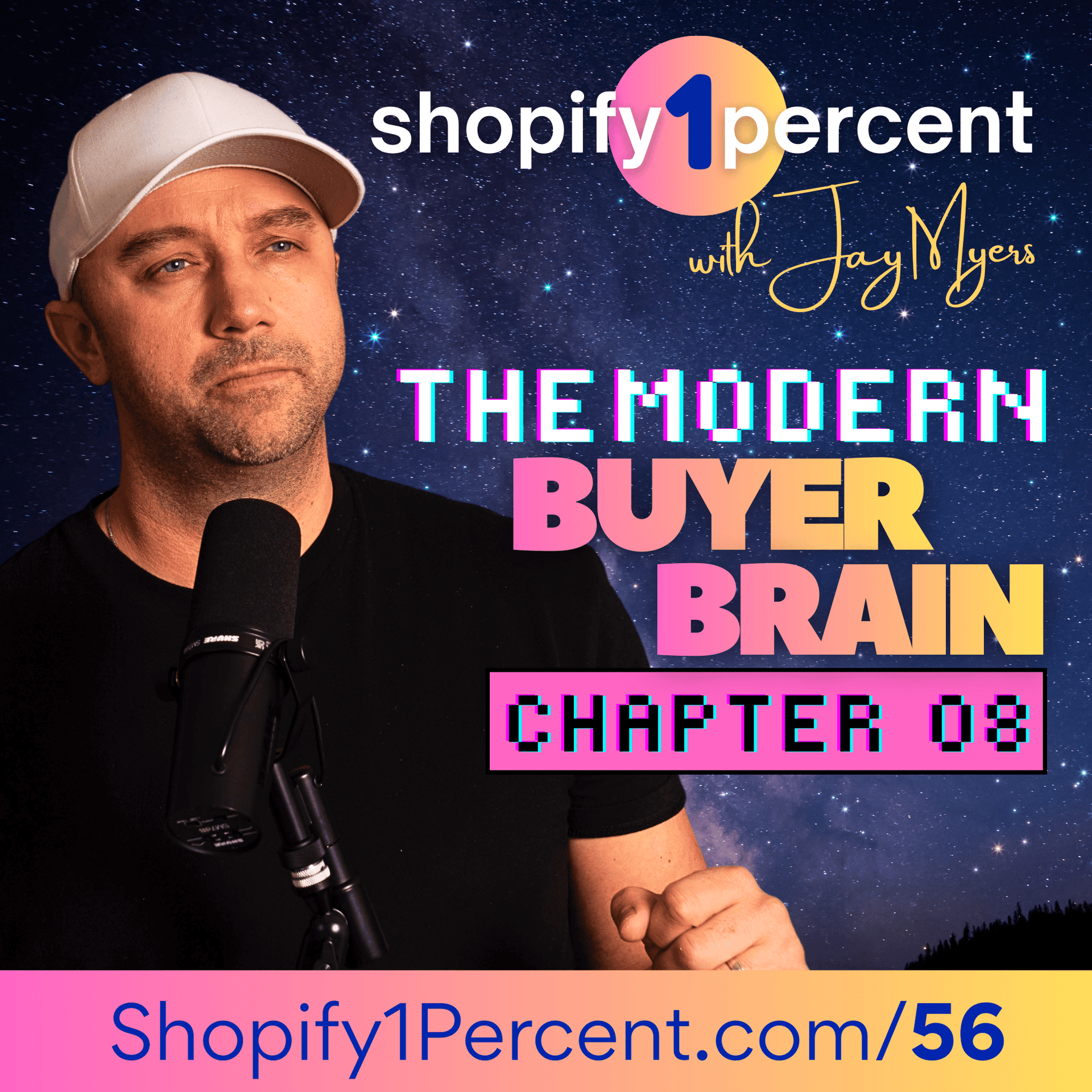
Chapter 8 of a 10-part series on the “modern buyer brain,” arguing that subscriptions/memberships don’t primarily “sell products”—they engineer habits via decision offloading, familiarity, predictability, and sunk-cost lock-in.
Guest backgrounds
No guests mentioned; it’s a solo host episode.
Key claims
Subscriptions turn buying into default behavior (decision offloading), increase trust through frequency (mere exposure effect), create emotional anchors via predictable delivery, and deepen loyalty through sunk cost (paid membership as “deliberate sunk cost”). Membership credits are the “cleanest” sunk-cost mechanic because expiring value triggers action.
Notable examples/data
Prime members reorder more; McKinsey claims paid members spend 4x more, are 63% more likely to choose the brand again, and refer 2–3x more. Examples include Nike, Lululemon, Patagonia, North Face, Starbucks rewards, Panera drink memberships, Sephora Beauty Insider, and TikTok live gifting.
Written by AI. May contain mistakes. Listen to the episode to check what was said.
Chapters
Tap a time to open that second in VOUnderstanding Subscriptions
1:01 to 1:27
Explore the misconception that subscriptions primarily sell products.
“One bad CSV import, one app that edits your store the wrong way, which has happened to basically everyone I know.”
Understanding Subscriptions
2:10 to 2:26
Explore the misconception that subscriptions primarily sell products.
“I want to talk about one of the most misunderstood truths in all of e-commerce.”
The Psychology Behind Subscriptions
2:30 to 2:57
Learn how subscriptions engineer habitual buying behaviors.
“Think about a lot of the brands you shop with, even like Nike, Lululemon, like Patagonia, North Face.”
The Impact of Decision Offloading
3:01 to 3:56
Discover how subscriptions reduce decision fatigue and increase purchase frequency.
“This is not, and I want to break it down, not at the surface level, but at the psychological level.”
Building Trust Through Familiarity
3:59 to 5:17
Understand the role of familiarity in establishing trust with customers.
“And number two, subscription and membership, they build familiarity and familiarity creates trust.”
Emotional Anchors and Predictability
5:29 to 6:19
Investigate how predictability in subscriptions creates emotional ties.
“A supplement subscriber builds their wellness cadence around deliveries.”
The Importance of Previous Chapters
6:27 to 6:52
Emphasize the need to understand prior concepts for a complete picture.
Sunk Cost Fallacy in Memberships
6:56 to 9:38
Explore how sunk costs affect consumer loyalty and decision-making.
“Now, now we need to add what I call the nuclear fuel.”
Behavioral Engineering in Memberships
9:42 to 13:54
Learn how subscriptions and memberships create loyal customer habits.
“And this is why, for example, restoration hardware members buy more furniture, why prime members shop more frequently, why airlines can turn casual travelers, travelers into lifelong elite tier members.”
The Impact of Behavioral Engineering
14:00 to 14:55
Learn how subscriptions and memberships influence consumer behavior and loyalty.
“Subscriptions plus membership is complete behavioral engineering.”
Show all 13 chapters
Understanding Subscription Success
14:55 to 15:18
Discover why effective subscription models are critically successful.
Challenges to Implement for Success
15:18 to 16:34
Explore actionable challenges to enhance subscription models and habit formation.
“And when you add sunk costs into all of this, they build irrational loyalty.”
Five Strategies for Habit Engineering
16:34 to 21:04
Uncover practical strategies to engineer customer habits and enhance loyalty.
“that has one of the strongest business models on the plan if you execute on these ideas.”
Transcript
Automatic transcript. May contain errors.0:00OmniSend just shipped something that I've always wanted. You can now connect OmniSend to ChatGPT or Claude and just say, where can my email and SMS campaigns be making more money? And it actually figures it out. It reads your store data, all your campaign details, your store history, and it tells you and the insights are legit good. And even better, you can then say, okay, let's fix that or build that campaign. And it actually does it right from your chat. It's wild. Now, if you're one of our listeners, you can get 30 % off for three months on OmniSend. Just go to the show notes. There's a link there.
0:31Or you can just use the code J30, J-A-Y-3-0 when you sign up. Now, if you're using another email and SMS platform and you want to switch to OmniSend, which is a great idea, they will do the migration for you. Just give them five days and then you show up with everything set, ready to go. Now, they've migrated thousands of stores from Klaviyo. And on average, they're saving 35 % on their email and SMS bills. If you're listening to this show, you clearly care about your Shopify business. If your store isn't backed up and protected, it could all be for nothing. That's why I tell every store owner I know who cares about their business, you 100 % need Rewind installed.
1:07It's a non-negotiable for me. One bad CSV import, one app that edits your store the wrong way, which has happened to basically everyone I know. One bulk edit gone wrong, and now AI making changes for you. Listen, Shopify does not have an undo button. Rewind is the undo button. Go to shopify1percent.com slash rewind for 30 days free on us. Links in the show notes too. Welcome to chapter eight in our series. We are only two chapters away from being done. If you're just joining, we're doing a 10 part series all about the modern buyer brain. And if you, this is the first one you're listening to, make sure you go back and you listen to chapter one through seven because they kind of build on each other.
1:53And this is all based off of a long interview I did and we're pulling out concepts from it and going deep on it. So make sure you listen to that as well. There will be a link in the show notes to get the full interview. And these are deep dives into each concept. So today, chapter eight, what I want to talk about is subscriptions, engineer habits. I want to talk about one of the most misunderstood truths in all of e-commerce. Subscriptions don't sell products. They engineer habits. And this is the psychological superpower of the subscription model. And really, it's the reason the best brands in the world are all leaning into membership instead of transactional retail.
2:36Think about a lot of the brands you shop with, even like Nike, Lululemon, like Patagonia, North Face. Like they all are. They all have membership. because once you understand the psychology behind why subscriptions and membership work, you'll see it's not just about recurring revenue. It's about recurring behavior. And the brands that master that behavior, they win forever. So let's break this down. This is not, and I want to break it down, not at the surface level, but at the psychological level. So a few points here. Number one, subscriptions turn buying into default behavior. One-time purchases require a decision every time.
3:17Subscriptions eliminate that decision. And that alone changes everything. That moment you subscribe, you stop deciding and you start defaulting. Your brain moves the brand from evolution into routine. And routines become incredibly sticky. Behavioral economists call this decision offloading. There's a term for it. And once a customer removes a choice from their cognitive load, it becomes a habit loop. And this is why prime members shop five to seven times more frequently than non-prime members, why paid members spend four times more annually than non-paid members and why subscribers reorder without even thinking.
3:58Subscriptions reduce friction so much that the easiest thing to do is actually nothing. And nothing means staying subscribed. That's habit engineering. And number two, subscription and membership, they build familiarity and familiarity creates trust. Here's something wild. The human brain interprets frequency as trustworthiness. It's a psychological thing. When someone does something the same time consistently over time, it creates trustworthiness. You might not even think about it, but subconsciously it's creating trust. and the more we interact with something, the more legitimate and trustworthy it feels.
4:42And this is actually, there's a term for this. It's called the mere exposure effect. It's been proven in dozens of studies over the last 50 years and just subscriptions naturally trigger this effect. So good news. You don't have to do anything. Recurring emails they get every month, the recurring deliveries, the recurring interactions, the recurring value, every new cycle reinforces trust without you having to do anything. And this is why subscription customers, they click more on your ads. They click more on your emails. They convert better on other purchases. They stay longer. They refer more friends.
5:17Subscribers always refer more because habit plus familiarity equals brand gravity. Habit plus familiarity equals brand gravity. Number three, subscriptions create emotional anchors through predictability humans crave predictability like especially in this chaotic overloaded world we live in when a product shows up on a schedule your cortisol actually drops satisfaction increases trust deepens and reliance builds that this predictable rhythm actually creates an emotional anchor for example a skincare subscriber builds their entire routine around the product arriving monthly. A supplement subscriber builds their wellness cadence around deliveries.
6:08A pet parent builds feeding schedules around their auto ship. A customer's life wraps itself around a product's rhythm. And if you remove the subscription, you don't just remove a product, you disrupt the habit. And this is why subscribers stay far longer than logical math would predict because it's not math, it's psychology. And remember, when it's done and when it's membership and when there's everything else that we've talked about in chapter one through seven, which makes sure you go back and listen to it because there are really bad subscriptions that customers don't stick around and people don't do right if they think it's only about the product, if you miss the points that we talked about in the previous seven chapters.
6:47So do not skip that because if you're listening to this and just thinking subscriptions aren't the answer to everything, you're 100 % wrong. There's so much more to it. Okay, number four. Now, now we need to add what I call the nuclear fuel. Okay. And that's sunk cost. So if a subscription alone builds habit, membership builds behavioral lock-in. So I want to talk about the sunk cost fallacy. Some of you may have heard it. Some of you may not, but the sunk cost fallacy is essentially when people invest in something, even a little, they irrationally stick with it because they don't want the investment to go to waste.
7:29It's why people stay in a terrible gym membership. It's why people keep unread books. It's why people, 80 % of the clothes in your closet, you don't wear, but you keep it because you've purchased it. Like at Bold for us, sometimes I've experienced it. If we work on an app or a product or something for a year and put a ton of time and money into it, but then there's a better thing we should be doing. Like there's a new opportunity or a new app we should build or something and it's better, but we've spent so much time building this. It hurts to make the, like the right decision. Like if we were just dropped in at that point, we would of course make that better decision, but we have sunk costs that our heads have to reconcile.
8:13Um, it's why the list goes on. It's why we finished meals, even though you're not hungry because you paid for it, but you probably shouldn't. If you're full, you're full, but people feel, well, we paid for it. We got sunk cost is a huge reason people make decisions. Once we've invested, we feel psychologically obligated to continue. And this is where membership just becomes rocket fuel. It's one of the least tapped into psychological reasons people buy. People buy because of FOMO, fear of missing out. They buy because of status, because of all these different things. But sunk cost is not something that is traditionally tapped into.
8:48paid membership is equals deliberate sunk cost. It is paid membership is that. And customers aren't just buying products anymore. They're buying access. They're buying perks. They're buying credit that they need to use. They're buying status that they have. And if they don't use it, they're not using that status. They're buying belonging that they belong to something and they should use it. They're buying identity. Like all of this taps into the sunk cost. And once they've paid to belong, the psychology shifts. you're not going to go somewhere else because you paid to belong somewhere. You paid to belong at a gym.
9:22You paid to belong in some membership. You paid to belong at part of Nike. Why would I buy Adidas? I paid to belong. My identity, my badge, my credits are at Nike. All my perks, my access. I paid there. My sunk cost is there. And you don't want to lose what you've invested in. Even if the value is emotional, perceived, or symbolic, it doesn't matter. You've invested in it. And that's sunk cost. And this is why, for example, restoration hardware members buy more furniture, why prime members shop more frequently, why airlines can turn casual travelers, travelers into lifelong elite tier members.
10:01Sunk cost is not a flaw. It's human nature and membership taps into it ethically and powerfully. Okay. Number five, membership credits. The ultimate sunk cost mechanic, in my opinion. credits are probably the cleanest expression of the psychology. Let's say your membership includes 20 monthly credits or a$50 store balance or access tokens that expire every month. The customer receives value. They don't want to waste. Now something magical happens. They feel pulled back into your ecosystem, not pushed, pulled the fear of losing value actually creates action. Imagine if your members get$20 credit every month.
10:47If they don't use it, they lose it. It's pulling them. You're not pushing. You don't even have to say anything. They browse more just to see what they could buy. They buy more because they have the credit. They log in more often. They interact more. And if they skip using credits, they don't just feel like they lost a discount. They actually feel like they lost money. There's a big difference there. If you run a sale and it's a 50 % off sale, and if I don't buy something, I don't feel like I lost money. I just feel like I didn't buy it. But if I have credit at the store, I actually feel like I'm losing money.
11:21And what do humans hate more than anything? Losing money. This is why Starbucks rewards dominates because you have the money. You prepay the money. You have the money on your card. It's why Panera's drink memberships worked. It's why Sephora's beauty insider tier just crushes retention. It's why TikTok's live gifting works. It's pure psychology. Sunk cost equals, I'm sorry, sunk cost plus a recurring reward equals irrational commitment. I'll say that again. Sunk cost. So some kind of thing you pay for emotionally, financially, something plus a reward, recurring reward equals irrational commitment.
12:08Your customers will be committed to you irrationally because of some sunk cost towards your brand, but irrational, of course, in a good way in your favor. And the data proves that this works. So here's the numbers that are, this is just pure data. According to McKinsey, paid members spend four times more than non-paid members, paid versus non-paid. Pay members are 63 % more likely to choose your brand again. Also McKinsey. And by choosing your brand again, that means like they remove price sensitivity. They don't price shop. They just choose your brand. 63 % more. And paid membership is sunk cost.
12:50Paid members will refer your brand two to three times more than non-paid. So you're getting four times more spend, 63 % less likely to compare you three times more referrals. Like this is sounding pretty good. This might be something I want to implement. Paid membership also increases switching costs. And this is kind of like a side one, but when you're a paid member of something, you, there's more friction. Like if I'm a paid member of Nike or Sephora or Starbucks, there's more friction for me to switch to another brand because the customer's already paid into your ecosystem. them. They want to keep benefiting from what they've invested in.
13:30It's why it's called invest. You're investing your time. They don't want perks and credits and access to go and use like that just feels like they're losing something. And this creates this kind of virtuous loop where use, form a habit, becomes your identity, becomes rational justification, becomes continued membership, which becomes advocacy because they're connected to you. They promote you more. And every step along that journey reinforces the next one. Number seven I have on my list here is subscriptions and membership is a complete, is complete behavioral engineering. Subscriptions plus membership is complete behavioral engineering.
14:11Let's fuse this all together. Subscriptions simplify decisions, which creates habit. Predictable cycles create trust and routine. Personalization creates emotional connection. Membership perks creates identity. These badges, these tiers, it's identity. Credits and sunk costs create irrational loyalty. Now the combination of all of this creates a customer who will spend more. They will stay longer. They will defend your brand. They will refer their friends. they will treat your brand as their default and they will build a part of their life around your ecosystem this isn't luck this is engineered so my takeaway is subscriptions don't work because people love paying you monthly they don't work even actually because your product subscriptions work because when done well they shape behavior they build routines they build dependence they They build familiarity.
15:16They build trust. They build identity. And when you add sunk costs into all of this, they build irrational loyalty. Like it's irrational. You make decisions irrationally because of sunk costs. You can probably think of situations in your life. And that's the real engine behind LTV. That's the, that's the real reason membership ecosystems are membership paid membership program in 2016. And they're publicly traded. They released their numbers. You can go on there and see that a couple of years ago, 400 ,000 members represented 95 % of all of their revenue. Like it's insane how much their members pay versus their non-members.
15:55And that's why subscriptions, when they're done right, it's one of the strongest business models on the planet. Done right. Let me tell you, there's a lot of very bad subscription models. Very bad. Done right is the key. And if you implement everything in these 10 chapters, it will be done right. I promise you. like if you execute on this. So let's end on that note, actually. Let me give you my challenge because with each of these chapters, I'm giving kind of five tips or challenges or takeaways because that's the whole goal. Take these 10 chapters, implement my challenges at the end. And I promise you, you will fall in this category of done right that has one of the strongest business models on the plan if you execute on these ideas.
16:38So my challenge for this chapter is, of course to engineer habits, not just subscriptions, engineer habits, not just descriptions. And I'm going to give you five kind of ideas for this. Cause that's kind of a little bit of a vague challenge, but here's what I mean by that. Add one sunk cost to your business model. So could you add credits to customers? Could, if they spend a certain amount, could you give them credits? Could you give them, you can, can you apply credits to their account? Can you give them some kind of tokens? Can you give them a coupon code that expires? That's a simple thing.
17:11Not just a coupon code, but a coupon code that expires. Can you give them some type of monthly balance? Could you give them anything, anything that pulls them back? Can you add one sunk cost to your business model with your customers? Number two, identify one behavior you want to reinforce. So what do you want your customers to do? Log in, reorder? Do you want them to engage with some of your content to read something, attend events. So what's one thing you want your customers to do and identify one behavior you want to reinforce? So maybe it's engaging with content, identify it. Now, number three, make just, just, that's it.
17:54Just identify it. Make sure that you like, that's what you want to reinforce with your sunk cost too. So number three is make your subscription and membership part of a larger routine. So add education as part of your membership, add challenges. Like people love, love, love, love challenges. We work with a brand that sells these like badges. They, you, it's like a metal that goes around, but you do a challenge. It's literally like, I don't know, like run around Paris or run the Grand Canyon or something. Like you do these challenges all around the world. And if you do it, you get this badge. And then this badge is actually part of a puzzle that you can put on your wall.
18:35And it makes this kind of big, it looks like a shield, but you can complete it. Now I could just go out and run these, these tracks that they make, but I don't get my badge. And people spend like$300 on it. It's like a really heavy metal quality badge that clicks into all the other badges. And then people post it online. Like I went to Asia and I ran the Great Wall of China and I got that badge, but I have to pay for the badge. I could just go and run it, but I'm going to pay$300 to get a badge that says I did it to put on my wall. It's insane. People love challenges and then badges that reward them of that challenges.
19:13What else can your subscriptions be part of a larger routine? Like check-ins, refill timers, like timers, anything that embeds your product into a lifestyle. Okay. Number four, build, use it or lose it moment into your customer's buying journey. Can you build something that creates psychological urgency without discounting? That's the key. Something that creates psychological urgency without discounting. So that might be this month. If they spend a certain amount, they get something. Maybe you issue everyone credit this month. So instead of running a sale, you can do this in bulk. You can issue credit.
19:58And good news, you have$25 credit. We gave you a, you're a, you're a platinum customer and you've spent this much. We are giving you$50 credit this month. It expires in 30 days. You don't need to use it, but just letting you know you have$50 credit. The psychology of that versus we're doing a 20 % sale. Which one are you more likely to use? Like you've got$50 to go and spend versus a discount. And maybe you have to spend$100 or more to use the credit. I don't know. But build in some kind of use it or lose it moment. And then number five is track the behavioral impact, not just the financial one.
20:35So of these customers, going back to number two, to identify one behavior you want to reinforce, track it, engagement, track how much they're on. on the content you want them to be on. How much time they're in your customer portal. Are they using your credits? Do 10%. Use the credits, do 50%. Like is that one of the metrics you want to track? Participation in your events. How many people are they referring? These are proof points that your habit formation is working. So find one of these behavioral impacts and track it, not just the financial ones. I can tell you if you do all this right, your financial is going to go up.
21:13They're going to spend more, but track something around behavioral impact because the brands that engineer habits win loyalty and the brands that add sunk cost win unbreakable loyalty. Thank you so much for listening to this one. That's it for today. We're going, we got two left. So make sure you tune in tomorrow and the next day where we wrap it all up with chapter 10. Thanks so much. We'll see everyone on the next one.
From the publisher
What if the real power of your Shopify subscription and membership program has nothing to do with your product and everything to do with human psychology? Membership doesn't just automate revenue. It automates behavior. In this episode, we unpack why paid members spend 4 times more, why sunk cost fallacy creates irrational loyalty, and how habit loops drive long-term retention. If you want your Shopify customers to stay because they want to, not because they forgot to cancel, this episode will change how you think about membership.
🧠 This is part of a 9-part series pulled from this full interview: https://www.shopify1percent.com/future-of-the-buyer-brain-shopify-evolution/
🫶 Support the amazing sponsors that make this show possible 🫶Omnisend - I personally use Omnisend for every Shopify store I manage! I’ve tried them all and Omnisend is hands down the easiest way to set up email and sms automations and campaigns, leverage segmentation to personalize them, and A/B test everything to optimize conversion. The push notifications and gamified email collection tools are just the icing on the cake 🤌
(plus most report paying about half the price of Klaviyo 🤫)
🚨Listeners (YOU) get an exclusive 30% OFF for 3 MONTHS: https://shopify1percent.com/omnisend
Bold Commerce - Maximize your Shopify sales with Bold's suite of powerful apps. From AI Upselling, to powerful Subscriptions, Memberships, and VIP Pricing tools, Bold has everything you need to Maximize your Shopify revenue!
Try Bold apps for free here: shopify1percent.com/bold