
In short
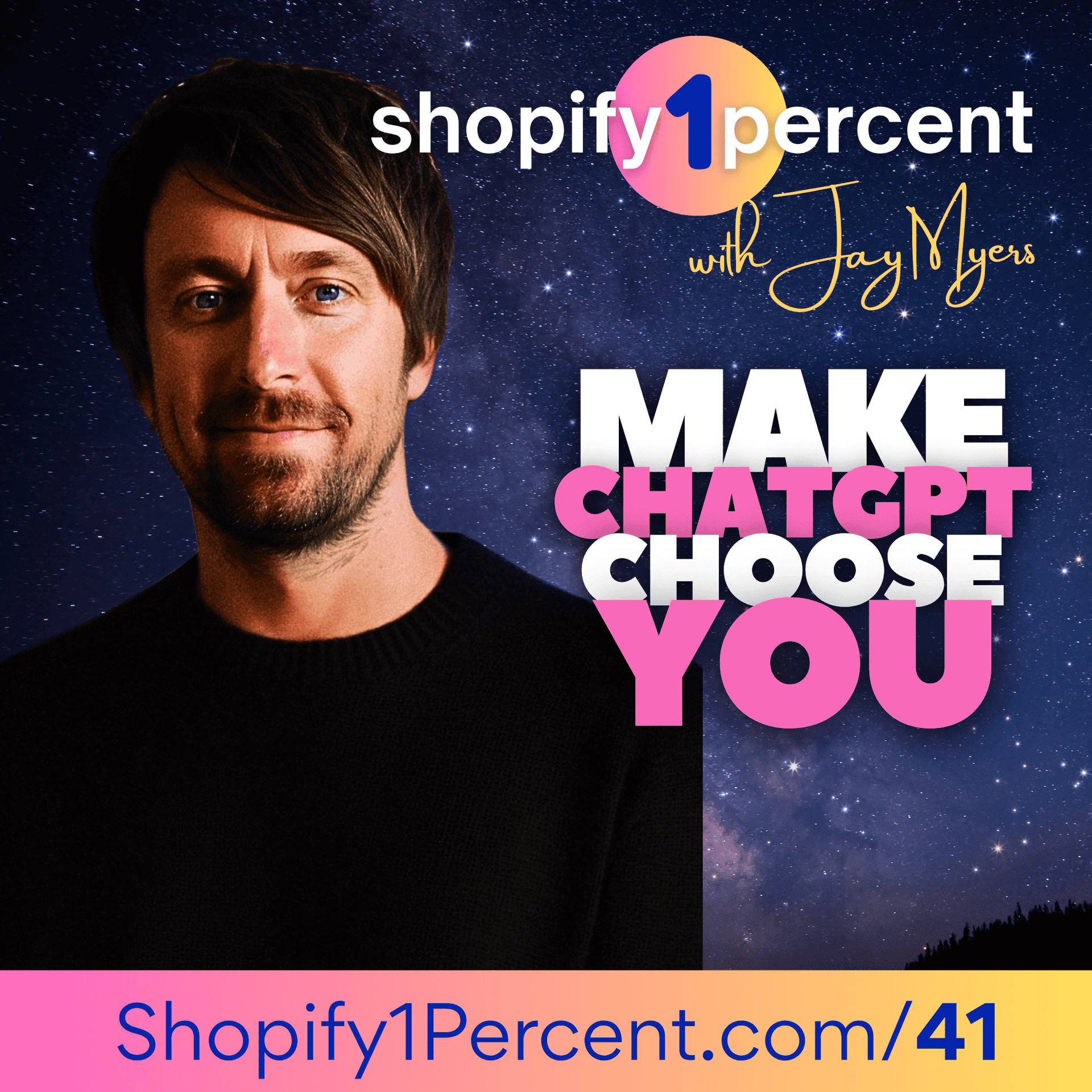
Agentic Commerce Protocol (ACP) is bringing end-to-end purchasing into ChatGPT (and other LLMs). Shopify is a launch partner, so Shopify stores using Shopify Payments/catalog data can be “agent ready” and be recommended and purchased directly inside chat, changing how brands get discovered and converted.
Guest backgrounds
Gavin McHugh, Director at Shiro Commerce; previously worked ~25 years at the forefront of commerce (including CTO roles for major brands). He’s focused on AI-driven commerce strategies and has advocated for “agentic” shopping before it became mainstream.
Key claims
- Attention is shifting from search results to agentic answers; brands must shift too.
- Agentic ranking depends less on fixed SEO “weights” and more on the quality/coverage of structured product data (via Shopify Catalog API and metafields).
- Product pages must be “answerable”: richer technical descriptions, FAQs/Knowledge Base content, and context in metafields.
- Reviews will matter more because agents will use review content to decide fit/constraints.
Notable examples
- Pokemon cards: stage 1 browsing sites, stage 2 asking an answer engine, stage 3 telling an agent to buy when available.
- Fishing rods/hooks: descriptions should explain what the product solves (e.g., hooks for mackerel/cod, where/when they work).
Written by AI. May contain mistakes. Listen to the episode to check what was said.
Chapters
Tap a time to open that second in VOThe Launch of Agentic Commerce
0:45 to 2:26
Discussion about OpenAI's announcement of the Agentic Commerce Protocol and its implications.
“you're using shopify payments within shopify checkout people will be able to buy right in chat GPT.”
OmniSend and ChatGPT Integration
2:26 to 3:53
Explaining the new OmniSend feature that connects with ChatGPT for campaign insights.
“OmniSend just shipped something that I've always wanted.”
The Importance of Being Agent Ready
3:59 to 4:34
Importance of adapting to new shopping methods and ensuring product visibility.
“More than half of US consumers already use AI to research what to buy.”
Introduction of Gavin McHugh
4:34 to 5:32
Introducing Gavin McHugh, discussing his expertise in AI-driven commerce.
“So now saying this, people listening right now, brand owners are either scared.”
Gavin's Insights on Agentic Commerce
5:32 to 7:40
Gavin shares his perspectives on the evolution and future of e-commerce.
“I put a little bit of thought into those intros.”
Stages of E-commerce Evolution
7:40 to 8:25
Breakdown of the three stages of e-commerce and how they relate to agentic commerce.
“as opposed to you trying to find a way to hack the answer.”
Explaining Agentic Commerce
8:25 to 12:37
Detailed explanation of what agentic commerce means and its implications.
“And I mentioned agents, the word agentic wasn't used that much, but I shopping agents.”
Understanding the Checkout Process
12:37 to 14:03
Gavin and Jay discuss the implications of the checkout process within ChatGPT.
“But I'll be able to complete a checkout in chat GPT without ever leaving chat GPT.”
Shopify Payments and Catalog API Overview
14:03 to 14:48
Learn about Shopify payments and the benefits of the Catalog API.
“So I think what people should know off the top is if you're using Shopify payments, which is built on top of Stripe, by default, you will have that.”
Integration of GPT with Shopify for Real-Time Updates
14:49 to 17:00
Understand how GPT integrates with Shopify for product data access.
“There was two things that were announced in the last five months that matter on this exact thing on SAP.”
Show all 31 chapters
The Impact of In-LLM Checkout on Conversion Rates
17:01 to 18:59
Explore how in-LLM checkout can reduce cart abandonment and improve sales.
“You'd then have to complete checkout as you would.”
Understanding Conversion Rates and Their Influencing Factors
19:00 to 22:46
Investigate the factors influencing conversion rates in ecommerce.
“There's two points on that is whether there's a misunderstanding by brands of why conversion rate doesn't happen like just collectively, I don't mean AI wise is 80 % of shoppers would never buy it in the first place.”
SEO vs. Answer Engines: Shifting Paradigms
22:47 to 25:22
Learn about the differences between traditional SEO and LLMs.
“So I'm going to put more weight on the fact that you have alt text.”
Crafting Product Descriptions for LLMs
25:23 to 27:36
Discover how to write effective product descriptions for AI.
“You can tell when you go to a product page that is SEO optimized, you know, and we talk about this sometimes a lot.”
The Rise of Non-Legacy Brands
28:00 to 28:59
Learn about the shift in e-commerce strategies favoring non-legacy brands over established ones.
“Around that point though, I think there's a big shift between brand types as well.”
Optimizing Product Listings for AI
29:00 to 30:52
Discover how to enhance product listings to leverage AI and improve visibility.
“I think that a lot of disputed brands could really shake that up.”
The Importance of Reviews in AI
30:53 to 32:54
Understand the growing significance of customer reviews in AI-driven decision making.
“The second thing I'll say, and I think this is a bit of a hack, or not a hack, but a thing that's very important, is I know in Catalog API that it feeds off every single metafield that lives on a product.”
Enhancing Review Strategies for Brands
32:55 to 35:13
Learn how to effectively gather customer reviews that provide meaningful insights.
“Like right now we're currently building protocols to make it work.”
The Changing Landscape of Search and E-Commerce
35:14 to 37:58
Explore the evolution of search dynamics and how they impact e-commerce.
“But that won't necessarily feed into the Shopify catalog.”
Preparing for the Future of E-Commerce
37:59 to 42:00
Insights into how brands can prepare for the future shifts in e-commerce technology.
“instead of the reviews being talking just about how much they love it, great product, oh my, OMG, I love this.”
The Evolution of Advertising and Brand Strategy
42:00 to 43:00
Learn about the historical context of digital advertising and its implications for brands today.
The Future of E-commerce and Advertising Platforms
43:00 to 44:40
Discover how upcoming shifts in technology like IPOs could impact e-commerce advertising strategies.
“form with tables and grids and okay so if it does of course i think if we were frank though jay i think if we're absolutely frank about the big brands that any brand doing more than i don't five mil, right?”
ChatGPT's Impact on Ad Spend and User Demographics
44:40 to 47:10
Examine how generational shifts and new ad platforms will affect marketing budgets and strategies.
“And when they have to go to a profit company, that means they're going to have to IPO.”
Optimizing Product Descriptions for E-commerce Success
48:20 to 54:40
Understand the importance of enriching product data and crafting effective descriptions.
“If you're ready to migrate from Klaviyo to OmniSend like thousands of others, they will do everything for you.”
AI's Role in Predicting Consumer Behavior
54:40 to 56:00
Explore how AI can reshape marketing strategies based on consumer data and behavior.
“So AI at its core, and this is like a more grander question, and this is not to scare brands and merchants, but AI is a predicting engine.”
Leveraging Product Data for Sales
56:00 to 57:20
Learn how to use product data effectively to appeal to various shopper segments.
“So if there is any piece of data that seems matterless, let me give an example, right?”
The Future of Shopping and AI
57:20 to 1:02:30
Explore the evolving relationship between AI and consumer shopping experiences.
“description with fluffy marketing the number one trusted number one blah blah blah be clear Agreed.”
Opportunities for Challenger Brands
1:02:30 to 1:05:20
Understand how challenger brands can thrive in a changing e-commerce landscape.
“And we'll leave the whole conversation around what AI will look like in e-commerce in five years on that, I think.”
Connecting with Gavin McCue
1:05:20 to 1:07:30
Learn about Gavin's background and how to connect with him for insights.
“But the way they spend and the things that they need to be delivered will drastically change.”
Implementing Effective Product Pages
1:10:03 to 1:11:15
Learn how to enhance product pages using data from reviews and AI.
“You probably know them off the top of your head.”
Request for Reviews and Engagement
1:11:16 to 1:12:07
Discover the importance of leaving reviews and engaging with the podcast.
“And I have a favor to ask you before you go, if you're going to put that, if you're going to implement that tip, if you just thought, oh, that's a great tip, leave a five-star review for this podcast.”
Transcript
Automatic transcript. May contain errors.0:00Gavin McKew:Probably never have I rushed to get an episode out so fast as I have this one. I recorded this Wednesday, October 1st, just 48 hours ago. OpenAI announced what they call ACP, the Agentic Commerce Protocol, which means you can essentially buy within ChatGPT. This means when you ask it, I'm looking for a pair of shoes under$100 that can be here by Friday. it can not just show you results you can buy within it now shopify announced that they're one of the launch partners which is super exciting so did etsy and there's going to be more coming soon but right this will be rolling out to every shopify store eventually right now it's early access only which is awesome for so many reasons it means people are going to be able to buy if you're using shopify payments within shopify checkout people will be able to buy right in chat GPT.
0:54Gavin McKew:But what does this mean? What does this mean for you as a brand? How do you show there? If there's a thousand Shopify brands selling shoes under$100 that can be there by Friday, how do you show up? How do you be the one that's recommended? There's a ton of questions around this. And I sat down with Gavin McHugh, who is, he's from Shiro Commerce. And this guy knows his stuff when it comes to agentic commerce. He was talking about it years ago before anyone was. he really sees around the corner with this kind of stuff and so I was really excited to get him on the show as soon as I heard the news I recorded this within 48 hours of the news breaking and I'm going to try to get it out as fast as possible for you so you will never get a chance to be in a time in history like it is right now if you could go back to the year 1995 before people sold online that was a unique opportunity.
1:49Gavin McKew:In 2003, 2004, before SEO really became, you could still get away with a lot of tricks and hacks in SEO. AdWords, when they were a penny a click, imagine if you could go back to that time. Well, people will be referring to this time in the exact same way 10 years from now. There is an amazing opportunity if you know what to do, how to approach this to really take advantage of this shift in the way customers will be buying in the next few years. So that's enough for me. Let's get into it. OmniSend just shipped something that I've always wanted. You can now connect OmniSend to ChatGPT or Claude and just say, where can my email and SMS campaigns be making more money?
2:35Gavin McKew:And it actually figures it out. It reads your store data, all your campaign details, your store history, and it tells you, and the insights are legit good. And even better, you can then say, okay, let's fix that or build that campaign. And it actually does it right from your chat. It's wild. Now, if you're one of our listeners, you can get 30 % off for three months on OmniSend. Just go to the show notes. There's a link there. Or you can just use the code J30, J-A-Y-3-0 when you sign up. Now, if you're using another email and SMS platform and you want to switch to OmniSend, which is a great idea, they will do the migration for you.
3:08Gavin McKew:Just give them five days and then you show up with everything set, ready to go. Now they've migrated thousands of stores from Klaviyo and on average, they're saving 35 % on their email and SMS bills. If you're listening to this show, you clearly care about your Shopify business. If your store isn't backed up and protected, it could all be for nothing. That's why I tell every store owner I know who cares about their business, you 100 % need Rewind installed. It's a non-negotiable for me. One bad CSV import, one app that edits your store the wrong way, which has happened to basically everyone I know.
3:41Gavin McKew:One bulk edit gone wrong. And now AI making changes for you. Listen, Shopify does not have an undo button. Rewind is the undo button. Go to shopify1percent.com slash rewind for 30 days free on us. Links in the show notes too. More than half of US consumers already use AI to research what to buy. this episode couldn't be more timely because 48 hours ago of recording this Shopify just announced that they're bringing checkout directly into chat GPT and not just Shopify but Etsy others with what is called the agentic commerce protocol ACP for short so AI agents can complete a purchase end to end so this is a new channel strategy for Shopify merchants where your products now really have to be agent ready to be found, priced, purchased instantly.
4:39Gavin McKew:So now saying this, people listening right now, brand owners are either scared. There may be confused. There may be excited, maybe all of the above. And this is why I was really excited to have Gavin join me on the show today, because Gavin, you're the director at Shiro Commerce, spent over 25 years at the forefront of commerce, helping some of the biggest brands in the world solve complex problems, migrations. But most importantly, for today's episode, the reason why I wanted to have you on here is you've helped brands build strategies for AI-driven commerce well before I think most people even knew what AI-driven commerce meant.
5:20Gavin McKew:So you've also become what I would say is one of the louder voices pushing brands to get agent ready for this coming wave of AI-powered shopping, which again, is why I wanted to have you on the show. So thank you for joining me and welcome here. Thank you, Jay. It's really good to be here. I'm super... That was a nice intro. That was a nice intro, sir. I put a little bit of thought into those intros.
5:46Yeah, so I think around the agentic side of Ecom, just to kind of give some context to the listeners, I suppose. I've owned probably 15, 20 brands in the last 26 years. So I've been on the side where I had to do everything. I've had teams who build things. I've worked for brand for that period of time as well. And I was a CTO for some big brands. And now I work on it. I work for Shiro Commerce as an agency and helping other brands deliver upon that. And with that, that kind of gives a certain view of the things that I would be worried about if I was a brand owner. Like what would be the things?
6:22And I, but without scaring it, because I certainly wouldn't be worried. I actually think I'd be the exact opposite. I think this is opportunistic. it's the same thing that happened in 2004 or five when you could you know you could run google ads or you could or in you know 2008 when you could run meta ads and there's the whole period where things have to shift and the attention of generalized users moves and it's and all the thing that's really happened is as everybody kind of knows AI is big and scary but if we look at it like at its really, at its core, without being scary, is, and I don't want to sort of quote, you know, the old Gary Vee sentence here, but in the sense of, like, wherever attention is kind of where you need to be, and if attention is, you know, and if attention is moving from traditional search engines to more agentic answers, which it is, clearly, across the board, I think attention for brands should move to that direction also.
7:28And with that in mind, if a brand, essentially a gente commerce, a case of the answer being predictably given to you, as opposed to you trying to find a way to hack the answer. So if we break down what a search engine does, like just traditional search engine, or even any search, I would type something into a search engine and a search engine has a lot of rules and it says, this is the best serve results based on what you have given me. And those rules are pregated off things like all the SEO standardized things. So backlinks, authority, content, like it's based off all the traditional SEO services.
8:16I think a little bit as we kind of get more in, it's just more a case of that the rules are changing. to it and it's no longer based off some of the realities of what we traditionally learned as rules that allowed us to be found you know how do brands succeed like how do brands succeed users yeah and then conversions and that's it that's that's really it there's stuff in the
8:42Gavin McKew:middle so let's just i i'm i we might be taking for granted that agentic commerce is a term that a lot of people are comfortable with because I, it was, I remember I was at shop talk in March this year and I mentioned someone asked what is like, do they, what do I see as the future of commerce? And I mentioned agents, the word agentic wasn't used that much, but I shopping agents. And even then people said, what, what's a shopping agent that made no sense. And then I did a post on LinkedIn and it kind of went viral. I think it got about 300 comments on it, but the thrust of it was like, is agentic commerce potentially Shopify's biggest threat or biggest opportunity and what does it mean?
9:22Gavin McKew:And basically everyone said like, well, that might happen one day. That's way in the future. That will never happen. But let's, for in plain English, before we go, what is agentic commerce? Okay. So, yeah, in very plain English, agentic commerce is a case of agents and not humans purchasing. from brands so making decisions to buy from brands on the behalf of humans so there's almost to break this down a little if we break down three stages of where we are within the e-commerce cycle stage one is i go to something i type in my phone i type in my browser and i find what i'm looking for individually and then i search and i filter and find and we've been in that stage for the last 20 years, 25 years.
10:17Stage two is I would ask an answer engine to find me the thing that I'm looking for, but not just find me the thing that I'm looking for. It could be, it has certain specifications. I need to deliver it on a certain time. It needs to have a certain level of reviews. There's a certain element of things that I need to give that answer engine to give me back. That's stage two. And we are just entering stage two right now. So we've been in stage one for 25. We're about to enter stage two. And then stage three, from the agentic commerce standpoint, will work a little bit more like this in the sense that your personal answer engine or your personal assistant that exists, either that's a conversational assistant or somebody you just ping in your notes could surface in any way you need will on your behalf go out and find the very thing that you want to deliver and to kind of give an extreme example of that my little boy's into pokemon cards and it's all mine and it's particularly difficult in the uk to get good pokemon cards now in the current way that i shop online and this is going between stage one and stage three but to demonstrate what that might look like stage one i have to constantly look at the same websites to see if I can buy those Pokemon cards.
11:38Stage two, I will have to ping an answer engine to see if anybody has these Pokemon cards. But stage three, I will just tell my agent that I need to buy these Pokemon cards. You need to find me them. And this is how much I'm willing to pay. And it will get me those Pokemon cards when they become available. So when we think about it from a user standpoint, my little seven-year-old Jay thinks that the way that I shop is bananas. Like I love seeing the world in the sense of a child's eyes because he literally looks at the way that I, dad, why do people do this? Just really, why when you want to buy a microwave, do you have to type in that you want a microwave and then you have to go to a website and filter 500 different things and then see if it's in stock and then change websites?
12:28I'm not saying websites are dead by any means, but the very fact that a seven-year-old is kind of like why do you operate in that way i it doesn't make any sense to me it's kind of the very reason that we're kind of heading to
12:42Gavin McKew:that place i suppose i have my my son is eight years old he asks the same questions and he is a pokemon fanatic so i feel like we're we're on the same they need to do some trades jay oh he would love that he's got spreadsheets he keeps track of all his card scanners all that he's involved he's involved yes he is so so okay so what was announced two days ago was the chat gpt's open ai's agentic commerce protocol which basically now you can search for a product you can say i'm looking for a pair of shoes under a hundred dollars that are white something that can be here by friday it can find that and i can complete a checkout this hasn't rolled out yet i I think it's rolling out over the next couple of weeks and not in every country, but it's essentially here.
13:33But I'll be able to complete a checkout in chat GPT without ever leaving chat GPT. Exactly. Yeah. So, so there's a lot of, there's a lot, there's a lot of questions.
13:46Gavin McKew:Yes, there is a lot of questions. I mean, I actually, I compiled a list of all of them. I mean, I kind of, oh, I had just the ATP questions as well. That's good. Exactly. Yeah. I mean, first of all, our audience is all Shopify merchants. It's the Shopify 1 % show. So I think what people should know off the top is if you're using Shopify payments, which is built on top of Stripe, by default, you will have that. And I don't know if it's rolling out for every country, but that's the premise, correct? That's true. That's 100 % true. And the other benefit of that, I suppose, as well, is that you have catalog API as well, which will solve those two sides.
14:28right you're exactly right so if anybody is on shopify but currently when that rolls out there's a there's an initial sign up period where they're going to use sign up only just to roll it out they don't they can't do it across every brand and you can log on to shopify to do that and you can find where that lives jay might share that link on on either of the things to do that yeah but the reality is very shortly after everyone will be enrolled anyway and this and there's kind of two sides to this. There was two things that were announced in the last five months that matter on this exact thing on SAP.
15:01And the first thing that was announced when I was at additions.dev in Toronto, which is Shopify's annual conference around development and what they're going to build in their roadmap. I had a chat with Vanessa Lee, who's the head of product at Shopify around this. And they announced that they're going to be using a thing called Catalog API. And a Catalog API just really break down what that means in simple terms is it basically means every piece of product data on a Shopify store is given away through that API and certain LLMs use that API. So GPT uses it, Perpexity uses it and a variety of others and it's going to roll out.
15:40So if you update product data on your Shopify store, it essentially rolls out to those in real time. It's not like a delayed reaction think of it like a product feed you might do to ads but live right so i add a new product to my shopify store is that going to feature in an element of whatever a an answer engine knows ie chat tpt that's what it'll do so i think around that was like the first meaningful thing that happened but it didn't really have any benefits because what's the point of surfacing products and the way that it worked it's worked for the last five months is you click through to your Shopify store and you purchase on the store.
16:20And other brands have this, like other platforms, other elements of things you can do this generally now, but this is specifically for Shopify. So your products got fed into these answer engines. So if you said, I need a, you know, I'm looking for a new vase that's 32 centimeters high and it's a floor vase and it could, you know, it's made out this particular glass, GPT would try to give you the best answer based off what it was being fed by Shopify. You don't need to do anything. That's happening. But the thing that was announced 48 hours ago is now you don't need to leave GPT itself for the purchase.
17:00So traditionally, you'd be pinged off to the website. You'd then have to complete checkout as you would. Now you can just US first, but you can complete checkout directly in the LLM. and this creates a very interesting segment of what that might look like and how that works, what control the brands have, what control does that look like, how can we improve being more featured, where are the benefits, and it opens up. They announced that they were going to do this when they announced they were doing the feed. It's the very reason they did the feed. For sure. But with anything, and this is, I don't want to get too technical, but with anything that's new, there needs to be new rules and new protocols and acp is fundamentally that exact thing it's a protocol of it's a set of rules of how you give me some data from one pro from one system to another that's all it is and when that rolls out that allows those rules to happen the great thing about it is that from a brand perspective you don't really have to do anything from that side it's already happening you don't have to worry about the protocol so at first this sounds great
18:12Gavin McKew:because you think well i'm gonna you know normally when someone searches for a product through chat gpt clicks on your site we know that over 95 of them won't complete the purchase there's they abandon the checkout they don't make it through purchase for whatever reason you know industry average is maybe just under 3%. So now you think, oh, great. If I'm in chat GPT and I search for something and I can complete the purchase right there, that eliminates all of that potential loss in the leaky buckets of a website. But then the more you think about it, you start to think, well, what if you don't show that example of that vase or the black shoe under$100?
18:54Gavin McKew:If there's a thousand stores on Shopify selling a black shoe under$100, which one gets shown? Yes. Which I guess leads into the next, yes. There's two points on that is whether there's a misunderstanding by brands of why conversion rate doesn't happen like just collectively, I don't mean AI wise is 80 % of shoppers would never buy it in the first place. But that's just a rule. So you didn't have the 80 ever. So you're using it the full benchmark of what It's principally on conversion rates. I think it's based on if there's an intent to buy. So if it's hobby-based or if it's needed to buy. So if you need to buy toilet roll or you need to buy groceries, the conversion rate will be higher than it would be if you need to buy, you know, saunas, right?
19:41It just will because there's a difference between the need and the product. So there's a collective thing of conversion rates based off the factual amount of users that is collectively good. And I think that's a slightly, yes, I get why it needs to be done because we're spending fundamentally money on clicks and we'll get onto that later. But the reason, but getting into the element of why I think, how does a brand get shown in a more prominent position within the answer engines as opposed to anywhere else? And this has been said many times and you might have heard this, but it is really about there.
20:17So if we break down what an answer engine is or an LLM is, at its true core, its job is to predict what the next word or element or thing should be around what that is. And if you break that down into its core of how it's trying to solve the problems of its users, it's trying to make sure that the product that it's served within itself is the best solution to the question that's been answered by its user. And with that in mind, there's a little bit that's went on in e-com, I think in the last, you know, 30 years. And that is kind of like how we kind of, we've almost programmed our brains for SEO.
21:01Like we've almost done it that way. Like to, and some brands, if you're an SEO orientated company, some brands aren't, there's sometimes an ads driven company. Sometimes there are, you know, they generate of traffic in other ways, and it's not really a game plan of those, but the brands that are SEO driven companies have kind of created their own rules around how that happens. And those rules are correct. Authority, backlinks, content, it all matters. And it still matters, by the way. It still matters in the agentic era. But the thing that the agentic is trying to fix and will try to solve the most is that if it's found the best answer, it's not whether I've found the best match and they're not the same thing.
21:45So if I give you the best match, I pregate that off a load of, if you think of SEO variables within a brand. So if somebody looks at the, these are the 200 metrics that decide if a brand ranks number one on Google, right? These are the metrics. You've got more backlinks. You've got more authority. You've got better content. You've ticked all the boxes and you do this, right? And these are just essentially weights. These are essentially weights that live within, that decide if this is more important than that thing. And around agent e-commerce, the weights are around answering the question of its user and fixing the query.
22:27But that will predict if you answer the question of its user. And they are not. So the weights are not fixed. So weights within SEO are fixed until there's a new update on the SEO model. So Google has an update. I decide I'm going to re-rank my index. And then weights did change. That's like currently how it's worked for him, right? So I'm going to put more weight on the fact that you have alt text. I'm going to put more weight on the fact that you only have one H1 tag. I'm going to put more weights on whatever, right? You have more backlinks. And they alter the weights within the rules. Agendic won't work that way.
23:05It will work like this. So the amount of data that you can give on Shopify specifically in the clearest form of data to answer the questions that you think your user might answer is probably the single most important thing around what you can do to be ranked. So when people are writing product descriptions, they should be written in terms of lots of technical detail around the product, answering things that you maybe don't think matters, but potentially might. So, you know, things that the user might not ask, but might make a decision. The answer engine itself might make a decision whether to serve as opposed to the word itself.
23:51Let's use this hypothetically. Let's say that you're selling fishing rods, okay? and I need to buy some hooks for that fishing rod and I need to catch some mackerel or cod, right? So I don't know anything about fishing and I'm starting out. And traditionally I'd go to Google and I'd type in, I need some mackerel hooks. What is the best mackerel hook? What's the best mackerel hook? And the way that brands would have thought about that would have been is we'll mention the word mackerel and we'll mention the word hook and we'll write a little piece on this.
24:27Gavin McKew:And that's fine, by the way. That's all great. That works, right? And you might have a blog post with the title, what is the best macro hook that links to the product? And you've got a whole, yep. Exactly. It's exactly that type of thing in the sense of, yeah, you might have a blog post around that. And whereas now the job is to say, I think from an LLM perspective, is to make sure the LLM understands in context itself what it is that the product can serve before that gets delivered. So what I mean by that is think about your brand and think that there's somebody else in the room that you need to explain what that product does.
25:06And if they can understand what that is, as opposed to get the word in what that is, and then that can translate the context, then that is the best solution of what that is. So I'm probably not articulate myself particularly well there, Jay.
25:21Gavin McKew:No, I get it. I get it. We, how do I put this? You can tell when you go to a product page that is SEO optimized, you know, and we talk about this sometimes a lot. It's, are you writing for a human or are you writing for Google? And you want to try to write a little bit of a blend where you keyword stuff a little bit, but you still make it sound natural, but it's all about, it's all about keywords, phrases, inbound, outbound links with LLMs. It's about giving all the data they need to fully, understand like a 360 degree view of that product of its measurements every weight every detail how it's used i'm as you were talking i was thinking probably faq sections on a product page are more relevant than ever like with 20 questions right well well faqs are huge right and they will be and chopify brought out an app called knowledge base which is fundamentally just an faq page right that exists it doesn't exist at product level but it allows you to feed that data so it's really great if anyone hasn't tried knowledge base and has it on shopify i would strongly suggest putting it on at the beginning of the show i told you why everyone's serious about their shopify business should have their store backed up and protected with rewind there is no excuse not to there literally is no undo button for shopify shopify's own terms actually say that your data is 100 % your responsibility.
26:52Gavin McKew:Your products, your theme, your customizations, your settings, everything. They don't back up any of it. And no, a CSV export does not cover it. With CSV exports, there's no images, no meta fields, no themes, settings, et cetera, nothing. I was talking to the people at Rewind about a brand where one team member actually ran a bulk update and accidentally overwrote 11 ,000 products, Orders, customers, contacts, all of it gone in a single action. Luckily though, with Rewind, it was a simple one-click rollback. It could be anything. A bad CSV import, a random app you just installed that messes everything up, or all of these AI tools that everyone's using to manage their store now.
27:32Gavin McKew:I have heard so many horror stories. Rewind just gives you peace of mind no matter what. If you don't have Rewind installed, you absolutely should have it. Go now and get it. shopify1percent.com slash rewind. You'll get an exclusive 30 days free on me. The link is also in the show notes.
27:55It's a little bit manual and it's kind of its first infancy. I'm sure it will get more adapted into certain things as it goes. Around that point though, I think there's a big shift between brand types as well. And let me explain, right? There's legacy brands and let's use a legacy brand as a brand that's more than, I don't know, 10 years old. Let's just use that hypothetically. Legacy brand, 10-year-old. Started off on SEO, fell into the influencer marketing side, chucked into ads, handles it in whatever context it does. We're now into a point where I think there's an opportunity for more disruption for non-legacy brands.
Read the full transcript
28:35I think if there's any level of concern, it should be around the legacy brands pivoting to make sure that they are doing this and not resting on their laurels. The fact that, you know, we spend X, you know, we spend 45 % of our revenue on ads. So therefore it converts. Whereas the users have all left where the ads live and the ads then, you know, they might get cheaper, but it's a market because they'll always use them around as opposed to the kind of distributor brands. I think AI and the agentic opens up huge opportunities for anybody out there that's even considering about starting a brand to not think about product pages as product pages to think about them in its in itself i won't say the word manifestos because i think that's crazy but i will say in the sense of is if you could distribute it at that level where you can alter how that lives within the answers it could be delivered.
29:33I think that a lot of disputed brands could really shake that up. If you look at the go-to plan for brands in the last six, seven years, right, is start a brand, have some money, fundamentally buy a product at 25 % COGS, like I speak very frankly, and spend 45 % on marketing and scale it, right? That's like the literal strategy of where that lives. And listen, strategies work and that works, right? That's what it is. 25 on cogs, 40 on ads, chuck it out, get traffic, pull it through. Okay, that's great. That isn't going to change overnight, by the way, guys. That's not going to happen. People are still going to use Facebook and Instagram, and people are still going to use Google to find things.
30:16I think it's the percentages of the market inside that switches significantly. And the thing that Shopify brands can do the most is there's two real things, I think, but the first one, Jay, is your product listing can no longer be weak, right? Brands that have decided they're a very ads-driven platform that it doesn't really matter if their product descriptions are strong, I think that's gone. I think at least in the description cell on Shopify, add some level of content. There's no excuses anymore. You can write two sentences and get it to write four paragraphs. So just get it to do that. The second thing I'll say, and I think this is a bit of a hack, or not a hack, but a thing that's very important, is I know in Catalog API that it feeds off every single metafield that lives on a product.
31:08So if you make a metafield that lives against the product, you automatically know that's been served through Catalog API. And therefore, if it's automatically been served by Catalog API, it's automatically going in from a brand perspective. If there is information that you would like to feed in to an LLM, my suggestion, let's say a product level, could be a collection level, could be a brand level. My suggestion would be is make it a native meta field on Shopify. So make a native meta field, give it the context that it needs within that meta field. So hypothetically, let's use the fishing rods example I used earlier, Jay.
31:49What are these hooks good for?
31:51Gavin McKew:Yeah, fishes, species, species can catch, label that as the metal field and then put the fish species. Yeah, and list them separately and say these species, this is what it is, and write that out verbatim. So it is very clinical that when that gets into the LLM and it gets its learning data. Yeah, that's great. That's great advice. I mean, eventually when every brand starts doing that, though, it's kind of like, I see there's a little bit like some of the early days of SEO there's things you can do like this that are like easy wins now but the LLMs are like the cream always has to rise to the top right it will the cream will rise to the top I think through a lot of other things as well and it is around here all of it reviews are going to play a more prominent position than ever before in life ever right so the human element of this so the human part that when we do a purchase we are willing to say that this brand did a great job is going to play a drastically bigger importance in the non-human part than anybody really kind of can compute at this point I don't think.
33:02So reviews, they surface on LLMs. Like right now we're currently building protocols to make it work. It's the equivalent of I've made the protocol to make this tap run hot water right and then I'm going, yeah, but I need to swim and win the Olympics. And I'm like, no, but you haven't even put, you can't even get a whole war yet. So there's kind of, we're at the stages to this to a degree. Yeah. We're on the protocol of building this out stage, but be sure to make sure that you're on review platform that is thinking about this. Speak to whoever works for your review platform to make sure that they are considering because this is not going to judge.
33:42it's not the data itself how much the lml has the has of data to give it the best answer to its user is good is literally going to be the metric what i mean by that is is i what did i buy earlier i bought i bought some top loaders for the pokemon cards earlier right and i went to amazon and i clicked on the reviews and i read 20 reviews on some top loaders because my little boy doesn't like particular ones but in an agentic world i would write that i don't want that to be the case. Now, the product listing would not be expected to have that this particular product didn't do a particular thing, but the reviews themselves will dictate if they do a particular thing.
34:24So he doesn't like a blue tinge in top loaders. That's it. I don't want any blue tinge in my Pokemon top loaders. Okay, dad. So I look at the product. I'm not reading the product description because there's no brand telling me no blue that there's no blue tinge yeah so i look at the reviews and i immediately see that this brand says by the way there's no blue tinge and i buy it right which is great because like why did i have to go to the product page why did i have to read the reviews to do this but the answer existed in the reviews the answer i wanted existed in the review as opposed to the answer existed in the context of what a brand can deliver so right now Now we're not there yet, so we can't do anything on that unless somebody wants to come up with the biggest hack in history, start making meta fields for every review.
35:10But let's not go there for now.
35:12Gavin McKew:Well, I could see some of the reviews apps having their own metadata. Oh, yeah. They will do. Yeah, you're absolutely right. But that won't necessarily feed into the Shopify catalog. Well, it would, but you have to think about it as three different layers. So Shopify as a platform is the platform, right? That's where it lives. Because it's a big platform, the biggest e-com platform in the world, it has inroads to get your data into these platforms first. That's a great benefit. The things that live around that, i.e. your reviews platform, right, are not there yet, right? So they're unsure themselves of whether they feed these through ACP directly into the LLM, which is probably how it will work from my CTO brain, but that's probably how this will work.
36:05So you'll probably find the big guys, your Trustpilot to the world and your C4s, or feed directly into the LLM, mapping what that looks like. There also needs to be a constitution of how that product data kind of, how does it match and know that's the same product. So if there's a single product with a single SKU that's collectively stored by 500 stores worldwide, the LLM is going to want to know that's stored by 500 stores, right? It's going to matter. Whereas in SEO, it won't matter. It will only matter what's on the page that you visit because it's judged off backlinks and contacts. whereas the LLM will fully understand that if you're buying an iPhone 17 Pro 128 gig in black that there's all these other stores that sell this product there's loads of them, right?
37:00And reviews will become a little bit non-universal to a point as well because other people will sell the same product and it will recognise that it has the same IBIN number it's the same piece of data and I can solve the same problems from someone else. Now, the weights that the individual LLMs put on what it actually surfaces on its own platform are yet to be decided and yet to be understood. So right now, they're data hungry. Yeah. So feed them is the job. So on the reviews, would this be a good strategy?
37:40Gavin McKew:I know a lot of times when brands ask you for a review, they have, I don't know, some type of incentive, like you get a 20 % coupon or something else. But if you specifically, if I'm a brand, knowing the importance that LLMs are finding data about the products to answer questions, instead of the reviews being talking just about how much they love it, great product, oh my, OMG, I love this. Ask customers to say why they love it. I think that's a great tip. I think that's a great solution in the sense of, I think from a brand perspective, the more context that can be put on and less of the top level, like top purchase was on time type context that we see.
38:27You know, look at eBay reviews. It's almost a joke. Like it's just a, like I just skip through now. That's not what reviews are anymore, right? Reviews are like, reviews are, tell me why this was great. Tell me why this was great and I'll give you 20 % off my next purchase is an absolute fantastic angle. And actually, in the future, will be more valuable than a lot of types of contextual free gifts, discounts on the PDP, and certain market hacks. Brands will be craving getting context into reviews around user sides. obviously that means that they're a good brand the ones that are good brands but the ones that
39:14Gavin McKew:aren't you know sell a good product i mean if i'm a reviews app listening right now i would be changing my input fields rather than just click one to five stars and leave a comment to three questions what do you love most about this product yeah why why did you decide to buy it and for what would you and what would you yeah 48 hours ago jay this was not a conversation like and that's what I love about this in the sense that's why this is the most interesting time. I was speaking to, and I won't say the name, probably, but what probably one of the biggest search apps in the world this morning and somebody, their product team and around a call I was having at work.
39:52And I think they were talking about how search is going to be affected. And I said, but think about it. Think about search in the context of either what happens on the site or doesn't. If you sell search. It's your fundamental job. But if you sell search and you're selling it to an LLM, suddenly you're not selling it to a user. I'm selling it to an LLM. So if you sell a product, I sell an iPhone, right? I sell this phone. And my job's to sell search. Traditionally, how I would sell search would be, I'm looking for an iPhone. I'm looking for a black one, this gig, whatever. So I'd sell search. But if you sell search in the future, you're selling it through acp and the context that lives behind that in order for that to understand why they should buy that from you and your job is to add more context as the purpose and the and the variables as to why that happens so whilst if you look at this through a traditional lens if anybody looks through the traditional lens whether it's a search app whether it's a review app it doesn't matter in any level of application i won't get into big tech stack talk here but like in the context, if you look at it in the sense of contextually, I think this is, I don't think I can make this work.
41:06It's of course you can. Search is just moved. And how you deliver that search is just moved. How you deliver reviews, it's just moved. But from a brand standpoint right now, the lucky thing, I suppose, about where we are is there's not a lot to do because not a lot of users are pivoted. How many people in two months, what percentage of people are going to be shopping on GPT? Probably very small. In three years, what percentage of people are shopping on GPT? And that's what matters. So I think, you know, as we get into the holiday season and the Black Friday season, you know, e-commerce managers, CDOs, everyone in dev shouldn't necessarily hugely be panicking, but they should be putting a plan in place on how they can enrich answers to these machines in order to deliver the answers that are correct for the brands that they have
42:02Gavin McKew:it's going to be an interesting time because i mean you can't remember if it was before or during the episode but you know you talked about gary vaynerchuk talking about how there's points of time to take advantage of something and you know when oh yeah you know it was during when 2004 with google ads i was there i ran a store and i remember buying that's a click and it was the best thing in the world and j i run ads for free for two years for two years straight i had i turned it up i run google ads for free for two years on four brands and sold all of them fully man if only you could go back to that time right but now we're living in a new time that we'll look back on in a similar way because right now you know i think everything you've said has been super important for brands like okay i mean we can get into a lot more but like the product page giving it information structuring views but the where my mind goes to is okay in six months are we going to start are we going to start seeing well that too but also every product page being super long form with tables and grids and okay so if it does of course i think if we were frank though jay i think if we're absolutely frank about the big brands that any brand doing more than i don't five mil, right?
43:20Any brand, right? Worldwide, percent of them are spending money on ads, right? Like a significant amount of their revenue on ads. That's just the collective case. There's no point higher than Ryanair, right? That's what it is. Any brand above five million pounds, dollars, whatever, right? They're spending a significant amount on ads. I think the thing that does change on ads is where it's spent. That's the only thing that I'm saying. So it's a case of if brand if there's a brand selling fishing rods today and it's a 12 million dollar brand okay and it makes a million dollars a month in revenue and it spends 450 000 a month on ads 200 000 a month on staff 200 000 a month on cogs and it makes 100 000 i'm not saying that's like the formula but i'm just demonstrating that's not unusual and those ads are now surface somewhere between, I don't know, TikTok, Meta, and Google, I think the percentages of those ads in the next 80 months changed drastically because opening eyes are going to have to IPO.
44:29So they signed a$6 billion fundraising round about, I think it was about a year ago now, just under. And in that fundraising round was an agreement that they have to change from a nonprofit to a profit. This matters, by the way. It really matters. And when they have to go to a profit company, that means they're going to have to IPO. And when they IPO, they're going to have to raise revenue very quickly. And right now charging$20 for Chachi PT Pro isn't going to cut it, right?
44:57Gavin McKew:Well, I think right now they're like the drug dealers getting everyone in the world addicted. If I'm on the$25 a month plan for Claude, Chachi PT, Gemini, all of them, and now if they buy on it and I have all my workflows. Amazon Prime did the same. Amazon Prime did the same though. Like you have to do that. There's an infrastructure layer. There's a loss making. Any monster company, if you're thinking big plans, whether they succeed in the long term, if you're thinking big plans, there's a loss making five years. There just is. There's an infrastructure layer that needs built. Like they just always will, 10 years.
45:35You know, when Amazon built the infrastructure layer, but it was buying all its warehouses and its vans and building its distribution layer. That's of course what happens. That's not insane. That's what you need to do. But from the GPT standpoint, though, because they'll need to IPO, and I think this will happen. I don't think it'll happen before this platform, yeah? I think they would love it too. But when that happens, there's going to be this very immediate switch in e-commerce world, right? So I don't know. Let's suppose that your average cost per click on Meta and on Google is a dollar. Hyperfay, right?
46:15and your conversion rate's 3 % in any niche. And then all of a sudden, GPT comes along and charges 20 cents for a click, right? And your conversion rate's 5%, right? What do you do the following month on your ad spend? When you're sitting down with your market manager and you see him more, and you're having that conversation, you're going, right, we need more spending this. Now, there's a case of like chicken and egg here though. The users there for the demographic, that matters. You know, the demographic that's using GPT more is definitely Gen Z and under. Right now, that's 30 and under. Like, they don't Google anything anymore, right?
46:54They just don't, literally. Yeah.
46:57Gavin McKew:But even when you Google something, it's the AI results are first anyway. So you're using Gemini. They are, but they're still trying to sell a click. At the top of the show I mentioned, OmniSend can now talk to ChatGPT and Claude. And I want to tell you why that's even bigger than it sounds. So if you missed it, quick catch up. OmniSend is what I use for email and SMS on every Shopify store I work with, plus for this show as well. And you can now connect your AI, Cloud Chat, GPT straight to your OmniSend account. Your data, your campaigns, your flows, everything. You open a chat and you ask, what should I focus on this week to make more money?
47:36Gavin McKew:And it will come back with real answers about your store, which flow is underperforming, which automation needs improvement, which customers are going quiet, what's missing, everything. My favorite part though is AI segments. I used to build these by hand, clicking through filters forever. Now I just type something like customers who bought twice, but ignored my last campaign and it just builds it. And anything it writes already sounds exactly like your brand because it pulls from all your previous emails from your website, your logo, your color, your voice, everything. I've been doing this for 15 years and this is the closest I've ever felt to having a full-time marketer sitting right beside me.
48:13Gavin McKew:I have a link for you in the show notes that will give you 30 % off for your first three months, or you can just use code J30 when you sign up, J-A-Y-3-0. If you're ready to migrate from Klaviyo to OmniSend like thousands of others, they will do everything for you. You just show up and all your campaigns and automations from Klaviyo will be set up and running in OmniSend, ready to go. And usually at 35 % less what you were paying Klaviyo. You know what I mean? You've got to think what Google is. Google, from its fundamental core, is trying to sell you a click. It's not trying to sell you enough.
48:45It's why you have to scroll for two minutes now to find things that aren't clicks. And from a sales standpoint. Whether users understand that, I don't know. But I look at this from a marketing development standpoint. And it's got a little bit worse on that. I think product listing ads have been pushed down significantly. It is. Performance maxes across any brands I know of. They're struggling to a degree. and again it's a it is about where attention lives and where people convert i always have a certain thing about i'm not a ma i never was a massive meta fan in my brands to be honest i always saw products that were good and not trying to like then that isn't like a hack to anyone who sells massive meta but they were always more expensive and i think if you're not in the impulse scenario or to buy, I'm not in the mindset to make a purchase, then I won't buy it.
49:40That's just the way it is. Same with the app store, Jay. If I'm not looking for an upsell app, I'm not buying an upsell app. I'm just looking for one. It's a big difference, right? And I think the reality is if somebody on an answer engine that we're now calling them, i.e. in LLM, answers, asks a specific question. It's the level of specificness and then certain variables within the question that will dictate whether or not that will become a transaction, right? So what I mean by this is I ask a question like I need a black microwave that's 700 watts. But if I ask, I need a black microwave that's 700 watts and I need it here by Friday, that is significantly transactional, right?
50:32Yeah. So around that point, that's where I think the ads platform itself, which will exist very soon across LLMs, will more lean into. So it will charge more for phrases that are more transactional and more conversional than we have previously seen on any other platform. But to start, it will be very cheap. It will get everybody on board. Blans will grow up. Every brand on Shopify should immediately switch market and spend, by the way, like right away. and if you want to switch market and spend this is what i will say is get your product feed in order if you do not get your product feed in order and get your data correct when the switch happens it's going to be problematic to move to those platforms so whatever they connect into they could you know they could connect in directly they could ask for a feed sorry jay i interrupted you
51:33Gavin McKew:no i was going to say i'd love to like actually go into that so what does someone i think there's probably a lot of people listening nodding their heads going okay i'm in what do i got to do what do i like what are my steps like right now steps right now is steps right now is export every piece of product and collection data right now all of it right okay take everything off site look at it review it give it to your teams ask them to enrich that data find whatever data you can online enrich it i'm not trying to sell anything here but like there are ways to do this you know cheeto has ways that we can enrich data that like automatically through ai to do that to make it more and when you say enrich data you mean you're like you export your product csv you have all your products and now like descriptions titles all the attributes well let's well let's use the fishing rod example and again i kind of go back to that in the sense of there's a fishing rod and i sell hooks and these hooks are really good at catching sea bass right yeah yeah And right now, that's what somebody has wrought out.
52:40They've got a 25 ,000 SKU collection, and they're a 12-man team. They have no time whatsoever to update that collection because they could probably do one product description update every 18 minutes for a lifetime and never get through it. So what happens is they just don't bother. So they kind of forget the fact that matters. like really matter. But really what they should be doing is going into their key product lines, making sure that they're informing that product line, not looking it from a Google lens, looking it from what problem does this solve lens and writing the answer to that problem.
53:26And think about it like you are speaking to your 10-year-old son and write it out like that. So this hook can catch mackerel. It can catch cod. It works on a Friday. It can work on boats. It can work on shore. Right? Do you get what I mean? So explain it in those terms. Think about it like you are training something as opposed to giving the words to something. And write it out in as much context as you can. Certainly for your key product lines. So big brand on chop. A brand doing five mil on chop for five now. and they have 200 products and 20 of them are their big call ads. Go into those 20 products, all of them, and write out every question a 10-year-old would ask about that product into the product description.
54:17If you can, add it into a meta field about what that actually is answering. That's even better because it fragments it out, but as a minimum add it to the product description. Make sure infantry's correct. makes you a all context that it lives on that pdp is correct and collection page if you do that you'll be a thousand percent ahead of most people that even think they're out of this game yeah
54:44Gavin McKew:what do you think happens when there's two brands that have perfectly optimized products do you think what's the second secondary well again i think that's a that is i was speaking to somebody in AI about this the other day. So AI at its core, and this is like a more grander question, and this is not to scare brands and merchants, but AI is a predicting engine. It works principally like Grammarly does to predict that you're going to write something, but on a much grander scale and in a much higher context window. And the weights that live around that model, and what I mean by weights is the things that you give the highest level of decision to.
55:25so is the highest level of decision by chat gpt going to be the fact that you give every is it is it the fact that you give me more data is it the fact that your site's a little quicker is it the fact that that i have i have the liveest access to your data is it the fact that you're cheapest and i think it'll convert because i would buy that if i was you so there's a whole host of these new rules that are not yet fully pregated. I look forward to working out what those rules are, by the way, and we will very quickly. But one thing is absolutely certain though, right now, is the answer engines feed on data.
56:05It's their most valuable asset. So if there is any piece of data that seems matterless, let me give an example, right? You sell these fishing rods and you don't want to say that they're made in China because you think your audience won't want that. Make a meta field, add that it's made in China. Now, just add it. Just because there's some people that will, that's actually a positive as opposed to a negative. So you need to kind of think of, what I mean by that is, I don't, American made goods are expensive after a cheap fishing rod. And then there's a context that lives behind that, that it's not.
56:44So it's the context. I'm not using that in terms of frame. I'm using that in terms of, there are many things that you can talk about any subject matter. I could talk about your baseball cap for 20 minutes, right? If I can talk about your baseball cap for 20 minutes, Mark, it should be.
57:02Gavin McKew:I and I think what I'm hearing from this is better to be a position than to not right so rather than not saying it's made in China or leaving out that it's something there will be a segment of shoppers that that is a plus better to show for that segment than to be vague yes in your product description with fluffy marketing the number one trusted number one blah blah blah be clear Agreed. There's five words that I think are very important. And I shared this on X yesterday. And I think this is kind of like a direction of where we're about to go. Right. And I opened up Chatipati and it asked me, what's on your agenda for today?
57:48And it never asked me what I want to search for. It never asked me what I want to solve. It was trying to find out the problem that I was trying to fix. so the very thing that i'm trying to fix now there are plenty of shoppers to explain on this if you think about this from a shop perspective well my mind is going a million miles a minute right yeah exactly yeah exactly yeah that's good so my wife loves nothing more than going into a big shop loves it it's amazing i walk in that shop and i'm like and i would say it's a very and i'm certainly not being sexist by saying this but it's certainly like lots of men i know are very much in that manner.
58:29And lots of women I know are very much in that manner. But in the same vein of what I mean by that is, she gets the light out of the things that she could potentially have in her life. Whereas I get the light out of running over people in Pac-Man. Right? So, and it's a very, it's a very distinctive shopper experience, right? And websites right now are definitely serving the mass store element of, I like the brand experience. I want to feel what you're about. I need to feel the emotional connection. That's a hundred percent where we are and that's not going anywhere tomorrow. But there is a mountain of shoppers that are like me that need problems fixed that cannot be bothered looking at websites.
59:19Yes. Right. And the only reason Amazon killed it, it's only two reasons. It's its distribution network and delivery meets its large catalog. That's it. That's the only two reasons Amazon killed it. Amazon's PDP is potentially the worst PDP that's ever been invented by anybody, ever. It's an embarrassment to PDPs. And I don't care what anybody says, there's no AAB testing that can tell me otherwise. It's a joke. But it wins because I get my product tomorrow and I've got a massive catalog to find the items I want. and that mountain of shoppers the disruption layer that i think shopify brands have to take and displace people from amazon is crazy yeah like it's crazy but this you said something
1:00:05Gavin McKew:you said what is the problem you're trying to solve today and that just made a light bulb go off in my mind you've obviously probably heard of like clayton christensen's job to be done theory, which is like everything does a job, right? Like black shirt. Yes, it clothes me, but it also makes me look casual. It makes me look somewhat professional, but still casual, whatever, you know, it has, it does a job. Right. And when you said that, uh, like a light bulb just went off because that's the way people ask AI for things like I'm looking for dinner, where for a romantic evening with friends or whatever but we don't describe products that way but if we start thinking describing them the job they do the problem they solve and i need it by friday is another one so what i mean by that is is if your delivery time can be delivered by friday hypothetically right now there'll be a lot of shopify brands there that are now that is now surfacing delivery time in non-ACP connected elements, shall we say, they're just surfacing on PDP through some fractional non-element is if you can tell, if you can tell the LLM that it's delivered by Friday because you've got a nice dinner day with your old college buddy and this is what they're into, what should I wear?
1:01:37And I think as well, there's a secondary part to this as well, which I think is more interesting as well, in the sense of right now, the only thing that we've ever had to deal on product data is around, we've had user journey and we've had cookies. And I will leave this thought with the user's minds because it will open up a massive element of where this is, of where this could look. But let's suppose every user has their own agent. And it knows more, your user knows more about you than your partner, than your mother, than your son, right? It knows more about what you look for, how you work. So you're not talking, I've looked at these websites, I've buy these shoes, or I like to look at these brands.
1:02:25It knows those things. When your agent and when your user's agent is buying from agent to agent, which is the third stage of the thing we very much started with what will they need to know to buy from that agent so at some point in the future i will i won't walk in that massive department stodgy and be bored to my brains and but my wife will be delighted i will just say this is my problem you know everything about me go and find another agent that can fix my problem and then transact that and come back and tell me you've finished. And we'll leave the whole conversation around what AI will look like in e-commerce in five years on that, I think.
1:03:13Yeah. Yeah, that's an exciting time.
1:03:17Gavin McKew:And it's also, I think it's an opportunity. I think everyone listening should be embracing this and excited as much as possible and spending a lot of time investing in things that we're talking about today. Because if you could go back, like you talked earlier, if you could go back and do 2004 again, or 2003 when AdWords came out, you could probably be a billionaire if you could do that again, right? I think you can do it again now, though. I think if you sell supplements to, I don't know, weightlifters today, right? And you're not an Amazon brand, hypothetically. Yeah. And you're the 50th biggest brand in America, right?
1:04:06And I mean online, I'm not talking channels, I'm just talking like on brand store. I think you have a ridiculous level opportunity to be the second biggest brand. It's a case of jumping the queue is what I'm saying. It's not the fact that there's anything to worry about. It's the fact that if you look at, I sell the most amount of handbags in the US. I sell the most amount of flat caps in the US. The opportunity lies for the 150th biggest selling flat caps variety in the US, because they can definitely be the top 20, because that's the pivot. It's not the fact that the one needs to worry or the 150 necessarily needs to worry.
1:04:43It's the fact that this level of divisions that I think brands have the opportunity to jump now, why be scared? People are still going to transact. People still need products, right? They're still going to buy them. It's not going to change. It's just, if your tactic is very universal of this is my current formula to achieve that, well, that's not going to be the same. That's fine, right? That's fine. The brands that are looking at the ways are going to overtake you. So I don't worry about e-com. I'm so excited about it. I don't worry about Shopify brands in any way. Like it's going to go up. There'll be more spend on e-com in the next two years than than they've ever been.
1:05:20That's a certainty. But the way they spend and the things that they need to be delivered will drastically change. So it's the jump, it's the order of play as opposed to being scared. So I just want to point that out is I'm excited hugely by this year. Like I can see how this is about to clear and I think everybody should get excited about it because the old guards potentially going to have to you know step aside to a degree and i think that's exciting for challenger brands
1:05:52Gavin McKew:well i think this is a great way to end it i definitely could go on for an hour or two i think i got through not even a quarter of my questions but that is that's okay that's how it goes oh well you know what with things changing and evolving so fast in the space i'd love to have you on again in the future because it'll probably i love that's it four months i love that it'll certainly be different in four months than now and i think understanding that space and i think as well kind of reassuring brands that it does change to a degree but really right now is it's a case of get your day ready and make sure your market and spend's ready and there's a lot of other things that live around that and the value that you can give around what that does things will change drastically in five years so i think i really i've had a really great chat with you there jay and like i've super enjoyed it i really appreciate you asking me to come on oh me too where can people go to learn more about you if they want to connect with you what social platform where do you want to send people yes yeah so so yeah i'm on linkedin it's my most prominent channel i don't write that much to be honest but i work for shero commerce that's like my you know that's what i do so shiro commerce is an agency if anyone's looking for any advice around anything i've talked about please do visit shiro commerce and have a chat with me i worked on brands so i know what it's like to work with agency and i understand yeah like how you can cut through where it needs to live and that's i'm on twitter and you can kind of follow me on there but linkedin is definitely where i write most of my content and most of my learning so it's just gavin mccue on linkedin and i'll make sure to include all those in the show notes as well too.
1:07:35Gavin McKew:Gavin, thank you so much. This was a ton of fun. Thank you, brother. Well, that was an amazing episode. I'm so glad we are able to get this out so fast because it's super timely. I will definitely have Gavin on again because things are moving so fast in the AI world and in three or four months from now, things can be totally different. So we're going to definitely make sure we stay on top of this. Now, as you know, at the end of every episode, I like to give a 1 % win, a tip that helps you grow your store at least 1%. Because if you grow your store 1 % a day, at the end of the year, you're 3 ,700 % better because that's what 1 % compounds to.
1:08:14Gavin McKew:So I wanted to share a tip based off of the theme from today. So here's your quick win for today. Add one unusual but high signal spec, specification to every top product page. What I mean by unusual but high signal is say you sell a bag, the spec might be fits in a united overhead bin. If you sell cookware, maybe it's the spec is safe on ground on granite countertops, no micro scratches. If you sell apparel, say it's a black shirt, the spec is black stays true after 20 cold washes. These are the tiebreakers when an AI agent is deciding between you and the dozens of other lookalike products. When someone says, I am looking for a black t-shirt under$30 that doesn't fade after 10 washes.
1:09:07Gavin McKew:If you have that specification on your product, you're going to show first. Now, it's a different way of thinking than how we traditionally think about SEO and keyword stuffing and links and blogs that link to it. This is positioning your product to solve a problem, but thinking about the problems that someone is asking about. Shoppers and agents, they're searching in outcomes. They're searching for results. You have to switch the way you think. So when someone asks, will this arrive by Friday and fit in my carry on, the listing with that exact spec is going to be what wins. So having delivery date estimations in your metadata and having specs that say fits in overhead carry-ons, fits in certain types of cars, fits a bike, fits in the backseat of a Toyota.
1:09:56Gavin McKew:They literally put that on there. Vague specs that just have measurements and make you have to compare, they won't win. So here's how you can ship this week. Just pull your top 20 SKUs by revenue. Go in Shopify. You probably know them off the top of your head. Sort by highest revenue, your top 20 SKUs. Now, skim reviews, returns, support tickets for the most repeated will it question. You can do this with AI too. Take all your reviews, export your tickets from Zendesk or Gorgeous, put them into a LLM, ask ChatGP, what are the most common questions people ask about this product? And then write up crisp one line answers in plain language and keep it measurable and verifiable so it will fit in here.
1:10:39Gavin McKew:Does not scratch countertops, will not fade after 20 washes. and then put it on those product pages under a what buyers really ask or a maybe a good to know section so add a new block on your product page good to know and what buyers are asking and then put that information there now track add to cart and click through from that block for 14 days and I guarantee you will see an increase so you'll do this you'll rank better in agent conversations and you'll convert the human readers too, which is ultimately your goal. So that's it. That's your tip for today. And I have a favor to ask you before you go, if you're going to put that, if you're going to implement that tip, if you just thought, oh, that's a great tip, leave a five-star review for this podcast.
1:11:26Gavin McKew:If you are going to use that tip, doggone it, you better leave a five-star review because good karma. But seriously, I appreciate all the five-star reviews. We've been getting a lot coming in. If you're enjoying this podcast, if you're getting anything from it, And if there was anything from this episode that you thought was relevant to you, say thank you by leaving a five-star review. These podcasts are free. We want to keep doing it. We want to keep growing it. We want to keep providing valuable information that helps you grow your Shopify business. Thank you so much to those that have left one.
1:11:57Gavin McKew:And if you leave a comment as well too, make sure you email me, jay at shopify1percent.com. I do have a special gift for you. Thank you so much. And we will see you on the next episode. Thank you.
From the publisher
If your Shopify store isn’t “agent ready,” you’re about to be invisible. I sat down with AI expert, Gavin McKew to dig into how AI shopping agents and Shopify’s new ChatGPT checkout will change discovery, pricing, and conversion, forever. More than half of U.S. consumers already start shopping research with AI, and OpenAI just turned those chats into one-click purchases. Translation: your PDPs are now talking to robots and humans at the same time. Let’s make them fluent, fast, and profitable
Key Take-aways-
What “agent ready” actually means for a Shopify catalog, from clean titles to machine-readable policies
-
The 6 metafields to add now so LLMs can index your products with confidence
-
Why one unusual but high-signal spec can win tie-breakers and conversions
-
How to prep for ACP so agents can complete purchases with fewer clicks
-
Pricing, bundles, and VIP logic that an AI agent can evaluate instantly
-
Post-purchase identity capture so agent-led checkouts still grow your LTV
-
A 90-day roadmap to ship the above without boiling the ocean
Omnisend - I personally use Omnisend for every Shopify store I manage! I’ve tried them all and Omnisend is hands down the easiest way to set up email and sms automations and campaigns, leverage segmentation to personalize them, and A/B test everything to optimize conversion. The push notifications and gamified email collection tools are just the icing on the cake 🤌
(plus most report paying about half the price of Klaviyo 🤫)
🚨Listeners (YOU) get an exclusive 30% OFF for 3 MONTHS: https://shopify1percent.com/omnisend
Bold Commerce - Maximize your Shopify sales with Bold's suite of powerful apps. From AI Upselling, to powerful Subscriptions, Memberships, and VIP Pricing tools, Bold has everything you need to Maximize your Shopify revenue!
Try Bold apps for free here: shopify1percent.com/bold
Resources & Links Mentioned in the ShowShopify and OpenAI bring commerce to ChatGPT: https://www.shopify.com/news/shopify-open-ai-commerce OpenAI Instant Checkout announcement: https://openai.com/index/buy-it-in-chatgpt/ Agentic Commerce Protocol overview: https://developers.openai.com/commerce/ Stripe ACP documentation: https://docs.stripe.com/agentic-commerce/protocol Shero Commerce: https://sherocommerce.com/ Gavin McKew on LinkedIn: https://www.linkedin.com/in/gavinmckew/ How to get ChatGPT and Perplexity to index your store: https://sherocommerce.com/ai-seo-for-shopify/ Shopify Plus info: https://www.shopify.com/plus Bold Commerce apps for Shopify: https://www.boldcommerce.com/shopify