
In short
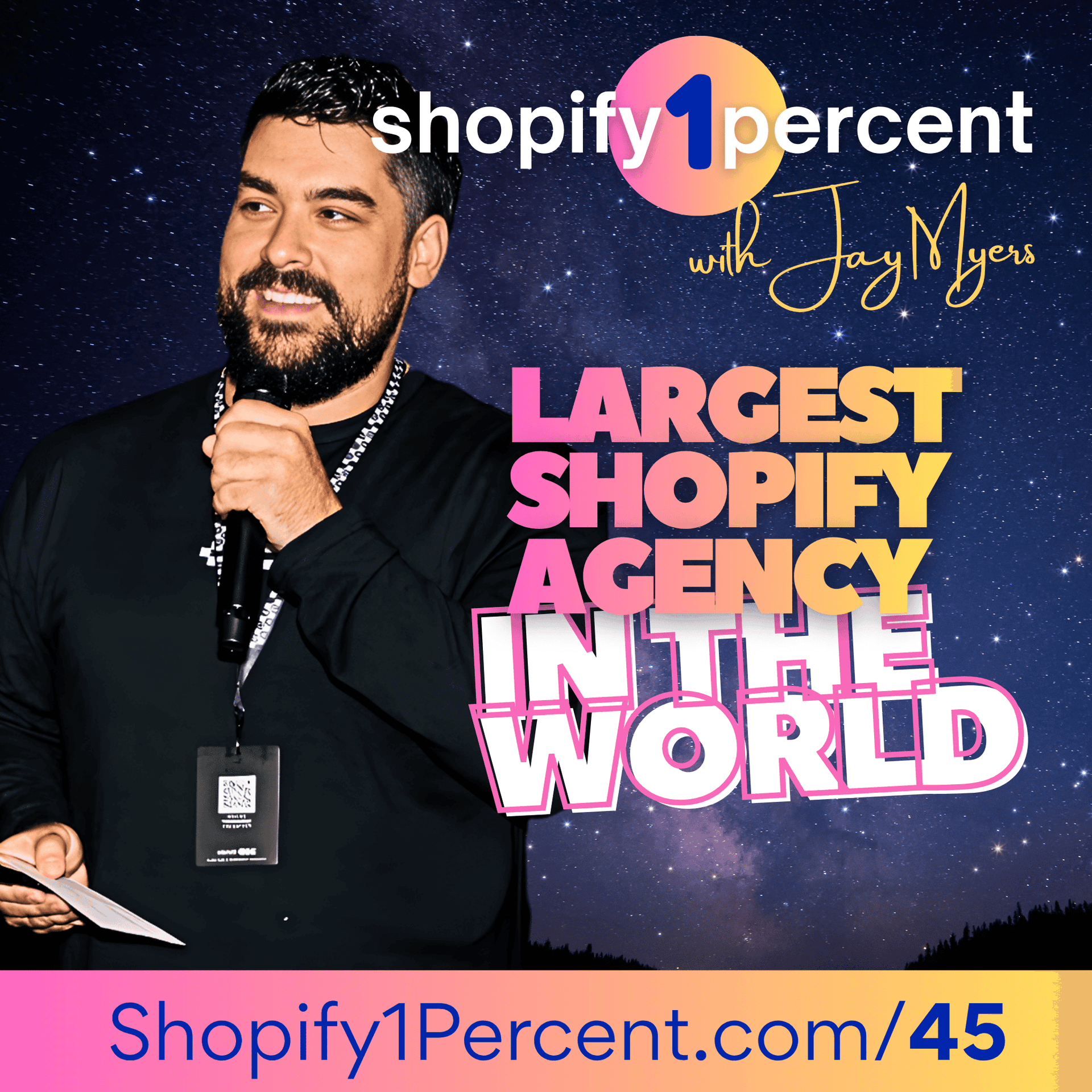
Mac King (Domain) discusses Shopify growth in the “AI search” era: how to get recommended by AI, why taste/brand experience drives conversion, why blogs are back, and what to do during customer-acquisition slowdowns. He also covers Shopify partner history and Domain’s delivery/process approach.
Guest backgrounds
Mac King is co-founder of Domain, described as the world’s largest independent Shopify design/development partner. He joined Shopify’s support team in 2014, won a Shopify app competition (donations app), moved to Shopify Plus in 2016 as partner manager, and helped launch Bold as the first Shopify Plus partner. Domain focuses on Shopify engineering plus e-commerce strategy; he cites 300 launches and ~85% delivered on budget.
Key claims
AI search traffic is growing exponentially but still under 1% of total traffic; brands should invest now (a “6–8 month window”). Stand out via “taste” and branded UX, not just platform features. Blogs help AI cite sources. For conversion, Domain always uses a cart slider instead of a cart page. During slowdowns, shift from paid acquisition to onsite UX/CRO and first-party data.
Notable examples
ChatGPT shopping example where it suggests marketplaces instead of Vince.com; “dress code” prompt leading to brand discovery; cart page vs mini-cart slider; Fellow coffee brand analysis of AI search terms; Rewind as “undo button” for Shopify changes.
Written by AI. May contain mistakes. Listen to the episode to check what was said.
Chapters
Tap a time to open that second in VOOmniSend Features and Discounts
3:22 to 4:49
Discover how OmniSend's new features can enhance your email and SMS campaigns.
“OmniSend just shipped something that I've always wanted.”
Mac King's Journey in Shopify
4:55 to 7:44
Hear about Mac King's journey from Shopify support to co-founding a major agency.
“For the winner, we sent in a town crier.”
The Evolution of Shopify Partnerships
7:44 to 9:28
Explore how relationships between Shopify and partners have shifted over time.
“I think, I think we picked first, second, third.”
Gratitude and Reflections on Growth
9:28 to 11:18
Mac reflects on his entrepreneurial journey and the importance of timing.
“And, you know, it was a big deal for me actually to be your manager.”
The Competitive Landscape of E-commerce
11:18 to 14:00
Discuss the current competitive landscape of the Shopify app store and services.
“Like, do you ever just take a second and look back at your last 10 years?”
Navigating the Competitive Shopify Landscape
14:00 to 19:30
Learn about the increasing competition in the Shopify ecosystem and how to stand out.
“And by the way, same thing with the services side.”
Effective Strategies for E-commerce Growth
19:30 to 28:00
Discover how brands can leverage AI search and strategic investment for growth.
“And oftentimes the way we work with that kind of brand, Harry's is an example.”
Exploring SEO Opportunities in AI Search
28:00 to 28:34
Learn about basic SEO strategies brands can implement to improve visibility in AI searches.
“Well, it tells you that like Vince, like could have gotten the direct to consumer site could have gotten my business instead of I went to one of the aggregator sites or a marketplace site.”
Shopify's Product Structure for AI
29:49 to 30:56
Understand how Shopify is enhancing product data for better AI indexing.
“So how does Shopify catalog play into that?”
Creating a Unique Brand Experience
30:56 to 32:02
Learn the importance of aesthetics and branding in distinguishing your Shopify store.
“You know, just like the website feels good.”
Show all 28 chapters
The Resurgence of Content Marketing
32:02 to 33:21
Explore how content is becoming increasingly important for brand visibility and SEO.
“I was like, oh, what, what did you ask it?”
Leveraging AI for Blog Content
33:21 to 34:32
Learn effective strategies for using AI to enhance blog content without losing authenticity.
“for companies like us too, for bold domain.”
Creating Original Content with AI Tools
34:32 to 35:56
Discover how to create original blog posts using AI tools without triggering detection as AI-generated.
“I'll throw one tip that I learned I'll share.”
Navigating AI's Influence on LinkedIn and Content
35:56 to 37:32
Examine the impact of AI-generated content on platforms like LinkedIn and its authenticity.
“Talk, create an audio file, talk to something, go on a, I don't know, go on a podcast, record something and then use that as the source that creates the blog post and then run it through.”
Adapting to Economic Slowdowns
37:32 to 38:54
Explore strategies brands can use to grow during economic challenges and customer acquisition difficulties.
“And part of me wonders, I'm the same way.”
Enhancing User Experience for Better Conversions
38:54 to 41:42
Learn methods to optimize user experience and conversion rates on Shopify sites.
“doing with brands to, to help them still grow and still be successful during this little bit of a, I don't know if it's a, I don't know if it's a slump or slowdown.”
The Importance of Brand Identity
41:42 to 42:00
Discuss the significance of viewing oneself as a brand rather than just a merchant.
“Which is again, doing more with your existing customers.”
The Branding Debate: Merchant vs. Brand
42:00 to 43:36
Discussing why businesses should identify as brands rather than merchants.
“I think just two things I want to pull out of that there because like I, it's funny, we've had this internal debate many times.”
Leveraging First-Party Data Effectively
43:36 to 46:52
Exploring strategies to optimize customer engagement through first-party data.
“I want to be like, we want to build brands and something that makes you feel something that has more than just being kind of a merchant that has like a stand in like an old market, you know?”
Personalized Experiences: The Key to Customer Retention
46:52 to 49:10
The importance of personalization in email marketing and customer experiences.
“How do you go above and beyond to gain that customer record in that information?”
Creative Customer Engagement Strategies
50:42 to 52:42
Innovative approaches to customer engagement through gamified promotional tactics.
“I've seen some brands doing some pretty creative things with their, when they have their questionnaire or giveaway.”
Innovations in Subscription Services
52:42 to 56:00
Discussing the evolution of subscription services and creating VIP customer experiences.
“Well, I want to kind of flip the script.”
Creating Demand for New Solutions
56:00 to 57:29
Learn about the challenges of creating demand for innovative products.
“and subscription is a tool in that, but it's not the whole picture.”
Branding and Market Focus
57:30 to 59:58
Discover how branding and market clarity affect investment opportunities.
“We've done pretty well with raising, so I'm not overly concerned about it.”
Navigating API Challenges
59:59 to 1:02:20
Understand the early challenges faced with API usage in app development.
“because we I don't say we we kind of hacked the APIs well also your brand name at the time we should well fair enough the brand was Shopify which was genius.”
Building Community and Learning
1:02:21 to 1:06:06
Explore the importance of community and learning from peers in business.
“get approved by shopify because they hadn't seen anything like it before and and we had to get on multiple phone calls and explain to them and they would say, we don't get it.”
The Value of Long-Term Relationships
1:06:07 to 1:07:41
Reflect on the significance of relationships and networking in the industry.
“And you can find us, we have, you know, we're domain with an E on the end, you can meet domain.com.”
Creating VIP Customers with Exclusive Pricing
1:10:02 to 1:12:04
Learn how to enhance customer loyalty by offering exclusive pricing for VIPs.
“Then you go into your customers and Shopify, you click the little box in the top, select all, and then select all 10 ,000 customers.”
Transcript
Automatic transcript. May contain errors.0:00I have such a special guest with me today. Mac King is not only the co-founder of the largest Shopify agency in the entire world, he has such a rich history with Shopify and with me and Bold. Back in 2014, we ran a competition with Shopify support. Mac started on the support team at Shopify and we ran this competition where they could come up with an idea for an app. And if we built it, I think they won a thousand dollars. I can't remember exactly what the prize was. And we got all these different submissions and Mac was one of the winners. So we picked his app and we built it. I think it was a donations manager.
0:46We get into it in the show. Fast forward to 2016, Mac moved onto the Shopify Plus team. And when Shopify Plus rolled out their partner program to have agencies working with Plus brands. We were the very first Shopify Plus partner ever. And Mac was our partner manager. It's weird to think about that now because there's probably 20 ,000 Shopify Plus brands. But Bold was the first ever Shopify Plus partner. And Mac was our partner manager. I never forget the call where we sat down and he's like, hey, guys, we're doing this thing. We're going to have plus specific partners and they're going to be vetted.
1:26So these larger brands know they can trust them and we want bold to be the first one. And not only that, Mac has flown out to our office multiple times. Every time I go to Ottawa to hang out with the Shopify crew, I make sure to see Mac. He's just one of the absolute gems in the space. He's an OG. He knows Shopify inside and out. And he's now on the partner side and he's built the largest Shopify agency in the world. So I didn't just invite him on because he's a close friend. I invited him on because this guy knows his stuff. You don't build the largest Shopify agency in the world without knowing a thing or two.
2:06So you're going to love this episode. We got into some really interesting topics. Some of it focused around this kind of gold rush of AI right now. It's a special time with AI where you'll look back on this time for sure in five to 10 years and wish you could go back and do it again. Like there's a huge opportunity right now. It's like the beginning of SEO. Now it's the beginning of AIO. So we talked about some strategies or like how to rank and how to get your products recommended by AI. We talked about the importance of taste and how that affects conversion and making people feel something. We talked about how blogs are back.
2:44blogs are becoming more important than ever you remember back in the early 2000s like everyone had a blog and then that kind of slowly died when social media came out in 2008 and mid five years ago nobody had a blog you don't go to the average e-commerce store and see a blog anymore but with chat gpt looking for information about products blogs are more important than ever we got into so many amazing things on this episode we're gonna just get into it because this is one that you will love, you'll learn a lot about myself and Bold and our history, but more importantly, you'll learn some things how to grow your store.
3:19So let's get into it. This is a good one. OmniSend just shipped something that I've always wanted. You can now connect OmniSend to ChatGPT or Claude and just say, where can my email and SMS campaigns be making more money? And it actually figures it out. It reads your store data, all your campaign details, your store history, and it tells you, and the insights are legit good. And even better, you can then say, okay, let's fix that or build that campaign. And it actually does it right from your chat. It's wild. Now, if you're one of our listeners, you can get 30 % off for three months on OmniSend.
3:52Just go to the show notes. There's a link there, or you can just use the code J30, J-A-Y-3-0 when you sign up. Now, if you're using another email and SMS platform and you want to switch to OmniSend, which is a great idea, they will do the migration for you. Just give them five days and then you show up with everything set, ready to go. Now they've migrated thousands of stores from Klaviyo. And on average, they're saving 35 % on their email and SMS bills. If you're listening to this show, you clearly care about your Shopify business. If your store isn't backed up and protected, it could all be for nothing.
4:23That's why I tell every store owner I know who cares about their business, you 100 % need Rewind installed. It's a non-negotiable for me. One bad CSV import, one app that edits your store the wrong way, which has happened to basically everyone I know. One bulk edit gone wrong. And now AI making changes for you. Listen, Shopify does not have an undo button. Rewind is the undo button. Go to shopify1percent.com slash rewind for 30 days free on us. Links in the show notes too. For the winner, we sent in a town crier. Let's go like a heary, heary, the winner of the... There was no Shopify, like Shopify Plus was only a thing for about a year before that.
5:07I think we were the first Shopify Plus expert. I just kind of happenstance landed at this company, and then it completely changed the trajectory of my life. 85 % of the brands that we launched, we've done 300 of them, have been exactly on budget, which, you know, is not 100%. But that's insane.
5:20Mac King:Matt King is the successful co-founder of Domain, the world's largest independent Shopify design and development partner, purpose-built for ambitious and beloved brands. As pioneers and not just participants in their industry, They are inspired to write, break, and rewrite the rules for a new generation of commerce. This is original content, me and you talking right now. So what AI is doing is it's basically summarizing the original content versus creating the content from scratch. Don't just outsource it to AI. Mac, first of all, thank you for coming on the podcast. I want to take it back a little bit here to, I think it was 2014.
6:03Do you know what I'm going to mention? Was it the first time we hung out in like the basement pub in Ottawa or? I don't know if that predates, if this was before or after that, but I, we had a, a challenge we sent to Shopify. We were, we, we, at this stage of our company, we were actually one year, we set a goal to build an app a month and we were like Shopify gurus. Are they still called gurus? Like the support team? They're not gurus anymore. Not the preferred term anymore. Yeah. Okay. Sorry. But you were a guru before. I was a guru. Yeah. And we were like, yeah, Shopify gurus probably know exactly what merchants want.
6:36So we built, or we did this competition. I think it was for$1 ,000. I can't remember. Yeah, something like that. And a huge sum of money at the time for me. It was a yes. I mean, yeah, we got submissions for ideas for an app. And then we, for the winner, we sent in a town crier. Were you in the room when the town crier came? I actually, I think I was now that you mentioned it. Yeah. Yeah. So like a here he here he the winner of the whatever idea for an app or something. And he had a scroll and he read it and you were the winner of that competition. Do you remember what the app was? It was a donation app.
7:14I thought it was the by the measurement app. Did you submit too? I know. Well, maybe. I don't know. We should look. But I, from my memory, and this is, you know, more than 10 years ago now, which is crazy. But yeah, I thought I submitted like an app for people could donate. Well, we built it. Yeah. So, okay. So then someone, you, that one won and we, we built it and we actually ended up sunsetting it. I'm sorry. Nine years later. Okay. It did well. But yeah, there was another one. Okay. Okay. You know what? We had three winners. I think, I think we picked first, second, third. So I think mine was announced a little bit later or something.
7:50Okay. It wasn't part of that, but I remember the town crier, but yeah, I don't think I won right away. It was something afterwards. Okay. And then we did a second pick or something. Yeah. And then fast forward a couple of years to 2000, I think it was 16. You became our partner manager and you phoned us up one day and you said, Hey guys, we're starting this Shopify plus experts program and we're going to have Shopify plus experts. So not just at the time for those listening, there was just Shopify experts. there was no Shopify, like Shopify plus was only a thing for about a year before that. And you said, I think we were the first Shopify plus expert.
8:34You literally got on a call with us and you're like, Hey guys, I obviously got to pick you and we're starting the Shopify plus expert thing. And, and so let's, let's do this. Like that, that was pretty much the conversation. I remember you were sitting in a chair in one of the phone rooms in the Shopify office. Remember that call? No, I don't remember that call. Like I, like I said, Jay, your memory is so good. I, I do not have the same memory as you. So I appreciate you reminding me of these things, but not, yeah, I remember you joining, but I remember how I told you. To you, we were just a piddly little partner to us.
9:05You were our Shopify partner manager, you know? So when you know what, you weren't a piddly partner. I was really proud of bold being in my portfolio. You know, for me, I was, it bold was one of my, was my biggest partner or at least one of the biggest partners, you know, and again, I was really like, to me, I felt honored that I got to manage bold. You know, you, you had such a big reputation and everyone knew bold and Harley would talk about bold on stage at the conferences. And, you know, it was a big deal for me actually to be your manager. Well, thank you, man. Thank you. While you were amazing.
9:37I remember you would fly out to Winnipeg and you would attend our events. And those were certainly days I know companies evolve and Shopify is at different stages. I'm, of course, big fan of Shopify still. But those were like the golden years of partner managers, I would say. You know, like it was, the partner program was growing and there was a lot of. And the way we thought about it was different. That's the big difference between now and 10 years ago when it came to the Shopify partnerships is that as a partner manager and as a partner team, we felt like we needed you all way more than you needed us.
10:09Like we were trying to build something. I had to convince people to become a Shopify Plus expert. You know, I had to call, Like, you know, you guys were in, were in obviously as you always were, but some people I had to call and be like, Hey, there's this new program launching Shopify plus experts. Like, will you please be part of it? You know? And I know that you're going to say no, but like, here's why you should do it. And now there's like a lineup of agencies that want to become a Shopify plus partner. So it's flipped. It's now the partners need Shopify. Shopify doesn't need the partners almost.
10:35You could say. Exactly. But I still think there's, it's symbiotic, but maybe it's shifted a bit. So now, fast forward again a little bit later, you've co-founded, well, Half Helix, but now Domain. And you're the co-founder of the largest Shopify agency in the world. What a crazy, crazy story you've had, starting as a Shopify support, moving into partner manager. You probably had other roles in there at Shopify that I don't even know about. And now you've built this incredible agency that you're managing over five or six billion dollars in GMV for merchants. You've had over 300 launches. Like, it's insane.
11:21Like, do you ever just take a second and look back at your last 10 years? I do, actually. I do that quite often. I think I really practice gratitude and I'm so thankful and I feel very lucky to have been, you know, given a lot of different situations in life. But one of them being I'm from Ottawa, you know, this happens to be my hometown. And it happens to be this company called Shopify was growing in 2013 when I just moved home from a year abroad and I got a gig as a guru, even though I applied as a marketing person. They're like, you have no marketing experience, but how about customer service?
11:58I was like, yeah, you got it. Uh, so I just kind of happenstance landed at this company and then it should completely change the trajectory of my life.
12:05Mac King:Yeah. You know, and yeah, as you mentioned today now, yeah, we're the biggest Shopify agency, which is crazy. And not that the biggest means much because what's important is being the best, right. And offering the best service and, and working with the best brands and providing the most value. Like that's the important thing, but a scale is, you know, because we have this scale, we can offer the best service. And because we have the scale that's specific and we're very specific, most other 300 person agencies, they do everything. You know, they'll do a little bit of big commerce and Salesforce and Magento and Shopify, but we have just stayed locked in on Shopify.
12:42And I think that's what, that's, what's been really special about the growth trajectory of the company. It's amazing. I feel very much the same as you. We, I was a merchant on Shopify in 2009. I had stores on many other platforms before that. In 2009, moved one of them to Shopify. Archery. Yeah, that's right. Supreme Archery. Yeah. Yeah. Ended up selling it to actually a guy. So like we kept the stores because I, there was this app store, but at the time there was only like, I remember there was 10 apps and there was 20 apps and they were all, I would say connector apps. Like they would connect your store to some accounting software or connect to some shipping software.
13:19where like they weren't really front end functionality apps. It was more just to connect to other services. But my mind went right away to, well, what kind of app? I had a list of like a hundred ideas, like what's possible in the app store to build for my stores. And then we launched this upsell app in 2012. So again, like right, I think there was around 20 ,000 merchants on Shopify in 2012, somewhere around there. So I have very much the same sentiment as you, just gratitude for and for being lucky with timing it's very different world now someone coming in and launching with an amazing app and i talked to these app developers they have an amazing app an amazing product been live for months and i'll talk to them and they're like yeah we have 12 installs not because there isn't millions of users but because there's i don't even know 14 000 apps so so it's it's competitive right so like they've got a great app a great product and i'll tell you like way better than an app that we had in 2012.
14:17But it's a different world. So I'm very thankful for that. And by the way, same thing with the services side. As I mentioned earlier, we used to beg companies to become plus experts, which was not app specific. I know Bold had a services arm at the time. I think, I don't know if you guys still do, but. We shut down the service side, but we did. It was about 65 people at one point just on our services team, yeah. So that, you know, and it's a whole different world than the app side and it's become much more competitive and there's now there's tiers right there's shop by platinum partners and premiere and plus and all sorts of different metrics that you need to be able to maintain your tier and yeah you know we're we know that we're the number one commercial partner shop by right now it's amazing so yeah pretty wild so we're the the top of the top um which the one percent i guess so what does domain do sure yeah why would why would a brand just to give some context here so why would brand come to domain.
15:10The simple explanation is that we help brands large, again, the large end of the spectrum brands doing$10 million and up, but closer to our average is being in the a hundred million dollar range on Shopify. And of course we have, we have a number of the top 10 GMB brands on the platform as our clients number, I mean, two or three, but, and then the other seven are likely in housing their development, but we offer a suite of services that surrounds the platform. creative, user experience, design, e-commerce strategy, engineering is really 65 to 70 % of what we offer is really dev. That's mostly what our clients need, what brands on Shopify need access to.
15:53But what's surrounding it is the important stuff. People hire us because we know how to do engineering on Shopify, but they stay with us because of the e-commerce strategy and the attention to detail on our delivery prowess. And, you know, we launch 85 % of the brands that we launched, we've done 300 of them have been exactly on budget, which, you know, is not a hundred percent. Um, but that's insane, but it's insane. You know, these are all, you almost hear, I've heard like the exact opposite. 85 % are over budget or closer to a hundred percent. Right. Yeah. And so, you know, I think, and this is because we have this refinement of process and we have, you know, these people have been doing it for five years.
16:33The average tenure of a domain employees over five years in the agency space. So we don't have people that learn on the job, you know, it's like you come in and you know, and a lot of times our team members have graduated from other Shopify agencies and kind of like come into the fold afterwards. But yeah, you know, the very simple thing that we try and do is do exactly what we say we will, you know, which is a lot harder said than, sorry, easier said than done. Right. You know, the best analogy for what agencies do is like construction, right? Where it actually, it's the same team. There's a project manager, there's a designer, there's an architect, there's an engineer, you know, any construction project, physical construction project in your hometown.
17:10And think about how often that physical construction project, you know, they're building a train or a, you know, a light rail station or a new subway stop. How often is it delayed by six months a year over budget by$10 million?
17:25And So that's the analog is still also true for web develop web engineering. You know, I think we've just figured out a better way to do it. So we don't have to go through those delays. And you also have an offering for just so anyone listening goes, wow, geez, well, I'm not doing a hundred million dollars a year. Turn off this episode. You do have a product or service. It's called studio. Yep. Yeah. Great, great point. So we also acquired an agency called AbleSense. Aaron Whitman. Oh yeah. You must know Aaron. Yeah, his company, he sold it to us about two and a half years ago, right before he merged Half Helix and Tomorrow were the two companies that merged to form domain.
18:04But right before that happened, we bought AbleSense and created our mid-market offering, you know, our kind of SMB to mid-market offering. So brands that were doing that zero to$10 million in GMB who are on that growth trajectory, but they want the support of people who have been there before and who kind of know what they're doing, what these brands are in for. So our domain studio offering is more of our quick launch program. So for example, we just launched a, you know, we're helping brands get live in eight to 10 weeks, starting at 50 K, which is like numbers that aren't, aren't possible on our domain side.
18:39So it's a very quick launch and kind of a reasonable price point. That's the whole strategy behind the domain studio offering. And the big difference is that is the team size and the way that teams are structured. So domain, you basically have access to this kind of full dedicated project team between 10 to 12 people, depending on what we're doing. And if there's back in development or back in engineering, for example, and then on the main studio side, you'll have access to like two core team members, a project manager and an engineer, and they'll be able to pull in resources as they need them that are not dedicated to the project.
19:11So we, we kind of keep it leaner and keep it meaner and be able to work with different budget types. Nice. And then maybe eventually one day they graduate into different levels too, right? So it makes sense. Probably the question that comes up a lot is, do I do this in house? do I hire freelancers or like contractors dev contract do I go to I don't know places like Upwork there's like if you type in Shopify in there you'll find hundreds of people and this or um why would someone choose to work with an agency versus maybe doing it in-house does that come up is that it yeah all the time I mean and people at all ends of the spectrum have in-house teams, brands that are doing 500 million online, you know, want to all do it all in house.
19:57And oftentimes the way we work with that kind of brand, Harry's is an example. We did, you know, the Harry's razor site, they have their own dev team, right? And they're quality developers, but they don't know Shopify. So when they're migrating to Shopify, how do they figure out the right way to use the platform? Well, they work with a team like us in order to collaborate on the project and then hand off the code base to them after it's done. Right. So that's the beautiful thing about using Shopify. So you don't need, you're not like attached to this developer for a long term. So that's happening at the very high end, right?
20:25This kind of co-development process that we then, we're going to eyes wide open. At the end of the project, the site becomes yours, the code becomes yours, you're fully trained on it and you can take over. And then, you know, of course there's like the other end of the spectrum, right? Which is like, as you mentioned, you can find a Shopify developer at any price point. You can go to Upwork, you can go to Fiverr and pay$5 for a Shopify developer if you want. You know, you're just getting a different value scale. So, and, and it really depends on what people's budget or how much they can spend, how much they want to spend, how big of a plan they have for their brand.
20:56Now, I can't really speak to what like that looks like the higher and Upwork or a Fiverr developer. I don't know what the quality is. I've never done it, but I can talk to like the trends that we see of people who choose us over other agencies, right? Cause even amongst the agency landscape, we're usually about 30 to 40 % more expensive than our peers in this space. Yet, you know, yet our win rates really high. So we still get chosen more often than still corporate. That's why we've been able to grow. And so that means like the value equation, but the people who end up choosing us are the ones who are thinking a little bit more longer term about their brand and their position in the market and what they need and, and how much more they need than just access to a developer, right?
21:39Like how much they need access to strategy and this kind of email marketing, personalization, other components of the actual website experience that you're not going to get just by having a developer and even more specifically by having a developer in like a different culture or different area or someone you can't talk to, you know, during the day, all of our devs are online on Slack and client facing. So, you know, people are always, our clients are communicating with us in real time. That's amazing. Cause a lot of agencies, I know they shield their devs. Yeah. They don't let you talk to them.
22:09You have a project manager and you're kind of going through this person and they relay the information because they want to protect the developer time. But then it's amazing what you can accomplish in a 30 minute call with a developer on the line and you tell them and they can troubleshoot, brainstorm and come up with what might have been 30 hours, maybe it could be done in three hours. so if with that process i would i'm willing to bet that even if you say that domain's a premium agency and maybe a bit more expensive you might end up being less expensive because you're you're coming you're more efficient like you're coming to a solution that correct like is the right efficient you're not over building over architecting you're doing the right thing because you're bringing in because i do see um agencies might have like you can't just look at the hourly rate.
22:59If it means that it's going to take four phone calls or four hour calls to go back and forth through a project manager versus with domain, if you can talk to a developer for 30 minutes, get to a solution, that's, it's, you can't, it's not apple to apples. It's not apples to apples. And, and, but, but also there's that point, which is it might, it might take longer to do the same thing with someone that you can't speak to directly. For sure. That is true. The other part of it is, especially when it comes to the code in engineering, like code it's not evergreen it doesn't last forever so like how is this being it might get done faster but if it only but but if the code degrades or the site speed is slow or if you're using too many apps that are kind of bogging down the front end of your website then it didn't matter that it got done faster because you're it means you're gonna have to do it again in a year or in two years like how do you build something that's more robust scalable fast performant you know i I think that's where you're really paying for experience.
23:56Yeah. Is like the difference between like a short-term or long-term solution. What's probably the biggest win that brands could see? I mean, I know there's a range of services that they can get through domain, but like if every brand had, I don't know, five or$10 ,000 that they said, I want to improve my site. I'm investing back into my, not maybe not just my site, my, my e-commerce business. This can fall under SEO and marketing and site and brand or email or something. But like if someone listening is right now, they're seeing some growth and they're like, I want to invest money into the growth.
Read the full transcript
24:32What is the best value that like what you think they could do? Sure. Really hard question because there's so many different ways that this can, that you can take an answer. And so I'll give an answer that's top of mind for me right now that I'm not sure is the perfect answer to your question in general. I think there's probably like other low hanging fruit that's more prescient than the way I'm going to respond. But one way that I think brands can invest right now is through AI search is making sure that they're showing up more through AI search engines like chat GPT, perplexity and cloud in Google and everything else.
25:15What we're noticing amongst our clients, we did an analysis of website traffic trends, which is across our, we have a 95 active clients in the very specific segment on Shopify, right? The high end of the platform. The site traffic is flat. It's not changing much over the last 12 month period. Site traffic has been consistent. I think that many brands are noticing this right now too, is that it's not like it was three or four years ago when everything was just going up for no real reason. I think site traffic is being consistent. Outlier to that is site traffic coming from AI search engines. It is growing exponentially right now amongst the data on all of our clients.
25:55We know that we've looked at some external data sources as well through Mintel. AI search is growing exponentially. However, it's still a small percentage of traffic. So amongst all of our clients, it represents less than 1 % of their overall site traffic, right? This is a combined view um but if a brand wants to be a first mover and invest in this before it hits a fever pitch now is the time to do it because ai search engines are they're pulling it's kind of like seo 1.0 back when it was like yeah i'm sure jake you're an internet guy from the you're probably right there in that time period where like you kind of do this hack you know like you build a little landing page of like what's the best shot by app and then that will get picked up and you'd be right in the first page of their google results like you can do that same thing right now with ai search i was before that I was doing SEO when you would make words the same color as your background.
26:41That's crazy. To hack it. That was like 1997. But, and to rank first in Yahoo, but. Hey, you know what? That's my point, right? So that kind of hack, those are actually, you know, available for brands right now on AI search. Um, like it's that kind of like AI, Google got really good at SEO and ranking companies through their page. AI search is not there yet. Surprisingly, And everyone thinks AI is the future is so smart. They're not nearly as smart as Google for when it comes to like actually delivering quality results yet. So therefore there's an opportunity for brands to be able to hack that in this current moment in time, probably not a huge opportunity.
27:19You know, there's the six to eight month window. So something that we're obsessed with right now as a company is helping our brands do that. Like how do we get people to show up when folks are searching? I went, I got invited to this event the other day and they said that attire is Hampton's high-end casual. And I thought, what the bleep does that mean? So I went on ChatGPT and looked up, you know, what's dress code Hamptons high-end casual? I wouldn't know either. I think. Yeah, right? So yeah. And then I started shopping on ChatGPT. They delivered me, and I preferred the brand Vince. ChatGPT gave me Essence, and they gave me a marketplace to buy Vince off of.
27:57What they didn't give me was Vince.com. So, you know, what does that tell you? Well, it tells you that like Vince, like could have gotten the direct to consumer site could have gotten my business instead of I went to one of the aggregator sites or a marketplace site. Now a marketplace site wasn't carrying Vince. I wouldn't even got served them at all. It would have just said, Nope, go somewhere else, try something different. So, and there's real basic SEO hacks that not just hacks, but SEO work that brands can do to show up on AI search right now. And I think that that's to me presents a big opportunity.
28:29It's a little bit early, but it's going to be big. At the beginning of the show, I told you why everyone serious about their Shopify business should have their store backed up and protected with Rewind. There is no excuse not to. There literally is no undo button for Shopify. Shopify's own terms actually say that your data is 100 % your responsibility. Your products, your theme, your customizations, your settings, everything. They don't back up any of it. And no, a CSV export does not cover it. With CSV exports, there's no images, no meta fields, no themes, settings, etc. Nothing. I was talking to the people at Rewind about a brand where one team member actually ran a bulk update and accidentally overwrote 11 ,000 products.
29:17Orders, customers, contacts, all of it gone in a single action. Luckily though, with Rewind, it was a simple one-click rollback. It could be anything, a bad CSV import, a random app you just installed that messes everything up, or all of these AI tools that everyone's using to manage their store now. I have heard so many horror stories. Rewind just gives you peace of mind no matter what. If you don't have Rewind installed, you absolutely should have it. Go now and get it. Shopify 1 % dot com slash Rewind. You'll get an exclusive 30 days free on me. The link is also in the show notes. So how does Shopify catalog play into that?
29:58Like Shopify is really investing in making the product structure and data and product schema be very indexable by AI. They're adding in a lot more data points that you used to just be like, you'd have the color size material, maybe, you know, the attributes that Google would need. But for AI, it's like, what does the fit feel like? Is it like, there's a lot more that ai can pull out and so my understanding is shopify is going to make that broadly available like if you're on shopify by default your products should be very readable by ai the thing that shopify does is it's great i love it but it also like always levels the playing field like i remember like in 2009 when i put my first store on shopify i remember like i was better than all my competitors because my store looked good and it was mobile friendly like in 2009 but now every store is mobile friendly right and it's always like the next thing like you have a fast checkout now every store has a fast checkout that's the beauty but also the challenge is you will have products that are indexed by ai but so will all your competitors so how do you get that one step ahead then well here's how you make up for that and is by taste like if you have better taste if your site makes people feel something, if you have a better branded experience, if your imagery is beautiful, if the way that you're spacing is in your website works, if you're the transition time between page to page, you know, that feeling when you're kind of like, when you get lost on a website, all of a sudden you're like halfway down on the about us page.
31:33You're like, why am I here? You know, just like the website feels good. You know, that that's taste. Like that's the evergreen part of all of this. You're absolutely right. Just in functionality and shop, like he's releasing all these things in a platform level that are making things easier for everyone else. But the way, the way to really stand out the way to create like a long-term brand is not don't think of yourself as a merchant think of yourself as a brand you're building a branded website you're building something that makes people feel something and that's how you stand out amongst this as you mentioned level playing field for all these different online brands what do you think about content right now has content become more important like something we're thinking about at bold is like i actually i get all the time now someone will say like hey we found your product through chat gpt and then I'll go and I'll search.
32:19I was like, oh, what, what did you ask it? What was the prompt? And I'll go and I'll look. I'm like, oh, dang, nice. We can't, they chat GPT recommended us, but then I'll do another prompt and it won't recommend us like it, you know? So one of the things I noticed that I think might be a hack right now, if you want to call it that is chat GPT always adds sources and it's relatively easy. Like I notice some of our blogs, if we have a stat that having a bundle on a product can increase conversion 20%. I don't know if that's a true stat, but just use that as an example. But if we have that on the blog and then someone asks ChatGPT, do bundles work on Shopify?
32:57It references that whatever stat we have. So like I haven't experimented with this, but I know blogs have kind of been, I don't want to say dead, but not used a lot by e-commerce stores in the last 10 years. I wonder if now they're more important than ever to now get as a source back into the AI searches. Dude, absolutely. And not only, as you mentioned, for brands, for companies like us too, for bold domain. Yeah, blogs are back, baby. So maybe it's not SEO 1.0 because we're not making same colored text that's crawlable in the background. That's like a real hack. But SEO 1.2, which is content.
33:38On-site content and off-site content. We've got a client called Fellow. they have coffee products, coffee machines. So we're doing an exercise with them where we're looking for like, what are they ranking for? What are some of the AI search terms that are going to be working? And what we realized is like some of their competitors have their own hosted content that is then helping them rank highly above them. So yeah, your own blog, it doesn't matter where it is. Again, ChatGPT is not smart enough yet to make that leap that like your own content might be biased. So you can create your own content that is biased, that points back to your own brand and own it on your own website.
34:16So it's, you know, it's pretty easy. Yeah. Google's ahead of that because now you can, you can post as many blogs as you want, but unless other people are linking to it and you have page authority and Google doesn't show it, but AI is now is the time to maybe take advantage of that. I'll throw one tip that I learned I'll share. So our recommendation is if anyone listening to this right now is thinking about just using chat gpt to create the blogs or cloud or whatever tool they will if you just go to it and if you say you know you can have an amazing prompt you can say i want to create a blog post about let's say you sell travel luggage fashion high-end travel luggage and something about it's like you want to create a blog about how to protect your suitcase on the conveyor belt or something like this or how to clean it.
35:03And if you ask chat TPT to create a 500 to 800 word blog posts on how to travel with high end luggage that you don't want to damage and create some steps products to use, and it runs and creates a blog post that will get detected as created by AI every time. But if you, so these, these podcasts that I've been doing, I turn them into blog posts after, and I use AI to, to turn them into a blog post and I run them through AI detectors. There's Grammarly has one and there's a couple other that you can search and it comes up as 0 % AI. And the reason why is this is original content, me and you talking right now.
35:44So what AI is doing is it's basically summarizing the original content versus creating the content from scratch. And so if there's a way, if you're wanting to leverage AI for blogs, I'm a big fan of leveraging AI, but don't just outsource it to AI. Talk, create an audio file, talk to something, go on a, I don't know, go on a podcast, record something and then use that as the source that creates the blog post and then run it through. Grammarly I found has a really good AI detection one. And there's another one I can't, I'm drawing a blank on the name right now, but I'll, I'll put it in the show notes.
36:20and they'll almost always come up as like zero or 1 % chance it's AI versus if you just go to it, they're always like 98%. I don't know how it detects it, but the structure maybe or something, but as long as it's based on original content, it seems to do really well. So anyways, that's one piece of advice I'll throw in there. Cause I, I think it's a, that's a fire piece of advice. I'll add onto that. I would use whisper flow for voice to text dictation. It's a great tool. You can just kind of speak into it on your computer and then it'll kind of like it'll basically dictate all of your thoughts and it'll edit it to make it a little more clear and then you can take that the whisper flow text put it into you know a chat tpt interface make a blog post from that nice it should come up with zero percent yeah yeah test it for sure yeah yeah i love that i want a linkedin chrome extension now that the that detects ai because oh my gosh then that would 90 of linkedin I'm worried that just everything on that platform is just AI now.
37:18And have we just, are we just like having robots speak to each other on our behalf? You know, is that what's happening? It's, you know, when you see all the posts that are super structured, they start with like a statement and the question, then they have three bullet points and a bit too many emojis. Right. Yeah. And part of me wonders, I'm the same way. Like I don't engage with them because it feels unauthentic. But is that just for the time being? Like, are we going to get used to that? And will the younger generation engage? I don't know, right? Like it's, yeah. I think the jury's still out on that, but I feel 100 % the same way as you.
37:58So, yeah. I always, I think it's great to use AI. I don't want to go into too much of an AI tangent, but for, I use it for research, for pulling stats, like for that, and then write your content yourself. but it's an amazing tool for, I mean, you can cut down 90 % of your time on any content you create, but still add your touch in it. Yeah, I agree. And again, what it's done is it's made taste. Yeah. The important part, if you have no taste and you're just using AI to just create something entirely for you, you know, or, you know, then, then it's going to be clear. And again, that goes back to the same point of like, it's, you're not creating evergreen.
38:37You're not creating branded content. You're not creating a brand. You're just contributing to like this like dump of information on the web. One thing I wanted to chat about was you mentioned you're seeing a bit of a slowdown in the economy a little bit right now. What are some of the things you're, you're doing with brands to, to help them still grow and still be successful during this little bit of a, I don't know if it's a, I don't know if it's a slump or slowdown. I think people are being a little tight with their wallets, the stuff happening in the political scene or who knows tariffs, whatever the reason is, there's a bit of a slowdown.
39:14So what are some tactics here working with brands? It's true. Yeah. We're noticing that, like I said, it's not a red alarm fire drill, but pretty consistently, it's not easy to come across for customer acquisition right now, to come across big sales to that old strategy that worked mid pandemic is not anymore. So one of the ways that we're helping, that we're thinking about brands who can like, how do we transition to understanding what's really important is transitioning to more of a onsite strategy, user experience, conversion rate optimization. You know, how do you do more with the traffic that's already there with the customers that are already landing on your website?
39:58The answer, I don't think the answer is just like dump more money into paid media. But the way that we look at it is how do we do more with what you have with your current customers? And there's a number of ways. First, the on-site way to do that is what the user experience looks like. How can you do some A-B testing, first click testing? You know, there's a lot of nifty tools in the web where you can input a website and pay for 500 users to tell you what the first thing they click on when they view your website. And that data is really useful. Where's the attention going to? I think that's a way that anyone can do it themselves, the DIY version, right?
40:36Sign up for usertesting.com, sign up for a first click website tool and run some tests on your own. Because on the other scale, on the high end scale, it can get quite expensive. Strategy work is very engaged and it's also not a sure thing. A-B testing means you're testing two different options. It doesn't mean that one of them is going to be better than what you currently have. That said, you know, you're any kind of agency or if you're doing it in house or if you're seeking advice, people should have a bag of tricks. There are things that we know work for every one of our clients. Here's an example, a cart page versus a mini cart slider.
41:11If you have a, you have your own, a page dedicated to the cart, you're losing converts right there. So we, a hundred percent of the time, a hundred percent of the time, every single site you see domain launch has a cart slider instead of a cart page. Every single. Wow. So, so that's just the blanket statement that I know works. And, and every brand listening to this should adopt that immediately. Aside from that, it can get pretty intense and specific about how you really should make changes in the user experience of your website. And then there's other tools you can think about, right? Which is again, doing more with your existing customers.
41:46Well, how do you, how do you do more with them? How do you meet them where they are? Is it a mobile app? You know, you want to use a tool like reactive you know we know zach and ross and with their ability over there like that's that's special i mean this is the way that brand that customers can interact with brands they love in a way that feels more intimate to them and again i use the word brand not merchant because they want to interact with the brand like remember that's at the forefront of this entire strategy it's in the forefront of our entire ethos as a company as an agency which is like people should be building better branded experiences for their customers and a Bubble app is a big part on that spectrum.
42:18I think just two things I want to pull out of that there because like I, it's funny, we've had this internal debate many times. Do we call our customers merchants or brands? And we've, we, we pretty much say brands all the time, but there's been some pushback. So the one argument for the merchant side is that they say smaller businesses don't see themselves as a brand. They see themselves as a merchant. but I would argue that even if you're one person, you should see yourself as a brand. Like, and the words we use to describe ourself matter. And it's like, you know, like if you call yourself a loser all day long, you're going to start believing it.
43:01If you call yourself a brand all day long, you'll start believing it. Like you'll start to, you'll be a brand. You'll think about consistency and how you talk. And you'll think of your brand, like your packaging. it's just uh i'm a big proponent of the word brand even if you're one person you're not like a brand like a big company that language matters i wanted to just hone in on that dude i'm right there with you and well i agree that merchant is probably more specific of a term but it doesn't make me feel anything and that's part of building a brand is feeling something you know and so like merchant makes me feel like someone's selling fish in a market you know that's not what I want to be like, we want to build brands and something that makes you feel something that has more than just being kind of a merchant that has like a stand in like an old market, you know?
43:50And I think merchant was like a word that Toby used as like an English, English second language person in 2009 that has just stuck. And I think it's in need of an update personally. Yeah. Didn't you, I think I saw you post on LinkedIn the other day, stop calling people merchants. Yeah. Yeah. Yeah. Yeah, that's, that's, that was, I knew that was not an AI generated post. Right. Okay. And then the second thing I wanted to kind of pull out what you said, I think you're, you're kind of getting to it and maybe talking around a little bit, like is when you say like optimizing your existing customer, like first, first party data, like first party, like to me right now, this is probably the most important time to leverage your email lists, your SMS lists, your customers that are in, but also to invest in getting more on that list.
44:41And like the only way that like a lot of brands, like they have a pop-up, they give away a coupon for 10 % off to get an email or they get an email when someone purchases something. I did, I had a, we do these, well, you probably know if you listen to the show, these like 1 % wins, which is like these short little episodes. and I had this thought the other day and I actually I know that you're you you're a big believer in leveraging first-party data as well too and it made me think of this like the best brands in the world maybe convert four or five percent I don't know I think the most I've ever heard of is like 10 but I think the industry average is like two or something somewhere around there yeah yeah and so that means like 95 percent of customers who come to your store leave with absolutely nothing.
45:29Like it's a weird thing to think about. Imagine a retail store, like imagine Target or Walmart or something. 95 % of customers walk in and they walk out. It's bizarre. Like, and I know some of them are bots and whatever, but not, not that many. Like, so what could you give to that 95 % that are leaving as a way to start a relationship with them? Like some kind of offer. Could it even be a gift? Like the example I used in the other episode was like, I don't know if you're a health company, can you give a shaker bottle, like a free shaker bottle, like literally claim your shaker bottle, claim it, not get 10%, like not a coupon, but like claim it.
46:12We'll ship it to you today. And it costs you 10 bucks, but you're acquiring, you're acquiring their information. You're sending them something you're building a relationship. And when you put that in light of like how much you're spending on ads, it's probably, and I would be willing to bet if you ran a cohort analysis, like everyone that acquired a gift and it doesn't even have to cost anything. It could be like download a$39 ebook on health and wellness that you've written, but you'd give it away for free to visitors or like something to start that relationship. I think now I would love to hear your thoughts on it too, but like in this kind of slump we're seeing is probably more important than ever.
46:50Yeah. Yeah. I think that's a really clever strategy, right? How do you go above and beyond to gain that customer record in that information? Because to me, that's the big unlock is how do you do more with the customers that you are already part than 95 % of people who you might even have their email because they've abandoned their carts or you sent them a free product, but they've never bought something from you before. And the reason for that is they have intent, meaning they've been to your site, they've filled out some sort of form, they've given you their email along the way, but it was never quite right.
47:23So how do you make something a little bit more correct for them, a little more on brand for that individual customer? And the way that we think about it is through personalized experiences. I think we encourage our clients to use email marketing to segmentation, first off, and invest in the cleanliness and hygiene of your email and SMS list and make sure that you're not just blasting the same message to everyone on your list or every active person on your list. That's not an effective strategy. You have this goldmine here, but how do you build one site per customer? So we know that Sally's a lady in her mid forties and Peter's a young man who's 26 years old.
48:06You sell home appliances. Peter's interested in this you know, new type of blender that's on your website. And Sally might be interested in a mixing bowl. So how do you send an email to the same two people with the same kind of structured format? So you're not kind of reinventing the wheel each time, but you're using technology to personalize that email experience, that email flow, and then the website that they land on after they've clicked the email. So they don't want to click a blender and then land on an account. You know, they click a blender, they land on the blender, they make the purchase.
48:40So think about like the full personalized experience from soup to nuts. It sounds so simple, but a lot of brands are not doing this. And for good reason, actually. It's actually fairly new technology. Klaviyo just released this API, for example, where they're allowing folks to be able to plug into personalization tools on the website. And so you can actually start with personalized content through email and then carry that through with this connected tissue API onto the website after they've clicked it. It does require a little bit of setup. It's a little bit more technical when it comes to email marketing, but these are the kinds of tricks that actually have real values.
49:15At the top of the show, I mentioned OmniSend can now talk to ChatGPT and Claude. And I want to tell you why that's even bigger than it sounds. So if you missed it, quick catch up. OmniSend is what I use for email and SMS on every Shopify store I work with, plus for this show as well. And you can now connect your AI, Claude, ChatGPT straight to your OmniSend account, your data, your campaigns, your flows, everything. You open a chat and you ask, what should I focus on this week to make more money? And it will come back with real answers about your store, which flow is underperforming, which automation needs improvement, which customers are going quiet, what's missing, everything.
49:54My favorite part though is AI segments. I used to build these by hand clicking through filters forever. Now I just type something like customers who bought twice but ignored my last campaign and it just builds it. and anything it writes already sounds exactly like your brand because it pulls from all your previous emails, from your website, your logo, your color, your voice, everything. I've been doing this for 15 years and this is the closest I've ever felt to having a full-time marketer sitting right beside me. I have a link for you in the show notes that will give you 30 % off for your first three months or you can just use code J30 when you sign up, J-A-Y-3-0.
50:29If you're ready to migrate from Klaviyo to Omnisend like thousands of others, they will do everything for you. You just show up and all your campaigns and automations from Klaviyo will be set up and running in OmniSend, ready to go. And usually at 35 % less what you were paying Klaviyo. I've seen some brands doing some pretty creative things with their, when they have their questionnaire or giveaway. Actually, who was I? I was on a site the other day. Might've been Dr. Squatch. I can't remember. I loved their pop-up. I think it was them. Instead of a client, by the way. Are they a client? Did you do their pop-up where?
51:06We did. We worked with them a couple of years ago, not crying, but they're one of the ones that took over the site afterwards. Okay. So their current pop-up, it's like pick your prize kind of thing. So rather than just 10 % off, there's three boxes and they kind of, I think they jumble around a little bit quickly and then it's like pick one and then it unlocks it. First of all, it's just a great visual experience. You pick it, it opens, there's confetti or something, and then you get 15 % off. It's not spin the wheel. It's a little bit more simple, full screen takeover. and then they, I think they do this or I might've seen another one, but there's like a couple questions.
51:40It'll be like, are you, I don't know, do you struggle with skin irritation or is there any issues with like certain like lotions or are you here for the like super long protection or for great smelling? What's more important to you? Or just a couple of questions like that. And then you get your your code but i know that what they're doing then is they're tagging that person and then when it goes into their their whatever email tool they're using there's a tag that they care about great smelling deodorants or they care about ones that don't irritate the skin or that are aluminum free or something like that and then they segment their lists and they create different campaigns with the main headlines about our aluminum free deodorants or our 24-hour protection or whatever it is.
52:29It's so simple, but it's such a meaningful piece of information, a piece of data on their customer segmentation. I mean, yeah, no wonder that they're seeing growth, you know, and Dr. Squatch is doing what they're doing. What a good strategy. Yeah. Well, I want to kind of flip the script. You know, we don't get enough chance to talk. And I see the bold in the background and you know what I'm used to. And we used to have conversations in 2015. I was always interested. I was learning about you and your business, where you guys are at i mean i i'm really keen to hear what what's exciting for you right now you you've heard about ai from our side now we're thinking about making like the branded experiences what that looks like but what's exciting to bold right now i'm and like what are you focused on currently on the business side i'm so curious man you're like the first guest that has asked that i'm so thankful thank you for asking right now the thing that is really i think what that's really important to us not that i think that is is you know we've been doing subscriptions since 2014 14.
53:23In 2014, if you did subscriptions, like you were ahead of the game. It was, it was like, if you had cat food and you sold it on subscription, you're, you were better than your competitors. And fast forward now, like subscriptions are kind of table stakes. Everyone has a subscription. If you don't have a subscription, I like to say it's kind of like become a billing and a shipping decision. It's like some people will subscribe to cat food and some people don't, but it's not like a differentiator if you have a subscription. But what is a differentiator is creating an experience where customers feel like members and they feel like VIPs.
54:01They feel like you know them, that there's exclusive benefits, exclusive access, exclusive pricing, that there's relationship. um and so about a year about a year and a half ago we looked at all of our apps and we kept getting customers asking us like hey i want to do vip pricing for my subscribers and like we looked at our sales pipeline and like half of them were around vip pricing and then we looked and like oh man we got this customer pricing app that we literally built it to do customer specific pricing that you can, when a customer logs in, they can be a wholesale or they can be a gold, platinum, different levels of pricing.
54:46And then we've got the subscription app, but they weren't, they could work together, but it took some work. So we thought, well, let's make that seamless. And then we have this upsell app, which lets you create targeted offers that are different for each person. So you talk about personalization, depending what someone is buying, it'll offer a different product. And now it has AI upsells. So it's like even the same product can have different offers for different people based off of what's in their cart, what they've bought before, a whole bunch of other things. But then we thought, yeah, subscribers in their member portal should get exclusive offers that are unique to them.
55:23So not just a blanket offer of the month, but you have 20 different subscribers. They all log into their portal. They all get a unique offer or in that upcoming email that, you know, your subscription is going out in three days. Do you want to add this last minute offer? But it should be different for every person based on what they're subscribed to. So we integrated our upsell and subscription app. Now, I think this episode, depending when this comes out, we've got a new app that we're, it's actually in beta right now. And so we want to be in the business of creating great programs where customers stay around forever.
56:02and subscription is a tool in that, but it's not the whole picture. I mean, it's very exciting and it's very on brand for you. You guys have always been innovators. Here's the hard part about what you just told me, which is that you're creating a new demand. People don't know they need this other, people think they need a hammer. They don't know they need a new solution. 100%. So you're going to have to create the demand for the thing that you know is the real solution for these brands. But it's not something you've done. It's not something you haven't been able to do before. You know, you built the apps for Shopify before there was front end applications.
56:39And so that didn't exist before you'd done it. So it's kind of the next step on that same bold playbook, which is no pun intended. And you know, I mean, it's, yeah, I think it's, it fires me up. It's exciting to hear that you're still innovating and you guys are still putting this much passion and thought into releasing these new products. Thanks man. So the thing that wasn't happening when Bold started that now we see a lot of in the Shopify space, obviously like there's these kind of like large scale, single branded companies that offer one product. Did you think about branding it separately and having kind of be its own thing and its own kind of like, and maybe we can cut this out if you want.
57:17You're like reading my mind, man. Yes. Yeah. It is. It's got its own name too. What? And it's, and it's, it's got its own persona. I want to say without giving away too much. Cool. so it is a it's a thing that it stands alone it's we're not hiding that it's going to be part of bold but it's its own yes 100 and you know what's so interesting i mean it's man you're very observant like we've struggled with this we at one point had 36 apps we've gotten a lot more focused over the years and didn't you go to like other ecosystems and come back to like yeah we launched apps on big commerce on on woo and right um we're just on shopify now like it was yeah there was a bit of traction there but it was generally a waste of time yeah like bang for buck like for every hour spent over there it was a penny return versus shopify like this is just it's a better ecosystem for so many reasons but uh yeah it was interesting because we like i remember when we had a returns app we had a loyalties app we've done subscriptions and we would see a loyalty app raise 20 million dollars and or more with some with a crazy valuation and we would look at it and we go man we got we have more users we're making more arr on our loyalty app but we were seen as a swiss army knife for shopify we weren't seen as like to to investors you want to say like we want to own loyalty or we want to own returns like we want to own subscriptions right and so So I think that has hurt us a bit from the investment side for sure.
58:52We've done pretty well with raising, so I'm not overly concerned about it. But the perception is unless you are singular focused and a market leader, investors have a hard time wrapping their head around it. But lately, you look at brands like Shop Circle and others that are just like clearer. Yeah. Yeah. Yeah. They're raising a lot of money and they're basically just acquiring a lot of Shopify apps. So I think that perception has changed a little bit, but we're not making product decisions based off of that. Like if investors don't get it, that's okay. We've, but the ones that we have our board that like they're, they get it like, and they're, they're invested and they, they understand it.
59:35So, but you're, you're bang on. It's, it has definitely been a challenge for so many reasons. So yeah, this one will, will it's, and then you're perceptive for another reason. too the fact that you notice that like we're pushing batteries like it's funny when we in 2012 because you joined Shopify in 2013 yeah so 2012 we launched our upsell app and when it went live Toby actually got mad at us oh yeah because we I don't say we we kind of hacked the APIs well also your brand name at the time we should well fair enough the brand was Shopify which was genius. Come on. I love apps, apps for Shopify.
1:00:14But that wasn't what he was mad about until, and when Shopify went public, we, they asked us politely to Harley messages. Like, Hey, would you guys mind changing your name? I think there was a number of Shopify. There was a bunch. I was part of that team, by the way, that we went out and there were Shopify ninjas and Shopify theme builders. And you know, there's a bunch of different ones that we have to talk about. Which I totally get. No, the reason why Toby was upset was so like one of the first early big brands on Shopify was the Chive. Yep. Keep Calm and Chive on. And this was when they would have, they used our upsell app and when they would have some promotion on Instagram, they would post like all t-shirts, 25 % off there.
1:00:51They would get a ton of traffic to their site. Our upsell app would start firing. And for each fire, it's like three or four API calls. It like checks what product to offer. It checks inventory. And if they accept the offer, there's an API call to like add it to the cart and whatever, but it would take down all of Shopify like every single store because this one store was getting like a hundred thousand API calls per minute because they were promoting it and so Toby got a little bit upset saying you hacked our APIs apps are not supposed to live on the front end of a store this was not how our APIs were intended to be used which it's super interesting because now you go in the app store like every single app lives on the front end of store and that's always the job of an app developer like apple apps push ios to be to be better right like it's you know the app ecosystem pushes the platform but internally um apparently about half of the team at chopify and it was only around 80 people at the time so not a huge team but uh blair and brennan told me this later on they said about half of the people wanted to shut it down because they said no this is not how apps should work and about half the people said this is awesome look at the reviews it's all five star reviews so there was a bit of debate but internally then they decided to allow it but introduced api throttling and rate limits and some other important factors for apps to function but yeah even this most current one that we're pushing out it took three months to get approved by shopify because they hadn't seen anything like it before and and we had to get on multiple phone calls and explain to them and they would say, we don't get it.
1:02:34We don't get this app. What is the, what is, and then after, like, and I wish I would have recorded the calls because after I explained it to them every single time, and I don't want to say like certain people, but like you would know them, they'd say, oh, this is awesome. I would totally use this. This is amazing that I want this, but you're right. It doesn't exist and it's pushing a boundary. And I love that because like internally at our team is like fired up because like during COVID and yet you're right, we did expand onto other platforms for a bit. We kind of, I don't want to say like lost our way, but we like experimented in other areas, different things.
1:03:12And like, this is getting back to the core of who we are. We like push boundaries, innovate. And so I'm super excited for it. I'll personally show it to you very soon. you know we should chat partnership i mean you know not for a competition for a podcast yeah we'll do that off the air yeah yeah yeah yeah absolutely well mac i know we're running running up against the wall here on your time can you any last things you want to say to our listeners i know we could talk for hours but like someone why someone might want to reach out to domain i know i can speak so highly of you i know every time i talk to a brand you get an email from me doing an intro because I, I only intro brands to agencies I trust that I know aren't going to bite me in the butt a year later and say, Jay, why did you introduce me to them?
1:03:59Like, I just know I can trust that introduction. Um, but for someone that's never heard of you and doesn't trust my intro, what can you say about domain and then where can people go to, to learn more? Sure. Thanks. Yeah. The, I mean, I think my advice for any brand in regard, like outside of domain, But this is something that we do is to, and if someone's listening to this podcast, they're already doing that. But learn from your peers and not just your peers, but people who are a little bit ahead of what you're doing. You know, I think we often feel the question of like, hey, what are your other clients doing for X?
1:04:36What are they doing for loyalty? What are they doing for subscription? How are they managing the slowdown? And then because we have this very specialized group of clients who are in this very specific segment of Shopify, we get to give like very detailed perspective and very niche nuanced perspective about how we're all managing this together. And actually we bring people together every year for our own client conference. We call it curated. Last year we did it at Shopify's office in New York. And you know, we had like the ladies from the row sitting there, but beside the ladies from TuckerNart, you know, these are both women's brands targeting the same age group, but very different buyers, you know?
1:05:12And so they don't have like, there's not much overlap. People who buy tucking on dresses don't buy the row dresses but they got we got them in the same room and we talked about both companies and they had the same problems and we got everyone everyone just started sharing information with each other right and even across segment you know affinity beauty was sharing uh with oh with our mattress company hush so like like how do we talk about a beauty brand sharing with a with a home goods company so that's i would encourage brand builders and people who are selling things online to learn from people who are maybe slightly ahead of their journey from themselves, put themselves in these kinds of communities where they can learn from each other.
1:05:50We have one of these communities, but there are other ones that exist and just keep going for it. Build a brand, build something for the longterm. You're a brand, you're not a merchant and taste is going to be the real differentiator in this market. So invest in your taste and how people feel about your company. Yeah. So good. And you can find us, we have, you know, we're domain with an E on the end, you can meet domain.com. But yeah, you know, always interested to chat. And sorry, which social platform are you most active on for people to follow you? LinkedIn, domain on LinkedIn or domain studio.
1:06:22If you're in the SMB and mid-market segment on Shopify, both we have LinkedIn presence on both. Awesome. I'll put that all in the show notes. Mac, this has been such a pleasure. I had you on my list to reach out to for a long time. And it was just such a coincidence that you texted a few weeks ago. I'm so glad you did. Thank you for just being an amazing person in the space. It's honestly people like you that make this ecosystem so fun. And it's been such a journey. I feel like, you know, it's been journeyed together since that 2014 or our first interactions. And now to both be on the partner side and bumping into you at conferences is so fun.
1:06:59And so just really appreciate you as a person and just wish you all the best with Domain and keep kicking butt, man. Thank you, buddy. I appreciate you having me. And, you know, I feel really good knowing that there's people like you, me and you and, you know, Kurt and Pointer and, you know, all these people who have been there for 10, 12 years, you know, 14 years who are still around and still, you know, part of this community. I think that warms my heart. I really feel good. So I appreciate it. It's so fun to talk to you. Yeah. I don't take it for granted. It is special. Okay. Well, we'll do this again in the future.
1:07:36And thanks so much. Yeah. Thank you, Jay. Hey, now, as you know, at the end of every episode, I like to share a 1 % win tip. The whole idea, you improve 1 % a day at the end of the year, you're 37 times better. So here's today's tip or thoughts that will improve you much more than 1%. This year, Black Friday is coming up and every single year on Black Friday, stores, they don't plan ahead and they run very boring generic store-wide sales I just did a full 15 minute 1 % win episode about this but I wanted to include it in another episode here to highlight it but I would recommend you listen to the full episode it's episode number 37 so go listen to that full episode where I dive deep into this but here's the idea everyone's going to open their email on Black Friday and all the emails are storewide sale 30 % off Black Friday sale on now 25 % off everything 50 % off everything.
1:08:38It's just a generic sale for everyone. Now that'll drive a bit of traffic. Mostly what it does is people who already wanted to buy something for you, they're just waiting for your sale to go on and then they decide to buy. But it doesn't create a lot of new customers. It doesn't make your existing customers feel special. It doesn't build any more connection with them. It's really just a generic sale that blends in with honestly, all the other noise of Black Friday. But my tip is find a way to make your existing customers feel special. Now there are different ways you can do this. You can have special offers for them.
1:09:18What I recommend, and we do have a product that actually helps with this. And usually my 1 % tips aren't, they're not promoting bold at all but we do have a way to help with this i'm actually we're going to make it free anyway so we're but my suggestion is you turn them actually into vips and you can do that we have an app called bold custom pricing app and what it does in a nutshell is when customers log in it changes the price you can have unlimited different prices based off who the customer is so you can have vip wholesale member gold silver bronze whatever you want. It's really easy to do.
1:09:53You just create a tag. You say, I want to give everyone 32 % off, whatever. Like you can still run your store wide sales of 25 % off the whole store, but give your VIPs something different. You set up the price. Then you go into your customers and Shopify, you click the little box in the top, select all, and then select all 10 ,000 customers. Whenever you have apply that tag, it'll apply to all of them. Boom. Now, when any of those customers log in, they'll see their special pricing. It won't be visible to everyone else in the store. It will only be visible to those customers when they log in.
1:10:26And that's a big key here is they have to log in to see it. Now, what that does is it makes them feel like their account has value. It makes them feel that there's like a connection with your store versus just sale on now and everyone gets it. And it's also better than coupon codes because a coupon codes get lost. They're tough to manage. They're hard to manage. They leak, always leak. And if someone logs in and they don't see the prices, they have to enter the coupon code at checkout. It doesn't have that same effect on conversion of actually seeing the price drop. and there was a study done two black fridays ago and the email subject that converted this one subject line converted 26 better than every other email subject line like black friday sale on now everything on sale all products sale unlocked like you know there's all these different types of subject lines.
1:11:23This one converted 26 % better and the email was log in to see your exclusive pricing. That was it. It didn't even say what the sale was. If you think about that, that's kind of crazy, right? Wait, one email says 50 % off everything. And this other email says log in to see your exclusive pricing. That's interesting that that converted better than every other email. And that's because curiosity works. And so this Black Friday, turn your customers into VIPs, give them special pricing that no other customers have and then send an email that says log in to see your exclusive pricing this year your pricing is different than everyone else's log in to see you get the point so that's my one percent tip now we did a full dive into this on episode 37 and I'll make sure I'll put a link as well to this in the show notes of this one but go back and listen to it if this is interesting to you and you want to try this we did about a 15 minute walkthrough of actually how to do it.
1:12:20And this is just kind of highlighting it at a high level right now, but go back and listen to that one. If you actually want to try it, I just want to take one quick second to give one ask. And that is if you're getting anything from this show, would you say thank you by leaving a five-star review for us in Apple podcasts or in Spotify? That's just your way of saying, thanks. I got something valuable. That's it. Those reviews mean a lot to us. So I just wanted to make sure I ask. Thanks so much. Keep kicking butt and we'll see you on the next episode.
From the publisher
Ever wonder why 97% of Shopify store visitors leave without buying anything? Yep… ninety-seven percent. That’s like running a retail store where almost everyone walks in, looks around, and says “nah.” In this episode, I sit down with Mac King, Co-Founder and CRO of Domaine—the world’s largest Shopify agency managing over $6 billion GMV—to talk about how brands can still crush it even in a slow economy. We get into why AI search traffic is exploding (and how to hack it before your competitors do), why blogs are suddenly cool again, and how “taste” might secretly be your biggest conversion lever. If you want to future-proof your Shopify store and outsmart the slowdown, this is the one you don’t skip.
Key Take-aways-
Why “taste” is the new conversion strategy (and no, it’s not something you can A/B test).
-
How AI search is the next SEO land grab, and the simple hacks to rank before everyone else figures it out.
-
Why blogs are back—and how creating real content (not AI sludge) gets you surfaced in ChatGPT and Google’s AI results.
-
Why first-party data is your most valuable Shopify asset, and how to actually use it for personalized experiences.
-
Simple UX tweaks (like ditching your cart page) that boost conversion instantly.
-
How Domaine consistently delivers 85% of projects on budget—in an industry famous for the opposite.
-
The mindset shift from “merchant” to “brand,” and why the words you use internally shape your customer experience externally.
-
Why subscriptions are no longer enough, and what “predictive reorder” programs mean for the future of Shopify retention.
🫶 Support the amazing sponsors that make this show possible 🫶
Omnisend - I personally use Omnisend for every Shopify store I manage! I’ve tried them all and Omnisend is hands down the easiest way to set up email and sms automations and campaigns, leverage segmentation to personalize them, and A/B test everything to optimize conversion. The push notifications and gamified email collection tools are just the icing on the cake 🤌
(plus most report paying about half the price of Klaviyo 🤫)
🚨Listeners (YOU) get an exclusive 30% OFF for 3 MONTHS: https://shopify1percent.com/omnisend
Bold Commerce - Maximize your Shopify sales with Bold's suite of powerful apps. From AI Upselling, to powerful Subscriptions, Memberships, and VIP Pricing tools, Bold has everything you need to Maximize your Shopify revenue!
Try Bold apps for free here: shopify1percent.com/bold
Resources & Links Mentioned in the Show
- Mac King on LinkedIn: https://www.linkedin.com/in/mackenziepking/
- Domaine (Shopify Agency): https://www.meetdomaine.com
- Domaine Studio (for SMB brands): https://www.meetdomaine.com/studio
- Bold Commerce Apps for Shopify: https://www.boldcommerce.com/shopify
- Shopify Plus Partner Info: https://www.shopify.com/plus
- Klaviyo Personalization API: https://www.klaviyo.com
- UserTesting (A/B testing tool): https://www.usertesting.com
- Reactive (Mobile App for Shopify Brands): https://www.reactiv.ai/
- Fellow Coffee Products (example brand): https://www.grammarly.com