
In short
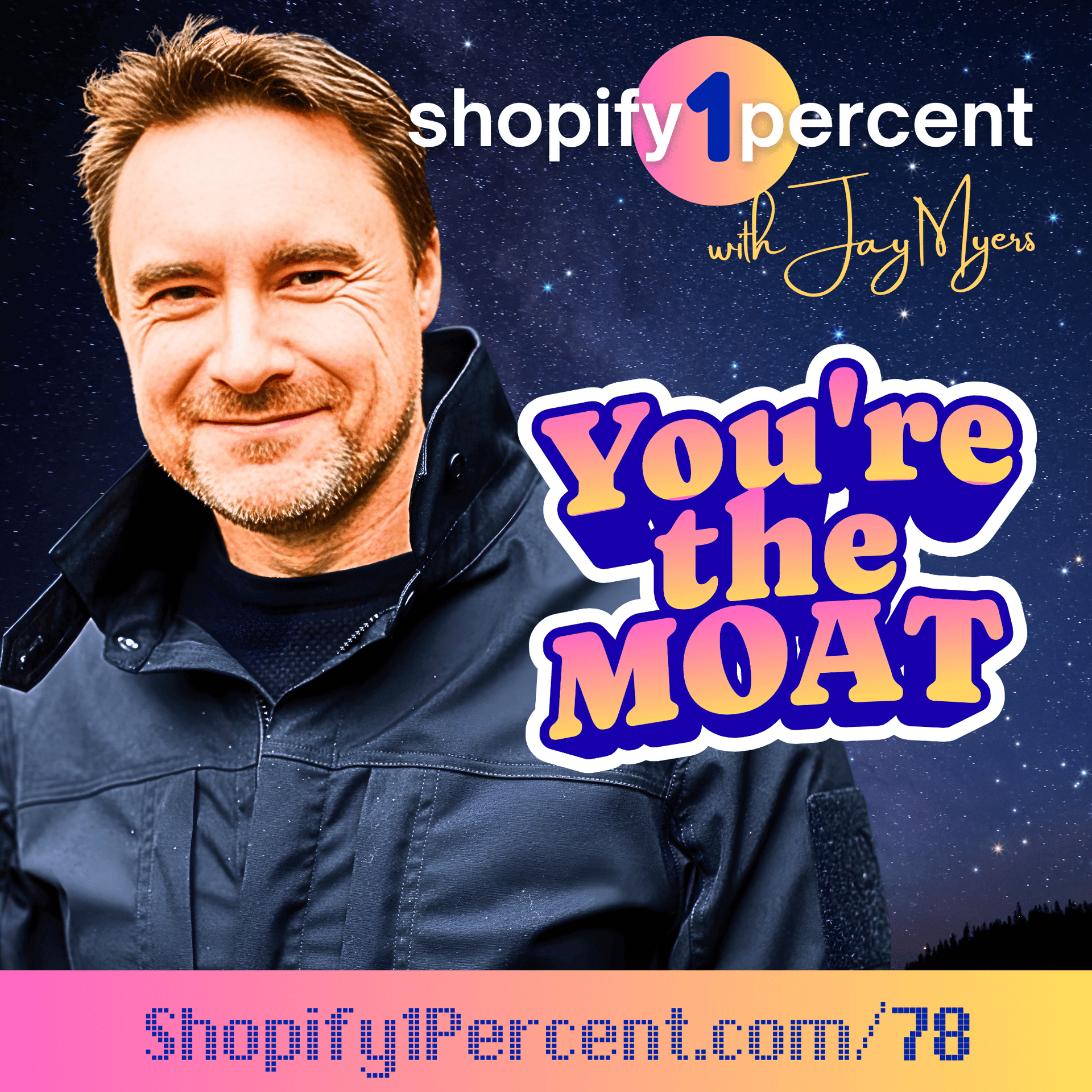
Matt Edmundson argues AI can’t copy the “moat” of a founder’s authentic voice and story, and that Shopify businesses should build audience + repeat purchase, not rely on one-time ad acquisition. He also stresses operational resilience (backups/undo) and founder independence (business shouldn’t collapse if the founder disappears).
Guest backgrounds
Matt Edmundson is an entrepreneur, podcaster, and founder of Orion. He has 24+ years in e-commerce and has built, sold, or scaled 20+ online businesses since 1998. He runs brands in the trenches and is building a new studio while launching a brand podcast.
Key claims
- “Digital David theory”: small brands win by being “me” (unique voice), not by generic content AI can mimic.
- Build audience through consistent, human content; don’t become a consultant who stopped operating.
- Investable businesses aren’t founder-dependent; test “would it collapse if I wasn’t involved?”
- Repeat commerce beats paying for one-time customers.
Notable examples
- His son’s nutrition/IBS-focused Instagram growth to 100k+ followers and a coming app.
- His “Naked Nutrition” subscription story: he quit due to subscription friction, not product quality.
- A skincare failure lesson: avoid buying inventory on credit to prevent cash-flow/tax surprises.
Written by AI. May contain mistakes. Listen to the episode to check what was said.
Chapters
Tap a time to open that second in VOThe Unique Impact of AI on Business
0:24 to 2:36
Explore the limitations of AI in personal branding and the importance of individuality.
“Matt now helps founders create businesses that are built to grow and worth buying.”
The Importance of Real-Time Experience
3:30 to 5:03
Discuss the value of being actively involved in e-commerce versus just consulting.
“Let's grab a coffee or a drink during happy hour.”
Building a Brand Through Podcasting
5:03 to 8:12
Learn how Matt is using podcasting to grow brand engagement in the supplement industry.
“Jay, listen, I've been looking forward to this, man.”
The Digital David Theory
8:12 to 12:37
Understand the concept of leveraging personal stories to connect with customers in e-commerce.
“So what, this, I didn't ask a ton before the show because I was like, this, I knew would be interesting to talk about.”
The Value of Audience in E-commerce
12:37 to 14:02
Discuss the significance of building a loyal audience and its impact on business success.
“Is that kind of the principle behind this?”
The Importance of Storytelling in Branding
14:02 to 16:58
Learn how storytelling can significantly impact customer retention and brand loyalty.
“It's no longer just this faceless brand, Vegetology, that sells these supplements, that actually there's a team behind that.”
Lessons from Business Failures
16:59 to 19:19
Discover valuable lessons learned from failures in e-commerce and the importance of financial discipline.
“summer she had, she was having like some skin issues and I looked for skin lotion that was safe for like a nine year old.”
Strategies for Financial Security in Business
19:20 to 21:40
Understand how to manage cash flow and maintain ownership of inventory to ensure business stability.
“Um, and I always say it's just, I've had a lot of failures, but my successes, thankfully, far outweigh the failures.”
Starting a Business: Lessons for Entrepreneurs
21:41 to 23:16
Gain insights into the mindset and strategies required to successfully start and grow a business.
“I mean, when you're starting, you had enough startup cash to, and then just grew it slowly as you could?”
What Works in Today's E-commerce Landscape
23:17 to 26:39
Explore effective marketing strategies and personal branding tactics that are driving success for businesses today.
“I've slipped a few cans and had a bee come up, but I mean, getting your drink spikes a lot worse.”
Show all 27 chapters
Understanding the Appeal of Ordinary Adventures
28:00 to 29:44
Learn about the impact of relatable storytelling in media consumption.
“My son is nine and my daughter's 12 and they watch not a ton of YouTube, but they have a few channels that they like.”
The Importance of Personal Branding in Business
29:44 to 31:06
Explore how personal branding can affect business value and sellability.
Creating a Business That Can Thrive Without You
31:06 to 33:14
Discover strategies to build a business that doesn't rely on the founder.
“a bunch of people that actually is good.”
The Role of Vacations in Business Success
33:14 to 35:04
Understand how taking breaks can enhance creativity and business performance.
“But if you're wanting to build more of a business rather than a really nice job, I think that's the route you have to go to.”
Finding Inspiration Outside the Office
35:04 to 37:47
Learn how to leverage nature and physical activity for creative thinking.
“They know each other's roles and it's not reliant on any person because it's always easy to say in practice, but to actually do it.”
Acquisitions: What to Look For
37:47 to 40:02
Gain insights into the key metrics and attributes for successful acquisitions.
“You know, it's funny for me, it's, it's a, it's a treadmill.”
Strategic Growth through Integration
40:02 to 42:00
Learn how integrating acquired businesses can lead to scalability and success.
“of the businesses you've acquired because there's, you know, a lot of brands are listening, are maybe hoping to sell their business one day, even if they're not.”
Integrating Acquired Brands into Operations
42:00 to 43:12
Learn how integrating acquired brands into a larger operation can lead to growth.
“And for the original founders, it means they're then hands off.”
Strategies for Growing Struggling Brands
43:12 to 45:28
Discover strategies to increase repeat purchases and customer relationships in brands.
“And now with your services, you could actually grow them more.”
The Importance of Repeat Purchases
47:41 to 51:12
Understand the critical nature of repeat purchases in building a sustainable business.
“I don't do anything to increase that turnover.”
Navigating the Evolving Digital Marketing Landscape
51:12 to 55:55
Explore how brands can adapt their strategies in an evolving digital landscape.
“What are the biggest places you're placing bets in the next two to three years?”
Using AI to Enhance Brand Information
56:00 to 56:48
Learn how placing detailed brand information on websites can influence AI responses.
“Like we, we have a link at the bottom of our website that says, I think it literally says, Hey AI, this is for you.”
Strategies for Brand Awareness in AI
56:48 to 58:59
Explore practical strategies for increasing brand recognition through digital PR and podcasts.
“And so by going on the podcast, you're creating brand awareness.”
Understanding Brand Mentions vs. Backlinks
58:59 to 1:00:13
Discover why brand mentions are becoming more significant than backlinks in the age of AI.
“It's truly like the accurate way of knowing if something is relevant.”
Common Mistakes in E-commerce Today
1:00:13 to 1:02:28
Identify the key mistakes e-commerce brands are making that could impact their future.
“But I think if you start off with that llms.txt file, and if you don't know what that is, just Google it.”
Avoiding AI-Generated Content Pitfalls
1:02:28 to 1:05:01
Learn how to create original content that avoids the trap of being flagged as AI-generated.
“Still, it still picks it up as AI detected.”
Leveraging AI for Content Production
1:05:01 to 1:07:40
Find out how to use AI tools to streamline content production while maintaining originality.
“Now, the way I edit that blog post is I read it out loud.”
Transcript
Automatic transcript. May contain errors.0:00We can crush it here. We can crush it there. I've never actually run an online business. This is like going to a midwife and asking them for advice about parenting. I call it the digital David theory. The story David and Goliath, the small guy takes on the big guy. The only thing Jeff can't do, and actually now, the only thing really AI can't do as well, is be me.
0:19Matt Edmundson:Matt Edmundson is an entrepreneur, podcaster, and founder of Orion. With over 24 years in e-commerce and more than 20 online businesses built, sold, or scaled, Matt now helps founders create businesses that are built to grow and worth buying. He's got over 100 ,000 followers across Instagram and Facebook. The big question is, would it collapse if Matt wasn't involved? Your social media account passwords, your Slack account, everything. You will have zero access. Now, start preparing because this is in six months. I really don't know if you can build a healthy business of just paying to acquire one-time customers right now.
0:54It's so hard. There's a phrase, AI slot. It looks like everything else. It sounds like everything else. and there's no brand personality. Claude creates all the clips, social media clips, all the Instagram carousels, everything. OmniSend just shipped something that I've always wanted. You can now connect OmniSend to ChatGPT or Claude and just say, where can my email and SMS campaigns be making more money? And it actually figures it out. It reads your store data, all your campaign details, your store history, and it tells you. And the insights are legit good. And even better, you can then say, okay, let's fix that.
1:29or build that campaign. And it actually does it right from your chat. It's wild. Now, if you're one of our listeners, you can get 30 % off for three months on OmniSend. Just go to the show notes. There's a link there. Or you can just use the code J30, J-A-Y-3-0 when you sign up. Now, if you're using another email and SMS platform and you want to switch to OmniSend, which is a great idea, they will do the migration for you. Just give them five days and then you show up with everything set, ready to go. Now, they've migrated thousands of stores from Klaviyo. And on average, they're saving 35 % on their email and SMS bills.
2:01If you're listening to this show, you clearly care about your Shopify business. If your store isn't backed up and protected, it could all be for nothing. That's why I tell every store owner I know who cares about their business, you 100 % need Rewind installed. It's a non-negotiable for me. One bad CSV import, one app that edits your store the wrong way, which has happened to basically everyone I know. One bulk edit gone wrong. And now AI making changes for you. Listen, Shopify does not have an undo button. Rewind is the undo button. Go to shopify1percent.com slash rewind for 30 days free on us.
2:42Links in the show notes too. Last year, I went to Commerce Roundtable in San Diego and it was so good. I'm going back again this year. It's September 21st and 22nd. And honestly, you should come to. It's the one e-commerce event that I recommend to everybody without blinking. It's not a trade show. There's no booth demos. It's really just operators on stage sharing what's actually working in their stores right now. And it's basically a room full of all founders. I was actually scrolling through my camera roll from last year, and I have over 100 pictures of slides from people's talks. I learned so much.
3:14It's that kind of an event. Now, I have five passes to give away for a 30 % off ticket. It's first come, first serve. So if you're interested, email me, jay at shopify1percent.com and I will hook you up. They will go fast. So email if you're interested. And if you're going, come say hi. Let's grab a coffee or a drink during happy hour. I'd love to meet you.
3:38My guest today has done over 75 million pounds for this. Double, double our currency. Not quite, but sure. In online sales. This number might even be outdated. I pulled this from somewhere on one of your sites somewhere, but he's built brands. He's failed at brands. He's sold over, I think, 20 e-commerce businesses. And he's been doing this since 1998, which coincidentally is actually also, I think a lot of our listeners know, is when I sold my first product online as well, too. Right. So we've got the exact same year. Yeah. We were like e-com brothers, aren't we? From another mother. From a different continent.
4:18Yeah, yeah. it's crazy it's 1990 it's longer than most founders have that i talked to and have been alive so yeah yeah yeah but there's something very different about my guest today before i before i let him speak here i keep cutting him off but you know something he most founders at his level they've stopped doing the work and they've moved on they might be on a beach somewhere they've just become consultants but matt's you're he's in the trenches he's running brands he's literally before we started this episode he showed me he's in a studio he's got he's got lights and microphones everywhere he's building a brand new studio testing things with brands just told me about something which we'll get into the show that he's testing with one of his brands that's crushing it like this guy has been around forever invested in brands bought brands and he's still testing things breaking things fixing them literally this week so super excited to get into all of this you're not going to be getting advice from five years ago what works like this guy's on the spot matt Welcome to the Shopify 1 % podcast.
5:17Thanks for being here. Jay, listen, I've been looking forward to this, man. Thanks for having me. And thanks for the intro. I feel like I've got a lot to live up to now. That's my goal. I like to set the stage high. It's only downhill from here. Yeah, yeah, yeah. I like to jump right into it. If anyone wants to know Matt's deep history and his personal life journey, go look at his LinkedIn profile. But let's get right into some of the awesome stuff you're doing. You make a big point on your site and everywhere you talk, actually, that you're not a theorist. You're running stores today. Like, what does that distinction mean to you?
5:49It means a lot, eh? Because you'll be the same, Jay. I must get, I don't know, countless emails from folks offering me all kinds of advice. You know, like, we can crush it here, we can crush it there. And the people that are offering me that advice have never actually run an online business. Do you know what I mean? they're really good maybe at this one little thing over here but understanding the big picture of e-com i think well they they don't know and so i'm just like it fails for me at the first hurdle quite a quite a lot of the times and so like it used to be years ago back in 1998 now if you if you had like questions about e-commerce you'd go talk to your web designer right yeah and you'd go say what do you think about this and going to your web designer asking them for advice about e-commerce is like going to a midwife and asking them for advice about parenting, right?
6:43It doesn't make sense. They're like really good at this one thing here. It doesn't mean they've got the expertise and experience that you need to sort of drive it forward. So that's always been a big deal for me. You know what else I noticed? That's such an accurate perception of things. I also think there are a lot of people that they get to a certain stage. They've built something awesome and great, but now they're not building anymore and they've kind of become this like quote unquote thought leader. They might speak at conferences, they might write resources and guides, but they're not actually doing the stuff anymore.
7:22And I wonder like, you know, there's authority when someone says something and are they just going to AI, asking for information, details, and then just repurposing it in their own words. But because like, I don't know, I'm just going to say Gary Vaynerchuk as an example, pick anyone. It doesn't, it could be anyone. But because of their status, no matter what they say, it has more weight. And I would rather listen to someone. I don't, I mean, I do care a little bit about the status, but someone who's actually like what you said before the show, you just said, I should get right into this. I have a, I have a list of questions.
7:54I'm going to go a little bit off track here, but before the show, you, you turned your camera around and you showed me the studio that you're building and you've got 125 inch screen. You've got mics all over the floor. You're literally setting it up as we speak. And I was like, what are you doing? and you're like, Jay, we got one of these brands. We just launched a podcast and it's only been 10 weeks and it's crushing. And like, you're right in the trenches. Like, I love that. Tell me about this podcast. So what, this, I didn't ask a ton before the show because I was like, this, I knew would be interesting to talk about.
8:25Yeah, yeah, yeah. Well, like you, I've been podcasting for a while, right? Love podcasting. As a medium, love it. I've got, it's how we met, right? Was through the podcast and stuff. And so I've always been curious. right we've didn't sort of the e-commerce podcast and then i've always been sort of curious how would that work for a brand like would a podcast work for a brand and it's different i think if you run an agency a podcast i can see how that makes sense but for an e-commerce brand we wrestled with that for a little while and we have a one of the companies that i i've got equity in is a supplement business okay and it operates in the supplement space very competitive space as you know.
9:06And so one of the things that sort of sticks out about our supplements is one, they're all vegan certified, right? We went super niche on the market. And because they're vegan certified, your audience is a very different audience to somebody who's just shopping for vitamin C. And we found that vegans, vegetarians, even people that eat meat by the supplements, they're very well educated right they have to be they've got to understand everything to the nth degree and so we've always done well by talking about the science of so much like on the website in the blogs and stuff like that so we we thought well what would happen if we did a podcast that made sense for our niche market for our customer what would that look like so we this podcast called so that's why okay and it's run by our head of marketing jen she's awesome jen's i didn't realize this when we bought jen on jen's jen's got a phd in biochemistry right we're like what anyway really clever lady she's she sort of heads up the podcast and so there's three of us on the podcast and i get to play the joker which is my favorite you know sort of role to play the color yeah yeah yeah and the three of us in the in our nottingham studio we sort of sit around and the studio i mean people always want to know we probably spent about 20 grand doing the studio right yeah um so we've got this studio in nottingham and we sit around and we talk and we answer the science behind everyday questions like do i need eight hours sleep why should i drink two liters of water a day why does my skin go red when i exercise this these are the kind of questions that we can look at and go, these are what our audience are asking.
10:52So let's answer these questions on a podcast. And so we've, we're about 10 weeks into it. We've recorded about 23, 24 episodes. It's, yeah, it's unbelievable. The impact is had. And so it's not specifically about products you're selling. It's, I mean, it's in the health space generally. Like, would it be any kind of science topic or something roughly about? It's not even health. It's just the science behind everyday questions. So it's kind of a broad idea. But we know by answering those, we're going to appeal to our customers. Totally. Yeah. Because these are the questions they're asking. Well, you know what's interesting?
11:30I think the thing that is the most valuable thing you own right now is an audience. And, you know, it's so easy. Like, content is so easy to produce. a website you can ask Claude to clone a site and it'll clone it product pretty easy you can there's tools that you can white label products create them but a true audience like a true organic audience that follows you is like worth gold and when you see it from the reverse side like we see all these podcasters who like or they could be like youtubers or anyone that has an audience launch a brand like yeah you know andrew huberman any supplement he launches yeah turns to gold and same thing else right like it's so that's kind of the reverse but we don't see it where like this is a perfect example you've got someone who has the knowledge who's built a brand they have a product now they're creating the audience and like there is no doubt in my mind that will work because we see it in the reverse a thousand times over once you have an audience you can launch anything yeah Yeah, exactly.
12:38That's exactly right. Is that kind of the principle behind this? Like, let's just build the audience and the opportunities will be endless after that. Well, I have this theory, Jay. I call it the digital David theory, right? So, you know the story, David and Goliath, the small guy takes on the big guy. And so in e-commerce, we're the little guy. You've got your big guys out there, right? Who are crushing it, deep pockets, taking all the ad space and we're kind of screwed. The only thing that Jeff can't do, and actually now the only thing really AI can't do as well is be me, right? So me is the kind of moat that we have.
13:20It's the differentiator. It's the thing which really helps us is our voice. and so if we take that principle that if i can if i can somehow marry that against what i call the customer story so if i can take my story and the customer story and find that overlap and if i can be in that space not only will i build the audience but i i build a moat around that audience because someone else might be able to offer supplements but no one else can be me Do you see what I mean? And so you start to build that brand loyalty in that respect. And that's what we hope is going to happen with the podcast, right?
14:02It's no longer just this faceless brand, Vegetology, that sells these supplements, that actually there's a team behind that. There's people we can get to know. We can have a bit of, it's like, it's like you do the same thing with this podcasting your agency, right? The two are, they're not mutually exclusive, are they? The two things are linked. 100 % and it's interesting last week I was at sub summit missed you there by the way yeah right I did a keynote on the main stage and spent half an hour talking and was talking about you know the future of repeat commerce we have a product in the space and what does like predicted commerce look like and a number of things like that and I had a bunch of data a bunch of stats, a bunch of interesting things, but everyone came up to me afterwards.
14:49And even, even I had calls this week and they said, Oh, I love that story you told. I told this story about a couple of years ago when I, I got my protein powder and it, you know, protein powder is always in a big, a big jug and I didn't make my way through it. I'll condense the story a little bit here, but long story short, another protein powder came because I was on a subscription. My wife got a little bit upset at me because it's in the, they're in the pantry and it starts to So now it's going to take a lot of space. And I didn't cancel my subscription. I thought I would just get through. I didn't.
15:17And then a third one came and then she lost her mind. And she was like, cancel your damn subscription. And so I canceled the subscription, worked through my protein. And then, I don't know, I just remember like a week or two later, I was at Costco and I just bought some other protein. You've got issues. Yeah. Well, the moral of the story was the brand lost me as a customer, not because of their protein. It was naked nutrition. I love their protein, actually. It's clean and all that good stuff. But I'm not that picky. You know what? I was at Costco, saw some protein. At the end of the day, I know there are some people that it has to be very specific, but I'm not that person.
15:55And they lost me as a customer, not because of the product, not their marketing, ad spend, webs. Everything was perfect. I just didn't want the subscription, and then they lost me. Anyways, that's what we're trying to solve with our new product. But everyone came up and said, I resonated with that story. And so story is so important. It's the only thing people remember. Like they didn't remember the rest of the talk. Yep. They remember you and they remember how you made them feel. Yeah, that's right. And so if you can associate your product with your client with a feeling, like for me, I'm a big fan of humor.
16:30If I can somehow take something that's as dull as dishwater, like supplements, and bring a level of entertainment. You don't put those two words together usually, do you? But if I can somehow do that in a way that resonates with our audience, then there's a real longevity to that. And you see the, and where you see it is in what you talk about, it's in the repeat purchasing. It's like, can we do that? Yes or no? And yeah, it works well. I have an experience where I bought skin lotion for my daughter and I can't remember this one summer she had, she was having like some skin issues and I looked for skin lotion that was safe for like a nine year old.
17:10And I Googled and I, anyway, I found a brand, ordered it. And then it, it actually didn't come. And then a few weeks later I remember thinking, oh, where is it? And I couldn't even remember the brand's name. I couldn't, there was no connection, no story no nothing I coincidentally ordered it just because I googled or I can't remember AI maybe recommended it I don't know but even when I got to the site nothing came through and I could not remember the name and I was like how am I going to find this order I searched I searched my email skincare nothing came up I didn't know the brand's name to search I tried everything I could I'm like I'm not going to go through thousands of emails I couldn't find so that was I mean that's the extreme case where I could not even remember who the company was right so yeah And it's a real shame when that happens because you've worked so hard to get the customer, right?
18:01Totally. You've done the hard yards. Just go that extra mile and you win somebody for life. It doesn't take an awful lot, I don't think. No. You've worked with a lot of brands, is it? Like you are currently running or owning or managing, is it roughly 20 brands? No. So I've had, I think, 20 e-com businesses over the years. I've either set up, failed at, or 20 e-com businesses. At the moment, we've got three online businesses. We are looking at two other companies right now in terms of sort of an acquisition prospect. So, but yeah, it's good. You know, I love e-com. I like going to bed knowing full well that when I wake up, I'm going to wake up richer.
18:48Yeah, and enjoying what you're doing. too, obviously you're staying with it. I want to ask you like with all the ones that some have been successful, you said some haven't, some have failed. Can I ask you what, what's been maybe the most expensive lesson you've learned through some of those failures? Most expensive lesson. You don't have to put a dollar figure to it, but what's been a big, you know, you only learn things through failures and you do. And to be fair, I mean, we've lost hundreds of thousands of pounds we have. Um, and I always say it's just, I've had a lot of failures, but my successes, thankfully, far outweigh the failures.
19:27You know, I think, I think for us, the things that we learned quite early on that were the expensive mistakes. And I appreciate this is not for everybody, but this is just how we do business now with things like don't take goods on credit. So when we were when we had a skincare company, for example, which we sold during COVID. But we had a skincare company and we would buy, I don't know, 100 ,000 bucks worth of product every couple weeks, we were we were selling it by the millions, the skincare. But we made a point of bootstrapping the business so that every invoice we paid at the point of order.
20:09Right. So I'd call the skincare company and I'd be like, wow, right, let's, here's the order. Here's the a hundred grand order or whatever it was. And here's my credit card. And they'd be like, we can give you terms, Matt. You're a really good customer. I'm like, no, but you can give me a better price for, for paying now. Right. And it meant that what happened was every product we had on our shelves, I owned. And I never got into this place where I had to rob Peter to pay Paul. Yeah. And the security that brought us was great. So we've lost money, but the money we've lost, we had to lose, if that makes sense.
20:49Makes all sense. And we learned that lesson the hard way because there were times where we would buy stuff on invoice and you'd lose track and then cash flow became an issue. And the way we do sales tax in England is kind of messy. And all of a sudden, before you know it, you had to find for a small business, finding 30 grand that you forgot about was just, that was hard work. And so, yeah, we, I appreciate not everyone can do it, but we, it was something I learned off one of my business partners, a guy called Andy. And it was a really sound business lesson. Just, yeah. Yeah. So now if I go out into that warehouse, the studio I'm in at the moment is in the warehouse.
21:26But if I go outside into the warehouse, everything from the packaging to all the supplements to the, we've got a gift company, everything on every single shelf I own. So if I shut the business down today, I don't owe anybody any money. How did you get to that point though from day one? I mean, when you're starting, you had enough startup cash to, and then just grew it slowly as you could? You just bootstrapped. And so every, here's the thing, right? Founders, you start the business. Most people I know don't start the business so they can get wealthy, right? That might be a goal. But ultimately, you start the business just because you're like, I want to have a go at this.
22:10I want to see what kind of adventure this is going to be. And you don't mind working 12, 13-hour days if you can see the benefit at the end of the road. Yeah. And so we were just like that. Um, we made the mistakes. We lost, like we borrowed money from the bank on a business venture that was selling these. We sold online these caps that would fit on a beer bottle. Um, and they just clipped on. And the reason you would put them on the girls would buy them. So when they went to the clubs, they could put them on the beer and they wouldn't get spiked because you couldn't drop the pills in. It was sort of this anti spiking cap.
22:46And we thought that was a good idea. And you You could screen print logos on these caps so you could sell sponsorship. And we thought, this is genius. Until it wasn't, but we'd borrow money. And then it took us three years to pay that money back. And I'm like, I never want to get into that place again, really. Yeah. Man, just such a shame that, I mean, even a product like that has to exist, but it does. Heartbreaking. My mind went to stop bees from getting into your drinks when you're outside. That's where my mind went. Same thing. They'll do the same. Stop bees. Stop no things getting in. I've slipped a few cans and had a bee come up, but I mean, getting your drink spikes a lot worse.
23:26Okay, well then let's shift to the other side of it. What are you seeing that's working? I mean, there's a lot of reasons brands can fail. Our listeners want to know, okay, this guy's worked with a lot of brands. What are you seeing that brands are working with right now? Actually, one thing I want to get into is, are you still doing, you're in a kind of a 90-day challenge? challenge with one of on Instagram with one of the brands? Is that still going right now? It started yesterday. Oh, it just started. Oh, yeah. Yeah. Okay. So there's no feedback yet on that. I was going to ask you. No, no, no.
24:00That was my son. He's 22 years old, graduated uni with his degree in nutrition. And there's no way he was ever going to work for anybody. And the reason he did nutrition at uni was he has always suffered since he was a young kid quite badly with IBS. Right. And the doctors, God love the doctors, you know, they do a phenomenal job, but they, they didn't help Zach and the overarching thing Zach heard when he was a teenager and when he was growing up was it's all in your head kid, right? Not really that helpful. And so he went and studied nutrition because he's like, I think I can help people here, right I can learn it I can get me better and then I can help people and so this is 22 year old kid he leaves uni he works as a lifeguard over summer because he gets paid to sit on a beach right and then September he um he comes back and he's like right I'm just going to start doing Instagram so now bearing in mind I know e-commerce right he does all of this without really talking to me about it he's just made the decision he's got a plan he's knows what he's going to do he's sort of followed a few people and is like clear as day.
25:11And so now what's he been doing that six, seven months? He's got over a hundred thousand followers across Instagram and Facebook. He's got a recipe book and he's just about to release an app, right? And he's in a two months time, I think it is. He's heading to Bali. He's going to go traveling with his mate. He's going to go sit in Bali for a few months and then he's going to go to the Philippines and he's going to do the whole digital nomad thing. And I'm like, huh, I'm kind of living my life again through my son. I'm like, you go, let's, you know, you have a go. And that's the thing that I'm noticing is working.
25:47It's the reason we're doing the podcast. It's this whole, put yourself out there, whether it's through Instagram, whether it's through podcasts, whether it's through both, and just be you. And do it in a way where people like that, right? And they feed into it. Don't be polarizing for polarizing's sake. don't be a jerk i mean just be a decent human being and and that's what he's done and you know what he's properly killing it and so and we're seeing the same here in business it's just like that's the thing i think we're pressing into now because like you say ai can do everything right it can write the blog posts it can rip off the websites it can make the websites better we've been pushing hard into ai the two things that we're leaning into the most at the moment the AI, but also the content side of things.
26:35Like if we can get those two things working side by side, that's, that's the bit that excites me right now. At the beginning of the show, I told you why everyone's serious about their Shopify business should have their store backed up and protected with Rewind. There is no excuse not to. There literally is no undo button for Shopify. Shopify's own terms actually say that your data is 100 % your responsibility, your products, your theme, your customizations, your settings, everything. They don't back up any of it. And no, a CSV export does not cover it. With CSV exports, there's no images, no meta fields, no themes, settings, et cetera, nothing.
27:18I was talking to the people at Rewind about a brand where one team member actually ran a bulk update and accidentally overwrote 11 ,000 products. Orders, customers, contacts, all of it gone in a single action. Luckily though, with Rewind, it was a simple one-click rollback. It could be anything, a bad CSV import, a random app you just installed that messes everything up, or all of these AI tools that everyone's using to manage their store now. I have heard so many horror stories. Rewind just gives you peace of mind no matter what. If you don't have Rewind installed, you absolutely should have it.
Read the full transcript
27:54Go now and get it. Shopify 1 % dot com slash Rewind. You'll get an exclusive 30 days free on me. The link is also in the show notes.
28:08It's interesting. My son is nine and my daughter's 12 and they watch not a ton of YouTube, but they have a few channels that they like. And there's this one, I'll give a little, give a mention on the show here, but it's called Ordinary Adventures. It's like travel vloggers and they go somewhere and they review the hotel. And we love going to Disneyland and Disney World as a family. And so like often they go to Disneyland or whatever and they review all the different places. But it's just, it's an older couple. Like they're probably mid 40s and they just talk like normal people. They're not like, hi everyone, welcome.
28:45Like not like, you know. And I asked my son, I was like, what do you like about this channel? this channels like he he just he he wants to watch it before bed and he wants to watch when he wakes up and he's like i don't know dad they're just they're not annoying to watch that i just like them and he's gotten to know them like they're very interesting people but they're just totally that's why it's called ordinary adventures they're just ordinary people going on adventures talking like normal people telling their story and sometimes they'll sit and when they're reviewing one of the meals they'll kind of go on a story for five minutes or ten minutes but that's what he loves and and that's what connects him and so many times i think like i fall into this trap too where if i'm speaking in any kind of a public forum whether it's podcast webinar or on stage or something i feel like in the back of my head somewhere i'm thinking oh nobody cares about this story i gotta rush through it or i gotta this but that's actually the best part and that's what connects it and even with a nine-year-old kid who we think we think that generation has no attention span anymore we're like but but they do and they crave it and you actually can tap into it it's magical yeah it is that's good for your good for your son for for for doing that i'm jealous of him i wish i did that when i was that age yeah but the world's a smaller place now isn't it it's all possible now yeah but yeah i i i think watching him i'm like we definitely need to push into instagram and social especially now social is more about search we're finding that's working quite well so yeah we're i think the brands that do social well in terms of consistency and have some kind of voice on there they're they're doing really well the trouble with that though here's the big problem i think with that is they become quite hard to sell because they're based around a founder right yeah and it's not a bad thing and i think i think this is part of the 90-day challenge is like building a sort of a brand a brand following if you like building your personal brand what does that mean what does that look like i think that's actually something founders should do or at least that's the experiment should they do it we're going to find out right it's the big thing but the there are issues with that that you then have to think through so which is why we did the podcast the way we've done it the podcast is not just me the podcast is a bunch of people that actually is good.
31:11But if that business is ever sold, it's not dependent on me doing that podcast all the time. Yeah. I had, I had this on my list of things I wanted to ask you about. I'm going to jump, jump to it because I had a couple of questions before, but you, you've been vocal about this and your whole pitch is, is building a business worth wanting, right? That's the, the kind of the slogan. So I often see, and I, I've fallen into this trap in my life where founders accidentally build a job that they build around themself. Maybe they'd end up not even liking the job, but they've created this job that they're relying to.
31:46So what is the difference between a business where someone wants and is investable or appealing to someone acquiring it versus building something that's a job you're stuck to? Well, I think every business that starts, in effect, is the job, right? Because you've got to put in the hours. But I think as you grow your business and as your understanding of it changes, and again, Jay, you'll know this, it's like, how do I grow my business where I'm not the bottleneck, where I'm not the sort of the pivot, the linchpin behind everything? And the more I can not be that, the more valuable the business is to somebody.
32:28Because if I was to sell this company here, the big question is, would it collapse if Matt wasn't involved? And if the answer to that question is no, then I've got a business that's got high value. Now, there are going to be some things that if, you know, God forbid I drop dead tomorrow, would it have an impact on the business? Yes, it would. Because I'm a bit of a personality and I get that. But I think we have enough structure and ideas in place that I'm no longer the linchpin in everything. And I think that's a critical aspect of it. And that's how you, the big question is always, if I didn't turn up to this, doing what I do for the next three months, what would happen to that business?
33:12And if there are bad things that would happen, you've got to ask yourself, is it worth me putting something into that so that I could go away for three months if I wanted to? you might not want to. And that's totally fine. It might not be the time for you. But if you're wanting to build more of a business rather than a really nice job, I think that's the route you have to go to. Do you know who Mike Michalowicz is? He's an author. He's written a lot of books. I think nine. I had him on the podcast recently. One of his, he's got, his bestseller is called Profit First. It's all about - I don't. Yeah, yeah.
33:45Sorry, I do know who Mike is. Yeah. And I've met the Profit First guys here in the UK as well. Sorry. Yeah, so they actually have like profit first coaches now they've built they've built out a whole program around it but we do profit first accounting in our companies oh amazing amazing yeah he he uh it's a it's a great episode i encourage of course any i'll put a link in the show notes to it it's a few episodes back but one of the things he does at his company and he now i think he kind of talks about it in one of his recent books but it's like forced vacations yeah and they'll take he does it himself where they'll tell you ahead like okay matt in six months you're gonna go on a two-month vacation and you're not gonna have be able to answer a phone we're gonna change your email password your social media account passwords your slack account everything like you will have zero access now start preparing because this is in six months and the only way that someone could possibly get a hold from you would be like phoning the hotel or like there is no you have no connection and he he works with founders to get to this point and sometimes they want a year to prepare, but like that's the goal.
34:55And then they, so at his company, he's got about 17 or 18 people at his publishing company and they all have to do it so that everyone is able to step up. They know each other's roles and it's not reliant on any person because it's always easy to say in practice, but to actually do it. And I mean, we've all had that experience where we've like gone away on a little bit of a trip and someone else steps up and things are okay. And you know what, actually someone did something even better than the way I'm doing it. And so it's like a forced function for that in a sense. It's a really good idea. Every August I take the whole month off.
35:30Amazing. And then can you disconnect too? Yeah, yeah. No, no, no. And I try and write actually is what I do in August. And some years actually, if I'm really well planned, I actually stop mid middle of July and then come back in September. And what you find is one not only do i i feel rested and re-envisage visions kind of thing for what's going on but the team have had the ability to make decisions that they wouldn't necessarily have been able to make whilst i was there yeah and so there's a kind of flourishing which comes from them with the founder not being present that's actually quite lovely to see so yeah i'm a big fan of it you know taking a sort of four to six weeks practical every year has been life given.
36:17I've done it every year, probably for the last five or six years. And if you get to the stage to do that, I highly recommend it. I think it's weird because as a founder, your mindset is, is work harder, you know, like, and, and a lot of times like you love work. Like I genuinely love my job. Like it's not, it doesn't feel like I wake up in the morning, I'm excited and the whole family goes to bed and I'm staying up and it's not because I have to, I genuinely love it. But I think I have rarely ever had a creative idea that has moved the company forward at my desk. It almost always happens when I'm out for a walk, when I'm driving, when I'm in an airplane or in a hotel room, when I'm away from it.
37:02like it almost like when i actually sometimes i get mind blanks when i sit at my desk i come to computer i'm like yeah okay yeah what do i do now and i start clicking through tabs or opening up slack or email and so it's not just a sabbatical in the sense of like it's actually good for your business and it is where a lot of the creative ideas come well every six weeks twice a term or semester as you'd call it but every six weeks i take two or three days off and i'll go walk in the hills i'll go sit by lake i'll i'll just get out with that very idea once a week i every wednesday morning i leave the house early it's about a 90 minute walk from my house to the warehouse if you walk it's 90 minutes and there's actually a route that i've found that goes through some sort of old golf courses and you know forests and stuff like that here in here in liverpool and it's it's it's a city thing but it's anyway it's a nice route and it's a long way do it every week and the best ideas come from those wednesday morning walks yeah right the six week sort of two day three day mini but it's like you say the best again smell from andy one of my business partners he said the best advice best ideas i've ever had have been while I've been on a surfboard.
38:18Yeah. You know, it's funny for me, it's, it's a, it's a treadmill. And at the gym, I find something, I don't know, your blood's moving. Maybe, I don't know, you're breathing more, but it's like, I just get hit with ideas and I, and I find myself like, I'll get off the treadmill. Like, okay, I got to write this down. Oh, I got to write this down. And I spend half the time at the gym, like making notes on things. And then people look, I'm like, I'm not on social media. I'm like writing down ideas that I had. Yeah. And I've, I've heard some people say they actually schedule thinking time, which is interesting.
38:48I've had people tell me they like actually block time in their calendar each day to, to just either sit in a chair or go for a walk. But it's, you know, a break in the day. It's, it's, it's really important. It is. I think starting the day off right is important. And again, I get that it's, now my kids are a different life stage to yours. And I think you go through seasons in life where certain things are possible. but now I get up the first hour hour and a half of the day I'm just sitting reading some people like to meditate or pray or whatever it is I and then I hit the gym I'm like start the day right every day it's it does wonders for your mental health right and and I think it's so important I get that it's not possible if you've got a three-year-old you know running around creating mayhem and chaos but whatever works used to be when we had young kids I would drive home from the office and I would just sit outside in the car for 20 minutes before going into the house.
39:45I've been there. I needed that bridge between working and knowing full well as soon as I walked through that door, three young kids, it was just going to be mayhem. So whatever works, I think you've got to find the space. Yeah, totally. Okay. So I want to ask about some of the businesses you've acquired because there's, you know, a lot of brands are listening, are maybe hoping to sell their business one day, even if they're not. I think it's always important to build a business that, like you said, business that people want. And so what are some of the things that you look for? You said you're in the middle of two potential acquisitions right now.
40:22Yeah, yeah. How, tell me how you, what you look for in a business. How do you find these businesses? And then I'd love to dig a little bit into like important metrics that you look at And how do you know a business is worth buying, wanting, and one that's not? It's a really interesting question. And full disclosure, when we acquire businesses that don't really pay for them, which sounds a bit counterintuitive, right? So we tend to do well, and again, this is just from our discovery, we do well with businesses between half a million and three million turnover, right? So that's kind of where they are.
40:59Like annual revenue. Yeah, annual revenue. Yeah. And they're, they're, they're more than likely selling small repeatable products like supplements, beauty products. You know, these are the industries we know quite well. We've looked at companies that sell tents, for example, they're bigger than what we know, but the gift company we acquired last year, it was your traditional sort of mom and pops kind of store. Really? They beautiful husband and wife run in this, this store and they grown it and they'd hit the ceiling and you must see it actually quite a lot. but there's a ceiling that people hit when there's one or two of them.
41:37And they get to an end of their knowledge. And so then they go, right, so what we need now is an agency to help us with paid media and we can scale. So they go spend four grand a month with an agency, they lose 20 grand on ads and they're nowhere. And so they quickly pull it because obviously every penny matters. And they're like, well, that doesn't work for us. So then they feel stuck. And we find actually with those brands, we can do really well. so with the gift company we took a part of the company we bought value in other ways so we moved the whole operation into our warehouse all our team here do all the fulfillment all the picking all the packing our web team took over the website our ads guys took over all the ads and so what happens is you bring a business in and you plug it into a bigger machine with the idea that it can scale and grow.
42:26And for the original founders, it means they're then hands off. So they still own some equity in the business. In fact, we're getting a beer, I think, in a week or two's time, which is always a nice way to catch up. But yeah, we tend to do really well with that, if that makes sense. It makes total sense. So you're a little bit different than traditional investors, you're not necessarily looking for a certain growth trajectory and certain margin ratios and that if the company actually is a little bit struggling, that's actually a good opportunity for you. They've found a product market fit. They're not a$100 million brand, but they're something.
43:12And now with your services, you could actually grow them more. So it's a little bit of a different strategy than like a private equity firm. Yeah. Yeah. Yeah. Okay. Interesting. Very much so. Yeah. We're definitely not a buying equity kind of a company. We definitely look for ways to invest in terms of value. Yeah. We've, and all, so the, the figure you mentioned at the start, the 75 million, which is probably close to a hundred now, I really should add it up if I'm honest with you. I get to a point where you don't really care, but I would say the vast majority of the income we've created has been with companies where we've had an equity stake that we didn't necessarily buy, but we bought value in other ways.
43:54Yeah. If that makes sense. So every single one of those, we took over those companies, we ran their companies, we moved it into our warehouse, we did the marketing and so on and so forth. And it's just something that's worked super well for us over the years. What's the biggest lever that you pull? Like what do most brands in that range struggle with or like the biggest opportunity to to grow some of these brands? That's a really interesting question. Let me just think through the company. I would say the one thing that I think we're really good at, that's a bit of false humility. I think we're really good at a lot of things, but one of the things I think we're really good at is if you're really good at that humility, that that's the yeah, yeah, yeah.
44:38We're good at talking ourselves down in a funny kind of way. I would say we're, we're really good at building relationship with the customer. And as a result, our repeat purchase rates are always like 20, 30, 40 % above industry averages. Right. And so we get great results there. So with the gift company, one of the things that we've learned from that actually is when people buy gifts, it tends to be a one-off and and so when we looked at their sales data like 80 90 of their business came from first customer acquisition and you're like well that's an interesting thing can we change that um and that's where a lot of our thinking has gone is not how do i go get more first-time customers because well whatever it's not my yeah i'm not interested in showing another 20 grand into ads but how can i get the 100 000 customers to go from a 1.1 purchase rate to a 1.4 or 1.5 or 1.6 if i can do that then actually we win quite a lot and so which is why i always love talking to you you know and having you on the show we talk about memberships and subscriptions and all the crazy ideas that you've got.
46:00And all of those things I love because it's all about taking a single product and creating value multiple times in a way that promotes longevity. And I think that I love. At the top of the show, I mentioned OmniSend can now talk to ChachiBT and Claude. And I want to tell you why that's even bigger than it sounds. So if you missed it, quick catch up. OmniSend is what I use for email and SMS on every Shopify store I work with. Plus for this show, as well. And you can now connect your AI cloud chat GPT straight to your OmniSend account, your data, your campaigns, your flows, everything. You open a chat and you ask, what should I focus on this week to make more money?
46:42And it will come back with real answers about your store, which flow is underperforming, which automation needs improvement, which customers are going quiet, what's missing, everything. My favorite part though, is AI segments. I used to build these by hand clicking through filters forever. Now I just type something like customers who bought twice but ignored my last campaign and it just builds it. And anything it writes already sounds exactly like your brand because it pulls from all your previous emails from your website, your logo, your color, your voice, everything. I've been doing this for 15 years and this is the closest I've ever felt to having a full-time marketer sitting right beside me.
47:20I have a link for you in the show notes that will give you 30 % off for your first three months or you can just use code J30 when you sign up, J-A-Y-3-0. If you're ready to migrate from Klaviyo to OmniSend like thousands of others, they will do everything for you. You just show up and all your campaigns and automations from Klaviyo will be set up and running in OmniSend, ready to go. And usually at 35 % less what you were paying Klaviyo.
47:47The thing I, why I'm passionate about that is I see the long-term impact it makes on a brand too and i know how hard people work and i know how hard it is building a brand and if you can build something where you have a high repeat purchase rate versus one that's don't like you you can you can spend the same amount of ad money you can spend the same amount of time on all your efforts but if you structure it in a way that is healthy for repeat and one that isn't you've built a business worth triple or quadruple on what it is if it's just if one-time workers and so yeah you just better fruits for your labor too right and unbelievably so and this is because we buy we sort of acquire companies and at the moment we're building an e-com group but we're also like we we do sell individual companies off when people want to come in and buy them and i can take the same company right keep the turnover the sales revenue exactly the same.
48:47It turns over a million bucks a year. I don't do anything to increase that turnover. But if I take that million turnover, instead of it being one-time purchase, 50 % of that turnover is on subscription or membership. And instead of getting a three times multiple, I'll probably get an eight or nine times multiple selling that business. Same. Everything's the same apart from that one tiny factor. And I think this is partly why subscription businesses caught on the way they did was because there was a lot of high perceived value but it's really fascinating how it works did we did i ever tell you about our newest launch i know i reached out to i can't remember yeah yeah yeah yeah we did we met okay yeah yeah yeah yeah yeah yeah he came onto the podcast and told everyone about it we did that's right yes yeah yeah yeah okay never mind that's how busy my my mind is all over the place these days but yeah i like this is this is this is my my passion in life is and i think i think it's more important now than ever like for for brands because like you're probably seeing this with ad spend like you're probably spending double what you did five years ago to acquire customers i don't know what you're seeing but most of the brands we're working with their search traffic is down like close to 50 like people actually i saw a report recently google said that 61 of searches now don't end up in a click.
50:08So it's the AI overview, you get the phone number without a click, you get the address without a click, you get the hours of operations, you get the reviews, you get the pictures. You almost never have to leave Google's search results page. That's so true. So people aren't ending up on your site. And then now with Agentic Commerce kind of here-ish, like it's still early but it's here, people are going to just be asking ChatGPT for this gift company, like what's a great gift for my my mother for mother's day and whatever it recommends you can buy within your ai tool like this the when you actually get a customer like it's so expensive it's harder to get into your site and if you're not found in ai like man when you get one like if you're not doing everything you can to nurture them to get build a relationship with them and to get them coming back like i don't If brands aren't doing that right now, I really don't know if you can build a healthy business of like just paying to acquire one-time customers right now.
51:12Like it's so hard. Yeah, it is. I think there are some outliers, but the trouble is there are these outlier companies that then go on to YouTube and go, this is how you build a million dollar business and just buy my$400 course and I'll tell you how to do it kind of thing. Yeah. And actually it's an outlier. it's not actually repeatable. Correct. Yeah. What are the biggest places you're placing bets in the next two to three years? The people want to know, Matt. Where am I placing bets? In the brands that you're matching, what are you betting on? Are you going all in on this podcasting strategy?
51:52Are you betting big on TikTok? I talk to some people that are like, blogs are back because agentic and AEO, actually, I think that's a big thing that you're working on. But where's your big bets for the next couple of years? So the place is where we're spending the most money outside of what we normally do. So there's the foundation that we have that we know our systems work and our framework works really well. So what are we building on top of that?
52:22AI, obviously, because I think AI is just, it is so fascinating right now what you can do with AI. And what you probably shouldn't do with AI actually as well. Sorry, I interrupted you, Gene. No, I was going to say, do you mean AI in the sense of getting found through AI or using AI on your both? So I think there are six areas at the moment. If you want organic traffic, you have to look at six areas, right? AI search, obviously. You've got to look at traditional technical SEO. you've got to look at the content um the blogs the fourth area is youtube because by far it's i mean it still has a massive impact and youtube is feeding ai 100 so you you've got to look at that fifth area is social seo so you see now a lot of people on instagram again we've noticed this on zach's account a lot of people in hooks are now writing key phrases i think it's 61 percent of gen z or gen z millennials are searching on instagram versus google and so it's now at parity in many ways it's really it's quite fascinating so social search or social seo and digital pr that's so interesting yeah i actually have not paid i do that i do search instagram for for products or for different things because i want to see people that have it and actually see it i I have not considered the importance of the search.
53:53I mean, other than hashtags and there is actually a whole world of strategy behind that as well. It's a big deal right now. And I think it's one of those things you can take advantage of it. Because Instagram, I think it's early. And I think Instagram especially is cottoned onto it. TikTok to some extent. but i think yeah the sort of the social co i think is is is a good thing to get into well i've always heavily considered it and do it for youtube search results because that's very i i see youtube search but just for some reason instagram and and like i also tiktok would be the same thing too like you i'm leaning into the search on there because but google doesn't see those posts right like this is only within the instagram search as far as i know yes yeah i think google can see obviously google can see the youtube i mean that's the main one they they try to surface youtube ones yeah but yeah i don't think they see it unless they're logged in but once within the count yeah but that's interesting that that percentage of that younger generation is going there oh it's phenomenal now so if you think the search engine was google then it became google and youtube right yeah the second biggest search engine in the world and now they're on parity google youtube and social they're all on parity in terms of search yeah well and then ai is i guess its own version of search but it's a it's a question it is and it is and i think ai searches the wild west right now and again we get people contacting us all the time we can help you with ai search we've killed it with this brand and you're just like there's no way because there's no written rules right now there are things which we know that seem to be working.
55:35Next week, you just don't know. So one week, everybody's like, you need to be on Reddit, man. And then the next week, it's like, Reddit's not working. You need to be over here. And you're just like, I can't keep up, right? So do the foundations well. Do the basics well. And AI will definitely start to recommend you. And I think it's one of the things you should be tracking right now, actually. What are you doing with your brands for, even though it's early and like, I feel the same way. I feel like it's a lot of guessing and we're doing stuff at Bold that I don't know if it works or not, but we're doing it.
56:03Like we, we have a link at the bottom of our website that says, I think it literally says, Hey AI, this is for you. And it's, it's a very small link in the footer. And when you click it, it opens up a page that has all the details about our company. So like the founders, the founders history, how it was built, what are our exact positioning? Cause you know how sometimes you ask ChatTBT about your own company and it gets everything wrong. And so we're like, well, what if we put a page on our website? I heard someone that did it. And so we copied the idea yeah and actually after a couple weeks we noticed that ai was actually picking it up and the details that were in there were being used in the answers of ai and so like that was just a total test i have no idea it might not be that way in a couple weeks but we're right now just let's just try it try everything what are some of the things that you're trying with your brands well we're the same as you so one of the things that we've tried that works quite well at the moment is the llms.txt file yeah or the.txt file so yeah and they just i think they just announced that now that's an official part of the lighthouse score i think literally this week because up and it was it wasn't officially yeah yeah it was one of those official things yeah unofficially but now i think just as of literally two days ago it is now official yeah so that we know works yeah and especially if it's now become official we we've had some good trial with that other things that we've done making sure schema is right on the website so ai understands what the different aspects of the site are i mean you need good you need that for google anyway but actually it really helps ai and the other thing this is one of the things we've noticed with the podcast one of the reasons why i think digital pr is interesting like one of the things you could do if you don't already do it is understand the niche space that you got that you're in so let's say you sell i don't know expensive chocolates right and you if you do hit me up send me some samples but if you if you sell chocolates into a space i would go and find five or six hundred podcasts that are in that space that talk to those customers and then i would put myself out and try and get on as many podcasts as i possibly could right now does that do anything for your business maybe probably not i mean you know as well as i do podcasting is quite an interesting thing to try and get business out of right you've got to be in it for the long haul so but what it does do is it tells the internet that you're getting more and more brand mentions and so one of the stats we now understand with ai is brand recognition or the amount of times your brand is put out there by other people is way more important than backlinks, right?
58:51And so by going on the podcast, you're creating brand awareness. By creating brand awareness, you're more likely to be referred by AI. The other thing that we've done actually is we've got a Claude skill we've developed here, which once a week just goes to all the AI models and puts in like a bunch of different search terms and monitors the results and see if AI is referring us for any of those things. Hmm. Interesting. Yeah. It's truly like the accurate way of knowing if something is relevant. Like if you think about humans, like what's everyone talking about? If everyone's talking about a certain restaurant, it's likely if I, if I want to say what's the best steakhouse to go in New York.
59:34And if I ask people, well, everyone's talking about this one, everyone like that's the way that. So with AI, just looking at how many times it's mentioned, it's actually a very different way. very accurate reflection of if it's like, because like link links are a close proxy, but still there's a lot of link trading and a lot of other strategies, but a mention is, is pretty as accurate as it gets. Yeah, it is. It's super important. You can't fake it. Like it's. No, no, you can't. It's really, really important. And I, I think those things you don't see results tomorrow, but you'll see results in a month or two.
1:00:10Yes. You know? Yeah. And so, yeah, It's really, it's exciting, but it does change a lot. But I think if you start off with that llms.txt file, and if you don't know what that is, just Google it. Just go to llm, large language model s.txt, and it will come up and it will tell you exactly what to do. Okay, last question before I let you go, because I know we're getting close to our time here, but what's the biggest mistake you're seeing brands making in e-commerce right now that you think they're going to regret in 24 months? not 10 years but in 24 months that people are doing right now the two i'll give you two that i see a lot of number one is the over-reliance on ads for customer generation i think this is problematic because ads are getting more expensive and less and less people are going to the places where the ads are and so you've got a dwindling pool but the asset is getting more expensive and And I think you've got to start thinking beyond Google ads and meta ads.
1:01:10That's not to say that they're not going to work, but whilst they're working, you've got to build another system over here to go and get leads from. That would be one thing. And the second thing, I think, have you heard the phrase AI slop? it's it's this idea that there's no if you go to chat gpt or claude i prefer claude's way better than chat gpt but if you whatever your ai of choice is if i just go to it and say write me a blog post about um why i should eat chocolate it's going to just come up with some really generic nonsense right yeah yeah the trouble is people then take that and they put it on their website Or if they sell the chocolate that they're buying in, they'll go and take that product description from the manufacturer and put that on the website.
1:01:58They'll put the same image on their website everybody else is using. And it just becomes beige. And there's a phrase, AI slop. You know, it's just like, it looks like everything else. It sounds like everything else. It feels like everything else. And there's no brand personality. There's no brand story. And I think that's a real shame. and it's also detectable as ai produced which so i'll i'll something i learned i'll throw this in here for listeners there's a bunch of tools grammarly has a good one if you just google ai detection tools there's a bunch out there and you can put a blog post in your product pages anything you want and it detects if it's ai generated or not and even if you try to be creative with your prompt if it's like write me a blog post or product descriptions about this make it super fluffy, sound like a surfer dude who's confused.
1:02:52I don't know, whatever. Like give it some weird prompt. Still, it still picks it up as AI detected. But the one, like I like to use AI to help in a lot of things I do. So I'm kind of like the hybrid approach. And something I have found that works really well is like this podcast that we're recording right now, this is original content, right? So we're, your ideas, my ideas, we're sharing them. If I take this transcript, and then I go to Claude and I give it some guidance and work with it to create a blog post from it and then I take that blog post and I run it through the AI detection software it almost never says it's AI detected because it's original content but AI is helping clean it up and format it it's not producing it yeah and so what I've told a few brands recently that's worked really well is like if you want to write a blog post and yes I get it you're busy and you don't have time what i do is i have a little dji mic and when i drop my daughter off at school i clip it on my hat and i just start talking and if i have some idea of it's like something i want to blog about i'll literally just start sharing my ideas yeah i've been thinking about this thing and there's three things i think that are wrong with mega menus right now that are hurting brands and uh this this whatever whatever the thing is and i'll just record it and then i'll download it when i it home, transcribed it, throw it in Descript or whatever tool you use, and then create the blog post from that.
1:04:18And then if you do that, it's never doesn't it never shows as AI generated when you run it through all the tools. And I pretty sure Google penalizes ones that are like 90 % above AI generation, like all of my blog posts on the Shopify 1 % website, they're written by AI but their original content I'll be transparent about that but if you take any of those and copy and paste them into AI detection software they'll be less than 1 % so just throw that in there as a the only thing I'd do differently is video it as well as just record the audio because then you've got Instagram Reels and in fact I probably would just I don't know if you do this Jay but again just to show you how easy it is now i take the podcast episode so the podcast you came on right that whole episode i give that file to claude so claude then takes it off me it goes away it will transcribe it will clean up the transcript it will understand how to write the title it will understand how to generate the thumbnail and it will create the blog post i then get the blog post and I edit it.
1:05:30Now, the way I edit that blog post is I read it out loud. Yeah, that's good. Because that's where you find, I wouldn't say that. And so I, I read it out aloud and I give Claude that transcript of me reading it out loud and go, they're, they're the edits. And I use, you can use Whisper Flow or I use Aqua Voice to do that. And then it will produce all the rest of the content off the basis of that edit. And it takes like, I guess, and it, we have it now where Claude creates all the clips or the social media clips or the Instagram carousels, everything. It just does it all. So I probably spend 20 minutes on it now.
1:06:06You have Clyde doing the video clips. I actually didn't know that was possible with Clyde. Yeah, we do. We have it. It uses a Python library to edit the clips. Gotcha. Yeah, but it's pretty straightforward to do. Yeah. Yeah. It's really, really smart, actually. See, I learned something new on this. my podcast will be better because this well I know we're over time you got to run and slate the evening there already I'm just starting my day Matt okay you have an e-commerce podcast and it's literally called the e-commerce podcast e-commerce podcast how's that for like so creative do you rank first for I guess you must right like I think it depends on who's asking I've never been able to definitively figure out if we do but yeah With a great name like that, I would imagine it's up there.
1:06:58Yeah. You're over 200 episodes now, I think. Plus? Yeah, approaching 300 now, I think. Amazing. Yeah. It's been going five years. I will encourage all of our listeners to also check out Matt's show. I'll put a link in the comments. Where are you active on social media? And if anyone wants to learn more about you and what you're doing, where would you like to direct people? Just follow me on LinkedIn, Matt Edmondson. or come follow me on Matt Edmondson on Instagram as I do this crazy 90 day challenge trying to figure out if something makes sense or not. Yeah, just go there or mattedmondson.com.
1:07:34Amazing. I'll put all the links in the show notes. Matt, thank you so much for your generosity with your time. Oh, no, Jay, loved it. Thanks for having me on, man. Appreciate it.
From the publisher
What's the one thing AI can't copy about your Shopify store? Everything else is up for grabs. AI can clone your site in a weekend, rewrite your product pages, and undercut your ads before lunch. Matt Edmundson has built, sold, and failed at 20+ Shopify and eCommerce brands since 1998, generating over £75 million in sales, and he's convinced the only real moat left is you. With 61% of Google searches now ending without a click and ad costs climbing every year, the brands winning on Shopify aren't the ones spending more. They're the ones nobody can be. This one gets tactical fast. So if you're asking yourself "How do I compete with AI on Shopify?" or "How do I build a Shopify business worth selling?", this episode is for you!
💡 KEY TAKE-AWAYS:- Why the same Shopify business at the exact same revenue can sell for a 3x multiple or a 9x multiple, and the one factor that decides it
- The acquisition strategy Matt uses to buy brands without actually paying for them
- What happens to your store's value the day you can disappear for three months and nothing breaks
- Why "AI slop" product pages are quietly turning your Shopify store beige, and how to spot if yours is one of them
- The six channels you need for organic traffic now that Google, YouTube, and social search are all at parity
- The llms.txt trick (and the little footer link) Jay's testing to get AI to actually recommend his brand correctly
- Why your repeat purchase rate, not your ad spend, is the number that builds a business worth wanting
- Aurion (Matt's company): https://www.auriondigital.com/
- The eCommerce Podcast (Matt's show): https://www.ecommerce-podcast.com/
- Matt Edmundson (personal site, STORY-SEO framework, 90-day Instagram challenge): https://www.mattedmundson.com/
- Matt on LinkedIn: https://www.linkedin.com/in/mattedmundson/
- Vegetology (Matt's vegan supplement brand): https://www.vegetology.com/
- Profit First by Mike Michalowicz: https://mikemichalowicz.com/
- Naked Nutrition: https://nakednutrition.com/
- Descript (transcription and editing): https://www.descript.com/
- Aqua Voice (voice dictation): https://withaqua.com/
- llms.txt spec (just Google "llms.txt" if the link changes): https://llmstxt.org/
This episode is brought to you by SATHI, the best affiliate platform built for Shopify brands.
70% of influencer-driven revenue isn't showing up in your dashboard. Codes are leaking. Affiliates are ghosting. And you're paying commissions on sales that never should've counted.
SATHI fixes all of it. Built by the incredible team behind SARAL (200+ top brands, $59M in revenue with influencers).
🎁 Our listeners get early access at MySATHI.io and use code JAY for 20% off OMNISENDI personally use Omnisend for email and SMS on every Shopify store I manage, and for this show too! I've tried them all, and it's hands down the best way to run every email and SMS automation and campaign you need, segment to personalize them, and A/B test everything to optimize conversion.
But here's what has me genuinely excited lately: you can now connect Omnisend to ChatGPT or Claude and just ask “where can my email and SMS be making more money?” It reads your actual store data and tells you, then builds the campaign for you right from the chat. It even writes in your brand's voice. Fifteen years doing this and it's the closest I've felt to having a full-time marketer sitting beside me. (Plus most merchants report paying about half the price of Klaviyo.)
🚨 Listeners (YOU) get an exclusive 30% OFF 3 MONTHS: http://shopify1percent.com/omnisend