
In short
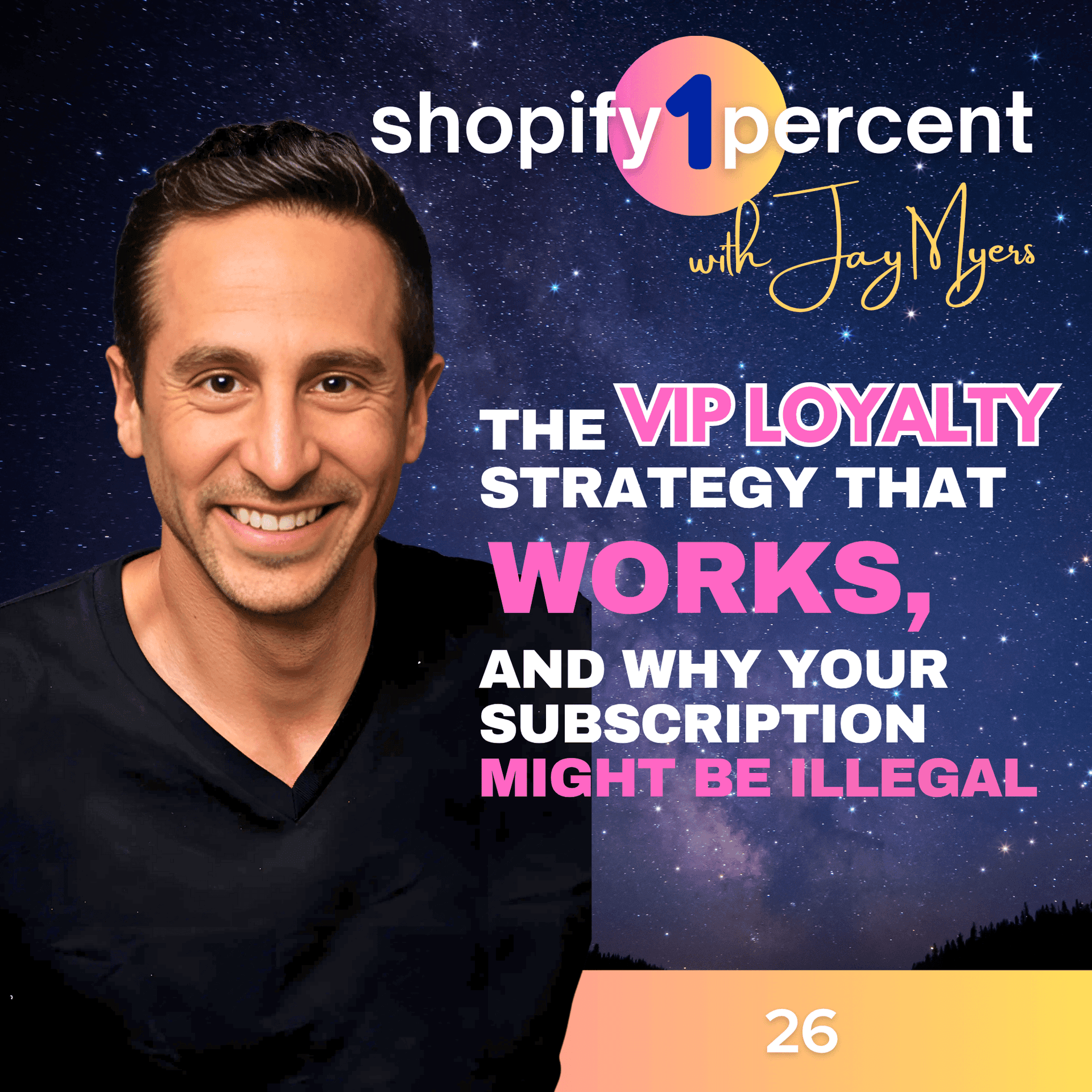
Subscription retention and “VIP loyalty” (paid membership) strategies, plus legal/compliance risk from the FTC “click to cancel” rule and what cancellation flows must do.
Guest backgrounds
Adam Levinter is founder of SubscriberBase, author of The Subscription Boom, and host of Entrepreneurs Exposed. He previously ran a subscription couponing company (2010–2018), sold it, then wrote his book. He also won the 2025 SubSummit Subscription Impact Award. He’s building SubscriberBase and a separate venture called Axis Brands.
Key claims
Subscriptions are growing (about $550B today, projected $1T by 2028). Loyalty programs often fail because they’re free points with high breakage and low engagement; brands should shift to paid “fee-for-VIP” tiers (Amazon Prime-style) to create “skin in the game” and reduce churn. The FTC click-to-cancel rule requires cancellation to be as easy/clear as signup; hiding cancellation behind extra steps or ambiguity can trigger FTC scrutiny/fines. Early lifecycle retention depends on onboarding and consistent communication; overemphasis on acquisition is a common mistake.
Notable examples
Amazon Prime, Uber One, Instacart Express/DashPass; Netflix “value perception” and Charity: water’s ongoing education; Dollar Shave Club (social talkability); Fabletics/Columbia House as historical “hard to cancel” examples; Blind Barrel whiskey club using member/VIP pricing.
Written by AI. May contain mistakes. Listen to the episode to check what was said.
Chapters
Tap a time to open that second in VOGuest Introduction: Adam Levinter
1:50 to 2:47
Get to know Adam Levinter and his insights on subscriptions.
“Or you can just use the code J30, J-A-Y-3-0 when you sign up.”
Guest Introduction: Adam Levinter
2:53 to 4:19
Get to know Adam Levinter and his insights on subscriptions.
“If anyone listening is doing anything with subscriptions, A, follow Adam on LinkedIn.”
Trends in Subscription Commerce
4:19 to 7:03
Explore the latest trends and challenges in the subscription space.
“And like, holy cow, has the world changed since then?”
Understanding the FTC Click to Cancel Rule
7:03 to 9:30
Learn about the implications of the new FTC ruling on subscriptions.
“Then of course, we're recording in April, 2025.”
Cancellation Flows and Business Impact
9:30 to 14:02
Discuss the effects of complex cancellation processes on businesses.
“You mentioned it in the last kind of question, but I don't want to skip over that because I think that's really important for probably a lot of listeners right now.”
Understanding FTC Regulations on Subscription Services
14:02 to 16:15
Learn about the implications of FTC regulations on subscription cancellation flows and consumer rights.
“Or has there been any precedent for that yet?”
Introduction to Subscription Scale Course
16:17 to 17:44
Discover a new course aimed at helping businesses optimize subscription models.
“Just, you know, I think for those listening, follow along.”
Celebrating Subscription Impact Award
19:25 to 22:44
Hear about the significance of winning the Subscription Impact Award and upcoming SubSummit events.
“I will put a link to it in the show notes.”
Evolution of Subscription Commerce
22:44 to 25:08
Explore the growth and acceptance of subscription models in e-commerce over the years.
“subscriptions or even thinking about getting into the subscription space, SubSummit, I don't know exactly when this episode will come out, but this year it's May 28th to the 30th.”
Innovative Pricing Strategies for Subscriptions
25:08 to 28:00
Understand unique pricing models that can enhance growth and retention for subscription brands.
“Like, it's just not Toby, like e-commerce as a whole, people, I remember trying to sell our subscription app and people thought, ah, subscriptions, I don't know, you know?”
Show all 21 chapters
The Shift to Paid Loyalty Programs
28:00 to 29:26
Learn about the advantages of transitioning to paid loyalty programs for consumer engagement and revenue.
“You want to be a member of Instacart Express or DashPass, you've got to pay.”
Engaging Subscription Models
29:26 to 31:02
Discover how including VIP pricing in subscriptions can enhance customer retention and reduce churn.
“and predictable revenue that you're getting from those members.”
Psychology Behind Consumer Decisions
31:02 to 36:48
Explore the psychological factors, such as sunk cost fallacy, that influence consumer purchasing behavior.
“And I think we're actually, we're actually solving, trying to solve for this from, from a product standpoint for e-commerce.”
The Experience Factor in Subscriptions
36:48 to 42:01
Understand how creating a compelling experience can drive loyalty and subscriptions beyond just the product.
“And it's going to become a normal way people interact with a brand, paid membership, paid loyalty.”
Understanding Subscription Value Perception
42:01 to 43:50
Learn why consumers may cancel subscriptions based on perceived value and how to maintain excitement post-purchase.
“They, if they don't perceive the value, there is no real value.”
Churn Management and Customer Relationships
45:03 to 48:49
Explore the critical stages of customer relationships and the importance of communication to reduce churn.
“thousands of others, they will do everything for you.”
Introduction to Axis Brands
48:50 to 52:18
Learn about Axis Brands, its inception, and its role in supporting e-commerce brands.
“And I don't want to speak for you because I don't know the exact story, but I know that's a little bit of how Access Brands was formed.”
Navigating Amazon for E-commerce Success
52:19 to 56:06
Understand the complexities of selling on Amazon and factors that contribute to success.
“We're business owners who've operated businesses in the e-commerce space at scale.”
E-commerce Strategies and Brand Insights
56:07 to 58:06
Learn about effective e-commerce strategies, particularly subscription models, and real-world brand examples.
“frankly, for each and every product that we intend to bring to market.”
Connecting with Adam Leventer
58:06 to 59:38
Discover how to connect with expert Adam Leventer and learn about his resources.
“Sounds like a really good place for brands to start.”
1% Improvement: Optimize Your Instagram
59:38 to 1:02:36
Get actionable tips to enhance your Instagram bio and increase sales.
“As you know, at the end of each episode, I like to share a 1 % idea.”
Transcript
Automatic transcript. May contain errors.0:00You know what's harder than getting someone to buy from your store? Getting them to buy again, and again, and again. That's the magic of subscriptions, when done right. And today's guest knows how to do it right. Adam Levinter is the founder of SubscriberBase. He's the author of The Subscription Boom, host of Entrepreneurs Exposed, and he's the 2025 winner of the Subscription Impact Award at Subsummit. Yeah, he's kind of a big deal. In this episode, we dive into what's working in subscriptions right now and what might get you sued if you're not paying attention. For example, the new FTC click to cancel rule.
0:37It's no joke. If canceling your subscription takes six clicks and maybe a customer support call, you're a sitting duck. So we talk about how the subscription economy is expected to hit$1 trillion by 2028 and why most loyalty programs suck and how brands can unlock retention by flipping free loyalty into paid membership models. Plus, Adam shares the pricing model that didn't even make it onto his own cheat sheet, but might be the most powerful way to reduce churn. If you're running subscriptions or even thinking about running subscriptions one day, you can't afford to miss this episode. Let's get into it.
1:20OmniSend just shipped something that I've always wanted. You can now connect OmniSend to ChatGPT or Claude and just say, where can my email and SMS campaigns be making more money? And it actually figures it out. It reads your store data, all your campaign details, your store history, and it tells you. And the insights are legit good. And even better, you can then say, okay, let's fix that or build that campaign. And it actually does it right from your chat. It's wild. Now, if you're one of our listeners, you can get 30 % off for three months on OmniSend. Just go to the show notes. There's a link there.
1:51Or you can just use the code J30, J-A-Y-3-0 when you sign up. Now, if you're using another email and SMS platform and you want to switch to OmniSend, which is a great idea, they will do the migration for you. Just give them five days and then you show up with everything set, ready to go. Now they've migrated thousands of stores from Klaviyo and on average, they're saving 35 % on their email and SMS bills. If you're listening to this show, you clearly care about your Shopify business. If your store isn't backed up and protected, it could all be for nothing. That's why I tell every store owner I know who cares about their business, you 100 % need Rewind installed.
2:27It's a non-negotiable for me. One bad CSV import, one app that edits your store the wrong way, which has happened to basically everyone I know. One bulk edit gone wrong. And now AI making changes for you. Listen, Shopify does not have an undo button. Rewind is the undo button. Go to shopify1percent.com slash rewind for 30 days free on us. Links in the show notes too. If anyone listening is doing anything with subscriptions, A, follow Adam on LinkedIn. B, I'm holding my favorite book right here, the subscription boom that you wrote. D2C e-commerce was a thing 20 years ago when I graduated business school.
3:10It's still a thing now. This isn't going away. So what I think we're seeing right now is just a bit of a correction.
3:15Adam Levinter:Adam Leventer literally wrote a book on subscriptions. He's the winner of the 2025 SubSummit Subscription Impact Award. And there are very few in the world more influential in the subscription space than Adam. For those who haven't been there, you go to their awards ceremony now, it feels like the Academy Awards. It is top, top, not every detail is thought out right down to the parties, marketing companies focused on subscription brands, logistics companies, box, like you name it. I just I'm a believer in the conference. I don't there is no connection or affiliation at all. Let's dive right into it.
3:52Adam, it's so good to have you on. The last time we did this was 2000. I want to say 21, maybe it was right smack in the middle. the pandemic. And so I'm holding my favorite book right here, which is the subscription boom that you wrote. Was it six years ago now? I think I wrote it in 2018, late 2017, 2018 into early 2019. It was published in 2020 officially. Okay. And like, holy cow, has the world changed since then? Hey? Yeah. A hundred percent. I mean, do you look at this book? I mean, a lot of the things you talk about in this book are timeless. It's not necessarily tactics that only worked in 2018.
4:34It's more about subscriptions in general, but let's dive right into it. Quick background on who you are. And then I want to get right into what you're seeing in the world of subscriptions. I got a long list of topics, but can you give our listeners quick background on who you are? Sure. The quick headline is entrepreneur, operator, author, podcaster, I guess is the best way to describe it, was an operator founder of a subscription couponing company from 2010 to 2018. Sold it, started the book writing right after that because I really had no clarity as to what I wanted to do next, but had a bit of a thesis on where things were headed in the world of subscriptions and had a little bit of experience, eight years of that experience running a subscription company.
5:21So I thought, hey, why not put pen to paper here? And now at the helm of Scriberbase, which is almost seven years old. And something new that I'm working on called the Axis Brands, which is almost two years old. So straddling between those two companies at this point. And I want to get into both of those because they're actually quite different, which is interesting. So, but both very applicable to, I think, a lot of our listeners. So let's start a little bit on the subscription front, if that's okay. And then I want to definitely get into access brands. But what have you seen in the last few years?
5:55What are some of the big trends you're seeing change in the subscription space that you're really paying attention to these days? I mean, I think the core thesis of the book remains pretty steadfast. So subscription economy, you know, has about$550 billion of value today. It's estimated to reach 1 trillion by 2028. So that compound annual growth rate is pretty strong, roughly 60%. What is working and what's not working in the world of subscription has certainly changed. And then you have these macro themes that are related to subscription commerce that have certainly changed the game, like membership and paid loyalty is now a big thing.
6:41Personalization, of course, AI is a big thing. There's this sort of quote unquote subscription fatigue that's creeped into the market the past few years. So that's something that's new. The shift from company to consumer control is a big theme we're watching as well. There's been an FTC crackdown with the click to cancel ruling, et cetera. And then I think one thing that's pretty interesting to watch is this shift back from sort of subscription performance marketing oriented brands that are contingent on media buys on Facebook and Instagram, et cetera, that are driving the growth of that particular business, the shift away from that to more sort of long-term brands that are not only focused on, quote unquote, D2C or online commerce, but potential omni-channel expansion as well.
7:33Then of course, we're recording in April, 2025. So there's this new thing called tariffs when acting in the world of subscription commerce as well. Do you think, does subscription have as much, specifically a little bit more in like the e-commerce side? Because I know you work with like software subscription and a lot of different sides of it, but maybe honing in on e-commerce, would you say there is still as much upside potential as there was a few years ago? Is it changing? Is it, are we seeing any type of like a ceiling of subscription or what are you seeing in those regards? So, I mean, I don't think that subscription commerce is going anywhere.
8:15I certainly don't think e-commerce is going anywhere. There's been a bit of a reversion to the mean post pandemic. So we saw obviously a massive e-commerce boom, let's call it between 2020 and 2021. as there's this sort of like reversion to the mean. There's new challenges, absolutely, that are impacting e-commerce on a macro level. So customer acquisition costs have increased significantly. You've got increased competition. You have that post-pandemic normalization that I just mentioned. You do have the impact of these privacy changes on advertising. Now you have tariffs. So I do think there are challenges, but I'm very bullish long-term on e-commerce.
8:58Like DTC e-commerce was a thing 20 years ago when I graduated business school. It's still a thing now. People want to buy online. People want to buy from their mobile phone. This isn't going away. So what I think we're seeing right now is just a bit of a correction. Interesting. Do you, I, so I just, I wrote down right as you were saying this, cause I remembered in your last question, you said something I wanted to get into the, the FTC's changes on click to cancel. So before I forget, you just mentioned it earlier, but I want, this is very timely. I feel like, can you give the details on that?
9:30You mentioned it in the last kind of question, but I don't want to skip over that because I think that's really important for probably a lot of listeners right now. What is that? So we did like a full half hour webinar on the details of the click to cancel ruling, which is included in something called subscription scale, which is our course that we have online for enterprise and for their teams. The Coles notes on the FTC ruling is that companies need to make sure their terms and conditions as it relates to their subscription or membership or continuity offer are clear and conspicuous, that there's no ambiguity, that there's no confusion.
10:06That is the easiest way to sum this up. If the company is deemed to be in violation of that North Star, they're subjecting themselves to FTC scrutiny and or fines or what have you. So the FTC, you know, this has been going on by the way, for more than two decades dating back to, you know, probably e-commerce when you were running businesses, Jay, when weight loss, you know, acai berry, garcinia, nutraceutical offers were all the rage. Consumers had no ability to cancel their subscriptions. Once they were enrolled, there was no call-free number to call. They couldn't contact the company. They couldn't talk to a customer service agent.
10:47And so BBB complaints started to tick up. State AGs were notified and the FTC was put on alert. So this goes back a very long time. Things have been moving in this direction of company to consumer control as it relates to their subscriptions for a very long time now. Now, of course, we have Visa and MasterCard getting into the game with these new tools that they're developing to allow customers to manage their subscriptions in app or within their online banking to see what they're paying for and to be able to sort of pause, defer, hold, click, cancel, whatever on the fly. But FTC is quite aware of the ambitions of some companies that try and play hide the ball.
11:31We've seen this, right? We've seen it with bad actors. We've also seen it with very quote unquote above board actors like Fabletics or Columbia House, which just made it very difficult for subscribers to pause or cancel their subscriptions. So this is where they're coming from. The New York Times. The New York Times, exactly. I tried to cancel my subscription recently. I couldn't. There was no way to physically do it online. I had a phone to cancel, even though I subscribed online. So would that be something that falls under this? I can still cancel my New York Times subscription, but I can click to subscribe.
12:06But to cancel, I have to call a customer service rep. Yeah. The idea is that it must be as easy for you as a subscriber to cancel as it was for you to sign up. And the FTC is the determinant of that. That's the governing body that decides. Also, the ruling and the law applies to businesses of all sizes. sizes, excuse me. So it's not like if you're a small e-commerce brand and you're some $1 million in top line revenue that you're immune to this law. You're not. Yes, the probability of you getting caught up in some sort of FTC action is quite low. But if the FTC decides to do some sort of random audit of your industry, your category, I don't know, Shopify businesses in general in this particular industry or space, you're not immune if you're a small business.
12:57Yeah. Well, and there's for sure, like we've seen this in the ADA compliance space with accessibility on websites that there are people just going out and maliciously creating lawsuits against sites for the purpose of easy wins. And so they can find sites that don't have certain things that they don't meet certain guidelines for people that with maybe visual impairments or something else. And then they're just easy pickings. And this might become a thing where it's easy pickings for subscription brands. Like one thing that comes to mind is what does this mean for all the brands that have these very elaborate cancellation flows?
13:39Like where you go to cancel and you pick a reason why and you say why and you're given an offer and, you know, the offers for a discount or you're given if you say no and say, well, how about a swap or you can still cancel. but it's definitely more clicks than you took to subscribe. So what does it mean for those? Or has there been any precedent for that yet? No precedent for that. But I would say that the FTC will be the best judge as to whether that cancellation flow is clear and or confusing or ambiguous for the consumer. One thing that you can do as a business if you do have an elaborate cancellation flow and if you want to know sort of the direction of things is look at your NPS, look at your reviews online, look at your BBB rating, better business.
14:31Are your complaints ticking up month over month? Look at your refund requests, look at your chargeback ratios or chargeback numbers on your merchant accounts. These are all early indicators as to whether or not your, what do you call it? Your cancellation flow is actually, you know, strategic or something that's really going to piss off a consumer. Right. Yeah. It'll be interesting. And I mean, so when this hasn't rolled out yet, correct? I think it was October actually of 2024. I thought fact check and fact check that. Oh, okay. So the law is actually in place, but they're sorry. Have there been any cases yet that you're aware of?
15:13I have to check as to where the cases are at. I'm not totally sure. okay so i guess one positive is we would have i feel like you would have heard i would have i mean i'm not aware of any we've got thousands of brands using our subscription software i'm not aware of any that have gotten in serious trouble for being a bad actor i mean they can hide cancel buttons with css and customer portals you can do anything you want i'm not aware of any myself so i mean to me maybe that's a good sign that it's scared enough people to clean up their act ahead of time I think it's probably a story of the FTC going after the big whales first.
15:51Who are the gross offenders? And then moving downstream from there. So to the extent that Bold is serving e-commerce businesses between$1 and$50 million in revenue, I suspect that's kind of like the last of the cohorts that the FTC will go after. They're going after the Netflix of the world. Yeah, makes sense. Okay. I know there's a bit of a tangent there, but I wanted to touch on that because you mentioned it and I think it's timely. Just, you know, I think for those listening, follow along. Adam, you mentioned subscription scale. Tell me a little bit about that for our listeners. So this is a, well, I'm sorry, I won't speak for you.
16:27Tell me about subscription scale and who that might be for a little bit. Yeah, so we developed a course that we are now hosting on school, school of the platform, S-K-O-O-L. It's a course in community. It's for businesses, business owners, CEOs, and their teams that are in the world of subscription commerce. And it focuses on everything from going zero to one on the acquisition side to optimizing retention and scale and beyond. So it's great. I mean, for us, it was a way to remove some of my hands-on consulting work and remove me from the weeds, so to speak, and develop some tools, thought leadership that we could host online and allow people to access on their own.
17:10And can anyone join? Do you have to be a certain size or in a certain area or space of subscription or is it across all verticals? Yeah. So the application process is short and sweet. It begins with a quick DM to myself or to our team, but no, there's no hard and fast rule about who can and can't join. So long as the Northstar is, you know, an interest in creating subscription membership or recurring revenue, or a company is already in market and having challenges around acquisition, retention, churn or anything related. That's kind of the commonality, right? Is folks are, yes, in different categories and different industries and businesses of different sizes from 1 million to 500 million, but the thought leadership applicable depending on the stakeholder or the member.
17:59Gotcha. At the beginning of the show, I told you why everyone's serious about their Shopify business should have their store backed up and protected with Rewind. There is no excuse not to. There literally is no undo button for Shopify. Shopify's own terms actually say that your data is 100 % your responsibility, your products, your theme, your customizations, your settings, everything. They don't back up any of it. And no, a CSV export does not cover it. With CSV exports, there's no images, no meta fields, no themes, settings, et cetera, nothing. I was talking to the people at Rewind about a brand where one team member actually ran a bulk update and accidentally overwrote 11 ,000 products.
18:45Orders, customers, contacts, all of it gone in a single action. Luckily though, with Rewind, it was a simple one-click rollback. It could be anything. A bad CSV import, a random app you just installed that messes everything up, or all of these AI tools that everyone's using to manage their store now. I have heard so many horror stories. Rewind just gives you peace of mind no matter what. If you don't have Rewind installed, you absolutely should have it. Go now and get it. Shopify1percent.com slash Rewind. You'll get an exclusive 30 days free on me. The link is also in the show notes.
19:25I will put a link to it in the show notes. I definitely can speak for the value that you bring to the subscription space. So I think it's definitely if anyone listening is doing anything with subscriptions, A, follow Adam on LinkedIn, B, get his books, C, look at this group. In fact, Adam, I think I'm allowed to say, because you mentioned before the show that it's been posted publicly, that SubSummit, which is the largest subscription conference trade show in North America, might be the world. I know for sure North America has named you the winner of the subscription impact award for 2025. I mean, that's huge.
20:07Tell me a little bit about that and what you can and what you can't say. I don't want to go over any lines. Yeah. I joke with the folks at SubSummit that they must have run out of names, but honestly, super humbled by the award and can't wait to be with that team and folks that are attending that conference next month in Dallas. I know that you'll be there, Jay. So we'll definitely hang out. I mean, it's a huge honor and I'm very grateful, very thankful. I really don't know what to say other than I'm very excited. I mean, I've been at SubSummit. I was telling the guys, I was at the very first SubSummit in 2014.
20:43in Detroit when this team had absolutely no idea how to put on a conference. And that's the God's honest truth, but it was fantastic. I mean, they had an amazing lineup of speakers. They had fantastic founders from, you know, the founders of Birchbox and FabFitFun and a few other sort of major subscription box players back then. Remember it's sort of like the height of subscription box. Yeah. Yeah. Right. Totally. 14. But like the conference was like really disorganized. The floor was random. The tables were disjointed. Was it like a couple hundred people in a hotel room? What's funny is like there was a stage, there was sort of like the main stage where the speakers are, but there was no wall or curtain behind the stage.
21:30And if you can imagine, you don't think about that when you attend a conference, but you take for granted that this is like one of those setup elements that has to be there or else it looks strange that there's like just an empty void of space behind the stage and no sort of white wall or backdrop of any kind. Those are like the small details that Paul, John, and Chris sort of missed back in the day, but they really nailed it in terms of bringing folks together, bringing smart people into the room around this whole notion of building a business on this foundation of subscription commerce, which I think is really cool.
22:09Yeah. And for those who haven't been there, you go to their award ceremony now, it feels like the Academy Awards. Like it is top notch. I mean, the whole conference is, right? It's such the opposite of what we experienced in 2014. I mean, one of the most buttoned up conferences I attend all year, every detail is thought out right down to the parties, right? to your point, like everything is so well organized. So kudos to that team. Kudos to those guys that run that show. I'm excited. Yeah. Anyone listening, if you are doing subscriptions or even thinking about getting into the subscription space, SubSummit, I don't know exactly when this episode will come out, but this year it's May 28th to the 30th.
22:53It's in Dallas. And I always tell people like, I can't recommend it enough. There's amazing talks, amazing panels, kind of all the subscription vendors are there. So if everything from not just subscription platforms, but, you know, agencies, marketing companies focused on subscription brands, logistics companies, box, like you name it, anyone focused on helping subscription brands grow. So definitely check that out. So I'll make sure to link all that in the show notes as well too. So, and I'm a believer in the conference. I don't get any, there is no connection or affiliation at all. I just, I think I'm like you, Like I just really appreciate what they built and they were really ahead of the curve now.
23:33Like, I don't know what the exact numbers are, but there's a large percentage of retail stores that have some components of subscription. But in 2014, it wasn't that many. I actually remember being at Shopify Unite in 2016 in San Francisco and we have a subscription app. and there was only like two ways to do subscriptions on Shopify us. And there was one other subscription app. And I remember there was like a Toby was giving a talk and CEO of Shopify and someone said, is Shopify ever going to support subscriptions natively? And Toby's answer was, well, we don't see it as a core part of commerce.
24:17It's a, it's kind of a fringe part on the side and it is, you know, there's brands doing subscriptions and that's why we have an app. for the kind of like the edge cases of commerce. But when it becomes core to commerce, we will look at incorporating it into the core platform. They obviously did now incorporate it into the core platform. They do have like a basic subscription functionality, but that's how ahead of the curve subsummit was. Like Shopify saw it as subscriptions were an edge case. Yeah. You know. Sorry, Toby. Quick incoming memo. It's really difficult to make a business work when you sell something once.
24:52In order to make it work, you've got to sell it multiple times over and subscriptions are a good way to do that. So yeah, Toby doesn't often get it wrong, but in this case, yeah. Of course. And it's no shade at Toby. He's one of the smartest guys I know, but I mean, the industry didn't even think so. Like, it's just not Toby, like e-commerce as a whole, people, I remember trying to sell our subscription app and people thought, ah, subscriptions, I don't know, you know? And so it was the entire industry didn't see subscription as a long, as a, why would someone want to subscribe they just buy it anyways so sub summit was very i think ahead of the curve on that and you as well and i want to get into maybe some kind of tactical advice that some of the subscription brands listing and then i want to get into access brands a little bit but it was funny i i just googled your name plus subscriptions the other day and a linkedin posts of yours came up that you were talking about different pricing strategies.
25:52And I think the title of it was the eight core pricing models used by 99 % of subscription brands. And I thought it was really interesting because I usually, you know, usually you just think of like, well, subscribe and save, like maybe give a little bit of discount, get a subscription. But pricing is so core to your growth strategy, your positioning, the lifetime value of customers. So many things. can you do you know the post i'm talking about i do i think it's eight i think it was called eight pricing models used by 99 of subscription companies that's the one and that's the cheat sheet i think that i published with that post which maybe you can link to after the episode and happy to share that yes pricing is enough to put most merchants to sleep but i guess your audience often very interested in pricing.
26:43100%. Well, and without going through the whole, I will link it in the comments. Yeah. But some of the ones you talked in there were about flat rate pricing, tiered pricing, usage-based pricing, freemium model, timed discounts, bundling for subscriptions. I wonder if you could maybe say, what is one of the biggest opportunities you see for e-commerce subscription brands that they're not doing for pricing, that they could maybe be speeding up growth, increasing retention, reducing churn, because I think the way you price can actually affect how long customers stay around. What would you like to see of those eight models, more subscription brands use in the e-commerce space?
Read the full transcript
27:28To the extent that e-commerce brands can create a paid subscription tier of some kind, it's still underutilized, right? We call it fee for VIP subscriptions. You know, mostly we see it on the services side, right? Like everybody trying to copy the Amazon Prime playbook, which is an example of fee for VIP. You want to be a member of Amazon Prime, you got to pay in. You want to be a member of Uber One, you got to pay. You want to be a member of Instacart Express or DashPass, you've got to pay. This is a fundamental shift away from free points programs and sort of free loyalty programs that have existed for probably three decades now.
28:19The reason that I think it's compelling for businesses to take a look at is this sort of element that we call skin in the game. If you have a customer who is willing to invest$10 a month,$20 a month,$100 a year in the case of Prime to get access to more of your brand, be it discounts, events, early access to sales, exclusive content, exclusive products, a visit to your headquarters. To the extent that you can package this up and get it behind a paywall, you should. The results of these programs are very compelling and a big reason why CEOs are trying to copy, frankly, the Amazon Prime playbook, right?
29:05Think about it. Paid loyalty. You've got an engaged customer. You have someone with skin in the game. They're more likely to engage with your product, your service before looking at substitutes because they're paying in to that particular loyalty program. This is on top, of course, the steady stream of recurring revenue and predictable revenue that you're getting from those members. So highly engaged, extremely high usage, high quality cohort of customers. Conversely, a non-member or someone that's just collecting points. These points programs are terrible from a consumer engagement perspective.
29:47Most people don't pick your favorite, I don't know, air miles like loyalty program. Tell me how many folks that are signed up to any of those loyalty programs are engaged, use those programs frequently, talk about those programs to their friends or colleagues, feel like they have a relationship with that particular brand. Honestly, the usage numbers are extremely low. Breakage is off the charts. You know, these companies have mass amounts of points listed as liabilities on their balance sheet, which they have to book as liabilities because, you know, in which case they're redeemed at some point.
30:25Right. In the future, you know, that's an accounting exercise that's nightmarish for most companies at scale. And the results are the opposite, frankly, for any paid loyalty or fee for VIP program. You know, Tinder Premium is another example that comes to mind. I mean, there's so many, but to the extent that you're a brand that you have this potential to create a paid subscription tier, you should. I love that is the one that you chose. And it's not on the sheet. No, is it not even one? It's not even on the sheet. Oh, geez, it's bonus material. It's something. That's why you have to listen to this podcast.
31:01I couldn't agree more. And I think we're actually, we're actually solving, trying to solve for this from, from a product standpoint for e-commerce. Cause like, you know, when you said to the extent that you can do it in the right in the beginning, it is hard to do. It is hard to do. I agree. And we have a number of apps that when you connect together, you can do things where when a customer subscribes, you can give VIP pricing. So we have a customer pricing app that traditionally it's been used a lot for wholesale pricing, VIP gold spend$500 or more, get X pricing. but we started having a lot of subscription brands asking hey can i use this app with my subscribers so when they subscribe they get va vip pricing and we said well sure that's a great idea actually blind barrels was who was that they were the runner-up for the at sub summit two years ago for the what's it called the cube not the cube it was the pitch competition oh yes door door envy front door envy got first anyway they got second they're using our subscription app and they just implemented they sell whiskey and they have a whiskey club and you know it's like 39 59 or 159 depending which one you get but they also have all these bottles that they also sell and so just a couple months ago he and we're gonna actually do a live podcast on this ad sub summit so another reason to come but he wanted to implement member pricing to give vip pricing for people when they're part of a subscription and he's seen incredible success with it.
32:38Like it's really been a huge value driver for buying a subscription because even I often say, you know, if the subscription is only about the product, as soon as you hit subscription fatigue, like you might get tired of the whiskey, maybe one month you don't drink the whiskey, let's just say, or maybe someone else gives you a bottle of whiskey and now you've got two whiskeys in yourself. This could apply for anything. As soon as you have a couple boxes of something, you start to think, oh, I should cancel my subscription. But if now canceling your subscription means you're going to lose your VIP pricing, you're going to lose your custom access to products that other customers don't get, you're going to lose your whatever those other benefits are, you are less likely to cancel.
33:24It becomes more sticky, right? Lower breakage. I couldn't agree more. I think that's such a a big one. And sorry, I just want to add one more thing to it because two years ago, I won't blame you if you weren't there, but were you at the talk I did at SubSummit about sunk cost? No, but the one you did on referral strategy, which we could talk about later with the viral coefficient. That was a big one. I don't know if I was at this one. So I believe in what you said so much, actually. It's always neat hearing different people talk about a similar concept and how they approach it. The way I've always looked at it is I believe there's different psychological reasons people buy, right?
34:06Like we don't, we buy, buying is an emotional action. We don't necessarily buy because we need a new shirt or we need something. It's emotional. When you're shopping, like there's been tests, like there's endorphins released in your brain. It's a dopamine hit when you check out. It's people scroll and they buy when they're drunk they buy when they're in bed and it's anyways it's not so much like i need these things i have to buy it they buy for other reasons right so they buy there's fomo there's fear of missing out like that's why these drops work really well there's only 300 shoe drop they buy for social connection like we buy a certain outfit because we want to look a certain way it's not because we need a new shirt it's to whatever i think another big reason people make decisions is what's called the sunk cost fallacy.
34:54And I've talked about this on the podcast before, but sunk cost fallacy applies to a lot of areas of life. It's like, it's not just why you buy something, but it might be, I was talking to someone earlier, that's why 80 % of the clothes in your closet you don't wear, but you still keep there because you paid for them. Some people say it's why people stay in a marriage longer than they should. It's a morbid way to look at it, but like, well, you've invested this much time. But there's an irrational bias towards sunk cost versus future potential. And I think that's why your example of like the air miles points, if you paid Delta$1 ,000 a month for a Fly Anywhere membership or something like that, Fly Anywhere continental US.
35:39Now, if you go and you book a flight with United, you feel like you're losing money. but if you just earned points at both of them it's not that you feel like you're losing money with delta you're just not earning your points yeah right and so it doesn't have the same psychological thing and so sunk cost is a big reason people make decisions and i think retail brands haven't really had a good way to tap into that they can tap into urgency and fomo and it can tap into all these other reasons people buy but membership specifically recurring membership or paid loyalty, whatever you want to call it, I think is a great mechanism to tap into it.
36:20And personally, I think you're for sure onto something. And I think at the head of the curve and for brands listening right now, if you can tap into that, I think you'll be ahead of a lot because I think, you know, five years, the concept of like being a paid member, you know, Amazon Prime was a pioneer in it. Restoration Hardware in 2016 was a pioneer in it. All these people were like pioneers launching their membership program. But the brands now are not pioneers. They're copying all the other ones. And it's going to become a normal way people interact with a brand, paid membership, paid loyalty.
36:56So we can double down on this notion, take it one step further, because there's a lot of psychology at play here. And I know we're deviating from the whole pricing conversation a little bit, but it's important. So the other thing that we should double click on is something you said that your subscription is way more than just the product. It's way more than the product of the service, let's say. In effect, the most successful subscription companies on the planet have tapped into this idea of experience, right? The most successful subscription companies, frankly, are experiences. The most successful membership or fee-for-VIP programs that exist or will exist in the future will take this experience to a whole other level and tap into the psychology of status.
37:44Ultimately, my thesis, based on what I'm seeing, is that everyone wants to be an influencer. Even customers that aren't, quote-unquote, influencers want to be influencers. They want to feel like they're important and they want to feel like they have something interesting to share with other people. And so if you can make your brand or your membership or your subscription, something that your member or subscriber can talk about to their friends or colleagues at the office or at the water cooler, that's incredibly powerful because now you're tapping into deep consumer psychology. I always highlight the old use case of Dollar Shave Club and what made that use case really successful early on beyond the viral video.
38:35The fact that this was something cool that guys could talk about at the water cooler. No one was talking about shopping for razors at Walgreens or CVS or Shoppers Drug Mart if you're in Canada. that's not a cool experience that's not something to talk about right but lining up to this sort of like dollar shave club thing where you get a razor at your door every month and you're paying 99 cents for that's something cool the guys can now talk about right yeah to the extent that you as a company can kind of package or reposition your brand your membership your fee for vip as something exclusive that elevates the status for subscriber is a huge unlock, a huge unlock.
39:23And I would say probably a good comparable for this. Like when I think about wine, for example, if you don't know where the wine is from or how it's made, like if you just buy a$30 bottle of wine and you don't know all the details of it you don't have versus if someone tells you you know a sommelier comes up to your table and tells you about how it's made and the certain elevation that the grapes are and the farmer who owns the land and just everything that makes it what it is you appreciate that wine differently than if you just bought off the shelf and didn't know anything about it someone just said try this wine right and you're probably more likely to recommend that wine to a friend or tell someone about it because you understand it you know more about it i think one of the big misses that brands do is they think when someone subscribes that they've got the customer that they've they're a subscriber now but what they really have is they have a lead they have someone now their job they have one transaction yes yeah their job is now to educate them about the product about the company about the mission the values the founder how it's made how it's ethically sourced and everything that makes it do is like that's you know the job isn't done i forget his name robert scoble i want to say he speaks sometimes at sub summit he had this great example that he shared i might be saying the last name wrong but anyways he talked about his experience with charity water so charity water is an organization that builds wells all over and but it's a subscription business you subscribe like 40 a month as a donation but then it helps bring clean water to people.
41:07And so anyways, you go through the site, you learn about all the good they're doing, bringing clean water, how people know about it. And then something in you is you're compelled to commit to$20 a month or$40 a month. You select your donation, you go through checkout, you enter your credit card, everything. And you would think like, okay, I'm bought in, I'm subscribed, I'm donating. That's a win, right? Then on the thank you page, when you're, as soon as you're done your subscription is this video from the founder of charity water talking about all the good that they're doing the wells that they're building and then your mind goes to like why are they showing me this i just decided to subscribe like you don't need to re-educate me on the value of charity water i have already i've already subscribed but what they know is that they have to continually educate the subscription donors on the value that they're bringing the wells they're building.
42:01Otherwise people don't stay subscribed. They, if they don't perceive the value, there is no real value. It's like there's billions of dollars of value in Netflix. I don't know if you added up the cost of every movie in there, if you were to buy every movie in Netflix, every show, I don't know what it would cost. There's billions of dollars of tons. Right. And I don't know what a Netflix subscription is nowadays, like 15 bucks a month or something, but yet some people say, Oh, I'm going to cancel my Netflix subscription. It's too much. Well, logically, it's not too much at all. But the problem is if you don't watch Netflix for a couple months, you don't perceive the value.
42:37You're not using it. You don't understand it. You go to cancel it. And so I was talking to Robbie, good friend of both of ours, Robbie Baxter one time. And I loved it. She said, when someone goes through checkout at the point they hit checkout, like the just peak moment of excitement, there's a half life of excitement from that point on. So you have this opportunity, like when someone checks out on your website, you could probably send them three emails in the first hour and they'd be okay with that because like they're excited like you send them an email about the product educating it here's how you use it and if it's your gut vitamins or whatever it is here's how you're going to start feeling in a week and then the next day send two emails then one but by the time they've got their protein shake or whatever it is they ordered they've got so much education that you basically like i love what you said everyone wants to be an influencer so it's the brand's job to arm them with the knowledge of the product right and that i think is like we just think well once they bought it they must understand that so like i love the way you phrase that and i hadn't thought about it that way before but that's so good at the top of the show i mentioned omni send can now talk to chat gbt and claude and i want to tell you why that's even bigger than it sounds so if you missed it quick catch up.
43:55OmniSend is what I use for email and SMS on every Shopify store I work with, plus for this show as well. And you can now connect your AI, Cloud Chat, GPT straight to your OmniSend account, your data, your campaigns, your flows, everything. You open a chat and you ask, what should I focus on this week to make more money? And it will come back with real answers about your store, which flow is underperforming, which automation needs improvement, which customers are going quiet, what's missing, everything. My favorite part though is AI segments. I used to build these by hand clicking through filters forever.
44:32Now I just type something like customers who bought twice but ignored my last campaign and it just builds it. And anything it writes already sounds exactly like your brand because it pulls from all your previous emails from your website, your logo, your color, your voice, everything. I've been doing this for 15 years and this is the closest I've ever felt to having a full-time marketer sitting right beside me. I have a link for you in the show notes that will give you 30 % off for your first three months, or you can just use code J30 when you sign up, J-A-Y-3-0. If you're ready to migrate from Klaviyo to OmniSend like thousands of others, they will do everything for you.
45:07You just show up and all your campaigns and automations from Klaviyo will be set up and running in OmniSend, ready to go. And usually at 35 % less what you were paying Klaviyo.
45:20I'll give merchants to brands another way to think about it. So your churn risk is highest earlier on in the customer lifecycle, because that's when the customer is the least confident. Yes, they're excited, but it's new. It's novel. It's that first transaction. If buyer's remorse is going to creep in, it's going to creep in earlier on in the lifecycle. It's like dating. Every touch point you have out and into the future builds the foundation of that relationship, builds on that foundation. Your first date, probability of you marrying that person is the lowest. As you have more and more dates out into the future, your probability of marrying that person increases or being with that person forever increases.
46:10so like companies and consumers have a relationship just like any other relationship the more touch points the more meaningful touch points you have the more important and meaningful that relationship is going to be over time so to your point you know can you over message and over communicate maybe but it's very critical and important to do so early and often in the first 30 60 90 days yeah and consistency i think there's some people that are i've heard this sentiment that well i don't want to message my subscribers too much it reminds them that they're subscribed you know they've got a gym membership if and okay can i just an important point about that if that is the thinking that you have as a ceo or stakeholder in your business your value proposition is too weak plain and simple like if you are concerned that a text message or an email reminder is going to be a subtle hint.
47:11They're still being billed and therefore there's a risk they're going to cancel because oops, they've forgotten about the subscription. Your value proposition isn't good enough. Plain and simple. Yeah. Yeah. There's an underlying problem that it will surface at some point. A hundred percent. Yeah. Yeah. What would you say are some of the biggest mistakes you see subscriptions brands make when trying to grow their subscription business? So overemphasis on acquisition, probably obvious to many. Prioritizing new signups while neglecting strategies to retain subscribers, that'd be number one. Ignoring or mismanaging churn.
47:48So failing to track, analyze, proactively address churn. And there's two types of churn, right? Very important to distinguish between voluntary churn, which is a customer service slash operations issue, and then involuntary churn, which is payments. That's the payment side of the business. That's a whole other issue. Both of those problems require very different solutions, but important to highlight that. Poor onboarding or user experience, neglecting that initial period where that value perception is established. And then I'd say lack of referral strategy is another one. You've talked about this many times at conferences.
48:27That's a huge miss, right? Acquisition is a big theme. Retention is a big theme. There are teams associated with both of those sides of the business, but very seldomly do I come across companies with one, a robust referral strategy in place and two, a team that's actually managing that referral strategy. That owns it. That owns it. Yeah. Yeah. Okay. I want to shift into Axis Brands, which is kind of outside the subscription space a little bit or completely. So, which is, I find super interesting. We could probably talk for hours on subscriptions, but I wanted to highlight, this is a bit of a new venture for you born from you've been working with brands and you listening and hearing pain points that they're going through.
49:13And I don't want to speak for you because I don't know the exact story, but I know that's a little bit of how Access Brands was formed. So tell me about it. What is it and why did you start it? Sure. So it was sort of birthed by accident, but basically the story is we were working or have been working with a lot of e-commerce brands, on online brands for many years now that usually enter through the scraper base front door. Let's say they've got a subscription commerce business, or they've got an interest in building a subscription or membership model, or they have other issues related to customer retention or churn, they needed to fix it.
49:46And so that was sort of core to what we were doing under scraper base. But as a consultancy, you start to listen to what is going on in these particular businesses And a common theme related to brands was that they hated their agencies. That just consistently came up, whether it was their paid search agency, their media buying agency, their email marketing agency, their content agency, whatever. They consistently complained that their agencies were charging too much money, taking hefty percentages of their media spend, and they had no ROI to show for it. And that just kept coming up. You know, I come from the e-commerce world, sort of pre-Scriberbase, grew a DTC couponing company north of 15 ,000 subscribers, you know, understood e-commerce and online from many different angles and sort of just putting on my operator hat saying, you know, I know this world.
50:50I know paid media. I know how this works. We also know a lot of good people. We can try and steer our clients in the right direction. So we started to do that. And then it got to a point where we said, you know, we have people on our bench. We can help directly and start replacing these agencies and start adding value in these different areas, whether it was Amazon or Shopify, you know, Walmart marketplace and beyond. So built up a steady bench, I want to say over the course of a year plus. Initially rolled out this kind of mini agency with a bunch of successful use cases. and it was called D2C in a box, which was a terrible name, but had to go with something.
51:32And so we started incubating this sort of on the side as a side hustle. And then it grew and more and more clients came on board. And we were branded earlier this year to access brands, basically for the sole reason that, like I said, wasn't happy with D2C in a box as a brand, but we want to, and are now in the process of acquiring companies in the D2C space. So if you're selling your business, please contact me. And two, incubating and bringing to market our own brands and then scaling them on Shopify, Amazon and beyond because we have this playbook that has worked so well on a fee for service model.
52:13And let me just be clear, our positioning, frankly, since day one has been the agency. So we're not agency people. We're business owners who've operated businesses in the e-commerce space at scale. you have great expertise deep expertise in amazon defy and beyond and put our money where our mouth is and we don't take a percent of media spend from any of our clients even those that are on fee for service we have lock-ins we have no long-term retainers of any kind you like us you work with us we're producing for you great we're not you fire us that is what's worked so far and we haven't lost a client i love it i love it so you you know they're primarily shopify brands but you help them get into other channels such as Amazon and like someone might listening might say well anyone can sell on Amazon that's not hard I can list my products on Amazon and there's apps that connect it but it's a whole different beast getting your products on Amazon which is easy anyone can do that versus actually doing well growing owning positioning on Amazon and explain to me the difference because someone might be thinking like, well, I could just get my products on Amazon too.
53:28Sure. So there are differences, right? Like if you're a Shopify business, it's a pure DTC play, you own the customer. You own the customer data. That is not true for Amazon. So if you start selling on Amazon, you don't own the customer, Amazon does. That is the main distinction. That said, Amazon is a great diversification play away from just pure DTC with lower CAC and better unit economic potential. And obviously it's the largest shopping mall in the world. And if you can sell your product at scale on Amazon, why not do so? A lot of premium brands shied away from Amazon in the past. They thought it sort of downgraded their brand equity.
54:03Not so anymore. It's become for us like what we've seen is a necessary pillar for a lot of brands that are diversifying. But to your point, Jay, like Amazon is a notorious complex web to navigate. It is very complicated. Yes, you can put up an Amazon store, but good luck managing the entire process and business at scale. There are so many elements to this thing. If you can do it yourself, great, fantastic. You don't need us. That said, most of the brands we talk to, even very large established brands have not made Amazon successful just yet. And that's where we come in. Fascinating. Is there a certain type of brand that works really well?
54:44Sorry, not even like maybe it's more product mix that works really well for Amazon? Yeah. So supply side, yes. You know, high gross margin businesses with low cost of goods that are ship friendly are very - Like smaller physical dimension. Yeah, exactly. Shipping friendly, lighter weight, you know, heavier the product, the more expensive it is to ship. Mass marketable categories or mass market appeal tends to be where Amazon plays best. I always say subscription friendly because you've got the potential for Amazon subscribe and save. And to the extent that you can expect that, you should. So I think beyond that, though, it requires a bit of a predictive analytics game, which we do for every client, by the way.
55:28But we can almost with 95 % certainty predict whether something will be successful on Amazon. And we don't touch anything without going through that exercise first. So if someone listening is interested in finding out if their product mix might be a good candidate, they can connect with you and you do a bit of an assessment. We do a free audit. Actually, right now we're doing free audits, which are pretty extensive. And we look at demands. We talk about trending search terms. We look at category demand, what's working on Amazon, what's not, and why their product is likely to succeed or not. and then provide them with actually a 12-month P &L with hard numbers right down to EBITDA, frankly, for each and every product that we intend to bring to market.
56:17So yeah, pretty detailed stuff. That's amazing. That feels like a no-brainer to go through. So can I put that out there to our listeners and share? I don't want to overwhelm you, but that seems like an exercise that everyone should maybe go through because i think i agree with you 100 it's even you don't even hear the narrative from shopify anymore it used to be that shopify was arming the rebels against amazon and it's not like i mean it's another channel and even if they did you have to not listen to that like you some of our biggest brands we work with like liquid death great example they actually did something really interesting where they were selling subscriptions on their website using our subscription app and one day I noticed they weren't selling subscriptions anymore and I thought oh did they uninstall our app or did they stop selling and I went on their site and a case of liquid death was$19.99 on their site and then they had a picture of the same case that said$16.99 buy on Amazon I thought why the heck would they drive someone to Amazon when they're paying 15 % you know obviously for those who don't know liquid death probably one of the most successful beverage companies fastest growing in the world but one of specifically with amazon their whole strategy was to drive their d2c traffic there boost up their rankings get their products ranked first second third and i think now if you search like mineral water sparkling they're like they they own the search box or whatever you call it the top skews and now then it's a snowball effect right like once you own that then it's ring so it's i think a important part of strategy it's not to say that you're not selling on Shopify, but I think it's worth exploring and understanding in this audit process that you mentioned.
58:07Sounds like a really good place for brands to start. Yeah. And for those that want to contact me directly, they can do so on LinkedIn. That's the only place I hang out on social media. So happy to connect with folks either directly through your channels, Jay, you can be the podcast or on LinkedIn. Awesome. And I'll make sure to include it all in the show notes. Adam, I know we went over, over time, it seems like that just flew by like this. And I think I got through a third of the questions on the list here, which is how it goes. But I know for sure we're going to do this again because you are a wealth of information.
58:39And I just really thoroughly enjoy our conversation so much every time we talk. So where do you want people to go? You mentioned LinkedIn. I know you are one of the best people to follow on LinkedIn. So I highly encourage people to follow Adam. But where else do you want people to go to learn about like a Scriberbase, accessbrands.com? What are they? Give me the details. Yeah. So accessbrandsgroup.com is for everything e-commerce operations related, you know, Amazon, Shopify and beyond. Access, A-X-I-S, brandsgroup.com, scriberbase.com for anything subscription commerce related. But everything is underneath my personal umbrella on LinkedIn and folks can connect with me there.
59:20Adam Leventer I believe I'm the only Adam Leventer on LinkedIn and if there's an additional Adam Leventer it's a fake profile someone's stealing your clout and I'll throw in this there too if you don't have this book already get this book probably just on Amazon it's probably available everywhere I'm assuming and Jay you gotta come back on the podcast we gotta do a round two Entrepreneurs Expose and continue this conversation there I would love to Adam thank you so much it's been a pleasure Jay it's a lot of fun thanks for having me Hey everyone, thank you so much for listening to this week's episode.
59:53As you know, at the end of each episode, I like to share a 1 % idea. The whole concept is you improve 1 % a day. At the end of the year, you are 3 ,700 % better. So today's 1 % idea is take 20 minutes and optimize your Instagram bio and link in bio and description. Just take 20 minutes and optimize your Instagram page. Here's why. 81 % of shoppers use Instagram to research products and services. So this means your Instagram bio, it's not just a formality, it's your storefront. And if it's vague or outdated or you haven't posted in a year or it's boring, like you're losing traffic, you're losing trust.
1:00:38People will go to your website, they'll look at your Instagram. And if it's a ghost town, you lose trust and ultimately you lose sales. So here's your 1 % improvement for today. Spend just 20 minutes. That's all it should take. Tightening up your Instagram bio and optimizing your LinkedIn bio. And here's how. Write a clear value-driven bio. And by this, I mean, instead of, let's think of a skincare brand, instead of clean, naturally, you, it should be plat-based skincare for sensitive skin. Don't waste characters. Tell people what you sell, who it's for, and why they should care. Not some catchy, clean, naturally, natural you.
1:01:22Just plant-based skincare for sensitive skin. Add a call to action. Use the last line of your bio to make sure you guide the visitor. Shop our summer sale, grab our free healthcare guide, tell them what to do next. And lastly, there's a lot you can do your LinkedIn, but that's going to share three tips today. make sure you're using some type of smart linked tool. Shopify has one. It's called LinkPop. There's beacons, there's Linktree. It lets you showcase your best sellers, some type of lead maggot. Do you have special bundles, a sale, a summer sale, featured products, featured blog posts? Go look up LinkPop.
1:01:56It's a Shopify tool. Or I also like Linktree. And make sure you're using some type of smart link to guide them when you take that next step. So don't underestimate your Instagram profile. It might actually be the most valuable 150 characters in your business. So that's your 1 % tip for today. Thanks everyone for listening. If you're liking these podcasts or getting anything from them at all, please leave a five-star review for us. We would really, really appreciate it. And if you do shoot me an email, jay at shopify1 %.com. Let me know. I've got a special prize for you. I've got t-shirts, hats for 1 %ers that we're sending out.
1:02:32So I just really appreciate you taking the time to leave a review. Thanks everyone. See you on the next episode.
From the publisher
Let’s be real. Subscriptions aren’t just about shaving kits and snack boxes anymore. The Shopify brands that are winning are the ones treating subscriptions like a long-term relationship, not a quick sale. In this episode, I chat with Adam Levinter, author of The Subscription Boom and winner of the 2025 Subscription Impact Award, to unpack what’s working in subscription commerce right now... and what might get you slapped with an FTC fine. We’re talking about the $1 trillion subscription economy, why your cancellation flow could be a legal landmine, and how to create loyalty programs that don’t suck. If you’re running a Shopify store and want to scale smarter, retain longer, and sleep better at night, this one’s a must-listen.
Key Take-aways
- The subscription economy is projected to hit $1 trillion by 2028. Shopify brands should absolutely care
- The FTC's Click-to-Cancel ruling is already live. If your cancellation flow is confusing, you're at risk
- Paid VIP memberships outperform free loyalty programs in retention and revenue
- Most subscription churn happens early. Your onboarding game needs to be tight
- Referral strategies are massively underutilized by Shopify brands
- Voluntary churn and payment failure churn are two different beasts. Treat them accordingly
- Amazon is no longer the enemy of DTC. It’s a smart secondary channel for Shopify growth
- If you're afraid to email your subscribers, your offer isn’t valuable enough
Omnisend - I personally use Omnisend for every Shopify store I manage! I’ve tried them all and Omnisend is hands down the easiest way to set up email and sms automations and campaigns, leverage segmentation to personalize them, and A/B test everything to optimize conversion. The push notifications and gamified email collection tools are just the icing on the cake 🤌
(plus most report paying about half the price of Klaviyo 🤫)
🚨Listeners (YOU) get an exclusive 30% OFF for 3 MONTHS: https://shopify1percent.com/omnisend
Bold Commerce - Maximize your Shopify sales with Bold's suite of powerful apps. From AI Upselling, to powerful Subscriptions, Memberships, and VIP Pricing tools, Bold has everything you need to Maximize your Shopify revenue!
Try Bold apps for free here: shopify1percent.com/bold
Resources & Links Mentioned in the Show
- Adam Levinter on LinkedIn: https://www.linkedin.com/in/adam-j-levinter-sbase/
- Scriberbase (Subscription Consulting): https://www.scriberbase.com
- Axis Brands Group (Shopify and Amazon Growth): https://www.axisbrandsgroup.com
- SubSummit Conference: https://subsummit.com
- The Subscription Boom (book): https://a.co/d/8IGyh9A
- SKOOL - Subscription Scale Course: https://www.skool.com
- Bold Subscriptions App: https://www.boldcommerce.com/subscriptions
- Judge.me Reviews: https://judge.me
- Gorgias Helpdesk: https://www.gorgias.com
- Liquid Death (case study example): https://liquiddeath.com