
In short
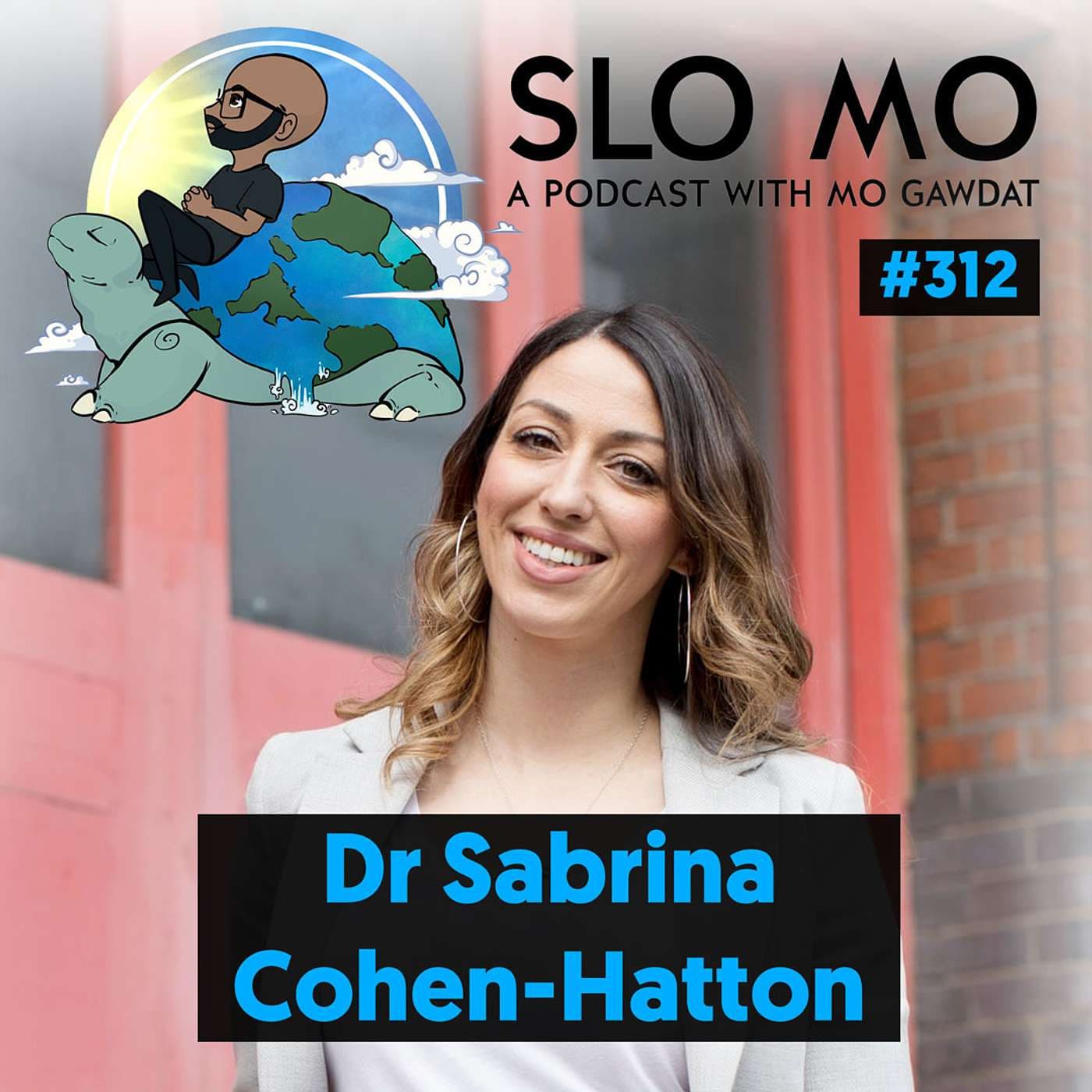
Podcast Summary: Slo Mo - Episode with Dr. Sabrina Cohen-Hatton
Episode Title
Homeless to Hero: How Dr. Sabrina Cohen-Hatton Became One of the World's Most Senior Women Fire Officers
Host: Mo Gawdat Guest: Dr. Sabrina Cohen-Hatton
Episode Overview In this episode, Mo Gawdat converses with Dr. Sabrina Cohen-Hatton, a remarkable woman who overcame homelessness to become one of the world's most senior female fire officers. The discussion delves into her extraordinary life story, touching on themes of resilience, privilege, mental health, and breaking stereotypes in a male-dominated profession.
Key Themes and Discussions
- Breaking Stereotypes
- Challenging Norms: Dr. Cohen-Hatton breaks the mold of what a firefighter looks like, being both physically smaller and more feminine than the stereotypical image of a firefighter.
- Inspiration and Admiration: Mo expresses his admiration for Sabrina, noting how her story upends preconceived notions about firefighters and what it means to be strong.
- Early Life and Challenges
- Difficult Childhood: Dr. Cohen-Hatton shares her experience of losing her father to a brain tumor, leading to a tumultuous life marked by poverty and her mother’s mental health struggles.
- Homelessness: At 15, she left home and faced homelessness for over two years, describing the harsh realities of sleeping rough and the stigma associated with homelessness.
- The Impact of Privilege
- Reflecting on Privilege: The conversation highlights how society often forgets the privileges it holds, with Sabrina illustrating how easily one can fall from stability to instability.
- Empathy and Understanding: Dr. Cohen-Hatton emphasizes the need to recognize the humanity in those experiencing homelessness and the importance of empathy in overcoming societal divides.
- Path to Becoming a Firefighter
- Pursuing a Dream: Despite numerous challenges and failures, including applying to the fire service 31 times, she remained determined to succeed.
- Mental Health and Decision Making: Her academic journey led to a PhD in Behavioral Neuroscience, which has significantly influenced decision-making in crisis situations within the fire service.
- Dealing with Sexism
- Gender Bias: Sabrina discusses the sexism she faced in a male-dominated field, including harassment and the need to prove her worth repeatedly.
- Backlash Effect: The podcast touches on the societal biases against women in leadership roles, explaining how these biases manifest in both overt and subtle ways.
Key Takeaways
- Resilience: Dr. Cohen-Hatton’s journey exemplifies resilience; she transformed her life from homelessness to a leader in the fire service.
- Humanity: Understanding and recognizing the humanity in others—especially those perceived as ‘different’ or ‘less than’—is essential for societal progress.
- Empowerment through Difference: Being different is a superpower; embracing one's uniqueness can lead to significant contributions and changes in societal perspectives.
- Mental Health Awareness: Importance of mental health support and the need for open conversations about mental well-being, especially in high-stakes professions like firefighting.
Conclusion The episode closes with a heartfelt appreciation for the journeys that shape individuals. Mo invites listeners to reflect on their own life challenges in comparison to the struggles of others, urging everyone to practice empathy and understanding in their everyday interactions.
Quotes
- “When you've gone through something that's really life-changing, it gives you a different perspective.” - Dr. Sabrina Cohen-Hatton
- “Being different can be a superpower.” - Dr. Sabrina Cohen-Hatton
Final Thoughts This episode is a powerful reminder of the potential for transformation and the importance of listening to stories that challenge our understanding of resilience, privilege, and humanity. Tune in for an inspiring conversation that encourages reflection and empathy.
Written by AI. May contain mistakes. Listen to the episode to check what was said.
Transcript
Automatic transcript. May contain errors.0:01I am so glad you could join us. I'm your host, Mo Gaudet This podcast is nothing more than a conversation between two good friends sharing inspiring life stories and perhaps some nuggets of wisdom along the way This is your invitation to slow down with us Welcome to Slow Mo
0:34Welcome back. If you know my career, you know that I had the opportunity to spend a lot of time with billionaires, millionaires, CEOs, founders, co-founders, heads of states, royalties, everything you can come across that would sort of give some people the chills. I have never, I will tell you that, openly felt so honored and humbled to be in the presence of someone as my guest today. I am obsessed with this woman, Dr. Sabrina Cohen, who is the chief fire officer here for a brigade in the UK. Basically the most senior female firefighter, if you want, in the country. And she is a PhD in neuroscience, behavior and neuroscience.
1:20she wrote two books the heat of the moment about decision making in very critical circumstances and of course as she should and I'm very happy that she did last year she also wrote the gender bias about his her experience achieving what she achieved as a female in a highly masculine place if you want. And I will openly tell you, of course, we celebrate people for what they've achieved. We somehow ignore how far they've come to achieve what they've achieved. If you know Sabrina, as I have become obsessed to know her, you'd realize that most of us have not faced a lot of challenges in life in comparison.
2:06It is truly an honor. It is truly a privilege. I think the First time I met you, I told you how much I love you. You really, really, really, truly and honestly inspire me. Thank you. And it is such an honor to finally have you here. Thank you. Thank you. And to have words like that from someone like you who's brought so much joy through so much adversity yourself, it means a lot. I'm really humbled to be here. So thank you for having me. Sabrina, you break almost every stereotype. I can seriously and I have to I have to say and I'm not ashamed to say this because we learn all the time every time I got myself deeper into your story I just couldn't understand because you're smaller than I am you're very feminine you're incredibly kind and yet you took on in your life almost all the fires that a woman should ever be subjected to and you're still so kind and so giving and so untainted in a way which is quite shocking so i have to say as i started to learn more about you i constantly paused when i was watching something or reading something and revised my entire script my entire understanding of a category of firefighters for example who are normally portrayed as those you know masculine very large very almost not cases of risk taking you know and now i'm like oh hold on you know look at sabrina and you know and every story so so i would love to use the time we have because i think that would be the biggest biggest eye-opener and education probably for anyone to just go through your story go through your your experiences and memories and talk about all of those unfamiliar places you've been and and how you broke the stereotype every time so I know it's not the most pleasant thing to talk about your young years and childhood but can we start there of course of course I have a backstory that is by no means unique to me.
4:23My father died when I was really young. He had a brain tumour. He was seriously ill for some time. And my mother found his death incredibly difficult to cope with. And after he died, their business failed. And we lived in abject poverty for many, many years. And one thing that I always say is when someone's affected with their mental health, if they go to war with their demons, it's everyone around them that gets hit by the shrapnel. And that was absolutely the case in my family. Yeah, it was really hard. And when I was 15, nearly 16, it got too much and I left home and I started to sleep rough on the streets of Newport in South Wales.
5:08You chose to leave. Yeah. So it was that difficult to be at home that you would prefer to sleep on the streets? Nobody would choose sleeping on the streets. over a viable alternative. Nobody. It was just too much. It was too volatile. It was too difficult. We were too broken. The environment was too difficult to stay. And so I left and I spent a little bit of time sofa surfing and then you outstay your welcome and then you go back and then it was out on the streets. And it was really, really hard. And I didn't know what to do at first. and I thought you know maybe I should tell somebody and then I thought no no if I tell somebody I'm going to end up in care and so here's the thing when you're raised by somebody who loves you very deeply as my mother did but doesn't have the mental resources or the financial resources to be able to care for you you're raised to see any kind of sense of authority through a lens of mistrust.
6:09And so I thought if I go to care, it's going to be like a Charles Dickens novel and they're going to feed me gruel and it's going to be horrible and I don't want to do that. So I needed my own agency. And so I didn't tell anybody. I kept going to school. I was sleeping rough. I'd sleep in shop doorways. I'd sleep in, there was like this derelict church in Newport and it had like this big porch with pillars and it gave you some shelter from the rain. So we slept there for a while, me and some other people who were also rough sleeping. And then there was this derelict building and it had a bit more shelter, but still holes in the roof and holes in the floor.
6:49And sometimes we'd bed down there as well. But I had some really, really difficult years. It was horrendous. Years? Yeah, yeah. It was about two, just over two years, two and a bit years. Oh, wow. Yeah, it was horrible. And people, you know, you'd be lying down with your sleeping bag and a blanket and someone would just come along and you'd literally be culled in a ball like this and you just feel a boot in your ribs oh my god they would just walk past and kick you like you're nothing like you're scum and you know you think how can you do that there's a human being inside here but people didn't see that they would take one look at what they saw presenting and they would have an idea of it and for me it was it was really hard because you start to devalue yourself because you know as much as you can rationalize there are seven billion people in the world the opinions of one that doesn't know me doesn't matter why should that matter to me but actually we're human beings and we're hardwired to absorb the way people respond to us as social information and that then affects the way that we expect the next person to respond to it it becomes part of our inner narrative and how we see ourselves how we talk to ourselves.
8:03It becomes that little voice inside your head that tells you you're worthless or you're not. And so I was having these experiences every day that was telling me I had no worth. And I'll give you an example. This is an example of how difficult practically that time was. There's one time when I just wanted to go to sleep somewhere light. And so I went and slept in a subway, you know, the ones with the strip lighting. And so I bedded down there for the night and I had my cardboard down because it it doesn't matter how warm it is outside when you lie on that concrete it just sucks all of the heat from your body and so I had a sleeping bag and it was one it was one of the really cheap nasty ones that you'd get from the army surplus stores it was like six pounds and it was green and it had this hood that you would pull over so you'd be like a caterpillar almost and I would kind of go down to the to the bottom and I'd pull it pull as much around me as I could and I had gone to sleep and I had a dog at the time.
9:04He was a stray dog, I was a stray girl, it kind of seemed to work. And he was at the bottom of my sleeping bag. And listen, I know a lot of people have a view, a set view, on people experiencing homelessness who have a dog and people used to express it to me all the time. You can't look after yourself, why do you have a dog? but I'll tell you that dog was the only social and emotional connection I had when I was completely isolated he meant so much to me and so he was at the bottom of my sleeping bag I find that so interesting actually because people don't recognize that the dog is taking care of you not the other way around it's almost like especially when you if you have any compassion whatsoever and you pass by someone who's homeless and they have a dog you can easily notice who's actually more concerned about the other like like the dog is like constantly trying to are you okay are you okay it's just an amazing relationship really I lived for that dog at that time and I'm not sure I'd still be here if I didn't have the kind of connection and compassion that I had for him because there were days when he was my reason to still be alive you know he was he was amazing menace his name was menace because he was a bloody menace but this day he was down at the bottom of my sleeping bag and I'd gone to sleep and I woke up it was I don't know maybe early hours of the morning I don't know what time it was um and I my sleeping bag felt warm and wet and I could hear somebody laughing and the first thing I thought as I kind of like woke up was oh my god is my dog onto the toilet in my sleeping bag and I pulled the hood up and I kind of got back up and I looked up and I could see this guy this drunk guy leaning back on his heels laughing just urinating on my sleeping bag he was on his way back from the pub or the club or whatever and he thought that must have been you know a really fun thing to do and I felt so humiliated and so dehumanized and so small and insignificant in that moment I really felt like I had no worth and this is my evidence that I have no worth but you know what it turns out that sleeping dogs don't like being urinated on in the middle of the night either.
11:15And that's not what you want to wave around at an angry dog. So I don't think he'll do it again soon. What did parents do to him? Well, put it this way. I don't think that he would take the risk of doing that again. Wow. So in a way, I mean, honestly, I wished, when you were telling the story, I wished that would happen. I mean, I'm not a violent person at all. But somehow I believe that some people need a wake-up call. Yeah. Like, you know, I can forgive someone, but maybe someone should urinate on him first. How do humans get to that point? It was horrible. And I hope at some point he regrets that and realizes.
11:59But, you know, one of the things that keeps me going, actually, was recognizing that in those moments, in the darkest moments when you see the worst of people I would hold on to the complexity of humanity and I would know that I've seen one facet of you on one day and it might be the darkest corner of you but you have lots of we all have lots of corners we're all complex people and there's people that who loves him there'll be people who he loves so maybe just maybe I got the worst part of him but he has more humanity than that and I would hold on to that in those moments and it would give me just that little chink of light that I maybe needed.
12:43Mahatma Gandhi I want to ask you about this because to me you look you sound too Gandhi like it's like they're they're they're invading invading my country but you know I'm gonna be peaceful and fast right which I think is remarkable but no very few people can can reach that point I actually don't understand. And if you don't mind me asking, because this is a topic that is really, that hurts my heart every day. As a matter of fact, one of my, so I lived in New York City for a tiny bit of time. And in New York City, homelessness is in your face. And if you've ever been in New York on a January night, you know that some of those people will die tonight.
13:27You do, right? and yet everyone in New York just walks by them as if they're insignificantly nothing like transparent yeah and I I remember when I lived in New York that I suddenly noticed myself in that place where I'm sort of avoiding looking at them avoiding talking to them and if you know my son Ali my son used to sit next to when he sees a homeless person he would sit next to them and chat right and and it wasn't about giving them money he was he would literally sit and you know give a half an hour an hour of his life talking to them which i learned to do later in life but you know which makes the whole difference but somehow when i noticed myself feel that way i got so angry with me because i suddenly felt that i'm allowing my heart to go dark to become unempathetic right and so i actually that was the point when i started to say no i really need to get closer to them not avoid them not not even ignore them you know or avoid them but but but get closer to them i have to say i met some of the most incredible people on earth okay here in london i i do that very frequently there is a narrow cafe near where i stay and and it has a seating outside and you can if you go early enough there are a few homeless people normally sleeping on the other side of the street and as the day starts they get up and they start to move around maybe they want to go and use the bathroom in the cafe or whatever and so of course everyone's pushing them away and my approach is to first invite them for coffee okay and basically say hey why not you know i know them by name over time and then you know just have a coffee and a chat and they're always so proud they're like no no no no we don't want anything and i'm like guys i'm buying a coffee anyway yeah so so let's just have a coffee together and they use that coffee excuse to go and and and and you know use the bathroom or whatever so as i say those are incredible humans and most of them by the way like you are on the street for no mistake on their side at all but But society still looks at a homeless person as a nuisance, as someone to be repelled out of society.
15:50Where do we go wrong? How do we end up at the extreme moment where we need empathy and compassion going the opposite way and to the point that we can, you know, someone can urinate on a homeless person? How does that happen? What happens in the psyche of humanity to get to that point? I think there are a few things. I think at the very best of it, it's a fear that you can't fix it. So actually, it's more protective to push back and ignore it because you know that there's nothing individually that you can do to solve the bigger problem. But collectively, there are things that we can do. And so I think sometimes it's so easy to go, I can't fix everything, so I'm going to do nothing.
16:31Whereas actually, if you just did a little bit, then together that would make a really big difference. And for me, some of the biggest differences were people just recognizing your humanity, asking me my name, looking me in the eye and seeing me as a person and not as something discarded on the side of the road. That was sometimes the most meaningful for me. Not if somebody gave me money, not if somebody gave me food, but if someone gave me my humanity back, that meant the most to me. So I think there's that aspect. And I think another aspect of it maybe is the fear that they could recognize an echo of themselves in that person.
17:09So this could happen to you, but you're a person. I'm a person. What if that happened to me? I'm blind to it, so I have to close down. Because you avoid that social comparison that you could otherwise make. So you're fearing yourself in that place, so you avoid acknowledging it. Yeah. That is so interesting. Yeah. You know, a lot of people will say that a homeless person, which actually, once again, I say publicly, you know, so that everyone listens is not the truth. You would say you would think that a homeless person is someone who got themselves to that place. Most often they're not. Right.
17:46So do you believe that whole idea of don't help them, they'll use it to buy booze or whatever? No, no, I don't. I would say help. And do you know what? If they use it to buy booze, that's their prerogative. And ultimately, it's such a difficult, harsh environment that sometimes people just want to block it out. And I can understand that. But I think that actually the complexities that get you into that situation are huge. You think about the reason people end up being homeless. Usually, it's not just the housing aspect. Usually, there's a complete lack of social support. They don't have somebody they can turn to.
18:27or if they have they've outstayed their welcome nobody ends up in that situation if they've got people around them that says don't worry we'll look after you we'll help you get back on your feet so you know there are so many different reasons and it might be something as simple as rent prices going up and at the moment we're seeing that more and more combined with a job loss or a or a marriage breakdown or a partnership breakdown all kinds of things when i was rough sleeping lots of the people that I knew that were also rough sleeping had been in and out of the social care system their entire lives they come out and they end up then in youth offending institutions in and out and then in and out of prison and every time they come back out they're on the streets and it ends up being a path that they trod but wrapped into that then comes issues with mental health and a lack of access to mental health support services and then substance abuse comes into it as a coping mechanism for everything that's happening.
19:26It's not a lifestyle choice. Nobody would choose that if there was a viable alternative. And once you're experiencing homelessness, it can be really, really difficult to get back out of it. So when I was rough sleeping, I carried on going to school every day because I felt like it was one, it was the only thing that I could control and I wanted some agency and the other reason was I was afraid of going into care and so it felt like if I can just put this veneer over the top then I'll be okay and I can somehow figure it out so even that example that I told you that day that that night I went and I dumped all my stuff on a bin the sleeping bag because it was ruined and I went and sat on a bench in the middle of the town and I just pulled my knees up to my chest and I just literally sobbed until the sun came up the next morning and I figured it must be about six o 'clock.
20:19You're 16 now? 16 I was 16 at that point. The bus station toilets would open at six and so I figured I could go clean myself up and I went they were just pulling the shutters up so I went in I cleaned myself in the sink as best as I could I turned around I went into a toilet cubicle I locked the door I put my bag on the toilet and I pulled out a scrumpled up school uniform and I took off my the clothes that I was wearing and threw them away and I put on my school uniform and I went and I found someone else that was rough sleeping that I knew to look after my dog for the day and I went and waited for the bus and went to school and it was really difficult and by the time I thought do you know what maybe I need to admit I do need some help I went back to see if I could find my social worker and he wasn't working there anymore and somebody filled in a form for me and I never heard from them again and they said uh maybe see if you can claim some benefits and I went benefits benefits oh okay I could claim some benefits so I went along to the DSS as it was then the Department of Social Security and they said yeah you're 16 so you can have 15 pounds every two weeks as a bridging allowance I said I don't want your 15 pounds of fortnight bridging allowance that's ridiculous What can I do with that?
21:40So I left and then I tried to go to the council to get on the council housing list. And they said that I wasn't a priority because I was already homeless. And I kind of understand that because being homeless is awful. And if you can avoid someone getting to that position, that's far preferable. So I do understand it. I don't like it, but I understand it. And so there wasn't any support really for me at that time. But the support that I found was through a magazine called The Big Issue, which is a street magazine that you can buy for cost price and you sell it for a profit. And this for me was a revelation because I felt like I could earn something.
22:23I felt like I had some control over it. Nobody was doing me a favor. Nobody was going, there you go, there's some benefits. This was me working in my own way to do something. and it gave me structure and it gave me some self-esteem back and I started selling it initially in Newport where I was staying but there were I don't know maybe 12 other people at the same time so there was a lot of competition so you wouldn't really earn more than you could use to get something to eat that day but then I found a little village called Monmouth no one else sold it there so I'd get a stack of magazines and I'd get on the bus at seven o 'clock in the morning and I'd go there and I'd sit there for the whole day till seven o 'clock at night sometimes until I'd sold all these magazines and then I started to make a few more pounds that I could put aside until eventually I was able to rent somewhere myself.
23:16Wow. Yeah. And it was, I had a few failed attempts at secure accommodation. Don't get me wrong. It wasn't straight up. There we go. I've got it. Here's a magic key. Because what people don't talk about so much is the recovery from homelessness. and that was as hard if not harder than my experience of homelessness I think and I would feel the first place I got was a room in a shared house but it was right near the city centre so I would feel bad that other people were still rough sleeping and I'd be like don't sleep there come on I've got a place come and come and sleep in my room and it would get trashed and it was I was an awful tenant and I didn't last there very long and one of the other people that was staying in the house attacked me and the police came and like pulled him off and took me to the hospital and I didn't feel safe there then so I was back out I spent some time sleeping in a van that was a bit safer but then eventually eventually I managed to earn enough to put a deposit down on a very cheap very nasty rented flat in the South Wales valleys away from the town and that was important to me because I wanted a fresh start and I wanted nobody else to know what I'd been through I wanted to get away from the stigma of experiencing homelessness and start again and I didn't tell people that I'd experienced homelessness for it took me about 20 years to be open enough to have that conversation can I ask you to visit how you felt then I mean we're friends so I have the right to say you're a very attractive woman I'm sure you were when you were 16 you're out there among predators really really at your most vulnerable sleeping at night unprotected really in any way not with a shelter not with family it's helpless but it's also hopeless yeah and yet you find some way to be responsible for your own self to like literally pull through not everyone does that so what was different I mean what made you not give up it's a really good question and I think for me there was always there was always a belief that I had in humans being good fundamentally there were some really bad people that didn't know honestly honestly I know I know this is why I adore you yeah this you know every time you say this is what I feel that this is really what you radiate is is that idea of it's not their mistake everyone's going through a tough time and there is a good corner to every one of them they might have made bad choices and that's still their choice that they did that they did a bad thing but I still believe fundamentally we are hardwired to be part of a good community and and I'll tell you the reason I never lost hope this is really important to me my grandmother is one of the most amazing people and she lived with us when my father was terminally ill and my grandparents were from Morocco and my grandmother got caught in a riot and she was attacked with a machete and she was left for dead and my grandfather went to retrieve what he thought was her body and he pulled her out from a pile of people and she gasped air she was still alive and they fled Morocco then as refugees and my grandmother and grandfather started again and they started a new life.
26:46Now despite this experience and despite leaving everything behind my grandmother has never never never complained about what they lost. She's only ever talked about the opportunities that she's had to build and she still sees the world through such eyes of compassion and love and care and she talks about the person that attacked her and said you know to be overcome with such hostility in that moment to allow that darkness in that's really really sad but I know he's a better person and I hope he forgives himself because I forgive him and I hope he doesn't lie on his deathbed regretting because I forgive him she's 101 she's 101 this year and she sees everything through that lens of of light instead of darkness and I take her as my inspiration and so every time I think I'm having a bad day I think about her and what she overcame and the mindset that she used to grow rather than to to to shrink back and to die and that that is my inspiration she's amazing you're my inspiration i love you you're mine no no no i you don't understand it's because you have to understand i live in a world where everyone tells me their challenges and sometimes when you really really get to meet people who have lived a rough life like really a rough life you'd wish you go to the other person that's going to text me tomorrow and say, I'm going through a very tough time.
28:29I, you know, I'm struggling with a very bad breakup, for example, which I don't undermine in any way. I mean, compared to machete and being in the, you know, homeless when you're 16, I think breakups are okay. I mean, they're not the most pleasant experiences. And it's something that I have been thinking deeply about because I, you know, I have seen so much shit in my life. It's just unbelievable. But I've also seen so much blessing. And in a very interesting way, I wouldn't replace it for anything. And somehow I started, it's just getting into my head and maybe I should say it, that there are challenges that I started to call challenges of privilege.
29:19because if you're attacked with a machete, you suddenly start to appreciate everything. And a breakup doesn't matter that much anymore or a lost job doesn't matter that much anymore if you've been two and a half years on the streets. You suddenly start to develop that beautiful joy of every flavor, every tiny little piece of sourdough bread that comes into, like someone leaves it and you have access to it. It becomes a treasure. It becomes a feast, right? And it is quite shocking how our privilege in the world is making us forget how privileged we are. Yeah, it's easy to. It's easy to because it's human nature to take it for granted because you experience this stuff every day and it becomes normal.
30:09And so actually relatively something small becomes something that's very, very big. And it is to that person, to that experience that they're having. But, you know, I think when you've gone through something that's really life-changing, it gives you a different perspective. It gives you perspective. And, you know, you asked me the question about the safety as a young girl in that situation. And when I think back to it, it was really dangerous. It was very dangerous. Are you kidding? I don't know how you made it, honestly. one of the i mentioned the derelict building that we used to sleep in well because um once you find somewhere and like it's human nature you go hey i found this place it's safer you know come and stay there and then before you know word gets out and lots of people staying there and then the drug addicts were in there as well and it used to be like a drugs den at one point and i'd when i'd go to sleep i'd have to um with a lighter just check around to see whether there were dirty needles that I might that literally I might roll into in the in my sleep and it was horrible you felt so anxious all the time and I would get hyper vigilant so you're always in a state of alert and when I was sleeping in this place I used to do this thing where I'd kind of go all around the building and I'd find myself a place where I had at least two escape routes on different sides so if something did happen I wasn't boxed in because there were times when it was really good that I did I did this thing where I went into the skips and I'd find all these paint cans and I piled them up next to the door so I could pull them behind me if I needed to I put um piles of papers so I could just throw them at somebody if I needed to run and all these things I was constantly thinking about if then if then oh my god it makes you crazy it really does but you know even even now I still sometimes get really hyper vigilant like I don't like sitting in a restaurant with my back to the restaurant I like to be able to kind of like see around me I'm better now than I used to be but even in my job now when you're in charge of a really big fire I'll notice little things that might make a really big difference that if I hadn't had that experience I'm not sure that I would so like in the book I wrote about one fire in a big industrial unit and there were kind of garages to across the one side and I was going around and I'd noticed the wind changed direction really suddenly and it was a really small thing really really small thing but I was like hang on what's the wind direction and what was it and they said I was like right we've got to change our tactics completely now because otherwise it's going to jump and take the garages so we had to completely change the way that we were dealing with the fire now if I wasn't so hyper vigilant I would never have noticed that never in a million years because it was too subtle but it was really significant so you know all of these things that are given to you that feel like at the time they feel really painful and it feels like you're being lashed with a whip actually sometimes the the growth that you get from it can be a real gift but what I would also say at that time is some of the people were not good people that I had come across and I know that because I had my dog not for protection but because I had my my comfort I took from my dog it wasn't so easy for someone to get me to seek comfort from them and then to manipulate me which I saw happen to lots of other women so I honestly believe that that relationship that I had with my dog kept me safe because it stopped me going and seeking connection with with other people that might not have had the most honest of intentions.
33:57Not everybody was like that. I met some of the most compassionate people who others would be crossing the road to avoid, but they showed me more compassion and care than anyone in modern day life. And so it's not all bad, but there are certainly elements when I think back of those experiences that were really, really difficult but equally you know it made me who I am today there are some good bits from it so I'm very curious about what made you who you are today so you're at rock bottom it doesn't go any lower than this and now you're I don't know your your your excellency honestly like you're you're an incredible human being you're successful you have a loving husband you have a wonderful daughter you have a phd i don't know how do you do that and you know and you're you're an author you are a speaker and you do so much within that half of your life if you want how did that rebound look like the recovery from homelessness was one of the hardest things um to the point where it was probably harder than homelessness psychologically when i was experiencing homelessness You don't have the headspace for a strategy to live.
35:14It's just the tactics to survive. It's day-to-day, moment-to-moment. But when I got somewhere, I started to get afraid of losing it. And when secure accommodation became real, I started to let myself imagine what else could be real. And that's when I started to think about the fire service. Because I think it's a real privilege to be a firefighter. because you're trusted by people to know what to do when they're having the worst day they've ever had. And I could relate to that feeling, right? I've got it. You know the worst day you've ever had. You know what that feels like. Exactly. And so I applied to the fire service.
35:55I failed many, many times. I think I applied to about 31 different words. I wouldn't have hired you. Honestly, I mean, I don't know. I mean, you're not the image. I'm being open and honest here and that's the problem the image is so strong that some people who'd make the best firefighters don't even think about it so how can you describe yourself to me as a firefighter you were dressed in the uniform breaking down the doors and walking in as a firefighter as a firefighter but you know what actually usually someone else would break down the door but I'd be the one that goes through the hole because I was small and I got it so you know as a team right You wouldn't have a football team full of strikers because you have no defenders.
36:40You wouldn't have a toolkit full of 10 mil spanners because then you can only deal with 10 mil left. I have to say, when you mention your intuition as a woman, that's so valuable in those situations. Your ability to sense everything. We men, we just sense the screen when there is a football game on. But that's all we can see. Yeah, but there's something about communication and empathy. Absolutely. Teamwork. There's nothing to do with how big you are. But it's so dangerous, Sabrina. Well, you know, I think it's more dangerous for the person that's stuck in there with, you know, that can't escape, that's stuck in the fire.
37:18You know, we have our training. We have our equipment. We have our personal protective equipment, you know, our uniforms. So we're a lot safer than the people in there that we're sent in to rescue. but for me it was just the most amazing privilege to be able to do this and I and I really really enjoy what I do but when I first started I was really afraid that something would come along and take it all away and that was the difficulty and I couldn't talk to my homelessness because I was afraid of the stigma and I wanted to be a different person than the one that I felt like when I was sat on the side of the street selling street magazines I wanted to be me and I wanted to be judged for me not for what I'd been through and so the stigma prevented me but then you hold something inside you that is a huge part of you and you don't tell anybody it's like hiding part of who you are and the longer you leave it the harder it is to talk about I used to have stress dreams about people finding out about it it was really tough but honestly when I first joined the fire service I wasn't exactly welcomed with open arms of course yeah I mean there were some really incredible people who are still like big brothers to me to this day but there were others that made it really clear that they didn't want to work with a woman I've experienced sexual harassment I've been told things have to be different for me because I'm not a guy um you know even sent very inappropriate pictures directly to my phone oh shit but it was innocuous they're really small screen so you know no judgment here but there's yeah there was a lot that i mean the man that does that is small anyway so yes go ahead yeah it wasn't great but when i think about those things do you know what mo i didn't challenge it at the time and i look back and i think why didn't i challenge it and i think i was young i felt insecure but more importantly the balance of power, those dynamics, they were against me.
39:22And you don't have to be a woman in a male-dominated environment to recognize the feeling of that power dynamic and how it's difficult to speak up or challenge because you don't feel like you have the influence. We've all experienced that in some way, right? But by not saying anything, I know I didn't stop it from happening to anyone else. Equally, there were plenty of others that saw it that could have spoken up as well. that's a very very very very important point here honestly there is that element of you know those moments where something happens and then an hour later you're sitting down saying i should have said this normally you think that way for yourself but idea of thinking of i should have said this for others is really a beautiful way to look at the world actually i think so because because in islam for example where i my original spirituality comes from it says that a silent devil is the one that does not speak up when they need to yeah okay you're still a devil but you're silent uh and and it's quite uh quite eye-opening how we let those things go again like we avoid looking at a homeless person yeah do you think it's um i mean again it's probably conditioning because the typical person that would apply to become a firefighter is probably a big dude with a you know with very little prospects of being soft or feminine if you do if you want you know like they are by the by definition trained that masculinity is like everything is about being a man so so in their mind the conditioning is what is she doing here standing in my way when I'm doing the thing that is fit for me that it probably hits their own insecurities somehow and you know actually when I look back over the course of my career sometimes the biggest pushback that I've had has been from people outside of the fire service so in the very early days I had some really difficult experiences it improved over time and I think as I developed in the service as well you became more able to speak up and to challenge but actually the responses that I get from people outside they're really shocked about what I do exactly You know, and sometimes shocking.
41:34I understand because only 8 % of firefighters are women. So if you meet 100 firefighters and 92 of them are men, of course you're going to be surprised when you see the ones that aren't. It's the movie industry, to be honest. You know, they fill your mind with superheroes that are men and firefighters that are men. That's it. Yeah. That's it. But I'll give you an example. my husband and I were at a um we were at a friend's party and we met we were talking to a couple that we didn't know and they said what do you do and my husband said oh I'm a firefighter um and they were like oh wow that's amazing you must be so brave and then he kind of got a bit embarrassed because he's very humble my husband he's like yeah and so is my wife actually she's my boss's boss's boss's boss and they kind of and they went you you are a firefighter and I went yeah they didn't say you must be brave no they went but isn't it a bit dangerous isn't it a bit risky haven't you got a child and I kind of looked at him and he was he looked at me and he was like come on let's go and get some wine because he could see me about to really lose my lose my cool and so we went and refreshed our glasses and I was talking to him and he said does that happen to you a lot and I said all the time I said have you ever had a reaction like that and he went not in more than 20 years of firefighting has anyone ever turned around and said that's too risky how do you do it while you're a dad so there is something i think about the way that as a society we reinforce people's gender roles and we have an idea of what a man does and what a woman does and the traits that are masculine which are very dominant and confident aggressive maybe but you know certainly those kind of traits that are actually very closely aligned with leadership relationship whereas women are supposed to be nurturing and humble and caring and empathetic and then that's constantly reinforced throughout society and the messages that we see in the movies that we watch in the interactions that we have the way people say well done for you know being really caring towards someone or hey high five you're a real leader you know so it's those things that make a really big difference to our outlooks and then there's something called the backlash effect so if you're say a woman in a very male-dominated environment or you're successful in a male-dominated job you'll experience something called the backlash effect because you challenge someone's representation their mental representation and it's not that they they somehow feel negatively towards you because they don't like you but it's that you've challenged their idea and so to protect their own idea in their own mind very unconsciously they'll respond in a negative way there's some really interesting research around this and there's a great bit of research actually i first heard it from cheryl sandberg she was talking about it and i was so interested that i had to go and read the research paper myself but there was a really really successful venture capitalist called heidi royson who caught the eye of a professor at harvard business school who wrote a case study about her and he decided to give it out to his students and he changed just a single word half of the students had heidi royson and the other half had howard Royson and then when he surveyed them afterwards what he found is that everybody really liked Howard they thought he was a really inspiring leader but Heidi they thought she was really cold very selfish no one trusted her nobody nobody would stand by the water cooler and go I really don't trust Heidi because she's a woman no one would do that but they might stand by the water cooler and go I really don't trust Heidi I don't like the way that she's you know I find a very aggressive or find a very self-centered they'd find another reason but the reason is actually deeply rooted in a gender stereotype but it's so unconscious that we don't feel it we don't see it but people in positions like mine absolutely experience it and it's not just guys by the way because it's really easy in this situation to go well there we go the men are the men are doing it the men are benefiting from it and it's all a patriarchy thing it really isn't we all do this In fact, another wonderful study took something called the implicit association test, which measures your unconscious biases.
45:45Despite 83 % of respondents being women and 86 % saying they're feminists, they still had an unconscious bias towards associating men with leadership roles and women with support roles. Even the people who would argue against it still had that really kind of powerful unconscious bias that would be affecting the way they feel about things. But you see, this is what I said in my introduction for you. It's the idea that a stereotype that is enforced by movies and conversations with your fellow dudes and whatever. When you show up, okay, you go like, hold on, that's actually not correct. Yeah. Right.
46:28And I think that's the truth of our world is when you really look, and this is why I love everything that you do. It's because when you really look behind the facade, the exterior image, nobody is what you think they are. Nobody. Like, you know, as I say, I look at you now and you're so feminine in your role. But I'm guessing when you're at your work, that is not how you looked at at all. There is no feminine masculine. There is I have a duty to do. Right. And when we spoke in the morning about your daughter and your motherly side is so beautiful. But then, of course, when you're teaching, for example, you are more in the like I'm disseminating information and knowledge here and it's not the same role.
47:18And I think the trick is, can people look behind the obvious? Can people look at the homeless person and see the human in them and that they could have been in the same circumstances, by the way? and that would trigger empathy instead of rejection or running away can people value a leader for what she actually is not for who she is what gender she is or what background what ethnicity i personally struggle with this all the time by the way i mean it doesn't matter if you like my work or not it doesn't matter that i'm a four times bestseller it doesn't matter that you know i was a very senior executive in tech companies and so on and so forth as a Middle Eastern man, any border control would treat me like a criminal.
48:02Yeah. Right? Yeah. My father used to get that all the time. Yeah. All the time. It is quite interesting. And when you really think about it, I would have accepted that in the 70s and the 80s when technology was not that sophisticated. And so maybe you need to categorize me somehow. But walking into the US border control or the UK border control, I've done that 250, 300 times in my life. I'm all over the internet, right? You can do research about me. Like you really know me very well, okay? And somehow, no, Middle Eastern man, a little bit of a deep voice, bald head, beard, terrorist, right? I think I'm not complaining actually.
48:43I'm giving the world an invitation to look at you as the beautiful soul that you are, honestly, through your achievements, through what you stand for, your essence. Right. Look at me as the, you know, less beautiful, but soul that I am. I think you're beautiful, man. But, you know, but also through what I stand for, my achievements and so on. And when I was preparing for our conversation, this was really the point I wanted to get through, is that the next homeless person you meet has a beautiful story behind them. Right. And if you really try to strip your own perceptions of stereotypes, you see them yeah and i think that's really what's missing in our world it's it's missing in our world you told me the story of your daughter being bullied right and for no reason on her side but belonging to a group or another from a perception point of view and in a very interesting way i think we are now in a in a world that is so divisive it's like you're you're not like me and i don't like you for not being like me instead of looking at you are like me in so many ways and i'm actually so proud that you're different than me in a few ways yeah and you know i honestly think that social media has the algorithms have not helped in that space because they prioritize lies laced with anger above fact and it creates this kind of behavioral change that you see in people because you're constantly shown more extreme versions of the things that you believe rather than different points of view but you know the point you make about stereotype is so beautiful and i honestly think that being different can be a superpower and if you can see past the stereotype then you don't have to be constrained by it either because how much of what we do is constrained by what we think others need to see in us right you know and it shouldn't be and I honestly think that there are occasions for me when I look back at at my own journey when being different has made something easier to do because I haven't been kind of constrained by those boundaries and it leaves you free to draw your own and I'll I'll give you the example of um of the research that I did so I had an incident that I went to where another firefighter was really really badly burned and when we first got called we thought it might have been my husband on duty injured and I'll never forget that day because I was completely torn between the role of a loved one and all of the kind of fears and anxieties that go with that and the role of a responder and all of the kind of accountabilities and the responsibilities that go with that too.
Read the full transcript
51:40And I can remember being told and getting on the fire engine and feeling like I was honestly about to become one of those people who we'd see every day, who'd wake up to a bowl of cornflakes and complete normality only for something to happen and their entire world gets ripped apart. And I can remember going there and being really, really afraid and really worried that I was going to let everyone down because I wouldn't be able to keep it together. Anyway, we turned up. Unfortunately for me, it wasn't him, but it was a friend of ours. And I'll never, ever forget the feeling of relief that I had followed by this sensation of guilt because I felt like by not wanting it to be my husband, I felt like I'd wished it on someone else.
52:29And that made me feel really, really bad. And now when they went to that incident, they were actually called to an exploding pavement. Now pavements don't really tend to explode. So they thought it was a hoax and they weren't taking it seriously. And it was actually an underground electrical junction box that had a fault in. So periodically it would kind of like shoot flame up like a jet engine. And my husband had been lying down with his head in the pit, poking around, wondering what on earth this exploding pavement was. And it was only as he got up to put the lid back on that it blew up. So seconds earlier, he'd have been killed outright.
53:03So after this, I had this kind of sliding doors thing going on in my head where you'd almost imagine the alternative. And then you'd feel this wave of terror. And then you think, actually, it's fine. He's downstairs. He's making a cup of tea. Everything's OK. You need to have this sense of relief. But then the guilt would hit me again. and I started to think I've got to I've got to do something and I felt like I couldn't speak to people because I didn't want people to think that I was weak or that I couldn't cope so you know the conversations back then about mental health in the fire service weren't as advanced as they were now so I just had to hold all this in and my my safety net is doing something practical I've got to do something and then I feel like I can control it so that's when I started to look at what causes what causes these kind of incidents and 80 % of injuries happen as a result of human error of course not a problem with a piece of equipment but a human mistake and so I figured well maybe if we could understand human error better maybe there's something that we could do to reduce it and I left school at 16 as you know I didn't have qualifications so I went back to night school I did a psychology degree while I was still working full-time all the way to PhD and in my PhD I'd go to the lab at half past five in the morning I'd run my experiments I'd go to work at like half past eight I'd pull a full shift in the fire brigade I'd go home I'd put my newborn baby to bed she was born the day my PhD started great timing and then I'd go back in for the night shift and I'd be in the lab till 12 one o 'clock in the morning sometimes and I did a seven year part-time PhD in three years they had to re-register me as full time so that they could submit and since then now since 2010 altogether i've been part of a small research group which i now co-supervise i've got a professorship with cardiff and we do research into decision making under pressure in crisis situations and our research has completely changed the way we deal with incidents in the uk it's changed the way we train firefighters changed the way we make decisions all emergency services now use it and we're up to I think our eighth global science award it's been an incredible journey and one that I really I love doing research but back to the point about the stereotype if I'd have felt the need to conform to the stereotype of being a bit rough and a bit tough that kind of stereotype would have never permitted the deviation that you'd need to go and do something really nerdy like neuroscience and you know it's just it wouldn't happen but actually that's what I love about the Middle East in the Middle East when you look at senior public servants senior fire officers they've all got PhDs they've all done study that's actually kind of changed the direction of a bit of work within their public service and I really love that you don't get that so much here and I had to for a while you know had to kind of almost like hide the fact that I was doing this and I just quietly got on with it until we got to the point where we had something tangible and then I had to really convince people that this was going to be a good thing and they were open to it they listened and it was great but I honestly think the stereotype not achieving the stereotype meant that I wasn't constrained by it which meant that I had a better chance of success.
56:25So do you believe that being different is a superpower? Yeah 100 percent 100 percent but it's only a superpower that you can use when the people around you can value that difference and it's easy to sit back and be passive and think well you know it's I've got it tough people don't see the value in me being different and it's really frustrating and this injustice happens and that injustice happens and that's all fine but actually that I think that it's also important to be on the front foot and to persuade and to demonstrate and to convince and to challenge people's ideas we don't have to be a passenger in this the world isn't ours but we're part of it we're what forms it we can do things differently we can go out there and say this thing happens and it's not fair but hey this is a different perspective and it might be really interesting to look at it this way you know I honestly believe that there's no space I think for dwelling on on what you don't have or what is unfair or what you might have lost you've just got this opportunity to go out there and make something different well i want to ask you six more questions but i can't speak after what you just said honestly so i'm probably gonna have to ask you to come back but it would be my pleasure but but this is it really you know it's that idea because again one of the biggest things that people struggle with in the world today is oh i'm different because it's so overwhelmingly need it to comply so that you fit in because of the world of social media no no it is actually the biggest superpower ever to be different having been homeless at 16 having gone through those experiences makes you one of a kind in your field in your approach in your background about things and and different is the best thing you can ever be who wants another copy of the same yeah isn't it yeah i adore you i adore you i think you're incredible i honestly and truly think you're incredible and i as i always tell you guys when when you're in the presence of the guest i think it will never be you know captured on camera but the energy in this being of some form is just incredibly inspiring and contagious.
58:50I wish you endless success. Thank you. I wish you never to go through harshness again. You've seen enough in life, but I wish that you will dissipate what you learned to the whole world in a way that makes us all better. Thank you. You're an amazing being. Thank you for being here today. So are you. Thank you for having me. And for all of you, thank you for the opportunity that you give me to make amazing, amazing new friends and to go to people that I have not met and say, hey, I'd like to meet you. And then I make an excuse that I'd like to meet them because of the podcast. So thank you for this.
59:25I definitely think this was one of my favorite conversations ever, that ability, the resilience, the determination, and in a very interesting way, the compassion that came as a result of it, the idea that someone who's gone through so much can still look at the world and say, oh no, hold on, you know, the person that wronged me is a good person still. If we can all do that, I think we would have a much better place to live. I ask you to spread this conversation, please, this specific one to as many people as you think will benefit from it. And I ask you to slow down and reflect a bit on your life and maybe a bit on your judgments and what may need to change, I ask you to reflect on the definition of what is a tough time.
1:00:17Because, yeah, it doesn't matter how tough you may have it, someone else has it. As tough or more or tougher. And yeah, take a bit of time to slow down. I love you all for listening and I will see you next time.
From the publisher
Dr. Sabrina Cohen-Hatton, one of the world's most senior female fire officers, left home at 15 and school at 16. Overcoming homelessness, she became a firefighter and earned a 1st Class Honors degree in Psychology, a Master's in International Fire Service Development, and a PhD in Behavioral Neuroscience.00:00 Intro2:20 Breaking Stereotypes4:00 Sabrina's Childhood13:00 Homelessness30:00 Have We Forgotten Our Privilege?35:25 How Sabrina Became a Firefighter39:20 Dealing with Sexism49:00 Don't ...