
In short
Slo Mo Podcast: Episode Summary
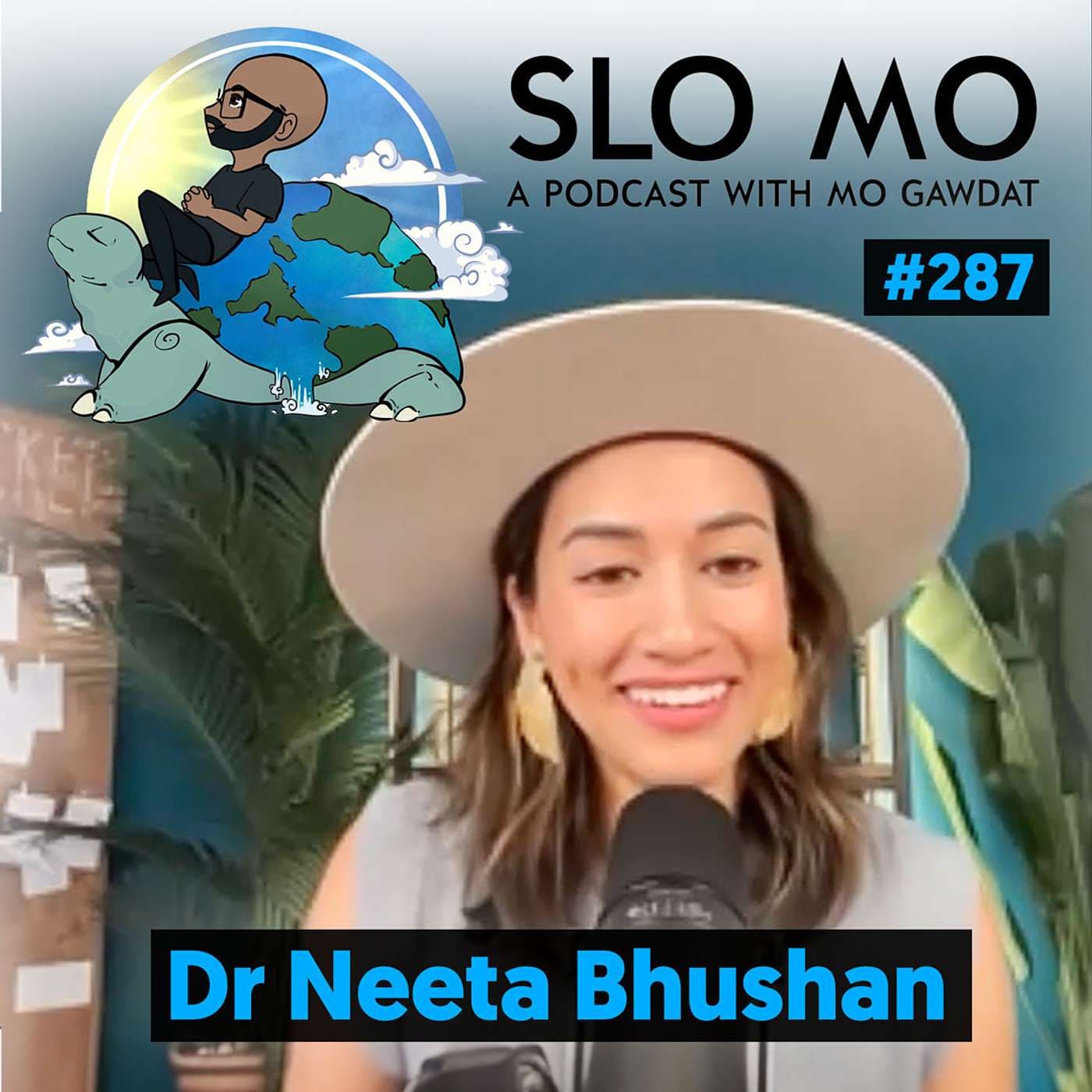
Podcast Information Title: Slo Mo: A Podcast with Mo Gawdat Host: Mo Gawdat Guest: Neeta Bhushan Episode Title: How to Cultivate Resilience and Grit Through Emotional Agility Episode Description: Mo hosts Neeta Bhushan, a celebrated author and emotional health educator. Together, they explore emotional resilience, grit, and the power of overcoming adversity through Neeta's life experiences.
Key Themes and Discussions
Introduction
- The podcast serves as a conversation platform for exploring profound life questions.
- Mo introduces Neeta Bhushan, emphasizing her contributions to well-being and her latest book titled "That Sucked. Now What?" which discusses finding joy in chaotic times.
Neeta's Personal Journey
- Neeta shares her background of significant personal tragedies, including the loss of her mother and brother at a young age, which shaped her understanding of resilience.
- She describes her upbringing in a Filipino-Indian family, highlighting cultural expectations and familial pressures.
The Concept of Resilience
- Neeta discusses the meaning of resilience, moving beyond simply being "strong."
- She introduces the idea of the "bounce factor," which encompasses emotional agility and the ability to recover and grow from adversity.
Navigating Loss and Grief
- The conversation delves into the complexities of grief, emotional pain, and how to acknowledge rather than numb these feelings.
- Neeta reflects on the necessity of feeling both joy and sorrow to fully experience life.
Self-Accountability
- Mo and Neeta discuss the importance of taking personal responsibility for their circumstances.
- The conversation encourages listeners to examine their roles in shaping their lives, particularly in unhealthy relationships.
The Importance of Spirituality
- Neeta emphasizes spirituality as a critical component of navigating life's challenges.
- She discusses how faith and purpose contribute to resilience and emotional well-being.
Finding Joy in Chaos
- The episode concludes with the idea that hardship can coexist with joy, and that embracing this duality can lead to growth.
- Neeta encourages listeners to seek out moments of joy even amid chaos, transforming pain into opportunities for connection and growth.
Key Takeaways
- Resilience is Multifaceted: It's not just about being strong; it involves emotional agility and the ability to bounce back.
- Acknowledge Your Experience: Emotions, whether positive or negative, should be felt and acknowledged.
- Personal Responsibility is Key: Reflecting on one's role in life's challenges is vital for growth and healing.
- Spirituality Matters: Having a sense of purpose and spirituality can enhance resilience.
- Joy and Pain Coexist: Finding joy amid hardship is possible and can lead to deeper connections and fulfillment.
Conclusion This episode of Slo Mo with Mo Gawdat and Neeta Bhushan offers an insightful exploration of resilience, emotional health, and the duality of joy and pain in human experiences. It emphasizes the importance of personal growth through adversity and encourages listeners to embrace their journeys with openness and courage.
Written by AI. May contain mistakes. Listen to the episode to check what was said.
Transcript
Automatic transcript. May contain errors.0:01I am so glad you could join us. I'm your host, Mo Gaudet This podcast is nothing more than a conversation between two good friends sharing inspiring life stories and perhaps some nuggets of wisdom along the way This is your invitation to slow down with us Welcome to Slow Mo
0:34Welcome back. My guest today is the author of this that sucked. Now what? Dr. Nita Bouchan is an inspirational speaker, an author, a podcast host. I will be on her podcast. We recorded myself and Alice for Unstressable, my book, which is coming out, our next book, which is coming out in end of April. So Nita will release somewhere mid-April on the podcast that's called The Brave Table. It was a very interesting conversation, so I urge you to go there. Nita is a wonderful friend who has constant contributions to the world of well-being. Her passion is really to help people find joy in difficult times.
1:16And I think it shows from the title of the book. The subtitle is How to Embrace the Joy in Chaos and Find Magic in the Mess. So, yeah, I think we are at a time, Nita, where there is a lot of mess in the world. So very timely indeed. The book was out in 2023, February, if I remember correctly. Paperback is out in January this year. Lovely, lovely read. But let's spend some time to talk about it. First of all, thank you for the time. And thank you for doing this when you're jet lagged. So, yeah, so it is. When were you back? No, I got back on Friday, actually, Thursday night. So that's not too bad.
1:59That's the fourth day now, right? Yeah, it's the fourth day. My experience is that the worst day is the first day, actually. Is that? Is it really? Yeah, yeah, yeah. So the first day I basically, you know, this is when I normally make up my mind that I will never travel again. And then you forget on the fifth day, as you know. This is, yeah. And I kind of feel like the experience of emotional roller coasters, like, oh my gosh, you know, where am I? What, what am I, what am I doing? So it's, I'll keep you posted. Very good. So I know you were in, you were traveling for a reason, but I think maybe if you're open to the idea, the book gives it away.
2:40Like that sucked. Now what? What sucked? Would you mind telling us why you decided to write this? Yeah. So I have had many sucky moments and that would be an understatement. There's a paragraph in the book where if they were giving, you know, an EGOT for, you know, the awards for it, I'd probably win some sort of the trauma Olympics or something like that. And this is by any means a competition. I had gone through a lot of early losses and having born and raised with Filipino Indian parents in the States, they kind of migrated for that air quotes, American dream. They were really hard workers.
3:31I was the oldest of three kids. And of course, being the oldest daughter, there's a lot of these unsaid obligations. They came from the East, et cetera. And also, I think that there was, of course, this pressure. And so by the time I was 10, I became a caretaker to my mom. And my mom had gone through various iterations of what was breast cancer at the time, And then literally from 10 to 16, I would spend my evenings, weekends, she would be in and out of hospital settings. And so that was really kind of the core upbringing for me and my two younger brothers. I was 10 and they were eight and five.
4:20And so at 16, the cancer had spread to her lungs and she transitioned. And so kind of family dynamics at the time, my dad was this Punjabi, stern Indian man. And in that culture, it's not known for a male widow to kind of take on the responsibilities of three kids, let alone three kids under 16. and he went into this severe depression. I think there's a lot of stigma with, you know, how do you function in society, et cetera. And I was kind of, I was always told I'm resilient, I'm strong. And so I had a very good idea of what resiliency was. For me, it meant strong. Nita, you're strong. You're, you have this, you're the eldest.
5:16And so again, a lot of internal pressure. And so a year after my mom died, my brother DJ was, he was 15 years old and he was coming out of his high school and he had an asthma attack and fully collapsed. And they took him, they tried to revive him, but there was no chance he had transitioned that day. And that happened to be on my youngest brother's 12th birthday. And so that, again, it was a year after my mom had transitioned. So a lot of pain, a lot of grief, a lot of loss, so sudden. We couldn't wrap our heads around it, honestly. And the only thing my father knew what to say and kind of how to cope with this extenuating, excruciating pain was, all right, straight A's, work, go to school.
6:14And that became my coping mechanism. And not only that, I learned early on how to, I guess, deal with family dynamics and human connection. I was able to, because I didn't really have a normal childhood. My dad, he really tried his best to make sure that we were having friends. And even at 16, 17, teenagers are already cruel. They don't really know what to say when you're going through loss. And all you want to do is actually fit in. And I remember there were times, especially during this period where I would have my friends just come over and it would just be, you know, they would be singing or, you know, we'd be playing board games.
6:58And there was some sense of normalcy. I remember wanting to escape so many times and now having the pressure of, I'm the only female in the house. And that meant to work one, two, three jobs to put and help my dad put foot on the table. And then two years after that, we had the diagnosis that my father had stage four lung cancer. They found an inoperable tumor. And that was the doctor said that he had 10 months to live and he sure lived up until those 10 months. And so just shy of my 19th birthday, I was 18, I found myself orphaned. And now the person taking care of my youngest brother who was 14 at the time.
7:53And so this time before I kind of spearheaded into my 20s, there was a big, huge sense of what am I meant to do? What is this all about? What is this world? What is this all about? And so I remember early on questioning even faith, of course. And I even write about the first part of my book, I write about the chip on your shoulder. Sometimes when things happen or when you have, it may not be a loss, it may be a setback, a challenge, you didn't get the promotion, et cetera, you worked so hard on something. And now you have this kind of vigor, these wings almost on your back to say, okay, I'm going to prove everybody wrong.
8:42And that was kind of this sense that I felt that I wanted to take my younger brother and I out of this dark cloud. And honestly, I had no idea if this dark cloud would ever let up because that was literally my entire childhood. But what I did know was, okay, I went on to dental school because my coping mechanism was, all right, overwork, overcompensate, overachieve. And of course, it's part of my tiger parent upbringing as well. So I spearheaded into my 20s. I went to dental school and we did do some therapy, some talk therapy. We had an enormous amount of family around us, but that really started to shape my intentions, my goals in life, which were all outward, outward success.
9:33It was outward achievements, accolades. The ego was really driving it in many ways, but it was a survival mechanism. It was how to not feel the enormous amount of pain, especially because early on I was told, okay, you're a warrior, Nita, you got this. And so I was just like bulldozing and charging through. And so in, I would say my mid to late 20s, I would find love. And that's one of the areas that I was probably not the most adept, meaning that I was so afraid of being alone that I would attach myself to these interesting, unhealthy, and even sometimes toxic relationships. And so to the point of in my late 20s, I get married and we have these amazing trappings of success.
10:32I have all the lavish, et cetera, things. And everyone in our family circle, you're the one that's the golden child that everybody kind of compares everyone else to. It's like, you've made it, you've done it. Because I had a booming practice. I wasn't even 30 at the time. you know, graduated all of the things. And I was a cosmetic dentist and I was married. And I remember vividly, you know, December 31st, this is 2011, where I had this overwhelming amount of just anxiety and fear and just rage and all of these feelings that started to bubble up. And it was some of those same feelings that I put away in a back closet when they told me my mom's cancer spread to her lungs and her brain and they couldn't do anything about it.
11:35When they told me my dad had stage four lung cancer and that he only had 10 months to live. When I found out that my brother had taken his last breath and this feeling of, oh my goodness, I know something is going to happen, this change, and I don't really feel safe. That was December 31st, 2011, where I looked at myself in the mirror and I looked at all of the trappings of success and And I felt that I was spiritually dead. Physically, I was in a very toxic situation. And that was the first time I admitted to myself. I looked in the mirror in my master bedroom and I said, I need help. Because for the first time ever, I thought, okay, I'm strong.
12:25Everyone's been telling me I'm strong. I'm strong my whole life. But it was the first time I was allowing myself to break and let people in. And that would then open the doors and this cascade of the next seven years of my life where it would be all around full breakdown and full allowing myself to heal and letting people in and the closest people to me who, of course, everyone knew that I was in this kind of situation, but didn't really know because I was keeping things. and shoving things under a rug. And so that was, I guess I would say my first awakening into these sucky moments, but to say, all right, now what?
13:13Now what? That that has happened. And for me, this now what piece really looked like the beginning formations of what I talk about in the book, which is called your bounce factor. And it's really this internal foundation of what happens to us after these sucky moments. And not just for us to be strong, air quotes, so that we can rise up again, but what happens when we actually can bounce back. Because the actual Latin root of the word resiliere is to bounce. And if we are looking at some of the factors that help us bounce, then we can not only bounce, but be able to fly forward through some of the obstacles and also begin to integrate those pieces.
14:07I want to first just visit some of those emotions, which I think are very important for. I always tell people before you go into thinking about what you can do, there is a lot that is found in the sense of awareness of how hard life can be, right? And for many of us, we don't imagine that our own test is not the most difficult test out there. When in reality, when you look at the stories of life of others, it's just somehow always quite challenging. There is always someone who has a bigger challenge than us. And many of my listeners will know that in the last few weeks, I first lost my sister-in-law, which was truly, truly, truly my sister.
14:56And, you know, so much love that she brought into my life, 40 some years. And she left us, you know, as a result of a heart attack when she was taking care of my sick brother, who was diagnosed with several cancers. And then a few weeks later, as we observed his recovery and, you know, doing better after maybe a year of treatment, something completely out of the blue, you know, just takes him from us. And I get a lot of people that will tell me that, you know, losing Ali, my son, and then losing two of my closest people. And then a week later, my mom falls and breaks a few bones and so on. And you think people look at me and go like, oh, my God, you're so resilient.
15:37Oh, my God, this is, you know, we hope you have strength. And I always say, well, I have to say, I'm sure there are others who are going through rougher than this and much tougher lives than this. And when you tell your story of having to go through three losses in four years at age 16 and to have to really attend to your sick mother since age 10, that is by far like 100 times more challenging than what I have to go through when I'm in my 50s, having seen life and so on. So my question is very straightforward. It seems that for most of us who have gone through those kinds of tragedies or traumas, life tends to look a little easier afterwards.
16:25It's almost as if we sort of like, yeah, we look back at it. And as you tell your story, it feels that you still love your life somehow, that you're still grateful for your life somehow, that you look back at all of this and you're not victimizing yourself somehow. And I found that those who go through more of life's tests tend to find more joy in life in general and more appreciation for the fact that life comes with a lot of tests. Is that something that you would share? Oh, my goodness. I feel like I think that you you cannot take the joy out of me. Exactly right. I think that, well, and to your point, I think that even with my subtitle, How to Embrace the Joy and Chaos and Find Magic in the Mass, I think at the end of the day, it's really about the duality and the paradox of some of these really big, heavy emotions.
17:27And I honestly couldn't quite, obviously, I didn't have the language for it while going through multiple tragedies. But take, for example, any listener that's listening to you right now, maybe they're thinking and they're going through this thinking, wow, I just had a breakup. Or I'm going through a divorce. Or I just had a friend breakup and this was my best friend for several years. Or there was some sort of a betrayal. These are still losses. Of course. They're still losses. And they will have this like soupy mix of, you know, complex emotions. And why are they complex? Well, because we sometimes villainize even feeling these really big emotions where it's so easy for us to numb and distract and avoid and bury ourselves in work and do any of the addictions.
18:24I know I fell into the addiction of just working and that was a coping mechanism. And I know many of us overachievers or high achievers, we tend to do this to avoid pain or for proving ourselves, et cetera. And not that it's a bad thing, it's just a coping mechanism. And so to be okay with grief or to be able to feel the bigness of grief, then we should be able to feel its opposite. the bigness of joy. And I remember, Mo, one of the times when I was in my teenage years, and of course I was still a teenager. Of course I was still going to have little crushes on people. And I remember one day going to visit my mom after school because I grew up in Chicago and it was on the way home.
19:13And I remember there was a boy at the coffee shop and I still remembered going to see my mother who was mostly dying in the ICU, but I was still able to get butterflies in my stomach because I saw this boy at the coffee shop and he smiled at me or something like that as a 15-year-old. And so to be able to feel again the paradox of those emotions, and there were times even throughout some of those phases, the loss of my brother where it's like I did not want to feel, I did not want to go to see a movie with my friends. I did not want to go to a concert. And I remember vividly my dad said, no, you will go.
20:03Because we couldn't be in this, there's only so much of this cloud of deep sadness that you can be in for so long so that we can experience this contrast of life because all of us are going to have several iterations of this human experience. And I used to have this kind of, in psychology, it's like this survivor's guilt. Yeah. You know, why my brother and why not me? Yeah. And so you even overcompensate on that level and I shouldn't be feeling good for myself because my dad just went and lost two really big people in his life. And so, and this is where a lot of us people pleasers or givers or martyrs, if we have this archetype, we kind of run ourselves to the ground thinking that we don't deserve love, we're not worthy of it, or that we have to somehow work even harder to prove ourselves worthy.
21:04Yeah. Do you remember, you know, your 20s in comparison to your friends? So you hosted me and Alice the other day and Alice again had several losses in her life. And, you know, she would always tell the story about how she sometimes would, you know, drink, for example, in her 20s, most of her friends would be drinking to have fun and she would be drinking to escape. Right. To sort of almost numb that constant despair of why is life doing this to me? Why is it me and not everyone else? yeah. How, how were your twenties? Were you only working? What was going on? So it's, it's interesting. And I, I talk about this in the, in the book, uh, when I turned, when I turned 20, this was a year after my dad died.
21:55And I remember so vividly, I wanted to, I just, I wanted to escape. I wanted to escape this, this, this dark cloud that literally was with me since, I mean, the most formative years of my life since I was 10. And I didn't know any better, but I just knew my soul was really, it's like I needed to get out of this bubble of Chicago and just where I was. And I ended up going to college in Chicago, Loyola University, Chicago, and they had other campuses globally. And I remember seeing in, And the bathroom stalls, they used to have these flyers with the numbers that you take out. And it says, apply here if you want to go and study abroad this summer and in Roma, Italy.
22:48And I said, oh my gosh, this might be a sign. It was one of those things. And I'm like, I need to get out of here. and I remember having to convince my Filipino grandmother and my Indian bua, which is who I was sharing and mentioning about before my dad's sister, who to actually take care of my youngest brother if I would go away. And they were my matriarchs and they were like, you are not, there is no way we just had, how can you even think about leaving when we've had all of this grief and loss. And I said, no matter what, I'm going in. I just felt the urge. And as soon as I got the admission slip and a scholarship to go, I said, I'm out.
23:40Because there was something just begging in my soul to leave. And so at 20, this is the first time I stepped foot, not only in somewhere where I just do not know a lick of Italian, in a very new place, which is none of my friends were there with me. It was me by myself with hundreds of other students all around the world. And for the first time, I got to be Nita without having this label. Of course. She's the one that had the losses. She's the one. Have you heard her story? Because it was a big thing for young people, obviously. And I got to just be, hi, I'm Nita. I'm from Chicago. Yeah. And it was like this sense of freedom that I never tasted.
24:39I never knew. I had this weight had lifted off of my shoulders. Like I didn't have to worry about these weird calls in the middle of the night. If somebody was not breathing or if they had to do something to one of my family members, or, you know, you just have this visceral central nervous system response constantly. And I felt like for the first time I could actually be a kid, a teenager. And I remember going to the Coldplay concert because they were playing in Rome and it was just, I felt like I was on top of the world because I got to choose what my story was. And it was also, so I was there also, I started to take Italian literature and Italian philosophy.
25:29And it was the very first time I was exposed to the work of the Italian philosophers, Marcus Aurelius, Seneca, and Stoicism. And I remember having to really write my first essay on what that meant and how it has shaped our lives in some way. And that was the first meaning, the amor fati that came up during that semester abroad, which was love of one's fate. And that stuck with me because instead of cursing my fate or just wishing that I hadn't gone through any of this, that I was wishing I could just be a normal teenager to fit in, especially in having these conversations because it would still come up.
26:19Hey, where are you from? What do your parents do? And then I knew, and this is part of the bounce factor that I now teach, which is be able to make peace with your past, forgive your past, be able to understand and appreciate your upbringing, which is the love of one's fate, amor fati. And that was one of the big things that I really got and that fully kind of shifted the trajectory of my life. You asked about certain kind of numbing behaviors that I had. I think the biggest thing for me, having watched all three of my family members pass on through medical diseases that were out of my control, I became a wellness, I want to say addict.
27:18I think I was very much so rigid for myself. I even was one of those who would judge other people for drinking or putting harmful things into their body because I firsthand knew some of those effects. So I had very much a very opposite response. But what I did have was this like wonderlust of travel. Now 62 countries in, I still do have that wonderlust for travel and experiences. But what the biggest thing that I would say in my 20s was my pattern in relationships. and this was male relationships and this idea of holding on and then overlapping relationships because of this fear of never wanting to be alone.
28:12And so I would remember always having a group of friends around and it was very easy for me to make friends and connect because at an early age, I had to learn how to make my parents feel really good, especially in these super uncomfortable positions that they were in, in hospital settings. And so that was, I think, to this day, still a gift of mine is to help people feel seen and heard. But of course, at the detriment of myself and putting myself last because I always heard, and this is a very Indian, Filipino, Asian upbringing saying is, your happiness is other people's happiness, right? Your happiness is when you see everybody else happy.
28:55And I never understood really what self-love or this idea of coming back home to your own sovereignty. I never understand what that meant until the next break, which I would probably say, then entering my 30s was this huge radical earthing of all of these concepts of what I thought unconventional career looked like and this linear path to, you know, air quotes, success. Because all I knew growing up was doctor, dentist, lawyer, engineer. And so Asian. I mean, we do the same too in the Middle East. It's like, if you're not a doctor and not an engineer, what are you doing? Yeah. And so I think that when I reached this breaking point of when my life was threatened, I had to haphazardly leave in the middle of the night.
30:07In the introduction of the book, I talk about having so much shame and so much guilt of what will people think if they knew the truth? What will people think that if they knew that I wasn't actually in a happy marriage, if they knew that it was very unhealthy, there was toxicity, there was abuse. And I then had to really radically dive into the second component of this bounce factor that I talk about, which is coming back to your radical self-awareness of, and this is the self-responsibility piece, which is, well, what was your role in this? And I think that that might be triggering for some. That is very triggering, especially when life has not been easy, right?
30:59Absolutely. Absolutely. And I think that was a huge turning point for me because, and that's where everything shifted. And I had to ask the question, what did I need and what was I doing to protect myself? No, hold on. I want to stay here for a minute because this is a very, very, I mean, if you decided to take your life circumstances in your early thirties and blame that on life, no one would blame you, right? you can easily say, look, you know, I've tried my best, but look at what life is throwing at me. It's a very easy place to assign the responsibility externally. Right. And yet you talk about, I'm in a wrong marriage, being abused somehow, and I have to leave and I have got that realization that I'm in the wrong marriage because I chose something or I did something and it's part of my responsibility.
31:54That's actually life changing for a lot of people when they realize. And I I find it really difficult to bring this up all the time, but I always try to hint that at least partially, whatever it is that anyone is going through today, at least partially is the result of something they contributed to the world that they're in. Now, how do you do that when you've lost so much at such a young age? You have absolutely every excuse to say, my life was set out for me and I just had to follow. Well, I think that there is this idea of, yes, we can sit in the suck, meaning the soupy mess that we are in.
32:35And there's two schools of thought now that I've been on both sides of the coin. There's the one group where it's easy to say, and I'm sure some of you listening, watching this are probably like, yes, I know that relative who is constantly saying, oh my gosh, my headache is bigger than yours. Or yes, and I had this other massive failure and I can't believe, I can't get anything right. And so they're constantly pinning themselves down and they're literally sitting in the sock and they can't get out of it. And there's so many different, they go in a circle and there's a constant circle and they just can't take the action to shift their life forward.
33:20And then there's the other group. And the other group is, Ooh, it's too painful. I'm not going to sit in the sock. Therefore I am going to do whatever it takes. And you'll see this with these warrior memes and you'll see this people doing these extreme sports or extreme things. You probably even see like military memes that are, you know, I'm so strong, I'm so resilient, and they keep pushing forward. And this is really true in sports as well. You get an injury, all right, let's get back out there on the field. And this is that mentality and the mindset where they don't want to sit in that painful, awful suck because it is too painful.
Read the full transcript
34:06It's unfathomable. It's, oh my gosh, if I even allow myself to feel and experience these awful waves of pain and these feelings, am I going to get stuck there? And we know that now, I mean, this is also in my book, It takes 60 to 90 seconds. This is social scientists have stated that 60 to 90 seconds to fully feel a feeling. And we're so afraid to feel that sadness. We're so afraid to feel that the jealousy. We're so afraid to feel that betrayal. We're so afraid to feel that rage and anger that we bypass it. We say, oh, I know better. And for me, it was very, after I fully, fully hit what I'd like to call the full rock bottom, or in part three of the book, I call it the fall.
35:05I had this big fall and I knew that, all right, I was getting ignited. There was this fire under my belly that if I were to stay in this particular relationship, what would happen? Or what's the other thing? And I know for anybody who's been through any sort of abusive situation, I totally understand. And maybe you might want to talk to somebody that is trauma-informed and a mental health specialist to really walk you through this. and is there another way? Can you actually step out? It's so much easier to be in a familiar space. And this is for all of us because change is so hard that we go back to the same kinds of toxic relationships, whether it's friendships, parents, et cetera, love relationships, because it's safe.
36:02You know the familiar. You don't know. We like the familiar even if it's painful, basically. Of course. And you talk about this as well. And when we step out and the pain is so great that you have to make a different decision. You get that cancer diagnosis or you get this weird diagnosis that you've exhausted all your faculties in the current medical system or wherever you are at that you are left with a choice. Am I going to walk a different path? Yeah. And that's the ignition. in. That's the second stage of this fly forward framework. And then we get into the third stage, which is you're rising.
36:44And for me, it was leaving my house haphazardly in the middle of the night. Then a few days later, of course, being able to let my brother in. And then of course, going and hiring a lawyer, standing before a judge. I mean, all of this is also in my book in detail. But then there was this space, this space of really allowing myself to feel about 10 to 12 years of pain that was literally in the back closet of grief, of anguish, of pain, that it just had nowhere to go. And so then it's here. And I was wailing. I was screaming. I was crying. I was moaning. I had a full cathartic experience, almost like these emotions really took over me, but that's when I started to fully release.
37:46And not only that, it cascaded the next six years of working with several different kinds of whether it was talk therapy, whether it was cognitive behavioral techniques, whether it was psychedelics, whether it was emotional freedom tapping and really diving into emotions, sitting with different types of elders, wisdom, sages, shamans, going back to ashrams where my dad went when he was young, and I always resisted it, going back to these places and really paying reverence and homage to sitting in my own spirituality. And this is where kind of that spiritual connection really deeply began for me because I was raised in a multicultural, multi-religious house.
38:42And of course, in a melting pot of Chicago where we went everywhere. Many of our close friends, We were in the mosque. We went to Gurdwara. We went to church. My mom was a Catholic. I was a recovering Catholic. You know, so, but that's where then you ask from, how do you go from victim to victor? This is that personal responsibility piece. I needed to look at my current environment to say, okay, this is not going to fly. And that is the third aspect of your balance factor. Yeah. It's not. And what is this common denominator? Well, the common denominator is myself. And what is that core wound that I'm still kind of surfacing?
39:31And that core wound was abandonment. That core wound was, am I good enough? That core wound was, is anyone going to love me? Well, we got to start loving ourself. And I know it sounds cliche, but it really starts at that root of I had to reframe some of the things that I learned when I was younger, which was happiness means working for everybody else. Well, if you're still working for everybody else and working on their happiness, but you're not internally happy and you're not internally focusing on how to pour into you and recognizing what your nervous system feels like, recognizing are you feeling safe in this container of a discussion that we're having, then that's where we need to really build that fourth muscle a little bit, which is our radical self-awareness.
40:24In your personal case, you had a level of abuse, let's say, or hardship that sort of woke you up. I know of many others who got to that same point of, I can't take this anymore, right? We tend to lie to ourselves so often and say, no, I can. I took this before. I'm okay with it. This is how my life is. I can continue. What would be the most important signal for someone to connect deeply to find that idea of no, no. I mean, do we really have to go through that hardship or can we find out maybe in in the luxury of having a good loving life and a good relationship? And why is it that we have to suffer that much to wake up?
41:12So, and this is a brilliant question because I think that especially in this day and age, when we're talking about good vibes all day or manifesting the life that we want and there's not going to be any hardship or work ethic for it because things are just going to flow in ease. Yes. It's a yes and. It's a yes and. I don't wish anybody to go through some of the depth, some of the pain that obviously now collectively we see in the world. And there's a lot of that pain. And then when we go into our own personal suffering, there is that. And this is not to say somebody who has small T traumas or big T traumas that they vary because all of us will experience some sort of slight, some sort of trauma.
42:11And these ruptures, which is what I like to kind of refer to them now as, they are these building blocks to help us build that, of course, that inner wisdom so that we can expose ourselves to finding love again, so that we can expose ourselves to trusting someone again, so that we can expose ourselves to finding forgiveness within ourselves and within the other. Because this is the basis of our human experience. It's our interpersonal relationships. This is the biggest commodity that we have. We're not meant to be monks living on a mountain somewhere not interacting with anybody. And I feel like it's why I have so much reverence when I come back to Dubai or even India or even the Philippines is we are doing life relationally together as a collective.
43:11And I think many times it's easy to say, ah, I'm just going to forget the world and I'm going to isolate because I don't trust anyone. I don't want to get hurt again. I don't want to be betrayed again. I'm not going to do business with anybody. I'm going to just keep it all to myself because I don't know what that person's going to do. And we contract, we close up, we harden instead of allowing ourselves. And this is the beauty. And this is where the idea of not just the strength of resiliency, but when we think of to bounce back we're also thinking about the flexibility, the agility, the adaptation for us to be able to flow through life's sometimes bigness and how then we can integrate and transmute and alchemize some of the things that perhaps maybe have knocked us down.
44:16And I love this kind of segue way because in the fly forward method that I talk about in part three of the book, it's really about when you have a fall because inevitably we're all going to have a fall. How big or how small, it depends, but we're all going to have a fall. And what meaning you make of it after, that's the kicker because I could have made a meaning in my life, like you said, Mo, that, oh, life is too hard. I'm going to just skip this one out. And I've known friends who've taken their life going through big tragedies. And there's also people who do not then trust the world again, or they're just stuck in this victim mindset.
45:03And if it's you listening to this right now, there is another way. There's another way because there's baby steps. Because maybe today is that ignition. That's step two. Today's that ignition. You're listening to something. You have a nudge from somebody else. Somebody told you to get the book of that suck. Now what? Maybe you learn this from another friend or another nudge. These are the signs. This is what we pay attention to, right? Because you are ready. You're opening yourself to a whole new possibility. So that's step two. Step three is when we're getting into this whole idea of rising, which were wobbly.
45:41And I know that even after my, just leaving the friends that I knew, leaving the house that I knew, starting completely over, I was still in fear. My trauma response was so high. It was very messy before it became okay. I had to move several times because I was in fear of just being followed, et cetera. It was not an easy time by any means. Yeah. Yet to trust, to trust even yourself that, okay, yeah, you know what? I am going to take that improv class. I need to feel a little bit lighter because things around me are feeling a little heavy. Yeah. So to do new, new things and do we need to go through hardships?
46:29Well, that's, that's the beauty. That's the juice. That's the juice. Can we avoid the bigger ones? Well, I hope That's my hope within this book. That Suck Now What? Is that the blow is a little softer, that we're not just running into the wall or beating ourselves up or ruminating around the decisions that we made. Yes, it's in the past. This is why the title is That Sucked. It's not this sucks. That would mean that we're still kind of in the process of what sucked, but I'm giving you a mantra of saying that sucked, now what? And to say, now I'm not denying that part happened. I'm not denying your experience of what actually went down.
47:23I'm acknowledging it, but I'm also saying, what's your next chapter? What's the now what? What are we going to do next? You seem to put a lot of emphasis on spirituality. Is that a necessary part of it? Why is spirituality important? So I think it's really, it gives us our, or at least, you know, what I've seen even now in in many of the businesses that I'm in. I think that spirituality has given me life. And I think even now as we go through the studies on longevity and people who live in the blue zones to 100, one of the things that they have in their full well-being and their full ability to live to to become a centenarian is the fact that not only do they have rich relationships and friendships, and which is why I talk a lot about being able to repair and have these brave conversations, just like you and I are having.
48:29The other big thing is to be able to have a sense of some sort of faith that to be able to connect the dots of, well, who am I now? What is my purpose here? And it doesn't have to be this big mission to impact a million lives. It could just be, I'm going to be the best friend that I can be for this person, or I'm going to be the best mom that I can be, or I'm going to focus on really hoping that we can alleviate the pain of humanity in some way. It could be audacious goals. It could be minor, but to have that sense of purpose, that sense, you know, the Japanese, of course, they call it the Ikigai, you know, the Vedic philosophy, we call it dharma.
49:22What is your life's work? And I really believe many of our points of our hero's journey or our heroine's journey is really to wake us up to the becoming of ourselves, to really understand, okay, who am I in this stage and phase of life? And that's kind of the beauty, and this is what I asked you guys on my podcast too. It's like, I always end with kind of that question is, who are you in this stage and season of life? Because we're constantly evolving. And if we were meant to be stuck at the same place, I don't think we would be having this conversation right now. I think that's really key because the whole concept of this is not waste.
50:14Hardship is not a waste of your life. hardship actually is probably your entire life. That, you know, that when you go through those things, as Alice was saying on your podcast, it's either because life wants you to change something outwardly or inwardly. It's like, you know, you have to heal something or change some of your behaviors, right? And it's quite interesting when you really look back at those moments in your life and really assess all of the pain and all of the benefit of making you the person that you are, you end up eventually saying, well, do I really wanna change that? Do I wanna take it back, looking at it from this vantage point, okay?
50:54And it's quite difficult because for most people, if you give some kind of hardship enough years, for most people, not all people, some people still assume the victim's mentality, you know, for most people, they'll say, no, I'll take the hardship again, if it means that I get to where I am, the purpose for which I came to this life, needed that learning experience so that I become this person. And I think this is really where most people miss the point. Yes, of course, we don't want the pain, we don't want the hardship, but we still want the gain, and somehow they seem to be associated. Oh, 100%.
51:40I think that's the beauty and the contrast of life, isn't it? you know, we have the duality. We have these necessary paradoxes. And I think that even we take the weather. If it was sunny all day, we would take it for granted. And yet when we have a week of rain or the thunderstorms, then when that sunrise comes, that first sunrise, you're like, oh yeah, this is what it's all about. And I think that sweet nectar of that metaphor is also present even in our daily lives, right? The next love on the horizon, you just got married again, and even me finding the love of my life, right? Again, after trusting in myself and in that that experience, I think for whoever is in that crossroads or intersection, know that there's a bigger play here.
52:46And every single thing that has happened in your life has led you to where you are today, whether it's listening to this conversation, whether it's maybe making you question something in your life, maybe it's making you think completely differently or have a different perspective, but it's all led up to allowing you to even be in this energy. And even you and I, there have been times where I think we could have had this conversation several different points, but I think even now, I think it's even the best time. So I think that it's allowing yourself to trust that timing, but we have to also be aware of that.
53:32And if you're asking the questions, for those of you listening and watching, maybe there's something else that is beginning to unravel for you. And that's something to really pay attention to. Because like you said, Mo, it's not wasted. It's actually one of the most beautiful things that we can actually garner from our experience of life is that these hardships can turn into magical moments if we allow them to. And yet the pain and the hurt, we can actually transform into beautiful moments, whether it's, and this is the last part of the fly forward framework is when you get into that magnify stage, you are mostly, maybe it's your giving back to other people.
54:24Maybe you're volunteering at an organization. Maybe you're taking time out of your week to spend time teaching other people. I remember for me, when I got out of that abusive relationship, I started a nonprofit. It wasn't going to be the biggest nonprofit in the world, but I started something to kind of start giving back. And the project was called Independent awakening. And it then became a mission for, you know, young girls and young women of color in the U.S. to give them a place to really build the skills of confidence and the tools for them to step into their self-love. And so it starts with our inner game, but then we start to collectively contribute to the masses.
55:17It is staggering really with when you recognize this, you mentioned love and Hannah and I were actually working on, we now call it finders keepers and finding love together. And it's a, it's a lovely project that I, you know, when I, I, most of my listeners will know I worked on this book for love and romance for a very long time. And every time I finish it, I feel that it's not ready. And, you know, Hannah coming in as with her therapy background, basically sits down with me and says, Oh, no, no, no, you see, this is because you're saying it this way, that doesn't include exactly the person's, you know, own script and own story and so on.
55:58It's becoming a lot richer. But it is today we were discussing that idea of accountability once again. So even when it comes to, you know, our romantic relationships and and being in an abusive or a wonderful relationship anywhere or anywhere in between on the spectrum, we tend to always blame the other guy, it's like, or either other girl. It's like, even in my mind, there were scripts that were saying, oh, it's because women will expect this or women will want that, or, you know, that generalization of women is because of my own sample size, which was, you know, attracting what I needed in my life, what I needed to learn.
56:37And at a point in time, you have to take that accountability and say, what am I contributing to this? Why is life treating me this way? Right. Why is it that I am stuck in that almost Groundhog Day like cycle of, you know, have I delivered the purpose for which the hardship is arriving? I think is the big question. I want to close with a, you know, it's a comment, not a question. It's sort of rhetorical, but I want to say it. I mean, isn't it quite audacious to say joy in chaos? Like, you know, shouldn't it be that, you know, that sucked now what, how to survive chaos? Embrace joy in chaos? Isn't that a bit too much to ask when people are going through the tough times?
57:25Ah, so this was actually also inspired when I entered motherhood. And this was kind of the next level or the next iteration of me really, and I think for a lot of people, really going through significant change. significant change significant change chaos and whether you're moving whether you are you know kind of in the intersection of a full change things can be chaotic and I think it's so easy to diminish the feeling of that because we want to we want to shut it down we want to shut it down And our society has really told us that these big feelings have no place. And when I was going through the throes of motherhood with my son, and then this was during COVID, and I started to have these brave conversations.
58:35You know, our family, we were living in LA at the time, and we were going through, you know, really the heavy lockdowns. And we decided as a family, my son was, at this point, he was two. And we decided to move completely and uprooting our lives. And this too, I was pregnant with my daughter and I had the most horrendous sickness. And it was everything, every life happenings, happening all consecutively. We started another company and I was almost submitting my book proposal and we're moving at the same time. I mean, it was just every single area of life. And I think for many of us, when we're going through life transitions in whatever way, shape or form, it can be chaotic.
59:27But my question is, can we find the slivers of joy in that process? Can we find the slivers of joy just like when we're going through loss? And there's a beautiful graphic towards the end of my book around the dualities. Can you be open in finding love like we were just talking about you and Hannah, but maybe still a little skeptical and reserved? Absolutely, those feelings can exist at the same time. So why couldn't you, especially if you're in this maybe season of life that maybe you did start a new business and maybe you did find love because that tends to happen all at the same time. And maybe you are having traction in whatever project is going on, but maybe you started to have a family.
1:00:16Life is going to throw these curveballs. And are we going to say no to the chaos? I'm allowing you to say, yes, it's going to suck. Maybe you're going to suck at something new. And maybe it's not going to be that bad because you know what? We've acknowledged it. Because most of the time when we are thinking about a thought, when we are allowing it to ruminate or thinking about the process in which how that conversation should have played out or the conversation with asking for a raise, et cetera, but we didn't do a good job and then we beat ourselves up, it's here. But what if we actually acknowledged it and shared it out loud to release the pressure valve of our mind to say, okay, I'm feeling anxious right now.
1:01:03I am feeling X. I am not X. I'm not anxious as a person, as a being, as an identity. I am just feeling this way. And so that's been my hope is yes, to poke fun and to make it light because I have gone through a lot of dark and as many of your listeners, you know, and I think I see your face and I see you, Mo, and you're also just, we're softies on the inside. No, that's not true. I am a very, I'm a monster. That's who I am. people dealing with me should know that. But I think, can we actually have levity in finding magic in the mess while we're embracing the joy and chaos? And that's what I mean by that.
1:01:57Isn't that what it's all about? I actually will close on this because you see the funny bit is you can find joy in everything. Nothing ever comes all bad or all good, right? We know that for a fact. But the bit that is so puzzling for me is that the pain will remain to be the pain, whether you lighten it up or not. Okay. The loss will remain to be the loss, whether you lighten it up or not. It's like, you know, you can soften the blow a little bit by telling yourself and where is the joy in that? Like, where are the good parts? I have to tell you openly, when I went to my brother's funeral to be there, basically to receive people, all of the hugs and all of the people that I haven't seen for 20 years and all of the of the of the real you feel the real empathy and compassion and love of people.
1:02:52and being there with my nephews and nieces and being there with my mom and the coffee that I have in the morning with my mom afterwards and the deep conversation and the memories that we shared with Amr and Sahar. And it really is quite interesting because those are also true. You see that the loss is true and the pain of missing him and my sister, I don't call her my sister-in-law, is true. But all of that other compensating love, if you want, all of those others that come to our lives are also true. Like, why are we ignoring those? You know what I mean? And it becomes quite interesting when we would have the tendency to choose to focus on one side and not the other and yet blame life for our sufferings.
1:03:44It's quite interesting that life is saying, hey, by the way, it's just a sweet and sour, right? Don't just eat the sour, just also eat the sweet with it. And together they're an interesting thing, right? And we go, no, it's too sour. We don't want that. And it's so interesting how humanity does this. I love that courage that you have in this book to say, don't just live through it. Don't just be resilient, but find the joy. I think that's a big statement. It's huge. It's huge. And I just want to say thank you for, you know, this amazing conversation and honoring your audience in the way that you show up and your passion and your dedication.
1:04:23It's just, it's amazing to see. Thank you, mom. You make it look like a job. I know this, I love this. Oh my, I love this. I cannot thank you enough for being here after such a long trip. And Nita, you've always been the example of what you preach. You know, you show up positively. You're always looking at life with an optimistic lens that I think is fantastic and something to learn from. And, you know, thank you for your time. Thank you for what you shared. Thank you for your time when you were here in Dubai. That was fun. Yeah. And this has been an incredible conversation. Yeah. For all of you listening, I'm very grateful for the chance that you give me to just book some of my good friends for a catch up and then have you guys watch it and calling that a podcast.
1:05:14So yeah, I love you all for giving me the chance to do that. I love you all for really, I realize more and more how diligent some of you are to actually listen every Sunday or watch every Sunday evening. And I think that's really wonderful that those conversations happen to be important to you. Do share them, do spread them. It does make a huge difference when more people are watching the podcast or listening to it.
1:05:45So look at your own life, take your own accountability, love your own faith and take the action and flow. I think that's really the answer to living a life of joy despite the hardship. I love you all for listening and I will see you next time.
From the publisher
In the latest episode of our podcast as I am honored to host the exceptional Neeta Bhushan, a celebrated author, emotional health educator, and the visionary co-founder of the Global Grit Institute. Neeta's profound insights into emotional resilience, grit, and the art of overcoming adversity have captivated audiences worldwide, making her a sought-after speaker and a beacon of hope for many.In this inspiring episode, Neeta delves into her own life story, marked by personal tragedy and immens...