
In short
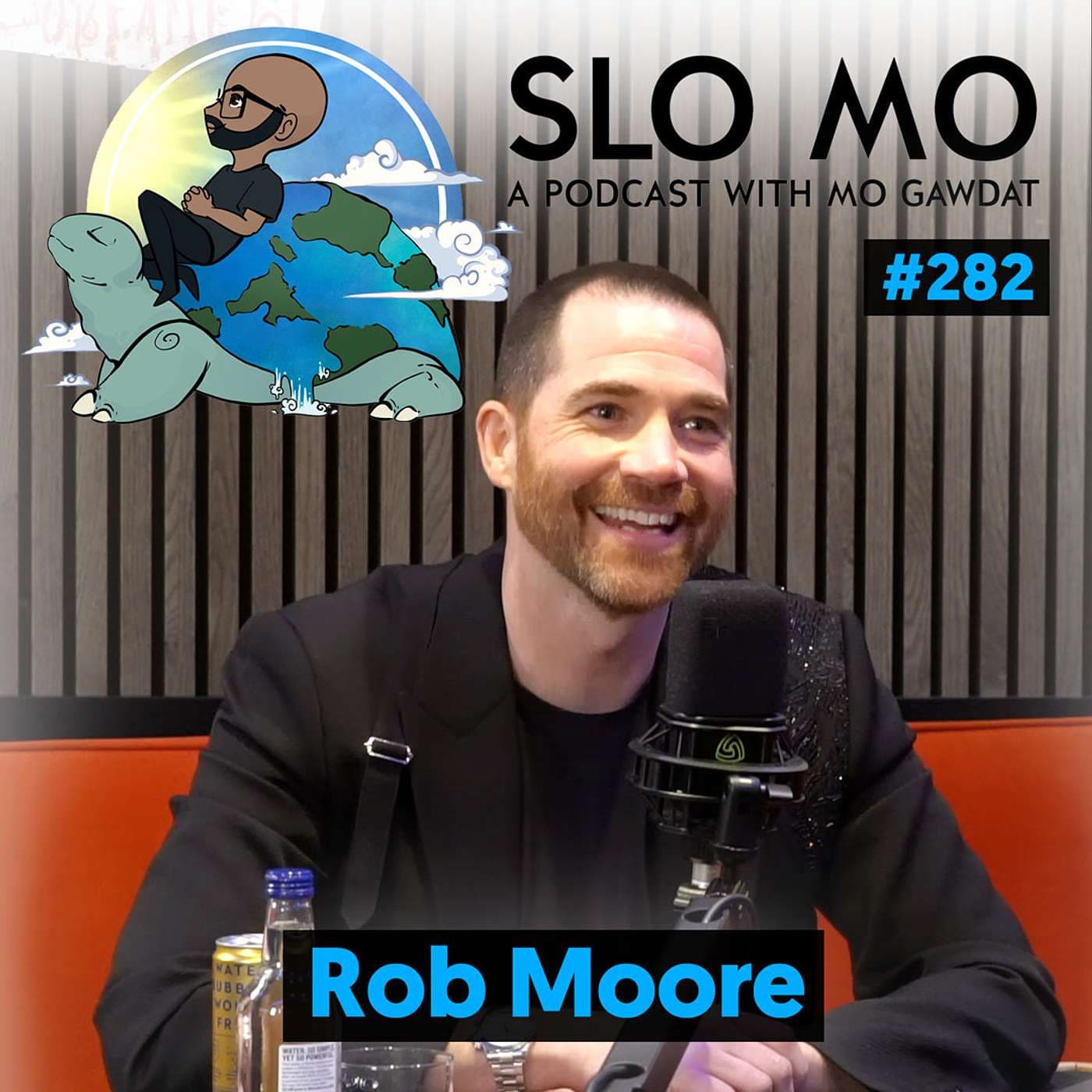
Podcast Summary: Slo Mo: A Podcast with Mo Gawdat - Episode with Rob Moore
Episode Overview
- Title: Rob Moore - How to Improve Your Relationship with Money
- Description: Mo Gawdat hosts entrepreneur Rob Moore, who shares insights on money management, financial knowledge, and personal development.
Key Guests
- Mo Gawdat: Host of the podcast, former Chief Business Officer of Google X, and bestselling author.
- Rob Moore: Entrepreneur, author of 19 best-selling books, speaker, and host of the podcast "The Disruptors."
Episode Highlights
Introduction to Rob Moore
- Rob is known for his intense, direct approach but has a chill personal demeanor.
- He aims to improve financial literacy and ignite “oh my God” moments for listeners to reevaluate their relationship with money.
Defining Money
- Economic Definition: Money is a universally agreed-upon method to exchange value and measure worth.
- Personal Definition: Money’s meaning is subjective, shaped by individual upbringing, beliefs, and experiences.
- Key Insight: "Money is not what it is; money is what you are." Your perception and beliefs about money dictate your relationship with it.
Relationship with Money
- Most people focus on wanting material things (house, car) but fail to realize that “you get what you are, not what you want.”
- Money should reflect personal growth and value, not just desires.
On Hard Work and Success
- The narrative that hard work guarantees success is flawed; it must be combined with working on the right things.
- Rob emphasizes that everyone has difficult circumstances, but it’s the response to those circumstances that defines success.
Understanding Privilege
- Rob discusses his own experience with privilege, recognizing that while he was born into advantageous conditions, he faced significant challenges.
- He emphasizes that success is about taking control of one’s environment and circumstances, regardless of initial privileges.
Financial Management and Wealth Creation
- Advice for Financial Strategy:
- Learn to leverage debt in your favor (e.g., using mortgages for income-generating properties).
- Understand how banks operate and recognize them as profit-making entities rather than benevolent institutions.
- Investment Strategy:
- Diversify investments into appreciating assets (e.g., real estate, cryptocurrency, stocks) rather than relying on cash.
- Emphasize the importance of investing in oneself and acquiring knowledge about money and business.
Preparing for Economic Challenges
- Rob predicts an economic downturn, largely due to the impacts of COVID-19 and excessive money printing by governments.
- He encourages listeners to be proactive, adapt, and change the way they interact with money and investments.
Final Thoughts
- The conversation centers around personal evolution in the context of money management.
- The importance of self-discovery and continual personal investment is crucial.
- Rob concludes that self-awareness and resilience are key to navigating financial landscapes and achieving true success.
Action Points
- Reflect on your personal relationship with money and its implications.
- Invest time and resources in personal development and financial education.
- Diversify your investment portfolio and consider leveraging debt wisely.
- Stay informed about economic trends and prepare to adapt to changing financial environments.
Call to Action
- Mo encourages listeners to slow down, reflect on their life goals, and invest in themselves as the greatest asset they possess.
- Listeners are invited to support the podcast by liking, subscribing, and sharing the insights gained from these discussions.
Written by AI. May contain mistakes. Listen to the episode to check what was said.
Transcript
Automatic transcript. May contain errors.0:01I am so glad you could join us. I'm your host, Mo Gaudet This podcast is nothing more than a conversation between two good friends sharing inspiring life stories and perhaps some nuggets of wisdom along the way This is your invitation to slow down with us Welcome to Slow Mo
0:34Welcome back. I'm in London today with a guest that I think you will find incredibly valuable for an interesting year that is upon us. Today I'm hosting Rob Moore, who is an entrepreneur, started in real estate, went into all kinds of ventures. He's an author and a speaker. He wrote 19 books, I need to know how, including many bestsellers. and he teaches about money in a way that I think many of us need to listen to. His podcast, The Disruptors, is a very successful podcast on the topic. I have been a guest on the podcast, so I urge you to go and take a listen. His work in philanthropy is remarkable helping young, underprivileged entrepreneurs through his foundation, the Rob Moore Foundation.
1:30Rob and I are different. He is intense, on the point. I'm slow and chill. We both, however, agree that there is good and evil in money and that if you take the good of it, you go very far. So I think you'll have a wonderful listen today with me and Rob Moore. Rob, it's been, I'll be open. I mean, when I looked at your Instagram page the first time you reached out, I was like, oh my God, I don't know if I can slow you down to the pace of slow-mo. You seem to be in your public appearances to be on the dot, very fast, very quick, very determined. When I met you, however, such a chill, easygoing, wonderful man, actually, very huggable in many ways.
2:21Tell me about that. Which one are you? So it fills me with joy for you to say that your first reaction to me was, oh my God. Yeah, it was. I can tell you that. Because that's my job. My show is called Disruptors. And I believe that my mission in life, what I was born to do, is to help as many people on this planet get better financial knowledge. and people aren't going to learn to manage their money and master their life without an oh my God moment. Interesting, okay. Oh my God, I've wasted opportunity. Oh my God, I'm in a huge amount of debt. Oh my God, the banks and the system, they're not helping me.
3:07They're not my friends. Yeah, they're not. Banks aren't there to look after my money. Banks are there to make profit. So your initial response, that's the experience I want everyone to have about me. The problem with that is I'm quite behind the exterior of bravado for presentation purposes. I want to be everyone's friend and I want everyone to like me and I want the world to be a better place and I want less conflict and I'm naturally a people-pleaser conflict avoider. Wow. Which in business and life, no. You don't come across that way at all online. No, no, I suppose it wouldn't because it's interesting because the first thing I said to you when you said I look the same, I said that's good because I don't use filters and I want people to see the real me visually, which I do.
3:59But it takes time to learn the real me emotionally. But that's how it should be. You don't go on a date and the first date you're like, yeah, well, I figured you all out and I know you now. I did that, I swear to you on my first date with my wife. I swear. And she got really upset. I was like, oh, I know this about you. I know that about you. And she was like, oh, you're mad. Like, don't ever want to meet you again. So, yeah. She clearly did. Yeah, clever salesman. Yeah, yeah. So, you know, surely the process of getting to know someone is months or even years. That's how life should be. So there isn't two different me's.
4:38One on Instagram, ranty and shouty, and even more on Facebook and even more on my podcast. And then the me. It's just what you see on social media is the first impression of me. and that's the first impression of you I want. When you get to know me, I hope you get a different impression. I love that. I mean, I also love that you say it so openly that you've thought through it and you really know what it is that fits with each of those channels, if you want. Human channel and digital channel. The question for me, though, is you seem to be championing, quietly in a way, the idea that a lot of what you see about money is not true.
5:19A lot of what they've taught you about money is not true. And I'm completely in line with that. But I think for the favor of our listeners, let's align on one thing first. What is money to you? Well, there's what money is to me and there's what money actually is. Exactly. And I think there are two truths in most things in life. I don't think some things are absolute. but if we had a hammer on this table, we could use it to tap in a nail, pull out a nail, or I could smash your skull in with it. So we could universally... Hopefully not. Hopefully not. Yeah, yeah. Let's see how the episode goes. That upsets you that much already.
6:01Let's see how the downloads do. So we universally agree that it's a tool, it's a lever, but then how we interpret, how we use it is different. That's how I see money. Universally, money is a universally agreed exchange of value, a unit of account, a measure of worth. And that's the economic definition, but I think that's pretty accurate. You know, it's a story that we've all agreed that we use in replace of barter to exchange goods and services to remove friction and increase speed of human interaction. you know I need what you make you need what I make we all need what each other make if we all make different things we can all exchange different things so that's really what money is and means but what it means to me and what it means to you that is a whole world of our upbringing our beliefs the society that we're in our own fears and failures and phobias I think you have the best relationship with money when you know what money is I think you have the worst relationship with money when you don't know who you are and you start to believe other people's projected, misinformed beliefs about what money is.
7:19Because if you merge those two concepts together, money isn't what it is. Money is what you are. Oh, wow. Say that again. So your experience with money is a result of your perception, your beliefs, your conditioning around money. Yes. I think this is the most profound thing we can tell our listeners, honestly. It is if you live in a world of scarcity, right? And your view of life is that money is so hard to come by. The reflection of that and the way you live and the way money treats you and the way the rest of the whole economic world treats you is based on that belief. And it will treat someone else very differently.
8:03Someone else will enjoy it very differently because of a different belief. Is that what you're saying? That is exactly what I'm saying. And I'll tell you where most people go wrong with money. They want things. I want this, I want that. I want house, I want car, I want freedom. I want this, I want that. But you don't get what you want. Because if you did, you'd already have it. Yeah. You get what you are, not what you want. And so this is where most of the law of attraction is completely wrong. Because we've been fed this narrative to believe that we can write goals and do mantras and incantations and I want and I want and I want.
8:38The only type of person that truly wants and is allowed to truly want is a child. Because it's dependent. It's the only way to get is to want because it can't go and get. But if you want to be a successful human, however you define that, You have to go and get, which is why when you see people who just want and don't get, they're juvenile, they're dependent, they're on welfare, they're victims. And money doesn't love that because that isn't valuable. Money loves speed, ease, friction, value. So let's do a quick analogy and then I'll answer the question. So many people in this world believe that there's a human out there that is everything they want in a life partner.
9:29And the more you want a life partner and the more clear and specific you list out all the things you want in a human, the more you're going to push it away and you're not going to get it. Because the universe will give you the lesson you need, not the lesson you want. And so it will give you the opposite of that to teach you your delusion. So if you want a great life partner, you have to decide who you're going to be to attract that other human. So let's say I'm single and lonely and I'm overweight and I'm broke and I'm a moaner. The best way to attract an amazing life partner is go down the gym, get fit, sort my life out, get a good job, get a good career, make money, start to value myself, become the man I want to be and then all of a sudden I find the woman that I want because the woman is attracted to that man.
10:17Instead of me going, I want a woman who, well, she does this for me and that for me and that's just selfish and delusional. So money is the same. Become who you want to be that has the money that you want and you have the money that you want. But keep wanting and asking the universe and writing goals and thinking you should have that thing. It will always be away from you. Incredibly well said. I really don't know what to tell you other than the truth of the matter is that most people who succeed in life are people who simply accept that they fail, right? And then they don't sit there and say, life has given me difficult circumstances.
11:05By the way, everyone gets difficult circumstances. It's so funny when you look at it that everyone personalizes and thinks that, yeah, life has woken up today and just out of 7.8 billion people chosen me to annoy me, like as if you're really the target, right? And life just ignores everyone else and focuses on you. When in reality, life is just rolling, really. But it is the way you deliver it. Don't mind me saying this, please. Comes from someone who's been successful, right? So you have the privilege of saying, hey, by the way, I think that if you don't work hard, you don't succeed. Some people are convinced in their mind that even if you work hard, you don't succeed.
11:47because life is against them, because the story is not working in their favor. I mean, have you always been in privilege? Yeah, for me, there's a few questions in there. So I actually don't think that the harder you work, the more successful you become because nurses work really hard and people who are in coal mines as virtual slaves work really hard. So it's a bit of a false narrative and a soundbite to say that work hard makes you successful. for. You have to work hard on the right thing. So I know it's a bit of a cliche, but work hard and smart. I can work really hard all day on the wrong things and make no money.
12:25I can work one hour. I did a launch, did 450 ,000 pounds, basically in about half an hour. Or I could spend all day doing emails and earn nothing. So be careful of the rhetoric of hard work because there are many great, honest, honorable, hardworking people who are broke. And that makes me sad. So was I always of privilege? I've got so much to say on this, Mo, but I don't want to take up the whole podcast. In some ways, I am one of the most privileged humans alive. I was born at the best time to be alive, with the greatest technology to be alive, in a safe, developed country of loving parents, white, middle-aged male.
13:11I mean, from the outside world, I am the most privileged human in the world. And yet, 26 years old, I was 50 grand in debt, completely dependent on my parents living in their pub, so unhappy. So, it was my privilege a gift or a curse. I can't help that I'm white, and I can't help that I'm in my mid-40s, and I can't help where I was born. And I can't help if other people think that that's a privilege. But if other people think that I'm privileged, essentially, they're saying they're not, and essentially they're saying they're not in control of their own life. Here's what I can say. I became broke and self-loathing in my mid-20s and I became a millionaire before age 31 because I decided that my environment and my circumstance didn't have to dictate my future.
14:03It was just my circumstance and I can change my circumstance. else. Now, what happened with me was on December the 15th, 2005, I was working in my dad's pub, a normal day. I was unhappy working for my dad. My dad was unhappy that I was working for him, but we didn't either have the courage to say it to each other. You know, what I should have said was, dad, I love you. I hate working here. What my dad should have said is, I love you, son, leave. You have no job here because you need to go and get a real one. But that was the unsaid thing between me and my dad. And on December the 15th at one o 'clock in his busy pub full of all of his customers.
14:37He had a public nervous breakdown. Started spitting and convulsing. The police were called. They beat him up in front of everybody. My mum and my sister were there crying their eyes out outside the front of the pub. They arrested him. They sectioned him. And they wouldn't let us see him for months. And ever since that day, I mean, he just turned 80, and I'm so grateful he's still with us. But ever since that day, it's been a horrendous fight battling with my dad's mental health. And that was the worst day of my life. And the start of my life. And I only, I took everything for granted in life before age 26 and 11 months.
15:16So my privilege was my greatest curse. And the greatest gift was the worst day of my life. And now, I don't want to reel off and brag everything I've achieved in my life. I'm English and I don't really like blow my own trumpet. But I've done a fucking lot since. and I'm still young and I've got 50 years of doing it. I've written 19 books, built the biggest property training business in the UK, got one of the biggest podcasts in the world, done core of a billion in sales, helped, I just hit 3 million followers, probably pushing nearly a billion views and downloads from a young Peterborian English chap.
15:59It's quite rare. It's normally the Americans. and the privilege was the curse and the reality and the wake up call that I deserve nothing and I have to go and find out how to get it was the gift the way you deliver it is going to upset some people I just well that's their responsibility I was going to say if you feel a little aggravated by what Rob is saying here then I'd really suggest that you look inside honestly because a lot of people will tell you it's not a secret that a lot of successful people will claim that their success is the result of their hard work, right? Of course, why not take credit for it?
16:41But, you know, of course, we all realize that there is sometimes, you know, lucky breaks from life. You get to meet the right person at the right time. You get born, you know, like if, you know, Malcolm Gladwell's work on Outliers is one of my favorite books of all time. And, And, you know, you could, I, for example, was born at a time where I could, you know, have on a computer when I was eight and learn to program when I was eight. If I was born three years earlier, I wouldn't have. I would have learned programming later and I wouldn't have had the career I had and so on. But the truth is nobody actually gets anywhere without a bit of pain, a bit of a test, a bit of an awakening and a realization, and then a lot of hard work.
17:22Right. And, you know, if someone doesn't want to admit that, then you're sort of, you know, reinforcing the script of, yeah, life needs to be nicer to me. Otherwise, I'm not going to do my thing. You know, in a very interesting way, sometimes being delivered the message in a way that is harsh. Get up, get on your feet, go to the gym if you need to get fitter. Work on yourself if you need to find love. work on yourself if you need to succeed and find a different career and so on. That's a harsh message, but I think it's the most important message anyone can ever hear. Question though is, when you talk about success, you often refer to success in terms of business success, financial success, and so on.
18:07How do you define success? success is maximizing your human potential. Success is full self-actualization. That's the universal definition of success. But of course, there's 7.8 billion of us, like you pointed out, who all have a different, unique individual self. So what success is not, is measuring your flaws and failings based on another human's success. But that's what society almost seems to make us to do. It pedestalizes certain definitions of success and de-pedestalizes the rest and it makes us yearn to be someone we're not.
19:00So there's two ways to look at this. Number one is everything is perfect, there are no mistakes and everyone is the maximum definition of success of yourself right now, spontaneously now. And then there's the other definition, which is figure out your mission and vision in life. I want to help as many people on the planet get better financial knowledge and then do everything you can with equal support and challenge and try and maximize that mission and vision. And the journey, not the destination, but the journey towards that is your definition of success. Why do they not ask us at school to define what...
19:40Why don't we have an exercise at school? Right, Rob, sit down with your pen and paper and think about what a successful life would mean to you would look like. What are you good at? What do you love to do? That doesn't get... Who am I? I mean, probably, I think, the most powerful question in the world to ask yourself, of all questions, is who am I? No one taught me to ask that question. I had to figure that out through 30 years of struggle. Yet we have a school system. My school taught me geography in French. It taught me géographie. What used to me is learning geography in French. Nil. I totally agree.
20:19Nil. Yeah. But they didn't teach me to ask who I am. They didn't teach me to define success for me. They didn't allow me the freedom to go and be me. Because I got good grades at school. I got most A's and my teacher went but you only got a B in maths like what about telling me to go and be an artist because I got 100 % I was the only person in the country to get 100 % art at GCSE when I was 16 and no one said go and be an artist Rob that's you they said oh you only got a B in maths yeah but isn't that what society wants us to you know I mean in a very interesting way I always refer to the industrial revolution I say that basically you know it's easier for the job market to have a unified outcome of molded individuals that all are more or less the same and in a very interesting way they're all factory workers yeah and you know they know a bit of geography that they'll never use they'll you know they it doesn't matter how good they are or not in social studies they've all had a glimpse of that there are teachers that are you know getting jobs as a result of the need of that curriculum but at the end of the day you are none of them.
21:31Theoretically you're not any of the molds at all. You could be an artist or you could be an entrepreneur or you could be something else and you're not investing in that. Yes and surely to live a life as an individual and never discover who you really are would be one of the greatest regrets and failings in this one chance. We may only get one chance. People believe in the afterlife. I'm not here. I don't know. But I'm living life like there's only one and that I only get one chance. And I don't want to get to the end of it and go, I never really knew who I was. That to me would be like... So how do you know who you are?
22:13By asking yourself over and over again, who am I and what am I meant to do with my life? And if you keep asking it, you will find answers. You know, so those answers will be so tainted with the conditioning that you were told. That's why you have to keep asking them to go through those layers until you actually get to self. Because environment isn't self, media isn't self, even parenting isn't self. And these are layers. When you look inside and you connect with who you are, who am I? So you said, you know, the fast Rob on social media, the more chill Rob that you've met face to face. I know I'm meant to be disruptive my show is called Disruptors even though it's painful to be disruptive and shake people up and have all the criticism and the hate and I know it's who I'm meant to be so therefore I take the risk and the downside consequence of being myself because it's quite a risk to be yourself because you will be ridiculed for who you are everyone who is true to themselves will be pushed back by those who are not like them so what do we do?
23:25here's the paradox we disown who we are and try and become someone else so we don't get ridiculed for who we are but we get ridiculed for being someone else correct yeah I always say that oh you're such a fraud 80 % of the world is not going to like you whoever you are pretending or not yeah and as soon as you level because you know it's interesting hearing you talk about reflecting on Mimo Feeling like some people are going to not like what I say or be triggered or it seem harsh. I feel sitting here to you that I'm saying the kindest thing I could ever say. Because it makes a difference. Yeah, because it works.
24:05Yeah, so the courage to be disliked. I mean, there's a book called The Courage to Be Disliked. It's a great book. But just that sentence. If I didn't have my tagline, if you don't risk anything, you risk everything, which I've said thousands of times on my content, it's like on my quote, I would say, embrace the courage to be disliked. Yeah. Yeah. Enjoy it at some point. Yeah. Enjoy it. Yeah. So let's talk about money itself. I have lived with money in almost every possible capacity, right? There were times when I didn't have enough of it. There were times where I could print it on demand, literally, literally on demand.
24:47It's so easy to make it. Okay. And there are times like now where money shows up more than I need. I mean, my needs are very limited and it's not really my primary target. Like you said, you know, I have a very clear target in my life and that target is to make a billion people happy and expand that into a world in the future where artificial intelligence will enable us to be happy. And as a result of being who I am, lots of money comes in, right? But I want to go back to the fundamentals. And again, go back to the question of money. What is money? Money as an exchange of value, I believe, was true until 1971, until the gold standard was removed by Nixon in the US.
25:31And the idea that money is an exchange of value, I heard you talk about that, you know, very frequently in 2024 is fraud because, you know, there is a lot of value that's being consumed by the government and printing money and the current inflation rates and so on. And in my personal view, I don't know if you agree, I think we're about to hit a very serious economic crisis. Where do we stand on this? What's your view on this? What should people know about money that explains to them what's about to happen? So, yeah, I see two questions there, challenging the old definition of money and what is the future of money, the economy, etc.
26:15So the first thing I would say is everything that's happening right now in the world around money is normal and predictable and has happened for centuries. The rise and fall of currencies, the rise and fall of reserve currencies. You know, some people think, Ray Dalio thinks maybe China will be the next reserve currency. We take it for granted that America is the global superpower. It has the reserve currency. The pound had the reserve, global reserve currency, but back in the day. And so the reason we can't see that this is all normal is because we've only lived in a very short amount of time and we haven't experienced the cycles.
26:57And this is why the older people, you know, Ray Dalio is what, he must be in his 70s now. When you've seen three cycles, like Warren Buffett and Ray Dalio have, or four, you're like, oh, this is predictable. So everything that is happening is predictable. Now, I believe you get the best experience in life when you dance with the universe, you don't fight with it. And dancing with the universe is, this is what it is. And I love it as it is. Fighting with the universe is, oh, it shouldn't be like this. It's not fair. It's wrong. I need to change it. You can't beat the universe at jujitsu. It's going to lock your arm straight out.
27:38You're going to tap out immediately. You can't beat the universe. You can beat humans, but you can't beat the universe. So everything that's happening is normal and predictable, including the big recession, the big crash, the big financial crisis. It's just a rise and fall of power, a rise and fall of banks. So I believe a big crash is coming. I've seen house prices drop 23 % in my local area. Kim Kiyosaki and Robert Kiyosaki, who I both interviewed recently on my show, believes the banks are bust and many of them are actually... I mean, the banks are trading insolvently. They get to do legally what we can't do.
28:12They make it illegal for us to trade insolvently and they can do it legally. But they think the manifestation of that is coming, where the banks are going to go. In some ways, banks going bust would be good because then you wouldn't trust them anymore and you shouldn't trust the banks. Because people think the banks are there to look after your money. Yes. Biggest joke in history. It is. Banks are a profit-making corporation. Yeah. That's what they are. That use your money to make their profits on fractional reserve. Yes. Simple as that. Yeah, and they can leverage up£10 on the pound,$10 on the dollar.
28:47So they've got 10 times leverage on your money. You've got minus 10 % leverage on your money because it's going down with inflation while they make 10 times leverage on it. So hold on, Rob. Let me explain this to every one of our listeners. You go and take a mortgage from a bank. You think that the bank is helping you to have a home and a roof on top of your head. Yeah, in a way, that's one of the outcomes of the transaction. In the process, they enslave you for a lifetime, make orders of magnitude of profits on your money, make you pay for the interest before you pay for the principal. And in the process, they pause as a customer service organization when in reality, what you're actually doing is you're just handing over your life to them for the rest of your life.
29:31Mortgage means death pledge. That's the etymology of the word. Now, yes, I completely agree. unless you transcend of knowledge and you educate yourself to play the banks at their own game. Correct. So technically I have 340 mortgages because I own 340 property rental units and I make a profit on every single one. So I have 340 death pledges. Here's the thing. If there's an issue, the banks have got to chase me. They've got to chase me for nearly 100 million. So I've got the control. Whereas if I had a million in the bank, I've got to chase the bank. So whilst you are correct that the banks, what the banks are good at doing is marketing.
Read the full transcript
30:23So I'm a good marketer. You're a good marketer. So let's transcend judgment. They're just marketing their product. We're all marketing our products. And their product is you. Now, when people understand that you are the product, then you transcend. So what do they want from you? A life pledge of interest and tax. So the more they can lend to you, the more they can get interest. And the more control they have on what you earn, the more they can tax, which is why being an entrepreneur is freedom because you can save the tax. So yes, getting a mortgage and getting loans and getting a job and paying your taxes first.
31:03Because when you have a job, you pay your taxes first and you pay yourself last. I pay myself first, and I pay the revenue last. And that's how it should be. But when you learn how the system works, you can play them at their own game. Which essentially means invest in assets, use bank debt to leverage assets. The bank take the risk, you get the reward, and you've reversed the power. Yeah. In that case, your asset is an income-generating asset, not a liability. Yes. There is a very big difference. There is. I mean, getting a loan for a conservatory is a liability. getting a loan for an income-producing property as an asset.
31:38Correct. Which basically means, you know, Robert Kawasaki, you interviewed him, you know, recently. The idea is if you're taking a mortgage for a property, take a mortgage for a property that you can rent out to make more money and with the money that you make, rent a place for you to stay. Right? Is that some kind of example of how you can use the banks in your favor? Yes. So I have seven cars, six supercars. And I always have a rule, if I'm going to buy another car, I want to pay the car with an asset. I don't want to buy the car with cash. That's a good one. So I have a Lamborghini Aventador.
32:16It was a£300 ,000 car. So I put a reasonable deposit on it, but not a huge deposit on it. And I got a loan from the bank. And let's say the loan is£3 ,000 a month. I've got one 42-unit apartment that makes£6 ,000 a month. So I can own two Lamborghinis for free. and I've got the asset that I bought for 350 ,000. We did 800 ,000 spend on it. It's now, so just over 1.2 million in, 3.5 million value now and essentially it gives me two Lamborghinis free. So that's how I look at owning liabilities. I want to own liabilities with income from assets because if I own liabilities with my earnings and cash, here's the problem.
32:56So if I want to buy 300 ,000 Lamborghini, I actually have to earn 600 ,000 pounds because I have to pay half of it in tax first. And then that Lamborghini is going to go down in value. It's actually gone up, but sometimes that will go down. So I need to earn 600 and the Lambo for 300 and it might go down to 150. So it's actually cost me 450 grand. And then there's the maintenance of, it cost me five grand to replace a wing mirror. So there's the maintenance of 30 grand a year and there's the insurance. So you're, what? 450 grand costs you capital and then 30 grand a year. I think it costs me about 60 grand a year to run all my cars.
33:41That's half a million quid it's cost me in a few years. Whereas if I buy an asset for 1.2, in three to five years it might be worth 1.5. So I've made 300 grand and I got the cars for free. Yeah, and the car that you chose is a car that appreciated in value. I was lucky with that one, if I'm honest. Pranted doors were always going to. Wow, I mean, it initially went down. Of course, always. I mean, my rule is very, I don't do that anymore, but my rule is very straightforward. Any car that's made less than 500 copies, Yes, probably will go up. That's 15 years or more is going to go up endlessly for the rest of humanity.
34:25It's quite an interesting one, But I don't look at that anymore. Let's try to take that example to our listeners, because not everyone's going to buy a Lamborghini, right? Everyone could. But everyone could. I love you for saying that. You know, it's quite interesting because I have to say that the fact of maybe another rule around money, the fact that some people buy Lamborghinis, these are the ones that actually never need to buy a supercar at all, right? So in my history of my life, I mean, I live a very simple life now, but there was a phase in my life where I dreamt of having fancy cars because I couldn't afford them.
35:08Right. The day I could afford them, I never dreamt of having them anymore. I was suddenly like, yeah, so I love, I love old cars. I love restoring them with my own hands and I wish I would never be seen in them. right and it's quite an interesting thing because the dreams that you get sold that money is capable of giving you are actually not as dreamy when you have the money to get them somehow it doesn't nag you anymore to be like oh i wish i had what my neighbor has because when you can afford to have what your neighbor has you you don't care about it that much there is that scarcity that changes a lot of things when when you have a feeling of abundance a lot of things become very unimpressive in my mind.
35:52But let's take this to an example that, you know, that the average listener would understand, right? So I need to buy a car to go from A to B. I also need to buy a place to, or maybe mortgage a place to live in. And I have a limited amount of money. What would your advice be? Okay. I'd like to come to that one in a moment, because there's a couple of things you said, I think human nature is to desire what we can't have and then not desire what is too easy to have. Correct. And that's the experience you went through. What I would say to everyone though, who when they're honest, really does want a nice car and a nice house, at least get to the point where you can afford it to test.
36:34Correct. A hundred percent. A hundred percent. There is a very big difference between I'm not going to be having it because I can't have it and I'll convince myself otherwise. Or, you know, getting to a point where you decide, I can have anything I want. I choose to have a charity effort or I choose to spend it on my family or I choose whatever. Yes. Yeah. And also there are three types of Lamborghini owners. There's the one that can just buy 10 cash. There's the one that can't afford it, that's trying to impress everyone. And there's the one that's smart with money and knows how to leverage it and get debt on it and buy an asset to pay for it for nothing.
37:11I'm that one. So, you know, I can afford it and I could buy it cash. But actually, buying a depreciating car cash, even if it's one of the first 500, it can go down before it goes up. Buying a depreciating car for cash is the worst use of money. Correct, because that cash can actually make you money. Exactly. Get your money working for you, don't work for your money. Say that again. Get your money working for you, don't work for your money. Make your money... Explain this, Rob. This is very interesting. Sure. So if you work hard and have a better than average job, you're still going to get a relatively low wage because of all the tax you're going to pay.
37:50So you're working hard for your money. People need to listen to this. When you work hard, you are working harder for the government than you are for you. Correct. And what you are doing is you are giving your life away to the government. Like you're literally exchanging and selling the ticking down clock of your life, giving it to the government. Because half of your work is being paid for the government. Well, it's actually 70%. I was just going to say, and then the remainder of it, when you buy goods and services, you pay taxes on them. And even then, if some of that money earns money for you, you pay property tax or capital gain tax and so on and so forth.
38:33Yes. and then when you die, you pay 40 % of everything you built that's left in tax. It's a sad state of affairs. I had a friend of mine who, without mentioning names, who started at Microsoft early on and, you know, just had a lot of stocks and accordingly at a point in time made a lot of money. You know, he moved, he was European, he never sold a stock and then came to Dubai when he was, you know, in the last three years of his career and sold all the stocks. lived in a mansion. I went to visit him the first time and you walk in and at the door, there is a picture of Bill Gates next to it, a picture of Sheikh Mohammed, the ruler of Dubai.
39:13And it felt like a government office. So I said, what is this? Is this a government office? And he said, he gave me the money and he doubled it. Simple as that, right? And when you really think about it, the idea that being nothing illegal, but being clever around your taxes is a massive, massive, you know, game changer. You can double your income if your income is not taxable, but actually is deployable. Yes. Yes. So explain a bit of that. So people think that their biggest expense is their car, their mortgage, their school fees. Your biggest expense is tax. That's your biggest expense. So now that you know that, you can think, okay, how do I get my expense down?
39:57So when you're in a company, the two ways you make more money is generating more revenue and reducing your costs to increase your net margin. So if you get to the point where you ask your question, how do I get my tax bill down? You're on the right road. Because most people say, well, I've just got to pay it. Yeah, how do I increase my revenue so that what's left is enough? Yes. So now you're asking yourself, how do I get my tax bill down? There's only one way, and that is to run your own company. Because when you have employment, you pay tax first and you get what's left and there is no way to offset reduce depreciate the tax when you own a company even if it's just a£20 one you set up online and it's an online business like if you do a podcast you can set up a company and this for example everything about being here is an offsetable business expense the travel the food the accommodation that I stayed overnight the hiring of this new studio that we're in that I've not used before it's all offsetable as a business expense whereas if I didn't run it as a company I'd have to pay it with tax paid money.
41:01So the most simple thing is start company. You're in control more. You pay tax last. You can offset so many things legally against your tax bill. So you reduce your tax bill, you increase your profit, you have autonomy, you choose how much you draw. That's the way. And even if you are employed today, and you still need to increase your income, You know, the right answer in light of that is don't put extra hours in that employment. Don't try to get the second job. Try on the side to build a business that is a small business that is yours and that can actually become your not only tax offset because you can actually offset some of the taxes in that, but also so that that income comes to you in a way that you can control it.
41:53You're no longer part of that trap if you want. Yes. Yes. Now, I'm an entrepreneur. I'm a champion for entrepreneurs. But I'm not the guy that says anyone is a loser who has a job just over broke, like Robert Kiyosaki does. Because if you love what you do and you do what you love, you are a gifted individual and you should be grateful for that. And if that means you're employed, that's okay. But if there's a burning inside you that the tax is unfair and it's too much, and there's a calling mission inside you, and for many years you've said to yourself over and over, I should be doing more, which is most of us.
42:30Then do the minimum you can in your job, but still do a good job. A fair job. Yes, because this is important. What a lot of people do is do minimum work and expect their boss to pay for them for that. No, do a good job on a set amount of hours and then start your side hustle. So this is really important because I always was asked that question. The idea is even at my most senior role at Google, that role could be played in 12 hours a day or in four hours a day, right? And both ways, I would have delivered the same exact result, okay? One of them may have made me look a lot busier and accordingly, you know, I could get promoted maybe or, you know, get a bonus at the end of the year.
43:11The other basically gave me the time to write books and to do other things while delivering 110 % of the expectations of my company, being very fair to them so that my employees in my other businesses are fair to me because karma is real. And at the same time, you know, I'm able to deliver to the world a bit of me, okay, that can build other things other than my whole time employment. I normally say, if you do your job right, you'll do it in three to four hours a day. If you stop sending emails that just prove that you're alive for the rest of the hours. Okay. So seriously, instead of sitting to do the stuff, to attend the meetings that just prove you're alive, put it in useful other things.
43:53Yeah. Yes. Yes. The no two tasks have the same time or monetary value. So I wrote about this in my book, Life Leverage. And what you've said is, if you focus on the right tasks that have the highest value to the company, you can do your job in three or four hours a day. If you focus on the wrong tasks, most of those are to look good, not to do good. then you can spend 12 hours a day being very invaluable. Yeah, perceived valuable, but being very, very ineffective. Yes. And these concepts all link. The courage to be disliked is doing the right job, not the job that looks good. And that's true whether you're employed or you run a company or you're in a relationship with a partner.
44:46Like, my job as a man sometimes upsets my wife, but it's my job. I remember interviewing David Goggins and he says, sometimes I go to my wife and I say, I've got to go and you've got to let me go. Three months, I've got to go. It's my mission, I've got to go. And like, she doesn't want him to go, but she knows he has to go. And if she stops him from going, in the end he'll escape, or she won't like who he becomes because he stopped his mission to be what she wanted. So yeah, doing what's right and doing what's apparently popular, they're worlds apart. Yeah. This conversation is so dense that I'll probably ask people to listen to it again.
45:31In this current time where things are so unpredictable, what's your top advice? So we both agree, you and I, no need to panic. This is just part of economic cycles. We're about to hit an economic cycle that might be a little more difficult than we're used to. A little bit of inflation here and maybe a little bit of stagnation and income slowing down. AI bringing in a little bit of productivity gains for businesses at the expense of jobs, whatever that is. Right. What would be your top advice for someone who has 10 grand in their bank account today and a job? What would they do? Okay. So I think I might be the only human on the planet that's written about this.
46:10In my book, I differentiated the economy with you economy. The economy is what's happening in the world in cycles. You economy is what's happening in your life. Let me ask you this. Do some people benefit from high inflation? 100%. Do some people benefit from high interest? 100%. Do some people benefit from property crashes? Oh, yes. Yes, absolutely. So here's the thing. What we perceive to be bad is macro, it is statistic, it is generalization. I am not a statistic, I'm an individual. So what I would say to everyone is, learn how to be the disruptor, the rebel, the contrarian. I remember James Kahn said to me, observe the masses and do the opposite.
47:03Warren Buffett says, be greedy when others are fearful and fearful when others are greedy. So the very nature that we're coming into a recession, depression or crash, to me... Is it recession, depression or crash? What do you think? I think it's going to be as bad as it's been in my lifetime. And the reason I think that is mostly because of COVID and lockdowns. 100%. Because of... Exactly. The amount of money that's been printed and then wasted. Let's explain this very quickly, but let's not lose the thread of your economy. So what ended up happening was most people don't understand is that in COVID, governments printed so much money to pay for furloughs and other benefits and so on.
47:46Money landed in the hands of people who didn't have a lot of entertainment to have in their lives. So what did they do? They either bought luxury goods or things they didn't need, or they kept it under the pillow for a while, or they invested in the stock market. And this is what you saw. So, you know, luxury goods going through the roof, you know, LVMH and the others were doubling in their sales in, you know, during that time, stock market going through the roof. And eventually that money runs out and now we have to pay for the inflation that comes from it. Right. So, you know, too much money in a market that didn't have any productivity gains, really, no additional goods and service to be chased by this money.
48:25and your money, your dollar, your pound, your dirham, whatever that is, is losing its value. That's what's happening. That is exactly what's happening. And it started, as you mentioned earlier, in 1971. Correct. So money is still money. Because earlier you said that the universal exchange of value has changed in 1971. Money is still money. It's just evolving in its form. If we were sitting here 500 years ago, we'd be exchanging salt. The word salary derives from salt. And salt was right up there with the value of gold in history. It was such a valuable resource. It has multiple properties, salt.
49:06So in 1971, money changed and it became something else. Money always changes and always becomes something else. So if you want to be a victim, you go, oh, money used to be so good. It was physical gold and now it's just false paper. or you learn to be good at printing it like you said you've been good at times. You have that choice. I respect the fact we're all in different upbringings and it's easier and harder for some, but we all have that. Everyone has that choice, by the way. To different extents in different fields, everyone has that choice. Yes. So money has changed and essentially money in the form of cash and currency is hard debasing.
49:51But money in the form of Bitcoin and Ethereum at the moment is hard rising. Money in the form of watches was hard rising post-COVID. Money in the form of classic cars was hard rising. Stock market was hard rising. So if you want to win money and beat the system and beat inflation and beat quantitative easing and beat the devaluation and the debasement of money, you have to put your money in the best form that you can. And after 2020, the worst form of money was cash. 100%. and even, I would argue, probably even worse was banks, even though you get a bit of interest. Now, obviously, interest rates have gone up.
50:29There's an argument that banks, it's not as bad as it was when interest rates were... Without the risk associated. Yes. So, I mean, I don't leave much money in the banks. I keep minimum. So, you have to get good at learning the current form that beats inflation and goes up rather than gets debased. Now, each time you own currency and the government print more money, your currency goes down. The opposite is what you said about a car that's made 500 or less. The reason they go up is because they never make any more. The reason Bitcoin goes up is because they never make any more. So move your money from debasing currency into appreciating asset and you become rich.
51:16Do the opposite and you become poor. And then when there's recessions and corrections and crashes, all that's really happening is certain types of money or store of money are going down in value, but other types of money and store of money are going up in value. Like right now, crypto is going crazy. And of course, three years ago, it was crashing. What fascinates me is that I think since COVID, more money has been printed than ever existed in the world form of money to every millennium up until that point. Yeah, I think that's a very important thing for everyone to understand that your dollar is not a dollar.
51:54Your dollar is a dollar if there is a million dollars in circulation, it becomes half a dollar if there are two million dollars in circulation. So as quickly as governments keep printing money, your cash depreciates, right? And you said rightly, Rob, that cash has no value. Even money with interest from a bank has value because it brings you interest, but there is a risk around the bank. And if inflation is higher than interest, it's actually still going down. Exactly. And if inflation is higher than interest, it's going down, which actually probably is my view of the current environment, that even though announced inflation is not actually inflation, for sure is higher than interest.
52:32Yeah, because the government are marketers. Correct. But so let's close our conversation on an action. In that case, leaving money in the bank is not the right thing to do, what you're suggesting is that everyone, what doesn't matter if you have a thousand pounds in the bank, $200 in the bank, it doesn't matter. If you can turn that cash into an asset that will appreciate, then that asset will be worth more than your$200 in the future, correct? What kinds of assets are those? If people cannot afford real estate or art or classic cars or any smaller assets that can be usable? Yes. So anyone can invest in the FTSE 100 or the S &P 500.
53:15And there are tax break wrappers that you can invest them through in the UK. It's called an ISA. And you can put$100 a month in that, or£100 a month on a direct debit standing order. Start that now. And then once you build up your money, you can do it for you, your wife and your kids. And so you can actually end up with over £50 ,000 worth of tax-free investments. So absolutely anyone can do that. People don't talk about this, but probably the highest return you can get, assuming you back yourself, is to start a company. Because I could not take a pound and turn it into£250 million in an asset class.
54:02But that's what I did in my business because I backed myself. So if you've got£10 ,000 or£100 ,000 or£50 ,000 or£20 ,000, I recommend you put a smallish percentage, let's say 5-ish percent in Bitcoin because it's decentralized anti-currency. 5 to 10, no more though. I'd put maybe 5 to 10 into gold or silver because it's God's money. Gold beats inflation. Silver beats inflation. It's an inflation protect. I'd put 10 to 20 % in FTSE or S &P because they're safer than the banks because they're spread across the 500 biggest companies in America. I'd spend 30 to 40 % of it on starting a business and I'd spend the rest on educating yourself about money, business and entrepreneurship.
54:57Because, you know, I told you about that property that I bought for 350 grand. We spent 800 on it. We were all in for about 1.2. It's now worth 3.5 million. I essentially could have two Lamborghinis for free with it. I did that no money down. Well, I did it none of my own money down. We borrowed from someone who's a crypto, maybe he's a crypto billionaire, or it might be a crypto 100 millionaire. there. So I actually got two Lamborghinis for free and didn't have to put the money into the property because I learned how to raise the money. Because I'm writing a book. It's about three books down the line because I'm writing five at the moment.
55:37And it's called Money Loves You. Remember I said, money isn't what you want. Money is who you are. So if you're investable, money finds you. If you're not investable, money doesn't find you. And you can learn how to be investable. And so I would definitely have some of the 10 grand investing in myself because you are your best asset, invest in yourself wisely. I'll close with that. I will have to say this has been a wonderful. Thank you. A wonderful introduction to someone I really appreciate. Thank you. And really a perception of a topic that is normally seen as a complex topic from, let's say, a vantage point that most of us don't have.
56:18So thank you, Rob. This was really, really valuable. Thank you, man. And for all of you listening, I really think it's a topic that deserves your attention. Go see Crop's work, his social media. It is not my habit on slow-mo to have guests over that will talk to you about wealth and money and business and entrepreneurship. I do believe that this is a time in history that is very unprecedented in our lifetime. And I think it requires that we put enough attention into finding the best path, the the best opportunities that will come with the challenges. And as Rob said, it is not always about buying stuff and selling stuff.
57:00There is one asset class that you definitely have to invest in, which is yourself. And I think as we started the conversation, it's not what you do, it's who you are. It's not what you think it's who you are that really attracts everything. So perhaps like most of us who are occupied by the pressures of the modern day, it might take a decision, a commitment that we will turn things around in a time that throws a lot of opportunities along with a lot of challenges and invest in yourself. Invest on who you want to be, who you were always supposed to be and then success, however, which way you define it will follow.
57:43I am really grateful for you as always for bringing me the opportunity to meet wonderful new people that I'd always want to keep as friends for life. Thank you, Rob, for being here. I am very grateful for your support for Slow Mo. I ask you to do what you need to do to help me continue to grow this and spread the message. Like and subscribe on our YouTube channel and spread the message. leave a five-star review on the podcast player that you have whatever you do invest in yourself and there is no better investment if you ask me other than just spending a little bit of slow time every week just find regardless of how busy you are every week find a few minutes to slow down a few hours to slow down to reflect to make a plan i love you all for listening and i will see you next time
From the publisher
Today we welcome Rob Moore to the show. A distinguished entrepreneur, author, and podcast host known for his disruptive approach to business and personal development, with so many interesting facts about him that would hardly fit this episode's description. Rob began his entrepreneurial journey in the property/real estate sector nearly two decades ago, building a substantial part of his wealth in this field, he's written 19 best-selling books on topics like Money and Life Leverage, he hosts t...