 Ask ChatGPT


Mastodon discuss how “Your Ghost Again” was written and recorded after guitarist Brent Hinds’ death (late August 2025) and Braun Daler’s mother’s death; they also describe the band’s 2024–2025 turmoil and the studio process for their 2026 album Marrow Deep.
Bron Daler (drums, vocals); Bill Kelleher (guitar); Troy Sanders (bass, vocals). They also reference collaborators Nick Johnston (lead guitar), Juan Nogueira (keyboards), producer Patrick Berger, and engineer/co-producer Kurt Ballou.
the song began from a “song number one” riff among 32 demos; it was shaped by outside producers’ structure ideas; lyrics were written in two time settings and reflect grief, guilt, and wanting loved ones to feel safe and sound.
a band meeting gone wrong (Brent walked out); a phone call from Anchorage after a show; the chorus/bridge riff added to make the chorus “spacious” and the bridge “tight and busy.”
Written by AI. May contain mistakes.
Discover the importance of listener support for independent podcasts.
“Radiotopia sells ads for the show, but those come and go, and nothing is as reliable as the listeners who believe in what we're doing.”
Get to know the band Mastodon and their history leading up to this episode.
“The band Mastodon formed in 2000 in Atlanta, Georgia.”
Hear about the origins and early days of the band Mastodon.
“My name is Bill Kelleher and I play the guitar.”
Learn about the challenges faced by Mastodon before working on their album.
“I'd love to jump forward in time to the period just before you started working on this album.”
Explore the creative process behind the song 'Your Ghost Again' and the impact of personal loss.
“coming down when he did come down is that everybody was best friends in this band so like We loved each other very much.”
The band discusses their emotional journey in the studio after a member's passing.
“the best thing for us was to get in the studio and try to work it out.”
Exploration of how outside producers influenced the band's sound and dynamics.
“That's just trying to get to the end, to the last chorus.”
The band shares how personal experiences and relationships shaped their lyrics.
“And we think that Kurt is the guy that can get us there.”
Discussion on how grief influenced their music and the writing process.
“I feel Bron and I are quite selfless when it comes to whoever kind of gravitates towards a part.”
A deep dive into the emotional impact of loss and the importance of relationships.
“All I ever wanted you to say to me is that tune felt safe and sound.”
The speakers explore how music triggers memories and emotions related to loss.
“But it's like just us standing up on our podium and making it a real thing, making it tangible and just telling people like, hey, we're not forgetting about this guy or this situation, and here we are singing about it.”
Introduction of the song 'Your Ghost Again' by Mastodon.
“And now, here's Your Ghost Again by Mastodon in its entirety.”
Full performance of 'Your Ghost Again' by Mastodon.
“Sickening, watching you strike back on Hoping for helping us What's in the time wrong now?”

Get the gist, explore an idea or ask about something said.
 Claude
On Song Exploder, what are the key points of this episode?
Searching your listeningAutomatic transcript. May contain errors.
0:00Troy Sanders: You're listening to Song Exploder, where musicians take apart their songs and piece by piece tell the story of how they were made. I'm Rishikesh Hirwe. You might have heard me say that Song Exploder is part of Radiotopia from PRX, and I wanted to explain what that means and how it connects to you. PRX is a public media nonprofit, so they're focused on supporting work that serves the public interest. and they started Radiotopia as a way to empower independent podcast makers like me. Here on Song Exploder, we try to book artists from a really wide range of music and backgrounds and ideas, and we spend a long time editing together each episode.
0:39Troy Sanders: I think that's what makes the show special, but it's not a great formula if you're trying to maximize profit. But I've been able to keep this show going despite that because of the support of Radiotopia and listeners like you. Radiotopia sells ads for the show, but those come and go, and nothing is as reliable as the listeners who believe in what we're doing. So if you care about this show, and if you care about supporting independent media, please visit radiotopia.fm slash donate. You can chip in any amount that works for you. It all makes a difference. Again, it's radiotopia.fm slash donate.
1:15Troy Sanders: Thank you so much. There's a new podcast called Before the Moment with Niall Rogers. In every legendary music career, there's a moment right before it all changes. And in every episode of this podcast, Niall Rogers talks to a legendary musician about the choices, the events, and the relationships that shaped their career before the moment that everything changed for them. Every story is unique and opens a window into the lives of some of the biggest names in music. And Niall is the perfect person to lead these conversations, because for over 50 years, He's played guitar with artists like Diana Ross, David Bowie, Madonna, Daft Punk, and Beyonce.
1:56Troy Sanders: In the first season of the podcast, some of Niall's guests include John Legend, Miguel, and more. New episodes are coming out every other Tuesday. Listen to Before the Moment with Niall Rogers wherever you get your podcasts. This episode is sponsored by LinkedIn. Anyone who's ever had to spend money on marketing knows how tricky it can be to feel like you've spent that money wisely. Well, with LinkedIn ads, you can be sure that you'll get a great return on your investment. You can target your campaigns by company, industry, job title, and more. Spend$250 on your first campaign on LinkedIn ads and get a$250 credit for the next one.
2:36Troy Sanders: Just go to linkedin.com slash song exploder. That's linkedin.com slash song exploder. Terms and conditions apply. This episode contains explicit language.
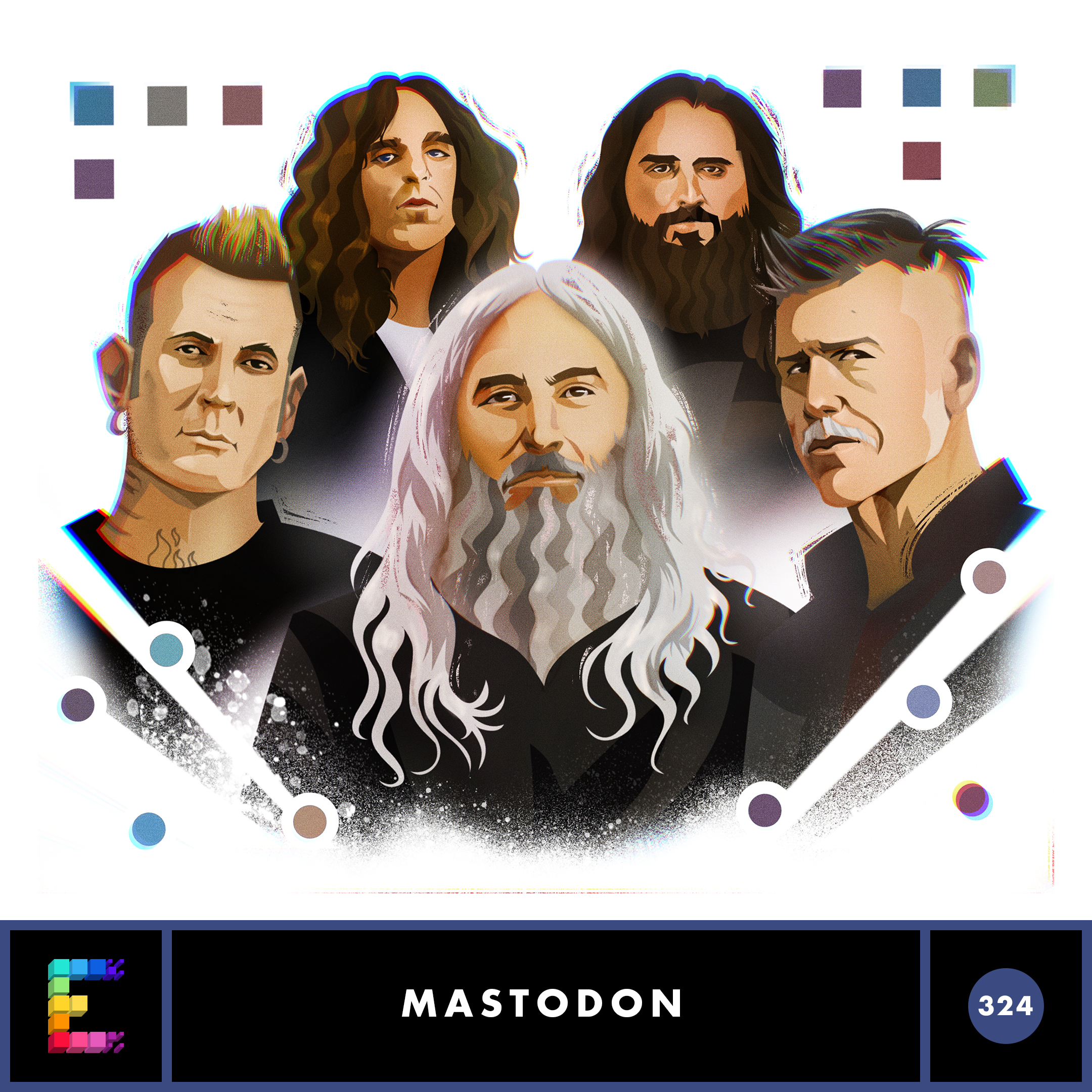
2:52Troy Sanders: The band Mastodon formed in 2000 in Atlanta, Georgia. They've won a Grammy and been nominated for five more. And three of their albums have debuted at number one on Billboard's hard rock charts. For most of their history, they were a four-piece, made up of Braun Daler, Troy Sanders, Bill Kelleher, and Brent Hines. But in March 2025, Brent Hines left the band. and five months later, he died in a motorcycle accident. For this episode, I spoke to Braun, Troy, and Bill about the making of the song Your Ghost Again, which came together in the wake of Brent's death and the death of Braun's mother. Along with the new members of the band, Nick Johnston and Joan Nogueira, they released their ninth album, Marrow Deep, in August, 2026.
3:37Troy Sanders: I went to their studio in Atlanta and I talked to them about everything that they went through and everything that went into the song, Your Ghost Again.
4:03Brann Dailor: Hi, my name's Bron Daler. I play the drums and do some singing. My name is Bill Kelleher and I play the guitar.
4:10Bill Kelliher: My name is Troy Sanders. I play bass guitar and also do vocals. And along with our lead guitar player, Nick Johnston, and keyboardist Juan Nogueira, we are Mastodon.
4:20Troy Sanders: When did you all first start playing together?
4:23Brann Dailor: Bron and I knew each other from, we grew up in Rochester, New York. Played in a few bands together since 94-ish. Yeah. Bill and I were playing in a band in Massachusetts called Today's the Day. That band had been already established and had been going for a long time. and Bill and I really desperately sort of want to start our own thing. And he really wanted to live with his longtime girlfriend. And so he's like, dude, let's move down to Atlanta. Let's get a band going. I promised Braun's like, dude, there's no drummers down here. There's no one playing the kind of music that we're doing.
4:55Bill Kelliher: And at the same time in Atlanta, I was in a band from 1994 to 2000 with Brent Hines playing local shows around Atlanta and Southeast. So we each had like six, seven years together before we all collectively met. in January of 2000.
5:09Brann Dailor: Brent found out I was in Today is the Day, and we became quick friends. And I was like, I'm going to bring our drummer down, and we should start something. So when we came down in 2000, he was one of the guys that tried out and didn't go well the first time. But the next early afternoon, he came over to our apartment, and he just sat down with this acoustic guitar and started ripping. and I was like, whoa, that's the guy I heard about, you know. Troy came down, and that's when I met Troy. He came in and introduced himself and said, hey, what's up? I got a van. I play the bass. And we're like, all right, let's go.
5:48Brann Dailor: And just a few days later, we had a practice, and we were kind of showing these guys a couple songs that we had written, and they had like a whole demo that became Mastodon songs.
6:00Bill Kelliher: So I was booking shows for us before we had complete songs or even a band name on the brand new interwebs in the 2000s.
6:07Brann Dailor: Yeah. We also had a standalone singer when we first started. He ended up leaving the band right before our first actual tour. And Brent and Troy just were like, we'll just yell stuff. So all the singers in Macedon are reluctant singers. Everything happened really fast. And so it was really exciting. And we were off to the races. And we've had the same mentality ever since. We just work a lot and like to hang out with each other and laugh. and play rock shows and travel. And that's what we do.
6:37Troy Sanders: I'd love to jump forward in time to the period just before you started working on this album. What was going on with the band at that point?
6:46Brann Dailor: So in 2024, we had started writing, but things were like a little fragmented. You know, at this point in our lives, Mastodon's our job. You know, I get up at like 9 a.m. and I'm ready to rock. Like I'm excited to get after it. Bill's always riffing. I'm always riffing. So getting together over there in the morning, cup of coffee, Bill's basement, fire up the riff machine, and figure out what we like. And that's kind of how it was in the early days too. I'll work on the Bill songs, and I'll work on my songs with Bill. And then I would work on Brent's stuff with him. That sort of stopped happening with him.
7:26Brann Dailor: He stopped coming around as much and just wasn't as active with us you know so we were trying to let brent hear what we were working on you know sort of but it just didn't really i don't think pique his interest that much you know he was going through a lot like in his personal life and he just was kind of staying up late and he was spreading himself pretty thin you know yeah that's the last thing he wanted to do is come down and practice or it was like work to him and he didn't want to do that you know so it's hard sometimes you know especially when you've been in this band for this long and you know you kind of got to force yourself to go down and do the work it's not a weekender type of career it's either you're all in or you're just not in i think a lot of what was keeping brent coming down when he did come down is that everybody was best friends in this band so like We loved each other very much.
8:25Brann Dailor: And so there was no shortage of laughs. And it's like one of the deepest human relationships that you can have is what we had with Brent.
8:36Troy Sanders: Do you remember how Your Ghost Again first started?
8:39Brann Dailor: We hadn't been together in a while. And I was just down in my basement studio just riffing out. And I like to have at least two or three ideas. And if I think it sounds cool, then I'll send it over to these guys. and if they're like, yeah, that sounds killer, then I'll kind of focus on that and I'll start layering more guitars and harmonies. He'll send it to me like the night before. He'll be like, hey, check this out. You want to come over and play drums on this tomorrow morning? I'll be like, yeah. And that's kind of where it all starts.
9:10Bill Kelliher: This one was labeled song number one in the 32 loose demos that you started putting together.
9:15Brann Dailor: We like to overwrite for songs. It's better to have too many riffs than not enough.
9:28Brann Dailor: And this song became so convoluted with riffs because we're just like, I don't know, does this sound good? And every day, Braun would come over and we would try something new and then he would be like, hey, I thought about this all night last night. I got another idea. I'm like, okay, let's throw it in there, throw it in the soup.
10:03Brann Dailor: Ron and I had come out of the chorus, like, man, this is a real big, catchy, spacious chorus. We need something that's kind of tight and busy for a bridge section. And he's like, come up with something. And this riff just kind of came out.
10:30Brann Dailor: And I recorded it, and I was like, don't ask me to play that again, because I have no idea how I did that.
10:37Brann Dailor: 2024 was the 20th anniversary of our album Leviathan, and we did a whole tour of the States. And then we went to Australia after that, kind of sidetracked us. So we sort of shelved the demos for the new album. And then there was medical stuff with my mom. She'd been in and out of the hospital. She had rheumatoid arthritis when she was 19, when she was diagnosed. But she had a multitude of syndromes. She had a really bad traumatic brain injury. And so when she finally passed, I was just kind of angry at just how everything played out in her life she went through so much and like way more than any one person should have to endure you know so i was unpacking all that and we just didn't know what was going on with brent you know we just on stage he just was miserable and everybody could tell fans could tell we had to make a change and so we wanted to have this band meeting and didn't go great
11:43Bill Kelliher: not being able to hear words from your friends and your bandmates and your brothers of 25 years pleading you for the right avenues for help and ultimately happiness and we can't even approach you with this in a daytime sober conversation that breaks our hearts too because when i was in the middle of trying to plead my personal case with him he stood up and walked out of the room and that's the last time i ever saw brent we had uh flown to anchorage alaska to play the alaskan state fair we land at the airport and go to baggage claim waiting at the carousel
12:17Brann Dailor: and we receive a phone call hysterical person on the other end just telling us all i was like wait okay are you fucking serious this is the guy that's made it out of every car crash and fight and bike accident unscathed so it was pretty shocking you know and uh yeah we were shocked and still processing it's really hard because everything is still so familiar you know like just this building in general just being in this band with him for so long and always expecting him to be walking in the door late and if we had folded up shop then no one
12:53Bill Kelliher: would have blamed us for it but i feel like it was like all right things are very very dark we need to buckle down and start writing. We've been digging on this music a bit now over the past year, half a year or so. Let's dig deeper.
13:08Troy Sanders: More with Mastodon after this.
13:16Troy Sanders: Thanks to Reddit for sponsoring Song Exploder. One of the best parts of being a music fan is finding other people who love the same music that you do. And one of the things I love about Reddit is that there are so many different places to find that kind of community. If you want to nerd out about shoegaze, there are literally thousands of users on the r slash shoegaze subreddit. Or if you're into 90s hip hop or opera or vaporwave, there are subreddits for all of that. Over on r slash indieheads, there are hundreds of thousands of indie music fans. And for me, that subreddit is one of the main hubs on the internet to find out about new music.
13:56Troy Sanders: And it's always really exciting to see anyone on Reddit discussing a Song Exploder episode by their favorite band. Every song has a story. And on Reddit, fans are the ones telling that story. Find the details, the deep cuts, and a Reddit community that loves the music as much as you do. Download the Reddit app today. This episode is sponsored by the podcast, What It's Like to Be. Do you ever think about what other people's workdays look like? Satisfying some of that curiosity is the idea at the heart of bestselling author Dan Heath's podcast, which is called What It's Like to Be. In each episode, Dan interviews someone from a different profession to find out what it's like to be a professional Santa Claus, or a secret service agent, or a long-haul truck driver, or an aerospace engineer at NASA, just to name a few examples.
14:49Troy Sanders: The show gives you an insider view into all kinds of jobs from a wide range of industries, answering questions like, what do mail carriers learn about us from our mail? There are so many jobs out there that exist only as titles in our imagination, if they even register that much. This show is a chance to reach beyond what you know or think you know. If you're curious to learn more about the work lives of other people, check out What It's Like to Be, wherever you get podcasts. I've talked about quince before on the show and how some of my favorite clothes are things that I've gotten from their website But they have a lot of categories beyond clothes For example, I just ordered a cotton velvet tree skirt Which is the thing that goes around the christmas tree to hide the stand and the cords from the lights and stuff And it also catches pine needles I grew up with an artificial tree So i'm kind of new to the ways of having a real tree But quince is letting me step my game up and everything at quince is priced 50 to 80 % less than similar brands.
15:46Troy Sanders: So it's a great place to do all of your holiday shopping, whether you're buying clothes or accessories or stuff for your house. Give the gift of quality this holiday season. Download the Quince app for app-exclusive offers or go to quince.com. Get free shipping on your order and 365-day returns. It's now available in Canada and the UK, too. And when Quince asks you where you heard about them, let them know it was Song Exploder. It's the best way to support the show.
16:19Brann Dailor: Given what we had gone through, the best thing for us was to get in the studio and try to work it out.
16:25Bill Kelliher: Brent passed in late August, and we started the record in this very room first week of September.
16:37Bill Kelliher: Kurt Ballou was the engineer of the record and co-produced it. Patrick Berger from Sweden was the producer of the record.
16:43Brann Dailor: When we first started looking for producers, we were made aware that Patrick was maybe wanting to work with us. And then we looked at his pedigree and we were like, I don't understand why. Because a lot of pop stuff, you know?
16:56Troy Sanders: Stuff like Taylor Swift and Charlie XCX and Carly Rae Jepsen.
17:00Brann Dailor: But then Patrick came down to the studio here and instant good chemistry. Some of these Swedish dudes, they're super into metal, but they end up in the pop world, which is cool, you know? that jived with us and we liked them as a person. And so it was a really cool team that we felt like was assembled. Like everybody's input would produce something really interesting and cool.
17:24Troy Sanders: Is it weird for you guys to let people who are outside of the band have creative input?
17:29Bill Kelliher: Yes. However, that's the beauty of trusting an outside member to come in and give their honest thoughts and opinions on how to create more dynamic within your songs that you've already been working on.
17:40Brann Dailor: Yeah, when we started pre-production, Patrick was like, what's that thing? On the demo version in the middle.
17:55Brann Dailor: I was like, nothing. That's just trying to get to the end, to the last chorus. He's like, no, that needs to be the main part of the song. Start the song like that. So we're all like, okay, let's try it.
18:34Brann Dailor: It was exciting. I thought it was like a shot of adrenaline really into the song.
18:38Troy Sanders: And then for Kurt Ballew, as the co-producer, what was his role?
18:42Brann Dailor: To engineer, getting the sounds. When I close my eyes to one of Kurt's records, I feel like I'm at the show and I'm seeing the band play perfectly. He really captures that fine line between overproduced and live and organic. The mission statement at the beginning was like, we want the heavy moments to be the heaviest we've ever, ever been. And we think that Kurt is the guy that can get us there. But we also desire the dynamics and the vocal production that we think that Patrick can bring. Like recognizing hooks and those two worlds together with all the things that we bring to the table. We thought that we would come to the best conclusion with this album.
19:32Brann Dailor: I mean, we have every kind of amp you could imagine in this studio. So we've got them all plugged into a master channel switcher. So we can go, okay, this Marshall Head from 1978 with this Friedman cabinet combo, press a button and you can instantly hear it.
19:52Brann Dailor: For Troy's bass, we used that orange 412, but we put some heavy-duty bass speakers.
19:58Bill Kelliher: We put bass speakers in a guitar cabinet, and for the first time ever, I ran through a guitar head to get that real gnarly, real hairy bass tone.
20:12Troy Sanders: So everything that we've listened to and talked about so far has just been instrumental. Are you thinking about lyrical ideas at the same time while you're working on the music?
20:23Bill Kelliher: Yes, I keep just a written journal everywhere I go in my backpack. And anytime a word or a line or a phrase or a whole poem comes to mind, I'll put it down just like Bill would with his riffs, you know, and I'm sure Bron does. He's got a gazillion voice notes. So I had an idea for all parts, but I had pinned my lyrics in two different time settings. The two front verses was during the spring of 2025 when the band was in this turmoil and tension and we were navigating this breakup. And that's what ultimately became the first line lyrically of the song.
20:58Troy Sanders: Throws of despair. Approach if you dare.
21:06Bill Kelliher: Approach if you dare. It kind of stemmed from the last time I ever saw Brent. It was trying to have a productive band meeting to really get to the bottom of these issues of what's causing what felt like our band's demise. And it was hard to approach someone when they just kind of were very callous to the words we were trying to say from our heart, you know. And then the last line of verse one is we let go of all these wasted years, meaning like I think Bill and Braun and myself tried more than with any other relationship in our life to bring some clarity and some help towards Brent. and we just have to let go of all this trying because we really, really, really tried.
21:44And we throw love at this. We let go of all these wasted years.
21:54Bill Kelliher: I feel Bron and I are quite selfless when it comes to whoever kind of gravitates towards a part. Like, I have an idea for this verse here. And Bron's like, cool, put that down. Let's hear what it sounds like, vice versa. Bron says, I have an idea for the chorus. I want to give it a shot. We'll go knock it out.
22:07Brann Dailor: With your fists clenched, you can feel your blood begin to boil. When the world went black and to them you seemed invisible. My lyrical contributions to Your Ghost Again were born out of being in these familiar places, being in this studio, sitting there and seeing Brent to my right for 25 years. I just started seeing him out of the corner of my eye like just expecting him to be there and your mind plays tricks on you and you're kind of like oh shit I thought he was in the room or I thought I heard his chains on his belt or whatever same with my mom I would see her out of the corner of my eye at first you get excited that they're there and then you kind of get the little jolt and then you remember that they're gone and you're not going to see them again so that was sort of the impetus for the chorus
23:20Troy Sanders: when you're each recording your individual parts do the rest of you come to the studio do you listen to each other while you're recording most of the time it's all yeah
23:30Bill Kelliher: all here. Kind of see what's going on, the friendship, the camaraderie, and also to...
23:34Brann Dailor: We all chime in a little bit.
23:36Bill Kelliher: Yeah, chime in, give some constructive criticism when necessary. And cutting vocals last minute like we tend to do, it's a very naked spot. And if someone is through that glass, whether it's Bill or Bron or whoever, with a thumbs up, then okay, cool. I feel comfortable that I'm onto something here.
23:51Brann Dailor: I'm embarrassed by my initial vocal ideas, and you're totally unsure. And you're like, I think I have an idea because I write a lot of my lyrics in my car. I'll be out there with the stereo crank singing along. I'm like, okay, I think I got it. And I come in here and for some reason, everything's changed. I'm like, these guys will give you the grace of like, let him get his idea down. And then finally, when you say, okay, now I think that that's the thing. Then everybody says, yeah, or try this or try that.
24:24Troy Sanders: There are times in the song when you're singing together and layering your vocals. And I was wondering, what was the process for figuring that out?
24:31Brann Dailor: I initially came in with the super high thing. That's like... With your fist clenched, such you can feel your blood begin to boil.
24:43Troy Sanders: Because that's two octaves of you, right? Yeah. You're singing a high octave above. Yeah.
24:48Bill Kelliher: And then Patrick suggested would I mind coming in and doing the low underneath bronze back half verses. When the world went black and to them you seemed invisible. Close your eyes.
25:08Brann Dailor: When Braun came up with the chorus part, that started to, for me, change the dynamic of where the song was kind of going. And I remember sitting in the room, and we had already recorded it, and I was just playing around with the song. and I was like, it was Juan and I, and I said, what if we did this in this part? And I started playing.
25:32Bill Kelliher: It's the beauty of teamwork, is that it could be a riff idea initially of Bills, and then Nick and Juan got a hold of it.
25:42Bill Kelliher: Our keyboard synth player, Juan Noguera. And our lead guitar player, Nick Johnston.
26:06Bill Kelliher: And then one of the bridge parts kind of needed some vocals, and I was a bit more reflective and a little more positive. The lyrics were, All my gifts from you, take it back where you must go. All my gifts from you
26:23Take him back where you must go
26:31Bill Kelliher: That was thinking about how great it was to have known Brent and shared thousands of stages around the world. Because when I met Brent in 1994, for many years he turned me on to so much music and art and a lot of beauty that I had never been exposed to. and I always want to remember that the good far outweighed the bad.
26:51Brann Dailor: All I ever wanted you to say to me is that tune felt safe and sound. And I think especially all I ever wanted to hear from you was that you're okay. It was like him and my mom at the same time. That's what I wanted from both of them. That's all I wanted them to be was happy and healthy and feeling good, and they both just weren't. And it was frustrating to watch them go through it and not be able to do anything to help, because that's all I wanted to do. I'm going to pick them up and make them feel better.
27:30Bill Kelliher: I think this is the first record in our whole discography where Bron and I didn't talk at all about the lyrics. I think it was very clear. After our breakup with Brent, Bron's mother's death and then Brent's death, It was clear as day. There's no other way we're going to write about anything on earth than this.
27:49Brann Dailor: Unfortunately, you know, we don't want this record to be about what it's about. It's the last thing any of us want. It's a bit of closure, you know, when you hear it. It's not one of those songs like, oh, I don't want to hear that anymore. It brings back terrible memories or anything. But it's like just us standing up on our podium and making it a real thing, making it tangible and just telling people like, hey, we're not forgetting about this guy or this situation, and here we are singing about it. Yeah. No, I guess it still makes me a little sad to listen to. It kind of transports you back to that time.
28:26Brann Dailor: And then that won't last forever, which is good, I think. But it might, you know, grief kind of sneaks up on you sometimes. There are just these big old bags of grief that you kind of get to lug around for the rest of your life, but it gets easier. and I'm lucky enough to have had these loving, beautiful relationships to mourn.
29:03Troy Sanders: And now, here's Your Ghost Again by Mastodon in its entirety.
29:22To be continued... Until your heart begin to pour When the world went black into them You seemed invisible Close your eyes Down on your knees Broke, sail away When it fills the tempest tongues and beds its deepest roots
30:13Brann Dailor: Jovelling the place that cuts to live a sling and spine No one's your mind
30:32I saw your ghost again
30:39Fitting a future Non-existent I saw your ghost again
30:52Brann Dailor: Followed by mercy Feelings are breathing
31:01All my gifts from you
31:08Taken back where you must go
31:19All I ever wanted to say to me Is that stupid, safe and sound?
31:34Bill Kelliher: Sickening, watching you strike back on Hoping for helping us What's in the time wrong now?
31:57Troy Sanders: I saw your goals again
32:04Troy Sanders: Millions of the future Not existing
32:12I saw your goals again
32:17Brann Dailor: Followed by your closing Feelings are leaving
32:26As I am Close again Followed by crushing Feelings are breathing
32:58We'll be right back.
33:33Thank you.
33:52Troy Sanders: name your ghost again, and you can watch the music video. This episode was produced by me, Craig Ely, Mary Dolan, Kathleen Smith, and Tiger Biscop. The episode artwork is by Carlos Lerma, and I made the show's theme music and logo. Song Exploder is a proud member of Radiotopia from PRX, a network of independent, listener-supported, artist-owned podcasts. You can learn more about our shows at radiotopia.fm. I also put out a newsletter, and you can find a link to it on the Song Exploder website. You can also get a Song Exploder shirt at songexploder.net slash shirt. I'm Rishikesh Hirway. Thanks for listening.
The band Mastodon formed in 2000 in Atlanta, Georgia. They’ve won a Grammy and been nominated for 5 others, and three of their albums have debuted at #1 on Billboard’s Hard Rock charts. For most of their history, they were a four piece, made up of Brann Dailor, Troy Sanders, Bill Kelliher, and Brent Hinds. But in March 2025, Brent Hinds left the band. And later that year, he died in a motorcycle accident. For this episode, I spoke to Brann, Troy, and Bill about making the song “Your Ghost Again,” which came together in the wake of Brent’s death, and the death of Brann’s mother. Along with their new members, Nick Johnston and João Nogueira, they released their 9th album, Marrow Deep, in August 2026. I went to their studio in Atlanta, and talked to them about everything they went through and everything that went into the song “Your Ghost Again.”
For more info, visit songexploder.net/mastodon.