 Ask ChatGPT

Elvis Costello discusses how he wrote and recorded “Alison” for his 1977 debut album My Aim Is True, and how the song’s meaning evolved.
the lyrics come from seeing a supermarket checkout girl with a “disenchanted” expression; “Alison” is a regretful love song, not a murder ballad; the chorus stutter reflects learning from a Tom Bell/Detroit Spinners song; the intimate 8-track studio at Pathway Studios shaped the sound.
John McPhee’s lead-guitar motif complements Costello’s vocal; a later FM-radio attempt added a “ghastly” string synth and transferred tape from 8-track to 24-track; Linda Ronstadt’s cover became the best-known version, and Costello later apologized for criticizing her alto saxophone arrangement.
Elvis Costello (singer-songwriter, Rock & Roll Hall of Fame, multiple Grammys) and interviewer Rishikesh Hirway (host).
Written by AI. May contain mistakes.
Get to know Elvis Costello and his musical achievements.
“I have this Quince cashmere sweater that's become my go-to in the fall.”
Get to know Elvis Costello and his musical achievements.
“Elvis Costello is a singer and songwriter whose career spans five decades and over 30 albums.”
Elvis shares the story behind the creation of 'Alison' and its themes.
“Could I just ask you to introduce yourself?”
Elvis discusses the recording process of 'Alison' and the challenges faced.
“Imagination was the first song that I wrote that could stop people, that could get attention.”
Discover the unique musical motif in Elvis Costello's 'Alison' and the role of John McPhee's guitar.
“Take off your part of dress In my dream, I wanted to have a motif in this song.”
Examine the specific lyrics of 'Alison' and their emotional implications.
“I think the lyrics of Alison are quite specific.”
Learn about the musical influences behind 'Alison' and the recording process.
“and hopefully was from some part of the heart, even the doubtful heart, you know?”
Discuss the reception of 'Alison', its covers, and its long-term impact.
“In order to achieve this, the tape had to be transferred from 8-track to 24-track, which means we were accepting the loss of quality to come over from 8-track to 24, allowing us to have a few more tracks to play with.”
Elvis Costello discusses the personal significance of 'Alison' and its reception.
“you know, I just want to say this is for Linda and sang Alison, you know.”
Listeners experience a full rendition of the song 'Alison'.
“And now, here's Alison by Elvis Costello in its entirety.”

Get the gist, explore an idea or ask about something said.
 Claude
On Song Exploder, what are the key points of this episode?
Searching your listeningAutomatic transcript. May contain errors.
0:00You're listening to Song Exploder, where musicians take apart their songs and piece by piece tell the story of how they were made. I'm Rishikesh Hirway.
0:11I'm going to be on tour playing some shows this fall. I'm going to be in London on Wednesday, November 18th. I'm going to be performing solo at Rough Trade Records on Denmark Street. And I'm going to be in conversation about my music, moderated by one of my favorite actors and writers, Matthew Bainton. And a ticket to the show also gets you a copy of my album on vinyl or CD. And in December, I'm going to be on tour supporting S. Carey. We're going to be playing a bunch of shows in the Northeast U.S. So I hope to see you in one of those places. You can find all the details and get links to tickets at songexploder.net slash live.
0:47That's songexploder.net slash live.
0:54I want to give a shout out to Gusto for sponsoring today's episode. Because when you run a small business like Song Exploder, you don't just have to do your regular job. You also have to be the hiring manager, the payroll department, the benefits team. There's a level of admin that I know I didn't really think I was signing up for. But Gusto takes a few of those jobs off your plate quickly and seamlessly. Lastly, Gusto is online payroll and benefits software built for small businesses. It's all-in-one, remote-friendly, and incredibly easy to use, so you can pay, hire, onboard, and support your team from anywhere.
1:33There are options for nearly every budget, with unlimited payroll runs for one monthly price and no hidden fees or surprises. Try Gusto today at gusto.com slash songexploder and get three months free when you run your first payroll. That's three months of free payroll at gusto.com slash song exploder. Once more, that's gusto.com slash song exploder. Thanks to Quince for sponsoring Song Exploder. I have this Quince cashmere sweater that's become my go-to in the fall. And it's one of those pieces where as soon as I started wearing it, I couldn't really remember what I used to wear before I had it.
2:12It's the Mongolian cashmere quarter button sweater in black. And those kinds of staples are what Quince is known for. jeans t-shirts jackets sweaters and actually a lot more too and everything at quince is priced 50 to 80 percent less than similar brands they work directly with ethical factories and cut out the middlemen so you're paying for quality not brand markup their 100 percent mongolian cashmere sweaters start at just 60 find your next fall favorites at quince download the quince app for app-exclusive offers, or go to quince.com. Get free shipping on your order and 365-day returns. It's now available in Canada and the UK, too.
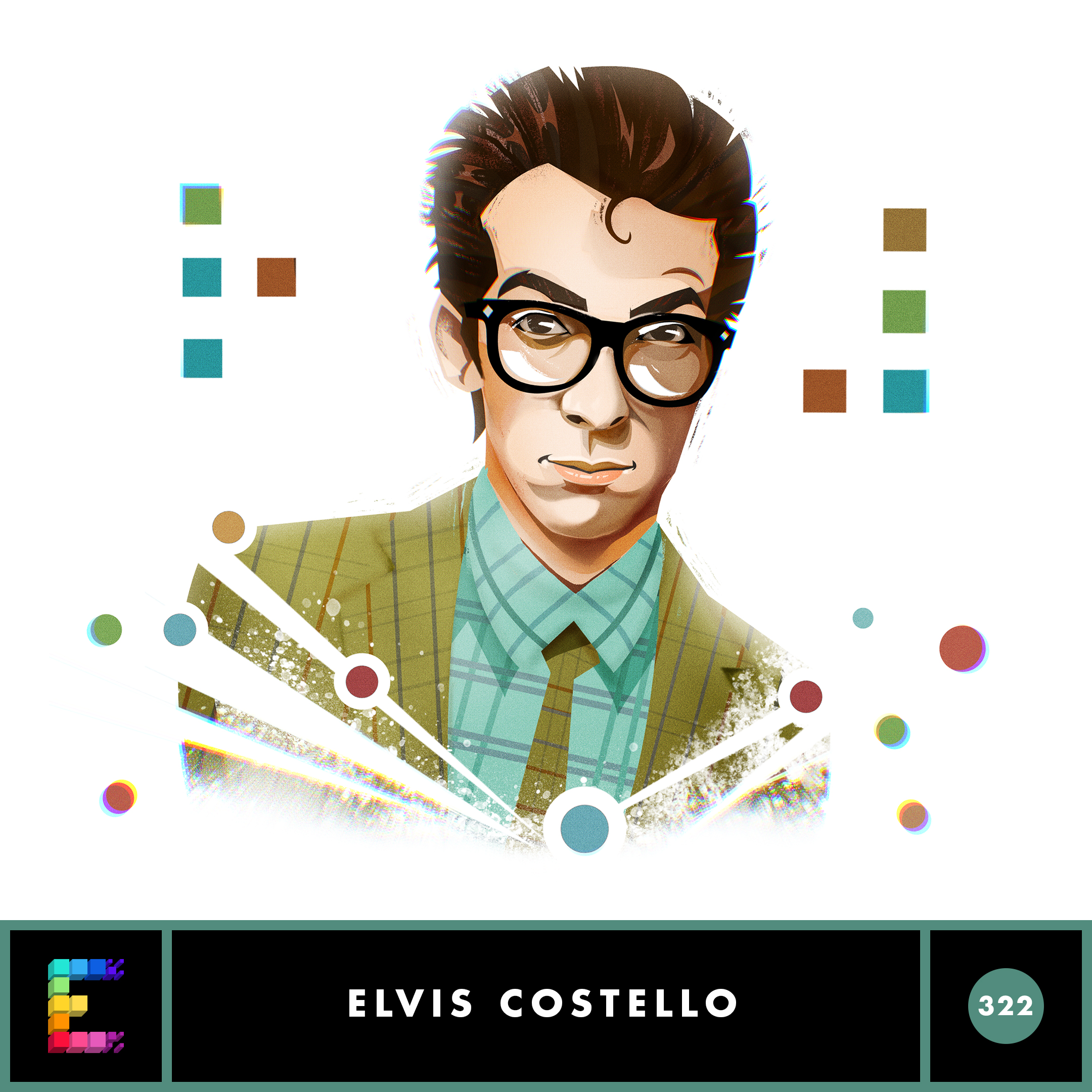
2:53And when Quince asks you where you heard about them, let them know that it was Song Exploder. You'll be supporting the show. Elvis Costello is a singer and songwriter whose career spans five decades and over 30 albums. He's a member of the Rock and Roll Hall of Fame and the Songwriters Hall of Fame. He's won Grammy Awards and Ivor Novella Awards, a BAFTA, and he's on Rolling Stone's list of the greatest songwriters of all time. He put out his first album, My Aim is True, in 1977. And this month, he released a 49th anniversary edition of the album. So for this episode, I spoke to Elvis Costello about the making of the song Allison from that debut album.
3:34Coming up, you'll hear the isolated tracks from the original recording, as well as some additional parts that didn't make the cut. And in discussing the origin story of this song, we also ended up talking about the origin story of Elvis Costello himself.
3:51Allison, I know this world is killing you. Oh, Allison, my aim is true.
4:12Could I just ask you to introduce yourself? What's your name? That's a good question, isn't it? I became Elvis Costello around the time that I wrote this song. So I don't know properly. I should answer that. It's not something everybody has to say by way of introduction. You should just answer the question. But I had adopted my great-grandmother's name, Elizabeth Costello, as we would say in Ireland. and I had decided that my given name, Declan, was just too confusing for people. They always wanted to amend it in some way, put a K in the middle of it, a D on the end of it. So I became DP Costello and that looked pretty good on a poster, you know.
4:53Yeah. It rolled off the tongue pretty well as it just did then. And I was working. I was working in a day job. I was computer operator for a cosmetics company. I was 21. I was married to my first wife, Mary, and our young son had been born. It wasn't a very big apartment we lived in. So I would find the quietest place and play to myself. And I had been writing all the time. As I picked up the guitar, I was taking cues from all over the place. I became particularly enamored of songwriters who wrote lyrically complex songs, particularly Joni Mitchell, who wrote unprecedented romantic scenarios. and it all became part of the emotional desire to communicate something in my own voice.
5:43By the time I got to be, you know, 20, I thought maybe I had something. I'd been demoing when I had the opportunity and I would take my little home recorded demo tape around every publisher and record company that would let me through the door only to be told the songs were not of interest to them. until the day that I arrived and knocked on the door of Stiff Records. This was an independent record company founded in the summer of 76. And I didn't realize that I was actually the first person to even try to do business with them. They had released one single. And I imagined it was a full working operation.
6:24And I found one very nice young woman who patiently took my tape and took my number and my name down. and I went away thinking, well, maybe I'll never hear from that again. But Stiff Records were the one place that showed an interest and wanted to see it through to see me record those songs. And at some point, the founders of the record label called me to the office and I honest to God thought they're going to tell me that they don't see anything in it because that's what I'd been told repeatedly. And they said, oh, no, we're intending to release a record, but we've got something to tell you. And I said, well, what's that?
7:02And they said, we're going to change your name to Elvis Costello, not DP, as I had written on my demo tape. Elvis. You can imagine, I took a big deep breath when they said that. I couldn't have looked less like Elvis Presley, so there was some humor and some insolence to that decision. But within a month, I was put in the studio with Nick Lowe, who had played in a band called Brindsey Schwartz that I'd broken up, and he was actually launching a solo career with Stiff's first release. When Stiff Records proposed Nick to be producer, I could not have been more delighted. You know, he was somebody I'd looked up to, kind of a songwriting hero, and I loved his bass playing as well.
7:49He played bass on the first session. So they said, he will be producing, and you will have John McPhee on guitar. And I went, you mean the same John McPhee who was on Tupelo Honey by Van Morrison, that guy, you know, whose records I already had. His records as part of the band Clover? Clover, yeah. They'd made two records in the early 70s, which I owned. Then they said, well, we want to introduce you to the rest of Clover that could be featured on this. That is Johnny Shambode on bass, John McPhee was on the guitar, Sean Hopper on keyboards, and Mickey Shine, the drummer from Clover. I would play rhythm guitar.
8:26and I was sent to the place where they were rehearsing, which they were living in a house outside of London. Meanwhile, I didn't have a band, so I was completely astounded to be in the company of these people. I'd only played with very modestly skilled players up until that point. You know, I wasn't a very good guitar player myself. I'm still not. But I could write the songs. This is maybe the last song written for My Aim is True. My guess it was written in 1977, before the last session of what became that album. And what prompted you to first write the song? Well, I saw a supermarket checkout girl who wore a look of disenchantment, just doing a mundane job, you know.
9:16And somehow something about her expression made me think of this quality of disenchantment that somebody who was very, you know, that had a beauty, but one which was already kind of a little frayed by experience. That's what I saw. It was something you may have done yourself, that you see somebody and there's something about their appearance that draws your attention and you try to work out their story. Like how do they get, why is that expression on their face? I don't know whether you've ever played that game, but it's one that songwriters, I think, benefit from is trying to imagine somebody else's experience.
9:56And I just focused on this one girl who had a slightly disenchanted look. And that's what the song is really about. That's the word, really, disenchantment. I think that's how I came up with the name because the name, Alison, wasn't a specific person, but I wanted a name that sounded like, not like a, you know, If you're called Ava Gardner, you know that that's the name of a dramatic person. It just sounds dramatic. Alison somehow seems a sweeter name, and I thought there was more poignancy to it. I don't say it was a younger girl's name, because that wasn't the thing I was trying to convey. But it just seemed innocent.
10:35And that's what I wanted. I wanted it to be somebody whose innocence was challenged, not in an inappropriate way, simply that the disappointment of life would be visited on this person who was at one time idealistic. There were demos for most of the other songs on the record, but there was never a demo for Alison. The only stepping stone to that song is this other, completely different composition, imagination. The imagination is our powerful deceiver I'll go out of my mind if I'm losing your touch.
11:21I'd attempted to sing a number of songs written, say in 1975, in the intimate way that I heard lots of songwriters I admired perform. But what I was missing was that those songwriters had won the confidence of their audience to speak intimately like that. I had to learn how to speak up for myself because I was playing clubs. And if you played something too restrained dynamically, they would just talk over you. Imagination was the first song that I wrote that could stop people, that could get attention. And weirdly enough, it wasn't an exciting rhythmic song. It was a ballad. So that's as close to a demo for Alison as I have.
12:06It's a different melody. it's a different lyrical perspective but a similar theme when it came time to record allison was there a specific approach that you wanted to take you know we had such modest resources this sounds like name dropping but the very first occasion i met bruce springsteen in nashville in the middle of 1978 we said horror lows and then we were both of us i think actually weirdly shy and we're looking at our shoes and suddenly Bruce said, how did you get the sound on I Am Is True? And I said, no money. Because that's the actual truth. You know, the reason why the record sounds immediate is because we didn't have either the means in terms of studio hours or even the format to over-elaborate the arrangements.
12:55This record, Allison, was recorded in Pathway Studios in Highbury and Islington, which was an eight-track studio. tiny room. And by the time we put the full band in there, there wasn't a lot of space for air, let alone anything else. It was really small. And some of the sound is because of that intimate space. And you had to tell the story just with these eight channels. Drums are on two tracks. basses on one lead guitar is on another my rhythm guitar is on another and an electric piano
13:43and my voice Oh it's so funny to be seeing you after so long girl And with the way you look I understand that you were not impressed But I heard you let that little friend of mine Take off your part of dress
14:09In my dream, I wanted to have a motif in this song. And of course, that motif is actually provided by John McPhee, who's playing the lead guitar that's in the mix. I'm not gonna get too sentimental like those other stick of valentines Cos I don't know if you are loving somebody I only know it isn't mine He's either leading out or leading into every vocal phrase. He's never playing at the same time as I'm singing. Which, given that it's a live take, and what he plays as a complement to the vocal melody is so perfectly chosen. You couldn't really praise him enough. It's a really tremendous piece of spontaneous interpretive playing.
15:06John was kind enough to write a reminiscence of playing on this track for the liners of this new 49th anniversary edition. and he's so self-effacing even to this day i mean he's he's in the rock and roll hall of fame and yet he's still kind of well i just tried to do what i thought felt and i just listened to the song and played that
15:39more with elvis costello after this
15:48Thanks so much to Function for their support of Song Exploder. I've been a Function health member for over a year now. And because of that, I've been able to get a comprehensive view of what's happening with my body. Things like hormones and inflammation can all show up in your blood, but regular blood work doesn't always track them. But with Function, the number of things they test and the depth of the analysis they give you goes really far. And for me, as I'm getting older, that's been really important. I can track my cardiovascular and thyroid health, my cholesterol, and all these other biomarkers around stuff that I pretty much took for granted.
16:23Nowadays, I'm making much more conscious choices about my health because of the awareness I have. Get more insight on how your body is aging. Function provides over 160 lab tests for a price that comes out to about a dollar a day and member pricing on advanced imaging. Join at functionhealth.com slash songexploder and use the code SONGEXPLODER25 for a$25 credit. This episode is sponsored by Tidal. If you're an artist or if you know somebody making music, you should know about Tidal Upload. It's a way to share and sell music without the usual barriers. You can upload your music directly to Tidal at no cost.
17:03You decide how you want to release it. You can share it publicly with Tidal listeners or you can keep it private until you're ready or you can sell your music directly through Tidal Upload. your music will also be considered by title's editorial team for their playlists and if your track is selected for their spotlight program you'll get a thousand dollar bonus and you'll be on one of their marquee playlists and now title has dropped its platform fee to zero percent which means you keep more of your earnings there than on any other platform visit title.com slash song exploder to create an account and start uploading your music for free that's title.com slash Song Exploder for zero platform fees on every sale.
17:46Your music, your earnings. Song Exploder is sponsored by Ethos, who make it easy to get life insurance coverage. When my wife and I first got married, we were thinking a lot about our future and how to best prepare ourselves financially. Luckily, we got some very wise advice that the most important thing that we could do at that point was to get life insurance because it would provide us a safety net that would give us more protection than any kind of short-term savings that we'd be able to set aside. You can take that advice as well and help protect your family by getting fast and easy life insurance coverage through Ethos, 100 % online.
18:24On their website, you can get a quote in seconds, apply in minutes, and get same-day coverage. It's great for almost every budget, with some policies as low as$30 each month, and you can get up to$3 million in coverage. So take 10 minutes to get covered today with life insurance through Ethos. Get your free quote at ethos.com slash song exploder. That's ethos.com slash song exploder. Application times may vary. Rates may vary.
18:59I think the lyrics of Alison are quite specific. So they're not borrowed cliches from romantic songs, are they? There are many songs that work effectively doing that. I Will Always Love You, for instance, which is a really beautiful sentiment and it's a beautiful song. But there's a particular skill which I don't have to communicating very deeply felt things in simple language. And I tended to look for the contrary view of romantic entanglement. And I remember arriving at the lyric, it's just painting a picture of meeting somebody years later after the love affair and then it's lamenting all these things while sort of kind of sounding a little bit critical you know i hear you let that little friend you know they're like i say yes he chose that guy he thought he was better than me you know it's that you know feeling of disappointment Well, I see you got a husband now.
20:04Did you leave your pretty fingers lying in the wedding cake? You used to hold him right in your hand. I bet it took all he could take. If there were a photograph of the scene where the song is taking place, what would it look like? What's the setting? I think it would be at a party. It would be at a party and the lights would be low. And maybe in that darkness, a gesture of welcoming could be mistaken for a caress. So the singer could be observing something that he reads into the significance of it much more because it's under low light. And maybe there's some doubt about those two people in the scene that he's observing.
20:52that's you know why it's sort of the first verse is sort of tearing down Alison or the person in it that it's directed to's lover you know or husband or whoever he's supposed to be he doesn't really know but in time I think by the time the song gets the second verse that disappointment is in oneself I think somebody better put out the big light Cause I can't stand to see you this way
21:26Allison I know this world is killing you Oh,
21:38Allison My aim is true
21:47My aim is true The disappointment is that of the singer, because he realized that something has happened between them that the singer is responsible for. So that's why he's saying, my aim is true. I know this world is killing you. You know, it's not, I'm going to kill you. Some people heard that in the lyric, and I always said, you're reading this all wrong. It ain't a murder ballad. It's quite the opposite. it. It's a love song, but it's a regretful love song.
22:24It takes a lot for me to even say this because I never unpicked all of these emotional things. I was writing very fast. I was 21. The ideas were all new. I had no audience that I knew of. So I didn't have any self-consciousness about what the audience was expecting from me. I just was singing stuff that I imagined and hopefully was from some part of the heart, even the doubtful heart, you know? And that's what you hear in Alison. I know this world is killing you, oh, Alison. The chorus is musically influenced by a Tom Bell song for the group you call the Spinners, the group we call the Detroit Spinners because there was already a Spinners in England, so they had to add Detroit to the front of their name, a record called Ghetto Child.
23:26Life ain't so easy when you're a ghetto child So you can hear, you know, the, I know this now, you know, that stutter to the admission that I know that love is not eternal. And perhaps it's me that's going to be the cause of your heartbreak. The singer is saying that, you know, that halting way as if you were almost struggling to get the words out. So I thought that Tom Bell song was a beautiful one. And that's how you learn, by imitating and perhaps failing to copy something exactly, you end up with your own sort of idea. Everything on Alison is live. The only thing that's overdubbed is the vocal harmony.
24:22At some point, I guess this must have happened later in 1977, around the time that we were preparing My Misdrew for the American release on Columbia Records somebody, like perhaps a radio promo guy somebody said we could get this played on FM radio if it had strings on it and of course we had no money for a string section so the idea was proposed that we try and put a string synth on it which were in their infancy I have to say these were not the kind of sounds you would have now or we'd have just a few years later in the early mid-80s. This was a ghastly sounding instrument.
25:06And here's the other thing. In order to achieve this, the tape had to be transferred from 8-track to 24-track, which means we were accepting the loss of quality to come over from 8-track to 24, allowing us to have a few more tracks to play with. in an attempt to make it a little warmer because of the tension between my voice and the subject matter and this comparatively strained music. I think there's a track of harmonies as well. Yes, there's two tracks actually. Let's hear that. I'd like to hear that. Alison You sort of hear how it sounds a little bit more Californian with that harmony in there.
25:52I mean, can I say the E word here? It's kind of a dangerously eagle sounding thing, you know, once you add that in.
26:05I was kind of allergic to that kind of music completely. But I think it was put on a single, just a few, and then we said, no, this is just too terrible. But, you know, we were trying to play the game of like, let's see if we can infiltrate FM radio, you know, or even AM radio at that time. That didn't happen. For 1977 to go with a ballad as your single was a little bit of a bold choice because it put you in competition with all the ballad singers who were already in the hip parade, like Kenny Rogers or Rod Stewart, all these people that were, you know, it was a world away from what we were doing.
26:44And when it was released as a single, it bombed, you know. It came out and a couple of nice things were said in reviews, but it didn't catch the public's imagination at all. Linda Ronstadt's cover of this song was by far and away the best-known recording of Alison and the only one that was successful. Well, it's so funny to be seeing you after so long, girl About the way you look, I understand that you were not impressed And I was terribly rude about it when it came out and I'm really ashamed of that now because she sings the hell out of the song. She sings it so beautifully. But you know what I didn't like?
27:31Was when it hit the chorus, instead of John McPhee, it was an alto saxophone.
27:39Something about that alto saxophone put me in a world that I couldn't accept. At that time, I was so possessive about my own songs, I just couldn't accept it. But I got to apologize to Linda face-to-face for being sarcastic about the recording. I apologized from the stage of the Hollywood Bowl by saying, you know, I just want to say this is for Linda and sang Alison, you know. Because, you know, I was a brat. I was 22, 23 by the time that her recording came out. so that was the song finally reaching a wider audience it wasn't my version of it initially it was never a hit in england it was never a hit as a single in america but it did weirdly enough register with people which is why we're here talking about it isn't it you know strange and because the song actually speaks about time passing that's probably been in my favor hasn't it because i actually live long enough to look back on these things that happen in this song the way it's described in the lyric.
28:43Ah, see what I did there? I made it possible to sing the song for longer. You know?
29:02And now, here's Alison by Elvis Costello in its entirety.
29:16Oh, it's so funny to be seeing you after so long, girl And with the way you look, I understand that you were not impressed But I heard you let that little friend of mine Take off your party dress I'm not gonna get too sentimental Like those other sticker valentines Cause I don't know if you are loving somebody I only know it isn't mine
30:02Allison I know this world is killing you Oh, Allison My aim is true
30:23Well, I see you got a husband now And leave your pretty fingers lying in the wedding cake You used to hold him right in your hand I bet I took all he could take Sometimes I wish that I could stop you from talking When I hear the silly things that you say I think somebody better put out the big light Cause I can't stand to see you this way Allison I know this world is killing you Oh, Allison My aim is true
31:37is my My aim is true My aim is true My aim is true My aim is True My aim is True My aim is True My aim is true My aim is True
32:28Visit songexploder.net to learn more. There are some notes that go along with the episode, and you'll also find links to buy the 49th anniversary box set of My Aim is True. This episode was produced by me, Craig Ely, Mary Dolan, Kathleen Smith, and Tiger Biscop. The episode artwork is by Carlos Lerma, and I made the show's theme music and logo. Song Exploder is a proud member of Radiotopia from PRX, a network of independent, listener-supported, artist-owned podcasts. You can learn more about our shows at radiotopia.fm. If you'd like to subscribe to my newsletter, you can find a link to that on the Song Exploder website.
33:07And you can also get a Song Exploder shirt at songexploder.net slash shirt. I'm Rishikesh Hiraway. Thanks for listening.
33:20Radiotopia from PRX.
33:49and find out. Only If You Get Caught, hosted by Patrick Redford and produced by Alex Sujong Laughlin from Defector Media and Radiotopia. They're releasing episodes all fall, wherever you get your podcasts, including on YouTube.
Elvis Costello is a singer and songwriter whose career spans five decades and over 30 albums. He’s a member of the Rock and Roll Hall of Fame and the Songwriter Hall of Fame. He’s won Grammy Awards, Ivor Novello Awards, a BAFTA, and he’s on Rolling Stone’s list of the greatest songwriters of all time. He put out his first album, My Aim Is True, in 1977. This month, he released a 49th anniversary edition of the album. So for this episode, I spoke to Elvis Costello about the making of “Alison,” from that debut album. Coming up, you’ll hear the isolated tracks from the original recording, as well as some additional parts that didn’t make the cut. And, in discussing the origin story of his song, we also ended up talking about the origin story of Elvis Costello himself.
For more info, visit songexploder.net/elvis-costello.