
In short
Podcast Episode Notes: Ashlee Vance - Stories from Elon, Palmer Luckey, Bryan Johnson & Priscilla Chan
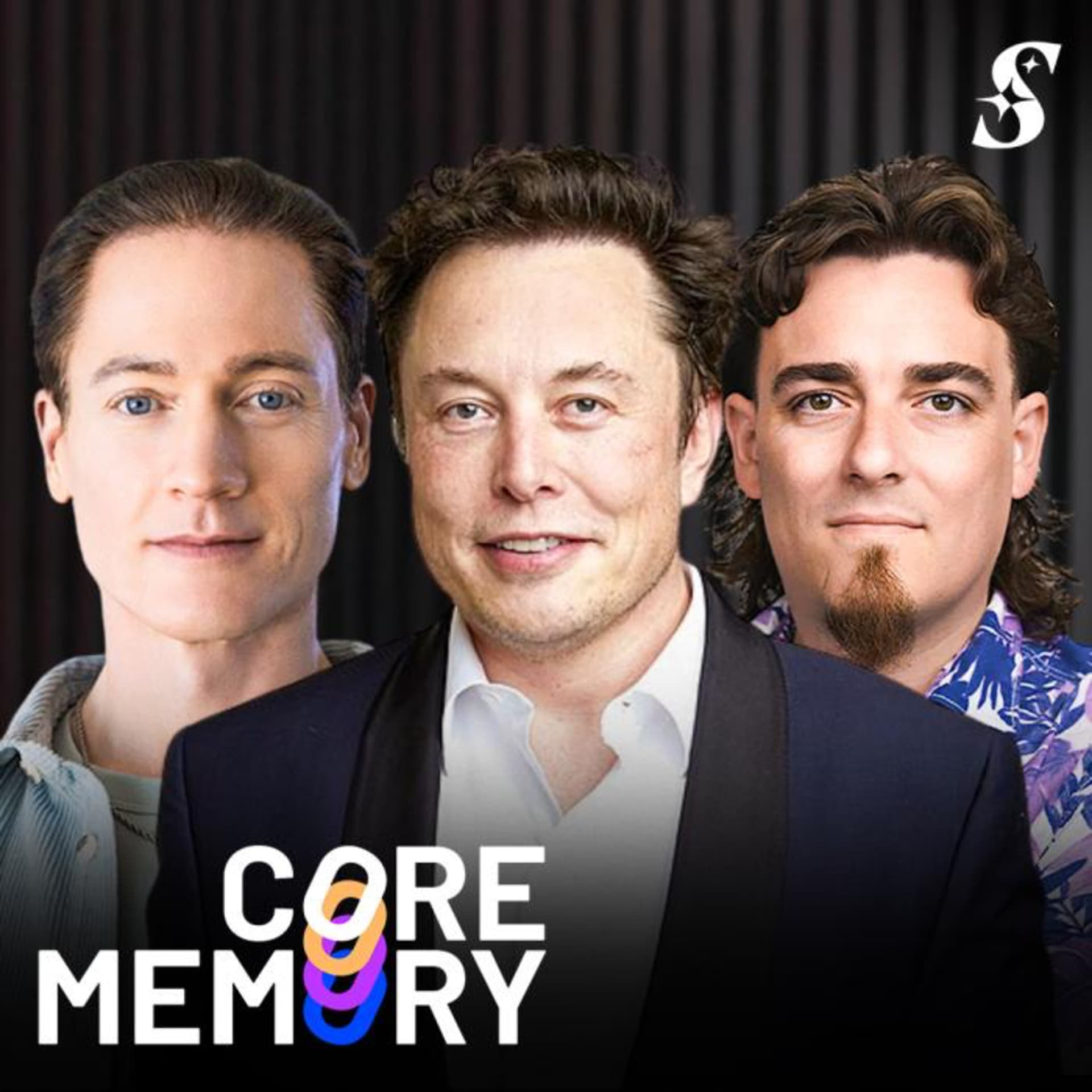
Episode Overview In this episode of *Sourcery*, host Molly O'Shea interviews Ashlee Vance, renowned biographer of Elon Musk and creator of the frontier podcast and video series *Core Memory*. The discussion revolves around Vance's experiences with notable figures such as Elon Musk, Palmer Luckey, Bryan Johnson, and Priscilla Chan, touching on themes of persistence, focus, and the evolution of his career from journalist to founder.
Key Guests
- Elon Musk: CEO of SpaceX and Tesla
- Palmer Luckey: Founder of Anduril Industries
- Bryan Johnson: Entrepreneur behind Kernel and Blueprint
- Priscilla Chan: Co-founder of the Chan Zuckerberg Initiative
---
Discussion Highlights
Transition from Journalist to Founder
- Vance discusses his shift from journalism to entrepreneurship with the launch of *Core Memory*.
- Emphasizes the goal of exploring and communicating complex topics in space, science, and technology.
Lessons from Elon Musk
- Persistence and Focus: Vance reflects on Musk’s ability to prioritize what truly matters to him, suggesting that this quality could lead to greater personal focus and productivity.
- Polarizing Figure: Vance comments on Musk's polarizing public persona, noting that he has enemies on both political sides and discussing the public's perception of him.
Insights on Other Notable Guests
- Palmer Luckey: Described as relaxed and engaging during interviews. Vance appreciates Luckey's contributions to the show.
- Bryan Johnson: Known for his health and longevity initiatives, Johnson's journey of transformation and how his persona has evolved is discussed. Vance notes the shift in public perception towards Johnson from skepticism to admiration.
- Priscilla Chan: Vance highlights her engagement with science and willingness to participate in the show despite limited public appearances.
Reflections on Personal Growth
- Vance shares his own experiences and how interactions with these influential figures have impacted his life and perspectives.
- Discusses the importance of surrounding oneself with people who inspire positive change and personal development.
The Challenges of Innovation
- Vance reflects on the challenges of pioneering technologies such as quantum computing and fusion energy, emphasizing the difficulty in distinguishing genuine innovation from mere hype.
---
Key Takeaways
- Personal Focus: The importance of concentrating on what truly matters in life, inspired by Musk's relentless dedication.
- Evolution of Public Figures: How public perception of innovators like Johnson can change over time, often influenced by their personal journeys and societal impact.
- Encouragement of Exploration: Vance's commitment to exploring lesser-known fields and ideas through *Core Memory* reflects a belief in the value of curiosity and knowledge-sharing.
Conclusion Ashlee Vance’s insights into entrepreneurship and innovation, along with his engaging anecdotes about influential figures, provide listeners with a deeper understanding of the complexities of success in the tech and science domains. The episode emphasizes the significance of focus, persistence, and personal evolution in shaping one’s career and contributions to society.
---
Connect with Ashlee Vance and Sourcery
- Ashlee Vance: [Twitter](https://x.com/ashleevance)
- Molly O’Shea: [Twitter](https://x.com/MollySOShea)
- Sourcery: [Website](https://www.sourcery.vc/)
Sponsors
- Brex: A modern finance platform that combines expense management with banking solutions.
- Turing: Provides AI solutions to enhance model performance and business efficiency.
- Kalshi: The only legal prediction market in the US, allowing trades on future event outcomes.
---
Additional Content Listeners are encouraged to subscribe to *Sourcery* on major podcast platforms for future episodes and insights.
Written by AI. May contain mistakes. Listen to the episode to check what was said.
Transcript
Automatic transcript. May contain errors.0:00What's the biggest lesson you've learned from Elon? You know, he's a complicated dude, obviously, for many, many, many, many reasons. But I think there was like that simple lesson to take away. Are you going to get Elon on? I'm trying. Pretty dramatic. We were at Neuralink filming something for a movie I'm making, and we were there until one in the morning. And then he went straight from there back to SAI. And then I had a friend who had a meeting with him at like 4 a.m. And I just figured he lives life constantly like that, plus the flying. Why do you think people think he's evil? Well, I mean, he is quite polarizing.
0:34Someone you also covered really, really in-depth. You love polarizing people. It's Brian Johnson. Yes. So what have you learned from him? Not enough health things. How much radiation have you been exposed to? What were the biggest sources? Can I? I'm going to grab a drink. Okay. Oh, no. I just scared Ashley Vance.
1:02Welcome back to Core Memory. I'm your host, Ashley Vance. Today, we have a very special guest. Her name is Molly O'Shea. Welcome to the show. Hi. This is the first time it's like the name works. I'm happy. I love your show. It's probably the best podcast except for mine. What's yours? Well, Sorcery. Oh, you recently had - You don't know my show? You recently had Sam Altman on the pod, right? Or no, it was Jack Altman. It was Ann Altman. Okay. Yes. There's so many. I mean, you just walk around San Francisco, you get yourself an Altman. So I came across you because we share something in common. What is that?
1:50Rex. The intelligent finance platform. The modern finance platform built for performance. Yes, yes. Well, I run my business on Brex. Do you? Yeah. Yeah. I mean, it's just the right thing to do. I'm trying to get up to about$100 billion in annual card spend. That's my goal. I know they just recently surpassed that, so I'm trying to double it for them. Wow. I know when you were at Bloomberg, you were notorious for the highest expense reports the company has ever seen, so you might get there. Is that true? Drew, do you remember what kind of numbers I was pulling? They were significant. You're talking six?
2:34Six figures? Nine figures? It was six, possibly bordering on seven sometimes. Okay. What's the most expensive thing there? Equipment? Oh, no. Well, Bloomberg, God bless them. Wait, now who am I?
2:57yeah now i'm confused freaky friday let's switch it back ashley vance welcome to sorcery how are you i'm good thank you so much for having me i did i did a flight one time well so bloomberg has this tremendous expense policy um they i don't feel like i'm revealing anything too horrible i mean They fly people business class, even the journalists who make no money for the company. They get paid more in flights than they do salary. Yeah. Like, well, you know. All right. Let's work on that one, Bloomberg. There's the terminal people who make all the money for the company and then the journalists get to like, OK, first of all, I don't want this to sound too bad.
3:39Bloomberg has very good journalists. They're doing good stuff. But, you know, it's not like the media side makes tons of money for the company compared to the terminal. And then the journalists get to run around the world reporting their stories. And so I always appreciated that. But one time I was in Shenzhen and I had my flight was canceled and I got stuck in this weird China Air limbo where it was like they cancel your flight, but there's no – you can call a number. I called Bloomberg's travel support. They're like, yeah, nobody's ever answered the China Air customer support number in like 20 years.
4:18And so I had to get to Ukraine like the next day. And it was like I couldn't book my ticket until it was officially canceled by China Air. But they didn't want to cancel it. You had to take the train instead? No. So then Bloomberg was like, well, we got to get you out. So we'll just buy immediately a business class ticket from Shenzhen to Ukraine. I have no idea how much that ticket cost, but it was substantial. That was where my story was going. Next time, make sure that they just charter you a jet. That would be nice. I would take that. That's how you get the real travel points. We actually had a guy who watched my video show worked in the airport air traffic control.
5:00He was texting me. He's like, you're never getting this flight. Yeah. He's like, it's not happening. They're just lying. It's not there. Okay. So I prepared a couple of really critical questions, actually. Who is your favorite nerd? I'll just go with what jumped to my head, but I don't even know this is going to be the most exciting answer you're looking for. There's a guy named Carver Mead. This is how old I am. I mean, he's kind of like previous generation tech. He was around like forming the semiconductor industry. He was a professor at Caltech. and he's like one of these dudes people say he's got ideas as big as Einstein and things like this and he helped he coined I'm pretty sure he's the one who coined the phrase Moore's Law when he was hanging out with Gordon Moore and he was just always my favorite guy to talk to I mean he had sort of this he was from California but he had like almost like a southern like foghorn leghorn sort of voice to the way he would talk.
6:04And I remember I went with him to dinner to this, the village pub, it's this fancy restaurant in Silicon Valley. And I was at the New York Times and we had very tight expense reports back then. And he ordered this, all my stories are about expense reports. They all go back to Brex. You know, Brex automates that. If only I had had Brex to help me navigate these horrible expense situations I got myself into. Yeah, he ordered like a$1 ,500 Paul Meyer bottle of wine and all this. And anyway, we just sit there talking, semiconductors. He's like this southern gentleman. I like him a lot. Was it my favorite nerd?
6:46There was a guy. His name is Danilla or Danil. He's in Moscow. And you know how there's like the cryonics, the freezing your head situation? and they have like i think it's called alcor in the united states that does this in arizona well this dude was like the russian knockoff cheap version of cryonics and we went to like the moscow suburbs and this dude was like a full-on transhumanist cult leader in moscow and we're driving out for a couple hours to the edge of moscow we get to like it's like a suburban neighborhood but it's almost like rural it's just like tiny houses with like shacks in the back and we get there and he's got he's got full-on heads in these what yeah like home depot style you went to like a freezer with heads in it yeah there were like parakeets dogs cats and then human heads in there a chinchilla oh my god but i love this dude he was wild he was really weird and he had like a cult and like people would be at his lab and they would like cut their wrist and put their Russian subway, like their little tap and go sort of RFID thing under their skin and he was a character.
8:03Yeah, he's one of my favorites. And he's not in jail for that? No, he can't do stuff in Russia. It's cool. Oh, I got it. No laws. It's all good. Sorcery is brought to you by Brex, the financial stack trusted by more than 30 ,000 companies including one in three venture-backed startups in the U.S. Nearly 40 % of startups fail because they run out of cash. Rex is literally built to help founders avoid that. Unlike traditional banks that let your money sit idle, chipping away at it with fees, Rex's designs help you spend smarter and move faster. Their all-in-one solution combines checking, treasury, and FDIC protection into one powerful account.
8:47You can send and receive money globally at lightning speeds, get 20 times the standard FDIC coverage through their partner banks and even high yield from day one. With same day and even same hour liquidity, access your funds anytime. Companies like Scale AI, DoorDash, Service Titan, HIMSS, Anthropic, Flexport, Robinhood, and Plaid trust and use Brex. Start today at brex.com slash sorcery. That's B-R-E-X dot com slash sorcery. In terms of core memory, who have been some of your favorite guests? Palmer Luckey was a good one. He kind of like helped rev up the show, I think. Brian Johnson was always a favorite of mine.
9:32Great episode. Yes. Great episode. He was a fun interview. And then, well, Palmer, he was very good because he was in fine form. He was relaxed and he was just chatting away. Yeah, I think those two, Priscilla Chan was really cool. She was like, hasn't done a ton of interviews and she was paying attention to what we were doing around science and everything and was cool enough to kind of come on the show. I'm trying. You know, Elon's always super short on, I don't know, well, Elon's super short on text. Yeah. I've seen his tweets. Yeah, yeah. You ask like these big complicated questions that he's either like, sure or no.
10:14and then we did actually we had a day he was gonna come in to the studio sit where i'm sitting now and then he kind of flaked and so we'll see we'll get him maybe you can uh interview him on one of his flights on a flight yeah on the plane i feel like he's on a plane more than he is on ground i wonder what percentage of his year is spent in the air versus online it's pretty dramatic And then like he has no, I figure he has like no time zone, anything, you know. We were at Neuralink filming something for a movie I'm making and we were there until like one in the morning. And then he went straight from there back to XAI.
10:58And then I had a friend who had a meeting with him at like 4 a.m. I think. and I just figure he lives life constantly like that, plus the flying. In today's high-speed business world, staying ahead means using the smartest tools possible, including the powerful capabilities of artificial intelligence. Meet Turing Intelligence. Turing builds customizable AI systems designed to solve your mission-critical challenges no matter your industry. From expert guidance to tailored projects, Turing helps top companies realize AI that's more capable, more adaptable, and more effective. With Turing, discover how AI can accelerate your business growth.
11:35To learn more, visit Turing.com slash sorcery. Spelt S-O-U-R-C-E-R-Y. That's Turing.com slash sorcery. What's the biggest lesson you've learned from Elon? We have a super complicated relationship. I'd say when I was doing the book, sort of like this persistence thing.
11:57It sounds like simplistic. And then I don't even know if everybody should live like this, but it was like, he's just very good at prioritizing the things that really matter to him. I think when I was doing the book on him, I started to like marinate in the way he goes about life. And I was like, oh, there's all these things I'm chasing all the time, but some of them don't really matter. and you should just put like most of your energy into the stuff you really think is going to matter. And so, you know, he's a complicated dude, obviously, for many, many, many, many reasons. But I think – I do think there's like – there was like that simple lesson to take away.
12:43It was just to be a bit more focused and like if you actually care about something to like go after it. He's like – there's like persistence and then I just don't think most people understand. You know, I mean, that's like when I think about the difference between SpaceX and something like Blue Origin that started about the same time. You know, I think Blue Origin is like coming on now, but they've had 20 years where SpaceX has just been lapping them. It's like taking over the entire rocket business. I mean, he built a data center in 19 days. Right. That's insane. And, you know, like people can hate him for all his politics stuff and everything like that.
13:25I get it. But the reason those things work is because like even when he's the richest dude in the world and he's in his 50s and all that, he's like sleeping there doing all this stuff. You know what I mean? So there's just like I still think there's many people that would do that. And it's sort of I think that just like oozes into the companies and makes it work. Why do you think people think he's evil? Quite polarizing. His tweets and his opinions. I've covered him so long that I've gone through, he was hated by Republicans, and then now he's hated by the left. It's hard to keep track. And then I always think of it as when the Model 3 was total disaster, and you could tell it was taking a toll on him.
14:16that was sort of when bad elon started to emerge on twitter um and it kind of stuck and he just i don't know he you know and he got he used to not be that into politics and everything he just got so so into it and um yeah i mean there's a bunch of reasons some people hate him i think it's i find it all sort of uh stupid really because he's either idolized or hated he's either a hero or the scoundrel and i think like all people are more complicated than that and to me so it's kind of sad it like undermines a lot of the good things i think he's done especially for the united states so um yeah i wish there was a little less baggage really it's always a weird dynamic because people uh majority of people i wouldn't say a majority i it's it's just like an interesting like psychological experiment like for human behavior of envy and jealousy and then you know also feeling insecure but then you know some people like idolize that and so you will always with very polarizing success get both ends of the spectrum and so like another person who has that effect is someone you also covered really really in depth you love polarizing people uh it's brian johnson yes so what have you learned from him not enough health things i'm like the only person who like hangs out with him all the time that somehow has gotten like less healthy um uh i mean brian's interesting i think because there's not usually you know he sort of like had this big life transformation when he was 35 ish and i don't think a lot of people like really wholesale change um at that stage in life and then he's kind of like keeps doing it a little bit like people think he's i don't think they knew brian before and so they think he's like this um maybe they think he's like this one note um you know he's doing his whole don't die his health thing and they they sort of associate that with his personality but you know he used to be super different he was actually um when i first met him i mean he was so you know the reputation was he's really sensitive to criticism and um he was kind of like thin-skinned and and since he got famous he just like revels at all these people crapping on him and i don't actually think i don't think it's like an act you know i think he's he's sort of embraced all of this and so um so i kind of like i guess i would have taken away just that you actually can change and morph as you're getting older you know um i don't know if i sit back and think what i take away from these people i feel like i just hop from one one person to the next yeah maybe i should actually be more thoughtful about all this stuff i'll interview after every a week after every interview and we can do a debrief on your podcast biographies yeah i haven't actually i've never i've never kind of like fully thought about that yeah i do know when i was filming the documentary i mean for sure i'm brian it was great thank you so good you're super nice we did that with chris smith who's this great documentarian i mean he and i both had the same i've seen this happen with like everyone who hangs out with brian which is like it really does rub off on people and chris chris is sort of like uh he's a maniac i mean he's filming oh my god it's past 11 a.m i can't eat another piece of food.
17:56Yeah, yeah. But like Chris is kind of like he's wired like in Elon or O 'Brien. He's filming five or six movies at the same time and he's running, you know, just at max speed and then he met Brian and then yeah, he started doing like his sleep tracker and everything. And he used to be the kind of guy, you know, he's like calling you at 3 a.m. texting and blah, blah, blah. And then near the end of the movie he's like, it's 9.30. I'm not answering messages anymore. And so like I do – I have noticed that with everybody who hangs out with Brian for some substantial amount of time, which is probably just like healthy.
18:31You know, I remember when I first started reporting on him, like most people kind of hated him and thought it was just like – there's been – there are obviously some people who still think this, that it's like whatever, like a cult or silly. But when I first started reporting on Brian, like I would get a lot of pushback from editors at Bloomberg and other, you know, like sort of just like, why are you spending so much time on this weirdo? He seems kind of fringe. And then like over time. Guess who's wrong? Yeah, like people took it a lot more seriously. And in these, I mean, we get into it on the podcast, but it's so true.
19:07Like he used to come to Silicon Valley and nobody would meet with him and he could never raise money for everything. And then now I see him walk into these rooms and everyone's like wants to talk to Brian, but they also they're all trying to learn how to live a better life and all this stuff. I just so it's all kind of funny. So he does, you know, I think net net if your thing in life is that you're like rubbing off on people that you're just kind of making them live better. Then that's probably not the worst thing. Yeah, I remember specifically from your interview when I thought this was really revealing about him and like his true interests.
19:44But when you were interviewing him, he was talking about the transitions within Don't Die and then Blueprint and, you know, and how he's like stepping back from Blueprint. What he created there was tremendous. tremendous. Like he created a cult product and had like real success. And in CPG, which is extremely hard, like even some celebrities can't break through that. But, you know, he mixed it with the good storytelling, his brand, like the marketing and Kate, like all of it came together really, really well. And those breakouts are like, those are difficult. But I think like hearing from him stepping back from that, because, you know, I mean, I think about this too, and maybe you have the same kind of feeling, but like deep down I'm a nerd.
20:30Like do I want to be posting on X all the time? Do I want to be marketing all the time? Like no, like I don't. Sometimes I just want to like sit and research stuff. But like for him, like you kind of saw that within his story. He's like, no, like I actually just want to focus on the frontier science. Yeah, because he has to become like a character. And then people – it's not like it's working in a coal mine or something, but like making all this stuff is relentless. You know, if you're going to go full influencer, it's like no joke. And you got to think of something new all the time. And it's a thing.
21:04Yeah. I feel like within the process of making those products, probably making the products was most fun for him. You know, like the ingredients, like how it works scientifically with the body and all of that. Yeah. It's funny because Brian always says he was like, and I've interviewed his family. I mean, it is true. He kind of struggled in school, in high school, and he was not like some engineer at university and all that stuff. And so I think some people sometimes question like does he know the science and all that? He like really does. I mean he can like – it's impressive. He can talk at length about all this stuff.
21:43So I think you're probably right. That's probably where you would rather be. All right. So to get to a more serious conversation, I need to ask you a very difficult question. I don't want to scare you too much, but this is going to be a hard one. How much radiation? I can't even ask it. Okay. Serious. How much radiation have you been exposed to? It's hard to say.
22:11Probably like a decent amount. Yeah. Yeah. What were the biggest sources? I mean, I've been to places where they're like processing uranium. I went to Siberia to like a old fusion, like the heart of like the Soviet, you know, fusion program. I went to Ukraine to where they made all the ICBMs for the Soviets for decades and decades. And then Lord knows from like all these random labs over the years. Yeah. I mean, I think the worst thing I probably ever done is like the experimental vehicles. I seem to end up in like planes that are flying for near the first time I was in. I was with George Hots.
23:01If people remember, George Hots built like a self-driving car on his own in like a month. And I just called him randomly one day. Just see what he was up to. And he's like, oh, I'm so glad you called. I just built a self-driving car in my garage in the last month by myself. And I was like, oh, that sounds like a story. Let's come like film that. And he's like, okay, yeah, that'd be great. And then we show up with my film crew and everything. And I'm doing like a written story. And then we go out on the freeway with George in his car. And then we're going along. And he had like, he'd, you know, like ripped out the whole console.
23:36It was like a video. It was just running, like streaming Linux from a command line interface through the dashboard. and he had put like a video game joystick as like the thing to launch in a self-driving mode. And so he like grabs the joystick and he puts it in self-driving. We're like on the 280 freeway and it's like kind of hugging the lanes like pretty aggressively, you know, and I was like, this is incredible. What was it like the, you know, the first time you got this to work? He's like, this is the first time. You're just, you're like, okay. Yeah. So, yeah, I think those things are maybe worse than the radiation.
24:15I hope you never get into the Titanic. What was it called? The Titan Explorer? The submersible thing, yeah. Oh, my gosh. That is like the kind of story I would do. I did think about that. Don't do it. Don't do a submersible. I get claustrophobic, so I try to avoid those. Would you do one of the Blue Origin flights or anything like that? Would you go up there? I don't think I'd be afraid of that one. I always wanted to do like more than the six-minute flight. I feel like if you're going to go on the rocket. Go to the ISS? Yeah, like I want – if you're going to put your life on the line. Make it count.
24:52I mean the Blue Origin one seems quite safe because there's lots of – they've got backup plans. But yeah, that's what I always want to do. I want to do like – They don't really have that. I mean, I talked to some of the crew. There was an event around Milken in L.A., and there were a couple of their astronauts there. And I asked, I mean, I've obviously asked, like, a lot of curious, like, child questions. And one of them was like, okay, so what if all the parachutes don't deploy? There's, like, three or four parachutes, so they have backup systems, blah, blah, blah. Okay, so if, like, none of them deploy, there's an emergency hatch.
25:26You get launched out of that, out of the top. Guess what? You're hitting 12 Gs. What happens to your body when you hit 12 G's? You become a noodle. Your brain flattens. Like you probably won't even survive that. So like what's really the – I don't know. But yeah, that's how I thought about it. I was like, oh. Now you're changing my mind. There are some edge cases here. Yeah. Yeah. Yeah, no, but yeah, I just always wanted to do like the weak. You should do it. I would like to, I think. Yeah, I would do that, especially on a SpaceX rocket. They need to put like Ammons in Leo. You know Amon, the hotel?
26:02Oh, yes. Yeah. They sponsored Novak Djokovic. I just saw. Really? Yeah. Oh, yeah. He was playing last night and I started Googling it. That's a good sponsor. Yeah. There you go. It worked. It worked. It worked. Amon, if you want to sponsor Sorcery, reach out. We have a very high value audience. It did work. Yeah. So as we shift, Quantum and Fusion, they're pretty much in like the same leg race. they've been around for a while but it hasn't had its inflection moment yeah how do you think about those two pacings like what do you think about those conceptually i think you're right similar buckets right yeah all this promise i feel like like uh i've been covering quantum computing for so so very long um it's always hard to tell like you could you know there's stuff that's just made up right and and yeah and quantum has never really felt like that to me it's like there's some semblance of an interesting thing out there that people are chasing it just feels like it's taken so long I think I oh god I can't remember when D-Wave came out like maybe like 2012 I want to say 2014 something like that that was the first big quantum computing story I wrote and it was like oh we've done it we've built a quantum computer you know and D-Wave is still kind of around but obviously people don't consider this like a solved problem by any stretch and so um yeah it's always that thing where it's like science project that has to become real and it's hard and and so yeah i kind of think of them they're probably like the two areas where i feel the least comfortable trying to tell what's real from what's not real because everybody's raised a ton of money and it seems like serious people that are doing it and they're smart people then you You just can't tell if they've all convinced them.
27:53You can't tell like who's shady versus who's super smart, but have kind of like convinced themselves that their life's pursuit science project is probably like realer than it actually is. Yeah. We should get a lie detector test. That's the thing though. I think they'd probably pass. They've already convinced themselves. That would be amazing though. It would be so good. If you had like the CEOs of all the quantum companies. And, you know, they all have different approaches. It's kind of like in the – it's vaguely like in the fusion area. And then they just talk so convincingly about why there's – is right.
28:30The other one's wrong and is never going to work. And then you have to be like a quantum physicist to even begin to try to have some like assessment of all this, you know. So, yeah. No, it's really hard. It's like sort of like areas I prefer not to cover. So what's next for Core Memory? For Core Memory? Oh, so much stuff. We're just making – got the podcast going. Love to do like kind of a mix of well-known people and then people who are a little more off the beaten path. I just like to go down rabbit holes with folks where you get to learn about something like quantum computing or some crazy biotech thing, whatever.
29:21Keeping heads in freezers. Yes. Yeah, exactly. Those are my kind of people. And then we've got a video series on YouTube, which is awesome. And we have more and more and more things coming. I love the YouTube. The YouTube is my favorite. Thank you. We have these big kind of like hour-long episodes coming. We shot a big episode in Tennessee. We shot a big episode in Detroit. We're heading off to Boston, Washington State, all kinds of fun stuff. So – and then we've got – yeah. I mean those are – that is where I would send people to go check out what we're doing. Check out Core Memory. You did a great job.
29:58This was all improv. Ashley Vance, thank you for coming on Sorcery. Thank you. It was nice. I'm in the guest chair. I like it. Hey, it's Molly. If you enjoy our interviews, check out our newsletter, sorcery.vc, where we deliver a once a week top deals and tech headlines email and also go deeper on our podcast interviews. Subscribe to Sorcery today and don't forget to subscribe to the podcast on YouTube, Spotify, Apple or wherever you listen. Link in description to sign up.
From the publisher
Ashlee Vance, best known as Elon Musk’s biographer, and now the creator of Core Memory, a frontier podcast and video series exploring space, science, and technology, joins Sourcery for a fun behind-the-scenes (BTS) on his most high profile guests.
We talk about why Ashlee shifted from journalist to founder, his vision for Core Memory, and the guests who have defined the show — including Palmer Luckey, Bryan Johnson, and Priscilla Chan. Ashlee also reflects on his relationship with Elon Musk and the lessons he’s learned from him on persistence, prioritization, and relentless focus.
Notable Guests:
• Palmer Luckey (Anduril founder)
• Bryan Johnson (Kernel, Blueprint, Don’t Die)
• Priscilla Chan (Chan Zuckerberg Initiative)
Connect with us:
1. Ashlee Vance: https://x.com/ashleevance
2. Molly O’Shea: https://x.com/MollySOShea
3. Sourcery: https://x.com/sourceryvc
Brought to you by:
• Brex—The modern finance platform, combining the world’s smartest corporate card with integrated expense management, banking, bill pay, & travel.
As a Sourcery Listener you get: 75,000 points after spending $3,000 on Brex card(s), white-glove onboarding, $5,000 in AWS credits, $2,500 in OpenAI credits, & access to $180k+ in SaaS discounts. On top of $500 toward Brex travel, $300 in cashback, plus exclusive perks (like billboards..) visit → https://brex.com/sourcery
• Turing—Turing delivers top-tier talent, data, and tools to help AI labs improve model performance—and enables enterprises to turn those models into powerful, production-ready systems. Visit: https://turing.com/sourcery
• Kalshi—The largest prediction market and the only legal platform in the US where people can trade directly on the outcomes of future events: https://kalshi.com/sourcery
Follow Sourcery for the latest updates!


