
In short
Coinbase’s “intelligence” push and AI agents for financial services, plus product updates at its biannual system update. Armstrong argues crypto can expand economic freedom by giving people property rights over money, instant low-cost global payments, and tokenized access to assets.
Guest backgrounds
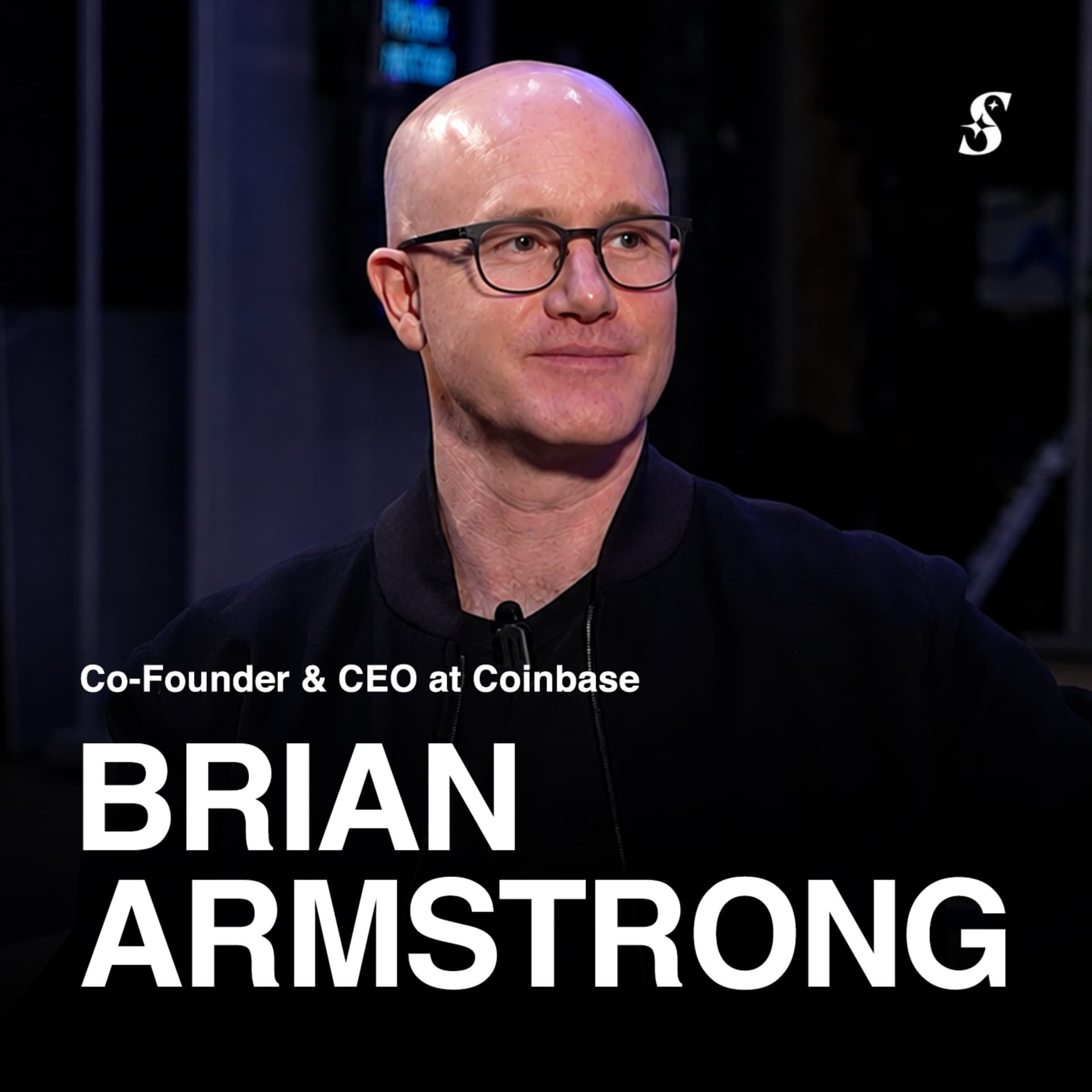
Brian Armstrong is CEO and co-founder of Coinbase (founded in 2012). Emily Choi is Coinbase’s President/COO (mentioned as his operator complement). The host is not identified in the transcript.
Key claims
About 4 billion people are “unbrokered” and lack access to high-quality U.S. investments; 83% of Americans say the financial system isn’t working for them. Coinbase is building around AI agents (about 1,200 full-time agents) and “Coinbase Advisor,” an SEC-registered AI agent that can research and execute trades/tax-loss harvesting with human-in-the-loop approval. Coinbase says it received approvals to unify global liquidity so U.S. and international customers share the same order book.
Notable examples
Tokenized equities as one-to-one backed stocks (contrasted with synthetic/derivative products). “Pre-IPO perps” (e.g., SpaceX) to democratize access to private-company upside. Argentina anecdotes: coin scarcity during hyperinflation and pessimism that discourages long-term planning.
Written by AI. May contain mistakes. Listen to the episode to check what was said.
Chapters
Tap a time to open that second in VOThe Financial Landscape and Coinbase's Vision
0:00 to 0:46
Learn about the challenges of financial access globally and Coinbase's innovative solutions.
“There's actually about 4 billion people in the world today who are unbrokered.”
Innovations in Tokenized Equities
1:04 to 2:58
Explore the concept of tokenized equities and how Coinbase aims to democratize stock trading.
“I mean, one of the big ones is tokenized equities.”
Economic Freedom and the Role of Crypto
2:58 to 5:48
Understand the connection between economic freedom and cryptocurrency as a tool for prosperity.
“And then the benefits of that are that people all over the world can trade it, right?”
Challenges in the U.S. Financial System
5:48 to 7:49
Analyze the inefficiencies in the U.S. financial system and the need for modernization.
“We want to democratize access, bring down the fees, reduce the friction.”
Perceptions of Socialism and Capitalism
7:49 to 11:25
Discuss the contrast between capitalism and socialism, especially among younger generations.
“Because if you survey Americans, And something like 80, I think 83 % of them say that the financial system is not currently working for them.”
Coinbase's Global Expansion and Argentina Insights
11:25 to 14:00
Learn about Coinbase's global growth strategy and experiences from Argentina's economy.
“So, yeah, when I talk to people who left socialist countries, I mean, for them, it's like the most obvious thing in the world because they actually lived through it.”
Coinbase's Global Expansion and Challenges
14:00 to 16:48
Explore Coinbase's approach to expanding its services globally and the implications of hyperinflation in Argentina.
“But yeah, a couple, I mean, maybe some interesting stories from Argentina.”
Crypto's Impact on Financial Infrastructure
17:51 to 18:13
Discuss how cryptocurrencies are transforming financial systems and democratizing access to financial services.
“That's why companies like NVIDIA, Anthropic, Salesforce, and Gemini partner with Turing.”
Crypto's Impact on Financial Infrastructure
18:18 to 23:56
Discuss how cryptocurrencies are transforming financial systems and democratizing access to financial services.
“I recently had Jackie Rhesus on and maybe we could talk about the evolution of it.”
Navigating Trends in the Crypto Market
23:57 to 28:00
Delve into the recent trends in the crypto market including prediction markets and the implications for Coinbase.
“There were like lots of fun things going on.”
Show all 18 chapters
The Future of Financial Super Apps
28:00 to 29:20
Explore the competitive landscape of financial services and Coinbase's strategic advantages.
“So that's the kind of thing that, you know, maybe once market structure is done, I'll get a chance to go talk with the Senate about.”
AI Revolution at Coinbase
29:20 to 34:56
Discover how Coinbase is integrating AI to enhance productivity and innovation.
“So there's a number of things where we've been first.”
Shifting Mindsets for AI Collaboration
34:56 to 37:58
Learn about the culture change at Coinbase towards AI and team dynamics.
“I mean, AI is making everything exciting right now.”
Defending AI and Company Values
37:58 to 42:04
Understand Coinbase's strategy for navigating AI's reputation and regulatory landscape.
“Because now you've encoded like the thing that it missed in the brain for all future teammates and all future pull requests.”
Navigating Media Backlash and Company Mission
42:04 to 44:56
Learn how Brian Armstrong dealt with media criticism and reaffirmed Coinbase's mission.
“we see like the bank lobby trying to push back against that and say, oh, it's so dangerous.”
AI's Impact on Fintech and Coinbase's Position
46:41 to 53:08
Explore how AI is reshaping fintech and Coinbase's strategic response.
“Well, I don't think OpenAI and Anthropik are going to build all the companies.”
Mentorship and Personal Growth as a CEO
53:08 to 56:01
Understand the importance of mentorship and conflict resolution in leadership.
“onto Coinbase and to be using these products?”
Learning from Mentors in Business
56:01 to 57:26
Discover the importance of having mentors and mastermind groups in business.
“not, you know, and you basically just go do hard conversations for a living, right?”
Transcript
Automatic transcript. May contain errors.0:00There's actually about 4 billion people in the world today who are unbrokered. Half the planet can't get access to any high quality U.S. companies to invest in. If you survey Americans, 83 % of them say that the financial system is not currently working for them. There was a tweet that you put out that got over 24 million views. You essentially said that Coinbase is rebuilding around intelligence. There's actually about 1 ,200 full-time agents working at Coinbase now, but in the future, you're increasingly going to talk to one agent. That agent is going to orchestrate hundreds of thousands of other agents.
0:28People are going to use things like Coinbase Advisor right in their Coinbase account to just manage their financial life. That's probably the coolest thing on the frontier that we're announcing today.
0:45Brian Armstrong, welcome to Sorcery. Thanks for having me. Thank you for having us here. Where are we? We're backstage right now. We have a big event tomorrow. Yeah, the Coinbase system update. We do this twice a year where we go out and talk about everything we built in that half of the year. And we've got some really exciting announcements. I can go through a couple of them if you want. I mean, one of the big ones is tokenized equities. That's something we've been working on for a long time. So just like, you know, stable coins got the tokenized money, you know, dollars, and it got democratized access for everybody.
1:15We're now doing that with stocks for the first time, which is really exciting. We built out a lot of infrastructure for AI agents to actually get their own financial accounts. and connect them into your own, your Coinbase account. And then we've started to actually, we finally got the approvals in the US to unify our global liquidity. Like most people don't know that 80 % of the trading volume went offshore for crypto because of the lack of clarity in the US. And we've just finally gotten some approvals where we can now get our international customers and our US customers on the same order book.
1:44And liquidity is a network effect. So that's really powerful. Exciting. Well, first I have to apologize. I don't have a throne for you or a big marble Bitcoin. But I do want to talk about some of those product releases. So first is tokenized stocks. There have been some companies that have said they're going to release this. There's also exchanges that wanted to release this. Why has that not worked before and how are you going to make it work? Yeah, so lots of people have been talking about this for a while. And there are some products that are out there today, but they're actually not one-to-one backed by the stock itself.
2:16They are a derivative or a synthetic. So there are ways to get exposure, but you're not actually owning the underlying asset. And that's what was powerful about stable coins, what caused them to take off so much is once there was a trusted stable coin like USDC, where you could say, all right, I know and believe that there is a dollar underlying every single one of these tokenized dollars. Then it really took off in a massive way. And we saw with regulatory clarity like the Genius Act that now hundreds of large U.S. companies are adopting it. And so we think that the same thing is on the cusp of happening now, especially with the market structure legislation or the Clarity Act is sort of the next piece of crypto legislation that we think is right on the horizon.
2:55So Coinbase is the most trusted brand in crypto. I think we're the ideal company to actually be that trusted, that bridge, you know, where we have the underlying stocks, a one-to-one token minted on top of it. And then the benefits of that are that people all over the world can trade it, right? There's actually about 4 billion people in the world today who are unbrokered. They don't have access to any high-quality U.S. investments. They can trade - So 4 billion? Yeah, 4 billion, like half the planet. That's a lot. Basically can't get access to any high-quality U.S. companies to invest in. And so they're stuck just holding cash and lower-quality investments.
3:30And then you can do 24-7 trading with tokenized stocks. So that's going to totally change the world on that dimension. And then lastly, one kind of cool feature is that you can just really easily send these stocks just like any other token. So you can gift it to your friends. You know, you can give people a share of Coinbase or NVIDIA at, you know, your nephew's birthday party. So I don't know. It just it brings stocks onto modern financial rails. And it's going to be really cool. In addition to that, I really want to get into the advisor product. So you have an SEC registered AI agent advisor.
4:08How does that work? Yeah. Okay. So we knew that AI tools need to be embedded right in the Coinbase app because people are asking their AI a lot of investment and financial questions right now. But the AI agent doesn't really have context about what's in your account and what your financial goals are. It can't actually take actions on your behalf. So we launched this thing, Coinbase Advisor. It's built right into the Coinbase app. And you can talk to it in plain English. And it can do research, but it can also conduct trades, do tax loss harvesting strategies. It can do financial literacy or education.
4:39Okay, so then most people on the internet, when they write something on X, they say, this is not investment advice. And we thought, we're the most trusted brand in crypto. Why don't we build this the right way and actually make it real investment advice? And the advice you're getting now from it is, yeah, it is investment advice. We can actually say that. How are you tracking its performance? Well, so right now, we are collecting all that data. One of the things that I'm excited to do over time is actually build a leading front, like a frontier model for investing. Right. So that a lot of like the scaling laws apply anytime you're building one of these AI models.
5:17And we're collecting, starting to collect a lot of that data now. Today, the human's in the loop on these these investment recommendations it's making. So it'll you know, it can research things. It can propose things that you might want to do. But the human is hitting accept and deciding what to do. and then we can start to build that data set over time, which I think will be a real moat. I guess like taking a step back, what is the broader vision of all these products and what are you, what is the goal you're building towards? Well, the mission of the company is to increase economic freedom in the world.
5:48And so, you know, we believe that it's important for everybody to have access to good financial services, to have sovereignty of money, like to have sound money that can't be eroded via inflation, for people to raise money to start a company or to get a loan or to make payments all over the world. We want to democratize access, bring down the fees, reduce the friction. And that's how we're going to unlock a lot of prosperity in the economy. And frankly, like for civilizational progress, there's a lot of good research out there on economic freedom and the different countries of the world and the highest economic freedom countries.
6:20It's positively correlated with all kinds of things, not just like higher GDP per capita. It's also correlated with better, like higher happiness, better treatment of the environment, The poorest 10 % of people in those societies are much better off. And it actually is correlated with, believe it or not, like reduced corruption, reduced war, reduced infant mortality, like all kinds of things. And so we believe that economic freedom is a foundational necessity for all civilizational progress. And crypto is this unique technology which can actually update lots of financial services and create more economic freedom in the world.
6:55Do you think the average American or average person thinks that they're economically free? And if not, why? I think in the U.S. So it's a tale of two cities. On the one hand, the U.S. is one of the more economically free countries in the world. People generally trust the dollar. They trust that the government's not going to just come take money out of their bank account without their permission. Part of what gave me the appreciation for this when I was first starting Coinbase is that I had actually spent a year living in Argentina. right? And I saw that country go through hyperinflation. And it was just like a basically a hundred year history of the government kind of stealing wealth from people in various ways.
7:32And so you have to remember, if you've only grown, people have only spent time in the US, there's many countries in the world where we sort of take these things for granted in the US. That is not the normal state of the world for most people in the world. But even in the United States, I would say our financial system needs an update, a massive update. Because if you survey Americans, And something like 80, I think 83 % of them say that the financial system is not currently working for them. And they say the fees are too high, you know, overdraft fees and these kind of like, and then they say there's delays.
8:02It's hard to move money. They say that there's unequal access. I mean, there's lots of people in the U.S. who are unbanked or underbanked, right? And so even in the U.S., I'd say our financial system is, the legacy financial system is, it's slow, it's creaky, it's old. In many cases, it's built on code that was written in the 90s and COBOL and these kind of mainframe computers. And a lot of that stuff just hasn't been updated. So it's going to bring enormous benefits all over the world. There's some people in the world who have a hair on fire problem that their money could just be taken from them at any moment.
8:35And now suddenly with a smartphone, they can have access to good financial services. Also in the U.S., we're going to see this unlock growth and prosperity. So I wanted to ask you about this. I've had several conversations, one with Max Levchin. We talked about socialism. He is not for that at all. I think he grew up in a socialist country. The people who grew up in socialist countries and immigrated are sometimes the most patriotic. Surprise. Yeah. But so I talked to Max Levchin. I also talked to David Buzuki. So at Roblox, they created one of the first digital economies. And so between those two and then some other conversations I've had, I've been really curious, like of the research of the historical references that the CEOs are using to build their companies.
9:20So for you, Argentina, are there any other kinds of instances that you've been learning from of other economies? And if you did have to start one today, I'm assuming you are doing that here. But like, what would the main building blocks be? Yeah. Okay. So I'm definitely a student and fan of free market capitalism. You know, we believe that capitalism is a force for good in the world. To me, that's like a fairly obvious thing. I'd say probably amongst the general population or college campuses, maybe that's like a controversial view in this moment. But we're unapologetic about it. We believe capitalism is a good thing.
9:53And we want everybody to have a piece of it, right? Capitalism lifts everybody up. It doesn't create equal outcomes. I actually don't think you want that. You want high growth that lifts everyone up. And so we very much believe that crypto is free market oriented, which can enable all these things. And we want to democratize access for everyone to participate in capitalism. You know, some of the influences when I was just founding Coinbase, you know, I had been reading a lot of Milton Friedman. You know, there's like this great TV series from I think the 80s called Free to Choose. You can see it on YouTube, where he goes through a bunch of interesting economics examples.
10:30You know, I'd been reading some Ayn Rand and things like that, right? Just celebrating builders and people who can go move civilization forward. And, you know, I think lots of people have been very, very clear on this. So those were some of the influences. And I think that America is one of the more free market capitalist countries in the world. It's not the most. I think it's in the top 11 or 12. You can actually go look at the rankings, right? There's various organizations that publish rankings of the economic freedom of the world of different countries. So the U.S., it's the largest, I'd say it's the most free large economy, much more free than, say, China.
11:06But there are maybe a handful of countries above that have even a little more economic freedom. In my view, the more you lean into economic freedom, the more everyone benefits, and America should do that as well. So why do you think America and the newer generations are falling to socialism? I think that every generation has to kind of learn this from first principles if they haven't been exposed to it. So, yeah, when I talk to people who left socialist countries, I mean, for them, it's like the most obvious thing in the world because they actually lived through it. Right. I think if you look at like, let's just think about some of the lower economic freedom countries.
11:45Right. North Korea, Cuba, formerly Venezuela. Right. Maybe that's changing now. These are not places where you would want to go. Right. You know, people in general are much worse off and they have worse outcomes across the board, whether you look at health care, education or GDP per capita or anything. So, you know, like it's a nuanced debate. I think, you know, there's a whole argument about suicidal empathy. Right. Of like if America has been so prosperous for so long, does it create some sense of guilt and people now want to give back or they want to redistribute? So it's an interesting, complex societal phenomenon, but I've seen that if free market capitalism is kind of this contrarian idea, right?
12:29If you look at it on the face, you'd say, oh, well, it's unequal outcomes. Like, that's not good. But it's the least bad outcome is what someone might say, right? Because if you take if you take away that incentive and freedom for people to go build innovative things and try new ideas, you have a society that stagnates and you have people who go into positions of power that are they become corrupted. Right. And so you need a free market to like root out bad ideas and celebrate good ideas for everyone to benefit. it yeah it was actually like it was so funny talking to dave bazooki about this because like a little bit controversial but yeah most of roblox's users are very they're young they're sub 25 but guess what like everybody who makes a game on roblox and the games that they play and they've seen this over and over again like when you're building out a new game and i don't know like the biggest use cases they all come back to capitalism so it's like these kids are building and playing these games of being an entrepreneur and they don't realize that and then they're protesting and then they're like supporting socialism which i think is the biggest paradox but not to beat on that too much i just like i'm always really surprised because it's like like there's so much to do with like social media and everything but then in the reality it's like no they're they're actually just part of the economy and it all comes back to capitalism but in terms of Argentina what are your plans I mean it got Teal's blessing well okay so I mean Coinbase is expanding to different countries all over the world and actually like the base app which is our self-custodial wallet has an easier time spreading like you can launch that in hundreds of countries around the world because if you're not taking possession of customer funds it's not it's not treated as a regulated financial service business so the base app is our way to get to all these countries around the world and then we have 10 markets or so where we go really deep with our custodial regulated financial service business.
14:31But yeah, a couple, I mean, maybe some interesting stories from Argentina. You know, I remember that people would like try to ride the bus and they, I guess the buses would only take these coins, right? And because there was so much hyperinflation, you'd have to come with like a, like a fistful of these coins and actually coins became in almost like rare, there was like rare to get coins. So if you went to go like spend with paper money and they owed you some coins and change, they'd be like, ah, I'll just give you an extra peso back or something. Cause they didn't have, they didn't want to give up their coins.
15:10Right. Um, I, maybe like the more pernicious example is that I'd say in Argentine culture, like this was at least my impression as an outsider coming in, I'd say people were quite pessimistic about the future, right? Peter Thiel had this great two-by-two diagram about like, are you optimistic or pessimistic? Are you deterministic or non-deterministic about the future? And people in Argentina kind of feel like it could all be gone tomorrow. The future is going to be worse. So just live every day like it's your last. Have great food and wine. So, you know, spend your whole paychecks, you know, have a nice dinner with your family.
15:46Because that's been the history of the country is like periodically just their money gets eroded and taken away. And so what is the consequence of that? It's like everybody in society kind of just, they don't plan long-term to try to build something for the future because it could all be gone tomorrow, right? So to do a 10, 20 year exercise to go build a world changing company like Coinbase or what Elon did with SpaceX, that's just not going to happen in Argentina because I don't know, maybe the next election, the government will just seize, seize all of your assets. And like, what was the point of even starting that project?
16:18You're going to go build it in another country. So it's a, it has like, you know, I'd say high inflation actually really harms the poorest people in society the most too, right? Because they're the ones who are holding all their wealth in cash. The wealthiest people in Argentina, they can, they can get a brokerage account open in, you know, in the U S somehow and hold real estate or these inflation, Bitcoin, these were inflation resistant assets. So So yeah, it really changes the entire fabric of society to have high inflation and low economic freedom in a negative way. Sorcery is brought to you by Brex, the financial stack trusted by more than 30 ,000 companies, including one in three venture-backed startups in the U.S.
16:56Nearly 40 % of startups bail because they run out of cash. Brex is literally built to help founders avoid that. Unlike traditional banks that let your money sit idle, chipping away at it with fees, Brex is designed to help you spend smarter, and move faster. Their all-in-one solution combines checking, treasury, and FDIC protection into one powerful account. You can send and receive money globally at lightning speeds, get 20 times the standard FDIC coverage through their partner banks, and even high yield from day one. With same day and even same hour liquidity, access your funds anytime. Companies like Scale LAI, DoorDash, ServiceTitan, HIMSS, Anthropic, Flexport, Robinhood, and Plaid.
17:40Trust and use Brex. Start today at brex.com slash sorcery. That's B-R-E-X dot com slash sorcery. Turing is training the next generation of AI with tasks that require real expertise and real-world judgment. That's why companies like NVIDIA, Anthropic, Salesforce, and Gemini partner with Turing. Turing builds realistic reinforcement learning environments and data systems based on real operational traces, the kind of infrastructure Frontier Labs need to train superintelligence. Visit Turing.com slash S-O-U-R-C-E-R-Y. So how is crypto changing financial infrastructure? I recently had Jackie Rhesus on and maybe we could talk about the evolution of it.
18:27But with Jackie Rhesus, she was at Square. where she helped stand up Square Capital and banking there and that kind of thing. And now she's forming this bank. And she said, before going to a bank, you'd sit there for 30 minutes, they'd give you a whole spiel, and then they'd offer you a free toaster. Now, with being able to build on Rails, she can spin up a million accounts in like two seconds. So I'm curious for your point on that, and how you've seen crypto evolve over time to today, and where the Clarity Act is. Yeah. So that's, you know, there's a great couple examples of just how crypto is updating the financial system, right?
19:05I mentioned one of them earlier, which is now anybody can get an account on a smartphone with an internet connection, especially if it's a self-custodial wallet, do it anywhere in the world, right? So that's pretty unique. Basically, anybody with a smartphone and internet can store their wealth in a way that it can't be taken away from them. People would call this basic property rights, right, in economics. that's something that just most people in the world don't have. We take it for granted here in the US. The second one is payments, right? You know, with crypto rails, you can now send money instantly less than a second anywhere in the world for less than a cent.
19:40And you can do that on the base network with USDC, for instance. And that's democratizing payments, right? And just bringing, lowering the friction in the economy for all transactions of value. And then we're getting tokenization of all these asset classes, right? Stocks and bonds and real estate. And so that makes it easier for everybody around the world to participate. So that's a summary. I mean, the crypto is updating every aspect of the financial system. And you mentioned the Clarity Act. I mean, this would be another landmark piece of legislation that I think is a massive TAM expansion opportunity for Coinbase and for all of crypto to have more of this built in the United States with clear rules.
20:20So of the announcements and everything that's going on, I thought the Everything Exchange was really interesting. So I want to get your perspective on that and like where you think Coinbase's competitive advantage is. Yeah. So the Everything Exchange is a great concept. It's how do we get every asset class in the world tradable in one account? And the benefit of that to the customer is that they have better capital efficiency. Because if your assets are all in one place, you can get better margin, more credit, right? And then you can actually trade these things 24-7 if they're really running on crypto rails.
21:03And so it really kind of democratizes or it updates the trading infrastructure for everyone. In terms of Coinbase's unique advantage, I mean, so we're storing more crypto than any other company in the world. I'd say we're the most crypto native. And so that's what's allowed us to build a lot of these things on chain and coming to market first. Yeah. And then I think we have really like the most trusted brand. So that's what people are coming to us so far for. How have you built such a trusted brand? Crypto is pretty sketchy for some people. You've seen some crazy stuff. So like, how have you built such a trusted brand in a space that is full of some grifters and bad actors?
21:45Yeah. So, you know, at the very beginnings of Coinbase back in 2012, like I made a couple of decisions, which I think were quite formative. So I said, number one, I'm going to try to build this company in the U.S. I did instead of going offshore, even though that was harder because you had the lack of regulatory clarity. Number two, I'm going to put my name on it publicly and tell people who I am and what I'm doing. I was not pseudonymous, right? And then number three, we went and actively sought out licenses. And in many cases, the regulators didn't know anything about crypto at the beginning.
22:23We had to act as an educational resource for them. We sometimes sought out licenses before they were even required just to sort of demonstrate good faith and help bring the industry along. And then we ultimately became a public company in the United States. And that comes with a large number of controls and financial audits. So you're correct that unfortunately, we have seen some bad actors in crypto. You see bad actors in the traditional financial system too, you know, the Bernie Madoffs of the world, the Enrons. And so I think that we've really helped legitimize the industry and that's contributed to our most trusted brand.
23:00I think, you know, trust can come from lots of places, by the way. I mentioned a number of them. It can also come from great design. It can come from great customer support. It can come from basically doing what you say you're going to do. And so, yeah, my hope is that as we continue to go along for many decades and just create a sense of stability here, we will help level up the crypto industry and make sure that I think in five or 10 years, people are going to be using financial services. A lot of it will be running on crypto rails. They won't even really know or care about crypto itself. They're just like, oh, this is a cheaper way to send money abroad to my family.
23:33Or I want to just trade this asset class 24-7 and sign up on my phone in a few seconds. It's just going to be the easiest way to get done and the cheapest way to get done with it, whatever they want to do. And they won't necessarily be crypto zealots or something like that. It's just the best way to do financial services. We've seen hundreds of billions of dollars move through these cycles. You've definitely seen it and felt it. But I'm really curious because we had Web3 and the consumer demand was insane. And like people were trading NFTs. There were like lots of fun things going on. And then that kind of washed away.
24:07And then now we have prediction markets and hundreds of billions of dollars are being traded in prediction markets. So one, I'm really curious if you have an answer for this or like any sort of estimate. Like how much money do you think is like left on the sidelines is like dry powder for these big, huge events? And then two, how do you form your product decisions around that? Why did you decide to go into prediction markets? What's your competitive advantage there? Yeah, well, the good thing about being in this industry, it's very innovative. So every few months or year, there's some new trend, right?
24:39You mentioned a couple of them. And you're right, we're in a cycle right now where prediction markets are really trending. Stablecoin payments are really trending. Derivatives are trending. And I think sometimes people say, oh, the price of Bitcoin is down, so crypto is down. And I have to kind of remind people that crypto is much broader than just Bitcoin now. And so when stable coins and derivatives and prediction markets are all trending up, you know, that Bitcoin might be down. It's like there's always going to be something that's up and something that's down. That's the nature of financial markets.
Read the full transcript
25:06So what we've tried to really do at Coinbase is just diversify our suite of products to include everything. Right. So if just recently, I mean, we've been seeing some of the largest IPOs in history start to come to market. And the AI companies, I think, have really eaten up a lot of the risk capital in the world. Right. That actually might be part of the reason why Bitcoin is down, actually, because people are just trying to get as much of their risk capital into SpaceX opening ion anthropic right now. And so from a Coinbase point of view, we're like, great, if that's what people want to trade.
25:37Guess what? We have pre IPO perps. Right. We're going to you can get exposure to these things before they go live. And then once they're live and trading, we're going to have tokenized equities and traditional equities. People can trade these as well. So, you know, long term, I'm still super bullish on Bitcoin. I think that I'm hoping we hit the bottom at 60K or so, and it seems to be trending back up now. But yeah, some of these AI companies go public, and I think the risk capital will start to shift around a bit more, and the market structure legislation might help as well. I mean, to your point, we are seeing trillion-dollar IPOs.
26:10That has not happened before. When I talked to Vlad Tenev, I mean, he really wanted to democratize access to these companies because all of the upside was happening on the private side, not where you traditionally get it on the public. So with these, like, how are you first, are you actually seeing people transfer their crypto into these pre-IPO perp? Yeah. So we launched with SpaceX a few weeks ago before they went public and we saw quite a lot of volume on there. And I think to your point about democratizing access, this is a very important point, right? You know, retail really didn't get access to a lot of these private companies as they were going up in value.
26:55I think we can change that with things like pre-IPO perps. I think that the accredited investor laws really need to get updated in this country. So for people who don't know what that is, to invest in private companies, you have to become an accredited investor, which basically means you have a certain net worth or income that's quite high. And the intention behind this was good. And they're essentially trying to protect people from high-risk investments or scams. But you have to judge these policies not by their intention, but by the results. And the results have been quite bad. it, essentially it's like, it makes it so only rich people can get richer.
27:35It's like the most regressive tax. Like typically we want to have a progressive tax system, you know, rich people pay more. In this case, it totally benefits rich people who can make more money in the private markets. And once something is valued at a trillion, then only then can retail trade it. It's completely unfair. And so the better way to do it would be a financial literacy test. So it doesn't matter if you're rich or you're poor, like if, you know, if there's a concern about scams, pass a financial literacy test, and then you could trade it in the private market. So that's the kind of thing that, you know, maybe once market structure is done, I'll get a chance to go talk with the Senate about.
28:09I'm sure that'll be fun. Yeah. Yeah. I think, honestly, I think there'd be support on both sides of the aisle for that. It just, yeah, it'd be good for Americans. To go back to the everything exchange, it does seem like every fintech and financial service company is trying to be the financial super app. So why does Coinbase win? Yeah. Well, you're right. I think lots of people now are starting to integrate crypto trading, for instance. It's actually, you know, even though this idea is something a lot of people are talking about, the execution on it is really not there from almost anybody. I think we're actually leading now on this, where you can get access to, you know, millions of crypto assets, including like DEX trading support that we added.
28:55You can trade every stock out there in the world pretty much for your IPO perps. You can trade commodities. You can do prediction markets. So I would say like this, you know, even like getting these approvals in the US, we were the first for these perpetual style futures and things like that for crypto and options trading. We're the first company to do that. I don't think any other company in the US has gotten that yet. So there's a number of things where we've been first. And so doing it all in one product with high trust, where we're storing more crypto than any other company in the world. And we have this kind of deep crypto native expertise.
29:35Those are our strengths. Lots of people are going to try this. Our job is just to be out there in the front. We've gone pretty far and we haven't really talked about AI that much. So I want to talk about it. You talked about your agents, but there was a tweet that you put out that got over 24 million views, it went really viral. I'm going to just share a little bit of it for the audience and then we'll just link it. But you essentially said that Coinbase is rebuilding around intelligence. And so what does that mean and why that path forward? Yeah, well, it's interesting. When I talk to our board members or even interns that have come into Coinbase, they all tell me this is one of the top few AI-enabled companies in the world.
30:16All companies right now are trying to figure out how to leverage AI. And I think Coinbase is really on the frontier of this. So we've done that in a couple of different ways. One is we're using it to improve both the quantity and quality of code that we ship. The amount of code being shipped per developer is up about 2x year over year. But believe it or not, you know, there's actually, like if the average developer is shipping maybe like eight pull requests a week, the top few engineers are doing like 100 pull requests a week. So there's, there's this actually like a true outlier effect of these like super builders that have become super AI enabled.
30:54And we're essentially taking those folks and using them to train the rest of the engineering team just to keep driving that number up. And then, yeah, I think, like, another thing we've been doing is we've actually been changing the traditional team size, right? Traditionally, in tech companies, you'd have like a team of a pod of 10, right? There'd be like one product manager, one designer, eight engineers, something like that. And we're now seeing these teams that are like two to four people. In some cases, we're seeing a one person team. Really? Yeah. Because they're using 10 AI agents along with the one human.
31:28And so on many of these teams, we now have AI agents as collaborators in the Slack channel. You know, you can talk to them. They're creating pull requests. They're And there's actually about 1 ,200 full-time agents working at Coinbase now. Yeah, we try to basically estimate it because you can spin up an agent for five minutes and shut it down. But if you look at it as how much time AI agents are working compared to like a typical 40 to 60 hour work week. Yeah, it's about 1 ,200 full-time agents now work at Coinbase. And that's what's allowing us to get this productivity with higher quality, I should mention.
32:11We're actually seeing like the rate of bugs and incidents go down per line of code shipped. And so it's driving up quality while driving up the quantity as well. I mean, there's mass hysteria for jobs right now. Yeah. How much of that do you think is rational versus like irrational? I mean, like, clearly speaking, organizations will be rebuilt around AI and technology and agents and token maxing for some. But like, what do you think the future organization would realistically kind of take shape? Like if you were starting a company today. Yeah. So I think that the average team size will be smaller, but that just means companies can do more things.
33:01and so I don't actually I'm in the camp of people who don't think AI is going to actually cause high unemployment I think that employment will be about the same I think that work will be optional in some sense like in the longer term that doesn't mean I think most people will actually choose to work on something it just might feel a little bit different like you know right now you're a podcaster and I'm a CEO going and talking to people on stage like 100 years ago this would not have been considered real work you know like real work is like digging a ditch in a field with like most of the people in the U.S.
33:32economy working in agriculture, very, very manual labor, like 100 years ago. And we don't have to do that anymore. So this is what we call work. I think that in the future, that's people are going to still going to work on all kinds of things, but it may not be what we would consider work in some of like, so AI is going to eliminate tasks and toil, it's not going to eliminate jobs, in my view. And by the way, you reminded me of something else on your prior question about how we're shaping Coinbase. One of the next big things we're reaching for to get in place is recursive self-improvement, right?
34:05So we're actually using our apps to collect feedback from customers, whether that's bugs they're encountering or even new feature requests. And we're using AI to aggregate all of this input from customers. And then the next set of agents actually take those priorities. They go plan it out. They draft the code and the pull requests. And then a human being can literally just sit there every day and say, okay, here's like the hundred things that we heard from customers. AI went and implemented them. You can do a code review. You can say approve, approve, approve, approve. And like one person is just reviewing a hundred changes and improvements that went out.
34:44And the next day the AI collects another set of 10 ,000 pieces of input from customers. So the closer we can get to this self-recursive self-improvement loop, I think we're going to see really dramatic gains. Are you having fun with all of this? Oh yeah. I mean, AI is making everything exciting right now. I think we're living in a golden age and, you know, it's part of the really exciting thing is we get to go build the financial infrastructure for this agentic economy. You know, I mean, most people I think today think of AI as like, oh, I just talked to one agent at a time and maybe I ask it a question about my investment account or something.
35:20But in the future, you're increasingly going to talk to one agent. That agent is going to orchestrate hundreds of thousands of other agents. It's going to pay for goods and services with companies that it needs to engage with to get work done on your behalf. And so we need a new financial infrastructure for that that can do very small amounts, very frequent amounts, where every AI agent can actually have its own financial account that doesn't have to go through like a typical, you know, AI agents don't have like a piece of government issued paper with their identity and they can't fill out a CAPTCHA and all these things.
35:57So they're going to need a new way to pay and have a financial account. And that's what we've built at Coinbase. How are you staying on top of everything? Max Levchin said that he's reading research papers. I interviewed Sebastian from Klarna. he's vibe coding and going on demos most of the time. Like how are you staying on track of everything on top of all the regulatory hot takes for crypto? Yeah. Well, I mean, I have started writing some code again, um, using AI agents. I test out the tools every few months, make sure I can ship a few pull requests and like still get in, get in the weeds. But the other thing that I'm doing is, um, I'm really just kind of taking, we have some of the best tech talent in the world.
36:40and some of these folks are, I just go around and talk to all different teams. Some of them are creating this, a brain for their team where all the context of that team is getting updated continuously. So every time like a new lesson appears, whether from an A-B test or a customer feedback or an incident happens or anything like that, it's like the collective knowledge of that team just keeps getting updated in the brain of that team, right, in GitHub. Usually these are in Markdown files. And we're going to start to do that on more and more teams. And eventually you're going to have it be the intelligence of the whole company coming together, like the aggregate of all of these different team pieces of knowledge.
37:22Right. And that's what allows like the agents to get smarter when they go build the next feature. And you have to it's like a shift in mindset where, you know, let's say that it creates a draft pull request for some new feature. and it's not quite perfect, your instinct typically would be to go in there and actually edit the pull request to make it better. But what you want to do is actually update the context, the brain that generated it and say, okay, when you make one of these, do it in this slightly different way. Don't forget about this. This is important. And have it rerun itself and generate a brand new one.
37:57And only when it one shots it perfectly, then do you ship it. Because now you've encoded like the thing that it missed in the brain for all future teammates and all future pull requests. And so it's a slight shift in how teams need to think about building the recursive self-improvement of that brain over time and not just editing the work of the AI itself. So I was just in Paris and I was visiting Alex from Deal. He says he loves you and that you're a great customer. But he was really curious how you split roles with Emily. Well, Emily Choi, yeah, she's the president and COO at Coinbase for anybody who doesn't know.
38:35And I'd say she and I are a really great complement because, you know, a lot of value gets created in companies. I think when you have like founder energy and like a really strong operator, if you have only founder energy, you know, sometimes it's a little erratic and things go wrong. If you have only operators, I think you can have a very well run company, but it might be more incremental or not have as much innovation. And Emily and I can honestly we can each do both, but we like to play to our strengths. And so, yeah, we really had kind of like a second founding moment with Coinbase because Coinbase got co-founded with Fred Urson, who's still on the board.
39:10And he's like hugely responsible for the early success of Coinbase. And we had a second founding moment, I think, with Emily. And that's what's allowed Coinbase to generate a ton of value. She's also just like a talent magnet. I mean, she's really great at just recruiting the best people in the world to all kinds of different functions we have. She seems like a total badass. She is. She seems pretty cool. Yeah, I think she's the best operator in the industry. We also just saw Kat. And so, like, how, okay, this is a fair question on the whole AI lens of things. AI has, like, a horrible brand right now.
39:43People are very pessimistic against it. You built a company in a highly regulated, speculative environment, but have made it legitimate and trusted and cool. And, like, by the way, your marketing still crushes. I think I tweeted this out months ago because you guys did the Super Bowl ad, which was super fun. And then you did the earnings calls, which had the subway racer kind of things, which were really fun. So how would you take what AI is kind of branded as today? And what would you change about that and the storytelling around it? One thing I kind of learned over time was don't apologize for what you're doing.
40:23right it's like have a have an opinion about the world how and how you're improving it and what you want to see the future and there's going to be lots of people out there with their own agendas they're going to try to build their own status by trying to tear you down i think the ai companies um they've been a little bit like first there's too much fear-mongering right like this is going to take everyone's jobs and you should come regulate us and i i don't think that's helpful or necessary. And then I think that, you know, if I were in their shoes, I would just be a little bit more unapologetic about it.
40:58Like, look, we're building this because we think it's going to be an incredible benefit to humanity. And everyone can have their own AI tutor. Like, you can have a good mentor, you can have a therapist, you can have a better doctor. Like, you know, and it's for anybody sitting there saying that, well, you know, this, I already have a great doctor, I would never use an AI. It's like, well, that's, you're sitting there from a position of privilege. Like many people in the world don't have the best access to the best doctors of the world. And like these AI agents are going to create a world of abundance.
41:29And so we're going forward. And, you know, if you don't like the product, you don't have to use it. Right. It's like, it's literally that simple. So that's the world that that's like the approach that I would probably take. And I think at Coinbase, there's many times where we had to really stand up for our values, even when it was unpopular. And there was, you know, maybe there was some bad actor in crypto or maybe the SEC was trying to kill the industry in the U.S. and we had to sue them. And actually, we went and we won that case. Right. Or the Mission First blog post or even with the Clarity Act that's going through Congress now, we see like the bank lobby trying to push back against that and say, oh, it's so dangerous.
42:10and they're just, they have a conflict of interest because they're trying to protect their own business model, right? So we're always gonna stand up for what we believe is right. It doesn't mean you're not open to feedback. Like if there's people who have your best interests at heart, I think you should be listening to that. But if there's people out there who just have their own agenda and they're trying to, you know, don't do any virtue signaling. Don't just try to optimize for optics of like, how do we look good into the world? People can see through that and it actually backfires. I think you should just have an opinion, stand for it, and don't apologize.
42:41You mentioned this in an interview you did with David Sundra, where you were talking about the New York Times hit piece, and you said that you think everybody should have a New York Times hit piece. What did that teach you? What happened there, by the way, for the people who don't know the context? Yeah, well, this was after we put out the Mission First blog post where we said we're going to focus on work at work. And if you want to do political activism stuff not related to the mission, that's fine, but just don't do it at work. You can do it outside of work. And yeah, I mean, the SEC or not the SEC, sorry, the New York Times at this point, it was just I guess that was just against their worldview.
43:18And so people told me later what happened internally is they said, basically, just they put a team together to go write negative articles about Coinbase. So they sort of they had the they had the headline written before they'd even asked anybody what the news was, because, you know, in my view, the New York Times is more of like a political propaganda arm than it is doing any real journalism at this point. So that was frustrating at the time. I was like, oh man, these negative articles are coming out. But very quickly, I realized it just didn't matter. First of all, most of our customers don't read the New York Times or any traditional media, to be honest.
43:53Or if they do, it's very rare. I'd say people under 50 years old are mostly doing new media now, which would be like podcasts like this. They're reading blog posts and Substack. They're looking at X feeds. And so I think all companies should really own their own distribution and just publish directly and talk to new media. That's what I do with 80 % of my time. 20 % of my time, I still spend with traditional media because there are people who are over 50 or over 60, mostly on the East Coast, who still read traditional media. And so from like a deep, like if I want to influence like policymakers in D.C., I'll probably go talk to Politico or something.
44:33But for most of our customers, the traditional media, it's dead. It's just not relevant anymore. And it took getting a negative article or two, which was scary at first to realize it just didn't matter. And it freed me up to think about, OK, what do I actually want to create in the world if I don't have to worry about being attacked or, you know. And then I think I got more creative and more confident. Today's episode is sponsored by VCX by Fundrise, the public ticker for private tech, allowing investors of all sizes to invest in venture capital. Learn more at getvcx.com. Some of you may not have heard this yet, but our sponsor Public just launched something called Generated Assets, and it brings AI into investing in a way I've honestly never seen before.
45:19Here's how it works. You type in an idea like AI-powered supply chain companies with positive free cash flow, or defense tech companies growing revenue over 25 % year over year. Publix AI then dispatches a swarm of agents that scan every single US stock, evaluates them, and instantly builds a custom index around your thesis. What really stands out is how clearly it explains why each stock is included. And before you invest, you can even backtest your idea against the S &P 500 so you're making decisions with real context, not just guessing. And beyond generated assets, Public lets you invest in stocks, bonds, options, crypto, all in one place.
45:55They'll even give you an uncapped 1 % match when you transfer your investments over from another platform. If you want to build a portfolio that actually reflects your thesis, visit public.com slash sorcery. Paid for by Public Investing. Full disclosures in the description. Enterprise AI runs on Merge, the AI infra platform for integrations, agent tooling, and model orchestration. So your teams ship product, not plumbing. Mistral, Dropbox, and Drada already trust Merge in production. Start building at merge.dev. Founders scale faster on Deal. Set up payroll for any country in minutes. Hire anyone anywhere.
46:31Get visas handled fast. And get back to building. Visit deal.com slash sorcery. That's D-E-E-L dot com slash sorcery. I mean, it is pretty interesting. like with all with all the fintech companies wanting to be the everything app or the super financial app there's also the competing headlines of like anthropic and open ai being the everything company like they're gonna do everything where do you stand in that because some people are like oh i don't especially with some investors like on the vc side they're like they're having an existential crisis because they don't know if they should be investing in more things or if Anthropik's just going to build all the companies.
47:16Where do you stand in that? Well, I don't think OpenAI and Anthropik are going to build all the companies. I think they're mostly focused on building foundational models, which are broadly applicable. But for instance, I don't think anyone thinks they're going to get into regulated financial services. It's a very complex and difficult thing. Most tech companies don't want to have anything to do with that. And then I think there's actually going to be specialized models. Like, actually, I think Coinbase has a real opportunity to go build a frontier model for investing, for instance, right, based on the data sets that we have from our customers.
47:53So yeah, I'm not worried about them, you know, eating lots of different companies. I think the best companies are just going to get even more efficient, like Coinbase is doing. And if there's companies that fail to integrate AI, then they could get left behind. But the best companies in every industry are just going to be even more productive. Who do you think your biggest competitor is? It depends in what category, because Coinbase does a handful of things. I think, you know, if you look at stable coins, like we've partnered with Circle on USDC, the biggest competitor to that would be Tether, right, which is offshore.
48:28I think on the exchange, like on the crypto exchange side, our biggest competitor is probably Binance, right, which again is offshore. I think if you look at the US market where some of these fintech apps are integrating more crypto, you know, and we offer stock trading now, so Robinhood would probably be, for our retail apps specifically, like Robinhood is probably the most clear comp. And then with Coinbase developer platform, which is what it's allowing all these businesses to integrate stable coins. You know, Stripe is probably the best competitor we have there. So we also run the largest institutional business in crypto.
49:05I actually don't think there's like a close competitor for that, at least not one that comes to mind. So yeah, we have a number of different products and competitors in each of those categories. Oh, by the way, one other maybe interesting take on the AI usage, you know, you're asking about Anthropic and all that. But yeah, so one interesting phenomenon, like a lot of companies, we were seeing our AI spend go up like exponentially. And I went with the team and I kind of looked at this and I said. The open source models are about three to three to six months behind the frontier models, right? But they're 99 % cheaper for inference.
49:41And I was like, what percent of our prompts are we routing to open source models? Because if you're asking a really complicated question, you might want to use the frontier model. But if you're just asking, like, you know, who's Molly's manager, you know, or whatever, you're trying to look up something. Why are you using the most expensive model? So we actually made some very simple changes, like some more intelligent routing of prompts to, like, depending on the complexity of the query to the right model. We started caching some requests, just some sensible defaults. We even, like when certain employees were about to cross their budget threshold, we would just say, are you aware this is about to happen?
50:25And you can keep going if you're doing something useful. We don't want to slow you down. But just even making them aware of that. And what was really cool is we are now seeing our usage of AI tokens is still continuing to grow exponentially. But the cost curve has really started to flatten. Yeah. Yeah, I think that this is something that a lot of companies are going to do next. And we're getting this intelligent middleware to know where to route the query to the right level of model. You built that internally? You're not using another company for that? There's an open source project that we based it on and then we modified it.
51:00I think the open source project was called LightLM is one of the ones we use. There's some other in-house stuff that we used as well. Oh, wow. Yeah. So my guess is that within 12 to 18 months, 80 % of our workloads will be going toward models that are 99 % cheaper. But 20 % of it will still go to these frontier models where you need to be, you know, IQ maxing or whatever you want to call it. IQ maxing. Okay. So we've had a really fun and eventful background to us with everyone getting ready for tomorrow. I do want to go back to a couple of the announcements that you have coming up. What is the one that you're most excited about?
51:41In terms of like the amount of, sometimes I can never tell which ones people are gonna get excited about because like there's some that I've spent years like trying to get over the line. And I'm like, yes, finally we did it. Like the tokenized stock thing and like these approvals that we just got in the US to finally like have global unified liquidity of our crypto trading and options. And like, cause you know, 80 % of the market had moved offshore, 20 % was in the US. We finally got the approvals to have the same products in the U.S. that were offshore. So we can now have global unified liquidity, which has a cool network effect.
52:11But I think maybe the one I'm most excited about is just the financial infrastructure for AI. It's like people are going to use things like Coinbase Advisor right in their Coinbase account to just manage their financial life. It'll prompt you with things you didn't even think of that you could be doing better. It's going to quickly start getting to a place where you can actually have agents just trading autonomously in a certain portfolio where you put a certain amount of money. Like TradingArena.xyz is a really cool app that people are using our API to go do this today. And then we're also going to see AI agents have their own financial accounts.
52:45And we're powering that with the base like MCP API so they can have their own self-custodial wallet now and start to have a true agentic economy, paying for goods and services, hiring other agents. into teams. That's like probably the coolest thing on the frontier that we're announcing today. With nearly$4 trillion in new IPOs, how are you planning on getting all of those employees onto Coinbase and to be using these products? Yeah, I mean, there's a lot of wealth being created right now. You know, I mean, yeah, I mean, so of course, we support stock trading. If they have shares and they want to move it over, like we have a really great feature now where people can transfer stocks into Coinbase.
53:30It uses something underneath called ACATS, which is just like the industry standard. But you can basically move it over from any brokerage and have it in the everything exchange where you can do anything with it. Yeah, and then we also launched a direct deposit feature too. So when you're at a company getting your paycheck, instead of depositing it into your checking account and earning zero, you might as well deposit it into Coinbase and earn 3.5 % on cash. And then you can also, when it's direct deposited, choose to allocate it to different investment strategies if you want to have a portion of your paycheck working for you.
54:01So yeah, we're really, it's not just about trading. Like we're trying to be the primary financial account for someone's entire life. So as we close out, I have to end on a positive note. So Sorcery sponsored by Brex and they're all about spending smarter, moving faster. Their kind of ethos is around performance for your finances. And so I'm really curious from your standpoint, I like to skew this question more of like a personal reflection rather than I don't need to know about your finances. I'm sure you're doing fine. I think a key component of personal performance is who you surround yourself with and who you've been mentored, who you like kind of admire, where you get your own energy from.
54:46So who would those people be for you? Well, I do believe in that idea that you're the average of your five closest friends. and you know if you're unhappy with where you are maybe level up your friends or something like that um well there's lots of people who i've learned from and i try to um you know whenever i'm trying to do something new for the first time i try to just steal the best ideas from people who are really good at that right so there's people on our board that have helped me lots with um comms and like how to go do policy in DC. There's other CEOs that I spend time with, where we all learn from each other about how to build more AI native companies.
55:31Like, I think when I was first starting Coinbase, really, I had never managed anybody. I was kind of a software engineer. I was a kind of conflict averse. I was kind of introverted. And so I really had to lean into this idea of, I actually love conflict. Like healthy conflict can create really good outcomes. And just that's kind of your job as a CEO sometimes is to take the most broken, messed up thing in the company. Maybe two people can't work with each other. Maybe someone's not ready to do this next job. Maybe you have to fire a customer because it's not, you know, and you basically just go do hard conversations for a living, right?
56:07And you have to find a way to like that and enjoy it because you're creating value and helping move things forward. And then, you know, pick your head up at the end of the week and realize not everything in the company is that broken. That was like the 5 % that you were working, you were fixing, but the other 95 % is going really well. So anyway, there's lots of people like this who I've learned from. I don't, I'm not sure I want to give you all the exact names because we don't get any names. There's no secrets being spilled. I can tell you, I can tell you people on our board, for instance, like, yeah, I mean, I think Mark Andreessen has been an incredible mentor about how to do policy and in DC and comms.
56:43I think Toby Lutke at Shopify CEO, he's been great thinking about like how to be an AI native organization. And there's probably like five or six other CEOs of other companies that I spend a lot of time with who I don't know if they want to be named. So I'll decline that. But yeah, we compare notes a lot and it's good to have, I think when you're attempting to do anything, you should have a bit of a mastermind group like that. And for me, I was never like, I'm so busy. I didn't, I don't naturally just keep in touch with people. I sort of have to structure it. So I'm like, all right, once a month, we're going to have this meeting.
57:19And once a year, we're going to go on a trip. And that allows us to get enough face time to like build these strong relationships over time. It's a great way to end it. Thank you so much, Brian. Thank you. Hey, it's Molly. If you enjoy our interviews, check out our newsletter, sorcery.vc, where we deliver a once a week top deals and tech headlines email and also go deeper on our podcast interviews. Subscribe to Sorcery today. And don't forget to subscribe to the podcast on YouTube, Spotify, Apple, or wherever you listen. Link in description to sign up.
From the publisher
Brian Armstrong, Founder and CEO of Coinbase, sits down with Sourcery backstage ahead of the Coinbase System Update.
We cover tokenized equities, an SEC-registered AI agent advisor, and the unified global liquidity approvals that bring Coinbase's offshore and US order books together. Brian explains why 4 billion people remain unbrokered, how the Everything Exchange works, and where pre-IPO perps fit as nearly $4 trillion in new IPOs come to market.
On AI: 1,200 full-time agents now work at Coinbase, team sizes are shrinking to as few as 1 person, and intelligent routing to open source models is flattening the company's AI cost curve. Brian also gets into economic freedom, his time in Argentina, accredited investor reform, the New York Times, and the mentors he leans on.
Brian Armstrong: https://x.com/brian_armstrong
Molly O’Shea: https://x.com/MollySOShea
Sourcery: https://x.com/sourceryy
𝐄𝐏𝐈𝐒𝐎𝐃𝐄 𝐋𝐈𝐍𝐊
YouTube: https://youtu.be/XLfNlShdATI
𝐒𝐏𝐎𝐍𝐒𝐎𝐑𝐒
• Brex—The modern finance platform, combining the world’s smartest corporate card with integrated expense management, banking, bill pay, & travel. https://brex.com/sourcery
• Turing—Turing delivers top-tier talent, data, and tools to help AI labs improve model performance—and enables enterprises to turn those models into powerful, production-ready systems. https://turing.com/sourcery
• VCX—VCX is the public ticker for private tech, allowing investors of all sizes to invest in venture capital. View The Portfolio at http://GetVCX.com
• Deel—Deel is the global people platform that helps startups hire, manage, pay, and equip anyone, anywhere. Trusted by more than 35,000 fast-growing companies, Deel is the people platform that just works, so teams can scale without the chaos. Visit: https://www.deel.com/sourcery
• Public–Investing platform Public just launched Generated Assets, which lets you turn any idea into an investable index with AI. With Generated Assets, you can build, backtest, refine, and invest in any thesis with AI. Gone are the days of one-size-fits-all ETFs. https://public.com/sourcery
• Merge—The leading provider of customer-facing integrations and agentic tools for frontier LLMs, Fortune 500 organizations, and B2B SaaS companies. Visit https://merge.dev
Follow Sourcery for the latest updates!
Disclosure
Paid Endorsement. Brokerage services by Open to the Public Investing Inc, member FINRA & SIPC. Advisory services by Public Advisors LLC, SEC-registered adviser. Crypto trading provided by Zero Hash LLC, licensed by the NYSDFS. Generated Assets is an interactive analysis tool by Public Advisors. Output is for informational purposes only and is not an investment recommendation or advice. See disclosures at public.com/disclosures/ga. Matched funds must remain in your account for at least 5 years. Match rate and other terms are subject to change at any time.


