
In short
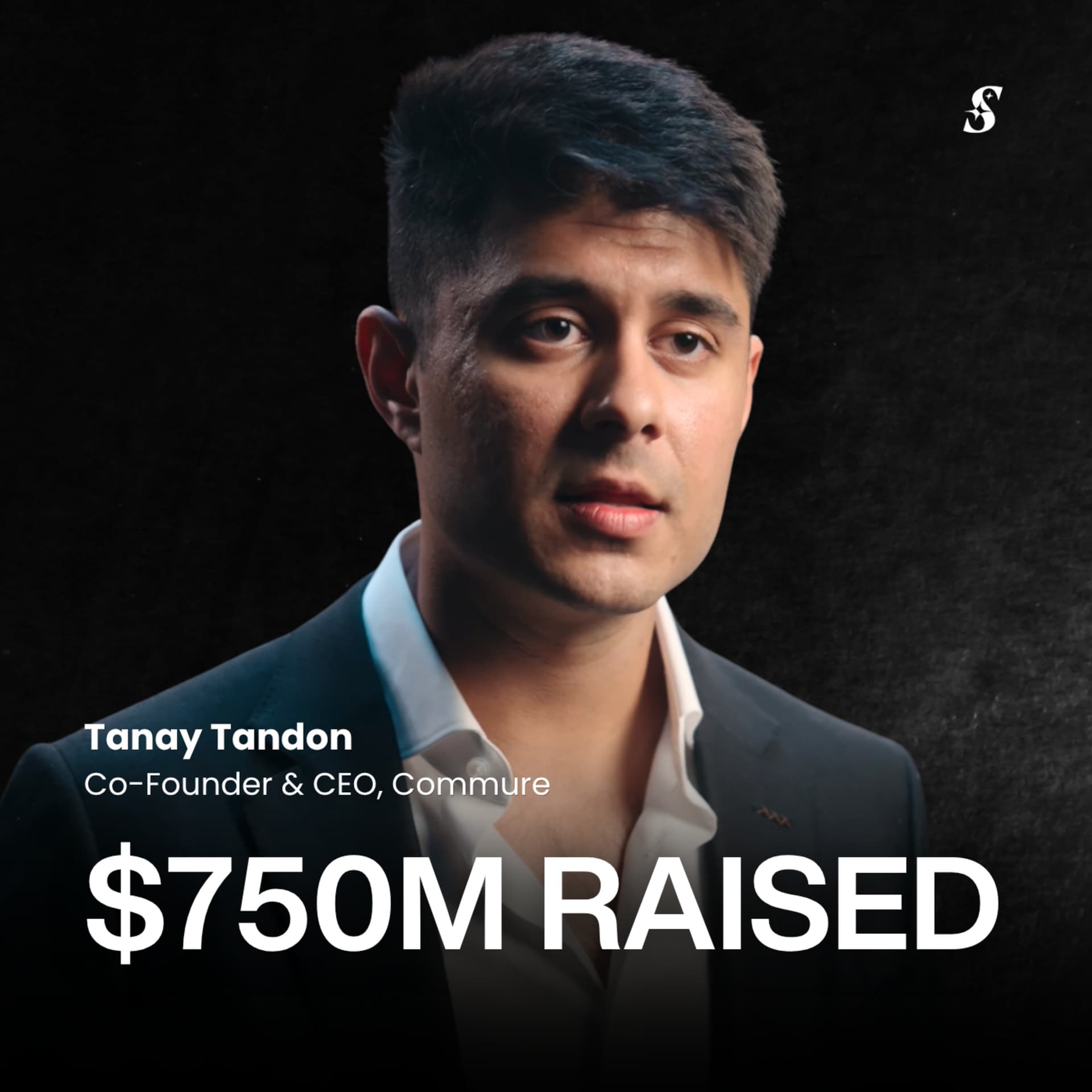
Commure (formerly discussed as building an AI “OS” for healthcare) raised $70M on a $7B valuation, led by General Catalyst with Sequoia and Morgan Stanley support; total funding is about $750M. The episode claims Commure now supports ~200M patient encounters/year, saving at least 75M physician hours annually via ambient documentation and related automation. Guests discuss using non-dilutive General Catalyst CVF credit to fund go-to-market expansion, accelerating R&D and model development (voice agents, back-office automation). They say Commure can add “a couple hours” to each physician’s day at large systems like HCA, and target transforming healthcare admin from low-margin labor-heavy operations into software-driven “revenue engines” that raise operating margins (example: 2–3% to 20–30%). Notable examples include HCA, Tenet, Epic and Meditech partnerships, and SUMA in Akron, Ohio.
Guests
the Commure founder/CEO (speaker) and Alfred Lynn (Sequoia) plus interviewer-hosts; one investor office context mentions General Catalyst leaders Barish and Armand.
Written by AI. May contain mistakes. Listen to the episode to check what was said.
Chapters
Tap a time to open that second in VOFunding Announcement and Business Growth
0:00 to 1:03
Learn about Commure's recent funding round and rapid business growth.
“We've raised$70 million on a$7 billion valuation led by General Catalyst with support from Sequoia and Morgan Stanley.”
Introduction of the Company and Journey
1:03 to 1:30
Discover the background of Commure and its founders' journey.
“Okay, we have a big congratulations for you today.”
Investment Utilization and R&D Focus
1:30 to 2:54
Understand how Commure plans to use its funding for R&D and expansion.
“And I think the progress over the last 18 months in the business has been rapid.”
Explaining the Customer Value Fund (CVF)
2:54 to 4:20
Learn about the CVF and its role in non-dilutive funding for startups.
“particularly around AIR, which is our LLM native EMR platform, and our voice agent platform.”
Advantages of CVF in Company Growth
4:20 to 5:51
Explore how CVF enables companies to grow without diluting equity.
“father of capitalism in some way, Rockefeller.”
Plans for Going Public
5:51 to 7:17
Listen to insights on Commure's ambitions and the impact of going public.
“capital you can buy now, especially as tokens increase costs within companies.”
Commure's Role in Healthcare AI
7:17 to 8:01
Understand Commure's contribution to improving healthcare efficiency through AI.
“I think the best American businesses go public and become long, durable parts of retail and allow the public to invest in them.”
Challenges in Healthcare System Adoption
8:01 to 10:11
Discuss the challenges facing healthcare systems in adopting new technologies.
“That's clinical admin, that's financial admin, like revenue cycle management, all of the tasks that happen in the back office of a health system, like scheduling, prior auth appeals.”
Scaling Patient Interaction Solutions
10:11 to 11:11
Explore how Commure scales its solutions to improve patient encounters.
“It is not run by ruthless, pragmatic business operators.”
Strategies for Growth and Customer Acquisition
11:11 to 13:05
Learn about the strategies Commure employs to grow its customer base.
“And for just patient engagement, Camere Engage, which is one of our, it's a language model that can speak to the patient, help schedule the appointment, reschedule, cancel.”
Show all 32 chapters
Platform Expansion and Competitive Edge
13:05 to 14:01
Understand the importance of offering a unified platform versus point solutions.
“Because you're going after a unified platform versus a point solution, you're increasing the complexities by like...”
Sales Cycle Dynamics in Health Tech
14:01 to 15:00
Learn about the complexities of sales cycles for health tech platforms.
“And then the platform sell, which quickly follows, but might be a 12-month sales cycle or longer, a 24-month sales cycle for the larger health systems.”
Consolidation of Health Tech Solutions
15:01 to 16:36
Explore the necessity for health tech companies to consolidate offerings.
“Whenever there's a paradigm shift like language models, you will have eventual consolidation on the one platform that provides them all the tools in a unified manner.”
Transformative AI Implementation in Healthcare
16:37 to 18:04
Understand the challenges and processes of AI implementation in healthcare.
“Because of the regulatory environment that healthcare sits in, and this is a Teresa Carlson question, but what does the actual process of AI implementation look like in healthcare today?”
Impact of AI on Patient Care and Decision Making
18:05 to 19:32
Analyze the importance of accuracy in AI tools affecting patient care.
“about this, the learnings have always come down to you've got to align it.”
AI and Cyber Insurance in Healthcare
22:23 to 25:06
Examine predictions for AI insurance convergence in healthcare.
“Is that something that you have thought about?”
Changing Compositions of Healthcare Teams
25:07 to 27:55
Investigate how AI is reshaping team structures within healthcare.
“And then there was a top-down decision to go enterprise-wide.”
Transforming Healthcare with AI
28:00 to 28:51
Learn how AI is being used to rejuvenate a struggling hospital system.
“The only systems that can do that are the ones that generate enough operating cash flow to forward invest.”
Hands-On Collaboration with Physicians
28:51 to 29:54
Discover the importance of engineering collaboration in healthcare settings.
“There are a lot of people that would be more than happy to sell tools to the miners and make a lot of money doing that.”
Insights from ER Nurses
29:54 to 31:06
Explore the unique experiences of ER nurses and their passion for their work.
“given point of time and we're working hand in hand with the physicians.”
Regulatory Changes in Healthcare
31:06 to 32:22
Understand the current regulatory environment and its impact on innovation.
“and you are if you're a triage nurse you are literally making life or death decisions in front I mean, you pick who goes in first, who goes in second, who gets care right in the lobby.”
Misconceptions About Working with Government
32:22 to 35:03
Learn about common misconceptions when engaging with government agencies.
“Speaking of regulatory environment, is the admin more or less acting with urgency?”
Finding the Right Talent for Growth
35:03 to 37:34
Discover the qualities of employees who can drive company growth.
“And she said similarly, like start earlier.”
The Role of M&A in Business Growth
37:34 to 40:07
Learn how mergers and acquisitions can accelerate business success.
“And I think to be successful in starting companies and building companies and working at fast growing companies, if you do not have an addiction for finding pain and blowing it up, you won't survive.”
Key Lessons from M&A Experiences
40:07 to 42:00
Explore valuable lessons learned from the M&A process in business.
“through his General Catalyst health assurance framework and all the hospitals that are partnered with him.”
The Cultural Shift Post-Acquisition
42:00 to 43:00
Learn about the importance of establishing a strong culture after a merger.
“And so, but we had to be okay with the fact that it was suboptimal in some ways.”
Blood Testing and Inspiration
43:00 to 43:25
Explore the origins of the company and the context of its founding.
“We didn't talk about this at all, but you started off as a blood testing company.”
The Unconventional Start of a Partnership
44:39 to 47:07
Hear a humorous story about a resourceful partnership with a health system.
“Enterprise AI runs on Merge, the AI infra platform for integrations, agent tooling, and model orchestration, so your teams ship product, not plumbing.”
Working with Alfred Lin and Sequoia
47:07 to 51:49
Gain insights into the relationship between founders and their investors.
“just had a slightly unconventional beginning to that relationship.”
The State of the American Healthcare System
51:49 to 55:27
Discuss the strengths and weaknesses of the US healthcare system and its innovations.
“they would have probably gone somewhere else.”
The Future of AI in Healthcare
55:27 to 56:00
Anticipate the transformative impact of AI in healthcare environments.
“I think the capabilities of these truly agentic models, we see them in R &D today.”
Innovative Moments in Healthcare
56:00 to 56:37
Explore the exciting advancements at the intersection of healthcare and technology.
“does all the work and dollars show up at the other end of it.”
Transcript
Automatic transcript. May contain errors.0:00Tanay Tandon:We've raised$70 million on a$7 billion valuation led by General Catalyst with support from Sequoia and Morgan Stanley. In total, the business has raised about$750 million. We support 200 million patient encounters every year now, saving at least 75 million hours a year for physicians. The progress over the last 18 months in the business has been rapid. We've expanded in geographies, we've expanded logos, we've added some of the largest health systems in the country. are now really going to use those dollars to accelerate R &D, accelerate some of our investments in further model development for everything from voice agents to back office automation.
0:31In health systems like HCA, we've been able to add a couple hours to every physician's day. And this is a company that generates north of$100 billion in top-line revenue. LLMs are this gift that we've received to go nuke all of that work tax. And that, in some ways, is going to be my life's work in terms of just eliminating the work tax and making the system a trillion dollars more efficient. Because if you do that, then you make the entire American middle class wealthier.
1:02today welcome to sorcery thank you for having me thank you for having us here at one of your investors offices where are we we are at the human capital office their human capital is run by two of my closest friends barish and armand and they really helped start come here and have been with me on this journey for six years now and it's beautiful it is beautiful it's a beautiful journey It's way prettier than our dinghy Mountain View office, so we use this one instead.
1:26Tanay Tandon:Okay, we have a big congratulations for you today. You've raised$70 million on a$7 billion valuation led by General Catalyst with support from Sequoia and Morgan Stanley. What happened? We raised around, thank you. And I think the progress over the last 18 months in the business has been rapid. We've expanded in geographies. We've expanded logos. We've added some of the largest health systems in the country. and we've helped physicians save time and physicians make more revenue every single day. And based on that growth, we raised at a pretty large premium to the last price and have now really going to use those dollars to accelerate R &D, accelerate some of our investments in further model development for everything from voice agents to back office automation.
2:11It's a massive trillion dollar problem and you can build for decades.
2:15Tanay Tandon:You started the company at 18. you had a bunch of M &A in the process of that. And how many employees do you have now? The full company today is about 1 ,200 people. Oh, my gosh. Yeah, we're seven different offices, India, Bangladesh included, and then a New York hub, a Boston hub, a Nashville hub, and then Mountain Dews HQ and Salt Lake as well. And you raised how much in total? In total, the business has raised about$750 million. Okay. Okay. Well, what makes this round different than other rounds? I think, you know, this round, one, we really didn't need the capital. We raised it for pricing purposes, and we saw a couple interesting opportunities to accelerate R &D, particularly around AIR, which is our LLM native EMR platform, and our voice agent platform.
3:06And so the idea is if we can accelerate timeline, bring in a team of 40, 50 killer engineers to attack some of these problems that are adjacent, but converging upon the same solution set that we have in RCM and Ambient, it's going to be net better for our customers. Number two, we've extensively used CVF, which is General Catalyst's non-dilutive customer value fund to fund our go-to-market expansion without needing to dilute shareholders. And so the last two years have been very non-dilutive for the company and for shareholders. And this was a pretty non-dilutive round as well against the valuation.
3:38We raised not a ton of capital because we didn't really need it, but it sets a new mark. and it lets us sprint and continue building.
3:44Tanay Tandon:I wanna talk about CVF. We had Hemant on not too long ago, and we talked about how General Catalyst is not a venture fund. They're a company, they're a huge platform. And I also just had Theresa Carlson on, and we talked about General Catalyst Institute, she gave you a nod too. But I wanna talk about CVF. So what does CVF do? Because it is a new type of vehicle, especially for startups and venture companies. And I just want to know what the process is like, how you got introduced to it. What was the sell there? Yeah. I mean, I think if you back up the timeline super aggressively and you go back to the father of capitalism in some way, Rockefeller.
4:25Rockefeller was the OG when it came to using credit. And he really didn't dilute himself or his shareholders much at all. And they aggressively knew that, hey, if we drill in these places and we drill for 10 years and we develop our refineries and we develop our supply chain, these many dollars are going to show up. And we're going to use credit to fund that expansion as opposed to, you know, taking on more and more dilutive equity. And CVF is really, I think, built along that concept. And credit is not a unique concept in a lot of ways. The reason startups shy away from it is it often puts this massive liability on your balance sheet.
4:59And if the worst case Armageddon happens, you're now, your whole company could implode. And CVF is built to address that need very particularly, which is instead of risking against balance sheet, it's risk against forward-looking customer cohorts and performance. So if you're confident that your SaaS cohorts will perform and revenue will show up, and when you put in go-to-market dollars, net new logos will show up, you can use, you can essentially forward pull that revenue to fund expansion faster and faster. And I think this is the purest form of go-to-market. You actually don't want to use balance sheet for go-to-market.
5:34You want to use balance sheet for R &D and these more durable long-term investments. And that's why we used it. And I think that's why it's an amazing vehicle.
5:41Tanay Tandon:Wow. Yeah. I haven't talked to many people about that. We do a lot of equity fundings, and then we've done some public companies. But there's definitely more nuances to the types of capital you can buy now, especially as tokens increase costs within companies. Are you seeing that? Are you guys using lots of tokens? Is that compressing your margins? What are you? I think it's a great question. And there are a lot of businesses where, you know, you look at, VCs have a good sense of what a SaaS business looks and feels like in terms of its margin structure, its payback, its CAC, its LTV. And one of the challenges is that these token businesses have essentially turned a lot of software businesses to service level margin.
6:22And if you play the game the same way you did two years ago, you can blow up and you can burn a lot of cash in the process. And I think good operators and good CFOs have a fundamental understanding of their margin structure and their payback structure. So when we use CVF, we have parts of our business that run at pure SaaS margins in the high 80s, mid 90s. And you have other parts of the business like full cycle RCM that have a labor component and a heavy token component. And those run at anywhere from the high 60s in their implementation stage to the mid 70s in their steady state. That's a different margin structure than SaaS.
6:56It's still great. Many Many businesses would take 70 % margins every day of the week with their eyes closed. But I think for us, the question is, if you fundamentally understand the payback periods, then you should use CVF. You should use non-dilutive mechanisms to fund that expansion.
7:13Tanay Tandon:You mentioned before that you want to go public. Is that still the case? 100%. I think the best American businesses go public and become long, durable parts of retail and allow the public to invest in them. I also think given the size and shape of our business, we're in the hundreds of millions of dollars in revenue. We support some of the largest systems in the country. Our acceleration in some way would be fueled by going public as opposed to being hampered by it. Camira is building the AI-powered OS for healthcare. Can you unpack that a little bit more and the state of healthcare? Yeah, I think that's a great question.
7:48And so, Comura at its core is a software company that builds tools for providers and for healthcare administrators. This is a multi-trillion dollar problem. And even when you cohort it down, there's a trillion dollars spent on healthcare admin every year. That's clinical admin, that's financial admin, like revenue cycle management, all of the tasks that happen in the back office of a health system, like scheduling, prior auth appeals. We've built a series of fine-tuned language models and agents that automate all of those tasks and truly take a health system that might operate at 2 % or 3 % operating margin today because of all the labor needs and turn it into something that can operate at 20%, 30 % operating margin, like the top percentile healthcare practices and systems.
8:33And our belief is that that's not going to be 100 different point solutions. That's actually going to be one revenue engine and a series of agents that are orchestrated on a single platform. which is Camero OS. And so for us, the next couple, today a practice that uses our platform will use us for their scribing, their practice management, their documentation, their autonomous coding, their revenue cycle, and all of their back office needs, and see that boost in margin because they can grow without needing to have labor directly track their top line, which is historically when a healthcare practice grows, you just linearly tack on more and more labor.
9:10In health systems like HCA, it's a very similar story. We've been able to add a couple hours to every physician's day. And this is a company that generates north of$100 billion in top-line revenue. So if you can add even a couple percentage points of juice to that, that is billions of dollars of operating cash flow that get created across the country and obviously across HCA's empire as well. I think the state of healthcare AI today is really interesting because you have the early adopters, the physicians, the practice owners, the health systems that use 2025 to really leapfrog ahead and turn into these bastions of what an agentic healthcare system looks like.
9:49And for certain parts of the systems, it really feels like the future. Documentation is automatic. Billing is automatic. Coding is automatic. All these tasks are now entirely done by software. Other systems, the vast majority of the country, if you look at rural healthcare, if you look at a lot of the nonprofits, a lot of the academic institutions have been slower to adopt. I would actually say that healthcare's biggest problem today is it is run by politicians. It is not run by ruthless, pragmatic business operators. And if you look at the for-profit institutions that are growing the fastest, that are compounding the fastest for shareholders and for patients, this single trend that's shared amongst all of them is you have amazing, aggressive CEOs at the top, as opposed to design by committee and decide by committee, which a lot of your smaller academic nonprofit systems historically have used.
10:40So for me, the most important thing in the next five, 10 years of American healthcare, if we're truly going to build a durable system, is we need to shift into all operators of healthcare systems and hospitals, need to shift their mindset to being business managers and being very aggressive CEOs, as opposed to being local politicians, which has really been the game for the last 20 years.
11:01Tanay Tandon:And you're at over 100 million in patients annually? Well north of that. We support, I want to say, 200 million patient encounters every year now. Oh, wow. And for just patient engagement, Camere Engage, which is one of our, it's a language model that can speak to the patient, help schedule the appointment, reschedule, cancel. We do about 100 million patient interactions on that one product every year. Ambient documentation, which essentially you press a button, it listens to the appointment. A language model summarizes the appointment, plugs it into the EMR, and then generates the super bill, which you send to insurance.
11:36That does about 50 million annualized appointments every year, saving like, I want to say at least 75 million hours a year for physicians. And that's just productivity straight back into the American economy.
11:48Tanay Tandon:How did you scale that up so aggressively? Do you have specific partners that unlock more volume? Like, how does that work? There's really two or three components of that business. One is the PLG motion, which is a physician literally finds the product online, loves it so much, starts using it, tells the other physicians in their practice, and then we go sign an enterprise agreement and expand organically within the system. And then there's a more top-down approach. We have a deep relationship with both HCA and Tenet, who are two of the largest for-profits in the country and two of the largest businesses in the country.
12:19And there, they own a lot of hospitals. They own a lot of practices. HCA alone owns about 185 hospitals, 2 ,000 sites of ambulatory care. And we've worked with the management there to essentially propagate these tools through the EMRs and through the software across all of their whole empire. And then finally is EMR partnerships. So we have a deep relationship with Meditech as well as a really, really close relationship with Epic where we're a toolbox partner. And at the press of a button, an Epic physician can turn on Camere Ambient, start using it. They can also turn on Camere Autonomous Coding and start using that for the next piece of the revenue cycle.
12:55And I think because we've partnered with the EMRs as opposed to just entirely try to disrupt them, we've had a really fruitful relationship in expanding through that as well.
13:05Tanay Tandon:Because you're going after a unified platform versus a point solution, you're increasing the complexities by like... For sure. Crazy multiples. Yes. So with each one of these verticals that you start, how do you drum up those teams and then condense the stack? I think this is one of the big debates, honestly, in our company, which is the beauty of a platform is you can deliver definitive ROI across the whole continuum of care. And there's no question that when you deploy the full Comir Othello's platform, you get 15, 20 % more revenue at the other end of it because everything is connected. It's a way more complex implementation though, and it's a way longer implementation.
13:48And so our strategy has been twofold, which is one, have a series of point solutions like ambient documentation, autonomous coding, intake, that can be those wedge products that enter a health system or enter a practice and allow for quick adoption. And then the platform sell, which quickly follows, but might be a 12-month sales cycle or longer, a 24-month sales cycle for the larger health systems. But, you know, contracts that are worth tens of millions of dollars at the tail end of it. So getting good at doing both, There are companies where all they do is that one-point solution, and it's a three-month sales cycle, and they can grow quite quickly.
14:24We've had to be very disciplined about ensuring that we focus go-to-market resources on both, and that these two motions support one another as opposed to being just two completely different parts of the business.
14:36Tanay Tandon:Why are you doing that? I think the long-term bet is the final ACV capture in the space is going to be the company that provides that full platform. Here's a great example. When we launch our platform in a 100-provider practice, the first thing we do is we displace the point solution scribe that they're using. And so that company's revenue just went to zero. And our revenue just went up by a factor of 10 on the account. So if you look at where the world heads, these things do tend to consolidate. Whenever there's a paradigm shift like language models, you will have eventual consolidation on the one platform that provides them all the tools in a unified manner.
15:14And yes, you could probably get ephemeral revenue right now. There's a lot of point solutions garnering a lot of interest. There's a lot of nonsense GPT wrapper businesses out there right now. I won't say them by name. Maybe I'll say them by name later. But they grew fast. They got a lot of VC interest. But they're going to be gone in three years because companies like ourselves will completely disintermediate them. And this happened before. In the 80s and 90s, there was a software that came out called Grammatic. And it was an auto-correcting tool. And all the VCs of the time loved it because it was growing so fast.
15:46You plugged it on top of the word processors on the early computers, and everybody loved it. And then Microsoft Word came out with AutoCorrect as part of the software, and this company's revenue went to zero. And this happened again and again and again in multiple verticals. And the VCs just kind of forget. But if you study history and you're a student of business, I think you see that these point solution businesses either have to turn into platforms very quickly or they die.
16:12Tanay Tandon:I was just going to ask you before this amazing question, what's going to happen to point solutions? Yeah, that. They're going to die. In healthcare, I think we will kill most of them. And we do it with a passion. It is something that we care about deeply in our business, that these multiple point solutions that create chaos for the IT department and for the healthcare provider need to be eviscerated and turned into a consolidated platform. Because of the regulatory environment that healthcare sits in, and this is a Teresa Carlson question, but what does the actual process of AI implementation look like in healthcare today?
16:54Tanay Tandon:And what does that look like transformationally in the next five years? Because it's a different point in which, you know, we were joking earlier. I was like, today congrats on your consumer company blah blah but like it's totally different than like a consumer company like an AI thing but like deep-seated regulatory environment what does it actually take to get this off the ground and like where are we yeah first of all Teresa's a legend and she's a board member and I said this before but nobody shoots whiskey like Teresa and the woman is is like truly a legend in many ways and um I think the you know when you listen to her stories from Amazon, which they did one of the hardest things in the world.
17:34They went to the CIA and they went to the governments and they told them, you guys are going to turn into cloud-first, cloud-native organizations. This is insane. Imagine going to an IT team that literally has file cabinets and scanners and massive on-prem mainframes and telling them, no, the company that you buy your books from is actually going to be the company that transforms you and turns you into a digital native organization. And she did it in partnership with Jassy and the whole team there. And I think the learnings, whenever I've talked to Teresa about this, the learnings have always come down to you've got to align it.
18:12It comes down to dollars, and it comes down to ROI. You have to be able to sit in a room, and you have to tell a very clear story of what the world turns into three years from now. And it's investment. When we sit in a room with HCA, they're investing millions of dollars in resources in implementation time, in training time, in physician overhaul to make sure that people use these AI tools correctly and they turn into an AI native organization. And that's another reason why I think many of these point solutions will fail. Even if you get some early adopter bottoms up usage, you'll never get that organizational change.
18:43There's no version of the world where AWS could have been a PLG cell. It really needed that enterprise motion where Teresa and Jassy and Garmin and the team at the top came in and sat down with these government officials and pitched them on the vision of digital transformation. And now we're doing the same with language models. And the best teams are the ones that know how to tell that story, paint a very precise picture of transformation, bring the IT teams along rather than leave them behind.
19:12Tanay Tandon:Because this is such a sensitive environment with very sensitive data, life or death information. It's critical. So where does accuracy and reliability sit in decision making? Yeah. I think where you see rollouts get completely stopped or companies go to zero overnight is in cases where a model or a tool hallucinates or performs incorrectly and ends up impacting patient care. And so it ends up being maybe the most important thing. And the only way to truly ensure that is one, great evals. You need to have a massive data set of historical documentation or whatever the task might be, coding, voice calls, to then measure your model iterations on.
19:58Because when you release a new version of a model or a new version of an agent, it does some things amazing, but then it does a couple of things that are kind of weird. And there might be regression and performance deterioration on the fringes in categories that you weren't even thinking about. And I think in smaller companies or in companies that don't have a lot of engineers, you can ship quick and get this stuff out. But that performance degradation goes unseen and then turns into just cascading problems for organization later. So our belief is we work hand in hand, one book with the regulators, but I think more importantly with the customers to show them that the edge cases they care about always work in the test harnesses, always work in their back testing data and then make that super public.
20:39And then at the same time, like when there are inevitably hiccups, you need to have a very fast way to iterate and give feedback to the model and patch it so that you're not sitting around with a faulty, hallucinating agent in a healthcare setting.
Read the full transcript
20:52Tanay Tandon:Sorcery is brought to you by Brex, the financial stack trusted by more than 30 ,000 companies, including one in three venture-backed startups in the U.S. Nearly 40 % of startups fail because they run out of cash. Rex is literally built to help founders avoid that. Unlike traditional banks that let your money sit idle, chipping away at it with fees, Rex's designs help you spend smarter and move faster. Their all-in-one solution combines checking, treasury, and FDIC protection into one powerful account. You can send and receive money globally at lightning speeds, get 20 times the standard FDIC coverage through their partner banks, and even high yield from day one with same day and even same hour liquidity.
21:35Tanay Tandon:Access your funds anytime. Companies like Scale AI, DoorDash, Service Titan, HIMSS, Anthropic, Flexport, Robinhood, and Plaid trust and use Brex. Start today at brex.com slash sorcery. That's B-R-E-X dot com slash sorcery. Turing is training the next generation of AI with tasks that require real expertise and real world judgment. That's why companies like NVIDIA, Anthropic, Salesforce, and Gemini partner with Turing. Turing builds realistic reinforcement learning environments and data systems based on real operational traces, the kind of infrastructure Frontier Labs need to train superintelligence.
22:18Visit Turing.com slash S-O-U-R-C-E-R-Y.
22:22Tanay Tandon:I know AI insurance sounded really silly when it was just first rolled out, but it's clearly deep-seated in lots of companies. Is that something that you have thought about? How do you think about that? You know, I think my prediction for the space is it's eventually all going to converge upon some sort of general liability software cyber insurance package. And the reason is that I think in most cases, the language model, widespread use of the language model in healthcare in particular actually improves outcomes enough where the malpractice exposure, I mean, it's just going to be a better look.
23:05It's going to be a better end outcome on a dollar basis too for the CFO department and the CLOs department. When we talk to health system C-suite, the CFOs and the CLOs are so excited because they see in the data, just like with self-driving, that yes, occasionally you have weird performance. But on the averages, and in the 99 % of cases, it improves outcomes so much that the malpractice implications are actually very net positive. And I think because of that, you should see a reduction in premiums. And maybe there's like an AI subcategory that, you know, emerges in general liability or cyber insurance.
23:40I don't think it's going to be this, you know, category of its own. Because in terms of like pricing it, it's no better or worse than general software for most industries.
23:51Tanay Tandon:Not to go like too far off the line, but like what is the implementation process with these teams? Like do they have the technical rigor to understand? Obviously like AI, this whole thing is like very new. It's not just like you're deploying software, but you do need to be trained for it. So how do you do that for the different partners that you work with? Yeah, I think the... So we have this forward deployed team of engineers that obviously is stolen from Palantir, but I mean, the model works so well. You take smart, hungry people that are early in their careers, and you throw them into the face of the problem within the hospital, within the health system.
24:27And you kind of let them free. And that has been one of the ways that we've actually propagated usage of these models very quickly. Because a physician sees this excited young engineer come into the hospital and wants to co-develop with them and wants to work with them and wants to iterate on these models. And so our first implementations with HCA was literally a couple of engineers on the ground in a hospital with three physicians. And it was like two months of back and forth. How do we make this model work really well in a hospital setting or an ED setting, which are really hard settings to perfect documentation in?
25:02And once it started working super well, we expanded it to another group and then another group. And then there was a top-down decision to go enterprise-wide. And so in the implementation teams, now it looks a lot more like just general software trainers. They come in, they help launch, they teach them how to speak into the microphone, what to say, just really be natural in your conversation with the patient. And then on revenue cycle, we'll usually have a team that goes into the billing department, migrates their system using a set of agents that'll take, you know, old system of record and populate it into new system of record, and then really show them how to invoke an agent to do a task for them.
25:40The beauty of, I think, LLMs and agents is it's quite intuitive. Everyone, anyone who's worked in a corporate setting for years and years has a sense of how to delegate and how to give someone a task. You've pass them context and you give them a direction. And I think in healthcare, it's even simpler. It's usually the context is the claim and the encounter history and the patient's chart information. And then the direction is whatever you want the person to do, which is resubmit the appeal, work on the denial, file the prior authorization. And we've been able to get these models to get very, very, very good at these tasks because of the sheer volume of data that we have.
26:19And so the training ends up being maybe a day, day and a half in person. And then you see people just run with it and eventually just train each other as well.
26:26Tanay Tandon:Have you seen the composition of health care teams change at all? I mean, I know this is probably still too early, but it is really it should be improving their workload a lot because it's really redundant. It's handwritten. But how are you seeing compositions change and what do you think it'll look like? Yeah, I think to the first point, the feedback from the physicians and from the providers and the medical billers is insane. We had a quote last week that Hemant actually posted, and it was from a physician that said, I was about to quit. I was looking for another job because these 14-hour shifts were just ridiculous.
27:03And it was getting, you know, I couldn't take care of my kids, and it had just turned into too much for me. And then I used the tool, the Cremere Ambient tool, paired with Revenue Cycle, and it literally finished 14 charts instantly. And she was like, boom, I have two more hours in my day. I can do this now. And decided to stick with the job, like literally didn't leave health care. We have a massive labor shortage in health care. We cannot have trained people leave the system. And, you know, this woman did not leave health care because of the tool and because of a language model and because of our software products.
27:33So that's been amazing to see. And you hear stories like that every day where nurses, physicians, medical administrators feel like they have another 10, 15 years they can give back to the community because the tools have given them that. Number two, in terms of composition, I think the smartest health systems are starting to hire these AI implementation teams, are starting to hire engineers of their own to come in and help with implementations. Now, the only systems that can do that are the ones that it's kind of like a chicken and egg problem. The only systems that can do that are the ones that generate enough operating cash flow to forward invest.
28:06And that's sort of our bet is step one, give them the tools that improve cash flow. And then that cash flow lets them invest in R &D teams who will then go build more and more interesting stuff in partnership with us within the hospital and within the system. SUMA is a great example of this in partnership with GC.
28:23Tanay Tandon:What is it like working with SUMA? It's a real hospital? It's a real hospital. It's a real hospital in Akron, Ohio. And, you know, I got to hand it to Hemant. The beauty of GC and I think Hemant is we are so ambitious and they are not content being a VC firm that makes just great returns for LPs by investing in a Series A and, you know, the two or three companies that matter every year getting into the rounds. They really want to bend the universe. And part of that means going to Akron, Ohio, buying a system that was on track to go bankrupt in the next couple of years and transforming it with AI.
28:59There are a lot of people that would be more than happy to sell tools to the miners and make a lot of money doing that. I think it takes a special person and a special organization to say, no, we're actually going to go direct. And we're going to show the world that you can build a better hospital. You can build a better health system. You can do it today. You don't have to wait around and just make your money on software. We had RFK Jr. visit the hospital last week. and we hosted him there and it was an amazing visit, showing him the transformation with ambient documentation on ComerStack with ADOC, which is an imaging-based company that's essentially automating a lot of the scan process.
29:35And so one of the things that we've noticed at Suma is the appetite from the physicians is just, I mean, they're ready to go. They want those hours back in their day. They want those dollars to show up in the system to create that cash flow cycle. and I mean it's been so much fun on the ground. We have you know 10-15 engineers there at any given point of time and we're working hand in hand with the physicians.
29:57Tanay Tandon:This might be a total tangent but I travel a lot so I'm often fatigued and like yeah over exhausted to the point where I like all pass out and because of that I get IVs to my house and I always chat them up. It's always really fun because they have the craziest stories these nurses and most of them are ER nurses and this woman who came to my apartment like a couple weeks ago I was asking her about her job and like she was an ER nurse and I was like well which do you like better do you like coming to you know nice calm environments or do you like being an ER nurse and like dealing with all the complexities and like the chaos and all the adrenaline all that stuff she was like no I actually like prefer that like I like it like she like she's just like wired to do that yes uh which is so cool to hear and like know because I mean from the outside like yeah that scares me yep but they love their jobs they love their jobs and I think there's something to it we're in the ER in particular we've spent a lot of time building our tools for the ER um it is a chaotic environment and you are if you're a triage nurse you are literally making life or death decisions in front I mean, you pick who goes in first, who goes in second, who gets care right in the lobby.
31:16And those are not easy decisions. And I think the mental fortitude of these nurses combined with their appetite to just take on the craziest problems is super inspiring. And it makes it really easy to build tools for them. And when we, some of our engineers, their favorite visits are the ones where they get to go to the ED and sit with the nurses because they just see so many problems, so much pain that they can come and just sink their teeth into and build tools for. And I think as a software engineer, for me, that's exhilarating. It's like, what more could you ask for?
31:49Tanay Tandon:Yeah, that's crazy. That's amazing. They have the craziest stories, too. I can't repeat it, but like people in California are effed up. I believe it. They do weird stuff. there's a lot of weird people sometimes it involves animals which the state needs to change the regulations on I don't anyways got it so I guess since we're already on the regulatory kind of topic sorry for the transition people do weird things with animals this is what I want I'm going to take that with me. Speaking of regulatory environment, is the admin more or less acting with urgency? What are you seeing with this new change of hands?
32:36I think this admin is doing an incredible job. And they're stepping out of the way in the areas where you want innovators to just quickly get on the ground and do good work. and they're intervening in the areas where regulatory intervention is needed, like Interop. I think one of the biggest problems in healthcare over the last 30 years was an EMR could guzzle up all your data and then sit there and then when you ask for it back, quote, use some crazy fee to move one piece of data from one system to another. This is insane. Genuinely, for all the shit Salesforce gets as a company, if I want to move data from one place in Salesforce to another place in Salesforce, I can do it with my eyes closed.
33:17Like there's no, I don't have to ask for permission. If I want to do that in Epic, I got to go sacrifice my firstborn child to Judy. And then maybe I will be granted a meeting to meet with someone who lets me move data from point A to point B.
33:29Tanay Tandon:It's insane. And so data liquidity is like a very real problem in healthcare. And I think the admin is tackling it head on. They're not, you know, they're not dealing with any more interop bullshit. And they're funding the Department of Justice to come after folks that are engaging in information blocking or violating the Cures Act. And as an innovator, that's welcome change. So I love the work of this administration. What do you think the biggest misconception is working with the government? I think, you know, we work with a lot of branches of government, with the FDA on med device and regulatory and algorithms.
34:04We work with CMS on payer policy and everything from when you think about the revenue cycle, what sorts of things should be approved instantly and what sorts of things should require an appeal or prior auth process. And I think the biggest misconception is that they're hard to get in touch with or that they won't take a meeting. I've actually found that you can meet with someone in the administration fairly quickly, which is amazing. I mean, this is not how it always was. You can literally send an email in and probably get a meeting in a couple of weeks, air out your concerns, and get a very structured, rational response back.
34:42And, you know, nothing in the government is going to get done tomorrow, but there is a timeline and there's a plan. And I think, you know, folks like Chris Klomp, who's come in and is leading a lot of those initiatives, are just a breath of fresh air. And to see innovators in chair in government positions, I think most people don't realize how forward thinking this admin is.
35:02Tanay Tandon:I asked Teresa the same question. Yeah. And she said similarly, like start earlier. Start early. Talk to them sooner. They want to listen to you. Definitely wear the right outfit. Yes. Which we'll come to in a bit. Later in the show. Yes. But she did say that. And then I was at a conference earlier today and one of the heads of HHS was there. And he said, yeah, like, come talk to us. Yes. Like, don't wait. They're willing to engage early. Yeah, just start early. Yep. And there's good people. There's good people in the admin and it's great to see it. Okay, so you have 1 ,200 employees. Yes. You went viral for something that Alfred Lynn duxed you on.
35:49Tanay Tandon:I want to ask about how you felt about that after I recited verbatim. But you went viral for what you want to look for in employees. Yep. Specifically heat-seeking missiles, which is super aggressive. But, you know, it's an aggressive mission. It is. So you said, describing this person, this person actively seeks out the hairiest, gnarliest problems that customers have or exists generally in the business, i.e. go-to-market efficiency, and then surgically works to eliminate said problem. They have almost an addiction to seeking out sources of pain and blowing them up. He's seeking missile for pain.
36:34I think, well, first of all, I was honored that so many people resonated with it because it is something we really look for in our business. and it was an email that I had sent out to our whole company describing what it means to work at Comir and you have to be a heat-seeking missile for pain and Alfred forwarded to some of the other Sequoia founders and then tweeted about it and yeah it went vile we got I mean from a hiring standpoint we got some amazing inbound that day so I'm very grateful that Alfred posted about it for me I think it's it's interesting because if you if you look at value creation like in many ways pain is the genesis of all capitalism.
37:10Like there is problem and then someone comes up with solution and then there is value creation and value capture in that process. Without pain, there is no capitalism. And as a result, I think we should all pray at the altar of pain. Pain is signal. Pain is signal in a business. Pain is signal outside with customers. It means that there is something broken in the human experience and you should go fix it. And that's what humans are wired for. And I think to be successful in starting companies and building companies and working at fast growing companies, if you do not have an addiction for finding pain and blowing it up, you won't survive.
37:44And the reason is, is that without that mindset of, I need to find pain, not just like let it happen to me and then deal with it, but find pain and blow it up, your company won't grow as fast as your competitor. Your, you know, your go-to-market will never be as fast as the next guy over. Your products will never evolve as quickly because every product has pain. Every organization has pain. And a heat-seeking missile for pain is addicted to finding that and blowing it up. So it is, to me, maybe the most important signal in hiring. And it's probably also the most important signal in investing and finding founders that have that addiction to finding pain.
38:22Tanay Tandon:You started the company at 18. You're not 18 anymore we clarified that yes um sorry it sucks but i'm not i tried good so with that the company has been through a couple rounds of m &a you've acquired you've merged you've done many things um was that process part of which changed your perspective on how to build a company like that is not an that's not a conventional way to build a company so like How did that? Yeah. What is the strategy there and the process and the thinking? I think one of the interesting things is if you look at the history of American businesses, the great American businesses were built on the backs of M &A.
39:04Rockefeller was maybe the best acquirer of businesses of all time. I would say that Disney, like Iger's Disney, was one of the most acquisitive and well-structured acquirers of IP and talent and technology that we've ever seen in the 2000s. I think there's a ton of other just amazing businesses that are worth hundreds of billions of dollars that people don't even talk about that are amazing acquirers. Dell. Dell is another great example. People don't talk about Dell. There's maybe a hundred billion dollars worth of value created in the last 15 years through Michael Dell and Silverlake's partnership.
39:36And they acquired some very interesting businesses, put them together in interesting ways, unlock distribution, unlock products. And I think it is a skill that as you grow as a founder, you need to get very good at. In our journey, we've used M &A really for distribution. And in some cases, I think for talent, where there have been critical people that are building amazing products in a space, and we've brought them in and accelerated the whole company as a result. In the Camus and Thales merger, I think it was really both of those things. One, Heymont had amazing distribution through his General Catalyst health assurance framework and all the hospitals that are partnered with him.
40:15He had an amazing access to capital that has really helped and accelerated Commure. And then I think on the Othello side, we had great engineering talent. We had heat-seeking missiles for pain that could go in and solve problems. And you put those two things together and there was a lot of value creation in that process. We've also acquired some businesses like Augmedics that was a public company and it was particularly done for distribution. They were in 40 different health systems and trading at like 1.5x revenue. The public markets weren't valuing this company correctly. And we seized that opportunity, brought it in, and used their distribution to very quickly expand our products and also transformed their margin structure using LLMs, primarily labor-based business that is now primarily software-based using language models.
41:00Tanay Tandon:What's the biggest takeaway, lesson, or challenge that you've had through those processes? I think the number one learning in M &A is there's a lot of people that think M &A is about finding the perfect asset or acquiring the perfect asset and diligencing every, you know, making sure that it's pristine. Pristine assets are usually, you know, there's no price disparity. There's no advantage that you can take of a, you know, of a pristine asset. Most M &A, and I think most good M &A, there are skeletons. There are things that you have to internalize that are not working in the company and be okay with that because you have the other pieces that will make it work.
41:36You know, in the case of Augmedics, great distribution, great legacy relationships, but the pace of innovation wasn't there. And they didn't have a software engineering team that was iterating every week, or in some cases every day, which is what you need in the age of LLMs. And when we brought that in, I mean, it just, it created so much value at HCA. It created so much value at Sutter. It's created so much value at our other, these other health system partners. And so, but we had to be okay with the fact that it was suboptimal in some ways. and we were going to plug those things out and make a quick change.
42:09I'd say number two is you have to be very ruthless about stating what the culture of the combined business is. You can't, I think this idea of you acquire companies and like everyone's friends and, you know, we're going to be like a little bit of your culture, a little bit of our culture. No, there's always a winning acquiring culture that becomes the culture of the combined business. And there are people in the company you're acquiring that heavily opt into that. There's also people that opt out and that's totally fine. You got to just give them that opportunity and then start from fresh.
42:37Tanay Tandon:How long is that window? I think you have like, probably have like 90 days to make like a very aggressive, maybe less. I would say like 45 days is like kind of set. Like people are now, they know what they're doing. They're either locked in or they're not. And by day 90, if, you know, that reset hasn't happened, you're going to continue to run the business the way it was running before, which probably isn't a good thing. If, you know, if you had a, you know, very genuine acquisition thesis around it. We didn't talk about this at all, but you started off as a blood testing company. Yes. And you were inspired by Elizabeth Holmes.
43:11I would not say I was inspired by Elizabeth Holmes. That sounds like an Alfred jab. But we were started around the same time that the whole Theranos saga was happening. That is not untrue. Sorry.
43:25Tanay Tandon:It's too good. VCX by Fundrise, the public ticker for private tech, allowing investors of all sizes to invest in venture capital. View the portfolio at getvcx.com. That's getvcx.com. Some of you may not have heard this yet, but our sponsor Public just launched something called Generated Assets, and it brings AI into investing in a way I've honestly never seen before. Here's how it works. You type in an idea like AI-powered supply chain companies with positive free cash flow, or defense tech companies growing revenue over 25 % year over year. Publix AI then dispatches a swarm of agents that scan every single US stock, evaluates them, and instantly builds a custom index around your thesis.
44:09Tanay Tandon:What really stands out is how clearly it explains why each stock is included. And before you invest, you can even backtest your idea against the S &P 500 so you're making decisions with real context, not just guessing. And beyond generated assets, Publix lets you invest in stocks, bonds, options, crypto, all in one place. They'll even give you an uncapped 1 % match when you transfer your investments over from another platform. If you want to build a portfolio that actually reflects your thesis, visit public.com slash sorcery, paid for by public investing. Full disclosures in the description. Enterprise AI runs on Merge, the AI infra platform for integrations, agent tooling, and model orchestration, so your teams ship product, not plumbing.
44:51Tanay Tandon:Mistral,
45:11Tanay Tandon:But we do have another Alfred question. Yes. What is the craziest hack that you and Deepika pulled off? I know what he's referring to. And I don't know if I can tell. I'll tell most of the story. And I told the story in my speech at Deepika's wedding. But the way that it goes is that we were partnered with a health system, and I won't say their name. And they had given us access to residual blood samples. Now, Deepika was like, she's like a saleswoman. She's really good at like getting into situations, talking her way into things, out of things. And, you know, our residual blood sample partnership with this health system was actually nothing more than Deepka being friends with the security guard and the front desk lady.
45:57Tanay Tandon:Oh, my gosh. And so we had accumulated hundreds of samples and they were, you know, anonymized and, you know, there was no like HIPAA concern. But we were using these samples. We were getting them from the security guy? We were getting them because we would walk past the security guy and I guess he liked Ibika. And one day I found out that this was the situation and we quite literally had to meet with, we were summoned to meet with the health system administration and they were like, what the fuck is going on? We were like 19 year olds. We were scared out of our minds. You're like, what, this is bad?
46:34Tanay Tandon:What do you mean? We're building a company here. Don't you understand? We're trying to make it work. And they were like, look, Pharma buys these samples for like tens of thousands of dollars of samples. You guys are just picking them up. Like, what are we talking about? And ultimately, we were able to use the fact that it had been going on for so long as a negotiating chip. And the worry that's their fault. It's their fault. Like, you know, we just really turned it on them and ended up having a very fruitful partnership. And it was an amazing, it's an amazing academic health center, still a very close partner of ours.
47:07just had a slightly unconventional beginning to that relationship.
47:10Tanay Tandon:At the end, they were just like, respect. Respect. No, it was very much like, we get it. You're hustling and we support. Another good Alfred question. Did you ever think you'd become an enterprise salesperson? You know, Alfred truly reminds me at every chance that he gets that I am now a sales rep. And that's okay because I think sales is the most important skill in the world. and I think the best, you know, the best CEOs are always selling, they're always closing and a big part of, you know, to Alfred's point, a big part of my job today is I'm an enterprise sales rep and I would, you know, when I started my career, I was at the Stanford AI lab.
47:49I thought I would be a hacker my whole life. I thought I would get a PhD. I thought I would go work at a research lab and that would have been a fun career too. This is just a very different set of skills and I had to learn how to sell. It was not something that initially came naturally to me, but I'm so grateful that I took the punches and eventually got reasonably good at it.
48:10Tanay Tandon:Now that I'm saying these questions out loud, I'm really noticing a pattern. Here's the next one. He would like to know, did you think it was a good idea to show up to the JPMorgan Health Summit in a t-shirt, shorts, and flip-flops? This is a, the story is turned into lore within the company because the first JPMorgan conference that we went to, I did in fact show up in t-shirt shorts and like cargo shorts, like with the buttons and everything and flip-flops. They were sandals. They were open-toed, but they were Velcro. Were you 19 at this time? I was 20. I should have known better. All right, yeah, 20.
48:50But we go to the conference, and I guess the cool thing at the time was you're a tech bro, you underdress, you go to these things. And honestly, at the JPM conference, and these people are looking at me like I'm a fucking joke. And that was when I got my first suit. And so ever since then, anytime we go to JPM, I look good. And Alfred always comments on it as well. So I remember he saw me that day, and he was like, this is ridiculous. This is completely unreasonable. And then he saw me like a year or two later when I showed up suited up. And that's when he started calling me an enterprise sales rep.
49:27So there's no winning with Alfred Lin.
49:29Tanay Tandon:So you can confirm you own a suit. I own multiple suits now. Okay. All the colors. The best colors. That's great. Yeah. So for Alfred's interview, I think, so Tarek introduced us probably over the summer. Yes. And then I was interviewing Alfred and I asked you if you have any good questions for him. Yes. And you described Alfred as being more of like a CFO, COO brain versus a VC brain. Yeah. So what is that like? What is it like working with him and Sequoia? I think Alfred is so analytical. And I think in some ways the world has been shortchanged that Alfred Lin doesn't still run a company. and I mean he gets to exert his leverage and advice across you know dozens or hundreds of companies now but in some ways he's such an incredible operator and he has such a great instinct for how the roles of a COO and CFO overlap because he did both of them and I think what that means when you show him a P &L he will scrutinize everything down to like the last item like why was T &E on sales and enterprise and the Western segment so high this quarter and you're like, dude, what?
50:40What are you talking about? And then you look in and you're like, well, actually, they threw a couple of big dinners for clients and we better see some ROI on that in a couple months. And so his instincts are very sharp. I think he is honed in on the numbers that matter in a business. And he can read very early the signals of when you see traction and when you see great customer retention and when you see customer love in these products. I think makes him such a great investor. And then on the operating side, I think he's an incredible hirer and aggregator of talent. One of the biggest value ads we've gotten from Sequoia and Alfred is whenever we've had a candidate that we are right there at the finish line and we're competing with a larger company or a larger comp offer, Alfred comes in and gets the job done.
51:25And so he's a closer. He pitches the vision. He pitches the long-term bull case for the company and for me and Deepika as founders. And I'll say early on, the massive difference that made. I mean, it was trajectory changing. There were executives, like, you know, amazing engineers at companies who probably had no business joining us. Like, without, you know, Alfred putting in that word and vouching for us, they would have probably gone somewhere else. And now they're still at the company to this day. I mean, our CTO, Alfred was the closing call. Drew is still with the company and like really one of the founding partners of the business.
52:00So I'm always grateful to Alfred for that. And to this day, he does it for us.
52:05Tanay Tandon:That's great. Any other lore you have on your investors? What can we, I mean, you're warmed up now. Lore. I mean, I got to position the missiles back. That's like, yeah, I would say about Heymont, I think one of the, the first time I met HT was I was in college and I showed up. Because they, like, didn't they, wasn't this incubated with them? It was very early. So exactly. Camero was incubated at GC and Othellis, which is what I was running when I first met HT, I was starting it right out of my Stanford dorm room at the time. And so I went to the GC office, which is on University Avenue. And I rolled up and I had a bike and I rolled up and the old general catalyst office in Palo Alto was like a house.
52:54And then there was this white picket fence. And he was on the porch on a phone call. And I was like, where the fuck do I put my bike? There's no bike rack. Like, this is like, you know, we're in Palo Alto. Where are the bike racks? And so he's on the call and I'm just like, I had no idea who he was. I was like, hey, man, is it cool if I walk my bike to this fence? And he was like, what?
53:12Tanay Tandon:Like, who the fuck are you? And he was like, sure. And then he saw me walk in and we had a meeting later. But I think it just goes to show that the best investors are so plugged in that they're meeting with the random autistic kid on campus and giving them time of day. When, you know, HT was already running Livongo and he was already, you know, big time investor in Stripe. And the fact that he was giving me even like 20 minutes as a Stanford freshman just shows you, I think that's what it takes. I think to be great at anything, you have to give it so much time. And both Alfred, Hemant, Teresa, Kassar from Applied, who's also on our board.
53:49I mean, these guys are just always fucking on.
53:51Tanay Tandon:Before I ask you the last question, we're going to ask you a pre-last question. Deal. What is your hottest take right now? I think the US healthcare system gets shit on a lot in that people say that we have a bad health system and it's expensive and this and that. The reality is that the American healthcare system is the engine of innovation for the whole world. The vaccines that are made are the best in the world, the drugs that are made are the best in the world. And I think from a, we owe it to the American healthcare system to make it more efficient. But this idea that you can get the same quality of care in Canada or in the UK is preposterous.
54:30I mean, you're waiting in lines for a basic primary care visit for a year in the UK. You're waiting. You're not going to get care. You're not going to get good long-term care in Canada, just period, because the systems and the infrastructure and the funding doesn't exist. And you have these 18 fucking provinces all never talking to each other. And so the American healthcare system is quite advanced. And when you meet with the operators that run it, they're all really well-meaning. And I think there has been 50 years of middleware that's gotten created with insurance companies and PBMs and all their interactions that there's a lot of profit seeking and a lot of rent seeking, but the quality of the system is probably the highest in the world.
55:08And now it's just a matter of LLMs are this gift that we've received to go nuke all of that work tax. And that in some ways is going to be my life's work in terms of just eliminating the work tax and making the system a trillion dollars more efficient. Because if you do that, you make the entire American middle class wealthier.
55:27Tanay Tandon:As we look forward the next 12 months, what are you most excited for? I think the capabilities of these truly agentic models, we see them in R &D today. We see them even with our own engineers. And to see that now transition to the nurses and the physicians, it's like 2023 all over again, where the first time a physician adopted ambient scribing, their jaw dropped. The first time a nurse was able to recite a prescription and it all showed up perfectly in transcript as a structured note, her jaw dropped. And this year, you're going to see agents where you give it a task in an EMR and it just goes and does all the work and dollars show up at the other end of it.
56:06And so for me, I think as an engineer, the thing you love is giving people these jaw dropping moments and we're at the precipice of another one in healthcare. So that's what I'm pumped for.
56:18Tanay Tandon:Wow. That's a great way to end it. Well, tonight, thank you so much. Thank you for sharing so much on Commir, the company, the history, everything that you've learned in the healthcare system. I haven't done many healthcare interviews yet. And it's really cool to see now the inflection points being had in that industry with AI. So thank you so much for taking the time and congratulations. Thank you so much. Appreciate the time. It was a fun conversation. Hey, it's Molly. If you enjoy our interviews, check out our newsletter, Sorcery.bc, where we deliver a once a week top deals and tech headlines email and also go deeper on our podcast interviews.
56:54Tanay Tandon:Subscribe to Sorcery today. And don't forget to subscribe to the podcast on YouTube, Spotify, Apple or wherever you listen. Link in description to sign up.
From the publisher
Tanay Tandon, Co-Founder and CEO of Commure, joins Sourcery to break down the company's new $70M round at a $7B post-money valuation, led by General Catalyst with participation from Sequoia Capital, Morgan Stanley, and Kirkland & Ellis. With $750M raised to date, Commure now runs inside 500+ healthcare organizations, 3,000+ sites of care, and processes tens of billions of dollars in annual claims — with 85%+ of revenue cycle work completed without a human in the loop.
Tanay started the company at 18 out of his Stanford dorm room. Today, Commure has 1,200 employees across seven offices, supports 200M+ patient encounters a year, and has doubled ARR three years in a row. We get into the round, the use of General Catalyst's Customer Value Fund (CVF) for non-dilutive growth capital, why he believes point solutions will be wiped out, the Augmedix acquisition, the Summa Health partnership in Akron, the JPM flip-flops story, and his IPO plans.
Topics covered:
• The $70M / $7B round and why he didn't need the capital
• CVF and non-dilutive financing for go-to-market
• Building an AI-native OS for healthcare
• HCA, Tenet, Epic, and Meditech partnerships
• Why platforms beat point solutions
• Lessons from acquiring Augmedix
• What Alfred Lin, Hemant Taneja, and Teresa Carlson taught him
• The path to IPO
Tanay Tandon: https://www.linkedin.com/in/tanaytandon
Molly O’Shea: https://x.com/MollySOShea
Sourcery: https://x.com/sourceryy
𝐄𝐏𝐈𝐒𝐎𝐃𝐄 𝐋𝐈𝐍𝐊
YouTube: https://youtu.be/Vd4HHQ1l9mM
𝐒𝐏𝐎𝐍𝐒𝐎𝐑𝐒
• Brex—The modern finance platform, combining the world’s smartest corporate card with integrated expense management, banking, bill pay, & travel. https://brex.com/sourcery
• Turing—Turing delivers top-tier talent, data, and tools to help AI labs improve model performance—and enables enterprises to turn those models into powerful, production-ready systems. https://turing.com/sourcery
• VCX—VCX is the public ticker for private tech, allowing investors of all sizes to invest in venture capital. View The Portfolio at http://GetVCX.com
• Deel—Deel is the global people platform that helps startups hire, manage, pay, and equip anyone, anywhere. Trusted by more than 35,000 fast-growing companies, Deel is the people platform that just works, so teams can scale without the chaos. Visit: https://www.deel.com/sourcery
• Public–Investing platform Public just launched Generated Assets, which lets you turn any idea into an investable index with AI. With Generated Assets, you can build, backtest, refine, and invest in any thesis with AI. Gone are the days of one-size-fits-all ETFs. https://public.com/sourcery
• Merge—The leading provider of customer-facing integrations and agentic tools for frontier LLMs, Fortune 500 organizations, and B2B SaaS companies. Visit https://merge.dev
Follow Sourcery for the latest updates!
Disclosure
Paid Endorsement. Brokerage services by Open to the Public Investing Inc, member FINRA & SIPC. Advisory services by Public Advisors LLC, SEC-registered adviser. Crypto trading provided by Zero Hash LLC, licensed by the NYSDFS. Generated Assets is an interactive analysis tool by Public Advisors. Output is for informational purposes only and is not an investment recommendation or advice. See disclosures at public.com/disclosures/ga. Matched funds must remain in your account for at least 5 years. Match rate and other terms are subject to change at any time.


