
In short
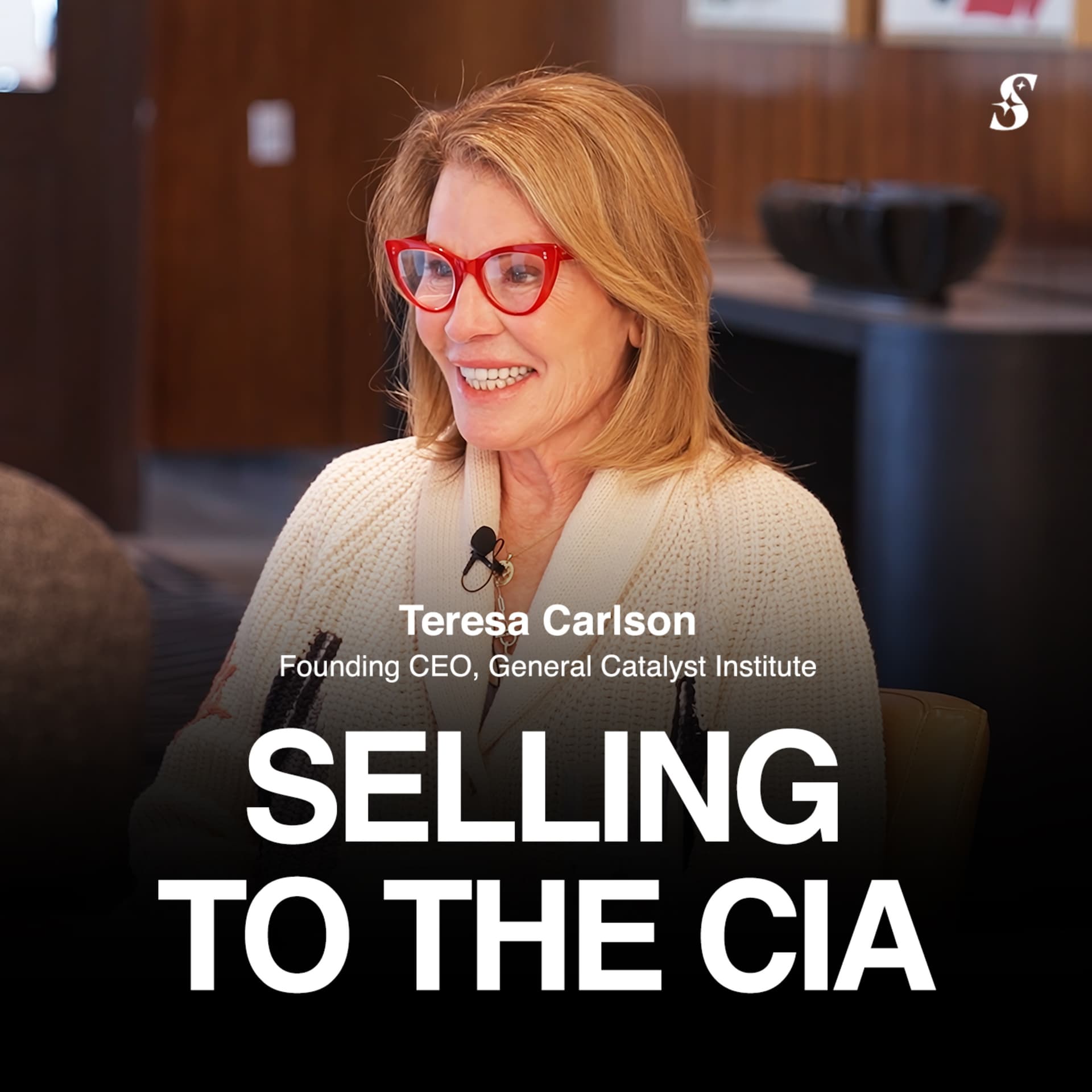
Teresa Carlson (GCI) recounts how AWS built cloud for the public sector—especially the CIA/Intelligence Community—then draws parallels to today’s AI adoption and the need for AI policy frameworks.
Guest backgrounds
Teresa Carlson is founding CEO of the General Catalyst Institute. Previously, she led U.S. Federal at Microsoft and then joined AWS in 2010, staying through 2021, where she helped create and scale AWS’s government/public-sector cloud business globally.
Key claims
- AWS had to “create the industry” for government cloud because cloud wasn’t defined, security/compliance regimes were unclear, and there was no contracting mechanism.
- Early, high-credibility contracts (e.g., CIA) legitimize startups because legitimacy comes from real usage and customer references, not just technology.
- AI is being adopted faster than frameworks exist; governments still haven’t defined “AI” as clearly as they defined “cloud,” creating a patchwork that burdens startups.
Notable examples
- 2012–2013 CIA contract for a classified cloud environment for the Intelligence Community; required cleared staff, skiffs, and a major culture shift at AWS.
- NASA/Mars rover workload as an early low-hanging fruit case study.
- NIST defined cloud; FedRAMP created a security/compliance model; other regulated industries later “snapped into” those models.
- She cites Anthropic working with defense as an example of why frameworks could help.
Written by AI. May contain mistakes. Listen to the episode to check what was said.
Chapters
Tap a time to open that second in VOBuilding AWS for Governments
0:00 to 0:45
Learn how AWS transformed cloud computing for government sectors.
“My business, we build it from about zero to 10 billion, the government side globally, in 10 years.”
The Shot Heard Around the World
0:46 to 1:28
Explore the significance of the CIA's cloud contract with AWS.
“But I also worry that we're moving really fast without the frameworks in place.”
Navigating Early Challenges in Cloud Adoption
1:29 to 2:44
Discover the initial barriers AWS faced in government cloud adoption.
“In fact, my friend, Pamela Brown, who's a CNN commentator, was at the Derby with me and just had her on the show this morning, the trainer, Sherry.”
Grassroots Education for Cloud Computing
2:45 to 4:11
Understand how AWS educated government users about cloud technology.
“You are the founding CEO of General Catalyst Institute.”
Winning Over Skeptics in Cloud Security
4:12 to 6:28
Learn about the skepticism AWS encountered regarding cloud security.
“And if you think about adoption and deployment in U.S.”
The Impact of the CIA Contract
6:29 to 9:24
Examine how AWS's CIA contract changed perceptions of cloud security.
“And so we really had to demonstrate to them, it actually gave them more control over what they were building.”
The Role of Various Sectors in Cloud Transition
9:25 to 11:34
Explore the diverse sectors AWS engaged with during its cloud transition.
“It was kind of the first tech business they had.”
Government's Shift Towards Commercial Solutions
11:35 to 14:04
Learn about the trend of governments adopting commercial cloud solutions.
“And if you just think about defense in NASA, how a satellite or a spaceship gets built or a defense weapon, all these things come from commercial.”
Building the First Classified Cloud Environment
14:04 to 14:44
Learn how AWS established the first cloud for the CIA, sparking commercial interest.
“We built the first classified environment for the intelligence community.”
Government Cloud Adoption and Compliance
14:44 to 15:57
Understand the various government sectors and how they adopted cloud models.
“You're building something that is meaningful and that you know your government really needs.”
Show all 32 chapters
Transforming Industry Standards with FedRAMP
15:57 to 17:18
Explore how FedRAMP influenced compliance models across different industries.
“On the industry side, I'll share in healthcare and financial services as an example, they began to adopt the same models that the U.S.”
Building Effective Teams at AWS
17:18 to 18:15
Discover the strategies for building strong teams tailored to industry needs.
“I've been, I've honestly, I say, when I look at myself, I think one of the things my superpowers has been building good teams.”
Sales Dynamics: Transactional vs. Consultative
18:15 to 19:45
Learn the key differences between transactional and consultative sales at AWS.
“But at Microsoft, we had very more, I would call it transactional leaders back then.”
Hiring for Success in a Cloud Environment
19:45 to 21:02
Understand the qualities and backgrounds needed for hiring in cloud sales.
“And they would get a charge as they spun up an instance.”
Personal Growth Amid Rapid Scaling
21:02 to 22:26
Explore the challenges and personal reflections during AWS's rapid growth.
“So the type of people that I hired were very different, very different backgrounds from people who had been on Wall Street, a lot of technical people.”
Adapting Leadership During Fast-Paced Change
24:06 to 28:00
Understand the strategies for adjusting leadership during rapid scaling in tech.
“When we talked to Haman, he was like, not Amazon, Anthropic, they reached a year of scale in one quarter.”
Defining Capacity in Cloud Services
28:00 to 29:00
Learn how AWS approached customer capacity needs and built tools in collaboration with teams.
“capacity because we never wanted to go to a customer and say, sorry, we don't have enough space for you.”
Lessons from Leaders: Writing and Storytelling
29:00 to 30:40
Understand the importance of clear communication and storytelling in AWS culture.
“So to ensure that as a company, we were delivering really what the customer was asking for, not just what we thought they needed.”
Risk Management and Decision-Making
30:40 to 32:10
Explore how AWS evaluates risks and makes decisions using the one-way and two-way door concept.
“and I feel like they helped me stay on top of my game.”
Building a Business Around Leadership
32:10 to 34:06
Discover how AWS builds businesses around strong leaders and fosters entrepreneurship.
“And so we looked at things from a one-way and a two-way door.”
The Impact of Cloud on Technology Transformation
34:06 to 36:00
Analyze the transformational shifts in technology with cloud adoption and AI advancements.
“The other couple of things I'll share that I really loved about what we did there was I built that business because they believed that I could do it and they really backed me.”
AI Adoption in Regulated Industries
36:00 to 37:50
Examine the rapid adoption of AI in government sectors and the need for a regulatory framework.
“And In AI, they've already way surpassed what they're doing.”
Optimizing AI Spend and Usage
37:50 to 39:57
Learn about the trends in spending and optimizing resources in AI technology.
“And I think for AI, I think it's fantastic, but I also worry that we're moving really fast without the frameworks in place.”
The Future of AI and Multi-Cloud Strategies
39:57 to 41:40
Predict the future of AI deployment and the importance of multi-cloud strategies for businesses.
“And I do believe with cloud, you will see still a huge burst of spend, but then larger companies will So, well, wait a minute now, how do I optimize that spin?”
Navigating AI Implementation Challenges
41:40 to 42:00
Discuss the challenges companies face in implementing AI and the need for employee training.
“But in AI, yeah, I predict that we are so early in what is being created and how quickly it's being created.”
Embracing AI in the Workplace
42:00 to 43:11
Explore how companies are integrating AI into their operations and employee training.
“You're going to see more solutions created, more adoption, because as humans, we're going to learn as leaders.”
The Importance of Early Contracts for Startups
44:24 to 48:23
Discuss the significance of securing contracts with government agencies for startups.
“Enterprise AI runs on Merge, the AI infra platform for integrations, agent tooling, and model orchestration, so your teams ship product, not plumbing.”
Establishing the General Catalyst Institute
48:23 to 54:49
Learn about the creation and mission of the General Catalyst Institute.
“Because, again, it legitimizes them that you have customer usage that you can go back and say, okay, CIA.”
Innovative Startups Making a Difference
54:49 to 56:00
Hear about innovative startups that are working on transformative solutions.
“So many, first of all, there's like, I mean, and I would not want to hurt any of their feelings because they are, they really are all spectacular.”
Innovative Health Solutions
56:00 to 59:50
Learn about groundbreaking health solutions and their impact on patient care.
“And toward the end, he said, well, I'm driving.”
Navigating DC: Preparing Tech Companies
59:50 to 1:02:10
Discover how tech companies are prepared to engage with lawmakers in DC.
“right incentives, they can't grow and thrive.”
Government Opportunities for Tech Startups
1:02:10 to 1:06:35
Explore how the government is opening up to tech startups and the importance of AI frameworks.
“But for most, I wouldn't assume that you can do that.”
Transcript
Automatic transcript. May contain errors.0:00My business, we build it from about zero to 10 billion, the government side globally, in 10 years. I had two people, no revenue. There was no way for government to even buy cloud. I would say we really did create the industry for cloud computing at AWS for governments around the world. We won a contract in 2012, 2013 with the Central Intelligence Agency, and it really was kind of the shot heard around the world because commercial enterprises were like, what? If the CIA can use cloud, we can use cloud. How important is it for startups and these AI companies to land those contracts early and first?
0:38I will say, I used to tell my team at AWS, strap in because you won't see anything like this. And with AI, I'm like, this is a double or triple strap there. It's like nuts. But I also worry that we're moving really fast without the frameworks in place. I really want our companies to have an unfair advantage. And that's kind of what the General Callas Institute is all about.
1:08Teresa Carlson, welcome to Sorcery. Molly, thanks for having me. I'm so excited to have you today. We're here in LA. You're here for Milken. Yes. And I think you just got back from the Kentucky Derby. I did. And it was such an exciting race. I was like, first of all, had to have the first female trainer. win this was unbelievable. I mean, it really was unbelievable. In fact, my friend, Pamela Brown, who's a CNN commentator, was at the Derby with me and just had her on the show this morning, the trainer, Sherry. So like, I'm just, it was really thrilling and seeing the horse come from the very back to the, I mean, it was like, we're like, what?
1:49So it's probably one of the most exciting Kentucky Derbies and I've been for I think now I've been 17 years straight. Wow. So I've probably nine or nine or ten times since college that I started going. I'm from Kentucky obviously. Yeah that's so exciting. I went once it was so much fun. The hats are crazy. I always go nuts with my hats. I've got stacks of hats in my you know in my wardrobe but it's a lot of fun. I've never seen anyone ever in a bad mood at the Kentucky Derby. There's high spirits, no matter what the weather is. And the races are, there's always some thing that happens, something exciting.
2:29And seeing people bet and win or lose, it doesn't matter. People are just in a really good mood there. And I always enjoy going back for that time. So exciting. That's great. So today, we're going to talk about a couple of things as it relates to policy founders, regulators, and the tech transformation that's going on in DC and Silicon Valley today. You are the founding CEO of General Catalyst Institute. We recently had Haman on and he touched upon this. So I'm so excited to have the conversation with you. I want to start going back to your days at AWS. And I know you had a longstanding career that also touched upon Microsoft.
3:08So we can also touch upon that. But I'd love to start at AWS because you were transformational in bringing public sector to AWS. So what was the environment like then bringing cloud into DC and making sure that that was kind of palatable for not just the tech world, but also for policymakers? Yeah, it was a really interesting time. I started there in 2010 and I went all the way through 2021. And when I started with AWS, I just left Microsoft. I've been running their US Federal. I'd been there 10 years. I've been running the federal business for about three years. And you heard people talking about wanting a web service, talking about cloud, but it really had not been defined yet in federal government.
3:53But the one thing that was clear is they were tired of paying for this client server model, this licensing model. And just quite frankly, government was paying too much. Like they would buy a lot of license that they never used. And the software companies kind of use this as a model. They would keep selling them. And if you think about adoption and deployment in U.S. government, it's not easy because there's a lot of legacy systems. So you've got to make sure things integrate. And you can't just throw everything out and start all over because you have years and years of data and storage that are critical knowledge points that they just can't get rid of.
4:31Whereas a lot of times in larger companies, they'll just create a new application. But when we started, we really literally had to start from scratch. I had two people, no revenue. There was no way for government to even buy cloud. There was no contracting mechanism. So I would say we really did create the industry for cloud computing at AWS for governments around the world. And one of the things that we did, it's kind of crazy when I think back, we would just, I had a little team, we were in a little building in Herndon, Virginia, and I would say, look, let's just, I knew all these customers, and I said, let's just start demonstrating what cloud is, and we would literally do like pizza or cookie evenings, so we would like email everybody we knew in government, every technical CIO, CTO, director, and we would say, hey, just come and let us show you about cloud, bring your computer, and we would set up in a little conference room and we would just, I would have my solution architect and we would just demonstrate.
5:32We'd give them like a little Amazon card with some credits on it just to try. And we would let them, we demonstrated how cloud computing worked. How did you get on the console? How did you spin up an instance? How did you use storage? And they, their mind was, I mean, just like blown. And we were like, did you know you can spin up a data center in five minutes? and they would just, it was like almost voodoo. They couldn't really believe it because they didn't have experience. The ones at that point in time that were using a lot of cloud were your startups and individual developers and engineers.
6:05They were very savvy and we always said, hey, we never wanna forget startups because they were keyed us actually building the business. But then when we started doing that, we started getting momentum. And I will say we had a lot of antibodies because we had a lot of system integrators, larger ones who saw this. I called, and CIOs, I called them server huggers. They did not want to give up what they felt was their domain. And so we really had to demonstrate to them, it actually gave them more control over what they were building. But one of the big dynamics that we saw shifting was you saw kind of the control and momentum move toward the mission owners in government.
6:46Whereas a CIO had just more control of what they would buy and build up, you saw a mission owner like NASA, JPL, and others who were some of our early customers. They were like, wow, we have a mission and we need compute and we need storage. Can you help us? So we started not directly with the CIO. A lot of our early workloads were low-hanging fruit of things that the agencies just needed help with. The Mars rover is a really good one. NASA came to us and said, look, there's a Mars rover up here, and we thought it would only rove for four months. It's still roving like eight months later. And they're like, it's using all our data and storage app or processing.
7:29Can you help us? So we created a model. It was a lot less expensive for them. And they were thrilled. I mean, we did case studies. They were an early customer to get on stage with us at reInvent. So that was like, it was an interesting time because no way to buy it, no definition of cloud, there is no security or compliance regime around cloud computing. We literally just had to go into government and help create all that. And we were very patient because we knew we couldn't just go sell something. We had to actually define the market. And I'll tell you one other really funny story. I've told this before you probably heard it.
8:11But one of my kind of aha moments is I went to Capitol Hill to have some conversations with some congressional leaders I knew. And they were like, oh, Teresa, you're at Amazon. You know, are you here to talk about books or taxes? So that was their entire concept of Amazon at the time. Oh, my gosh. Because taxes back then was a big deal. And I said, no, I'm here to talk about cloud computing. and of all the congressional leaders I met with, there's only a couple that really understood what it was at all. So we had to, you know, we had to educate and advocate on behalf of AWS around cloud and we had to build up the entire partner ecosystem.
8:51We had no partners that were certified or understood it. So it was really grassroots from the ground up creating that entire market. And it was really phenomenal when I look back and also feel like we opened it up for so many other companies to come and do that work. And AWS is one of Amazon's largest businesses. Yes, yes, by far. And it's also a high margin, higher margin business for them, which allowed even Amazon to do other things. And we were proud of that. It was kind of the first tech business they had. And in retail, the margins are very lean, very lean. You know, I think somewhere, I don't know what it is today, but back then like 1.2 to 1.5 % margins, you don't have a lot of margins.
9:41And Jeff Bezos used to say, you know, you have to keep innovating on retail too, because he said, I've never heard of a customer who wants things slower, were bad quality and bad service. So if you're constantly looking for more innovative ways to provide better service, faster delivery, and as least expensive services and tools, and we kept those same principles at AWS as we were developing and building out what we were doing there. I want to go into all of the sectors that you touched upon within that, because I think there is, the government is so large and there's so much nuance to everything that you touch.
10:21So when you were at AWS, you worked with financial services, energy, telecom, aerospace, and satellites. What did you learn between having to communicate with all these different types of groups? Well, one of the things I'll share, I have always loved working in public sector and it is not for the faint of heart, because I share with everybody, you know, commercial is just so much easier to interact with because their contracting processes, just the hoops you have to go through, security and compliance, everything you have to pass in order to actually even do the work. But one of the greatest things about public sector is just what you said.
11:02I always used to say, well, if I'm tired of defense, I'll go to Intel. If I'm tired of Intel, I'll go talk to agriculture. If I'm tired of ag, I'll go to HUD or transportation. So it's a diverse group of agencies and customers that you really actually get to learn so much about different industries. And if you're curious and you have agency, you can go in and really understand these industries in a big way, which also helps a business in their commercial side. Because in government, there's so much connection points with how things get built with commercial industry. And if you just think about defense in NASA, how a satellite or a spaceship gets built or a defense weapon, all these things come from commercial.
11:46They used to be built what we used to call GOTS, which was government off the shelf or custom built. And now you see more commercially built. And I think we were I'd like to say that at AWS, we were key for governments to be more commercial. And one of the industries I'll just share a little bit about, we won a contract in 2012, 2013 with the Central Intelligence Agency. And that was one of the things I think that really put us on the map. It became controversial because other large providers were really upset that we had won this. But we went in, and this is where I'll say Jeff Bezos and Andy Jassy and the board of directors were unbelievably supportive because we had to literally transform the company at AWS to do that work because we were bidding classified contracts and we were bidding to actually build a cloud for the Central Intelligence Agency and the rest of the classified, the rest of the intelligence.
12:46So it was CIA was the contracting body, but this was for all the ICs. So it was for all the intelligence community across the US government. And that was a big culture shift for Amazon because we had to get people cleared. People had to go into skiffs. We had to build skiffs if we won this contract. And we literally bid this thing. I had a team of four people. That was it. And we did one outside contractor that helped us. And other teams, IBM, Microsoft, others that bidded had these huge teams bidding this thing. And they kept saying, you guys can't win it. But the CIA had a really, they were very far ahead.
13:29They had been looking at cloud computing already. And they knew that they could not, they could build this. They had very smart people, but they couldn't sustain it because of the contracting environment in government. And what I mean by that, Molly, is that, you know, in government, the reason they've moved toward commercial is because they can build something now and it can be really good. But in order to keep it up to date with how fast technology is moving, their contracting process can't do that anymore. So they kind of would build things and it became very stagnant quickly. And if you just fast forward, we'll talk about this later, with AI, they really couldn't do it now with an AI model.
14:09So we won this contract. We built the first classified environment for the intelligence community. And it really was kind of the shot heard around the world because commercial enterprises were like, what? If the CIA can use cloud, we can use cloud. And at that point in time, people were still very skeptical about the security and compliance, like because we would hear things like, oh, that's not secure. Oh, you can't use cloud. I mean, we had everything thrown at us. And you have to be really patient and answer questions and just know you're doing this for the long term. And you're doing these things to outlive what you are doing.
14:46You're building something that is meaningful and that you know your government really needs. But these industries, to your point, are very different. And in government, you have these also at state local education, not-for-profit NGOs. And then I had the global scope. So you have countries that act and behave differently globally. But the one thing I'll say that we did really well, we got NIST in the U.S. government to define what cloud computing was. And then other governments around the world started using that same definition. Oh, wow. Yeah. It was, it was funny. The first contract we did in Australia, we kind of laughed.
15:26We saw they'd use the NIST definition. And then we worked with GSA to actually do something called FedRAMP, which was the first security and compliance model for cloud, because you couldn't have a paper-based model because it was distributed computing. you really needed to have this ongoing model that you could look at cloud. And we worked with them. And I really have a deep appreciation for what the U.S. government did. People say they're slow, but they knew that there was a change and they had to get through it. On the industry side, I'll share in healthcare and financial services as an example, they began to adopt the same models that the U.S.
16:07government. And this was probably the first time that I had seen more regulated industries say, ooh, the U.S. government has actually created a model that we will snap into. So even today, that FedRAMP process, if you look at it, healthcare and financial services still use that model as much as government uses it in terms of certification and compliance. So this is how industry trends begin. You need to shape them and make sure that you're building something Because again, back to those connection points, Molly, the Fed Reserve, the SEC that are government, FINRA, they have connection points to every bank.
16:47So you've got to make sure these things work. And that's why the commercial industry side of regulated industry and government, there's just such close connections. Telecommunications, things like that are, it's critical that you build something that will move across these types of industries. How do you build the internal team out for that? Are you pulling from public sector? Are you training people? How do you get the type of, and like what kind of expertise do you look for? I found when I built this business, it was very different than my business at Microsoft. In fact, I led my team at Microsoft.
17:25They were so good. I've been, I've honestly, I say, when I look at myself, I think one of the things my superpowers has been building good teams. I just have a, I love people and I like to make sure those human connections make sense in building out a team and that there's good synergy and energy. And I also look for people that have a burn in their belly for that industry. I used to say for every leader that I hired, like my state and local, my education, my intel, I tried to find somebody that loved that industry as much as I love the work I was doing. And I know that kind of sounds silly, but when I saw that in their eyes and the way they behaved, I knew if they were smart, they were diving deep and they wanted to deliver results that they were, you know, that they were, I was moving in the right direction.
18:15But at Microsoft, we had very more, I would call it transactional leaders back then. Not in a bad way. They were very good. But we had tools and products that they took and they put it to work. They sold it into government and that was their job. So they configured an enterprise agreement. They configured something specific and they had to be able to talk about what the tool did, but it was more transactional. At AWS, it was very different. We were actually, in order to get the customer to buy something, we had to first demonstrate their desire and their delight in using that tool. because in a software license model, it's a one-to-one transaction.
19:01I sell you something, you pay for it, you get it. In cloud, that's not the case. You only paid for what you used. So, and this is kind of a funny story. When I first looked at my spreadsheet of what customers I had and how much they were using, I had hired my biz ops guy that came over from Microsoft, off. And we looked at a spreadsheet and I said, oh, that's like, okay, this is good. Here's four customers. This is, you know, this is, you know, a hundred thousand, this one's doing a million. And he said, no, that's a dime. And that's a dollar. And they were literally spending a dime and a dollar.
19:41And I was like, what, how are we ever going to make any money if they're spending dimes and dollars? And they would get a charge as they spun up an instance. So they might spin it up and then stop just to get an account going. And so what I realized, I had to hire people. If I was only going to pay them, if they were an account executive, they had to have a spirit of more consultative account management and sales. They had to delight the customer. They had to love that customer's mission and had to go in because they wouldn't get anything on top of their salary until the customer started using the tool.
20:19So in order to get them to use the tool, they had to dive deep. They had to be very curious. They had to spend time. They had to listen to the customer's needs. So this is the type of person I had to hire. It wasn't a transaction and how do I get a deal across the line? It was, let me hear what you're saying. What's your mission? What things are you trying to solve? Let's whiteboard this. Let's talk about how we can do this. Let me bring in a solution architect. Let's try it out. You can spin it up. You don't have to spend a lot of money. And so I really had to find these people that were hungry to solve the mission problem, not the tech problem.
20:58So these were the two big differences I saw. So the type of people that I hired were very different, very different backgrounds from people who had been on Wall Street, a lot of technical people. I found, you know, I thought it would be easy, but it was hard technically for our customers. So I need a lot of very, my solution architects, I look for those that were aware and had good EQ with customers because you couldn't be also dry. You had to, again, be a good listener, be able to solve the problems, whiteboard, have a good conversation. And it really did change the type of people I hired. I had a totally different group.
21:40And I will say I'm so proud it was probably the one of the best teams I ever built globally. I just had like a phenomenal set of leaders and I made mistakes for sure. And I tried people that had worked for me before and they were amazing individuals, but this was just not the right place for them. And, you know, on a personal note, even for myself, the business was growing and scaling so much. There were days I would say, whoa and can I do this I would literally look in the mirror and say we're growing at a rate we're opening these countries these customers are so like do I have the skills how do I need to readjust what I do as a leader and how do I learn the business in a way that I'm interpreting it in the right way to make sure that we're growing so it was just a really different dynamic.
22:31Sorcery is brought to you by Brex, the financial stack trusted by more than 30 ,000 companies, including one in three venture-backed startups in the U.S. Nearly 40 % of startups fail because they run out of cash. Brex is literally built to help founders avoid that. Unlike traditional banks that let your money sit idle, chipping away at it with fees, Brex is designed to help you spend smarter and move faster. Their all-in-one solution combines checking, treasury, and FDIC protection into one powerful account. You can send and receive money globally at lightning speeds, get 20 times the standard FDIC coverage through their partner banks, and even high yield from day one.
23:11With same day and even same hour liquidity, access your funds anytime. Companies like Scale AI, DoorDash, Service Titan, HIMS, Anthropic, Flexport, Robinhood, and Plaid trust and use Brex. Start today at brex.com slash sorcery. That's B-R-E-X dot com slash sorcery. Turing is training the next generation of AI with tasks that require real expertise and real world judgment. That's why companies like NVIDIA, Anthropic, Salesforce, and Gemini partner with Turing. Turing builds realistic reinforcement learning environments and data systems based on real operational traces. The kind of infrastructure frontier labs need to train superintelligence.
23:56Visit Turing.com slash S-O-U-R-C-E-R-Y. That's a really good point. How did you readjust as you were scaling so fast? And we'll get into AI in a second, but in AI, everything is scaling at a pace no one has ever seen before. When we talked to Haman, he was like, not Amazon, Anthropic, they reached a year of scale in one quarter. It's just like beyond anyone's line of sight. So how did you readjust yourself with that scale? And did you have to keep yourself really aware of how things were moving, how people were behaving? How did you keep it together? Well, one of the things that we did at Amazon, AWS, that I really loved is we would say, we'll do this till we know better.
24:45And that is a really good way to look at any business and be innovative because you've got to constantly be looking around corners. And the thing I would say to my team, like literally, we built out how you did sales around this. Like there was no model of how like in Salesforce or there was not a good approach or methodology to how you did forecasting as an example. Because again, if you're forecasting based on a server license, that's easier. I'm selling a hundred of this, I'm getting X amount of dollars. In cloud computing, we were launching so many services that one, we had to keep all our people fresh and trained.
25:25Because we went from like the first year I was there launching 23 new services to last year, I want to say it was like 2 ,800 new services and features. And it was the sellers, the account executives, I hated to call them sellers. I wanted them to be account focused and customer. But so our customer account executives had to really understand and know those services. So one, I had to ramp up like sales orientation, product orientation, to make sure that our teams were fresh. So I built up a training and certification team internally and made sure people got trained up. You know, I tried to listen to what they were telling me that they needed more of, my teams, my people in the field.
26:07How did we build programming around field marketing to make sure that we were, to your point on industries, you can't just go and talk to a customer in one way. You can't go to financial services or agriculture, environmental, or defense and talk to them exactly the same way that you're talking to telecommunications, right? You've got to have a story that they understand when you're talking about your service. So we started building out more of that. But also the thing was data. One of my big lessons was data. I got really good and I built out an unbelievable business operations team on how we looked at our data and we built things with Tableau dashboards and we wanted something that we can continually understand how customers were buying and what they needed.
26:59Because again, if you're only paying for what you use and you're looking at usage as your bar around like your sales environment tool and you're saying, okay, I'm looking at usage now. And if all of a sudden you forecast it up here and a customer drops down because of a workload, we needed to understand capacity. Like we need to understand what type of capacity did our customers need. And the reason that was important was because my building team, the team at AWS that was building all of those clouds and all that infrastructure. If all of a sudden I had massive customers coming online and then my infrastructure team at Amazon would say, we don't have enough capacity.
27:47So I had to learn how to do capacity planning with our tech teams. And so we did a lot of capacity planning and we had to teach our customers, let's look at what workloads that you're going to bring online and let's think about capacity because we never wanted to go to a customer and say, sorry, we don't have enough space for you. I mean, you're talking about mission critical activities. So these are the kind of things my brain was constantly like. So it wasn't just a widget selling anymore. We were actually helping define capacity. We were working with our infrastructure and services teams that built the tools.
Read the full transcript
28:26And we would say to our services teams, hey, the Intel team needs this. Can we build it. And we would work closely with them to update a tool or build a new tool. So the dynamics and cloud working in the field with a customer was like I was attached to the hip with my team in Seattle. Like it was, that's what made it so fun actually, because I felt like I, I did something more than just delivering. I was actually with my team shaping what we were building and giving that continuous feedback loop. So to ensure that as a company, we were delivering really what the customer was asking for, not just what we thought they needed.
29:10And that was a good combination, I think. What was it like building this out in step with Jeff Bezos and Andy Jassy? What were the biggest lessons that you learned from them? Well, the first lesson I learned when I got there, never put a PowerPoint presentation in front of anybody. We did not use PowerPoint. I don't know if you've heard that before, but we did not use PowerPoint inside. Everything was a written document. You had to be prolific at writing and telling a story. Things were a storytelling inside the company. And I will never forget the first meeting I did with Andy. And he walked in with some of his leaders and we were a smaller team, but I had a beautiful PowerPoint.
29:52nobody would even look at it. I was like, I was just mortified, but I never made that mistake again. So I had to actually realize they were a company that dove really deep into the details. And you had to be more prepared. I think my brain worked harder when I was there because I had to go relearn things I'd forgotten as a leader running a public sector business. Like they would ask me very detailed things about contracting and compliance and why. They wanted to know why and understand why I was asking for something and what it would achieve and what would be the risk. And you, you know, your brain, you just really have to be on top of your game constantly.
30:43and I feel like they helped me stay on top of my game. And I learned that what you write down and how you tell that story needs to be crisp. Don't use a bunch of extra words. Tell the story, get to the point, drive on your outcomes, make sure you define the risk, don't hide risk. It was a big thing there. Like we actually believe that we could do anything. like in what I mean build anything, Amazon is a company of builders. When I was there, we built things and we believe that we could build and do things, but we wanted to understand all the risk. So if you didn't outline your risk, people kind of saw that as a red flag that you're kind of trying to pull the wool over there.
31:31I'd say, oh, this will be okay. You really needed to talk about all the potential risk. And then we would talk about what we could do about them. And that, I think, is what a lot of companies miss is they don't spend time saying, look, we know this is a risk. And is it a one-way door or two-way door? And Jeff talked a lot about one-way and two-way doors. A one-way door is if you made that decision, you couldn't get back. And it could be amazing or detrimental. A two-way door, you could take it and you could come back. you still may have a cost and you still may have risk and you need to assess those.
32:11But okay. And so we looked at things from a one-way and a two-way door. And then the other component of this was really being able to put together a P &L, understanding that not just the cost of risk, but what's the cost? Like what is the actual cost? And how do we make sure that we can build it in the right way with the right cost structure? And then also we can make money. Like we're not looking at a losing game here. What's the ROI of this thing? So it was really, you had to be, I'll call a general manager. You had to, what I mean by that is you had to know generally everything about your, your business.
32:47And that was very new to me. And while I'd written in my education, I was a writer. I was more prolific in my writing in terms of words and I'm Southern. So sometimes, you know, I use fillers, which is my style. And so I really had to learn my writing style and my speaking style to be more crisp. And I used to coach my teams because we would have these OP ones where you built out for your, your, the planning, what was your budget? What was your headcount? I asked what you're going to do for the year. And we would put these documents. I would keep them up till three in the morning, rewrite it. We're going to read, we would reread it and rewrite it until I made sure that if I took that document in, it was something Andy, which was our leader, but in Jeff, if they read it, that he was like, I get it.
33:31And they could ask me the right questions and understand it. Another big lesson was if they ask you a yes or no question, answer yes or no. Like that was like another thing. People want to explain their answer before they give it. And I would coach my team. Once I learned, I was like, look, if you get a yes or no question, answer yes or no. And then if they want more details, they'll ask you. So there was these things you learned about our communication style. And these weren't harsh things. These were because we had a lot to do. We wanted to move through those things fast and people didn't want to waste time.
34:08The other couple of things I'll share that I really loved about what we did there was I built that business because they believed that I could do it and they really backed me. And I think I'm a good example of how they built leaders. They would build a business around, and I did the same thing then. I would build a business. I built an aerospace and satellite business around a leader, General Clint Crozier that I hired because I got him to agree to let me to build the business. And then I hired the right leader. And that business became a very solid business for AWS. But they believed in me. and I felt because they believed in me and gave me that opportunity to build it from scratch and then they let me build out crazy things around the world because I delivered results.
34:57If I hadn't delivered results, it would have been another game. They also ask a lot of questions. I mean, it wasn't like, oh, you just get everything you want. You had to be very clear in what you're asking and what you're going to deliver and as long as you did that, they were very open to building out new business opportunities around the world. And I really appreciated that. And it taught me a lot about the art of the possible, what you can do and how you do it. But then once you're given that opportunity, you have to go deep, deliver results, have high ownership of what you've been given the opportunity to go do.
35:33Cloud was a huge transformational moment for technology. And now AI is in the same position. what are the parallels that you see between these two cycles? The thing that has really, Molly, I have to say, has really totally blown my mind is I think about we got started. My business, we build it from about zero to 10 billion in the federal side or the government side globally in 10 years. So that went really fast. I mean, it was from nothing.
36:06And In AI, they've already way surpassed what they're doing. The numbers are off the charts. But I think for me, what surprised me the most about regulated industry and government, set commercial aside, how quickly that they're acquiring and adopting without the same restrictions that I told you about earlier with cloud. They still really have not defined AI. If you go look at what I said they define cloud, they've not really defined what AI is. And I think that is important. What is AI in the capacity in which it's going to be used? Because there's different models here still. You have your language, your model providers, and then you have your solution providers on top of that that are building, agentic, applied.
36:58And I think these things need to be understood by everybody, more education and training. So one is just they're adopting, they're buying without all these things in place. So while I'm excited about that, it also worries me because in my job as the CEO of the General Callas Institute, one of the early things that we came out with is we believe that federal government needed an AI framework. mark, it was important to set some regulatory environment and put it in place for this. And I saw that with cloud. There were a lot of missteps in cloud. And so we had to back off that and really think about how retraining was their certification.
37:38And we were literally back then like going in and saying, look, you need to set a regulatory environment. So companies also know how to meet this, not just large companies, but small companies. And I think for AI, I think it's fantastic, but I also worry that we're moving really fast without the frameworks in place. And I believe Anthropic working with defense is a good example of if we would have had some framework that they were working off of, I think, you know, I don't know if the outcome would have been different, but it would have helped them as both the government and the commercial entity to have that conversation.
38:18And we just haven't gotten there. We still have a patchwork going on of these AI regulations, which makes it very hard on our startup community. But on just scale, I will say, I used to tell my team at AWS, strap in because you won't see anything like this. And with AI, I'm like, this is a double or triple strap in. It's like nuts. One prediction that I think that you'll see with AI is you're seeing a lot of spend, a lot of spend happening. And it needs to, you know, both with the model development and also just with customers adoption, they're spending and they're using a lot of tokens. And I've shared with some of our founders that I believe you'll see what I call the optimization point, though.
39:08And we saw it with cloud where there was a lot of spend. And then customers said, wait a minute, I want to optimize how I use. So you saw, so this is where you saw the cloud providers reduce. They would have a model where we reduce pricing. Our motto was we wanted to decrease our price point. And then that would cause customers to spend less, but then they would adopt new services. So there was kind of a, it was a real balance because we wanted that. We wanted the spend to basic compute and storage to go down so they could take advantage of other things like database services, streaming, AI, the other tools that we created, we wanted them to take on new services.
39:52So the spend over time actually kept going up, but you needed to reduce certain spend to see others go up because it's not an unlimited budget out there. And I do believe with cloud, you will see still a huge burst of spend, but then larger companies will So, well, wait a minute now, how do I optimize that spin? And what tokens, how do I really need to use it? And what workloads and workflows are the most critical to the success of my business with AI? Cloud evolved into a multi-cloud environment, so you don't have dependency on one or the other, and you can have your data in multiple places in case there's an outage or something like that.
40:33Do you think something similar will occur in AI? Do you think people will stick to one model in the future? or do you think we'll keep separate use cases for different things? I think we'll keep separate use cases. You can't change human behavior. And human behavior, when it comes to buying tech, is they're constantly looking. It's a great thing for the industry, the tech industry overall. It's not always great for commercial industry. You see over and over companies that buy too much tech. and what I mean, they want to experiment a lot. And then they kind of say, whoa, I got to back to optimization.
41:16I got to look at all of the technology services I own. And am I really using them? This is just tech debt. This has been going on for years. And it takes companies a long time to get rid of their tech debt. And also if they've created an application on a platform and then they're like, well, now I've got to move it. And that becomes very challenging, especially for large enterprises or governments. But in AI, yeah, I predict that we are so early in what is being created and how quickly it's being created. I think, first of all, we're having trouble processing just what's happened in the last few years.
41:58But it's even going to go faster. So you're going to see more models created. You're going to see more solutions created, more adoption, because as humans, we're going to learn as leaders. We're going to really determine what's the best model we use with our employees to teach them how to take on AI. We're very early with that. Most companies are still trying to determine, can I use it at all? How do I teach my employees? How am I OK with them using AI? I mean, we're like even my team still is like, are you OK? I'm like, go use it. You have to make sure that you are doing background checking, that you're checking your data.
42:38I mean, it still hallucinates a lot. And it tells you even, hey, check my work. So we're still at the point we need to do a lot of checking. But you've got to get your employees really okay with using it. And now as new employees come online, they've got to have a lot of agency to both learn AI and understand how they manage with AI. So there's kind of two different models. But I think you're going to see workloads go in all different directions with all different companies' uses. And it's going to be who's the leader at the time. VCX by Fundrise, the public ticker for private tech, allowing investors of all sizes to invest in venture capital.
43:18View the portfolio at GetVCX.com. That's GetVCX.com. Some of you may not have heard this yet, but our sponsor, Public, just launched something called Generated Assets. and it brings AI into investing in a way I've honestly never seen before. Here's how it works. You type in an idea like AI-powered supply chain companies with positive free cash flow, or defense tech companies growing revenue over 25 % year over year. Publix AI then dispatches a swarm of agents that scan every single US stock, evaluates them, and instantly builds a custom index around your thesis. What really stands out is how clearly it explains why each stock is included.
43:56And before you invest, you can even backtest your idea against the S &P 500. So you're making decisions with real context, not just guessing. And beyond generated assets, Public lets you invest in stocks, bonds, options, crypto, all in one place. They'll even give you an uncapped 1 % match when you transfer your investments over from another platform. If you want to build a portfolio that actually reflects your thesis, visit public.com slash sorcery. Paid for by Public Investing. Full disclosures in the description. Enterprise AI runs on Merge, the AI infra platform for integrations, agent tooling, and model orchestration, so your teams ship product, not plumbing.
44:34Mistral, Dropbox, and Drada already trust Merge in production. Start building at Merge.dev. Founders scale faster on Deel. Set up payroll for any country in minutes, hire anyone anywhere, get visas handled fast, and get back to building. Visit deal.com slash sorcery. That's D-E-E-L dot com slash sorcery. I want to get into, before we get into, deeper into the General Catalyst Institute, I want to go back to your point on landing the CIA partnership and contract and how transformational and important that was for cementing the AWS cloud service for public sector. how important is it for startups and these AI companies to land those contracts early and first?
45:22Like we did see that with Anthropic and DoD and the drama around that, but how important is that for these companies to secure their legitimacy to get those types of things? I think it's very important. One of the mistakes that I see is when companies have great technology, but they don't determine who's going to use it. And what legitimizes you is usage of those tools. And the customer saying it's a good tool. And we over-focused. In fact, I have such a deep appreciation for Andy for challenging me on some of these concepts. Because when I first got to AWS, I had kind of been taught at Microsoft, we did not get customers to speak out a lot.
46:08And we always called it back then the Washington Post test because they didn't want to be on the front page of the Washington Post if something went bad. And again, back to sometimes they would overbuy or a project. I could point to so many tech projects that went wrong when it was kind of just a license-based model because they defined their requirements poorly a lot of times. I mean, when you're in that, I'm not saying government means to do this, but if you're defining a requirement, just like us sitting here today, today, you have a requirement about how you run your podcast. In two months, there may be a new technology and you're like, whoa, I got to change up the way I'm doing this or, you know, deploying my podcast or how I'm marketing my podcast.
46:53And you want to have flexibility in how you're doing something. The government back then had no flexibility. They would define something, they would put it out in RFP, and they would buy that thing. Within two months, it might be outdated. So after two months, something new had come up and they're like, oh, this project's not working. With cloud, that actually changed the game because you had a lot more flexibility in how you would define that. But with startups, it is critical with startups that they define what they're selling. who the user of that tool is going to be, and they get great legitimacy.
47:33And with Andy, he questioned me, he said, look, you've got to get references. You've got to get people to talk. And I said, Andy, in government, people won't tell the story. He goes, yeah, they will. And I was like, oh, I was so, like, I was so concerned because I was like, I just like, I was like, how do we get customers to actually say good things about what they're doing? And if you go back and look at all of my public sector summits and reInvent, I had so many customers that wanted to tell their stories. And I really appreciated that he pushed me on making that a reality. And we decided that our superpower was not really what we did, but what our customer did.
48:15And getting the customer to say that cloud computing was game changing was what made all the difference. So I really think these startups should over-focus. Once they have what they're doing, spend time getting the right customers, getting the customer to say you're doing a good job, going after those contracts, really working to make sure that they have scale and growth in revenue. Because, again, it legitimizes them that you have customer usage that you can go back and say, okay, CIA. CIA is using it. NRO or J.P. Morgan or Goldman Sachs. you can use that as a reference point over and over. I could continue to talk to you about all these topics for hours, but we need to talk about the General Catalyst Institute.
49:02So why did you and Hamant decide to launch this? Well, again, another great leader that I've had the opportunity to work with in my career, just so blessed. And HT is such a great leader. He is a goat of investing. I used to say Andy and Jeff were the goat in retail and cloud. And now I've got this amazing leader in investing. And, you know, I got to meet Hamat because I was recruited to be on one of the boards that they started called Commure. And I got to know him there and he said, oh, you should meet some of the team. And then I met Paul Kwan, who runs our global resilience. I was like, whoa, they're doing public sector and all these industries I love.
49:49and Hamant said, you should be an advisor to us. They have this program that they bring former executives on as advisors. So I worked for about 18 months doing advisement and helped do four investments. I brought some investments to the table. So I kind of learned the investment side. And then Hamant and I talked about, he goes, you know, you should think about coming on here full time. And I was like, do what? Cause I don't feel like my superpower is investment. I am not like, I see I'm more of a builder. I like to help companies build versus like that day-to-day investment is not what kind of gets me out of bed every day.
50:27But I love seeing what we invest in and making them successful. And one of the things we talked about was they have a General Callis. They're amazing. They raise a lot of money. They invest in amazing founders. But most of these companies are in highly regulated industries. And with AI coming on the forefront so quick and fast, I said, look, it's not like the thing I would probably love to do day in and day out. But what I found in my work both at Microsoft and Amazon, without the right policy and government affairs and working with governments globally, it's very challenging with businesses to take off if you're not advocating for the right policies.
51:09It can really be detrimental. And if you look at it, so we're financial services, healthcare, defense, intelligence, manufacturing, energy. These are all highly regulated. So I said, we should, so we kind of said, okay, let's create this institute. It's general catalyst backed. We're inside the company. And our goal is we have about a thousand companies we've invested in somewhere that never plus or minus is probably plus. and what my team and I do is we work with policymakers around the world to educate and advocate for good policies that make sure that our startups can thrive and one of the things I think that I I love working with our partners when I was at Microsoft and Amazon but I don't think I understood that there was no one really advocating for them on the policy end And for larger companies, look, they have deeper pocketbooks.
52:06They don't like it, but it's a lot easier for them to meet requirements and do lobbying and policymaking and do this stuff. For startups, it's hard. Like they don't have, they can't go do all this work. They don't even know how to do it. A lot of times they're aware of it, but they're like, where should we begin? So for us, we do this at the industry level. We don't do it on behalf of any one company. and we go in and meet lawmakers around the world. We do it in partnership with our, like AWS, they're the same mind. We work with them. We work with Microsoft. We work with Anthropic. We work with think tanks and education institutions.
52:43We have written some reports. We bring our founders to the Hill. You know, people say, go to the Valley. They gotta come to the Hill. And we bring them in. we curate a set of founders like in defense or manufacturing or financial services or cyber. We curate them together. We work with them on here's how you tell a story to a lawmaker. So we take them to the White House to meet key leaders. We take them to Capitol Hill. We take them to the Pentagon, as an example, if it's a defense related or industrial. And we get the absolute best meetings we can for them. And we give them all an opportunity to tell their story.
53:25We try to bring, we try to do some special events like I've done things like I get all the best reporters and we do on background and we do a luncheon or I've done receptions where I've invited all of the top hill staffers to come and meet them and we do like a fireside chat. And the idea is make them aware, educate our lawmakers and the agencies on this amazing technology, what we have built. These founders are, I'm just like so blown away by them. They're so smart. They're so optimistic. They're very creative and they desperately want to build something that is useful to the U.S. government or the government.
54:08If it's Brussels, we just took a group into Brussels and that went really well. We just were in the UK and London. And I just, the impact is profound from the moment we start it to the moment they walk out the door and they all are like, we're so glad we did this. It taught us so much. We really understand how this works. And the idea is one, they get educated. Two, we demonstrate to the lawmakers why they need to hear what they're doing because it's so profound. And thirdly, we want to teach them then how they actually build a business with government. So the kind of the side is we help them understand the go to market and help them create, how would they contract and then get work with government?
54:49Who are some of the companies that you're super excited about that you're working with? Well, I will tell a quick story. So many, first of all, there's like, I mean, and I would not want to hurt any of their feelings because they are, they really are all spectacular. The first, the first fly in that we did, I'll call, we did our first report in March of 25. We launched this thing in September of 24 and we did our first report on healthcare. And it's out there. I'll make sure, Molly, I send you the reports that we've done. But this one we brought in, it was during the Cherry Blossom Festival last year.
55:29So we had cherry blossoms on it and we brought, I think it was eight founders in And we took him in to meet with lawmakers and they were blown away. Hippocratic AI was one that I'll share. And Hippocratic does work with, they use agentic AI to do follow-up with patients. And he would play these recordings on Capitol Hill to seniors, senators, and congressional leaders, congressmen and women. And they were like blown away how the patients were responding to an agentic agent doing follow-up from a physician's visit. and one of the calls was it was a trekker and he was so funny he he called it sky sky link remember the arnold schwarzenegger he goes are you from sky link it was like are you or sky net sky net are you from sky net it was just a laugh i was like arnold schwarzenegger but after the conversation went on you heard him get involved with the conversation with the agentic ai she answered questions.
56:33She got him back on track. And toward the end, he said, well, I'm driving. She goes, what? You just have to be safe. Let's follow up in a little bit. But I've heard now probably 50 or 60 of these calls. And it's an example of it's game changing. And then you have companies like Citiblock, Toy and the CEO of Citiblock, who's actually doing care at the city, on the block of the city of those that are, you know, Medicare, Medicaid patients. And she works with states to actually make sure that those, and it's outcomes-based care. They only get paid if they have the outcome. And our lawmakers was like, what?
57:09I didn't even know this existed. And then we had new insurance companies that were taking advantage of insurance models that was built during the first Trump era. Paragom, who is a company that's bringing testing to all individuals around the country, veterans, where you didn't have access to these trials, except if you were in a large city and they're working with pharmaceutical companies to make sure that clinical trials have access to everybody. So, I mean, just mind-blowing. And one, I'll say that's a standout. We have two robotics companies that are absolutely amazing. One co-bot that was founded by Brad Porter, who actually founded robotics at Amazon, and Evan Beard, who has StandardBots, who is a robotic arm.
58:00And Evan had never been to Washington, D.C. His business is in upstate New York. And he came and he was like, I didn't even know they would listen to me. And now they're calling him for his feedback. And he's done testimony on the Hill twice. Wow. Yeah. And he's like, look, I've gotten contracts. He's, you know, he's been in major news journals now, but he just was like, and he's very humble. He's built an amazing company, but he's like, I just had no idea that they would listen to what I had to say. And now they're asking for my opinion. And that's what we try to teach them is that if you go in with humility and you go in with a solution orientation to these lawmakers and to the White House, they actually will call you back because look, they get beat up all the time.
58:49They already know there's issues. So our philosophy is we want to be solution providers, not problem identifiers. And that makes it, I'm telling you, it's a huge tone difference. If we go in with, we want to be helpful. So at the Institute, we go in with a, we're here to help. Like we're not, we're trying to help you at the industry. For America, we want to make America great with these companies. If we're in Europe, we take our European companies in and we say, look, they've already built this tool. They are working to make Europe great. They built their companies here. We want them to stay in Europe.
59:26So it's the same kind of model. We were just in India at the AI summit there, and we had a lot of our companies there. So it's really profound to be able to help these countries with their resilience. but they also have to want to help themselves to make sure that they have right policies and incentives in place, ensuring that these companies grow and thrive. Otherwise, if you don't have the right incentives, they can't grow and thrive. Wow. We only have five minutes left, but before we close, I have two last questions. One we were talking about before the cameras started rolling, but you noticed this.
1:00:04I noticed this. More tech figures are going to DC. They're learning how to dress. It's really nice to see something other than a sweaty t-shirt and to see some suits. So how do you also help these companies and how do you prepare them to come to DC? Do you tell them what to wear, where to go buy clothes? Well, I laugh. I was sharing, Molly and I were talking before. And when I was at Microsoft, I shared with you in the 10 years I was there, which was 2000 to 2010, I never ever wore blue jeans. I mean, I would have been mortified to walk into any customer, the White House or a lawmaker. It was just very formal.
1:00:46And every man wore a tie, a jacket, women mainly, they wore pants and all, but it was a lot of suit dresses too. And I just didn't know the difference. It was just how I was taught. lot. And when I first started AWS, I did struggle at AWS. I would have to say, you can't come in flip-flops. And I will re I remember the guy who ran our infrastructure. I love him to death, but I go and pick him up at the airport. He's going into the CIA and he's literally got on blue jeans, like a Hawaiian shirt and flip-flops and he has no other clothes. Oh my gosh. And I was like, what? I was like, no. And it wasn't Palmer lucky.
1:01:26That was a bomber that that I called my customer and they thought it was so funny, though. They thought it was so cool. So they were OK. He did a fantastic job. And but yes, we we did. And we try to do it in a very respectful way. But to say, look, you're coming in. It's just it doesn't show respect. You know, a lot of them don't always wear ties, but a jacket suit like, you know, nice suit jacket. a button down or a very nice polo shirt underneath, but you've got to go in and look buttoned up and put together. Otherwise, I just don't think you're serious. And I know some people would disagree if you are Andrel or other, yeah, once you establish yourself.
1:02:12But for most, I wouldn't assume that you can do that. I think if you really want to be taken seriously, you need to show up looking serious with them because they have a lot of people coming at them and again, earlier there was not many of these companies. So they kind of maybe thought it was cool. Today, there's a lot more companies and they are showing up. And they, you know, the Trump administration, I would say with this administration, one of the things that they are doing that I've not seen in my entire career is how much more commercially oriented they are. And they are willing and open to meet all these companies.
1:02:52And I want them to take it very seriously. They're opening up contracting opportunities. They're doing executive orders that are opening up for these companies like I've literally never seen in my career. Under President Obama, Vivek Kundra, who was the CIO back then, was literally he was the guy that brought in mobile devices and laptops to the White House. And that was during the first Obama administration. And since this is the administration in this term, I've seen them open up to do more things commercially for companies like this. And I feel like the opportunity is unbelievable right now.
1:03:33And I really want our companies to have an unfair advantage, all startups. And that's kind of what the General Callis Institute's all about, helping them with that unfair advantage. It's been so nice to see the Pentagon visit LA so much, go to all the different companies, tour them take the time there it's amazing incredible and when we take our founders we just went to the pentagon with a bench they were so i mean they were so amazing we met with the entire navy acquisition team and i laughed i told our founders i said when i was at aws that would have taken me two years to get all those meetings and they were wonderful they did follow-up we met with the DOD CIO.
1:04:13We've met with the Army CTO, like a bunch more, but they were just, and they were interested and they listened and they did the follow-up. And I just thought that was pretty unbelievable. I will share, Molly, we did our first summit for the General Callas Institute in DC in November called the U.S. Summit on Resilience. We'll do another one. And we had a packed house. I didn't know how it would go over. It was the first time we'd done it. and we paired founders with somebody from Capitol Hill, but we brought in and we had Hamant and Dr. Oz do a session. It was amazing. They were so great. They were so amazing.
1:04:48Dr. Oz is, I really like him. And of course, he's a TV guy. So he really knows how to do this, these kinds of interviews, but people loved it. I got so much feedback because it's not something usual that we put founders up there and we focus on the founder and the policy side and what they're doing and how that comes together. So we'll be doing that again in November this year. So hopefully you'll come. I would love that. And if you need help with your fashion style, I do think Jeff Bezos has had a really good arc in his fashion sense. Yes. Jeff has, to me, Jeff's always been super cool. From the early days of meeting him till today, I love seeing how his fashion style has changed.
1:05:29And I'm a, look, I love clothes. So for me, I'm constantly looking and seeing how his fashion has changed, but I love seeing that today. He and Lauren, I think it's, I think it's great that they did the Met and the fashion and art. I, you know, I, I look forward to that every year to see what all the costumes are. And I thought it was fantastic last night. I got to, I got to see some of the scenes when I got back from one of my milk and dinners. So, well, last question, as we close out, what are you most looking forward to this year? I think this year, I'm really looking forward to seeing how the AI adoption takes off, like in the new way.
1:06:08So I think AI adoption is one. The second thing that we are really pushing for that I'm hoping we can get across the line is an AI framework for federal government. And the third thing that really I'd like to see us move faster on is permitting around things like critical minerals, energy, things that help us build out all this infrastructure. And that's going to be a big focus for us really working with lawmakers on how can we support efforts to make sure that there's no red tape, like moving faster. Because as we compete with China, we just need to remove all these roadblocks. And we have so many companies ready to go.
1:06:49There's lots of capital out there that we can deploy. And I think the combination of what General Callis does in deploying amazing capital with great founders, if we can, at the Institute, really help to clear the way and work with government to move that red tape. And I think it's things like AI adoption. It's a great AI framework so our founders don't have to deal with this patchwork. and third, permitting on things like energy capacity and data centers and all so that we can just move and build much faster. So that's really what I'm excited. All the things we're going to invest and do at GC every day, it's something new with HT.
1:07:25So love seeing what we're doing across the business. Amazing. Well, Teresa Carlson, you are such an iconic figure in tech. Thank you so much for taking the time. Molly, thanks for having me. Hey, it's Molly. If you enjoy our interviews, check out our newsletter, sorcery.bc, where we deliver a once a week top deals and tech headlines email and also go deeper on our podcast interviews. Subscribe to Sorcery today and don't forget to subscribe to the podcast on YouTube, Spotify, Apple or wherever you listen. Link in description to sign up.
From the publisher
Teresa Carlson, Founding CEO of the General Catalyst Institute, joins Molly on Sourcery to share the inside story of how she built AWS's public sector business from zero revenue and two people into a $10B global powerhouse — including the legendary CIA contract that legitimized cloud computing for the entire world.
In this conversation, Teresa pulls back the curtain on what it was really like working alongside Jeff Bezos and Andy Jassy at Amazon, the brutal "no PowerPoint" writing culture, and the one-way vs. two-way door framework that shaped how she made decisions. She also draws sharp parallels between the early cloud era and today's AI explosion — explaining why she thinks AI adoption is moving faster than any technology she's ever seen, why the U.S. urgently needs an AI framework, and what startups must do to win in Washington DC.
We also get into the General Catalyst Institute's mission to give 1,000+ portfolio companies an "unfair advantage" with policymakers, the rise of commercially-oriented government under the current administration, and why founders need to ditch the flip-flops if they want to be taken seriously on Capitol Hill.
A must-watch for founders, operators, investors, and anyone interested in the intersection of AI, policy, and the future of American competitiveness.
Teresa Carlson: https://x.com/teresacarlson
Molly O’Shea: https://x.com/MollySOShea
Sourcery: https://x.com/sourceryy
𝐄𝐏𝐈𝐒𝐎𝐃𝐄 𝐋𝐈𝐍𝐊
YouTube: https://youtu.be/rztfzehJHUw
𝐒𝐏𝐎𝐍𝐒𝐎𝐑𝐒
• Brex—The modern finance platform, combining the world’s smartest corporate card with integrated expense management, banking, bill pay, & travel. https://brex.com/sourcery
• Turing—Turing delivers top-tier talent, data, and tools to help AI labs improve model performance—and enables enterprises to turn those models into powerful, production-ready systems. https://turing.com/sourcery• VCX—VCX is the public ticker for private tech, allowing investors of all sizes to invest in venture capital. View The Portfolio at http://GetVCX.com
• Deel—Deel is the global people platform that helps startups hire, manage, pay, and equip anyone, anywhere. Trusted by more than 35,000 fast-growing companies, Deel is the people platform that just works, so teams can scale without the chaos. Visit: https://www.deel.com/sourcery
• Public–Investing platform Public just launched Generated Assets, which lets you turn any idea into an investable index with AI. With Generated Assets, you can build, backtest, refine, and invest in any thesis with AI. Gone are the days of one-size-fits-all ETFs. https://public.com/sourcery
• Merge—The leading provider of customer-facing integrations and agentic tools for frontier LLMs, Fortune 500 organizations, and B2B SaaS companies. Visit https://merge.dev
Follow Sourcery for the latest updates!
Disclosure
Paid Endorsement. Brokerage services by Open to the Public Investing Inc, member FINRA & SIPC. Advisory services by Public Advisors LLC, SEC-registered adviser. Crypto trading provided by Zero Hash LLC, licensed by the NYSDFS. Generated Assets is an interactive analysis tool by Public Advisors. Output is for informational purposes only and is not an investment recommendation or advice. See disclosures at public.com/disclosures/ga. Matched funds must remain in your account for at least 5 years. Match rate and other terms are subject to change at any time.
𝐓𝐈𝐌𝐄𝐒𝐓𝐀𝐌𝐏𝐒
(00:00) Teresa Carlson, Founding CEO at GC Institute
(01:08) The historic Kentucky Derby win
(02:38) $10B AWS blueprint
(04:56) Converting the skeptics
(12:03) Contract that changed the trajectory of AWS
(17:05) Building a world-class team
(24:01) The scaling mantra
(29:12) Lessons from Bezos & Andy Jassy
(35:33) Why is AI scaling scaring governments?
(40:23) Surviving the AI debt trap
(44:56) Why do government deals matter?
(48:55) Founding the GC Institute
(54:49) Founders storming Capitol Hill
(59:53) The unspoken rule of DC


