
In short
Podcast Notes: Sourcery - How Ryan Serhant Sold $20B in Real Estate with Media & AI
Episode Overview
- Host: Molly O’Shea
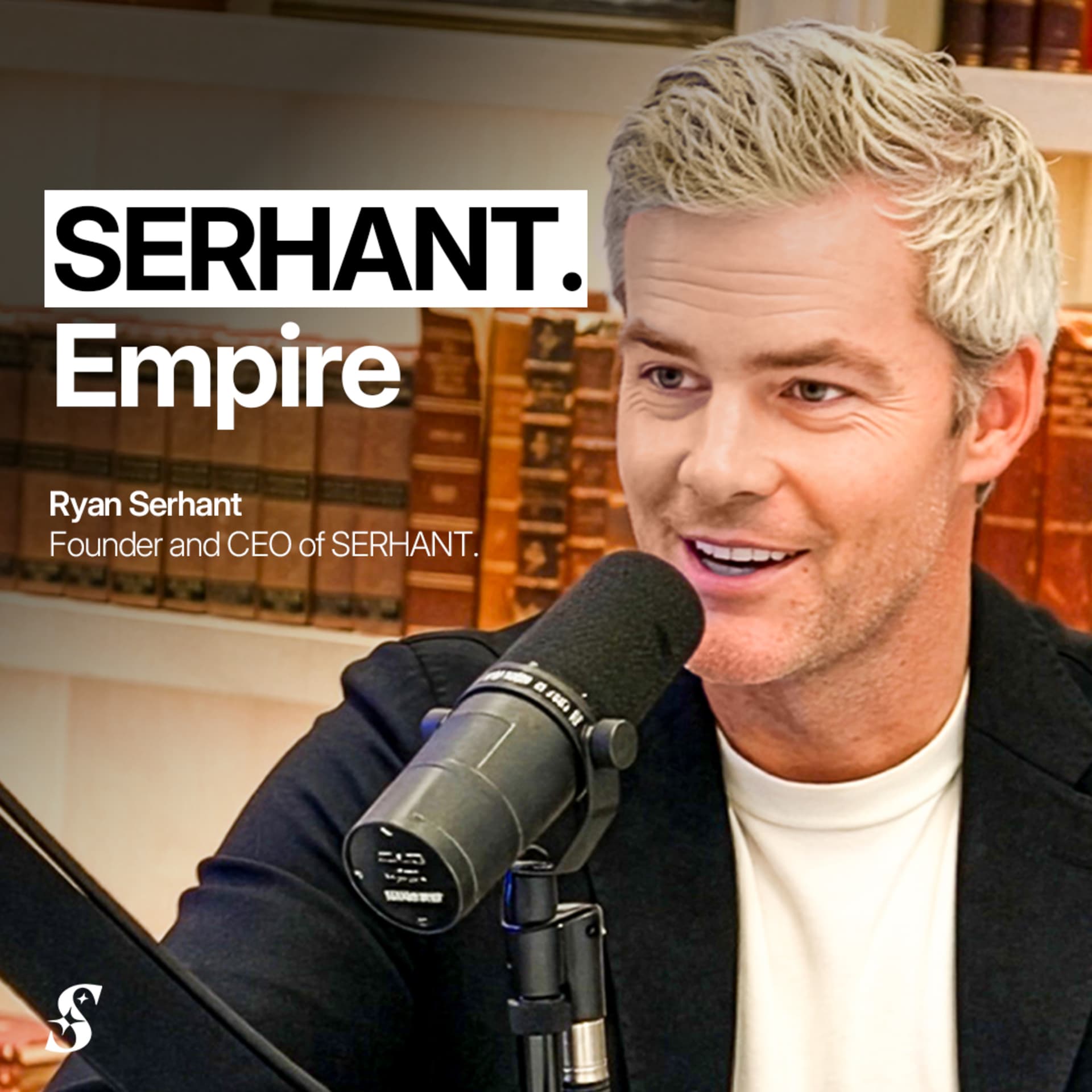
- Guest: Ryan Serhant, CEO of SERHANT.
- Theme: Discussing Ryan's journey in real estate, the significance of media and technology, and the impact of AI on the industry.
Key Highlights
- Ryan Serhant’s Background
- Real Estate Success: Over $20 billion in lifetime sales, leading a top real estate team in NYC.
- Founding SERHANT.: A modern real estate company merging media, tech, education, and sales.
- Strategic Focus Areas
- Future of NYC: Discussion on the resilience of NYC real estate and its political dynamics.
- Media as Business Model: Transition from traditional brokerage to a media-centric approach (Brokerage 3.0).
- S.MPLE AI Platform: A proprietary platform automating workflows for agents, backed by a $45M seed round led by Camber Creek and Left Lane Capital.
- Cultural and Community Building
- Authenticity vs. Virality: Emphasis on building genuine connections over chasing viral fame.
- Netflix Effect: The transformative impact of his Netflix series, *Owning Manhattan*, on his brand and real estate visibility.
- AI Integration in Real Estate
- AI Chief of Staff Concept: S.MPLE acts as an assistant to automate and streamline tasks for agents.
- Operational Transformations: AI implementation across various departments, enhancing efficiency and productivity.
- Recruitment and Workforce Dynamics
- Next-Gen Agents: Focus on recruiting younger, tech-savvy agents who are mobile-first.
- Empowerment through Technology: Tools designed to make agents more efficient without needing extensive training.
- Capital Raising Experience
- Self-Funded to Seed Round: Initially bootstrapped before raising $45 million for expansion and scaling operations.
- Investor Relationships: Building connections with VCs and family offices over time.
Key Concepts and Takeaways
A. Media as Infrastructure
- Ryan advocates for viewing media and technology as essential to real estate operations, rather than supplementary.
B. Community Building
- A strong community through authenticity fosters loyalty and customer retention, exemplified by a 99% customer retention rate in his business.
C. AI Empowerment
- Shifting from tech-enabled to AI-empowered workplaces fosters innovation and efficiency.
D. Impact of Real Estate Media
- The success of Ryan’s media ventures illustrates the power of visibility and branding in driving sales and engagement.
Notable Quotes
- “Authenticity beats virality.”
- “If you do it for you, people will come. If you do it for them, no one cares.”
- “A city needs to be run by a CEO.”
Episode Conclusion Ryan Serhant’s approach illustrates how integrating media and AI can redefine business models in real estate. His journey reflects a shift towards a more dynamic, media-focused industry where authenticity and community engagement are paramount.
Resources
- [Ryan Serhant on X](https://x.com/RyanSerhant)
- [Molly O'Shea on X](https://x.com/MollySOShea)
- [Sourcery Podcast](https://www.sourcery.vc/)
Sponsors
- Brex: Modern finance platform for startups.
- Turing: AI talent and tools for enterprises.
- Carta: Software connecting founders and investors.
- Kalshi: Prediction markets for future events.
Timestamps
- 00:00 - Introduction to Ryan Serhant
- 01:32 - NYC politics and real estate resilience
- 07:00 - Running a city like a CEO
- 08:14 - Building the SERHANT. platform
- 09:14 - From Bravo to media entrepreneur
- 30:15 - Inside S.MPLE — AI as agent co-pilot
- 52:21 - Daily Routines and Personal Insights
Written by AI. May contain mistakes. Listen to the episode to check what was said.
Transcript
Automatic transcript. May contain errors.0:28A city needs to be run by a CEO. which has saved 15 ,000 working human hours for our people. I brand, I expand, and I sell. You've raised$45 million for this. I did it by myself like an idiot. Probably could have raised so much more. No, just kidding. The other biggest check was Left Lane Capital, so Harley Miller and those guys. Love them. At Left Lane. Yeah, you would. And they're in the show. So season two. Really? I've never seen this in a reality show. Season two is real estate. We have VCs in a reality TV show? Yeah, it follows the race. What? It follows the Rays. And I thought Netflix was going to cut it.
1:12Ryan Serhant, welcome to Sorcery. Thank you for having me. What a beautiful library. This is, you know, not much, but it's home. For today, yeah. For today. Yeah. Welcome to the Stock Exchange. Excited. Let's dig into it. So you are one of the most popular people in New York City. That's not true. It is. Everyone knows you. More popular than Eric Adams today, that's for sure. And Momdani. Well, I don't know. I don't think so. Momdani has created a popular vote, that is for sure. Because he knows what to say, right? He's a good marketer. He's a good politician. He had a good branding company that put together their brand.
1:47They just know how to go after the audience. Whether the social audience ends up voting remains to be seen. You have a lot of influence across social in every industry. and it always surprises me where I'm like, oh, that person has massive influence, but they only sell what? They don't actually do any business because they haven't figured out how to turn an audience into a community, right? And that's really, really hard to do. You can rally people all you want, get them around a mission, but to really turn them into a voting community is hard. I think he'll probably win. And I think New York will have to figure out what it looks like for the next 50 years from then on.
2:25And we go from there. What's going to happen on the real estate side with that? I think two things. I think one, not a whole lot. New York has survived terrorist attacks. New York has survived de Blasio. New York has survived Hurricane Sandy sinking half the city underwater. I lived on a corner right here, right on Broad Street and Pine Street. And Millionaire Listing New York, season two in 2012, we were shooting that in the fall. And I just sat there with no cell service because when the city loses power, you lose all cell towers, which means you lose all cell phones trying to figure out what do I do?
3:02And I had to walk to 42nd street and everyone was just trying to charge phones on generators and stuff. Like the city has been through a lot. It is one Island and we don't even have alleyways for trash here. Boston, Chicago, San Francisco, Los Angeles, everyone has alleyways for trash. We don't because we don't have time. And so we walk through our own trash to get to work and we can own it. What's the worst that can happen? He swings the city far left, in which case in the next election, it swings far right. I am in full agreement that a lot in this city is broken, but I don't think running on a political campaign of taking versus creating is the right way to go.
3:53I'm not running for mayor. But if I was, my entire play would be I need to create as much economic prosperity for everyone here, whether you're 18 or whether you're 90. It's not going to be to take from the 18-year-old or the 90-year-old. It's going to be to create. So we're going to create jobs. We're going to create positions. We're going to create new markets. We're going to create new zoning so we can build different types of things. We're just going to create, and this is going to be the number one employer in the United States. It's going to be New York City. And then we're going to have a problem with how to keep people out, which is exactly what Miami is going through.
4:27Right. The mayor there who we're close with and the entire political environment in Florida basically has been built on the opportunity to build. Come here, build a career, build a life, build a family. Don't have two kids, have 20 kids. Come here, create a tech company, do this, tax incentives, whatever you want. Florida is the number one employer of human capital in terms of citizens, right? Citizens are, if you like read Ayn Rand, we are employers of the government, right? We're employees of the government. And so Florida's done a really, really great job at that to Florida's benefit to everybody there.
5:03So I don't know, we'll see what happens. If he doesn't get elected, I mean, things will kind of stay the same, but the city isn't awesome. And maybe it just needs to be shaken up a little bit so that it can clear things out. Do you think that people are gonna shift down to Miami? If this happens. I don't think the mayor is going to change who lives here. I think you asked me about what happens with real estate. Like, I think that if they really put a freeze on luxury building, let's say, no new buildings, we only do affordable housing. OK, so what do you think happens to then all the luxury apartments that already exist here?
5:41They become limited inventory and then it's gold. And price appreciation just goes through the roof. because right now, if I'm going to go sell an apartment in Tribeca, that buyer who comes through says, okay, this is great, but what's coming next door? What's coming there? What's up on Clarkson in the village? There's a new tower, isn't there? There's always something new. If you stop that, there's never anything new. Where else am I going to go? Pricing is just going to be far further from the median. Socialism doesn't empower everyone. It never has and it never will. It hasn't in any market.
6:16You have the haves and you have the have-nots. What you need to do is empower the people to want to get to that next level and want to have bigger jobs and want to go to good schools and want to create for their families. So I think you'll have luxury real estate that gets more and more expensive. That's for sure. And I think you will have people who move out to different marketplaces. And it won't just be Florida. It'll be Greenwich. It'll be New Jersey. It'll be Long Island. And then I think things will settle down because there's only so much somebody can do in four years. Like we've seen with Eric Adams, who's our mayor now, and I know this has nothing to do with your podcast, but I think if you ask anyone on the street, what has Adams done?
6:55They tell you two things. One, he goes out at night. He's always in the press having dinner or going to parties. Okay. So that's leading with some kind of influence. The second thing is we now have to use the same size trash can. That is law now. We cannot use bigger trash cans for more trash. We now have to all use these small little stupid trash cans. But man, oh man, did he push that one through. So like, I don't know. I don't know. I think politicians have to do a better job at actually meeting the customer where the customer is at, which is what companies do. And I think a city needs to be run by a CEO.
7:33Like you need somebody who is moving for the betterment of the company, not just the newest employees or the lowest level employees and not just for the C-suite executives either. Right. Like where can we delete inefficiencies, you know, to take like a phrase from Musk? Like where can we find opportunities to improve to the betterment of the city? Because if the city gets better, the people will be better by default. If you go backwards, I think you have a really, really hard time. Talking about CEOs, you're a CEO and you've built a$14 billion empire. Okay. First of all, I don't know who told you that.
8:08It's not$14 billion. I've done 20 billion in sales, over 20 at this point. You need to update the websites then. Okay. Okay. When you say on this podcast, billions of dollars, I think people are probably going to associate that with valuation. I don't think our company is worth$14 billion yet. But I wouldn't be doing this if I didn't want it to be there. We operate a holding company called Sirhan Technologies and underneath that we own a cloud real estate brokerage. So the brokerage now operates in 13 states. I'll be in 15 by the end of 2025 and then we'll be fully national by next year. We operate a production company called Studios.
8:45So Sirhan Studios, we have a Netflix show called Owning Manhattan. We do top of funnel lead gen for salespeople so that we can provide leads to salespeople at zero CAC. We then have a sales training company called sellit.com, which is massive that has over 40 ,000 enrollees, I guess at this point, 130 countries, we sell through them. And they're also, we recruit through them, right all over the world. And then we have simple, which is our AI workflow service that gets a lot of attention. But I focus on a lot of the other stuff too. And you became so popular because of the media. So I'm curious, like, when did you decide to take the media side so seriously?
9:23The media took me seriously. It wasn't a, it wasn't a, it was a happy accident. I came to New York city after college in 2006 to do theater and I ran out of money. And so I had to get a job and it was go back to school, which sounded terrible or move home, which was way worse or bartend, you know, do a survival job. And so I got my real estate license because a friend said it was just like theater. It's all a game of improv. You meet someone on the streets. They say, I want to find an apartment. You say, yes and yes and it's just acting is selling right except you're doing it authentically and it's not about taking from people it's about helping them make a decision they're gonna make anyway except now they get to make it with you and not make it in a year or with somebody else um so i got my real estate license lehman brothers filed for bankruptcy that morning and i was off to the races from there and so i put the theater thing to the side because i had to make money i had to pay my rent to stay in the city.
10:18And I was at the bottom of the barrel there. And then I went to an open casting call for Millionaire Listing New York, which was a TV show on Bravo. And I was cast on that. And that started in 2010. Show premiered in 2012 and I did it for 10 years. So yeah, so that show and that show was a shotgun for me into the real estate world, you know, not into the, not to like general craziness, but you know, um, it was a great way for me to create a community, right. To build an audience that I could turn into a community that then when Instagram was invented right around the same exact time, I just was an early adopter the same way with YouTube.
10:59It had been around for a long time, but it was mostly just for kids, et cetera. And we were, you know, we were doing property tours in 2014 and 2015, 10 and 11 years ago, just trying to say, hey, I can get this audience on Bravo that I can sell property through because it syndicates to an international audience. But by the time people see it, it's been a year since I shot it. And my listing agreements are six months long. I've got to have sold it. So what if I could do that by tomorrow? Right. How can I move forward really, really quickly? And so that's what we started doing on YouTube and on Instagram and Facebook.
11:33And we started building an early, early audience, just really attacking our niche. And it's just grown since then. And you have studios in-house. Yeah, one of them sitting here not paying attention. His name is Danny. That's him right there. He's just here as my friend. So Danny, yeah, studios is in-house. We have a head of studios. He's based in New York City. And then we have studios in every market that we're in for real estate. But it's a 35, 40 person team. In an interview you did with David Weisberg on 10X, you were talking about how you're a media company that you sell real estate. And I thought that was a really refreshing perspective because I come from the investing world.
12:12I kind of feel silly sometimes doing media and it seems a little like forced, but you're actually really owning it. And I know that's like more in your DNA, but do you think that that is like a principle that most people need to take on in this new media environment, like the new internet, everybody's Like there's iBuyers, there's people online. It's discovery is different. I think it's just a reframe instead of a rebirth of an idea or a redirection of brand. It's just a reframe. And when I started the company in 2020, so I didn't lead our listing, we did three spinoff shows, started writing books, all that stuff.
12:51I did like, I don't know, I can't remember, 1.2 or 1.3 billion in sales in 2019 and said, I gotta go do this on my own now. Like we were the most successful residential real estate brokerage team in the United States for four years in a row. The only choice was to go do my own thing and go back to the bottom. So I rose to number one that way. And now how am I going to go right back to the bottom? And what am I going to do? I'm going to go out there and say, hey, Ryan started a real estate company. No one cares. And then how would I differentiate myself from the legacy firms? And what problem am I really solving?
13:25Just Ryan wants to start his own company. that doesn't solve a great problem or just to make money. It doesn't really solve a great problem. Not a scalable problem anyway. And so I said, what is our real value prop? We can put properties in front of more qualified buyers globally, organically than any other firm combined. Okay. That's interesting. I could do that. How do I turn that into a solve though? So what it really came down to is we're either a real estate company that uses media and technology, or we are a media and technology company that just so happens to sell real estate. And when we said that, we then aligned on a singular purpose, right?
14:09And so then our purpose can inform the people that we get to hire. And then the people get to inform the product that we get to sell, because now I can sell real estate in any market, residential, commercial. We can do multifamily leasing. I can sell sales training. I can sell media. We can sell pillows. And then if you have all three lined up, right, the purpose, the people and the product, then you can get to profit. So focused on the money last and it's worked so far. Yeah. It's really impressive. And it's a shift that is happening really strongly in the venture world, like in the last two years, a company that we had on recently was Opendoor.
14:47And so what they have done is they've built a cult following sort of like the community that you're talking about. What do you think it takes to build one of these communities? Authenticity, first and foremost, vulnerability. People don't care about your wins. They want to connect with you on your losses. So I think we've been really, really clear by letting people know across all of our businesses and everything I do personally, my job is not to win. My job is to lose. And I do that all day, every day. I lose deals. I lose pitches. I lose this, that the other and the wins are then my bonus and i think for sales people they align with us and there's a real culture that we've created um and following and i think that's why cult is in culture you know i think that's why also my retention on customers is 99 like once you work with us there would be nowhere else to go and you know we we lean on that heavily heavily heavily um but i think people you know this right people read through bullshit they don't like they know when they're being sold to and you see it in your feeds too.
15:49Like, you know, when something's being pushed to you and you know, when something's like an authentic moment, whether it's produced or not, you're like, well, good job. I'll, I'll watch this. I'll give you, I'll give you a look. I would just say though, like I've been doing this a long time. Um, and I just caution a lot of people on chasing virality because if it's not an engaged customer, you don't know who these people are. Like it doesn't matter, right? You could have a million views from where, where, who are these people? Where are they? And what call to action are you really driving, right?
16:22With, with this look, if you can do it consistently over time, then sure, you can build something really, really amazing with a great following like the Savannah bananas, right? Or slowly, but surely that engagement does turn into real community. That community turns into customers and you can kind of go from audience to community, to content, right? To commerce. But a lot of people chase it because I think it makes them feel good. And I don't know what it actually does. And so I try to steer people on the path of like, if you do it for you, people will come. If you do it for them, no one cares.
16:57Sorcery is brought to you by Brex, the financial stack trusted by more than 30 ,000 companies, including one in three venture-backed startups in the US. Nearly 40 % of startups bail because they run out of cash. Rex is literally built to help founders avoid that. Unlike traditional banks that let your money sit idle, chipping away at it with fees, Rex is designed to help you spend smarter and move faster. Their all-in-one solution combines checking, treasury, and FDIC protection into one powerful account. You can send and receive money globally at lightning speeds, get 20 times the standard FDIC coverage through their partner banks, and even high yield from day one with same day and even same hour liquidity.
17:40Access your funds anytime. Companies like Scale AI, DoorDash, Service Titan, HIMSS, Anthropic, Flexport, Robinhood, and Plaid trust and use Brex. Start today at brex.com slash sorcery. That's B-R-E-X dot com slash sorcery. What's the most expensive listing you've sold through social media? Through social? I mean, we sell through social every day. It's a huge part of what we do. We don't do deals in DMs. That's physically impossible. But like in January, I got a call from a banker who knows me through social emailed first. That turned into a call who then said, I have clients who want to buy something in Florida.
18:30Do you do Florida? And I said, yes, we do Florida. And I said, can I get them on the phone right now. And I said, sure. Told me who they are. And I was like, no way you're bringing these people on the phone. He brought them on. I recognize the voice. I said, hello. They said, we're going to buy something. We don't think we need a real estate agent. And I said, I think you're wrong. And I explained why they would need one. And they said, we're going to call you back in five minutes. And they did. And then we bought at the end of the day, that deal as$308 million over the phone from, not from social, but the awareness was generated through the media engine that we have created that is in part on social media.
19:12Netflix is a huge help for me though. Bravo was a massive help. I don't want to ignore that at all. And we were, our million dollar listing was on primetime cable for 10 years before streaming, before the way the world is today. There was no TikTok to compete with. where people sitting there, like you would watch TV and you'd maybe look at the news, but you weren't on your phone laughing here while watching here, while on your laptop over here, right? So it's a very, very different world now. And Netflix has been a massive, massive international funnel. Like it's just the craziest thing ever, which we then grab audience for and then put across our channels.
19:48And we are fully prepared to squeeze that lemon while it's there. What was the impact after the launch of Owning Manhattan? I mean, it changed my life. When Million Dollar Listing premiered in 2012, my life changed, but not overnight. It took a while because you don't call people you see on TV. It's weird. So it took a while. But what I learned from it initially was I need a pitch tool. So if I'm going to email you, you live in Los Angeles. I don't know. Do you want to buy, sell? Do you need a place in New York? You're coming here all the time. You're the greatest podcaster, female finance executive in the history of the world.
20:21You definitely deserve a new apartment, this, that, the other. Also, I have this TV show and then you might respond or maybe not. But it definitely did help open doors. So it changed, it changed the trajectory of my entire life. And then owning Manhattan last year and it changed life within like three weeks. It was insanity. Like we had lines outside open houses and not just to the betterment of Sirhan, like my company. Like we have people outside my office in Soho all day, every day. We have to put decals on the sidewalks to tell people where to stand to take the best photo. Otherwise they come up and they bang on the door and they're like, can we, and we're like, no, just go across the street.
20:58It's better over there. And so it's a lot because it's all over the world, right? So when people think American real estate residential, they, you know, they think, they think us. And so it's helpful. But yeah, to the betterment of all of our other agents and all of our other markets, because overnight everyone's sitting at home, it's top 10 in their feed. They click on it. they see the name. There's 11 Sirhants on planet earth. So they're like, well, that must be you. Oh my gosh, there's that sign. And it broke our website. Traffic increased like 2 ,400 % or something completely insane. We had, we had agent recruits from all over the world coming through.
21:37It was like a hundred a minute and social following. We were growing at, what was it? I mean, it was hundreds of thousands a day. Like it was just, it was, it is the largest global distribution funnel on planet earth, right? Like you just can't, like YouTube is huge, but you have to know what you're looking for on YouTube because it is so huge. Netflix is very focused and it provides you in that first, I mean, there's 10 ,000 shows, but when you first log in, when a show first comes out, you have 300 million people who get the choice of whether they want to click a button or not. and you dare them not to click.
22:15And it changed everything. And then we just milked the hell out of it. I think we've been very, very good at taking advantage of opportunity and never, ever, ever letting go. Jessica is one of the most popular people on the show. How did you find her? Like, what did you see in her for her talent? We took us a year to cast. Okay. So we went through every real estate. I mean, I looked at my own agents. I don't have our own agents. some some are great for tv some are just great brokers but not good for tv which is which is different right it's hard to find people who can do both um and so then we just started scrolling through every other real estate brokerage in new york as well as in other markets because i like the idea of bringing somebody so there was a character her name was savannah so she was in i think north carolina um but in that first season there was the tattoo guy he was at compass uh Jess Markowski, I think, was also at Compass.
23:11A couple of those other agents came over from Element and some other firms where I was looking for somebody who could have camera presence because it is a TV show. And then when I spoke to them, do they have a personality? Because you have to have a personality, otherwise no one's going to watch it. And I was like, I want no dips in momentum. Everyone's got to have their own Netflix TV show worth of story if you're going to be in the cast. Otherwise, you can be background. It's fine. and she came in and she met and talked and she totally got it. She understood. And she actually does this. She actually sells and sold in season one.
23:45I think she does one of the first deals in season two and that comes out in December. I know. And she lets everybody know. And then she got caught up in season one dramas. That was fun. That was hard on her because I think it was, it was public. Then she did some other crazy deals this year that have been very public in the New York post. It's been wild. She's, she's, she does, she does business. Was it the first time you casted something out? In like a full, yeah. I mean, in terms of a full cast, yes. I did a show called Sell It Like Serhant when I wrote Sell It Like Serhant and then did that show for Bravo.
24:17And so we kind of had to cast all the businesses we went into where I would teach these terrible salespeople how to sell. And then we cast for our shorts. It's like we have a YouTube thing called Listed, which is like short form staging, short form design, short form brokerage, stuff like that across accounts. So we kind of cast from within our group. But yeah, it was the first time I'd ever really said I need to find 10 people because it's all about the people. It's all about the cast. Like if the cast isn't there, then the show doesn't work. Yeah. And you need a mix of those personalities so that they bounce off of each other.
24:51And you have to have arc and you have to have people who are willing to go 100%. Like you can't put anyone in front of a camera who's going to hold back and be nervous about what their mom's going to say, right? Like you have to be 100 % open and talk about anything and be willing to go the distance and just know that like, we will protect you, but you have to be willing to, to go out there. And I think, I think that's why the show worked because we spent a lot of time really thinking about the architecture of that cast and about the structure of the show too, because we had to invent it from scratch because I didn't want it to be selling Sunset or Million Dollar List in New York.
25:25And Selling Sunset is basically Million Dollar List in New York meets Housewives. And it was created by the people who created Million Dollar List in New York and Housewives. And so obviously, I was like, and I don't want it to be boring. It can't be HGTV because that's dying. What is the next generation going to want to watch? I don't think they're just going to want to watch an apartment. No one cares anymore. We've seen it all. And it's all now it's AI. It doesn't matter. So how can we give them something they've never seen before? And so I really wanted to redefine what the genre was for a docu-series.
25:55And season two is very different. It is a wild ride. Spoilers? Anything? If you are looking for like dumb reality TV, unfortunately, that's not this. It is, it ticks the box for people that want to see real estate for sure, but it's a deal show. So for people who like deals, like if you like Shark Tank, if you liked original Million into our listing, which was every episode, we were actual deals and actual negotiations. It is that it is high stress, high drama. And I think continues to really redefine and blur the line between structured and unstructured TV, right? Like following people who are at work and whatever happens is very unstructured.
Read the full transcript
26:36Succession is structured and it's interesting. It's hard for me to describe. It's a fun watch because it is so unexpected. It'll be interesting to see what you think when I force you to watch it. I don't think you have to force me. I'll watch it. You sure? The first season was really good. I watched it when it first came out. The second season, I'll have my popcorn ready. December 5th. December 5th. You should come to the premiere party. I invited Nicole. I'll be there. You should come. Okay. Megan. Yeah, we'll send you the invite. Megan has to come. We'll send you the invite. I'll give you a plus one.
27:09I'm doing it at Terminal 5. Um, it'd be the biggest event I've ever done. Um, and it'll be completely insane. You should come. Can I podcast there? Sure. It'd be loud, but sure. You do whatever you want. I don't care. Great. Perfect. Live stream it. Go for it. I'm going to be a streamer now. I did this thing with I show speed. You did. And I, I've never felt as old and as least important in my whole life. That guy can't walk because he's no, he has legs. He can't walk because of the amount of kids. follow him. They were trying. It's like, it was like, I've never experienced anything like that.
27:47Like he just would go outside and Broadway shut down. And because he's live streaming, everyone knows where he is at the exact moment. Cause there's no delay, which is like for a security thing, which is something that I was thinking about. Like, I think he actually likes it. You know, it's part of the, it's part of the spectacle that you could go and be on the live stream right now. And so every kid around the country just would figure out where he is and follow. And it was mass insanity. I showed him a$40 million penthouse in the Upper West Side. And I've never had more people in a building mad at me because they were like the building, the lobby, these kids were trying to break in and try to get to them.
28:21It was nuts. And so anyway, moral of that story is I am going to become a streamer. I think for sure. I'm done with all the structured stuff and like creating content and doing an actual CEO thing. I think I should just stream. Stream all day, 24 seven. Yeah. He's like 22. He makes$50 million a year. What is the point of life? Like, what are we all, what are we working so hard for? Like you see that and you're like, wait a minute. Why did I, why did I go to college? I don't get it. Well, that's why YouTube is like one of the top jobs that kids want. Yeah. Why cure cancer if you can make videos on the internet?
28:59Right. Yeah. Like I, I, I mean, it's scary. It is totally, We are, we are, we are, it's over. It's just all over. Oh no. Yeah. Yeah. Because there's, there's, there's incentives are no longer aligned. It used to be, if you want to make a lot of money, you have to be a lawyer, a doctor, a banker, a business owner, an entrepreneur. You have to employ others because you will delegate work. You will buy their time for yours and you can grow. So it used to be like that is how you can achieve economic prosperity is do one of those jobs. You have to go to school. And that was that was that was what was sold to us so that people can take on debt.
29:42Right. So private markets, people take on debt. And then the student loan fiasco was actually wasn't really a fiasco until Obama when they made it public. So they they made it. So now anybody can go get a student loan because we're going to make money on you. We don't care if you go into debt because we'll just fix it later. Right. Anyway. That's a totally different topic, but like, I, I think like, okay, so the incentives are no longer aligned, right? Same thing with like Obamacare. So the incentives are no longer aligned for doctors. And, and so then why go do that? It's also really, really hard.
30:15Why not just do stuff on my phone? It doesn't matter. Um, so it'd be interesting to see where we are in like 2100. That'll be a crazy time. Yeah. There's, there's a lot of different things to that. Um, one being AI and media are like entirely disrupting jobs. and we'll get into the AI part in one second, but to steel man that argument is experts are also becoming a very valuable part of the AI journey and like hiring them. One of our sponsors is Turing and so they are in AI research and they're constantly trying to hire more and more actual experts, people with PhDs, people that have gone and learned all these things so that they can verify that the code that they're writing or whatever research they're inputting into whatever model that's going to come out in chat GPT-5 is like actually accurate.
31:02And not just Reddit. And not just, well, Reddit is actually one of like the largest training data sets. I'm sure of it. Is that great? I don't know. I don't know, but they're using it. And then on top of that, then they use the PhDs. So there is room for PhDs. And then if you look at Meta's strategy, they're giving like billion dollar packages to people. So you have like so many sides of the spectrum. You have these billion dollar packages for geniuses and then this recruiting talent of AI researchers. And then you have the rest of everyone who's trying to figure out, like, do I do YouTube? Or do I do OnlyFans?
31:37Yeah, exactly. Or do I do OnlyFans? Yeah, that's what Danny does in his spare time. He eats bagels with his feet. In today's high speed business world, staying ahead means using the smartest tools possible, including the powerful capabilities of artificial intelligence. Meet Turing Intelligence. Turing builds customizable AI systems designed to solve your mission-critical challenges, no matter your industry. From expert guidance to tailored projects, Turing helps top companies realize AI that's more capable, more adaptable, and more effective. With Turing, discover how AI can accelerate your business growth.
32:09To learn more, visit Turing.com slash sorcery. Spelt S-O-U-R-C-E-R-Y. That's Turing.com slash sorcery. To shift over to the AI side, I want to get your opinion on this. So you have done two things with AI. You've infused it into the firm itself, and then you've also created Simple. So one, how do you view AI disrupting real estate? I mean, that's such a huge open-ended question. I'd say the easiest way for me to talk about it is starting with what we've created. So we built something called Simple, which is an agent orchestration platform that uses MCP and Langchain to coordinate multi-model responses across a stack that we built to predict what a salesperson is going to do next.
32:56that then uses function calling to perform automations. Our path is very different from the path it seems like everybody else has taken, which is I'm not sprinkling AI or doing an enterprise deal into a system I've already built just to make it better, faster, or easier to use. I don't need to do that. We are empowering the person to turn the person, so for us, the salesperson, into the platform and not just using AI to build a platform that people can use. So we've created what ends up being like an AI chief of staff for all salespeople that anticipates all the work they're going to do and then does it for them.
33:35So Simple replaces CRM. It replaces Calendar. It replaces Canva. It replaces every single system a salesperson would use in our industry to do their job because it does the work for them. And it's all about the delivery. All of our users, every Sirhan agent uses it. They call it Instacart for sales because they don't care where the food's coming from. They just care that it's delivered and it's easy and it's fast. I think it's very different than that. I think it is an operating system for salespeople that has created a world where every individual person becomes two things. The salesperson and their AI co-pilot, right?
34:19their partner versus, hey, I use AI to do my job. Kind of like we were saying before about me and the media company, et cetera. Instead of just saying, hey, we're a real estate company that uses media and technology. No, we are a media company that sells real estate. The same thing for AI. And it's completely changed the way we work and it's changed the way we play the game. And maybe it's the exact wrong way to go about it, but so far so good. And we've also taken the reason I mentioned multimodal is like, I am not convinced which LLM is correct or right. I think there is a race, right, towards refrigerant.
35:01And I want to make sure that our users have the benefit of whichever one is right for the appropriate recipe that we're doing for them. So like automating CRM work, using AI to do that is really, really, really, really annoying and it's really hard. Um, Claude is pretty great at it and Sonnet, right? Um, a lot of the other administrative tasks, we can run a stack across like Grok and GPT, for example. And then some other stuff has to be totally proprietary and totally custom. Um, and so that's what we built as, as simple as I can kind of go through that. Um, we also use AI in every single department, like all the classic stuff.
35:46Like you can't hire a new person unless you prove to us that this thing cannot be done with AI. And a lot of our managers now, instead of just being managers or middle managers, they've almost become agent orchestration managers in their own right. Like there's a company we work with now that helps us. We give them a JD, they turn it into agentic. And it's not always great. A lot of it actually is pretty terrible, you know, but some of it actually completely changes how we operate, especially when it comes down to like finance, finance as a function, underneath the level of strategy. So just real computational stuff, design as a function, so on and so forth.
36:26So we have AI across every single department. I think we are, for brokerage anyway, real estate brokerage and AI, I think we are now nationally known for that or known for media. And it's really, really exciting to see how we can empower everybody using artificial intelligence. And I think that's the right way to think about it. It's no longer tech enabled. It's AI empowered. And I'm excited to continue to build. It's fun. Have you played with any of the Gen AI video models? Yeah, we got access to Sora, the app with OpenAI way before it came out. So it was like me and Sam Altman and all these other people at OpenAI only who were making, and Jake Paul randomly, and making these random videos.
37:09and it's interesting. I think we will, just like in TV, right? You're gonna have actual television movies. You have animated television movies and then you'll have AI. It'll just be a new piece of the pie. It'll eat into both of those, but it'll also create a new piece of pie that'll empower the other two pieces because now everything that's shot authentically is almost more important now because like, oh, you chose to use humans? Holy, that's awesome. Let me watch this versus just using AI. And then AI is pretty fantastical. I've had the most fun in just kind of creating historical moments, like Thomas Jefferson signing the Louisiana Purchase and saying expansion always and always.
37:55Or if you have kids to sit there with them and say, instead of going and drawing, just come up with any idea, let's do it. And then like I have a six year old daughter and we, most of my Sora feed is her idea of just coming up with no. Okay. Now we're in a tree house and then the tree house is a time machine. And then we become pirates. You put that into Sora and it just makes it. And so now we can do that. I don't know to like whose benefits or like what the, what the, what it's really going to do for all of us. And I find myself not really scrolling through Sora because it's just, I just don't think it's there yet.
38:29And it's such early, early days and there's still an invite. But I'm for all of it to make this conversation more tactical. Studios can now take a photo of a listing and turn that into a full property tour using AI with user disclaimer. But to give people enough of an idea so we don't have to do virtual tours anymore. I don't have to show up with a photographer and a videographer the way that we used to. Spend thousands of dollars on it. Exactly, right? So it's like, what industry are we killing and what dollars are we saving and what time are we saving? One of the things simple does so well, um, I know this mostly cause we just did a lot of our like testimonials cause the wall street journal is writing this in-depth article right now.
39:10I hope it turns out. Okay. Never know these things. They always come in and they're positive and then they're like, Ryan sucks. Um, uh, is like how much time we're able to buy back. Like since January one of this year, simple has completed over 12 ,000 automated tasks. which has saved 15 ,000 hours working human hours for our people, which is like so over the chart that I ever would have expected us to be at. It's insane because what ends up happening is people find new ways to work. So one of our agents, she's a mom, her name is Abby. She's in Brooklyn. She typically, when she's picking up her kid, she goes, she wants to be a good mom.
39:58She goes and picks up her kid. She might have an assistant who's doing some work for her. But like for her, you know what? It's just easier if I do it, these important things. And so then she gets home and then she does it, takes two hours, then she cooked dinner. That's like just been her, no matter what, VA, executive assistant, the greatest systems, whatever, you still have to use them. So what happens if you tell somebody, guess what? You no longer have to use them. You are now choice optional. You are now work optional. You're now screen optional. You don't have to do anything. You just tell it what to do.
40:31And it knows you already because of our onboarding process. And it just gets delivered to you just like Instacart. So you don't have to run comps anymore, set up listing presentations, set up buyer tours, do any of your personal brand, all the administrative tasks that usually take up 80 % of your day. Why not, while you're waiting in the 15 seconds from your daughter to exit school and get in your car, you just tell Simple what you need done by the end of the day. And by the time the door shuts, it's all done. and it has like totally changed the way that people operate. ChatGPT agent builder can't do that yet because it is incredibly specific and you have to be a good prompt engineer.
41:07And salespeople just don't want to be prompt engineers. I know I don't. So you talk about like Sora, the hardest thing I think for Sora, and I show it to people. I'm like, look what I created. They're like, but how did you do that? Like, well, I told it. And like, but how did you know what to tell it? I'm like, well, I just, I don't know. I guess I just made it up and invented it in my brain like, oh, I wouldn't even know what to do. And so people just want to be told what to do. And I think AI is great if you know what to tell it to do. And so that anticipation engine that we've built in Simple and across all of our agentic employees is probably the coolest thing to watch, that it just knows the next step.
41:46And as long as you can manage the initiative, it's pretty wild. Because you've made such a full stack real estate firm and you've automated a lot of the services and you have agentic agents. Yeah. How has that changed the way you recruit? The average real estate agent in the United States is a 55 year old white woman. Like at Compass, I think it's like 57. At all the other firms, it might be even a little bit older. Our average agent is 28. And they're all high production because they all operate mobile first. like we are a mobile first company we're digital first and then we have some brick and mortar and markets where we like legally we have to like in new york i can't not have a spot um and so we recruit agents who are attracted to selling anything to anyone on any device anywhere anytime and who believe in building their businesses empowered by our brand our reach um and our tech stack in a way that they just can't do elsewhere.
42:46There's a lot of firms that use tech, but then the agent or the employer, the consumer still has to use it. It's only as good as the person who knows how to use the thing. My mom has a laptop. She still calls my CTO because it's her name on the door too, to say, words not doing the word thing. like she's you know so um but she has used simple and it's wild because it just and it because it can multi-model 17 tasks at the same exact time knowing exactly what to do as long as it's in your ecosystem i have to ask because this is an investing show so you've raised 45 million dollars for this about a year ago it was just summer 2024 um you said you bootstrapped this up until that point this was a 45 million dollar seed round yeah the median seed round according to Carta is like$15 million for AI companies as of like early this year.
43:44Yes. What was your process like for raising that capital and who did you raise from? I did it by myself like an idiot. Probably could have raised so much more. No, just kidding. I had no, you know, it's a classic example of I had no intention of raising money. Like I bootstrapped, I have money, we're profitable. We're growing revenue top line 80 % year over year. Like we just are, my issue is not growth or agent growth or consumer growth. My issue is supporting the growth. And so year four, like the supporting the growth thing was heavy and by myself. So hiring employees who'd say, who are your backers?
44:28Like me, you know, is fine. But it's tough when you really want to get the absolute best of the best. And even if I wanted to take on debt, for example, which I don't, we have no debt. but I called JP Morgan one day. I was like, hey, so if I wanted to just, instead of spending$500 ,000 to do X today, what's a small business loan look like? And they were like, who are your backers? I'm like, me, you have all my bank accounts. You see everything. And they're like, well, yeah, without a valuation, without backers, you could only do X and Y. I'm like, but I don't get it. So we've had interest. We've had investor interest since the day I launched in 2020 from PE and VC and family office.
45:12I think because housing is recession resistant. When the market's up, people are trading. When the market's down, people are trading, right? And I think real estate doesn't go away. I think it just becomes more empowered and cleaner and all the other things we've talked about. And I just continued to take meetings as we got them. And I met Jeff Berman at Canberra Creek a while ago, actually on a reference call. Like he was calling me about a system that we used. And I was like, yeah, system's fine. He's like, what are you doing? It's like, I'm changing the world, man. And he was like, oh, really?
45:45And then we talked. And he's, so I'll give you a secret. He and our co-investor, I guess the other biggest check was Left Lane Capital. So Harley Miller and those guys. Love them. At Left Lane. Yeah, you would. And they're in the show. So season two. Really? I've never seen this in a reality show. Season two is real estate. We have VCs in a reality TV show? Yeah, it follows. Oh my God. It follows the Rays. What? It follows the Rays. And I thought Netflix was going to cut it. I thought they were going to cut it because it's like, it's not flipping tables and throwing drinks in each other's faces.
46:22This is amazing. But the show is such an entrepreneurial roller coaster at a deal show with all the sexy glitz and glam that you'd want. But it follows like Jeff Berman and Harley Miller in the show. and it's intense. It is intense and they beat me up on price and like, what am I going to do? And I don't want to give too much away, but yeah, there are VCs and there's a VC seed race that happens like live on camera in season two. We need to make VC mainstream. I don't know if you do actually, but they're there. We already hit a bubble. Thanks to Tiger Global. I'll call them out. I know they're back in market, so maybe we'll come on the pod.
47:04But, you know, we love VC. VC loves everybody. I love VCs. They buy the greatest houses and they sell the greatest houses. I'm all for it. They do. I go to a lot of events at different, and they are so competitive. They are very competitive. So everyone wants a better house. I'm aware. I'm fully aware. Sorcery is proudly sponsored by Carta. Carta is transforming the private marketplace, connecting founders, investors, and limited partners through software purpose-built for private capital. Trusted by more than 65 ,000 companies in over 160 countries, Carta's platform of software and services lays the groundwork so you can build, invest, and scale with confidence.
47:50Carta's fund administration platform supports over 9 ,000 funds and SPVs, representing nearly$185 billion in assets under management, with tools designed to enhance the strategic impact of fund CFOs. For more information, visit carta.com slash sorcery. That's C-A-R-T-A dot com slash S-O-U-R-C-E-R-Y. You do venture as well. What's the secret there? We will probably, there's a lot of things that we're gonna be rolling out in 2026. One of them is most likely a venture arm. I've toyed around with it now. Like we have, we are super profitable. So like one of my issues every year is reinvesting profits.
48:33What to do with reinvesting profits. There's only so many locations I can open up in a day. Like there's only so many engineers I wanna hire to build. Like I really like the fact that our people are really, really efficient. And when you raise money, what do you really, unless you have hard costs, like I'm raising this money to go build factories or build chips or whatever. Typically you're raising money to do one of two things. One is the people to do the stuff. So you're paying people, maybe some office space, et cetera. The other is distribution for the thing. So people to do the thing and then distribution for the thing.
49:07I, my thing that I'm building, I don't want to say replaces people, but makes the current people so efficient, they don't need more people. So I'm not really using dollars for people. And my distribution is bulletproof. Like it's just massive for us and for our product and what we do. And so we've played around with a few things, like I was mentioning before, Realty Capital, which is real estate adjacent, but it's payday loans for real estate agents around the country. It also does tax services, advisory, all the other stuff, um, healthcare and all that, you know? And, but then I also like blank street coffee.
49:46And so, and I like update energy because they split the caffeine molecule and they have parazanthine and you don't have a crash from it. And I'm like, why doesn't other people do this? And they're like, well, it's too expensive to do. It's just easier to get people caffeine. I'm like, well, interesting. So like we have that, we have major league pickleball. We have, uh, a lot of other things. There's a new vitamin company that's that it just started shipping last week called Perde, P-E-R-D-A-E. Nilou is the founder and super fun. But then I find ways to interact with our world. So whether I put products on Netflix or we put them across our socials and spike sales that way, or we have our annual conferences where we have thousands of sales people show up and everyone gets Perde in a bag, right?
50:30So it works. Ryan, how do you do all this? Danny here, who's been on his phone the whole time, he's basically just running everything in the background. Really? No, absolutely not. I have a good team. I know what I'm good at. I know what I'm bad at. I'm a great leader. I'm a terrible manager. So why try to manage? Why try to fit a square peg in a circular hole? I brand, I expand, and I sell. I do those three things all day, every day, mission, vision, purpose. Everything else is done by other people. and they either do it in a way that I like or they don't get to do it anymore. Ooh. Right? Like, I don't know.
51:11Life is short. I make sure too, everyone I hire is an entrepreneur, meaning that they have an idea for how to do their role and they could do it as their own business, but they'd rather do it with me or with us. And I give them that platform. So like sell it, for example. And Bonnie Sue Lovelace runs Sell It. She is so insanely amazing. She could build her own edtech platform on her own. But we have the platform, we have the distribution, and we have 40 ,000 users. So why not just do it with us? Right? Makes a lot of sense. Our director of ops, Renee Fitzgerald, she could go and open any business nationally, scale it, put all the X's and all the O's in the right spots and do it by herself.
52:02But she can do it with us because we have the market, we have the demand. And I think it's really, really important to hire people that you're not just a little bit scared of, but that are real entrepreneurs. It's like my absolute best advice. And then follow those four P's that I gave you. Purpose People product. I'm gonna ask an additional question for this. Sure. So we're very proudly sponsored by Brex and they're all about performance. Okay. Okay. Sean Walsh from Built. He said that you schedule your day very particularly and you have a specific eating window. Can you walk us through your day?
52:38Okay. I don't know why you have to attack me right now. This has been such a nice podcast. I'm emotionally unavailable. Oh, wait, what was your question. I am, uh, uh, listen, I I'm super scheduled Monday through Friday. Maybe one day I'll get to be in a world where I have white space on my calendar and I can just float through the office. I don't know. I just like, I just know how to operate the way I operate. And so I don't change it. So I have a thousand minutes every single day to be productive. So I have a thousand minute rule. Um, I wrote about that in book two and then Harvard business school did a review on it.
53:17So, which I thought they were going to write about content or media or tech or AI. And they were like, no, this thousand minute rule is so weird. We're going to have you come and teach a class and we're going to write. And it's in like the Harvard business review book. It's so crazy. Um, but I have a thousand minute rule. I eat six hours a day. Um, and my feeding window, why he brings that up depends on the day today. It is 12 45 to six 15. Um, tomorrow we'll see how the day goes, but it's when I can metabolize. This is so weird. I mean, this is such a weird conversation. It's when I can metabolize the fastest.
53:53And I think as you get older and you're 26, how old are you? 21. You're 21? No. Oh, however old you are, you'll see as you get older, your body just moves a little bit slower. And it's one of the ways that I can naturally sort of, you know, hack energy. And then I schedule things on the 15 minute mark. So this is like, This is five blocks for me because I had to get here 15 minutes before. I don't talk about it that much because then people think I'm weird. No, I don't think that's weird. Like I talk, the tech community loves this stuff. They want to hear about your biohacking rituals and how much you enter in fast.
54:31And when you see the sun during the day, that's what they want to hear. No, do I see the sun? Not that I'm going to hear. You have a picture of the sun. I do have a picture of the sun. Yeah. And it's got a sad face on it. Oh, do you want to talk about it? Nope. Not on this podcast. That's for different podcasts. Okay. All right. So I have a couple quick questions as we wrap up. Sure. What happened to the$250 million listing that's pinned on your YouTube account? It's still there for$195. So you should sell it. I'll sell it. Yeah. Sell it. It's a deal now. If you guys want it. It's a deal. You can't have it.
55:10No, you can't have it. What do you mean? Just make an offer. Come to me. It's still there. It's great. We've had three offers on it. All of them get turned down. Those properties are their trophies and you don't auction them like art. So the right purchaser is there. And if they align with where the seller believes the value is, then a deal gets done. Are there too many super size? I can't even say it. Super skyscrapers. What do we call them? Super tall skyscrapers. Are there too many? Super tall skyscrapers. there's less than 20 on planet earth. So if that's too many, I don't know. I know New York is a city built on bedrock, so you can build them.
55:53New York is the most environmentally conscious city that exists because we box ourselves like sardine cans and we buy into the air. You know, where's not San Francisco, Los Angeles, all of Texas, because they say, why go up in the air? I just want your land. And so I value my self-worth by how much space I can take up. In New York, like I said, we didn't even create space for trash. We put it on our front doorstep, literally. It's on the sidewalk on the front door that we walk over to try to get to work. And we are just fine with it. So New York, in terms of total greenhouse gas emissions, is the most efficient and LED certified city there is.
56:47And I think we'll remain that way. It is a tiny, tiny, tiny little island that we stick 11 million people into at 2 p.m. on a Tuesday. Nowhere else does that. There's other cities that have millions of people, but no, they need to spread out, take up room. Have you ever been in bed with someone that likes to spread out and you're like, dude, give me the blanket back. It's uncomfortable and it's annoying and they're selfish. New York City for the win. Do you think there should be speed limits on super tall skyscrapers? In the elevators? For the elevators. There are speed limits. You can only, like no elevator is getting to terminal velocity.
57:26I don't know. Every time I go in those, I want to throw up. Like they're very fast. I think that's a you problem. I think speed in elevators has everything to do with what you call the stack effect. Like if you could get into an elevator and be at the hundredth floor in 10 seconds and not experience any shake or physical discomfort, you do it. Like the same thing with the Concorde airplane. Like I would love to go to London in two hours. Not only is it unaffordable to do that, it is physically uncomfortable compared to the lapse of luxury we do on first class, right? It's where you get to spread out and put your legs down.
58:04People would rather take six hours instead of doing two hours because they don't want to be cramped. Same thing for an elevator. The stack effect in a super tall skyscraper is a tube within a tube. So you have this glass tube that sits on bedrock and inside you have these other glass tubes where this physical thing is shoving air up and then shoving air down. And if you've ever tried to like shove air, right? It can get stuck and you have a vacuum effect, but you call it the stack effect because you have different air temperatures. So like in the winter, right, where it's really cold outside, you have cold air attacking.
58:42Now this hot tube that is a thousand feet of glass and concrete full of hot air because everyone's got the heat on. And then you go in the elevator bank and it's not freezing cold like outside, but it's also not hot like you have in your apartment because you're cold. So now you have this Luke cold air being pushed by this fucking bullet that's being attacked by the cold air from the outside, and then it shakes. So at what speed can you hit non-shake? That is the fastest an elevator is willing to go to where you don't experience discomfort. And in some of them, you have breaks. So you go to one world trade, you get off at like, I think, 66, and then you switch to another elevator because the stack effect would just be too physically uncomfortable.
59:25Holy crap. I did not know you were an astrophysicist. That's it. That's not the right engineering science for that one. It's an engineering thing, right? It's mechanical engineering and plumbing. So it's MEP. So it's just engineering. Okay. I interview a lot of SpaceX alums and it seems like a SpaceX problem. Does it? Blue Origin just asked me to come to space the other day. They DMed. Would you do it? No. How much was it? Just in the low millions. That's what they wrote back. That's it? That's like nothing, right? I sold a house to a guy that went to outer space and he paid for himself to go there.
59:59He really enjoyed it. But I think, I don't know, my key man insurance might, I don't know if space is on there. Yeah. We'll have to see. Okay. Lastly, what's your favorite building in New York City? My favorite building? Yeah. The Chrysler building. Why? Because it'll never be recreated. It is a work of art. It is an art deco statue, right? Created by artists like back in the art deco period where you had architects like Shrev, Lamb, and Harmon who were doing buildings to impress people instead of just filling space. You know, today it's how can I go glass to glass and fill as many desk spaces as possible?
1:00:43Or how can I create something that is, you know, beautiful the chrysler building is is a fantastically gorgeous building and no developer or builder in their right mind would ever ever ever redo it because it wouldn't make any sense today you wouldn't be able to afford it well now i need to ask what what are your opinions on the new jp morgan building i'm obsessed you're obsessed yeah i because i think it brings grade a office or class a office into a new world okay they have nine private restaurants for their own employees. You never have to leave. You want to work from home? Great. Your home is here now.
1:01:18Like it is just insane. You can fit up to 10 ,000 people in there during the day. Like it is wild. It also, like I love when they did that building, especially like Marianne Lake, right? Who was a CFO and has basically run that entire business under Jamie Dimon and she is a beast. You should talk to her too. Like, or she just said, you know what we're going to do? We're going to tear down the block and we're just going to build a new one right on top of it. And Foster and partners and everybody, it's like, it's so cool. I think now you're going to have a class A office race. So now Ken Griffin, Vernado, right?
1:01:56And those guys are going to do park. And I think it's 51st. They're just going to tear down all those buildings on 51st and just build a brand new tower to compete with the likes of the new JP Morgan Tower. I think what it does, though, is it makes it really, really hard to be class B or class C office, which are all going to turn residential for me. Good. Yeah. Exactly. Well, Ryan, it was a pleasure to have you on. And thank you so much to Nicole Wishoff for the introduction. Thanks, Nicole. Shout out to Nicole. Thank you, Ryan. Of course. Hey, it's Molly. If you enjoy our interviews, check out our newsletter, Sorcery.vc, where we deliver a once a week top deals and tech headlines email and also go deeper on our podcast interviews subscribe to sorcery today and don't forget to subscribe to the podcast on youtube spotify apple or wherever you listen link in description to sign up
From the publisher
Ryan Serhant is one of the most successful and well-known real estate entrepreneurs in the world, with over $20 billion in lifetime sales. After leading one of New York City’s top-ranked brokerage teams to more than $4 billion in transactions, he founded SERHANT., a next-generation real estate company built at the intersection of media, technology, education, & sales.
In this episode, Ryan joins Molly O’Shea to share the full SERHANT.
- The Future of NYC
- Media as the Business Model (Brokerage 3.0)
- S.MPLE’s $45M Seed Round & AI-Driven Sales
- Authenticity, Community, & Brand Building
- The Netflix Flywheel: Media → Distribution → Sales
Ryan breaks down the strategy behind S.MPLE, his proprietary AI platform backed by a $45 million seed round led by Camber Creek, with participation from Left Lane Capital. S.MPLE acts as an “AI chief of staff” for agents automating workflows, orchestrating tasks, and saving more than 15,000 hours of work this year alone.
From the success of his Netflix series Owning Manhattan to his philosophy that “authenticity beats virality,” Ryan reveals the systems, mindset, and scale strategy behind his $20 billion sales empire.. and why he believes the future of real estate will belong to founders who treat media and AI as infrastructure, not accessories.
Ryan Serhant: https://x.com/RyanSerhant
Molly O’Shea: https://x.com/MollySOShea
Sourcery: https://x.com/sourceryvc
𝐒𝐏𝐎𝐍𝐒𝐎𝐑𝐒
- Brex—The modern finance platform, combining the world’s smartest corporate card with integrated expense management, banking, bill pay, & travel. https://brex.com/sourcery
- Turing—Turing delivers top-tier talent, data, and tools to help AI labs improve model performance—and enables enterprises to turn those models into powerful, production-ready systems. https://turing.com/sourcery
- Carta—Carta connects founders, investors, and limited partners through software purpose-built for private capital. Trusted by 65,000+ companies in 160+ countries, Carta’s platform of software & services lays the groundwork so you can build, invest, and scale with confidence. https://carta.com/sourcery
- Kalshi—The largest prediction market and the only legal platform in the US where people can trade directly on the outcomes of future events: https://kalshi.com/sourcery
Follow Sourcery for the latest updates!
𝐓𝐈𝐌𝐄𝐒𝐓𝐀𝐌𝐏𝐒
(00:00) The Full Ryan Serhant
(01:32) NYC politics and real-estate resilience
(07:00) Running a city like a CEO
(08:14) Building the SERHANT. platform
(09:14) From Bravo to media entrepreneur
(12:29) Reframing: a media + tech company that sells real estate
(15:00) Authenticity vs virality in building community
(17:00) $308M deal born from brand awareness
(19:45) Owning Manhattan and the Netflix effect
(22:33) Casting talent and shaping culture
(25:00) Season 2 preview & evolution of real-estate TV
(30:15) Inside S.MPLE — AI as agent co-pilot
(36:00) How AI transformed every department
(42:00) Recruiting the next-gen, mobile-first agent
(43:30) Raising $45M and scaling SERHANT nationally
(52:21) Daily Routines and Personal Insights


