
In short
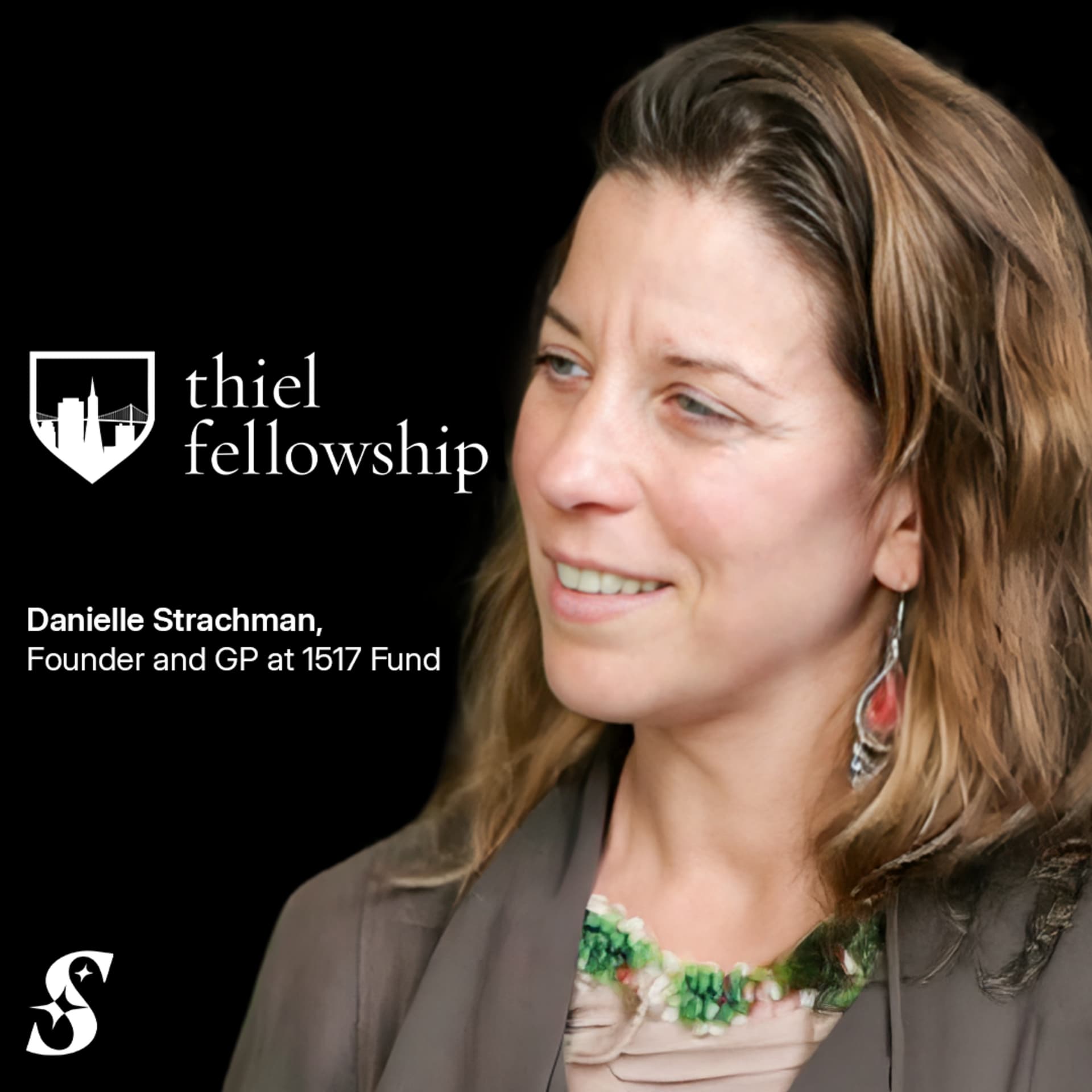
Podcast Episode Summary: How The Thiel Fellowship Created $750B+ In Value | Ethereum, Figma, OYO
Podcast Title
Sourcery Description: Interviews with top investors, CEOs, and founders.
Episode Overview In this episode, Danielle Strachman, a founding architect of the Thiel Fellowship, discusses the significant impact of the Fellowship in creating over $750 billion in value and nurturing successful startups such as Ethereum, Figma, and OYO. The conversation delves into the Fellowship's unique approach to fostering entrepreneurship among young people and the principles that guide their evaluation of potential founders.
---
Key Highlights
- The Thiel Fellowship's Impact
- Value Creation: Over $750 billion attributed to Thiel Fellowship alumni.
- Success Stories:
- Vitalik Buterin: Ethereum
- Dylan Field: Figma
- Ritesh Agarwal: OYO
- Laura Deming: Longevity Fund
- Hit Rate: 13.79% unicorn hit rate among fellows.
- The Philosophy Behind the Fellowship
- Radical Freedom: The Fellowship offers $100,000 to talented teens willing to drop out of school to pursue entrepreneurial endeavors.
- Contrarian Thinking: Emphasis on identifying "contrarian truths"—unique beliefs that challenge the norm.
- The Application Process
- Selection Criteria: Candidates are evaluated based on unconventional qualities, including:
- Ambition and ability to start projects.
- Insightful reflections on personal goals.
- A specific emphasis on intellectual curiosity and drive.
- Cultural and Educational Impact
- Rewiring Silicon Valley: The Fellowship has shifted how venture capital views young founders, emphasizing talent over traditional educational backgrounds.
- Community Building: Strong focus on creating a supportive environment among fellows, fostering networking and shared experiences.
- Criticism and Misconceptions
- Media Backlash: Strachman addresses the negative perceptions of Peter Thiel and the Fellowship, attributed to his outspoken views and political affiliations.
- Cultural Shifts: The Fellowship has contributed to a broader acceptance of alternative educational pathways, such as gap years and startup incubators.
- Future Vision
- 1517 Fund: Strachman co-founded the 1517 Fund to continue supporting young entrepreneurs, focusing on those without traditional degrees.
- Direct Patronage Model: Advocates for a shift towards funding individuals directly rather than through institutional frameworks.
- Looking Ahead
- Next Generation of Innovators: Aiming to support even younger individuals, potentially funding those as young as 11 years old.
- Evolution of Education: The intersection of technology and education is highlighted, pointing to new opportunities for personalized learning experiences.
---
Key Quotes
- "What important truth do very few people agree with you on?"
- "Competition is for losers."
---
Conclusion This episode of Sourcery presents the Thiel Fellowship as a transformative force in the tech and entrepreneurial landscape, encouraging young innovators to pursue their passions outside traditional educational structures. With a commitment to nurturing unique talents, the Fellowship has not only created substantial economic value but also influenced cultural perceptions surrounding entrepreneurship and education. As Strachman emphasizes, the future holds even more promise as younger generations gain access to resources and opportunities.
---
Connect with the Guests
- Danielle Strachman: [Twitter](https://x.com/DStrachman)
- Molly O’Shea: [Twitter](https://x.com/MollySOShea)
- Sourcery Podcast: [Website](https://www.sourcery.vc/)
Sponsors
- Brex: The modern finance platform for startups.
- Turing: Top-tier talent for AI labs.
- Kalshi: The legal prediction market.
- Fourthwall: Easiest way to sell branded merchandise.
---
Detailed Episode Timeline
- (00:00) Introduction to Thiel Fellowship
- (01:10) $750B+ Outcomes: Key Companies
- (08:32) The Contrarian Question
- (15:00) Overview of the Fellowship Structure
- (19:00) Addressing Media Backlash and Cultural Criticism
- (26:45) Cultural Impact and Future Vision
- (33:02) Discussion on Peter Thiel's Public Image
- (37:41) Changing Venture Perspectives on Young Founders
- (39:10) Traits Predicting Success in Founders
- (45:10) The Founding of 1517 Fund
- (52:52) The Next Wave of Entrepreneurship
- (55:30) Rise of AI in Education
---
This summary encapsulates the critical themes and discussions from the Sourcery episode, providing insights into the Thiel Fellowship's profound influence on entrepreneurship and education.
Written by AI. May contain mistakes. Listen to the episode to check what was said.
Transcript
Automatic transcript. May contain errors.0:00Over$550 billion in value creation has come out of it. Dylan Field, you know, founder of Figma. There's Vitalik with Ethereum. Ritesh Agrawal from Oil Rooms, second largest hotel chain in the world. People like Laura Deming are really interesting. And now she's actually working on a cryopreservation company. There's a trait that we look for that we call hyperfluency. All the old teal fellows had it, but at the time no one was asking questions like this, which is what's something you believe to be true that no one else believes? Like what's your contrarian truth? And Dylan said chocolate is disgusting.
0:33Hey, we want you to dive into your weird and into your biggest dreams and become more of that, not less over time. Why do you think people believe teal is evil?
0:54Danielle Strachman, welcome to Sorcery. Hey, thanks for having me, Molly. I don't normally do deep dives and like histories, but this one is just so rich and kind of like an integral part of Silicon Valley culture and something that created a lot of culture out of it. So we're going to go deep into the Teal Fellowship. Over$550 billion in value creation has come out of it. I would say a lot of that is weighted to Ethereum in Bidilic. Sure. Yeah. But there's more to this. So to be exact, a 5.9 % hit rate. Could you just walk through some of the biggest outcomes? Yeah, absolutely. And I want to actually back this up a little bit, because especially in the early days where some of those really big wins are starting, we were picking people who are 19 and under.
1:44The fellowship today is 22 and under. You couldn't be enrolled in school. You couldn't have already gotten a degree. And, you know, you couldn't be doing like an internship or something like that for your fellowship. So these were all young people before the age of 20 who were getting started on something that could be. And actually, they weren't all startup founders either. The program, we wanted diversity of thought there. And so we had people who were doing nonprofits. We had people who were working on startups. We had people working on research. We had a mathematician. So this was not a startup incubator.
2:19It was not conceived as a startup incubator. And so what's been amazing is to see those outcomes, not only from the direct outcomes from specific fellows working on a specific thing, but even outcomes over time that are probably not even in this number and probably shouldn't necessarily be in that number. But a couple of examples, for example, Dylan Field, founder of Figma, he IPO'd two weeks ago with what he was doing. That was about 12 years in the making. We've known Dylan for about 14 years at this point. And so when we were working with him, I went back actually during the IPO and I looked at some of his old fellowship forms to see, like, what was he saying then?
3:00And it was interesting. We were asking fellows all kinds of questions about, hey, are you hanging out socially with people? Are you eating? Are you sleeping? Are you exercising? Like all these like personal pieces as well as, hey, how's your project going? And it was interesting to see that Dylan from the very beginning had his eyes on the prize on building a tool that could help people create. And that mission was like very, very clear from day one when he was building figments. Amazing to see him now on the New York Stock Exchange talking about that vision and bringing it to life and bringing it to life even more.
3:33So Dylan is a great success story of the fellowship. Ritesh Agrawal from Oil Room, second largest hotel chain in the world. He started with us as a founder in India working on a clone for Airbnb. His hunch was that, hey, Airbnb founders aren't going to necessarily know how to operate in India, so I'm going to try that here. Well, over time, that kind of morphed and changed, and of course, pivots happen. And he ended up building the second largest hotel chain, which is now Oyo Rooms. That's been an extraordinary outcome. So many founders, especially in India, look up to him and see his story as one of, hey, you can do this too and you can attain just absolute successes.
4:16People like Laura Deming are really interesting. When she was in the fellowship, she came in as a 17-year-old, and she was working on longevity and research. And we thought she was going to have a really safe fellowship in terms of, okay, you know, she's probably going to be working in a lab, working on some research, and there's kind of this plan. And then we had one of our first meetings with her, and I love Laura because when she has a meeting, I don't know if she still does this, but in the fellowship time she did, She always stands at the table when she's presenting. If everyone else is seated, she doesn't sit at the table.
4:49She stands up and presents. She was 17. She stood up and presented and say, and we had this happen a lot at the fellowship where people originally applied with one thing and then they got the grant. And that sort of moment shakes you up because it's the reality of getting something and not the theoretical of getting something. And I think a lot of people ended up thinking actually bigger than what they were originally coming in with. And so Laura came to us and said, hey, I think the real bottleneck in longevity is actually the funding side to do the research. And so I want to start a VC fund to fund longevity research.
5:26And all of us, I think, on the inside kind of wanted like, oh, my gosh, what is happening here? This is not what we expected. But we also knew we were the people who said some ideas can't wait. and so we heard her out and encouraged her and and to this day she says that she has no idea that we were petrified about this plan of a 17 year old going out and raising a venture fund 15 years ago and she raised two funds she's backed a number of companies that have gone on to be very successful in the longevity space and now she's actually working on a cryopreservation company so it's interesting to see these things happen over time of course there's Vitalik with Ethereum he launched the first sale of Ether during the fellowship.
6:10My colleague, Michael, is one of the first people to put a Facebook post out about Ethereum and one of our biggest financial mistakes, but I don't really view it quite that way because, you know, we were at a non-profit. You're not supposed to back the people that you're working with and be biased and whatnot. So we didn't put any money into the pre-sale of Ether, but many of our friends did and they did very, very well. And it's an incredible, he pulled that post out recently to see. And actually what was hilarious, I don't know if he took a picture of this like after, like way after he posted or on the same day, but it's this post on Facebook about the pre-sale of ether with no likes on it.
6:52That actually cracked me up the most. That's just like the post. Nobody's like, cause nobody knew what it was like, you know, it was this new thing. And, um, you know, crypto was still pretty new in general. So, so yeah, then that's just a handful of things. And then we have outcomes that have happened. What I used to say about the Teal Fellowship is that it's a 10 year program. Sorry, it's a two year program with a 10 year timeline. And that's really come to pass because fellows would have that resource for those two years of mentorship and funding and the staff support. And of course we would support them afterwards personally.
7:26But we knew that it was really more of, Hey, these people are taking a left turn in the road and we want to see what happens over time, not just at the end of a two-year program. What's been really interesting too to see are other outcomes, things like Chris Ola being on the co-founding team of Anthropic, things like that. He was a researcher in the fellowship, predominantly in ML. And then he went on to work at Google Brain. I think he's also done some work at OpenAI. And it's interesting to see that I think part of what happens is the place you're in saturates your own thinking and your own culture.
8:04So in some ways at this point, it's not surprising to see that, oh, okay. He eventually went from the research side to the startup side on what he was doing with people that he met in the early Teal Fellowship days. In the first example you gave for Dylan Field, you mentioned a couple questions that you would have to assess the founders at the time. Do you remember the questions you would ask to assess them? Because I know it was like, it was quirky. It was a little weird? Like what were those questions? There were a number of questions. There were questions on the application and then there were questions that actually we had in the finalist round.
8:38So I'll go over some of the application questions. At the time when Dylan was applying, we actually did ask for SAT scores and things like that. I'm not a huge fan of standardized tests as like a creativity indicator. It might tell you about some horsepower, but I also think you might negate looking at certain people just based off a score like that. And Dylan was really interesting because the way he answered that SAT question was, this isn't important or like, this isn't relevant is what he wrote. And for me, I was like, yes, this is great that he's saying it. Cause I wasn't yet ready to go to battle on that question of like, should we take it off or not?
9:17And then we had a second question, which was sort of like what has almost become like farcical at this point but at the time no one was asking questions like this which is what's something you believe to be true that no one else believes like what's your contrarian truth the classic teal yes the classic teal question uh and dylan said chocolate is disgusting and it's like gosh this guy's interesting like he's you know sort of like clearly going around questions and like has some interesting things he's working on and then we also ask people questions like, what do you want to accomplish in 10 years, in two years, and in two weeks?
9:56And oftentimes, as we would go through, and this is in the years from 2010 to 2015, we would do application cycles where we would go and update with the applicants and say, like, hey, how did your two-week goals go? Like, we want to find out what's going. And it wasn't a gotcha of did you do them, but we wanted to understand people's reflective process around their goal setting and things like that. So we were kind of looking at meta processes of people. And then during the finalist round, gosh, the very first finalist round we had was so amazing because we had reviewed 400 applications. We hadn't gotten to meet these people in person yet.
10:33It was a lot. I used to say like, and we read all of them. I think this is something that is interesting when I kind of look back in time. For us as a team, it was very intuitive to just say, okay, we're going to read all these applications as our team and we're not going to outsource this reading. We need to know what's in this batch. And a lot of programs I noticed today, the application readers are separate from the people who are running the program. And I think that's kind of a disservice. I think it was really good that we read all of them. But I do remember reading 150 applications, feeling like my eyeballs were like bleeding out of my face.
11:09And then I got to this one application of Tom Currier. And Tom Currier was a Stanford student who was working on robotics. And in his application, he even had this interesting thing about from being a small child building a like a bamboo house in his backyard, like planting bamboo and trying to like grow something with a structure. Like, whoa, okay, this young man is interesting. You know, we could sort of get a sense for these people through some of their writing, but like video wasn't used that much at this time. We were, oh, when I read this application of Tom's, I was blown away. I was like, okay, wow.
11:42I think I might have someone here who is a potential Teal fellow after reading like 150 of these applications and sort of trying to sort them out. So that was an interesting thing. And then when we had our finalist round, everybody, I always say that you're a 3D person, but applications are 2D. And this is one reason and why I believe in doing applicant events and all kinds of things. So getting to know the person in person is just obviously more nuanced than anything you're going to read or listen to about them. And we found this to be true through our finalist round. And one question that we had that's kind of an odd one that we used at the finalist round that we all use still today is did I have more or less energy after talking to this person?
12:26And, you know, that's not the end-all be-all question. And that wasn't like, OK, stamp this person as a Teal Fellow. But we did find that it seemed to be somewhat indicative, at least of who we enjoyed working with and who we also wanted to put a lot of energy into. And then lastly, when we were evaluating, you know, from the finalist round, top 40 people into the final fellows, we had like lots of binders of information of people. We had mentors, comments about meeting them at our finalist round. And a lot of it was trying to understand, like, who here has really high ambition and who has the ability to start building towards that type of goal and, like, let's see what happens.
13:08And I remember we had a big whiteboard on our wall and we would just go up and this sounds ridiculous to say it, but we'd put people's names down on Post-it notes and just try to figure out, like, okay, where should they be in this quadrant? Like where are we going to put them on the ambition scale and where are we going to put them on the ability to get started scale and go from there? I was going to ask about that. So you you characterized a couple of different points of types of individuals you look for and like the details within it. So you put together this scale. What was the scale like ability, ambition?
13:40What else is on there and how does that map towards a successful founder? I mean, it was really just an X and Y axis of like ambition on one side and ability to get started on another. I mean, especially when we're talking about venture scalable startups. And this is not what we were thinking about in the fellowship days. It's certainly more of what we think about on the 1517 side since we are a venture fund is, OK, this ambition, is this going to draw someone towards doing something really big and really risky? You know, Peter has that great quote about courage is in shorter supply than genius.
14:15And we were looking for that in the fellowship of like, OK, who's going to take that courageous leap? Who's willing to sound kind of crazy with like what they want to do? Who's willing to sound kind of absurd? Like we used to ask this question, what do you want to make absurd in the finalist questions? And who's willing to sound absurd about like, OK, yeah, I'm a 19 year old and I want to, you know, work in longevity or cure something like aging. At the time, this was very, very radical. It sounds less radical today, but, you know, that's because Laura brought this into sort of the common conversation.
14:49So interesting. Yeah. Because we kind of skipped over a little bit, but like, could you explain the structure of the fellowship a little bit more? So the fellowship structure was that we were offering 20 young people$100 ,000 to work on a project of their choosing. And we use the word project a lot because we didn't have it as startup or only research or only nonprofit could be like any of the above. The conditions were that they couldn't be in school. You know, they couldn't have like a full, they couldn't be like employed somewhere working. Maybe someone would mentor or even do a little bit of interning somewhere to get their chops up in the subject.
15:28But we really wanted them to be working on their own things. And the whole idea was we were saying, hey, the cost of college is so prohibitive. What if we gave a young person what they might spend on school and say, hey, you're going to be self-educated. You're going to drive your future forward and we're going to give you the resources to do so. And then within the fellowship itself, I come from the homeschooling world. And in the homeschooling world, everything is about the individual who is in front of you. It's not about saying, hey, here's a class of 20 fellows and we're going to treat them all the same.
16:00It's about catering individually and figuring out, hey, who do we need to connect this fellow to, you know, to help them move forward and go the distance. So a lot of it has that sort of homeschooling feel to it of we would work with each fellow individually. We would help pair them with mentors. We would talk with them and use Socratic dialogue about what they were doing. And it wasn't, hey, we know what to tell you to do. It was more asking them questions about, hey, where do you see things, you know, in three months from now? And how can we help you to get there? Or, hey, here's some roadblocks we potentially see.
16:36How do you plan to go around those things? We also found that community building was one of the most important things. We've all heard these adages of you're the average of the five people you spend the most time with. I think these things are absolutely true. And fellows got to spend a lot of time with each other. When we first set up the program, we didn't and we never had any sort of mandate about moving to San Francisco or anything like that. But the first year, almost all of them came to San Francisco, which was a bit of a surprise because we assumed they would kind of stay where they were or like would move to different locations.
17:09But the majority came to the Bay, lived with each other in group houses. In subsequent years, we set up group housing for them to start for the first summer of their fellowship for the next two years after that. And then those houses actually spread and became startup houses like Mission Control is a startup house that's been around now for probably about 13 years. And we originally set up that house for fellows and then it's gotten sort of passed on to friends of friends. And it's now back to being a bit more of a startup house. It's had some different iterations. But we found that community was a really big anchor for them.
17:48They wanted to be around other like-minded young people. At the finalist round, we heard this a lot. People would say, I don't get to be around other young people like me, which I always found surprising because I thought even on campus, you would probably find your peers who were maybe not there for the school thing, but doing their own thing. And people said, absolutely not. And we still hear that from young people today. I don't get to meet other young people like me. Or the conversation is always, where do you go to school? What are you majoring in? And not just, hey, what are you passionate about?
18:15And what are you building? So those things were really important. We tried to build in some programming. The educator and me like wanted to think about content and, OK, they're going to need this and that. We even had this master negotiator come in, this woman, Holly Schroth, who's amazing. And I don't know what she charges now, but 15 years ago, she charged$500 an hour to come teach. and she's incredible and, you know, has negotiated for big companies before. And we had to sign up for it. And on the day of like, I don't know, maybe half the people came, something like that. And I was kind of beside myself like, what is going on?
18:53Like, why are people not here? And it was really incredible information. I still use it to this day. Sorcery is brought to you by Brex, the financial stack trusted by more than 30 ,000 companies, including one in three venture-backed startups in the U.S. Nearly 40 % of startups bail because they run out of cash. Rex is literally built to help founders avoid that. Unlike traditional banks that let your money sit idle, chipping away at it with fees, Rex's designs help you spend smarter and move faster. Their all-in-one solution combines checking, treasury, and FDIC protection into one powerful account.
19:28You can send and receive money globally at lightning speeds, get 20 times the standard FDIC coverage through their partner banks, and even high yield from day one. With same day and even same hour liquidity, access your funds anytime. Companies like Scale AI, DoorDash, Service Titan, HIMSS, Anthropic, Flexport, Robinhood, and Plaid trust and use Brex. Start today at brex.com slash sorcery. That's B-R-E-X dot com slash sorcery. And what we learned is that a lot of people want information when the house is just slightly on fire. And I remember certain teal folks, they're like, well, I'm not negotiating anything right now.
20:09And I was like, what do you mean you're not negotiating anything right now? You're negotiating every day of your life. Like every time you go into a store, every time you talk with another person, eventually you're going to have more business to do. You're going to have to negotiate. But what we also learned was that people want that information when the house is slightly on fire and not really before then. So that tends to be where we add content is, OK, the house is slightly on fire in these ways for people. So we're going to bring in some people to, you know, potentially give them that like real time interaction.
20:38It's fascinating, too. Wow. I mean, yeah, people do react more than they are proactive. That is that is I was I was really surprised by that. And it was really funny during the fellowship days because our team, we were mostly in our like late 20s, early 30s. And then the fellows were like 19 or 20 ish. And all the 30 year olds, all of us would be in the background of the room taking like furious notes, being like, oh wow like okay this is good information and then the feedback we predominantly got from fellows was they were like we could watch this on youtube and we're like but wait what this person you know augie rakow from auric is here he's like you could touch him and talk to him like that's different than youtube um but uh but yeah i mean we learned like okay the way people want information is different than how we want information we need especially young kids who drop out of school Yeah, exactly.
21:32No, I remember I remember one of the one of the first times I was feeling a little grumpy about like, gosh, like we didn't have enough people at a thing that we hosted. Maybe it was one of these workshops and an old colleague of mine, Jimmy Caltrater, said, so. So wait a second, let me get this straight. So you funded a bunch of people who go against the grain, but you're upset that they're not here at the workshop. And I was like, oh, OK, fine, you're right. But I'm still grumpy about it. Do you think they were subconsciously thinking through the whole time? Like, how can I be contrarian the whole time?
22:06I don't know. You know, I mean, some people definitely, I think, get prickly in groups. And that was true for some some teal fellows. Yeah, some of them. I mean, I think a lot of them actually like to be in groups together. I think it was sort of railing against anything that like looked anything like school and nothing we had looked like school. It was just like, hey, here's some content. You can come get it if you want. I always told people it's a buffet table. You don't have to come to anything, but like these are the choices that you have. But what they really, really wanted was to spend time with each other.
22:38So we started doing these retreats where we'd hang out in the woods. We'd play Mafia or Werewolf is sometime what it's called. That was an interesting game to play with Teal Fellows because some of them are crazy good at it. I don't know if you've ever played this game. I have no idea what this is. No. Oh. What is it? I have a feeling you'd be very good at this game. Okay. And I'm sure some of the listeners are nodding along, being like, yeah, Molly would be good at this game. It's a game you sit in a circle and I'd say a quarter to a third of the circle are. We'll call them werewolves. They're like killers.
23:16And then the rest of the circle are villagers. And there is a round where everyone shuts their eyes. And to make a long story or a long game short, the wolves kill. villagers while people's eyes are shut. And then when you wake up, you have to solve the murder mystery and you have to try as a villager, you have to try to kill the werewolves, but the werewolves have to try to disguise that they're werewolves. So it's this game of deception. And it was just very interesting because certain people would play like sort of metagame around the game, multiple rounds of, okay, well, this person acted like this last time.
23:53Are they going to act like this this time and certain fellows are incredibly good at those games and I've always wanted to go back and see if I could remember like okay who are the extraordinarily good people and did they have like different outcomes than people who weren't as good at that particular game but they love doing things like this with each other and of course there's a competitive angle to these types of things that people really enjoyed as well so we just found that that community piece was like probably one of the most important things that we did and also at the time like this there was a lot of media attention also on these fellows they were having a problem like a pretty different experience than most other people their age getting a lot of criticism actually that was something we never anticipated we anticipated peter to get a lot of criticism for like starting the program and our program to get criticism but we did not expect media reporters reporters targeted oh yeah yeah yeah reporters targeted specific fellows people like Dale Stevens.
Read the full transcript
24:52It's like the same thing that's happening with the Doche. Oh, a hundred percent. A hundred percent. Well, and one of the things that I kind of wonder about, and I used to always see this on homeschooling circles, is that when you're doing something different, what other people hear or see or imply about that difference is that what you're doing is better than what they're doing. There's always this comparison. It's not just like, oh, wow, that's wonderful that you went and worked with an organization or had a fellowship or whatever. It's like, oh, well, well, you think that dropping out of school is better than me being in school?
25:25It's like, we're not saying that. Like what we're saying is like different choices for different people. And so these reporters really went on the attack to individual fellows. And like we were flabbergasted about that. And that has toned down a lot over time. But those, especially the first couple of classes of fellows, I think that like pure bonding between them was also important because there was this spotlight on what they were doing, whether or not, you know, they wanted it to be there. Yeah. Wow. Adversity training. Yeah, very much so. Also, it sounds like you need the Ray Dalio dot system to make sure like people in these I don't think I know about this dot system.
26:03The dot system is like they, well, you wouldn't do it to this extent, but like they psychoanalyze everyone in every single interaction all the time so there is like a constant measurement of people's performance within Bridgewater it's it's a whole thing um but for that it would it would be less it would be less intense they should not play who should I be paying attention to during wolf like who's the one who keeps on I was gonna say that'd be a brutal brutal game for that kind of culture brutal game constantly being watched Yeah. OK, so I'm curious. Yeah. Why 20 people? Like, why are there 20 fellows into these cohorts and why didn't that not expand?
26:44So I think like on the top layer, the fellowship is really a cultural movement. It was about saying, hey, one path is not for all. There's huge problems with college. In some instances, like the meme of everyone should go to school is definitely a scam. Some people are coming out really encumbered in debt and that's just patently wrong. and you can spread that message without necessarily having to have a huge program to do that that was kind of one of the more interesting things that to me about the fellowship was we had this huge global impact and at the same time like the numbers of people that we were working with as the actual fellows was uh you know 20 people um i don't know how they came up with the exact number.
27:29I know that they had like Jim and and Peter and Luke Nozick had flown back on a plane from New York. This was right before the Sarah Lacey interview the next morning, actually. And I think they sort of brainstormed this number of 20 people. And then the idea of like 20 under 20 and just sounds kind of good. Like so I don't know that I wasn't there for that piece of the genesis. 20 ,000 steps, hours of sleep, all this stuff is arbitrary. I don't know if all of it's arbitrary, but some of it's arbitrary for sure. In today's high-speed business world, staying ahead means using the smartest tools possible, including the powerful capabilities of artificial intelligence.
28:09Meet Turing Intelligence. Turing builds customizable AI systems designed to solve your mission-critical challenges, no matter your industry. From expert guidance to tailored projects, Turing helps top companies realize AI that's more capable, more adaptable, and more effective. With Turing, discover how AI can accelerate your business growth. To learn more, visit Turing.com slash sorcery, spelt S-O-U-R-C-E-R-Y. That's Turing.com slash sorcery. But what I loved about the program was that we could be working individually with these people while making a really big impact on culture. We would have lots of people write to us all the time.
28:47Wow, this is giving me permission, even though I'm not a fellow. This is giving me permission and a talking point that I can have with my parents. about why I want to stop out of school, about why I want to take a gap year. The American gap year did not exist when the fellowship started. It was not a thing. No one talked about taking gap years here. And now it's super common. People take gap semesters, even on applications. Applications now ask, like, are you interested in taking gap semester or gap year? Like, they use it as part of their planning now. And I'd be curious on the admissions side.
29:17Do they see this as a positive? Do they see this as a negative? I have no idea how they weigh that kind of thing. but it's totally normalized at this point so I always thought it was quite incredible that we could make the amount of impact we did and then the other thing too to think about is that making that cultural statement also gave permission for other people to do fellowships like this like you look at O'Shaughnessy Ventures, 776 these types of programs are very much modeled off of things like the Teal Fellowship. And I love that. Everyone should have programs that they want to run to impact the next generation.
29:57And it shouldn't just be like one program doing it. If the Teal Fellowship has one, and I'm sure many would argue that it has, and dropping out is now acceptable, going your own path is acceptable, what comes next? Well, I think in general, just younger people being taken seriously is sort of what comes next, like even younger. So sometimes people will ask me, especially with 15, 17, where do you want it to be in 15 years? And where do you want that to look like? And I tell people I want to be funding 11 year olds because I think they're incredibly creative and interesting and can be starting things earlier.
30:34So I think it's helping to show people that the barrier to entry on getting started doesn't need to be even when you're 18 anymore. It can be quite a bit younger than that. I think the fellowship does open up the field for other people to start fellowships. I was talking to a woman in Brazil who's starting basically an iterative teal fellowship project there that actually she just got 600 applicants in for in Brazil. Like this is pretty amazing and is starting a new program. And so I love to see that's spreading like, hey, this is like getting really out and really global at this point. So I think it's just giving more people permission.
31:15And even today, I ran into someone who's running like a climate program and they said like and we were talking and they were like, oh, your work has influenced so much of what I'm doing because we're bringing in people who are younger, who don't have degrees or people who have maybe gotten their degree, but are coming in, you know, outside of a field to come into it. And like, we just have this really open mindset. And so I think there's all these ripple effects of things like the fellowship, getting people to think about that you don't have to do things in systems. And lastly, I'll also say like, I think a next step is actually direct patronage.
31:50This is something that I'm really passionate about. And the fellowship is a direct patronage model where we said, hey, we're going to give this money to the individual. We're not going to give this to a system that's going to dole out money and we didn't ask for receipts. There was a lot of freedom in terms of how people use their fellowship dollars. And I think that that meme is really important. And I think in American culture in particular, what's gotten around is actually that you can't trust the individual and that you should give your money to an organization because they'll do better than you will.
32:22And I think we know why those organizations say that. But I would love to see more direct patronage happening. And I am seeing it more and more often. People will come tell me, hey, I gave a young person a thousand dollars because I thought they had some potential with what they were doing and I wanted to help them. And this is becoming more common. And I'd love for it to be something that is just like a normal thing. Like instead of families planning a, you know, a college fund for their children, why not have something where it's like a project fund where they could do something either now, you know, at home or later to work on something that could become, you know, research or startup or any number of things.
33:02Working closely with the Teal Foundation through Teal Fellows and being involved in this universe, why do you think people believe Teal is evil? I guess what I would say is that Peter is unafraid to say things that threaten people's beliefs, that threaten people's systems that they've built up over a lot of time. And that is inherently threatening for people. You know, it's very hard to take in ideas that maybe are an affront to everything that you've built your life on. It's really, really difficult to do that. You know, Peter has a lot of influence. And I think also, you know, when when Peter backed Trump in the first administration, that set a lot of people off and people are fairly stuck on that, is I guess what I would say.
34:02But I think Peter has done a lot of good that people also don't acknowledge. I think people, you know, what's wonderful about the fellowship is that people talk about the cost of higher ed now and the education bubble and the crazy inflation that it's outpaced without ever mentioning Peter. Like people have forgotten that he's actually the one who started that conversation and are making it possible for young people to take a different path and, you know, for families to make new decisions for themselves. What's the biggest lesson you've learned from him? there's a couple things that come to mind i think the like one the biggest one is that i truly think peter is a first principles thinker and i got to see this in action at the teal foundation when we would talk to him um he was never afraid to stop and pause and think about the answer to a question He never had these just canned answers that would come out like most anybody I would see.
35:05And that always amazed me. Now, sometimes it made him very difficult to work for, though, because you build up a mental model of a person and you think you know them. And so then you think you're oriented towards, you know, what their preferences are, what they like, where they want the foundation to go, all these things. things but Peter was constantly doing 180s on things and so you know at one point even with the fellowship like we went from okay it's not a startup program and we can have researchers and non-profit people and startup people to like a few years later he's like well maybe we should be a startup program and we're like wait what you know so he's always updating his mental model And it's hard to track somebody like that.
35:53And so and it's hard to keep that in mind of like, OK, this person is constantly updating themselves, which means that we need to be constantly updating on kind of what their thinking is. But I always really appreciated that he truly takes the time to really think through questions and answer things. I think sometimes, you know, in media, he'll get, you know, people sort of like make fun of like the pauses and whatnot. but to me that's just a real genuine act of him being thoughtful and we could use a lot more thoughtfulness and so I always try to think about that of is what I'm thinking like today something that I just decided was a point of view I had from years ago and do I need to update that thinking in some certain way and it's hard to do it's like not a very natural process but I was glad to be able to see it in someone who did it seamlessly and regularly.
36:48How involved was he in the program? Yeah, in the program itself, I mean, Peter has Founders Fund and the Teal Foundation and so many different things he was doing. He would come to some of the high-level programs, founders, you know, not founders, fellows would go over his house for dinner sometimes. In the later years of the fellowship, sometimes we would set up smaller dinners with like a small group of fellows and Peter, he has an annual Christmas party that fellows are invited to. So there is time for that interaction. But of course he is juggling a lot. Yeah. Busy guy. Yeah, exactly. Yeah.
37:22The impact of the Teal Fellowship is truly felt throughout Silicon Valley and now the rest of America and I'm probably pretty sure the world. Yeah. Yeah. So I'm curious from your point of view, what do you think the biggest impacts are to venture capital and the tech ecosystem in general? Well, I mean, certainly younger people are getting taken more seriously, which is something that we always wanted to see. This is why we stepped aside from our roles at the foundation in 2015 and started 1517, because we couldn't find that many investors who would take a young person seriously and say, and at the time, and this has changed over time, there was a lot of lip service to young talent in Silicon Valley, but usually back in like 2010 through 2015, even through 2020, usually what that meant was come work at my portfolio company, not I want to give you money.
38:14And so I think the outcomes of the fellows have shown people, hey, this is an investable asset class. Like these people are interesting and deserving of being taken seriously. I do still think that too many people in venture are interested in looking for where, you know, where did you go to school? Where do you have an internship? Things like that. But I'm liking seeing that younger people are getting more access to resources. To flip this a little bit, Sorcery sponsored by Brex are all about performance. Spending smarter, moving faster. That's how we do it. From observing these founders from the earlier day of the fellowship to today.
38:56What would you say is like their number one, I guess, like not output, but what would be like the biggest surprise of like how they've continued to perform? I think the biggest surprise is that the barriers to get into like deep tech and sci-fi tech are getting lower and lower and lower. And we're seeing younger people tackling harder problems. that's been really interesting to see what hasn't changed is there's a trait that we look for that we call hyperfluency and all the old teal fellows had it people like dylan and vitalik and laura and now our new founders that we work with and some of which who have become fellows people like augustus from rainmaker ethan from mock and human from solkoa as examples they have this deep deep deep passion in an area and they can talk backward and forwards about it all day, all night.
39:53And there's an additional quality where they can scaffold their language so they can talk to the geekiest geek in their area, but they can also talk to just anybody about what they're doing. And we find that particular trait is a very high indicator. And what's been interesting to watch is people getting more and more on the deep tech side and having that same hyperfluency that we looked for in the early days also of the fellowship and that more young people seem to be able to get to that frontier of knowledge faster. I think it's undeniable that obviously, you know, things like LLMs are out there, but a lot of the, the like up and coming grades, it's like, okay, yeah, you could do all your deep diving when you were in your tweens on YouTube and you could do that.
40:39And And that rate of sort of download for them personally is just getting higher and higher. So I actually think the best is yet to come. I'm so incredibly amazed at the people that we've been able to work with from the fellowship onward. And I think there's even greater coming in the future. So excited. Yeah. Yeah. It makes me really excited. Because at 1517, we have our non-degree thesis. We're often the first check into a team. And then we have our sci-fi scientist side of things. But my favorites are the combo of both, where it's someone who is non-degreed, you know, and they're working on, you know, something sort of out of science fiction.
41:21This guy, Human, is a great example of that, where we offered him a$100 ,000 check to start working on extraction of rare earth metals at lower energy costs. and he's been able to do it. He's making some great progress. And I remember I was in his office or warehouse really in San Francisco about a year ago. And he's telling me about what he's doing. He said, hold on, back up. Like, how did you even think about doing this? How did this come to you? He's like, well, I was 13 and I was getting into thinking about the environment. My parents gave me a corner of the garage and I had no money and I had no resources.
41:58So I had to think really creatively about how I'd get started. And I love those types of stories. And we're seeing them more and more and more often right now. And so I'm very excited about like, OK, who are the next batch of people who are getting started as teenagers right now? Who in like 10, 12, 13, 14 years, we're going to be like, wow, mind blowing, earth shattering. And, you know, I'm not here to make predictions or anything like that. But it does excite me that I think we're working with those people now. Are there any other traits that you look for? Many traits. Okay. And we also have antitrates as well.
42:34Oh, okay. Let's hear them. I'll go for an antitrate. One antitrate is called the cloud of abstractions. It's when someone is way up in the stratosphere on what they're talking about. And every time you try to pull them back down to earth and you're like, hey, cool. Amazing. This sounds brilliant. What are you doing on Friday though to like get this done? They can't answer those types of questions. They usually like go right back up into the stratosphere. They'll say something like, well, I can't really get started until I get capital to do this. There's always something that you can do to get started.
43:05So that's been an anti-trait that like we use in our evaluation. There's a new trait that's not written about anywhere. A new trait? Yeah, we're always thinking about new verbiage for things. One of the new ones is alchemy. And this is a team's ability to stretch resources in a really surprising, almost magical way. So we have a team that they're working on a hydrogen storage company called Lumint, and they needed a particular material. And this material you can buy off the shelf, but it's kind of expensive. And then they figured out, oh, wait a second, you can get this material in old Toyotas.
43:51So the team went to the junkyard. There's great pictures of like feet, you know, sticking out of old Toyotas, like taking things apart to get this material, bringing it back to their warehouse and like getting started on their first pilots. And, you know, obviously that doesn't scale, but they needed to find out, like, could they run these pilots and like what was going to work? And they wanted to do it as resource efficient as possible. And they did that. And so this is another trait that we look for in people is like, okay, do they have some sense of how to do alchemy uh one of our founders we were talking to last week who is working on um he he is working on a new type of like i'm sorry he's working on a replacement for copper wires which is like as infrastructure as you could possibly get and he was telling us this is always fun to talk to founder you talk to your geeky lab founders about where they're getting their materials they love to go on ebay and find a great deal on a broken piece of equipment.
44:51And, you know, this founder, Amir, was talking to us about, oh, hey, found this piece of equipment that's usually$100 ,000, found it on eBay for $7 ,000, and I'm going to get it to the lab, and I'm going to fix it, and it's going to be great. So that's alchemy, and we love to see that. So those are a couple of the traits that we look for. You mentioned it a couple times, but we haven't formally talked about it. Can you talk about 1517? Oh, sure. Yeah, absolutely. So 1517 started 10 years ago and Michael and I were at the Teal Foundation and we really wanted to scale our work further. And as generous as the foundation is with the grants that they give, we had a sense of like, okay, it's going to remain about 20 grants per year, probably for the foreseeable future.
45:34And, you know, and that has been true all this time. And we thought if we were going to, and what we were also noticing was that the investment community did not take young founders seriously. And so we thought if the investment community is not going to take young founders seriously, maybe we become investors because we see that we think we're sitting on just an incredible resource here and we could scale this and do more with it. So we raised our first fund 10 years ago. Peter was our anchor check actually. Um, that was a$20 million fund. We're typically the first check into a company. Uh, and sometimes the first and only check into the company for, for quite a while.
46:16Um, and we back predominantly people who don't have degrees or these sort of like mad scientists that we love to work with. Uh, and we've been doing this for 10 years now. And sometimes people will ask me like, where do I see this going in another, you know, 15 years or something like that. And sometimes in my mind what I see is sort of I've been calling it 1517 family where like we have a family office or something like that where we have an even bigger umbrella with what we're doing with 1517 and we're you know we have venture funds that work with young people we maybe have philanthropic programs that back all these different programs that I love so much that are kind of iterations of the Teal Fellowship there's some interesting things we think we could do to sort of disrupt the art world as well.
47:02But we don't get to do those things in 1517, at least not quite yet. So I think there's some different places that 1517 will go in the future.
47:30from production, shipping, customer support, taxes, even giveaways. When it's time to level up and make gear that people are actually proud to wear, that's when it's time to use Fourth Wall. And that's why we've trusted Fourth Wall for all of our brand wear at Sorcery since day one. Use my link in the description to get free credits for your first order. And for any VCs, DM me on X, and I can get all your portfolio companies set up with a free samples credit deal. I'd love to hear from you. How did you first get involved and what was that like? Oh, wow. Yeah. Let's see. I got a phone call one day and the phone call was from a woman named Lindy Fishburne who worked at the Teal Foundation.
48:12And I picked up and her exact words to me were, Danielle, the foundation has lost their minds. They're starting this new program. They have nobody running it and you have to get over here. And I had seen the announcement, I think it was the day before on TechCrunch Disrupt. Peter did an interview with Sarah Lacey and it looked like the program was all fleshed out and speaking about it in the present tense. And previous to the fellowship, I had been a charter school leader and founder, and it takes a lot of operations work to get a charter school off the ground. So sometimes we assume what we had to do for something else might be similar elsewhere, but this was not the case.
48:49And Peter had the idea for the fellowship, launched it immediately, and then we got to build it together thereafter. But yeah, that first phone call was really amazing because I remember seeing the interview and thinking, wow, this sounds really right up my alley, a perfect thing. But I had assumed that they had a team and a staff and everything like that. I interviewed that same week with Jonathan Cain, who was the president of the Teal Foundation. And what I loved about interviewing there or that interview was that it was really clear that it was a blank slate and a tabula rasa and that they were interested in what I brought to the table in terms of educational theory and pedagogy and program building and not just, hey, we have this vision and we want you to execute on it.
49:35But hey, we're looking for the team to build this vision together. And so that was back in September of 2010. Wow. Yeah. There was no team. There was no team. I mean, there was Jonathan Cain, who is the president of the foundation, Jim O 'Neill, who is now at HHS. He was on the board of the foundation. Michael Gibson, that was his first day of work, actually. And he wasn't expecting to be there working on a fellowship. He was expecting to be doing research for Peter on the hedge fund side. And Depali Roy was also on the trading team. And she also came in on the fellowship side on the initial programming.
50:17So it was a wily small group of us getting started building things from scratch and just getting going from from that day one Sarah Lacey interview. That's amazing. Yeah. Yeah. It was really amazing. It was interesting timing, too, because the social network was coming out that week on Friday. And Peter knew that maybe he wouldn't be presented in the best light through that movie. and part of the fellowship was also showcasing, hey, these types of resources can actually help build people up and our motto is some ideas can't wait and we wanted to spread that even further. So it was really interesting timing as well.
50:58I think Peter is a genius when it comes to timing as far as getting certain messages out there. He is a genius. Yeah, on many levels. How are you and the teams and the teams that you're around thinking about AGI and superintelligence? You know, we all and we've said this from the fellowship days is like. We want to meet the people who are going to bring us to the frontiers of knowledge. We don't necessarily have like definitive theses of what things are going to look like, but we love to meet people who do have that definitive thinking. I don't know the timeline for which AGI is coming. That is the question.
51:32I know. Yeah, I don't I don't have. You know, I was talking to someone recently who thinks that we're still at least like 20 years out. 20 years. And I was like, and to me, I was like, that seems long. That's long. Do you remember ChatGPT in like 2023? Like that's when it just started. It was like, what's your favorite color? And then it'll say like unicorn, you know? That said, we did a sci-fi tech tour around the Bay and I entered in all of our, you know, founders addresses and said, hey, tell me which order I should do these in. And I didn't double check it. Not doing that again. Really? It was terrible.
52:07apparently I was I was around a bunch of AI geeks when I was telling them this and they're all nodding their heads they're like yeah it's terrible at mapping like you know we don't we don't have that layer built in yet um so to that kind of point there's an opportunity you know there's lots of opportunities I don't I think 20 years is too far out I think five years is probably too soon yeah I don't know I want to say between seven and ten something like that okay um But a lot of this is just based on like, OK, who we talk to and where where they think the frontiers will be and what that will look like.
52:41I'm really curious about these things because it's going to have a profound effect on our work and also on the types of young people we back in the future because of being able to get to the frontier of knowledge so much faster. So much faster. Yeah. Have you been seeing like 15 year old, 16 year olds pick this up and bring you a book of knowledge that you're like, how are you? Yeah, young. Absolutely. So we run a teen camp through 15, 17 years ago. We thought, hmm, we think we need to go earlier. We think like meeting people when they're like college aged is probably not like too late, but like we want to start meeting people when they're even younger.
53:17And so we have a teen camp we call 2E, which is out of the educational literature, meaning twice exceptional. And so usually that means you have really high aptitude, multiple standard deviations in a particular area. but it also means like maybe you're kind of normal in other areas and so in some sense in the education world that can look like a deficit when someone's really far ahead you know but still kind of in their near peer group on something else and what we found over time with these teams we're running it for a third time is that yeah they're insatiable about what they know and their knowledge and I've been speaking with educators recently and they're like yeah I have someone in my class who is a total geek about history and knows more than I do.
54:01And I have to sort of pass the baton. And I had these experiences a long time ago when I worked with homeschoolers. But it was more that those children could get to the frontier because there was no one telling them that they had to wait to get there or that they couldn't read that more advanced book because they weren't in the right grade for it or something like that. But now we're seeing like people have so much more access today. And so I'm not surprised that I'm hearing from like school teachers of today of like, hey, I've got this teen in my class who knows more than I do. And I'm having to kind of hand over the reins to them because, you know, I'm not gonna, I can't lie anymore.
54:40There's no way to get away with it. Well, that's a really good point. And that kind of like brings multiple themes together, it's Teal Fellowship. It's kind of the impact on education. It's the advancements of super intelligence and AI and just knowledge in general. But like all this comes back to like, what is the state of education and what will be the future of education? There are some weird things going on that are like controversial. Like they found out that Zuckerberg has like a secret private like homeschool group and are trying to crack it down. Oh boy, God forbid the kids want to learn.
55:20But because of all of this access, we are getting so many different levels of education. How do you think that is actually playing out? Like, I think you had a specific example when we were on the phone. I'm trying to remember. Well, we're seeing a lot of different changes. So like Alpha School right now, their program in Austin, their private school, and they do most of their standardized test taking prep using AI. And so then those high schoolers will be able to take all the tests they need for whatever they need and ideally be scoring incredibly high. But outside of that, it's mostly projects.
55:56And so I've been to Austin five times this year. There's a great ecosystem. And I was emailing with one of our grantees, who's also one of our campers who goes to Alpha School. His name is Alex. and he was like I was like oh can you can you meet at I don't know one o 'clock on you know tomorrow whenever I was in town and he's like actually I can yeah we can go off campus and we can do different things at our school and I was like wait you can go off campus like that's so different so different schools are giving their students a lot more freedom and opportunities now the hard part is going to be that that's a private school doing that and they're able to set their own rules for things.
56:38It's when we get into the district and the public schools that I think we're going to start seeing just really, I don't know how to say it, like deep divides of those children. Maybe they can do some project-based learning at their school, but are they going to be given like the reins to like go off campus and do something? probably pretty unlikely at this point. But I am excited about, I was on an education panel yesterday and we had a teacher there who's been teaching for 20 years. And she made this great point. She said, you know, I think these tech tools are going to be so amazing in public school because as the teachers, we really want something different.
57:20And the district is harping on us to keep everything the same. And the thing she was talking about was the bell schedule. She said, I've wanted to abolish the bell schedule for 20 years. It makes no sense for a bell to go off and everyone to have to stop what they're doing and move on to the next thing. And I think AI is going to really change that because each student can be doing their own thing. And as a teacher, I can go and say, hey, everyone's doing their own thing now. We can start getting rid of these bells and let people move at their own pace. And it's crazy to me that something like a bell schedule, school as simple as that is it's just hindering actual learning and like that deep geekery that we've been talking about happening at school when it could happen like it it is something that the teachers I'm seeing really want to see these shifts but they're not in a position of power to be able to make it happen how do you see this playing out on the parent side and like choosing where they send their kids and if they choose to stay in a state or a district or even the country.
58:24Yeah. Gosh, it's, you know, I think parents are getting more savvy to thinking about not only like what school should their child go to, but thinking about for each child in the family, like, hey, one school is good for one child. Another school is good for another child. Thinking about developmental needs over time and that I think it's becoming less common for children to go to one school just throughout the entire life cycle. I think more parents are choosing sometimes even to homeschool for a bit. There's a lot of people who now homeschool during those middle school years because they don't want the tumultuous of that time.
59:01There's people now who do like K through three, four, sometimes five, and then homeschool after. They're like, okay, I didn't want to teach basic skills. I wanted to get that somewhere else. And now we're going to homeschool after. So I think parents are making more decisions. And I think being able to get some of these tools in the home, of course, are already happening and are important. And so I'm sure the rate of like learning at home with what children are doing is also going up over time. Wow. This is reminding me of my Coursera super user days. Oh, interesting. Interesting. What courses were you taking?
59:38I was taking like business classes because so I went to college for studio art and then I quickly like pivoted into entrepreneurship. Yeah. But because I went for art, I had like a huge chip on my shoulder to like learn finance as much as possible. So I would take finance classes for like Wharton and blah, blah, blah. And I just maxed out Coursera. Yeah. It was amazing. Yeah. And you could do that. And how long did it take you to max out those courses? not very long yeah yeah exactly and what did you do after you maxed out or do you look for other things or you're like okay I'm good like no I kept on looking for more things and like I kind of evolved it really quickly so I went to school for studio art I started a company shortly thereafter then I worked for Google's incubator I got exposed to investing through that and I was like oh I definitely want to do investing so then I was like all right how do I re-architect my education to fit that.
1:00:36I went to NYU, like NYU is pretty flexible with education, but the school I was in, like they had too much attrition. So like they didn't want more people like leaving. Attrition is the right word, right? Yeah. Okay. So they didn't want more people leaving. So like me switching my school was too hard. So I would go around circles and like find different things. I found a professor. I got into a graduate level course. I got into all these different business courses through the Stern school. And then I would just like supplement and like take all of these Coursera classes on the side and like do that.
1:01:11But yeah, I mean, like I just learned you have to learn yourself. Right. Yeah. And it also sounds like what you did was also find people who would support you in that, which is important. I think there are certainly families and parents and teachers out there who want to support the young people in their lives to do that. And finding those people is important because they become advocates for like making that permission piece happen of like hey you're going to do something different and it's totally fine I know I love that and I think it's I think it's truly important for like kids to just like pursue their curiosities to the fullest extent and like support all of them because if they find out that they're actually not that excited about like pottery very quickly that's cool right if they're not very excited about like I don't know the history of like yeah right fine who knows what okay yeah but find the thing.
1:01:59Yeah. I think it's great. Okay. So as we close out, what are you most looking forward to for the next year? One of the things that we've come to learn over time is that spending unstructured time with people is a huge value add in terms of getting to know people over time. And just building relationships with people before you end up funding them is a great way to get to know folks. And so we're doing our first like larger camp, actually an all ages camp, we're calling 1517 Unplugged. It's happening in September. And I'm really excited to see what comes out of it, because from past events we used to do at the Teal Foundation and the Teal Summits and things like that, we would hear these outcomes from people like, oh, I met my co-founder at that summit or, you know, I met my like dearest friends at this and we're still friends to this day or like we've built companies together.
1:02:47And I'm very curious to see what comes out of putting people in this like unplugged sort of nature environment for 36 hours and just getting to actually be with each other instead of sort of the FOMO of running around the city with there's seven things happening tonight and I'm going to try to go to all seven and things like that. So I'm excited to do some, I'm like, I love programming. Like I love building these types of environments for people and seeing what comes out of them. So that's one thing I'm really excited seeing younger and younger people working on sci-fi tech. That is just what gets me really excited.
1:03:22We're in our fourth fund now, and so we're leaning really heavily into that with the new people that we're going to be backing. And so I have a lot of curiosity in that space as well. So much fun. It's so exciting. Yeah. No, I tell people, like, I've been sort of joking with a new title, which is Professional Fairy Godmother. I'm like, I get to drink from the fountain of youth, And I get to give people resources to make their dreams come true. And I just have the most like charmed life. Like it's just really amazing to get to work with these people and support them and see them through to like their biggest dreams.
1:03:58I was with Mike earlier today from Long Journey Ventures. Yeah, yeah. He's wonderful. The one thing, the one comment he left me was I love Danielle so much because she has so much energy and she has like this like youthful energy that it makes me feel like it's acceptable for me to continue to act like this. That's so sweet. That's so sweet. Yeah. We vibe really well with each other. He's he's really wonderful. He led a, I went to something that had like a meditation at it and he actually facilitated an integration piece afterwards. And I've been meaning to actually send him a message and say, hey, that integration piece was really nice.
1:04:39Like you're really, really good at that. And I'd never seen him in that sort of facilitator role before. And I think it's really special when people at firms can bring themselves to the firm. And it's not just about making that investment. It's about making connections with people and being yourself. And one of the ways we like to think what we do at 1517, and I'm sure Long Journey feels similarly, is that all of us are sort of growing into becoming more of ourselves over time. And that's true for our founders, especially of like, hey, we want you to dive into your weird and into your biggest dreams and become more of that, not less over time.
1:05:17Yeah. Wow. That's a great way to end this. Thank you so much, Danielle. Oh, this is fun. It's a pleasure. Thanks for having me. Hey, it's Molly. If you enjoy our interviews, check out our newsletter, sorcery.bc, where we deliver a once a week top deals and tech headlines email, and also go deeper on our podcast interviews. Subscribe to Sorcery today. And don't forget to subscribe to the podcast on YouTube, Spotify, Apple, or wherever you listen. Link in description to sign up.
From the publisher
In just over a decade, The Thiel Fellowship has produced more than $750B* in value creation, with a 13.79% unicorn hit rate. Fellows launched some of the most important companies of the 21st century — Vitalik Buterin’s Ethereum, Dylan Field’s Figma, Lucy Guo’s Scale AI, Ritesh Agarwal’s OYO, Laura Deming’s Longevity Fund, and more.
In this episode, Danielle Strachman, a Founding architect of the Thiel Fellowship, shares the inside story behind the radical program born out of Peter Thiel’s Thiel Foundation that gave $100K to teenagers willing to drop out of school and build. She reveals the contrarian traits they looked for in founders, and the lessons she learned from working closely with Thiel, whose first-principles thinking shaped the program.
Now as co-founder of 1517 Fund, Danielle is scaling that same ethos — backing dropouts and sci-fi scientists at the earliest stages.
This is the story of how a contrarian $100K bet on young people rewired Silicon Valley and continues to shape the future of education & entrepreneurship.
"What important truth do very few people agree with you on?"
P.S. Competition is for losers.
Connect with us:
- Danielle Strachman: https://x.com/DStrachman
- Molly O’Shea: https://x.com/MollySOShea
- Sourcery: https://x.com/sourceryvc
Brought to you by:
- Brex—The modern finance platform, combining the world’s smartest corporate card with integrated expense management, banking, bill pay, & travel. As a Sourcery Listener you get: 75,000 points after spending $3,000 on Brex card(s), white-glove onboarding, $5,000 in AWS credits, $2,500 in OpenAI credits, & access to $180k+ in SaaS discounts. On top of $500 toward Brex travel, $300 in cashback, plus exclusive perks (like billboards..) visit → https://brex.com/sourcery
- Turing—Turing delivers top-tier talent, data, and tools to help AI labs improve model performance—and enables enterprises to turn those models into powerful, production-ready systems. Visit: https://turing.com/sourcery
- Kalshi—The largest prediction market and the only legal platform in the US where people can trade directly on the outcomes of future events: https://kalshi.com/sourcery
- Fourthwall—The #1 way to sell merch online — Fourthwall is the easiest way to launch a fully branded merch store—used by big brands like MKBHD, Acquired, & even the Smithsonian. 100+ products. No upfront cost. Visit Fourthwall to start today: https://fourthwall.com/
Follow Sourcery for the latest updates! https://www.sourcery.vc/
(00:00) Thiel Fellowship
(01:10) $750B+ Outcomes: Ethereum, Figma, Scale AI, OYO
(08:32) The Contrarian Question
(15:00) The Fellowship: $100K, No School, Radical Freedom
(19:00) Media Backlash, Cultural Criticism, & Dropping Out
(26:45) Cultural Impact and Future Vision
(33:02) Is Peter Thiel Evil?
(37:41) How The Fellowship Reshaped Venture’s View of Young Founders
(39:10) Key Traits That Predict Success
(45:10) Founding 1517 Fund: Scaling The Fellowship Model
(52:52) The Next Wave: Dropouts, Sci-Fi Scientists, & Direct Patronage
(55:30) The Rise of Alpha School: AI-Based Education


