
In short
Podcast Summary: Klarna's IPO with CEO Sebastian Siemiatkowski
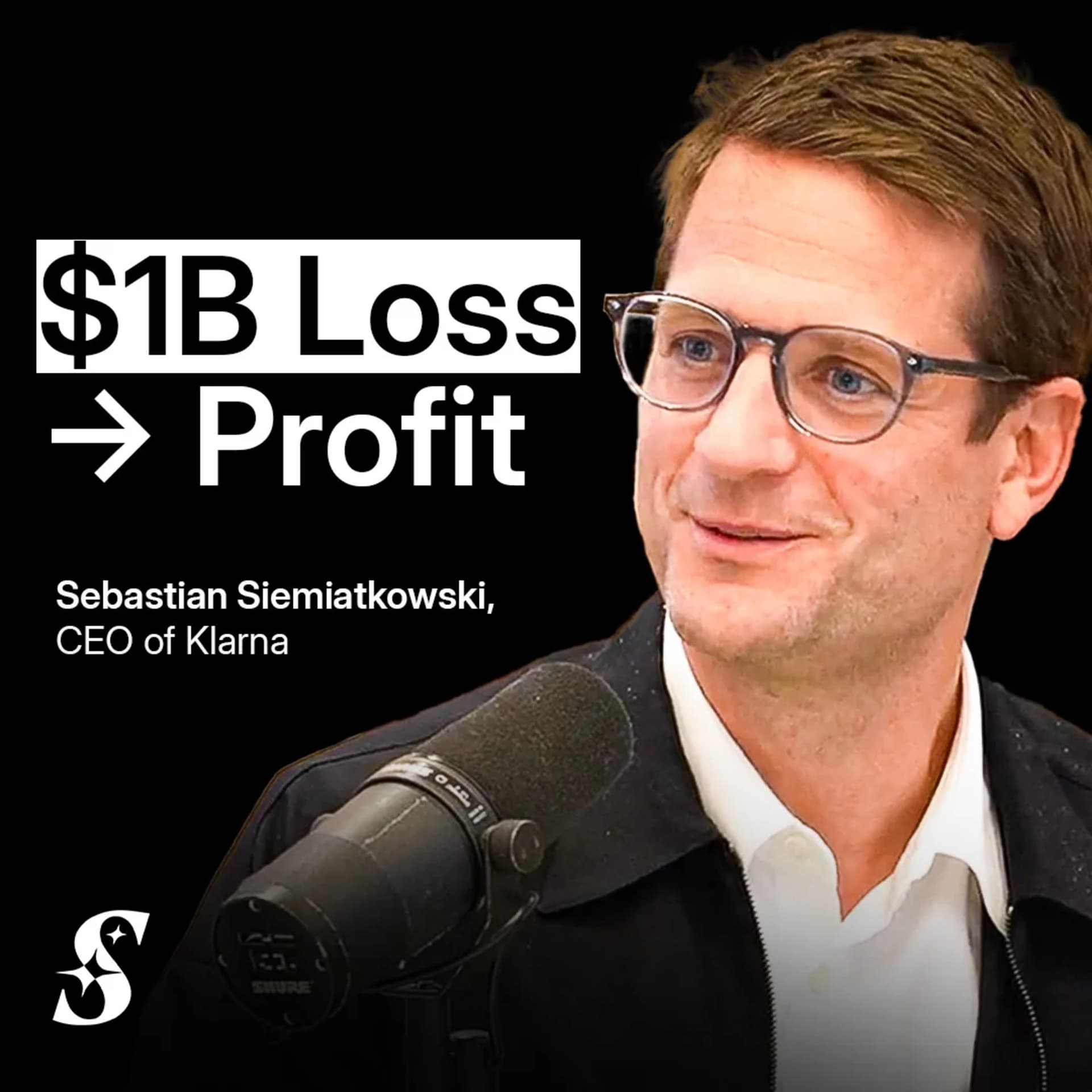
Overview In this episode of Sourcery, CEO Sebastian Siemiatkowski discusses Klarna's remarkable journey from significant financial losses to profitability, offering insights into the company's innovative strategies, playful branding, and future ambitions, especially as they approach their IPO.
Key Topics Discussed
- Klarna's Transformation
- Shift from billion-dollar losses to profitability in under three years.
- Major restructuring efforts, including layoffs and the integration of AI.
- Branding Strategy
- Balancing playful branding (e.g., pink logos, quirky advertising) with serious technological advances.
- The role of creativity in marketing and the use of memorable ads and celebrity partnerships.
- Core Business Model
- Klarna’s positioning as a challenger to the traditional U.S. credit card market worth $1.2 trillion.
- Emphasis on consumer-centric services and the need for disruption in traditional banking practices.
- AI Integration
- Early adoption of AI technologies and culture shifts within the company.
- Encouraging employee experimentation with AI tools to increase efficiency and productivity.
- Market Dynamics and Economic Outlook
- Klarna's agile business model that allows quick adaptation during economic downturns.
- Concerns surrounding job displacement due to AI and the implications for the workforce.
Key Takeaways
Klarna's Comeback Story
- Financial Performance: Transitioned from burning $100 million monthly to achieving profitability.
- Market Readiness: Positioned for growth in a saturated credit market with a focus on consumer satisfaction.
Branding and Marketing
- Unique Approach: Embracing vibrant, unconventional branding strategies that resonate emotionally with consumers.
- Cultural Resonance: Using popular figures and meme culture to enhance brand visibility and relatability.
AI as a Catalyst
- Cultural Shift: Employees encouraged to explore AI solutions, leading to innovative applications that enhance various functions.
- Efficiency Gains: Significant reductions in workforce while simultaneously increasing revenue per employee.
Economic Resilience
- Robust Business Model: Klarna’s short-term credit model enables rapid adjustments to underwriting practices during economic shifts.
- Customer-Centric Approach: Focus on simplifying financial services to improve user experience and satisfaction.
Future Strategies
- Expanding Offerings: Plans to further develop services beyond "buy now, pay later," including potential entry into mortgage financing.
- Addressing Workforce Challenges: Acknowledging the impact of AI on job markets and advocating for support for those displaced.
Conclusion Sebastian Siemiatkowski's insights into Klarna's journey highlight the importance of innovation, branding, and adaptability in the changing landscape of finance. As Klarna prepares for its IPO, the company continues to redefine consumer finance, positioning itself at the forefront of technological integration and customer engagement.
Follow-Up Actions
- Listeners are encouraged to explore Klarna's evolving service offerings and branding efforts as they prepare for their IPO.
- Emphasis on staying informed about the impact of AI in various industries and preparing for the shifts in the job market as technology continues to evolve.
---
For More Information:
- Klarna CEO Sebastian Siemiatkowski on [X](https://x.com/klarnaseb)
- Follow Sourcery on [Sourcery's website](https://www.sourcery.vc/) for updates and insights.
Written by AI. May contain mistakes. Listen to the episode to check what was said.
Transcript
Automatic transcript. May contain errors.0:00Close your eyes. Imagine there's this fish climbing up the ladder. and then it goes down this ladder and she's just like beautiful and then you hear like that was smooth Klarna smooth payments and we're just sitting there it's like this is the most ridiculous thing we have ever heard in our lives you've had one of the strongest redemption stories sky high vc valuations billion dollar in losses to then becoming profitable in less than three years how is Klarna going to become a trillion dollar company we're in retail banking and credit card in the US is like$1.2 trillion or something. And it's a market ripe for disruption.
0:36You have some competitors out there, believe it or not. Really? Yes. So there's Chime, there's JP Morgan, there's all these different kinds of banks out there. How are you differentiating? There was a Jamie Dimon's conference in Yellowstone. I said this on stage when I was with Eric. And then Eric Schmidt was like, how can you say that when you're at JP Morgan's conference? I was like, I don't know. Sorry, Matt. So Americans now owe$1.2 trillion on credit cards and the U.S. national debt is at$37 trillion and climbing. How does that feel to you? We're like, yeah, but I wonder how that business model would fare in a recession.
1:08Oh my God, I've been doing this for 20 years. I went to 07 with this company. I went through other recessions with the company. When have I graduated and proven that this is a better business model in the recession? You're the original meme factory. How did that happen? That's a good question. I ask myself every morning. But no, but look, I think there's been a lot of drama with Klarna. You've done CGI, you've done celebrities. Like, how do you extend this creativity? I would like to see a little bit of coming back to the roots of the fish. Yes, bring the fish back. On the website, it says that you can finance up to 13.4 million products.
1:44Wow. Can you name all those products? Has Klarna reached AGI?
2:01Sebastian Shibionkowski, CEO of Klarna. Welcome to Sorcery. Thank you. It's great to be here. This is a huge week for you. So they say. So they say. Klarna's business is huge right now. And one thing I want to address before we get into anything, You were one of the first companies to start integrating AI into the business. Specifically, you called up and you got into the room with OpenAI at the very start. I just want to touch on something before I embarrass myself. Are you at all related to Sam Altman? I wish. I wish I was, but unfortunately not. No? Okay. Okay, good to know. We've had some mix-ups with that in the past.
2:53So I've heard. Yeah, it wasn't a good look. Okay, well, anyways, let's talk about Klarna. Going back to that early OpenAI integration, how's the business now? It's exciting. There are 111 million users worldwide. Can you imagine that? It's crazy. And yeah, it's become a real thing here in the US. actually when we were going around now doing what they call a road show we have i was signing in at one of our investors and i'm showing my id and the guys in the reception is like hey you're from clown i'm like yeah do you know it he's like i use it all the time it's awesome and then i was like what could we do better and he's like i just want to get the card i'm on the waiting list i want to get the card so i was like yes that's exactly you know that's that's fantastic one of the details of your road show that i'm aware of and something that you actually picked up on a road trip is sitting on the table.
3:49Yeah, this one, the blockbuster. I thought it was kind of, the lawyer said you're not allowed to do it because you're hyping. It's going to be a blockbuster IPO. But I don't think it can't be that serious, right? I think it's nice. And I also feel like it's like, you know, some kind of homage to a beautiful old brand that like stands for something. It's nice. I actually visit, I've been there and picked up the cap myself. So what's the story behind that? Well, it's just like, we, so outside Stockholm where I live, we have, there's a beautiful archipelago with thousands of islands. And we're very privileged to have a small summer house there.
4:21And so we go out there usually. But this last year, we were refurbishing it. And then I was dreaming of taking the kids on a classic American road trip. So we ended up flying to Boise, Idaho. And then we toured through Prairie City. And we did Crater Lake, Oregon. And we just drove through all of it. And then you had to stop in Bend, Oregon to see the last Blockbuster, which is an actual blockbuster. And the kids loved it. They were just so much better than Netflix. They walked around and watched all the movies. You know, they could pick a movie and stuff like that. So it's really, really cool.
4:52So obviously we had to pick up some merch as well. We should bring it back. Yeah, we should. I mean, to be honest, I love Netflix, but honestly, like finding movies there, like how can they have not fixed that in 20 years or 10 years or whatever they've been live? Like, it's just hard to find good movies. I think it's just like, can you serve me something else? Like, you know. We've automated too much. We should reverse it and go back. I want to go back to like a store, go around, watch these boxes and like select something. It was really nice. Okay, so going back to the business, I'm sure I could talk to you about Blockbuster for a very long time, but I want to ask you a really hard question.
5:27Sure. We're just going to start with it. Okay. How is Klarna going to become a trillion dollar company? Wow. Well, I think we're fortunate to start with one thing is that we're in retail banking and this is an industry that itself, Like credit card in the US is like$1.2 trillion or something like that. I mean, it's just something humongously huge. And it's a market ripe for disruption. Tons of excess profit. Not so happy customers. Low customer mobility. People haven't really switched that much. And so there's just like everything is set up for coming in and trying to disrupt it and create something better, newer, nicer, friendlier, more customer focused.
6:08You know, there's all these opportunities in it. So I think that that is really the key thing. And that's not just in the US, that's true in Europe and many other countries as well. So I think like at the core, that's really. Many people know Klarna from Buy Now, Pay Later. This will probably be in the past as you build out this huge banking business. But can you talk about the shift from, you've had actually like one of the strongest redemption stories, sky high VC valuations, a billion dollar in losses to then becoming profitable in three years, in less than three years. You did a massive restructuring with AI, hired, fired some people, got some new things in, and now you're pivoting, you're adding more business lines.
6:48So can you just walk through your thinking from taking the business from that standpoint to now with this new business? But I think it actually started to some degree in, you know, it started in 2015, when my second co founder left and it was just me. And with that management team, we were like, we were at that point in time competing with Stripe and Adium. And they were beating the crap out of us. So we're like, we're not going to do that. They're too good. Let's do something else. And, and then we said, Okay, what could that something else be? And we ended up saying, Well, there is a opportunity and kind of consumer side of the business.
7:25in being some kind of next generation of retail bank or digital financial assistant and whatever. And so that was kind of the key. And that's where we set out to do it a decade ago. And one of the keys was like, if we're going to make that work, we have to be global, US and Europe. We were not to be seen in the US at that point in time. And we need to have a ton of users because it's going to be all by scale. And the focus then, when like 19 and 20 started happening, we started having some success in the US. We started competing with Afterpay. It was a fantastic race. It was just so competitive.
7:59And we're rushing to try to win every merchant and get the business going. And it's all got caught up. And everyone's just spending more money. And valuations are just through the roof. And to some degree, I would argue that investors basically gave us credit for the fact that all of these things were going to come true. All this thing about building the next generation of a retail bank was going to come true. and considering the size of the credit card market and so forth, people were kind of pricing that in as a fact. And then suddenly investors said, well, maybe, you know, maybe later, but not really right now.
8:35And it wasn't only Klana, but it was very visual on Klana because we're a private company. You know, PayPal lost the same valuation. A lot of listed company lost a similar amount. But it became, and then for us, it was just like, oh, wow, you know what? Like in all these crazy, hazy days, we were at a point where we were burning$100 million in investment every month. It's quite a lot of money. And then you're like, okay, now we got to shift this towards profitability. So to me, it was a – but I felt very confident because we had that U.S. growth and we had established ourselves in the U.S. And we knew since we've done this in Europe a few times, that if you get to that point, if you get enough merchants, enough traction, you will flip it around and you will make it profitable eventually.
9:20So, but it was obviously not that easy to get the investors convinced about the same thing. But for us as a team, it was very clear that's going to happen. And then the other part was we would have to become more efficient and be fewer people, right? and the first step was unfortunately then to part from about 10 % of the people working at the company which was very sad and tough and we were one of the early ones that took that decision I remember calling my chairman and saying look we're not going to wait for the funding round we're going to announce that we're doing this now already and he wasn't entirely it was one of the few times I've actually didn't listen to Michael otherwise I always listen to Michael but this one I said, no, I think we should really do it and announce it earlier.
10:03And I think it was actually important because it gave these investors a trust that we would be able to take the decisions necessary to turn this around. But very, very sad. We tried to do it as thoughtful as we could, but a lot of media scrutinizing us, very being critical. There would be things like an employee would go on LinkedIn and post all of the people leaving Klana and try to promote for other people that wanted to hire them. And I was like, wow, that's a great initiative. I also want to support them. So I retweeted that LinkedIn list that somebody else had created. And then it was suddenly me and media spreading a list of who had gotten fired, which was very unfair, but like it is, you know, it is what it is.
10:43So we tried to do it as good as we could. But since then also came AI and made us convinced that there's another opportunity to actually become even more efficient. And we can talk about that. So I think that it was a tough time and it required a lot of hard work from everyone involved and a lot of people committed. But it was pretty cool that two years later, we turned to profit from minus$100 million a month to plus$1 or$2 million a month, which is a pretty big swing. Pretty big swing. Yeah. I'm sure a lot of people are looking at you and will be looking at you as a playbook for restructuring with AI.
11:23In terms of the business units that you went after, how did you start to restructure the business? Well, it wasn't necessarily business units as it was. So the key thing when ChatGPT came along, you know, and I, you know, to me, I was just reading on X and I was like, there's this new thing and you're supposed to try it. And I was like, okay, let's go and try it. And then I was just blown away. I was just like, wow, you know, this is amazing. And then I realized like, okay, Sam Altman is going to be very quickly become a very popular guy. so like i gotta get hold of him before it's late so i i talked to sequoia my shareholders who were investors of course because they're always investors and everything that's great so they were obviously investors there and i said can you connect me to sam and they were sure sam answered and i was just like okay i'm gonna make up a reason to go to silicon valley and i did and at the time i got on the plane i had a booking with sam for three hours by the time i arrived my meeting with sam was 30 minutes so i could kind of see i was getting to the point where like I would not have a meeting at all.
12:24Yeah. So I went into this room and Sam was like, Sam, and I just gave him this like 30 minute speech of why Klana was the right person to work with for adopting AI. And Sam just listened and then like, I think he was a little bit skeptical to start with. But after about 30 minutes, he was like, yeah, by the way, what are you doing tonight? And I was like, nothing. I was like, do you want to come for dinner? Yes. Yes, please. So it was really lovely. So I was at his house and we had dinner with him and I met his mom and stuff and it was amazing. Um, and, uh, no. And then I said, look, we want to be your favorite guinea pig.
12:56And we put up a Slack account and we just, you know, and, uh, well, it's been nice. I've been hearing from people that opened the eye. They said, look, you guys, you know, we didn't think a bank in Europe would be like one of the fastest to adopt and try and test new things. Um, but you were, uh, and I think that was a key to me is that after, um, being a clone for many years, at some point in time, I thought that I, as a manager would sit in a room and And I would say, you know, these are the things that this technology is good for. So we're going to do this and that or whatever. And I realized it's very difficult to drive innovation in that fashion.
13:31So what we said instead, we said to all of our employees, please try this. Please experiment with this and come back and show us where you're seeing that it's creating value. We didn't say it has to be this or it has to be that. And people tried and tested and started, you know, learning how to use. We saw the first stuff like, you know, how do we keep our data safe and all that stuff? Like we quickly put that behind us and then we focused on that. And it was just amazing. A lot of people started showing things, whether it was financial analytics to produce PowerPoint slides of our investor presentations or whether it was to do, you know, easier marketing messages.
14:05So whether it was like tons of people came with just like tons of things where they were like, look, it's worked for this and I can use it for that and I can, you know, save time this way. But there were also things that Klarna should not be doing in a sense. like one great example that was a a few people came with the idea that employee engagement service are really boring and they don't really tell you much everyone goes in it's like do you want to work a clown and six months between a scale one to five and how happy are you at work one to five and then like hr sits there and tries to interpret all these numbers and like that's probably because you know and it's not a very quality process it doesn't really tell you much about what's going on at the office.
14:45And then we had this idea, what if AI would interview our employees? What if it would interview every employee and do like a 30 minute, not to replace the human because the human is still their manager responsible for their workday, but just to like add a better depth and understanding of what's going on. And we launched this and it was hard to do that because you can imagine like, okay, now suddenly AI is interviewing. What if people say some sensitive stuff? It's employees, it can be, things can come up, but it can be all types of things. So it turned out to be a little bit more difficult than we thought, but the team was so dedicated.
15:16They launched this and suddenly we had had, you know, 5 ,000 or at that point of time or 4 ,000 30 minute depth interviews with all our employees. And then we looked at that and that data was just so much better than looking at those, you know, one to five, how happy are you at work? Yeah. And it was just clear. And the point is that that team, we still actually use that product that we built internally just because it's there and it works. But that team has gone on and built other things now. like they're not continuing that and we're not going to sell we're not a hr software tool company right but i think it's nice that we did try it and let people build what they were passionate about and believed in because that created a lot of learnings to then start doing things that actually benefit clana and its customers yeah i i think that's really curious like has that made you rethink your service providers and your different vendors i've listened to a couple pods that you're Ronan, you specifically have talked about deal and how much of an impact that's made on the business.
16:15Yeah. So what, well, I think one of the things that started happening is we started realizing that one of the biggest challenges is that if you think about Klana has a relationship with Sephora, right, so Sephora is a client of ours. The information that's necessary for us to take care of Sephora in a great way and offer our services and upsell them on new ideas or whatever it might be, It's stuck in Salesforce, in some analytics dashboards, in Google Slides, in emails, in Slack messages. It's spread out across so many different systems. And there's so many inconsistencies and so much information there that it's hard to know what's true and what's accurate and what's valid and non-valid and so forth.
16:55And if that's true for a human, that's also true for AI because AI is like an employee that comes to work every day and has forgotten everything. Like they're like, first day job, you know, what can I do? And you need to give it like all that context and all the things for it to be productive. And even if you have a million tokens, there's a limitation to how much that is. And so what we started realizing, we need to standardize, simplify, bring the information in one place, harmonize all that information. And that's going to help actually our employees as well as AI to make work more fun. And then the challenge we had with some of our software as a service vendors is that we went and talked to them.
17:32We said, guys, this is going to change. You can change how you work with us. A good example of that, I'm not going to mention which one it was because I've been so tough on them already, but one of those vendors, they didn't have their APIs. Public. Their APIs are not public. They're hidden by a login. And the problem is because their API is hidden by a login, what does that mean? AI has not been trained on it. AI doesn't have access to it. So if we want to go to AI and ask, how do we change our integration to your software? It's not public, so AI doesn't know. If you're like Stripe has an API that's totally public, it's very easy to go and ask us about, like how can I fix this on the Stripe API because it's available right and so we started telling our vendors like these things and we didn't only talk to our sales guys we we made an effort for every one of these sales not Salesforce actually I didn't ever talk to Mark Benioff I have to apologize so that I that's true but for a lot of the others I asked to speak to the founders of these companies and said hey like let's talk because this is going to change how we use SAS and some of them like Deal and Alex were very leaned in and they were like, we all supply AI and we want to do this.
18:33And in that case, like, I mean, they're really good at some of the stuff that we do. There's no point in us doing that ourselves. But some others were very non-cooperative or like it didn't feel like they were truly interested in trying to help us. And one of the challenges, I think, with SaaS models is especially the larger SaaS companies. They are less dependent on their monthly subscription fees, but they have this whole ecosystem of consultants who charge on the hour to implement and fix. It's true for Salesforce as an example. And so the problem is that there's no incentive even for them to fix.
19:06Because there's almost like an incentive to continue bail hours for optimizing things that actually have limited value. And so consequentially, we decided that for some of these, we were like, no, we just can't. If they're not showing that interest and engagement into these discussions, we started taking them or removing them basically, right? But it's not necessarily to save license fees. I mean, Salesforce, I think, was a$2 million license fee cost for us. I mean, that's a lot of money, but for a company of$3 billion revenue like Klarna, it's not going to move your P &L much. Like it's not my investors are going to be, woohoo, come on, fantastic.
19:43They saved 2 million bucks. So it's not about that. It was more about the standardization of the information, putting it in one place, It's making it so that both AI and humans can use it. And that's driven a tremendous rise in productivity at Lana. It's all about making people more productive. It's not just about the cost savings, if you see what I mean. It's the principle behind it. Yeah. And then seeing the amazing things. When you start standardizing your information, it's pretty crazy what that leads to. Sorcery is brought to you by Brex, the financial stack trusted by more than 30 ,000 companies, including one in three venture-backed startups in the U.S.
20:20Nearly 40 % of startups fail because they run out of cash. Rex is literally built to help founders avoid that. Unlike traditional banks that let your money sit idle, chipping away at it with fees, Rex is designed to help you spend smarter and move faster. Their all-in-one solution combines checking, treasury, and FDIC protection into one powerful account. You can send and receive money globally at lightning speeds, Get 20 times the standard FDIC coverage through their partner banks and even high yield from day one. With same day and even same hour liquidity, access your funds anytime. Companies like Scale AI, DoorDash, Service Titan, HIMSS, Anthropic, Flexport, Robinhood, and Plaid trust and use Brex.
21:05Start today at brex.com slash sorcery. That's B-R-E-X dot com slash sorcery. Because you've leaned in so hard on AI and it's transformed your culture. Do you think teams now need to lead with AI driven cultures? Do you think having traditional values or not even traditional values, but like being stuck in the ages and saying, oh, like we don't need to do that yet. Do you think that'll tremendously hurt businesses? What is your view? I think we are only in the beginning of this transformation. And I do think that people, unfortunately, some people are too, it's too easy for them to lean back and say, oh, it's hallucinating or it's this and that.
21:48Instead of truly leaning in and being curious and learning how to use the tools, because so far it's a tool. It's not some AGI that walks around and just does everything. It's a fantastic tool if you understand how to use it and how to apply it. and so what's been interesting if i look at just last few months at klana is that the ai adoption was pretty good already but we still were kind of getting we were still hiring engineers we weren't so we stopped recruiting at klana about two years ago and the idea was that um what we're going to do is if people on average stay five years at klana means 20 resign every years, typical attrition rate for a tech company.
22:32If we don't hire, that means that we'll shrink. And that way of we don't have to do layoffs, but we can automatically just become more efficient, right? And the benefit also is that we said to all our employees that because payroll will shrink, a total we will be fewer people. We will take some of the economical benefits of that and put it back in accelerating your compensation. so a lot of people at clana working clana last one or two years have seen an acceleration in their compensation because we just have more money to spend on them so not all of the economical benefits but a large part of it has come back to where i'm pleased so it kind of creates this at least for the people working at clana this economical incentive to participate in this efficiency right and i'm not saying that it takes the fear away in totally because in general people are obviously nervous in general in society right now what's going to happen with their jobs but it does definitely make people at clone at least feel like we're i'm part of this i'm a shareholder you know it has positive implications on my on my wallet right so uh both in the cash and i mean in equity so uh but i think that that has helped but what's been interesting the last few months is you know i uh in may i was just like playing around with a prototype and i was just like, I just got to learn this myself.
23:50So I started using cursor, right? And I've, unfortunately, I have never coded, right? Like I wasn't an engineer. I wish I was, but I wasn't, right? I was a business person. And then I just started exploring cursor. And my whole summer, you know, my wife is a bit frustrated with me because like, whenever the kids went to bed this summer, I was just like, cursor, I got to code. Are you vibe coding? I am vibe coding. Why aren't you using lovable that's one of your neighbors i've tried lovable as well and i i love it for prototyping like more designs okay but when i want to do something you know that is more uh back end then i need cursor for it so but it's been fantastic and i and i said you know i actually said this the other day because people said that to me they're your vibe coding i was like but honestly because i'm not an engineer i've been vibe coding my whole life right i come into a meeting room there's tons of product people engineers i say like i think we should build an app that kind of does this and it should work like that and they're like okay try to make sense of what it's saying try to like you know interpret what i'm trying to say and then like yeah yeah yeah we're gonna build it they come back a few weeks later they show me some prototype and i'm like no no no not like that the copy can't be like this and the button has to lead to that you know whatever and then they okay and they go back and they come back like i've never seen the code right i've never i don't know how they made it it's a beautiful i like our clone app i think it's nice but like i don't know how it works like you know so to me i've been by coding for 20 years the only difference is now i'm sitting with you know a computer and i'm doing it with ai and it's you know it's coming back with the prototype in 20 minutes i think the most funny thing is every time i tell cursor like we should build this thing and blah blah it's like oh and it's always like it's always like yeah that's the smartest brightest idea yeah so it's like i am a Yeah, I am just sitting there feeling like so smart.
25:39Yeah. There was this funny article on CNN about a guy who was like, you know, who had for a few days. So he locked himself in the cellar and he thought he was building like AGI because AI was just telling him like, that's the smartest idea. That's me, right? I'm sitting there like, this is the best software we've ever written at Klana. But the thing is that, but, and the funny thing is, it's going to take you six weeks to build this. And I was like, go. And it's like 20 minutes later, I'm done. It works awesome. And I'm like clicking. It doesn't work. please fix it. And I'm like, you fix it and fix it.
26:09But the thing is, then it actually works. And at least the benefit is, rather than disturbing my poor engineers and product people with what is half good ideas and half bad ideas, now I tested myself. And I come and say, look, I've actually made this work. This is how it works. What do you think? Could we do it this way? It's much more thought through. It's almost like it's forcing me to articulate. Just like we used to do pre-reads from Amazon, that you didn't just go into a meeting and you show a slide. We actually had to force people to write down their ideas and so forth. This is almost like the next generation of that where you have to prototype yourself.
26:44You have to show that your idea actually makes sense before you kind of suggest that we should do it, right? Has Klarna reached AGI? If you ask Curser and me, yes. No, but I don't think so. But I think that the thing I find very, very interesting in regards to ai is is this quest for precision and accuracy right which is the contradiction of hallucination and i got this i actually was on stage crazy thing they invited me to jp morgan conference they put me on stage with sam altman and eric schmidt and i'm like what am i doing here you know like and they start asking these like uh you know very detailed but one of the questions that came which i thought was interesting was how is it possible that all human knowledge which basically is gpt5 right all human knowledge but once you've made it into a model it fits on a usb stick right and i thought that was such an interesting question and i realized like what the answer for that is and the answer for that is that this is the most effective generalization and compression technique that has ever been created because if you feed the llm additional information like if you took a database and you store the same info, it just duplicates, becomes more and more and you have all this noise of duplicative information.
28:06The LLM automatically, when you feed it the same information it already knows, it doesn't change it. So it's compressing human knowledge. And the unfortunate truth is that our human knowledge is smaller than we would like to believe because so much of it, if you go into a library, is repetition. And the same thing said in so many different ways and you can actually generalize and compress it. So that's partially true. While at the same point of time, it's not entirely true. That's why it sucks at answering on phone numbers and opening hours and tons of things, because there is also a tremendous amount of knowledge which get lost in that compression.
Read the full transcript
28:43And I think the interesting thing will be people who can solve that problem, who can find the balance between an LLM and other ways of storing and accessing information. So you really get the combination of what's great about an LLM with, you know, just data and facts is going to obviously create the next generation of AI, in my opinion. One of the companies that Sorcery works with is Turing. Yeah. They help train models. They're an AI research accelerator. Are you training any models? Are we going to get anything out of this? No, we do. Yeah? We do try to train a little bit as well, and we do some of that.
29:21But there are also other things I'm more excited about. Like one of the things that I think Klana stands for is aesthetics. And a chat interface is a freaking boring way to interact with a computer. So I'm also very interested in like how can we use AI to create a more user-friendly, aesthetically pleasing way to interact with a computer. So there's a lot of other things than just training the models itself. In today's high-speed business world, staying ahead means using the smartest tools possible, including the powerful capabilities of artificial intelligence. Meet Turing Intelligence. Turing builds customizable AI systems designed to solve your mission-critical challenges, no matter your industry.
29:58From expert guidance to tailored projects, Turing helps top companies realize AI that's more capable, more adaptable, and more effective. With Turing, discover how AI can accelerate your business growth. To learn more, visit Turing.com slash sorcery. Spelt S-O-U-R-C-E-R-Y. That's Turing.com slash sorcery. Aesthetics is a big thing about KORNA. I mean, I'm wearing a pink sweater because you guys, okay. So recently, Paki McCormick wrote this like beautiful piece on the great differentiation. It has to do with how tech companies are now like embracing differentiation, their uniqueness, their own personality.
30:39And I was thinking about this as I was preparing to talk with you. And I was like, Klarna did this from the beginning. Like who ever thought to make a tech company pink? Yep. Branding is pink. I know who that was. who was it well the funny thing is that like it's actually um you know i don't want to steal all the thunder from our amazing chief marketing officer because he's done a fantastic job david uh sandstrom but it really started with my wife and she's a nina is amazing she's fantastic and when she was 15 years old she started working in a local like boutique that was selling all the the best brands you know the the products of the world the gucci locally in stockholm and she would you know she would be taught by um by gabby who was running the store she was be taught about aesthetics and quality of fabrics and she would go on uh purchase trips to milan to meet all the big houses and you know this was pre them having their own stores and it was a very different world back then and she's really my wife is fantastic in aesthetics and interest she's been a photographer herself and um so we were we would be sitting and having dinners and at that point of time clown i was blue it was in classic looked like any other fintech and nina would tell me like you need a brand and i was like what do you mean we have a logo type what are you talking about like we have a brand yeah like nina's like no you you really need a brand and i was like so i was just getting very tired of listening to this and at this point in time the the thing that happened as well was that we had unfortunately been a little bit unlucky with some chief marketing officer hires it didn't work out and again we had to shift and there was a small marketing department with about 40 people and this point in time you have to remember like at that point time i've been a ceo my whole life it's a very strange thing i'm 23 years i've become a ceo i've never had any other position i've not climbed the career ladder i haven't done a smaller responsibility at the time so when that cmo left i was like okay i'll do the job myself i'm going to be both CEO and CMO for a period of time, which was extremely helpful for me because I had to step down from my high horse of being CEO.
32:47And I could suddenly sit and be running a 40 people team and focus on the marketing. And at this point in time, I started listening to Nina. I was like, maybe she's right. And so I decided we would bring her in as an advisor pro bono, which obviously can imagine the like reaction in the company where like he's bringing his wife. Oh my God. what does it mean you know like are you even allowed to do that um but she came in she didn't get paid for it and at this point in time we were just there was an equivalent of venmo that had started getting some tractions in sweden so the only thing i was like we need a tv we need a tv ad we need to build a brand we need a tv ad and so nina was like let's go and find and let's do the best but we really wanted to do something different and then nina no agency in stock wanted to touch us like everyone's like oh it's boring you know clana by now like blah you know none were interested but there was one guy david sandstrom our current cmo who was running one of the local agencies and he said no this is interesting let's do something and they brought in some creators the funny thing is i feel like we were in a it felt like we were in mad you know what's it called mad mad men mad men yeah because we come into this room all the other agencies were super boring had super boring ideas but this one agency ddb comes into the room and they're like we this one idea like close your eyes imagine there's this fish and it's climbing up the ladder and then it goes down this ladder and she's just like beautiful and then you hear like that was smooth klana smooth payments and we're just sitting there it's like this is the most ridiculous thing we have ever heard in our lives me and nina and we're looking at this but like david and the others like super convinced and then we come home we start talking about it over dinner was like but there's something amazing about that just this idea of smooth smooth is like silk like it's something that is nice it's friendly it has a lot of fun to it you can do a lot of fun things with smooth and so we were just like let's do it um and then we started changing then we changed the color we changed the brand so nina helped out for a while and then david stepped in as chief marketing officer and you know since then we've done a lot of things but it just felt like the absolute right thing to do something differentiating and do something very, very different.
35:02And also connect to our audience. And, you know, it's something that connects on an emotional level. And I think to some degree, it's so much harder when you have a physical product. If you are actually Louis Vuitton or Prada or whatever, you have a physical product. There's something to relate to. But it's such a bigger challenge when all you have is a small icon in your iPhone app and you want to build a brand. So that's such a fascinating challenge also. Like how do you create an emotional connection to something that is payments, which is maybe the most utilistic and boring thing people can imagine, right?
35:31I think that is probably one of the most iconic marketing campaigns ever. I was rewatching it and like I had this sound all the way up and you just hear this like gross, like slithering, smooth sound and you're like, what is going on? But it's like, it is like, it's provocative. it like gets you an emotional response and you think about the brand from it yeah and it has nothing to do with payments but now all of a sudden that's clarino yeah and i think you know the other thing is interesting there wasn't because we actually had to hire at that point in time those were the best digital animation study studio they were in canada it was phenomenal the sloth one too that was crazy yeah cool in the pool exactly because that's the hardest thing to anime apparently it's like hair in water yeah and that guy's swimming and it became actually a meme in the uk it just it went viral right we also had one where they sliced the cheese yes i saw that became viral on youtube so we had to make like a 12-hour version where you could just watch it and never finish you made a 12-hour version yeah it was like a 12-hour version there's some people were just watching it it's like that's so rewarding um this is early days asmr yeah exactly no but it was really i you know i think it was um it was amazing and then david when he took on the job came with his next idea which was you know he came in and pitched like we should do something with snoop dog right and it was also like such a funny it was just like look we're gonna they we have convinced snoop dog is gonna change names and he's gonna call himself smooth dog you know oh my god yeah and and the thing is that like and we got him on board with this he's a shareholder company so i hope he's going to celebrate our ipo shout out to snoop dog exactly i mean i actually had the challenge you know the privilege to go and see him in la which was very very cool um and um and you know and then and then but the thing is so he suddenly announces he's changing names the whole internet goes like why is snoop dog changing name to smooth dog what's this all about you know and then three days later it was like oh it's because of he's becoming a shareholder in clown and we made this beautiful video that unfortunately we lost the rights to but you can still find it on youtube it's just a beautiful video how he crowns himself smooth dog and uh no and it became viral right and then we've done really cool stuff with lady gaga and with asap rocky and with paris hilton and and so forth and it's been it's been fun it's been fun to also allow yourself a little bit of a smile right and i actually think that that's one thing that people have underestimated that we are from a banking industry and trust in banking meant people in suits in marble offices with ties shaking hands and for whatever reason bank still thinks that this emits trust but for our generation that grew up with 07 and see our parents struggle through the financial crisis that's everything but yeah trust right occupy wall street for god's Like, you know, it's just like the opposite.
38:34What you're looking for is what you want to be looking for is somebody who doesn't pretend, doesn't try to look like, oh, you know, I'm pretend I'm important. But somebody that's relaxed, that's friendly, that's forthcoming. And that's what we've been trying to do. And we even talk to people when they say like, yeah, what about the youth and how they and we say, look, if you want to talk to young people about your economy, do you think that guy in the suit is going to make it work or Snoop Dogg? Who do you think they're going to listen to? Or Lady Gaga or Paris Hilton? Who are they going to listen to, right?
39:05Or ask them, Rocky for that sake. So the point is, if you want to talk to people about finances, you need to be able to make it a little bit relaxed, a little bit fun, and have something you can't just believe that you're going to sit there and be boring. It's just not going to work, right? Same as your podcast. Yeah, you're going to make it fun. A little bit more fun than just like, you know. Serious topics, but like a little giggle every now and again. It's not going to hurt anyone. Exactly. So as you think about seriousness with very playful personalities and branding, what do you think the shift is going to be next?
39:42What comes next after that? You've done CGI. You've done celebrities. How do you extend this creativity? And what can I steal from you? That's exactly the question I ask our chief marketing officer every day. What are you going to do next? I hope that you know what I what I try to challenge the team on now is I would like to see a little bit of coming back to the roots of the fish yes bring the fish back yeah you should bring the fish back I think so I think there's something to a little bit more edgy and aesthetically crazy somehow right because I also feel there's a risk like when we did our Super Bowl commercial it's like yeah it's nice but like it starts feeling a little bit commercial and I just wanted to I hope that we can bring some of that edginess and aesthetics to it.
40:29You know, do some unexpected thing. Even the smallest thing that we're like sponsoring the opera in Sweden right now. Like even just things that are a little bit like unexpected, a little bit edgy, a little bit artsy. I would like to see more of that. That's cool. Maybe we could put Klarna on the side of like a rocket ship. Yeah, exactly. Talk to Elon about that. Go talk to Elon. Be hard. He's the one who makes the X into a financial services company. That's true. Yeah. He might start financing burritos. That's true. Which is another one of your memes. You're a meme factory. Yeah, I know. Have you thought about this?
41:02Yes. So you're the original, what did we talk about earlier? You're the original meme factory. Yeah. Okay, how did that happen? Was that just like by chance, accident? Why does this keep on happening to you? That's a good question. I ask myself every morning. No, but look, I think it is, I don't know why. It was just, I guess, you know, there's been a lot of drama with Klana, right? So to some degree, we've also had this like everything from board drama, you know, the boardroom fights to like, you know, the buy now, pay later to the high valuations, low valuations, like, you know, all that stuff.
41:40So there's been a lot of drama around Klana, which helps, you know, not necessarily something we are aspiring for, but like it hasn't necessarily been bad from a meme perspective. But I think also, you know, on the meme side, I think that the burritos thing is a good example. Like to some degree, Binappolator for us is a blessing because it opened up the market. It made people familiar with us. It made us available in so many places. But it's also a little bit of a curse in the sense that people think it's only Binappolator. And, you know, we didn't launch with DoorDash to finance burritos. It's really funny, but that's unfortunately not the case.
42:23But I don't think you can plan these things entirely. It just also partially is what happens, right? And, you know, we get more of that. So I think there will, I'm sure there will be more coming as well. As you think about expanding cuisines. Okay, so you've done burritos. What if we get into heroes and, you know, really start to approach the Greek market? Right. And even maybe after that, I've heard Gnocchi is up and coming. Have you at all thought about pasta and like the Italians? Those are good options. There could even be like a premium tier. That's true. Maybe sushi. Yeah, exactly. Go to Tokyo, get some fresh sushi.
43:03Split that on installments. Split it on installments. Could work. It could work. So another one of the things that I looked at in researching is the global expansion and how much you've been able to reach. Yeah. So on the website, it says that you can finance up to 13.4 million products. Wow. Can you name all those products? I wish that was the case. Yeah, but I think you can like, there is definitely, I think still that the key thing to all of this, right, is that obviously financing has been around. And I think that's what people forget. Credit cards have been around. These products have been around.
43:48But the challenge with how they were constructed historically is that the banks somewhere along the long, you know, installment loans, I think actually was launched like 150 years ago in the US with the people who invented the first sewing machine. They want to sell more of the sewing machines. So they let people buy them on installments. And that was kind of the beginning of the industry. And that even eventually became the credit card industry and all that. But the problem is along that line, that was a little bit forgotten. And these banks get a little bit too greedy and started trying to make too much money.
44:17And as a consequence, there's so many customers that we talk to and so many people we talk to who are like, yeah, I got a credit card. I thought it was a good thing. I want to improve my credit rating. But then suddenly I'm sitting with three, four thousand dollars of debt and I'm paying like 20, 30 percent interest of it. And I was like, this is the work of the devil. I want to get out of this. Right. There's an amazing documentary on Netflix called Credit Cards Explained. It just takes you through all the tricks. And I think this was also from a different time period. I don't think banks are evil, but this was from a time period in the 80s and 90s.
44:46you know, our parents, their business was very different than ours. They would have like cocktail parties, drink alcohol in the office. And then they would sit and say like, how do we make more money out of our customers? Like nobody was thinking like corporate social responsibility or whatever. It's just like, let's maximize profit guys. What is your best idea? How are we going to make more out of those consumers? Right. And that was particularly true in credit card industry where so much excess profit was created. It was like, oh, you know, here's your limit. If we show people the limit it looks like they have more to spend than they actually have and they're going to spend more if we don't put on installments but put them on revolving nobody understands when they're paying that back so they're just going to revolve forever but i was a kid i used to work at burking there used to be when you swiped your card at burking when i was 15 there was press one for debit press two for credit why did the bank stop doing that because if you put half of your purchases on debit you didn't have as big of a bill at the end of the month if you didn't have as big of a bill then you were less likely to revolve and they would make less money so there was so much of these things that happened and now there's a a number of people out there who's like i don't want to i don't want to have those products i want to have something that's a little bit more fair a little bit more easier to use and and then they can finance anything with it but you know i even get in these conversations where i hear like i was talking to a customer virus she was in their 30 you know early 30s and she was like yeah my mom had read in media that you know buying up later is bad for you and and then i asked her mom are you not using a career card it's like yes how much depth do you have on it four thousand dollars and it's like i own clona 100 bucks and i'm paying zero percent interest right who's financially responsible so like i think that there's just a shift going on and the financing thing has always happened i never when people tell me sometimes like yeah but i'm against all financing of consumption then i'm like okay i'm gonna lose debate like you know like that's fine i'm fighting we're fighting credit with credit we're fighting fire with fire so but it's a very effective way actually to fight fire with fire and this i think this is a healthier form of credit as you thought about building out this bank you have some competitors out there believe it or not really yes so there's chime there's jp morgan there's all these different kinds of banks out there how are you differentiating well i think that the it actually came back to that idea 10 years ago when we said okay fine the future of financial services is going to be this digital financial system wakes you up in the morning tells you i've analyzed your mortgage uh i can save you 50 pounds or 50 dollars and the only thing you need to do is say yes and i'll switch and do all the paperwork for it okay to me that's like that's gonna happen um that's where retail banking is going that's where digital financial services going and it was funny because i was at jamie diamond's conference in yellowstone i said this on stage when i was with eric with some saltman some some altman and um and the others and then you know eric schmidt was like how can you say that when you're at jp morgan's conference i was like i don't know sorry man i was just trying to share my what i think is the future um but the point is what does that mean that means that excess profits are going away because all these banks make so much money because they rely on our unwillingness to switch and if switching becomes very simple because you have a digital financial system that just says hey use this it's cheaper that is better then suddenly you can't compete that way and that's true for so many things that we use in life it's true for our carriers electricity you know tons of things and where companies to some degree rely on us not wanting to switch and or not have the energy to switch so i think that's that's the key and that's what we want to differentiate as to really put the customer first and say how do i save you time how do i save you money how do i make you feel more in control of your finances um and despite what media may report on buy an appy later it is a much cheaper way to finance a purchase and using a credit card without doubt so we're saving people a ton in interest and fees from consumers.
48:55And that's just the first part. Then I want to take all the AI learnings that we've had and I want to try together with the team at Klana to build that digital financial system for our customers to try to leapfrog the current JPMorgan Chase app or Amex app or Revolut app for that sake or whatever it might be and try to create an experience that is superior to people. And the truth is that mortgages, you'll think about once per decade, but your everyday purchases, your contact lenses, all these, there are so many things that you can help people in just making them worry less about finances, right?
49:29To be fair, you just have to recognize, I think, even if you're in this industry, most people don't want to think about you. Like most people just want to live their lives, enjoy them, do fun stuff, hang out with their family. They don't want to think about payments every morning. Like this is the last thing they want to think about. So if you can help them with that to actually make them think about this less and make them pay less for it, then they're going to be happy. To think more broader macro, I'm going to put some numbers against this. So Americans now owe$1.2 trillion on credit cards.
50:01And the US national debt is at$37 trillion and climbing. It's crazy. But the odds of a recession actually remain quite low. Caltech has odds right now at around 38 % before 2027. How does that feel to you? what do you think about the broader macro trends and where you're seeing consumer spend delinquencies default etc versus also the backdrop of national debt well i do think that the the i worry less you have to remember also that to some degree one of the benefits of china that's also you know that was very clear that finally i would say now on the roadshow investors have understood it or at least the investors that we were talking to had understood it that is that if you're a bank normally like with us and you have that outstanding credit card debt right the 1.3 trillion if you're sitting with that on your balance sheet and then you walk into a recession you can't just get out of that debt because you all these people owe you money and you can't just change your underwriting because they're already there so it will take you years which is what happened 07 to do years to heal that and fix that.
51:10The difference with Klana is people owe us on average$80,$100. And it's just outstanding for four weeks, six weeks. So when a recession comes, what we do is we change our underwriting models. We become a little bit more restrictive. And in only 60 days, half of our balance sheet is underwritten by the new standards. So it's a much more agile and robust model because you can adopt to what's happening in society in a very different way than the big banks can do. And this is often why, like, you know, again, now I saw some in preparation for the IPO, people were like, yeah, but I wonder how that business model will fare in a recession.
51:47And I was like, oh my God, I've been doing this for 20 years. Like, when am I going to start? Like, I've been going through, I went to 07 with this company. I went through other recessions with the company. I was just like, can I stop hearing that? Like, when am I going to, when have I graduated and proven that this is a better business model in the recession? but like um so i think that that's it but what i'm more concerned about obviously is the jobs i i unfortunately as much as you know again there's been so many of the ai people gone back and forth about this but i think that people aren't sincere i think that people ceos of many companies today recognize and see that when it comes to white collar jobs they won't need as many people as they have historically and there's going to be a major shift there and i even think about it like the other day again i saw one of the car manufacturers who was doing that truck manufacturers were doing downsizing when i was a kid it was people in the factories that lost their jobs while at the headquarters everyone was fine now every time i read about it it's like no no we're not touching the factories so unfortunately in the headquarters where we're removing 600 jobs, 700 jobs.
52:56And I also didn't, because Klana has gotten so much attention around our efficiency gains and we've gone from 7 ,400 people to 3 ,000 while our revenue has doubled since then. So our revenue per employee went from$450 ,000 per employee to over a million now. And because of that, I have so many emails in my inbox from CEOs of large companies who are like, hey, you know, we're kind of thinking about potentially, you know, a little bit of downsizing as a consequence of AI. And could we compare notes? And I was just like, Jesus, if I just round up the jobs at these companies in my inbox, that's a significant amount, right?
53:37So that's why I've been trying to hope to try to be one of the more transparent and honest people to say, look, society, I think we have a challenge. Like, it doesn't mean that we can't overcome this. It might in the end lead to something more positive for society. But I think it's going to be a little bit turbulent as we go through that change. And that it will have short-term implications. And it's easy to say there will always be new jobs. It's a little bit harder if you are a 55-year-old translator in Brussels. And the only thing you do is translate documents. And now suddenly AI can do that.
54:11It's like, yeah, but you're going to become a YouTube influencer. Like, I'm sorry, like, that's hard for that person. It's not true, right? It may be true for economy as a whole, but I think we need an answer for the people that lose their jobs in the short term. And that's maybe, you know, slightly different perspective than what you usually hear in the US. But from a European perspective, at least, the idea is like, maybe there's some way that you can support the people that are going to be affected by this. And I think there will be a lot of people affected by it. And that's more than also from a macroeconomical perspective and looking at clowns.
54:42I just want to be mindful that we might go towards a tougher time in number of employees or employment as a consequence of that. So we will rapid fire this. You answered one of my questions already. So one of Sorcery's sponsors is Brex. It's all about spending smarter, moving faster. And they love performance. And one of the questions was going to be, how do you think about that with employees? And I know you evaluate them against revenue. The revenue per employee is increasing. So an alternative question is, what is one of the biggest lessons that you learned as a CEO? Wow, that's what those always like so difficult.
55:21There are so many and I've done like every mistake in the book. I think more recently, you know, I used to hear there used to be this fantastic guy, Sir Ian, I think was his name. He was the CEO of Tesco for a while. And he turned Tesco, who was like on the ropes in the UK, and he made it a smashing success. And he said, everything is about customer obsession. he would even force his finance people the cfo like oh you're going to get a new accounting system how's that going to make life better for our customers and like i used to listen to that and we did some of that but in the last one year we have just gone all in on this the amount of time i now spend talking to customers on the phone calling customers talking to them reviewing people's sessions with how they use the clon app like i'm we're just changing that and it's it is so interesting so many times internally at clon people will sit and have opinions like yeah we need to do this or that or our customers want this and that we pick up the phone we call those customers totally different like totally like we're totally lost it right because you get so up like you get so caught up in your own views and clown and we know all the products we understand how they work you know all the stuff and then these people who you know they just use it and you know they we want to be mindful of like how do we work with them and i think like the customer obsession i've just so that's actually one thing i really appreciate with jamie diamond like that jamie spent so much time just going to the local offices shaking hands talking to customers i think that's one of the key things that i underestimated and what made him so successful with jp morgan chase and what he's done is just how extremely customer obsessed he is it's really really impressive to see now that the company is getting serious about growth we have to think about product expansion outside of just banking.
57:08I want to go back to buy now, pay later because I just think there's untapped potential there. I think we should get into, and I did this, I worked with chat GPT. It was great. I think we should get into buy now, pay later companies. Okay. So we can acquire open AI. Their valuations are around like 500 billion right now. This is like the perfect time to buy. This is the lowest they're ever going to be. What do you think? I think it's called M &A. Okay. What's that? So I think it's called, I don't know what is M &A. Merger and acquisitions. Thank you. All right. All right. We'll put that one to the side.
57:53What about stocks? We could buy now, pay later stocks. Palantir has been doing really well. So I've heard. We could pay for that now. No, we could buy that now, pay later. I saw people say, well, it's called short, unfortunately. And it's been done. All right. All right. We're zero for two. Anyways, more seriously, concert tickets. Done. It's done? We do it, actually, with Ticketmaster. Very successfully. You already do that. Okay. Maybe chat GPTs. We need to update. we've got to refresh that one i think i think um the five wasn't that much better i've been telling sam that like talk to sam about this they need a i think you need to up your partnership somehow and then um okay quickly last two college student loans that's a student loan all right i'm not sure what that is but i'll look it up um unfortunately i'm sure you do okay geez um This is the last one.
59:02I'm hoping we can at least get one product in here. I'd love to contribute to the business. Buy now, pay later. Homes. Mortgage. A mortgage? What's a mortgage? I see. You see my Swedish is mortgage, but it's actually mortgage. Is that a company? That is a house that you buy with borrowed money, yes. Borrowed money. Can I get that through Klarna? Not yet. Not yet. But I would love to do it someday. Okay. So we have an option. You think we got a product there? Which one? Oh, the mortgage. Yeah, yeah, yeah. We'll get mortgages? For sure. Let's do it. Okay, cool. That makes me happy. Well, Sebastian, thank you so much.
59:48This was so much fun. Thank you for having me. Hey, it's Molly. If you enjoy our interviews, check out our newsletter, Sorcery.vc, where we deliver a once a week top deals and tech headlines email and also go deeper on our podcast interviews. Subscribe to Sorcery today. And don't forget to subscribe to the podcast on YouTube, Spotify, Apple, or wherever you listen. Link in description to sign up.
From the publisher
Klarna CEO Sebastian Siemiatkowski joins Sourcery on the eve of their IPO to share the ultimate comeback story — from billion-dollar losses to profit, the hard layoffs, the AI rebuild, and why he let employees lead the charge with new tools. Recorded at the NYSE, this might be the best Sourcery interview to date.
We cover how Klarna balances playful branding — pink logos, surreal fish ads, and Snoop Dogg collaborations — with serious technology that powers 111M users and global expansion. Sebastian also addresses misconceptions: Klarna isn’t just “buy now, pay later,” but a full challenger to the $1.2T U.S. credit card market.
He explains why Klarna’s business model protects them in recessions, how AI is transforming culture and efficiency, and what he gets out of coding himself at night with Cursor. A company equal parts meme factory and trillion-dollar contender, this was so much fun.
1. Sebastian Siemiatkowski: https://x.com/klarnaseb
2. Molly O’Shea: https://x.com/MollySOShea
3. Sourcery: https://x.com/sourceryvc
Brought to you by:
• Brex—The modern finance platform, combining the world’s smartest corporate card with integrated expense management, banking, bill pay, & travel.
As a Sourcery Listener you get: 75,000 points after spending $3,000 on Brex card(s), white-glove onboarding, $5,000 in AWS credits, $2,500 in OpenAI credits, & access to $180k+ in SaaS discounts. On top of $500 toward Brex travel, $300 in cashback, plus exclusive perks (like billboards..) visit → https://brex.com/sourcery
• Turing—Turing delivers top-tier talent, data, and tools to help AI labs improve model performance—and enables enterprises to turn those models into powerful, production-ready systems. Visit: https://turing.com/sourcery
• Kalshi—The largest prediction market and the only legal platform in the US where people can trade directly on the outcomes of future events: https://kalshi.com/sourcery
Follow Sourcery for the latest updates!


