
- Podcasts
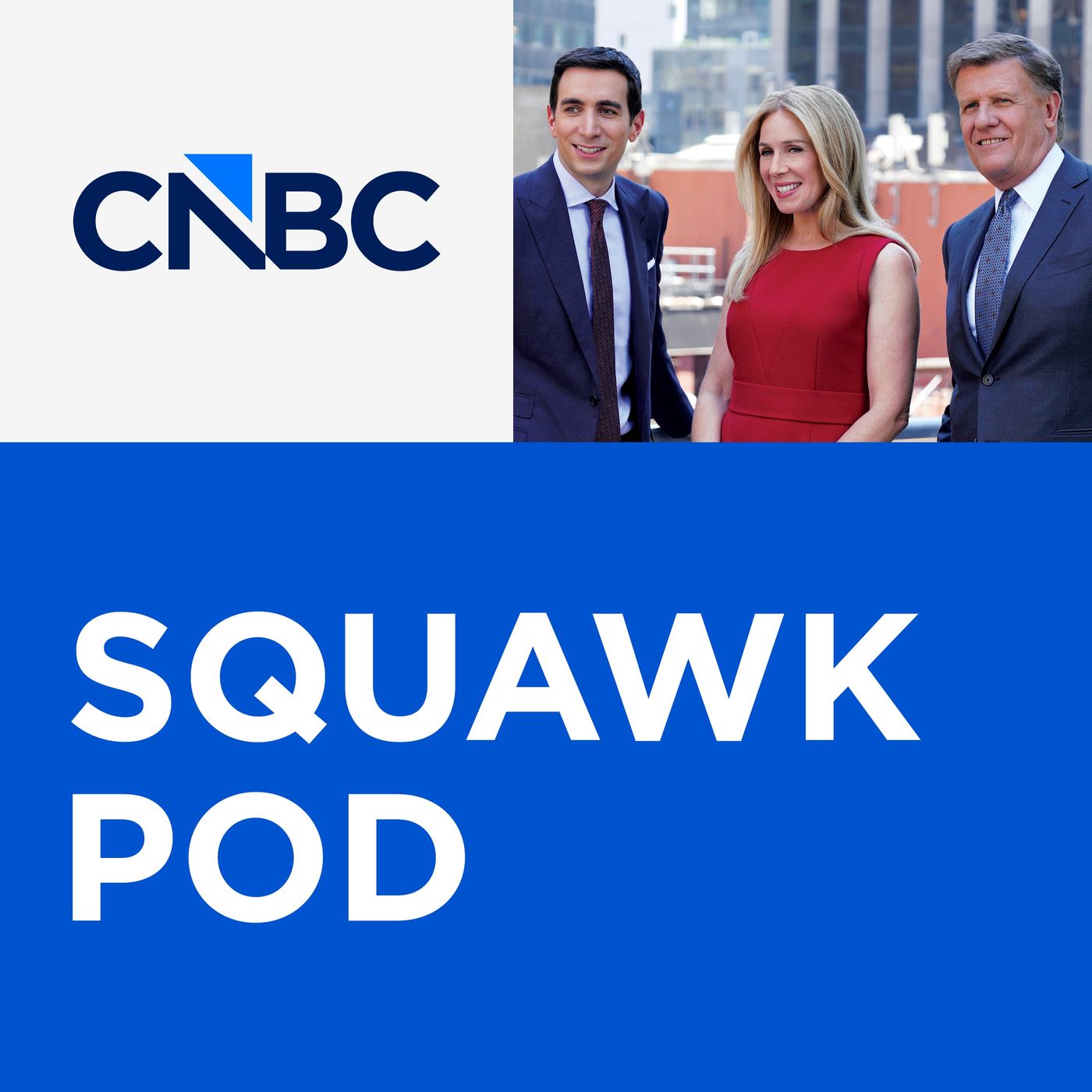
- Squawk Pod
- California’s Billionaire Tax & Global Hot Spots 10/28/26
 Squawk Pod
28 Oct 2026 · 41m
California’s Billionaire Tax & Global Hot Spots 10/28/26

 Add vo to ChatGPT or Claude to ask about everything you hear
vo listened to this episode to put together the overview and transcript, so there may be the odd mistake.
In short
Squawk Pod episode covering (1) California’s Proposition 40 “billionaire tax” debate, (2) global hot spots (Israel election deadlock, Yemen/Houthi attacks, Ukraine war), (3) Fed meeting and major tech earnings expectations, (4) OpenAI CEO Sam Altman warning about AI cybersecurity risks, and (5) GM shifting toward hybrid SUVs.
Guests and backgrounds
- Gabriel Zuckman: UC Berkeley summer research professor; Paris School of Economics; economist; advisor to Elizabeth Warren’s 2020 campaign; author of We Need to Tax Billionaires.
- Joshua Rao: Stanford University finance professor; Hoover Institution senior fellow; argues Prop 40 would harm California’s startup ecosystem.
Key claims
- Zuckman: Prop 40 has broad popular support; billionaires pay too little; exodus fears are overstated; tax would help keep Medi-Cal/health coverage for ~3 million people.
- Rao: Prop 40 likely fails (prediction markets ~25–30%); could drive capital/founders out; California doesn’t face a fiscal emergency; spending efficiency should be addressed instead.
Notable examples
Mark Zuckerberg staying in California while paying the tax; Sergey Brin donating $100M against the measure; France protests over taxing the super-rich; Altman urging AI security threat mitigation; Netanyahu vs. Gadi Eisenkot election uncertainty; GM planning hybrid versions of Traverse/Enclave/Acadia.
Transcript
0:00Joshua Rauh: This episode is brought to you by Schwab Market Update, an original podcast from Charles Schwab. Schwab Market Update, an original podcast from Charles Schwab, provides an information-packed daily market preview on stock updates, U.S. and global economic news, monetary policy decisions, and key results and statistics that may impact your trading. Download the latest episode and subscribe at schwab.com slash marketupdatepodcast or find Schwab Market Update wherever you get your podcasts.
0:29Gabriel Zucman: You know, Kevin, sometimes I feel like computers are the only thing around here that are getting smarter. Yeah, my model hasn't had an update in a while. But that changes now. We think that we can smarten these listeners up about all things related to this crazy new future. Welcome to Machine Gods, a new NPR podcast that will be your guide to the AI future. Twice a week, we're going to help you get smarter about AI so you know what's real, what's hype, and what you should probably install on your phone.
0:55Kurt Volker: Listen to Machine Gods from NPR on the NPR app or wherever you get your podcasts. Bring in show music, please. Hi, I'm CNBC producer Katie Kramer. Today on Squawk Pod. It's an autumn of elections. No results yet in Israel. U.S. former ambassador to NATO Kurt Volker says this could go on a while. This can go on for many months. So don't expect any changes here in the short term. There are hot spots all over the globe. The Houthis in Yemen, the war in Ukraine and the protests in Europe are changes brewing. So far, I think you would argue that this unrest is favoring the far right, not the far left, even though the left is trying to capitalize on it.
1:41Kurt Volker: In California, a wealth tax is on the midterm ballot. And in hot debate, economist Gabriel Zuckman thinks folks will vote in favor of Proposition 40.
1:50Joshua Rauh: There's overwhelming demand and popular support for taxing billionaires.
1:55Kurt Volker: But the Hoover Institution's Joshua Rao takes the other side passionately.
2:00Gabriel Zucman: When founders leave California, when the startup ecosystem is threatened, they take their jobs with them.
2:05Kurt Volker: Plus, a Fed meeting is underway. Open AI's Sam Altman is warning of tech's cybersecurity risks. And General Motors is revving up a new engine. I see you in one of these, Joe.
2:15Gabriel Zucman: No, you don't. A hybrid minivan.
2:18Kurt Volker: It is Wednesday, October 28th. Squawk Pod begins right now. Stand Becky by in three, two, one. Cue it, please. Good morning, everybody. Welcome to Squawk Box right here on CNBC. We are live from the NASDAQ market site in Times Square. I'm Becky Quick, along with Joe Kernan and Andrew Ross Sorkin. And here we go. We've got a big day ahead for markets and investors. We're counting down to the Fed's latest interest rate decisions coming at 2 p.m. today. It's followed by a news conference with Fed Chairman Kevin Warsh. Wall Street expecting the central bank to stand pat on rates. Then on the earnings front after the close, the hyperscalers.
2:57Kurt Volker: This is going to be the biggie. We're going to hear from Alphabet and Microsoft. Investors are going to be listening for any new commentary, as you might imagine, around AI spending by the tech giants. We'll also hear from Ford, FedEx, and Chipotle. So we're going to have a lot of numbers to chew on. And Sam Altman, now warning about AI-related cyber dangers. And this is a new one, but also the power of AI systems to find vulnerabilities. The OpenAI CEO speaking at Oracle's AI World event. If I could recommend like only one thing to a company right now to do with AI in the very short term, even more than like become super productive with Codex, it would be to really understand the security threat landscape from AI and mitigate against that.
3:47Kurt Volker: I find myself shocked at just how many vulnerabilities these AI systems are finding and what it's going to take, just the incredible, the Herculean effort that it's going to take to get ahead of us. Allman said that he thinks the AI era calls for new approaches to fixing holes in cyber defense is adding it may be too difficult to fix bugs one by one across the entire supply chain. And I think his comments sort of changed the dynamic a little bit. I don't know how much you guys focused on what he was saying, not just there, but in a conversation he had at Stanford University. The whole idea that we keep hearing, you know, over the next six months, everybody could just patch everything.
4:28Kurt Volker: And then all of a sudden we'll be in this new utopia of security, or at least we won't be in this sort of whack-a-mole situation. He's not the only one who said that. And I think that this sort of shift is like, we're going to be in this fight now forever, and part of that fight is defensive, part of that's going to be offensive, sort of offense will be defense, and that this is a whole sort of new, like truly new era. I mean, I don't think he, I think he was always saying it was a new era, but the idea that, you know, we've heard from others who said, you know get us the next six months nine months we'll be so much safer on the other side yeah but that was before everybody else got mythos and everything else no but i know this was during the myth once mythos arrived everyone said do it for six months that was before they released it to the broader public you know they they were controlling mythos with who had it but once you give everybody the same weapons so to speak no no tools um i think you're right i'm i it just is a shift i think from some of the guys in the valley and some of even the folks on wall street who had made that suggestion several times.
5:32Gabriel Zucman: Our biggest fear, isn't it? I mean, are we ever going to be truly out of the woods? Especially the more recursive it gets. I mean, it seems like you're always going to be. I mean, you think about, you know, ever since the nuclear discovery, you know, Oppenheimer.
5:51Joshua Rauh: Can't put it back in the box.
5:52Gabriel Zucman: We're still looking at that. I mean, one of the things Trump's trying to do now is make this trilateral meeting about disarmament, not just about Ukraine. We're still dealing. And I don't see how we ever completely put this to bed. And every time you figure every time defense gets ahead, then offense is going to find something else to get around the defense. And then the defense will try and find. I don't see how, you know.
6:15Kurt Volker: Cat and mouse. Just with entire stakes.
6:18Gabriel Zucman: And unfortunately, humanity is the mouse. Right. Right. All right.
6:22Kurt Volker: In the meantime, reports say OpenAI is planning to buy AI chips made by Google to help accelerate its AI build out. That would be in addition to significant business OpenAI does with NVIDIA for its top of the line chips. Google's devices are known as TPUs or tensor processing units. One engineer who helped develop those chips went on to help OpenAI create its own in-house jalapeno processors. Hot and spicy.
6:49Gabriel Zucman: No clear winner in Israel's first national election since the October 2023 attack by Hamas. It's likely that definitive results won't be known until at least tomorrow. There's no clear winner, but it looks like there wasn't actually a loser in terms of Netanyahu.
7:09Joshua Rauh: It changed totally from the exit polls.
7:11Gabriel Zucman: But he can hang his hat on some type of, I don't know, we'll talk to Dan Sonora a little bit later, But with about half of the ballots counted, current Prime Minister Benjamin Netanyahu's bloc is projected to win 55 seats in Israel's parliament, a bloc controlled by Netanyahu's main challenger. Gadi Eisenkot looked like it would win 50 seats, and those numbers fall short of either side, gaining a majority in the 120-seat Israeli parliament. would put more attention on seats won by Arab parties. Neither candidate claimed victory, but Netanyahu called for forming a right-wing government, and Eisencott said voters had rejected the longtime prime minister.
7:53Gabriel Zucman: A deadlock would leave Netanyahu in charge for now.
7:57Kurt Volker: There's a lot circulating around this.
7:59Gabriel Zucman: He's dealing with the before and the after is what he's dealing with now. I don't know. Apparently there were some signals that now, in hindsight, that looked like maybe his government should have seen before October 7th. And then there's, of course, all the...
8:15Kurt Volker: But the crazy thing is, because of the way the Knesset works and how you have to form a bloc government here, this could be a long time before they figure this out, or there could even be another vote that gets called, which would probably not be great for Eisenhower, because there were a lot of expats that flew in, probably tens of thousands of expats that flew in to vote for him. It's unlikely he would get those votes again the second time around. But both parties have said they weren't going to work with the Arab minority on any of these. You don't know how this works out from here, but the exit polls were definitely wrong.
8:46Kurt Volker: They had Eisencott having a leg up over Netanyahu. So we'll see. There's still going to be a couple of days, or at least a day probably, before we hear the final count.
8:57Gabriel Zucman: Well, the Rays, Tampa Bay Rays, avoided a sweep in the World Series, but it took extra innings to do it. But the Brewers went ahead in the top of the 12th with a solo home run by shortstop Cooper Pratt. But then the Rays had a walk-off hit. Bases loaded from a pinch hitter, Ben Williamson, for the 4-3 win. Game 5 tonight at 8 p.m. Eastern. If you go to bed and you look at your phone, something happens. It's not a good idea.
9:30Joshua Rauh: Because then you're up.
9:32Gabriel Zucman: something with the waves, the blue. So I was going to do the rays and the under, and nothing else, no other part. Just because I just figured out, and it was seven and a half was the under.
9:44Kurt Volker: I'm going to get you some blue-like glasses, which I use, by the way, and my family makes fun of me because occasionally they think I look like Elton John. They are yellow or red, depending on the lenses. For this reason you have those? So that I can, because I'm working to the last second before I go to bed. I'll even, if I wake up in the middle of the night and I'm going to scroll for two seconds or whatever. You put them on in the middle of the night. I have them sitting next to me. They're readers. Doesn't putting on glasses wake you up more than the... I thought the melatonin helped you with the...
10:17Kurt Volker: I've got a lot of sleep aids. I've got melatonin going. I wear the glasses occasionally. I've got all sorts of strategies. They're all right next to you on the bedside. You know the best sleep aid. What? It's early in the morning. Tees will be next. Coming up on Squawk Pod, a big issue on the ballots for California voters, a referendum on the so-called billionaire tax that would collect 5 % from some of the wealthiest golden staters. We'll be right back. Ever notice how every new AI tool asks you to explain your business to it all over again? Google Workspace with Gemini skips that. You get Google's AI built right into the premium versions of Gmail, Docs, Sheets, and more.
11:00Kurt Volker: No new tools. No extra logins. Just one subscription that gives you personalized AI right inside your actual workflow. Make work less work. Try Google Workspace with Gemini at goo.gle slash workspace with Gemini.
11:15Gabriel Zucman: If you like YouTube, you'll love YouTube Premium.
11:19Kurt Volker: Hi, I'm Sean Evans from Hot Ones, and I want to tell you about YouTube Premium. It has offline downloads, so you can watch without Wi-Fi. Background play, so you can lock your phone and it still plays, baby. Oh, and it is completely ad-free. Yes, I said it, ad-free. Try YouTube Premium for two months free at youtube.com slash premium.
11:40Gabriel Zucman: Trial eligibility varies, terms apply, cancel anytime.
11:45Joshua Rauh: This episode is brought to you by Schwab Market Update, an original podcast from Charles Schwab. Schwab Market Update, an original podcast from Charles Schwab, provides an information-packed daily market preview on stock updates, U.S. and global economic news, monetary policy decisions, and key results and statistics that may impact your trading. Download the latest episode and subscribe at schwab.com slash marketupdatepodcast or find Schwab Market Update wherever you get your podcasts.
12:18Kurt Volker: You're listening to Squawk Pod from CNBC. I'm producer Katie Kramer. The California dream. Palm trees, beaches, ultra wealth in mega mansions. Is that all under threat? California is weighing a proposed 5 % tax on billionaires. Proposition 40 will be on the ballot on Tuesday, November 3rd for a straight yes or no vote. Some economists are questioning whether this unprecedented wealth tax is a necessary step for economic equity or a recipe for mass capital flight. Will the billionaires take their toys and go? Google founder Sergey Brin has given$100 million to political groups opposing the measure.
12:55Kurt Volker: So we turned to one of the architects of the Prop 40 plan, Paris School of Economics professor Gabriel Zuckman. He is a UC Berkeley summer research professor and one-time advisor to Elizabeth Warren's presidential campaign in 2020. His book is called simply We Need to Tax Billionaires. On the other side of the coin, Stanford University finance professor and Hoover Institution senior fellow Josh Rao. He says this measure will drive the richest right out of the state. Our Andrew Ross Sorkin takes things from here. Good morning to both of you. Before we get into the debate itself, I'm curious where you think the actual polls are and what you think is actually going to happen here.
13:35Kurt Volker: Gabriel?
13:37Joshua Rauh: I think it has a good chance to pass. I think there's overwhelming demand and popular support for taxing billionaires. Now, of course, the billionaires have spent more than 300 million dollars to fight Proposition 40, the California billionaire tax. So this might have some effect on the vote. But what we see everywhere in California, in the U.S. and globally is that this is hugely popular. Well, it's it's it's surprising it wouldn't be popular, though.
14:07Kurt Volker: Have you been surprised, Joshua, that in some cases, depending on how you look at the polls, it hasn't been more popular?
14:15Gabriel Zucman: Well, prediction markets say it's only got about a 25 or 30 percent chance of passing it. And that's what I think is going to happen. I think people are listening to the reason that's coming out that shows that this tax is going to be not a revenue collector for California because of the net losses from the future streams of income taxes that will not be paid by all the billionaires who are left. and the fact that it's going to be bad for the economy. When founders leave California, when the startup ecosystem is threatened, they take their jobs with them. And I think voters understand that. I think Prop 40 is going to fail.
14:44Kurt Volker: Gabriel, what do you make of that, though? You've been a big proponent of this tax. You just saw, by the way, someone like a Mark Zuckerberg. He's going to stay in California. You could say that's good for him. But at some level, you're also seeing that the company is going to pay for him to stay in California.
14:59Joshua Rauh: No, the company is not paying for him to stay. He would pay the wealth tax. He would pay more than$10 billion. He's committed to staying for at least eight more years in California. But he would keep his 60 percent voting rights in Meta. But he would pay the tax. And I think he's a good illustration that this supposed exodus that we're hearing all the time doesn't make sense. It's not happening in reality and would not happen.
15:30Kurt Volker: Gabriel, I guess what I'm asking is a different question. When you saw what Meta is prepared to do as it relates to keeping his voting control of the company, which, by the way, we had a governance expert on earlier this morning who effectively suggested that this is perverting the entire system. Do you say to yourself that's a good outcome?
15:50Joshua Rauh: I think, you know, the fact that people like Zuckerberg or other tech billionaires can control the firms they own while owning a relatively small economic stake in the firm, they have 10 percent of the company, but more than 50 percent of the voting rights. I think that's not a great system, but that has nothing to do with the California billionaire tax. What just this deal between Meta and Zuckerberg shows is that if they want to allow him to keep control of the business, they can find ways. He pay the tax. He will stay in California and nothing will change for Meta.
16:29Kurt Volker: I got to get to Joshua. But what do you make of Larry Page? What do you make of Peter Thiel? We can go down the list.
16:35Joshua Rauh: Well, there are a couple of billionaires and you've mentioned the two prominent ones that have said that they would move out of California or pretend they've already moved. You know, it's very hard to become a non-resident for tax purposes. You have to change schools for your children. You have to change your burial plots. You have to change everything. So the best experts of that area of the law, you know, residency for state tax law purposes, believe that no billionaire was able to successfully move out of California before January 1st of 2026, meaning they would all be on the hook for the 5 % wealth tax.
17:12Kurt Volker: Oh, please. Joshua, I know you're on the other side of this and I know you think it's going to be damaging to the state. My question to you is why folks like yourself have not been advocating for other measures that might raise funds that that might be more palatable than than the idea of taxing unrealized gains.
17:32Gabriel Zucman: I'll answer that. But first, I have to just I have to just push back on the fact that, look, people who left California in response to Gabriel's initiative, which was announced in October 2025. These people have very sophisticated attorneys. They know all the boxes you have to check to establish residency outside of California. Of course, significant numbers of billionaires left before the end of 2025. And we've documented that. So I think that's, you know, that's that's really just not not really a question. As your question for what what other you know, why are we advocating for other stuff?
18:05Gabriel Zucman: Well, look, you know, Gabriel's measure is predicated on this claim that California is somehow facing a fiscal emergency or needs more money. Let's examine that claim. All right. Total funds for Medicaid for California are up more than double, 123 percent since 2019. California spends two hundred and nineteen billion dollars on Medi-Cal from state and federal sources. Medi-Cal is the California Medicaid. That's over seven thousand dollars per resident of California, not per person on Medi-Cal. Federal funds for Medicaid are up 113 percent since 2019. And last year's reconciliation bill slows down the rate of growth of federal money flowing to Medi-Cal.
18:44Gabriel Zucman: But that doesn't mean that there's a fiscal emergency. General funds spending in California is up 79 percent over the last over the last seven years. The idea that we need more revenue is just a flawed idea. California needs to take a close look at its spending, the efficiency of its spending, not only on health care, but in education and many other things.
19:02Kurt Volker: Joshua, do you want to tell us what you'd cut then? very specifically?
19:06Gabriel Zucman: Look, I'm not in charge. What I would kind of look at officially, how can it be that we're running a program that has gone up, the cost of which has gone up 123 % since 2019? I don't think residents of California are saying that their services are much better than they were seven years ago. So, you know, no, it's not up to me to look at what to cut specifically. Our elected officials need to be put, pressure needs to be put on them to look into whether it is the case that they are stewarding public funds efficiently. And I think California. The evidence is that they're not.
19:35Kurt Volker: Gabriel, I imagine you disagree there.
19:40Joshua Rauh: Yeah, I mean, look, if Proposition 40 doesn't pass, three million Californians are going to lose health insurance. They're going to lose Medicaid. And there's no plan B. And everybody agrees with that, even Governor Newsom. There's no plan B. Three million people are going to lose healthcare. So that's the choice to be made. Are people of California going to vote to ask 250 billionaires to pay just 5 % of their wealth in tax? It would bring their wealth back down to where it was just a few weeks or a few months ago. Their wealth has been multiplied by three since 2023. They would just have to pay 5 % in order to allow 3 million people to keep access to health insurance and to health care.
20:28Gabriel Zucman: Hey, Joshua, hold on. Hold on. Did the big, beautiful bill sort of make it impossible to do the California switcheroo on the they don't use actual federal funds to cover illegal immigrants, but they do use state funds. They're covered by Medi-Cal from from an early age all the way through. So the way that they do it, federal funds, whether they're actually earmarked for that or not, it's fungible. And they end up covering health care for everyone in California. And that's where when the Republicans were talking about that and that the government shutdown, there was that argument that no federal funds were being used.
21:14Gabriel Zucman: But they do. They cover everyone under Medi-Cal. That's why it's up 100 percent. I mean, isn't that part of the issue, Joshua? Well, that's correct. I mean, the coverage of of of illegal immigrants cost California up to 10 billion dollars per year. And money is fungible. These these reductions from last year's reconciliation bill, these simply slow down the rate of growth of federal spending. The idea that the millions of people are going to lose lose health insurance. The state is swimming in money. If you look at the state's balance sheet, they've got 75 billion dollars more on their balance sheet than they had in 2019.
21:51Gabriel Zucman: Where is this emergency need for 100 billion dollars is coming up that once makes Gabriel want to seize the assets of people who have built companies in California? It just doesn't add up. Punitive. It's punitive more than anything. And Gabriel, I don't know what's happening in your native land right now, but does anything happening there tell you that the more socialism that you try for, you just it ends up causing the need for even more socialism till there's just no money left anywhere? If I got the wrong idea about what's happening in France.
22:24Joshua Rauh: Yeah, I think with all due respect, Joe, I'm not sure you're fully familiar with what's happening in France. People are protesting in large part to tax billionaires, to tax the super rich because they don't pay tax in France, just like in California. They live in their own parallel society, tax free and education spending has been falling in France. and schools and universities are crumbling. And so they want billionaires to pay their fair share. You think higher taxes in France?
22:56Gabriel Zucman: Higher taxes in France is the... So that's your answer. But even more taxation in France and more...
23:03Joshua Rauh: Billionaires, Joe, you understand. That's not going to be enough. That's not going to be enough. Are there any billionaires in France?
23:09Gabriel Zucman: There's like two.
23:10Joshua Rauh: You know, no, no. I think, no, again, I don't think you're familiar with the situation. So the 500 wealthiest people in France, They own wealth that's equivalent to 35 % of the GDP of France. It's not very different than California, where the 250 billionaires, their combined wealth is equivalent to 50 % of the GDP of California. Their combined wealth is as big as the total income reported by Californian families on their individual income tax returns, 20 million families. So there's an enormous amount of wealth at the top, both in California and in France. And in both cases, it's just untaxed.
23:49Joshua Rauh: And why should we accept that the most powerful people in the world don't contribute to our common revenue needs? That's just very hard.
23:57Gabriel Zucman: It's not a zero sum game, Gabriel. They didn't steal it from the 20 million families that you're that you're comparing it to. They created the wealth because we have a place called Silicon Valley that that has the greatest companies in the world that we report on every single day. And that should be something that that's celebrated and cherished, not something that you punitively used to say 20 million families don't have anything. That's that's a specious. That's sophistry.
24:20Joshua Rauh: Creating a business shouldn't give you the right to not pay taxes to create all that wealth. No, but it's not because you create a business that you have a right to live outside of society. Right. You've created a business, Gabriel, because of benefit from infrastructure, from universities, from the ecosystem, from, of course, the work of.
24:44Kurt Volker: Let me just pull it back for a second.
24:46Joshua Rauh: Taxes like everybody else.
24:47Kurt Volker: I imagine you would prefer to do. I don't know if you would prefer or not to do this either. Do this on a national basis or to do something else to raise taxes on a national basis. I think you'd agree that doing on a statewide basis does create a much more complicated, perverse incentives for people to leave the state over time. And therefore, there is a balance issue as to whether you actually are able to collect all of these taxes. I'm curious whether you would, you know, how you think about things like, you know, taxes at death and step up basis, carried interest, capital gains taxes. I mean, to me, there's probably lots of things you could do before you actually tax unrealized gains that may raise as much, if not more money on a national basis.
25:38Kurt Volker: Is that something you'd advocate for or not? Or is this sort of you're doing this because this is you think your only option?
25:45Joshua Rauh: So on your first question, I think it's, of course, easier to do at the federal level than at the state level. But I also think that if Prop 40 passes in California, it will pave the way for federal tax. That's how it worked for the income tax at the beginning of the 20th century. It was first created by a number of states, Wisconsin in 1911, most famously, and that's what paved the way for the federal income tax. Now, second question is, of course, there are lots of things to fix with the income tax, with the estate tax, but it would not address the fundamental issue, which is that billionaires pay very little.
26:25Joshua Rauh: And the problem is that these billionaires, they find ways to report no or very little taxable income. So that no matter what the rate is on income, it doesn't address the problem. In some years, you see Sergey Brin or Larry Page or Mark Zuckerberg reporting no income. They pay themselves no salary. The companies don't pay dividends. They don't sell shares. And so fix the income tax, of course, but it's not going to address the issue. Andrew's talking about the stepped up.
26:56Gabriel Zucman: Andrew wants to get to some of that in a different way. Joshua, I don't know.
27:01Kurt Volker: I'm actually curious from Joshua's perspective, given the idea, the broader question, which I agree or I accept that you where you stand on the California piece. Do you think there are things to do in the tax code that would raise additional taxes? Or are you just in a position where there should be no effort to raise additional taxes whatsoever?
27:20Gabriel Zucman: Look, you can look at some of these loopholes. I'm all for closing loopholes that would that would improve revenue collection. And that, of course, should be looked at. I think the number one problem is spending and spending efficiency. But, you know, of course, nothing against closing loopholes. But things like these strategies that are talked about, you know, buy, borrow, die, or the idea that there are vast amounts of money that are being borrowed to fund consumption have been wildly misstated. You know, the numbers that are out there on that strategy, they include things like margin lending on stocks, not only for billionaires, but for just for everybody.
27:55Gabriel Zucman: They include loans against private businesses. Those numbers are drastically overinflated. And there's a great study from Yale Law School about this, about just how minor these kinds of strategies are. So I think putting a lens on that is just incorrect. And Gabriel's assertion that billionaires aren't paying taxes, that assertion is based on SEC filings about what they're doing with shares in their company. I don't think Gabriel has data on the family offices and how much tax they're paying. They try to do tax-efficient investing. These are large amounts of money. I think the assertion these people aren't paying tax is not correct.
28:27Gabriel Zucman: And prospectively, also, anytime they want to realize gains, they're going to pay tax. Wouldn't it have been nice if the IPO of SpaceX had happened while Elon Musk was still in California? I would ask Californians if they want to drive away the next generation of founders. So many investors have expressed major concern about this. I think the iconic case is Mark Cuban saying he's not going to invest in startup companies in California. Josh, historically, who's the closest for the Elon Musk, I think, paid 11, what, 11 billion a couple of years ago. What's the closest person historically anywhere near when I hear Elizabeth Warren say Elon Musk doesn't pay any taxes?
29:07Gabriel Zucman: Who's even close to that number lifetime? Anybody? Well, I imagine some other people on the on the list that Emmanuel and April want to want to pick up in their dragnet. But probably a net benefit to society and to the tax base and everything else. They're paying tremendous amounts of taxes over their lifetime. And that's the key. That's the key number.
29:33Kurt Volker: So we got to go, guys. Gabriel and Joshua, we're going to we'll I'm sure we'll talk about this again with both of you as we get even closer and maybe even after whatever the result is in California. Thanks, guys. We're going to come right back after this. Still to come on Squawk Pod, Kurt Volker. He is former U.S. ambassador to NATO and former U.S. special representative for Ukraine negotiations. He'll explain what's next between Russia and Ukraine, plus how Israel's election will play out on the global stage. But it now may be President Trump after the U.S. midterms that actually forces the agenda, because I don't think Israel on its own is going to have much more success against Iran than they have already had.
30:14Kurt Volker: It's only going to be combined with the United States. Ever notice how every new AI tool asks you to explain your business to it all over again? Google Workspace with Gemini skips that. You get Google's AI built right into the premium versions of Gmail, Docs, Sheets, and more. No new tools, no extra logins, just one subscription that gives you personalized AI right inside your actual workflow. Make work less work. Try Google Workspace with Gemini at goo.gle slash workspace with Gemini.
30:48Joshua Rauh: This episode is brought to you by Schwab Market Update, an original podcast from Charles Schwab. Schwab Market Update, an original podcast from Charles Schwab, provides an information-packed daily market preview on stock updates, U.S. and global economic news, monetary policy decisions, and key results and statistics that may impact your trading. Download the latest episode and subscribe at schwab.com slash marketupdatepodcast or find Schwab Market Update wherever you get your podcasts. AI is here, transforming how we work, live, and lead.
31:22Kurt Volker: And the women I talk to aren't waiting for the future, they're shaping it. I'm Julia Boorstin, Senior Media and Tech Correspondent at CNBC. This is CNBC Changemakers, where I talk with the female leaders transforming business as AI reshapes the world. Follow and listen to CNBC Changemakers, Women Leading in the Age of AI, wherever you get your podcasts.
31:50Kurt Volker: Welcome back to Squawk Pod. Here's Joe Kernan.
31:54Gabriel Zucman: Oil prices rising this morning as Houthi attacks on Saudi Arabia's largest oil refinery spark more supply worries. Meanwhile, Finland and Norway's leaders are urging Russia's Vladimir Putin to resolve the Ukraine war with Russia-Ukraine U.S. talks planned for next month. Joining us now, former U.S. Ambassador to NATO, Kurt Volker. He served as U.S. Special Representative for Ukraine negotiations in the first Trump administration. We can throw in and talk about the Israeli elections and then the chaos in France and spreading the rest of Europe. Other than that, not a lot going on. Can I just as an aside, Mr.
32:36Gabriel Zucman: Ambassador, for the Houthis. is when this is over or resolved with Iran, are they still going to be around? Because people are characterizing them as like early stage ISIS or Al Qaeda, but with very sophisticated weaponry and, you know, supplied by Iran, obviously. But this is going to be the gift that keeps on, or the boil that keeps on festering. It's not a gift, but it's going to get something has to be done eventually about the Houthis. No. Yeah.
33:12Kurt Volker: So first off, good morning. And yeah, there's a lot going on right now. What happens to the Houthis in the future really depends upon how this war against Iran actually ends. We have a pause right now. President Trump has decided to keep the economic embargo in place, but ratchet down any attacks in an effort to try to keep oil prices lower before the midterm elections. After the midterms, as he said, he has a choice. Does he leave that situation in place where Iran is de facto keeping a bit of control over the Persian Gulf and will increase that control over time and the Iranian regime remains in place and they keep supporting their proxies like the Houthis, like Hamas, like Hezbollah, and so forth?
33:59Kurt Volker: Or do we go back at this war in an effort to change that setup? And ideally, the Iranian regime is overthrown in some way by their own people so that we end up with a more normal country in the Middle East. And that will dry up a lot of the support that has been flowing to the Houthis up to this point. Now, I would distinguish the Houthis from ISIS or Al-Qaeda, because they are a geographically and an ethnically based movement in a way, more than ISIS and Al-Qaeda were just about the Islamist ideology. Here you have Shia who are from Yemen. They are fighting in Yemen. This is their turf. They have tried to overthrow the government in Yemen.
34:42Kurt Volker: They have attacked Saudi Arabia. Saudi Arabia has fought them back. This has gone on for years and years. This is not something that's just come out of the blue. But what has changed is the Houthis are now getting instructions from Iran, or mimicking Iran, at least, and trying to shut down the Gulf going into the Red Sea, or the Strait going into the Red Sea, just as the Iranians are doing on the other side in the Persian Gulf. That will continue as long as Iran and the Iranian regime are in place, And they are providing the support to the Houthis to do this.
35:16Gabriel Zucman: Two birds with one stone. Sounds like if they topple the Iranian regime, that brings us to the elections in Israel yesterday and what happens. Because there was at least a scuttlebutt, was it, that Netanyahu was pushing for even more than what maybe the United States was planning after the midterms. And that is to do enough to finally topple the regime. I don't know how much more is needed if they're teetering. Some say they're teetering. Former President Obama said they're stronger than ever. But they got all this, you know, they got all that cash from those pallets. Maybe they are. I don't know.
35:53Gabriel Zucman: But what do you what does the the outcome as we know it at this point of the elections in Israel? What does that say about what is likely to happen after the midterm?
36:05Kurt Volker: Well, first off, in the very short term, not much change in Israel. Netanyahu's party got fewer votes, fewer seats in parliament, but it's unclear who gets the nod to form a government, probably Netanyahu. Unclear once he gets that nod, will he have the votes in a coalition? If not, it flips to his opponent. He gets to try, will he have the votes? This can go on for many months. And so don't expect any changes here in the short term. Netanyahu wanted to launch a new attack against Iran before the Israeli election. That was blocked inside Israel. Court said, no, not before the election. But it now may be President Trump after the U.S.
36:48Kurt Volker: midterms that actually forces the agenda, because I don't think Israel on its own is going to have much more success against Iran than they have already had. It's only going to be combined with the United States and what our objectives are. So far, that's not clear and something for President Trump to decide after the midterms.
37:09Gabriel Zucman: That's something in Europe, Mr. Ambassador. I've seen a lot of and you would know, obviously, as former ambassador to NATO, it's a little bit of everything. It's not all illegal immigration for over the open immigration for the last decade, obviously. and it's not all affordability and it's not all, you know, run down classrooms and high schools either. There's a lot of, I think, left wing organizations that sort of are imported or exported from other places. What do you what what can end this and what's the cause of it?
37:50Kurt Volker: And is it coming here? You know, it's the combination of all of those things. It's not one of them, as you say, but it's a combination. And put yourself in the position of a college student in France. The facilities that you have are terrible. Plumbing doesn't work. It's cold and dirty. Then the job market is not there. The way France works is you get a permanent contract when you finally get a job. But that means that employers are hesitant. So you may go for a very long time after getting a university education and be effectively unemployed. You're doing gig work or part-time work. And that is a high unemployment rate or a high underemployment rate for people.
38:34Kurt Volker: That is very frustrating. You add to that the immigration issue, you add to that prices, you add to that energy issues, and there's just a high degree of frustration and a sense that the political system is stagnant and frozen. And so that's what you're getting in France. They're going to have presidential elections next spring. So far, I think you would argue that this unrest is favoring the far right, not the far left, even though the left is trying to capitalize on it. And I think you're going to see Marine Le Pen in the strongest position going into that election, saying that she can offer something better for France, which is, you know, back to a Gaullist model of a nationalist and rightist identity for France.
39:19Gabriel Zucman: And just moving on quickly to Ukraine and what's happening, I guess the overarching question I always have is when I see the president or Elon Musk or whomever say that the, it's just ignored the deaths on both sides of these young soldiers, men and women from Russia or from Ukraine on either side. Therefore, when they say, you know, this has got to end, whether it's from concessions or one way or another with it, you know, with the future, what a win for Ukraine actually looks like. I don't know if anyone knows or what a defeat for Russia and Putin looks like. I don't know whether anyone knows.
40:00Gabriel Zucman: Do we just endlessly support further military action for Ukraine against Russia? Or do you push for some type of peace which concedes that Putin started it and is a war criminal and is, you know, a terrible individual? But do you work with him and try to just end it to end the bloodshed?
40:22Kurt Volker: No, you know, we should have learned this lesson so many times in history. When you have a dictator who's willing to attack others and willing to just try to grab other people's territory, it always continues. It never ends until they are stopped. You know, that's the lesson from the Japanese attack on Pearl Harbor. That's the lesson from Hitler. It's a lesson from so many things in history. Guys like Putin don't stop unless they're stopped. And what we are doing right now is easing pressure on Putin, allowing him to export oil and gas, bringing diesel into the country, giving him the political visibility of being part of the club again.
41:02Kurt Volker: That's just going to cause him to continue this war. We should be doing the opposite. And just for a little perspective, I mean, anyone watching this program, if your country's attacked, you're going to fight back. You're going to defend your country. And that is exactly what the Ukrainians are doing and will do. So this war will end when Putin stops. He launched it. He continues it. It's not going well for Russia, but now he's committed himself. We have to get enough pressure on Russia that he feels it's too costly to continue. And then it'll end.
41:35Gabriel Zucman: You don't like anything that's happening right now, then you couldn't you couldn't be Trump's ambassador to nail at this point because you are it sounds like you're 180 degrees.
41:46Kurt Volker: Well, you know, I still believe very firmly in NATO. And there are some things that Trump has done that have strengthened NATO. There's pressure on Europeans to spend more on defense. That has been good. But I think his strategy on Russia and Ukraine is backwards
42:00Gabriel Zucman: right now. Backwards right now. We'll end it on that. All right, Mr. Ambassador, thanks. Appreciate it.
42:08Kurt Volker: Meantime General Motors reportedly planning to offer hybrid versions of its most popular SUVs. This is a big shift. After investing heavily in electric vehicles, the automaker planning to make hybrid models of the Chevy Traverse, Buick Enclave, and GMC Acadia at a plant in Michigan in a statement. GM saying that it will invest in that factory to prepare for hybrids, but didn't provide details on time. See, that I'm actually interested in. The hybrids are so easy. You don't have to do anything differently, but the gas mileage they get, it right unbelievable compared to the traditional models i mean i i love my hybrid minivan i think oh my god you never have to fill it up it goes for forever it holds everything and you never
42:48Gabriel Zucman: have to fill it up i see you in one of these joe no you don't oh a hybrid a hybrid minivan i do with a vacuum cleaner no this one doesn't have a vacuum
42:59Kurt Volker: this is a sienna those they don't have the vacuum you're coming along though
43:04Gabriel Zucman: people egg me on in my ear. You giving up on the windmill-powered car you were going to get? No, I have that, too. But I like to... You've got to...
43:12Kurt Volker: I will tell you, the difference with how infrequently you have to fill up your gas is unbelievable. These things go for forever.
43:20Gabriel Zucman: I think if I could be convinced about FSD, I think I would go electric.
43:27Kurt Volker: Yeah.
43:29Gabriel Zucman: They keep getting upgrades. I mean, we're pretty far along. We are far along.
43:32Kurt Volker: And I think, you think about it, like I like driving, but I don't want my kids to necessarily. Are we there yet? Are we there yet? Are we there yet? My kids, I want them to learn to drive, but I don't mind the FSD for them.
43:43Gabriel Zucman: You have like eight cars, don't you?
43:46Kurt Volker: Four.
43:46Gabriel Zucman: Four cars. Yeah.
43:48Kurt Volker: We've got a lot of drivers in our family. Yeah.
43:51Gabriel Zucman: I don't have four cars, but I do pay for insurance on four cars.
43:58Kurt Volker: All right. That is Squawk Pod for today, this Wednesday. Thanks for listening. Squawk Box is hosted by Joe Kernan, Becky Quick, and Andrew Ross Sorkin. Tune in weekday mornings on CNBC at 6 Eastern. To get the smartest takes and analysis from our TV show right into your ears, please follow Squawk Pod wherever you get your podcasts. Have a great day. We'll meet you right back here tomorrow. We are clear. Thanks, guys.
44:23Joshua Rauh: Thank you so much. schwab.com slash market update podcast or find Schwab Market Update wherever you get your podcasts.
From the publisher
California voters will decide next week whether to impose a one-time 5% tax on residents worth more than $1 billion. Paris School of Economics Professor Gabriel Zucman joins to advocate for the proposal while Stanford’s Joshua Rauh explains why it will generate far less revenue than projected. Former U.S. Ambassador to NATO Kurt Volker breaks down the pockets of unrest around the world: Houthis in Yemen, protests in Europe, and the ongoing war in Ukraine. The Israeli elections still have no clear winner, and Amb. Volker warns that it may be some time before results are declared. Plus, GM is planning to roll out new hybrid vehicles, and Sam Altman is warning the public about cybersecurity risks exposed by AI
Zucman/Rauh - 13:22
Volker - 31:55
In this episode:
Gabriel Zucman, @gabriel_zucman
Joshua Rauh, @joshrauh
Kurt Volker, @kvolker
Joe Kernen, @JoeSquawk
Becky Quick, @BeckyQuick
Andrew Ross Sorkin, @andrewrsorkin
Katie Kramer, @Kramer_Katie
Hosted by Simplecast, an AdsWizz company. See pcm.adswizz.com for information about our collection and use of personal data for advertising.
More from Squawk Pod
All episodes
We use cookies.They keep vo running smoothly and help us improve it. Privacy policy
Scan the code with your iPhone camera
Listen in the app.
- Play everything vo finds for you
- vo remembers everything you hear
Go to the App StoreFree on iPhone