In short
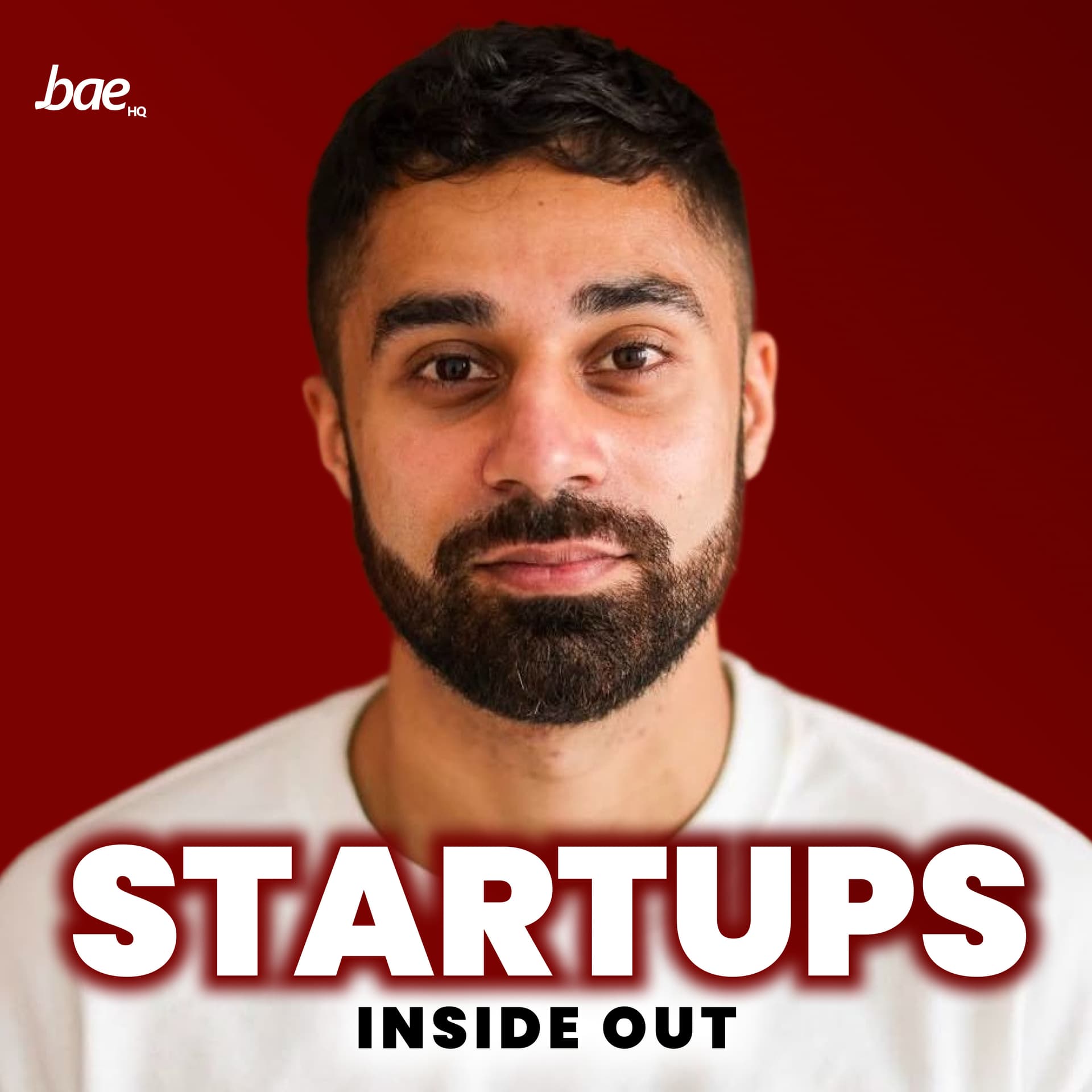
Amar Shah, co-founder of Wayve, discusses building Wayve’s end-to-end AI for robotaxis, how he pivoted from machine learning to drug discovery after a 2019 illness, and his approach to angel investing and founder communication. He also shares views on venture incentives, “secondaries,” and a stealth hardware/software company focused on collecting novel data.
Guest background
Amar Shah is co-founder of Wayve and Charm Therapeutics, and an angel investor in ~80 companies (about half via a fund, half personal). He studied maths, worked at Goldman Sachs, then did a PhD in machine learning. He briefly worked at NASA and has invested in deep tech including space (e.g., Space Forge in Cardiff).
Key claims
Robot navigation’s “heavy lifting” is done by the brain, not complex sensors; progress can be shown via thought-leader demos; venture funding incentives can misalign founders; secondaries can improve alignment; deep tech moats may come from proprietary data.
Notable examples
“Learning to Drive in a Day” demo (lane-following after ~20 minutes with minimal feedback); Elon Musk outreach; DeepMind AlphaFold 2 enabling transformer-based drug discovery; leukemia clinical trial expected next year; stealth mission to democratize Nobel Prize-winning tech via free machines for parts of Africa/Asia.
Written by AI. May contain mistakes. Listen to the episode to check what was said.
Chapters
Tap a time to open that second in VOFrom Illness to Innovation
0:16 to 1:40
Amar shares his personal health struggles and how they shaped his career.
“And we just have this thesis that if you look at evolution, it seems that the heavy lifting is done not by the sensors, but by the brain.”
The Academic Path and Decision to Shift Careers
1:40 to 3:32
Amar discusses his journey through academia and his decision to pursue entrepreneurship.
“I've been trying to get you on for a long time because you've got a great name, just like me.”
Navigating Early Career Decisions and Risks
3:32 to 5:50
Exploring Amar's perspective on career risks and delayed gratification.
“Because I guess a lot of people you've been at the bank with would have been thinking, okay, next promotion, I need to keep earning more and more money.”
The Birth of Wayve and Its Core Thesis
5:50 to 8:10
Amar explains the founding principles of Wayve and their contrarian approach.
“So it was really clear to me throughout the PhD program that there was a lot of demand for this talent.”
Building Credibility and Securing Early Investment
8:10 to 10:29
The challenges of gaining investor trust and how endorsements helped Wayve.
“But I think once we left, they kind of laughed behind our backs because these big companies, Google and Uber, were doing something very different.”
Innovative Demonstrations: Learning to Drive in a Day
10:29 to 13:53
Amar describes a groundbreaking demo that showcased Wayve's approach.
“So what you have to realize is eight years ago, AI was not commonly known about.”
Funding Insights and Competitive Landscape
14:01 to 15:50
Learn how Wayve secured substantial funding and the challenges in competing with major players.
“So, yeah, the last round was$1.05 billion last year from SoftBank.”
Navigating Venture Capital Challenges
15:51 to 17:44
Understand the complexities and misalignments in venture capital funding from a founder's perspective.
“There is a small, moderate solution to that, which I think also should be more discussed in Europe, which is called secondaries.”
Health Challenges and Leadership Transitions
19:27 to 20:59
Explore the personal health challenges faced by Amar Shah and their impact on leadership.
“before you had to shift away for different reasons.”
The Intersection of Illness and Innovation
21:00 to 23:23
Learn how a health crisis led to a newfound interest in biology and innovation in drug discovery.
“And so in my illness and recovery, going through many variations of medication where I had side effects and intolerances, I started getting interested in medicines and how they worked.”
Show all 29 chapters
Bridging Autonomous Vehicles and Drug Discovery
23:24 to 26:02
Examine the transition from autonomous vehicles to drug discovery and the shared methodologies.
“But underlying, I guess it's the analysis and the machine learning.”
Building a Drug Discovery Startup
26:03 to 28:01
Discover the journey of developing a software tool for drug discovery and the investment challenges faced.
“And really relinquish decision-making, decentralize it, give people autonomy and responsibility and accountability.”
Deciding Between AI and Clinical Trials
28:01 to 28:50
Learn why choosing AI over drug development was a pivotal decision for Amar Shah.
“And they were quite enamored by it, honestly.”
The Journey of Angel Investing
28:50 to 30:49
Explore Amar's experience and strategy in angel investing across various companies.
“We're going to have a drug and clinical trial for leukemia next year.”
The Exploration-Exploitation Dilemma
30:49 to 32:52
Understand the balance between exploring new investments and exploiting knowledge in the investment space.
“So they send a machine into low Earth orbit, manufacture things, and then bring it back, which sounds wild.”
The Secretary Problem in Decision Making
32:52 to 33:56
Learn about the secretary problem and how it applies to both dating and investing.
“this in job search, in dating, you could use this in anything.”
Investor-Founders Relationships
33:56 to 37:47
Discuss the dynamics between early-stage investors and founders, including the importance of compatibility.
“So the idea is that whenever you're trying to make a decision about anything, and I've heard it applied to dating from example as well, right?”
Communicating Deep Tech Concepts
37:47 to 40:06
Discover strategies for founders to effectively communicate their deep tech ideas to potential investors.
“But usually if you invest, pre-seed funds are usually quite, their equity is quite similar to that of the founder in terms of seniority.”
Challenges in Deep Tech Investments
40:06 to 42:00
Examine the unique challenges and considerations of investing in deep tech companies in today's market.
“Yeah, it's definitely something that's concerning me.”
The Challenge of Investing in AI
42:00 to 43:28
Explore the complexities and challenges of investing in AI startups.
“So they're not competing with Google, with Meta.”
Teasing Future Innovations
43:28 to 44:32
Learn about upcoming projects that aim to democratize technology.
“It's in the intersection of hardware and software.”
Lessons Learned from Past Ventures
44:32 to 46:51
Hear insights on how past experiences shape current entrepreneurial practices.
“Is it you're building very differently to how you did in the past?”
The Transition from Success to Contribution
46:51 to 48:22
Understand the shift from personal success to societal contribution.
“Because about the time you have people at the beginning, like, oh, no, I've got to do this.”
Bold Missions for Future Companies
48:22 to 49:59
Discover the ambitious goals set for current and future companies.
“And I actually think we've got a good shot.”
Looking Ahead: Two-Year Goals
49:59 to 50:37
Unpack the goals for the next two years in the startup journey.
“What we're doing as well, so we're 250 something episodes in.”
Highlighting Inspiring Figures
50:37 to 51:22
Learn about young innovators and their impactful projects.
“That's what I would like to achieve in two years.”
Building in the Face of Challenges
51:22 to 53:10
Hear about the trials faced by young entrepreneurs in their journey.
“found them more investors to um to back them and they end up leaving their university so I feel a little bit guilty so I don't think his mom likes me very much but um I think he was a really cool die to work with.”
The Importance of Humility and Support
53:10 to 56:00
Reflect on the value of humility and supporting the next generation.
“Just curious what interests you, which areas of technology do you think are underrated, underinvested in and why?”
Embracing Partnerships and Self-Realization
56:00 to 56:56
Learn about the importance of partnerships and overcoming negative self-talk.
“my skill sets and my knowledge are pretty limited compared to the groups.”
Transcript
Automatic transcript. May contain errors.0:00Close to$1.3 billion, a lot of money. We want to be the first company to get to robotaxis in 100 cities.
0:09Amardeep Parmar:That's Amar Shah, co-founder of Wave, Charm Therapeutics, and a secret company in stealth. He started with Wave. And we just have this thesis that if you look at evolution, it seems that the heavy lifting is done not by the sensors, but by the brain. So we tried to create a demo which would be admired by the likes of Elon or Demis Asabis or founders of OpenAI. Elon Musk reached out to us. Emergency, force them to change lanes and applies AI knowledge to the healthcare space. Unfortunately, I got very sick in 2019. Had a very late diagnosed illness, which was partly because I was waiting a long time to get a scan on the NHS.
0:53and when it came it was very clear what kind of problems they had. Had to go to the hospital and was there for two months. So the drug discovery uses something called transformers, particularly spatially invariant ones, which are quite different from convolutional neural networks. Going to have a drug in clinical trial for leukemia next year.
1:14Amardeep Parmar:He's also a prolific angel investor and invests in some of the most moonshot deep tech companies. My first company was in space technology, for example. I've always been fascinated by space and briefly worked at NASA. In total, I've invested in about 80 companies, half through a fund and half personal. And now it's turned his immense knowledge to one of the world's biggest problems. I would like to eradicate terminal cancer. That's all you're getting.
1:49Amardeep Parmar:I've been trying to get you on for a long time because you've got a great name, just like me. but this is actually the first time ever recording where behind the camera over here we've got people from our work experience program on as well so it's a great new first experience you're a guinea pig for having an audience but people who don't know are going to find out just how much you've been able to achieve in your career but where did it all start off so you were originally going more down the science route and studying for a PhD what took you down that road? Thanks for having me um pleasure to have a live audience that's exciting um somewhat true Not quite true because I studied maths at university and I did have a job for my sins at Goldman Sachs as a banker.
2:25So I always had an eye on the business world, finance world. I did miss studying, I have to admit. And I did go back to do a PhD in machine learning.
2:36Amardeep Parmar:I wouldn't say I was intending to stay in academia at any point. It was always an option, but I just knew this was a skill set that was likely to be incredibly useful going forward. and it would open up doors either in academia or either back in finance, potentially even in entrepreneurship. I really didn't know which way I would go, but I knew I wasn't ready to decide. So I would say it was more about keeping options open. I also think in this country, we decide what we want to do for the rest of our lives far too young. And being in the bank at 22 years old, I just felt like I didn't know enough about the world to commit to this for the next decade.
3:14So going to do the PhD, yes, it was science, but it was actually a sort of holding position to understand myself and where the world is heading so that I could make potentially a better informed decision, take a little bit more time, especially because we're probably going to live 80, 90, maybe even 100. So I just felt there was no need to rush that decision. So that was more the philosophy of it.
3:35Amardeep Parmar:How is it actually doing that? Because I guess a lot of people you've been at the bank with would have been thinking, okay, next promotion, I need to keep earning more and more money. Whereas you got off that train and looked at longer future term options. Yes, good question. I think since a young age, I've had delayed gratification ability. I also saw the trap associated with the glamour. I saw like when I started saying I was planning to leave or thinking about it, my salary increased like 80%. And I was thinking, whoa, that's quite a juicy carrot. But if I bite that carrot, I'm always going to have more carrots being dangled.
4:10And so, and I noticed this amongst my seniors, people who would have been like me 15 years ago that thought they'd be there a year or two, but ended up there for 15 years. And I just looked at those bosses of mine and thought, they were great people. I liked them as humans, but I just did not aspire to their lives and how they allocated their time and just really viscerally realized if I don't go now I'm probably never going so I think that was the calculus which made it a really rational decision to leave even though I took a 90 % pay cut to do a PhD and I'm very glad I did one of the best decisions in my life.
4:50Amardeep Parmar:Well I guess like with what you've now gone to build it's good for everybody else that you did as well, right? I hope so. And so once you did that PhD, obviously you said your thing about doing that is like learning and getting better at things. But then how did you decide which direction to go into after that? So it's important to note that purely out of luck, I started this PhD at probably the perfect time. So the year I started was 2012. And in that year was the first time an NVIDIA GPU card was used to train a neural network. and I suppose the rest is history. So this whole wave of AI, deep generative AI here.
5:29Exactly, that's what I mean. Yeah, I got to see it. I was in the room when Zuckerberg came to announce Facebook AI research. I saw the forming of OpenAI. DeepMind were hiring like crazy. There was just so much opportunity. We had at the conferences we went to like incredible parties just for hiring people. It felt like we were rock stars already. and we're getting a lot of attention. So it was really clear to me throughout the PhD program that there was a lot of demand for this talent. So again, it would have been really tempting to take a high five-figure salary job at that time. But we realized actually, if we started our own company, that was close to little downside.
6:12And I think a lot of people fear that, if you start a company, you could lose everything. In our case, we didn't have that fear. First of all, we live in a quite a comfortable welfare state. It's highly unlikely we'll ever starve. And if our company failed, which was more than likely, we would more than likely also get a high paying job somewhere. So the whole risk profile of starting a company looked different to me than what the, I don't know, typical dogma is around it. And on top of that, we thought, well, if we've got this unique position, maybe a once in a lifetime, maybe generation, position of having such low downside, we're not going to do something incremental.
6:51We're going to do something as big as we can imagine. And so this is why it helped being a bit younger and naive and bright-eyed, bushy-tailed. And we thought, given the training we had had and the research we had done, and the timing, we graduated around mid-2010, so 2015-16, That was just when computer vision, which is computers understanding what are going on in images with what's called convolutional neural networks, started getting superhuman. So they could identify things in pictures better than humans could. And we wondered where could this be applied. And we thought that actually generally in robotics, this will unlock robotics.
7:33If you think about most moving animals, birds, fish in the world, they have a pretty simple set of sensors, usually a pair of eyes. Whereas at the time, self-driving cars had spinning lasers and radars and lots of sensors. And we just have this thesis that if you look at evolution, it seems that the heavy lifting is done not by the sensors, but by the brain. So simple sensing and very, very complicated, powerful computing is how you move around the world. And this was a contrarian belief at the time. Most of the investors, they took meetings with us. They took us, we think, seriously. But I think once we left, they kind of laughed behind our backs because these big companies, Google and Uber, were doing something very different.
8:22Amardeep Parmar:But I read Peter Thiel's Zero to One, which you probably have here somewhere. and the first chapter says what is a belief you have with high conviction that most people disagree with and focus on that in building your company and this really ticked the box and we we realized that we strongly believe that end-to-end deep learning with basic sensors is going to be the way eventually of how robots move around the world the simplest robot was a self-driving car because if you think about to move a car, you need two numbers, which is acceleration and steering, which is actually way less complicated than even your hand.
9:05Like the actuation required for your hand has maybe hundreds of variables. We have so many different joints and muscles. So as a robot, a robotic hand is actually really complicated. The hard part in driving is understanding what's going on around you. So it's much more of a computer vision problem than a robotics problem. And computer vision was doing really well. AI really took off. We had a chat GPT moment. And we saw this idea that as you increase data and compute, performance improves. So over time, we really rode this wave of selling that same message. And at the time when we started, we didn't know how long it would take for compute to improve or data to improve.
9:46But we knew it was going up and to the right. Luckily, it's happened probably quickly than anyone anticipated. And we've just been able to piggyback off that. But I think from the point we started, we realized directionally that was going to happen. Perhaps we didn't know the rate, but nobody really did. So that was the contrarian bet and felt like there was little to lose going for it.
10:07Amardeep Parmar:So you said how investors maybe were laughing at the beginning as well. And as you said, you mentioned Uber's going in this area, Tesla. These huge names, right? But how did you get people to believe in it and back it right at those early days? Because you're going against some of the giants of big tech. You've got a contrarian view to what everybody else is saying. How did you get people to believe in you and to back those early prototypes? Yes. So what you have to realize is eight years ago, AI was not commonly known about. Most of the general public had no idea what it was. And even investors would have had very peripheral knowledge of what this thing is.
10:40and this was the feedback we got once we were pitching in 2016-17 that there was like a huge education process necessary if anything but there were a select few leaders who you know were the kind of gatekeepers of what makes sense in AI and we realized enough after our seed round what we needed we knew we were not going to have revenue anytime soon and so in the absence of revenue how do we show progress in the company This was the art we had to sort of figure out. And what we realized is we would keep going for funding every two years and we're going to face the same barriers. We don't understand tech.
11:20Other people are doing something different. Why should we believe this? So we realized our target audience or our target market, not as a customer, but for our progress was actually the thought leaders of AI. So what we thought about early on is how do we get intellectual buy-in, that what we're doing makes sense? So he tried to create a demo which would be admired by the likes of Elon or Demis Asabis or founders of OpenAI. And with their endorsement, maybe people will say, OK, these guys are doing something useful. So in 2015, Google DeepMind made a demo where a computer could play Atari games with these old video games.
12:03and they could play them just by looking at the screen and trying over and over trial and error. And then they were learning policies which were even better than any human could play. And so this was the first interesting example of a reinforcement learning algorithm, learning to do a task better than a human. And we thought, how can we map this idea onto a car? And so our first demo was called Learning to Drive in a Day. And we took a car that had no knowledge of anything. It was completely blank-minded. And we turn the car on, it moves. As soon as it does something the driver deems unsafe, it's turned off.
12:42That's it. That's the only feedback it gets. So it's very Pavlovian training. And what we found was after 20 minutes of doing this, it learned to follow the lane. Not only did it follow that lane, it followed other lanes in different weather conditions and lighting conditions. So this was the first, this is not a product, you can't sell this. But it was the first demonstration that you don't need to tell a car how to drive. You can make it learn how to drive itself. And so this kind of sparked a thought in many people's minds about what these guys are doing might make sense. Particularly Elon Musk reached out to us.
13:15We met him in 2018. He was fascinated by it, as were some of his autopilot team. And subsequently, a co-founder of OpenAI, Elias Utskiver, invested. So did Jan Lekun, head of AI at Facebook and the chief scientist of Uber. So with their not just verbal endorsement, their financial endorsement, we were able to convince investors to give us a meaningful Series A of$22 million. And so that was the real big first step. And that was the point we moved to London. So until this point, we were in Cambridge. And so, yeah, that's what we did. And we had to do that for quite some time, even all the way up to Series C, to be honest.
13:57Amardeep Parmar:And obviously now, is it over a billion has been raised? Yeah. Do you know the exact number? 1.25, I believe, is the number. Maybe close to$1.3 billion. A lot of money. So, yeah, the last round was$1.05 billion last year from SoftBank. And we weren't actually trying to raise that much. We were going for maybe$200,$250. And we were starting to get term sheets at that level. but I think what happened with SoftBank is that they realized we're going to keep going every two years and having sort of fluffy metrics that don't really show progress but and they said you know what we've got money why don't we give you sort of three rounds worth of money at once and it's kind of an all or nothing investment so it's exciting in many ways because we think we have like eight to ten years of runway so you can really invest and this is the massive advantage that people like Google have because they have such a massive balance sheet.
14:57Waymo has been going for 20 years now and it's not profitable. So it's been, you know, they spent billions, maybe 20 to$40 billion on it. No other entity in the world could really do that. And so that's what makes it hard to compete with them. We don't have 20 to 40 billion, but we've got a little nice buffer now so that we could really go for it. We've got some, a real shot now. The downside is, and I think something we don't talk about enough in venture capital, venture capital is the debt. You have to pay all that back before you make anything. And if you think about, if someone's giving, especially venture capitalists, if they're giving you a billion dollars, they want 10 billion back.
15:37So they're happy for it to die in the pursuit of getting 10 times more. Whereas if you own that business and it's most of your life, which is my case, I'm not happy with such a skewed bet. So you have to be really careful of this misalignment you can have. And so that's been personally a little bit challenging because it's great on one hand, but on the other hand, other people on board may push the company into directions that are less comfortable for founders and early employees. There is a small, moderate solution to that, which I think also should be more discussed in Europe, which is called secondaries.
16:13so the way to recreate that alignment is to allow early employees and founders to take a little bit off off the table so they sell small portions of their shares just to be not to be wealthy necessarily but to be comfortable and not be worrying about bills so that now they can really focus on the company and shoot for the moon and this is something the u.s have been doing for years it's it's much less common in europe but i can see it starting i just was with the 11 labs guys last week and they're doing this really well and it makes a huge difference on outcomes in the long run and also shows the ecosystem in Europe that actually this equity means something.
16:50It's real. It's not just monopoly money. And I think more people in Europe should get that experience to then encourage people to come back into entrepreneurship. So it's something I'm trying to be an ambassador for across the board.
17:04Amardeep Parmar:I think Google Secondaries is always that bit that people are scared because if other people aren't doing it and they want to take secretaries, it's like, oh, they're not as committed as other people are. But at the same time, it's like, if you can take the money off the table, which now means that you never have to worry about money for the rest of your life. You can just keep going purely because you want to have that massive outcome and achieve the mission of what you've set out to do. And I think, like you said, views are changing, but there's not enough yet evidence or enough people doing it to really change the market.
17:32Amardeep Parmar:So when people like 11 Labs are doing it, it's going to help shift that mentality. Yeah, I agree. I think it doesn't even need to be an amount that means you never need to work again. The example I'll give you, which I think is quite sad, some of our early employees, very smart. We have slightly more modest salaries in a startup. They struggle to get a mortgage in London because a bank doesn't care that you have millions in equity. They just want to see a salary. And it's frustrating. And sadly, I think this is why really smart people sometimes favor job at the big tech companies because they get the big salary and that means they can get their mortgage and so you just need to get over these these types of hurdles which doesn't require selling all of your stock but just makes you comfortable including large deposit for your house where your flat or house so that you can keep working on the startup and i think you have to get the fine balance where you're not overdosing in secondaries, but you're not underdosing either.
18:29I'm sure there are frameworks that have been figured out in the US for this. But yeah, we just need to be a bit more smart about this to create alignment across the board between investors, employees, to make sure we're all one to go in the same way rather than taking early exits because we don't have any cash, which I think it has happened in Europe in the last decade for multiple years. Oh, hello.
18:56Amardeep Parmar:Quick interruption to let you know a bit more about BayHQ. We're the community for high growth Asian heritage entrepreneurs, operators and investors in the UK. You can join us totally free at thebayhq.com forward slash join. There you'll get our CEO structure in your inbox every week, which is content, events and opportunities. You can also get access to a free Startup Fundamentals course by joining. Let's get back to the show. So obviously you ran away for the first two years before you had to shift away for different reasons. Can you talk about that? Like what made you need to shift away in that period as well?
19:38Sure. Unfortunately, I got very sick in 2019 and had a very late diagnosed illness, which was partly because I was waiting a long time to get a scan on the NHS. And when it came, it was very clear what kind of problems I had. I had to go to the hospital and was there for two months. Luckily, we just raised our Series A. And so a bit of pressure was off. But unfortunately, I did go back to runway for about six months and then realized I wasn't totally recovering. And that was a really difficult period because the company was in a great state. There was no real pressure. We could have just coasted and seen how I went.
20:21And we did discuss potentially changing a role or having a bit more of a break. I didn't think that was for me. So we decided, including my health team and my board, that why don't we wind down the role over six months, basically hand over slowly, and then I'd have to just depart. I think I wanted a clean break. But it was very challenging because it was incredibly rational and, you know, one where head and heart are saying completely different things. But I'm glad I did it. I think it was good for me personally and my health and for the company because I was nervous of taking both things down.
20:57And so I think it was the right decision in the end. But there were silver linings. And so in my illness and recovery, going through many variations of medication where I had side effects and intolerances, I started getting interested in medicines and how they worked. And then we have the COVID lockdown and I was a little bit bored. And so I started studying biology again. This was my least favorite science, honestly.
21:26Amardeep Parmar:I was more into physics and chemistry. But, you know, I wanted to know why these medicines weren't working. and why my doctors didn't understand them either. And then I realized how freaking complicated biology is. It's like, I think it's going to take us decades, if not centuries to understand biology fully. But I started learning about how small molecule drugs work and how they bind to proteins. And also that there was a lot of investment going into AI for drug discovery, especially because the cost of capital was really low in 2020, 2021, when interest rates were about zero. and so I saw like when you see big funding rounds they were coming mostly from autonomous driving but also AI for drug discovery so piqued my interest as to why is there so much interest here and so I started speaking to people in the space and eventually met somebody who was at a startup in Oxford doing AI for drug discovery I think it had just become a unicorn but he wasn't really happy there thinking that they were not using AI anywhere nearly as much as they could have.
22:25And so I kind of encouraged him to start coding with me. We started doing some projects together. And a few months later, Google DeepMind published AlphaFold 2, which seemed to have solved protein folding with AI. And we were pretty blown away. I mean, this innovation won a Nobel Prize this year, for example. It was a really huge milestone for medicinal chemistry and biology. And we realized this framework, along with what we had been discussing, would make an incredible framework for drug discovery with small molecules. So we started developing it, coding it. We found people contributing to an open source project, which we eventually hired.
23:05Before we knew it, we had a lot of term sheets being thrown at us to do this formally. And we kind of just fell into doing another startup in 2021. So that was a silver lining of the illness. and I learned a lot about medicines, chemistry, protein folding. So that was a pretty exciting experience.
23:23Amardeep Parmar:So it's obviously two very different paths there, right? Autonomous vehicles and drug discovery. But underlying, I guess it's the analysis and the machine learning. It's similar kind of methods you're using there. Or was it easy to transition your skills or was it quite difficult to transition into that new area? I think the markets are clearly completely different, But I would say the abstraction has a lot of similarities. How do you turn the problem, how do you formulate that into something that can be addressed with neural networks and deep learning? And I think there are a lot of parallels in that part of the role.
Read the full transcript
24:03But honestly, I really know very little about the clinical process and the trials of drug discovery. And it's beyond me. But that initial part of turning a real problem into something that a computer could solve, I think there were quite a lot of similarities. The types of models were slightly different, but relatable enough. So the drug discovery uses something called transformers, particularly spatially invariant ones, which are quite different from convolutional neural networks. But we had been tracking this research even at Wave because once we had started, we saw Transformers being published in 2017.
24:39And then BERT, which was an initial, like kind of a precursor to ChatGPT and these large language models. So all of these types of models were really in the limelight, especially when, well, the culmination was the release of ChatGPT, which came just after we started Charm. So, yeah, we'd been tracking that research. So I'm not tracking anywhere near as much now. It's just moving too fast. Back then, we were really on top of it. And so, yeah, there were still so many unknowns. And I think that's something I should add, that the only reason these were possible were because somehow we found great other people to collaborate with.
25:20And even in Wave today, I probably understand 15 % of the technology. And that's what blew my mind. Because when you do a PhD, which is what I was doing for a while, you really own the whole stack. You decide, what is the question I want to ask? What is the experiment I need to do to answer that question? How do I have to write the code? I have to run the experiments, analyze the data. I have to go and present the results in a conference. And you do that whole thing as one person. When you're doing a company like Wave, it's completely the opposite. You have to find people, delegate, and align everyone on the same direction.
25:58this is the North Star where we're headed. I would like to achieve this. I don't know how to. How do you think we should do it? And really relinquish decision-making, decentralize it, give people autonomy and responsibility and accountability. And I think that's what I learned. It was a big challenge for me, to be honest. It's so different from anything I've done. Not something you really get taught, but it just shows you the power of if you get great people together on one mission. It's just really powerful force. And so since then, I've been less dissuaded by multidisciplinary problems, because I think that's where magic happens.
26:38And even in nature, you see the most proliferation of life at the boundaries of ecosystems, because there's interesting things going on when you mix different types of people or environments or weathers and so that's something that's been fascinating and subsequently I like learning so when I meet people at Wave who've worked on cars their whole lives that's super interesting to me in a very different way to what I've experienced at university and so yeah this is partly why I like multidisciplinary type of ventures.
27:12Amardeep Parmar:And so with CHAMP right so the idea is obviously applying these AI models machine learning to that new area what happened there what happened when you've built the business and where did it get to? So the premise initially was to build software where we would build a tool which a pharmaceutical company could use to assess lots of drugs in a computer before taking them to a lab. When we were raising capital, our initial offers were from software type investors, typical VCs. And we realized that we had a big gap in our combined group, which was a lack of knowledge or experience in creating drugs.
27:49And that we thought that might hold us back. So we went back to talk to life science investors. And for them, they were typically much less well versed in AI. And so they saw it as a Wizard of Oz thing. It was like magic to them. And they were quite enamored by it, honestly. And we were offered a lot more money, in fact. But the condition was that we had to use our tools to make drugs because that is all they knew. And so I think it was the right decision for the company, but less so for myself, because I I didn't want to sit around waiting for clinical trials. At the end of the day, even if you can accelerate the discovery, it'll always take quite a long time to show it's safe in a human.
28:29And that can take years, maybe even a decade. And so I kind of saw that the world of AI is moving so fast. If I was bogged down into a business that was doing clinical trials, I was going to miss out on this AI boom. So I personally decided to reduce my role as an advisor. I helped get it going. And then, yeah, the company's doing well. We're going to have a drug and clinical trial for leukemia next year. But then, yeah, I started doing much more angel investing after that. Yeah, so obviously, you've been to invest in how many companies now? Or is it public invasion? In total, I've invested in about 80 companies, half through a fund and half personally.
29:11And so obviously, once you got to that level,
29:14Amardeep Parmar:and obviously with your profile at Wave in particular, you must have a lot of people coming to you who see your background see what you can add to them as a strategic investor as well how did you go about learning who should invest and who shouldn't because obviously you're going to get so much people so many people coming towards you yeah gosh i still don't know the answer to this to be honest but when i think about my personal investing um i have many things i'm trying to achieve um a small part of it is trying to get a financial return but i don't think that's the biggest part of it i think a bigger part of it is to learn and to just be able to follow someone's journey maybe in an area that I don't know much about but would like to learn more about it's also entertaining because I often like these people and just want to be a part of their lives and so there's multiple objectives I'm trying to achieve which make it a bit of a difficult decision so but usually it's somebody I look more for because I invest very early at pre-seed I'm mostly looking for personalities and do I believe in the person and do I like the vision to what they're headed towards and slightly less so about what they've achieved so far and of course we like to bet on people where we can believe in that vision and their ability to execute and achieve it which includes recruiting others onto their boat and journey investors customers etc and just seeing that all play out it's kind of like a slightly expensive movie you're going to which lasts a decade or more and so and also so I tried to have some diversity of types of companies my first company was in space technology for example I've always been fascinated by space and briefly worked at NASA and so that was my first first investment and then things like underwater robotics were quite wild and a few more space ones yeah all sorts of things can you remember every company you've invested in now oh my god um if if i have the list i'll i could tell you exactly how i met them and how what i thought about them but i probably couldn't list all of them now no is there anybody that's really stood out that's gone through really well after you've invested in them um or highlights there's some that are doing really cool things that i think they're yet to show they're great businesses but they're doing epic things uh one is called space forge which which is actually based in Cardiff, they actually do what's called manufacturing in space.
31:40So they send a machine into low Earth orbit, manufacture things, and then bring it back, which sounds wild. But there are some real benefits for doing that because you have zero gravity and zero degrees Kelvin, and you can get much more precise manufacturing for silicon or antibiotics, things like that. I think it's incredible. And yeah, definitely the future. So that's one I find really exciting to just read about.
32:13Amardeep Parmar:Obviously, investing in 80 companies, that's a lot more than most angel investors, right? I think I've got six. So it's not quite your level yet. What's your plan for that? Are you planning to continue angel investing? How do you think about the portfolio diversification and building that overall pitch for your son of? I definitely won't go at the same rate. There's this idea in reinforcement learning called exploration and exploitation. Very, very loosely, whenever you're doing anything new, you should spend the first section just exploring a lot to gather information. And then once you've got enough information, you can narrow down and focus and exploit your knowledge.
32:51You can use this in job search, in dating, you could use this in anything. And so I think I probably went a bit bit far, but that first AT is very much exploration. Now I think I'll be a bit more discerning and be a bit more selective. I was also doing quite small investments, to be honest. I don't think any of them would materially impact me financially. But now I think I'm going to concentrate a little bit more, spend more time with people. I think that AT has given me quite a lot of feedback on
33:21Amardeep Parmar:what I like, what I don't like. Where was I right about my PCs? Oh, they're wrong. And by the way, even AT is probably not enough to know if you're good at this. There's a lot of stochasticity and luck and timing and so many different factors involved. You can't really tell if you're a good investor for decades, I would say. So now, yeah, I'm probably going to be a little bit more concentrated. Have you heard of the secretary problem? Yes, I was thinking about whether I should talk about it or not. But yes, this is one of the only sort of theorems from my maths degree that I use in my life. Yeah, probably the only one.
33:54Amardeep Parmar:Shall I explain it? And you can correct me when I do it. I think I should explain it. Yeah, do it. So the idea is that whenever you're trying to make a decision about anything, and I've heard it applied to dating from example as well, right? You should get a reasonable sample. I'd say 500 people, as the first on a dating app, right? You'd swipe through 33 people and no matter what you say, no. But then you keep track of who's the best person. And then after the best person you meet after that is when you say yes to. so in an investing sense you want to look at a sample of a reasonable reasonably large sample of companies before you say yes to anybody and then you now have your benchmark of what good looks like and then you invest in the companies that meet that benchmark and now you can explain how much better than I can and correct me yeah that's pretty pretty much right yeah I was like I felt pressure there because I was like well I might explain you've done like 10 times as many investments as me and you've got a PhD.
34:47I don't think I use this principle accurately in my approach but yeah.
34:52Amardeep Parmar:I think that's a big thing where I actually give this advice to founders is that when you're looking for agent investors it's actually a good idea to look like people who haven't done many because they are often a bit more trigger happy. As if somebody now tries to pitch you and you've seen you've invested in 80 companies you've seen thousands and thousands of pitch days it's way harder to impress you. When someone first starts agent investing they've often got that like new puppy energy right like oh this sounds amazing i'm gonna invest right and then after a bit they realize actually wait there's 10 other companies doing the same thing but as a founder it can be quite good sometimes to get those people on board right yeah i don't know i think you ideally you don't want to end up feeling like you con someone as well because this is a long-term partner so you want you want to make sure you're both doing something you both will long-term be happy with so i'd probably put a little bit of a question mark on that idea but you're right i think that is what would happen but you don't want them to then say oh i wish i hadn't done that then they just you know check out yeah i guess it's still the case of them wanting to invest it's just that they're not as quite jaded yet right whereas the longer you've been in the game the harder it is to impress you i think i think so yeah but you also mentioned that some of your investments are through funds as well and how do you think about that in terms of investing directly into people versus now becoming an lp you're investing in funds instead.
36:10Amardeep Parmar:Because I've moved more towards I'll invest in funds because I get too much deal flow. And because of the community, if I keep saying no to me, people aren't going to like me anymore. So if I just say invest in funds instead, then it helps me manage that side of things. That's true, yeah. Again, I think you're doing the same process when you invest in a fund. You're backing the GPs and the team and their ability to get exciting deals. So actually the process is somewhat similar. The outcomes of funds have less variance, I suppose. And so in a way, that's nice. I think I view the funds more as efficiency.
36:44Like I don't have, if I'm doing other things, I don't have the time to see so many companies. So you're kind of paying for the service of somebody looking at a lot of things. And I think there is a place for those too. I think the slight challenge I have is some funds have interesting incentive because of the way they're paid, the 2-in-20 type model. And I think that's something to be mindful of. It's usually aligned with DLPs. But I think for some founders, that can be not the right thing to take a lot of venture money for that reason. So typically a fund, because of the power law distribution of outcomes, funds, slightly exaggerating, but push their founders to all shoot for the moon.
37:33And that may not be the best decision for some founders, but it is probably the best way to operate a fund. And so I'm very conscious of that potential misalignment having been a founder. These are the only small caveats I have about fund investing. But usually if you invest, pre-seed funds are usually quite, their equity is quite similar to that of the founder in terms of seniority. So usually these things are mitigated, but yeah, slightly technical.
38:06Amardeep Parmar:So obviously with your background as a founder as well, what's some of the advice you're often giving to the founders in your portfolio? Is there any way you tend to direct them in a certain way or to help nudge them to try and avoid some of the mistakes you've made in the past? yeah it depends on the type of company most of the ones i work with are so-called deep tech so typically have revenues a long way away and have to do a similar sort of game that we did to keep people excited and and buying into the mission all the way along the path so a lot of the work is about communication actually how do you convey your idea in a palatable way that would resonate with the audience.
38:44So I'll give you an example at Wave, right? So at the time, not many people knew what deep learning really meant. How is it different from SLAM, which was the alternative at the time? And we thought about what is our, who is our audience? Typically, there were people in their mid early forties, GPs of funds, still quite young, but, you know, may have young children. And we had this idea to anthropomorphize our idea and make it relatable to them. So I had an angel investor who was in that age group, and he had a young son. And so in one of our pitch decks, the first page was a picture of this boy.
39:22And we said, in 10 years, he's going to learn to drive a car in 40 hours of training. And here's a Waymo car that's had 10 million hours, and it's worse than he'll be in 40 hours. And why is that? And then we talk about this boy learns with a neural network. And when he learns to ride a bicycle, you don't give him a set of rules to follow. He kind of has to wobble a bit, fall over sometimes, and then eventually he'll know how to do it, and he won't be able to tell you how he's done it. You can't convey that in natural language or code. And so that was like a bit of a light bulb for the audience to say, actually, this makes sense.
39:58This is why I can see why this approach works. And so that process, it's not, I don't know, it's an art or a science, but helping founders to convey their technologies in a way that's relatable, digestible and I found this hard because being an academic you learn to be incredibly precise you don't like saying things that could be slightly off so this analogy is not perfect it definitely is an approximation to the truth but because it helps convey a message so much you have to be comfortable with slightly loosening the boundaries of truth and that's something I found hard but I try to help my founders with when conveying their products and
40:39Amardeep Parmar:ideas so i should say with deep tech companies because it's so long before you actually make money right and bring the revenue in how is that especially with ai now and the disruption how do you feel when you're missing in those companies where the future is much less certain well not that was ever certain but it feels much less certain was in the past so when you're making a 10-year bet in 10 years time i think you've mentioned it with mcharm about how the world is going to be totally different so how do you think about that when such long timelines on deep tech? Yeah, it's definitely something that's concerning me.
41:10I look for particular modes that I think make sense. So for example, in the AI world, it's very hard to compete with big tech on compute or data. They probably have a lot more than anyone else does. And their cost of capital is lower because they have huge balance sheets. So one area, for example, where I look is, is there a deep tech company which has the ability to create proprietary data potentially of the type that doesn't exist yet? So one I've invested in is a female health tech company, where they're creating a menstrual device, which is collecting a lot of menstrual data. And the device itself is relatively affordable, it'll be used by people, they won't make that much money off the device, but this data no one in the world owns.
42:01So they're not competing with Google, with Meta. And once they collect this data, they can subsequently build therapies on it and do research on it. So this is a deep tech company in a way. They're not going to make meaningful profit for a long time. But I can see the moat and the value in that data in the future. So that's an angle I like to go for with deep tech. But yeah, the world has very much changed because now we're seeing companies get to like 100 million ARR in a year. And I don't think who really ever had that before. So it's something I'm finding a bit challenging, honestly, and not sure how to play.
42:40The problem with the AI stuff is for everyone like that that takes off, there's probably 100 that completely flopped. So it makes it very hard to invest. And I think we had a similar paradigm in the dot-com era where, yes, a small number of people did really well, but actually most people didn't. And I think we might be approaching a similar situation now, especially with the price inflation of AI startups. The valuations are really high right now. So I'm kind of being very tentative about investing in AI right now. Maybe I'm just not good enough. I'm sure there are people out there that know a lot more about how to do it, but I'm tentative, I would say.
43:18Amardeep Parmar:And I know right now you're working on something in stealth, which is related to some of these different areas we're talking about as well. Is there anything you can tease us with and let us know about? Sure. It's in the intersection of hardware and software. very much has the idea, related idea to what I've just described, of collecting novel data sets that hopefully will be monetizable one day in a very useful way to a society. The thing I really like about it is it's democratizing an incredible technology that is Nobel Prize winning, is a big hint, but doesn't exist in many countries in the world yet.
43:54and part of the mission will involve giving free machines to countries in Africa and Asia which is quite feels quite rewarding for me because I think some other especially therapeutics one of the my hesitations with it is these therapies will most likely be used by the and their top five percent wealthy people in the world and that's a bit of a shame but I think the thing I'm working on now will be democratizing. So you'll hear about it soon, I think.
44:28Amardeep Parmar:And obviously, we've haven't built such giant companies in the past. How does that inform how you're building today? Is it you're building very differently to how you did in the past? Have you been quite consistent in your methodology and the things that you think are important? Yeah, I think the main thing I've learned is how to get myself out of a job sort of thing. Before I was doing everything, I was doing the accounts, the payroll, I was taking the bins out, I wired our office for Ethernet cables, and I've learned how to figure out what's important for me to understand and delegate what isn't.
45:01Also, my personal utility curve has changed. And so everything I do now is just for the mission and less so financially driven. Of course, if I have customers and investors, I'm going to do what's best for them. I'm technically not an employee of my current company, which is strange. change i'm just a shareholder and it's my capital actually and so that's been quite interesting it means i don't have to have a nine to eight p.m job but i probably do that anyway because because i want to um and i think i've learned how to pace myself actually i think i've become a bit wiser it's possible why i got ill i was at least in part due to stress and like not taking care of myself So I'm very aware to be a bit more balanced in my life.
45:49Also, small things like I read so many more novels now since COVID. And I've noticed how much that's helping my day-to-day work in just understanding narratives or conveying a message and starting to see synergies in different activities and prioritizing more balanced existence. and would probably purport for people to think about, you know, not letting go of hobbies and other things, because I think that you get incredible things in the intersection of your life. There's the famous story of Steve Jobs going to a polygraphy course when he was meant to be studying, and that ended up becoming the typescript in his first computers, and it was very attractive for customers.
46:33So who would have thought that would have happened? And, you know, so I think that that's what I'm learning more about how to, you know, not forget about wider life and make everything meld together to have a, we only get one life. So you don't want to just be building startups alone. I think that's where I've become wiser, let's say.
46:50Amardeep Parmar:I think I've always found that the people who are really got to their laser stages, they're the ones who are the biggest champions of balance. Because about the time you have people at the beginning, like, oh, no, I've got to do this. for people who've actually got a lot further. They're like, well, actually, I should have been way more kind to myself later on, earlier on in the journey. And obviously, we've got a bunch of business books here. But have you got any recommendations for the novels and the fiction side that you've really enjoyed? Oh, I don't know about novels, but the book that came to mind was one I read a couple of years ago related to this topic.
47:23I'm not sure if it will help founders who are a big beginning, but maybe it's worth reading early on, actually. It's called The Second Mountain, the high level premises exactly as you say like we spend the first part of our lives chasing we're climbing ladders we're building our education careers status wealth um and then we get to a point where we're doing okay and we think and then we have a bit of a lull and think what's next and we climb a second mountain which is more about giving back contribution society to society family and about other people and I don't think life is that it's not that binary but I think certainly for myself where I passed that transition a couple of years ago I just think maybe it's better to have a smoother transition where you know we get off this very individual race and start thinking about contribution more broadly so I really learned got a lot out of that
48:17Amardeep Parmar:book when I read it and before we get to a quick question as well what are the dreams for the companies you have at the moment so obviously wave what's the big mission there what's the big mission for charm and for the company you're currently building whatever you can say so like just to look into that long term of like what impact you can make for the companies you've done so for wave i think the first massive well the big milestone coming next year touchwood is launching a service in london but the way we pitched even from the beginning was we want to be the first company to get to robotaxis in 100 cities.
48:53And I actually think we've got a good shot. We've driven in over 90, I believe. But deploying services is a whole other thing. But we have now offices in Tokyo, Stuttgart, California, Vancouver, and London. And I think we've got a really good shot of getting to that. So then, you know, that's sort of touching world domination. So that would be incredible. I think it'll take another five to ten years, maybe more. So yeah, that'll be an incredible place to be. With Charm, what we were hoping to build is an engine that just churns out drug candidates for all sorts of different diseases as like a machine.
49:34And then each drug will take years to develop. But we would like dozens of drugs to be generated from this system over the next one or two decades. My last company, I think this is probably going to sound the most bold. I would like to eradicate terminal cancer. That's what we're doing.
49:55Amardeep Parmar:So that's three fairly bold missions. And I think the last one is probably the boldest. What we're doing as well, so we're 250 something episodes in. And in 200 episodes time, we get people back again. So that's in two years time. Two years. Okay. Where do you think you could be in two years time? And what we'll do? we'll have a little TV up here and we'll play back what you say right now and then we can then see like how close did you get to it you mean for these companies that I mentioned or for for I guess what's your next for the next two years what's your main um for the company I'm working with the project I'm working on now I'd like to have a working system that is deployed in one of the countries I mentioned in Asia or Africa starting to provide value to them just one I think that's That's what I would like to achieve in two years.
50:45Amardeep Parmar:Okay, we'll play that back in two years time. You sat here again. Okay. So it's going to be tough. Time for the quick five questions now. Yeah. So first one is who are free Asians in Britain you think are doing incredible work and you'd love to shout them out? One is a founder I've met a couple of years ago called Bhavi Metakra. He is the CTO of Hippo's Wife. They make an airbag for the knee, but most excitingly, he and his co-founder built their prototypes in the lecture room at university because they were finding it a bit boring and I just saw a demo of theirs and eventually became their first investor found them more investors to um to back them and they end up leaving their university so I feel a little bit guilty so I don't think his mom likes me very much but um I think he was a really cool die to work with.
51:36And then I met a really inspiring lady called Hashimi, who is a student in high school, 15-year-old lady. And I saw some robotics project her and her friends were working with. And they were looking, they'd, you know, just done this off their own pocket money. Their parents gave them a little bit. The school saw and thought, wow, this school, they give them a few hundred pounds. And then they were invited to a competition in America, and they needed about 8 ,000 pounds to go. They couldn't raise it. So somehow I found out about it and sent them to the Wave team and they ended up being sponsored to go.
52:14But it was just really inspiring to see a group of very young girls just doing robotics for fun and actually taking it seriously. And so that was an inspiring one for me. And I think slightly different track, Avse Mishusunak. I think he's, he had a hard time in his role. I think on the whole, he was mostly liked, but, you know, he was caught between rocks and hard places in his role. I think he's quite eloquent, generally kind and thoughtful. He's also an East African Asian. So I think he's done well for our community's brand in a way. He's also recently become an ambassador to Prostate Cancer UK, which is related to what I'm working on now.
52:59so I'm hoping to meet him soon to discuss it so I think those are three that come to mind
53:04Amardeep Parmar:so the first one you mentioned there so they're actually like going viral this morning I don't know if you saw their story no not yet so they're building in their apartment and obviously what they're building it looks like there's wires coming out with it everything yeah so they basically got reported by somebody who thought they were building bombs and then like the police knocked down their door and like broke in oh and like like at gunpoint and then that's like showcase like look no this is we're building something can we've got investors but that was like a news right i clearly missed this he's definitely been stopped on the tube because they used to meet on a platform at i think waterloo station and build there because one lives in one part of london the other lives on the left and they've had people's report like something not stodgy and they've definitely been stopped there so they're probably on like wanted posters in the stations now yeah it's quite well but yeah very bold guys so next thing is if you want to find out more about you and what you're building now where should they go to um you'll hear about it soon i think here um we'll be publicizing in um later this year probably in conjunction with movember too many hints today should they follow you on linkedin or how can they think you have yes i'm generally not very present online but yeah i'll probably post about this there for sure and then is there the only way that the audience could help you today.
54:23Just curious what interests you, which areas of technology do you think are underrated, underinvested in and why? We all know about AI, of course, there's plenty of investment there, but if there are areas of, especially science, that you think deserve much more attention from society, investors and entrepreneurs, I'm very interested to hear your thoughts.
54:46Amardeep Parmar:So thanks so much for coming on. And for the audience as well is that with what you've built like amongst all the podcast guests we have like this is almost intimidating for me just how much success you've had and how much been able to build and how you met as well I should probably say this at the beginning is that you just came to one bar coffee events and you were very casual very relaxed then when we added you on the LinkedIn I was like wait like I had no idea about what you built in the past so the way you've come across is very humble and just whenever we have events and I can see how you're interacting with people especially early stage founders, which you don't have to do at the stage you've been able to grow to.
55:21Amardeep Parmar:That's really cool for us to see and to have that model of people who have been from the community and been very successful, who still are able to keep their feet on the ground and really help out the next generation. So thank you for that. Have you got any final words yourself? I appreciate you saying this. I think it comes from realizing how fortunate I've been in all my endeavors, like most of the things I've done, I've observed somebody before me do something kind of similar and think, oh, okay, maybe that means I can do it. And also in all these companies, as I mentioned, it was so much a joint effort.
55:56Like I think very little was about myself and my skill sets and my knowledge are pretty limited compared to the groups. And I think the only thing I did well was getting myself out of other people's way, but giving them a platform to operate. And And so I realize, you know, everything requires having incredible partners. And also, it's great to meet other people, kind of to live through them vicariously, because that period was fascinating for me, and I'll never get it back. So I'd love to help people do that part of the journey and make sure they achieve to their fullest potentials. I think there's a lot of negative self-talk, especially in the UK and Europe.
56:37We're not as boisterous and out there as our American friends. And so just making sure people are not underselling themselves, I think, is important to me because I think we have a lot of potential. And sadly, not all of it is realized. So I think that's kind of what I would like to contribute going forward if I can.
From the publisher
👉🏽 Take Bae Startup Foundations free:https://www.thebaehq.com/courses/bae-startup-foundations
👉🏽 Join Bae HQ:https://www.thebaehq.com/join
Amardeep Parmar from Bae HQ welcomes Amar Shah, Co-founder of Wayve .
Amardeep Parmar:https://www.linkedin.com/in/amardeepsparmar
Amar Shah:https://www.linkedin.com/in/amar-shah-2688691b/
Wayve:https://wayve.ai/