In short
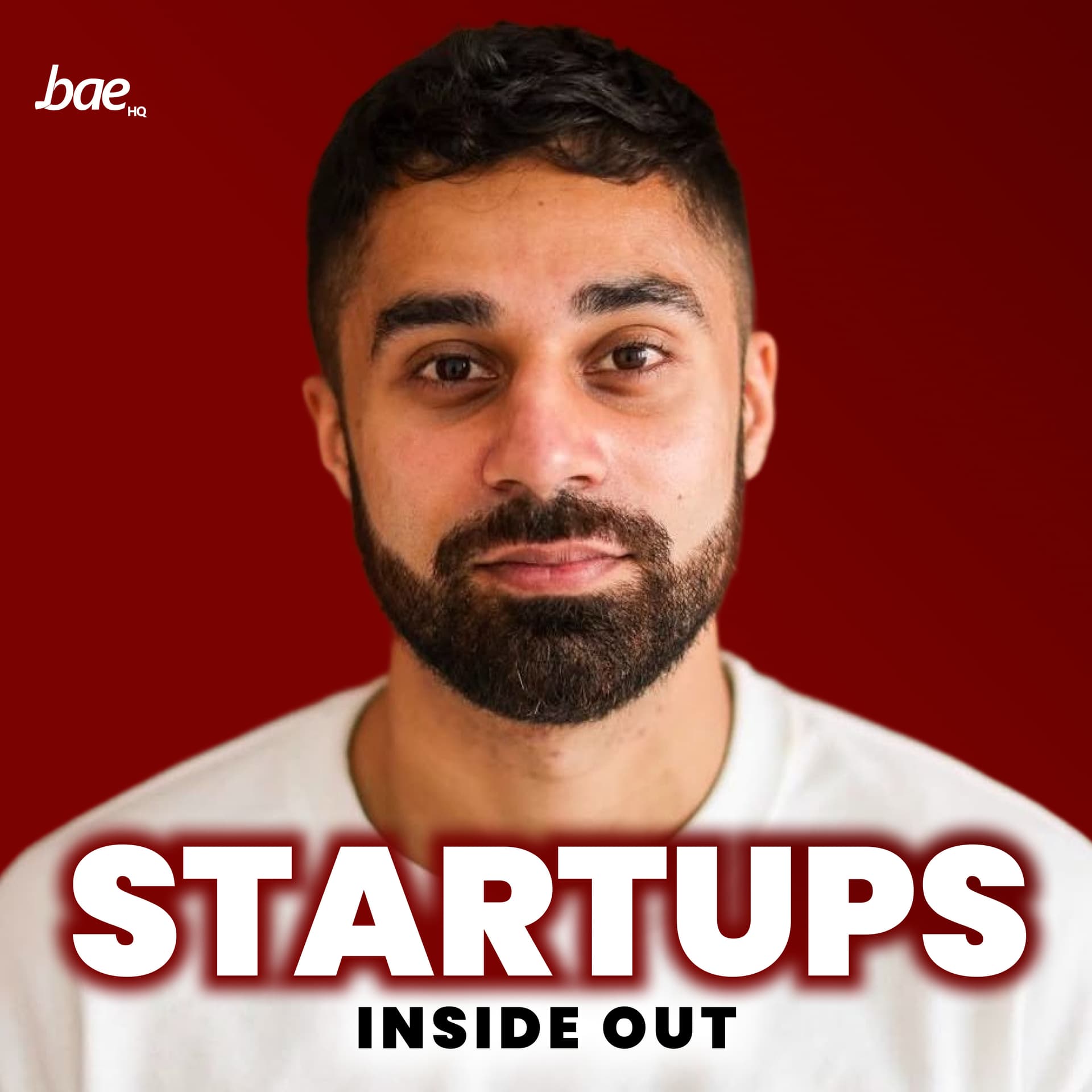
Podcast Summary: Startups Inside Out - Episode 285
Episode Overview
- Title: How This Early Stage VC at a €2.5BN AUM Firm Invests w/ Akash Bajwa | Earlybird
- Host: Amardeep Parmar
- Guest: Akash Bajwa, Principal at Earlybird
- Focus: Insights into early-stage venture capital investing, particularly in the context of evolving industries such as AI.
Key Discussion Points
Earlybird's Investment Approach
- Firm Background: Earlybird has been an early-stage fund since 1997, specializing in pre-seed to Series A investments across Europe.
- Investment Focus:
- Generalist investor with a primary interest in software, deep tech, and fintech.
- Growing focus on AI-native companies (both application and infrastructure layers).
Evolving Landscape of VC
- Change in Dynamics: The venture capital landscape has shifted significantly due to:
- The increasing complexity of defensibility in software investments.
- The transition from traditional SaaS to AI-driven solutions.
- Market Saturation: The rise of numerous software vendors has increased competition, leading to higher sales and marketing costs.
AI's Impact on Investment Decision-Making
- Defensibility Redefined: The emergence of AI has transformed how investors evaluate company quality:
- The need for a talent-centric lens has become critical.
- Emphasis on a founding team's ability to adapt and innovate amidst rapid changes.
- Personal Branding and Distribution:
- The oversaturation of AI-generated content complicates personal branding.
- The discernment of unique insights becomes crucial amidst the noise of common AI outputs.
Identifying Strong Founders
- Qualities of Successful Founders:
- Motivation and resilience to face the rapid changes in the AI market.
- Capability to attract talent and articulate a compelling vision.
- Example of Unique Insight: Akash shares a case study of Luke Miller, a founder whose deep market understanding in voice AI led to a successful investment.
Building Personal Brand and Community
- Personal Branding: Akash discusses the importance of building a personal brand to help founders and foster relationships within the ecosystem.
- Community Engagement: Akash emphasizes being a resource and mentor for aspiring entrepreneurs, thereby creating a supportive network.
Future Outlook
- Investment Landscape: The conversation highlights the importance of adaptability and foresight in selecting startups poised for long-term success.
- Personal Goals: Akash aims to strengthen his presence in the European startup ecosystem, backing ambitious founders and helping them navigate challenges.
Key Takeaways
- The VC landscape is evolving, particularly with the influence of AI, which requires investors to adapt their evaluation criteria.
- Personal branding and unique insights are becoming more valuable as the market becomes saturated with easily generated content.
- Founders with a strong motivation, resourcefulness, and adaptability will likely stand out in a rapidly changing environment.
- Community support and mentorship are essential for nurturing future entrepreneurs and fostering a thriving startup ecosystem.
Conclusion This episode provides a rich insight into the changing dynamics of early-stage investing, especially in the wake of AI innovations. Akash Bajwa’s perspectives on investment strategy and the importance of personal connections within the entrepreneurial ecosystem underscore the complexities and exciting opportunities that lie ahead in the startup world.
For more insights and to join the community, visit [Bae HQ](https://www.thebaehq.com/join).
Written by AI. May contain mistakes. Listen to the episode to check what was said.
Chapters
Tap a time to open that second in VOUnderstanding Earlybird's Investment Focus
0:45 to 2:00
Akash discusses Earlybird's investment strategy focusing on early-stage companies across various tech sectors.
“So it was on before you came on as well about how over the last few years, how it's been quite a journey in VC, when you started out and all of the rush of it to now as you're more experienced.”
The Evolution of Software Investment Trends
2:00 to 5:00
Exploration of how the landscape of software investment has changed, particularly with the emergence of AI technologies.
“markets, and so those companies also were not competing against 20 other point solutions when they just got started.”
Navigating the AI Era's Impact on Investments
5:00 to 8:00
Akash elaborates on the challenges and shifts in defensibility and business quality in the age of AI.
“If the way that they're able to learn from the market is something they'll continue for 10-15 years to come.”
The Importance of Unique Insights and Founder Quality
8:00 to 11:30
Discussion on how personal branding and unique insights are crucial for founders in a saturated market.
“They're able to produce software or content that is legible and generally would sort of pass that sniff test of being decent.”
Identifying Key Traits in Founders for Success
11:30 to 14:00
Akash shares what qualities and motivations he looks for in founders to ensure long-term success.
“And we're very fortunate that he chose us.”
The Importance of Storytelling in Early Startups
14:00 to 15:18
Learn why storytelling is crucial for startups to attract hires, customers, and investors.
“And then you have to do that repeatedly for 10 years, pretty much.”
Community and Growth at BayHQ
15:18 to 16:00
Discover the impact of BayHQ and its role in supporting Asian heritage founders in the UK.
“I'm Amarit Parma, co-founder of BayHQ and the host of this show.”
Using Cloud Code for Podcast Management
16:00 to 19:02
Understand how Cloud Code can streamline podcast processing and manage information effectively.
“You mentioned Cloud Code a few times now as well.”
Building a Personal Brand in VC
19:02 to 21:56
Learn how personal branding can enhance investor relationships and aid founders.
“One of the things that's been quite hard with this as well is that because there's so many tools available, it's knowing which ones to use and when.”
Balancing One-on-One Meetings and Content Creation
21:56 to 24:12
Explore the challenges of balancing personal interactions with scalable content creation.
“And so I think the personal brand matters because at the end of the day, capital is a commodity.”
Show all 21 chapters
The Value of Writing for Clarity and Insight
24:12 to 28:00
Discover how writing enhances clarity of thought and helps in understanding complex ideas.
“sometimes those one-to-one meetings are magical and you meet someone and you have an incredible conversation and you learn a lot from that interaction.”
The Importance of Writing in Business
28:00 to 29:04
Learn how writing fosters clarity and communication in companies.
“This is John Collison recently started this podcast, Cheeky Pine.”
Finding Future Founders
29:04 to 31:19
Discover how to identify promising entrepreneurs amidst the noise.
“So how are you trying to discover the people that you're going to invest in?”
Qualities of Great Founders
31:19 to 33:51
Explore the characteristics that make founders successful in their ventures.
“I kind of think that sort of the top of funnel, let's say that you just help a really wide surface area of people.”
Proudest Moments in Investing
33:51 to 34:35
Reflect on the joy of watching portfolio companies thrive.
“Nothing makes me happier than that because you can see the pieces falling in place for the company's success.”
Future Aspirations in VC
34:35 to 36:24
Understand the goals for growth and influence in the European ecosystem.
“And what we're saying is every two years, we can get people back on again.”
Spotlighting Influential Figures
36:24 to 37:59
Learn about key individuals making a positive impact in the UK startup scene.
“So who are free Asians in Britain you think are doing incredible work?”
The London Ecosystem and Its Challenges
37:59 to 40:01
Discuss the perception of London's startup environment and its potential.
“And I think that work deserves more recognition.”
Empowering Entrepreneurs
40:01 to 41:13
Encourage a proactive approach to solving problems within the startup community.
“hopefully, is that London is the most diversity in the world.”
Connecting with Akash Bajwa
41:13 to 42:00
Learn how to reach out to Akash for insights into entrepreneurship.
“I'm about to say, we might get into a rant here.”
Final Thoughts on Community Support
42:00 to 42:25
Learn about the importance of community and support in the diaspora.
“I think it's so important for the diaspora to continue being proud of all the work that we're all doing, supporting each other and just making this become like a bedrock for each other's support systems.”
Transcript
Automatic transcript. May contain errors.0:00Amardeep Parmar:So startups inside out, we've got Akash here today from Early Bird. Can you tell us what you invest in?
0:05Akash Bajwa:Yep, 100%. So Early Bird's an early stage fund that's been around since 1997. For us, early stages precede to Series A investing across Europe. And given the nature of the stage that we invest in, we're really generalist investors. So we'll do software, deep tech, fintech. Lately, of course, most of our software investments are AI-native companies that are either application layer companies, infrastructure companies, or foundation model and even as low as compute, which is how I guess most people think of the AI stack. That's also where I spend most of my time and I have colleagues who look at deep tech a bit more.
0:44Akash Bajwa:I also still look a little bit at fintech, but at the moment, it's mostly software and AI, which is where we're seeing most of the talent concentrate.
0:51Amardeep Parmar:So it was on before you came on as well about how over the last few years, how it's been quite a journey in VC, when you started out and all of the rush of it to now as you're more experienced. And obviously part of that is AI. So how has how you looked at things changed over the last few years about what you value and what you're looking for in companies?
1:10Akash Bajwa:Yeah, I guess this has been probably the most humbling exercise for the last few years, certainly for me, but even for others who've been investing much longer than I have, principally because the nature of defensibility looks very different today to how it's maybe been seen for 15, 20 years of the cloud transition. If you sort of at least look at software investing and its history, we had obviously the emergence of SaaS, and that's been a theme to invest behind for 15, 20 years, where there were a lot of primitives born on the infrastructure side, and then fantastic application software companies.
1:57Akash Bajwa:In the early days, those were really greenfield markets, and so those companies also were not competing against 20 other point solutions when they just got started. And therefore, sales and marketing spend as a percentage of revenue was also much lower than it is today. As we entered the AI era, we were already getting into the very late innings of SaaS because if you think of every major software category in the enterprise, we kind of divide it into the key functions and budgets. If you look at sales teams, finance teams, HR teams, IT teams or developer teams, the amount of vendors looking to sell into those budgets and teams had clearly increased by an order of magnitude over the last 10, 15, 20 years, which is why those companies also, as they were starting to mature and get closer to the public markets, their margins were also somewhat less healthy because they have to spend so much more on sales and marketing to acquire customers.
2:54Akash Bajwa:So that was already a dynamic underway before AI, this new wave of AI post-Chat-GBT took off. And then, of course, now fast forward to 2026 in the Cloud Code era, as many people I think rightly say, Cloud Code is the ChatGPT moment equivalent. Why? Because Cloud Code has proven how reproducible software is at a fraction of the cost that those SaaS companies have historically spent on R &D. Now, you or I could easily recreate the front-end and back-end for some of the most enduring software companies of the last 15, 20 years with maybe one or two engineers and probably a tenth of the time, if not less.
3:44Akash Bajwa:So if software becomes so fungible, how should we think about business quality? What are the signs of enduring competitive advantages? That's probably been the most humbling and profound change for me and for everyone in the industry. Because obviously, as we started investing our current fund, like any VC, we take a 10, 12, 15 year time horizon. But the world is changing so fast now in what's already just been just over three years from when ChatGPT diffused AI faster into the economy to now where everyone's a developer. 10, 15 years seems an impossible timeline. It's hard to fathom the change that will happen in 10, 15 years, but even more so to invest in companies on that time horizon and feel comfortable that the things you put in your memo today are going to last very long.
4:42So I think the conclusion,
4:45Akash Bajwa:the more I think reasonable conclusion from all of this is that if you had a talent-centric lens before, it's even more important than ever, i.e. everything else will shift the market around the company the the actors in the ai stack above and below the company but the team won't change and it's the team's ability to adapt to the shifting sands that you want to underrate and so in some ways true to classic pre-seed investor dna it's mostly about the people now and the unique insights they have as of today and how that demonstrates how they acquired those unique insights and if that's sustainable.
5:25Akash Bajwa:If the way that they're able to learn from the market is something they'll continue for 10-15 years to
5:30Amardeep Parmar:come. So what I find really interesting now too on that point is about the personal branding side because you're probably sitting on LinkedIn everyone's talking about it oh now with AI being so easy then it's all about personal brand. What people are forgetting is that now personal brand is super easy too.
5:44Akash Bajwa:Yeah.
5:44Amardeep Parmar:And you look at any platform it's being flooded of AI generated content so when people talk about okay if the product now is easy then it's focused on distribution but i look at it as distribution is going to become even if you're good it's going to become saturated so then when that lens if you look at it say for example we built bay hq from personal brand but each day i'm looking again and seeing everybody else now posting more how are you looking at what can stand out amongst that like all that noise yeah how do you like decipher that when even when you're sort of assessing founders, for example, they might just be using ChatGPT to write the answers for them.
6:22Amardeep Parmar:Yes, yes.
6:23Akash Bajwa:I think I fully agree with that take that slop, AI-generated slop is going to become abundant or ubiquitous on every channel, LinkedIn, Twitter, TikTok, if it isn't already. The answer for me is, in one word, it would still be taste. But I'll expand on that. What I mean there is, yes, especially as the models get better, there will always be the possibility that someone can use the models either to propose an answer to a question from an investor about their market or their business, or to write thought leadership on socials. But in my view, for a few reasons, people will always be able to discern truly novel insights from what's in the weights of these models.
7:21Akash Bajwa:Why? First of all, still to this day, these models are trained on public internet data, usually low-quality internet data. Of course, with reasoning, they become very smart and of course we all use them because they are indeed that capable. But when you're looking to invest in a company building in, let's say, a very legacy industry that for some reason, no software company has been able to crack for a long time or the buyers have always had inertia, the insights that will unlock a market there, I don't think are captured in the weights of these models.
7:54Amardeep Parmar:Or if they are, yes, they can propose plausible answers,
7:59Akash Bajwa:but it takes a founder to have had a lived experience to have then validated hypotheses about the market and what would unlock a market into software adoption to generate something that the models simply aren't aware of because, as I mentioned, they are reliant on public data. And secondly, this ties to a broader point, as you said, if distribution becomes similarly the barriers to creating any kind of content collapse and it's almost zero marginal cost to produce any kind of content, whether that's founder-led content on socials or collateral about your customers and so on. I think like what some companies we see today, like Granola, like Linear and others, what people call taste there is really some opinions, some strong opinions about the world, because yes, the models are getting very good at producing things one shot, literally without too many, too detailed of a description.
9:00Akash Bajwa:They're able to produce software or content that is legible and generally would sort of pass that sniff test of being decent. But now the power will be in the hands of people who are like artists, who actually know what deserves to exist in the world. What should they bring to life? What should they instantiate? What is their vision of product management, which is obviously what Linear is building? What's the vision of the granola team in the future of productivity in the workplace? That's what they're building. And they have strong opinions about that. And even if the capabilities are the same and are accessible to everybody, knowing what to point them at and in what form and how to iterate towards a end state that is a premium product, I think that's still going to matter.
9:50Amardeep Parmar:So you mentioned about the unique insights as well. Is there a fan at your back that you thought really had that deep, unique insight? And that's part of why you backed them. Could you give an example? Yes.
9:59Akash Bajwa:I'll speak about a founder that we backed last year. His name is Luke Miller. So the backstory is Luke was a venture partner with us. He was advising our founders on go-to-market. Of course, just with a few hours of his time here and there. and more importantly, he was overseeing the European operations of a company called Base10 and Base10 is this inference cloud. And prior to that, he'd been a very early seller at Wurzel. And over the time he was at Base10, he became aware of some insights around the voice AI market and recently he has started this company which we invested in called Slang, S-L-N-G dot AI.
10:45Akash Bajwa:and they're building infrastructure for the voice market. As I mentioned, I think the unique insights there are only possible if you're really at the forefront of what customers are experimenting with today when it comes to their voice workloads. So what are the problems around costs? What are the problems around multiple languages? About where you host your compute? These are the kinds of infrastructure problems that enterprises rolling out voice products are grappling with. that most prosumers are not aware of. And so Luke possessed those insights in abundance, as did his co-founder, who also worked with him at Base 10.
11:25Akash Bajwa:And given the relationship we'd built over two years, we were in a good position to be his trusted partner. And we're very fortunate that he chose us. And yeah, I think at the end of the day, even at Preseed, usually there's enough history to look at of how a person got to conviction at Preseed to start this company for this market. Yes, they may pivot. Many founders pivot at Preseed, but at least you want to see a track record of how they even build conviction. Because then if they need to pivot again, and it's not the case here, but let's say in other Preseed cases, they at least have shown that they can do that in the right way.
12:04Akash Bajwa:The methods are the correct ones.
12:06Amardeep Parmar:So you're obviously looking for the insights there as well. But what else are you looking for in these founders to differentiate who's kind of all talk and who's really got something which you think they can weather the storm of AI over the next 15 years where they're going to need to pivot?
12:19Akash Bajwa:Yeah, I think there are a few qualities that really matter. And one of those is definitely the motivation of the founder because of the adversity they're going to face, as you said. but also the fact that AI markets move at light speed, let's say, to not be too cheesy. But what I mean there is you're going to have to work even harder than maybe software founders did in the previous 10, 20 years because you're reacting to news all the time. You're reacting to competitor moves. You're reacting to moves up and down the stack. And so if you're really considering building a company, which is your life's worth for the next 10, 15, 20 years, and ideally even longer because you're building an enduring company for centuries, potentially, or this century is one of this century's most important companies.
13:20Akash Bajwa:I think you can quickly discern which people have that kind of ambition and are motivated to build something that big versus others who maybe have ambitions of solving the problem. But the size of that outcome is not as important to them, or they might have a slightly narrower scope of how they want to solve that problem. And obviously in venture capital, we're chasing really the largest companies that are going to be built in this generation. And I think the more time you spend with someone, you can quickly discern their ambition. I think that's very important. Closely linked to the ambition is then, assuming they have that kind of endearing level of ambition, is their ability to attract talent.
14:06because once you have that ambition,
14:09Akash Bajwa:then it's your job to tell a story effectively to your future hires, to your future customers, to your future investors, who in the early days are all going to take a leap of faith with you, that they should take that risk with you. And then you have to do that repeatedly for 10 years, pretty much. And I think so those two qualities are non-negotiables. Then you can have, I think this is where it gets a bit more fluid, like whether you have hard skills. Like in a CTO, what is more important today than before? I don't know, because arguably, if they've embraced AI, they're going to be doing a lot less coding.
14:47Akash Bajwa:They're going to be reviewing code that's generated by AI, and they might be managing fewer human engineers, and they're managing more cloud code instances. So the hard skills element, if anything, is changing. And I would say that's something where if you ask a person this question again in one year, two years, I think the answer will look different. But the softer things around why they even want to do this, that will, I think, stand the test of time and is more important and overrides everything else.
15:17Amardeep Parmar:Hello, hello. I hope you've enjoyed the show so far. I'm Amarit Parma, co-founder of BayHQ and the host of this show. For those of you who don't know, BayHQ is the community for high growth, Asian heritage, founders and investors in the UK. Over 7 ,500 people have attended our events. 200 people have been through our impact programs. And obviously, there's been over 250 episodes of this podcast. If you want to join us and take part in the programs and come to the events, go to bayhq.com forward slash join. We also just released our first ever book called Startups for Outsiders, which you can get on Amazon now.
15:57Amardeep Parmar:And the link is in the bio. Hope to see you soon at our event. Hope you enjoy the rest of the episode. You mentioned Cloud Code a few times now as well. And then you mentioned how you're using it for yourself to help you with your job. Yep. How are you using Cloud Code right now?
16:10Akash Bajwa:Yeah. So I think for those who haven't tried it yet, Cloud Code, I think was GA May of last year. And I was definitely not one of the first people to start using it. I think I started using it in November. and what I initially built for myself which I was sharing with you earlier is ultimately it's a podcast processing tool reason being it's a privilege but also a bit of a challenge in this job sometimes to drink from the fire hose of information that's out there I have a lot of long-form writing I want to read I have a lot of podcasts that are excellent with excellent guests that I want to listen to and even books like this one and all the previous episodes.
16:55Akash Bajwa:And so it's just impossible to stay on top of everything. I wanted to use CloudCode and other tools out there to make it easier to extract the signal and the alpha from all this amazing knowledge being produced up there. And with CloudCode, what I was able to build is, and I followed some others out there who've done this, is basically a pipeline that will download audio files of certain episodes of the podcast that I told it to follow, transcribe them, store the transcripts in a database, summarize them with a small model so it's not too expensive for me, and then send me the summaries in my inbox every day.
17:34Akash Bajwa:I think the challenge there is still the prompt engineering around getting the right kind of summary, a summary that's actually insightful and not cheesy, because most models still write in a way that's a bit too, it's sort of sycophantic still is seeking a lot of approval. It needs to be written more analytically. But at least building this pipeline took only a couple of hours with Cloud Code. And if you just think that such a powerful tool is at your disposal, at your fingertips, I think the people who do not embrace this change today, they're going to get left behind. And I mean that both at the micro scale of a small VC firm, a small business, and I definitely mean it at the large scale of an enterprise.
18:15Akash Bajwa:the banks who don't embrace AI are going to get left behind by the ones who do. The retail companies, the healthcare companies, the pharma companies, every corner of the economy I think will bifurcate into the has and have nots because I've just seen firsthand as a non-technical person what is now possible for you to build. And even within one year, you could already probably see a big contrast in the productivity of people who've used AI to automate a lot of their workflows to those who are still using just chatbots for simple question and answering and research. So I would say that's one concrete thing.
18:56Akash Bajwa:I'm working on a few more things, but I would genuinely encourage people to try it out and not be intimidated by it. It's in your CLI, which can look like it's somewhat of a form factor that you're not comfortable with, but it's honestly nothing to worry about and you can just prompt it like you would prompt our GPT and over time you'll get used to it and you'll immediately see the results.
19:23Amardeep Parmar:One of the things that's been quite hard with this as well is that because there's so many tools available, it's knowing which ones to use and when. And I think what I did a bit, so my background before all the BayHQ stuff was technical. So I used to be like a developer so I could do front end and all the coding as well. so what I've kind of done a bit is like allow there to be some winners start to form and then jump on learning that because I think one of the things I found tough at the beginning is okay I'm using chat dbt okay now I should use Gemini now I should use this yeah but I think now these winners are starting to form a bit more strongly yeah and when you know what the winner is it makes sense to really deep dive and learn that particular program yeah but earlier you mentioned too about how with Luke so Luke was one of your venture partners so you knew him very well and that's you're able to win that yeah but also know you're doing quite a lot on your own personal brand yeah so early bird already has a good brand but you put your own brand up and i know that you're doing a lot of work there too what's the logic behind that and how does it help you with
20:19Akash Bajwa:winning deals i'm quite grateful that at early bird we're all encouraged to build our own personal brands um at the end of the day ultimately i still will always be seen as akasha works at early bird and therefore represents early bird, even though I, for example, have my own sub stack. And that's something I've been writing for over three years, pretty much consistently recently, a little bit less consistently, but it was weekly for quite a while. And I think I've written 140 posts now. And then last year, I also started doing events. And both of those are kind of, they have like a reflexive feedback loop because the events give me ideas of what to write about.
Read the full transcript
21:01Akash Bajwa:The writing helps me reach an audience for the events and so forth. And the personal brand that I'm looking to build there is just one, first and foremost, that I like to help founders. I think we're all grateful to do in the ecosystem, but especially so as investors. And the way I particularly like to help founders is by helping them think through their business, think through the market that they're in, think through the technologies that they can use to build defensibility. And lately, of course, most people are building agents, agents applied to a certain vertical or a certain function. And they're thinking through what are the infra constraints around memory, around sandboxes, around context management, tool use, and so forth.
21:45Akash Bajwa:And that's exactly the kind of territory where I would love to surface relevant insights to them. And I do that through the writing and through the events. And so I think the personal brand matters because at the end of the day, capital is a commodity. And there are other firms out there who have very large teams of platform support who can help you with hiring and some customer intros and so on. We also do that, maybe not at the same scale as some funds, but what we definitely want, the hill we want to die on is basically that we want to be that partner and board member who is going to be a sparring partner, a thought partner on your business, product, strategy, hiring, go-to-market, every facet of it, unlike any other.
22:37Akash Bajwa:And so therefore, I've leaned into that on the personal branding side, that time that you spend with us, that you give us precious time from a founder's perspective, is time well spent. and especially what they would hopefully come away with is new insights about their business around their market. And I think, as you know well, having done this podcast for so long, I think things of this nature, initiatives like this, they compound. And if you do it consistently for a number of years, you're playing the long game. And in this industry in tech, I think people should play long games and you reap the dividends five, 10, 15 years down the road because people have seen you do something for so long consistently.
23:19Akash Bajwa:and the relationships you build throughout that time. So I just think it's a win-win and it's important if you want to stand out.
23:26Amardeep Parmar:I think the whole element of time here in that too is because I've got a similar mentality, right? Obviously, I spend a lot of time on the content and the podcast and different things by writing a book, for example. And that's time which is more solitude or podcast offices or somebody else there. But a lot of people instead they spend the time on those coffees or calls. And how do you balance that in your head, right? Because the way I look at it is if you write one piece in Substack, that could reach thousands of people, right? Yeah, yeah. But at the same time, to do that and make time for that, you have to say no to people who want to maybe have your time one-to-one.
23:58Amardeep Parmar:Yes. And how's that balance been for you in trying to make that decision of?
24:02Akash Bajwa:Yeah, exactly. As you said, I think you probably grapple with this every day. I grapple with it too. I think the balancing act is sometimes those one-to-one meetings are magical and you meet someone and you have an incredible conversation and you learn a lot from that interaction. And serendipity is a thing. You just don't know who else that person knows that you would want to meet. And you have to allow for some surface area of luck, I guess. But arguably, to your point, I think the kind of scalability of writing or any kind of online content is perhaps, it just has a much wider surface area of luck.
24:45Akash Bajwa:you're reaching so many more people with the same amount of time um that i i would if if i had to like i guess find the right ratio i would definitely prefer doing more of that than the one-to-one meetings and uh yes that means saying no a lot of people but at the end of the day you have to probably going back to the earlier point around personal branding both from a founder's point of view or an LP's point of view or a fellow investor's point of view, I think, and this is at least my intention with my branding, is I want to have unique insights. I want to have views on markets. I want to be well-read about the challenges affecting founders today with their businesses.
25:30Akash Bajwa:And to do that, the writing or content forces me to become aware of those things. The coffees, it's kind of, or the interactions one-to-one with certain individuals, sometimes you learn a lot. And as I say, those meetings are incredible and really helpful. But more often than not, you're probably better off in that solitude learning on your own. And I think now there's an abundance of ways you can learn. And so when I think of what makes a person more valuable to a founder on their board, what makes a person more valuable in general as an investor. I do really believe that writing is a forcing function for being knowledgeable because if you're putting something out there for thousands of people to consume, hopefully you have something interesting to say.
26:21Akash Bajwa:And so that forces you to kind of do that classic sort of Peter Thiel question of like, what's one thing you believe no one else believes? Again, also to that point, if you spend time with your peers all the time, you're probably going to think like them. Groupthink will creep in. You'll end up in kind of a pernicious, subtle way, sort of replicating views that other people have, as opposed to thinking independently and having time for yourself to form a unique view. Not to say that that's all you need to do to have an independent view, but at least a bit more solitude to really think about things from first principles, I think is very important.
27:00Amardeep Parmar:I think it's one of the things people miss too when people simply use AI as a way to make all their content. Because to me, the value isn't necessarily just in what people see about your views. The act of writing itself. And the fact that it's hard and the fact that it's uncomfortable is good. Yes. Because that's what's making you really understand your own opinions. Yeah. And I think for so many people, they can't really explain what they actually think. Yeah. And if you can write something down. Yeah. One of the things I have a problem with a lot of people who say like where they want a call rather than an email.
27:31Akash Bajwa:Yeah.
27:31Amardeep Parmar:I say, oh, I'll just explain it in person. Or I'll just explain it in the course. If you can't explain it in words written down, you probably don't understand it well enough yourself, which means you can then ramble to me. So put it in an email. If you can't put it in an email and make it compelling enough, you aren't clear enough in your thinking.
27:47Akash Bajwa:I totally agree. And famously, Stripe has a writing culture. I'm a big fan of the Collisons, especially lately, even more so John Collison. I was always a fan of Patrick Collison. I didn't say them by a first name basis. This is John Collison recently started this podcast, Cheeky Pine. Really good podcast, by the way. Maybe not as good as this podcast. But they've always had a writing culture because they know, to your point, that writing forces clarity of thought. We've all been in companies and roles where we have pointless meetings. We're inundated with team calls, syncs on things that literally don't need 15-minute catch-up, like you should just be able to just slack each other and their point is like for example if you had to do an onboarding you could do an onboarding where literally you have coffees with everybody in some cases you should obviously get to know your team but at strike for example or at companies where there's a writing culture and you can just become acquainted with how the company thinks about uh the future uh the way it builds product and so on through studying really well-written documentation that's that's i think uh a higher fidelity way to pass ideas down the company than um uh having meetings where things get lost in translation and so on and more generally you can ramble to your point i think writing is just a forcing function for clarity of thought and if you impose that on everybody you'll be so amazed i think by the benefits from that and so it was
29:21Amardeep Parmar:So you're now looking towards the future, right? So how are you trying to discover the people that you're going to invest in? Because as you said, now there's so much noise out there. There's so many different people obviously pitching you. Yeah. What are you looking for? How do you try to find the right people? Where are your hunting grounds to find these people?
29:37Akash Bajwa:Yeah, I'd say... Say, for example, if somebody is a really good writer,
29:41Amardeep Parmar:are you kind of paying attention? Like, oh, they're going to raise soon, for example.
29:45Akash Bajwa:I think it's a proxy for clarity of thought, which is a quality I really value in great founders. I would say the macro answer is, and then I'll give a separate take, but the macro answer is Europe, and especially the UK, has a number of talent pools that are going to produce the next great generation of founders. We have scale-ups like Revolut. Obviously, we have companies like Palantir that have sizable, very strong teams in Europe and London. We also have now scale-ups that are Series B, Series C across the continent that are seeing the zero to one builders decide that they need to start their own companies now.
30:25Akash Bajwa:And so I think the ecosystem is at a really healthy place where we can all on the investor side quickly determine what are the talent pools we really want to be close to. And then to your point, I guess over the years that now I've been doing this, obviously there are some founders or individuals in the ecosystem whose taste I really admire. and whose judgment and people I really admire and respect. If they are telling me that there's someone in their network, a friend of theirs who has not even started the company, but is contemplating starting a company, I would love to talk to them. Even if they end up deciding to join a company or stay at their current company, I have nothing to lose and so much to gain just from spending time with someone like that.
31:10Akash Bajwa:And so my take is still to be just helpful to people and the events and writing are a way to do that too. I kind of think that sort of the top of funnel, let's say that you just help a really wide surface area of people. And somewhere in that top of funnel, there's a few that trickle down that actually want to start companies. And I've been fortunate to meet them through this wider surface area. And then eventually some that we end up investing in. And usually they have these qualities like they're, in my view, they're extremely thoughtful about their market, yet humble enough to admit that assumptions will change.
31:49Akash Bajwa:But they've studied the market really closely, and they know why it was a graveyard for companies in the past, or why the incumbents in that space are not well positioned to win, where the gaps are in the product portfolio, where to chip away at the gaps of the incumbents who've spoken to enough buyers that they maybe were able to get in front of just through cold outreach and not through their own network, which is a sign of resourcefulness and finding the right message market fit, that they found something that resonated on cold outreach on LinkedIn with like enterprises. That's pretty hard.
32:21Akash Bajwa:All of these things add up and some others, but first and foremost, I think my philosophy is just to help people. And then if I've actually done a good job of that, hopefully they'll want me to help other people in their network. And then there are those people who I trust that if they're telling me that this is someone I should talk to, I would love that.
32:40Amardeep Parmar:It's interesting what you said about understanding incumbents as well, because you probably have the same thing. The same people will be like, I'm building this. It's like, do you know about all these competitors? And worse is if they haven't even heard of them. And that means you haven't even done a Google search of like what you're trying to solve. But the other thing is when people are like, oh, but we're just way better than them. It's like, how? What exactly is it about it that you're going to break down? What is it that they can't just pivot and just eat you alive? And we're going to have to go to a quick five questions in a second.
33:10Amardeep Parmar:Yeah. But what's been the proudest moment of your investing career so far?
33:15Akash Bajwa:That's a great question. I think the proudest moment for me probably has been seeing, this is a bit of a cop-out answer, but it's seeing the portfolio companies thrive, some of them, both from our last fund and from this current fund, raise up rounds for some companies. Hopefully that will be this year. But it's just seeing the success of the portfolio companies. It's not even when we wire the money, when we become part of the company. It's more seeing us actually enable their success. It's not down to us, obviously. It's all the founders. They deserve all the credit. But when they're able to win a big deal, like when I see investor updates and it says, oh, we landed our biggest contract yet, or we just closed this phenomenal hire, and we were able to help them close that candidate, for example.
34:03Akash Bajwa:Nothing makes me happier than that because you can see the pieces falling in place for the company's success. when a pre-sede, you know, it's just an idea. And then finally, like, they move into an office and the milestones start to add up. I think there's just something magical about seeing something go from just incorporated on Companies House to, like, I don't know, a year later, like, many people, job ads out there and, like, growing super fast, demand you can't serve. I think, yeah, that's some of the magic, I think, of being in this ecosystem.
34:32Amardeep Parmar:So this episode is going to be 280-something. Okay. And what we're saying is every two years, we can get people back on again. So 200 episodes later. Yeah. And I don't know how we're going to do now. We've got a bookcase. We're going to get like a little TV up here to like replay this moment next time you come on. In the next two years, what would you love to say you've been able to achieve between podcast episodes?
34:52Akash Bajwa:I would love to have more or less continued the mission that I've been doing for the last couple of years, which is to back great founders or partner with great founders. The founders I've already partnered with to see them continue succeeding And of course, raising capital is a part of that, but it's more so growing sustainably, but also in a way that allows them to build defensibility in the future. And that doesn't always mean that it's the top line growth that indicates that, but it's getting unique insights on the market. And so seeing the portfolio succeed there would be amazing. and then I would love for us as a firm and myself to become even more embedded in the European ecosystem in a way that people come to think of us as one of the first two or three people in London as well as other parts of Europe but for me in London especially that they want to talk to when they want to start a company and that's ambitious obviously but I really think it's meritocratic you can work towards that kind of mind share in the ecosystem if you help people and have that kind of genuine mindset of first helping people and seeing where it takes you.
36:08Akash Bajwa:But yeah, I think eventually the proof will be in the numbers because you'll be able to tell what companies you were able to meet very early and if you had the chance to invest very early. So that's the goal. And if that was pulled off even remotely in two years, I'll be very happy.
36:25Amardeep Parmar:So thanks so much for coming on. So it's the wrap-up questions now. So who are free Asians in Britain you think are doing incredible work? And do you want to shout them out?
36:33Akash Bajwa:The first would be Uday Meera, who is a VC lawyer and genuinely one of the kindest people I know. He's been such an angel to people across the ecosystem, from operators to founders to investors. And he does this all out of the goodwill of his heart, honestly. And I think people like that are multipliers in an ecosystem. If you have people like that, that's when there's goodwill being generated across the ecosystem and people help each other without expecting anything. And Uday really exemplifies that. The second is Reese, who is one of the founding GPs at Concept Ventures, who I really respect and look up to.
37:15Akash Bajwa:And it's just been so heartwarming to see the journey that Concept's been on in just five years to become such an established household name in pre-seed in the UK and soon Europe. And the successes they've already had, sticking to what they know really well. And I think they deserve all the credit they're getting. And then last, Kanishka Narayan, who's I think now the Minister for AI and Online Safety. But specifically in that first part of his remit, I think has been doing a great job. And I think he's been a breath of fresh air when it comes to politicians who are trying to imbue positive energy into the ecosystem when everyone is quite cynical.
37:55Akash Bajwa:And you don't have to tell a Brit to be cynical. By disposition, people are generally cynical anyway. But he's been doing a really good job at reminding us of everything that's good about being in London, why people shouldn't leave, everything that the government's doing to make it a more attractive place for the future leading AI companies of the world. And I think that work deserves more recognition.
38:20Amardeep Parmar:On that last point, it's like, so I'm born and raised in London, right? So I'm like Londoner through and through. And some of the LinkedIn, some of the discourse about how London's going to crap or stuff, it's like, have you been to the rest of the world? And I find it quite frustrating because it's so negative. But it's like, London isn't perfect. But then nowhere is. And if you look at the rest of the big hubs, they've all got different problems and things going on. And I think sometimes the challenge is that people can't see through the negativity. And actually, there's so many incredible people doing incredible things here.
38:51Akash Bajwa:Yes.
38:52Amardeep Parmar:But if you're just constantly being put down and you're seeing that on LinkedIn, like, oh, you have to move to Sanfran. And especially when people say it now, it's like, Sanfran has always been ahead. But like, I don't know why all of a sudden it's like you have to move away and all this stuff. And it's just one of the things that strikes me quite a lot about how there's so much of this tool at the same time as there's people who are saying it still being here and still building great companies.
39:15Akash Bajwa:Yeah, I agree with that. And I think it's important people like yourself and myself that we then give the other side. I think the people who do well on social media are the ones who are angry and upset and complaining. And obviously, a lot of these complaints are very legitimate. But as you said, every place has trade-offs. And on balance, do you want to be somebody who's trying to fix things or just diagnose problems? I think we should try to fix things or at least take more of a glass half full view. I at least believe that's the only mindset that allows things to improve. Otherwise, we would all be a bit despondent and just accept things for what they are.
39:55Akash Bajwa:And I actually, I'm very proud of, what I'm most proud of and always probably will be, hopefully, is that London is the most diversity in the world. It's welcomed me and all these immigrants I know with open arms and it allows people from any background to come and work hard and make really wonderful lives for themselves here. And that's something to be proud of. And very few other cities, I think only New York can give you that kind of mobility. And there are issues, but we can address them.
40:27Amardeep Parmar:I assume that as a core entrepreneurial mindset, right, is that complaining about problems is easy. Anybody can complain about problems. The bit that's supposed to make us different is that we try and find solutions. We try and do something about it. And that's what they look at when people are complaining online. is like, but what are you doing? Yes. Are you actually doing anything about it? Yes. And if you call yourself an entrepreneur, you should be doing something about it. You can't just be complaining. Yeah. And the reality is that we can all, and I think sometimes people, they put themselves down in terms of what they're able to do in terms of who they're able to reach.
40:59Amardeep Parmar:And we can, especially if you've got a company at series A, series B, you can reach people.
41:04Akash Bajwa:Yeah.
41:05Amardeep Parmar:Like you have the ability to get in touch with people. You can make these changes. You can get into those rooms.
41:09Akash Bajwa:Yeah.
41:10Amardeep Parmar:Go and do it. Yeah. And if you can go and do it, then we all work and see if we can make things better, right? Absolutely. Absolutely. I couldn't agree more. Yeah. I'm about to say, we might get into a rant here. So let's go into the next question.
41:23Akash Bajwa:If people want to find out more about you and what you're up to, where do they go to? I am on LinkedIn and Twitter. I have a sub stack as well. And yeah, any of those channels, please reach out. Also my email. It's myfirstnameakash at earlybird.com.
41:38Amardeep Parmar:And do you know where other people could help you who are listening?
41:40Akash Bajwa:Honestly, it would be just similar to how I like to help people. If there's anyone out there who is just considering becoming an entrepreneur or even joining a company, but just generally wants to take the plunge into the zero-to-one world of building the early days of a company, I would love to talk to you and help you. And thanks so much for coming on. Any final words? Only final words. Please continue what you're doing. I think it's so important for the diaspora to continue being proud of all the work that we're all doing, supporting each other and just making this become like a bedrock for each other's support systems.
42:20Akash Bajwa:And yeah, I'm excited to see where this goes this year and coming years.
From the publisher
Amardeep Parmar from Bae HQ welcomes Akash Bajwa, Principal at Earlybird.
Amardeep Parmar: https://www.linkedin.com/in/amardeepsparmar
Akash Bajwa: https://www.linkedin.com/in/akashbajwa/
Earlybird: https://earlybird.com/
👉🏽 Learn through our IncuBaetor: https://www.thebaehq.com/incubaetor
👉🏽 Join Bae HQ: https://www.thebaehq.com/join