In short
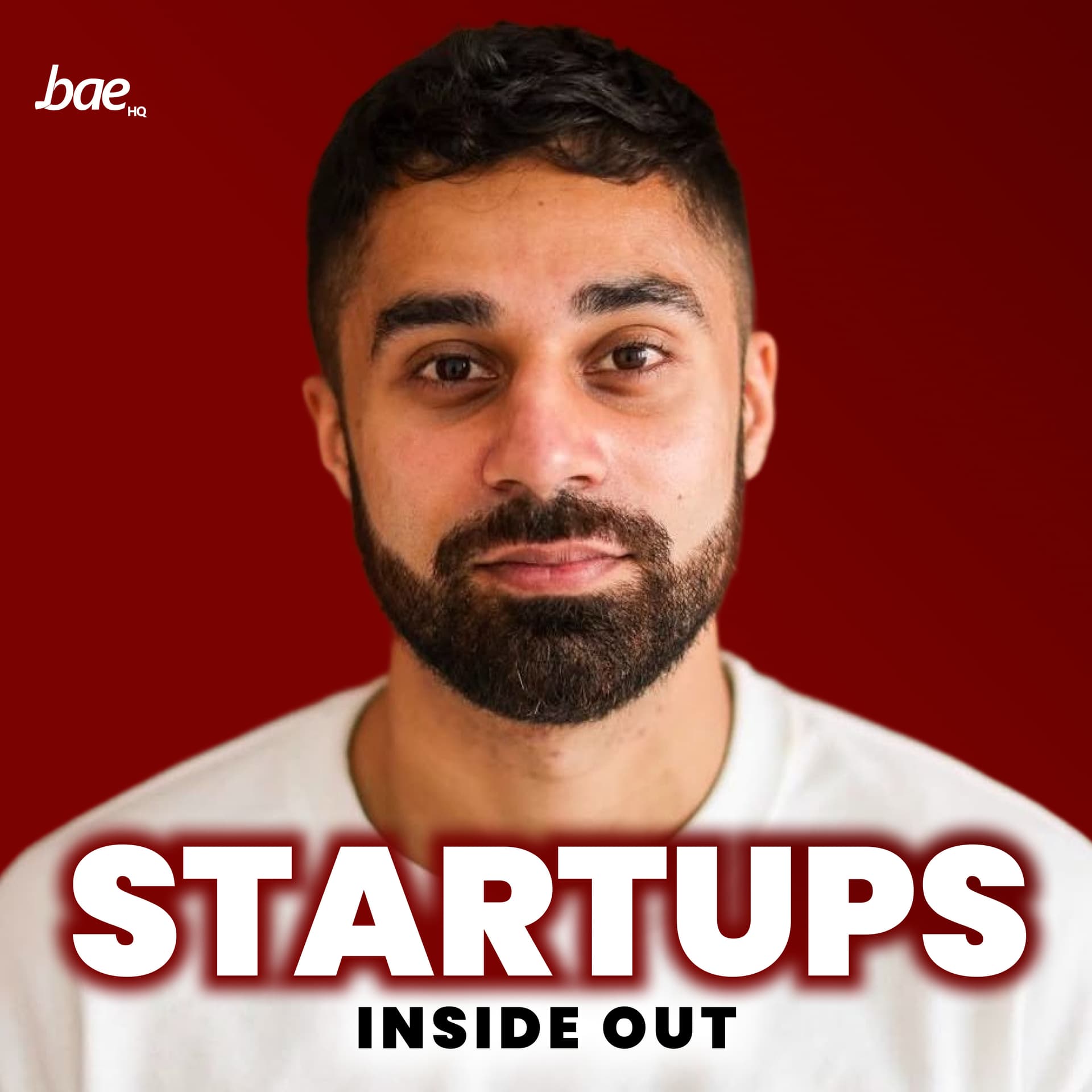
Podcast Episode Notes: Startups Inside Out - Episode 291
Episode Summary In this episode of *Startups Inside Out*, Amardeep Parmar interviews Sameer Singh, a Partner at Speedinvest, focusing on his investment strategies in the consumer technology sector. Sameer shares insights from his journey, discusses the importance of network effects, and provides advice for founders navigating today's market landscape, including the current trends in AI and consumer tech.
---
Key Concepts
- Investment Focus and Background
- Sameer Singh is a seed stage investor at Speedinvest, primarily focusing on consumer technology.
- He has developed an interest in network effects and hobbyist robotics.
- His journey into consumer tech began with writing a blog about smartphone operating systems, which led to a position at App Annie.
- Consumer vs. B2B Investment
- Sameer highlights the focus of many investors on B2B (Business-to-Business) models, contrasting with his preference for consumer tech.
- He believes that understanding the consumer landscape and having a circle of competence is crucial for success in investing.
- Investment Philosophy
- Sameer's investment philosophy revolves around identifying founders who have a genuine motivation (missionaries vs. mercenaries).
- He employs specific questioning techniques to differentiate capable founders from those who may not have the necessary commitment.
- Market Dynamics and Current Trends
- Sameer describes the current consumer tech market as being in a "bear market trough" phase, with scrutiny around AI product integration.
- Founders are advised not to shoehorn AI into products unless it genuinely adds value.
- Engagement Metrics Over ARR
- Sameer argues that traditional metrics like ARR (Annual Recurring Revenue) are less meaningful in consumer tech.
- He emphasizes the importance of engagement, retention, and organic acquisition as leading indicators of a product's success.
- Advice for Founders
- Founders should focus on long-term sustainable growth instead of short-term fundraising.
- Understanding user behavior and feedback is crucial, especially during product development.
- Robotics Experimentation
- Sameer discusses his personal project in hobbyist robotics, highlighting the potential for local AI applications and the economics of running AI models locally.
---
Key Takeaways
- Understanding Network Effects: Sameer explains that a product becomes more valuable as more users join, creating a self-reinforcing cycle that is crucial for consumer tech success.
- Choosing the Right Founders: The motivation behind a founder’s journey plays a significant role in their potential for long-term success.
- Navigating Market Changes: Founders should stay flexible and be prepared for market fluctuations, particularly in times of economic uncertainty.
- Focus on User Engagement: Building a product that provides genuine engagement and retention metrics is essential before monetization efforts.
- Future Outlook: Sameer expresses optimism about the potential for breakthroughs in consumer tech and robotics, emphasizing the importance of innovative thinking.
---
Conclusion This episode provides valuable insights into the consumer investment landscape from Sameer Singh's perspective as a seasoned investor. His focus on network effects, founder motivation, and user engagement metrics offers a rich understanding of what drives success in the consumer technology sector, particularly in today's evolving market.
Written by AI. May contain mistakes. Listen to the episode to check what was said.
Chapters
Tap a time to open that second in VOInvestment Focus and Journey
0:45 to 2:53
Sameer discusses his focus on consumer technology and his journey in the field.
“Long story short, that's how App Annie found me.”
Characteristics of Successful Founders
2:53 to 5:10
Discussion on what makes a successful founder in consumer tech.
“a massive outsized success and why this particular founder is the one who will have massive outsized success with this particular product.”
Market Conditions and Current Trends
5:10 to 7:56
Sameer shares insights on the current market conditions for consumer technology.
“I should probably go figure or I'll get back to you with an answer.”
Advising Portfolio Companies
7:56 to 10:36
Advice on navigating the fundraising environment and product management.
“then for sure you should experiment with it.”
Engagement and Retention Metrics
10:36 to 12:10
Focus on the metrics Sameer looks for in consumer investments.
“So monetization is right at the end of the ladder.”
Experimenting with AI and Robotics
12:10 to 14:01
Sameer discusses his personal projects involving AI and robotics.
“if I'm running a model locally, what kind of product category can you build with that?”
Understanding Network Effects
14:01 to 15:14
Learn how network effects enhance product utility and market dominance.
“But I think yours is very obvious with the kind of reputation you built about your expertise in network effects and everything there.”
Investing in Network Effects
15:57 to 16:54
Explore how investors can identify and enhance network effects in startups.
“And when you're looking at investing, it's interesting.”
Distinguishing Network Effects from Virality
16:54 to 19:53
Understand the distinction between true network effects and product virality.
“how do you then help them to really like exploit that and make the most of it?”
Common Misconceptions in Network Effects
19:53 to 21:45
Learn about the misconceptions investors have regarding network effects.
“I mean, the basic one is just people tend to use very loose definitions around the stuff.”
Show all 22 chapters
Cultural Differences in Valuing Network Effects
21:45 to 23:12
Discuss how cultural differences affect the understanding of network effects in investment.
“where a lot of these companies are attributed to have network effects of properties that made a whole bunch of companies massively successful.”
Investment Philosophy and Conviction
23:12 to 26:03
Gain insight into the founder's investment philosophy and approach to conviction.
“I've not been a herd thinker so to speak.”
Lessons Learned from Early Investment Mistakes
26:03 to 28:00
Hear about key lessons learned from early mistakes in angel investing.
“And so obviously you started more of an angel and then obviously now gone into VC.”
Understanding Monetization Timing
28:00 to 28:34
Learn how to determine the right time for digital monetization in startups.
“because a lot of times you're not monetizing right off the bat.”
The Importance of Engagement Before Monetization
28:34 to 29:42
Discover how engagement and retention impact monetization strategies.
“It is specific to each product and company, right?”
Successful Companies with Network Effects
29:42 to 30:44
Hear about companies that have effectively leveraged network effects.
“Are there any of the companies you like one spot that you think have done network effects really well within your portfolio?”
Criteria for Identifying Breakout Companies
30:44 to 31:55
Learn about the factors to consider when identifying potential breakout companies.
“And then looking forward as well, is there anywhere any particular sectors you're looking at as where there could be a next breakout company or even more widely.”
Consumer vs. B2B Investment Dynamics
31:55 to 33:44
Understand the differences between consumer and B2B investment landscapes.
“Increasingly looking at more multiplayer products that have AI under the hood, where every engagement does not require inference.”
Investment Process Insights
33:44 to 35:34
Gain insights into the investment process, from initial contact to evaluation.
“But that's not always a good thing because people jump in for the wrong reasons.”
Future Investment Aspirations
35:34 to 36:31
Explore the future aspirations and areas of interest for investments.
“be episode I think was 290 something, so if we get you back on 490 something, what would you love to be able to say in that time you've done?”
Celebrating Impactful Founders
36:31 to 37:08
Learn about influential founders in the UK and their contributions.
“So we're going to go to wrap up questions now.”
Engaging with the Audience and Final Thoughts
37:08 to 38:14
Discover how the audience can connect with the guest and closing remarks.
“surprisingly helpful, especially for someone who's had so much success and surprisingly down to earth.”
Transcript
Automatic transcript. May contain errors.0:00Amardeep Parmar:Great to have you here today. So can you tell us what you invest in?
0:03Sameer Singh:First, thanks for having me. I am a seed stage investor with Speedinvest and I invest in consumer technology. I've historically had a love for network effects, although I'm increasingly curious about hobbyist robotics as well.
0:16Amardeep Parmar:And with consumer tech, right? So for so many people in the UK industry and in Europe, I guess, as well, there's been such a focus on B2B. And you're obviously zigging where a lot of people are zagging, right? So what made you go for consumer and why are you so interested in that side?
0:30Sameer Singh:I mean, historically, the story of how I moved to London was deeply mixed up with consumer tech. I was writing a blog about smartphone operating systems and the applications being built on them because when I got my first smartphone, I thought it was interesting. Long story short, that's how App Annie found me. And I moved to London to join them. Appani was an app market data company for consumer apps. So all of our customers were pretty much the largest consumer apps and consumer tech companies in the world, all the way from Apple, Google, Facebook, Snapchat, everything. So I learned a lot more about that.
1:11Sameer Singh:And so when I left, I started getting deeper into network effects, a topic which I touched on repeatedly at Appani and when I was writing my previous blog. And so I started writing about that. got deeper into that, founders started reaching out to me. And so I started naturally investing in that area because that was where my knowledge base was, my circle of confidence was. And also that's where my deal flow as a consequence came from. So yeah, that's basically why I chose that specific topic. I've historically learned that the best investors are those are deeply curious about and interested in their particular topic and also develop a circle of competence.
1:53Sameer Singh:That way, you know what you're looking at and you also know what you shouldn't be looking at because outside your circle of competence.
2:00Amardeep Parmar:And you mentioned that Google, Facebook and all these massive companies. And I think Neil, who was obviously, you're an investor in as well, came on and said about how there's, every one of those sorts of B2B SaaS, B2B SaaS, but then you look at the world's largest companies and where are all of them. And when looking at that too, I guess it's in a way where it's a different style of investing with a consumer in that the outcomes that are big are extremely big, but then there might be fewer smaller exits. How do you model that as well? How do you think about it?
2:29Sameer Singh:I mean, historically, venture as an asset class is built on large exits and the smaller exits don't really move the needle. So while it might seem like smaller exits are, you might say, the less risky part, it's almost the opposite. Because if the exit isn't large enough if you're not really returning your fund. And so philosophically when I look at a company, I'm thinking about what's the path for this particular company to have a massive outsized success and why this particular founder is the one who will have massive outsized success with this particular product. And everything else is kind of just noise.
3:09Amardeep Parmar:So you said about how to pick the winners there as well. And I think when we were talking earlier, you said about how some of the traditional markers that people look for aren't actually that relevant when it comes to consumer. So what are you looking for? You're looking for founders, especially the early stages.
3:23Sameer Singh:So when I look at a founder in particular, there's a couple of main things you're looking for. At first is, is the founder a missionary or a mercenary? Do they have a reason why they're building this product? Where did they get their insight from? Building a successful company is like a 7-10 year endeavor. If you're jumping into something where it's hot, you're not lasting that long. Often you see companies that sort of raise meaningful rounds and then kind of have pointless, meaningless pivots every couple of months, every couple of years, it's usually because their founder is a mercenary. Like you know, he didn't see quick success, he doesn't really have fundamental belief in problem or the idea.
4:08Sameer Singh:So instead of persevering, he's going to switch. It could be the right path. It's impossible for him to know because he doesn't really have it in him to pursue that path because they went down that path for the wrong reasons. So the first is just the motivation. What did you come across in your personal or professional life that convinced you that this was a problem worth solving and why you were the right person to do it? That's step one. The second is a trick I picked up from a Mark and recent interview years ago, to separate real founders from Charlotteson founders. A lot of founders are phenomenally good, very charismatic, really good storytellers, but they might be playing a part really well as opposed to being great founders themselves.
4:54Sameer Singh:And his trick is you ask them increasingly more specific questions. And someone who's in it for the right reasons will have spent so much time uncovering this that they will give you increasingly specific answers. And if you hit something that they don't understand, their natural response is curiosity because they go, oh, that's a good question. I should probably go figure or I'll get back to you with an answer. Whereas the wrong type of founders, they are the ones who will either get defensive or aggressive at that point. So it's a very easy way to kind of filter out folks that have the capability in it for the right reasons, which is especially important in consumer because it is not an easy path.
5:37Sameer Singh:No space is hot for a seven to ten year period. You will have periods where it's really hot for a year and then the rest of the time it's not and fundraising is not easy. And if you're going through a ten year period, there's up cycles, There's down cycles, there's hype periods, and there's sort of massive bear markets. And you have to navigate through all of them.
6:00Amardeep Parmar:And what period would you say we're in now for consumer?
6:03Sameer Singh:For consumer, I mean, if you're looking at consumer tech in general, non-AI, it's very much sort of a bear market trough period where it's not in fashion. For certain types of consumer AI products, it is very much a frothy time, if I were to put it mildly, where anyone with the right CV could probably raise 5 million, 10 million on an idea. If you're more into the research side and you came from the right companies, maybe hundreds, billions. We also know that those times tend not to last, especially if you look back at the history of technology, not just five years, 10 years where most people's memories are.
6:48Sameer Singh:look back the last 100-200 years of technology, we have that much history to look back on. There's a lot you can learn about investor behavior and human behavior during those periods.
6:58Amardeep Parmar:And obviously, you went to portfolio companies and you're obviously doing a lot of value add for them as well. What are you advising them right now? In this current period with AI, it can be so noisy and it's probably very easy for them to get distracted.
7:12Sameer Singh:I mean, there's different types of advice. One is kind of how do you manage the fundraising environment and your cash situation. Second is how do you manage your product. I think right now a lot of founders are getting very bad advice from investors around, hey, you know what, you need to sort of shoehorn AI into your product if you want to raise funding. Because to most investors, the goal of a company is to raise funds, which is kind of not the point of a company. The point of a company is to, as they say, create customer, be successful over time, and fundraising is sort of an input that helps you towards that goal.
7:49If there is some AI functionality or an AI feature that really unlocks some real value in your product,
8:00Sameer Singh:then for sure you should experiment with it. And those ideas could be unsexy in some cases. In some cases, they could be very sexy for investors. Unsexy ideas would be where the AI is not directly exposed to the user, whether it's working in the background. Sexy ideas are users interacting with AI. But you need to figure out what's right for your product, what genuinely unlocks value for the user, where are you actually seeing meaningful impact on engagement retention and longer-term revenue, because AI does have a cost associated with it. Then is when you experiment with it. You don't shoehorn, you're like a food company and you're trying to shoehorn AI into serving something to a user, you've got a problem.
8:46Sameer Singh:Use it judiciously and not indiscriminately. On the funding side, I've increasingly been telling companies, look, if you're in position to raise money in the first half of this year, you probably should. If you're not, focus on generating revenue. The next 12 to 18 months in particular are the time to live to fight another day as opposed to fight right now. There are a lot of things that concern me about the current market environment and that can create uncertainty on fundraising timelines on investor expectations which are gradually detaching from reality in some cases. Yeah, so essentially trying to get them to prepare for ensuring that they can maximize their their lives right now to make sure you have something sustainable rather than just sort of depending on the vagaries of the market which is I think increasingly in this environment getting
9:53Amardeep Parmar:more unpredictable. And obviously, we're seeing right now where you have these companies that say, okay, cool, we've got to like 100 million ARR in like two months and things like that. And obviously, as an investor, you're having to look through that and try to see what the underlying numbers are. Is there any metrics you particularly look for, you really pay attention to to try to assess that?
10:12Sameer Singh:As a consumer investor, I think ARR has never really been a meaningful metric for us to look at, which also means that we kind of need to look at the input metrics. ARR is very much an output metric which is increasingly being calculated in very creative ways, so to speak. And that's true for both ARR and gross margin in the current environment. What I look at in order are engagement, retention, organic acquisition, monetization. So monetization is right at the end of the ladder. You first need to prove engagement, retention, organic acquisition. Engagement retention in particular are the two most important ones that I would look in order and sort of the exact definitions kind of depends on each product.
10:54Sameer Singh:But as an example, right, say you're on Snapchat, you're trying to figure out like does adoption genuinely increase the value of the product and so are the number of snaps received slash opened per user going up over time. The first most basic metric, right? Well, one of the first things I saw in HowBout as well back in the preceded round is that their events created and sort of event responses per user was going up anywhere between 3 to 5 to 6x in a couple of months. So you could see it very, very clearly in that data. Usually that's what I'm looking for. Everything else is downstream from that.
11:31Sameer Singh:It doesn't matter if your ARR is calculated correctly and it's growing very strongly and your retention and engagement don't really work, that's not going to last.
11:39Amardeep Parmar:You mentioned as well just on the ARR point about your experimenting yourself, right? So I know you're doing a few different things. How are you experimenting with AI on your own? So I'm building a robot.
11:51Sameer Singh:I think AI is a very interesting technology. Right now, the biggest questions I have about AI are economics. And to me, the economics make most sense when you run AI locally and your inference cost-effective is zero. The marginal cost of using it is zero. So that really unlocks a lot more usage, but also then you have to ask your question, if I'm running a model locally, what kind of product category can you build with that? Robots seem like the obvious way to do it, and it sounds weird that I would say to someone I'm building a robot, but I spend about 150 pounds on the hardware, zero pounds on the on the inference, and so far what I have is a voice-activated car with a bunch of sensors and cameras.
12:39Sameer Singh:I can just say, hey, drive up to that pile of books and look around and find pile of books and drive up to it and say, hey, I reached the pile of books. And there's more stuff I'm trying to build on top of that, but there already seems like a pretty interesting demo for someone who doesn't really know how to code so this is where you know cloud code definitely helps um and it does seem like
13:05Amardeep Parmar:there's something there just in hobbies robotics a lot of that space just reminds me of where personal computing was in like the early 70s have you got any hopes or things you want to try and do with the cars you've talked to how to to see something can go towards what's your next
13:18Sameer Singh:challenge you're coming out so a few things i'm going to try uh one is sort of following someone Second, and this is the funnier one, following someone while giving them a tour of what it sees. That seems fun. Another couple ones are, you know, a guard dog mode or patrol mode where it sort of drives around an area and tells you if it sees something out of place. Stuff like that. This particular kit that I have doesn't have an arm. The next one I'll probably get an arm as well, so you'll have a whole bunch more use cases of it trying to pick things off the ground and getting getting them to you.
13:53Sameer Singh:Obviously, smaller things can't pick up huge things.
13:56Amardeep Parmar:But yeah, that's sort of the universe of things. I'm open to other ideas. You said you don't have a coding background, right? And for some investors, I'll ask them, what's their value add? But I think yours is very obvious with the kind of reputation you built about your expertise in network effects and everything there. For people who don't really understand what network effects is, how would you explain it?
14:13Sameer Singh:The basic definition is a product that gets more useful as more people just start using it and so the utility of the product increases with adoption. And so that creates this self-reinforcing flywheel where once you start getting an early lead, it's almost impossible for another product to supersede you because since they are earlier, they don't have any users and so they don't have the utility. And so people end up picking you as a product. That's the basic definition. And it manifests itself in lots of different ways. So how about the social calendar has obvious network effects because people use it with their friends.
14:53Sameer Singh:Even robotics that I'm experimenting with right now, I can see lots of room for network effects there either with hardware add-ons or skill add-ons on top. So there's definitely room there. Yeah, there are lots of different flavors of them. That's an area I can talk about for hours. I have created a course about it as well.
15:14Amardeep Parmar:Hello, hello. I hope you've enjoyed the show so far. I'm Amriti Palmer, co-founder of BayHQ and the host of this show. For those of you who don't know, BayHQ is the community for high growth Asian heritage founders and investors in the UK. Over 7 ,500 people have attended our events. 200 people have been for our impact programs. And obviously, there's been over 250 episodes of this podcast. If you want to join us and take part in the programs and come to the events, go to bayhq.com forward slash join. We also just released our first ever book called Startups for Outsiders, which you can get on Amazon now, and the link is in the bio.
15:55Amardeep Parmar:Hope to see you soon at our event. Hope you enjoy the rest of the episode. And when you're looking at investing, it's interesting. Do you think about companies which maybe aren't using network effects well at the moment? And you think, OK, if I invest in them, I can potentially bring my expertise and you can make a real difference. Or are you looking at people already doing network effects by one, really leveraging them?
16:13Sameer Singh:It's very tempting to do the first. The challenge with consumer products is they tend to humble you quite a bit in the sense of you can always assume that, hey, this is a great idea. People will do this and people will go, nope. And you see something and go, that's a stupid idea. People start doing it. So I am behavior-led more than anything else. Multiplayer products are complex. Multiplayer consumer products are even more complex. And so you're always looking for the earliest signals that there is the seed of a network effect here. Like once the behavior exists, I can help the founders unlock more of it.
16:50Sameer Singh:But it's very hard for me as an investor to create something when it's not there. If you give an example, say with HowBout, for example, once you could see, okay, they've got the basic network effects there,
16:58Amardeep Parmar:how do you then help them to really like exploit that and make the most of it?
17:02Sameer Singh:The way I work with founders, essentially, is, and the Hubbard founders were fantastic at this, they made my job insanely easy, is we just meet once a month and we're basically talking through, here's the product roadmap, this is what we're going to work on building this month, and this is what we built last month, and this is what we're seeing. So based on the behavioral signals, first, what should we be measuring to tell us if this is working or it's not working. And you basically kind of disaggregate user behavior and work out at every step of the user behavior of the user journey, what do you want to see?
Read the full transcript
17:41Sameer Singh:There are certain things that can be corrected and there are certain things that are just behavior and that you can't really opt for. So that's really what I'm trying to do. I'm not really building, like I might suggest a few product ideas here and there, but a lot of times they can be bullshit because everyone can have ideas. But it's more so understanding what's happening on the user side and understanding how users are reacting to the product, to any new changes.
18:11Amardeep Parmar:That's where I help founders more so. And obviously there's a difference between network effects and simple variety, right? And I think a lot of people are really mixed up. And I think even, for example, when people are talking, you're not being specific enough, you can quite easily just kind of blur the lines there. And how would you separate them out of where someone could be maybe going viral, but not really having not perfect time?
18:33Sameer Singh:I think these definitions have gotten even more modeled in sort of the current frothy environment. So the definition of a network effect is the product gets more useful as more people use it. Virality, or at least product virality, is when people spread the word about a product in process of using it. So let's say Zoom. Let's say I'm the first user who signed up for Zoom and we're having a call and I send you the link. So now you're aware of Zoom. But you could sign up for a Zoom account after that and it won't really affect my life. So there's no network effects there. It's purely virality. And of course there's stuff that just spreads on social media and stuff like that.
19:12Sameer Singh:That's not anything. It's just social virality. like this post went viral, because that's not even repeatable necessarily. At least the Zoom virality example is repeatable. Every single time the product is used by a user, they send the link to someone. So that's at least a repeatable growth flywheel, a viral loop. The stuff that's present on social media, that's not a viral loop at all. That's just, this went viral on social media today. Will it go viral tomorrow? Who knows? Yeah, and with the network effects as well,
19:44Amardeep Parmar:So you said you got the course about it. Yeah. What do you think is some of the stuff that people get wrong a lot or maybe the bits that people don't understand very well?
19:53Sameer Singh:I mean, the basic one is just people tend to use very loose definitions around the stuff. And to me, most investors tend to look at network effects like Joey from Friends. He had a comment in one episode, he's like, you know, you hear a word, you see a thing, that's what you think it is. Unfortunately, that's a lot of how investors view the term network effects, morality. It all sort of gets jumbled up into one thing. So, as an example, in 2021, you had a whole bunch of these scooter companies, 10-minute grocery companies, Opendoor, Home Flippers. and all these companies are like, these companies have network effects.
20:38Sameer Singh:Network effect companies have been super successful. So these will also be successful. None of those companies have network effects. I can buy and rent a scooter. But that doesn't mean that the next user who signs up gets increased value from it because another user signed up. Or because if I rented a scooter out to somebody else, there's two or 20 other companies that can also go buy a bunch of scooters and rent them out. It's not like there's a supply side there. You are the supply Same thing with 10-minute grocery companies. I was buying bananas, sticking them in a warehouse and selling them and delivering them to people.
21:10Sameer Singh:There's no network effects there. Same thing, if I buy and sell a home, there's no multiplayer interaction that creates a network effect. It's just I am buying and selling a home. These are sort of age-old business models. A retailer operates on inventory. Herds operates on renting assets that they have. a lot of home flipping businesses are built on buying and selling homes. None of those companies have had network effects, they're not technology companies. So that was sort of an interesting dynamic. And the same thing is kind of happening in the current environment where a lot of these companies are attributed to have network effects of properties that made a whole bunch of companies massively successful.
21:55Sameer Singh:And when you look closely at how closely on how these businesses work, they don't really have the fundamental elements. It's possible some of them will end up creating them over time, but so far
22:08Amardeep Parmar:there's not a lot there. I feel like a classic complaint as well for people building these kind of areas is that the UK and Europe doesn't understand these effects properly or they're not, they undervalue them maybe on the investment side. Whereas in the US it's more that people feel like if you go to the US you're gonna get investment for this. how much do you think that's true? Do you think there is a cultural difference in how network effects are viewed or valued? I mean there is some difference.
22:33Sameer Singh:I wouldn't necessarily say it's dramatic. I think it's just that the US has a larger investor ecosystem and so even if the percentage of people who understand this stuff is low, that's like a larger absolute number and in Europe it's just sort of the ecosystem is smaller. So there's probably a difference in percentage to be completely honest with you but i don't think like that's the biggest factor i just think there's like a small group of people who've invested the time and effort to understand the stuff and that will remain to be a small group of people because it takes time and effort to
23:08Amardeep Parmar:understand the stuff and obviously like with speed invest you're leading rounds into consumer companies which you mentioned it was like quite a rare thing in europe as well what gives you the conviction to be able to do that and to people who also don't understand about the difference between leading and following obviously by leading the round you're setting the price you're saying all these different things how what gives you the conviction to have to do that as opposed to obviously so many other people just follow i mean the first one is that you got to do your own work right uh it's one thing to say uh you invest in hot companies it's another thing to say you've
23:42Sameer Singh:done your work in this company and this is kind of what drives conviction and so one of the things I've always tried to do is to make up my own mind on a company and I just think that's kind of how I'm wired.
23:54Amardeep Parmar:I've not been a herd thinker so to speak.
24:02Sameer Singh:And it's kind of hard to be a herd thinker if you're a first principles thinker.
24:05Amardeep Parmar:Usually there are two entirely different
24:09Sameer Singh:ways of thinking. And the same reason why in 2021 I kind of stayed away from all of the hyped companies of the time and I was investing in stuff that made sense to me. Even though I was investing as an angel back then, which made things difficult because you still have to find someone to lead the round. But that's kind of how I'm investing right now as well. I'm just trying to do my work to figure out what is it about this product and this founder and this company that makes sense. Is there something I don't know? What is that? How can I get better understanding that? And just go from there.
24:50Amardeep Parmar:And so I let the market do what it does. When you're investing as an angel versus VC as well, how much of a difference does it make to what you're looking for?
24:58Sameer Singh:For me personally, it doesn't. Because what I'm looking for is outside success. There are some angels who kind of go, you know, I'm going to invest in this company and I'm going to try to sell out at like a certain valuation. I think doing that certainly increases your pool of opportunities because you're not locked into finding a company that's not going all the way. But personally, I've always found that challenging because your fundamental frame of reference at that point changes because then you're kind of moving away from first principles to herd behavior. Because you do need herd behavior to create those near-term exit opportunities.
25:38Sameer Singh:And so that's something I've always personally struggled with. I am someone who's a long-term thinker. I want to see why this company or this founder, do they have what it takes to succeed the test of time? And that's what historically in investing has generated outsized return. Whether you're looking at public markets, private markets it sort of works the same way of getting into the right asset and then holding on for dear life over time and it's just how i think it's not saying it's sort of the right way or the wrong way but that's that's how i like to think and sort of at least in my mind kind of fits what we're doing it gets unpopular at in certain market cycles you might say but like the i think a great investor once said that your investing approach should not be dictated by market cycles.
26:33Sameer Singh:If you invest the same way, whether the market is thinking that every investment is going to be a thousand X or the market thinks that every investment is going to zero, your investor, your investment is generally, if you do your homework and you stay grounded, then we'll
26:52Amardeep Parmar:tend to do reasonably well. And so obviously you started more of an angel and then obviously now gone into VC. Are there any mistakes you made in the early days that now you try to avoid or things you've learned? Yeah, for sure. You've made their own choices.
27:03Sameer Singh:A lot of what I shared is so far a lot of stuff I've learned along the way. Like in my first year of investing, I, in certain cases, did get swayed by, you know, like everyone's trying to invest in this company. This is a really hot deal. And those, in retrospect, turn out to be the worst investments. I don't know, my worst performing investment in my first year of angel investing had nine term sheets from the biggest name investors in Europe. I think some might be some US ones as well. And the best performing one took a very, very, very long time to raise the seed down and that pre-seed was a crowdfund.
27:40Sameer Singh:So very quickly learned that what other investors think does fundamentally does not matter. That's one. Second, I think in some cases I underestimated the importance of distribution and overestimated the importance of product. You kind of need that kind of two sides of the same coin. So, learn to appreciate that a bit more, especially in consumer, organic acquisition is important because a lot of times you're not monetizing right off the bat. And so, the less you're monetizing off the bat, the more organic acquisition is important. The more you're monetizing, the more leeway you have to to experiment with pain, right?
28:21Sameer Singh:So that's another thing that we'll learn to appreciate after that first year of angel investing.
28:25Amardeep Parmar:You mentioned as well how the different layers of metrics you look at, monetization was at the bottom. How do you think about that in terms of when is the right time to start digital monetization? Is it just very nuanced for each company or is there some signals you look for?
28:37Sameer Singh:It is specific to each product and company, right? So if this is meant to be a product that you use with other people, it's very hard, unless it's a marketplace that's transactional, for you to monetize off the bat. Because often what can happen is your attempts to monetize can prevent adoption, which is actually harming the value of the product. And so in those cases, you have to kind of go, right, this is the product that way you'll have to prove engagement retention first before you monetize. There are certain other types of products, things that are single-player tools are an example where monetization, you can monetize a product, because it doesn't harm the value of the product.
29:18Sameer Singh:Or transactional marketplaces, because by virtue of proving out the fact that you have liquidity in the marketplace, you have to monetize. Otherwise if you create a marketplace that doesn't have any monetization, you might be getting false signals on the liquidity as well. Maybe people aren't willing to transact if you add a take rate in there. So those are things where it's more natural within the business model to monetize.
29:41Amardeep Parmar:And we mentioned how about a few times now, right? Are there any of the companies you like one spot that you think have done network effects really well within your portfolio?
29:49Sameer Singh:I mean, how about probably certainly up there. It's kind of hard to find a company that has cracked as well as them. They're probably one of the, within this timeline, one of the companies that, one of the best mass market products that's come out of Europe with millions of users. Apart from that, there are smaller companies that I think have done a good job. They're earlier in their journey. There's Blind Mate in Europe that I think is doing a really good job. There's Revise in France that are moving into the UK right now. They're doing an interesting job. there's Home Cooks here in the UK that is on a very interesting trajectory in particular this year that's doing well and so there's a few companies that are a bit earlier in the cycle but are learning and sort of carving out a few niches for themselves where they can expand out from there but Hubbard is probably the biggest mass market one
30:47Amardeep Parmar:and so I don't know if you explained
30:48Sameer Singh:what Hubbard is for the Uniswap so the simple version is that it's a social calendar so if you're at work and you want to find out when your co-worker is free so you can grab some time with them you can quickly take a look but if you want to find out when your friends are free that's not possible so Hubbard brings you that Google Calendar experience for your friends and also has a lot of social feed where you can get a quick sense of what their weeks are like, like what are they doing right, what are they up to right now.
31:17Amardeep Parmar:And then looking forward as well, is there anywhere any particular sectors you're looking at as where there could be a next breakout company or even more widely.
31:25Sameer Singh:I think by nature of being a consumer and network effects investor, it's hard to pick a particular sector. And also because as an investor, you're less close to the problem than founders are. So you're trying to be too opinionated on that can backfire sometimes. So I usually try and focus on, how does the product work? there's always a real problem is their behavior there or there is there a route for this company to be truly scalable and defensible as opposed to trying to say you know what i want to be i want to invest in something that is bringing like a social experience to i don't know like a note taking or something right there you can quickly run it wrong so yeah much more open about sort of what these products look like.
32:18Sameer Singh:Increasingly looking at more multiplayer products that have AI under the hood, where every engagement does not require inference. So you're more insulated against input shocks. So that's one broad interest area that I'm looking at. But outside of that, I generally would not be too specific about the kinds of problems that I'm
32:43Amardeep Parmar:Do you see as well, is there, because obviously there's fewer consumer investors than say B2B investors in Europe, do you see a similar number of deal phone you're having to filter more aggressively or are there fewer consumer companies out there in Europe as well? I think it's probably, there are sort of a smaller group of consumer investors for sure,
33:03Sameer Singh:especially at this stage. There's a few generalist investors that do everything, but in terms of consumer-consumer, it's a smaller group. but in general i think the number of consumer companies will be smaller than the number of b2b companies because there's more b2b investors so you know whenever there's supply and demand shows up to match it and the other way around in 2021 was a bit of an aberration where there were a lot of consumer companies because that was the year everyone's investing in consumer right so i think that's corrected over time and so yeah that does it's not that there's hundreds of companies that show up every day and you have to super aggressively filter there are i think a lot of consumer AI companies.
33:40Sameer Singh:But yeah, that's an interesting sort of dynamic. Anytime a space gets hot, you get a lot of volume there all of a sudden. But that's not always a good thing because people jump in for the wrong reasons. So you have to do some aggressive filtering of the founders.
33:53Amardeep Parmar:And what does your general process look like? Is it, I think with Speed Invest, you have the form online, right? We do.
33:59Sameer Singh:Although I'm pretty open about how founders can contact me or ping me on LinkedIn, drop me an email, go for it. I list my email on my LinkedIn. For me, it's hard to respond to every single email, but if I see something interesting, I'll get back to it. The first filter is just a first call, if I like what I'm seeing, to get a sense of what's your motivation, what's driving this, what's your story of how you got to this point. And after that, give me a step-by-step breakdown of how the product works, product demos are ideal because then you can kind of see where the network effects are or aren't or you can see what makes it defensible or what doesn't make it defensible.
34:43Sameer Singh:That's usually pretty deeply embedded in the product itself and then getting a sense of what's the mode of distribution for this product? What are you experimenting so far? So that's broadly what I'm trying to get a sense of in the first call and after that next step for me is to dig into behavior. So what are we seeing so far? What's working? What's not working? There's some things that you expect to be broken at that stage, those things are fixed, that's fantastic, but I'm not expecting those to be fixed. There's other things that are non-negotiables that I'm expecting to see. If those are not there, I'm like, okay, either it's too early for me or there's something here that fundamentally doesn't work.
35:21Something about the core assumptions behind
35:24Sameer Singh:the product is something broken there. It's very hard to separate those two early on. And this is where I always caution investors from making too many assumptions for what people will do.
35:33Amardeep Parmar:And what we're doing now, so getting people on say every two years roughly, so this will be episode I think was 290 something, so if we get you back on 490 something, what would you love to be able to say in that time you've done?
35:47Sameer Singh:That I've made my first robotics investment and I see a path to network effects for that product. That to me is a big one. Another one would be like, we probably went through an economic crisis and we survived it. That's a good one because it does seem like that is inevitable at this point. But yeah, that's a big one for me. I think robotics is, hobbyist robotics is probably the most fascinating space right now looking forward for the next couple of years. Do I think I'll make an investment in the next one year? Probably not. two years out, I hope I get to make at least one. And then sort of increasingly more going forward.
36:31Amardeep Parmar:So we're going to go to wrap up questions now. So the first one is, who are free Asians in Britain you think are doing incredible work? And do you want to shout them out?
36:39Sameer Singh:In Britain, I mean, first, Neil from Harvard. He's probably my favourite. That's my favourite founding team of all time. So definitely him number one. Dipali, this is partly my speed invest bias. She's a fantastic person. She's always going to help you. I think most people who've met her love her because she's helpful. Third tricky one, but I'll probably say Reese. Obviously, he's probably one of the most popular shout out. He's probably well deserved. He's surprisingly helpful, especially for someone who's had so much success and surprisingly down to earth.
37:15Amardeep Parmar:Great guy. Awesome. I think that gives Reese his 10th shout out. The first one to get to 10. Yeah. And then, so you mentioned how people can reach out to you through LinkedIn and email, or if you want to find out more about speed investing, about what you invest in too, what's the best way for them to do that?
37:29Sameer Singh:I mean, I'm usually pretty loud about what I like. You can check out the Speed Invest website. I've probably got a few blogs on the Speed Invest blog on what I like to see. I also have a personal blog, breadcrumb.vc, where I write a lot about what I like and what I'm scared about and what I'm fearful of. So yeah, you can find my work usually on LinkedIn.
37:49Amardeep Parmar:So you can look at that. And is it in a way that the audience could help you today?
37:53Sameer Singh:I mean, if you are building something interesting in consumer technology, just feel free to reach out. Or if you know someone interesting building something in
38:02Amardeep Parmar:consumer technology, send them my way. So thank you so much for coming on.
38:05Sameer Singh:Thank you for having me on.
38:06Amardeep Parmar:Any final words? No, that's everything.
38:13Hey!
From the publisher
Amardeep Parmar from Bae HQ welcomes Sameer Singh, Partner at Speedinvest.
Amardeep Parmar: https://www.linkedin.com/in/amardeepsparmar
Sameer Singh: https://www.linkedin.com/in/sameer-singh-1ba0177/
Speedinvest: https://www.speedinvest.com/
👉🏽 Learn through our IncuBaetor: https://www.thebaehq.com/incubaetor
👉🏽 Join Bae HQ: https://www.thebaehq.com/join