In short
Westcap growth equity (“operating equity”) and how it invests as a minority partner by pairing capital with in-house operators to drive long-term value, plus how AI is changing growth investing and what “moats” look like in an AI era.
Guest backgrounds
Karn Dasgupta leads Westcap’s European investment coverage. He previously worked in private buyout and investment banking; Westcap’s model draws on operator/investor experience from firms like Blackstone and Airbnb.
Key claims
Westcap invests from Series B/C to pre-IPO (tens of millions ARR) in disruptive category leaders; it has ~40 full-time operators and supports portfolio companies without charging them. Value is “force multiplier” support (e.g., treasury, scaling headcount, go-to-market), not majority control. Due diligence emphasizes long-term trust, founder fit, and data quality (board packs should reflect operating data). In AI markets, revenue quality/defensibility matters more than growth alone.
Notable examples
Unlocking “tens of millions in ARR” via channel partnerships; a creative agency rebrand model (transactional brand work vs long-term growth investment). Moat examples include proprietary insurance claims data, enterprise system inertia (Salesforce-like), and cybersecurity DevOps community/expanding playbooks.
Written by AI. May contain mistakes. Listen to the episode to check what was said.
Chapters
Tap a time to open that second in VOUnderstanding Westcap's Investment Approach
0:45 to 2:16
Karn explains Westcap's growth equity strategy and operational equity concept.
“And when you say that the operational equity as well, tell us more.”
Recent Success Stories from Westcap
2:16 to 3:54
Karn shares examples of Westcap's impactful investments and strategies used.
“We don't charge our portfolio companies.”
The Role of Strategic Support in Investments
3:54 to 6:06
Discussion on how Westcap provides strategic support to founders and companies.
“And one of the reasons I want to move is I realized you don't have to be a majority control investor to add value.”
Building Relationships with Founders
6:06 to 8:01
Karn emphasizes the importance of building trust and long-term relationships with founders.
“So people randomly reach out to me and it's a funny thing sometimes you get unsolicited.”
Preparing Founders for Growth Investment
8:01 to 9:58
Insights on what early-stage founders need to focus on to attract growth investors.
“an evaluation sense, where they'll net, you know, payouts to carriers or things like that.”
The Role of AI in Growth Investing
11:18 to 13:14
Karn discusses the integration of AI in startups and its implications for growth investing.
“At the early stage, people are looking at, are you using AI internally?”
Navigating Uncertainty in Investment Decisions
13:14 to 14:00
Karn explores how geopolitical factors and AI affect investment strategies.
“How is it changing how you invest beyond that?”
Understanding Founder Agility and Long-Term Investments
14:00 to 15:00
Learn about the importance of founder adaptability and investing for long-term success.
“Does the founder to have the agility to constantly reinvent the company and take bold choices and decisions.”
Identifying Moats in Series B and C Companies
15:00 to 16:30
Discover what differentiates successful companies at later funding stages.
“or, like, even if you keep the company anonymous, Just give me a bit, what is it that can set somebody apart there?”
Building Investor Relationships
16:30 to 18:10
Explore how building trust and understanding with founders can influence investments.
“I think it's a combination of like deeply proprietary data, some sort of unique distribution, which is very difficult for others to replicate.”
Show all 17 chapters
Sourcing Investments and Leveraging Networks
18:10 to 20:20
Understand how to effectively source and filter investment opportunities.
“What is rarer is a pitch deck to hit our desk and we'll be like, OK, let's go.”
Navigating High-Pressure Situations in Investment
20:20 to 22:40
Learn how to maintain composure and rigor in stressful investment scenarios.
“But what I love is actually post deal, and you sit at the table as partners.”
Advice for Founders on the Growth Journey
22:40 to 25:20
Get actionable advice for early-stage founders seeking growth capital.
“So, for example, I joined my prior fund nine days before COVID and we had music theaters, sorry, music festivals, theater groups, K-12 school groups.”
Key Insights for Future Goals
25:20 to 26:10
Hear Karn Dasgupta's aspirations for the future of his investments.
“So let's say in two years time, what would you love to say you've been able to do in those two years?”
Spotlighting Influential Figures in AI and Startup Ecosystem
26:10 to 28:04
Learn about key individuals making significant impacts in AI and startup sectors.
“was from the AI ecosystem or with our trading partners or implementing safety and guardrails and making Britain a place where AI research is done and investment comes is just phenomenal.”
Reflecting on Past Guests and Energy in Conversations
28:04 to 28:32
Discover insights on past podcast guests and their impactful energy.
Advice for Connecting and Seeking Opportunities
28:32 to 29:07
Learn effective ways to network on LinkedIn and how to connect with investors.
“Just feel free to reach out on LinkedIn on our website and can take from there.”
Transcript
Automatic transcript. May contain errors.0:00Amardeep Parmar:Great to have you here today, Karn. You're a growth investor at Westcap. Tell us what your role is and what you do there, what you do invest in. Absolutely. Well, first of all, Amar, thank you for inviting me on and having me. And big shout out to what you're doing with the community. I mean, it's really needed and particularly the stuff you're doing with the schools. It's super exciting. But just for myself, so Karn Dasgupta, I help lead Westcap's European investment coverage. And we're a growth equity fund. We actually call it operating equity. We invest in companies, sort of say, Series B, Series C, all the way up to pre-IPO, looking at companies, say, tens of millions at ARR, really looking for those disruptive companies that are really reshaping markets and becoming category leaders.
0:45Amardeep Parmar:And when you say that the operational equity as well, tell us more. What does that mean? Yeah, absolutely. It really comes back to our founder's sort of vision and his experiences. So he had an illustrious career. He was a successful founder, building unicorns as a co-founder such as iPrio. He was a tenured operator. He was formerly the CFO of Blackstone, helped build out their treasury and systems there. Went over to Airbnb where he helped get them ready to go public, led corp dev, payments, treasury, customer support. and also had a long experience as an investor. So he built Blackstone's Innovations Fund, which was a precursor to Blackstone growth and invested a lot in his own right.
1:28And what he saw was a lot of very sophisticated investors, a lot of operationally focused investors, but more on the majority buyout side. And what was missing was the nexus of operations and growth investing as a minority. So at Westcap, we have about 80 people and 40 of them are full-time operators. So think about 15 alumni from Airbnb, spanning head of performance marketing, product marketing, app design. We have go-to-market from Salesforce, former head of talent from Uber. And the way we work is we do relatively few investments, but we really back the companies we invest in with capital and support.
2:09And as we're a minority investor, it's always where the founders want us to plug in. And that's part and parcel of the investment. We don't charge our portfolio companies. And that's how we invest. And have you got any examples of recent investments you've made and some of the impact you've made there? Yeah, I have to give a few examples. So, for example, on the go-to-market side, we have individuals who spent decades selling as a former CRO, selling into enterprises. We have people in RevOps and customer success. and one of our companies we identified that they could build a really strong channel partnership channel which would allow them to sell far more efficiently than the direct outbound they had today and you know working with them hand in hand over two years we're able to unlock tens of millions in ARR through that or another example was we have a creative agency filled of many created from Airbnb, Sonos, Meta and beyond.
3:07And they've done full rebrands for the company. And what's quite sweet about our model is we're a traditional brand agency. They're incentivized on a very transactional basis. Whereas for us, we are really investing in the long-term growth of that business. So we really care about how does that brand support that business in the years and decades to come.
3:27Amardeep Parmar:What's interesting too, because I get a range of investors on here, right? and my own kind of personal opinions of how we go about it because sometimes people will be like oh we just invest and then we get out of the way and in a way you're then just almost like taking a bet right on the founders which i think like personally the smarter money is i'm going to invest in you and i'm going to help you succeed because then you have an edge right so if you're putting capital compared to another company valuation wise because you can actually move the valuation the longer term to me that's a natural way of doing it and like obviously i'm a fairly new to vc in the last few years like that to me seems the obvious thing you should do invest in a company and you make them more successful and i guess the pushback some people have right is that for some founders is that they don't want any advice they just want the money right and how do you kind of determine like when you're trying to go for your process of like who the right founder fits for your model to make sure that is the kind of people that will like make the most use of it yeah and then obviously the greater value you can give them the greater you stack the odds in your favor yeah absolutely And it was interesting because prior to joining Westcap, I was in private buyout.
4:30And one of the reasons I want to move is I realized you don't have to be a majority control investor to add value. But it is tricky, to your point. And a lot of founders don't want it. And I think the way we think about it is we're not coming in and telling you how to run your business, but we're giving you strategic functional support. So, for example, you could be a cutting edge cybersecurity company. But do you have world class treasury? Do you have a world-class view on how to go from 1 ,000 to 3 ,000 employees? And we have the individuals who've done that. And the model of engagement can vary from giving high-level advice to actually dropping people into the portfolio with real tangible projects.
5:08And it's really down to the founder. But the way we think about it is we're a force multiplier. We're not going from turning bad to good, but it's really great to excellent. and giving you the tools and leverage where you see fit. And I think the piece where the founders really appreciate is having someone who's inside with them, aside from hiring a sort of external consultant, because they need to get ramped, they need to get up to speed, and the incentives aren't aligned. So the way that it really works is typically when we invest, we've known the founder for some time, and we've been having these conversations.
5:42So they've been meeting your operator and saying, oh, okay, this is actually really interesting, or you could help us with this, or this is a new product launch, which we're not as familiar with. And identifying where could we actually be strategic and where we wouldn't, we would say, yeah, go with this head-on turn, go with this partner, go with this brand agency, but really find this place where we can be strategic leverage as opposed to something they could just get anywhere.
6:05Amardeep Parmar:It's one of the things I struggle with myself, right? So people randomly reach out to me and it's a funny thing sometimes you get unsolicited. People are like, oh, you should do this or I've got some ideas for you. I'm like, but you haven't done anything I've done, right? it and i think sometimes it's the idea is like it's the incentive piece is that those people are doing that it's because they want me to do something that benefits them yeah whereas when you're an investor in the company then the better like it's the same incentives yes and i think that's one of the things even like when people from that angel investor and stuff like that too is if they have angel investors put enough capital on the line they're invested in you doing well yes rather than their own kind of things let's say for example with hq everybody's like oh you should do this or you should do that i'm like are you going to fund it if you're not going to fund it then don't tell me what to do and that thing the thing is a key difference between you being like advisors who are external who people pay for versus you're actually much more aligned to close to the business obviously what that does is that you have to have like a much you have much stronger relationship with each founder yeah and you need to test that a lot more i guess before actually putting the money in because if it's a money in and out completely then it's different but now you're putting the money in you're going to potentially work with them closely for months or years.
7:13Amardeep Parmar:Yes. How do you go about then like doing that selection and their due diligence on are these the kind of people we want to be working with in several years? I think that's pivotal. And I think just building, it really comes down to relationships and building that trust, getting to know them well ahead of time. You know, my model, I, you know, we have saved the investor series B or C, but I would love to meet them at the A. I'd love to introduce them to their other investors. I'd love to, you know, even if they come to us and say, hey, can you look at our model? Does this make sense? Because there's a lot of gap from going from, I guess, from VC to growth, where, you know, in short tech, you know, where people might value on gross, rich and premium, but then in growth, is it revenue?
7:55Or even the way you record revenue, even if it's right in accounting sense, is not how a growth investor will look at it on an evaluation sense, where they'll net, you know, payouts to carriers or things like that. so to answer your question really building that long-term relationship and understanding who are they as a person their integrity their curiosity seeing the synergistic fit and I think the other piece in terms of the value add I'm sure you see this with BayHQ is you must get you know tons of inbound for hey can you give me advice and so forth and some of it is advice which they could probably just google and then some of it is advice that you uniquely can give and there's a reason why they're coming to you.
8:36And I think it's finding that fit of, you know, it's just generic, you know, where can we be uniquely helpful? And where's that fit? But for us, you know, we are investing with the investment lens, you know, we don't need to add in value. And, you know, if there's a company that's saying, we're great, we don't need help, perfect, run with it, right? We're not dying to, you know, get all, you know, where we need to, we want to be strategic and additive. We want to be the most valuable investor on every cap table. But if they don't need the help, that's totally fine as well.
9:06Amardeep Parmar:And so when you're investing at the latest stages too, compared to say pre-seed investing, like with growth investment, you've got a lot more data behind the scenes, right? So it enables you to, it's less of a gut feel. So you're going to have some level of like intuition there, but it's also you've a lot more analysis. Yes. And I imagine for a lot of founders as they make that transition from more venture capital, early stage investment to growth. It is a struggle and you mentioned about metrics and how things are judged. Where are you seeing lots of Series A founders maybe you talk to or people a bit too early for you?
9:37Amardeep Parmar:What is it that jump that they need to work on maybe to get ready for a growth investor down the line? I think exactly that in sort of data collection. And I remember I was in a talk and I forget who was speaking, but he was one of his greatest piece of advice was your board pack shouldn't be new materials. They should be what you're using to run the business. And you present that to the board to align. And yes, you should prepare it for the purpose of fundraising and have that polished and so forth and pick the right partner. But just to run your business and your operations, you should have robust data in.
10:09So you can drive insights on what's happening with customers, what's happening with the product, what's happening with internal employee morale, all these pieces. And, you know, if a investor is asking for something that's not relevant, you should be able to articulate, actually, we don't record that. We don't look at this way. and for that reason. But I think general data, obviously being quite vague, by and large can only help you. Hello, hello.
10:36Amardeep Parmar:I hope you're enjoying the show so far. I'm Amadeek Parma, co-founder of BayHQ and the host of this show. For those of you who don't know, BayHQ is the community for high growth Asian heritage founders and investors in the UK. Over 7 ,500 people have attended our events. 200 people have been through our Impact programmes and obviously there's been over 250 episodes of this podcast. If you want to join us and take part in the programmes and come to the events, go to vahihq.com forward slash join. We also just released our first ever book called Startups for Outsiders, which you can get on Amazon now and the link is in the bio.
11:16Amardeep Parmar:Hope to see you soon at our event. Hope you enjoy the rest of the episode. At the early stage, people are looking at, are you using AI internally? Are you increasing operations? At the growth stage, are you also thinking about it when you're talking to founders now? Are you looking at, are you AI native? Are you actually using these tools? Are you being as efficient as you can be? Or is it something which at the moment you've got more leeway on? No, we absolutely are. It's definitely a huge imperative. I think the easiest and most obvious one is in engineering, in deploying cloud code or cursor, whatever may be, to just accelerate that product velocity.
11:50And that's been pretty well documented and the efficiency gains are phenomenal. But even just more broadly across the org, and one thing we're really focused on is like getting the founders and broader teams across the organization. And we're trying to identify who's the best at deploying AI in their finance org or in HR or procurement because they're very different models. And it's quite interesting because across the portfolio, you see different approaches. You know, I understand that Klarna has a dedicated couple of squads who are constantly experimenting on new use cases. And they will do it for like a week.
12:26And if it has legs, they'll pass it on to another team. In others, it's very diffuse where everyone is expected to go wild with it. And you have hidden champions of someone in FP &A who's a bit quiet, a bit unknown to the broader org, designing a brilliant scheme of how to revolutionize that organization. Or you have other ones where you have ownership by department of certain AI champions. There's different models. You've got to figure out for each company which is best. But the key thing is just connecting the practitioners with how to use the best. And then we also have internal Avalash, who leads our AI efforts, who's working very closely with the portfolio to drive AI adoption.
13:11Amardeep Parmar:And obviously, AI is changing a lot of the investment landscape at the moment, right? How is it changing how you invest beyond that? Because they're looking into the companies and how they're using AI. But how is it looking at obviously now when you're kind of forecasting for the future? The world is a lot more uncertain, there's different things going on geopolitically. Yes. How is that changing the way you're doing things or what you're looking for maybe now that maybe was less important before? Yeah, it's a great question because with AI, you're seeing the landscape, revenue growth like never before and hyperscaling, but a huge deterioration in the quality of that revenue, the margins, the defensibility, product at a moat has changed and shifted.
13:50So I think really identifying defensibility in this AI era. And that comes from, as everyone says, proprietary data, but also differentiate distribution. Does the founder to have the agility to constantly reinvent the company and take bold choices and decisions. How deeply integrated are you into the workflow and the stack? Are you enterprise? Are you SMB? Which budgets are you going after? Really understanding, do you have some enduring moat? Or are you a rapper that in two or three years could be gone? Because we are investing for the long term. We're not momentum investors. We're investing one round instead of the next.
14:34So it's really that long-term moat. And it's tough. I don't think there's a clear answer.
14:39Amardeep Parmar:Even at, say, the latest stage, right? So a lot of the public companies were seeing how, like, Anthropoc will announce a new feature. It just, like, wipes them out, right? Yeah. And even as you look at, like, the investments you're making now, does it make you, like, more hesitant? Or, like, how do you get the confidence to say, like, okay, you said, like, the adaptability and the moat. But in today's world, like, what is a moat at, like, Series B or Series C? Like, is there, I don't know if you can give any examples, or, like, even if you keep the company anonymous, Just give me a bit, what is it that can set somebody apart there?
15:07Yeah, it varies. For example, in the insurance space, we saw a business where it had deep proprietary data, partly through acquisitions where they acquired 20 years of historical fraud and other insurance claims-related data, which gave them greater insight than any of their peers. And as more and more people enter the network, the network affects compound, it becomes increasingly harder for new entrants to join and replace those workflows. If you look in the public markets, everyone's saying the default of Salesforce and others, but there is something with the inertia in enterprise and how hard it is to rip out these systems of record.
15:50And if you can really build agents and a whole ecosystem of them. So I guess the other pieces we saw, there's a cybersecurity company where they've had such an expansive DevOps community where people are building playbooks on top of them. And there's a whole community, you know, showing how to optimize a product, use it in different ways, and so much know-how and, you know, just general adoption and workflows that are so deeply intertwined. Now, even in that case, when it comes to agents, which can spin up things from scratch, even that is at risk. So, you know, it's not a clear answer. I think it's a combination of like deeply proprietary data, some sort of unique distribution, which is very difficult for others to replicate.
16:40And then the best is probably some sort of network effects or increasing returns to scale where your product just gets so exponentially or increasingly better that it's increasingly harder for a newer entrant to ever catch up.
16:55Amardeep Parmar:When it comes to your funnel too, right? So I think you said one or two investments a year. How many companies are atop a funnel and where do you filter them out? How many come to you? Because obviously, there are generally fewer companies at that stage compared to people who've got an idea that they've run a napkin. Sure. Yeah, and that one or two, I guess, is what we're looking at for Europe, but on a global basis, a bit more. But you're right. I mean, really, it comes to a few things. Most of the investors we back, so for example, Preply, we've known them for over three years. And we spent time getting to know them, build a trust, build the thesis, see if we can add strategic value.
17:31So that is one. It's, you know, when I meet a founder, a lot of people say, oh, they're too early or they're not at the right stage. It's like, you know, if we invest in five years, that's totally fine. Right. And if we don't, that's also fine. But it's really building those relationships early. So there's a lot of those in the pipeline which we're actively tracking. But in terms of building that top of funnel, 50 % is from early stage VCs. So others in our network were the early stage, but often later stage players who say, actually, this would be a great company for you. I'd say about a quarter is conferences and just meeting people.
18:03And then the other quarter is sort of other ecosystem players. So, you know, consultants, fractional CFOs, just people in the ecosystem who connect dots in ways that you don't expect. What is rarer is a pitch deck to hit our desk and we'll be like, OK, let's go. You know, that does work, but often it's we'll take a look, we'll take some understanding, say, hey, look, you're a bit too early for us now or, you know, now is not the time. But normally it's companies we've known in advance.
18:33Amardeep Parmar:Because on the data side, right, I guess you probably have the same access to data from things we have. you'll pretty much know everybody who's at the right stage, right? There's only, especially in Europe or in the UK, right? There's only how many companies a year they get funding. And then obviously most of them are pre-seed, then seed. So at the Series A level, there's like a decent number of companies. But it's a small enough number that you can probably have your good eye on different people. And if you want introductions to them, you can get them, for example, as well. And I guess that obviously changes the game compared to your pre-seed investor, who there's just so many ideas you can't possibly track everybody.
19:04Amardeep Parmar:yeah and when you're tracking these people i guess now you're going to be using ai and things like that as well when do you kind of look for triggers of like okay now's the time to like really tighten that relationship or how what kind of signals like okay this is somebody we want to get closer to now yeah it's a great question i mean i think you know following 20 and 21 there was just a flood of capital and what we saw particularly in 22 was just companies with you know when you took away the sort of free liquidity the growth wasn't there or there were broken unit economics. So you have a lot of these, I say, zombie unicorns or zombie growth stage companies, which were fundraising operated in an unsustainable way.
19:46The public markets won't take them. They're not necessarily hitting their growth targets and they don't have the cash flow generation for private equity. So part of this is just sifting through and figuring out, OK, who's really doing well and who's really executing. Then it's a lot of thesis development on, to your point on AI and the uncertain world we live in, and who's actually going to win? Who's going to be able to stand these shifting sands? And then with those, we might meet them once or twice, but how do we really build real trust in that we can do our work, we can demonstrate that we're the right fit for you, and understand if there is a fit?
20:23and that takes time and you know for us it's you know it's been to all their current investors understanding the board speaking to the founders but maybe more the management team doing outside in and as we build more and more uh conviction really then drive to forming a partnership
20:38Amardeep Parmar:there's different stages of the process right so partners like you said building their relationships then it's like taking them to ic then once you've got them then supporting them what part of this journey is like your favorite part like what do you enjoy the most it's funny because when i speak to a lot of people, it's like chasing the deal. But what I love is actually post deal, and you sit at the table as partners. And especially when you do something which actually adds value. And imagine, yes, this helped us, this research that your team has done has helped us unlock this insight, or we've helped increase efficiency and conversion on their go to market pipeline.
21:16That's what really excites me because it's that notion of building value. And, you know, that's what originally when I was in banking and went into priority, I like that active value creation as opposed to a hedge fund where you're largely capturing value which other people don't see. And I think it's that piece which I really enjoy is that, you know, you spend so much time trying to prove that you are the right partner for them. They're the right investment for you. and then when you're sitting at the same table actually achieving stuff and you know of course they are doing you know the overwhelming majority but if we can be a small part of the success that's what I find really exciting.
21:53Amardeep Parmar:And you said obviously you've got a PE background and an investment banking background beforehand. How do you think that helps you with what you're doing now? Yeah it's a good question. I think private buyout and you know Westcap is our DNA we have a lot of folks from Blackstone and buyout. It really brings up rigor that real ability to dive deep into the data, understand what's happening, understand the business in a very holistic way from the commercial landscape, the financial landscape, strategically, regulation and so forth, and really, really going deep. And I was with one of our portfolio companies and the CEO did mention that you guys understood our business like none of the other investors.
22:30And that's why we're really excited to partner with you. And I think that level of depth and rigour, it really deeply instils. And I think just the ability to operate under very stressful, high intensity situations. So, for example, I joined my prior fund nine days before COVID and we had music theaters, sorry, music festivals, theater groups, K-12 school groups. It was pandemonium, as you can expect, through COVID. So, you know, I was working, you know, almost daily with our CFOs, CMOs, COOs on like furlough schemes and how do we, we organize a business and how do we, you know, protect jobs where we can.
23:11And then we also did a lot of M &A. So it was incredibly intense period with a lot of state, you know, very high stakes. You know, these are, you know, thousands of jobs on the line. These are people's livelihood. This is the success of the business and dealing with that environment. And when a portfolio company is really in the crunch and being able to get in the trenches and really deal with that situation and be composed. I think those two, the rigor and the dealing with those intense situations, I'd say.
23:40Amardeep Parmar:And if there's people listening right now, right, let's say they're either seed or series A and they're thinking about, okay, we're going to need to go for growth cap as we would like in the future. So we mentioned about the data point. Is there any other advice you have for them as they're on that scaling journey? Yeah, I'd say one, leverage your investors. Use them for contacts, use them for insights. You know, I'm always surprised we were speaking to one investor of a company raising a Series C and their model and their projections around sales efficiency just didn't make any sense. And, you know, the model is not everything, but it can undermine your credibility of how you run the business because you use metrics and you drive goals and performance and so forth.
Read the full transcript
24:20And we asked them, like, you know, we couldn't get our head around this. Like, why is it so inefficient in three years? And, you know, the rates have changed. And they were like, oh, we haven't seen the model. And I was like, this is insane. Like you guys are a multi-stage firm. It's insane that for whatever reason that you guys didn't have a set of eyes over it. But so I think that's one piece. Leverage the investors and the pool you have. And then two, start building those relationships early. Now you have, you know, huge amounts of demands on your time and you need to run a business. It should not be the be all and end all.
24:51But like having a little bit of time, just constantly building those relationships, understanding what you want from investors and what they want to see. So when it comes to fundraising in a year or so forth, they know you're a priority for them. Their ICs are already warmed up. We'll serve you much better than just going really broad to 30 investors who you've never spoken to before, and you're probably much lower down on their priorities. So we're
25:18Amardeep Parmar:free in the episodes in, and we're saying to people, after every 200 episodes, you can come back on again. So let's say in two years time, what would you love to say you've been able to do in those two years? Yeah, it's a great question. I'd say one is for the investments we do, be the most valuable person in the capital. I think that is number one. And then two, just continue to back, you know, cash leading disruptive businesses. I'd say that's really the key piece. And then the third piece is just get better at paddle. I'm still sort of that beginner you know push into the intermediate so I'd say do those I'd be happy.
25:53Amardeep Parmar:Awesome so wrap up question time now so first one who are free Asians in Britain you think are doing amazing work and do you want to shout them out? Yeah absolutely so first will be Kanishka Narayan he is the Minister of AI and Safety and I think just the rigor but also pace of progress he's driving was from the AI ecosystem or with our trading partners or implementing safety and guardrails and making Britain a place where AI research is done and investment comes is just phenomenal. And I think it's a huge breath of fresh air just seeing that in the government. And it's what we need if we want to stay competitive and create prosperity and a better society for us all.
26:37So huge shout out for him. Second one is, I'd say, Nick Singh. he is the founder of eatping and it's basically building a sort of it's a food meal prep sort of platform for healthy asian food but it's just incredible the traction he's made if you go on his linkedin he's completely transparent on you know disaster because they had 500 chicken chicken thighs that were delivered early and they had to spend all night cutting food them and just a pace and rigor of execution you speak to him and you can see that and he went from zero to one million ARR in nine months. And I think the 10th month was two million.
27:16He's hit profitability, just a phenomenal executor. And hearing him walk through how he works with the team, how he's deploying AI, distribution, it's just the essence of what it takes to be a founder and really drive success. And the third one in a different track would probably be Dr. B. Bakshi. So I haven't met her, but she was a former NHS GP and identified a gap in how patients of cancer were being diagnosed too late and the lives that could be saved. And I think more broadly, AI and healthcare, there's just such an exciting opportunity. And she's really driven that forward, building See the Science, which is helping diagnose thousands of patients who could have been seen earlier, get the cancer treatment they need, or help we prioritize who needs help when so b's been on before so i hope i came out a while ago
28:09Amardeep Parmar:nick singh actually was actually here like last week or the week before oh really like his intensity is great like i really love chatting to him and you like you said you can see the energy come through him the way he thinks through things like he's definitely like going well he's going places already but i can i don't see him stopping anytime soon for sure and then kanishka at some point i hope he'll pass my dm i'm begging him to try and come on so we'll get him on something and then And next one is if people want to find out more about you, more about Westcap, where should they go? Absolutely.
28:35Just feel free to reach out on LinkedIn on our website and can take from there. I'd say the one advice, particularly to students, I often get family members or others saying, oh, this person reached out to LinkedIn. I've told them to put you in touch. Like add a message. I think that's a key thing. But yeah, LinkedIn or website works for great. And then is there any way that the Ulus could help you today? I think for us, we're always looking for, you know, exciting founders, building, you know, new generational businesses. So if you're in that starting scaling phase, please reach out. So thanks so much for coming on.
29:07Any final words? Well, thank you so much. And just again, huge shout to what you're building here and the community.
From the publisher
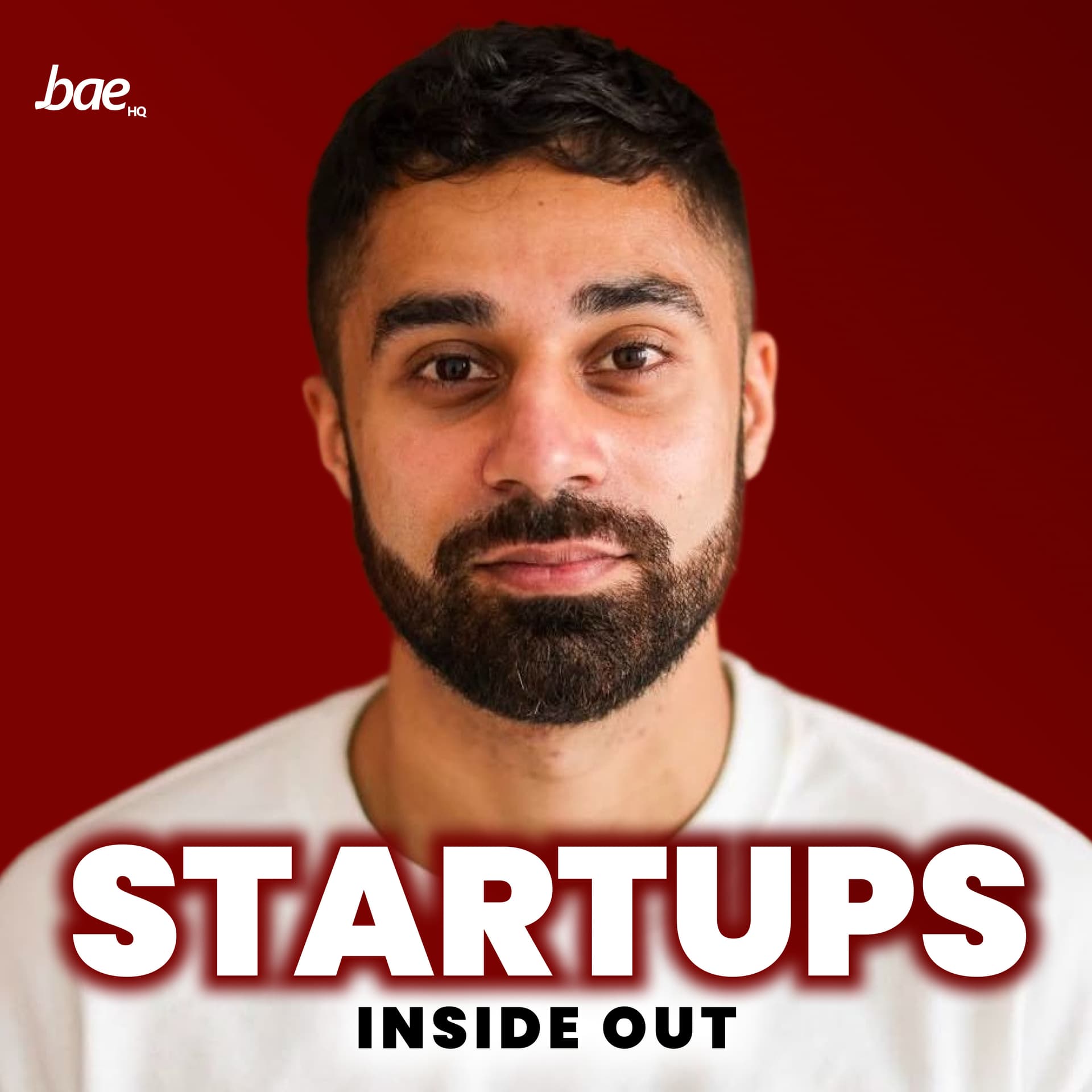
Amardeep Parmar from Bae HQ welcomes Karn Dasgupta, Growth Investor at Westcap.
Amardeep Parmar: https://www.linkedin.com/in/amardeepsparmar
Karn Dasgupta: https://www.linkedin.com/in/karndasgupta/
Westcap: https://www.westcap.com/
👉🏽 Buy Startups For Outsiders: https://www.startupsforoutsiders.com
👉🏽 Learn through our IncuBaetor: https://www.thebaehq.com/incubaetor
👉🏽 Join Bae HQ: https://www.thebaehq.com/join