In short
Round Treasury, a fintech automating treasury and money movement for finance teams using AI and infrastructure; raised a $6M seed to expand product, integrations, and workflow automation (including payroll/invoicing and cash visibility).
Guest
Hayyaan Ahmad, co-founder of Round Treasury; previously worked in tech (UN OCHA consultant after an internship; early B2B engineer at an ad-tech startup; founding/scale engineer at Amazon Berlin).
Key claims
finance is still fragmented and manual (even at “sophisticated” companies); Round aims for “one-person” finance teams by automating account opening, payments, and reporting while augmenting (not replacing) CFOs; compliance and CFO control are major product constraints; pricing is currently interest-share on cash, with workflow pricing still being explored.
Notable examples
money market investing via BlackRock and JP Morgan; launched around Nov 2024; reached ~£100M AUM; 10% of customers became angel investors.
Written by AI. May contain mistakes. Listen to the episode to check what was said.
Chapters
Tap a time to open that second in VOThe Birth of Round Treasury
0:45 to 3:31
Hayyaan shares the inspiration and evolution behind Round Treasury.
“I met my co-founder, Pak, a few years ago, and we both wanted to do something in finance.”
Navigating Founder's Relationships
3:31 to 7:34
Discussing the importance of values and connections in founding a startup.
“You said it's well that you met Pacl on the first day of EF, right?”
Fundraising Insights
7:34 to 12:26
Hayyaan discusses fundraising strategies and early investor relationships.
“What were some of the main targets you kind of had or milestones in your head that if you reach this, that's the right time to raise?”
Challenges in Fintech
12:26 to 14:00
Exploring the regulatory challenges faced when entering the fintech space.
“And if you build the right thing, that energy is infectious.”
Journey Back to Entrepreneurship
14:15 to 18:28
Discover the founder's journey from tech to starting a new company.
“So you obviously worked in tech for quite a long time before then going to build another company again.”
The Origin of 'Round'
18:28 to 21:13
Hear the amusing story behind the company's name 'Round'.
“Can you tell me where did the name come from?”
Future Aspirations for Round
21:13 to 23:26
Explore the long-term vision for the fintech startup and its impact.
“And you said, so you've just raised the round now.”
Navigating AI's Role in Finance
23:26 to 27:08
Understand how AI is transforming finance teams and job roles.
“And I think I saw one of the quotes with the fundraiser as well about how it's not trying to replace a CFO.”
Pricing Strategy in Fintech
27:08 to 28:00
Learn about the challenges in determining pricing strategies for fintech services.
“It's maybe not worth as much as if it's a company with 100 people.”
Navigating Innovation and Team Dynamics
28:00 to 29:58
Learn how to balance innovation with operational stability in a startup.
“because engineers building it are building it for themselves.”
Show all 13 chapters
Highlighting Inspiring Individuals in the Industry
29:59 to 32:06
Discover notable figures in the Fintech space and their contributions.
“So first one is who are free Asians in Britain do you think you're doing amazing work and you want to shut them up?”
The Move to the UK: Reasons and Reflections
32:07 to 33:48
Explore the motivations behind relocating to the UK for business.
“When you first started, so two and a half years ago, I was here for six months, and then I live in Berlin, or I used to live in Berlin.”
Final Thoughts and Intrinsic Motivation
33:49 to 35:04
Understand the importance of intrinsic motivation in achieving success.
“If you meet my co-founder or the team, they'll tell you like his mind is like racing.”
Transcript
Automatic transcript. May contain errors.0:00So great to have you here today. Can you explain what your role is and what Round is? Thanks for having me on. I'm Hayyaan, one of the co-founders for Round Treasury. And yeah, we essentially do automation for finance teams, so using AI and core infrastructure in the finance space to help power CFOs and finance teams in startups, all the way to scale-ups and enterprise companies.
0:24Amardeep Parmar:Where have you got to today? Yeah, so we just raised a$6 million seed round. We just announced it a couple days ago. So it's really exciting. And then tell us as well, where did the idea come from? What made you build this? Yeah, it's an interesting one. We kind of stumbled into it in some parts. I met my co-founder, Pak, a few years ago, and we both wanted to do something in finance. We were thinking about doing something in the DeFi Web3 space at the time because that was the hot thing. and we quickly realized nobody cares, which is an important thing when you're building a startup, right? And so we just went out, started speaking to customers, founders, CFOs, and we very quickly realized it's a big problem.
1:12Like I didn't come from a finance background, but the assumption you have on the outside is there's this like big sophisticated companies. They've hired professionals. They're spending all this money in their finance department, but these people are still going around and calling their phones and bank managers to make sure their account stays open or to do payments. And it's so manual, it's so fragmented, and so much of the time is spent on it. And that's really the pain that stuck out. And we felt like there's something here. And we were quite focused on that, essentially. And it started off with just treasury, which is just helping you, as a company, manage your treasury risk, to have your cash spread across many different bank accounts by helping open and operate these accounts, giving you one place to manage all of your linked accounts, but at the same time helping you invest into money market funds with BlackRock and JP Morgan and sort of have that holistic picture.
2:07So you as a founder, as a CFO, have that confidence in knowing my money is safe, I'm earning a bit of interest, and it's diversified and it's available when I need it, and you can automate the flows. And it's essentially when, after we had built that, we realized, okay, well, it's kind of like this onion, and treasury is at the core of it. The money is always at the core of it. And you want to think about like, okay, well, once that's there, what's next? How do you kind of help them in the day-to-day operations? So what that means in a finance team is they spend so much time in terms of money movement.
2:44So opening bank accounts, logging in, making sure the account has the right money at the right time to be able to make payroll, which sounds simple again, but there's so many, like you speak to any founder and they have this like last fright of the month anxiety about like will payroll happen? So that's something we realized, hey, we can automate this and then invoices and payroll and then at the same time incoming. And then pretty soon it starts to become this platform which has the visibility of your incoming and outgoing. It helps you keep your cash safe and secure and earning interest and it automates the money movement across those verticals.
3:23And that's part of the fundraise is to help us deepen that investment on the products, more use cases, more integrations, and sort of scale that out. You said it's well that you met Pacl on the first day of EF, right? Yes. How did you know so quickly that that was the right relationship? We actually met on day zero. So they had a kickoff weekend two weeks before the actual program started. and we were just talking uh i think we weren't even talking about work something we're just like catching up or saying hello uh i think what stuck out to me was was values why he wanted to do something why i wanted to do something and it was a connection on a human level as opposed to just like here's what your background is here's what my background is how do we match them together so it's a funny story we ended up actually the day after we met uh we went for a long walk and we ended up in Shoreditch at church and we were there at six and we're still talking for like six hours straight and we realized we got locked into the church yard in the graveyard and we had to just like climb the fence to get out at midnight.
4:27But most of what we talked about was just like values and why do you want to do this? Why do you want to do this? What drives you? What's your background like, right? So, and I think it's important to know your incentives, your values because everything else changes. Like what you're working on is changing, especially at that early stage. But if you don't have that core alignment in the beginning, I think it only makes it harder afterwards, in my experience at least. So that's something we both really enjoyed about each other.
4:52Amardeep Parmar:You said as well that this fundraise was for growing the product and so on. But that very first round you did, what was that about? And how did you get the money on the idea and the two of you together? Yeah, it really was just the idea. We were one of the first teams. We did the Entrepreneur First program in London and we were one of the first two teams around the world in all their courts to get funded. And as we were pitching, Matt Clifford said, I can promise you in three weeks you won't be working on this idea anymore. I'm like, no, no, we definitely will. And then a week later we were like, oh shit, he was right.
5:29So it was just the idea. We had the vision. I think we built a very simple prototype and we onboarded a couple of customers to really show demand. And what was really exciting is all of the people that we spoke with the founders, they ended up becoming angel investors, which is also true in this round, by the way. Like 10 % of our customers have chosen to invest, which is a great sign. Everybody loves the product. So that's the onus on us to keep that bar, right? But yeah, back then it was just the idea. We had a few data points, but it was all us doing it manually. and that was the proof point we needed to kind of go out and speak to investors.
6:07We spoke to a bunch of investors. We were quite oversubscribed and we met like Passion Capital, Eileen there. They were great and they were very founder friendly. They knew about the space quite a lot with their previous investments at like Oak Artless and Tide and Monzo, obviously. And we felt the partnership was right. So that's who we ended up going with for the pre-seed. and yeah, it's been great to have them on across the past few years and they've also doubled down as part of this round. So that's a really good sign.
6:38Amardeep Parmar:As well, getting those early customers, how did you get that first customer just based on the idea and the vision? Yeah, I think it was just at that point you just have to try your luck. You're going to try and speak to 10 people, 20 people. Hopefully there's one person that says yes and you just have to get lucky. So you just have to beg, borrow and steal to be able to get there. Thankfully, our initial target was the founders, and founders tend to be more optimistic. They understand what it means like to be a founder. So that really helped. Essentially, just speaking to loads of people, trying to see what problems could be solved for them.
7:15And yeah, that's how we got started.
7:17Amardeep Parmar:And obviously, between the rounds, you had to have shown traction and to be able to prove to investors such as Passion that they should come back and double down and continue to invest again. Yeah. What happened between the two rounds that showcase to investors, like, yeah, okay, we've used our money well, we're ready for this next step. What were some of the main targets you kind of had or milestones in your head that if you reach this, that's the right time to raise? Yeah, I think both of us are very pragmatic as founders and we're quite obsessed about just staying lean and executing. So we accomplished quite a lot with just a small team of seven people.
7:54and it's funny because when we were trying when we were raising the the seed round uh we're speaking to investors and especially ones we had spoken to already in the in the previous round we went in and they were like okay let's compare our nodes to see where you were and what your plan is where you are now and a lot of them were like well you said you were going to do this and you exactly did those things that's amazing like that's it doesn't happen a lot right uh so we're We were quite obsessed about the execution bit. And most of the work was just like, because we're a fintech, I'd say like a year of that was just like infrastructure and regulation.
8:29So having the right partners in place to be able to do the tragedy bit and do it well, because it's one of those things where you only get one shot. So you have to make sure it really works. You don't want to make mistakes or have the wrong partnership or the wrong regulation when it comes to money and especially holding it. So that took us about a year and then like building the product out on top. So a year and a half, essentially, We launched in November 2024, I believe. And yeah, we very quickly crewed to about 100 million pounds in AUM. And that was a very strong sign for us to see like, hey, we spent all this time building and now we're seeing this huge traction come in.
9:06So there's something more here and that's like raised more to really double down on it.
9:12Amardeep Parmar:And you said as well, you're not from a finance background. Yes. And then obviously FinTech heavily regulated. has that been one of the biggest challenges of what other things from you moving into the fintech world has been difficult or that to learn about yeah i think compliance is an interesting one finance is a broad space but some parts of that are heavily regulated and i think the challenge for us to learn was the different regulations uh from like europe and and the uk and the us and i think when you're starting off you learn a lot about like learning from media and podcasts and so on. And a lot of that is also focused on the US.
9:49So you hear about these fintech founders in the US and like, yeah, we got regulated within a few months and a few weeks, because the regulation, like the whole regime and the structure there is quite different. There are a lot more risk forward, whereas I think here, it can be like a bit different. So that's, I think, was a challenge for us. We spoke to lots of compliance people and compliance officers and sought lots of advice because we wanted to make sure we could do the right thing. so that took a lot more time than we were expecting but that was like the number one challenge I think and number two was maybe more on the product side when you first had the vision we were just thinking hey we can build this and automate these bits and then as a customer you go in and you just like define these parameters and then we'll actually like move the money around and everything is like all magic and nice, right?
10:42And then you go out and speak to CFOs. They're like, well, this is all great, but I want the last say. I want to be the human in the middle to kind of control it. No money moves without me because obviously you need to have controls and stuff. So that was an interesting learning as well. And like just the inverse of it, like if you speak to founders, their view is very different than a CFO because the CFO is brought in to exhibit those controls, have the right balance. so it's also an interesting one when you're starting out to build like you need to be very narrow on who you're building for and why they're using your product.
11:16Amardeep Parmar:And then it too, this isn't the first time you built a company. Kind of, yes. It's a funny story. So my last year of college I did a hackathon. So I went to college in Pakistan, I grew up in Pakistan and there was this hackathon to, I don't even remember what the theme was. I think it was like building for the country and doing something for like civic duty. And I built this app with a few friends and I only signed up on the day. So it was a last minute entry and we ended up like winning the prize. So we got this like seed money from the MIT Enterprise Forum and some of the connections over in the US.
12:01And I was like, wow, this is really interesting. and that was like right before the summer i had plans in the summer to go to san francisco for the first time seeing some family out there and while i was there i was just like networking talking to people uh and i was i was meeting somebody who was a friend of her like a connection and during the course of an hour just like meeting him in a cafe somewhere in in cupertino uh he convinced me to become an angel investor and and make that project into like a business venture and I was like yes let's go so that's kind of what we did uh we I spent like six to eight months on it hired a few people but I was still ultimately I was still in in my last year of college trying to manage that and sort of the U.S.
12:47Pakistan a 12-hour gap and and trying to kind of manage that and building the product and I just burnt out essentially but it was a very good learning in terms of like what to build why you build and why that early on and when you build something people get excited. And if you build the right thing, that energy is infectious. And ultimately, what matters for startups is more the building the right thing for the customer and not the technical stack or how you build it. It's more the what. And that's really the way you start. So you work backwards almost and try to stay lean. So yeah, lots of stuff learned there, but that's how I got started.
13:29Hello, hello. I hope you're enjoying the show so far.
13:32Amardeep Parmar:I'm Amarit Parma, co-founder of BayHQ and the host of this show. For those of you who don't know, BayHQ is the community for high growth Asian heritage founders and investors in the UK. Over 7 ,500 people have attended our events. 200 people have been for our impact programs. And obviously, there's been over 250 episodes of this podcast. If you want to join us and take part in the program and come to the event, go to bayhq.com forward slash join. We also just released our first ever book called Startups for Outsiders, which you can get on Amazon now. And the link is in the bio. Hope to see you soon at our event.
14:12Hope you enjoy the rest of the episode.
14:15Amardeep Parmar:And obviously you took a break, right? So you obviously worked in tech for quite a long time before then going to build another company again. yeah what made you decide like well one did it put you off starting a company having that experience when you're younger and planning out and then what made you then decide okay i'm ready for it again now yeah i think it was the opposite i wanted to do more it's like the gateway drug right especially when you're young and you're optimistic and you want to when you want to do things uh a lot of my friends back then moved on to do their masters or phds and stuff and over in the us and and also here in the UK.
14:48And I knew I wanted to eventually do a startup again. So I decided to go out into the real world, let's say, and sort of get hands on and learn from different corporations in different sizes. And it was a weird one where I took this unpaid internship over at the UN in Geneva. And within a month, they hired me on as a consultant to help them on their technical stuff, which is really exciting. I was the only technical person in the whole building, probably. And you're there at the UN, and the office I worked on was OCHA, so the Office for Coordination for Humanitarian Affairs. What that basically means is that when something goes wrong, whether it's an earthquake or famine or some war, the office which coordinates all of these different agencies and NGOs, so all of those protocols and all the kind of stuff that goes on behind the scenes is what the office and the team did.
15:47And so when the earthquake happened in Nepal in 2015, the office was empty the next day, and half of them are on site, and you're just there stuck into this world seeing how to kind of coordinate and communicate. And I helped build a lot of the tech to kind of make that easier, do the processes and automate a lot of that stuff as well, which is very exciting. But that was another kind of sidestep which is in hindsight, you look back and you're like, well, I'm doing this now because of that experience there because that's what that taught me. But in the moment, it's just like you're hanging on to your seat and just like enjoying it.
16:30So that's kind of what I did. And then from there, moved on to Berlin. I joined like an early stage ad tech startup as one of the first engineers on the B2B side at least. And after a year, just like helping them do more campaigns and automation. So really learned what it means to be an engineer in a tech startup, founding engineer, and scale. And then from there, I moved on to Amazon in Berlin, which is almost like a startup inside of Amazon. Because when I joined, we were about 10 engineers, and I left even more than 200, 300 across four years. And we were just like building that office in Berlin.
17:05So hiring and building the team and the culture, but at the same time owning more and more of the program. What me and my team worked on was basically customer reviews. So anytime you see stars on the Amazon app, if you got an email about after you bought something saying, hey, how was that toaster you bought? That's essentially what me and my team worked on.
17:27Amardeep Parmar:My book is 48 five-star reviews, just saying. Oh, no, was it? Yes. It's so important, right? It's so important, those reviews, and making sure they're verified and good because so many people lean on them to make buying decisions. So that's something we did, and lots of stuff there across the whole Amazon and Audible, Kindle, Prime Video, Fire, and the whole Amazon ecosystem. So lots of deep technical expertise, and also grew a lot in terms of just being an engineer to our IC to being more managing teams and learning about technical leadership, stakeholder management, and all this kind of stuff.
18:08But at the same time, honing in on that expertise of building something at scale and building infrastructure, which really works. And then, yeah, ultimately, at some point, I was like, well, I can stay doing this. I can stay on or just go back to my roots and take more risk and have more fun with it. That's essentially how I ended up starting around.
18:29Amardeep Parmar:With the name Round as well, right? So apparently there's a story here. Can you tell me where did the name come from? So you remember how I said we were both very pragmatic? So the story goes, when we were first getting our investment from Entrepreneur First, they told us you have to sign up a company. And we're there on the company's house website trying to think of a name. And we go like, what could a name be? It's like, hmm, how about a banky McBank? And we're like, yeah, let's do it. So that's what the original, the holding company is called. It's called Banking McBank. And even to this day, when we have the legals for all of the investment rounds, when the document shows up to investors, they're like, who's Banking McBank?
19:15Why are we giving money to Banking McBank? It's like this fun inside joke that we have.
19:19Amardeep Parmar:Well, it comes from Boating McBoatfish, right? Yeah, yeah. So people don't necessarily notice. I used to be a developer, right? So all my test records, I used to use different things like that. It's like Boating McBoatface and then different names. So it's like a very, I want to say, early 2010, right, that reference is from, and there was a competition to name a boat, and that was the name that won. And then that's where it kind of comes from, right? Exactly. That's right. And then the intern just takes something, and then it puts you into overdrive. And you end up with banking, like bank. So that's the...
19:51Amardeep Parmar:Have you ever had any pompe to do that, where somebody was going to work if you saw that, and they're like, oh, actually, we're going to pull out. And then you had to be like, no, no, it was just a joke. Probably. So we had that company for a few months. And then when we were in the process of getting the pre-seed round, that's also where we got a lot more mature in terms of like more focus on treasury. We realized nobody's going to take us seriously if we just call it Banky, especially if we're holding money and doing all these like complicated things. And also for like regulatory reasons, it was good to have a parent company and an operating company.
20:27and then so the second time we were doing this which is like what do we call this company and what's really funny is we were to build our website landing page we had a template from webflow and we were looking around at the right templates then there was this one that we really liked uh with a nice website clean and like modern uh like let's use that so we i spent a hundred dollars on the on the template we we built it out and then at the end we were like okay well the template's name and the brand was called Round. And we were like, do you really want to change this? Round seems good. Also, Round goes around, people raise rounds.
21:06It kind of has a meaning in finance. So we just kept it, basically. And that's how we ended up being called Round.
21:13Amardeep Parmar:And you said, so you've just raised the round now. Where is this going? So obviously, you've raised that money to expand and to go further. What's the dream? What do you hope someday Round will get to? We want to invest more into commercialization. So my co-founder is the only one, or until last year, was the only one on the commercial side. Everybody else was either an engineer or an IC. And so that's a big area for us to invest in. And you'll see more in terms of our marketing or sales teams and so on. But at the same time, that's one half of it. The second half is on the product. So we spent a year and a half, two years building out the infrastructure.
21:55And now it's the exciting bit where we have these building blocks. And with the power of AI and agents, we're trying to figure out how do we assemble these blocks and use them to create really cool workflows. We can build them for you or we build it in a way where customers tell us what they want. And they can, with natural language or as part of their onboarding, build these workflows for themselves so they can save time. and that's the really interesting bit which is so we're going to invest a lot into that in terms of the product this year.
Read the full transcript
22:26Amardeep Parmar:So like in 10 years time or 20 years time yeah what's the dream in terms of like what do you hope to achieve through round? I think it's it's a bit dystopian but no like manual work in finance teams and and the vision for that is really there's going to be a one-person billion-dollar company or two-person or three-person. And if you think that's true, what's the finance team going to look like? Nobody's going to be doing it full-time, right? It's going to be the founder or one person doing it as a fraction of their time. And that time, they're going to be thinking about the strategy of their finance.
23:06So their fundraising techniques and how much to spend and where to spend and sort of staying on top of their high-level reports. They won't be opening accounts, moving money. Everything is going to be automated with their revenue coming in, all their payments, all their accounts. So that's what we're essentially trying to build is to help power the one-person finance team.
23:27Amardeep Parmar:And I think I saw one of the quotes with the fundraiser as well about how it's not trying to replace a CFO. It's trying to augment them right at the beginning. It's making that CFO be able to do way more and not have to do all the crappy work underneath it, right? yeah and like as you're kind of growing out that strategy and things in the future too it's like how is our relationship building with those different people and stakeholders within the company right because i guess some people might be skeptical like they're worried about themselves right how do you yeah build those relationships with people i kind of see it similar to like coding avid cursor and cloud and bots it if you're good and you're a bit senior and you know you understand architecture this is a the biggest superpower there is right you can have these agents write code for you and your job is to just guide them and give them instructions and they're doing all the grunt work.
24:18Similarly, on the legal side, you have all these startups like Lagora and Harvey and so on who are trying to automate the junior entry-level legal work, so the paralegals and so on, so the lawyers can focus on the negotiations and the more strategy stuff. Same thing is going to happen in finance, which is the we want to give the the finance directors the cfos the founders the superpowers to be able to automate their like groundwork to get to your point which is how do you manage that relationship and how do you not like scare people in terms of like hey by doing this you want to have a job i think it goes back to like do you really think ai will take over human jobs or do you think it'll help us be faster and and and free up more time to think about the things which make as human.
25:05I think it's more fundamental. And at the same time, if you're entry level and you're just starting off, instead of it being a competition, you can really use these tools to accelerate your career and your growth. And that's also what we see with a lot of our fractional CFOs. Fractional CFOs really enjoy our product. They love us because by having this one platform, they can go into their different clients within their practice and really help them save time. And it makes their life easier. And it's like one of the tools in their arsenal that they can use to sell their services on to companies as well.
25:42So it's a bit of a symbiosis. And yeah, that's how we see it working out.
25:48Amardeep Parmar:I think one of the other big debates at the moment is about the pricing and how with AI and how we use it, what's the best way to price that? And obviously you're working with lots of different customers and customers at different scale. So how did you go about that kind of discussion and how have you worked out? What works for you? To be honest, I think we started off with just what's the simplest thing we can do, which is on the treasury side. So when you place your cash with us, we manage it. We do all the account opening and the platform management. We don't do any onboarding. There's no sign-up fees, no monthly or anything like that.
26:23We just take a small share on the assets placed. So it's effectively on the interest rate, essentially, which works for cash investments, because that's also what banks do. That's how it works in the fintech industry. But as we're going more into these workflows, it's still kind of an open question in terms of like, do you charge on the outcome? Or do you charge like a monthly SaaS or a subscription fee, which is just for the software? I'm not sure if we have the right answer exactly. I think it's worth experimenting. And it's still early to know the outcome and the ROI of the value of what an individual fully automated, like payroll, how much is that worth to you?
27:07Because it's so different for a small company who has like 10 people. It's maybe not worth as much as if it's a company with 100 people. And that's where I think being fair and transparent across the board is quite interesting. And we have customers from early stage to just the founders, all the way to like multi-billion dollar enterprises. And so that's always part of the discovery and the work we're doing this year.
27:34Amardeep Parmar:Obviously, you've got a deeply technical background yourself. How do you stay ahead of the curve? Obviously, you've got a team of engineers and you're building out this. The pace of change is so quick. How are you staying ahead of that? It's hard. I was up till 1 a.m. last night, actually, with Claude and Codex and trying stuff out. Every now and then, I do a learn day and just try out different tools. but as you said, it's moving so fast, especially on the technical side because engineers building it are building it for themselves. So engineering is at the tip of the spear. But I think it's just you have to be open-minded.
28:09Something that feels wrong right now maybe feels right in a few months because the speed of these models and how things change. And I see my job more as a coaching and training the team to kind of be okay with it but also at the same time having the guardrails in place to make sure all of this innovation we're doing, all of these new tools we're trying, it doesn't actually impact the business in any way. So it's kind of like this coach, but also I have to learn and stay up to speed to be able to coach the team, but at the same time making sure the guardrails and the foundations are really strong so we don't do anything we don't want to do.
28:47Amardeep Parmar:How big is the team now? So we're about 12 full-time, And we have a few contractors who are helping us part-time. And that's a mix. So 12, I'd say like 60, 70 % of that is on the product side. So product and engineers and some ops. And then we just started hiring on the sales and marketing side. So yeah. So if you've got a co-founder, if you're wearing a lot of different hats yourself, what do you enjoy the most? I think solving problems I love it when like there's something which seems hard and you just sit down you're like oh shit how do I sorry for swearing how do I how do I how do I overcome this how do I solve this like what's the right angle how do you break this down and something that feels so big starts to become smaller now that could be something like technical or product wise so like a really big challenge and how do you build a roadmap which helps us solve for that and you have the right steps to be able to do it or it could be operational, which is like we need to have the right licensing or what's the right team you want to hire to be able to accomplish the goals.
29:51So I just I'm a builder I love like solving problems so that's good I'd say the the thing I enjoy the most.
29:58Amardeep Parmar:So we're gonna get to wrap up questions now. Yes. So first one is who are free Asians in Britain do you think you're doing amazing work and you want to shut them up? Yeah I have to be honest I don't know too many agents in britain i just moved full time to the uk uh six months ago so still quite new uh but some people we've worked with uh who i've had the pleasure of interacting with i'd say number one is probably arlene burbridge she's one of our investors i'm slightly biased because she invested in us and we have a great relationship we're working together but i think she's great uh she's very people for an investor she's very people first and i think that comes across she's I was thinking about like, how do I help these founders and really like not be in their way and stuff.
30:46And so yeah, she's been great. She's obviously like done many things and is quite accomplished. Number two is somebody who was in Entrepreneur First with us in the same cohort is Kush from Vaxler AI. He's a co-founder and CTO. It's a really smart guy, really like switched on. And they were, I think, like quite ahead of the curve in terms of AI and legal use. and I'm really excited to see how they get on. They also just raised around recently. And the third person is probably Rim Shah from Arva. He's obviously come from an ex-Revolute background, but I think it's also they're solving a really big problem, which is compliance and KYB, and how do you automate that, and what's the compliance and onboarding of the future look like, which is a very hairy problem with many different legs in different banks and in the finance space but I think it's an important one and yeah kudos to him
31:43Amardeep Parmar:so Rimfin already and he's great and then Kush is coming on I want to say next week it might be this week actually so he's coming in the studio soon so we had his brother on as well Vivek and then Eileen is like a dream back so might try and get you get her on as well and then you said as well just forgot so you mentioned you moved to the UK six months ago what's behind that move what brought you here, what attracted you? Yeah, I think it was just being full-time. When you first started, so two and a half years ago, I was here for six months, and then I live in Berlin, or I used to live in Berlin.
32:17My wife is German, and it was like trying to manage my relationship and this structure that I had with starting the company. And thankfully, Berlin isn't too far. I think the commute was like four hours door-to-door or something. So I did that for a bit, but at some point you realize like, hey, if you really want to go all in and really do big things, you need to have the team together and also be with the team. So that's like a big part of the focus. And I think that was number one reason. And number two was also I'd been in Berlin for nine years. So it was time for a change. And in an odd way, being in London sort of feels like home already.
32:56I think culturally I grew up in Pakistan and we have some artifacts of the English empire and the whole colonialism in English so it's just a nice warm feeling
33:08Amardeep Parmar:If you want to find out more about you more about Round where do they go to? Yeah, so you can find me on LinkedIn Hayyan Ahmed I guess we'll have the link on the episode or just go to our website it's roundtreasury.com so yeah like sign up or shoot me an email as well there when you're happy to connect with anybody who's interested to learn more. Is there any way that the audience could help you? Yeah maybe just like share your thoughts and feedback on like what we're doing, how we're doing. We're trying to make noise and really like change like this big inch in industry and finance and if you have ideas, if you have feedback on the product or operationally or business model wise, I'd love to hear more from the more experienced people in the audience as well and yeah happy to happy to chat awesome so thanks so much for coming on and it's been really cool to see that journey as well and how you've kind of gone in different directions and where you've ended up where you are today have you got any final words no i think the the main one is just like keep believing in yourself uh there's there's always like doubt and and your mind is going in different places at least my mind does I don't know about the dot, but my mind is always going in different places because I'm in 10 places at the same time.
34:26If you meet my co-founder or the team, they'll tell you like his mind is like racing. I think it goes back to if you really just enjoy what you do and how you get on and curiosity and learning is also like a big value of mine, but I think it's underappreciated, like just doing things for the sake of doing them. And it's just like intrinsic motivation, I think inherently is worth more than extrinsic motivation. So extrinsic being like money or title or status, but intrinsic being like curiosity or value-driven. Yeah, just a homage to that I think is a good one. And I think all of us can do more of that.
From the publisher
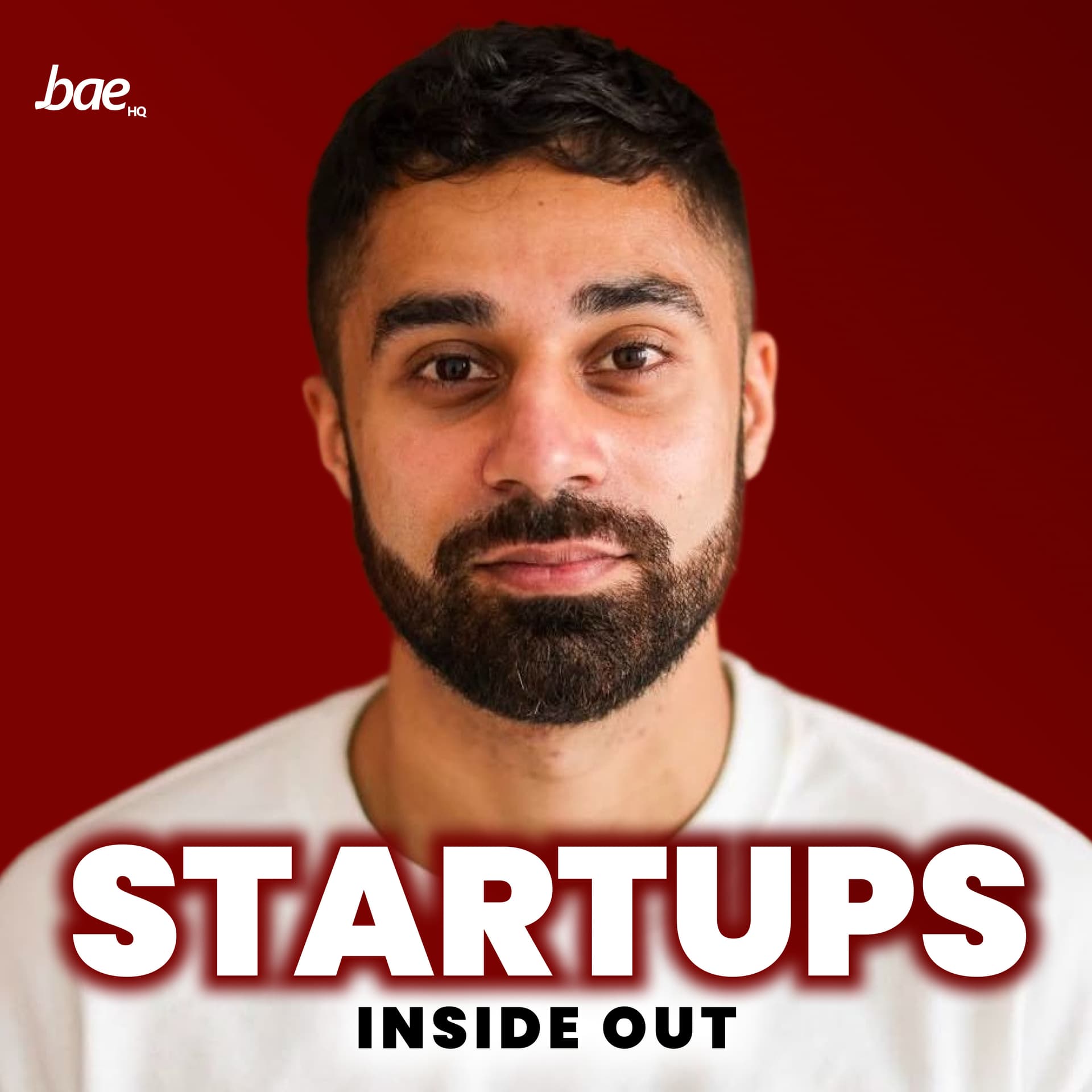
Amardeep Parmar from Bae HQ welcomes Hayyaan Ahmad, Cofounder of Round.
Amardeep Parmar: https://www.linkedin.com/in/amardeepsparmar
Hayyaan Ahmad: https://www.linkedin.com/in/hayyaan/
Round: https://www.roundtreasury.com/
👉🏽 Buy Startups For Outsiders: https://www.startupsforoutsiders.com
👉🏽 Learn through our IncuBaetor: https://www.thebaehq.com/incubaetor
👉🏽 Join Bae HQ: https://www.thebaehq.com/join