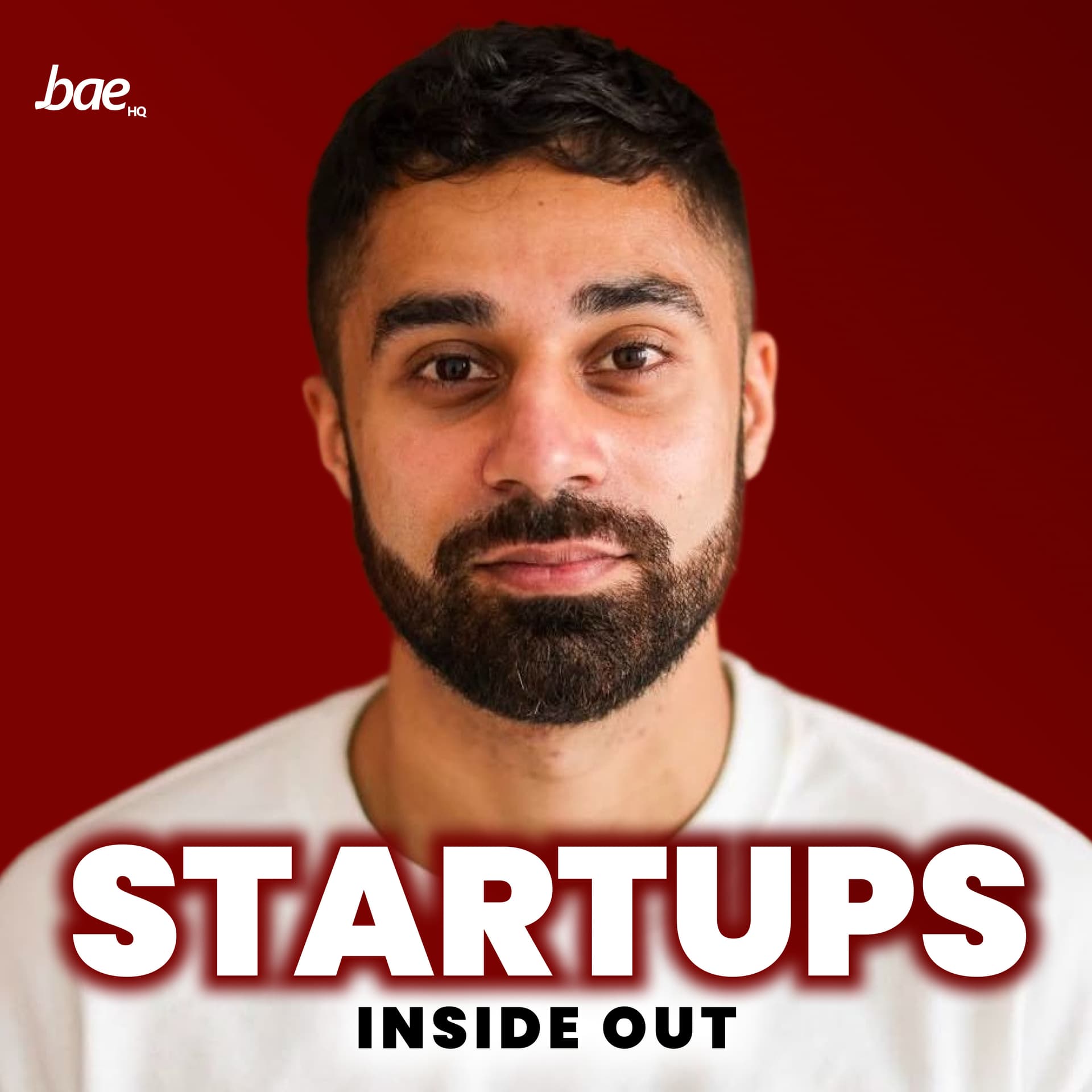
In short
Episode 313 features Mitul Ruparelia, general partner at Araya Ventures, discussing the firm’s Global Fund thesis and how it invests early-stage companies across GCC, Asia, and Europe. He covers four focus sectors: health, fintech, commerce, and future of work, emphasizing “painkiller” businesses (structural problems) over “vitamin” options. Key claims include: frontier-market venture growth (e.g., Saudi Arabia $1.72B venture, 145% YoY deal growth) plus improving M&A exits; Araya’s 15-person team uses geographically placed venture partners and a 300+ angel Investment Academy as “eyes and ears.” He explains early-stage diligence via founder track record, product-market fit testing (customer conversations, rapid iteration), and coachability.
Notable examples
Lovable’s rapid growth to ~$300M/year; an AI portfolio company scaling revenue from $1.85M to $18M in weeks.
Guests
Mitul Ruparelia (primary); Amrit Parma (host) and mentions Rupa Poppet (co-founder/vision; not present).
Written by AI. May contain mistakes. Listen to the episode to check what was said.
Chapters
Tap a time to open that second in VOInvestment Focus and Strategies
0:45 to 2:24
Discussion on the investment focus of Arraya Ventures in various regions and sectors.
“So we're backing businesses that are looking to transform the way we live and the way we work.”
Understanding Frontier Markets
2:24 to 4:21
Exploration of what makes certain markets frontier and the growth potential observed.
“So we've got eyes and ears in everywhere where we want to be.”
Building a Strong Investment Team
4:21 to 6:48
Insights into how Arraya Ventures selects its venture partners and the role of their network.
“With early stage businesses, you don't necessarily have all of those facts and figures to hand.”
Evaluating Early Stage Investments
6:48 to 9:37
Criteria for assessing early-stage investments and the importance of founder alignment.
“That doesn't stop us from giving kind of clear guidance and recommendations of what they might want to work on or improve on.”
The Art of Value Creation
9:37 to 12:34
Discussion on value creation in early-stage companies and common pitfalls in scaling.
“Bain consulting style didn't really suit their portfolio.”
Understanding Investor Expectations
14:54 to 17:16
Discover what founders should consider when evaluating potential investors.
“And for those founders, when you're putting a term sheet down, what do you think makes them pick you over other potential investors?”
Choosing the Right Investors
17:17 to 19:02
Gain insights on how founders can assess investor compatibility and support.
“who maybe they're pitching to investors and they're getting these kind of terms back or they're getting people pitching them in reverse in that way.”
Investment Strategies and Community Building
19:03 to 21:44
Explore how Araya Ventures builds a supportive investment community for founders.
“I'm going to give all that credit to Rupa.”
Leveraging AI for Rapid Growth
21:45 to 23:09
Learn how AI is influencing investment strategies and accelerating business growth.
“the momentum, and the potential that we're all seeing from AI.”
Evolving Product Market Fit with AI
23:10 to 27:06
Understand how AI impacts the assessment of product market fit for startups.
“So we're talking about a few months where the revenue for that particular business has gone from 1.85 million to$18 million.”
Show all 14 chapters
Applying AI in Investment Processes
27:07 to 28:00
Discover how Araya Ventures uses AI in their investment decision-making processes.
“And Lovable is bringing a great example.”
Future Goals for Fundraising
28:00 to 28:36
Discussing aspirations for asset growth and regional fund development.
Spotlighting Influential Figures
28:36 to 29:28
Highlighting three individuals making a difference in diversity and law.
“We want to be a billion dollar assets under management.”
Engaging with the Audience
29:28 to 30:04
Encouraging listeners to connect and share investment opportunities.
“Clearly, clearly, I can't get paid for any commission or anything, given he's a lawyer.”
Transcript
Automatic transcript. May contain errors.0:00Amardeep Parmar:Great to have you here today Mitul, it's been a long time coming. Can you tell the audience who you are and what you do? First of all, thanks for having me. My name is Mitul Ruparelia and I'm a general partner at Arraya Ventures looking after the Global Fund and I also come from a private equity advisory background where I have a consulting firm as well. So I'm obviously an LP in Arraya Ventures, not the fund that you're working on but I know you went a lot of different... Yes, yeah. Don't have to go any money left. But what does that fund invest in? Like, how do you pick your investments? Like, what are you looking for?
0:34Yeah, so we invest in early stage businesses. And we're investing in the GCC, in Asia, and in Europe. And the four sectors that we're very much focused in on are health, fintech, commerce, and the future of work. So we're backing businesses that are looking to transform the way we live and the way we work.
0:57Amardeep Parmar:So as you said, the Global Fund, right? Yes. What makes you want to invest in those physical regions? It's a good question. We consider some of these regions or these territories to be frontier markets. And a good way to kind of give a good comparison, if I will, if you look at Saudi Arabia, Saudi Arabia last year did$1.72 billion in venture. Now globally that's quite a small number granted but if you actually compare that in terms of year-on-year performance there's 145 percent increase from the prior year and that's phenomenal also 45 percent increase in the deal flow but also within the GCC, Saudi Arabia became the number one country overtaking UN.
1:50So we're seeing this huge drive focus, but at the same time, the M &A market is also picked up. So it's not just that we've got businesses to invest in and there's more capital. There's also a market where there is exits happening as well.
2:06Amardeep Parmar:So I struggle to just keep in touch with like what's going on in the UK, right? how do you try to make sure you've got a good eye on what's happening in these regions and like how do you have that network out there to make things happen we it's not just Rupa and myself we have a total of 15 people so a combination of investment principles investment associates and in addition to that we also have 10 venture partners and our venture partners come with a combination of industry expertise they're former operators and they're also geographically located in the markets that we wish to invest in. So we've got eyes and ears in everywhere where we want to be.
2:46Amardeep Parmar:And when it comes to picking venture partners, right? Because also the fund that we're looking to do, right? We need to decide, are we doing venture partners? How are we going to go about that? How did you pick those people to be involved and what stands out about them? It's a really good question. I think when we kind of looked at venture partners, we were kind of looking at it from actually their desire and drive and their alignment to the fund. So we've had operators that are very well networked, very well experienced, that have opted to be a venture partner or wanted to be a venture partner, and they can be informally, and they might bring one or two opportunities to us, or subsequently you'll have some venture partners that just wish to be more kind of hands-on and providing sort of more that post support.
3:27Both is perfectly fine. The 10 venture partners that we've got identified and listed, those venture partners are very committed to Arrea, and they've been sort of supporting us from the launch of the global fund. And in some cases, they've also been following us and supporting us with the Super Angel Fund. So that's how we've been working. But the venture partner is just kind of one slither. The Araya Investment Academy, where we have hundreds and hundreds, about 300 plus certified angel investors that have actually gone through the program of how we look at a deal and how we invest. those individuals are actually also actively our eyes and ears on the ground so whenever they come across an opportunity similar to how a venture partner would they'd also present that to us as well and of course there's remuneration involved for them so obviously most people when they start
4:20Amardeep Parmar:into wrestling they have no idea what they're doing right and i'm exactly the same i'm not sure that when i go back in time i really had the smartest way of picking and at the time i don't if you guys existed yet in terms of the angel academy when i started doing it but actually going through that process of teaching people what are some of those core principles you're teaching people to look for in terms like looking for the araya lens of like what is a good investment at the early stage so i come from a private equity background so i kind of look at businesses typically this is with my my original lens if you will looking at later stage businesses where there are some very well defined metrics there's kpis there's revenue number there's pipeline you can see it and it's kind of black and white and the data points then allow you to kind of judge that business and determine if it's something you want to proceed with.
5:07With early stage businesses, you don't necessarily have all of those facts and figures to hand. So what are you really looking at? I guess the first is the founder or the founders, you know, what is their track record like? I think they play a fundamental, a fundamental kind of key decision to whether you should invest or not in that particular venture. The second is actually is the business really solving a structural problem or you know think about it in a slightly different way is it a painkiller or is it a vitamin and in that particular context you'd kind of be going I kind of want that painkiller company right the one that's really going to solve the problem where companies and customers will buy that solution
5:50Amardeep Parmar:regardless because it's solving their pain points. So backing businesses that are solving pain, a pain point, and therefore a painkiller, not a vitamin where it's sort of an option. We kind of like those kind of businesses, the painkillers, right? Because they really do solve those problems. And they also are quite immune to some of the situations that go on in the world, whether it's a pandemic or war or something that's being said in the US and therefore having an economic impact. but also just to take a step back from all of this there are good businesses which don't necessarily mean they're good investments so you've got to look at you know what is it that I'm buying into what valuation and then what is the potential exit scenario you know can it can it make you can it can it be a unicorn of course we all want those but there are also good businesses that you know can continuously grow but may not have a necessarily large exit path.
6:47Amardeep Parmar:I feel like that group of people you've just mentioned there are some of the hardest founders to talk to right when they come to you like i said they think they've got a good business maybe they have got a good business but it's just not venture scale and when you're talking to those kinds of founders how do you get that message across to them and how can people listen maybe figure that out for themselves too or whatever they really are right for a pc fund so i think one of the things that we're quite clear about is we're open and upfront and transparent um if it's not right for our fund because it might not match our investment thesis.
7:20That doesn't stop us from giving kind of clear guidance and recommendations of what they might want to work on or improve on. And we've had cases where actually some of the businesses that we've invested currently, they'd approached us in the past. So it could be that we kind of turn around to the founder and say, look, we don't think the business is right for us right now, and here are the reasons why. That founder may choose to go and work on some of those areas, come back and actually it becomes a really appealing and attractive business for us to invest in. So those could be a very clear and obvious sign.
7:54But being upfront and honest does no one any harm. And at the same time, we know how hard it is being a founder. You know, we've built businesses ourselves. So we want to be respectful to their time and get them that sort of time back so that they can work on what's most important to them, which is hopefully their business. And so when we first met, it was a few years ago now, right? I want to say three years ago maybe even four i'm losing track of time yeah so i remember as our old office when
8:20Amardeep Parmar:we're in the alpha beta building a long time ago yes and that's when we're in the basement we're still in the basement but back then that's before you joined like the vc world right yeah you're still active in it but you weren't actively a general partner at that time correct so how does that background what you were doing before now affect your skills in the vc world and what's kind of made you transition and go into this space more? So I didn't come from VC. I was a limited partner. In fact, one of the first investors in Arraya, in one of the first ones that Rupert had launched. But my background kind of comes from private equity and working with Fortune 500 companies, so later stage businesses.
9:03And I found myself in a really unique scenario after doing several different exits and turnarounds that I found that a lot of the small and mid-sized businesses or small to mid-cap private equity funds were struggling. You know, they'd invested in these not early, early stage businesses, but sort of businesses doing anywhere between five to 50 million in revenue. And they were finding themselves in a situation where they wanted to evaluate the business or they wanted to get involved and help support in the term of value creation but what they were finding was the typical McKinsey or the BCG model or Bain consulting style didn't really suit their portfolio.
9:46One price and two what they were finding was management team are receiving lots of slides but actually once the slides were important there was a clear strategy what they really wanted was strategy with then operational execution and help and support. So with that, about five, six years ago, I set up a consulting firm, a private equity advisory firm, which I merged with my business partner, who does come from consulting. And we bought these two worlds of consulting and operational leadership together so we could actually support this small to mid-cap size businesses and PE funds with doing their due diligence and then doing value creation work.
10:29So that's really how I started. And I guess what What piqued my interest in venture capital was we were starting to see some of the businesses that we were evaluating for later stage PE coming from VC. And it just so happened that the deals that I had invested in through Araya were starting to emerge here. And I was going, wow, this is quite interesting. I got involved really early here. And I'm also the one marking, call it my own homework, if you will. And I'm the one with the exam paper. So it kind of made me really interested in venture capital and getting involved earlier on.
11:05Amardeep Parmar:You mentioned value creation there, right? Yeah. Can you tell us a bit more about that? What does that mean in terms of an early stage company? So value creation is, in essence, keeping it super, super simple. It's, you know, if we're investing here at the point of X, we want, as an investor, to drive and create value to here, which could be point Y. and how quickly can we create value and how do we create value, which could be growing revenue, it could be improving profitability, and we want to create enough value so that the multiple of that business is worth more than what we invested in, and therefore our multiple and our return as an investor.
11:44Value creation can come in sort of various different forms in terms of working through various initiatives in helping that business.
11:51Amardeep Parmar:What are some of the most common problems you had to tackle in that space of where? you've got somebody's portfolio company and then you're seeing the same kind of mistakes over and over again and once you're kind of fixing those mistakes you're then creating that value so we often find that typically when an early stage business typically receives investment there is a hiring plan you know it's suddenly we've got all of this money that's come in and we now don't need to go and hire 10 15 sales people or we need to go and hire marketing and it's that kind of pivot from founder-led sales to trying to scale.
12:24And sometimes it works, but sadly, quite often it doesn't work. And the reason it doesn't work is because there are various different things that need to happen first, from achieving product market fit, and we can talk a bit more about that, to actually having playbooks, knowing your customer, knowing your ICP, knowing your persona, having a clear segment to go after so that when you've got your new sales team or salesperson, they know which accounts or which territory to go and focus on and they know how to go and sell to that market. And there's clear proof points where you've succeeded in that market.
12:59And if that's not put in place first, quite often you'll find that you have a big hiring splurge, not always seeing the return materialize, and then you have to make some tough decisions, which is not what anybody wants.
13:13Amardeep Parmar:When you get into founders as well, do you think that background in PE and the consultants you were doing is a big part of why you're winning deals or how do you win deals? So the work that we were doing with private equity is kind of doing due diligence work, kind of looking at the internal inward capability of the business. Does the business really have, you know, whilst the market might be growing 30, 40 percent year on year, which is a nice stat, but does the business really have the capability to actually capture that market potential and some more? That thinking also plays back to the work that we're doing with Araya, which is now when we're looking at a business, we're looking at it and going, is the product really great?
13:52And does it actually solve a problem? And do the leadership or the founders that we are backing, do they have the capability to actually realize that? And more importantly, are they coachable? Can we guide them in making the right decision?
14:08Amardeep Parmar:Hello, hello. I hope you're enjoying the show so far. I'm Amrit Parma, co-founder of BayHQ and the host of this show. For those of you who don't know, BayHQ is the community for high growth Asian heritage founders and investors in the UK. Over 7 ,500 people have attended our events. 200 people have been for our impact programs. And obviously there's been over 250 episodes of this podcast. If you want to join us and take part in the programs and come to the events, go to bayhq.com forward slash join. We also just released our first ever book, called Startups for Outsiders, which you can get on Amazon now, and the link is in the bio.
14:49Amardeep Parmar:Hope to see you soon at our event. Hope you enjoy the rest of the episode. And for those founders, when you're putting a term sheet down, what do you think makes them pick you over other potential investors? What do you think about the brand that you've built really stands out to them? So there's a few things that we do, which not every fund does. One is when we back the founder, the one thing which is almost clearly obvious is there's no expectation, financial expectation. So we're not there to charge fees off the founder for any form of capital introduction or customer introduction. You know, we're investing in you.
15:25We're not expecting you to pay for any of that sort of time that we provide. That's number one. We run masterclasses. So we bring former operators, experts to come and run a specific topic. A topic could be around, you know, building your board. It could be hiring your first sales team or your first salesperson. It can be a variety of different topics. We have the founder resource hub. So there's an ability to actually go and self-learn and access content that's been already pre-created by our team of experts. We also run revenue growth programs as well. So it's a dedicated program, which is one-to-one run with the founder.
16:05And the founder can walk away with, you know, knowing exactly where they are, what they need to work on once they've received the investment. and all capital introductions and investor introductions we don't charge for. So that's really helpful. So we bring a lot to the founder with no expectation from them in terms of having to pay for it. And that's why in the global fund we also take a board position as well because we want to make sure that we're there to support them from day one.
16:32Amardeep Parmar:It's really interesting because until the last couple of years I didn't realise that that's what some funds do. They put the investment in but then they pretty much get the entire money back from what they're charging the investment in terms of like fees for different things, right? And I always find that fascinating because I'm like, wait, you're giving them, let's say you give somebody 250K, but then you charge them 50K for the next five years for your services and help. I was like, wait, you haven't actually given them any money then really? And I think that's always, it's kind of a dark art of some of this world, right?
17:01Amardeep Parmar:And it's kind of understanding, but obviously for some investors, they are really giving that massive amount of value. But also part of the point of it is you're putting in the money so then you're reliant. If the company invested in is doing well, then you also do well, right? I really found that interesting that I'm not fully aware of. And I guess for founders now who maybe they're pitching to investors and they're getting these kind of terms back or they're getting people pitching them in reverse in that way. What advice would you have for them? I guess maybe to take a step back, why don't we do it?
17:30One is, you know, we want to back the founder and we want the best deals. We're not there to try and squeeze every penny. We do know that, you know, There's got to be an acceptance that some funds do need to make a living. And this is one way of them being able to cover their costs during the investment period or the holding period even. So we kind of understand what might be a reasoning for them to do that. But from a founder perspective, I think the first thing is capital you can get from pretty much everywhere. And I know it can sometimes feel quite daunting when you're raising because you're like, well, I'm getting a lot of yeses.
18:06I'm getting a lot of noes. but you've got to really kind of stack up all your funds and really understand what am I getting? What is the exchange look like? So there's capital. Am I getting any kind of value? Am I getting any support? Can they open doors for me? And have they got a series of operators that have actually scaled and built businesses themselves? Or do you have a set of founders, sorry, a set of investors that come from traditional investment banking, you know, which is also fine, but it's a different profile. So I think you've got to really kind of look at it and go, right, put a simple matrix table together and weigh out the pros and cons and make a decision.
18:42And if you're not sure, then keep having those conversations until you feel really satisfied. Because I'm going to be very careful in saying this, it's probably easier to get a divorce than to get somebody removed off your cap table. And once a founder or investor or anybody's on your cap table, it's not so easy to remove them. So it's a real important decision that you make. And when you do make it you make it right so you're in a lot of hats as i said earlier right so you have to go
19:06Amardeep Parmar:your lp hat you've got the investor hat as a general partner we've also got the innovation that you're doing as part of a raya too right because you're doing the global fund but then like as an lp myself right so i get the investor updates and it's quite hard to keep up with everything you guys are doing so can you talk through that strategy too of like how are you building this family out of what you're doing to be that world-leading fund or to really expand those ambitions? So I can't take credit for it. So that's the first thing. I'm going to give all that credit to Rupa. I'll get her back on again as well to explain it.
19:39And I'm sure she'd love to be back on. It's her vision that's been fundamentally laid out. And we're also very, very fortunate to have a very strong, credible team of investors, professionals, principals that have been backing us from day one and that have believed and built and helped build this mission and vision together. So it's not something that just Rupa and I can do alone or Rupa can do alone. But having that strategy is how to kind of define where we're going. And I guess where have we started off with? One was Rupa comes from having set up the investment academy, coming from a former operational role herself, being a former founder twice.
20:22I come from a background of having built, led, exited tech and tech-enabled businesses. But one thing we're very clear on is helping founders in actually succeed. And we do that through a variety of different ways. One is we have the Investment Academy to help people be educated and enabled on how to angel invest. We then also have our funds. So we have a UK fund, which we call our Super Angel Fund. We have our Global Fund to be able to access some of the fast-growing markets that we're seeing in the world and subsequently to that we also have partner funds and you know we run SPVs as well so there's an offering for everyone there and last but not least one of the things that we want to set up is a foundation where we can also give back to good causes with setting up micro financing to do all of that that is a team effort and it's the community coming together to helping
21:18Amardeep Parmar:make that a reality. So I think in some ways there's some similarities between us and we do quite a few different things where different hats. But what do you enjoy the most? So what is it that you really love about what you're doing? Every day is different. Every day is different. You know, we're talking to LPs, we're talking to founders, we're talking to other operators, we're talking to other funds. But it's this ecosystem. And I guess you could say, well, that's no different to any other fund. But I think what's really interesting for us here right now is the growth, the momentum, and the potential that we're all seeing from AI.
21:50And you know, yes, it is a buzzword. but I don't think we're ever going to see this kind of era in a very long time this is kind of like a very unique vintage that we're currently creating so that makes it super exciting you know we've seen cases where businesses have received investment and they sort of grow and stagnate but the kind of businesses that we're backing not only are they solving you know real problems they're constantly iterating that product market fit where you know you kind of you had a kind of a goal to achieve and get to you know you built something you got there and then you scaled right you kind of cracked open the bottle of champagne that doesn't exist anymore it's almost you get there and you've got to almost realize that there's another wave and another wave and another wave so it's this iterative mindset where ai enables a lot of that and that pace and speed you've also got the kind of potential that you know there are customers actually buying this need this want this our ai company is going one and a half times faster i would say some of the portfolio companies that we've got i mean we invested in a company in december their revenue was 1.85 million dollars that's what they finished the year on and a few weeks later their revenue they added another 6 million uh contract on top of that 185 and now there's a potential of another 10 million.
23:15So we're talking about a few months where the revenue for that particular business has gone from 1.85 million to$18 million. Now, I've been doing this for 25 years. I've seen so many different companies. I've created products. I've done so much. But never have I seen that momentum so quickly. So I think it's a really exciting period in time for all of us.
23:38Amardeep Parmar:So it's exciting too, because as an investor in that, I'm going to get a return from that, hopefully too, right? When you joined the Global Fund. Oh, it's in the Global Fund, damn it. So with AI, right, so one of the challenges is like, okay, it's opened up so many doors, but then it's also, as you said, the PMF has now disappeared, where you can't have it, you can't actually have a stable PMF unless you have like a pattern or something like this, because it's very difficult to have a really deep moat now, right? And when you're assessing deals now, and some people are coming really fast out of the gate, how are you determining who's got the longevity and who can, like you said, to have the iterative mindset.
Read the full transcript
24:12Amardeep Parmar:How are you testing for that or trying to gauge it? Yeah. So maybe just to take a step back and think about product market fit in a much more general sense, and then we can zoom into your question. If you remember, there's a period where Nokia had phones and those phones had snakes, and you had a limited number of buttons, one to nine, and then you had the star hash and zero you know that that was a you know that was a great product in its day and time then came blackberry and by the way i'm ex-blackberry we turned around blackberry from a loss making mobile phone business to a software business but the product market fit was to have a qwerty keyboard and once the qwerty keyboard had kind of landed the next wave was touchless right it's the iphone it was not having to have any buttons that was product market fit so we've seen that in the same space from a software perspective um you had windows 95 and then three if not four years later you had windows 98 then you had windows 2000 and xp and these were like two three years apart from each other and we're not talking about small companies These are very, very, very well-funded organizations.
25:29So that is how businesses have evolved. And things moved into the cloud and things got faster. But what we're seeing with the AI companies is the ability to quickly create and capture market without having to spend a lot of time and money. so you'd find often you know historically pre-ai that founders would spend a lot of time in stealth perhaps or testing with the market and going right i'm going to spend six to twelve months building this product and hopefully it's going to deliver and be what you want and need and will hopefully kind of hopefully find more companies like yourself or people like yourself that's no longer the case right that's six to twelve months it's way way way too long AI's done a number of things.
26:13One is vibe coding. You know, we built our own CRM. We've got multiple CRMs that we're using in-house. We're not using Airtable, Monday.com, or Pipe Drive, or any of that. We've got our own in-house capability that's doing that. That's number one. But two, how do you test for product market fit? One is speak to your customer. It's the most obvious. Like, what are the value drivers for your customers? What's the fundamental thing or things that your customers care about the most? And can you quantify the level of importance? Because that will also help determine what you should focus on first versus last.
26:50And quickly iterate, right? If you quickly can code out that capability that they're seeking and you can get it into their hands as quickly as possible, the probability of them converting is a lot, lot higher because you've captured their need. You've given them the solution. You should be able to close out that transaction. And Lovable is bringing a great example. They've been able to grow their business rapidly doing 300 million a year. So I think there is clear signs of how product market fit can be achieved.
27:19Amardeep Parmar:And before we get to the wrap-up questions, you mentioned the AI CRM you built yourselves, right? Yeah. How else are you using AI in your day-to-day? So each and every single one of us is using an AI, whether it's Claude or whether it's ChatGPT, although we're now starting to lean towards one. We're creating our own skills. So when we're creating investment memos, we have now a standardized format, a standardized template. We're asking standardized questions. We have all of this now pre-created. That's important for us because we've got a large growing team and we want consistency, which makes it easier when those deals are being presented to the investment committee.
27:58We're also using AI in a number of ways of being able to research the company, being able to do desktop research, but also using note annotation tools right so they do still use ai in capturing notes and actions so that's how we're using it and there's just way way more to come before we get to questions as well
28:15Amardeep Parmar:like we send people every two years you can come back on again right so rupa was on about two years ago so we're going to get her on again soon but what's happened since i think when she first came on i think she'd only just started fundraising so obviously a lot has happened since then in the next two years, you come back on here again, what would you love to say you've been able to do in those two years? We want to be a billion dollar assets under management. That's number one. We want to have more funds that are set up that are more local and regional in the jurisdictions that we're more focused on.
28:48And we want to have the foundation where we can also give back to some good causes that will make a difference to the people and the way society is being created.
28:56Amardeep Parmar:That's awesome. Yeah. Wrap up question time. We're free Asians in Britain. you think are doing incredible work and you want to shout them out? So I'm going to say Rupa Poppet. She's the obvious one. I'm going to say Jignesha Kanani. Aside from the fact she's my wife, she does a lot around diversity, equality, inclusion, also focuses a lot around next generation talent. And the third person, I'm going to say Rajiv Samani. If you want a good lawyer. You've made his day. You always need a good lawyer. So Rajiv is our lawyer too, right? Clearly, clearly, I can't get paid for any commission or anything, given he's a lawyer.
29:35Amardeep Parmar:Yeah, so what a lovely pic's there. If people want to find out more about you, more about what you're up to, where do they go to? I'm going to say LinkedIn, but actually our website, Arreya.Ventures. Is there any way that the audience listening today could help you? Yeah, I guess if you are coming across founders that are looking for investment, or equally, if you're looking to kind of capitalize on the AI opportunity, and you're looking to invest yourself, do reach out. We're more than happy to have a conversation and see what we can do. But really, this is a network and I'm really grateful of all the things that Bay is doing as well for the community.
30:12Thank you so much. So any final words? Nope, that's it from my side.
From the publisher
Amardeep Parmar from Bae HQ welcomes Mitul Ruparelia, General Partner at Araya Ventures.
Amardeep Parmar: https://www.linkedin.com/in/amardeepsparmar
Mitul Ruparelia: https://www.linkedin.com/in/mituls/
Araya Ventures: https://araya.ventures/
👉🏽 Buy Startups For Outsiders: https://www.startupsforoutsiders.com
👉🏽 Learn through our IncuBaetor: https://www.thebaehq.com/incubaetor
👉🏽 Join Bae HQ: https://www.thebaehq.com/join