In short
Kinfolk’s evolution from an HR/IT workflow automation “service desk” into an AI-agent self-serve support platform for employees (hire-to-retire), reducing ticketing and admin so HR/IT can focus on their core work; includes go-to-market lessons, fundraising, pivots, and defensibility.
Guest
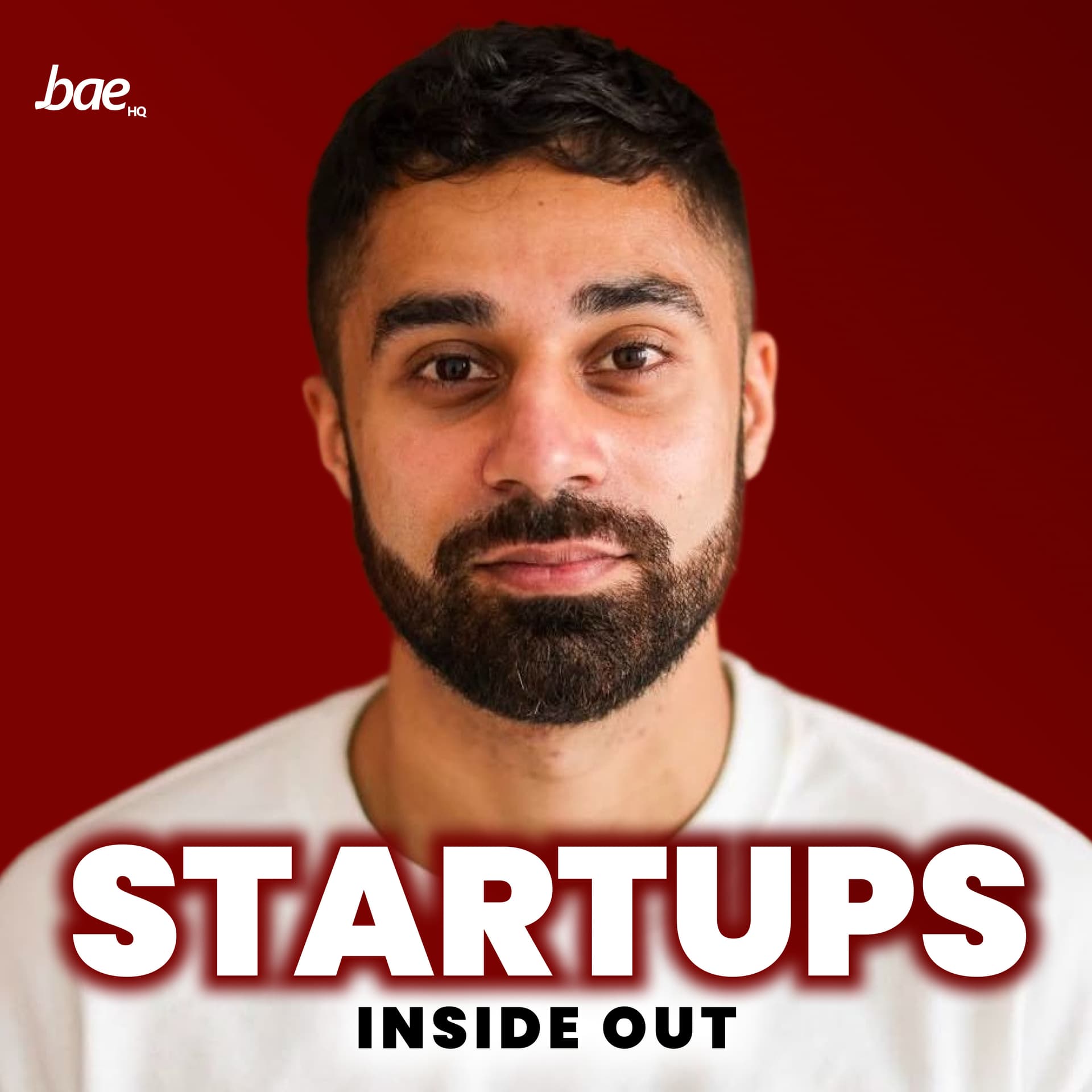
Jeet Mukerji, co-founder of Kinfolk; previously led AI/product work at Beamery. Co-founder Kim (CTO) is mentioned; Kinfolk team includes head of marketing Ola, head of sales Diego Vi, and customer enablement Sam (ex-company).
Key claims
Raised seed quickly (Jeet says $6m seed in 2 weeks; transcript also mentions $7.2m) after 5X growth; pivot to AI agents was hard but pragmatic; maintain both automation + agent modules for added value; defensibility via data layer + speed + distribution/brand.
Notable examples
Eliminating employee-created HR/IT tickets (e.g., policy questions, password resets); hiring a former Kinfolk implementer at a ~5,000-person company to build segmentation frameworks.
Written by AI. May contain mistakes. Listen to the episode to check what was said.
Chapters
Tap a time to open that second in VOEvolution of Kinfolk's AI Service Desk
0:45 to 2:09
Discussion on the evolution of Kinfolk from workflow automation to AI agents.
“When we started, AI agents didn't exist and therefore it was more of a workflow automation platform.”
Navigating Challenges in Product Development
2:09 to 3:36
Jeet shares the challenges and decisions in pivoting Kinfolk's offerings.
“It always sounds better in dollars, right?”
Balancing Pragmatism and Emotion in Business Decisions
3:36 to 4:32
Jeet reflects on the emotional aspects of product decisions and survival in business.
“We're also a proactive thing that can go out and support people along the way.”
Strategies for Customer Acquisition
4:32 to 6:39
Insights into acquiring the first customers and importance of commitment.
“It was like, what is it going to take to survive?”
Building a Customer-Centric Approach
6:39 to 8:06
Discussion on segmenting customers and tailoring services post-funding.
“And with that scaling up as well, right?”
Growth and Team Dynamics Post-Funding
8:06 to 10:28
Jeet talks about team expansion and dynamics after raising funds.
“And in some cases, we also say, let's not go for that segment because kind of this is where the future is.”
Recruiting Top Talent in a Startup
10:28 to 14:00
Strategies for finding and hiring top engineers and team members.
“So interestingly, the value that Kinfolk delivers will only start to come in when you're at, I'd say, maybe 350, 400, all the way up to 5 ,000.”
The Importance of Network in Fundraising
14:00 to 14:37
Learn how building relationships can speed up the fundraising process.
“and our existing investors were also super supportive.”
Challenges of Early-Stage Fundraising
15:23 to 17:07
Understand the difficulties of securing early investment and the strategies to overcome them.
“how the pre-seed is a bit more difficult, right?”
Navigating Investor Relationships and Expectations
17:07 to 19:10
Explore the dynamics of investor relationships and the pressure of securing big-name backers.
“where people sometimes think, okay, if I don't get Sequoia in the first round, then I'm just going to fail.”
Show all 18 chapters
Adapting to a Rapidly Changing Market Landscape
19:10 to 21:20
Learn how to respond to shifting market dynamics in the AI space.
“right at the very beginning, but the fact that you've proved yourself within it, you've got first investment, now you've proved yourself you've done so well.”
Learning from Product Management Experience
21:20 to 24:13
Discover how previous experience in product management informs current startup challenges.
“And therefore, you've really got to focus on the market side.”
Taking the Leap into Entrepreneurship
24:13 to 25:54
Hear about the risks and considerations when starting a new business.
“And then over time, not a very long time, but over time, when I was doing that discovery and starting to get that initial interest, Kim then got a bit more confidence and decided to join.”
Defining Defensibility in a Competitive Landscape
25:54 to 27:53
Examine how data and brand presence contribute to business defensibility.
“I mean, I think so some of them have stayed with us and they've kind of evolved with us as we evolve with them and their partnerships there.”
Value Delivery Across Markets
28:00 to 29:18
Learn about the differences in delivering value across various markets and the importance of product-market fit.
“The product is going to be very similar.”
The Challenges of Management
29:18 to 31:08
Explore the complexities of management and the importance of empathy and structure in leadership.
“to be able to the same level of ServiceNow, but a lot more human, a human way of tackling the problems.”
Highlighting Inspiring Asian Figures
31:08 to 32:56
Discover inspiring Asian individuals in Britain making significant contributions across various sectors.
“And then my co-founder is the manager and he can do that more kind of structured thing.”
Engagement and Feedback Invitation
32:56 to 33:40
Understand how to connect and provide feedback to help improve services in the HR and IT space.
“if people want to find out more about you more about what you're up to where do they go to?”
Transcript
Automatic transcript. May contain errors.0:00I'm Jeet, one of the co-founders of Kinfolk. And Kinfolk is an AI service desk primarily for HR. And the reason we built it was because we wanted to help people do their best work. And a lot of the times, I wasn't a very good manager. And that's kind of what drove this. And my biggest unlock was partnering with the HR team. And what we realized is if you get out of the way of people and you reduce the admin, then you can elevate the work that they do. And a lot of the times, you're kind of stuck doing the operational admin. So we thought, how do we get rid of that? and one of the ways was to imagine if you never had to create another ticket to get help from HR or IT operations or anything like that, which is why it exists.
0:38So it's evolved a lot to what it is today versus what we started with, but yeah, that's what we are.
0:44Amardeep Parmar:Where are you today? How's the progress been? Yeah, progress has been great. When we started, AI agents didn't exist and therefore it was more of a workflow automation platform. So the intention was you would enable employees from hire to retire without them ever needing to ideally ask a question. And they'd get the information, they'd get the connections in place. But what we realized was that even with that, people still need support and they still need help. And at that point, the only way they can reach out to someone in a large company is to either you have to know the person directly, which is very annoying for the person themselves, or you have to create a ticket and you wait for the answer to come back to you.
1:22Whether it's something as menial as where's the policy for X all the way to someone's password and I need help. It's still a ticket. So we didn't feel that that was the right way for people to get support. And it's a very IT or engineering led way of dealing with issues, which is like reset password, et cetera. So when AI agents came along, that allowed us to basically solve that problem and say, great, actually, you can allow employees to self-serve support and they get what they need. And that also means HR teams and IT teams are being interrupted far less and they can actually you focus on the job that they pay to do.
1:55Amardeep Parmar:And then how's it focused on, say, both the customer and the funding side so far? Yeah, so we grew 5X last year. And off the back of that, we then ended up raising a$7.2 million seed round backed by Albion. It always sounds better in dollars, right? I always say something in dollars too. Always, exactly. I always bump it up. So yeah, we raised from Albion. We raised from ProFounders. And we were previously backed by Emerge Education and Ascension as well. Great VCs. So that's where we are. and now we're starting to go more and more mid-market and enterprise. With that switch from the workflow automation to AI agents as well, so you made it sound fairly easy there.
2:32Amardeep Parmar:But I'm guessing how was it actually at the time because you're shifting where you're working, you're shifting your priorities, you're having skill sets and within the team and how people are going to work too. Yeah. Was that something easy to pivot or was it quite a tough transition? You know what, it's really, I'm glad you asked that question because it's really hard to answer at the time because when you're in it, it's just like, well, this is what we've got to do. But on hindsight, yes, we had because now we have effectively two products. And interestingly, we were thinking that the original product that we built out, the automation tool, would be sunsetted because this is where the future is on AI agents.
3:10But it turns out that when you put those two products together, they actually deliver more value for the customers. And so now we are maintaining two modules inside our overall platform and that's giving us a bit of a differentiated edge. So that has been interestingly quite tough because you have to now maintain two pieces of product. The value proposition also has to be framed in a certain way, which has to be super clear. But then you're also saying we do a couple of different things, but not just purely a service desk. We're also a proactive thing that can go out and support people along the way.
3:42So, yes, how you structure your team, how you think about what you work on, where you're going to make the bets in future. and what we realized as well is that the automation tool a lot of that stuff you can also do with AI and therefore that's probably also going to become agentic and now we have to think about well how do we then turn that piece more into the technology stack that we have here and that's the hard bit because you're always having to prioritize right in a CTA startup and
4:10Amardeep Parmar:that becomes difficult because then there's a lot of anxiety amongst founders they're building and they're like okay I've been building this it's been so long building it and now it's kind of irrelevant. And when you're thinking about originally having to sunset that initial product, was it quite a pragmatic decision or was it quite an emotional time as well? Like, I've worked this hard on this thing and we might have to just cancel it. Yeah, it was pretty pragmatic. It was like, what is it going to take to survive? And where is the world heading? And where do our capabilities align? And all of those things kind of led to, we need to become more agentic and that's where we need to put our resources.
4:50It's been really interesting, as I say, to get the feedback from existing customers and new ones who are like, well, actually, this stuff also solves for things and therefore we want to keep it. So that's when the emotional bit comes in because then you're like, oh, okay, it was pretty good. And, oh, okay, we're not going to sunset it. And it's like, oh, but you're kind of getting pulled because this is where the future is. And we've got to migrate this bit over to that bit. So, yeah, initially pragmatic, but now it's like, okay, yeah. We did something pretty good there. We'd be pretty sucky if we did kill it.
5:18So yeah, that's where we landed.
5:20Amardeep Parmar:And you said about the 5X growth as well, right? Getting those first customers, how would you get that first customer, that first person to try it out and give you a chance? Yeah. I'm sure you've heard this through the many hundreds of podcasts you've done. It's really founded, learned, and it's really human. And you really have to, and I'm going to say some cliches here, you really have to do things that don't scale. and you also have to be smarter than I was where I was like hey do you think this is a good idea and they were like yeah great and then I was like great do you want to pay for it and they were like no so framing that is going to be really really important and making sure that you get some kind of commitment because we wasted a lot of time earlier on getting the wrong signals where where we were just reaching out to kind of anybody, because you're kind of pre-product market fit at that point, you're also pre-trying to define your ICP.
6:13So there's a lot of like, who wants this thing? And I don't think that was quite the right approach. I would have probably done it quite differently, to be a bit more strategic about who you're reaching out to, why you're reaching out, and then being quite upfront about, this is valuable for you, and therefore, there's got to be some kind of nominal amount, because when they put in an investment, then they're also more, they have more buy-in to be able to use it. So yeah, it was definitely more spray and pay than I would have hoped.
6:39Amardeep Parmar:And with that scaling up as well, right? So first customers, you have the things that don't scale. How you then work that out and say, okay, this is now a strategy we can use, a framing we can use. But when you're going to market, that is now resonating and you're getting these clients coming in a lot faster. Yeah, it took a few customers to kind of get there because as you're kind of going through trying to identify who is your ICP, in reality our customer base is quite broad and we do support a wide range of customers and therefore the go-to-market or even how you enable the customer or how you support a customer and the products you build for them it's quite different and there's a range so I'd say we are now starting to find almost different segments where you can then say this this model will work for this particular customer versus this model will work for this one we've hired someone who actually implemented Kinfolk at a very large company, top end of mid-market or so.
7:31There are about 5 ,000 people. And now she's joined us, luckily, and we're very fortunate to have her. And now she's kind of built out a framework for us to say, okay, how do we segment the customers in the right way? And therefore, what is the level of support that they need? And that's only happened post-seed round. Right before that, it was just like, I guess this works and we'll just keep going and we'll just keep working long hours. But now that we've built a team out, you can't do that. You can't expect people just to be like, winging it. So yeah, it's taken a few iterations, but now we do have frameworks and we almost have like a calculator where you can say, where does this customer actually fit?
8:04And then also similar for top of funnel, where do we invest our dollars? And in some cases, we also say, let's not go for that segment because kind of this is where the future is. So there's those debates that are happening now too.
8:15Amardeep Parmar:And you said we a few times as well, right? So what's the team look like now? And also the co-founder relationship, tell me about that. Yeah. So Kim is my co-founder. He's a CTO and we met a while at Beemery. So I was leading the AI unit there from a product perspective with people far smarter than me from the engineering side of things. And then once we built out and tested the models, we would then give it to the front end teams. And Kim was the engineering manager there and he was leading three different teams. And what I really liked about the way that he was leading was he had the highest velocity and the highest quality code of his team.
8:53and his team had the highest retention rates. And he cared a lot about getting the best out of people. And I also wanted to look at that piece. And that's kind of how Kinfolk started of like, how do we allow people to do their best work when they turn up to work every single day? And it's become very operational now, but in the beginning, it was more like around onboarding and maybe it's learning and development, maybe it's performance reviews, that kind of thing. So there was a lot of time we spent in the wilderness trying to figure out exactly what it is and what people are going to pay money for.
9:20we even spend time in like belonging and community and as you know that stuff is hard very very hard to do so that's where we met um and that's kind of what we we vibed over and it was basically us until um until the seed round it was us and a handful of engineers who put their faith in us that we're not going to mess up their lives and they were working as contractors but they were actually friends and colleagues from previous businesses and that's one of the only reasons we worked with them as contractors because we trusted them and we'd worked with them before If we hadn't, then I think bringing in contractors would have been quite risky, especially at that kind of very, very sensitive stage where you're trying to figure things out.
9:58And now that we are post-seed round, we've now had a head of marketing, which is amazing, head of sales, also fantastic. And then, of course, Sam, who's come over from the company to help us on the customer enablement side. And we've also hired a handful more engineers. So right now, we've gone from a team of two co-founders and three and a half people or so. because someone was part-time, to now 12 people in total. So yeah, it's a lot more to manage. It's a very different beast now.
10:27Amardeep Parmar:But I guess you do use Kinfolk internally as well to help manage them, right? So interestingly, the value that Kinfolk delivers will only start to come in when you're at, I'd say, maybe 350, 400, all the way up to 5 ,000. That's what we're looking at. So a couple of years, yeah. So it's going to take 12 now to 500. Yeah, that's exactly right. And with the engineer side, right? Because one thing I'm hearing a lot from founders, especially people who've raised a bit of money, the thing they're struggling with is how do you get those top quality engineers? And they're like, okay, cool, we've got the money.
10:57Amardeep Parmar:We don't need fundraising, but we need the right people, right? And obviously, you said that you worked with people that you've worked with before, and that's one way of getting it. But have you hired, obviously, people beyond that too? And how are you finding them and convincing them, like you said, to come on board to a new mission where who knows where it's going to go, there's risk involved, all those kind of things? Yeah, we're very lucky to have really great people. and on the engineering side, all of them have come in through either referrals or they've worked with either us directly or they work with another engineer on the team.
11:28And that was really important because it is a remote team and they're across Europe and we want them to ramp up quickly and be able to speak the same engineering language. And that means they needed to have worked together before. And that's not really an area that we want to ship out to recruiters to be able to find because that's the bit that we need to move the fastest. to be able to build things out quickly. Whereas on the go-to-market side, I didn't really know anybody. And the people that I knew I couldn't afford because we were at that particular stage. So we got introduced to our head of sales, Diego Vi, another founder.
12:05He actually contracted with us earlier on. So again, there was like a long, him figuring out whether we're worth it whilst figuring out whether he'd be the right fit for us. And then when the seed round happened And then it happened quicker than we expected. Then he joined us. So again, there was a period of he was not an unknown entity. And then post-funding round, Albion helped us to connect us with a recruiter who was very much tapped into the go-to-market space. And she helped us find Ola, our head of marketing. So Ola was the only unknown or unrequited entity. And she's been phenomenal. And I think, yeah, that was really good.
12:44But again, it was through our VC who recommended recruiter. And we kind of vetted a few recruiters and they were kind of the best in terms of the high touch approach and what we were looking for when they were treating candidates and how they treat candidates. And yeah, and then I said the other person, Sam, who joined us, we'd worked with the customers. So again, it was like, yeah, people that we kind of knew or had some familiarity with.
13:08Amardeep Parmar:You said the seed round happened quicker than you expected as well. How did that happen? Yeah, so we technically didn't go out to raise. Post pre-seed, there were certain investors who, as you can imagine, you do get some influx at that point. And a similar thing happened at that seed as well. And some of them reached out, and some of them we vibed with a little bit better than others. And they continued to keep us warm. And kudos to the automations and sales process and pipeline building. That worked on us, to be honest. And the more we spoke, the more that alignment was quite clear. And then we started to hit the kind of growth that we wanted to and that we needed to get the seed round.
13:52So then we started conversations of, okay, I think it's about time that we go out to raise. And at that point, they were like, well, let's have a conversation. and our existing investors were also super supportive. So kind of working together on that piece, we did start to go out, but it was in a couple of weeks, I'd say it was done. So that old adage of always be raising, that doesn't mean like go out and speak to all investors all the time because you need to focus your mind to build. But that relationship building has been the difference between potentially taking months to raise or even potentially failing to closing a pretty sizable round and then now being able to focus on building the business again.
14:37Hello, hello.
14:38Amardeep Parmar:I hope you're enjoying the show so far. I'm Amadeek Parma, co-founder of BayHQ and the host of this show. For those of you who don't know, BayHQ is the community for high growth Asian heritage founders and investors in the UK. Over 7 ,500 people have attended our events, 200 people have been for our impact programs and obviously there's been over 250 episodes of this podcast. If you want to join us and take part in the program and come to the event, go to behihq.com forward slash join. We also just released our first ever book called Startups for Outsiders, which you can get on Amazon now and the link is in the bio.
15:18Amardeep Parmar:Hope to see you soon at our event. Hope you enjoy the rest of the episode. And you said as well earlier off camera how the pre-seed is a bit more difficult, right? Yeah. So how did you get those early backers in those early days? Yeah, that was through luck and through network. There's no other way to put it. I mean, there was a hustle, yes, but I also didn't really know what I was doing. And cold emails, as we know, don't really work unless there's some familiarity. So it was literally through, can you introduce me to this person versus that person? And someone knew someone else. And it was all through that.
15:55And as you're saying off camera as well, right, when you started this, it was all through people you knew and it was trying to connect dots. So, yeah, the hard work doesn't disappear. We built a massive list of investors and we reached out to like hundreds. And obviously, you go from 100 to 2. So we had a 2 % success rate. And that's with all of our networks and all of the, please, can you give us 30 minutes of your time and all that kind of thing. So, yeah, that was much tougher.
16:22Amardeep Parmar:What I've kind of realized is interesting as well, right? So there's some people who are in like super structured programs, right? They got like 50 term sheets. They've done incredibly well. And there are some people who like at the first pre-seed, they said like they've tried hundreds of these years and not really worked. And then, but then that first rounding in that first thing, the ones who did it the way that they got like tons of same sheets versus the ones who struggled quite a bit, it doesn't necessarily align to what happens at the stage afterwards. And I think that's what I've noticed too, is that it's interesting where sometimes people think, okay, you're going to try and target to be the first group of people.
16:53Amardeep Parmar:Often that just comes down to what your background is. And if you had to struggle for that first round, it doesn't mean that you're then not going to be successful. And I don't think it's a very good indicator sometimes where people sometimes think, okay, if I don't get Sequoia in the first round, then I'm just going to fail. Well, actually, it's not like that at all. And we've had so many founders on who maybe they got a really hyped up first round and then just kind of struggled afterwards. And then other people, like you said, where you had to struggle, you had to do the hundreds of outreach.
17:23Amardeep Parmar:So I think that's one thing that I think just like for when it's kind of paid attention, it's like I'm as a huge sample size I have, I'm not seeing that correlation between those who struggle for the first round and those who don't and what happens afterwards. Yeah, totally. I mean, obviously having big names do help. And even from a go-to-market perspective, that will help. And if you have big names, then that gives confidence for the next round. But with that, you also get that level of pressure and that, okay, we now need to deliver. But I think what we found is that we were less interested in the names and more interested in those that align with the type of business that we want to build and the level of support and access that we'll be able to get.
17:59And do they have expertise in certain areas that we have gaps in? So given that we are in the work tech and workforce operations space, we wanted to align with someone who understood that a little bit more. And for example, their advisory boards and then their venture partner network. What is that like? right so there's that piece and there's obviously the piece like let's not be around the bush there's obviously the piece of who's going to give you the money so um those two things do come into play and then you kind of got to be a bit bit strategic in that sense of like okay is this just i just want cash versus do i want something a bit more of a relationship and a partnership can i get something more out of there um so i i personally don't think and i'm obviously biased with my own experience but i personally don't think you need those big names up front and if anything that process of reaching out to 100 and getting so many no's until you get the yes and you get another yes that builds a muscle of what you also need to do in your own business and it's it's a sales process at the end of the day so it builds discipline um and it means that you have that kind of base layer of hopefully resilience that can then see you through the next next funding round so yeah um i i would agree with you i'm not sure there is a correlation and a lot of
19:06Amardeep Parmar:times there's bigger names. They say, for example, Albion will come in, right? They might not come right at the very beginning, but the fact that you've proved yourself within it, you've got first investment, now you've proved yourself you've done so well. A lot of them will come in for that seed. You don't necessarily need them in the very first round. It doesn't stop them from coming in. And most pre-seed investors also do seed. So generally, it's more open than that, but I see quite a lot of people with a hell of a lot of pressure on themselves. It's like, oh, if I don't get like a big name the rest of the first round, I'm a failure, right?
19:34Yeah, I just let go of that pressure. Because also, you want to prove out whether you are building a business that is venture-packable in the first place. And therefore, you probably need some time up front in any case to figure out, is this what I'm doing? Is this the right business model? Is this the right funding model? And then once you have that confidence, it becomes a lot easier. And once you have that clarity, it becomes a lot easier to then go and speak to the right people. I'm not sure how well we would have done if we had spoken to Harvey and Aal around the days. We were very fortunate to be backed by Emerge and Ascension and they did take a bet on us because, man, I've got to tell you, it was always been great for
20:10Amardeep Parmar:these people who take the bet on you before, right? Yeah, yeah. And yeah, I mean, you know, it was up and down. It will always be kind of up and down and, but yeah, there's been some hairy moments and they kind of stuck through it. So, yeah, I wouldn't say we were, we were ready that we are now at the seed round to reach out to those bigger names. And so as well, I see you said, okay, the pre-seed funding was pretty hard. You said you had the pivot from the workforce formation to the AI agents, and then kind of now having both at the same time. You said a hairy moment, right? What are some of the other hairy moments you've had and how did you get through them?
20:44The competitive landscape keeps on changing. And you've got players who are pivoting away from our space and you've got players who are coming into our space from other areas. And then we want them to enter their space to increase the TAM, but they're coming in faster than we're going out. So at least that's what it feels like to us, right? And we've been told, like, look, there's going to be stuff on the website, which is probably a lot of BS, so don't take it on the surface level. And I would say that's primarily quite true. So those market dynamics are shifting. So then how do you navigate that?
21:17And it's shifting much quicker in the age of AI because it's, quote, unquote, a little bit easier to build product. And therefore, you've really got to focus on the market side. so there's that piece then the other piece at this stage is there is not that much predictability in terms of okay what is exactly working if I just add more people or more tech to this can I then make this a flight wheel so trying to apply all the models that people recommend to a stage where things are not predictable is is going to have the completely opposite effect and we kind of did that as well and I've been a head of product before I'm like oh I'm not I'm not going to make these mistakes, I'll be totally fine with this.
Read the full transcript
21:56And I made the classic mistakes along the way, despite having all of the training of being a product manager, despite having worked in a series A to series C startup. So there's those moments, there's speaking to the wrong ICP, you only realize that later on, of course, and there's pricing challenges, and there's team changes. We went through all of the things, all the cliches that you might expect throughout, and we probably still will continue to. They'll just be at an elevated state as we go from one rather than the next.
22:25Amardeep Parmar:You mentioned you were at a product manager and Beamery and things like that before. Yeah. How do you think that helps you in what you're doing now? Yeah, so it's helped me to be a lot more curious. And I think in some ways it's been great, in some ways it's been a bit of a hindrance. And it's helped to really get under the skin of what the problem is. And the market and the ICP that we're working with, so HR leaders, people operations leaders, workforce operations, IT, those kind of folks, they appreciate they don't appreciate being sold to they appreciate partnership and really helping them to solve their problems and I think that's fairly true across a lot of the products that are being built and so bringing more of a product manager mindset and understanding and asking the five whys and saying okay I think this is you're saying you want this but I think actually you want this and this is the reason why and being more of a partner with them has helped to build up that credibility and people buy because they think you are credible, at least in our space.
23:24If I just kind of tried to sell to them without fully understanding, I think that would have been more difficult for us now. Whereas now that kind of mindset has helped us to build that kind of trust layer, which then again helps with brand. And in a world where it's becoming easier to build software, what matters is the go-to-market and distribution and brand and trust and credibility. So I think it's been a bit of a long game, which is why I say it's a bit of a hindrance, because I should have been a better salesperson. I spent a lot of time on doing discovery and partnership and that kind of stuff.
23:55But it's now starting to pay dividends.
23:57Amardeep Parmar:And when you left as well to begin this at the start, you obviously hadn't built a startup before, right? It's your first one. First one, yeah. And then taking that leap as well, how was that for you? Was it something where you work with Kim, you're like, yeah, we've got this, we're going to do it. Or did it take more time to convince yourselves that this is going to be the path for you? I would not recommend to anybody the way that I did it which is there was an itch and I could see the problem it was around belonging and interesting community and how do you bring people together to do their best work to unblock them because there's a lot of contextual knowledge in people's brains and it was during the remote work period and it was just keeping me up at night and that combined with I wanted to build something myself I was like okay let's do something and then I got married and then two months after I got married I told my wife I'm quitting my job she knew it was coming but the the sequence kind of put a little bit of pressure on and what we should have done is taken our evenings because we did have that have that luxury at that time to do the discovery and I was doing some discovery but again made the classic mistakes of not taking any of my product management learnings and applying that and being analytical and just being like do you like this product you can go yeah sure it's like fantastic I'm going to quit my job and I'm going to do this thing.
25:14And so, yeah, it was pretty stressful. I did quit first. And then over time, not a very long time, but over time, when I was doing that discovery and starting to get that initial interest, Kim then got a bit more confidence and decided to join. And then we ended up closing our first customers, who candidly are no longer with us. It was different ICP. There was so much change since then. But that did help us then get the pre-seed round and then that allowed us to accelerate a bit further.
25:43Amardeep Parmar:Even with that, I think that's very normal. As your first customers, the early adopters aren't necessarily the people who are actually going to be the people you serve in the end because it's building traction and understanding things, right? Yeah. I mean, I think so some of them have stayed with us and they've kind of evolved with us as we evolve with them and their partnerships there. But I would say a majority is a very different makeup to what we're seeing now. You said about how the market is shifting so quickly and things like that as well. And how do you think about that, I guess, longer term, your defensibility and how you're going to make sure that you you stay ahead of everything that's going on.
26:14Yeah so I think specifically our defensibility is probably going to be around the data layer because if we think about integrations are becoming easier for people to connect with different systems it's becoming easier to build UX and UI although that is important and increasingly important because that's going to be the interface between how you then interact with the AI for example and then therefore from the product side of all the usage that you're getting really the moat is the data underneath because again that powers the AI it gives insights into how customers are using the product and where they can improve themselves as well and that allows us then also expand into other use cases based on the edge cases of the the data so there's that piece and then the other defensibility piece of course is right now frankly speed as with a lot of startups that will change over time of course and then you've got your distribution and brand and and your existing networks though that's going to be the defensible
27:11Amardeep Parmar:part and then with the fundraisers as well is that mainly for hiring or where were you thinking to use that yeah we were originally thinking hiring um but in reality it's it's shifting a lot more to to marketing and go to market that's where we're going to focus our time and right now you mainly uk focused or where are your customer base so majority of our customers are actually in the us and we are very proudly London-based, UK-based, but we also have the engineering team across Europe and yeah that's where we are. We will expand to the US in terms of building on a team over there but we're still able to do quite a lot.
27:49My air miles are really racking up and so is the jet lag but yeah, the US is where it's at.
27:55Amardeep Parmar:So when you're expanding to different markets, is there a big change you have to make between them? or is it going to be fairly similar in terms of the product? The product is going to be very similar. In fact, the product is exactly the same across markets. But the way we deliver value, the way we sell, the way we partner, those are quite different. And the pace that we move at across different markets are also quite different. And the sales cycles are also quite different. So let's say, so we're sitting here again in two years' time, right? So you're saying this is episode 320-something, I reckon.
28:27Yeah.
28:28Amardeep Parmar:So episode 520, we're sitting here two years later. We're going to have a little TV up here or make an AI TV. And play back this, right? It's like next time you come on in a couple of years' time, what would you love to say you've been able to do in that time? Yeah, build a repeatable, predictable go-to-market machine. Having found that level of product market fit for the next phase, because I think product market does come in phases and stages. and then be in a position where we don't need to necessarily raise a Series A, but we want to raise a Series A because that will help us to accelerate based on the learnings that we've had.
29:02Amardeep Parmar:And a long-term vision, where do you hope someday this is able to build to? Yeah, so larger companies have the likes of ServiceNow that are doing or trying to solve a similar problem as us. And we'd like to see Kinfolk get to that level as well, to be able to the same level of ServiceNow, but a lot more human, a human way of tackling the problems. And that's been the core of everything, of how do we use AI to elevate the human work and only the work that humans can do. But the underlying operations and problems is similar to what ServiceNow is solving. So I'd say that's what we want to get to.
29:42Just before we go to a wrap-up question.
29:43Amardeep Parmar:So you said earlier about how you weren't necessarily the best manager, right? But we were talking a bit before this, middle and here, you come across like very calm, very self-aware, very collected. Is that something that's come over time or have you always kind of been in that kind of demeanor? It's all the ashwagandha I take probably. Yeah I mean good question. I think there's a difference between being calm and collected and being truly supportive and empathetic right. I'm still a selfish individual, I still have the internal worries and concerns and sometimes I do such often not, I'm not always necessarily present and listen.
30:20And management is also something that you can learn. And just because you have the characteristics doesn't mean you know how to actually enable a person. There are certain frameworks which also help. So having been a first-time manager, now I had a similar feeling of like I'm a good guy right? I can probably help this person now. They need a lot more structural help and operational help and a deep understanding of their role. management is hard. Middle managers have it really hard. And so I think there's a lot of other stuff that you need to be able to be a good manager.
30:54Amardeep Parmar:Yeah, and I think it's one of those things like I know as well as something like, I don't think I'm a good manager. I think I'm good at the general chat. But then when it's like a very specific manager, it's like a structure that people need. And I'm probably better at the general chat and like I'm the happy vibes guy. And then my co-founder is the manager and he can do that more kind of structured thing. As long as you've got the balance, as long as it's there somewhere, then it's great. So moving to the right four questions now. Yes. So first one, who are three Asians in Britain you think are doing amazing work?
31:23Amardeep Parmar:I'm going to shout them out. So I'm going to cheat and I'm going to give you four. And I wrote these down because my memory is terrible. So first one is Kavit Haria, who is the co-founder of Jay Shetty Coaching School. And he's now started Araya Ventures. Great guy. Very smart guy. He used to be a Tumblr player, I believe, and then moved into business. Then you've got Sam Desi, who's the co-founder of Pup, which is a conversational layer in recruitment. They're doing some really great work on that side. Very, very smart guys. Then you've got Saurav Chopra, who founded Perkbox, and now he's building Fibren's AI.
31:58He's one of our angel investors, and he's been a really good support. And then there's a friend of mine called Alan Tang, and he's my favorite on the list. He is a fractional COO, but he's also on the side built out something called Collaboration Labs. And what they do is, what they realize is that in current education system, the kids are not learning the soft skills in terms of ownership and collaboration and accountability and communication. They don't teach you that stuff in school necessarily. It kind of happens as a byproduct of it. So they've built out a digital gaming system where they bring kids across different nationalities together in the evenings and they have to work together and then go through a mission.
32:40And through that mission, they then learn those traits. And that's been amazing to see, the uptake there and the drive from him to build something like this out purely to help in a similar way to what you guys are doing. A lot of credit and a lot of kudos to that. Sounds very cool, yeah.
32:57Amardeep Parmar:if people want to find out more about you more about what you're up to where do they go to? LinkedIn is always the place to find me so if you just type in my name Jeet Mukherjee then you get me there and is there anything that the audience listening today might be able to help you or help Convoke? Yeah really good question I think check us out and then tear us down give us some feedback I'm sure there's different perspectives which would be always very useful so take a look at the website take a look at what you're seeing and especially if you are interested in the HR and IT, that kind of space, then would love to hear your thoughts on what we're building.
33:35Amardeep Parmar:Thanks so much for coming on. Any final words? I think we covered it. Thank you for having me on. It's been amazing.
From the publisher
Amardeep Parmar from Bae HQ welcomes Jeet Mukerji, Cofounder of Kinfolk.
Amardeep Parmar: https://www.linkedin.com/in/amardeepsparmar
Jeet Mukerji: https://www.linkedin.com/in/jeetmukerji/
Kinfolk: https://www.kinfolkhq.com/
👉🏽 Buy Startups For Outsiders: https://www.startupsforoutsiders.com
👉🏽 Learn through our IncuBaetor: https://www.thebaehq.com/incubaetor
👉🏽 Join Bae HQ: https://www.thebaehq.com/join