In short
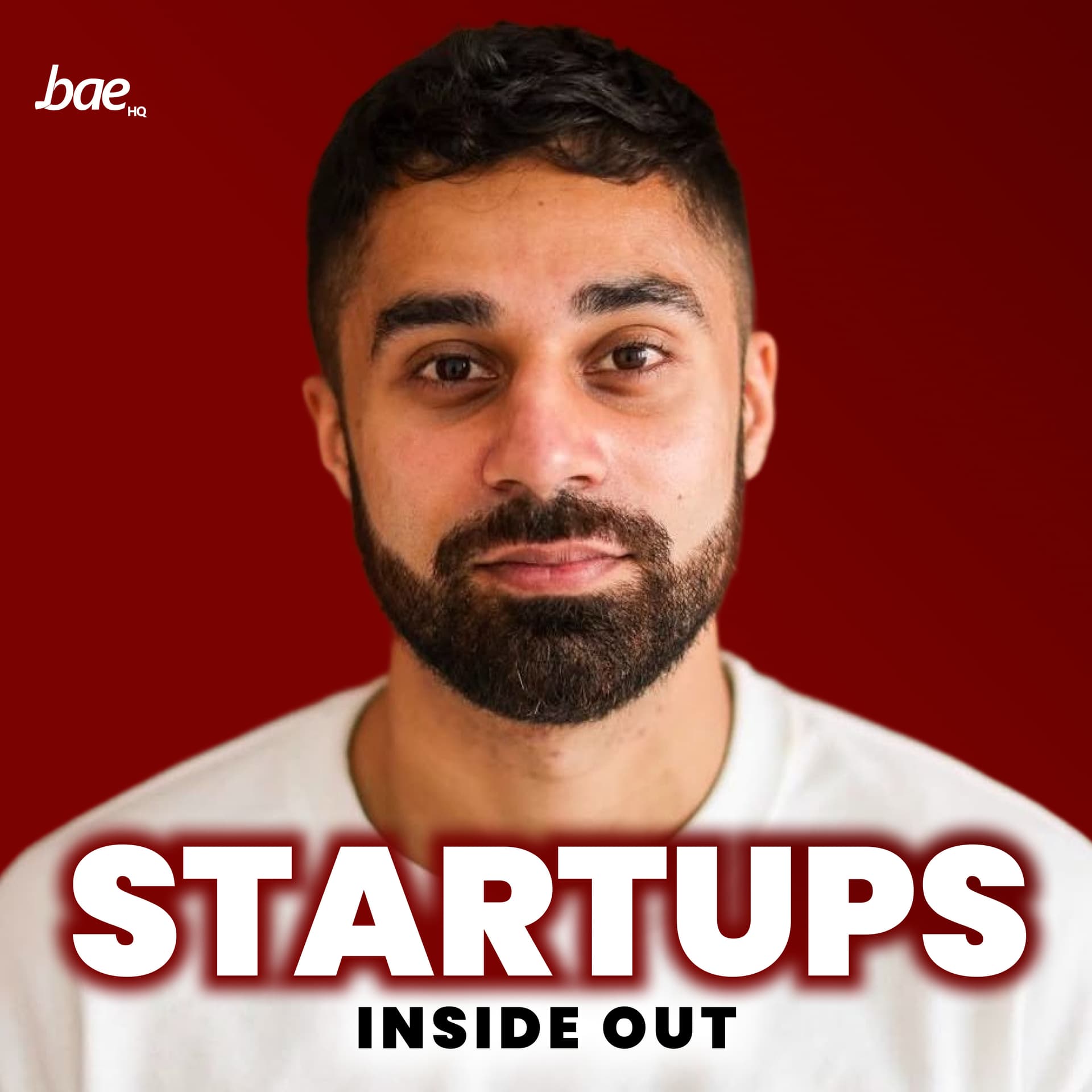
Krishna Visvanathan, founding partner at London-based Crane Ventures, explains why they invest in early-stage, technical AI/data-first startups (inception/seed/pre-seed) and how they select founders and structure patience via long-term LPs.
Guest background
Krishna co-founded Crane 11 years ago; born in Malaysia to South Indian parents/grandparents, moved to England in 1990, London home since 1999. Crane invests pan-Europe, with an Asia-focused fund and plans to expand a US team.
Key claims
AI/data-first “founder dreams” were credible 10–11 years ago due to compute + ML research evolution + cloud enabling low-capital startups. They look for “outliers” in people (technical history, motivation, humility quotient) and scalability on the business side. Long-term LPs enabled patience through early Fund 1 maturation.
Notable examples
James Dacum (UK; 19, taught himself AI; non-invasive brain sensor for traumatic brain injury). Professor Satya Chakravarti (IIT Madras; electric VTOL air ambulance; Agnico; reportedly built first version with $25M).
Written by AI. May contain mistakes. Listen to the episode to check what was said.
Chapters
Tap a time to open that second in VOFounding Crane Ventures: The Journey Begins
0:45 to 1:52
Krishna shares the inception of Crane Ventures and its focus on early-stage tech founders.
“I came here to university, and I've lived here ever since.”
Identifying a Market Gap in Venture Capital
1:52 to 3:00
Discussion on the market gap Crane Ventures aimed to fill and the founders' ambitions.
“It was such a gap that most people didn't believe it existed really.”
The Rise of AI and Founders' Vision
3:00 to 4:21
Krishna discusses the evolution of AI and how founders envision its future.
“But to do it 10, 11 years ago is very different.”
Early Investment Challenges and LP Relationships
4:21 to 5:36
Insights into the early challenges faced by Crane Ventures and the importance of LPs.
“to hit where a bunch of things were going to come together, compute capability, an understanding and also a sort of, if you like, an evolution in research into AI, ML.”
Fundraising Success: From Fund 1 to Fund 2
5:36 to 7:08
Krishna explains the transition from Fund 1 to Fund 2 and the validation of their investment thesis.
“But that's how, you know, we were able to then raise Fund 2.”
Selecting the Right Limited Partners
7:08 to 8:04
Discussion on the intentional selection of LPs and their impact on investment strategy.
“They built an understanding of the market.”
Shifting Dynamics in AI Investments
8:04 to 9:12
Krishna reflects on the changing landscape of AI investments over the years.
Finding Outliers: The Key to Successful Investment
9:12 to 14:00
Insights into how Crane Ventures identifies exceptional founders and their unique ideas.
“So the first judgment, I mean, that really doesn't change.”
Investing in People: Key Traits
14:00 to 14:30
Learn what traits and characteristics are essential when investing in startups.
“These are the type of people that we get to invest in.”
Introduction to BayHQ and the Show
14:30 to 14:54
Get introduced to BayHQ and the podcast's mission and community.
“I'm Amadeek Parma, co-founder of BayHQ and the host of this show.”
Show all 20 chapters
Founders' Stories and Engagement
14:54 to 15:39
Discover how engaging with founders can reveal their true potential.
“go to www.bahihq.com forward slash join.”
Evaluating Founders: Connection and Humility
15:39 to 17:58
Understand the importance of connection and humility in founders for investment.
“And how do you try and get around that or have you got any methods of how you try to engage its founders and learn about them?”
Expanding Investment Horizons Globally
17:58 to 21:06
Learn about the decision to expand investments from local to global markets.
“the better they are as leaders and therefore being able to attract and retain talent and create the right culture in their organizations.”
Building a Brand in New Markets
21:06 to 23:13
Explore how to establish a brand presence in new international markets.
“And obviously doing it as well, it's not easy for people across the world to know about your fund and be able to get in touch, right?”
The Value of Post-Investment Support
23:13 to 25:17
Find out how providing support to founders post-investment can lead to success.
“Most of venture you rely on high quality introductions from people who know you.”
Future Predictions: Tech and Investment Trends
25:17 to 28:00
Get insights on the outlook for technology and investment in the coming years.
“I imagine as well, so defensibility is probably a big part of those conversations.”
Maintaining Discipline in Valuations
28:00 to 29:15
Learn how the importance of discipline in investment decisions can help avoid lofty valuations.
“some people say no, others say well, if one to all that is as a continuous of this, then you know, it will sort of self-correct to some extent.”
Advice for Young Entrepreneurs
29:15 to 30:24
Explore valuable advice for students on pursuing passions and taking risks in their careers.
“in a minute around the initial ownership we secure in a company for the initial ticket that we put into the business.”
Celebrating Culinary Talent
30:24 to 33:05
Discover Asian chefs making waves in the culinary world, highlighting their achievements.
“The default, probably many of the environments that we all grew up in, so I think about myself and my parents or my grandparents, I don't think they were.”
Connecting with Crane Ventures
33:05 to 33:51
Find out how to connect with Crane Ventures and the kinds of talent they are seeking.
Transcript
Automatic transcript. May contain errors.0:00My name is Krishna, co-founded Crane, as you can see branded here. Crane is a venture firm based in London. We founded the firm now 11 years ago actually. And our investment focus, if you like, is early stage, inception, seed, pre-seed, technical founders building foundational technology businesses initially on a pan-European basis, now very much on a global basis.
0:25Amardeep Parmar:you know, focused also with a separate fund focused on Asia, soon with a team heading out to the US. So that's the kind of high level. Happy to delve deeper, but that's who I am today. Born and brought up in Malaysia to South Indian parents, or grandparents, I should say, who emigrated to Malaysia in their 20s and 1930s. I moved to England in 1990. I came here to university, and I've lived here ever since. London's been my home since 1999. And when you started Creighton, what was it that was a gap that you were trying to fill? So by the time we started Creighton, I'd been a venture investor for 14, 15 years.
1:04And we, my co-founders Scott and I, we love investing people who had bold, ambitious ideas very early. That's what we loved. We got the most joy out of working with those sorts of individuals and if their products
1:22Amardeep Parmar:are very technical. When we thought about the firm we were at, when we thought about the market generally, and this is not a critique of other people, we felt that there wasn't a firm just focused on that very narrow definition of a founder's journey. And then we also were tight in terms of the type of companies we wanted to invest in, AI and data-first companies. That's literally all we did. And we did that on a pan-European basis. That's the gap we saw existing. then it was a gap. It was such a gap that most people didn't believe it existed really. We had to convince a lot of people that it really was a thing.
1:59And so that's what we saw. And it wasn't us who imagined that. We saw that because it came to us naturally in our conversations with founders. Founders are telling us like, hey, this is what we're building. We're trying to raise X. We're trying to raise Y. We're finding it really hard. Why aren't people kind of listening to us or they were, to some extent also, you know, we always think of entrepreneurs, founders as really the true fortune tellers. They imagine a future that doesn't really exist today and they imagine it in their heads and their desires to make that future a reality. So our job is to believe the futures that they are kind of painting for us.
2:41And many founders were telling us like, hey, the future is AI first, data first. Of course, in 2015, if you think about what exists today, you really wouldn't imagine that that was a future that one could really imagine. So that's how we arrived at that problem. I just said that, right? Now, every VC fund is an AI first fund, right?
3:03Amardeep Parmar:But to do it 10, 11 years ago is very different. And how did you see that when other people didn't? So even then, like the founders can always have dreams, right? What made you think that these dreams are actually something worth hacking? Yeah, it's a fair question. I think as we started really trying to, or we started understanding precisely what it meant, what does this broad technological capability actually do, right? You know, and actually, if you go back and look at the history of AI in the early days, we would call it machine learning. Many of the early foundational techniques and approaches had existed.
3:46They were all based on mathematical theorems for 30, 40, 50 years. And there were pioneers in AI doing research in university labs around the whole of Europe and in the US and even in Japan at a point when nobody really cared about it. And part of the problem was that actually the compute infrastructure didn't exist to make it something that was consumable. So as we spent time thinking about it and talking to founders and really understanding why now it became more obvious to us, okay, there is this moment in time that we're about to hit where a bunch of things were going to come together, compute capability, an understanding and also a sort of, if you like, an evolution in research into AI, ML.
4:34And last but not least, if you think about, again, back 10 years ago, cloud was starting to really scale, right? And so founders could start companies for really not much, if any, capital up front. They could rent servers. They could, you know, license core software, or not core, non-core software, and build. So when you put all of those things together, you start to think, okay, well, if actually these things start to get automated, you can imagine a future that is really quite powerful. So that's really how we ended up thinking, okay, this is what we think we should focus on. And in that first fund, how many committed you invest in?
5:13Fund one was 30 core assets, core positions. We had six smaller ones, tiny, tiny checks, which we didn't end up putting further capital to work on. So we always think of it as 30 core positions. We had 30 companies.
5:27Amardeep Parmar:And then obviously to raise further funds and to get more investment, those 30 first companies had to do pretty well, right? Yeah. The truth of the matter is that the types of companies we invest in, because they had lower down the stack, foundational technologies, when we were investing in them, 2015, 2016, 2017, 2018, 2019, still early in the evolution of the market, still early in terms of demand side pool. So they took time to actually mature. But we had a few starting to pop. Nothing material to be frank. We were fortunate because we had a handful of really long-term LPs in Fund 1 who were large, long-term, more patient institutional capital providers who, when they decided that they would invest in our first fund, were really mentally committing to backing us for a succession of funds.
6:27And of course, they were getting blow by blow the inside story from us of, you know, look, here's some of the leading indicator metrics, which are not revenue driven necessarily, which suggests to us that, you know, we just have to be patient. Lucky for us, they believed us. Lucky for us, that became a reality. But that's how, you know, we were able to then raise Fund 2. Fund 2 timing was also interesting. 2021, we were raising Fund 2. By then, kind of back to the story, like 15, nobody believed in AI. 2021, everyone was chasing what we were doing. So, and people looked at us and thought, okay, these guys have been doing it for five, six years.
7:05They have a thesis. The thesis has played out. There's some early metrics supporting the Fund 1 thesis. And they built a brand. They built an understanding of the market. they have founders in the portfolio we can reference.
7:21Amardeep Parmar:We're like, okay, this is interesting. So we added more LPs and we raised a larger second fund. But then you had this really interesting time in the market, 22, 23. But that's basically how it happened. It's interesting there as well, you said about how the LP structure allowed you to be more patient. And I think a lot of times founders don't really think about that background and how with the investors you take on board, so much of how they're going to be able to do and how they're going to be able to deploy the capital, which really depends on the view that the LPs take. And was that an intentional thing of when you were picking LPs or was it more of a case of that's who just backed you at the beginning?
7:58Amardeep Parmar:Yeah. No, I'd say it's a little bit of both in truth. We were trying to be intentional in locking in those early long-term players. Fortunately, they committed. we had options along the way for folks that you know in retrospect we we joke at the time we chose not to and in retrospect was the right call because they were you know they probably don't really exist anymore they're not you know making commitments in the space or they've changed their philosophy so so you know a little bit yes deliberate a little bit you know we we met the right people at the right time they happen to fit the profile and we obviously went long to convince them and were successful convincing them and and so those you know those elements came together nicely so obviously we're going for like 11 years right is it harder now or at the beginning in terms of picking the companies i guess at the beginning there's probably fewer companies in ai like you had to kind of try to really seek it out yeah whereas now you must get so many people inbound and it's more of a filtration so which how has that experience been?
9:12You go back to first principles that's how we like to try and think of things you know the judgment is always you know if you if you were to try to simplify things you're making two judgments right the judgment call on the people and a judgment call on the business proposition within which you'd say it's product, it's tech, it's excellence, it's market size, it's all the things that founders would be thinking about. Second judgment. So the first judgment, I mean, that really doesn't change. You develop a pattern, you develop an approach that is consistent with how you want to invest. I was telling someone earlier, and we look for certain traits.
9:54And every firm has its own flavor. Every firm has an approach that they feel best represents how they believe great founders will present themselves. And so we have that. We have a way of how we think about things.
10:12Amardeep Parmar:What would you say is different about the flavor of what you look for? I don't know if it's different to others, but I certainly will say that what we like today, and it's evolved, it's developed over time. What we like today is we look for, I mean, it's an overused phrase, but we look for outliers. People who, you can define outliers broadly as you choose, and we certainly choose to do that. But we look for outliers, how they think or what they present or how they arrived at the idea, what their motivation is, their personal history, their technical history. And so all of those things are important to us.
10:54If I use a couple of examples, I'm going to use maybe two examples. One here in the UK, I found out back twice, and I think I talked about him when we had our demo day. James Dacum, 19 years old when I met him. Topped out of school at 14, or 16, I beg your pardon. Learned to code, learned to, you know, do AI, taught himself AI. And he came to me and he said, hey, I'm going to develop a brain sensor, sensor for the brain, non-invasive, that can measure a signal in the brain for people who have traumatic brain injury. That was the start. So blood pressure, pressure in the brain, what they call intercranial pressure, auto-regulation, a bunch of other signals, which today's state of the art is it's invasive.
11:42Drill a hole in the skull and stick a bolt in your head. And here's a 19-year-old young chap who I had dinner with yesterday as it happens. and he's presenting his idea. And I said to him then, I said to him last night as well, I had no idea whether the product idea was going to work. But I was absolutely clear on that first meeting, here's an amazing, exceptional individual who will probably start many companies. And I have to invest in this one so I can invest in everyone, I hope. And one of them is going to be a blockbuster. That has turned out to be the case. Company number two is a blockbuster.
12:30You'll read about it soon a bit more. And I was the very first investor in that second company. So exceptional outlier. Contrast that with a company we just announced our investment. Actually, it's a professor from IIT in Madras, Professor Satya Chakravarti. You should look him up. amazing guy he's actually my age and 10th right? yeah thank you yeah
12:55Amardeep Parmar:yeah I'll come back and do another one with you yeah Satya obviously is a prophet IIT started his first company a few years ago it's a it's a rocket company called Agnico and we went to visit him in March and my colleague in India said had known him for a while and said hey let's just go check out this facility. And we went there with no intent to build, to make an investment, I beg your pardon. And we spent what was an hour meeting, turning to three and a half hours, at the end of which we said that we got to invest in this company. And he's building an electric VTOL, vertical takeoff and landing aircraft, right?
13:38Small graph to do air ambulance. And the team that has built the first version for 25 million US dollars in funding, which is unheard of because all the competitors have raised half a billion to a billion and some have failed having raised half a billion to a billion. So talk about an exceptional individual, an outlier. And the more time I spend with him, the more I'm just humble. These are the type of people that we get to invest in. So that's what we look for on the people side. The business side, I think everyone, you could say is a checklist. You could say it's hygiene factors. I think of it a little bit as hygiene factors.
14:14There's, of course, there's specifics that we want to understand. And in particular, it's about scalability. That's probably the fundamental on the business judgment. Can the stick scale? Why will it scale? How big is the scale, basically?
14:28Amardeep Parmar:Hello, hello. I hope you've enjoyed the show so far. I'm Amadeek Parma, co-founder of BayHQ and the host of this show. For those of you who don't know, BayHQ is the community for high growth, Asian heritage founders and investors in the UK. Over 7 ,500 people have attended our events, 200 people have been through our impact programs and obviously there's been over 250 episodes of this podcast. If you want to join us and take part in the programs and come to the events, go to www.bahihq.com forward slash join. We also just released our first ever book called Startups for Outsiders which you can get on Amazon now and the link is in the bio.
15:14Amardeep Parmar:So I was laughing when you did the first example because obviously people in the audience don't know that we've got about 15, 16, 16 year old, 17 year olds here. Yes. And then the first person you're investing in was 19 and started learning and coding at 16. So it's big. Before probably. Before, yeah. So that's another thing as well. If you're watching the video of this on YouTube and you see us kind of looking at the crowd, that's because there's a room full of people here. but you mentioned too about how with these outlets, right? One of the interesting things I find so we had somebody who was at our demo day so obviously we had the fireside chat the demo day and you mentioned about Shuhan who's building Primordial and her story is incredible because she doesn't tell it in a pitch and there's quite a few people who have these really incredible stories you mentioned about the personal backgrounds but they don't actually share it and when you're talking to founders you can only judge them on what they actually tell you, right?
16:05Amardeep Parmar:And how do you try and get around that or have you got any methods of how you try to engage its founders and learn about them? Yeah, it's, again, a good question. I think, I know some firms try to, you know, focus a lot on that, ask questions, go deep, have people spend time do psychometric testing, et cetera. It's not our approach. What Scott and I and our team really look for is, do we feel a genuine connection with that person in the moment? In the first instance, the first meeting, can we feel that? Can we feel this? There's a pool. And ideally for us, it's a mutual pool. You start the conversation like this, and then the more they speak and they share, you're kind of leaning in a bit.
16:57And then are they leaning in? Because when you give a response and you ask a question, they think, oh, huh, that's quite an interesting question. Nobody's asked me that before. Suggests that you are thinking about my business and my problem in an interesting fashion that I could enjoy continuing this sort of interaction. So we kind of try and feel that in the first instance. Do we feel that? Can we feel it?
17:23Amardeep Parmar:And then, you know, you just observe. You hear how they think about the problem. You see how they respond to your questions as a leading indicator into how they actually think about what they're going to execute. Those are the things we look for. The other thing we love and we really, really try to index highly on, I should say, is the humility quotient. Our experience is the more humble and self-aware they are, the better they are as leaders and therefore being able to attract and retain talent and create the right culture in their organizations. And their willingness to also listen, take feedback.
18:13And so that's the other thing we're trying to look for. And I think that hopefully you can uncover without going too deep into their kind of personal histories. But yeah, that's how I'd answer that question.
18:25Amardeep Parmar:The humility one is tough, right? because if somebody's too humble, then you don't know they're any good too. And it's kind of interesting balancing act, right? Because I guess it's a classic kind of maybe like ethnic minority or like female thing of maybe being too humble. And then if you're like, well, if I don't know you've done this incredible thing, then how am I going to invest in you, right? Yeah, it's fair. I think, you know, you obviously, you want to look for confidence also. You know, maybe it's humble confidence. Maybe that's a better way to describe it. I think humility without confidence in your idea, in your conviction, having true conviction in what you're trying to present and what you want to build, that's not going to convince folks who are looking to invest in you that you have the grit on the other side, the determination.
19:19So yeah, I think that's an important, it's a good question and it's the balance we're trying to look for.
19:24Amardeep Parmar:And obviously now you started investing just in Europe and now you're investing across the world. What was behind that decision? Was it an easy decision to make? An easy decision to make, yes. And it was born out of a realization, I should say. We took a step back and looked at the profile of the people we had backed. They came from all manner of backgrounds, countries, nationalities, ethnicities, etc. And back to the theme of what's AI unlocked for people, it's made many things much more accessible. And so when accessibility becomes a common denominator, talent, wherever they are, can thrive.
20:18And so our thesis on that front was, well, we need to now be where they are rather than expect and assume that they'll find us. Let's make sure we meet them where they are. And the talent pool is deep and strong in many, many other hubs around the world. So just because we're here, sometimes your worldview is conditioned by your local minima. And we were thinking global maxima. Can we find the best people wherever they are that are fit for our style of investing? And the only way we knew how to do that was to widen the aperture, basically.
21:08Amardeep Parmar:And obviously doing it as well, it's not easy for people across the world to know about your fund and be able to get in touch, right? How did you go about building up that name and that brand so that when you go to India, then Professor Nospa, you exist? Slowly, slowly. Again, we were fortunate. Along the way, we met some really interesting individuals who had already been successful in the India market. As it happens, they both came from Sequoia, India. And that allowed us to really have a fast start in the market. But even on that right, taking somebody from Sequoia India and being able to get them to train, that's something which is...
21:49Yeah. Well, to be fair, they both left Sequoia India of their own volition. They chose to leave. One went back into an operating role. He felt he wanted to go and get some hands-on operator experience after several years at the Venture Fund. The other one had done 12 years. that's a guy named Siddhant and Roy who's the MD for our team out in Asia he had been with Sequoia for you know 11 years or 12 years I think and you know Sequoia then peak 15 and he decided he was just going to step out figure out what his next gig was think he was thinking about maybe doing his own gig serendipity played a strong part in us meeting us having an interesting conversation and so here we are.
22:37That's how that came about. But still, you know, I, yeah, of course we had to do some selling to convince them that, you know, what we were doing, our approach was compatible with how they wanted to work.
22:48Amardeep Parmar:What part of the process do you enjoy the most? The sourcing all the way to the closing and supporting the companies? So, I mean, truthfully, I don't do, I personally don't do a lot of active sourcing now. The active sourcing is done more by the wider team. My sourcing is mostly inbound, it's relationships, it's folks sending stuff to me. And with most firms that's the case. Most of venture you rely on high quality introductions from people who know you. But once in a while the team will say like, hey, we're trying to get in front of so and so and he's not responding or she's not responding to us.
23:30Can you help? And so that's kind of fun when you reach out to people and you get someone to respond. You're like, oh, that's interesting. Oh, here's an interesting guy. He's done some interesting things. So that's fun. But back to your question, the most exciting or most interesting part, the most interesting part is actually spending time after an investment with founders, helping them sometimes just think through challenges. and I always think that they have the answers themselves inside and our job is to just help separate the signal from the noise in their own kind of thinking and in the course of a discourse, the answer emerges, but it's really their answer because it's their business, their customer, their product idea.
24:16So that's a lot of fun. And actually, you're catching me at a good time, because literally the last 24 hours, I've had three of those. I had dinner with James last night. I had coffee with a guy named Ludwig this morning. And I had coffee with a guy named Abakar in my office just before I came here. And that was it. That was the turn of the conversation was, what's going on? And I actually had a call with a guy named Nicholas, who's in Copenhagen. So I had four conversations in 24 hours. And it's just fun. And all we're talking about is, okay, what's keeping you awake at night or what's changed and how to – actually, I had five.
Read the full transcript
24:54I had one with Clem, which was founded in Paris. And you can imagine that's so energizing. You're kind of given an opportunity to kind of piggyback on some of the challenges they have and some of the exciting things that they are achieving and just be a sounding board, someone just for them to maybe vent the frustration somehow. So that's super fun.
25:18Amardeep Parmar:I imagine as well, so defensibility is probably a big part of those conversations. And like, how do they stay ahead and we're changing in the landscape? Sometimes. Yeah. Yeah. Sometimes. Sometimes it's people, you know, sometimes it's, you know, thinking about just rather than thinking about the tactical stuff, thinking about 12 or 24 months out. Okay. You know, if we were going to achieve A or B in 24 months, what, what, how do we see that? You know, what's the path? Yeah. to the mundane. Hey, I've got some, I need to solve some option grabs to my best employees or my, you know, can we, you know, can we help me think through this?
25:57What should I do? How should I think about it?
25:59Amardeep Parmar:So you mentioned like how people are planning for the next 12, 24 months. Yeah. What do you see happening in the next 24 months? Like what's your kind of predictions or outlook on that? You're asking me the question from a macro standpoint, as in, or, or, I guess, Tech call. Very funny, yes. Whichever one you... You can take the question in the direction you want to take it. You can do a politician's answer. Next 12 to 34 months, what's interesting. I think the pace of technical progress and innovation is not going to slow. It's going to continue on abated in my own salary. and specifically obviously you know i'm referring to progress in the at the end of it and and assuming it continues at a pace i believe it will it just unlocks a whole plethora of opportunity and and domains for other technical founders or entrepreneurs even if they're not critical to prosecute, to identify problems to solve, or to build great products to deliver an outcome that they care about.
27:12So I think that's just going to continue unabated for the next 12 to 24 months. There's a Zephyr question we could debate and ask around the unit economic part of this whole stack, right? And the fact that you have, you know, these very, very, very lofty valuations, is large sums of money being committed to a whole bunch of things from infrastructure to chips to data centers and energy. And some of that needs to get rid of technology itself, some of that. But I think there will be some fundamentals that folks would have to over time just kind of coalesce or normalize around back to fundamentals that fundamentally does X generate, at least in a sensible time frame, a return on the capital that's being invested.
27:58DVD. I think it's you know, you have many schools of thought some people say no, others say well, if one to all that is as a continuous of this, then you know, it will sort of self-correct to some extent. I think if history is an indicator, probably the answer is somewhere between a suspect, you know, and it's just a question of degree, pretty short. So that's what I think people are next to all to turn forward.
28:23Amardeep Parmar:Will I answer your question? Yeah, but I was just going to ask, have you tried to avoid getting dragged into lofty valuations yourself? Yeah, trying to stay disciplined. And we actually have been, by a lot, very disciplined. You always make the order exception. You have to. And Market Research actually says this a lot. You can only use one time of your money, but you can miss out on 100x or 1 ,000x. And that is the venture business. That's certainly an early stage venture business. So you always make exceptions, but we have as a firm stayed disciplined in terms of the stage we invest in and to also stay as disciplined as feasible relative to the broader market.
29:15and I'll explain the broader market point in a minute around the initial ownership we secure in a company for the initial ticket that we put into the business. And if we can be consistent with that broadly, we should be able to steer clear of super high-p stuff. In the broader market, the reality is if you go back and you look at the last 11 years since the average seed pre-seed valuation in you know 15 to 20 versus 21 to 24 to 25 to the next you know net 2030. That's the market it's the market is now very favorable for founders and so we also have to adjust according then we can't say like well it's just only invested 2015 valuations when it's 2026 so we adjust for that.
30:10Amardeep Parmar:And then the final question for you is Raqqab so we've got a room full of six home students here if you were their age what would you kind of advise or drive what how can they make themselves employable or potentially be able to take advantage of the new era first and foremost you know everyone should figure out what they enjoy do something that you really believe in that you have deep deep passion for and if that presents you just exude a level of you know axe factor let's call it that when you're you know being assessed for opportunities right so that's a one you know that's a hard job it's it's difficult to understand what you get or difficult to be certain about what gives you pleasure at a young age so if you can that's great uh i think willingness to take risk is probably the other I think I would encourage young folks to think about.
31:11The default, probably many of the environments that we all grew up in, so I think about myself and my parents or my grandparents, I don't think they were. They were pretty risk-averse because of me being immigrants, et cetera. And that's not a critique. or was a, you know, it's just a feature of their bar. I think, if I think about the people that I invest in, the people I've had the pleasure to work with, collaborate with, etc., the ones that stand out most are the ones that aren't, you know, aren't afraid to fail, aren't afraid to take risks. And so lean in, take risks, find something you enjoy, take risks.
31:52It's, you know, after a certain period, if you feel like it's not for you, then don't be afraid to take a step back and say, well, maybe this isn't for me and I'm going to go after something else. I mean, that's probably the best genetic advice to you. And hopefully it's useful.
32:08Amardeep Parmar:So going to wrap up questions now. So who three Asians in Britain that you think are doing amazing work? Yeah. I'm going to shout them out. Yeah, I'm going to do four. I love to eat. I love to cook. And so I'm going to shout out three chefs, Asian chefs, all amazing. although actually to be fair I don't think I've eaten any of their restaurants but it's on my list Andrew Wong A Wong in Pramico two Michelin stars Chinese restaurant Sam Baines in Nottingham Modern British Cuisine two Michelin stars and Akhtar Isla Birmingham and now London actually I think it's one of the fastest to get his first one Michelin star since opening in London and so three amazing guys I have a lot of friends who are Michelin star chefs who are actually friends of those guys so at some point I'd love to go eat at all three so maybe this will get them some customers hopefully and then maybe when I walk up to the restaurant they'll be like oh are you the guy who helped me out anyways so those are three interesting folks not tech you know and then sort of you know is one of my other passions I mean and tech has got to be there is this you know really transformed face of the world with you know what D - made available of draw so there's four people and if they're going to give me a free free as well I'll take it as well take one of the team exactly and then if you want to find out more about you more about crane where should they go to crane.wc let's do it or find your link too thank you and is anything that you need help with right now that crane needs help with that people listening could reach out to and help you live I mean send me all those young 19 year old amazing technical geniuses who started companies obviously any of your friends or people you know who think you think are doing interesting things of course i'd love to meet anyone so thanks Elsh coming up any final words thank you for inviting me it's a pleasure
From the publisher
Amardeep Parmar from Bae HQ welcomes Krishna Visvanathan, CoFounder and Partner at Crane Ventures Partners
Amardeep Parmar:
👉🏽 Buy Startups For Outsiders:
👉🏽 Learn through our IncuBaetor:
👉🏽 Join Bae HQ: