
 State of the World from NPR
7 Oct 2026 · 7m

 Add vo to ChatGPT or Claude to ask about everything you hear
vo listened to this episode to put together the overview and transcript, so there may be the odd mistake.
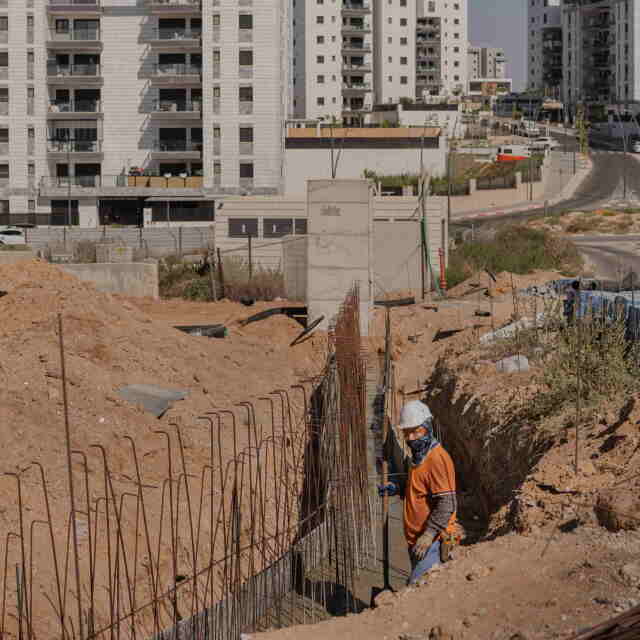
Three years after the Oct. 7, 2023 Hamas-led attacks, Israelis are returning to the Gaza border region (“Gaza envelope”), with heavy military presence and rapid rebuilding/construction.
Many residents say they feel safer due to Israel’s border buffer zone and continued occupation of most of Gaza; Israeli public support for a permanent troop presence is cited via a poll. Palestinian Central Bureau of Statistics is cited that hundreds of thousands of Gazans previously lived/farmed in the border area but were displaced.
Kibbutz Zikkim demand and a two-year waiting list; Sderot’s plan to double population to 120,000 by 2040 with new schools; Sderot bomb-shelter-equipped apartments; Kibbutz Niroz reconstruction after 117 residents were killed/kidnapped and most buildings damaged.
Mahmoud Khalil (Palestinian activist; discussed Colombia protests and his 2025 arrest; described ICE detention and missing his son’s birth). Other named voices: Shahar Goldenberg (kibbutz member/farmer), Robin Feldman (Sderot resident; rabbi’s wife; Jewish history teacher), Galia Tzur (moved back Oct. 7 to Kibbutz Niroz), Ron Bahat (kibbutz reconstruction manager).
0:00This is Tanya Mosley, co-host of Fresh Air. I spoke with Palestinian activist Mahmoud Khalil about the Colombia protests and his 2025 arrest. While in ICE detention, he missed the birth of his son and had to listen to his wife give birth over the phone. I can never forgive those who stripped that moment from me. Listen on the NPR app or wherever you get fresh air. Today on State of the World, three years after the Hamas-led attacks, Israelis are returning to areas near Gaza. You're listening to State of the World from NPR, a human perspective on global events. It's Wednesday, October 7th. I'm Greg Dixon.
0:43Three years after the October 7th attacks, Israel's southern border with Gaza is undergoing a dramatic rebound. That region was nearly abandoned after thousands of Hamas-led militants attacked Israeli communities. That attack killed nearly 1 ,200 people and 250 more were taken hostage. Now, residents are back. Some are driven by solidarity with the victims of October 7th. Others say they feel safer with the heavy Israeli military buildup along the border, as Israel continues to occupy most of Gaza. NPR's Carrie Khan takes us to southern Israel. Shahar Goldenberg drives a small road that circles Kibbutz Zikkim.
1:27He's lived here right on Israel's border with Gaza for nearly two decades, but he's never seen so many people wanting to join his cooperative farming community. The demand is amazing. Great, huge demand. Currently, Zakeem's waiting list stretches two years, and houses are going up fast. He says they're building 25 here. And this was not like this before October 7th? No, no, of course not. If you want to sell your house, you can sell it in less than a week. Many people want to come and be part of southern Israel's rebirth, he says, And they feel safer now that Israel occupies more than 60 percent of Gaza, he says.
2:05Israeli troops have drawn a yellow line, what the military calls a border buffer zone extending deep into Gaza. The Palestinian Central Bureau of Statistics says before the war, hundreds of thousands of Gazans lived and farmed in that border area. They've all been displaced. On the kibbutz hilltop, Goldenberg shows off eight homes under construction. All with stunning Mediterranean vistas. So these new houses have a view of the beach and a view of northern Gaza. Yes, I hope that we will not see the north of Gaza in the next years. There isn't much to see now, just shells of blown-out buildings.
2:44That's despite international pressure, including from the U.S., for Israeli troops to ultimately leave. But Israelis overwhelmingly support a permanent troop presence inside Gaza's border, according to a recent poll. The government has repeatedly said it's not leaving until Hamas is fully disarmed. Goldenberg says he hopes that's true. This is the only plan that we will continue to leave here. Without the yellow line, it will be really difficult and challenging for us. This part of southern Israel, known as the Gaza envelope, has long been sparsely populated, filled with mostly verdant farmlands and kibbutz communities stretching along the Gaza border, all the way to Egypt.
3:27About half the region's residents live in its biggest city, Sterot. Today, construction crews seem to be on every corner, like at this brand new kindergarten, one of the several dozen schools planned as the city aims to double the population to 120 ,000 residents by 2040. Robin Feldman is part of that growth. She just picked up her six-month-old daughter Nellie from her first day at a center and shows off the family's new home. It's a small empty three-room apartment, one bedroom with steel-enforced walls and door. So this is going to be Neely's room, which is the bomb shelter. Hopefully we never have to use it.
4:12The young family just moved to Styro from Paramus, New Jersey. Her husband is a rabbi. She teaches Jewish history, which she says is full of prophecies about the Jewish people returning to Israel. And when they return, how fruitful the country will be. I teach these prophecies to my students, and now I'm living it. So it's very special. The 2 ,000 Sheko government rental subsidy, about$650 a month, helps too, she adds. And there are more incentives, like large income and property tax breaks for Sderot, says city spokesman Yaron Sasson. We are constantly working to convince people from all over Israel to come south, he says, and many from abroad too, like Galia Tzur and her family.
5:00When did you decide to move back to Israel? October 7th, on the dot. The minute she saw the news about the Hamas attack, Tzur said she and her husband knew they had to move back to Kibbutz Niroz. It's some 30 miles south of Sturrot, right next to the Gaza border. The couple now in their 50s lived in Neroz back in the 1990s. We were, both were like, we need to go. We need to help. We can't stay here. They had been living in New Zealand for more than a decade, but sold their house and moved back to Israel to help rebuild. The kibbutz was hit hard in the October 7th Hamas-led attack. One quarter of residents, 117, were either killed or kidnapped on October 7th.
5:46All but six of the kibbutz's more than 200 buildings were damaged or set on fire. Reconstruction manager Ron Bahat heads out on his electric cart. He deftly maneuvers down the small paths running through the community. We pass many burnt-out homes still standing since the attack. The kibbutz is stuck in a debate with some residents, insisting the buildings remain standing as a permanent reminder of what happened here. The question is how to remember, how to keep the legacy. You know, people see it in a different way. Others prefer to focus on the future. Bahat, who was born here 60 years ago, says that's what he's focused on as he speeds over to a busy construction site.
6:33A large backhoe is excavating a site for 76 new homes. More will be coming in the next two years, he says. And the mission is to make this place, you know, bigger, better, stronger, nicer. And, he says, we will make it so. Kerry Kahn, NPR News, southern Israel near the Gaza border.
7:02That's the State of the World from NPR. Thanks for listening.
7:31Listen to the Life Kit podcast in the NPR app or wherever you get your podcasts. A Different World has been a cultural powerhouse for years, and now school is back in session in a hit reboot on Netflix. But how different does it feel from the original show? We get into it on NPR's Pop Culture Happy Hour. Listen via the NPR app or wherever you get your podcasts.
Scan the code with your iPhone camera
Listen in the app.