 State of the World from NPR
6 Oct 2026 · 7m

 Add vo to ChatGPT or Claude to ask about everything you hear
vo listened to this episode to put together the overview and transcript, so there may be the odd mistake.
What Afghanistan is like 25 years after the U.S. invasion, and what the war’s legacy means for security, politics, and women’s rights after the Taliban returned in 2021.
D. Parvez (NPR reporter; visited Afghanistan in 2026); Abdul Jabbar Akbadi (political analyst focused on security); Obi Dhal-Bahir (lectures on civil society and democracy at American University in Afghanistan); an unnamed Afghan counselor (spoke anonymously for fear of Taliban retribution); Emma Skye (director, Yale International Leadership Center; served as a political advisor to NATO forces in Afghanistan).
The U.S. ousted the Taliban quickly but the war lasted 20 years; security was destabilized by multiple foreign armies, then “reinstated” by the Taliban; Taliban legitimacy persists for some Afghans; Taliban rule has reimposed social restrictions, especially harming women; U.S. efforts to impose democracy were overly ambitious and eroded international norms through torture/rendition.
Kabul’s 2026 streets with blast walls/barbed wire removed; Taliban claims attacks are retaliation; women’s limited education beyond sixth grade; reported rise in depression among women; U.S. casualties (6,200+ service members/contractors) and $2 trillion spent.
0:01This election season, you can streamline your news intake with Up First. Our team of reporters and editors works overnight so you can start every morning with three stories you need to know. In short episodes, 12-14 minutes long to save you time and your sanity. Follow up first on the NPR app or wherever you get your podcasts. Today on State of the World, Afghanistan, 25 years after the U.S. invasion.
0:32You're listening to State of the World from NPR, a human perspective on global events. It's Tuesday, October 6th. I'm Greg Dixon. This week marks 25 years since the U.S. invaded Afghanistan. October 7th, 2001, less than a month after the September 11th attacks, President George W. Bush vowed swift revenge. And the U.S. did quickly oust the Taliban, the Islamist group controlling the country, over its support for and harboring of Osama bin Laden and his militant group Al-Qaeda, blamed for the deadly attack on U.S. soil. But the war itself was far from quick. It lasted 20 years, with U.S. troops remaining in Afghanistan until August of 2021, when the Taliban retook Kabul amid a somewhat chaotic U.S.
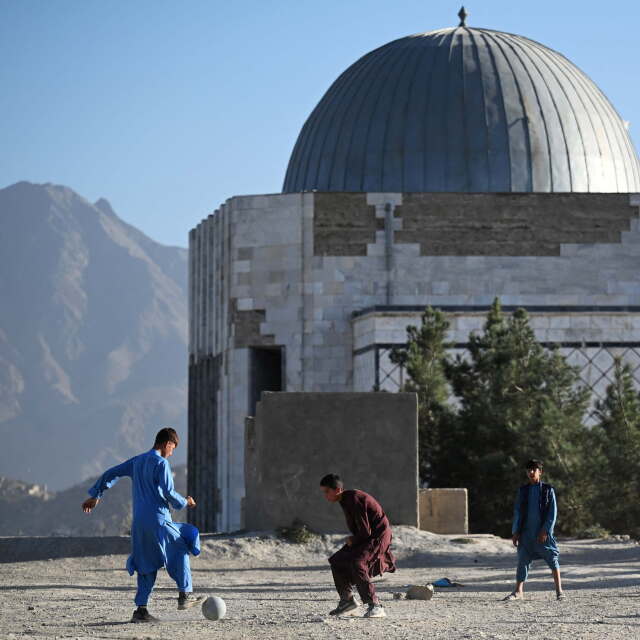
1:21exit. NPR's D. Parvez recently visited Afghanistan to see what life is like now and to understand how its people are dealing with the legacy of a conflict that began a quarter century ago. The Kabul of 2026 looks dramatically different than before the Taliban takeover of 2021. Gone are most of the blast walls and barbed wire that choke the streets of the Afghan capital, and with them, the sense of unease that another Taliban attack will strike a police station, a government office, or a hotel.
1:55Abdul Jabbar Akbadi is a political analyst who focuses on security issues, and he tells me that the war destabilized security in Afghanistan, bringing the armies of multiple nations, each with their own objectives, into the country.
2:12Even with periodic attacks by insurgent groups, Akbadi says that with the return of the Taliban and the restoration of the Islamic Emirate, In 2021, security was once again reinstated. The Taliban went further to say that the attack on this residential area in Kabul this morning was in retaliation. As we hear in that BBC report, the Taliban were responsible for the bulk of those attacks all around the country. And now in the seat of power, they're maintaining security. Taliban fighters have reached Kabul, Afghanistan's capital, and the Afghan president has fled the country. There was a lot of uncertainty with the return of the Taliban, but they aren't foreign occupiers after all, says Obi Dhal-Bahir.
2:54He lectures on civil society and democracy at the American University in Afghanistan, where he continues to teach male and female students online. He tells me that the September 11 attacks have a deep significance to Afghans. It was not only the beginning of the war on terror, but a collective blaming of Afghans for terrorism and attacks against the United States. It brought the United States upon us with a vengeance where all human rights and international law was eroded. The human cost of the two decades-long conflict was immense for all the warring parties, but in particular for Afghans. At least 169 ,000 were killed and roughly 6 million were displaced internally.
3:40But the Taliban didn't just bring security. They also brought back a raft of social restrictions, even if most aren't as severe as their 1990s edicts. On the day of the militant group's return, NPR heard concerns from Afghan women, like Feresh de Karim, about those restrictions. Their war against women is at the core of their ideology. If they don't have it anymore, they're not going to be Taliban. Five years later, women occupy whatever space they can. They move through cities, solo or in groups. They're on television, on news shows and game shows. They also hold a limited number of government jobs.
4:15Still, girls and women remain barred from education beyond the sixth grade, as well as most of the career options previously opened to them. And for many of them, the improvement in security is of little comfort.
4:32That's the voice of a counselor who asked NPR not to use her name, fearing retribution from the Taliban. She tells me, oh, for men, this is without a doubt a favorable situation. They can go to different cities, socialize at any hour in peace, and instead of one wife, they can take four. They can take advantage of the difficult situation women are now in. She explains the strict control over virtually every aspect of their lives is leading to a spike in depression.
5:04She says, in Afghanistan, women and all of their needs have been suppressed. A woman can't go to school to learn anything. She can't go to the mosque. She can't wear what she wants. She can't marry who she wants. While there's hope some social restrictions will be reversed, says Obi Talibahir, he adds that the Taliban also have legitimacy for many Afghans. It's becoming evident for the younger Afghan intellectuals that the Taliban were on the right side of history. The Afghan government formed after the fall of the Taliban was seen as corrupt, says Emma Skye. She's the director of Yale University's International Leadership Center.
5:41And she also served in Afghanistan as a political advisor to the NATO forces. I think the U.S. tried to do too much in Afghanistan, to think that it could impose democracy, to create a state in its image. I think it was far too ambitious in what it set out to do. This fostered resistance among Afghans, Skye says, and among the international community, where the U.S. had a tremendous amount of support following the attacks, things also eventually shifted. We just don't see that unity today. She says that the U.S.'s response to September 11, from the invasions of Afghanistan to Iraq, to torture and extraordinary rendition, all undermined the post-war rules-based order and fueled the democratic backsliding that we are seeing today.
6:27So after two decades of fighting in Afghanistan, where over 6 ,200 U.S. service members and contractors were killed and over$2 trillion were spent, what is the lesson for the U.S.? I put this question to Sky as the U.S. finds itself locked into a months-long conflict with Iran. Interventions have unintended consequences, and none of us imagined what they might be 25 years ago. Deep Havraz, NPR News.
7:04That's the State of the World from NPR. Thanks for listening. Stay tuned for the following announcements and messages from our sponsors. This message comes from Bombas. Whether you're outdoors or just lounging around the house, cool weather calls for cozier footwear. Bombas makes the perfect slippers and shoes, built with smooth, premium suede, plush Sherpa, and warm sheepskin shearling, all with layers of cloud-like cushioning. Perfect for staying in, stepping out, and keeping things cozy all season long. Visit B-O-M-B-A-S dot com slash N-P-R and use code N-P-R for 20 % off your first purchase.
7:46This message comes from Cachava. Sometimes flavors need a pinch of salt to unleash their full potential. Kind of like life, a little saltiness can keep things interesting and deliciously sweet. Fuel your salty sweet cravings with Cachava's new salted caramel all-in-one nutrition shake. Just two scoops provide protein, fiber, greens, and more. Embrace your salty side. Go to cachava.com and use code NPR for 15 % off your first order. That's K-A-C-H-A-V-A dot com, code NPR.
Scan the code with your iPhone camera
Listen in the app.