
 State of the World from NPR
12 Nov 2026 · 9m

 Add vo to ChatGPT or Claude to ask about everything you hear
vo listened to this episode to put together the overview and transcript, so there may be the odd mistake.
The episode covers two linked stories: Gaza’s displacement camps are hit by a deadly winter storm, causing flooding, landslides, and mass tent damage; and Israel’s political opposition debates forming a rare governing coalition that would include Palestinian citizens. In Israel, protesters and lawmakers argue over whether Arab-led parties can be trusted and whether they must denounce Hamas. Key figures include Kayla Glick (grassroots unity activist), Iman Khatib Yassin (first Israeli lawmaker to wear a hijab since Oct. 7; Ram party), Mansoor Abbas (Ram leader; denounced Oct. 7 actions but not labeled Hamas a terror group), Gadi Eisenkot (coalition-forming rival), Isaac Herzog (president), and Yoav Segalovitch (former police official). In Gaza, NPR reports from Anas Baba: Ahmed Nabhan’s family is buried when a tent area cliff collapses; Gaza authorities say 20,000 tents flooded in two days and UN warns Israeli restrictions left people defenseless.
0:00Support for this podcast and the following message come from Allianz Travel Insurance. Barcelona's beaches heavenly until a jellyfish joins you for a swim. Emergency medical benefits can help take the sting out of travel challenges. Learn more at AllianzTravelInsurance.com. Today on State of the World, Israel debates a governing alliance with Arab parties. And deadly rainstorms wreak havoc on Gaza's tent camps.
0:34You're listening to State of the World from NPR, a human perspective on global events. It's Wednesday, November 11th. I'm Christine Arismeth. Winter storms in Gaza bring flooding and disaster to thousands living in tents there. More in a moment. First, to Israel. Opponents of Israeli Prime Minister Benjamin Netanyahu are trying to oust him by building a broad new governing coalition. To do so, they may have to cross a red line drawn by most Israeli parties. Partner with Palestinian citizens of Israel. From Jerusalem, NPR's Lauren Freyer explains. College student Kayla Glick stands outside the Israeli president's office with a poster that says unity.
1:24So we're here for unity. We're one of the biggest grassroots movements in Israel, which really tries to reduce polarization. She wants a unity government with power shared between far-right Prime Minister Benjamin Netanyahu and his center-right rival Gadi Eisenkot, who's been tapped to try to form a coalition. To this protester, unity... It's a Zionist unity. This is a Jewish democratic state. Everyone's welcome to be part of it. Everyone, except Arab-led parties, which won a record number of seats in last month's election. Glick says they're welcome in parliament, but not in a ruling coalition.
1:58Polls show about half of Israelis feel this way. Another protester, Hila Sheish, interrupts. Arab lawmakers, she says... They will stop Israel from protecting itself against terror. She questions their loyalty in the event of another Gaza war, for example, but acknowledges she didn't used to look at Israel's largest minority this way. I think that after October 7th, the trust within the Israeli society, with the Arab people, it damaged a lot. Iman Khatib Yassin feels that too. She's the first Israeli lawmaker to wear a hijab since those 2023 Hamas attacks. Last years were the most hard. She says she's asked to denounce Hamas with every breath.
2:47What can I do? What can I say? To prove her loyalty to a country where she's not only a citizen, she's a member of parliament. Why do they not want to? Racism, that's all. It's racism, she says. Arriving at the Israeli president's office for coalition building talks. She has to walk past a protester shouting that Arabs shouldn't be trusted. Inside, Israeli president Isaac Herzog asks if she considers Israel both Jewish and democratic. And again, whether she denounces Hamas.
3:23The exchange was live streamed. This is Eisenkot's litmus test. He says he will not partner with Arab-led parties unless they agree to these conditions. And most of them have not. Mansoor Abbas leads the party Iman Khatib Yassin is in. It's called Ram. Abbas has denounced Hamas' actions on October 7th, but stopped short of labeling it a terror group to preserve the possibility of negotiating with it one day. So both men are under pressure. Abbas to denounce Hamas, Eisenkot to become only the second leader in Israeli history to partner with Arabs. Just like everything else about this conflict, it did not start on October 7th.
4:08Analyst Lina Dalashe is a Palestinian citizen of Israel herself. This actually is the norm in Israel. The demand that Palestinians face to guarantee the security and safety of Israeli Jews. She says it's gotten worse under Netanyahu, who has accused Arab politicians without evidence of electoral fraud and of endangering Israel. Things are tense, which is what makes the number two official in the Arab-led Ram party so extraordinary. I was arrested in the regime of Ram as a Jewish and a Israeli patriot. Yoav Segalovitch is a former Israeli police official, and he's Jewish. Flanked by Arab colleagues, he told Israel's president he believes the country is in profound crisis, that discourse has become toxic, and that 20 percent of the population cannot be excluded.
5:05On his way out of the president's house, he too gets accosted by protesters, questioning why he would partner with Arabs. Demonized by the right and held up as a hero on the left, he says he's just working with his colleagues and fellow citizens. Lauren Freyer, NPR News, Jerusalem.
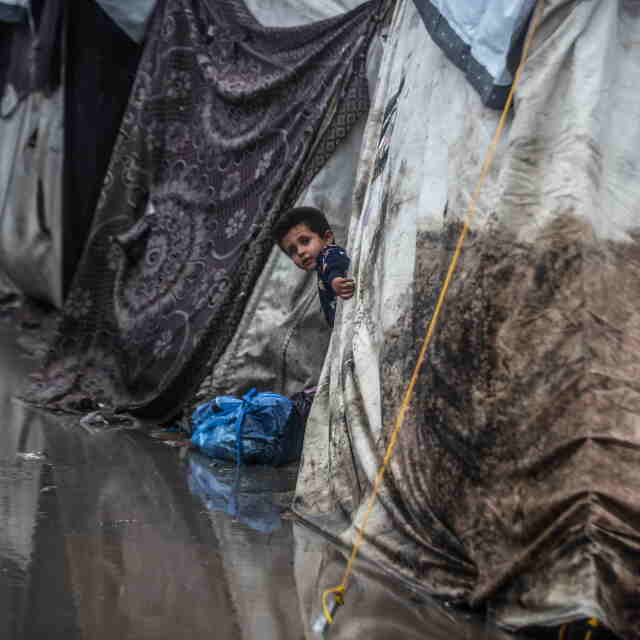
5:27Now to Gaza. The Board of Peace, created by President Trump to run Gaza, has urged the Israeli government to authorize essential temporary shelters as quickly as possible. It called the crisis, quote, no longer simply a threat posed by approaching winter, but an immediate humanitarian emergency. The warning comes as the season's first heavy rains triggered flooding and lethal landslides across Gaza's displacement camps. NPR's Anas Baba reports from Gaza City. At the Al-Aqsa Hospital Morgue in central Gaza, Ahmed Nabhan places a wreath of fresh basil leaves beneath the head of his five-year-old daughter Maryam, wrapped in a white burial shroud.
6:18Beside her lie the bodies of his pregnant wife, Tahir, their six-year-old son Salah, and their four-year-old niece Habiba. Ahmed is the sole survivor of his immediate family. He happened to be away when their tent was buried as the earth gave away to the heavy rain. 58-year-old grandmother, Hum al-Abid al-Sahar, survived the collapse just yards away. Al-Sahar says the downpour hit without warning. Within minutes, the sand cliff above them collapsed, burying her and her daughter to their waists and swallowing neighboring tents whole. She screamed for rescuers to dig out Ahmed Nabhan's family members.
7:07Al-Sahar says displaced families knew the cliffside was unsafe but had no choice. Al-Sahar says out of sheer distress, people throw themselves under mountains, into the sea, anywhere they can pitch a shelter. Tell us where should we go? That question has no easy answer. With Israeli forces controlling more than 70 % of Gaza's territory, over 2 million people are compressed into shrinking pockets of land. The devastation from the single storm is staggering. This is Gaza's fourth winter of the war. Gaza authorities say more than 20 ,000 tents were flooded in just two days. Gaza's civil defense warns that more than 2 ,000 buildings damaged by Israeli airstrikes are at risk of collapse.
7:58But the displaced families sheltering inside them refused to evacuate. Just weeks ago, a building sheltering around 100 people collapsed, killing 21.
8:12Al-Sahar says people are simply exhausted by the effort to stay alive. At the very least, bring us tents to live like human beings, she says. Bring us a dignified life. For God's sake, we just want to live. The UN warns that Israeli restrictions on PASIC's winter supplies, heavy tarps, tents, and drainage equipment have left the population completely defenseless. Israel says it's implementing a winterization plan. But Trump's Board of Peace said in a statement, quote, The time for assurances without implementation has passed. Anas Barba, NPR News, Gaza.
8:57That's the State of the World from NPR. Thanks for listening. Stay tuned for the following announcements and messages from our sponsors. Support for this podcast and the following message come from Made in Cookware. President and co-founder Jay Kalick shares why he was inspired by his family's fourth generation kitchen supply business. Growing up in a commercial kitchen at home really opened my eyes to bringing what was cool in restaurants into your home. And when you think about what we do today, we are asking these chefs for product ideas. We are designing products together with them that we then realize a home cook can use as well.
9:32Learn more about Made in Cookware at m-a-d-e-i-n cookware.com. This message comes from Schwab. Investing with Schwab is like a hike with endless trails. Go solo with self-directed investing, take stops along the way with trading, or choose a guide with full-service wealth management. Whatever trails you take, you can invest your way with Schwab.
Scan the code with your iPhone camera
Listen in the app.